“All you need is a sense that there is no such thing as ‘no’ and everything is possible.” Moira Kelly
This shining face, this sweet spirit with reason to be bitter and yet he is not. He is a hero and pure inspiration. When our own Naomi Baltuck posted this video on Facebook, I was as touched as anyone would be. I had to wonder though about his mom. What kind of hero is she, I thought, remembering the heroes of my childhood: Josephine Baker and my spiritual mother, Pearl Buck. Each of these women grew their families in unique – and extraordinarily unselfish – ways.
“All my life, I have maintained that the people of the world can learn to live together in peace if they are not brought up in prejudice.” Josephine Baker (1906-1975)
Josephine Baker was born in America but became a French citizen. She was a dancer, singer, actress and civil-rights activist. As a child living in St. Louis, Missouri, she suffered from discrimination, abandonment, and poverty. As an adult she had one miscarriage. She adopted twelve children, two girls and ten boys. They were from diverse races and cultures because, in addition to caring for them, she wanted to show that people can get along despite their different backgrounds. In the early ’80s two of her sons went into business together. They started Chez Josephine, which is on Theatre Row (42nd Street) in Manhattan. They dedicated the restaurant to their adoptive mom’s memory and decorated it with her memorabilia.
“. . . the test of a civilization is the way that it cares for its helpless members.”Pearl Buck (1892-1973)
Pearl Buck was an American novelist, writer, humanitarian and the first woman to be awarded the Noble Prize in Literature (1938). She grew up in China and spent most of her life there until 1934. She had a deep affection for and knowledge of the countries of the East, not just China. She suffered through the Nanking Incident when the National Revolutionary Army captured Nanking (now Nanjing) in 1927. Many Westerners were killed, their homes destroyed, and their property stolen. Her only biological child, Carol, had phenylketonuria (PKU), which causes mental retardation and seizures. She adopted seven children. At a time when mixed-race children were considered unadoptable, Pearl Buck founded Welcome House, Inc., the first international, interracial adoption agency. Welcome House has placed some five thousand children since it was established 1949.
“The greatest act of kindness changes generations. Wherever there is the greatest evil, the greatest good can be achieved.” Moira Kelly (b. 1964)
This brings us to a contemporary hero: the mother of Emanuel Kelly, the young man in the video. Moira Kelly is an Australian humanitarian whose work has garnered her many awards and acknowledgements. When she was eight years old, after seeing a movie about Blessed Teresa of Calcutta (now Kolkata), Moira committed herself to working with disadvantaged children. She is the legal guardian of twins from Bangladesh, Trisha and Krishna. They are surgically separated but originally cranially conjoined twins. Moira Kelly also adopted the Iraqi-born Emmanuel and his brother Ahmet, both born with underdeveloped limbs. Among her efforts is Children First Foundation, formed to provide transportation and healthcare for children with urgent needs in developing countries.
These women are mothers in the best senses of that word. Their ideals are real and they stand by them. They have saved children from abandonment and loneliness, from poverty and hopelessness and, in some cases, from early death. They are goddess mothers and true heroes.
JAMIE DEDES ~ My worldly tags are poet and writer. For the past five years I’ve blogged at The Poet by Day,the journey in poem, formerly titled Musing by Moonlight. Through the gift of poetry (mine and that of others), I enter sacred space.
Recently, I published a post on creating your own labyrinth as a way of making sacred space in a place where you may not be able to find a way to retreat to your preferred sacred space. This is a continuation upon that theme-creating sacred space in the midst of everyday living.
One thing my Spiritual Director and I agree upon is that I MIGHT have spiritual ADHD. Meaning, I need a variety of spiritual practices to keep me grounded. This totally makes sense since on the unofficial adult ADHD test I recently took, on a scale of 1-6 (6 being the most ADHD), I scored a six. Oh, yes. This penchant to need change and to be easily distracted often must be hemmed in by being very grounded in my own spiritual path while allowing myself the freedom to choose exercises, patterns, or methods from beyond my immediate experience.
This led me to take a workshop on praying with beads! Now, when I signed up for the workshop I knew that it was sponsored by an ecumenical organization so I assumed that it would be somewhat wide-open in its approach. I was wrong. It was a class on praying the Rosary. I am not Roman Catholic, and this was an ecumenical retreat, so I was a bit taken aback by the specific nature of the workshop. However, I decided to simply enter into the spirit of the situation and puzzle out my response later.
I am very glad that I did!
One of My Bracelets
When I was able to reflect on the experience, I thought, “There must be a protestant version of this practice that would fulfill the tactile & prayerful longing that I have!” And I was right! Thank you search engine! I found a Unitarian Universalist Prayer Bead Practice. I cogitated on what I read there and then created my own practice. Now, I make prayer bead bracelets and use them to remind me to stay in touch with the sacred in my everyday living. It is one of the tools in my ADHD spiritual toolkit.
I adapted the main principle of the UUA prayer bead practice and utilized them for myself. I also make these for other folks selecting colors and images that I think will suit their spiritual journey. However, if you don’t have a bunch of beads lying around along with a crimper and all the stuff you need to make a bracelet, you can still do the prayer practice that I am about to outline by using your five fingers, starting at your thumb!
So here it is:
My Hand-Each Finger a Bead
See the “tail” on the bracelet? That is where you start or you can start with your thumb (lightly grasp the very end bead or the tip of your thumb) if you don’t have a bracelet or cannot make one. Sit still. Ground yourself. Rest gently with your eyes relaxed and gazing lightly or close your eyes, whatever is most comfortable to you. Here, focus on your image of the divine. Greet the divine and enter into the presence of holiness and join into a sacred moment. Hold this beloved image closely to your heart. Greetings of love, peace, serenity wash over you, through you, and into you. When you are ready, move up the tail of the bracelet or up your thumb to your hand. Feel each bead or feel each bend in your thumb.
As you go up the beads, breath in and breath out at each small bead. Soon you will land on the large bead (not the clasp) or your fore finger. Here take time to envision those things you want to celebrate! This is a time for adoration, celebration, joy, happiness! Give all of this to your image of the divine and receive the gift that comes back to you whatever that may be. When you are ready, move to the next large bead (or your next finger tip) traveling slowly, thoughtfully, and with divine joy.
At the next large bead, is the time to turn inward and look back at your day (or days before) and to offer a confession of where you have fallen short. For me, this is a time to admit where I have not been loving, peaceful, or justice seeking. Or a time to confess my lack of patience! This can be a time of sorrow, but it should not be a time of shame. We all fall short. Knowing we have, learning from it, and moving to the next bead is what this moment is for. When you are ready, move to the next large bead traveling slowly, thoughtfully, and with the knowledge that you can make mistakes and still return to a place of holiness and sacred healing.
At the next large bead, it is time to name the things, people, and beings in the world that you are thankful for. Let love for the other wash over you and let gratitude sink deeply into you. It may be as simple as a favorite stuffed bear that has traveled with you since childhood. Gratitude in itself is a spiritual practice. Let it flow here. When you are ready, move slowly to the next large bead, touching each smaller bead and breathing in – breathing out at each touch. Do this with the understanding that as you find gratefulness in those around you, others are grateful for you and for who you are.
At the final large bead, it is time to bring your concerns into sacred space. It could be concern for someone’s safety, for healing, for friends or family. Anything that is laying on your heart. Bring them into sacred, healing space. Here, depending on your space and time, you could do many things. You can talk with what is laying on your heart; hold it in love; offer it out to the world or the divine; or even do something creative with it.
Finally, as close this part of the prayer, you will travel back to your initial image. Return to your thumb or return down the tail of the bracelet or beads. Breathing in and out at each small bead or bump along the way. As you return to your image, hold it, sit with it and when you are ready, leave it in whatever manner you are comfortable with. That could be namaste, amen, or a simple good-bye. Whichever way speaks to your path. Return to your every day living, bringing the sacred space you have made with you. Let it travel with you as you go about your day. Remembering that each time you touch your thumb or grasp a bead, that sacredness walks with and in you.
REV. TERRI STEWART is Into the Bardo’s Sunday chaplain, senior content editor, and site co-administrator. She comes from an eclectic background and considers herself to be grounded in contemplation and justice. She is the Director and Founder of the Youth Chaplaincy Coalition that serves youth affected by the justice system. As a graduate of Seattle University’s School of Theology and Ministry, she earned her Master’s of Divinity and a Post-Master’s Certificate in Spiritual Direction. She is a contributing author to the Abingdon Worship Annual. (The 2014 issue just released!)
Rembrandt seems peaceful watching the canvas on his easel…
On the easel of Gustav Klimt are the paintings he dreamt…
The word ‘easel’ is an old Germanic synonym for donkey. In the Latin ‘Asinus’, we hear ‘ass’ (donkey).
An easel supports a canvas or painting. It is a humble piece of furniture; a few horizontal and vertical pieces of wood nailed together. Its plainness and instrumentality earned it its name ‘easel’ (i.e. donkey). An easel isn’t pretty nor noble, it carries our stuff like a donkey carries our stuff too.
.
It is said the easel was used by Egyptians. It took a long time before frescos and murals lost their glamour and artists started to work with painting boards and canvasses. Fast forward to the Renaissance, we see mobile easels changing dramatically the way painters work. Artists abandon their studios to work in the open air, catching the light, movement of the water, the clouds and waving grasses like no one has done before. The easel helps to create individual artists and new painting styles. Despite its achievements, its name has never been upgraded. Easels never look proud. To me they look often a tiny bit tragic and tired, like overloaded donkeys.
PAULA KUITENBROUWER ~ is a Dutch nature artist living in The Netherlands and sharing her work with us on her blog, Mindful Drawing and on her website. In addition to art, Paula’s main interest is philosophy. She studied at the University of Utrecht and Amsterdam. She has lived in Eastern Europe and in Asia. Paula says that in Korea, “my family lived next to a Buddhist temple. In the early morning we would hear the monks chanting. During my hours of sauntering with my daughter through the beautiful temple gardens, I felt a blissful happiness that I try to capture in my drawings.” Paula sometimes teaches children’s art classes. She lives with her husband and daughter and close to her father. You can view her portfolio of mindful drawings HERE.
Where is your light today? What is leading you? What is giving you hope? Joy?
“When I find myself in times of trouble, mother Mary comes to me,
speaking words of wisdom, let it be.
And in my hour of darkness she is standing right in front of me,
speaking words of wisdom, let it be.
Let it be, let it be, let it be, let it be.
Whisper words of wisdom, let it be.
And when the broken hearted people living in the world agree,
there will be an answer, let it be.
For though they may be parted there is still a chance that they will see,
there will be an answer. let it be.
Let it be, let it be, …..
And when the night is cloudy, there is still a light, that shines on me,
shine until tomorrow, let it be.
I wake up to the sound of music, mother Mary comes to me,
speaking words of wisdom, let it be.
Let it be, let it be, …..”
― Paul McCartney
…
…
A note about the light fixture:
I photographed this light at the Merchant’s Cafe in Seattle, Washington. It is the first cafe in Seattle and has seen several iterations of its business as it was built, burned down, and built again. The interesting thing is that it is in the oldest part of Seattle (of course!). It was built in a building near first avenue. The tidal flats used to flood in every day, twice a day, up to third avenue. This makes doing business quite difficult! Seattle then had businesses build their buildings at least two stories tall. Then they raised all the roads, surrounding the existing buildings with raised roads. For a while, they put ladders at the streets so people would go off of the road, down the ladder, into the businesses.
Finally, they built sidewalks that connected the streets to the second story level of the buildings. So today, in Pioneer Square, when you enter the buildings, you are, in fact, entering the second story of the buildings that were placed there. If you look down, you will notice odd glass squares in the sidewalk. Those were originally skylights so that the first story of the buildings were kind of like an inside shopping mall with a view to the sidewalk above. So even there, in the midst of a buried first floor of these buildings, the light was still able to shine!
REV. TERRI STEWART is Into the Bardo’s Sunday chaplain, senior content editor, and site co-administrator. She comes from an eclectic background and considers herself to be grounded in contemplation and justice. She is the Director and Founder of the Youth Chaplaincy Coalition that serves youth affected by the justice system. As a graduate of Seattle University’s School of Theology and Ministry, she earned her Master’s of Divinity and a Post-Master’s Certificate in Spiritual Direction. She is a contributing author to the Abingdon Worship Annual. (The 2014 issue just released!)
This morning we put aside our frustration and despair and spoke with the land and spirits. The mosquitoes, which had been fierce, quieted their attack, and even the birds calling stopped to listen. We like to open the altar outside whenever the weather allows, but of late have not had the heart to do so. The last time we opened the altar was the only time all summer we have heard the calls of the Hermit Thrush.
We awoke feeling sad and angry. The news on the racial, social, and climate fronts has been heartbreaking. We’ve been feeling overwhelmed, unable to see how we might contribute significantly to much-needed change. We’ve also been asked to aid others who are thinking they should do more than they possibly can. We remind others to do only what they are able. As we do so we remind our many selves to do the same, even as some selves feel frightened and desperate for change.
In the brief ceremony we spoke to the Creator, Pachamama, and the spirits about our gratitude for our lives and our concerns for the present and future. We acknowledged we humans are not caring for the futures of our grandchildren, let alone those of all species who will follow us in seven generations. This is a great sadness.
After the ceremony we came in to respond to e-mail and do other tasks. Online, we discovered a brief video posted to Facebook. In the video, a wild raven, perched on a fence, allows a woman to remove porcupine quills from its face. After each quill is removed, the raven squawks and complains, then allows the woman to soothe it and remove the next quill. How familiar! (Watch video.)
Watching the video, we were once again reminded that ravens are immensely intelligent creatures, that humans are not the only ones who seek aid from others, and that all life forms are profoundly interconnected, in life as in story. We were also reminded that small things, even removing quills from an injured animal, can be powerful ceremony, and profoundly healing to those in an ever-widening circle.
MICHAEL WATSON, M.A., Ph.D., LCMHC (Dreaming the World) ~ is a contributing editor to Into the Bardo, an essayist and a practitioner of the Shamanic arts, psychotherapist, educator and artist of Native American and European descent. He lives and works in Burlington, Vermont, where he teaches in undergraduate and graduate programs at Burlington College,. He was once Dean of Students there. Recently Michael has been teaching in India and Hong Kong. His experiences are documented on his blog. In childhood he had polio, an event that taught him much about challenge, struggle, isolation, and healing.
One day I hopped in a taxi and we took off for the airport. We were driving in the right lane when suddenly a black car jumped out of a parking space right in front of us.
My taxi driver slammed on his brakes, skidded and missed the other car by just inches!
The driver of the other car whipped his head around and started yelling at us.
My taxi driver just smiled and waved at the guy.I mean, he was really friendly.
So I asked, ‘Why did you just do that? This guy could almost ruin your car and sent us to the hospital!’
This is when my taxi driver taught me what I now call, ‘Law of the Garbage Truck’ He explained that many people are like garbage trucks. They run around full of garbage, full of frustration, full of anger, and full of disappointments.
As and when their garbage piles up, they need a place to dump it and sometimes they’ll dump it on you.
Don’t take it personally. Just smile, wave, wish them well, and move on. Don’t take their garbage and spread it to other people at work, at home, or on the streets. The bottom line is that successful people do not let garbage trucks take over their day.
Life’s too short to wake up in the morning with regrets, So … Love the people who treat you right. Pray for the ones who don’t.
Life is 10 % what you make it.
AND
90 % how you take it!
Do resolve to have a great, garbage – free week ahead……..
SHAKTI GHOSAL ~ has been blogging (ESGEE musgings)since September 30, 2011. He was born at New Delhi, India. Shakti is an Engineer and Management Post Graduate from IIM, Bangalore. Apart from Management theory, Shakti remains fascinated with diverse areas ranging from World History, Economic trends to Human Psychology & Development.
A senior management professional, Shakti has been professionally involved over twenty-five years at both international and India centric levels spanning diverse business areas and verticals. With a strong bias towards action and results, Shakti remains passionate about team empowerment and process improvement.
Shakti currently resides in the beautiful city of Muscat in Oman with wife Sanchita, a doctorate and an educationist. They are blessed with two lovely daughters, Riya and Piya.
Have you had that day? Ever? When your last nerve has been strung and compassion, justice and mercy have fled your body? I have that day sometimes. Usually, on those kind of days I like to retreat to sacred space. Space that can be my family, my friends, my books, my camera…some place where I can be filled up with the qualities that have leeched out.
But sometimes that is not possible!
I could be at the detention center where I work. Conflict and craziness do sometimes abound among the incarcerated and sometimes among the staff and volunteers. One night I was working and a fight broke out right in front of me. Other nights, down the hall. As staff rush towards the chaos, I sit frozen (as I am instructed to do) and then proceed in the opposite direction. I often retreat to the library where the clanging is at least muted.
Or I could be at my home and expectations meet reality and voices rise in anger or disappointment threads the air. Then my retreat is not a retreat. Mostly, we are loving. But there are times when love seems miles away.
During those times, I need to create sacred space where it seems that there is no room for it. Hopefully, I am not alone in feeling this way! I would like to offer you one simple practice that can be done anywhere at any time. You can create your own sacred space with a piece of paper and a pen. No! This is not a writing assignment. It is a wholeness assignment.
Temenos (Greek) is sacred space. Or land that is set aside for royalty or the priesthood. In Ancient Greece, it would be the place reserved for worshiping the gods. Jung further expands on the concept of temenos as a place where you can encounter your unconsciousness, bringing the shadow into the light. A place of healing, acceptance, worship, encounter, and sacredness.
I am connecting these ideas to the ancient labyrinth where, at the very center, is the temenos.
I have a portable labyrinth that is used in my work with incarcerated youth. Teens can be so funny when they first encounter the labyrinth! They look at it as a maze, at first. But then as they slowly progress through the turns of the labyrinth, focusing on their chosen word or phrase, something happens. Softness overtakes them. They slow down. The rhythm of the room deepens. Their shields begin to drop. Sometimes, they arrive at the center and just sit for a long time. It is also a place of safety, even in the midst of incarceration, a place of danger.
However, we are not all blessed to have a labyrinth stored in our garage! Luckily, we do not need the full meal deal to create a labyrinth. Just pen and paper (or crayon and paper!).
As you set about creating your own labyrinth, set your intentions. When I am in the detention center and do this, I am often focused on peacefulness. Then, when you are done, walk the labyrinth with your finger. Focus on your intention. It is said that there are three stages to walking a labyrinth.
Purgation: purging yourself of your thoughts that are attached to the world.
Illumination: opening yourself to enlightenment, inspiration, reception of the other
Union: becoming one with ______________ . I will let you fill in the blank with your understanding of what we are in union with. This could be anything from unity with self, others, the cosmos, the divine. This is where we sit and hold the space.
It only takes a minute to draw a labyrinth and to create an opportunity for your own sacred space no matter where you are or what your are doing. It could be as simple as a doodle on a napkin at lunch!
REV. TERRI STEWART is Into the Bardo’s Sunday chaplain, senior content editor, and site co-administrator. She comes from an eclectic background and considers herself to be grounded in contemplation and justice. She is the Director and Founder of the Youth Chaplaincy Coalition that serves youth affected by the justice system. As a graduate of Seattle University’s School of Theology and Ministry, she earned her Master’s of Divinity and a Post-Master’s Certificate in Spiritual Direction. She is a contributing author to the Abingdon Worship Annual. (The 2014 issue just released!)
Eight years ago we purchased a dilapidated cottage, took it down to studs, and with the aid of a brilliant contractor, built a wonderful home. Since then we have developed much-loved gardens on our small plot of urban land.
As the late effects of Polio have become more challenging for me to manage, Jennie has become the tender of those beds. We both care deeply about the garden’s well-being, but much of my limited energy is needed for our healing and teaching work. I am grateful to Jennie for reminding me that healing and teaching are also forms of gardening, other ways of working with spirit.
In the seven years we have lived in our home we’ve been quietly working with the spirits of the land. This is a tad challenging as we live in a residential neighborhood and all ceremony is public. My teachers always said one should be polite, humble, and do ceremony anyway. This simple advice turns out to be remarkably complex in practice.
The spirits of the land are often profoundly responsive to gratitude and ceremony. One evening during our most recent Asia trip we were asked to do a simple traditional shamanic ceremony for a group of college students. This was to be a simple show-and-tell, yet, as sometimes happens, the ceremony took on a momentum of its own, becoming profoundly moving and healing for all present.
When we returned home to Vermont we told our friend and colleague, Julie Soquet, about the experience. Julie listened to our story, considered it for a moment, then said, “The spirits of the land must be really alive and receptive there.” I was stunned by her naming of the missed obvious. Local gods and spirits are routinely honored in both India and Hong Kong, and Jennie and I had spoken after the ceremony about how we felt the presence, support, and appreciation of the spirits. (There was an active shrine directly across the street from where we were conducting the ceremony.)
The other night, in dream, I was reminded we are loaned our bodies for our stay here on Pachamama. Our bodies are sacred; they are Medicine bundles. At the end of our lives we give our bodies back to the Earth. Pachamama asks that we grow the spirit and power of these bundles, so that when we return them they benefit Her and all beings. In the dream I was asked simply to keep this in mind as I made my way through what remains of my walk here. There were no other instructions, no “shoulds”, no “musts”. Expressing gratitude to the myriad beings who make our lives possible is part of that way of walking and gardening. I wonder how these simple, profound truths will enter into our work.
MICHAEL WATSON, M.A., Ph.D., LCMHC (Dreaming the World) ~ is a contributing editor to Into the Bardo, an essayist and a practitioner of the Shamanic arts, psychotherapist, educator and artist of Native American and European descent. He lives and works in Burlington, Vermont, where he teaches in undergraduate and graduate programs at Burlington College,. He was once Dean of Students there. Recently Michael has been teaching in India and Hong Kong. His experiences are documented on his blog. In childhood he had polio, an event that taught him much about challenge, struggle, isolation, and healing.
[This piece was started some months ago, before I wrote the poem Fortune, featured here on the Into The Bardo a few weeks ago. That poem and this piece focus on a common theme, which is, perhaps more than any other in my writing life, a constant thread of philosophical thought for me. This is that, however much we may be short on fortune, there is never cause to give up on our hopes and dreams, or more realistically, our ‘visualisation’ of what we want from this life.]
~~~~~~~~~~~~~~~~~~~~~~~~~~~~~~~~~~~~~~~~~~~~~
Picture, via Google Images and courtesy Canvas Art (www.the-canvas-art-shop.co.uk)
“Oh what a tangled web we weave, When first we practise to deceive!”
(Sir Walter Scott, Marmion, Canto vi. Stanza 17.
Scottish author and novelist: 1771 to 1832).
Some days are better than others . . .
The better ones allow me to indulge myself in my passions. I could have walked the dog and come back feeling refreshed, or have attended a rehearsal with the Waldershelf Singers and feel utterly uplifted, or complete a piece of prose or, better, a poem and feel a sense of release. On other days, I feel disillusioned, cynical, angry, like throttling public figures (politicians) to within an inch of telling them what a bunch of useless, self-interested, lying, cheating ne’er-do-wells they are! … which they are, almost to a man (and woman) …
Why is it that, once human beings attach themselves to an organisation, an establishment, a business, a company, a corporation, a religion, or they declare their political affiliations, somehow, they lose the ability to tell the truth, assuming their integrity would allow them to differentiate between the truth and a lie, in the first place. They become overly deferential, assume the organisation’s rules are right and, worst of all, become somewhat apathetic and are inclined to assume the ‘elders’, senior leaders of the organisation are right and therefore entitled to our undying respect.
This subjugation of self, a denial of the person that was borne into this world, through that infinitely variable process, driven at its lowest level by chemistry and physics, in turn determined by the relevant genetic ‘pool’ and nurtured by the geographic, economic, demographic, societal and political environments it is our fortune, or misfortune, to have grown up in, is undeniable. This denial of the uniquely wired ‘self’ and its particular talents and aptitudes, opinions and attitudes, and the ability to discern right from wrong, truth from the lie, and I mean the real truth, the kind that only you yourself will know deep inside, is almost guaranteed.
Does it have to be this way?
I think that I’ve come to hold this position rather late in life. Questioning authority is the stuff of rebellious youth, isn’t it? When we didn’t know any better, few had any time for the opinions of young people, anyway!
Is it so, because we are too shallow? … I don’t think so, not for everyone, anyway.
Is it because we are too lazy or unable to think for ourselves … almost certainly for some.
Is it because we have to earn a living? … inevitably a contributory factor.
Is it due to the fact that, as human beings, in spite of our incredible capacity for ingenuity, we are still very insecure; none of us are ever entirely in control of our lives and I mean NONE of us, given the uncertainties of our own health and particularly of the natural world and what Mother Earth herself can throw at us! We therefore have to enwrap ourselves with a protective external blanket, woven by someone else’s dreams or designs, at one extreme by the premeditated manipulation of tyrannical leadership or, at another, simply by the desire to ensure the annual bonus, a generous pension, public honours, a knighthood … or simply the reassurance of knowing from where our next meal will come?
Is it because we are all limited in our capacity to take on too much information, store all the factors affecting any number of problems that face us each day; wrapped up in life’s complexity that sometimes threatens to overwhelm us, wouldn’t we prefer to take an easier option and permit others to make decisions for us, which acts as a perverse kind of freedom? Herein lies a major truth. But it’s not easy for managers and leaders either.
Contrary to the impression we might receive from those in stations so elevated, it may act as some comfort to those who aren’t to know that the higher up the ladder of success we go, in whatever field of human endeavour, the more insecure we get. Why, you ask? It is because we have our limits, all of us, and some of us are more limited than others; that is our birthright, given the variable abilities, with which we are endowed, the tactics and strategies we have learned and been taught to cope; it is the way we are wired. The higher up the ladder of success all this leads us, the stronger becomes our inclination, consciously and unconsciously, to hang on to whatever we’ve got; the more inclined we become to develop further selfish strategies to aid this survival process. That’s what it is to be human, well, at least to be an animal. Being human does, nevertheless, endow us with an extra ability: high intellect and, with it, a great responsibility and, yet, this tendency, this seemingly irresistible force, does inevitably lead to greed.
So what happens!
We get our heads down and graft, manoeuvre, wheel and deal, whatever it takes to gain influence, fame, attention, success, with whatever vanity or hope or need that has the greatest hold on our hearts, minds … and stomachs.
At some future moment in time, we then find ourselves, well, what’s the best word to describe it … trapped, yes trapped by our ambitions, needs, material greed, more than by hopes and dreams.
I should say something about dreams. Before you think I’m about to crush them, I’m not. As one who writes poetry and pieces of prose like this, I find dreams are just as important as the ambitions of a professional footballer I know, who learned, early on in his journey through that precarious profession, that visualising your goals (figuratively as well as literally in his case), that is imagining yourself scoring the goal, over and over again, is a truly powerful and effective way of motivating yourself to feel better about your abilities and potential. This is, for me, an unexpected way in which to feed the creative imagination; such is the process that leads to the products of human ingenuity as well as understanding and success. But, a word of warning about dreams! They can also be manipulative! They can be induced and ‘used’ by others to manipulate control over lives – take advertising, particularly on the television, as one example! We need to learn how to distinguish good from bad dreams, your own from other people’s dreams, just as we should be able to tell the difference between good and evil.
Now, I’m not necessarily talking about conspiracy theories here, about demons and evil people, who sit in back rooms and scheme to overthrow regimes or gain control of whole populations. No, I’m talking, for the moment at least, about the demons inside our heads; the ones that lead us to the point of paranoia, the fear of not being ‘successful’, wearing the right ‘fashion’, living in the right district, driving the right car, appearing in all the right ‘places’, doing what’s apparently ‘right’ in society … tricky concept this, but I’ll try to explain my thinking.
If you were to ask a child of five or six to tell you their dreams of how to make the world a better place, wouldn’t they give you magical answers, which involve the charm of fairy tale characters and imaginative, not to say unusual (and, sadly, unlikely) conclusions to their stories?
If you were to pose that same question to a child in their mid ‘teens, wouldn’t their answer be tainted with a little more realism, perhaps even a touch of hopeless, hormonal cynicism, whilst still retaining some of that childhood naiveté, a lack of what we grown-ups would call wisdom?
If you were to ask a grown up poet or a philosopher, I think their answer would come out in one of several subtle ways, but one thing is for sure, any poet, with integrity, that I know, would try to address all of the issues that confront us head on, in an honest way. This is perhaps because they rarely make a living from their writings and, therefore have no vested (financial) interest in it, other than for the integrity of their material and perhaps for a bit of recognition!
Even Poets …
Yes, even poets and philosophers have to live and pay their ‘rent’. So, somewhere along the path of life, we have to align ourselves with an organisation or two, toe the line and obey the rules. We most certainly should obey the law and, if we don’t agree with it, don’t break it, lobby to change it! There is nothing wrong with toeing the line, provided there is a fair share of integrity within the organisation; provided that we don’t lose sight of our own personal integrity, justice, beliefs, values and, above all else, what we know, deep down inside, makes each of us unique individuals, our identity.
For those, who are born with a genetic code that, given the right environment, encouragement and education, predestines them to a life of leadership and possibly even greatness, let us not forget that for those of us, who remain, whilst we may not have had the good fortune of the same faculties and opportunities, we do nevertheless represent the vast majority of the population of the world. So, if we do still have a vote in what can reasonably be described as a democracy, then we must use it or lose it! If we have the ability to write, we should do it! We must make our mark upon the paper, make our feelings, our values and beliefs known. Whilst we still have the freedom to do so, we have the ability to depose those in power who do conspire to deceive us, who have been corrupted by their privilege and who would continue to weald the power they have from such privilege for self interest. Otherwise we get what we deserve. If that happens to be a comfortable life that we’ve achieved by subordinating our own integrity, it is our choice, but, from where I am now in my life, I know that I would sooner follow and trust someone who refused to allow themselves to be trapped by the material rewards of compromising complicity, than one who, in the fullness of time, would be racked with regret, that they didn’t follow their conscience and their dream of a better life … a better world.
It would be wrong of me, however, to leave you with my totally cynical outlook, without mentioning that, thank God, there are some remarkable people in this world, who, at and on all sorts of levels, do remarkable work on behalf of their fellow human beings. Whether they be local community charity workers and volunteers, international aid workers or the likes of the inspired Mother Teresa of Calcutta’s Missionaries of Charity foundation, they are all driven, by some degree of selflessness, to improve the lot of the less fortunate and I have nothing but admiration for them.
If there is a moral to my tale, this long and rambling piece of prose, it is that I believe life can become much less complex, when we stop trying to satisfy someone else, when we discover the very best in ourselves. However unfair, unjust or unreasonably difficult life seems to be sometimes, we should never allow ourselves to give in to the pessimism that results from a state of despair at the world, to roll over on our backs with our legs in the air! We must never believe that someone else, whether it be a single person or a large faceless organisation, either has control over us or is beyond control by the voting, lobbying, plural us. For writers and poets in particular, as long as we can breath and weald a pen, we can do something, however small, and collectively we are able to make a difference, even if we don’t feel we can hop on the next flight to Africa, we musn’t allow ourselves to believe that we can’t still bring something to the table from our own unique armoury of intellectual skills. We can, above all, in our own way, be winners. It takes courage to step out of the crowd, but courage comes in many colours, one of which is being true to your innermost convictions. Fortune really can favour the bold.
[If you don’t already read it, you could do worse than by starting to read poetry now. Good poetry should open the eyes that are shut, elevate the spirit that is depressed and enrich the soul that is impoverished. Good poetry is the highest form of literature, which should tell us the way it is and feed us with deep insights that we would otherwise not experience; and I mean insights and creative thought that will enable change, not only in your own life, but also others.]
JOHN ANSTIE (My Poetry Library and 42) ~ is a British poet and writer, a contributing editor here at Bardo, and multi-talented gentleman self-described as a “Family man, Grandfather, Occasional Musician, Amateur photographer and Film-maker, Apple-MAC user, Implementation Manager, Engineer and general all-round good egg.” This he tells us with tongue firmly planted in cheek. Add grace and humor to the list.
John participates in d’Verse Poet’s Pub and is a player in New World Creative Union. He’s been blogging since 2011. John is also an active member of The Poetry Society (UK). He says of his work, “Much of my writing and my poetry focuses on the future and the important part that our children, and the way we treat them, play in this. It also spans a diversity of life’s experiences, some moving war poetry and particularly observations of life for a modern generation.
Also a member of Grass Roots Poetry Group John steered their anthology, Petrichor* Rising, into publication. It is now in print and available for purchase. “Petrichor Rising takes you on a journey that exposes you to the full spectrum of emotions, from barely concealed despair to hope, from love to sorrow, with a clear appreciation of nature’s value and humanity’s shortcomings. It rides a roller-coaster that moves you to consider many of life’s challenges from a different perspective, as all good poetry should. It is at once haunting, yet shocking, with aching nostalgia alongside enchanting stories of dragons. It gives you optimism and hope tinged with shadows of doubt. It writes about places never seen and humanity’s uncaring nature, in prosodic social commentaries and observations of the minutest details of life, mood, atmosphere and romance. It contains clever writing that brings you close to the edge of society, still capable of moving you, but not pulling any punches. It has poetry with a universal appeal covering subjects as varied as the loss of a cat or a harrowing account of the 7/7 London bombings, poetry that focuses on the roots of all that makes us respond to life and long for something better.”
* Petrichor – from the Greek pɛtrɨkər, the scent of rain on the dry earth.
St. Ignatius of Loyola, over time, became very concerned with spiritual practices. He developed one particular method that uses the imagination. It is sometimes called “Ignatian Contemplation.” Ignatian Contemplation uses the imagination as its center piece. In particular, using scripture and entering it using all the senses–feel the heat of the day, the dust in the road, or the smell of livestock. Enter the story in a complete way.
Today, I offer to you the story of the first king of Israel, Saul, and how he became the king. I ask you to use all your senses to enter the story. You may enter it as one of the characters or you may be a bystander. You may even be livestock! Whatever you choose, extend your reading of the story into your senses–taste, touch, smell, sight, sounds.
Take a moment and ground yourself. Sit comfortably, whatever that means for you. Take a breath in and release it.
Saul was at home, hanging out with his family and some of the donkeys escaped. Now Saul was a young, teenage boy–not viewed as a testosterone filled leader (although he is reported to be quite handsome!). Saul’s task, assigned by his family, was to go get the donkeys and return them home!
So Saul goes on the road. He looked here and there, and the donkeys were not there. He looked over there and over here, and the donkeys were not there. Finally, the servant travelling with Saul says, “Let’s go ask the seer in town!” The seer was the prophet Samuel.
Saul travels to the seer, Samuel. Samuel tells Saul that he is destined to control the future of the Israelites. Saul says, “I’m a Benjamite, from the smallest clan! Surely not me!”
Samuel and Saul eat and then Samuel anoints Saul to become the king. Samuel then sends Saul on his way home.
Saul travels home with Samuel’s instructions. He travels home and even encounters other prophets on the road, goes into a prophetic frenzy with them, and continues towards home.
Upon his arrival home, his uncle asks, “Where have you been?!”
Saul said, “Well, we couldn’t find the donkeys, so we visited Samuel.” Saul says nothing of the anointing by Samuel, the prophetic frenzy on the side of the road, or of being made king! Nothing!
Then, Samuel comes to seek Saul out. Samuel gathers all the tribes together to “determine who will be king.” Samuel “casts lots.” (Throws dice!) Among the gathered tribes, he throws his dice, and Lo! The Tribe of Benjamin is chosen. Among the families in the tribe of Benjamin, he throws his dice, and Lo! The family of Matri was chosen. Among the people in the family of Matri, Samuel throws his dice, and Lo! Saul is chosen king.
But Saul is not there! They go to find him and he is hiding in the supply closet. Then Saul becomes the king.
…
What questions did that raise for you? Where were you in the story? Who were you? What will you become?
REV. TERRI STEWART is Into the Bardo’s Sunday chaplain, senior content editor, and site co-administrator. She comes from an eclectic background and considers herself to be grounded in contemplation and justice. She is the Director and Founder of the Youth Chaplaincy Coalition that serves youth affected by the justice system. As a graduate of Seattle University’s School of Theology and Ministry, she earned her Master’s of Divinity and a Post-Master’s Certificate in Spiritual Direction. She is a contributing author to the Abingdon Worship Annual. (The 2014 issue just released!)
Today, I want to try a very simple meditation / body prayer. It involves movement of the arms, breathing, intention, and if you choose, your particular word for the divine or that which transcends.
Take a moment for contemplation. Turn your eyes inward and find two desires.
“You are what your deepest desire is. As your desire is, so is your intention. As your intention is, so is your will. As your will is, so is your deed. As your deed is, so is your destiny.” ~ Upanishads
First-your desire for yourself. This wish could be for love, for kindness, for healing. What you feel you need at this moment.
Second-your wish for the world. This wish could be peace, love, kindness. What you feel is your unique gift of intention for the world. All that is present in the cosmos.
“He has told you, O mortal, what is good; and what does the Lord require of you but to do justice, and to love kindness, and to walk humbly with your God?” ~ Micah
These desires will be your intentions.
As always, do this as you are able.
…
Sit comfortably however you like. Be aware of the earth supporting you. Take a moment to feel the groundedness and the ground of all being.
The breathing / motion pattern is this:
Arms loosely at sides … Inhale … and move arms to overhead in a prayer position, (hands flattened together)
Hands Overhead, Prayer Position
On exhale … Hands descend to chest / heart level while holding intention for self. Intentionally cross your eyes, your lips as you end at your heart.
Descending Towards the Heart“om”
Express, outloud or however you feel comfortable, the particular word that encompasses the divine for you. Divine being interconnectedness to all, that which transcends all, that which is lived within, or the languaging that you choose. This could be the Sanskrit “om” (pictured), the Aramaic “abwoon” which is father, or any of the myriad words that are symbols that stand in for the divine.
Hands at heart level … Inhale
On exhale … Hands push outward, forward and go slowly to the sides (right arm going right / left arm going left). Do this while holding your intention for the world.
Pushing Intention To the World
Express, outloud or however you feel comfortable, the particular word that encompasses the divine for you.
Bring your arms gently down to your sides.
Repeat this simple meditation for as long as it feels comfortable to do so. If you desire, close the meditation with an Amen (“so be it.”)
REV. TERRI STEWART is Into the Bardo’s Sunday chaplain, senior content editor, and site co-administrator. She comes from an eclectic background and considers herself to be grounded in contemplation and justice. She is the Director and Founder of the Youth Chaplaincy Coalition that serves youth affected by the justice system. As a graduate of Seattle University’s School of Theology and Ministry, she earned her Master’s of Divinity and a Post-Master’s Certificate in Spiritual Direction. She is a contributing author to the Abingdon Worship Annual. (The 2014 issue just released!)
I began thinking of Ubuntu today because I love the music of Eric Whitacre! Eric Whitacre is a contemporary choral composer who excels at using social media to bring people together. I first encountered his music with my children’s choir – Seattle Children’s Choir. The mature choir – Camerata – performed his piece Lux Arumque and I just cried. (I often cry during choir music-especially when my children are/were performing!)
As I mentioned, Eric Whitacre excels at using social media. He has used social media and the internet to create four virtual choirs. His first virtual choir was in 2010. It was his piece, Lux Arumque. He had 243 videos from 12 countries.
His second piece was Sleep. It had over 2,000 videos from 58 countries and was published in 2011. 2012 brought Water Night with 3,746 videos from 73 countries. He is currently assembling Virtual Choir IV – Fly to Paradise – with 8,400 submitted videos from 101 countries.
What does this have to do with Ubuntu?
I first heard of Ubuntu at seminary. I learned it from my friend, Sr. Jane Frances of Uganda. It is encapsulated in the phrase, “I am because we are.”
Bishop Desmond Tutu speaks of Ubuntu in his 1999 book, No Future Without Forgiveness-
A person with Ubuntu is open and available to others, affirming of others, does not feel threatened that others are able and good, based from a proper self-assurance that comes from knowing that he or she belongs in a greater whole and is diminished when others are humiliated or diminished, when others are tortured or oppressed.
He further expands on Ubuntu-
One of the sayings in our country is Ubuntu – the essence of being human. Ubuntu speaks particularly about the fact that you can’t exist as a human being in isolation. It speaks about our interconnectedness. You can’t be human all by yourself, and when you have this quality – Ubuntu – you are known for your generosity. We think of ourselves far too frequently as just individuals, separated from one another, whereas you are connected and what you do affects the whole World. When you do well, it spreads out; it is for the whole of humanity.
We are connected; Eric Whitacre does it well and it spreads out for the whole of humanity.
…night brings its wetness to beaches in your soul (from Water Night)
Let your soul’s beach be made wet again with this offering from Eric Whitacre and Virtual Choir III- Water Night. Connect to Mr. Whitacre, the music, the thousands of artists from around the world, and ultimately, to something that is bigger than we are. This one piece of music is because we are. Ubuntu.
P.S. Half of the recording length is not the music – it is the list of the names of all of the participants.
You can find Eric Whitacre on Facebook. He is wickedly funny!
TERRI STEWART is Into the Bardo’s Sunday chaplain, senior content editor, and site co-administrator. She comes from an eclectic background and considers herself to be grounded in contemplation and justice. She is the Director and Founder of the Youth Chaplaincy Coalition that serves youth affected by the justice system. As a graduate of Seattle University’s School of Theology and Ministry, she earned her Master’s of Divinity and a Post-Master’s Certificate in Spiritual Direction. She is a contributing author to the Abingdon Worship Annual. (The 2014 issue just released!)
the work of Kim Moore (Kim Moore, poetry), originally published in Artemis poetry and posted here with Ms. Moore’s permission and that of the publisher
When I was first asked to write an article exploring the links between being a poet and a trumpet teacher, my first reaction was panic. How could I possibly link my poetry life and my teaching/music life together? In my head they occupy two very separate spaces. Whilst pondering this, I grumpily thought of how often they seem to leech time and energy from each other, and it was this thought that made me realise they must be linked in some way and gave me the confidence to start writing.
I’ve only just started telling pupils that I write poetry – they often just look at me strangely. Then they ask what I write about – I usually change the subject and make them play a scale or something – because what poet likes to be asked what they write about? Especially when you are asked by a ten year old who is not going to be impressed by an airy flourish of my hand and a vague reference to gender politics. .
At the beginning of 2012 I told one of my teenage pupils I’d got a job working as a poet in a men’s prison for ten weeks. He looked at me in disbelief, then did that clicking knuckles thing that’s all the rage with young people, before exclaiming with delight ‘You’re gonna get stabbed!’ followed by another click of his knuckles. When I appeared the next week with no puncture wounds, triumphant, he’d forgotten about the conversation already. .
I’ve been working as a full time brass teacher for seven years – but in September 2012 I decided to reduce my contract down to four days a week to give myself more time to write. I teach in about 16 primary schools a week delivering a programme called ‘Wider Opportunities’ where every child in the class gets a brass instrument as well as the teacher and teaching assistants. I also run two brass bands and teach small groups of children as well. .
I think the most important part of my job is to show both adults and children that music is for them. I can relate to thinking that it is not you see – being the only child in the school not allowed in the choir age eleven. The same thing happens in poetry – people think it is not for them – but it is surprising how many people in conversation will admit they have written a poem or ‘always wanted to learn to play a musical instrument’. .
As I’m writing this article, I can see more and more connections. The role of peripatetic teacher is always that of an outsider – I’m not attached to any school and this loneliness is reminiscent of the work of being a poet, or a writer. My two worlds creep closer when I think of the way I had to learn as a new teacher, that my hope of guiding young players who spent every spare minute practising (as I did) off to music college was unlikely. I had to learn to let go of what I wanted, to understand that if my enjoyment of my job, my success, was measured by how much my pupils practised and whether they went off to music college, I would be a Very Miserable Teacher. I had to learn to listen to what my pupils wanted – and this transaction is often non-verbal because sometimes they don’t know either. Doesn’t this sound like poetry? The act of letting go, of relinquishing control is precisely what writing is to me. I learnt as a poet as well, that if I measured success by publication or prizes I would be a Very Miserable Poet. .
Another part of my job is conducting a junior band. This is going to sound harsh, but conducting is all about imposing your will on the group. There is no room for anyone else to be creative. In fact, rehearsing is more like editing a poem – practising the same section over and over again, breaking the band down into parts so you can hear the weakest links – is exactly like reading your own poem over and over again, to find a line that will give way under scrutiny. .
Teaching music and writing poetry are ultimately an act of balance – they both have that feeling of walking a tightrope, of words being vastly important. I often find myself using the same catchphrases when I’m teaching – they almost become your own personal clichés. I made a list of mine and turned it into a poem – it made it into my first pamphlet at the last minute and on the advice of my editor, Ann Sansom rather than any passion for it on my part – maybe it reminded me too much of work – but it is often the poem that people comment on – the most surprising people will confess they used to play a brass instrument or will say ‘I remember my trumpet teacher saying that to me when I was small’. And of course, the lines in my poem are not mine at all, really. They were given to me by my trumpet teacher and I remembered them, and repeated them to my pupils, like a poem, learnt by heart. . Teaching the Trumpet
I say: imagine you are drinking a glass of air.
Let the coldness hit the back of your throat.
Raise your shoulders to your ears, now let
them be. Get your cheeks to grip your teeth.
Imagine you are spitting tea leaves
from your tongue to start each note
so each one becomes the beginning of a word.
Sing the note inside your head then match it.
At home lie on the floor and pile books
on your stomach to check your breathing.
Or try and pin paper to the wall just by blowing.
I say: remember the man who played so loud
he burst a blood vessel in his eye? This was
because he was drunk, although I don’t tell
them that, I say it was because he was young,
and full of himself, and far away from home.
KIM MOORE (Kim Moore, poetry) ~ works as a peripatetic brass teacher in Cumbria. In 2011 she won an Eric Gregory Award and the Geoffrey Dearmer Prize, and in 2012 her first pamphlet If We Could Speak Like Wolves was a winner in the Poetry Business Pamphlet competition, judged by Carol Ann Duffy. It was selected as one of the Independent’s ‘Books of the Year’. Kim has been published in various magazines including The Rialto, Poetry Review, The TLS, Magma, and ARTEMISpoetry. She is currently working on her first collection. You can sample more of her poetry on her blog HERE.
,
ARTEMIS poetry ~ the bi-annual journal (November and May) of the Second Light Network , a professional association of women poets. The journal is published under their Second Light Publications imprint. Members receive a copy as part of their membership benefits. Issues are available to non-members by subscription at £9 p.a. or as a one-off purchase at £5 a copy (plusp&p).
I am saddened and deeply troubled by the Trayvon Martin case verdict. Mark Sandlin, a new Facebook friend of mine, offered the below. I have decided to add it to what I previously planned to publish. What I originally offered is a meditation based on a Psalm using very simple body prayer-a video that I put together. I thought about simply letting the video go for another day, but I think I, at least, need the reminder that there is something greater than the imperfection that we find in our daily living.
Questions?
Will anyone’s soul rest well tonight?
Will justice feel it was served?
Will a weary nation rest easy?
Can it believe its truths still hold true?
That all are created equal?
That truth is our nation’s highest good?
How can we sleep?
How can we slumber
when justice seems to be a game
and innocence has become relative?
Will we not grow restless?
Will our tears not matter?
Shall we continue our malaise?
Is our discontent so flaccid
that is ends in a Facebook post?
Is our will so weak that it is eased
with nothing more than words on a page?
Is the cost of our inconvenience
truly more valuable than a life…
our rights…
our jobs…
the hungry…
the sick…
the poor…
minorities…
?
Will our souls rest well tonight?
Should they?
Will our discontent respond?
Or will it slumber?
Will we drown out our malcontent
with the drone of a television…
the buzz of a beer…
the mindless escape of Candy Crush…
the busyness of our lives…
?
Will we simply get over it…
When there are parents who cannot,
When children are starving,
When there are families being buried,
While men make laws about women’s bodies,
As rights which were received
at the cost of lives
are made a mockery
for the sake of the few…
will we rest well tonight?
Will we rest?
Mark writes for Huffington Post, Sojourners, and his own blog at The God Article. This is reprinted with permission.
My fair warning before the video–this is in my living room, not professionally done! Bear with me as I learn these new skills. Shalom.
MARK SANDLIN is an ordained PC(USA) minister currently serving at Vandalia Presbyterian Church in Greensboro, NC. Mark is a co-founder of The Christian Leftand blogs at The God Article. He has been featured on NPR’s The Story with Dick Gordon, PBS’s Religion & Ethics NewsWeekly, and the upcoming documentary filmAmendment One.
TERRI STEWART is Into the Bardo’s Sunday chaplain, senior content editor, and site co-administrator. She comes from an eclectic background and considers herself to be grounded in contemplation and justice. She is the Director and Founder of the Youth Chaplaincy Coalition that serves youth affected by the justice system. As a graduate of Seattle University’s School of Theology and Ministry, she earned her Master’s of Divinity and a Post-Master’s Certificate in Spiritual Direction. She is a contributing author to the Abingdon Worship Annual. (The 2014 issue just released!)
I just returned from purchasing a new computer monitor. Last night, my two-year-old monitor suddenly malfunctioned. When I went to the store this morning, the associate with whom I spoke said she thought the life expectancy of new monitors might be about a year. Expensive and time-consuming.
Last week a colleague attended a national conference in Seattle. This gathering of psychotherapists moves about the country from year to year. The Seattle conference was immense, forming a forum for many hundreds of therapists. It also took place in a part of the country with a large and obvious Native presence, yet seemingly made no attempt to include, or even acknowledge, Seattle’s diverse Native community.
During a workshop towards the end of the conference my colleague spoke to the absence of a Native presence at the conference. After the workshop, a woman came up and thanked her for speaking up, explaining she was Native and had been deeply disturbed by the notable absence of her community. (Tibetan monks had been invited to build a sand painting during the conference.) She was also aware of her light skin color,and fearful her whiteness might disqualify her from speaking, at least in the eyes of her fellow conference participants.
Also, last week the latest film version of The Lone Ranger came out. As you may know, Johnny Depp stars as a very wise Tonto, who just happens to wear a stuffed bird on his hat, an oblique reference to the imagined Native. A couple of day’s ago a panel gathered to chat about the film on NPR’s On Point. A young Native woman who blogs at Native Appropriations was also invited on briefly critique the film. Sadly, the non-Native reviewers, even with a bit of Native guidance, simply failed to understand why the film might be offensive. I invite you to read Adrienne K.’s comments at Native Appropriations for a detailed critique of the stereotyping and racism inherent in the film.
Finally, Thursday was the Fourth of July. For me there are three highly problematic holidays in the U.S. calendar: July Fourth, Columbus Day, and Thanksgiving. Each celebrates, in some way, the theft of our land and the genocide, physical and cultural, against our people. On the Fourth our family usually attends a small town parade, and always we look forward to the evening fireworks. Small town celebrations are all about the local, although even here in Progressive Vermont, there may be no mention of the several Native tribes that lived here prior to the arrival of Europeans, descendents of who still call Vermont home. I guess acknowledging Native people opens up to many uncomfortable questions concerning genocide, appropriation, and land claims.
As a light-skinned Native person I wrestle with questions of identity. I also, in my elderhood, am likely to speak my mind about issues anyway, although most of the time no one seems to be truly listening. One of my friends, an aged Cree medicine woman who stands just about five feet tall, sometimes wanders around carrying a large hunting rifle, “To get people’s attention.” Sometimes I despair.
Locally we have developed what amounts to a Buddhist/Native dialog. We’ve discovered we agree about most things. For instance, there is a lovely idea in Pure Land Buddhism and in some Native thought that we are already in Paradise and simply don’t recognize it or act accordingly. Rather, we seem to be caught up in the Bardo, spinning endless fantasies derived from fear, greed, and anger.
Life in the Bardo is challenging. We seem to be sinking in a sea of expensive, poorly made, often essential, material goods that break all too often. We go about trying to find distraction or release and fail to notice or acknowledge the suffering created and continued by our actions and those of the folks who came before. In the process, we cause more harm even though we might wish otherwise. No wonder the Prophets from many traditions tell us to wake up. I imagine paying heed to our lives might in the end be less painful than the road we are collectively on now; maybe we could even create the conditions for fine lives and rebirths. Now that is a good Dreaming.
MICHAEL WATSON, M.A., Ph.D., LCMHC (Dreaming the World) ~ is a contributing editor to Into the Bardo, an essayist and a practitioner of the Shamanic arts, psychotherapist, educator and artist of Native American and European descent. He lives and works in Burlington, Vermont, where he teaches in undergraduate and graduate programs at Burlington College,. He was once Dean of Students there. Recently Michael has been teaching in India and Hong Kong. His experiences are documented on his blog. In childhood he had polio, an event that taught him much about challenge, struggle, isolation, and healing.
I was at the Redwood Shores library the other day. They had a small display on the Ohlone Tribe. It made me think again of the Wiyot. They live in my dreams. Their name is pronounced Wee-yhot and it means Eel River. That was their home.
In the mid-eighties, for about a year-and-half, we lived near the Eel River in Humboldt County, an area about 200 miles north of San Francisco. It’s stunning and peaceful with dense redwood forests, wild rivers, and creeks that run dry in the summer and overflow in the winter. If you live in a rural area or grew up in one, you might take such things for granted. Having lived in cities all my life, it was magical to me. In the midst of that feral earth, in the stillness of leafy green days and velvet blue nights, it was easy for me to imagine the first peoples as they might have lived there in other times.
I fancied I could see them tending fires, boiling and drying acorns and then grinding them for flour, bathing in the river, raising their children, and hunting, gathering, and enjoying sacred ceremonies and tribal celebrations. I knew the same ancient sky-scrapping sequoias that watched over us had watched over them.
Our place was just short of four acres and rich with sequoia, madrone, oak, and some forty fruit trees. Blue jays flew in to feed in the morning and the quail marched down to visit at nightfall. Hawks and hummingbirds put on air shows. Rosemary thrived unattended. There was a beautiful lush 100-year-old rosebush. There were wild roses too. They gave us rose hips for cough syrup. Witches Broom lined our creek side with bright yellow. There were cascades of Japanese quince, which provided ample housing for the hummingbirds. Queen Ann’s lace* danced in the wind like ladies dressed for a ball. When they went to seed I collected the seeds for use in cooking. They have a taste somewhere between a carrot and caraway seed. The great bursts of blackberry bushes were a visual and edible delight.
I gathered fresh fruit almost every morning and every morning I thought of the people who preceded me more than a century ago and who picked berries there just like me. I did some research and found out that our property was once inhabited by the Wiyot peoples whose numbers were almost decimated in a genocide.
“Eureka newspapers of the time exulted at the night massacres conducted by the “good citizens of the area”. Good haul of Diggers and Tribe Exterminated! were 2 headlines from the Humboldt Times. Those who thought differently about it were shut up by force. Newspaper publisher and short story writer Bret Harte called it “cowardly butchery of sleeping women and children” — then had to flee ahead of a lynch mob that smashed his printing presses.” MORE [Wiyot Tribal Council Page]
* WARNING:If you are tempted to gather the seeds from Queen Ann’s lace, think twice. I didn’t know it at the time but it is hard to distinguish them from hemlock, which is poisonous.
JAMIE DEDES ~ My worldly tags are poet and writer. For the past five years I’ve blogged at The Poet by Day,the journey in poem, formerly titled Musing by Moonlight. Through the gift of poetry (mine and that of others), I enter sacred space.
This is a re-blog of my very first blog post ever from 2008! I have edited it a tiny bit.
Moral courage is a rarer commodity than bravery in battle or great intelligence. Yet it is the one essential, vital quality of those who seek to change a world which yields most painfully to change. – Robert F. Kennedy, in a speech in Capetown, South Africa, June 6, 1966. (Source: Wikiquote )
What are our sources of moral courage? I can tell you that I find moral outrage easy, but where does moral courage come from? Relying on my Methodist heritage, The Wesleyan Quadrilateral would have us examine scripture, tradition, reason, and experience in making deliberations. What does this tell me?
What does scripture say?
In Hebrew Scriptures and in Christian Scriptures, we are taught to care for the alien, orphan, widow, and poor among us. In the story of the adulterous woman (John 8:1-11), we see a Jesus that stands between the accusers and the marginalized. This is what Christians are called to do. Take action in the face of injustice and stop pain from happening. Jesus teaches us repeatedly that we are to extend our hands to the hungry, the poor, the marginalized, and those outside of authority. This continues from the Jewish traditions. In Hebrew Scripture, we are told in Micah 6:8 that we are to “do justice, love kindness, and to walk humbly” with God (NRSV). These teachings can be encapsulated in the single commandment “love your neighbor as yourself” (Gal 5:14). Leviticus 19:34 tells us that our neighbor is the alien among us. Christ tells us that our neighbor is people outside of the power structure that he ministers too—the bleeding woman, the blind, the demon-possessed, or the widow. Those are the neighbors Jesus stands with.
What does tradition say?
In the Methodist tradition, John Wesley spoke out against many issues facing his generation. This included human rights, slavery, prison reform, labor rights, and education reform. Methodists also have the Social Principles and the Book of Resolutions to guide thoughts and deliberations in our present day. Wesley emphasized shaping public policies that would ensure equal and fair education for all children.
What does experience say?
It is very difficult to quantify experience across the board, but if I just examine one system, the education system, we know, through social sciences and the statistics they bring us, that poverty is the single most important factor in education. Poverty riddled areas simply do not have access to a great education system. And unfortunately, for many minority ethnicities in the U.S., poverty riddled areas are disproportionately filled with them. Why would that be? A good source for thought is this YouTube video from Tim Wise–
And we know that poverty is a world wide problem as the recent collapse of the factory in Bangladesh illustrates. The women who were lost there are typically impoverished, but they were considered the lucky ones. They were one step above abject poverty and simply impoverished. The literacy rate is 59%. Poverty and lack of education go hand-in-hand.
Bereaved mothers hold up pictures of their daughters who died in the factory collapse, but whose remains have yet to be identified. Photograph: Jason Burke for the Guardian
There is much to be outraged about. Let us find moral courage.
What does reason say?
Is it reasonable to expect there to be poverty in the world? Is it reasonable to expect there to be violence in the world? Is it reasonable that we hurt each other by action and inaction? I would say no. Jesus does say that the poor will always be with us (Matt 26:11), but that is after he has said that the world will be judged by its treatment of the poor, the hurting, and the hopeless (Matt 25:31-46). Why would Jesus say this bit about the poor being with us always? Perhaps he knew that the entirety of believers would not follow his command to visit the imprisoned, feed the hungry, and to clothe the naked. What would it look like if all of our faith communities fought against poverty by directly participating in feeding, clothing, and visiting? That is why it is unreasonable–we hurt each other by our actions and inactions because we are not doing the simple things that Jesus told us. It is unreasonable. Reasonably, we know that if we had a global will, hunger would be eradicated. God would be so pleased, I believe, to see all children fed.
And last, with these sources of moral courage available to us, what do we do with it? Issues in the world today are so complex and systems are so vast that it seems a hopeless exercise. We must remember that we are not called to fix the whole world, but we are called to be faithful. Be faithful and to keep moving forward one step at a time. Maybe even one meal at a time.
(c) 2013 post, Terri Stewart, all rights reserved
…
TERRI STEWART is Into the Bardo’s Sunday chaplain, senior content editor, and site co-administrator. She comes from an eclectic background and considers herself to be grounded in contemplation and justice. She is the Director and Founder of the Youth Chaplaincy Coalition that serves youth affected by the justice system. As a graduate of Seattle University’s School of Theology and Ministry, she earned her Master’s of Divinity and a Post-Master’s Certificate in Spiritual Direction with honors and is a rare United Methodist student in the Jesuit Honor Society, Alpha Sigma Nu. She is a contributing author to the Abingdon Worship Annual.
This is why you were born, to pass me by, DNA of our ancestors, it’s your turn to fly, to be the center, the triumph, the culmination.
Though not quite zero at bone and marrow, you ~ are a merry new story, adhering to Conrad’s dictum, with shocks and surprises in every line and chapter.
Your book, your life, your metaphor, wearing truth as your dermis, seeking tears, not blood, and like all good art you changed me for the better,
having read you, I’ll never be the same. So time, My Heart, time now to fly, to leave this nest, the generations on which you stand, this is why you were born, now it’s your turn to fly …
Note: Conrad’s dictum is that the writer’s first responsibility is to help the reader see.
The great American novelist and educator, Toni Morrison, once wrote that it is the job of parents to provide their children both safe harbor and wings. This poem was written some time ago to convince myself, not my son. He did what son’s naturally do.
Time has seen our roles reverse in some ways. My son has the most generous heart and has had my back for thirteen years, ushering me to my pulmonologist/critical care specialist and through sundry procedures and surgeries (always my advocate), moving me to new digs each time I have to downsize, taking me home with him when I couldn’t be left alone, keeping me in computers and tech toys. Yet, our children are our children. As Naomi said yesterday in Part I, “. . . long after they’ve gone gray, long after they are elderly orphans…they will still be our babies. “
From my vantage point as my mother’s daughter and my son’s mother, I’ve learned that making family is just another kind of love story, one in which love is not circumscribed. As we pass this love along to succeeding generations, it grows in depth and breadth. We are better people for it and the whole world becomes a better place. In the end, even mom’s are given wings and the nest in never truly empty when love remains to fill in the spaces.
JAMIE DEDES is a poet and the founder of Into the Bardo. She is aformer freelance feature writer and columnist whose topic specialties were employment, vocational training, and business. She finds the blessing of medical retirement to be opportunity to play: to indulge in writing poetry, creative nonfiction, and fiction.
Jamie’s primary playground is The Poet by Day, the journey in poem (formerly Musing by Moonlight) where at any time you can read five of her most recent poems along with a growing collection of Sunday posts on poetry, poets, and writers. She finds inspiration everywhere and in everyone. Her work is informed by the values of the multicultural/multiracial environment and classical Eastern and Roman Christianity in which she was raised as well as by a more recent introduction to Buddhism. Jamie has an abiding faith in the value of a life of the mind and spirit to heal and in the inestimable value of art and music, poetry and writing as spiritual practice.
 Josephine Baker was born in America but became a French citizen. She was a dancer, singer, actress and civil-rights activist. As a child living in St. Louis, Missouri, she suffered from discrimination, abandonment, and poverty. As an adult she had one miscarriage. She adopted twelve children, two girls and ten boys. They were from diverse races and cultures because, in addition to caring for them, she wanted to show that people can get along despite their different backgrounds. In the early ’80s two of her sons went into business together. They started Chez Josephine, which is on Theatre Row (42nd Street) in Manhattan. They dedicated the restaurant to their adoptive mom’s memory and decorated it with her memorabilia.
 Pearl Buck was an American novelist, writer, humanitarian and the first woman to be awarded the Noble Prize in Literature (1938). She grew up in China and spent most of her life there until 1934. She had a deep affection for and knowledge of the countries of the East, not just China. She suffered through the Nanking Incident when the National Revolutionary Army captured Nanking (now Nanjing) in 1927. Many Westerners were killed, their homes destroyed, and their property stolen. Her only biological child, Carol, had phenylketonuria (PKU), which causes mental retardation and seizures. She adopted seven children. At a time when mixed-race children were considered unadoptable, Pearl Buck founded Welcome House, Inc., the first international, interracial adoption agency. Welcome House has placed some five thousand children since it was established 1949.
 This brings us to a contemporary hero: the mother of Emanuel Kelly, the young man in the video. Moira Kelly is an Australian humanitarian whose work has garnered her many awards and acknowledgements. When she was eight years old, after seeing a movie about Blessed Teresa of Calcutta (now Kolkata), Moira committed herself to working with disadvantaged children. She is the legal guardian of twins from Bangladesh, Trisha and Krishna. They are surgically separated but originally cranially conjoined twins. Moira Kelly also adopted the Iraqi-born Emmanuel and his brother Ahmet, both born with underdeveloped limbs. Among her efforts is Children First Foundation, formed to provide transportation and healthcare for children with urgent needs in developing countries.
 JAMIE DEDES ~ My worldly tags are poet and writer. For the past five years I’ve blogged at The Poet by Day,the journey in poem, formerly titled Musing by Moonlight. Through the gift of poetry (mine and that of others), I enter sacred space.


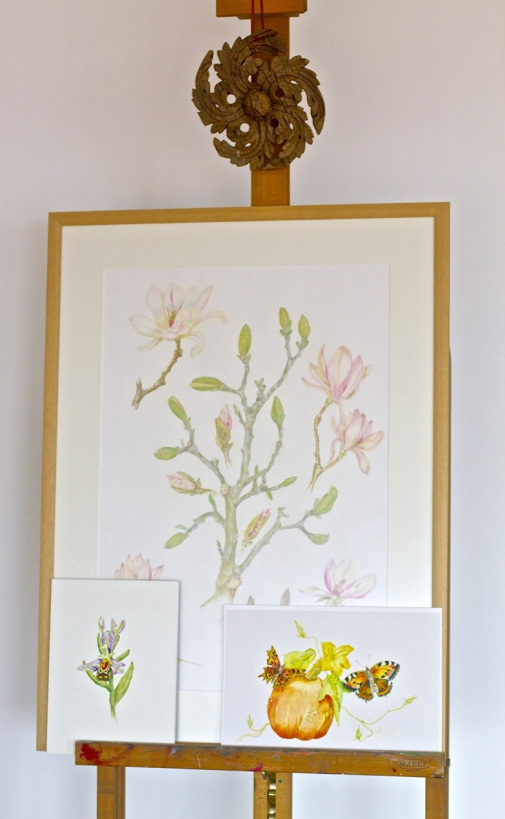
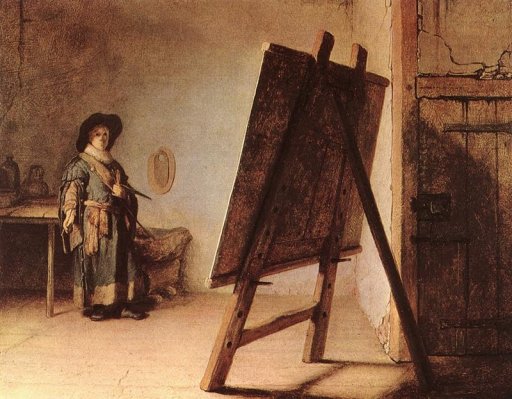
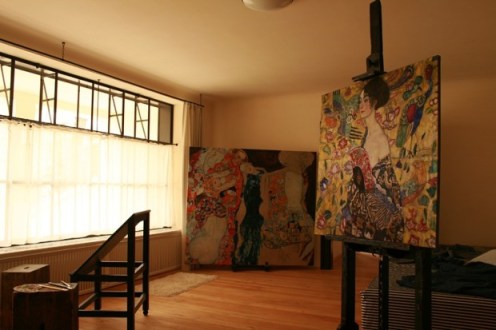




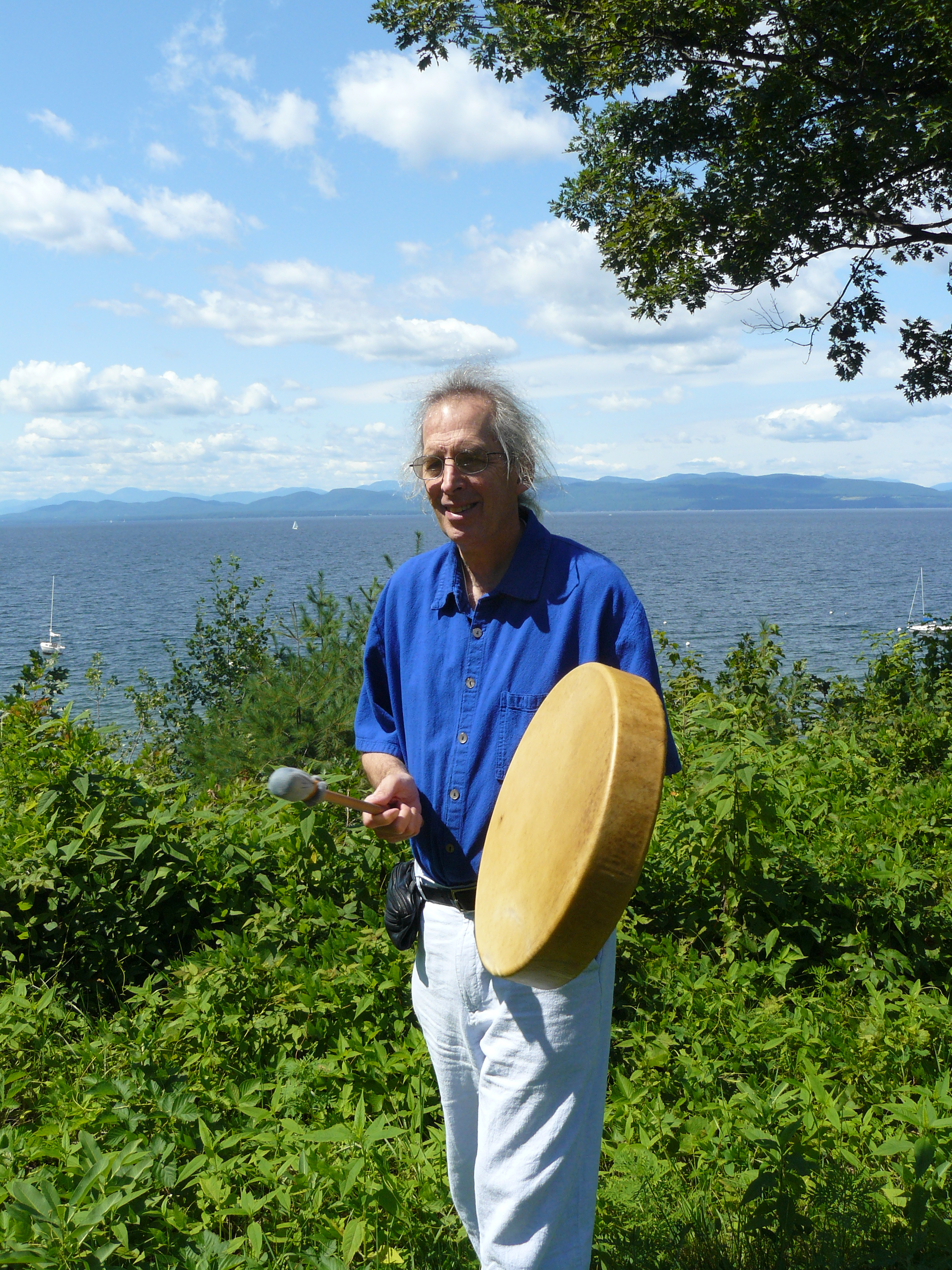


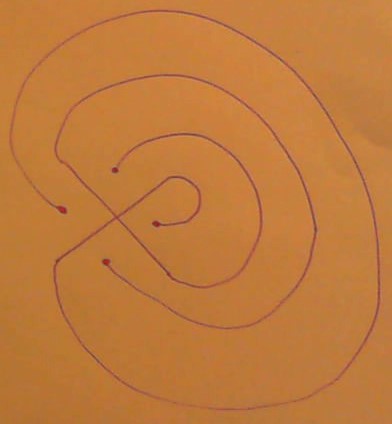


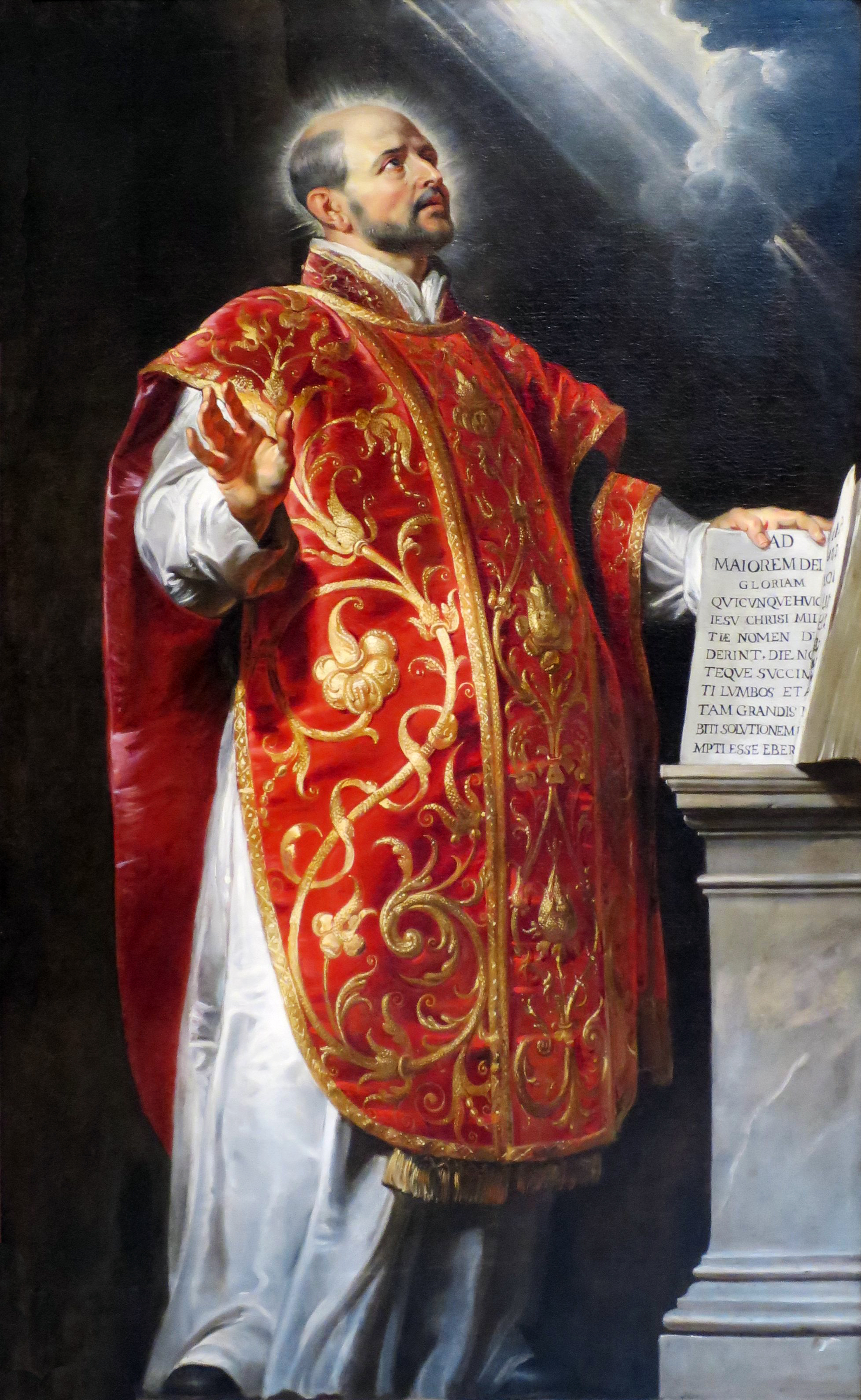

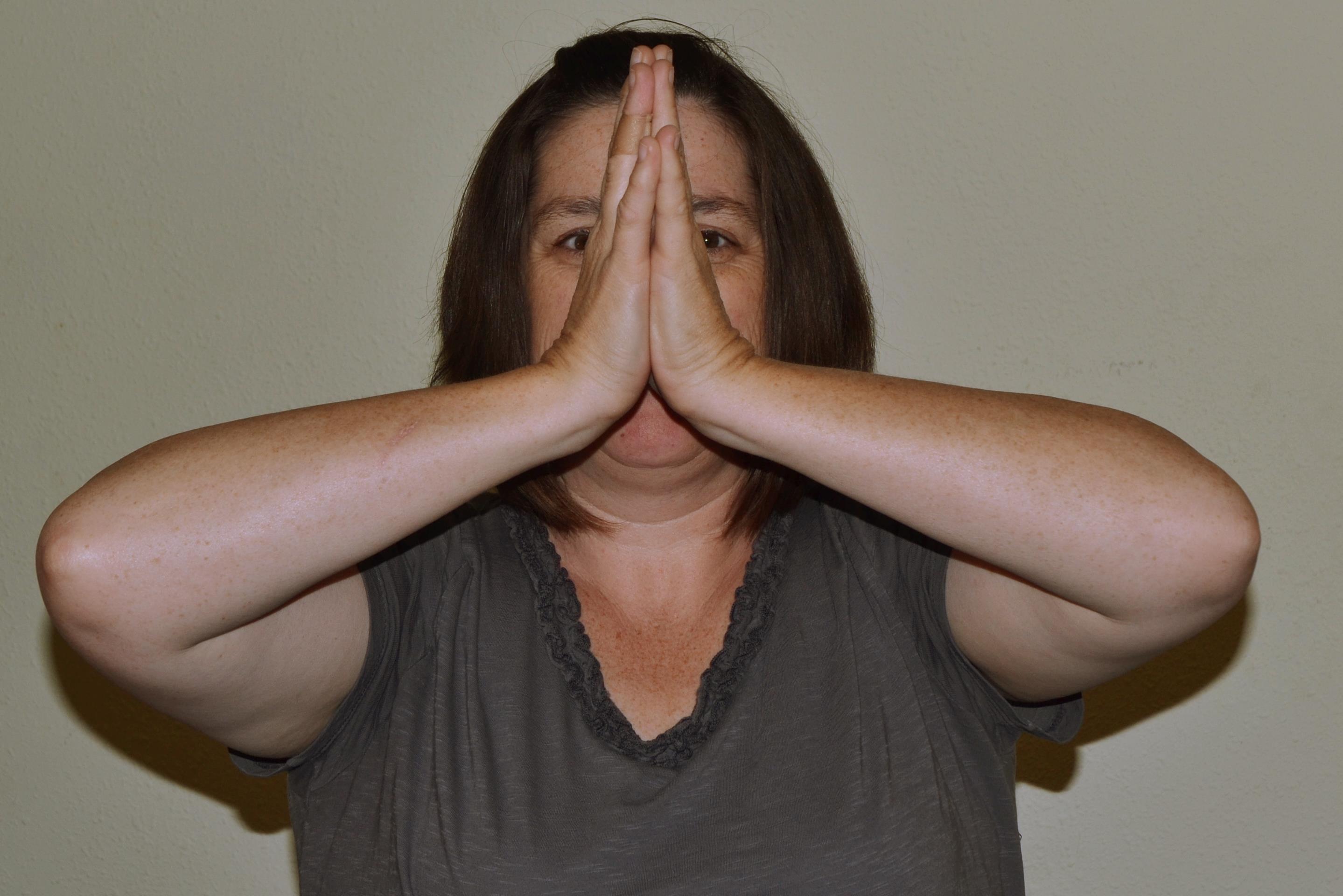









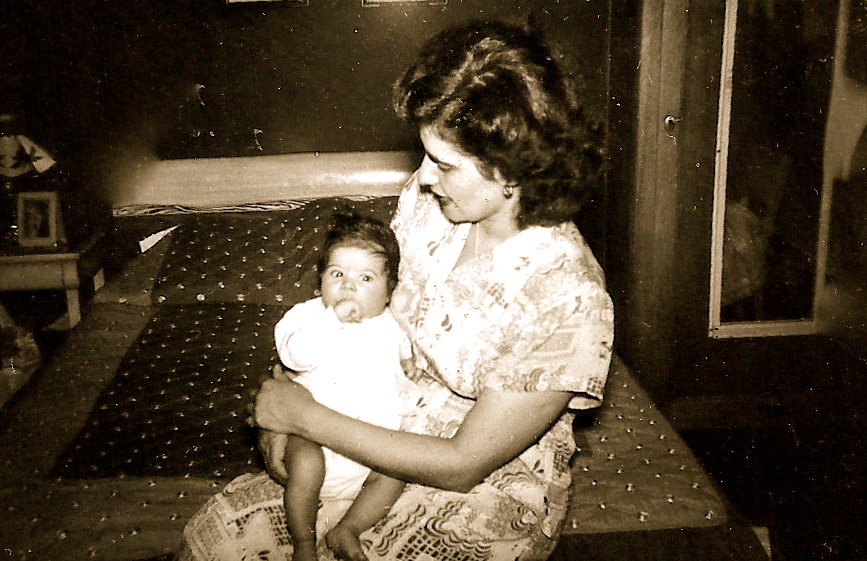
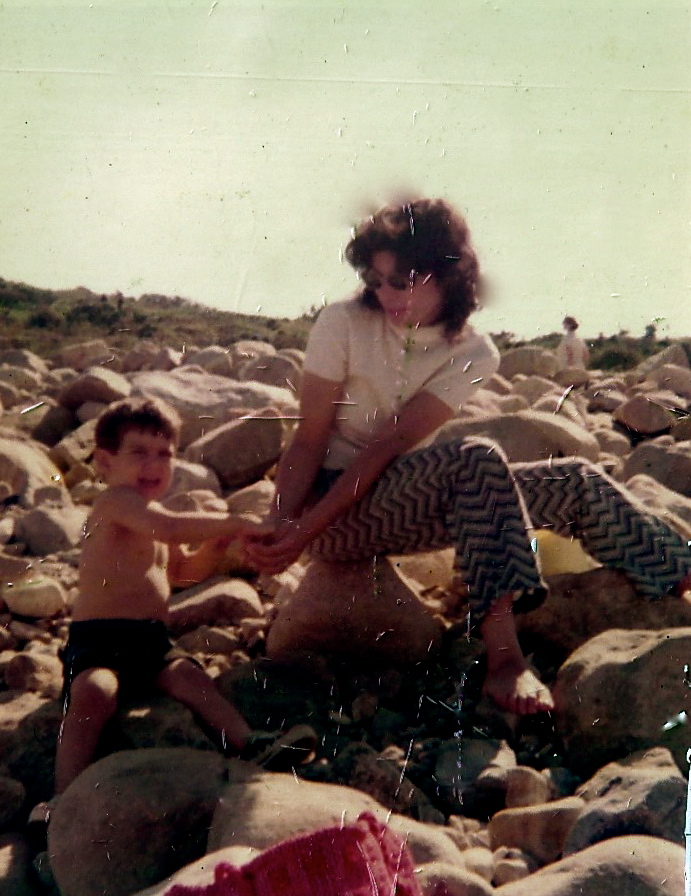
 The BeZine