Posted in Jamie Dedes, Peace & Justice, Poems/Poetry

Bodies of Their Bodies

hands-together-871294932977UgOgrateful for the backward glance of memory
to those days when life was about bottles
and diapers, walks in the park and baking
cookies for little hands and greedy mouth,
when the mornings were written in wonder,
months honey-combed with baby kisses
and the fascination of intrepid first steps …

in solidarity with other parents i will them
memories laced with gratitude, not the pain
of lost dreams, of lost bodies of their bodies,
the fragile students silenced in the corridors
of relative privilege after an insane rampage
or the everyday streets streaming blood in
Harlem and Bayview/Hunter’s Point where
uncelebrated kids live foreshortened lives

 and those are the children of democracy
there are these too, children of oppression
what of them? – tiny starved brown humans
that line the arenas of hunger and war, where
soundless tears of voiceless parents drown
the vestiges of hope while we  share our pain,
so sure the world will grieve along with us

© 2013, poem, Jamie Dedes, All rights reserved
Photo credit ~ Vera Kratochvil, Public Domain Pictures.net

Photo on 2012-09-19 at 20.00JAMIE DEDES ~ My worldly tags are poet and writer.  I’m in my fifth year of blogging at The Poet by Day, the journey in poem, formerly titled Musing by Moonlight.  Through the gift of poetry (mine and that of others), I enter sacred space.

Posted in Book/Magazine Reviews, Jamie Dedes, Poems/Poetry

The Lives of Women


… For when I shut myself off the outer tick
I find myself listening to the quickening beat
of this dear planet as if it were my own heart’s clock.”
The Composition Hut, Myra Schneider in What Women Want

www-cover
In this short collection of nineteen poems  – including the ten-page narratively-driven long-poem, Caroline Norton – Myra Schneider manages to cut through our many-layered lives. Her poems often move from the intimacy of  personal experience to a broader frame of reference. The opening poems are nature-and-spirit driven and bespeak a love of and concern for environment. The second part of the collection fulfills the polemic promise of the title to present hard lives and harder times in a clear and righteous outcry.

Among the opening poems is Losing, written for her publisher. Myra starts with the unimportant lose of socks and moves on to finding what is valuable:

“a sparrowhawk perched on your gate, eyes alert
for prey, words that toadleap from imagination,
from heart – to make sure every day is a finding.”

In two poems she hints at the symmetrical beauty of mathematics, “… the square root of minus one you once grasped, dumbfounded.” A visit to the Garden is bursting with color and movement and triggers speculations …

“but what does it matter? You know too well
how the years have shrunk your future,
that the past is an ever expanding suitcase.”

… and further along in the poem she closes with …

“to your feet, to the bees still milking
flowering raspberries. You free a frog
watch it hop back to its life.”

I was riveted by the story of Paula Schneider in Crossing Point, as Paula (probably Myra’s mother-in-law) crosses with her children from Germany into Holland during World War II. This is included in the second half of Myra’s book, which comes to the business at hand: injustice as it affects women and children.

Interesting that this book came my way when I am standing by two friends whose physical and emotional frailty are much entwined with their relations with fathers and husbands or boyfriends. It’s not that things haven’t been improved since our parents’ days…at least for many of us it has. It’s not that there are no kind and enlightened men. Certainly there are. It’s not because women and society are without culpability, because they are not.

The complexity of the gender and social issues examined are clear in Myra’s long poem, Caroline Norton, about the nineteenth century writer and poet,  social reformer and unwitting feminist. Caroline came to the latter two occupations, not so much by choice as necessity. As the poem folds out, we see that the brutal husband who separated Caroline from her children (with tragic results for them), was abetted and aided by the women in his life, influenced as they were by a social context in which women and children are property with no legal rights of their own. No doubt those women were numb to the implications, threatened by the hint of change, and anxious to bolster the sense of surperiority they got out of putting this woman down.

Myra stands firm in her poetic commitment to continue the fight started with Caroline Norton, since half the world is still under siege and the other half still begs improvements. We read about the child-bride (Woman) and the woman who is stoned (Her Story). One wonders what happens to the children – boys and girls – of such women. The short story here is that: What women want is justice.

For two years, I have enjoyed Myra Schneider’s work and appreciated her commitment to encouraging others to honor their inner artist, through her books on writing, her classes, and her support of Second Light Network (England), an association of women poets over forty. I suspect that her work doesn’t have the audience it deserves. I hope the day comes when that is remedied.

The closing poem in What Women Want:

WOMEN RUNNING
by Myra Schneider, 2013, All rights reserved
posted here with Myra’s permission

after Picasso: Deux femmes courant sur la plage
Look how their large bodies leaping
from dresses fill the beach, how their breasts
swing happiness, how the mediterraneans
of sea and sky fondle their flesh. Nothing

could rein them in. The blown wildnesses
of their dark animal hair, their hands joined
and raised, shout triumph. All their senses
are roused as they hurtle towards tomorrow.

That arm laid across the horizon,
the racing legs, an unstoppable quartet, pull
me from my skin and I become one of them,
believe I’m agile enough to run a mile,

believe I’m young again, believe age
has been stamped out. No wonder, I worship
at the altar of energy, not the energy huge
with hate which revels in tearing apart,

in crushing to dust but the momentum
which carries blood to the brain, these women
across the plage, lovers as they couple,
and tugs at the future till it breaks into bloom.

What Women Want, publisher (Second Light Publications)

© 2013, essay, Jamie Dedes, All rights reserved
Cover art and poetry, Myra Schneider, All rights reserved

Photo on 2012-09-19 at 20.00JAMIE DEDES ~ My worldly tags are poet and writer.  I’m in my fifth year of blogging at The Poet by Day, the journey in poem, formerly titled Musing by Moonlight.  Through the gift of poetry (mine and that of others), I enter sacred space.

Posted in Essay, Jamie Dedes, Music, Poems/Poetry

I Never Saw Another Butterfly

Butterfly Boy Bronze Statue unveiled at Jane Bancroft Cook Library (Florida), January 28, 2010

Sculptor, Sidney Fagin.

.

I NEVER SAW ANOTHER BUTTERLY

The last, the very last,

So richly, brightly, dazzlingly yellow.

Perhaps if the sun’s tears would sing

against a white stone. . . .

Such, such a yellow

Is carried lightly ‘way up high.

It went away I’m sure because it wished to

kiss the world good-bye.

For seven weeks I’ve lived in here,

Penned up inside this ghetto.

But I have found what I love here.

The dandelions call to me

And the white chestnut branches in the court.

Only I never saw another butterfly.

That butterfly was the last one.

Butterflies don’t live in here,

in the ghetto.

– Pavel Friedmann

Pavel Friedmann was born in Prague on January 7, 1921. He was deported to Terezin on April 26, 1942 and later to Auschwitz, where he died on September 29, 1944. At least 960,000 Jews were killed in Auschwitz. Other victims included approximately 74,000 Poles, 21,000 Roma (Gypsies), and 15,000 Soviet prisoners of war; and 10,000-15,000 members of other nationalities (Soviet civilians, Czechs, Yugoslavs, French, Germans, and Austrians). Women, men, children.

722px-Timbre_Allemagne_1992_Martin_Niemoller_oblWhile it is common to say “never again” … meaning that event we refer to as THE Holocaust … it’s important to remember that there are Holocausts (genocides) in process now and  there have been many in our history  … think of Armenia, Rawanda, the Congo, Cambodia, Vietnam, Sudan, Iraq, Somalia, North Korea,  the Kurdish peoples, Syria, Palestine … Time and past time to put an end to it …

I like to remember the lesson taught by Pastor Martin Niemoller (1892-1984) – a victim of the Nazis – and passed on to us. There is some controversy over the many versions of his “First they came …” It is often presented as a poem.  The great jazz musician, Charles Mingus, recites a version before his musical composition, Don’t Let It Happen Here. In any event, the point is made: political apathy is dangerous.

First they came for the Jews
and I did not speak out-
because I was not a Jew.
Then they came for the Communists
and I did not speak out-
because I was not a Communist.
Then they came for the trade unionists
and I did not speak out-
because I was not a trade unionist.
Then they came for me-
and there was no one left
to speak out for me.

– Pastor Martin Niemoller

– Jamie Dedes

Photo credits: Sidney Fagin – New College of Florida; German postage stamp with sketch of Pastor Martin Niemoeller (licensing status unclear ) via Wikipedia

Posted in Essay, Jamie Dedes

Roger Ebert “…online, everybody speaks at the same speed.”

ROGER EBERT (1942-2013)

film critic, screenwriter, Pulitzer Prize for Criticism

Ebert at the Conference on World Affairs in September 2002,

shortly after his cancer diagnosis

THE WISDOM AND COURAGE OF ROGER EBERT

This following piece on Roger Ebert was originally written for our Perspectives on Cancer series in 2011. I don’t know how well known Roger Ebert is outside of the United States; and while he is best know and appreciated as a journalist and film critic, I feel his inspiring response to catastrophic illness makes him a true hero and role model for anyone anywhere. Earlier this week the Chicago Sun Times announced Roger Ebert’s death from cancer.

Roger Eberts cancer and treatments took away his jawbone, his ability to speak, and even his ability to eat and drink. He continued writing right to the end, said that when he wrote he was just like his old self, and he wrote his last tweet two days before his death. Of his life online, he said:

 Now we live in the age of the Internet, which seems to be creating a form of global consciousness. And because of it, I can communicate as well as I ever could. We are born into a box of time and space. We use words and communication to break out of it and to reach out to others.

For me, the Internet began as a useful tool and now has become something I rely on for my actual daily existence. I cannot speak; I can only type so fast. Computer voices are sometimes not very sophisticated, but with my computer, I can communicate more widely than ever before. I feel as if my blog, my email, Twitter and Facebook have given me a substitute for everyday conversation. They aren’t an improvement, but they’re the best I can do. They give me a way to speak. Not everybody has the patience of my wife, Chaz… But online, everybody speaks at the same speed.” Roger Ebert

Born in Urbana, Illinois to parents of modest means who wanted a better life for him then they had, Ebert’s affinity for writing and film were encouraged. He went to Urbana High School, University of Chicago, and University of Illinois at Urbana-Champaign. He is known for his film column in the Chicago Sun-Times (1967 – April 4, 2013), his film guide books, and for the television programs he did in collaboration with Gene Siskel and later Richard Roeper. Ebert struggled with alcoholism. He is married to a trial attorney, Charlie “Chaz” Hammel Smith, now Chaz Ebert and VP of Ebert Company. 

In 2002, Ebert was diagnosed with salivary cancer. He received radiation treatments and multiple surgeries that effected his speech. In 2006, more cancer was found in his jaw bone. He was rushed to the hospital when his carotid artery burst and he “came within a breath of death.”  The jaw bone was removed. Between one thing and another, he suffered through excessive bleeding, loss of muscle mass, deformity, a jaw prosthetic, and the loss of his voice. In the TED Award video below, he informs us of his – among other things – experiments with different voices.

I have always admired Roger Ebert as a writer, film critic, and the first film critic to win the Pulitzer Prize for Criticism. Since he has been living with cancer and then the fallout from cancer, I have come to admire Roger Ebert, the man. He has shown himself to be a world-class role model and a first class human being. As you will see, through it all, he has retained his sense of humor. Write on Roger

ROGER EBERT: Remaking My Voice

Photo credits ~ Ebert at the 2004 Savaanah Film Festival by Rebert under GNU Free Documentation License and Lillian Boutte and Roger Ebert by Jon Hurd under Creative Commons Attribution 2.0 Generic license. Both photos via Wikipedia.

Video upload to YouTube by 

Belated addition to this post 12:22 a.m.: I just found this lovely essay by Roger Ebert entitled, “I do not fear death …” on Salon’s site. Link to it HERE.

ge-officeJamie Dedes ~  My mother lived with cancer of one sort or another for forty years. She was diagnosed with cancer the first time at thirty-six.  She was pregnant with me, her second and last child. She had a radical mastectomy and radiation treatments while pregnant. Ultimately, she went three rounds with breast cancer, one with thyroid cancer, and died at seventy-six of breast and colon cancer. I pray everyday for cures. Advancements in medicine and technology give us hope. I’m also encouraged to see that we are doing more with lifestyle and nutrition (antiangiogenic foods), both prophylactically and for healing and remission, and with the soft technologies of prayer, guided visualization, energy medicine, meditation, music and art.

Posted in Jamie Dedes, Poems/Poetry

Deconstructing Peace

moon-sea-cliff-137421298933417ekbDECONSTRUCTING PEACE

by

Jamie Dedes (The Poet by Day, the journey in poem)

the tawny moon is good fortune’s evening grace
it draps itself on the dwindling day’s calm
while mystic mountains rise pristine and high
above an earthy base, the wizard Merlin’s realm,
with memories of a green and primal past …
…….of rootedness
…………..essential things

the air is a sweet-and-salty caramel

and Peace!
a lively Peace …

visits on the briny spray and
delights at the meeting of land and sea
at rhythms of the ocean against the shore
the waves drift in and out, fling and toss
stop, start, begin again and then again
lilting, the dew drop of a mother’s kiss
it’s the mother’s kiss …

but moonlight wanes at the liminal hour

and Peace!
capricious Peace …

sees the moon incised with holographs
from the wind-whipped edges of the Earth
read the tales of valour and cowardice
…….the blight of war
…………..the naked lives
sundering tragedies under the heel of armies
citizen’s fleeing the lacerations of their plight
frozen in the crashing horror of their fright
in this amethyst veiled night . . .
the sense of peace deconstructed
on the rise of dawn, its shredding light

© 2013, poem, All rights reserved
Photo credit ~  Phil Downs, Public Domain Pictures.net

Photo on 2012-09-19 at 20.00JAMIE DEDES ~ My worldly tags are poet and writer. For the past five years on medical retirement due to a chronic, potentially life-threatening illness, I’ve blogged at The Poet by Day, formerly titled Musing by Moonlight. The gift of illness is more time for poetry. Through the gift of poetry (mine and that of others), I enter sacred space.

Posted in Book/Magazine Reviews, Jamie Dedes, Poems/Poetry

ARTEMISpoetry

artemispoetrycoverissue9frontARTEMISpoetry, a review

by

Jamie Dedes (The Poet by Day, a journey in poem)

No matter what happens on any given day, when the latest issue of a literary magazine crosses the threshold of my home, it’s a good day. Recently I received the November issue of ARTEMISpoetry for review. That was a very good day indeed. The writing and art is by women.The reading is for everyone. I venture to say that this publication of the Second Light Network, while not well-known, is making a mark and growing an audience.

Between the covers of ARTEMISpoetry, I found a rich selection of poems, features, reviews and interviews, biography, and art.

The journal opens with an interview of the Argentinian, Ana Becciú.

“I continue writing because I need to know and to understand … the voices within us, understand the surface of the words we use every day, voices that pronounce suffering, loss, the voices of all of us lost in this present society.”

There follows an exploration on the pleasures of reading and an essay by Myra Schneider on the “mystery of the creative moment.” I enjoyed the detail in Clare Best‘s engaging feature on her project and process for Self-portrait without Breasts. The project evolved from her decision to have a prophylactic double-mastectomy and to go flat chested and not have reconstructive surgery or use prosthesis.

“Cast me and I will become what I must.”

I think the feature I most enjoyed was Judith Cair’s piece on her experience translating passages from Homer’s Odyssey.

“The act of translating is beginning to influence my own writing. Even in writing poems far removed from Ancient Greece, I realize that there is an undertow of lines from the Odyssey, which may or may not be consciously acknowledged. And sometimes I am left with such a strong impression of a particular episode that I must re-imagine it for myself.”

The main course in this delightful menu addressing the interests of poets is the poetry itself. Among the many poems enjoyed is Anne Cluysenaar’s Hearing Your Words, offered here with the permission of the publisher and poet.

HEARING YOUR WORDS
For Ruth Bidgood, reading in Aberystwyth

by Anne Cluysenaar, © 2013, All rights reserved

I used, as a child, to imagine my death, or rather
beyond it. A ship setting out, in flames, at dusk,
counteracting the planet’s roll, on the sunrise path
to a waveless far horizon lit from beneath.

This came to mind, just now, clicking on close-up
through the café window – sea meeting that sky,
distantly smooth, arching high, up above
a jumble of chimneys and roofs backlit at sundown.

I found myself catching my breath, gravity’s curve
seen through such a small frame, from here where we sit
with our cups of tea. Vastness out there, our past.
But on planets elsewhere, other seas, other lives beginning.

Later, among the books, hearing your words,
it was waves I thought of – from land we may never see
reaching across the bulge of this little earth
to break, not one the same, on familiar shores.

taken from a poem diary From Seen to Unseen and Back by Anne Cluysenaar, forthcoming from Cinnamon Press, 2014.

ARTEMISpoetry is published  twice-a-year in November and May. Members receive their copy as part of their membership. Issues are available to nonmembers. For information, link HERE.  The next submission deadline is August 31, 2013. For membership and submission information, link HERE.

© 2013, review, Jamie Dedes, All rights reserved
© 2012, journal cover and art, Second Light Network, All rights reserved – Many thanks to Anne Stewart for forwarding the cover and to Myra Schneider, Dilys Wood, and Anne Cluysenaar for the poem

Photo on 2012-09-19 at 20.00JAMIE DEDES ~ My worldly tags are poet and writer. For the past five years on medical retirement due to a chronic, potentially life-threatening illness, I’ve blogged at The Poet by Day, formerly titled Musing by Moonlight. The gift of illness is the time for poetry. Through the gift of poetry (mine and that of others), I enter sacred space.

Posted in Book/Magazine Reviews, General Interest, Jamie Dedes

WINTER IS PAST

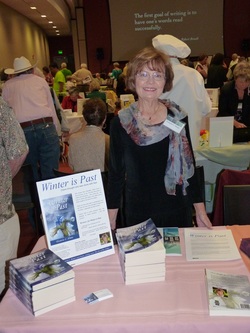
Victoria at the Palm Springs Writer's Expo March 2012
Victoria at the Palm Springs Writer’s Expo March 2012

Victoria Slotto, an Into the Bardo contributing writer, had her first novel – Winter is Past – published last year. Her second novel is in progress as well as a poetry chapbook. Victoria is a gifted writer and poet. I am proud and delighted to feature her here and honored that she has shared work on this site. She and I have much in common in terms of values and life experience. It was gratifying to see how well she incorporated important insights and ideals into the narrative flow of her novel. You will fall in love with and not soon forget her dear character, Claire. Jamie Dedes

See! The winter is past; the rains re over and gone. Flowers appear on the earth.” Song of Songs: 2:12

2940013445222_p0_v1_s260x420Enter a world where achieving inner strength and surviving the odds are possible

With a talent and voice unlike any other, Victoria C. Slotto captures the reader’s heart and mind with a tale of overcoming personal hardships and struggling with one of life’s most difficult questions, “What if…?”

What does a woman—a fearful woman—do when all she holds dear is in danger of being lost? Victoria C. Slotto’s romantic drama, Winter is Past, explores the depths of joy and sorrow women face and the paths that women find through fear.

Winter is Past explores Claire’s story, a woman with a perfect life—a husband she loves, friends, and meaningful work. As life changes around her, she shows us the strength of her spirit, as well as her belief.

Victoria C. Slotto, a former hospice nurse and a kidney transplant survivor, speaks from experience as she writes Claire’s story. But Winter is Past is not a memoir by any stretch; it is a story written by an accomplished poet and essayist.Victoria’s poems and short stories have been published in several magazines and journals since 2005.

The Plot of Winter is Past

After receiving a kidney from her best friend, Claire has a renewed delight in life. This newfound happiness is put on hold when she discovers Kathryn has cancer in her remaining kidney. To cope with a possible loss, Claire is forced to face a source of fear that has haunted her from early in life. Throughout her journey she will uncover an inner strength and survive the unthinkable. Claire’s fear is every woman’s fear. Her question is every woman’s—can she survive?

Critics Weigh In

Critics have already weighed in with reviews. Jean Davenport describes the novel as “A beautifully written and purposeful exploration of the meaning of life through love, loss and rebirth. The journey of Claire makes us all appreciate the fragile string our lives are attached to and how each event makes all worth living. A great read!”

Winter is Past was released December 2011 and is available in both print and e-book formats via most online retailers, which are listed HERE.

© 2012, 2013, photographs, Victoria C. Slotto, all rights reserved

Victoria and Dave Slotto

Victoria C. Slotto attributes her writing influences to her spirituality, her dealings with grief and loss, and nature. Having spent twenty-eight years as a nun, Victoria left the convent but continued to work as a nurse in the fields of death and dying, Victoria has seen and experienced much. Because of her experience, Victoria is able to connect with her audience on an intimate level. She resides in Reno, Nevada, with her husband and two dogs and spends several months of the year in Palm Desert, California. Winter is Past is her first book published by Lucky Bat Books. Victoria is also an accomplished blogger, sharing her fine poetry with us HERE.

Posted in Fiction, Jamie Dedes

SEÑORA ORTEGA’S FRIJOLES or LESSONS LEARNED IN THE KITCHEN

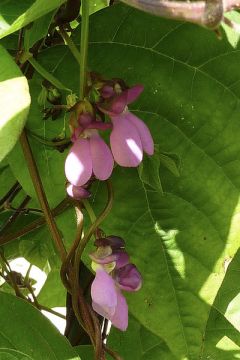
las flores de frijoles

SEÑORA ORTEGA’S FRIJOLES

by

Jamie Dedes

Her fate was set when she fell under the spell of the American’s kind eyes and bigger than life personality. For his part, he loved her gentle ways, the fluid dance of her hands at work, the sensual swing of her hips as she walked to the market with basket in hand. And so it happened that in 1948, with her father’s permission and her mother’s tears, they were wed in the old adobe iglesias where uncounted generations of her family had been married before her. Not many months after the wedding, she kissed her parents and siblings goodbye, took a long loving look at her village, and followed her new husband north to los Estados Unidos de América. She was already pregnant with Clarita.

****

As the days and years passed, they settled into their routines. Sunday mornings were her husband’s quiet time. He stayed at home while Señora Ortega and Clarita were at Mass. In their absence he would occasionally put down his newspaper and stir his wife’s frijoles simmering fragrant with pork, a few bay leaves, onions and garlic. Last night: their Saturday ritual, she and Clarita had sorted and then washed the dried beans in cold water and left them to soak until morning. The child – fast becoming a young woman – took the time and care to do a good job of this. El trabajo es vertud. Work is virtue, Señora Ortega encouraged.

In the tradition of Señora Ortega’s own madrela cocina was a place of teaching – about food, about life, about being a woman, about being human. “!Ten cuidado, hija!”  Be careful, she would say as she demonstrated her almost sacramental sorting of the dry beans. It was an opportunity to teach Clarita the dichos, the proverbs, of her mother and grandmother and all the grandmothers before.

“Los frijoles son nuestra fuerza.” We get our strength from los frijoles, she taught Clarita just as her own mother taught her. Certainly the beans give the strength to our bodies, but also the strength to our character.  There are lessons. “¡Aqui!”  Remove these. Remove the wrinkled, the broken, the discolored or malformed. Remove them as you should remove flaws from your character. One bad frijole will ruin the whole pot.  Taparse con la misma cobija.* … You will be judged by the company you keep. Be cautious in your choice of friends.  Even the Norte Americanos have such a saying: one bad apple spoils the bunch.

“Mama,” said Clarita, rolling her eyes after her mother’s latest speech. We are North Americans.” Señora Ortega’s brow furrowed when she heard this. She was given to worry about such reactions from her daughter. What of the child’s values?  It is true after all. My daughter is American. What does this mean for her future, for our relations, and for us as la familia?

****

Soon Señora Ortega had to put her concerns aside. It was springtime. Easter was upon them and with it a visit from her husband’s sister with her two small children. Señora Ortega and Clarita were busy with preparations. The air in her house smelled of poblanos roasting and cookies baking. They put fresh linens on the beds in the guest rooms. They picked flowers from her garden and set them in vases around the house. She gave in and bought chocolate Easter bunnies too, the silly convention of this country, but the children loved them and looked forward to them each year.

Finally the honored guests arrived and the house was filled with the cheerful noises oflos niños. The boy and girl were now old enough to learn to prepare beans and, on the eve of Easter Sunday, Señora Ortega gave Clarita the task of showing the children how to sort los frijoles for cooking.  She looked on as Clarita explained the process. “!Ten cuidado, mis primos. Aqui! Remove these. Remove the wrinkled, the broken, the discolored or malformed.  Remove them as you should remove flaws from your character. Remember one bad frijole will ruin the whole pot. Be cautious in your choice of friends. Taparse con la misma cobija. You will be judged by the company you keep. “Los frijoles son nuestra fuerza.” Los frijoles are our strength.

****

At some point, Señora Ortega’s husband had come to stand by her side. She realized he was watching her as intently as she watched their daughter. He put his arm around her and held her close. “You see, mi querida, she is a good girl and you are a good mother. It’s gonna be okay …”

“Am I that transparent,” thought Señora Ortega, but she sighed gratefully. All will be well. My mother was right. “Los frijoles son nuestra fuerza.” 

.

Taparse con la misma cobija – literally: to cover yourself with the same blanket, i.e. likely the same meaning as our expression “birds of a feather.”

© 2012, short story, Jamie Dedes, All rights reserved. This story is a fabrication and not meant to depict any specific person or persons living or dead.

Photo credit ~ Schnobby via Wikipedia under Creative Commons Share-Alike 3.0 unported license

Posted in Jamie Dedes, Poems/Poetry

Paula Kuitenbrouwer’s piece – shared here yesterday – on the near death of a beetle resonated for me on a number of levels. This is the result. Jamie Dedes

Posted in General Interest, Jamie Dedes

Le Ennui de Henri

“Je suis seul à sentir ce tourment.”

“I alone feel this torment.”

Henri, Le Chat Existentiel

Another little Bardo on The Light Side. Kudos to the brilliant Will Braden for imagining such a wonderful script for Henri. I posted this on my personal blog, The Writer by Day, where it seem to be very much enjoyed. It is charming and funny; but, it does also serve to remind us of how we humans can torture ourselves by misreading the intentions of our fellows or occasionally turning everything into drama. Without a doubt, Henri, like many of our younger brothers and sisters in nature, is a teacher. J.D.

Video, Script, and Voice ~ 

Posted in General Interest, Jamie Dedes, Teachers

MADEMOISELLE, Teaches Lessons in Courage and Compassion

ANDREE GEULEN-HERSCOVICI (b. 1921), Belgian 

Saved 300 Jewish children during the Holocaust

LESSONS IN COURAGE AND COMPASSION

by

Jamie Dedes

With love for her students who would surely face death at the hands of the Nazis,  Andree Geulen (then a twenty-year-old teacher) hung the Star of David on her Cross of Jesus and one-by-one walked three-hundred children out of the Holocaust and into life. They called her Mademoiselle. Her story is a lesson in courage and compassion.

There are unsung heroes in this story too. They are the men and women who subsequently took these children in at risk to themselves. They raised and presented the children as their own. They taught them to put on the face of Christianity for safety sake while secretly teaching them to honor their own Judaism.

Laurel D. sent me this video with a song that was written to honor Andree Geulen-Herscovici. The complete story is embedded in the video. The song was written to honor Mrs. Geulene-Herscovici’s 90th birthday, as you will note in the video.

·

Andree Geulen-Herscovici, May 1998, at the reunion of children who had been saved during the war at Chateau Jamoigne, Belgium: Her comment HERE. (Must read.)

Belgian woman who saved 300 children in the Holocaust gets honorary Israeli citizenship HERE.

© 2012, Jamie Dedes, All rights reserved

Video uploaded to YouTube by  

Photo credit ~ Andree Geulen, Maison des Justes Histoire

Posted in Essay, Jamie Dedes

GREAT ACTS OF LOVE

PEARL BUCK (1892 – 1973)

American Novelist and Humanitarian

Pulitzer Prize, 1932

Nobel Prize for Literature, 1938

I give you the books I’ve made,

Body and soul, bled and flayed.

Yet the essence they contain

In one poem is made plain,

In one poem is made clear:

On this earth, through far or near,

Without love there’s only fear.

Essence by Pearl Buck

GREAT ACTS OF LOVE

by

Jamie Dedes

I view Pearl Buck, whom I started reading when I was twelve, as a sort of spiritual mother. You can imagine my joy then to find a copy of her one book of poetry in a used bookstore. It is the only book she wrote that I had not read. It sat dusty and torn and – while clearly once well-loved by someone – it was now hidden in an out-of-the-way place, untouched and unrecognized for its simple beauty.

In brief, eloquent, deft strokes, Ms. Buck’s poems do indeed express the great message of both her work as a novelist and writer and as a humanitarian  …

“WITHOUT LOVE THERE IS ONLY FEAR”


Born on June 28, 1892 in Virginia, Pearl Buck was the daughter of missionaries. She grew up in China and spoke Chinese before she ever spoke English. She was a prolific writer with most of her books inspired by her experiences in Asia. In the 1920s, before the publication of her books, her stories and essays began appearing in influential American and Chinese publications.

Of Ms. Buck’s novels, The Good Earth is the most well-known. It was her second novel and became a best seller. She also wrote a number of nonfiction books including memoir and a cookbook. Her poetry collection, Words of Love, was published in 1974, a year after her death. It is now out of print.  It is gracefully illustrated by Jeanyee Wong and was published by The John Day Company, the publishing firm founded by Ms. Buck’s second husband, Richard Walsh.

Throughout her career, Ms. Buck wrote heroically, acutely, and compassionately of women’s rights, immigration issues, mixed-race children, adoption… and, of course, China. She was blacklisted in the 50s for her political and social views. But Ms. Buck’s life was not just about words of love. It was about great acts of love.

Most of Pearl Buck’s humanitarian work was toward mitigating the poverty and discrimination suffered by children.Ms. Buck founded Welcome House, Inc, which was the first international interracial adoption agency. She adopted – if I remember correctly  – ten children herself. Her initial efforts to help mixed-race children were inspired by their rejection in Asia, especially in Korea. There mixed-race children fathered and left behind by American soldiers were barred from any social, educational, and civic privileges, as were the mothers of mixed-race children. Today Ms. Buck’s books still stand as ambassadors of her love and humanity and as introductions to China before Mao.

Here Anchee Min, Chinese-American author, discusses her reasons for writing Pearl of China, a fictionalized account of Pearl Buck’s life.

© 2012, essay, Jamie Dedes, All rights reserved

Ms. Buck’s photograph is in the public domain.

Video posted to YouTube by  .

Posted in Jamie Dedes, Meditation, Teachers

YOUR PRESENCE IS REQUESTED

Br. David Stendl-Rast

This is just in from Br. David’s team at Gratefulness.org. I think it’s a wonderful opportunity and, since the event will be live-streamed by Sounds True, you can attend no matter where in the world you live and at no charge. J.D.

We have long wanted to host a summit at which world-class speakers – friends of Br. David’s through his decades of travels – could mutually envision fresh pathways for the global community to live in harmony and compassion. People from all walks of life could gather at this summit to find renewing insight desperately needed in chaotic times. Now this dream is coming to fruition:

Pathways to Gratefulness

David Whyte, Angeles Arrien, Chungliang Al Huang, Roshi Joan Halifax, Fritjof Capra, Chip Conley, and more than a dozen other extraordinary speakers, musicians, and dancers will be with us at “Pathways to Gratefulness” in San Francisco’s Palace of Fine Arts on Saturday, June 23rd. Your presence makes this event a vital catalyst! We cannot wait to see many of you in person. And no one need miss this opportunity, thanks to live-streaming:

Live, SoundsTrue: Celebrating Gratitude

Live-stream footage will be online free of cost until July 31st . Thank you so much to those of you who are offering donations to help make live-streaming available to all.

Please take a moment to forward this message to your friends. This helps us tremendously since, without your help, we cannot reach all the people who would benefit from this event. Your participation in “Pathways to Gratefulness” brings you further in touch with a groundswell of grassroots commitment to keep alive the true dignity and joy of being human.

© 2012, Gratefulness.org, A Network for Grateful Living

Photo credit ~ Verene Kessler via Wikipedia and generously released into the public domain with the caveat that the photographer be attributed.

Video uploaded to YouTube by 

Br. David ~ is notable for his work fostering dialogue among the faiths and for exploring the congruence between science and spirituality. Early in his career he was officially designated by his abbot to pursue Catholic-Buddhist dialogue. He studied with several well-known Zen masters. He is the author of feature articles, chapter contributions to collections, and books. Among the most notable are Belonging to the Universe (with Frijof Capra) and The Music of Silence: A Sacred Journey Through the Hours of the Day (with Sharon Lebell). Br. David is the co-founder of A Network for Grateful Living, dedicated to the life-transforming character of gratitude.

Posted in Jamie Dedes, Music

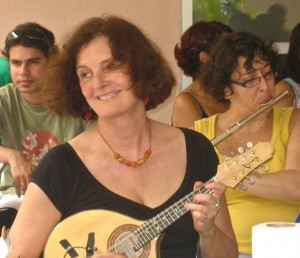
THE LIFE AND MUSIC OF MARILYNN MAIR

MARILYNN MAIR

American composer, mandolinist, professor, writer, and poet

Concert performer, recording artist, professor of music, mother of two musically talented kids, director of America’s pre-eminent summer school for mandolin and guitar — any one or two of these can be a full-time job, but Marilynn manages to do them all. MORE  [MANDOZINE]

However untrained my ear may be, I immediately appreciated that there was something exciting and fresh in the audios Marilynn Mair uploaded to her blog Celebrating a Year. The reason for the freshness was that it was Brazilian jazz, called choro, something with which I was not familiar. I think the first audio might have been Isso, which was written by Marilynn and performed by her and Luiz Simas on Meu Bandolim, their CD released 2010. [Sample] I was hooked. I sent the link around to all my music-loving family and friends.

Choro (pronounced SHOH-roh) is best described in American terms as “the New Orleans jazz of Brazil.” It is a complex popular musical form based on improvisation, and like New Orleans jazz, blues, or ragtime, grew from a formalized musical structure and many worldly influences. But to the people of South America, choro is Brazil. It is life. MORE  [Saint Paul Sunday]

As lutes go, I was most familiar with the oud of my Lebanese/Turkish background; but I also grew up among Brooklyn Italians and enjoyed their mandolino [The Serenade of Italy]. The European instruments have the oud as a common ancestor. Curious, I quieried Marilynn about choro and in response she gifted me with two of her seven CDs. That was my virgin venture into the delightful sounds of this distinctly Brazilian music. Now it’s an addiction.

Marilynn is professor of music at Roger Williams University at Bristol, Rhode Island. Each year, she travels to Brazil to continue research, study, and teaching. In fact, as I write this, she’s on her way to Rio to teach a class of mandolinists at the Universidade Federale and to write music. She always shares her adventures with us on Celebrating a Year, her blog.

The set of compositions that Marilyn is currently writing is a series of hybrid choro in which Marilynn uses themes from classical music and jazz to creat Brazilian music. She finished three: Um Quinto do Ludwig, a bossa nova based on the first movement of Beethoven’s 5th symphony; Farrapo (Rag) based on Scott Joplin’s The Entertainer, and Sonatinha based on Beethoven’s Sonatina in C for Mandoline. These trips may be a change of scenery for Marilynn, but they’re not a break from the work she loves. She’ll be hard at it on the next three compositions, one of which is to be based on Piazzola’s Milonga do Angel.

Next on her agenda is SummerKeys, a music camp providing students of mandolin and guitar with a week private lessons, plucked-string ensambles, concerts, new friends and mentors. SummerKeys is at Lubec, Maine. (Info and registration for that is HERE should you be interested.)

Marilynn’s newest book, available on Amazon, is Brazilian Choro – A Method for Mandolin.  Her website [Maryilynn Mair Madolin] is a generous source of information on mandolin, choro, and Brazil including feature articles and her Brazil Log.

With all of her professional activities, it’s hard to believe that Marilynn also participated in the 2010 National Novel Writing Month (NaNo). She did this in solidarity with her equally talented brother – engineer and author – Ian Mair (Death in Mexico). Marilynn completed her 50,000 word commitment entirely in poem, writing to Edward Hopper paintings in décima joining the décima with free-verse as a narrative with the décima as soliloquies. This is much like Cuban musical décima, which were often interspersed with instrumental improvisation.  I asked her why décima:

It was originally a Spanish poetry form first published in 1591. I was drawn to it because in the migration to the Americas the form survived and flourished as an improvisational song form. It has such a strict form and that’s surprising. No one improvises sonnets. As a song form, particularly in Cuba, it added four-line intros or outros, and improvised instrumental interludes between décimas. That worked for my manuscript because I could use the four-line piece to introduce or explain a décima’s connection to the plot line. And the interludes became free verse connectors dealing more specifically with the protagonist’s changing state of mind and emotions. But this all really developed in the process of writing all month.

I started writing décima earlier this year because I was intrigued by the form, and since no one seems to be writing them in English, or ever has, it seemed more “my” form to explore. I liked what I was coming up with so decided to go with that for NaNo rather than the more obvious villanelle or an iambic pentameter ballad.

Marilynn’s poetry is featured on her blog [Celebrating a Year] each Wednesday, where you can also catch up with her daily musings and photography. Marilynn is  a contributing writer here at Into the Bardo. Her most recent contribution is Shred the Social Safety Nets.

By way of close, here’s Marilyn playing mandolin at a recording studio in Brazil with Grupo Água no Feijão Tocando Assanhado. They are recording the CD Meu Bandolim.  Enjoy!

Marilynn Mair, mandolin, bandolim
Solo & Duo, Enigmatica, Água No Feijão
Author, The Complete Mandolinist- A Comprehensive Method
Co-author, Brazilian Choro – A Method for Mandolin
Director, The American Mandolin & Guitar Suitcase Seminars
http://www.marilynnmair.com/

“I sing of brooks, of blossoms, birds, and bowers
Of April, May, of June, and July flowers.” – Robert Herrick

– Jamie Dedes·

© 2012, essay, Jamie Dedes, All rights reserved

Photo credit ~ portrait by Romulo Aguiar (musician) and © 2012 Marilynn Mair

Video #1 uploaded to YouTube by thefeedRWU.

Video #2 uploaded to YouTube by . Link to HERE for a recent article about Marilynn by Jim McGraw.

Posted in Jamie Dedes, Poems/Poetry

BLACK DAYS IN THE SUDAN


We can run away from bombs, but not from hunger.” Sudan‘s refugees in South Sudan, report of Amnestyus.org 2012

·

I wrote this back in the 80s in response to an essay on the “black days” by someone from the Sudan.  

·

Have you read about them –

“Black Days” in the Sudan?

They are hunger-and-thirst days

When the supply of water –

One liter per person for two weeks

. . . is gone

When their food, one meal a day

For fourteen days

. . . is gone,

and the waiting and wasting begins –

four, five, fifteen days

Until more food and water

then Black Days again –

They are days of laying-in.

Conserving energy.

Some survive.

·

If you want and are able, you can make a donation to the Fill the Cup of the World Food Programme. They say $1 fills four cups.

© 2012, poem, Jamie Dedes, All rights reserved

Photo credit ~ mother and malnurished child, Darfur, taken by USAID and in the public domain

Posted in Jamie Dedes, Poems/Poetry

NO-BALONEY SANDWICHES

“ONE’S-SELF I sing—a simple, separate Person.” Walt Whitman, Leaves of Grass

·

For Zabaida on her 98th birthday.

Maybe next time around …

 NO-BALONEY SANDWICHES

by

Jamie Dedes

·

This is dedicated to all those fine beings . . .

Those who are blatantly themselves

You know the ones I mean –

Some, when seedlings, had folks

who jabbed a finger yelling: You! You! You!

accusing them of being quintessentially themselves

. . . as though that was wrong.

They are the YOUs who come from multi-colored places

and varied dreams

with hearts woven of wonderlush.

They are womanish or manish.

They are childlike and adultish.

They run from the gray streets to the green forest.

They take to long-lost roads and never-found pathways

with their song in a backpack and

a brown-bag lunch of no-baloney sandwiches.

When they elder they arrive back at the beginning

knowing who are they are

. . . and why.

·

© 2012, poem, Jamie Dedes, All rights reserved

Photo credit ~ Jon Sullivan’s “Woman on the Beach”

Posted in Jamie Dedes, Poems/Poetry

THE LIFE AND POEMS OF MARY MacRAE

Mary MacRae (1942 – 2009), English poet

[Mary MacRae] wrote and published poetry the last ten years of her life, after ill-health forced her to take early retirement from teaching. She taught for fifteen years at the James Allen Girls School (JAGS), DulwichLondon. Her commitment to writing led to her deep involvement with the first years of the Poetry School under Mimi Khalvati, studying with Mimi and Myra Schneider, whose advanced poetry workshop she attended for eight years. In these groups her exceptional talent was quickly recognised, leading to publication in many magazines and anthologies. MORE [Second Light Live]

Elder

by

Mary MacRae

This poem is  excerpted from Mary MacRae’s book, Inside the Brightness of Red.

Reprinted here with permission. All rights are reserved by the publisher, Second Light Network.

·

A breathing space:

the house expands around me,

·

unfolds elastic lungs

drowsing me back

·

to other times and rooms

where I’ve sat alone

writing, as I do now,

when syncope –

·

one two three one two –

breaks in;

·

birdcall’s stained

the half-glazed door with colour,

·

enamelled the elder tree

whose ebony drops

·

hang in rich clusters

on shining scarlet stalks

·

while with one swift stab

the fresh-as-paint

·

starlings get to the heart

of the matter

of matter

·

in a gulp of flesh

and clotted juice that leaves me

·

gasping for words transparent

as glass, as air.

♥ ♥ ♥ ♥

My profound gratitude to poet Myra Schneider for the introduction to a new-to-me poet, Mary MacRae, and to poet Dilys Wood of The Second Light Network (England) and editor of ARTEMIS Poetry for granting this interview. J. D.

JAMIE: Clearly, and as has been stated by others, Mary was profoundly inspired by art, nature (particularly flowers and gardens), and love. What can you tell us about her life and interests that would account for that?

DILYS: Mary writes tender and accurate poems about wild nature, creatures and landscape, drawing on her stays in a cottage on an untamed part of the coast in Kent, England and visits to her daughter living in remote West Wales. In her London home, it’s easy to guess from her poems about garden birds and flowers how much time she spent at the window. She almost always sees nature in flux, changing moment by moment, unpredictable, mysterious, a spiritual inspiration. One of her great strengths as a poet is catching movement.

Many of Mary’s poems focus on love between close family members. This may relate to a difficult relationship with her own father, which she sought to understand, and the relationships which compensated (with mother, sister, husband Lachlan, daughter and grandchild). A back problem prevented her from holding her baby daughter and she often refers in her poems to young children. She clearly has a yearning towards them.

JAMIE: She wrote poetry apparently only at the end of her life and for ten years. What were her creative outlets before that? How did she come to poetry?

DILYS: Mary was a dedicated teacher of English Literature and language in a leading girls’ secondary school. She was also deeply interested in music and painting (these are strongly reflected in her poetry). Though she had written as a young woman she followed the pattern of many women creative artists in becoming absorbed into her home life and her paid work, only turning to writing when her illness released her from the daily grind of intensive teaching. The remarkable, rapid development of her poetry shows how strong her latent powers really were.

JAMIE: Was writing poetry a part of her healing process when she was diagnosed with cancer? If so, how did it help her?

DILYS: I’m confident that Mary’s diagnosis with cancer enabled her to change her life-style and from then on concentrate on her poetry, urged by the sense that she might be short of time. There is no evidence that Mary wrote therapeutically to come to terms with her cancer. In fact she only ever addressed her illness in relation to the possible unkindness of fate in cutting her off from beloved people and life itself. The poems written in the last 2-3 years of her life give the impression that her dedication to writing, with the spiritual experiences which accompanied it, enabled her to bear terrible distress. She records this distress, using imaginative and metaphorical approaches to focus it, and these poems make heart-wrenching reading.

JAMIE: Can you tell us about her process? When did she write? Where? For how long?

DILYS: I have the impression that Mary’s life revolved around three things, people she loved, gathering experiences that would feed her poetry (travel, listening to music, visiting galleries) and very hard work in direct furtherance of her writing (extensive reading, attending workshops with other inspirational poets, writing, revising and submitting her poems to criticism from critics she respected). She used notebooks to make a full, accurate record of those experiences – landscapes, human encounters, thoughts – that would feed her work. There is an extract from one such entry in the section about keeping a journal in the resource bookWriting Your Self, Transforming Personal Material by Myra Schneider and John Killick. This book also includes a contribution in the chapter on spirituality which reveals much about Mary’s attitudes to life, nature and also her writing process.

JAMIE: Do you have any advice from her for other poets and aspiring poets?

DILYS: Mary was a dedicated writer, entirely sincere in her commitment to poetry as opposed to ‘career’ as a poet. She was always ready to enjoy and praise the widest range of subject-matter, approaches and styles from other poets, providing she thought they were ‘busting a gut’ to get their poems right, and not indulging in the trendy or superficial, which she despised (whether from well-knowns or unknowns). She put much emphasis on wide-reading of both past and contemporary poets and she herself had absorbed a huge amount of other poets’ work, always quoting fully and accurately. She liked using another’s work as a starting pont for her own (the Glose) and particularly admired the work in strict form (includingSonnetVillanelle and Ghazal), which began to be more acceptable from the mid-1990s (eg from such poets as Marilyn Hacker and Mimi Khalvati).

JAMIE: Are any other collections of her poetry planned? If so, when might we look forward to them?

DILYS: When putting together ‘Inside the Brightness of Red’, Myra Schneider and I went through the whole of Mary’s unpublished work and selected all those poems we felt were both complete and would have satisfied her high standards. What remains unpublished would be mainly fragments and early versions of poems she did more work on. There will not, as far as we know, be a further book, but Mary did achieve her aim of being a significant lyric poet, whose work is very attractive, polished and, above all (as she would have wished) deeply moving and consolatory.

The Second Light Network aims to promote women’s poetry and to help women poets, especially but not only older women, poets develop their work. It runs weekends of workshops and readings in London usually twice a year, a residential extended workshop with readings and discussions at least once every eighteen months and occasionally other events. It is nationwide (England). Dilys is the main editor of ARTEMIS Poetry, a major poetry magazine for women produced by Second Light twice a year.  It includes a lot of reviews and some articles as well as poetry by Second Light members who receive it free as part of their subscription. An e-newsletter is sent out every few weeks. A few anthologies of poetry have been published by the network but now this magazine developes books under special circumstances only – such as Mary’s collections.

Thanks to Second Light Web Administrator, poet Ann Stewart, for the following: The books (Inside the Brightness of Red and As Birds Do) can be bought: via order form and cheque in post: http://www.secondlightlive.co.uk/books.shtml or here online: http://www.poetrypf.co.uk/shop.php (typing  ‘ Mary MacRae collection ’ in the filter box will reduce the list to just those two books).

Posted in Jamie Dedes, Poems/Poetry

SILENCE AT NOON

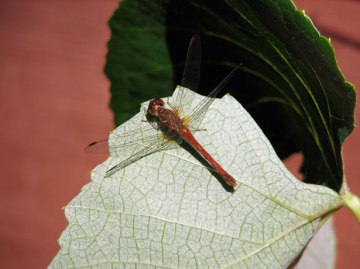
Deep in the sun-searched growth the dragon-fly

Hangs like a blue thread loosened from the sky ~

So this wing’d hour is dropt to us from above.

Dante Gabriel Rossetti, Silent Noon

SILENCE AT NOON

by

Jamie Dedes

The days are filled with noise and moods

but silence lies here at noon

like stillness between heartbeats

and the Ever speaks

through dragonflies breathing vineyards

and a million bees humming the same tune

Caravans of monks and nuns

leave messages in dead languages

and encrypted ritual

as they walk their pathways across bridges

known for their span and silver beauty

Like a revered teacher’s stupa

or a gothic Cathedral

those bridges spin toward heaven

stop short

and trip to the other side

Nothing changes

The same whispered stories

fill your rattling lungs with grief

The only truth is in the silence at noon

doing duty as shawl, shield, and salvation

·

© 2012, poem, Jamie Dedes, All rights reserved

Photograph ~ Arcana Dea, Public Domain Pictures.net