come let us dig up the bones of children and carve them into spears so that their parents’ deaths might seem less painful when brought about by some part of their own join with us in prayer to a god of our own image cloaked in a bloody shroud of justified war glorifying our humanity as we steal the last breath of hope from the corpse of peace
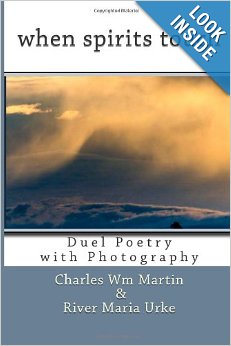
. CHARLES W. MARTIN (Reading Between the Minds) — earned his Ph.D. in Speech and Language Pathology with an emphasis in statistics. Throughout Charlie’s career, he maintained a devotion to the arts (literature/poetry, the theater, music and photography). Since his retirement in 2010, he has turned his full attention to poetry and photography. He publishes a poem and a photographic art piece each day at Read Between the Minds, Poetry, Photograph and Random Thoughts of Life. He is noted as a poet of social conscience. Charlie has been blogging since January 31, 2010. He has self-published a book of poetry entitled The Hawk Chronicles and will soon publish another book called A Bea in Your Bonnet: First Sting, featuring the renown Aunt Bea. In The Hawk Chronicles, Charlie provides a personification of his resident hawk with poems and photos taken over a two-year period. Charlie’s lastest book, When Spirits Touch, Dual Poetry, a collaboration with River Urke, is available through Amazon now.
There are people for whom poetry exists almost exclusively as an aid to social change – not as some sort of didacticism – but as a discussion, a wake up call, a way of approaching some truth, finding some meaning, encouraging resolution. Most of the folks who participated in this Bardo community event aren’t among them. They are as likely to write about the beautiful flowers that have just popped on their orchid as they are to write a poem calling for change, peace and justice. But it does happen and quite often: a horrific war photo, a news report of an injustice, a homeless person outside the grocery, a friend in pain that can be traced to some social issues, and the words start to flow. There’s the urge to respond, to do something . . .
As I make my way around the blogosphere, I am touched to see how many people blog for causes – “worthy” causes as my mom would say – and I know that “worthy” is in the eye of the reader. War is big. For those bloggers who are pacifists, this medium offers one means of passive resistance. Perhaps passivism is the strongest form of resistance and poetry the conscience of the collective soul.
I can’t help but think that the peace and justice so many of us seek is rooted in transforming values. Hence, it is more evolutionary than revolutionary. It is perhaps so gradual but pervasive that it is more evident in our blogosphere than it is in the sensationalism of mainstream media. Perhaps it is more evident in the heart-born prose and poems of simple folk like you and me with nary a pundit or politician among us. Maybe it’s a bottom-up thing, more likely to be blogged than broadcast, rising from homespun poetry – outsider literary art – sometimes rudimentary and awkward, but always quiet and true and slow like a secret whispered from one person to the next. Maybe it is something stewing even as we write, read, and encourage one another. It could be there is some bone and muscle in what we do. Individually we have miniscule “audiences.” Collectively we speak to enormous and geographically diverse populations. Or perhaps it just that poetic fancy has caught my spirit tonight and all is dream …I hope not. Poem on … And thank you for your participation.
So let some impact from my words echo resonance and lend impulse to the bright looming dawn
Dennis Brutus (1924 – 2009), South African Poet/Activist
No mother’s arms shall cradle you
Nor gentle voice shall ease your heart
Nor call to you, through smoke and gun
Though you are lost, war-torn apart
Your mother’s eyes are filled with fear
They shall not weep, not shed a tear
For you, might one day come to gloat
And slice your blade across her throat
You devilled child of generation
Lost, forgotten by a nation.
Eyes of stone that cannot feel
Go crazed beneath a general’s heel
You play with guns, the Russian grades
In school of steel and AKA’s
And fall where shot, unfriended lie
On burning ground, but none shall cry
To moisten fire of barren earth
Or plant a stick to mark your birth
When tiny body finds its grave
Bones are bleached and none can save
Your soul, that cries to scorching sky ~
Where is my home, why did I die?
These are listed in the order that I received them. Please visit one another: read, comment, encourage. I think I’ve captured all the links, but if I missed someone, I’m sorry. Please just put the link in again in the comments below and I will add it here. Thank you! J.D.
And in closing, here is John Anstie’s re-articulation of our mission:
“. . . at its core is a spiritual aspiration for the moral (and perhaps literary) high ground – and that is not, in any shape or form, intended to be an arrogant position – it is, above all, the fact that it is the mission of ‘Into The Bardo’ to present a pan-religious, non-partisan, de-polarised, maybe even universal picture of humanity and the challenges we face . . .” John Anstie (My Poetry Library and42)
chippy charmed blade in Moira’s hand
cries for blood,
begs for blood,
slashing carmine canopies
for the sake of the flow,
grinning its ivory fang
at the lavish crimson gush
drenching sands and drowning wills.
on the red river
crucified Jesus floats,
watching clouds on skies in flames
twinning the boulders of coagulated sins
crawling along the muddy shores,
wondering if those were the sins
for which he drank the cup.
in the meantime carnivorous swords
keep fueling the flood,
making sure that the river’s level stays always high enough,
as if that would get the floating cross closer to the skies.
not that it mattered anyway –
after all, there’s plenty of that bloody slime
smelling like putrid faith
to fuel a thousand more crusades
– conjugating wars is one of the poems included in Liliana Negoi’s poetry volume The Hidden Well, and can be heard in the author’s own reading on SoundCloud at the following link: conjugating wars
Invitation: We’d like you to join us – not only as readers – but as writers by putting links to your own anti-war or pro-peace poems in the comment sections. Next week we’ll gather the links together in one post and put them up as a single page headed “Poets Against War.” Thank you!
LILIANA NEGOI (Endless Journey and in Romaniancurcubee în alb şi negru) ~ is a member of our core team on Into the Bardo. She is the author of three published volumes of poetry in English, which is not her mother tongue but one that she came to love especially because of writing: Sands and Shadows,Footsteps on the San – tanka collection and The Hidden Well. The last one can also be heard in audio version, read by the author herself on her SoundCloud site HERE. Many of her creations, both poetry and prose, have been published in various literary magazines.
they have come to bury the war dead with the same precision as a soldier’s march step-by-step grave-by-grave with each movement of the minute hand another is interred into mother earth step-by-step grave-by-grave minute-by-minute tear-by-tear
Invitation: We’d like you to join us – not only as readers – but as writers by putting links to your own anti-war or pro-peace poems in the comment sections. Next week we’ll gather the links together in one post and put them up as a single page headed “Poets Against War.” Thank you!
. CHARLES W. MARTIN(Reading Between the Minds) — earned his Ph.D. in Speech and Language Pathology with an emphasis in statistics. Throughout Charlie’s career, he maintained a devotion to the arts (literature/poetry, the theater, music and photography). Since his retirement in 2010, he has turned his full attention to poetry and photography. He publishes a poem and a photographic art piece each day at Read Between the Minds, Poetry, Photograph and Random Thoughts of Life. He is noted as a poet of social conscience. Charlie has been blogging since January 31, 2010. He has self-published a book of poetry entitled The Hawk Chronicles and will soon publish another book called A Bea in Your Bonnet: First Sting, featuring the renown Aunt Bea. In The Hawk Chronicles, Charlie provides a personification of his resident hawk with poems and photos taken over a two-year period. The newly published When Spirits Touchrecently became available on Amazon.
There is no profit in peace, you know.
White Horse or Red, the blood must flow.
Human constructs, like Conquest or War,
Benefit the rich and bury the poor.
I think the Draft should be reinstated;
So that ALL might witness the horror created.
Send the war-mongers’ sons first,
To hold the Front Line’s Hell.
Watch them die, or even worse,
Return home, as a shell.
If politician’s kids are killed or maimed,
Will war then taste as good as they claimed?
Tell me:
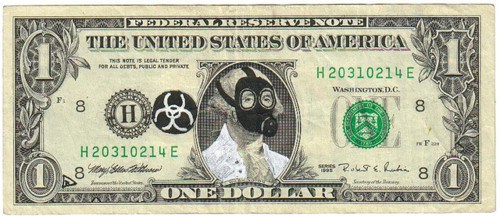
What’s the magic, almighty dollar amount?
To make endless war worth the body count?
If Corporations are people, now, too,
Let’s send them to war, and see if it’s true.
Will those corporations scream in pain as they bleed?
Will they writhe in agony for a rich man’s greed?
Will they lose their limbs, and maybe their minds?
Does the Machine care about the bones, the bodies it grinds?
In the end:
There is no prophet of peace, you know.
The love of money is Greed: War’s C.E.O.
The wars will continue, the innocents will still fall.
And the Pale Horse’s rider will someday claim all.
– Corina L. Ravenscraft
Invitation: We’d like you to join us – not only as readers – but as writers by putting links to your own anti-war or pro-peace poems in the comment sections. Next week we’ll gather the links together in one post and put them up as a single page headed “Poets Against War.” Thank you!
CORINA L. RAVENSCRAFT (Dragon’s Dreams) ~ is a guest writer on Into the Bardo. She is a poet and writer, artist and librarian who has been charming us through her blog since 2000, longer than any blogger in our little blogging community. She tends to keep herself in the background, but in a 2011 Jingle Poetry interview with Blaga Todorova (Between the Shadows and the Soul) she revealed, “Dragon’s Dreams ~ The name comes from my love-affairs with both Dragons and Dreams (capital Ds). It’s another extension of who I am, a facet for expression; a place and way to reach other like-minded, creative individuals. I post a lot of poetry and images that fascinate or move me, because that’s my favorite way to view the world. I post about things important to me and the world in which we live, try to champion extra important political, societal and environmental issues, etc. Sometimes I wax philosophical, because it’s also a place where I always seem to learn about myself, too, by interacting with some of the brightest minds, souls and hearts out there. It’s all about ‘connection(s)’ and I don’t mean “net-working” with people for personal gain, but the expansion of the 4 L’s: Light, Love, Laughter, Learning.” The samples of Cornina’s art work, her popular Infinity-Möbius dragon, is copyright”Möbius Ouroboros.” If you click on them, you can view enlarged versions.
In the name of Love I sue for peace
I reach out with branch of olive
Sign your treaties that fighting may cease
Open wide the cage and free the dove
Remove iron fist from silken glove
From servitude and bondage release
Be the Leaders we are worthy of
In the name of Love I sue for peace
How many palms do I have to grease?
Sandbox antics, games of push and shove
Be ruled not by chaos and caprice
I reach out with branch of olive
Singing in a different octave
Place your armor on the mantelpiece
By whatever God hereinabove
Sign your treaties that fighting may cease
Or find your fate as did Sparta of Greece
In a goblet of blood and foxglove
The future of human-kind you lease
Open wide the cage and free the dove
Turn other cheek when push comes to shove
There is no golden fleece, no golden geese
Be the Leaders we are worthy of
Melt down all weapons, sign armistice
In the name of Love
– T.J. Therien
Invitation: We’d like you to join us – not only as readers – but as writers by putting links to your own anti-war or pro-peace poems in the comment sections. Next week we’ll gather the links together in one post and put them up as a single page headed “Poets Against War.” Thank you!
TIMOTHY JAMES “TJ” THERIEN (Liars, Hypocrites & The Development of Human Emotions) ~ is a contributing writer to Into the Bardo. He has been blogging since November 2012 and has garnered a significant and loyal following. He says in another poem “I am not a writer … I am possessed by unseen spirit/And my hand is so moved/Words dictated to me by inner voice/Muse speaks when she wants to speak…” That sounds an awful lot like work coming from sacred space. TJ tells us that he was born 1968 in Toronto, Ontario, Canada and current resides in The Eastern Townships, Quebec, Canada. He’s lived briefly in Calgary, Alberta, Canada, and Parry Sound, Ontario Canada. He participates in Poet’s Corner. His “About” is posted HERE.
He wore no smile. Square jaw, set firm,
taut muscles. Skin like latte, stubble-covered,
(more like fuzz.)
Skin too soft for who he was,
who he pretended to be.
Salvadoran sun backlit the scene
set on the borders of insanity.
Not a game he played that day,
a game his peers in other lands
and other times still play.
This was a game of war.
He stared at us, each one, with eyes
too full of sadness for an almost-child.
Compared our passport photos with reality.
And there, upon the submachine gun’s butt—
a smiley face, a message, too.
I wonder–can he smile today,
and can he still believe?
Earthquake–El Salvador 1986
At the height of the civil war in El Salvador, the country suffered a massive earthquake that resulted in much loss of life and many injuries. I spent close to a month there, helping to nurse the wounded not requiring hospitalization. We flew into Guatemala and drove to San Salvador, the capital. On the way, we had to pass through numerous military checkpoints. At one of these stops I observed a young soldier. I’d guess he wasn’t much older than 15 or 16, perhaps younger. There on the butt of his huge machine gun was a smiley face sticker with the words in English that I’ve chosen for the title of this poem.
When will we ever learn?
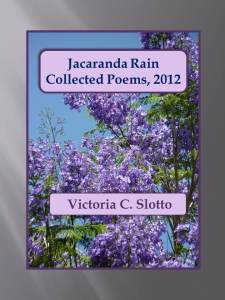
– Victoria C. Slotto
Invitation: We’d like you to join us – not only as readers – but as writers by putting links to your own anti-war or pro-peace poems in the comment sections. Next week we’ll gather the links together in one post and put them up as a single page headed “Poets Against War.” Thank you!
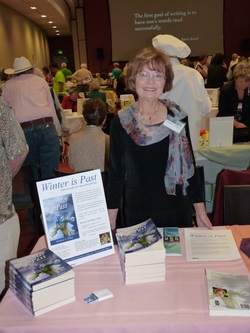
Victoria at the Palm Springs Writer’s Expo March 2012
Wow, the first in the series of Poets Against War or Poets for Peace. Hopefully I can do it justice! In riffing on peace and war, several things came together in my mind – or rather, many things came hopping through it! I hope the resulting series of images, words, and music will act as a meditation for you on this first day of Poets Against War. This will be synchro-posted at my blog, http://www.cloakedmonk.com. Feel free to reblog or synchropost elsewhere just link back to here.
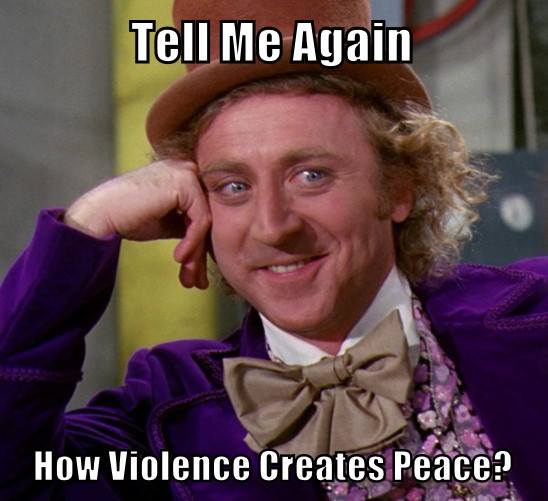
First, a meme (my new favorite weird thing to do – make memes)…
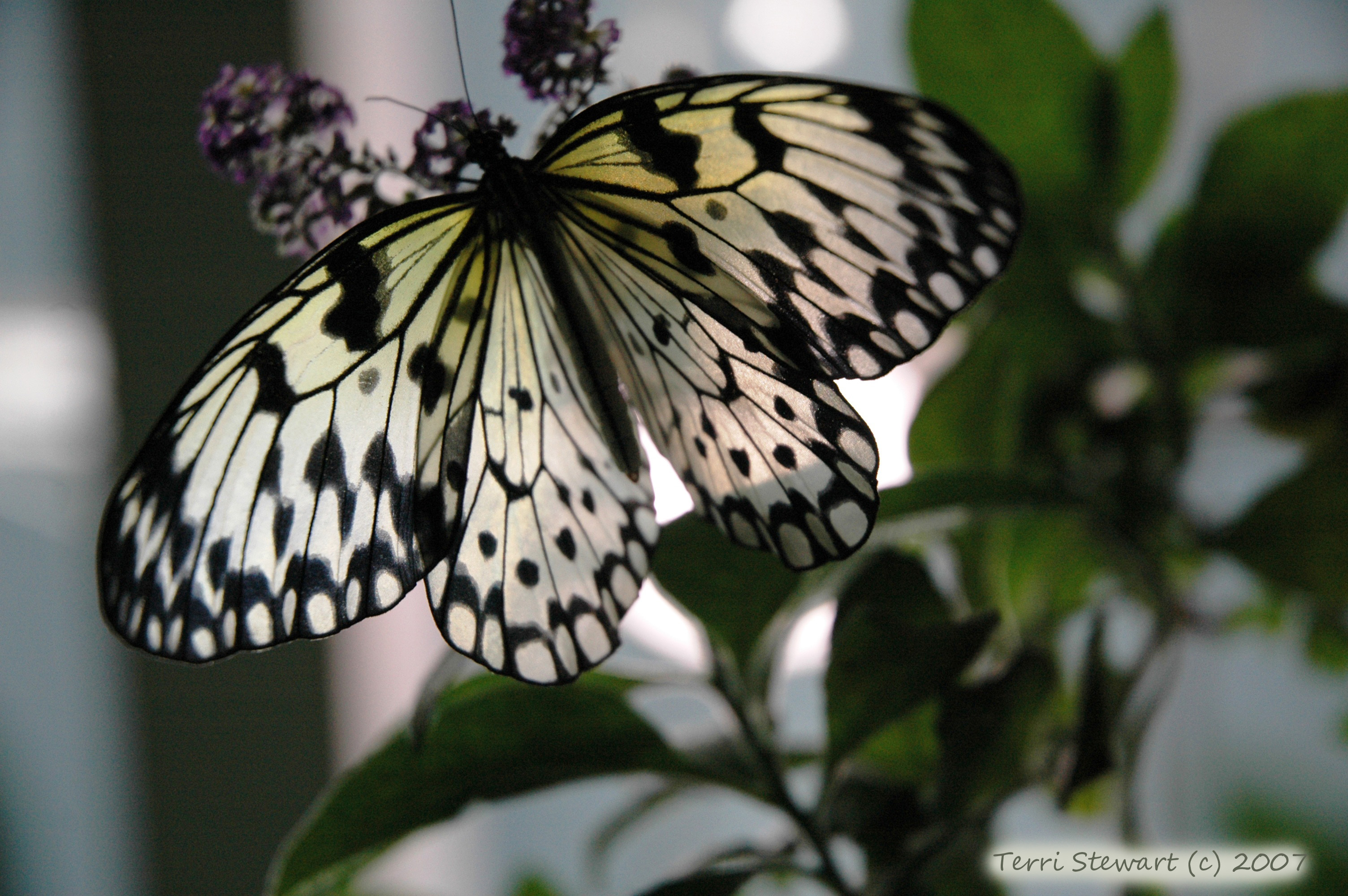
Second, I have been noodling this around and the predominant thought I had was to sing a duet with my son, Colin Stewart. Colin is 17 and much more talented than I! But we held it together in order to sing an old church song, Peace Give I to Thee. Colin is playing the ukelele and singing. I confess that our sound system is not wonderful, so we both tempered ourselves to not blow out the microphones. It is accompanied by photos I took in the Bellevue Botanical Garden which bring me incredible peace.
Finally, the nature of the quest: Poets Against War or Poets for Peace. So black and white, it begs a reflection.
dichotomy
war destroys peace
hate destroys love
butterfly destroys chrysalis
child destroys dandelion
lion destroys lamb
lamb redeems lion
dandelion redeems child
chrysalis redeems butterfly
love redeems hate
peace redeems war
unity
And another old favorite, “Breathe Deep” by the Lost Dogs which speaks to the unity of all-even when we are uncomfortable with that unity.
REV. TERRI STEWART is Into the Bardo’s Sunday chaplain, senior content editor, and site co-administrator. She comes from an eclectic background and considers herself to be grounded in contemplation and justice. She is the Director and Founder of the Youth Chaplaincy Coalition that serves youth affected by the justice system. As a graduate of Seattle University’s School of Theology and Ministry, she earned her Master’s of Divinity and a Post-Master’s Certificate in Spiritual Direction. She is a contributing author to the Abingdon Worship Annual. (The 2014 issue just released!)
Her online presence is “Cloaked Monk.” This speaks to her grounding in contemplative arts and the need to live it out in the world. The cloak is the disguise of normalcy as she advocates for justice and peace. You can find her at www.cloakedmonk.com, www.twitter.com/cloakedmonk, and www.facebook.com/cloakedmonk.
Please unite with us on Into the Bardo for Poets Against War, which is really saying Poets for Peace.
We will start with something special tomorrow (it may or may not include a poem, Terri Stewart will surprise us) and then each of the next six days we’ll host poems from six different poets. Throughout the week, we’d like you to join us – not only as readers – but as writers by putting links to your own anti-war or pro-peace poems in the comment sections. We’ll gather the links together in one post and put them up as a single special page. Please don’t worry about questions like whether you’ve been published or whether you think the work is good. These questions are irrelevant. It’s your heart in the work that counts. That’s where the power is. So please unite with us in this one thing. Let’s put that energy out into the world. If you are so inclined, please also reblog this post and help us get the word out about our week of Poets Against War. Thank you!
September 21, 2013 is the United Nation’s International Peace Day. The theme this year is Education for Peace, including fostering respect, inclusiveness, and peaceful societies.
Many organizations across this beautiful blue orb of ours are marking the day with events of one sort or another. One of special interest is Unify’s Global Synchronized Meditation …
BE THE PEACE
“The purpose of meditation is to awaken in us the skylight nature of mind, and to introduce us to that which we really are, our unchanging pure awareness that underlies the whole of life and death.
Thanks to Mick B. for the Sogyal Rinpoche quote. Photo credit ~ Patty Mooney via Wikipedia under Creative Commons Attribution-ShareAlike 3.0 unported license Video uploaded to YouTube by UNIFYMEDIA2012
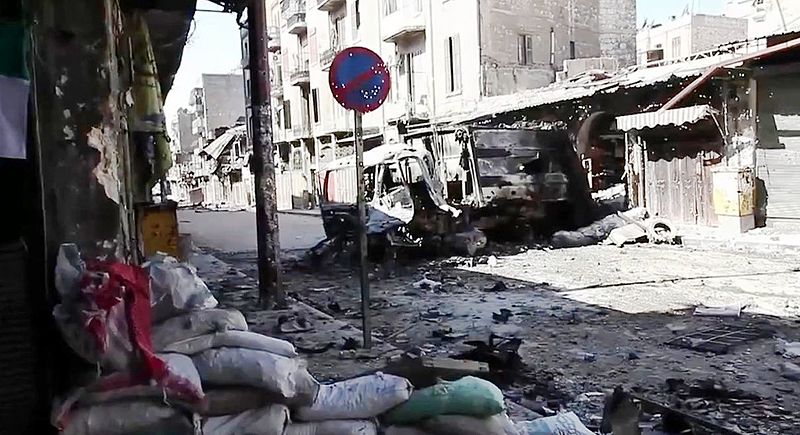
boots heels strike hard against city streets beneath their weight lies the blood of children caught in the crossfire of human greed boots heels strike hard chiraq to la gang border wars death’s small bags sold and bought this is civil war where are our troops boots heels strike hard spin doctors’ barrage has replaced truth all is well ask the dead but they have no voice so listen to me boots heels strike hard against your eardrums the dead call out this is war and we are losing the battle to save children’s lives
. CHARLES W. MARTIN (Reading Between the Minds) — earned his Ph.D. in Speech and Language Pathology with an emphasis in statistics. Throughout Charlie’s career, he maintained a devotion to the arts (literature/poetry, the theater, music and photography). Since his retirement in 2010, he has turned his full attention to poetry and photography. He publishes a poem and a photographic art piece each day at Read Between the Minds, Poetry, Photograph and Random Thoughts of Life. He is noted as a poet of social conscience. Charlie has been blogging since January 31, 2010. He has self-published a book of poetry entitled The Hawk Chronicles and will soon publish another book called A Bea in Your Bonnet: First Sting, featuring the renown Aunt Bea. In The Hawk Chronicles, Charlie provides a personification of his resident hawk with poems and photos taken over a two-year period.
. CHARLES W. MARTIN (Reading Between the Minds) — earned his Ph.D. in Speech and Language Pathology with an emphasis in statistics. Throughout Charlie’s career, he maintained a devotion to the arts (literature/poetry, the theater, music and photography). Since his retirement in 2010, he has turned his full attention to poetry and photography. He publishes a poem and a photographic art piece each day at Read Between the Minds, Poetry, Photograph and Random Thoughts of Life. He is noted as a poet of social conscience. Charlie has been blogging since January 31, 2010. He has self-published a book of poetry entitled The Hawk Chronicles and will soon publish another book called A Bea in Your Bonnet: First Sting, featuring the renown Aunt Bea. In The Hawk Chronicles, Charlie provides a personification of his resident hawk with poems and photos taken over a two-year period.
aunt bea and i were sitting on the front porch when a political campaigner stopped to solicit our vote to which aunt bea replied lawd lawd lawd you folks done lost your mind promising prosperity when there ain’t even enough money to pay the rent and children are wearing grandparent hand-me-downs to school while carrying church sponsored lunches just so they’ll have something to eat and you fools are telling me that a vote for your candidate will bring back the good-old-days when the hell was that
. CHARLES W. MARTIN (Reading Between the Minds) — earned his Ph.D. in Speech and Language Pathology with an emphasis in statistics. Throughout Charlie’s career, he maintained a devotion to the arts (literature/poetry, the theater, music and photography). Since his retirement in 2010, he has turned his full attention to poetry and photography. He publishes a poem and a photographic art piece each day at Read Between the Minds, Poetry, Photograph and Random Thoughts of Life. He is noted as a poet of social conscience. Charlie has been blogging since January 31, 2010. He has self-published a book of poetry entitled The Hawk Chronicles and will soon publish another book called A Bea in Your Bonnet: First Sting, featuring the renown Aunt Bea. In The Hawk Chronicles, Charlie provides a personification of his resident hawk with poems and photos taken over a two-year period.
[This piece was started some months ago, before I wrote the poem Fortune, featured here on the Into The Bardo a few weeks ago. That poem and this piece focus on a common theme, which is, perhaps more than any other in my writing life, a constant thread of philosophical thought for me. This is that, however much we may be short on fortune, there is never cause to give up on our hopes and dreams, or more realistically, our ‘visualisation’ of what we want from this life.]
~~~~~~~~~~~~~~~~~~~~~~~~~~~~~~~~~~~~~~~~~~~~~
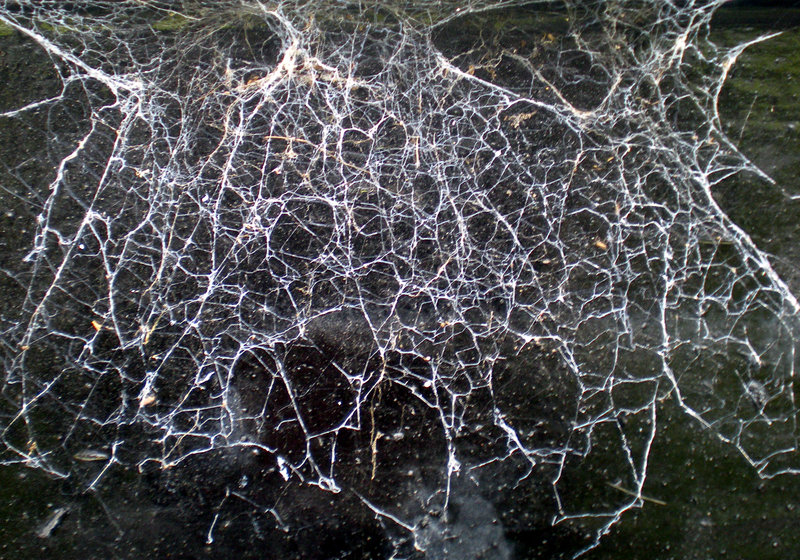
Picture, via Google Images and courtesy Canvas Art (www.the-canvas-art-shop.co.uk)
“Oh what a tangled web we weave, When first we practise to deceive!”
(Sir Walter Scott, Marmion, Canto vi. Stanza 17.
Scottish author and novelist: 1771 to 1832).
Some days are better than others . . .
The better ones allow me to indulge myself in my passions. I could have walked the dog and come back feeling refreshed, or have attended a rehearsal with the Waldershelf Singers and feel utterly uplifted, or complete a piece of prose or, better, a poem and feel a sense of release. On other days, I feel disillusioned, cynical, angry, like throttling public figures (politicians) to within an inch of telling them what a bunch of useless, self-interested, lying, cheating ne’er-do-wells they are! … which they are, almost to a man (and woman) …
Why is it that, once human beings attach themselves to an organisation, an establishment, a business, a company, a corporation, a religion, or they declare their political affiliations, somehow, they lose the ability to tell the truth, assuming their integrity would allow them to differentiate between the truth and a lie, in the first place. They become overly deferential, assume the organisation’s rules are right and, worst of all, become somewhat apathetic and are inclined to assume the ‘elders’, senior leaders of the organisation are right and therefore entitled to our undying respect.
This subjugation of self, a denial of the person that was borne into this world, through that infinitely variable process, driven at its lowest level by chemistry and physics, in turn determined by the relevant genetic ‘pool’ and nurtured by the geographic, economic, demographic, societal and political environments it is our fortune, or misfortune, to have grown up in, is undeniable. This denial of the uniquely wired ‘self’ and its particular talents and aptitudes, opinions and attitudes, and the ability to discern right from wrong, truth from the lie, and I mean the real truth, the kind that only you yourself will know deep inside, is almost guaranteed.
Does it have to be this way?
I think that I’ve come to hold this position rather late in life. Questioning authority is the stuff of rebellious youth, isn’t it? When we didn’t know any better, few had any time for the opinions of young people, anyway!
Is it so, because we are too shallow? … I don’t think so, not for everyone, anyway.
Is it because we are too lazy or unable to think for ourselves … almost certainly for some.
Is it because we have to earn a living? … inevitably a contributory factor.
Is it due to the fact that, as human beings, in spite of our incredible capacity for ingenuity, we are still very insecure; none of us are ever entirely in control of our lives and I mean NONE of us, given the uncertainties of our own health and particularly of the natural world and what Mother Earth herself can throw at us! We therefore have to enwrap ourselves with a protective external blanket, woven by someone else’s dreams or designs, at one extreme by the premeditated manipulation of tyrannical leadership or, at another, simply by the desire to ensure the annual bonus, a generous pension, public honours, a knighthood … or simply the reassurance of knowing from where our next meal will come?
Is it because we are all limited in our capacity to take on too much information, store all the factors affecting any number of problems that face us each day; wrapped up in life’s complexity that sometimes threatens to overwhelm us, wouldn’t we prefer to take an easier option and permit others to make decisions for us, which acts as a perverse kind of freedom? Herein lies a major truth. But it’s not easy for managers and leaders either.
Contrary to the impression we might receive from those in stations so elevated, it may act as some comfort to those who aren’t to know that the higher up the ladder of success we go, in whatever field of human endeavour, the more insecure we get. Why, you ask? It is because we have our limits, all of us, and some of us are more limited than others; that is our birthright, given the variable abilities, with which we are endowed, the tactics and strategies we have learned and been taught to cope; it is the way we are wired. The higher up the ladder of success all this leads us, the stronger becomes our inclination, consciously and unconsciously, to hang on to whatever we’ve got; the more inclined we become to develop further selfish strategies to aid this survival process. That’s what it is to be human, well, at least to be an animal. Being human does, nevertheless, endow us with an extra ability: high intellect and, with it, a great responsibility and, yet, this tendency, this seemingly irresistible force, does inevitably lead to greed.
So what happens!
We get our heads down and graft, manoeuvre, wheel and deal, whatever it takes to gain influence, fame, attention, success, with whatever vanity or hope or need that has the greatest hold on our hearts, minds … and stomachs.
At some future moment in time, we then find ourselves, well, what’s the best word to describe it … trapped, yes trapped by our ambitions, needs, material greed, more than by hopes and dreams.
I should say something about dreams. Before you think I’m about to crush them, I’m not. As one who writes poetry and pieces of prose like this, I find dreams are just as important as the ambitions of a professional footballer I know, who learned, early on in his journey through that precarious profession, that visualising your goals (figuratively as well as literally in his case), that is imagining yourself scoring the goal, over and over again, is a truly powerful and effective way of motivating yourself to feel better about your abilities and potential. This is, for me, an unexpected way in which to feed the creative imagination; such is the process that leads to the products of human ingenuity as well as understanding and success. But, a word of warning about dreams! They can also be manipulative! They can be induced and ‘used’ by others to manipulate control over lives – take advertising, particularly on the television, as one example! We need to learn how to distinguish good from bad dreams, your own from other people’s dreams, just as we should be able to tell the difference between good and evil.
Now, I’m not necessarily talking about conspiracy theories here, about demons and evil people, who sit in back rooms and scheme to overthrow regimes or gain control of whole populations. No, I’m talking, for the moment at least, about the demons inside our heads; the ones that lead us to the point of paranoia, the fear of not being ‘successful’, wearing the right ‘fashion’, living in the right district, driving the right car, appearing in all the right ‘places’, doing what’s apparently ‘right’ in society … tricky concept this, but I’ll try to explain my thinking.
If you were to ask a child of five or six to tell you their dreams of how to make the world a better place, wouldn’t they give you magical answers, which involve the charm of fairy tale characters and imaginative, not to say unusual (and, sadly, unlikely) conclusions to their stories?
If you were to pose that same question to a child in their mid ‘teens, wouldn’t their answer be tainted with a little more realism, perhaps even a touch of hopeless, hormonal cynicism, whilst still retaining some of that childhood naiveté, a lack of what we grown-ups would call wisdom?
If you were to ask a grown up poet or a philosopher, I think their answer would come out in one of several subtle ways, but one thing is for sure, any poet, with integrity, that I know, would try to address all of the issues that confront us head on, in an honest way. This is perhaps because they rarely make a living from their writings and, therefore have no vested (financial) interest in it, other than for the integrity of their material and perhaps for a bit of recognition!
Even Poets …
Yes, even poets and philosophers have to live and pay their ‘rent’. So, somewhere along the path of life, we have to align ourselves with an organisation or two, toe the line and obey the rules. We most certainly should obey the law and, if we don’t agree with it, don’t break it, lobby to change it! There is nothing wrong with toeing the line, provided there is a fair share of integrity within the organisation; provided that we don’t lose sight of our own personal integrity, justice, beliefs, values and, above all else, what we know, deep down inside, makes each of us unique individuals, our identity.
For those, who are born with a genetic code that, given the right environment, encouragement and education, predestines them to a life of leadership and possibly even greatness, let us not forget that for those of us, who remain, whilst we may not have had the good fortune of the same faculties and opportunities, we do nevertheless represent the vast majority of the population of the world. So, if we do still have a vote in what can reasonably be described as a democracy, then we must use it or lose it! If we have the ability to write, we should do it! We must make our mark upon the paper, make our feelings, our values and beliefs known. Whilst we still have the freedom to do so, we have the ability to depose those in power who do conspire to deceive us, who have been corrupted by their privilege and who would continue to weald the power they have from such privilege for self interest. Otherwise we get what we deserve. If that happens to be a comfortable life that we’ve achieved by subordinating our own integrity, it is our choice, but, from where I am now in my life, I know that I would sooner follow and trust someone who refused to allow themselves to be trapped by the material rewards of compromising complicity, than one who, in the fullness of time, would be racked with regret, that they didn’t follow their conscience and their dream of a better life … a better world.
It would be wrong of me, however, to leave you with my totally cynical outlook, without mentioning that, thank God, there are some remarkable people in this world, who, at and on all sorts of levels, do remarkable work on behalf of their fellow human beings. Whether they be local community charity workers and volunteers, international aid workers or the likes of the inspired Mother Teresa of Calcutta’s Missionaries of Charity foundation, they are all driven, by some degree of selflessness, to improve the lot of the less fortunate and I have nothing but admiration for them.
If there is a moral to my tale, this long and rambling piece of prose, it is that I believe life can become much less complex, when we stop trying to satisfy someone else, when we discover the very best in ourselves. However unfair, unjust or unreasonably difficult life seems to be sometimes, we should never allow ourselves to give in to the pessimism that results from a state of despair at the world, to roll over on our backs with our legs in the air! We must never believe that someone else, whether it be a single person or a large faceless organisation, either has control over us or is beyond control by the voting, lobbying, plural us. For writers and poets in particular, as long as we can breath and weald a pen, we can do something, however small, and collectively we are able to make a difference, even if we don’t feel we can hop on the next flight to Africa, we musn’t allow ourselves to believe that we can’t still bring something to the table from our own unique armoury of intellectual skills. We can, above all, in our own way, be winners. It takes courage to step out of the crowd, but courage comes in many colours, one of which is being true to your innermost convictions. Fortune really can favour the bold.
[If you don’t already read it, you could do worse than by starting to read poetry now. Good poetry should open the eyes that are shut, elevate the spirit that is depressed and enrich the soul that is impoverished. Good poetry is the highest form of literature, which should tell us the way it is and feed us with deep insights that we would otherwise not experience; and I mean insights and creative thought that will enable change, not only in your own life, but also others.]
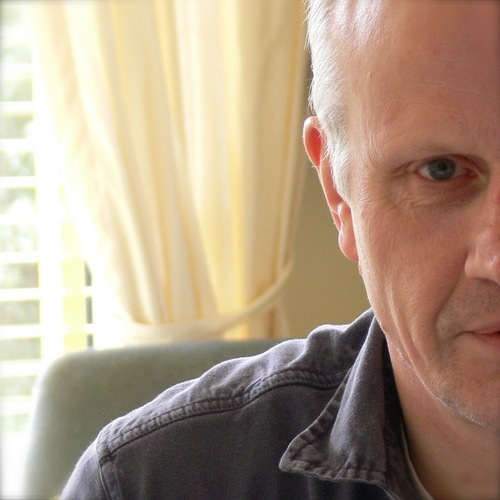
JOHN ANSTIE (My Poetry Library and 42) ~ is a British poet and writer, a contributing editor here at Bardo, and multi-talented gentleman self-described as a “Family man, Grandfather, Occasional Musician, Amateur photographer and Film-maker, Apple-MAC user, Implementation Manager, Engineer and general all-round good egg.” This he tells us with tongue firmly planted in cheek. Add grace and humor to the list.
John participates in d’Verse Poet’s Pub and is a player in New World Creative Union. He’s been blogging since 2011. John is also an active member of The Poetry Society (UK). He says of his work, “Much of my writing and my poetry focuses on the future and the important part that our children, and the way we treat them, play in this. It also spans a diversity of life’s experiences, some moving war poetry and particularly observations of life for a modern generation.
Also a member of Grass Roots Poetry Group John steered their anthology, Petrichor* Rising, into publication. It is now in print and available for purchase. “Petrichor Rising takes you on a journey that exposes you to the full spectrum of emotions, from barely concealed despair to hope, from love to sorrow, with a clear appreciation of nature’s value and humanity’s shortcomings. It rides a roller-coaster that moves you to consider many of life’s challenges from a different perspective, as all good poetry should. It is at once haunting, yet shocking, with aching nostalgia alongside enchanting stories of dragons. It gives you optimism and hope tinged with shadows of doubt. It writes about places never seen and humanity’s uncaring nature, in prosodic social commentaries and observations of the minutest details of life, mood, atmosphere and romance. It contains clever writing that brings you close to the edge of society, still capable of moving you, but not pulling any punches. It has poetry with a universal appeal covering subjects as varied as the loss of a cat or a harrowing account of the 7/7 London bombings, poetry that focuses on the roots of all that makes us respond to life and long for something better.”
* Petrichor – from the Greek pɛtrɨkər, the scent of rain on the dry earth.
i asked the brown bag prophet if he’d heard about the new round of demonstrations for justice he said yes and why don’t you-all go sing another verse of we shall overcome with any luck at all you’ can harmonize with the voices i’ve heard before and let your blood be washed away from these concrete streets of freedom washed away into the ocean of history like those well-intentioned folks now rotting in their graves with copper pennies as their only reward and please don’t bother me with your these things take time bull i ain’t got time i got this corner and you got nothing
. CHARLES W. MARTIN (Reading Between the Minds) — earned his Ph.D. in Speech and Language Pathology with an emphasis in statistics. Throughout Charlie’s career, he maintained a devotion to the arts (literature/poetry, the theater, music and photography). Since his retirement in 2010, he has turned his full attention to poetry and photography. He publishes a poem and a photographic art piece each day at Read Between the Minds, Poetry, Photograph and Random Thoughts of Life. He is noted as a poet of social conscience. Charlie has been blogging since January 31, 2010. He has self-published a book of poetry entitled The Hawk Chronicles and will soon publish another book called A Bea in Your Bonnet: First Sting, featuring the renown Aunt Bea. In The Hawk Chronicles, Charlie provides a personification of his resident hawk with poems and photos taken over a two-year period.
Orhan Pamuk (b. 1952), Istanbul Turkey, Novelist ~ photo courtesy of …Mr. Pamuk
“What literature needs most to tell and investigate today are humanity’s basic fears: the fear of being left outside, and the fear of counting for nothing, and the feelings of worthlessness that come with such fears; the collective humiliations, vulnerabilities, slights, grievances, sensitivities, and imagined insults, and the nationalist boasts and inflations that are their next of kin … Whenever I am confronted by such sentiments, and by the irrational, overstated language in which they are usually expressed, I know they touch on a darkness inside me. We have often witnessed peoples, societies and nations outside the Western world–and I can identify with them easily–succumbing to fears that sometimes lead them to commit stupidities, all because of their fears of humiliation and their sensitivities. I also know that in the West–a world with which I can identify with the same ease–nations and peoples taking an excessive pride in their wealth, and in their having brought us the Renaissance, the Enlightenment, and Modernism, have, from time to time, succumbed to a self-satisfaction that is almost as stupid.”
—Orhan Pamuk, Nobel Lecture (translation by Maureen Freely), 2006
.
This seem the perfect piece to expand on Michael Watson’s post yesterday and his comment, “. . . we seem to be caught up in the Bardo, spinning endless fantasies derived from fear, greed, and anger” … and we would add “hubris.” So just some thoughts for us as poets and writers, artists and musicians, therapists, clerics bloggers … and simply as humans beings.
.
Is Orhan Pamuk’s statement fair? How do you feel about it?.
I just returned from purchasing a new computer monitor. Last night, my two-year-old monitor suddenly malfunctioned. When I went to the store this morning, the associate with whom I spoke said she thought the life expectancy of new monitors might be about a year. Expensive and time-consuming.
Last week a colleague attended a national conference in Seattle. This gathering of psychotherapists moves about the country from year to year. The Seattle conference was immense, forming a forum for many hundreds of therapists. It also took place in a part of the country with a large and obvious Native presence, yet seemingly made no attempt to include, or even acknowledge, Seattle’s diverse Native community.
During a workshop towards the end of the conference my colleague spoke to the absence of a Native presence at the conference. After the workshop, a woman came up and thanked her for speaking up, explaining she was Native and had been deeply disturbed by the notable absence of her community. (Tibetan monks had been invited to build a sand painting during the conference.) She was also aware of her light skin color,and fearful her whiteness might disqualify her from speaking, at least in the eyes of her fellow conference participants.
Also, last week the latest film version of The Lone Ranger came out. As you may know, Johnny Depp stars as a very wise Tonto, who just happens to wear a stuffed bird on his hat, an oblique reference to the imagined Native. A couple of day’s ago a panel gathered to chat about the film on NPR’s On Point. A young Native woman who blogs at Native Appropriations was also invited on briefly critique the film. Sadly, the non-Native reviewers, even with a bit of Native guidance, simply failed to understand why the film might be offensive. I invite you to read Adrienne K.’s comments at Native Appropriations for a detailed critique of the stereotyping and racism inherent in the film.
Finally, Thursday was the Fourth of July. For me there are three highly problematic holidays in the U.S. calendar: July Fourth, Columbus Day, and Thanksgiving. Each celebrates, in some way, the theft of our land and the genocide, physical and cultural, against our people. On the Fourth our family usually attends a small town parade, and always we look forward to the evening fireworks. Small town celebrations are all about the local, although even here in Progressive Vermont, there may be no mention of the several Native tribes that lived here prior to the arrival of Europeans, descendents of who still call Vermont home. I guess acknowledging Native people opens up to many uncomfortable questions concerning genocide, appropriation, and land claims.
As a light-skinned Native person I wrestle with questions of identity. I also, in my elderhood, am likely to speak my mind about issues anyway, although most of the time no one seems to be truly listening. One of my friends, an aged Cree medicine woman who stands just about five feet tall, sometimes wanders around carrying a large hunting rifle, “To get people’s attention.” Sometimes I despair.
Locally we have developed what amounts to a Buddhist/Native dialog. We’ve discovered we agree about most things. For instance, there is a lovely idea in Pure Land Buddhism and in some Native thought that we are already in Paradise and simply don’t recognize it or act accordingly. Rather, we seem to be caught up in the Bardo, spinning endless fantasies derived from fear, greed, and anger.
Life in the Bardo is challenging. We seem to be sinking in a sea of expensive, poorly made, often essential, material goods that break all too often. We go about trying to find distraction or release and fail to notice or acknowledge the suffering created and continued by our actions and those of the folks who came before. In the process, we cause more harm even though we might wish otherwise. No wonder the Prophets from many traditions tell us to wake up. I imagine paying heed to our lives might in the end be less painful than the road we are collectively on now; maybe we could even create the conditions for fine lives and rebirths. Now that is a good Dreaming.
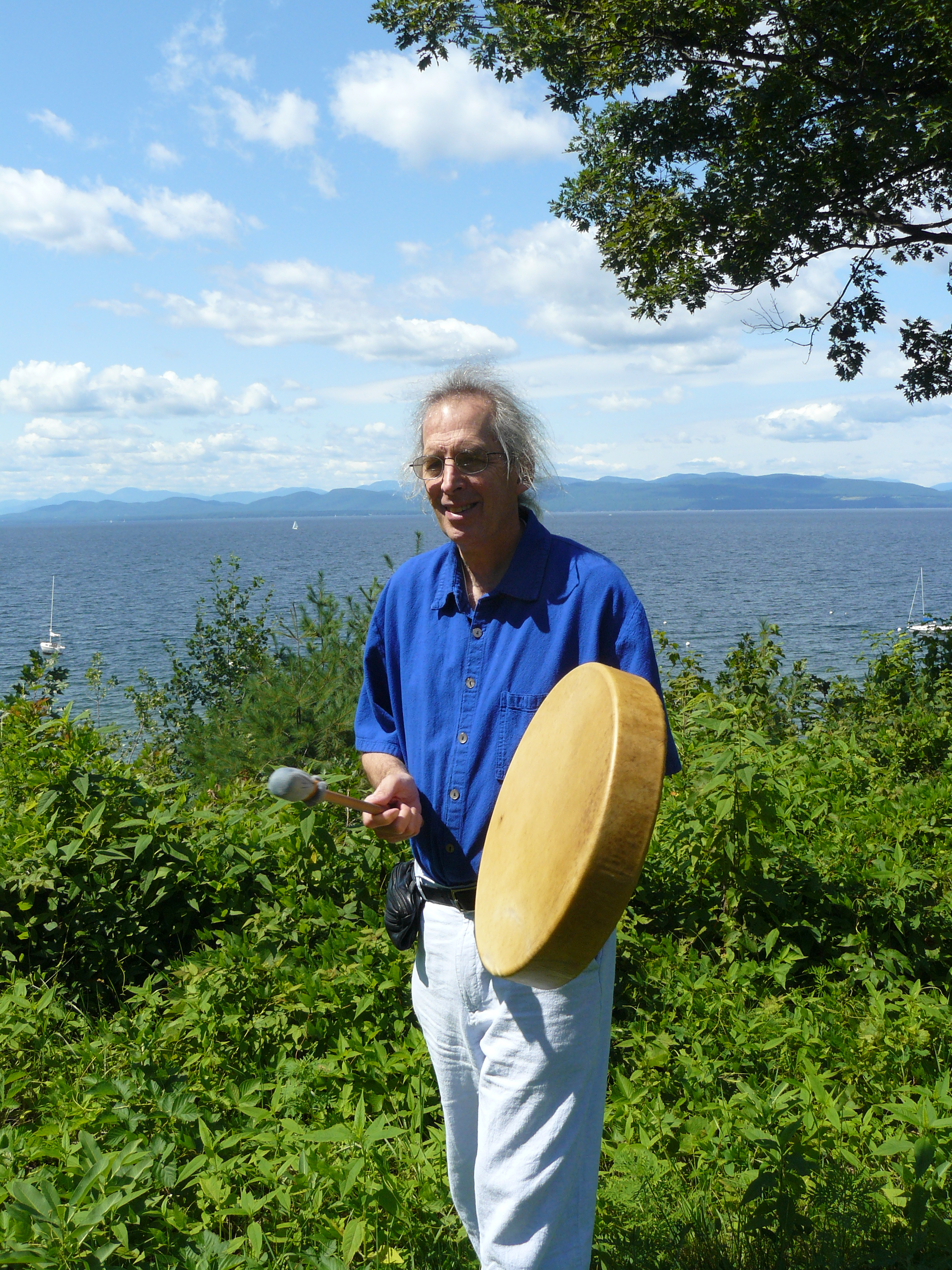
MICHAEL WATSON, M.A., Ph.D., LCMHC (Dreaming the World) ~ is a contributing editor to Into the Bardo, an essayist and a practitioner of the Shamanic arts, psychotherapist, educator and artist of Native American and European descent. He lives and works in Burlington, Vermont, where he teaches in undergraduate and graduate programs at Burlington College,. He was once Dean of Students there. Recently Michael has been teaching in India and Hong Kong. His experiences are documented on his blog. In childhood he had polio, an event that taught him much about challenge, struggle, isolation, and healing.
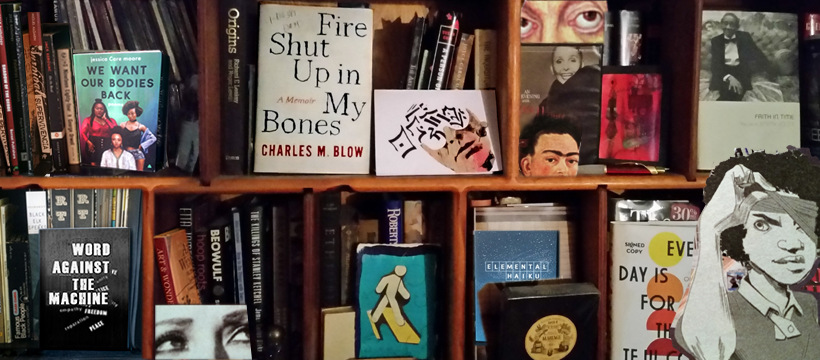


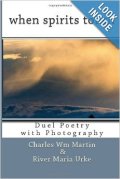 CHARLES W. MARTIN (Reading Between the Minds) — earned his Ph.D. in Speech and Language Pathology with an emphasis in statistics. Throughout Charlie’s career, he maintained a devotion to the arts (literature/poetry, the theater, music and photography). Since his retirement in 2010, he has turned his full attention to poetry and photography. He publishes a poem and a photographic art piece each day at Read Between the Minds, Poetry, Photograph and Random Thoughts of Life. He is noted as a poet of social conscience. Charlie has been blogging since January 31, 2010. He has self-published a book of poetry entitled The Hawk Chronicles and will soon publish another book called A Bea in Your Bonnet: First Sting, featuring the renown Aunt Bea. In The Hawk Chronicles, Charlie provides a personification of his resident hawk with poems and photos taken over a two-year period. Charlie’s lastest book, When Spirits Touch, Dual Poetry, a collaboration with River Urke, is available through Amazon now.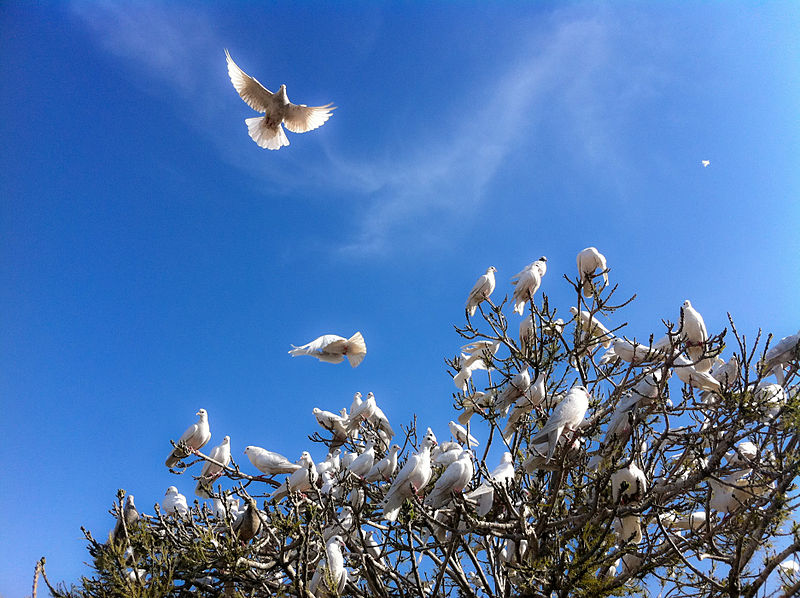















 The BeZine