Posted in Essay, Spiritual Practice, Terri Stewart

Finding Sacred Space in Mandala

I love the idea of Mandalas. Mandala means sacred circle in Sanskrit. The idea of sacred circles permeates the spiritual underpinnings of many traditions. The circle of Native American tradition where a sacred circle is danced, not to be broken. The circles of trinity in Christian tradition. The Mandala of Hindi and Buddhist tradition. The circular labyrinth that dates back up to 25,000 years. Walking a circle, dancing a circle, drumming a circle, drawing a circle, even singing a circle … “make the circle wide, make it wider still” … creates a moment of sacred space meeting the co-creative spirit of human and transcendence.

That is beauty.

Lately, I have been thinking about mandalas more than normal because I am co-organizing a mandala workshop called, “Finding Your Spiritual Identity with heART: A Mandala Workshop.” Julia Weaver, a mandala practitioner, will be coming to town and doing two workshops for me- one with the girls in detention (how awesome is that?!) and one for the people of Seattle.  I love that she is being so flexible in offering her gifts and talents.

That is also beauty.

So today, to create our sacred space, I’d like to do a mandala meditation. I am using one of my own images and some meditation ideas that I have found at jeweledlotus.com.

Take a moment and center yourself. Imagine a circle of protection, love, compassion, and mercy surrounding you. Let your gaze rest softly on the computer screen. Rest your feet comfortably on the ground if possible. Simply become as comfortable in your own spot as you can become. As Julia says (and which I will quote in the video!),

“As you gaze at a mandala,
breathe slowly, and relax your eyes.
See with your heart and listen for guidance.
Gently open to your own luminous Divinity.”

Shalom and Amen,

Terri

(c) 2014, post, Terri Stewart

terri

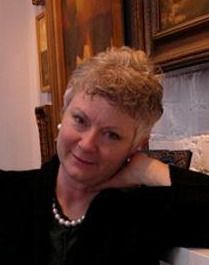
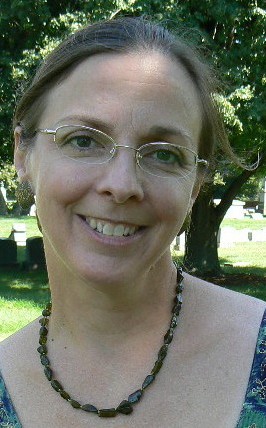
REV. TERRI STEWART is Into the Bardo’s  Sunday chaplain, senior content editor, and site co-administrator. She comes from an eclectic background and considers herself to be grounded in contemplation and justice. She is the Director and Founder of the Youth Chaplaincy Coalition that serves youth affected by the justice system. As a graduate of Seattle University’s School of Theology and Ministry, she earned her Master’s of Divinity and a Post-Master’s Certificate in Spiritual Direction. She is a contributing author to the Abingdon Worship Annual. (The 2014 issue just released!)

Her online presence is “Cloaked Monk.” This speaks to her grounding in contemplative arts and the need to live it out in the world. The cloak is the disguise of normalcy as she advocates for justice and peace. You can find her at www.beguineagain.com ,www.twitter.com/cloakedmonk, and www.facebook.com/cloakedmonk.  To reach her for conversation, send a note to cloakedmonk@outlook.com

Posted in Photography/Photographer, Spiritual Practice, Terri Stewart

Sacred Stillness

I am working valiantly on ordination papers this week. So I am appropriately resurrecting a post from http://www.BeguineAgain.com as our step into sacred space. And yes, I am ordained, but I am a newbie, so for the first two years we have to submit more papers.

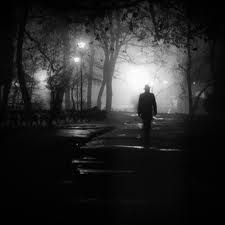
Join me in listening to the beautiful chant by Velma Frye. It is a call to stillness. Rest. Quiet. And a reminder that stillness often is associated with darkness. Imagine the seeds germinating in the darkest earth. Seemingly still, but so much creative energy stirring up unbeknownst to observation! But the stillness is what nurtures it. The darkness. The coldness. Be still.

Be Still
by Velma Frye

Be still.
Be still.
Be still.
Go deep
into
the silence
of the night
and robe yourself
in darkness.

See with the heart
into the dark of the night.
So silent the night.
So dark the night.

Be still.
Be still.
Be still.
Be still.
Be still.
Be still.

What will you do to create stillness in your life?

How can you use darkness to create wholeness?

quiet

(c) 2014, post, Terri Stewart, CC license BY-NC
(c) 2013, lyrics and video, Velma Frye
(c) 2013, photo, Terri Stewart, CC license BY-NC-ND

..

REV. TERRI STEWART is Into the Bardo’s  Sunday chaplain, senior content editor, and site co-administrator. She comes from an eclectic background and considers herself to be grounded in contemplation and justice. She is the Director and Founder of the Youth Chaplaincy Coalition that serves youth affected by the justice system. As a graduate of Seattle University’s School of Theology and Ministry, she earned her Master’s of Divinity and a Post-Master’s Certificate in Spiritual Direction.

Her online presence is “Cloaked Monk.” This speaks to her grounding in contemplative arts and the need to live it out in the world. The cloak is the disguise of normalcy as she advocates for justice and peace. You can find her at www.beguineagain.com ,www.twitter.com/cloakedmonk, and www.facebook.com/cloakedmonk.  To reach her for conversation, send a note to cloakedmonk@outlook.com

Posted in Essay, General Interest, Liz Rice-Sosne, Poems/Poetry, poetry, Spiritual Practice, Writing

Haiku – A Spiritual Experience

600px-Poecile-atricapilla-001I am sitting here trying to remember what prompted me to write one haiku per day during the first 6 months of 2012.  I was ill, that was the first reason for doing so.  I wished to remain connected to my writing community, keep alive my connection with the friends that I had met online.  I knew that I could not manage an article daily so I needed to write something short.  I decided that haiku was the answer.  Was there any shorter form of poetry?  The learning and the writing that year became for me a spiritual experience.  It taught me to see the world through a new and different lens.  I am so grateful for this experience

I have always been drawn to haiku even when young.  What can be said in 17 syllables, those three short lines of 5, 7, 5 syllables?  It would be easy – just compose three short lines of poetry a day.  Those thoughts will tell you just how little I knew of haiku when I began.  Experience has shown me that many Americans have little knowledge of haiku seeing it simply as three lines of poetry with the 5-7-5-syllable count.  If seen this way the reader and writer of haiku will never be fully satisfied.

The first thing that one should know is that the syllable count fits Japanese words or syllables.  Japanese words or syllables are nothing like English language syllables.  When attempting to write a haiku there are many things to consider before considering the word count.  The second thing that I learned is that it is often written in one line.  Just one.  In Japan that line is often written from top to bottom.  It is vertical.  I do not write vertically.

Poignancy in haiku is important.  The most important thing about haiku for me is very hard to put into language.  For I see haiku as a language all its own.   A haiku ties things together.  Haiku conveys the depths of nature’s beauty and its power.  Haiku shows ones relationship with nature.  One haiku can express in a few words what it might take a psychologist an entire magazine article to profess.  Haiku can evoke within the reader new understanding.  I equate haiku to light.  It can dazzle in brightness.  It can illuminate a path.  It can act as a halo separating yet conjoining reader and writer through the poem.  You are placed within the poem.  Haiku connects the ancient with the modern, the light with the dark, and nature with man/womankind.

The book to which I turn most often for reference is “The Haiku Handbook, How To Share Write and Teach Haiku,” by William J. Higginson.  I would go so far as to say that he has he has “lived” haiku, making his teachings easy to understand and to apply.  When writing haiku my goal is to be living in the moment, to be “living haiku.”  It is a spiritual moment.  I wish to express that moment to you so that you feel what I feel.  I believe Higginson tells us that haiku is about the eloquence of sharing those feelings.  It is easy to say to your friend: “the sky is beautiful.”  But in doing so, you do not really convey what you feel.   Nor are you conveying any degree of real beauty.  According to Higginson, when we share the depths of what we feel through haiku we are building community.   What more important act is there?

The first thing that I do when writing a haiku is search for a kigo.  A kigo is a season word and mandatory in haiku.  Your haiku should be driven by what you feel for your subject and your choice of kigo.   I view the kigo as an anchor.  There are numerous kigo databases online.  New words are always being added.

We have just experienced a foot of snow here in the midwest.  The last time we had so much snow was 1982.  This is an immense weather event here.  Along with subzero temperatures accompanied by wind many of us are pretty much homebound.  I would like to share this large weather experience with you by writing a haiku.  I edit and re-edit before I am happy with them.  Each of these are a part of my process for creating one haiku.

wall of snow – broken branches dangling from trees (this sounds awkward to me)

or

deep white snow – hidden branches (this coveys little feeling)

or

drifting snow – a chickadee’s cap (this possesses the essence of what I am looking for)

Final haiku:

blowing drifting snow – chickadee’s black cap

– Liz Rice-Sosne

© 2013, essay, Liz Rice-Stone, All rights reserved
Photo credit ~ Black-capped Chickadee via Wikipedia and under CC A-SA 3.0 unported license

unnamed-2LIZ RICE-SOSNE a.k.a. Raven Spirit (noh where), perhaps the oldest friend to Bardo, is the newest member of The Bardo Group Core Team. She is also our new Voices for Peace project outreach coordinator and our go-to person for all things related to haiku.  She says she “writes for no reason at all. It is simply a pleasure.” Blogging, mostly poetry, has produced numerous friends for whom she has a great appreciation. Liz is an experienced blogger, photographer and a trained shaman. We think her middle name should be “adventure.”

Posted in Essay, General Interest, Spiritual Practice, Terri Stewart

Creating Sacred Space Wherever You Live

When I first started seminary, I was totally taken aback by two things. First, they start class in prayer. (Shocker! From a secular world to this!) Second, all the professors and administrative personnel seem to have an altar of some sort in their workspace. I never thought of having an altar before that–unless it was books. Creating a place in the home or work where your sacred articles live was a new idea to me. Especially since I came from that strain of protestantism that has all “things” as mundane, therefore personal altars were simply not a thing to be done.

Thank goodness for ecumenical seminary! This exposed me to new thoughts, broader ideas about who and what other people were, and broader ideas, and yet more specific, about who I am. I went about creating an altar at home. It is a little side table with a crystal bowl of rocks with an angel in it. And on the shelf of the table, there are books I love and find inspiration in…a book on hymnody, devotional books, prayer books, and about 10 children’s books ranging from “Where the Wild Things Are” by Maurice Sendak to “You Are Special” by Max Lucado. Over time and in a busy household with youngsters, the altar and items dispersed around the home. Occasionally, I rope them back together. But there is also a gift in seeing them spread all over the place. “Oh, look! A piece of the sacred right there!” or “Oh, that is a beautiful rock, the world is an amazing and holy place!” I suppose, I am not very good at being in one place, so scattering it willy nilly ends up working and becomes an odd kind of altar. I often wish I could build beautiful altars like my friends and colleagues do, but I know! The pieces will be everywhere. Maybe someday. (Said in a wistful voice!)

Today, for our sacred space exploration, I thought we could do an exercise about altars, creating personal altars, and whatnot. However, I had a better idea just typing that paragraph above! Let’s create a virtual altar together! Everybody offer a word, picture, poem, link to something or other, that you find to be inspiring, sacred, holy, or completely whole, and next week, I will bring back a virtual collage. At the same time the offerings are made, please visit the places that other people find sacred space in. I am confident that people will leave a word or two (or more!). You wouldn’t leave me hanging, would you?

Are you ready to do this together? After all, above and beyond having a personal altar, the altar of a community – whether it is in the Christian Church, a Jewish Synagogue, or a Pagan Altar – conveys that which the community finds sacred or holy. Or maybe just important. Maybe a quick examination of the words sacred and holy is in order (from the online etymology dictionary).

Holy:

Primary (pre-Christian) meaning is not possible to determine, but probably it was “that must be preserved whole or intact, that cannot be transgressed or violated,” and connected with Old English hal and Old High German heil “health, happiness, good luck” (source of the German salutation Heil). Holy water was in Old English. 

 Sacred:

late 14c., past participle adjective from obsolete verb sacren “to make holy” (c.1200), from Old French sacrer “consecrate, anoint, dedicate” (12c.) or directly from Latin sacrare “to make sacred, consecrate; hold sacred; immortalize; set apart, dedicate,” from sacer (genitive sacri) “sacred, dedicated, holy, accursed,”

What do you find holy or sacred? What word, image, poem, thought would you offer to a community altar? 

I offer one of my favorite photos of sunset from the top of the mountain, Haleakala on Maui. Why sunset? It is a liminal time when possibilities expand as we hold together both the end of a work day and the gestation of something new. In the Book of Genesis 1:5, it says, “And there was evening and there was morning, the first day.” Evening first. Gestation first. Darkness first. Sunset, first.

Haleakala Sunset by Terri Stewart
Haleakala Sunset
by Terri Stewart

Shalom,

Terri Stewart

(c) 2013, post & photo, Terri Stewart

REV. TERRI STEWART is Into the Bardo’s  Sunday chaplain, senior content editor, and site co-administrator. She comes from an eclectic background and considers herself to be grounded in contemplation and justice. She is the Director and Founder of the Youth Chaplaincy Coalition that serves youth affected by the justice system. As a graduate of Seattle University’s School of Theology and Ministry, she earned her Master’s of Divinity and a Post-Master’s Certificate in Spiritual Direction. She is a contributing author to the Abingdon Worship Annual. (The 2014 issue just released!)

Her online presence is “Cloaked Monk.” This speaks to her grounding in contemplative arts and the need to live it out in the world. The cloak is the disguise of normalcy as she advocates for justice and peace. You can find her at www.beguineagain.com ,www.twitter.com/cloakedmonk, and www.facebook.com/cloakedmonk.  To reach her for conversation, send a note to cloakedmonk@outlook.com

Posted in Essay, Spiritual Practice, Terri Stewart

Walking the Sacred Path with President Nelson Mandela

Nelson Mandela

This post is complementary to a post created at http://beguineagain.com/. I encourage you to read this and then read that post.

Today is the wrap-up in our recent series about President Nelson Mandela. As I was pondering how to close out the thoughts and hearts of our community, I remember that President Mandela was a deeply spiritual man who relied on the African theology of Ubuntu to carry the day. Ubuntu, which I have written about before, is the idea that “I am because we are.” It is deeply rooted in Africa with not only Mandela but Desmond Tutu subscribing to Ubuntu as core beliefs. Ubuntu is described below by Mandela himself.

“A traveler through our country would stop at a village, and he didn’t have to ask for food or for water. Once he stops, the people give him food, entertain him. That is one aspect of Ubuntu but Ubuntu has various aspects. Ubuntu does not mean that people should not enrich themselves. The question therefore is: Are you going to do so in order to enable the community around you to improve?” http://www.youtube.com/watch?v=Dx0qGJCm-qU#t=28

Knowing that this deeply spiritual man connected so strongly to a traditional spirituality, I have decided to combine the traditions of President Mandela and the gleanings of the Bardo Group with the ancient prayer practice of Midday Prayer. I am relying on the ancient rhythm but substituting readings from our authors and from President Mandela.

The general pattern of Midday Prayer is opening, hymn, psalm, Gloria, reading, prayers of the people, Lord’s prayer, collect, conclusion. This will be an adaptation of this ancient pattern. Someday we can discuss the prayer pattern and its ancient roots that extend beyond Christianity into Judaism and earlier.

Take a moment, light a candle, slow down and begin again with President Nelson Mandela leading the way.

A Midday Meditation in the Tradition of Ancient Mystics

Honoring Nelson Mandela

Help us as we pause at this point in the day to find safety and refuge, peace and mercy.

Glory to all that ties us together and brings our hearts into the center so we may listen. As it was in the beginning, it will be now, and will be forever more. Amen.

Hymn, excerpted from John Antsie

As the West winds blew their fury
the earth let out a cry;
as if to deny the awful truth,
it was more than just a sigh.
As if one life had greater value
than all of this; all of the love
that a world full of great lives
could bear; bear to contemplate
the loss of a legend, but
whose wisdom will be immortal …

Psalm, excerpted from Charles W. Martin

once
or twice
in a lifetime
an ancient returns
showing
the way
not
as a prophet
or
god-like figure
but as
a man
or
a woman
willing to expend
all their life forces
to open
the minds
of all those
willing
to listen

Glory to all that ties us together and brings our hearts into the center so we may listen. As it was in the beginning, it will be now, and will be forever more. Amen.

Reading: Inspired by Jamie Dedes, by President Nelson Mandela, Speech on World Civilisation, November 2000

The world had become much smaller, as I realised when racing on jumbo jets that I had never seen before, and talked every day on amazing new international telephones. I had to acquaint myself with this new phenomenon of globalisation, that enabled money and capital to flow instantly across the globe, and made the economies of the world startlingly more interdependent.

The effects and consequences of globalisation had to be internalised by many other South Africans, as well. South Africa became isolated from the international community during the apartheid years, and now saw how closely interconnected countries and economies had become. We welcome the process of globalisation. It is inescapable and irreversible. We can no more ignore it, as I said before, that we can reject the idea of winter by refusing to wear warm clothes. It can carry with it not only investment and transfer of expertise, but also knowledge and understanding of other people and cultures.

But if globalisation is to create real peace and stability across the world, it must be a process benefiting all. It must not allow the most economically and politically powerful countries to dominate and submerge the countries of the weaker and peripheral regions. It should not be allowed to drain the wealth of smaller countries towards the smaller ones, or to increase the inequality between richer and poorer regions.

Please take a moment for silent reflection.

Meditation: Inspired by Jamie Dedes, by President Nelson Mandela, Africa Standing Tall Against Poverty, 2 July 2005 [edited]

Massive poverty and obscene inequality are such terrible scourges of our times – times in which the world boasts breathtaking advances in science, technology, industry and wealth accumulation.

We live in a world where knowledge and information have made enormous strides, yet millions of children are not in school.

We live in a world where the Aids pandemic threatens the very fabric of our lives. Yet we spend more money on weapons than on ensuring treatment and support for the millions infected by HIV.

It is a world of great promise and hope. It is also a world of despair, disease and hunger.

Overcoming poverty is not a gesture of charity. It is an act of justice. It is the protection of a fundamental human right, the right to dignity and a decent life.

While poverty persists, there is no true freedom.

Please take a moment for silent reflection.

Have mercy on our souls.

Group prayer

Holiness, wholeness, perfectedness
The Name of the path of healing is sacred
Let the cosmos be filled with mercy and kindness!
Let the cosmos be filled with acts of justice and love!
Let it be so, here, on earth, and everywhere in the cosmos.
Let our needs be fulfilled with love so that it
Staves off temptation allowing an end to injustice and poverty.
The cosmos of love and mercy has power to move hearts and make it so.
Forever. And ever.
So it shall be.
Amen and amen.

Intercessory prayer for the poor and concluding collect

We lift up all who live below the poverty line – knowing that we do not succeed if they do not succeed. Each one is a unique and precious beloved person in the human family.

We know that good things can go to them if we work towards justice, love, and mercy to provide for the needs of one another in loving kindness and in political will. Let us seek help so that we may help the less fortunate who experience the apartheid of poverty.

This is an abundant world if we would act with mercy and justice for all. Sharing our resources in an equitable manner worthy of the label, loving kindness. While we ask for strength for the impoverished, we ask for the hearts of the comfortable to be shattered with love for neighbors both known and unknown so that we may truly live in an Ubuntu world, erasing the line between the haves and have-nots and transforming the cosmos into Sacred Wholeness.

Peace I give to you, peace I leave with you.

Shalom and Amen.

~Terri

(c) 2013, post, Terri Stewart

(c) 2013, photo, Ted Eytan, CC AT-SA 2.0, http://www.flickr.com/photos/22526649@N03/11235545336/

terriREV. TERRI STEWART is Into the Bardo’s  Sunday chaplain, senior content editor, and site co-administrator. She comes from an eclectic background and considers herself to be grounded in contemplation and justice. She is the Director and Founder of the Youth Chaplaincy Coalition that serves youth affected by the justice system. As a graduate of Seattle University’s School of Theology and Ministry, she earned her Master’s of Divinity and a Post-Master’s Certificate in Spiritual Direction. She is a contributing author to the Abingdon Worship Annual. (The 2014 issue just released!)

Her online presence is “Cloaked Monk.” This speaks to her grounding in contemplative arts and the need to live it out in the world. The cloak is the disguise of normalcy as she advocates for justice and peace. You can find her at www.beguineagain.com ,www.twitter.com/cloakedmonk, and www.facebook.com/cloakedmonk.  To reach her for conversation, send a note to cloakedmonk@outlook.com

Posted in Essay, Spiritual Practice, Terri Stewart

What’s in a Name? Finding Sacred Space in Identity

Christening  (c) 2009, Paula Bailey CC 2.0
Christening

A little secret: I am preaching on Sunday. So today’s inspiration is gleaned from random thoughts about what I have been studying. And I have been studying names. In the Gospel of Matthew, the story of Jesus’ beginning has an angel telling Joseph the name for this baby:  Jesus. Jesus is the English form of Yeshua which is a form of Joshua. Yep. Joshua. Where have we heard that before? Joshua is the name of the guy in Hebrew scripture who takes the people into the promised land. How is that for being saddled with a name? Joshua also means, arguably, “God saves.” Additionally, Matthew references the Book of Isaiah and the name Immanuel, “God with us.”

And I think being saddled with a name like Terri is a problem! Well, I don’t really think it is a problem, but in second grade, I had problems. My reading teacher put masking tape on each reading book so she could write our names onto our book. I don’t know why, perhaps because I was as boisterous then as I am now, but she put “Terrible Terri” onto my second grade reader. I was distraught. But, being ever so bashful, I said, “no, you need to change this.” And then it became Terrific Terri. Just goes to show that advocacy has always been in my personality. But I was hurt that a teacher would label me as Terrible.

Naming, labeling, creates expectations that can hinder us or help us in our journey. I think the name “Terrible Terri” is a hindrance! But the name “God Saves”… well, it could go either way. You either live up to that name or you become completely overwhelmed. Or maybe even both! It can be both an inspiration and an absolutely terrifying expectation. I wonder if Jesus ever worried about getting it wrong? For example, he was out in the country, and this woman runs up to him asking for him to heal her daughter and he says, “I did not come for your kind…you’re like the dogs underfoot at the dinner table!” Ouch. I hope he at least winced at that one. He did not live up to the expectation, at that moment, of being the perfect picture of saving grace. But he grew into it as he changed his mind. (Matt 15:21-28) and included the very ordinary mother and her daughter in his ministry. That’s kind of inspiring, isn’t it? A picture of someone willing to listen, hear, and change. We don’t get much of that in our daily life. Witness: CNN, MSNBC, FOX. Maybe that is one place where “God saves.” When we engage in a relationship, listen to each other, hear what is said, and change for the better. That might be new growth. That might be creating sacred space. Can I get an Amen?

My son, Colin, is transgender. His original name was Caitlyn. Caitlyn means “pure.” Pure is quite a lot to live up to. When Colin came out, he chose his name. He chose Colin for two primary reasons-he likes the name and it was close enough to Caitlyn that it would be easier for people to make the transition. Colin has several options in its meaning, but since Caitlyn is of Irish origin, we decided to continue with the Irish origin (much to the Scottish family’s dismay!). Irish-ly speaking, Colin means “peaceful dove.” Hmm. I don’t think Colin is quite the peaceful dove, but maybe he will live into it. In fact, upon reflection, I think he has lived into it in many ways. He may not be a quiet, peaceful dove. But he does advocate for right relationship between people and has zero tolerance for bullying. Can you exuberantly advocate for peacefulness? I think so.

We finally took Colin in to get his name changed legally. The judge looked at the paperwork “Caitlyn” to “Colin,” looked at me, asked me if all the signatures were valid and if this was something “she” wanted. I answered, “My son desires to change his name to Colin.” The judge blinked. Looked back down at his paperwork and then decreed it so. Then Colin got 100 pats on the back as he left court. And not one negative word was said. He was beaming from ear to ear. This was his naming ceremony. The moment in time where he stepped into who he really was. It was important. There is something sacred in claiming yourself and knowing your own identity, your own story. There is also something very difficult in the process. And, it is ultimately a very loving act. Can you love yourself enough to know your name? Not the name slapped onto your second grade reader, but the name you choose? Is your name Inspiration? Compassion? Love? Challenge? Maybe your name is a complex amalgam of inspirational-compassion-that-challenges-while-whispering. (Well, I would not whisper, but you take my meaning?!)

What name do you claim? What name do you want to jettison? What name has claimed you?

Shalom and Amen!

~Terri

(c) 2013, post, Terri Stewart

(c) 2009, photo, Paula Bailey, cc licensed 2.0, http://www.flickr.com/photos/32625013@N00/4195762309/

terriREV. TERRI STEWART is Into the Bardo’s  Sunday chaplain, senior content editor, and site co-administrator. She comes from an eclectic background and considers herself to be grounded in contemplation and justice. She is the Director and Founder of the Youth Chaplaincy Coalition that serves youth affected by the justice system. As a graduate of Seattle University’s School of Theology and Ministry, she earned her Master’s of Divinity and a Post-Master’s Certificate in Spiritual Direction. She is a contributing author to the Abingdon Worship Annual. (The 2014 issue just released!)

Her online presence is “Cloaked Monk.” This speaks to her grounding in contemplative arts and the need to live it out in the world. The cloak is the disguise of normalcy as she advocates for justice and peace. You can find her at www.beguineagain.com ,www.twitter.com/cloakedmonk, and www.facebook.com/cloakedmonk.  To reach her for conversation, send a note to cloakedmonk@outlook.com

Posted in Michael Watson, Shamanism, Spiritual Practice

The Year Turns

Written by our own Michael Watson a few days before Christmas, here is the wisdom of the shaman writing in gratitude for the Life we share as we hold our fellow creatures and this earth as intrigral to ourselves and as we recognize the seasons of our souls. He hints at the hope and possibility in our continual rebirthing. Read and ponder. This is worth your time.

Michael Watson PhD's avatarDreaming the World

Ice-Storm The year has turned. This evening, weather permitting, we will gather with others to celebrate the changing seasons and honor Grandfather Fire without whom we could not live. We will mark the Sun’s return, remembering the change of seasons is also within us. Here in the Northern Hemisphere the days will now lengthen as the sun begins His slow drift northward. That is the future; this morning the dark lingers. Jennie has moved through the house; lit candles mark her passage.

View original post 515 more words

Posted in Essay, Spiritual Practice, Terri Stewart

Sacred Space in Music

Probably most of us connect to music of some sort. And we all have our favorites. My favorites are a moving target…sometimes Katy Perry and sometimes Arvo Part. I’d like to consider that all music is sacred in some way. The creative spirit arriving and making something new. But, I admit, I can be an old fuddy duddy when I hear some of the music the youth I work with listen to. On the other hand, it is definitely a creative expression of their understanding of life; it is a way that they share their story.

What I’d like to consider for an exercise in capturing sacred space today, is not just any old music or reflection on your favorite song, but an exercise of audio divina. Listening with a contemplative spirit. I have chosen the Amen chorus from Handel’s Messiah. I chose this because Amen, strictly translated, means “So be it!” and it is a soaring and beautiful ending to this grand piece of music. So get comfortable! Here we go!

The earth has music for those who listen.”  ― George Santayana

I invite you to use this extraordinary listening and enter into the contemplative prayer practice of Audio Divina using the video and the steps outlined below.

  1. Explore the music. Listen once. Journal any notes you wish to make about the piece.
  2. Go deeper, listen a second time. Where were your ears drawn? What feelings rose up? Engaging your imagination, enter the music. Where are you? What are you doing? Do you see something differently from this vantage point? What relationships do you notice? Journal your reflections.
  3. Allow the music to lead you into a time of meditation Silently, offer prayers of gratitude, intercession, lament, confession, or praise – whatever wells up in you. If you wish, journal these prayers.
  4. Adjust your sitting position so that you are comfortable. You can continue listening to the music with your eyes closed.  Release tension in your neck, shoulders, arms, hands, legs and feet. Breathe deeply and slowly. Find your quiet center.  Rest in this quiet for 10-15 minutes, being open to all that is within you. Allow thoughts to drift past you as if they were clouds. If your mind wanders, that is okay, call it back to attention when you are able. At the end of this time, slowly open your eyes. Breathe deeply. Journal any insights you want to remember, actions you are invited to take, and any thoughts or feelings that are present. You may have only had random thoughts flying though your mind the entire time. Journal about that. Be gentle with yourself and have no expectations of grand revelations. The point is to practice and to offer quiet time to be attentive .
  5. Close by lifting up your gratitudes and thanksgivings.

If this music does not appeal, use this same process with music of your choice.

It is not often that we get the chance to listen to something-not for the pleasure it gives us, but for what it can teach us. I hope you can find a little sacred space in the music you choose to learn from.

Shalom and Amen,

Terri!

For a longer experience that delves into the beautiful music of Handel’s Messiah. You could listen to Part 3 (below).

© 2013, post, Terri Stewart, All rights reserved

terriREV. TERRI STEWART is Into the Bardo’s  Sunday chaplain, senior content editor, and site co-administrator. She comes from an eclectic background and considers herself to be grounded in contemplation and justice. She is the Director and Founder of the Youth Chaplaincy Coalition that serves youth affected by the justice system. As a graduate of Seattle University’s School of Theology and Ministry, she earned her Master’s of Divinity and a Post-Master’s Certificate in Spiritual Direction. She is a contributing author to the Abingdon Worship Annual. (The 2014 issue just released!)

Her online presence is “Cloaked Monk.” This speaks to her grounding in contemplative arts and the need to live it out in the world. The cloak is the disguise of normalcy as she advocates for justice and peace. You can find her at www.beguineagain.com ,www.twitter.com/cloakedmonk, and www.facebook.com/cloakedmonk.  To reach her for conversation, send a note to cloakedmonk@outlook.com

Posted in Christianity, Meditation, Poems/Poetry, Spiritual Practice, Victoria C. Slotto

The Challenge of Light–Advent Reflection

The people walking in darkness
    have seen a great light;
on those living in the land of deep darkness
    a light has dawned.  Isaiah 9:2

Photo Credit: Mike Freisen

The Challenge of Light

i.

advent is not about the coming

of a sweet baby.

it is not about sentimental,

trumped up emotion.

advent challenges us

to an adult acceptance

of the kingdom of god,

to social imperatives,

to self-forgetfulness,

to letting go,

to a deliberate emptiness.

ii.

we like to make the Christ

into a perpetual baby.

we can cuddle a baby,

a baby asks nothing of us.

the Christ is so much more demanding.

iii.

advent doesn’t just happen

the four weeks leading up to Christmas.

our lives our one huge advent.

our lives are about bringing light

into this dark world.

iv.

in advent and winter we wait for light.

do we forget it’s up to us

to be light in the darkness

of a world that is

confused

stumbling

blinded

afraid?

v.

it’s easy to get hung up

in religion,

in practice,

in institutional think.

it’s easy to feel complacent

because we go to church,

because we give money.

the litmus test

is giving of ourselves,

is embracing mystery.

advent is not just a passive waiting.

it allows that we are responsible

to be light-bearers.

– Victoria C. Slotto

© 2013, poem, Victoria Slotto, All rights reserved

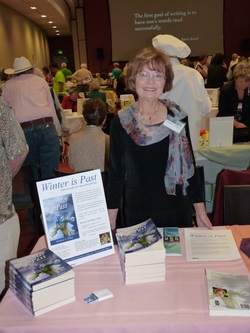
Victoria at the Palm Springs Writer's Expo March 2012
Victoria at the Palm Springs Writer’s Expo March 2012

2940013445222_p0_v1_s260x420VICTORIA C. SLOTTO (Victoria C. Slotto, Author: Fiction, Poetry and Writing Prompts) ~ is an accomplished writer and poet. Winter is Past, published by Lucky Bat Books in 2012, is Victoria’s first novel. A second novel is in process. On Amazon and hot-off-the-press nonfiction is Beating the Odds: Support for Persons with Early Stage Dementia. Victoria’s ebooks (poetry and nonfiction) are free to Amazon Prime Members. Link HERE for Victoria’s Amazon page.

Editor’s note: Congratulations, Victoria, on that the long awaited publication of print copies of Jacaranda Rain, Collected Poems, 2012, Beautifully done.

Posted in Christianity, Liliana Negoi, Meditation, meditative, Mortality, mystic, Spiritual Practice

On giving

DSC_0313My kids had a small festivity at kindergarten. They sang songs, and recited poems, and then Santa Claus came and gave gifts to all of them…overall it was nice. And obviously crowded, because for each of the kids in the festivity, there was at least one adult in the public in front of them, admiring them and cheering them and…doing whatever adults do when attending their children’s festivities.

After we left, when we got back home and the kids opened their presents and began to play, I couldn’t help thinking about the children of this world whose Christmas gift may not be big enough as to contain more than some fruit, let alone toys or other things. And that’s sad, because, above all, Christmas is a time of giving. Not because of Santa Claus, but because of its original meanings. Go beyond the birth of Christ, which was a gift in itself, given to the world (yes, I know that according to some new calculations Christ was actually born in spring, but it’s the symbol I’m talking about here), go back to those times of yore, when the only thing celebrated during this period of the year was the winter solstice – the joy that, after slowly shortening its gift of daily light for six months, the sun was beginning to turn the wheel around and days were starting to “grow” again. This was the gift people got back then – light. More light. Which, come to think about it, is such an awesome and priceless gift!

Anyway, the point of this pondering was that of reminding you all that, even if I don’t believe that giving should be the appanage of Christmas time alone but a way of life, I do believe that this is a good time to remember about all the gifts that we have ever been given, no matter by whom, and to try and imagine how our lives would have been had we not received those. Starting with the gift of life from our parents, and to the gift of blessings from our children.

And if you can, if you have the means, help those in need by filling their Christmas time with a little more light. You don’t have to give huge gifts – the simple fact that someone thought about them and gave them anything at all will be more than what they would expect. And their joy when receiving your present will be a priceless gift you give yourselves.

© 2013 Liliana Negoi

The photo attached was taken from http://morguefile.com.

IMG_7667LILIANA NEGOI  (Endless Journey and in Romanian curcubee în alb şi negru) ~ is a member of our core team on Into the Bardo. She is the author of three published volumes of poetry in English, which is not her mother tongue but one that she came to love especially because of writing: Sands and Shadows, Footsteps on the San – tanka collection and The Hidden Well.  The last one can also be heard in audio version, read by the author herself on her SoundCloud site HERE.  Many of her creations, both poetry and prose, have been published in various literary magazines.

Posted in Essay, Spiritual Practice, story, Terri Stewart

Sacred Space: Myth-Adventures

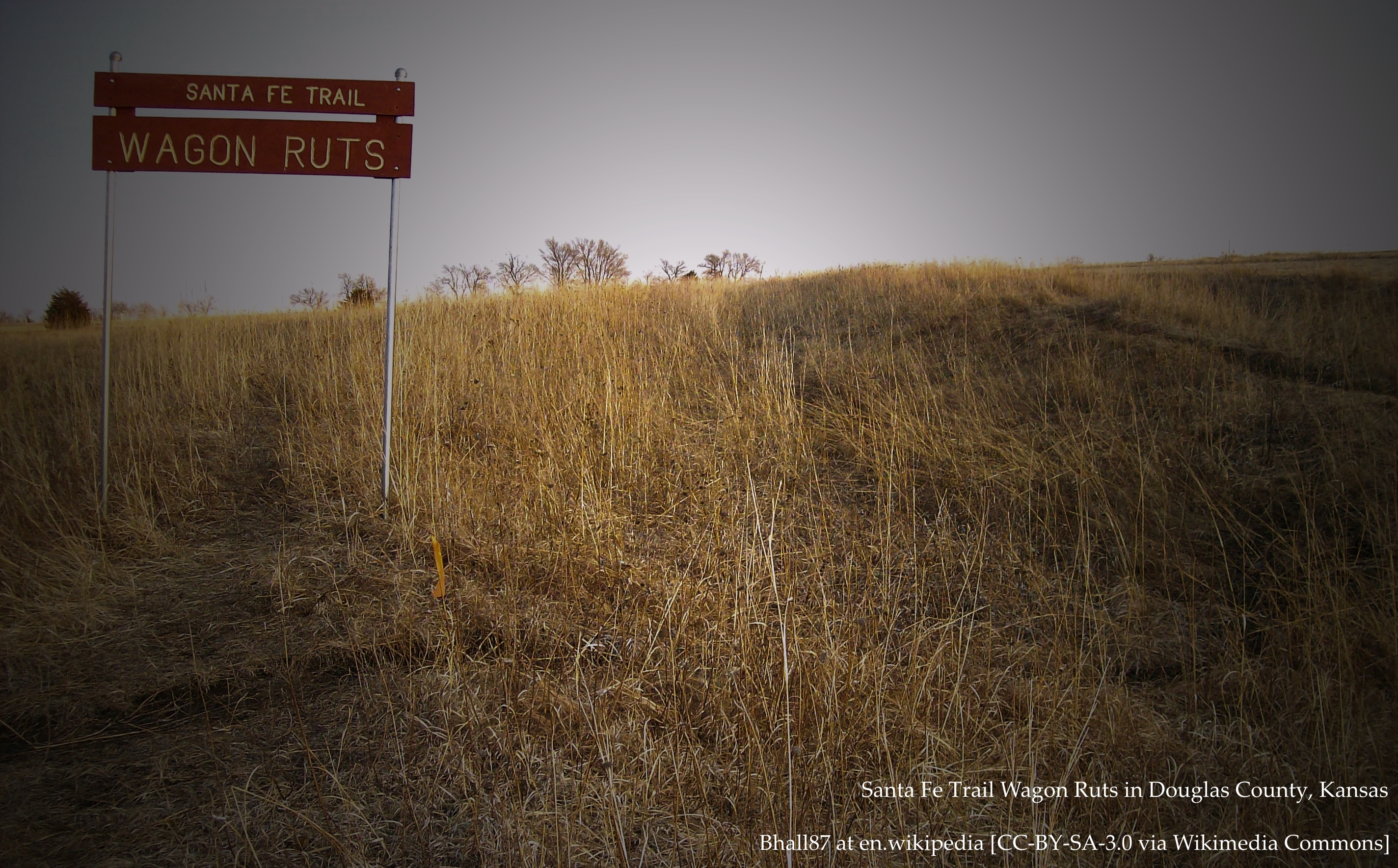
wagonrutts
Wagon Ruts

When I was a little girl, I thought, “I should have been a pioneer woman!” I thought I was strong, and self-reliant. Well, I was. But I am certainly glad that I was not born a pioneer woman or I would have died in child-birth somewhere on the western horizon. The myth of the pioneer woman, though, has stayed with me through time as it is definitely incorporated in some aspects of my personality.

Some of these traits are as named…strong, self-reliant. But I would also add creative, thinking of new ways to do things, starters, innovators, and backbones of their society and of the family. These are all mythical traits with connection to real and imagined features. What I learned as a young girl, where in Colorado I could still see the tire tracks through the prairie, was a one-sided view of a pioneer person.

The truth of the matter is that in order for western expansion to happen, people had to be pushed out and that was the indigenous peoples of North America. So an innovator, starter, pushy pioneer woman and her family was actually displacing native peoples. Bummer. They did not teach us that story in elementary school! Therefore, there is part of that mythology to let go of. The “surviving at all costs” thinking needs to be tempered with an awareness of what it means to negotiate power and an understanding of my own social location.

And there is the other part of my mythology. It stems from a story about my grandfather. He was 1 of 17 kids. Fact. I was told or heard somewhere along the way that my grandfather’s mother was Native American. This would have been one of the tribes from New York. Probably the Cayuga. Who knows? It is a great myth for a girl to latch onto. My pioneer woman is married to a strong, amazing (17 kids!) indigenous woman. That is fun. But what exactly do you do with that when it is hearsay and unsubstantiated? Holding the story became enough. Even when I got older and researched on ancestry.com, I did find the names of the two women that would have been the probable mothers to my grandfather, one was traceable further, the other was simply “Miss Kitty.” Hypothetically, that would be her. Cool. That makes me a smidge of everything. It also explains the profound connection I have with the land of my birth. It does not merely go back hundreds of years, but perhaps thousands. Steadfastness.

And then there is my spiritual mythology. I am a Christian and have a liberal understanding of what scripture is. I don’t hold it tightly in a literal way. But I do hold it tightly in a mythological way. There are amazing stories if we read with subtext and if I read, “In the beginning, there was a formless void.” I can easily imagine everything that the “Big Bang” teaches us from a science standpoint. Spectacular. The Big Bang becomes a new mythology or a new creation story to be incorporated into my life and beliefs.

What is the point of all this myth and where am I going with it?

Myth seems to the story, spoken or unspoken, that we live our lives by. I spend a lot of time talking to people about telling their story. What is your story? What does it tell you? How does it give you life? And stories do not always give life.

Thursday, I was sitting in the juvenile detention center with a youth. He opened up to me in a way he hasn’t in the last 12 months I have known him. He told me more about gangs and gang mythology than I had ever heard before. Oh, he would not have used the words “gang mythology,” but there it was.

“Miss Terri, do you know why we don’t ever say the word donut?”

“Uh, no. I’m not sure I was ever even aware you didn’t say donut.”

“Well, when King David was killed he was in the donut shop. So we don’t say donut out of respect for King David.”

I was mightily confused. King David? King David never went to a donut shop! Donut shops are not even in the Bible! Then it finally dawned on me. He was talking about a gang leader, David Barksdale. Now, I am certain that there has been a conflation of David Barksdale with local gang happenings for reasons that are beyond this discussion, but the point is that it is their myth. Their story. It defines who they are even to the point that they go for “pastries” not “donuts.” (Other parts of their myth – no fish on Friday because of a similar reason, and wear red every Friday to honor their fallen comrades. Oh, and the leaders don’t listen to the young people just like every organization in existence.)

With this conflation of stories about their gang leaders, they recover David Barksdale who did some extraordinary things with his leadership. (Stick with me…this is odd). David Barksdale was from the 1960s/1970s. He died in 1974. He became tired of the killing between gangs and united gangs in Chicago so that they came together in a truce. At that point, he started several social service programs aimed at helping his people have better opportunities. That’s a pretty good myth. (It goes bad again, but at his death and afterwards.)

This young person’s myth was defining who he was in extraordinary ways. He ritualized the mythology of the gang. And in this case, the overall mythology is not life-giving. I would describe it ultimately as death-dealing. So personal mythology or our personal story are very important. They can put or keep us on a trajectory towards greater life or towards death.

Please, let’s choose life.

I asked myself, “What is the myth you are living?” and found that I did not know. So…I took it upon myself to get to know “my” myth, and I regarded this as the task of tasks…I simply had to know what unconscious or preconscious myth was forming me. ~C. G. Jung, The Portable Jung

How do we get to know our myth? What can we recognize as myth? Can we have an understanding that our myths are sacred story created just for us? Here are fundamental questions that typically pop up in mythologies (from Your Mythic Journey):

  • Where did I come from?
  • Why is there something rather than nothing?
  • Why is there evil in the world?
  • What happens to me when I die?
  • With whom do I belong?
  • How close should I be to my individual family members, lover, or friends?
  • What are my duties?
  • What is taboo?
  • What is the purpose of my life, my vision?
  • Whom should I imitate?
  • Who are the heroes and heroines?
  • Who are the villains?
  • Who is the enemy?
  • What are the stages along life’s way?
  • Who are my helpers, guides, allies?
  • What is disease?
  • How can I be purified, healed?
  • What should I do with bounty, wealth, surplus?
  • What is my relationship to animals?

That is a lot of questions and a lot of potential for a variety of answers. The question I don’t see on this list that I would include is “What do I do with suffering?” or “Why do people suffer?” But it is a great list and a great starting point for examining your own personal mythology to see where you are maintaining sacred space (life-giving) or profane space (death-dealing).

Today, if you have time, hold just one of these questions in your mind and explore your personal mythology. As we can see just from the questions, our personal myth illuminates our relationship to the world and the types of actions we take in the world. My wish for you is that you write a story that is life giving for yourself and for the world. Transforming the cosmos into sacred space.

Shalom and Amen.

~Terri

© 2013, post, Terri Stewart, All rights reserved

terriREV. TERRI STEWART is Into the Bardo’s  Sunday chaplain, senior content editor, and site co-administrator. She comes from an eclectic background and considers herself to be grounded in contemplation and justice. She is the Director and Founder of the Youth Chaplaincy Coalition that serves youth affected by the justice system. As a graduate of Seattle University’s School of Theology and Ministry, she earned her Master’s of Divinity and a Post-Master’s Certificate in Spiritual Direction. She is a contributing author to the Abingdon Worship Annual. (The 2014 issue just released!)

Her online presence is “Cloaked Monk.” This speaks to her grounding in contemplative arts and the need to live it out in the world. The cloak is the disguise of normalcy as she advocates for justice and peace. You can find her at www.beguineagain.com , www.twitter.com/cloakedmonk, and www.facebook.com/cloakedmonk.  To reach her for conversation, send a note to cloakedmonk@outlook.com

Posted in Essay, poem, Poems/Poetry, poetry, Spiritual Practice, Terri Stewart

Naming Your Sacred Truth

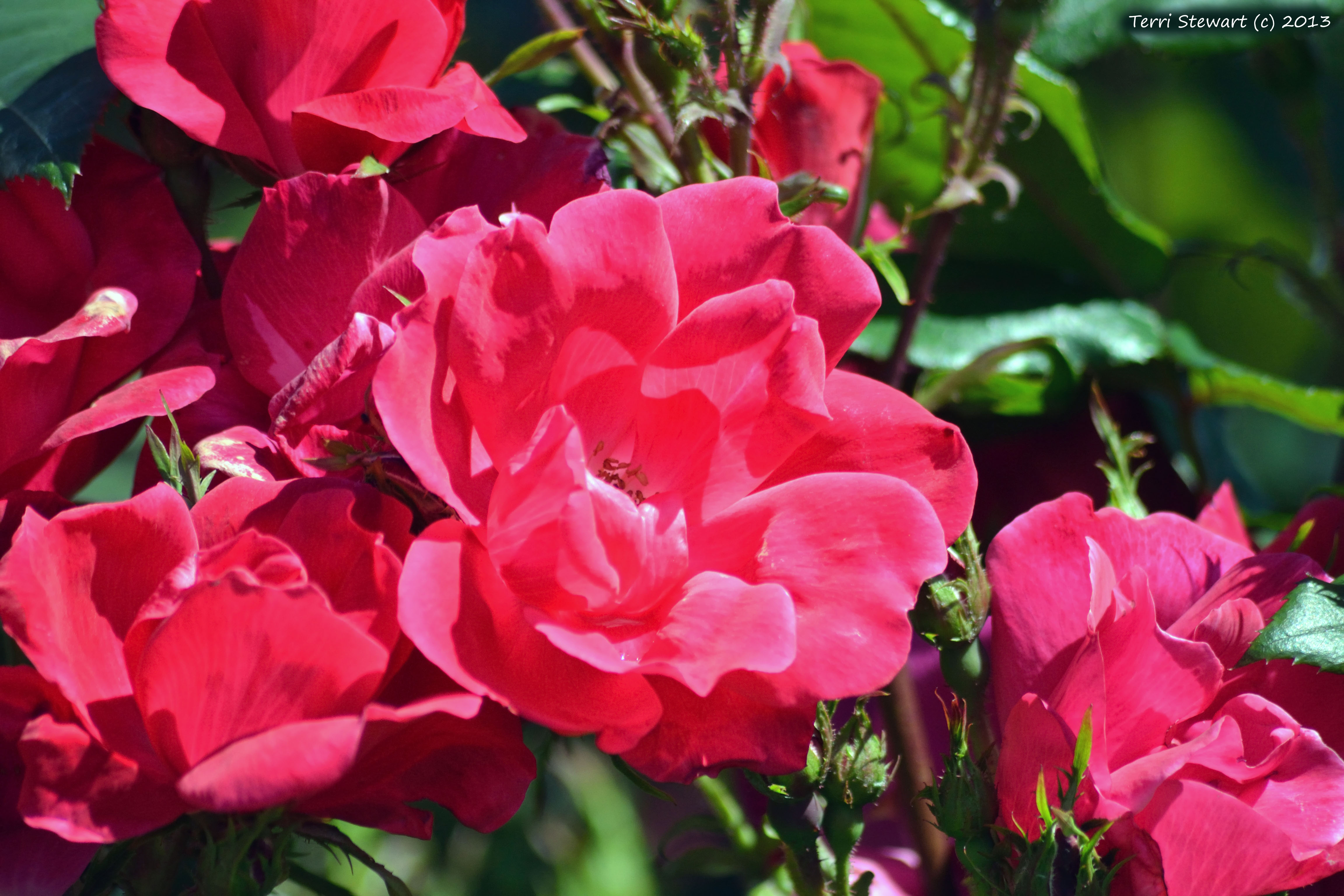
Gloriously Pink by Terri Stewart
Dazzling Pink

Recently, I took a personality test that was required for a program I am participating in. Sometimes, I feel like the most tested person in the world! Meyers Brigg, Gary Smalley, MMPI, an actual interview with a therapist—and I think there were other tests. My organization really, really wants their people to be healthy!

The unique thing about the most recent test – called the DISC – is that it created a public and private personality profile. My “two” personalities were not far off of each other, but they were different. Most significantly, my “D” or dominance trait is very high publicly and only moderately high privately. Meaning, I am bossy.

What a surprise!

Privately, though, my bossiness is exactly balanced with my expressive part of my personality. Meaning, I can be obnoxiously loud! Loud and bossy!

An even bigger surprise!

Not.

Those are just the harsh ways of looking at my personality. Really, I am the head of an organization – if I can’t provide direction, the organization will not succeed. And the expressive + directing can equal playful and silly. Or dramatic. That is the private me.

Question: What does this have to do with spiritual practices or sacred space?

Everything! There is the old adage, “Know thyself.” But it is also, “Know Your Story!” And “Tell Your Story!” (The whole expressive personality thing = exclamation points.)

I am reading a book called Your Mythic Journey by Sam Keen and Anne Valley-Fox. They go into a discussion of public and private personas. Sometimes we think about our authentic selves like it is only possible to be fulfilled if we are 100% “authentic.” Maybe. The questions that spring to my mind are: “Who is your authentic self?” “Is your public self any less important than your private self?” “Are we allowed to protect our fragile bits and keep them private?” “Can we hold personas these in dialogue?” “Is the private self always the healthy self?”

And on, and on.

Today, I’d like to encourage you to glimpse your public and private self through creating a fill-in-the-blank scenarios and then looking at all the words you accumulate to create a revelatory product that illumines the sacred being that we all are.

Pen and paper in hand, sit back and follow the prompts.

Your Public Self

  • Make a list of 10 words or phrases that best describe you using the prompt, “I am ______________ .”
  • Now rank the words/phrases in order of importance
  • Now cross them out one at a time until you are left with your most important trait.
  1. I am playful.
  2. I am smart.
  3. I am disorganized.
  4. I am also organized.
  5. I am faith-filled.
  6. I am compassionate.
  7. I am loud.
  8. I am wise.
  9. I am filled with ideas.
  10. I am creative.

  1. I am compassionate.
  2. I am playful.
  3. I am creative.
  4. I am filled with ideas.
  5. I am faith-filled.
  6. I am smart.
  7. I am loud.
  8. I am wise.
  9. I am also organized.
  10. I am disorganized.

What is your revelatory word? Please leave your word in the comments section to share.

If you would like to take this one step further, I encourage to take your 10 words/phrases and use them as word prompts to create a micro-poem (using as many or as few of the words as you like).

playful love

spatters life dripping

with painted ideas

of

dazzling pinks, blues, and yellows.

swarming compassionately

and loudly causing

chaos

while held together

in

sophic faith.

i. am.

Of course, my private self is not quite so lovey-dovey, dazzling pink, or wise. Often the chaos is on the rise internally or the struggles I have with health are masked out. But that will be a post for another day. Today, embrace the sacred space that you present to the world. I believe that when we don’t have enough faith in our own abilities to be compassionate or loving or wise, we can live into that reality until our inner space matches our outer space.

Shalom and Amen.

~Terri

P.S. I’d love to invite you over for a quick look at the Advent reflections that have been offered at BeguineAgain.com

Thursday, 11/28, The Tipping Point, Essay by Jamie Dedes (The Bardo Group)
Friday, 11/29, Simple Truths, Poem by Kathleen Tenpas
Saturday, 11/30, I Didn’t Want to Move, Essay by David Orendorff
Sunday, 12/1, World AIDS Day, Essay by Tracy Daugherty
Monday, 12/2, Fowler’s Snare, Collage by Judy Alkema
Tuesday, 12/3, An Advent Prayer, Prayer by Mark Sandlin
Wednesday, 12/4, An Angel Came Near, Essay by Tracy Daugherty
Thursday, 12/5, Washed, Poem by Terri Stewart
Friday, 12/6, Zoom In, Zoom Out, Essay by Catherine MacDonald
Saturday, 12/7, The Word Stands, Collage by Laura Esculcas
Sunday, 12/8, The Wolf, Storytelling by Jim Cyr

© 2013, post and photo , Terri Stewart, All rights reserved

terriREV. TERRI STEWART is Into the Bardo’s  Sunday chaplain, senior content editor, and site co-administrator. She comes from an eclectic background and considers herself to be grounded in contemplation and justice. She is the Director and Founder of the Youth Chaplaincy Coalition that serves youth affected by the justice system. As a graduate of Seattle University’s School of Theology and Ministry, she earned her Master’s of Divinity and a Post-Master’s Certificate in Spiritual Direction. She is a contributing author to the Abingdon Worship Annual. (The 2014 issue just released!)

Her online presence is “Cloaked Monk.” This speaks to her grounding in contemplative arts and the need to live it out in the world. The cloak is the disguise of normalcy as she advocates for justice and peace. You can find her at www.beguineagain.com , www.twitter.com/cloakedmonk, and www.facebook.com/cloakedmonk.  To reach her for conversation, send a note to cloakedmonk@outlook.com

Posted in Essay, poem, Spiritual Practice, Terri Stewart, Uncategorized

Sacred Space at Disneyland

I am at Disneyland right now! On vacation! Sometimes I find myself frustrated at the crowds around me and at certain comments from my family (just as I’m sure they are frustrated with me at times!). But my husband said something very wise as we cued up for the Haunted Mansion – he said, “It is like a labyrinth.”

It was! The difference being the labyrinth leads to a holy space and returns you on the same path. And a cue leads to an event and you exist on a different path. But do we really need a bunch of tools in our tool kit to create sacred space? Do I need my Mary Oliver book, my Bible, my candles, a labyrinth? Or do I need to simply be open? In this instant, in this place, simply being open became enough.

I proceeded down the path towards the Haunted Mansion with my heart stretched and my ears open to the sounds of conversation, of the mechanisms of the ride, of the water nearby, or the staff. And I felt the connectivity with the cosmos. The sacred was there. In the cue at the Haunted Mansion in Disneyland.

Of course, intellectually, I know this. But experientially, I forget. I get caught up in being right (if it is my family or politics) or caught up in impatience (a 45 minute cue?!). But if I slow down and begin again, I can recall myself to the center and extend my consciousness outward from my body into the world around me. Greeting my loved ones, strangers, trees, all of it – the cosmos.

The cosmos is also within us, we’re made of star stuff. ~Carl Sagan

We just have to remember!

star stuff drifts

through the cosmos

salvation’s quest

It's A Small World (c) 2013, T. Stewart Cell Phone
It’s A Small World
(c) 2013, T. Stewart
Cell Phone

Shalom & Amen!

Terri

P.S. – I’d love for you to drop by www.BeguineAgain.com and see some of the Advent reflections taking place. Today’s reflection is on World AIDS Day from an unsung hero, Tracy Daugherty.

© 2013, post and photos, Terri Stewart, All rights reserved

terriREV. TERRI STEWART is The Bardo Group  Sunday chaplain, senior content editor, and site co-administrator. She comes from an eclectic background and considers herself to be grounded in contemplation and justice. She is the Director and Founder of the Youth Chaplaincy Coalition that serves youth affected by the justice system. As a graduate of Seattle University’s School of Theology and Ministry, she earned her Master’s of Divinity and a Post-Master’s Certificate in Spiritual Direction. She is a contributing author to the Abingdon Worship Annual.

Her online presence is “Cloaked Monk.” This speaks to her grounding in contemplative arts and the need to live it out in the world. The cloak is the disguise of normalcy as she advocates for justice and peace. You can find her at www.cloakedmonk.comwww.twitter.com/cloakedmonk, and www.facebook.com/cloakedmonk.  To reach her for conversation, send a note to cloakedmonk@outlook.com

Posted in Essay, Spiritual Practice, Terri Stewart

Sacred Space in Particles

I am fascinated with astrophysics. And I am probably just skilled enough to be dangerously inept! One thing that just makes my heart flutter is the idea that all matter is already created! We can neither destroy or create matter. (Except that we can, according to the Higgs Boson discovery – but that will be for another discussion!)

In general terms, matter is neither destroyed or created so that essentially the particles we immerse ourselves in are the same particles that have been around forever and ever. The Oxygen molecule I breathe in was perhaps breathed in by some semi-ancient ancestor. Who would I choose to share breath with? Maybe I would connect to some fabulously wonderful pioneering women such as Christine de Pizan or Joan of Arc. Or maybe with some substantial spiritual leaders like Jesus of Nazareth, Gautama Siddartha, or Mary of Magdala. I could be breathing their particles!

I am also breathing the particles that were created at the moment of birth of the cosmos. That rapid expansion of the universe when it really did somehow go from nothing to something. Pushed outward in a violent burst of matter, light, and waves. Culminating in this moment. This time. At least for us. This moment is the culmination. Until the next moment, that is!

So, I was thinking cosmologically in this way and I stumbled across a book called, The Tree. It is a children’s book written by a Pacific Northwest author. I imagined the particularity of matter as residing in the tree. And then I read the story of how this book came about. The author received this story while sitting underneath a Douglas Fir in the Pacific Northwest. He received it as a song, not as a story. He sang it often for various events. Half-heartedly claiming that the tree wrote it.

Later, he was invited to a celebration to celebrate the return of the Madrona Point burial ground to the Lummi people. The tribal chief wanted to hear his song. He sang it. And then offered the story of the song’s origins with the additional wondering, “Did it really come from that ancient Douglas Fir?”

The tribal chief said, “It did. I recognize the tune.” He went on. “It is known in our tradition that each tree has its own song. Our music comes from them. We show our respect for the great trees by singing their songs and playing them on the flute. We must all work to save the ancient groves in our territory.”

Hmm. That is really quite beautiful.

And so, for this offering in the quest towards finding sacred space, I invite you to connect with the particles of the cosmos, the particles of the tree, and to sit back and enter into the story of The Tree.

Shalom and Amen,

Terri

© 2013, post and video, Terri Stewart, All rights reserved

terriREV. TERRI STEWART is Into the Bardo’s  Sunday chaplain, senior content editor, and site co-administrator. She comes from an eclectic background and considers herself to be grounded in contemplation and justice. She is the Director and Founder of the Youth Chaplaincy Coalition that serves youth affected by the justice system. As a graduate of Seattle University’s School of Theology and Ministry, she earned her Master’s of Divinity and a Post-Master’s Certificate in Spiritual Direction. She is a contributing author to the Abingdon Worship Annual. (The 2014 issue just released!)

Her online presence is “Cloaked Monk.” This speaks to her grounding in contemplative arts and the need to live it out in the world. The cloak is the disguise of normalcy as she advocates for justice and peace. You can find her at www.cloakedmonk.com, www.twitter.com/cloakedmonk, and www.facebook.com/cloakedmonk.  To reach her for conversation, send a note to terri@cloakedmonk.com

Posted in Buddhism, Gil Fronsdal, Spiritual Practice

A DHARMA TALK: Being Present

Gil_FronsdalGil Fronsdale is a Buddhist who has practiced Soto Zen and Vipassana since 1975, and is currently a Buddhist teacher who lives in the San Francisco Bay Area. Gil was trained as a Vipassana teacher by Jack Kornfield and is part of the Vipassana teachers’ collective at Spirit Rock Meditation Center. He was ordained as a Soto Zen priest at the San Francisco Zen Center in 1982 and was a Theravada monk in Burma in 1985. In 1995 he received Dharma transmission from Mel Weitsman, the abbot of the Berkeley Zen Center.

He is the guiding teacher of the Insight Meditation Center (IMC) of Redwood City, California. He has a PhD inBuddhist Studies from Stanford University. His many dharma talks available online contain basic information on meditation and Buddhism, as well as subtle concepts of Buddhism explained at the level of the lay person.” Wikipedia

Video uploaded to YouTube by insightmed.
Photo credit ~ Insight Meditation Center, Creative Commons Attribution-NonCommercial-No Deriv 3.0 Unported

Posted in Essay, Photography/Photographer, Priscilla Galasso, Spiritual Practice

Habit

Habit might be the enemy of Awareness or Mindfulness.  Doing things routinely without thinking is a practice that allows our mind to wander into the past or the future or the make believe without really being present.  Sometimes, this is just what I want to do!  Yes, I admit to blowing up Mah Jong tiles and Free Cell rows when I want to veg out.  But if I want to be truly alive, I try to pay attention to each present moment.

Thich Nhat Hahn gives a wonderful lesson to Oprah Winfrey on drinking tea mindfully in this clip.  Oprah, out of habit, takes a sip of her tea before the meditation even begins.  I smile, thinking, “how embarrassing!” and noting that I probably would have done the same thing if I wasn’t careful.

Habits can be comforting…and they can lull us to sleep.  Do you want to be awake?  Do you feel like there will be plenty of time to be dead later on?  I do.  Except when I don’t.  It takes a lot of psychic energy to be alive!  Think about all that’s involved when you do a simple thing like climb up a short flight of stairs.  Your weight is shifting, balancing, your muscles are contracting, your toes are gripping, your hand may reach out to the banister, your eyes are measuring the height of each step, you’re breathing with the exertion, and all while trying to remember what you’re going upstairs for!  Walking meditation, tea meditation, stairs meditation…it’s all the same practice of mindfulness.

This picture adds another aspect: Steve in meditation.  I see him every day.  I want to be mindful of that miracle.  He’s alive, different, changing, dynamic, and important.  So am I, but I have a long way to go on that one. Appreciating myself is the hardest practice for me.

Habit

– Priscilla Galasso

© 2013, essay and photographs (above and below), Priscilla Galasso, All rights reserved

004PRISCILLA GALASSO ~  started her blog at scillagrace.com to mark the beginning of her fiftieth year. Born to summer and given a name that means ‘ancient’, her travel through seasons of time and landscape has inspired her to create visual and verbal souvenirs of her journey.

Currently living in Wisconsin, she considers herself a lifelong learner and educator. She gives private voice lessons, is employed by two different museums and runs a business (Scholar & Poet Books, via eBay and ABE Books) with her partner, Steve.

Posted in Essay, Spiritual Practice, Terri Stewart

Finding Sacred Space In the Other

This week in my church, it has been filled with conflict and dissension. That makes for a tough week! Let me clarify – structurally, from the upper echelon of the decision-making bodies, there has been a reinforcement of codified discrimination and what I think is just pig-headed wrongness. Ha! I am not feeling very charitable at all. I always have the choice of staying within the system or leaving. But leaving does not really move the ball forward for me. Why? Because my basic anthropology is that we are all connected. Even if I left this system and surrounded myself with folks that were just like me (how irritating that would be!), I am still connected to the people that I find the most frustrating.

Harrumph.

Then, I discovered this exercise written by Troy Bronson in his book Drawn In. It is an exercise for integration and forgiveness. Or perhaps forgiveness and integration. I am fairly certain that full integration is not possible without forgiveness! At any rate, I have adapted his exercise and now I offer it to you as a spiritual practice to aid in integrating those people that drive us bananas.

Take a piece of paper and fold it in half twice so that you have four quadrants. In the bottom right list your enemies: those who mean harm to you and your family; those who are politically opposed to what you are for; those who persecute you and others associated with your causes and passions.

In the bottom left list your friends: advocates for those associated with your religious, political, or social causes. Write all of this so that both groups are at the bottom of the page, with only a crease separating them.

On the Horizon (c) 2013, Terri Stewart
On the Horizon
(c) 2013, Terri Stewart

Now, draw a horizontal line to separate both groups from the empty top half of the page. Read this adapted version of Psalm 121.

I look to the hills!
Where will I find help?
It will come from the immense force
that created the stars, sun, sky,
And earth.

You are protected by Love,
And Love will not sleep
Or stumble
Or snooze.
Love always is.
Protecting you,
Standing at your right side,

The Tree shades us from the sun
The sun will not harm you
Nor will the
Moon.
Protecting you,
Keeping you safe from
All
Dangers.

The incredible creative force
That was, that is, that shall be
Is with you.
Now and always.
Wherever you go.

Reflect on the line, “I look to the hills!” and imagine that the line you’ve drawn is a horizon line made by hills way off at the distance. Imagine your friends and your enemies looking into a future where all things are met with love, justice, and mercy. Where the separating walls between these two groups are healed and taken down. Where the grievances are forgiven. Where they gaze lightly upon one another and see beloved rather than the other.

Now, offer your thoughts to love and reconciliation choosing to step forward into the hills that were once a divider, but now, as we all step into them, cocoon us in beauty.

Adapted from Ephesians 2:11-22

Don’t forget that you used to be the other! The enemy! They used to call you crude and rude. You were a foreigner in this land with no understanding of tradition. You had no hope and were held far away from life giving love.

Creative, responsive love unites all in peace! Breaking down the laws that separate us – that separated us. Following religious rules that are not grounded in loving kindness is not helpful! We all suffer, feel pain. But we are all one, one body united together. We are in this one life together.

You are no longer a stranger or an enemy! You are beloved. Just as those you persecute are beloved. All who went before you are the foundation for who you are today. And it is held together by Love and grown into holy ground where Loving Kindness dwells.

You are part of that holy ground.
You are holy ground.
They are holy ground.
We are
Holy
Ground.

There is no near and no far.
There is only here.
Be one.

Shalom and Amen,

Terri

© 2013, post , Terri Stewart, All rights reserved

terriREV. TERRI STEWART is Into the Bardo’s  Sunday chaplain, senior content editor, and site co-administrator. She comes from an eclectic background and considers herself to be grounded in contemplation and justice. She is the Director and Founder of the Youth Chaplaincy Coalition that serves youth affected by the justice system. As a graduate of Seattle University’s School of Theology and Ministry, she earned her Master’s of Divinity and a Post-Master’s Certificate in Spiritual Direction. She is a contributing author to the Abingdon Worship Annual. (The 2014 issue just released!)

Her online presence is “Cloaked Monk.” This speaks to her grounding in contemplative arts and the need to live it out in the world. The cloak is the disguise of normalcy as she advocates for justice and peace. You can find her at www.cloakedmonk.com, www.twitter.com/cloakedmonk, and www.facebook.com/cloakedmonk.  To reach her for conversation, send a note to cloakedmonk@outlook.com

Posted in Essay, Spiritual Practice, Terri Stewart

Finding the Sacred in Impermanence

Today I have been thinking about the beauty of impermanence. These thoughts were inspired by an artwork installation I saw recently called Shimmering Tree. Shimmering Tree is a projection of a digital tree onto a huge wall in a gallery. The tree is shimmery, animated, and changes seasons. But it is digital! I wondered about this digital artwork media installment sitting next to traditional portraiture or other more concrete forms of art. Shimmering Tree is art from digital artist Jennifer Steinkamp. An earlier piece of hers is Dervish:

It is a fascinating thing. Steinkamp’s work may be a valuable lesson to not become too attached to a physical manifestation and to embrace the beauty of what is.The inherent contradiction is that this temporary art is captured forever kn a digital form!

I think there may be a deeper spiritual practice lurking in the embrace of impermanence. This is more than recognizing that things change-it is a deep-seated gratitude for impermanence. A recognition of the beauty inherent in change, impermanence, evolution.

I wonder, what have I been holding onto that I need to let go of? Usually those things are behavioral for me. But it could be something else. Shoes. Books. Things. Sometimes I get this fleeting impression of impermanence when I wish I had my camera with me to capture a particularly beautiful vision. But I am forced, in that moment, to receive the image and to release it-with gratitude.

Thinking of impermanence and developing a greater appreciation for it led me to remember a video I saw from Ukraine’s Got Talent. This art is the epitome of grace, beauty, and impermanence.

Of course, life has always been impermanent. Art decays. But usually it is with us more than 5 minutes! Much art outlasts people! What are we going to do when everything has a lifespan tied to the technology cycle?

We better learn to master this! I wonder if there is one word you would like to offer as a movement towards seeing the beauty of impermanence? My word is: ego.

How about you?

Shalom and Amen,

Terri

© 2013, post , Terri Stewart, All rights reserved

terriREV. TERRI STEWART is Into the Bardo’s  Sunday chaplain, senior content editor, and site co-administrator. She comes from an eclectic background and considers herself to be grounded in contemplation and justice. She is the Director and Founder of the Youth Chaplaincy Coalition that serves youth affected by the justice system. As a graduate of Seattle University’s School of Theology and Ministry, she earned her Master’s of Divinity and a Post-Master’s Certificate in Spiritual Direction. She is a contributing author to the Abingdon Worship Annual. (The 2014 issue just released!)

Her online presence is “Cloaked Monk.” This speaks to her grounding in contemplative arts and the need to live it out in the world. The cloak is the disguise of normalcy as she advocates for justice and peace. You can find her at www.cloakedmonk.com, www.twitter.com/cloakedmonk, and www.facebook.com/cloakedmonk.  To reach her for conversation, send a note to cloakedmonk@outlook.com