My gardens hold no trace of man
Wherever he comes he builds burdens
He tries to grow racism or casteism
But my gardens do not have any plants or trees with names
Scattered around are statues of fauns
and satyrs in my homegrown gardens
Apsaras and houris may gambol
gently on its lawns, unmanned
My gardens do not belong to any nation
any class or gender or time
They do not understand the use of the word my
They are gardens, always in their prime.
My gardens are God’s gardens
My gardens are your gardens
Everybody’s, yes, our gardens
My gardens are the only ones in their prime
I was sitting outside once, on an old, gray chair, listening to how the erratic creaking of a wooden door slowly shredded the warm peace of the last summer days. Somewhere above me, a garrulous sparrow strove to explain to its consort some sort of an existential problem, which definitely didn’t regard me and which, anyway, couldn’t have been debated in any other language than theirs (you see, I think that every problem has a particular language of itself, in which it can be expressed and then solved).
I looked at the sky, stretching indecently blue above me, and my right hand, fallen by the chair, found, in its purposeless movement, a tiny weed, which, when touching my palm, birthed within my fingers an imperceptible tremor, almost like a giggle. I caressed its long leaves with an unexplainable impatience, realizing that the last time I had felt such a sensation had been when I’d made love (maybe too long ago). Then my fingers gave in to temptation, and pulling the weed from its root, brought it in front of my eyes, like a teenager presenting his lover to his parent for the first time. I don’t know what name bore the small plant – I was never good about the nomenclature of weeds. But I looked at its filiform being, feeling some sort of regret because, out of curiosity to see it, I had allowed laziness to drive me towards breaking it, instead of simply having bent upon it. The small herb was trembling lightly in the wind, in my hand, and without thinking too much I rubbed between my fingertips the tuft at its end, looking then with wonderment at the tiny white dots, lingering for a second on my skin, and then allowing themselves to be carried by the warm wind towards the dust on the ground. The weed, now seedless, continued to quiver.
The wooden door suddenly squeaked again, and I sharply understood that, in all this time, my curiosity and I were only the way chosen by the little plant to spread its offspring – and nothing more.
“Each day I squeeze the contents of my heart over whatever expression I’m wearing & imprint it onto a notebook page–my version of St. Veronica’s veil.”
Joseph Hesch (A Thing for Words) lives in a beautiful region, upstate New York, at the confluence of my own beloved Hudson River and the Mohawk River. It’s a nice setting for a poet.
Joe was a professional writer for forty years. Post-retirement finds him doing writing that is more creative – poetry and fiction – with publication in quite a number of magazines and literary journals. He has self-published two collections of poetry. Joe is also a member of The BeZinecore team of contributing writers and his poems and flash fiction are featured in the zine just about every month.
JAMIE: Joe, I know you worked as a journalist for a good part of your life. Did you also write poetry or did you come to it late? What’s it like now that you are not working for “the man?”
JOE: Journalist or hired typewriter and gum-flapper for Skidmore College, a three-state professional organization or the State of New York over my 40-plus years in the working world. And no, I definitely was not writing poetry until I reached the age of 55. Not in high school, college nor when I was a professional writer.
A pretty miraculous recovery from a heart condition let me know each day is a blessing not to be wasted. I decided I’d best hurry and let the writer’s heart I thought I had within me live again.
I started to write sassy essays that I shared with friends. Then I wrote a bit of memoir one afternoon about my childhood Christmases. I took a chance and it was accepted for publication in a Christmas anthology. I continued to write for the discoveries I was making in myself and my world. And then everything stopped. Absolutely dead in the water. I’d run out of those easily reached ideas and emotions. I didn’t know what to do.
A friend told me my prose always sounded quite poetic to her. “Why don’t you write a poem?” she said. So I started out with the 5-7-5 structured hug of haiku. Then I wrote a poem about not being able to write anymore, stringing together those five- and seven-syllable lines. She suggested I submit it to some journals. I did and it was accepted for publication. Poetry had recharged my life machine and put me back in the world as a writer.
I never wanted to be a poet. Never wrote a poem in my life before those haiku. I consider myself a storyteller. You could say my poems are stories with the sentences broken into bite-sized pieces, stacked like crackers. But I’ve discovered more about myself as an emotional being, as a feeling man since I began to write poetry than I could have imagined in fifty-some years on this Earth. So, about no longer writing for the man? They can’t pay you enough in any job to learn the discoveries I have as a poet.
JAMIE: Tell us about your two collections.Do you have plans for another? If so, what would be the theme.
JOE: Oh, thanks for asking. Yes, I have two collections available on amazon.com. The first, Penumbra: The Space Between, I put together in 2014. I guess you could say it’s my coming-out as a poet in middle age. I hope I expressed my impressions on life and nature from the view of a man emerging from years of darkness into a brighter personal and artistic existence, standing astride middle age. Neither young nor old, still peering at things from the edge of shadow and light, the penumbra. I’m kinda proud of it as a first effort.
In my second collection,One Hundred Beats A Minute, I hope to convey impressions and imaginings of life, love, art, nature and what I see outside or inside the swirly-glassed windows of my soul. All of its sixty poems, the number of seconds in a minute, are bound within the frame of one hundred words. No wiggle room, exactly one hundred, or my obsessive mind gets all edgy. When I succeeded at hitting 100 and putting that final period on the page, where my obsession met compulsion and life met art, I squirmed in my seat, my knees and heels tended to flutter up and down from the floor and my heart beat like I’d just run a sprint of a hundred meters. I hope readers can experience that feeling here and there in this collection, too.
My next collection? I haven’t thought very hard about anything yet. However, I have thought a for long time about putting together a collection of my short stories and flash fiction. Already have the title, the title of my first short story after I began writing for myself again—But Don’t Touch, as in “You can look, but…” So many of my stories are the opposite of my poetry. Many seem to have the theme of men who have problems reaching out to or accepting intimacy, whether it be carnal or merely the simple warm touch of another’s hand.
“Writer and poet who’s spent decades writing for The Man. Still do. Except now I’M the man.”
JAMIE: What sorts of poetic activities do you participate in and why?
JOE: Not many, and I feel badly about that. But when I go out to read to other writers, I just don’t feel a sense that I belong. Never have. Nevertheless, for the past four or five years, I’ve read at the Albany Word Fest Open Mic that the Albany Poets group holds during April for National Poetry Month. I’ve also run up the Adirondack Northway to read at the legendary Caffe Lena in Saratoga Springs. That’s an interesting feeling, reading your poetry where Bob Dylan made his bones as a poet in song. But I don’t get out enough to share my work with others. Maybe I’m shy that way. Or maybe just lazy, other than writing something for someone, only lately myself, every day for the past 40 years.
JAMIE: Why is poetry important to you and why should it be important to us?
JOE: Wow, that’s a big one. I guess it merits a big answer, then. Simply put, poetry, my finding poetry as an outlet for my long dormant creative self, helped save my life, most certainly the quality of it. I don’t know how long I could go on wandering in that vast desert of empty when I knew I was supposed to do something creative to fulfill myself.
Beyond that, though, I like to think poetry holds up a mirror, sometimes cracked and refracting, others with a soul-illuminating clarity, to who we are as individuals, families, communities, nations, a world. They can bring us the great Ahh moment, as well as the Ahh-Hah! And most of the time goes for the writer—at least this one—as well as the reader.
IN THE ROOM
Here in the room the breaths come
maybe every ten seconds apart,
snoring sounds from a mouth agape,
now voiceless, beneath eyes mostly closed,
but probably unseeing.
She doesn’t hear the talk in the room.
We think. We hope.
Above the bed, a little plastic bag
of morphine perches like blessed fruit
from a swirly silver branch atop
the six-wheeled tree they’ll roll
out of the room whenever her spirit does.
Here in the room we watch, we wait,
hearing only the sounds of the family,
of the bubbling O2 humidifier,
the beeps of monitors and machines,
the murmurs and shoe-squeaks from staff
in the hallway on the fifth floor
as the hospital awakens this morning.
And punctuating it all come
the snorting gasps of a life dwindling away
every ten–no, fifteen–seconds.
We think. God help her, we hope.
Thanks to Core Team Contributing Writer John Anstie (My Poetry Library) for this. If you are viewing this post via email subscription, it’s likely you’ll have to link through to the site to view this video.
I was doing some spring gardening a few days ago, and at some point I saw my mother-in-law (who was visiting at the time) grabbing the scissors in order to remove some withered branches from a bush, and I heard her murmuring “that’s it, you waste the roots for nothing anyway”. I knew why she was doing this, and I also know she was right to do it, it was a simple gesture but I couldn’t help thinking about it in the days to come. You see, when we look at a plant or a tree and we see a dead leaf or branch still attached to the body, we cut it down, because “it pointlessly consumes energy”. And it’s a good thing to do that, because the plant or tree, thus freed of a dry limb, can grow a new one instead. What it’s more difficult to understand is, since we’ve learned to do this to plants, why can’t we do this to ourselves? What prevents us to cut the sterile, dry, energy consuming parts of our lives, and grow new ones?
I think we do (or better said, don’t do) that because we’re afraid of the pain. We’re afraid that it hurts to do that self-trimming, and we’re scared to death of what we may discover if we do that. It’s easier to linger in that perpetual state of presumed wildness, slowly turning into a messy bush, suffocating the flowers with the ever growing thorns and blocking the light from reaching to our core. I know that, because, as the saying goes, it takes one to know one.
You don’t need much to garden yourself and arrange your inner landscape; it’s only a few tools. Honesty first of all – raw, painful, cutting honesty. You look at yourself and see exactly what’s the pointlessly energy consuming part. Then there’s the willingness to fix things. You will also need patience with yourself, because nothing happens over night (oh well, sometimes it does, but those are exceptions), and last, but not least, love. You cannot do anything without love. This list of “gardening” tools can always adapt to the each person’s circumstances, the point is not just having them, but also using them.
Yes, it will hurt. You may even bleed. But you are allowed to ask for help, and you are allowed to cry. You’d be amazed what marvels can a little self-gardening do :).
And for heaven’s sake, if, for some untold reasons, you decide however to be a wild bush, then be a burning one, like the one from the story of Moses ;).
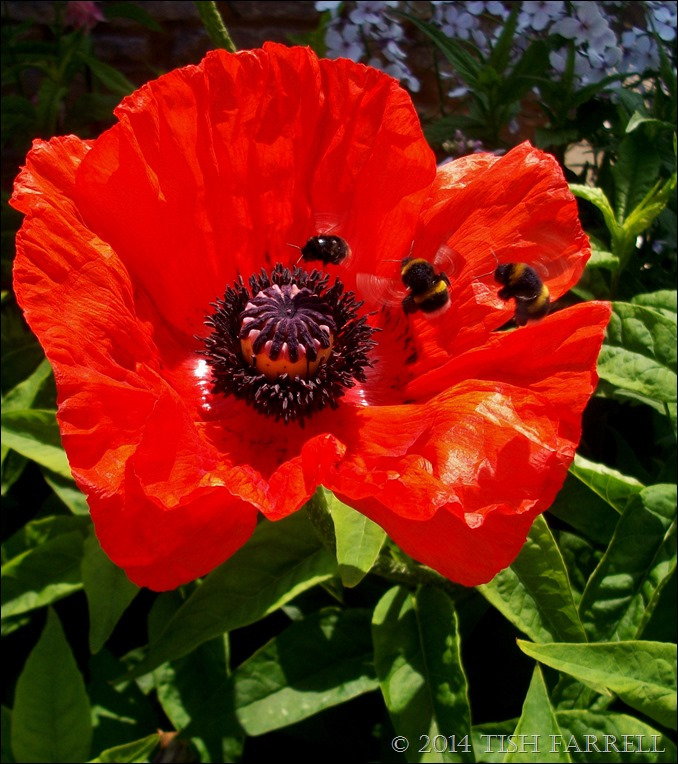
There are different kinds of achievement in this shot. The first is that I managed to capture it at all, teetering in a flower bed with my Kodak Easyshare. The sun was full on too so I could not see the camera screen. But by far the biggest achievement is the presence of three bumble bees all at once.
All over the world bee numbers have been declining. Swarms in the US have been especially hit. Over the last few decades many factors have played a part, including habitat erosion, lack of quality forage and disease. But in 2006 honey bee keepers began to report dramatic losses. It involved the deaths of whole hives and has been dubbed colony collapse disorder.
Environmentalists believe the cause to be the neonicotinoids in the new generation of pesticides. They want them banned until unbiased research proves otherwise. It is a sobering thought that without bees to pollinate fruit and vegetables, the US would be left with only three staples that do not require insect pollination: wheat, rice and corn.
To find out more, please visit Dear Kitty. Some Blog. She has posted a good video that covers this topic. In the meantime, everyone needs to think about what they can do to encourage bees, including growing some bee-friendly plants. We also need to be prepared to pay a little more for organic produce, or to do what we can to grow our own food, WITHOUT chemicals.
This would be a real achievement – not only good for bees, but for us, the soil, and other wildlife besides.
The reverie of falling water
green against the rich backdrop
reflecting the forest foliage
breaks into my nightmare
where I had to take up weapons
to defend myself against the ones
who were trying to kill off my friends
My green spaces are a baptism of light
They do not try to coerce, threaten or buy my silence or affright
my wife or children with fascism’s cry, saying
“rally to the black hammer and the hordes under its banner”
My green spaces reject it simply
by being green
The world shows its middle finger
to the black hammers, even in war time
These green spaces of my poetry are the ones they will come to
for rest
after the weary battle is won and over.
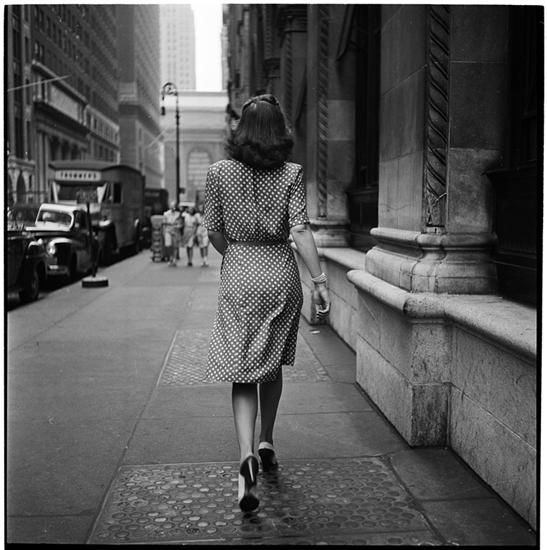
Street Conversations (Woman walking down the street.) 1946 Photo by Stanley Kubrick
Who is she, whose heels click by
and I just have to look up to see?
Who is she, who rustles by
in a fragrant cloud that stops
my tracks with a stroke of heat
not felt in years?
Who is she, whose curve of calf
and confident buh-bump bounce
stirs my heart and blushes my cheeks
with summer sunshine glow?
Who is she, who made me look without trying
and left me wondering who and why and…
It is nearly five years since hurricane Irene wreaked some havoc along the East coast of North America through New York State and beyond. This reminds me of the power of natural forces and, in a sense, runs counter to the spirit of this month’s theme “The Joys of Nature: Wilderness” … there is no joy in losing your home or, worse, a friend or someone you love, even to a natural disaster, but this story comes from a slightly different perspective or, if you like, a small tributary of the main stream, which leads you away from the maelstrom to a charming backwater, which in fact lies in the backyard of a fellow poet, who made an equally charming observation.
It was in the midst of a short conversation, with Twitter friend and poet, Jacqueline Dick (Twitter ID @Fumanchucat), who lives in New York. Hurricane Irene was blowing its way up the East coast and heading for the big city creating an undercurrent of fear and trepidation in the minds of everyone there. This was such that evacuation plans were being made in preparation for the expected structural damage and the flooding that would follow the high winds.
Anyway, the conversation! It went as follows: –
@Fumanchucat: “Hurricane update: Boring! Y A W N…”
@Poetjanstie: “What! No armageddon, no deafening fury of satanic proportions, no blood-curdling screams for mercy, no flying cars…!?”
@Fumanchucat: “Irene is one boring chick, lemme tell ya’..”
@Poetjanstie: “Isn’t there even a slight breeze?”
@Fumanchucat: “Some leaves are putting on a show, but no shake, rattle and roll”
I imagine, if she’ll forgive me for saying this, that she is one dour, but very erudite New Yorker, whose feathers don’t get ruffled easily! She makes me smile and sometimes laugh and writes some pretty good poetry to boot.
That phrase “Some leaves are putting on a show…” immediately struck a chord, and I suggested that it looked like the makings of a poem, thinking that she might take it up, but all she said in reply to that was “Go, John, go!”. Now either she was telling me to push off, or that I should write the poem. I prefer to think it was the latter, so I did that!
In spite of the tongue-in-cheek light-hearted nature of this poem, my thoughts still remain with the families of anyone who was lost in the wake of that powerful storm and for the immense damage it wreaked on its journey. It is also apposite to think of the impact of any of nature’s powerful storm forces, particularly since it is the fifth anniversary of that horrendous tsunami in Japan and Fukushima … that there is also the enormous power that nature has not only to create wilderness of stunning beauty, but also, in the blink of an eye, to lay waste to great tracts of ordered civilisation, which may have taken much human endeavour to build. How haunting a sight are deserted areas that once thronged with life. Is this the alternative wilderness?
“Leaves”
Some leaves are putting on a pretty show
They said we should expect a maelstrom soon
an armageddon to blow away the moon
And telling us to pack our bags and go.
We waited long and into wee small hours,
our lives to change, last minutes in our wills.
The fear and dread is palpable, and fills
imaginations and dreams with satanic powers.
Meanwhile the leaves, with neighbours unaware,
are whipping up excitement on the lawn
as foliage twists into a dancing fawn;
a largely missed delight, as no one’s there.
But, somehow, when all is said and done
as lawyers sharpened pencils to prepare
for claims and litigation, a costed nightmare
the weather’s playing games and having fun!
Instead of blowing gales, disaster trails,
it whispered to the trees and leaves ‘don’t worry…
we’ll have some fun with just a little flurry’.
The leaves put on a show; there were no rales.
[I should also mention that, whilst it was poet, Jacqueline Dick, the intrepid Lady Fumanchu, who is responsible for inspiring this poem, it was another friend, writer, poet and fellow contributor to the Bardo/BeZine, Joe Hesch (Twitter ID @JAHesch), who, at the time of Irene, kept up a running commentary of the storm’s slightly more damaging passage through his neck of the woods, upstate New York, in Albany.
July, the air outside thick with biting flies. The house alive with more docile creatures, black and buzzing. Even in mid-December this farm house fills with them. They come from nowhere.
Several houseflies clamber for escape with busy wings against the screen. Up and down they search, yet only find the upper storm window — daylight feeding a frenzy of scientific discovery — and the lower screen, a shadow lattice that will not stop the air.
Like a lover who relies on faith, these true-believers come to worship at the altar of thought — each fly some forgotten moment, some decision not taken, an ounce of regret.
I could close the inner window and trap them; then they would not buzz around my bed at night, reminding me of my failures butting their heads into a reading lamp suspended above my pillow.
Oh, they’d still get their precious light, the wind would come through for them, even a bit of water on a rainy night. They might not die, even without food.
Perhaps I leave the window open for the breeze. Or maybe because I would still see them there, hear them call — even louder than the fan, even at night, even while I slept.
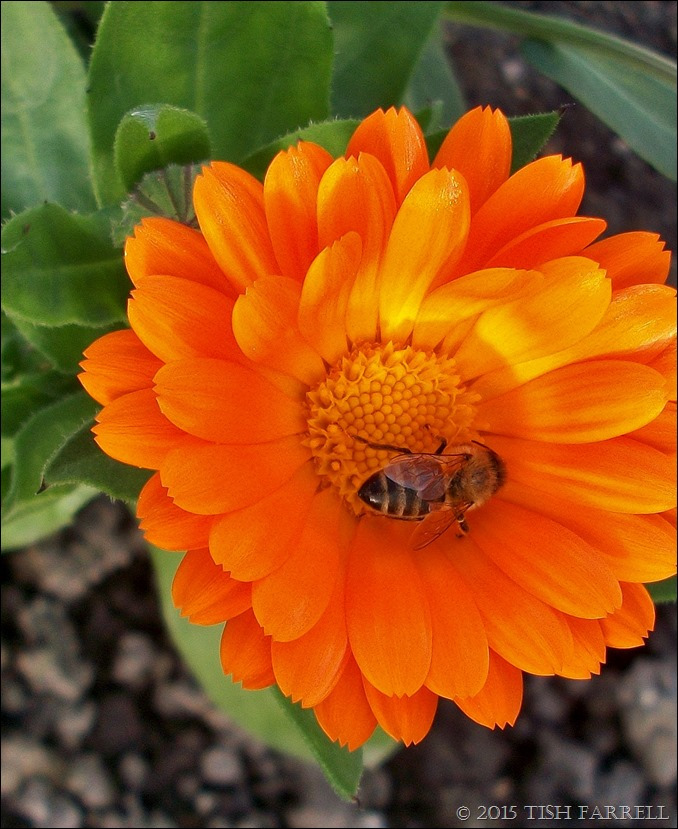
An old meaning of the word vivid is lively and vigorous. And what can be more lively and vigorous than foraging bees? They and their produce are life-enhancing too, and in elemental ways. Their importance in the human life-cycle, for one, is marked in an old Shropshire custom of ‘telling the bees’ when someone dies. So it is my belief that we can’t think too much, or too often about bees. Not only do nearly three quarters of our food crops depend on them for pollination, but the natural environment needs them too – those plants and trees whose flowers are also pollinated by them.
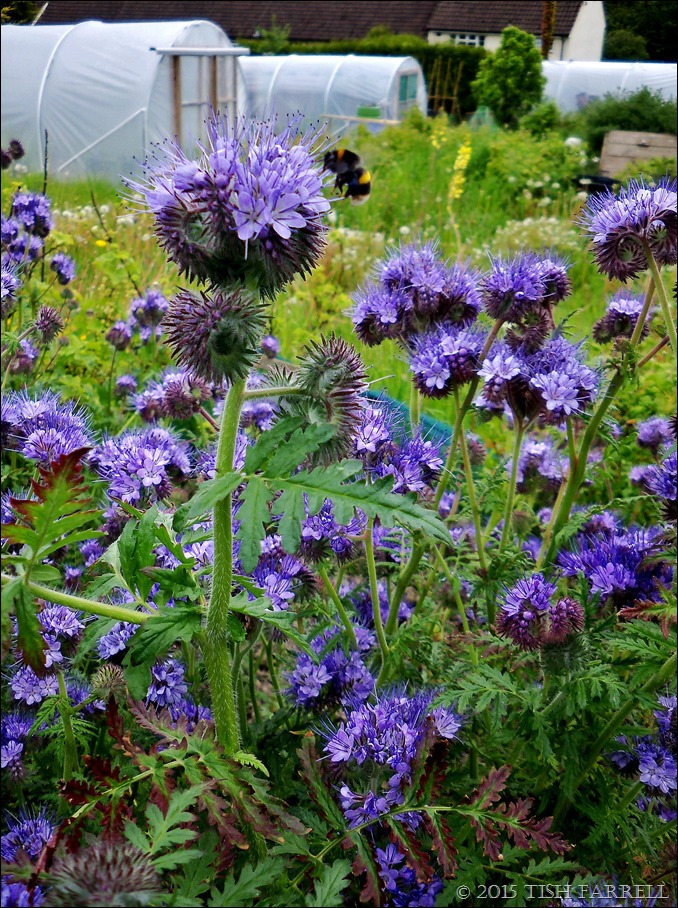
Up at the allotment we are very lucky. We seem to have plenty of bees, and many varieties too, but then most of the allotment gardeners rarely use pesticides apart from the odd slug pellet. Yesterday when I was there, my raspberry patch was thrumming with bee-hum. It was mesmeric. They also love my neighbours’ phaecelia which is grown as a green manure. Pete and Kate decided to leave theirs standing just for the bees. The flowers are beautiful anyway.
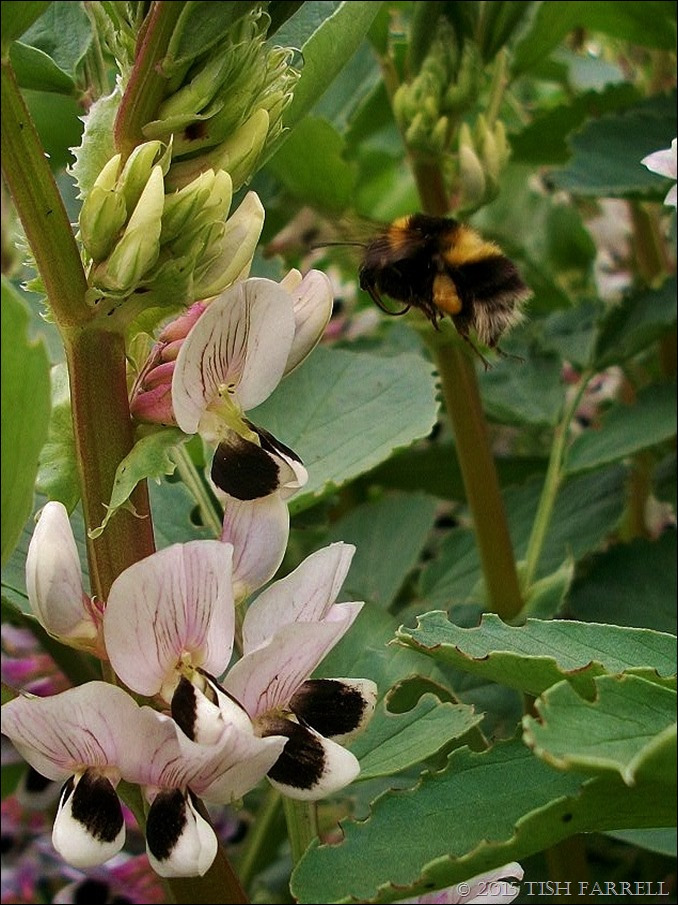
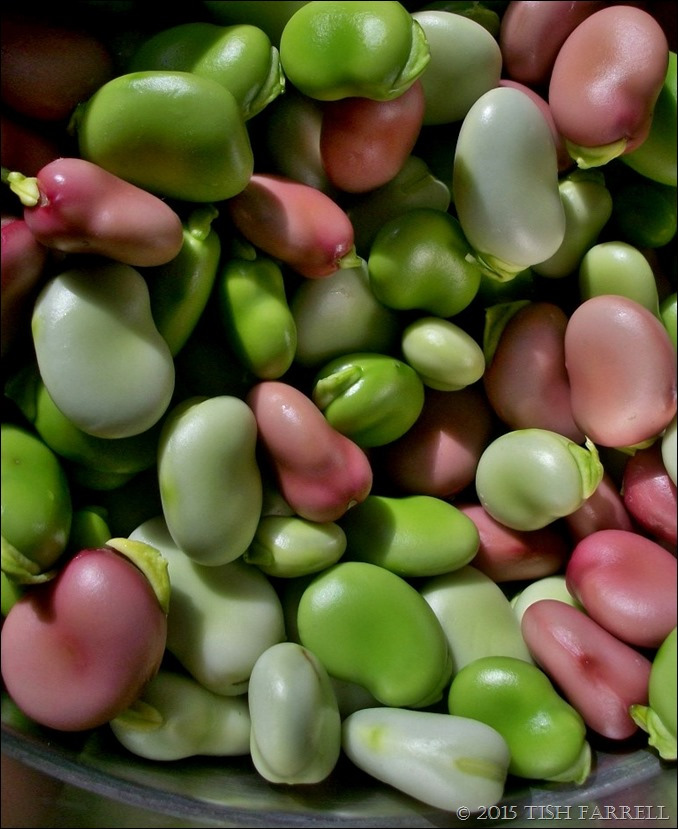
My field beans are another favourite. Again these beans, a relation of the broad bean, are usually grown to dig in before flowering and fruiting. But courtesy of the bees, I leave mine to produce masses of pea pod sized pods. The beans are small, and more delicious versions of broad beans. So thank you, bees. Also the bean blossom has a blissful scent. It’s a win-win-win situation.
The debate over whether neonicotinoid pesticides are responsible for the massive bee deaths across the globe wrangles on. You can follow some of the arguments in the two BBC Science reports at the links below. One recent startling discovery by a study at Newcastle University, is that bees are attracted to the pesticides. They seem to like the nicotine in much the same way humans do. Researchers have yet to discover if bees also get hooked on the stuff.
So why do we need pesticides? The actual fact is that any large-scale, mono-crop production will attract, in huge numbers, the pests that use that crop for their food and reproductive cycle. Monoculture environments also lack the kind of predator insect diversity, that would, in a naturally diverse ecosystem, keep such crop pests under control.
So the demand for pesticides is created, and the drive for profit, and for the production of cheap food keeps us locked into pesticide dependence. It’s not hard to see why we seem stuck with this system. The economics of unpicking it look impossible to broach.
Here’s another thought, though. Mono-crop systems are also vulnerable to new pests — whose advent is ever more likely, either through accidental imports or by climate-shift trans-located pests that may have no natural predators in their new-found homeland.
I have personal experience of what happens when dependence on one particular crop meets an alien pest. In the 1980s the Central American Larger Grain Borer beetle was introduced into Africa in a consignment of food aid maize, and once there, spread up the continent like wildfire, chomping the contents of village grain stores to dust. (And being faced with such a pest, who would knowingly want to put insecticide directly onto their food before eating it?). This infestation is what took us to Africa in 1992 where Graham was working on a project to introduce a natural predator to check the LGB spread. (See Carnations, crooks and colobus at Lake Naivasha, and Letters from Lusaka part I ).
The consequences of this particular dudu’s arrival were compounded by the fact that, since colonial times, maize had become a staple in many African countries (European settlers doled it out as rations in part payment to their African labour), so largely replacing the local cultivation of a wide range of native, more nutritious small-grain crops. Maize is also a hungry, water-demanding plant that can easily fail if there is insufficient rain. And, if repeatedly grown on the same ground, it will soon deplete fragile volcanic soils and contribute to erosion. This happened on Kenya’s native reserves during World War II when Western Province farmers were encouraged to grow maize for export to Europe to support the war effort. They grew bumper harvests, but the land suffered, and probably has never recovered.
So we see in just one example the kind of vicious downward spiral of impoverishment that can result when humans think they know better, and don’t consider the consequences of tinkering with an existing system.
In fact, when we left Kenya in 2000, German agricultural aid workers were advising rural farmers to go back to cottage garden farming methods, mixing different crops up together to fool the pests, and so avoid the need to buy expensive pesticides. i.e. advocating precisely what Bantu farmers had been doing for a couple of thousand years before colonial agricultural officers told them that inter-cropping was bad practice, and that they needed to adopt European cash-crop methods in order to grow export-worthy produce.
All of which is to say, we all of us need biodiversity for our well being, if not for our survival. With climate change, we cannot afford to limit options in food production by remaining in thrall to the reductionist models perpetuated by factory farming, supermarket buying power, genetic engineering that reduces native crop diversity, and by the pesticide hegemony in general. At the very least we need the bees. Anything that threatens them, threatens to seriously limit our good food choices. The health of humanity and the planet’s ecosystems depends on them.
As consumers we have buying power. It is perhaps the one real power we do have, otherwise corporations would not spend so much money trying to persuade us to buy their goods. If we are able, we can support small local producers who do not use pesticides. We can say no to genetically modified crops that have caused their producers to give up, or lose their native crop varieties. We can grow bee-friendly plants, and if we can afford to, buy only organically cultivated produce. We can grow as much of our own food as possible. It’s amazing what can be grown in containers if garden space is in short supply, and sprouted seeds can be grown in the kitchen all year round. So let’s keep our bees vigorous and lively, in whatever way we can!
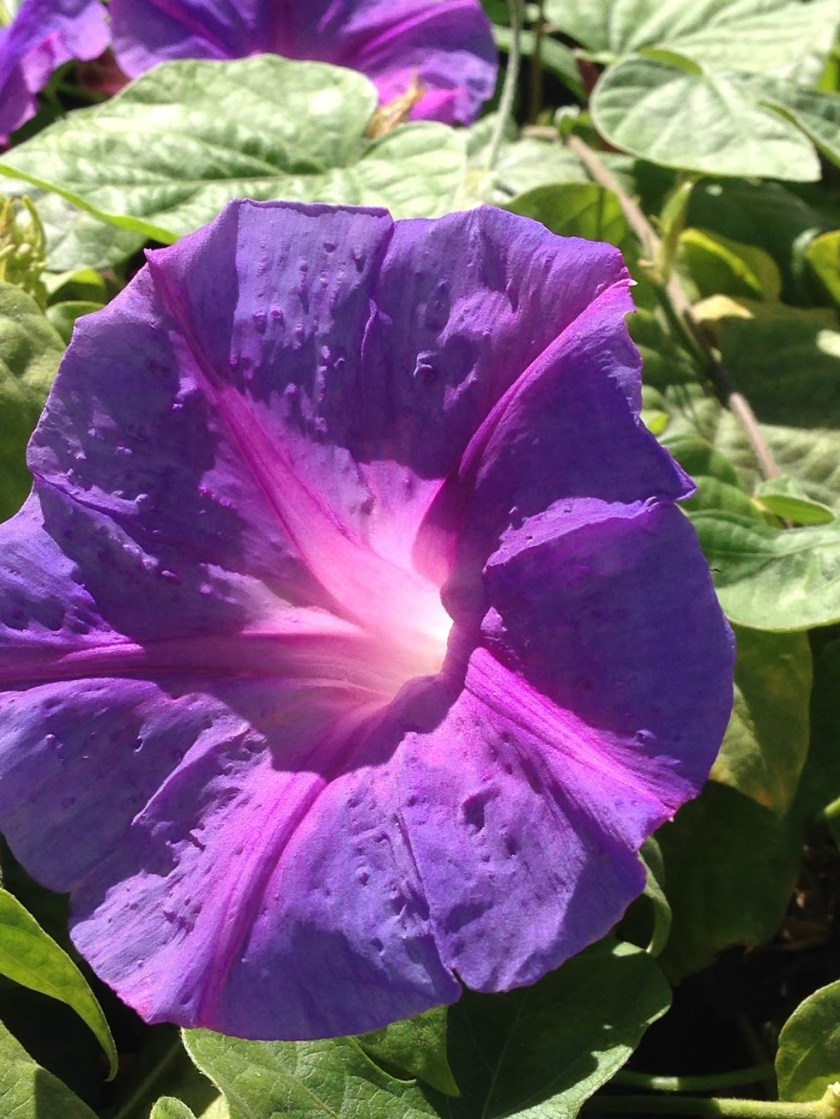
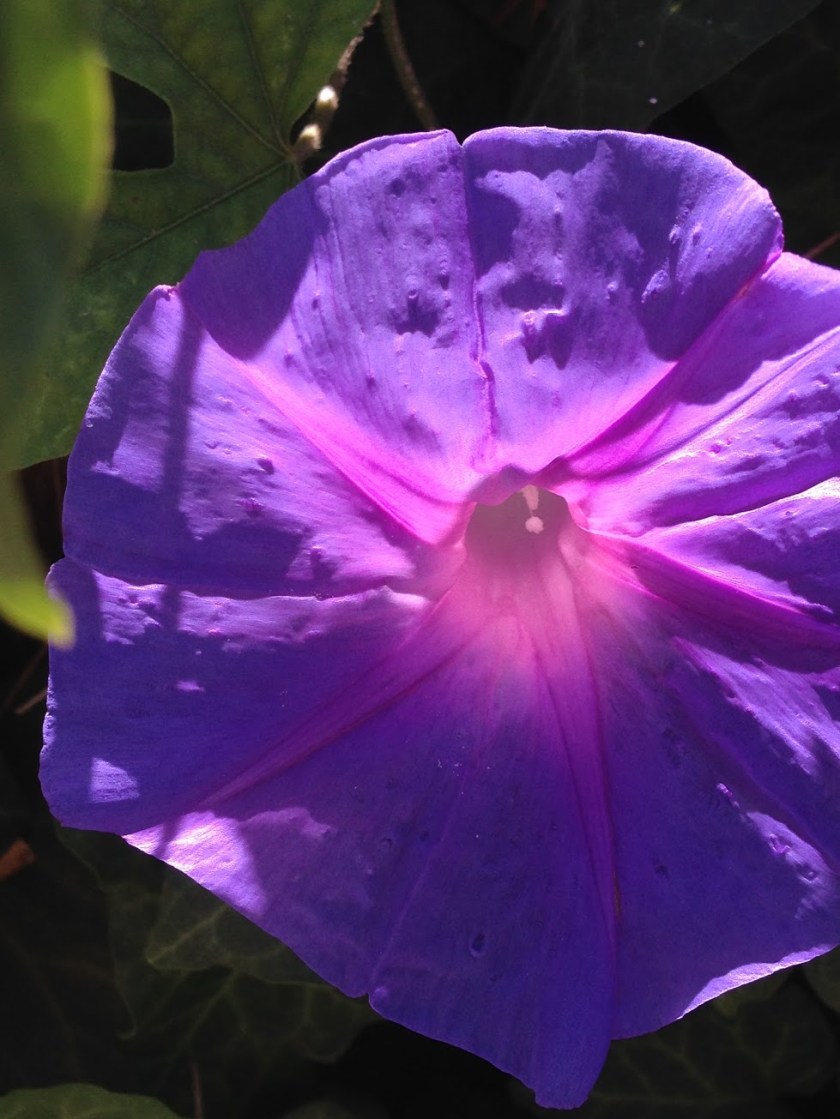
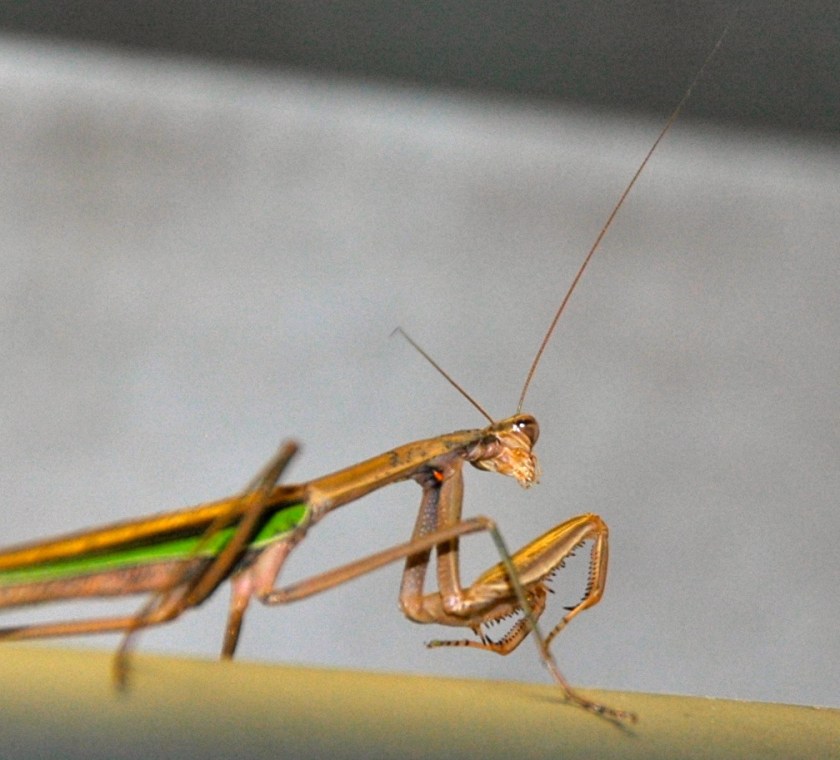
Light reflects into our eyes. Sometimes, it passes through the transparent or translucent, which transforms the light. Objects remove color and reflect or “tint” the light as it flows along its quantum path. The eyes respond to this light, but the mind interprets it. In this way, human’s “catch the light,” the image, interpret it, and see “things.” Sometimes, we then try to capture our interpretations of those things through art and photography, and writing, as well. Here are just a few images where I feel my photography has caught something beyond representation of an object (or objects).
Morning Glories Basking
Morning Glory Singing Praise
Praying Mantis on the Train
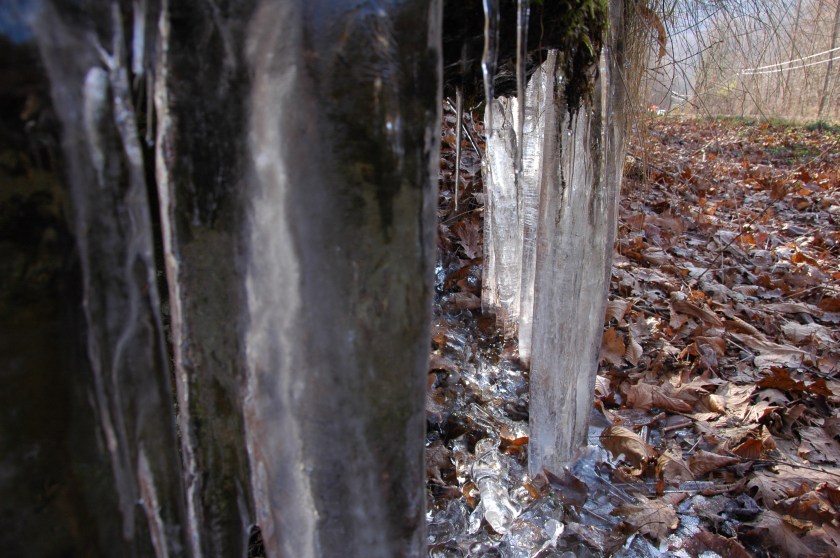
Iced Light (New York)
For a comprehensive discussion of how humans have caught light; understood light, color and the world; and interpreted the world along the way, I highly recommend quantum optician Arthur Zajonc’s very accessible book, Catching the Light: The Entwined History of Light and Mind. Zajonc makes it very clear how much the mind matters to how we “see” in the world. He also makes some startling connections between ancient understanding of light and current quantum understandings. The book is part history of human understanding of light and part explanation of current understandings of light, in a mind-opening and jaw-dropping account of the mysteries of light.
All photos taken with a Nikon D-70 digital SLR, which the photographer unfortunately lost during recent travels. All photos on this page / post taken by Michael Dickel, who retains copyright. Used with permission.
Birds of Peru—so many species, so many eco systems. This little tyke was swimming with its mom on Lake Titicaca, the world’s highest navigable lake.
The Uros people construct and live on Floating Islands of the lake, and might’ve taken their cue from the birds.
The Uros domesticated the Ibis for its eggs–they live side by side.
In the Amazon jungle, villagers living along tributaries of the Amazon River raise chickens for eggs and meat.
Other birds, like Manolo the Mealy Parrot, are kept for pets….
…and watchbirds. (Don’t even think of touching his bread.)
They wander in and out of the houses like family.
We also saw a huge variety of birds living wild in the jungle, such as the Tiger Heron.
I believe this is a Social Flycatcher. Maybe it just eats flies at parties?
Some birds I caught only a glimpse of on the fly.
Others looked familiar, like this Pygmy Owl.
Or this Kingfisher. The Kingfishers fly so fast I could only get an image at night, when it was roosting.
Or this White-winged Swallow, which was different but similar to our swallows.
Most of the birds’ names I never knew or have forgotten, but they were fascinating.
This one looked like a lone hunter…
…while the vultures tended to hang in a crowd.
If we have birds in the U.S. that come out at night and sit on the beach looking like, well, a beach, I haven’t heard of them.
A Black-fronted Nunbird? The coloring is right, but the beak is smaller and it’s so fluffy. Maybe a chick? Oh, well, a bird by any name would sing as sweet.
The birds in the Peruvian Andes were different than the ones we saw in the Amazon.
I saw this feathered friend at Machu Picchu.
This one too. It’s not so different from the hummingbirds that sip nectar from the hanging baskets on my deck.
But some are very different from the birds we have at home–like the Toucan who was natural history before I could get to my camera, or the Night Heron whose portrait came out fuzzy. Most unique was the Huatzin, a pheasant-sized bird resembling something out of prehistoric times. Its face is blue and unfeathered, its crest large and spiky. It makes its home in the swamps and marshy lakes in the jungle.
A crop is an enlarged pouch of the esophagus, where food is stored before it is digested. Some birds have them, and some dinosaurs did too. But the Huaztin’s crop is so large it makes flying difficult. It uses its crop to digest food using bacterial fermentation, which makes them smell very bad. The Amazon people call them ‘Stinkbirds’ and won’t eat them. They croak, hiss, groan, and grunt. Huatzin young have claws on their wings. When pursued by hawks or arboreal predators, they drop from their nest into the water and claw their way back up the tree when it is safe. Strange and fascinating!
I don’t see anything common about a bird, even the ones found in my own backyard. Descended from dinosaurs, these feathered creatures are miraculous to me–so varied, so delicate, so powerful, most possessed of the gift of song and the superpower of flight. All I need is a pair of binoculars and a camera, and I am off on a flight of fancy.
POSTCARD Geneva, Switzerland: Expecting things to be more or less exactly on time… or exactly on time with the precision of a Swiss watch. Allowing for as long as it takes to buy an all day ticket to maximise on the duration; time stamped by the machine just before the tram arrives… doors swing open and enter. Everybody programmed to believe they’re doing the right thing at the right moment – seems as if everything is like this; a fascination with the accuracy of the schedule and so many other things pass by… curiously concealed. We are unaware of the actuality, the feeling of being a human being – life itself, vanishing as we speak, an everyday sort of miracle of experience passing by… now it’s gone.
And it’s just this, the ordinary sense of things moving along in a comfortable way; we take it for granted so much it goes unnoticed. It’s this I miss the most – the normality – so often falling into the mind-state of wanting things to be different than what they are. Do I believe the neurologist witchdoctors when they say it’ll be okay in the end? Yes, nightmarish, because there’s this lady doctor with her pins and needles she intends to stick into my head, prick… can you feel zees? Prick… yes/no? (French/German accent) Yaow! Okay, try here: prick, Yaow! Is zat more painful zan zee first one, or not? TRY IT AGAIN! Focused on her needle so much, she forgets the closeness to my ear and it’s like she’s shouting. I jump, keep still please! I hear her breathing with assertiveness, confidence, I’m in her hands… she’s attempting to map out the route of the nerve. Then, after many punctures, and happy with what she has found, she tells me: ok you take a deep breath now and, as I do that, she pushes the long shaft of her needle into the scalp – I hear the point scraping across the bumpy surface of the skull. She depresses the plunger, starts to void the syringe; it takes a long time, the scale of it seems as if seen in close-up, huge like an approaching express train in a tunnel… high-pitched scream.
Things go dead and I don’t feel the many small injections that follow after. It’s done in ten minutes, excess fluid dampening my hair, trickling down my neck and the doc says to let the skin absorb it. So I lie on the left side, let it be like that, wet neck, head on pillow and for a jetlag instant, sleep arrives, crash… light is switched off – alerted suddenly by the blackness, crash, back here again, the world returns. Instead of the headache there’s this anesthetized skull-stuffed-with-cotton-wool feeling, like a loud party going on behind a wall that’s built inside my head and I already have the party hangover but can’t feel it because that’s behind the wall too.
So, nothing to complain about but when I sit in a meditative way, it’s like a loud electronic buzzing sound that masks everything. I feel I can’t get there; I’ve lost it, there’s a missing piece… seek/find; caught in the search mode – how will I know it when it returns? What does it look like, what does it feel like to be okay again? Or maybe it’s like this – right here and now in a darkness, indistinct, unseen…
I am the taste in the water, the light of the sun and the moon, the sound in the ether, the ability in man, the fragrance of the earth, the heat in the fire, the life of all that lives, the strength of the strong, the intelligence of the intelligent, and the original seed of all existences. [Bhagavad Gita]


 It is nearly five years since hurricane Irene wreaked some havoc along the East coast of North America through New York State and beyond. This reminds me of the power of natural forces and, in a sense, runs counter to the spirit of this month’s theme “The Joys of Nature: Wilderness” … there is no joy in losing your home or, worse, a friend or someone you love, even to a natural disaster, but this story comes from a slightly different perspective or, if you like, a small tributary of the main stream, which leads you away from the maelstrom to a charming backwater, which in fact lies in the backyard of a fellow poet, who made an equally charming observation.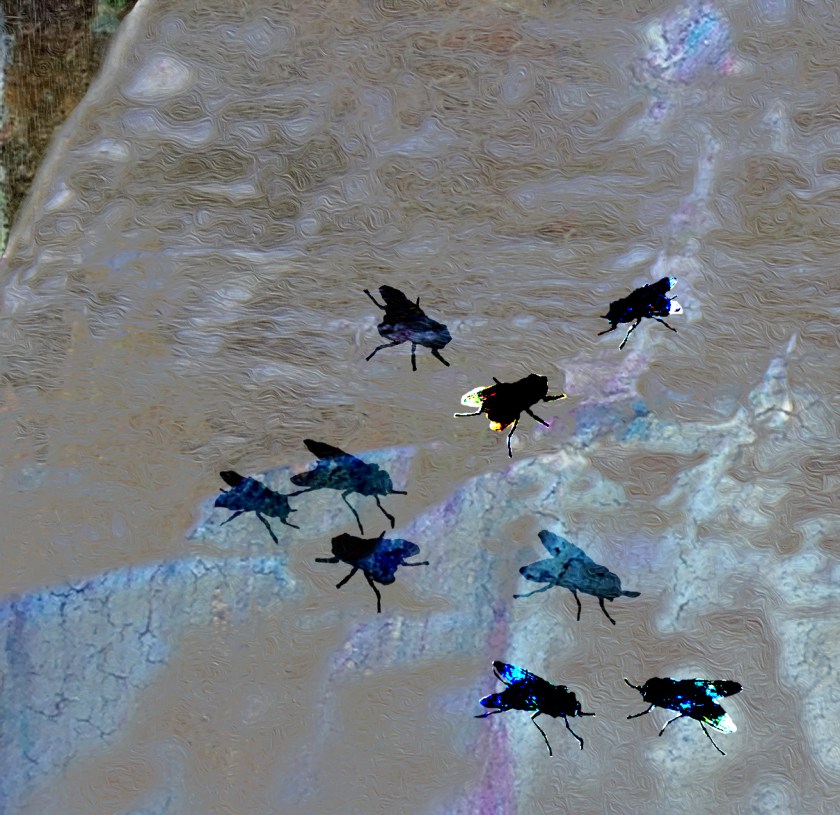


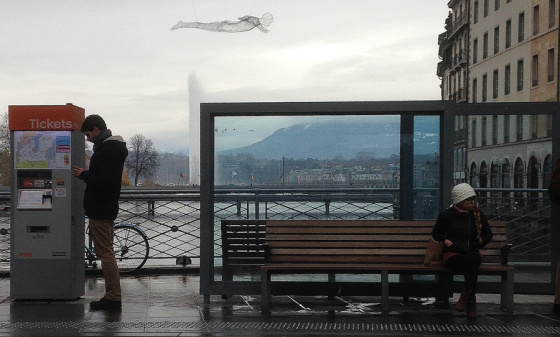 POSTCARD Geneva, Switzerland: Expecting things to be more or less exactly on time… or exactly on time with the precision of a Swiss watch. Allowing for as long as it takes to buy an all day ticket to maximise on the duration; time stamped by the machine just before the tram arrives… doors swing open and enter. Everybody programmed to believe they’re doing the right thing at the right moment – seems as if everything is like this; a fascination with the accuracy of the schedule and so many other things pass by… curiously concealed. We are unaware of the actuality, the feeling of being a human being – life itself, vanishing as we speak, an everyday sort of miracle of experience passing by… now it’s gone.
