Logging-Out of Bullying School

We all disapprove of bullying in schools
that seems to be clear to everyone
at least on a theoretical level.
Yet we never fully log out.
And you ask me why?
Why do we consent shouting
at a school sports competition?
What about a neighbors meeting
where we yell at each other?
Introduction to Fast and Furious,
driving carelessly, unaware of the shouts,
our children sitting at the back of our cars.
What about whatsapp messages
sending all kinds of insults because
we didn’t like another person’s opinion?
Why are we reproducing and creating
all kinds of male chauvinist jokes,
racist jokes, homophobic jokes?
What about the pranks still played
on first course university students?
No, computer games are not made
by our children but they trivialize violence
like those violent movies and series
our children watch. Therefore,
it is unacceptable that who governs
and dictates justice allows all this
to happen without impunity.
We may have wonderful anti-bullying programs
in our schools but meanwhile
society tells our children:
“Be aggressive and you will succeed in life!”
So, please, here I tell you:
“Log out of bullying school,
for coherence because
we need to live together
respecting each other and
we need to fight harassment.”

© 2015-2019, Marta Pombo Sallés

(inspired by a newspaper article written by educational advisor Juanjo Fernández)

False Economy


To the Royal Borough of Kensington and Chelsea, after the fire in Grenfell Tower, London, June 2017

Held back, a safe distance from the whoomphing
tumble of blazing cladding, and powerless
to respond to frantic phone calls,
we could only watch as the flames raced up,
their brightness overwhelming
the desperate flickering from mobiles’ screens.

The block is now a blackened stump:
yet again we are coming to understand
how a small outbreak of fire
can become an inferno
with horrific speed.

For years there’ve been flaws
in the construction of tower blocks –
single stairwells; cabling in plastic ducts;
an absence of sprinklers;
insulation and cladding that can burn.
Of course, fires in tower blocks
have been ‘properly investigated’
and improvements recommended,
but a countdown –
18 years ago: Irvine;
8: Camberwell;
7: Southampton, Shanghai and Busan;
6: Shenyang;
5: Dubai, Madrid, Roubaix and Sharjah (twice);
4: Guangzhou and Long Beach, California;
3: Melbourne;
2: Dubai (again);
1: Shepherd’s Bush;
and now Grenfell Tower (oh, and Dubai yet again) –
makes us wonder why
the science of flammability
has been persistently ignored.

Aluminium melts at a mere six-sixty C –
not ideal for a panel supposed to be resisting fire
(steel, we note, melts at fifteen hundred).
PIR insulation,
the filling in a sandwich of aluminium foil,
burns fiercely,
especially when the flames are drawn
up a chimney-like gap
between cladding and concrete wall,
and as it burns it releases gases:
people die rapidly
through breathing in CO and HCN,
or more slowly
from other toxic fumes.

Your planners should have known all this
when you chose a cladding banned in Germany
to save, in a budget of millions,
a handful of grand.
For the want of a few pounds a square metre –
perhaps less than two coffees cost in Starbucks –
seventy-two would be alive.
And whilst you were refurbishing,
you could so easily have fitted the sprinklers
inquests have demanded across the years
and doors that match their fire-resistance spec.
You could have spent a bit of your reserve
(some three hundred millions)
to better serve the less well-off,
the constituents you have so grievously betrayed.

The borough embraces embassies,
expensive residences, Harrods, Harvey Nicks
and investment blocks whose apartments
look vacantly down on survivors yet to find a home.
Its motto QUAM BONUM IN UNUM HABITARE
(based on Psalm 133: roughly
translated as How good to dwell as one)
clangs particularly hollow
in the aftermath of the fire.

© 2019, Mantz Yorke


PIR: polyisocyanurate, a rigid plastic foam.
CO: carbon monoxide.
HCN: hydrogen cyanide.
Harvey Nicks: a colloquialism for Harvey Nichols, an upmarket chain of department stores in the UK and a few other countries.


Embrace

Within the village church
	white-vestmented priests
		say a novena mass
In the doorway stand a trinity
	of jungle-camouflaged soldiers
		arms ready in arms

Forgive us our sins
	as we forgive those
		who have sinned against us
echoes through the nave

To the right of the door
	in the damp twilight
		under a wool blanket
An indigenous couple huddles
	a baby wrapped
		to mother’s side
The ribbon-decorated sleeves
of her yellow bodice bright
		as she pours a cloudy drink

May the peace of the Lord
	be with you
And also with you

The soldiers still, silent
	staring towards
		that altar

You may give each other
	the embrace of brotherhood *

One soldier
	head shorn bare
		looks away
Away from the embraces
	away from the couple
		towards a mural

In this evening complete
	can he see that family, that rainbow
		those words?

With social justice, peace is possible
	peace is possible because
		love is possible

©2019, Lorraine Caputo

*Normally it is said: the embrace of peace

Epistle


Monseñor Oscar Romero—
Today I visited the church
	of La Divina Providencia
	where the escuadrón de muerte
	murdered you.
A simple, plain 
	modern church,
across from a hospital.
On the wall
	near the front doors,
	a picture of you
	marching with the people.
Near the altar,
	a plaque from the Carmelite sisters
	for the 7th anniversary of your death.

That’s all there was of you there…


I knelt at a pew
	to talk with you—
I, a Spirit captured in this body, on this earth

	I do not know 
if you could hear 
my thoughts, my words

I wanted you to know
	how your death inspired,
 	provoked so many of us.
How there is a Central America Week
at the time of your death-anniversary
so that we learn about
the people, history, culture
of here, El Salvador
& of other countries,
so that we can learn about
the actions here of our government,
of our country.
I wanted you to know
	that such external investigation
	also provoked us to look internally
at the poverty & repression
in our own country.

I told you
	I wish I had the faith you had
	& the love
	Many times I find it lacking in my self
My self-doubts of all that work
all those years
But my inner knowledge says
As long as 
the heart, the mind, the soul
of one United Statian
was touched, provoked,
As long as 
one Salvadoran, Nicaraguan
Guatemalan, Diné
received a meal, medicine,
clothes against the mountain night cold,
then the work, 
then your death
had value…


After I left,
eyes rimmed with
the moistness of risen tears,
soul quieted with
my confessions to you, Monseñor
I thought about this poem…


As you said mass that day
the sacrificial wine became,
your blood became
the blood of Christ.

Your wound—your wound
the gun shot …
How many were there?
How many times were you shot?
Where were you shot?
You a servant of God,
a messenger of the word of Christ,
a teacher, an example of love for humanity,
became Christ on that 24 March
Were the wounds
the crown of thorns?
Were your wounds
the lance pierced
through Christ’s side?

The blood—the blood
your blood
that fell upon the altar.
Your blood became sanctified
in your martyrdom,
another martyr for the truth
of Christ’s teachings.

Monseñor Romero—
What were your dying words?
Or did the Spirit dove
fly swiftly from your Earth-bound body
to the heavens?


Your body—your bloody body
your dying body…
behind the altar,
before the bloodied
crucified Christ…

©2019, Lorraine Caputo

Our Evolving

img_2466

“It gets to seem as if way back in the Garden of Eden after the Fall, Adam and Eve had begged the Lord to forgive them and He, in his boundless exasperation had said, ‘All right, then. Stay. Stay in the Garden. Get civilized. Procreate. Muck it up.’ And they did.”  —Diane Arbus 


surfacing from mother-sea, we came ~
we came shape-shifting and sighing,
living before the prescient moon and
under the life-giving sun, we climbed
mountains and marched into valleys

short-lived, we camped by the riverside,
we slept in caves, we cleared the forest,
built cities that domesticated us

we became sophisticated, forgot our
rootedness in the archives of heaven,
our shared destiny with the Earth, we
forsook our history and the stars,
invented math, maps and compasses,
governments, borders and ownership

we built great ships to sail the oceans,
to drum across the sky and away to outer
realms and other planets, we mislaid our
true stories and, in ignorance suckled on
prefabricated values, these streamed
from cold fires that stoked insecurities ~
we confused wants and needs, hungered
for the sake of our own stupidity
and someone else’s greed

© 2017, Jamie Dedes

Silent Life

Except for the scratching of my pen
I lead a quiet, almost silent life
on D Street, the second floor –
In a small, one-bedroom apartment with
Tibetan prayer flags flying on the door.
I overlook a courtyard with trees and grass and
children playing, heads stuffed with dreams.

It’s a quiet almost silent life I lead in a
second floor walk-up with a tiny kitchen.
Trees rise outside the door, birch, palm
and the raucous crows are taking over.
Still, there are sweet gentle gray doves
and a chickadee or two, maybe three.
Our resident squirrel visits, watching
through my window from his birch.

Such a quiet, tranquil life I lead here
where no bombs drop on aching roofs,
no soldiers march in heavy boots,
no occupying army enters uninvited. We
fear not for the safety of children at play
or adults walking by on daily rounds.

I lead a quiet almost silent life, but for news
squeezed between ads for haute couture,
pre-fabricated foods, and Saturday’s sales.
Reports are of tortured deaths in foreign lands
presented in measured tones, spanning a heartbeat
followed by the vapid gossip that passes for news,
delivered with breathless detailed analyses

I lead a mostly quiet almost silent life
but for the scratching of my poet’s pen.
Scratching, scratching and trying –
Trying to make sense of it all, and
Like the gentle dove, softly –
trying to make a difference.

© 2010, Jamie Dedes

How I Park My Car

No room
for big cars
cigarette smoking women
or bourbon sipping
old men–
the page has turned on us.

Some days
I talk to old men
who don’t breathe
gray-skinned women
who only
exhale…
and anxiety ridden children
who never learned
how to spit properly.
They’re all hated
by somebody.
Me too
I guess.

I park my car
anywhere I want
two spaces sometimes.
Go inside, order up a double
straight, on the rocks
sit at the window, sip
think about a different time
a different kind of noise
wonder how the world
got so goddamn quiet.

first appeared: Medusa’s Kitchen, 2.22.2019

© 2019, Bill Gainer

Awake at Night


After Wendell Barry

Lying awake images of Yemeni children
Syrian babies, Ebola ridden souls, the hopelessness
the helplessness, ravaged by man-made tsunami of wars
innocent lives pitted against grace and goodness
of humanity. I lay awake, look into the dark hoping
for the earth and mankind to heal.

Dreaming, waking, tossing, turning,
awake, cogitating, restless mind spooling
as the earth spins on its axis, the Universe
is at peace, its ritual goes on apace, no change.

© 2019, Leela Soma

Places I Have Never Been


I’ve never been in the hull of a slave ship
chained and starving, drinking my urine
lying in my excrement.

I’ve never been forced to leave
my homeland, my family, my tribe,
enslaved by those who saw me as subhuman.

I’ve never picked cotton fifteen hours a day
under the whip of overseers who
raped me when the sun went down

and when I was emancipated, hung me from a
lynching tree, torched my home and family
denied my right to vote.

I’ve never moved north for higher ground
to neighborhoods depleted of dollars and hope,
goods and services, red-lined out of moving up.

I’ve never been called nigger, refused a table, watched
my children in their Sunday best internalize the word
while I struck them to teach obedience so they could live.
.
I’ve never attended sub-par segregated schools
or at college worked harder, scored higher
for less recognition, offered fewer jobs at lower pay.

I’ve never been profiled by police
because they saw a violent criminal
easy to spot, hair-trigger ready.

I’ve never endured my success to the highest office
being questioned, called illegitimate, in a country
that my people love in spite of it’s hatred of my kind.

I’ve never been anywhere
without the cloak
of my white skin.

Unraveling privilege is
unrelenting
without merit
transformative.

© 2019, Ellen Woods

Box

We are listening to the Old Voices,
from the Meat Time, before the Water Tap
was drilled and capped ‘in the last days’ they say,
deep into the rocks. They talk of water as though
it could be made to run freely without a click-stop.
They say that Tap used to mean a long hose, metal
like the ragged sharps the runners dodge around,
that water could be made to pour out of, just pour
and pour, like the sand in the sand bath; that long ago,
for thousands of years, there was no thought
of the Water Tap.

We are listening to the Recording
of the last ones, the Artists. They tell us about
‘sheep in fields of green’, ‘luscious’ they say it was,
like the eyes feel drinking the shift of sand at sun up
and that these sheep grew a coat over their skin. ‘Wool’.
They say it could be cut off and used to cover a man,
to make him look and feel not as he is. These were animals,
bred for clothes, even for food, and many more than sheep –
hundreds of different kinds. That was the Meat Time,
before scrubbing for roots and picking off the bugs
from our skin.

They say they tried to save it all:
water, metal, ‘plastic’, all that was more than roots,
they tried to save it but the End Rain came too soon
and all they could do, the Artists, was leave us The Words
to tell us, for each lost thing, how it might be made again.
They talk as though there was more than this one story, this
one Box in the sand telling of rain and how it was water.
They say there were animals that leapt and swung in the air,
like the bugs hop, and they were called ‘birds’. ‘Beautiful,’
they say, ‘how they would always begin to sing again
after the end of rain’.

© 2016, Anne Stewart

from ‘Only Here till Friday’, Bibliotecha Universalis (Bucharest), Eng/Sp, 2016.

Cutie

Ascultăm Vechile Voci,
din Vremea Cărnii, înainte ca Robinetul de Apă
să fie forat și astupat ‘în ultimele zile’, spun ei,
adânc în pietre. Vorbesc despre apă de parcă
ar putea fi făcută să curgă fără sistem de oprire.
Ei spun că Robinet însemna un furtun lung, metalic
precum coțcarii zdrențăroși evitați de contrabandiști,
că apa poate fi făcută să scurgă din, doar să scurgă
și să scurgă, ca nisipul în baia de nisip; că odinioară
timp de sute de ani, nu exista gând
despre Robinetul de Apă.

Ascultăm Înregistrarea
ultimilor, Artiștii. Ne spun despre
‘oi pe câmpuri verzi’, ’seducător’ spun că era,
ca ochii savurând mișcarea nisipului la răsărit
și că aceste oi fac blană peste piele. ’Lână’.
Ei spun că putea fi tăiată și folosită să acopere un om,
ca să pară și să se simptă altfel decât e. Acestea erau animale,
crescute pentru haine, chiar pentru hrană și nu doar oi –
sute de diferite feluri. Aia a fost Vremea Cărnii,
înainte de a trudi pentru rădăcini și de a culege gândacii
de pe pielea noastră.

Ei spun că au încercat să salveze tot:
apă, metal, ’plastic’, tot ce era mai mult decât rădăcini,
au încercat să salveze, dar Potopul a venit prea repede
și tot ce-au putut face, Artiștii, a fost să ne lase Cuvintele
să ne spună, pentru fiece lucru pierdut, cum ar putea fi refăcut.
Ei vorbesc de parcă ar fi mai mult decât această poveste, această
Cutie în nisip spunând despre ploaie și cum era apă.
Ei spun că erau animale care săreau și se avântau în aer,
cum saltă gândacii și li se spunea ’păsări’. ’Frumos,’
spun ei, ’cum întotdeauna începeau iar a cânta
după sfârșitul ploii’.

© 2016, Anne Stewart

from ‘Only Here till Friday’, Bibliotecha Universalis (Bucharest), Eng/Sp, 2016.

Thinking green would just be there …

Those sweet Pacific blues
made me take fertile
for granted,

thinking that green
would just be there
and it seemed
even the eucalyptus
felt a bit unique,
stolen of, standing out in
its starkly brown bare bark.

For a time,
everything was whole
growing out into itself:
live oaks and Kentucky grasses
and we were all going on forever
somehow;

for years it seemed like some kind Heaven
favored us in those paradise days.
how I took them for granted,
how I felt protected and enhanced,
how it rounded out my wheezes,
how it was classical beauty,
solid in that clear light.

But dirt oozed in with McCarthy, Strontium-90
and the bombing bomb teething death.
Contaminations in the air.
A damnation took over the earth damnedly.
New smoke and blights and fires. The air soot crazy.
Oil wells leaking dredge. The balance tilted.
And we paradise kids went deep sea fishing for more,
catching the most wonderful people:
Burl Ives, Pete Seeger, Malvina Reynolds, Paul Robson, Joan Baez,
all with hope in their arts
that we might live
in camaraderie with the stars’ light
as bright as the sequoias ranged high.

It is we rebels who must lust after our land,
lust without greed,
lust ever for change
to cleanse the world, scourge its filths
with our Pacific-blue kindness.

© 2019, Linda Chown

The Smell of Wood, The Scorch of Fire

stumpsthis rough-barked sequoia stump, sitting in majesty
in its coastal home, victim of wildfire, burned down
to its gnarly roots, its nicks, holes and char, eons
of scars, life seemingly cut off, goddess snake alive
inside the concentric circles, the smell of wood and
scorch of fire, at the verge of our infinity, in its truth ~

pristine.

rugged.

pulsing.

haunted by the geometry of limbs, the calculus of green,
the algebraic eloquence of a world within a world  ~

present.

essential.

primal.

it sings to itself in the marrow of our bones

© 2014, Jamie Dedes

Photo credit ~Bay Nature.org: “The Bay Nature Institute, based in Berkeley, California, is dedicated to educating the people of the San Francisco Bay Area about, and celebrating the beauty of, the surrounding natural world. We do so with the aim of inspiring residents to explore and preserve the diverse and unique natural heritage of the region, and of nurturing productive relationships among the many organizations and individuals working towards these same goals.” Read more HERE.

Brother Francis and Sister Moon

He’s wandering the lanes of Assisi
while other men sleep
or find pleasure
in their sweethearts’ arms.

Holy man Francesco.
Il poverello.
All skin and bone
beneath his patched-up robe.

He’s chosen
Lady Poverty’s embrace,
begs for his bread
and shares it with outcasts.

The merchant’s son
who shed his fine clothes
at his father’s feet
and took the narrow way.

He tamed a killer wolf,
some say; calls the earth
his Mother, talks to flowers
and herbs, birds and fish.

Holy fool, roaming barefoot
until a full moon
at the sky’s plumb centre
illuminates his path,

pulls fields and trees
into its orbit
of overflowing light
and he runs to the church,

climbs the tower,
rings the bell,
and summons townsfolk
from their beds.

They wait in the courtyard
for news of fire or pestilence.
Look, he cries, look up
and see the moon!

© 2019, Shiela Jacob

my ears are deaf, my eyes hear a song

mountains rise round, Mother’s ever pregnant belly
and the aspens dance with paper-barked madrone,
screeching their yellows and reds, brindle and feral
like the snaked hairs of Medusa, they are warning

looming over me as i lay miles away on a mesa,
the bones of my ancestors, the heart of my child
the pelts of the brown minks my father sewed
the vultures circle, mesmerized by my demise

i feed on the pinion and ride mountain lions
down slopes, into valleys, a wanderer, lost and lost
looking eastward, seeking John Chapman
he has something to say, or maybe it’s westward

John Muir, my ears are deaf, my eyes hear a song
emerging from brown bear, a surfeit of salmon
burning sage, clearing America, the wild beasts
are defanged and declawed and i am hawk-eyed

© 2012, poem, Jamie Dedes, All rights reserved; photo credit ~ Axel Kuhlmann, Public Domain Pictures.net

A Climate of Change

Down the hill Winter bleeds unabated,
leaving behind the wounds we couldn’t see.
With all the trees gone I guess we’re fated
to find a pond where a pond shouldn’t be.

The ground’s still frozen ‘neath its epidermis,
so there’s nowhere but down the hill to go.
Up on top is where the earth’s the firmest,
but down here we’ve an inch of melted snow.

It’s nothing new, just how it goes come Spring
or whatever passes for that these days.
Lately you never know what March will bring,
another blizzard or mid-Summer haze.

It could end up the latter or former,
even both, since we’ve made Earth so much warmer.

If you want to argue or troll, find another poet. I’m too old, too sick, too tired and too sad to get in a pissing match about this. 

© 2019, poem and photo, Joseph Hesch

A Ballad for Stabat Mater

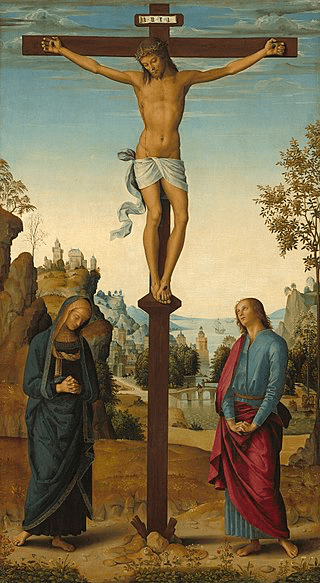
Stabat Mater: Pietro Perugino’s depiction of Mary at the Cross, 1482. (National Gallery, Washington) / public domain

A dedication to mothers

Do you remember radiance
of one who’s always there
the taste of swollen mamilla,
the scent of her sweet hair.

Whose kiss and gentle healing touch
was cooling with a balm
that soothed your painful childish graze
and injured pride becalmed.

Who taught you that a healing touch
and kiss could lead to more;
whilst she embraced competing love,
you found what love is for.

She stood as you went off to war,
to fight life’s bitter battles.
She taught you all you need to know
to rise above mere chattels.

As wisdoms, many, come to you,
from battles won or lost,
a mother’s love transcends it all
and never counts the cost.

In your old age you may well see
your children bear their own,
revealing then the seeds of love
that Stabat Mater’s sewn.

When dotage dims your consciousness,
confusion blurs your view,
expect a revelation that
her love has seen you through.

*****

The poem “A Ballad for Stabat Mater” struck me on several levels. I had already written a poem for my son’s thirtieth birthday (“The Fourth Age of Man“), basing it on William Shakespeare’s “Seven Ages of Man” (a monologue, which he wrote to open his play, “As You Like It”). Incidentally, I found it particularly poignant to note that my son had reached the same age as Jesus Christ was alleged to be, when his own mortal life ended. So, the latter never had the chance to taste the next three ages or, perhaps, he lived all seven in that short life span?

Anyway, I found my Mother’s Day poem, written in the form of a ballad, again influenced not only by Shakespeare’s “Seven Ages of Man” but also the Stabat Mater, the unforgettable and extraordinarily moving image of this religious icon, Mary, the mother of of all mothers, as she stood and watched her own son die, painfully. “Stabat mater dolorosa”, meaning the sorrowful mother stood, is a masterful understatement. How many mothers could submit themselves to such unbelievable pain! And yet all mothers do, albeit mostly to a lesser extreme, for as long as they live.

I salute all mothers, however good or bad a mother you may think you are, you have still had to suffer for your children.

© 2012,  John Anstie

First published on 18th March 2012


His Mother Bellows

“Jack, no.” as he bursts out their open

kitchen door past his garden toys


boy let’s a tiny plastic bag he clutches go

so it balloons with summer air


where it floats amongst lion’s teeth wends

bends a way above cut grass


fast up and over his red and yellow plastic slide,

glides Into his neighbours garden,


kitchen calls his feet back to fetch another

mother bellows again “Jack, no!”

© 2019, Paul Brookes

Disjunction (in English and Albanian)

“With one hand touch the sky
With other rate impulses of heart”

Mother…
don’t leave me alone
Mother…

I’m afraid of this wild world
Mother…
don’t leave me, mother!!!

Your tear fills the ground around me
Mother…?!

Shkëputje

“Me njërën dorë prek qiellin
me tjetrën matë impulsat e zemrës”

Nënë…
mos më lër vetëm!
Nënë…
kam frikë nga kjo botë e egër!
Nënë…
mos më braktis, nënë!!!

Loti yt rëndon dheun mbi mua
Nënë…?!

© 2019, Faruk Buzhala