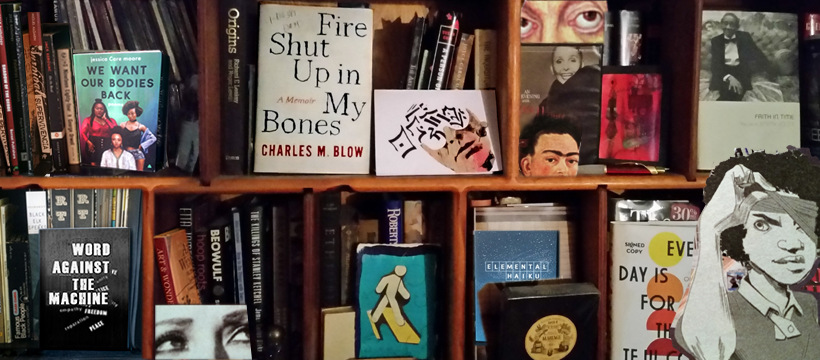
Our dear artist-friend, Paula Kuitenbrouwer, shares her thoughts on homesickness and being at home wherever you are. Be sure to link through to her site and enjoy her “Mindful Drawing.” J.D.
Tag: art
WHILE I WAS GONE …

“And it occurred to me that there is no such thing as blogging. There is no such thing as a blogger. Blogging is just writing — writing using a particularly efficient type of publishing technology.” Simon Dumenco, writer/blogger with Advertising Age
BACK TO THE BLOG
by
Jamie Dedes
Well, I’m back and with me my partners, Ann and Rob, and all of the wonderful writers and poets who have contributed and will continue to contribute to the richness of this blog. (Thank you!) Short story: I’ve been “occupying” or at least boycotting my former Internet Service Provider for poor customer service and for billing for services not rendered. This isn’t done in the spirit of meanness or revenge, but in the search for honesty and ethic and justice, though I will go to war if need be to get the billing corrected. Meanwhile, after much research, I found new provider that has – according to online reviews and polling of friends – a better ethic and more reliability. One can only hope …
Most immediately, I plan to catch-up with our readers. I look forward to finding out what I missed in your blogs – your lives, your wisdom and joy, your art – over the past month. There is always the richness of spiritual practice, family, friends, books, music, and shows. Still, a vacuum was created during the month I was off-line. For your concerned email notes and for your comments here: thank you!
I have many fine submissions to organize for publication. Some require work before they can be published. I’m not sure how fast they’ll go up, but you won’t be disappointed when they do. Stay tuned …
See you in the Blogosphere!
and, from all of us to each of you, thank you for reading and commenting here.
Jamie
MEET WENDY ALGER, fine art photographer

WENDY ALGER (b. 1972), Chicago, IL, U.S.A.
Photography. It’s like music … It’s like your favorite song, something you can listen to over and over and over again. You try to explain it to some and you can’t. That’s the feeling it gives me. It’s like traveling and you want to tell everyone how great it was … and I have that experience every time I pick up a camera. Wendy Alger.
·
MY FRIEND: WENDY ALGER
by
Jamie Dedes (The Poet by Day, a jouney in poem)
Initially, when Wendy started doing photography, it was a hobby. Then a friend suggested she become a photographer. Wendy thought that sounded just right for her. Both her parents knew photography and her dad gave her one of his cameras and some lenses.
At the time, Wendy owned an old ’68 Mustang. She says she’d drive around and listen to music. When something called out to her, she’d stop and take photographs. That’s how she began to learn what subjects appealed to her. “I photographed everything that felt right and compelled me to keep taking photographs.” Slowly, she discovered the photographer within and her own distinctive style. “I enrolled at the Academy of Art University in San Francisco and trained there, where I learned manual SLR. I also learned how to use a dark room.”
Given Wendy’s vision challenges, I am always amazed at what she can do. She has visual impairment due to retinitis pigmentosa She tells me that new camera technologies make it easier. “I use a digital camera and I can review my pictures on the camera instead of in a dark room.I have a digital dark room, which consists of a laptop and Photoshop and Photoshop Lightroom. This allows me to transform and print my images at home. I also use visual memory … I remember feeling to get through a photo session.”
Wendy’s long-term goal: “To have my artwork displayed in the same building as Walker Evans in my lifetime – not after – during! My vision problems are not stopping me. I never even think about that. After I was diagnosed and as soon as I got the money I bought my digital camera.”
Here is a small gallery of Wendy’s recent work with a digital camera. The photo at the head of the post and the first one below are self-portraits. Wendy’s photographs are copyright protected. You can see more of her work HERE.


© narrative, 2011 Jamie Dedes All rights reserved
© photographs, 2011 Wendy Rose Alger, All rights reserved
EARLY MORNING BLUES

EARLY MORNING BLUES
by
Jamie Dedes
And far into the night he crooned that tune
The stars went out and so did the moon.
The singer stopped playing and went to bed.
While the weary blues echoed through his head.
The Weary Blues by Langston Hughes
·
If you are reading this post on the home page, you will need to click on the post title for the poem to lay out properly.
·
Suddenly conscious, remembering, dread.
Before dawn the worst blues of the day,
those dismal black-blues of a battered heart
Gummy, gloomy blues, tangled in cobwebs
Blues – dispirited as a fatherless girl,
a widower man, a betrayed lover
Blues bereft as the loss of an old friend
Bitter-acid blues that rise in the throat of
a wage-slave, dying by slow suffocation
·
Early Morning Blues . . .
The heavy-hearted blue sludge
that weighs upon the mother with her pink slip
the father with his account overdrawn
The deep, murky sea of blue that swallows up
the homeless man begging, living on the margin
Or the homeless woman sleeping on the street,
crying her cancer pain deep into the night
The sword-in-the-heart blues
of a family living on trash-bin dinners
The dark, churning brackish blue
of a child’s empty stomach, no food in sight
·
Early Morning Blues . . .
The helpless, hopeless, remorse-filled blues
that come as Time runs out and Eternity beckons
That darkest of hues with shivering slivers
of pewter blue, muting to grey, muting to black
Muting to light fractures in a surface
permeable and permissible, heavenly light
Or so “they” tell me . . .
·
But lost in a sea of light
will “I’ still be?
will “you” still be?
Answer me that.
What is the character of this light?
Matter or myth?
Ah, then, after all, pondering further
I find I really don’t care
I’ll poem the blues and poem my light
until all that’s left of me is what
I’ve left behind . . .
and you?
Will you leave your unwritten
blue poem hanging in the air to be
heard by those few who can?
Or, will you, like Africans of old, paint
yourself blue and boiling tears
dance around the fire and give
birth to the soul of a new art
·
Photo credit ~ Wilfredo R. Rodriguez H. via Wikipedia

♥ ♥ ♥
INTO THE BARDO
is now on Facebook and Twitter.
Please join us there.
THE HEART OF THE MATTER
 My friend and Christian poet and writer, Donna Swanson, writes here about creativity, the fleeting quality of success, and the things that really matter, like family and gratitude. No matter your definition of God (or not) or whatever your belief system is (or is not), the essence of the message here is core wisdom. Enjoy! … and thanks to Donna for sharing. J.D.
·
THE HEART OF THE MATTER
by
DONNA SWANSON
·
There have always been creators. To us creating is a display of God’s image in the world. Creating is an ache in our spirit; a compulsive reaching out to those who share life with us. We can no more not create than we can not breathe. Though there is a longing for our creations to be affirmed and applauded – anyone who denies that is lying to you – there is a deeper hunger to do the act of creating. The feel of a brush on canvas; the weight of a pen in the hand; a particular word that completes a poetic phrase: these are to our souls as oxygen is to our lungs. Though no one responds, still we must offer. Perhaps the next painting will invoke a response; the next book, the next poem, the next song…
·
And success? Now, as I look back over my life, I have a much different perspective than I did in my youth. I see those things I created, and they are good. I know they have blessed the few people they have touched. And now I can put them to rest where they belong; in God’s hands. If there comes a time when He wants them widely known, they will be. If not, they were infinitely satisfying in their creation.
·
Again, as I look back over my life, I see the successes that mean so much more than any amount of fame could supply. I asked God to give me acclaim and the praise of my peers. He gave me good children who rise up and call me blessed. I asked God to make me financially successful. He gave me a beautiful home set amidst towering pines given by those I loved. I asked God to make my name known. He gave me a husband who knows me and loves me just as I am.
·
Our family has never been abundantly wealthy, but we have never gone without food or clothes or a warm fire. We did not have expensive indulgences or travel to exotic places, but we’ve had those small blessings that mean most because they were a surprise or a loving gift.
·
Success is relative. Success is fleeting. Success is a carrot leading a donkey down many a rocky road. Success is okay if it happens, okay if it doesn’t. It’s the road one takes to get to the destination that builds the soul. The road has been worth it.
·
·
♦
·
·
Connect with the multi-talented Donna at the links below:
I READ A POEM

I know that I haven’t powers enough to divide myself into one who earns and one who creates. Tillie Ollsen (1912-2007), American writer and feminist
·
I READ A POEM
by
Jamie Dedes
I read a poem today and decided
I must deed it to some lost, lonely
fatherless child to embrace her
·
along her stone path, invoke sanity
I want to tell her: don’t sell your
dreams for cash or buy the social OS
·
Instead, let the poem play you like a
musician her viola, rewriting lonely
into sapphire solitude, silken sanctity
·
Let it wash you like the spray of whales
Let it drench your body in the music
of your soul, singing pure prana into
·
the marrow and margins of your life
Let the poet-shaman name your muse
and find you posing poetry as art and
·
discover the amethyst bliss of words
woven from strands of your own DNA.
Yes. I read a poem today and decided
I must deed it to a lost fatherless child

Photo credit – Jaime Junior, Public Domain Photographs.net
ARTIST’S CREED
Video posted to YouTube by Jan Phillips.
All true artists, whether they know it or not, create from a place of no-mind, from inner stillness. Eckhart Tolle.
This resonates for me as I know it must for other creative beings. (Aren’t we all?) I do believe that art comes from sacred space, that doing art is a meditation, and that our art comes through us not from us.
The poem was written by Jan Phillips. Link HERE to her website.

MYSTIC POET-PHILOSOPHER

Kahlil Gibran Memorial, Washington, D.C., U.S.A.
Excerpt from
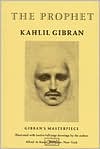
THE PROPHET
by
Khalil Gibran
If you are viewing this poem on the home page, you will need to click with your mouse on the subject line of the post to see the poem laid out properly.
And a man said, Speak to us of Self-Knowledge.
And he answered saying:
Your hearts know in silence the secrets of the days and the nights.
But your ears thirst for the sound of your heart’s knowledge.
You would know in words that which you have always known in thought.
You would touch with your fingers the naked body of your dreams.
And it is well you should.
The hidden well-spring of your soul must needs rise and run murmuring to the sea;
And the treasure of your infinite depths would be revealed to your eyes.
But let there be no scales to weigh your unknown treasure;
And seek not the depths of your knowledge with staff or sounding line.
For self is a sea boundless and measureless.
Say not, “I have found the truth,” but rather, “I have found a truth.”
Say not, “I have found the path of the soul.” Say rather, “I have met the soul walking upon my path.”
For the soul walks upon all paths.
The soul walks not upon a line, neither does it grow like a reed.
The soul unfolds itself, like a lotus of countless petals.
♥ ♥ ♥
The Lebanese-American artist and poet-philospher, Gibran Khalil Gibran, died on this day in 1931. He was born in 1883. He wrote in the Arabic and in English and was from the northern Lebanon town of Bsharri (the ancient name meaning “the house of Ishtar,” after the goddess Ishtar worshiped by the ancient Phoenicians). Bsharri is in the Kadisha Valley below the famed cedar forests of Lebanon. In modern times Bsharri was enclave for Maronite Christians escaping from the Ottoman Turks. Until the late 19th Century/20th Century, Aramaic* was the language of Bsharri. Its influence is still evident in the verbal inflection of its people.
Initially, The Prophet (1923, U.S.), was not well-received by critics, though it met with some success with the public. By the sixties and the counter-culture** it – and all his work – gained greater acceptance and a wider audience. As with other like spirits, Gibran is considered a mystic by some and a charlatan by others. Gibran found wisdom in the transcendent elements of all spiritual traditions he encountered, but was born into a Maronite family.
The Maronites are Eastern Catholics in communion with the Apostolic See (the seat of authority for the Catholic Church based in Rome, Italy), and followers of St. Maron, a Syrian priest of the fifth century. Also from the Aramaic speaking peoples, St Marion was a friend and contemporary of St. John Chrysostom (Turkish) and Anthony the Great (Egyptian) and led a monastic life. Before the rise of the Ottoman Empire and the subsequent Lebanese diaspora, this was the majority population in the Lebanon. 3,500,000 people practice this religion world-wide. In the United States some 200,000 are Maronite.
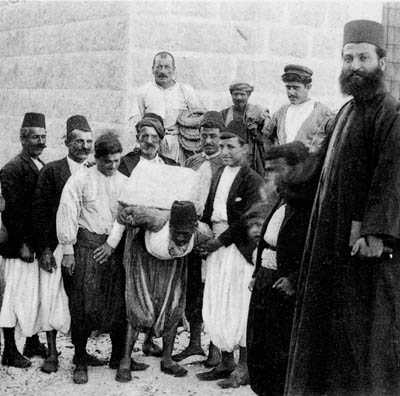
Maronites building a church on Mt. Lebanon, circa 1920s. Public domain photo via Wikipedia.
Video posted to YouTube by utterboxtv. This is a short documentary of about ten minutes.

Gibran Museum in Lebanon courtesy of Xtcrider via Wikipedia. Public domain photo.

Gibran Memorial at Copley Square in Boston, Massachusetts, U.S.A. via Wikipedia. Public domain photo.
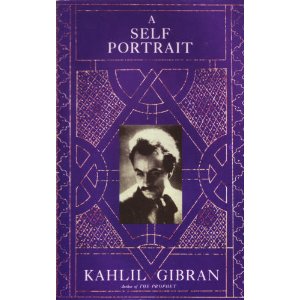
1904 – 1930, written in Boston, New York and Paris, where Gibran studied art under Rodin.
* Aramaic, a Semitic language, was the language of Jesus and the Apostles, the literary language and the vernacular of ancient Asia Minor, Syria, Mesopotamia, and Palestine. The Peshitta texts (Old and New Testaments) were written in Aramaic and some claim they are the original New Testament documents.
**counter-culture – a cultural movement initiated mainly in the U.K. and the U.S. It spread though most of the western world between 1958 and 1974 with its peak after 1964. The counter-culture movement of the ’60s created a cultural divide mainly along age lines with youth forming a subculture questioning the social norms of the day and changing many regarding wars (especially Vietnam), sexuality, religion and spirituality, music, drugs, abortion, women’s rights, racial rights, gay/lesbian rights, free speech, environmentalism, dress codes, and so forth. It started in ’58 in London with an act of civil disobedience when students marched to ban the bomb (i.e. nuclear weapons).
Photo credit for Washington, D. C. Memorial – Gyrofrog licensed under Creative Commons ShareAlike 1.0 License.

SACRED CYCLE

SACRED CYCLE
by
Jamie Dedes
I wrote the first version of this a year ago. I was sitting in a Buddhist center were the children had designed a large mandala in collage to celebrate the Buddha’s birthday, which is April 8. The mandala was filled with pictures and drawings of nature scenes, the Buddha, stupas, and children at play. I was totally engaged by it with its color, movement, and imagination. The children’s mandala came together for me with the Tibetan Buddhist custom of creating mandala of colored sands, which are then blown away to remind us of the impermanence of the material world. This poem is the result. Although it has elements that are consistent with the Buddhist system, I didn’t write it as a Buddhist statement, just an imaginative one.
Is there – could it be – that there’s
more than one god, one eternity,
more than one universe, and Time
at their service, really nothing more
than a simple saffron-robed monk; a
being meditating, mediating realms
of Chaos, pulling colors and lights
and energies into lively mandala,
galaxies of air, fire, earth, blood.
·
And could it be that the blood are
uneasy souls, passing drowsy days
and nights in deep sleep, believing
dark, dank demons whispering …
“The moon never dies.”
But demons do as demons do: they lie.
·
So unready and fearful, poor souls,
when one day wind and fire stormily
march in, tramping on and through
coherence with feet deft and dusty
and in Chaos whirling and roiling,
souls passing into a renewed spin
on fate, singing desperate canticles
to nothingness, to light, to love
·
Time dons its saffron robes
sits in quiet meditation
births lively mandala
another sacred cycle begins …

Photograph of temporary sand-mandala, Drongtse Monastery, Tibet, 1993 via Wikipedia and originally posted to Flickr asamazing sand mandala by Mai Le from San Francisco, CA, USA under GNU Free Documentation License.
 The BeZine