Posted in Essay, Photography/Photographer, Spiritual Practice, Terri Stewart

Sacred Space and Photography: Light v. 2

Sacred Space and Photography: Light v. 2

This month is interNational Photography month! Here, at The Bardo Group, we will be playing with this theme all month-long. On Sundays, we will be focusing on where the practice of photography intersects with our own experience and expression of spirituality.

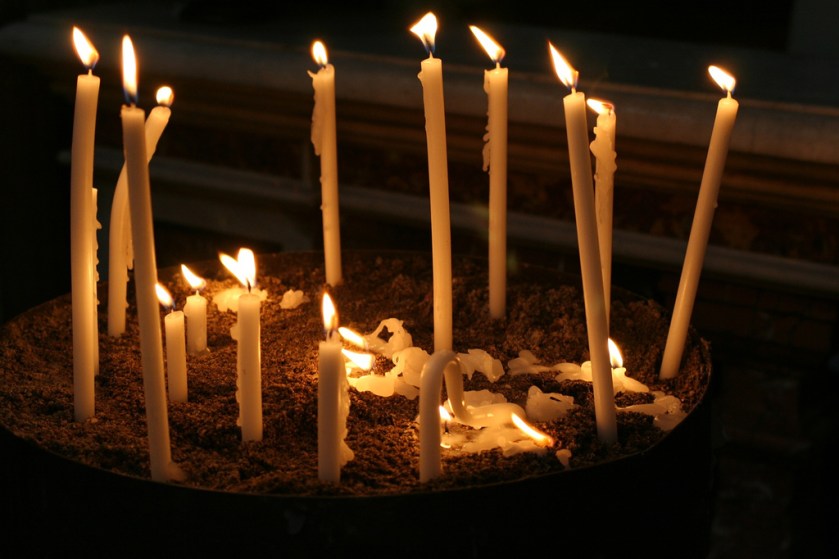
Last week, I wrote about the symbolism in our religious traditions of light and used photography and light to show how we can point to something that transcends our understanding. Plato would say that the photo of sunset points towards the form of sunset—that perfected form of sunset-ness.

Plato’s Theory of Forms “described the common nature of all things in the world, not just of a table, for instance but of all the tables that ever were and ever will be. This Platonic form of the ideal table is eternal and changeless. It has an essential tableness, as it were, that exists whether the table is where you ate lunch in the school cafeteria or the one at a Paris café where you fell in love. In Plato’s famous allegory of the cave in “The Republic,” the things that we see on a daily basis, like the table in front of you, are merely shadows of the ideal form.” (https://www.archetypes.com/article/plato)

Any object can point towards the perfected idea of that object. And what we see in front of us is essentially a shadow of its ideal self (as no perfected form can be reached—saving this philosophical and theological discussion for another time!).

In photography, shadows are only achievable when there is light. Without light, no shadows. And sometimes, shadows can lead to beautiful pictures. When we handle shadows correctly.

Pointing Towards the Form of Tree by Terri Stewart
Pointing Towards the Form of Tree-ness
by Terri Stewart

And isn’t that true of life? We need to handle our own shadows correctly in order to have a more perfected life? Our shadows, like Plato’s cave, leave us living lives that are not quite ideal. Often, our shadow grows out of shame. Shame comes from unresolved trauma—something that we have not dealt with entirely. For me, shame is often connected to my body image. I remember, 30 years ago, sitting at the dinner table all of 5’3” and 120 pounds and being told, “No wonder I was fat.” And then crying into my plate. Logically, I know that 5’3” and 120 pounds was just fine. But that shame experienced at that moment is seared into my brain and I can recall the rush of tears that made me ashamed of my body. That feeds into self-sabotage of my embodied self in some ways and can lessen my general enjoyment of life unless I deal with it and learn to look at my shadow and bring it into the light!

I can use photography to examine both myself and my shadow. Selfies aren’t all selfish. You can use them to take photos of your shadow self, bringing yourself more and more into the light and into a fuller realization of our perfected selves.
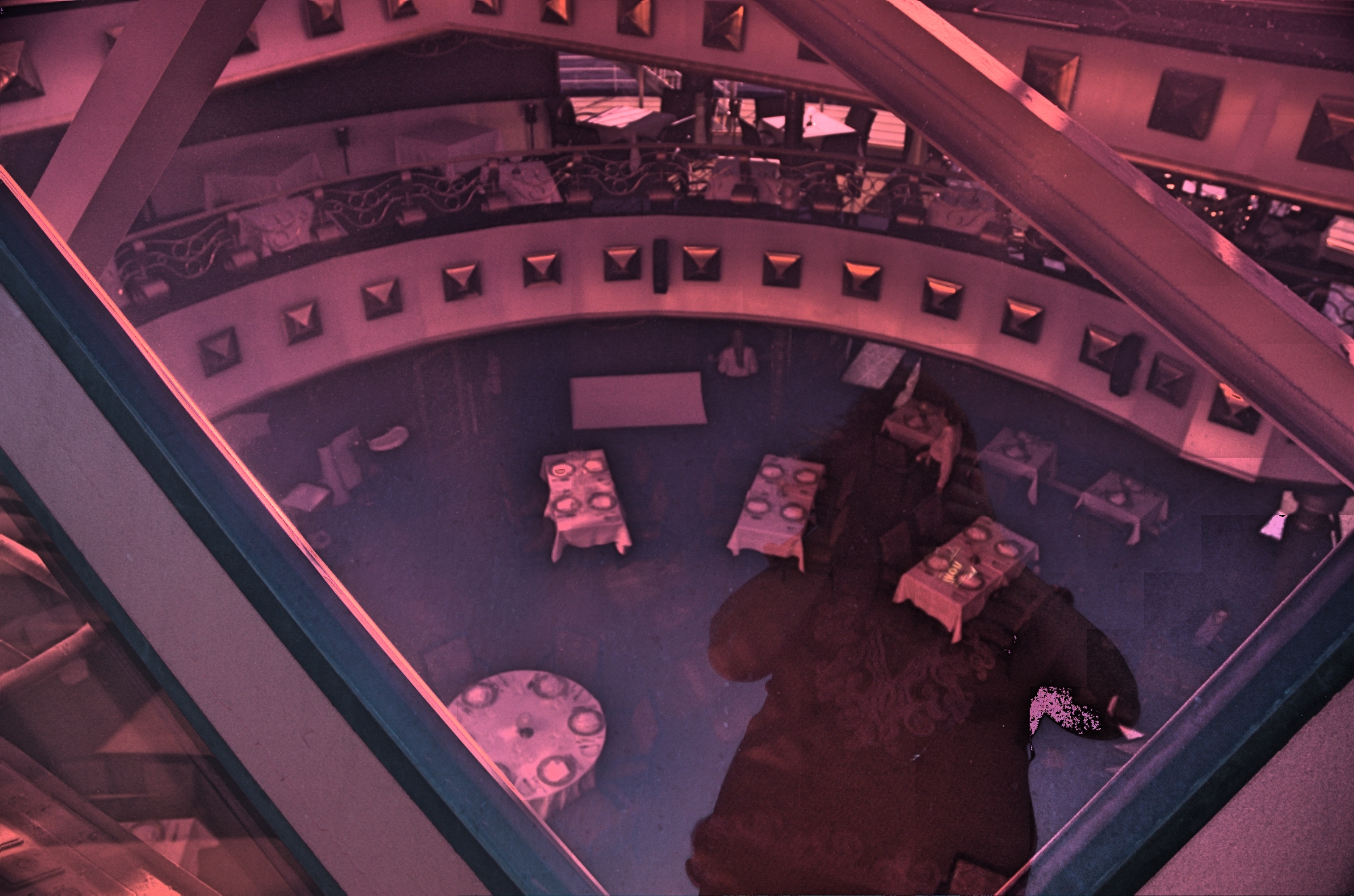
Pointing Towards the Form of Terri-ness by Terri Stewart
Pointing Towards the Form of Terri-ness
by Terri Stewart

Someone said that photography is painting with light. It is also learning how to cope with shadows and darkness.  Do you have a shadow—in your photos? Can you peek into it and see how it points towards the fullness of life?

Shalom and Amen!

Post by Terri Stewart, 2014
Photography, CC License (CC BY-NC)

terriTerri Stewart ~ a member of our Core Team,  comes from an eclectic background and considers herself to be grounded in contemplation and justice. She is the Director and Founder of the Youth Chaplaincy Coalition that serves youth affected by the justice system. As a graduate of Seattle University’s School of Theology and Ministry, she earned her Master’s of Divinity and a Post-Master’s Certificate in Spiritual Direction with honors and is a rare United Methodist student in the Jesuit Honor Society, Alpha Sigma Nu. She is a contributing author to the Abingdon Worship Annual.

Her online presence is “CloakedMonk.” This speaks to her grounding in contemplative arts (photography, mandala, poetry) and the need to live it out in the world. The cloak is the disguise of normalcy as she advocates for justice and peace. You can find her at www.cloakedmonk.com,www.twitter.com/cloakedmonk, and www.facebook.com/cloakedmonk.  To reach her for conversation, send a note to terris@beguineagain.com

 

Posted in Essay, Photography/Photographer, Spiritual Practice, Terri Stewart

Sacred Space and Photography: Light

This month is interNational Photography month! Here at The Bardo Group, we will be playing with this theme all month-long. On Sundays, we will be focusing on where the practice of photography intersects with our own experience and expression of spirituality.

In my journey with photography, I have become more aware of light. The presence of light, the absence of light, how it causes reflection, my friend, Paul Jeffrey, told us once that he always turns the flash off, taking advantage of natural light. (I’m sure the rule is “almost always.”) I find that in photographing nature, that I try to stick to that rule and rely on photo-editing software to help me out if I need it. He also taught us how to make a faux tripod to steady ourselves when our shutter speed is taking just a little bit too long.

Light is a dominant theme in religious traditions also.

  • Christianity: “The light shines in the darkness and the darkness did not overcome it.” (John 1:5),
  • Islam: “Knowledge makes you free from the chains of ignorance, and revives your heart, knowledge takes you out from the darkness of suspicions and superstitions, and gives a new light to your eyes. (Hazrat Abu Ali Saqfi)
  • Judaism: “I will say to the prisoners, ‘Go free!’ and to those who are in darkness, ‘Come out to the light!’ (Isaiah 49:9)
  • Buddhism: “Doubt everything. Find your own light.” (Gautama Buddha)
  • Hinduism: “One who kindles the light of awareness within gets true light.” (Unattributed)
  • Baha’i: “Grant that the light of unity may envelop the whole earth.” (Bahá’u’lláh)

The general thrust is that light is a metaphor for that which brings us to a higher consciousness or awareness, provides hope, guidance, and love. It is a beautiful thing when, through appropriate use of light, we can communicate a deeper exploration of these qualities—awareness of what is unseen, hope, love, beauty—a very real reflection of life. And sometimes, light lets you see something in a different way.

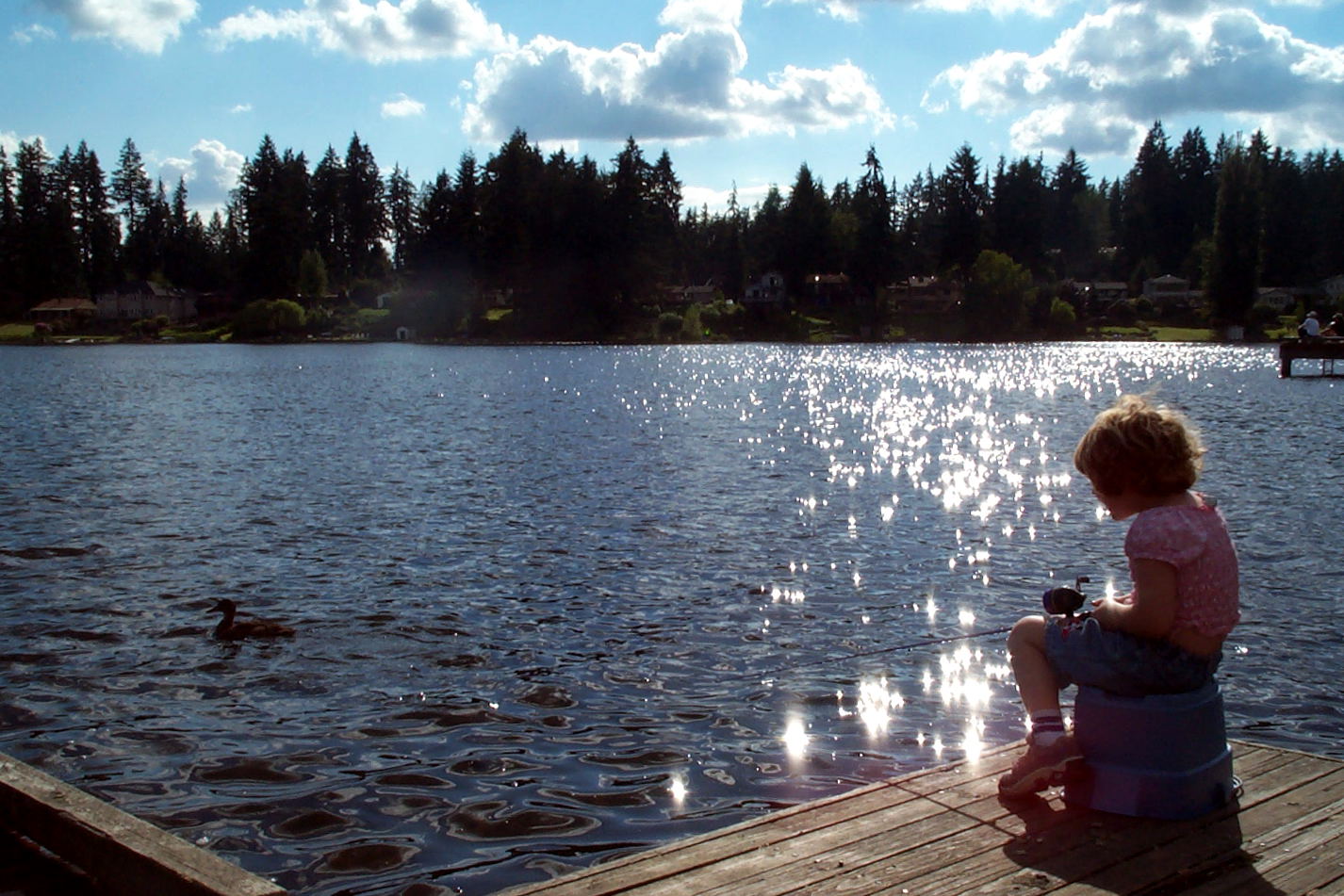
My favorite picture that I’ve ever taken of one of my children captures light and it seems, to me, to convey innocence and an essential quality of “child” that is so easy to forget. This is an old photo, by the way! And the picture isn’t perfect, but it still conveys a lightness of being that transcends the particular quality of the photo.

by Terri Stewart CC License (BY-NC)
by Terri Stewart
CC License (BY-NC)

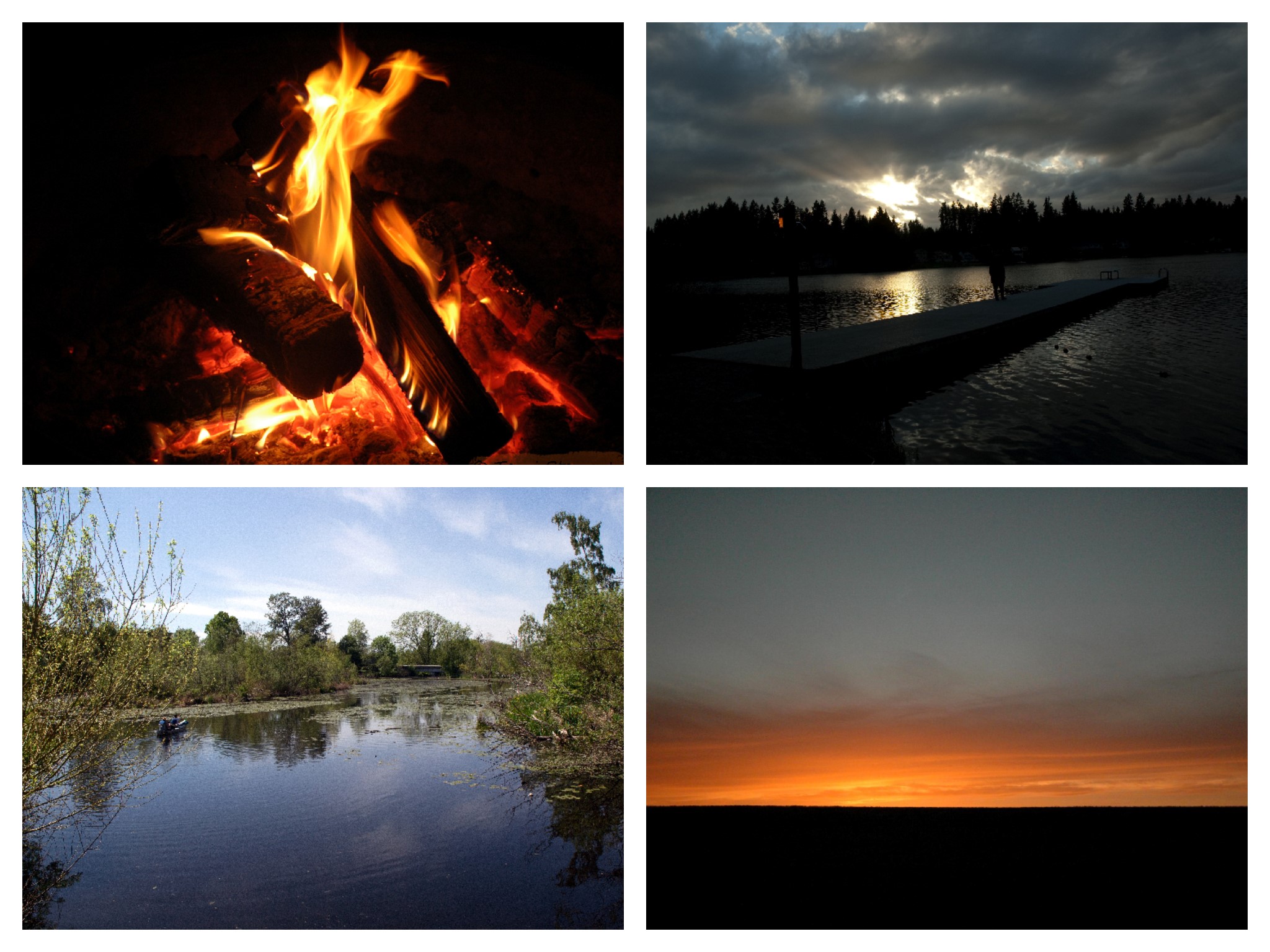
How do the following pictures and their use of light point to something beyond the images captured in the photo?

Light Collage by Terri Stewart
Light Collage
by Terri Stewart

What do thoughts of light lead you to? Do you have a favorite photo that features light or the absence of light?


Shalom and Amen!

Post by Terri Stewart, 2014
Photography, CC License (CC BY-NC)

terriTerri Stewart ~ a member of our Core Team,  comes from an eclectic background and considers herself to be grounded in contemplation and justice. She is the Director and Founder of the Youth Chaplaincy Coalition that serves youth affected by the justice system. As a graduate of Seattle University’s School of Theology and Ministry, she earned her Master’s of Divinity and a Post-Master’s Certificate in Spiritual Direction with honors and is a rare United Methodist student in the Jesuit Honor Society, Alpha Sigma Nu. She is a contributing author to the Abingdon Worship Annual.

Her online presence is “CloakedMonk.” This speaks to her grounding in contemplative arts (photography, mandala, poetry) and the need to live it out in the world. The cloak is the disguise of normalcy as she advocates for justice and peace. You can find her at www.cloakedmonk.com,www.twitter.com/cloakedmonk, and www.facebook.com/cloakedmonk.  To reach her for conversation, send a note to cloakedmonk@outlook.com.


Posted in Essay, Photography/Photographer, Spiritual Practice, Terri Stewart

Sacred Space in Photography: Perspective

This month is interNational Photography month! Here at The Bardo Group, we will be playing with this theme all month-long. On Sundays, we will be focusing on where the practice of photography intersects with our own experience and expression of spirituality.

Perspective is how we look at things. In a lot of ways it can be correlated with our privilege. When we have a lot of privilege in terms of social, economic, and political capital, we tend to see things from an empowered or “power over” perspective. When we have don’t have a lot of privilege, we tend to see things from a “power under” perspective. So our perspective on life or power placement has a lot to do with how we encounter others.

In my religious tradition, and in most spiritual movements (in my understanding), there is a movement to put power down and to empower those who have little power. Just a sampling:

  • Christianity has the beatitudes as a starting point,
  • Islam has the practice of charity,
  • Judaism has the call to care for the widow, the orphan, and the stranger among us,
  • Buddhism feels it is important to support the poor and needy,
  • Hinduism practices that all life forms are respected and should be treated well.
  • Baha’i faith which embraces loving kindness for all life forms and truth in all sacred scriptures (thank you to readers for adding on!)

And it goes on! So it seems that in the great religious traditions, the practice of caring for those who are among “the lost, the least, and the lonely” is of paramount importance. I think the challenge is moving from a position of “power over” to a position of “power with.” This involves a change of perspective. (See, I’m getting to the photographic point!)

I think that if our spiritual practices support our daily living, we will have more effective daily living! If we need to work on finding different perspectives from “power over,” then one way to do it is through photography as a spiritual practice.

How we see things tells a story. Perspective is a spiritual practice and can be embodied in our photography practice. How does it change your view if, instead of being up high as an adult, you crouched down or laid down? One recent photo I took is a great example for perspective. One of my friend’s comment was: “I wish I had a mouse on a skateboard!” Which brought an even new viewpoint because I definitely would not have thought of that! However, once she said that, I now have a perpetual picture of a mouse playing on the below log.

perspective

To get this photo, I had to crouch way down onto the log and become one with the dirt. It looks way cool from here. The photo from standing up is not nearly as fun. It loses the “going on forever” perspective.

Over time, I’ve gotten better at thinking of doing this—of finding new perspectives. The same is true in my life—almost to a fault! I might over-identify with some of my people who are among the lost, the least, and the lonely. Sometimes. But by noticing new perspectives in photography, it models for me new perspectives in my spiritual life and then new perspectives in my lived life.

  • See the world in a new way
  • See the divine in a new way
  • See others in a new way

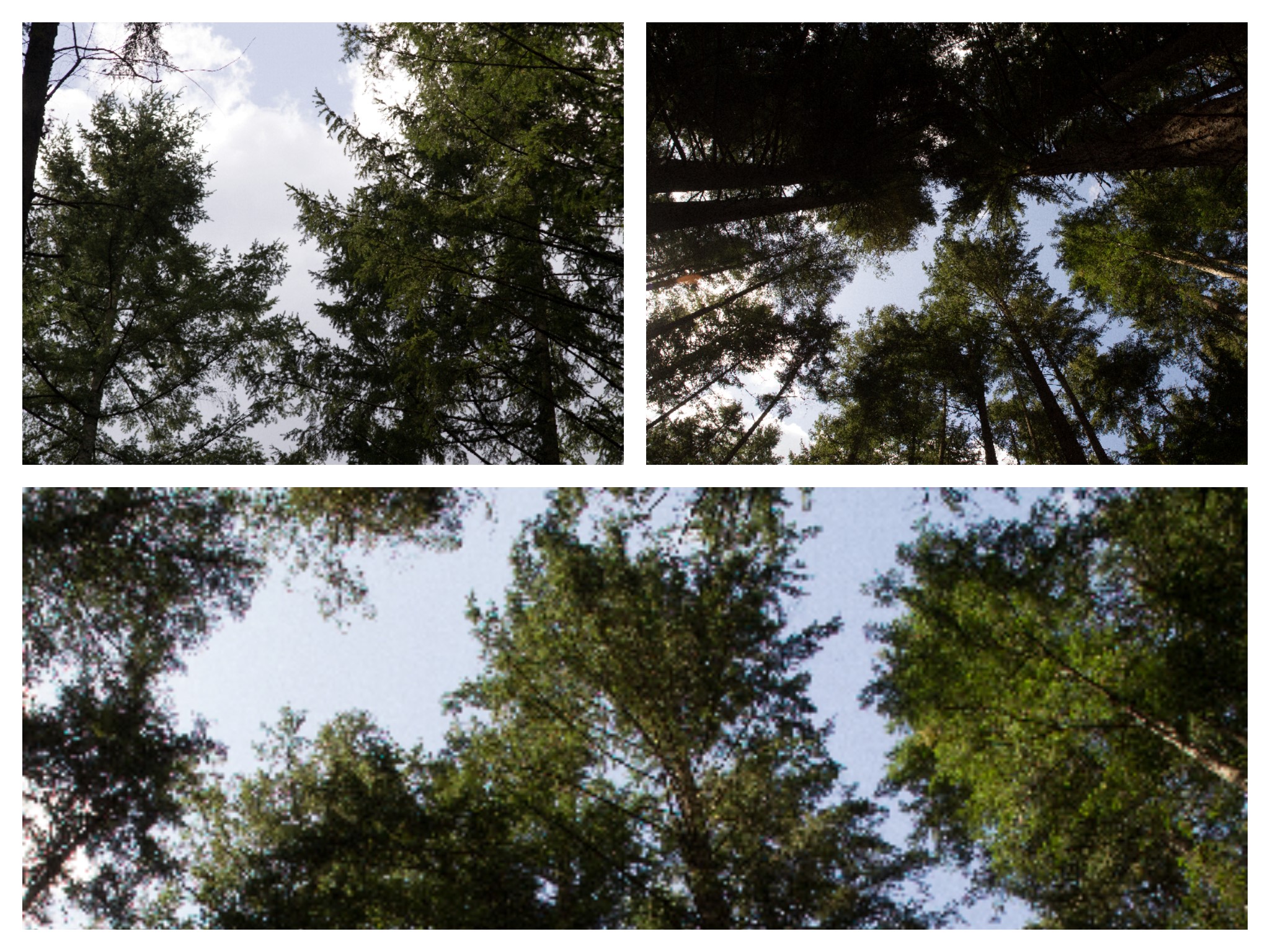
Below are three photos of trees—the same trees with different perspectives (on the same hike). I think each one tells a different story.

treecollage

Applying this to the ideas of perspective & our story as embodied in relationships of power over, power with, or power under—how can we develop the flexibility to enter into another perspective?

You never know what you will see when you begin to enter into another perspective. I found this lovely leaf cradling a little tiny leaf. How beautiful! And it makes me remember the way we should cradle one another.

leafinleaf

Who will you cradle today by seeing something with a new perspective?

Shalom and Amen!

Post by Terri Stewart, 2014
Photography, CC License (CC BY-NC)

terriTerri Stewart ~ a member of our Core Team,  comes from an eclectic background and considers herself to be grounded in contemplation and justice. She is the Director and Founder of the Youth Chaplaincy Coalition that serves youth affected by the justice system. As a graduate of Seattle University’s School of Theology and Ministry, she earned her Master’s of Divinity and a Post-Master’s Certificate in Spiritual Direction with honors and is a rare United Methodist student in the Jesuit Honor Society, Alpha Sigma Nu. She is a contributing author to the Abingdon Worship Annual.

Her online presence is “CloakedMonk.” This speaks to her grounding in contemplative arts (photography, mandala, poetry) and the need to live it out in the world. The cloak is the disguise of normalcy as she advocates for justice and peace. You can find her at www.cloakedmonk.com,www.twitter.com/cloakedmonk, and www.facebook.com/cloakedmonk.  To reach her for conversation, send a note to cloakedmonk@outlook.com.


Posted in Joseph Hesch, poem, Poems/Poetry, poetry

Touching Horizon

I’ve always been one to stare
at the sunrise and sunset, the days
slipping out of and into their
respective bedsteads.
But true horizons are funny things.
They are 360-degree dreams
like Dorothy’s Kansas,
flat and unattainable except
in books or feel-good movies.

Perhaps I stand and scan
those horizons, those reclining
brushstrokes of something
always out of reach,
the encircling collection
of a great artist’s vanishing points,
of all our todays and tomorrows,
because I wish to grasp that
there is a beginning and
there is an end to everything.

And in my life there are things
I can never touch, ever,
until they reach out
to touch me first.

– Joseph Hesch

© 2014, poem, Joseph Hesch, All rights reserved

Hesch Profileproduct_thumbnail-3.phpJOSEPH HESCH (A Thing for Words) is a writer and poet from Albany, New York , an old friend of Bardo and a new core team member. Joe’s work is published in journals and anthologies coast-to-coast and worldwide. He posts poems and stories-in-progress on his blog, A Thing for Words.  An original staff member at dVerse Poets Pub website, Joe was named one of Writers Digest Editor Robert Lee Brewer’s “2011 Best Tweeps for Writers to Follow.” He is also a member of the Grass Roots Poetry Group and featured in their 2013 poetry anthology Petrichor Rising.

Posted in Essay, Photography/Photographer, Spiritual Practice, Terri Stewart

Sacred Space in the Frame

This month is interNational Photography month! Here at The Bardo Group, we will be playing with this theme all month long. On Sundays, we will be focusing on where the practice of photography intersects with our own experience and expression of spirituality.

Thomas Merton has a photograph he titled “Sky Hook.” He wrote about it, “It is the only known picture of God.” It is definitely not what you would expect! No heavenly skies, no angels, no beard. What was Merton thinking…a simply construction hook hanging from the sky towards the earth. (You can see the photo many places on the internet, but I couldn’t find a place with clear permissions.)

Often we see photos that prompt us to stop, look, and to appreciate what we have seen but also to wonder about something more. That something more can be something bigger or something smaller. My new friend and photographer, Paul Jeffrey, takes photos for the United Methodist Church for the General Board of Global Ministries—yes! He is a photographer-missionary. He typically focuses on the beauty and stories found in people. There is a photo of a young child in a box (all kids like to sit in boxes, no matter where they are in the world!)  He recently shared this photo with us in a small group and talked about the story. He said there was a huge reaction to the photo. Such a beautiful, young child abandoned in a box! What the photo does not show is that the family was just out of the frame.

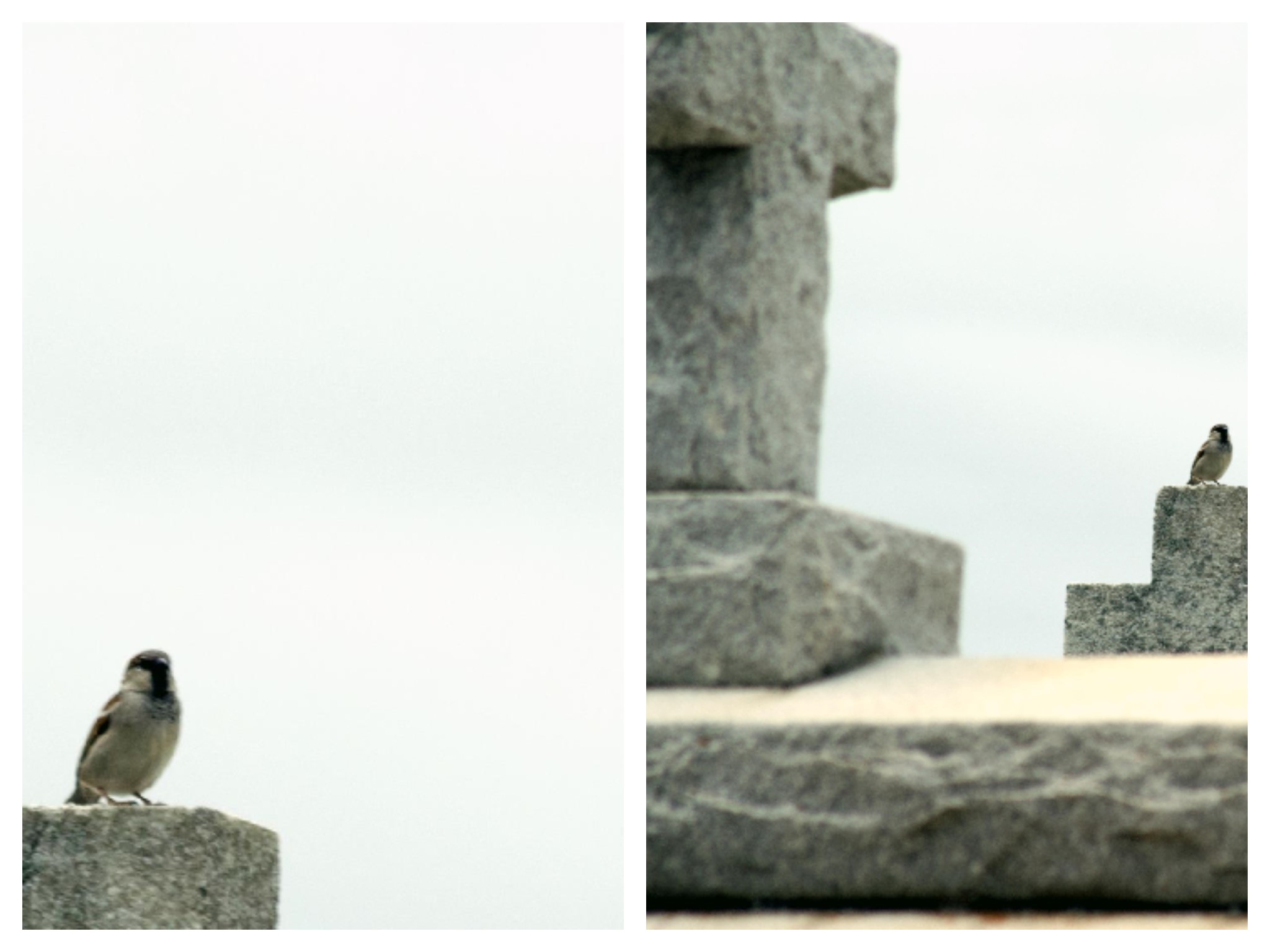
How we frame our photographs tells a story.

What if Merton’s photo had the construction equipment in it? What if Jeffrey’s photo had the family in it? Would it tell a different story? Would that story be better? Worse? More effective? Less effective? What does this say about how we frame the stories of our own lives?

Framing is a spiritual practice. Or at least knowing what we are cutting from the frame. If we willingly cut off parts of the frame to focus our attention onto another part, that is fine. For the moment. But if we willingly cut of parts of the frame and never return to the whole, something is lost. I am thinking, in particular, of people who do things like cutting science out of their lives or people who cannot see the whole spectrum of society. When we get caught up in our own particularity, we forget the universal journey. And we forget that the child in a box has a loving, concerned family.

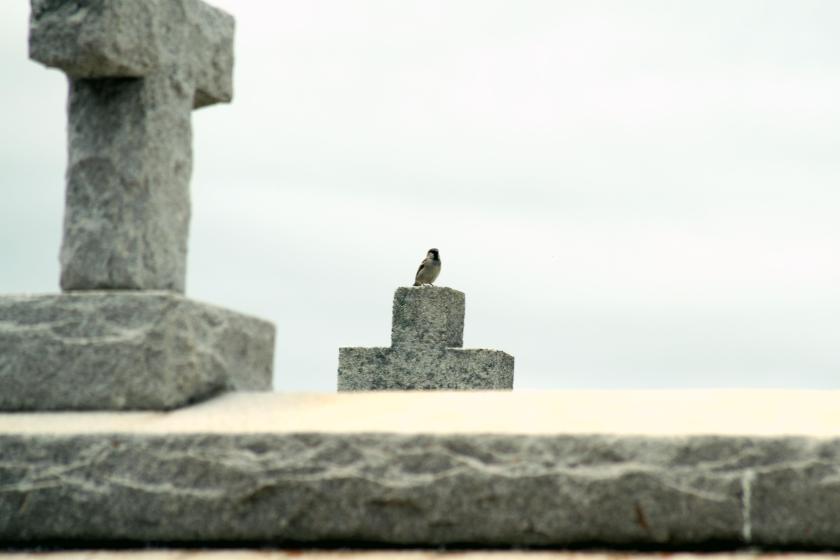
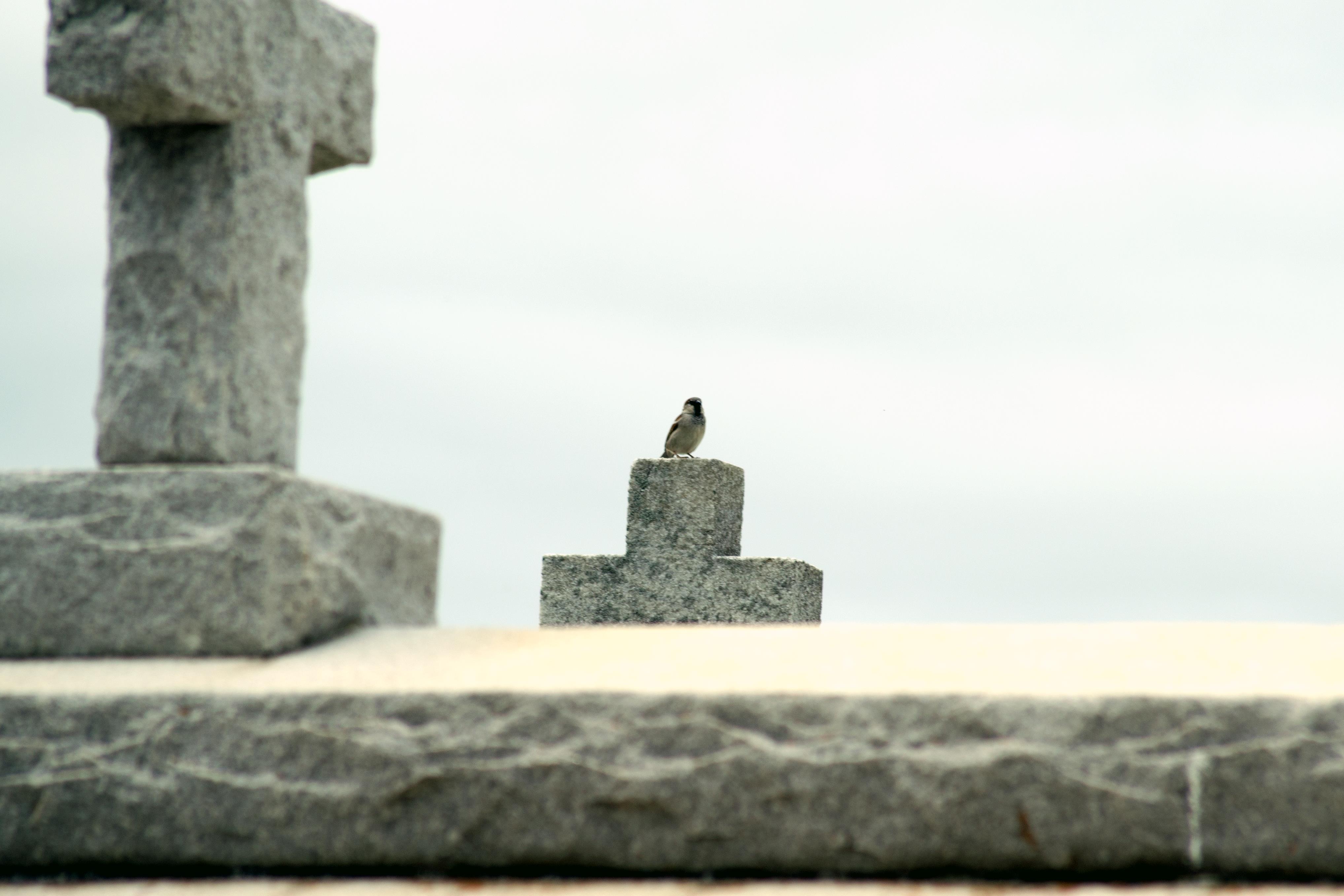
Below is a collage of one of my photos that I framed in two different ways. They tell completely different stories, in my opinion!

birdcollage

You don’t even have to be a photographer to understand the importance of framing. Hold your hands up around your face, blocking parts of your viewing field, and you will be able to frame your vision. Sitting right where you are!

In photography, we can say, “Where does framing help tell the story? Where does it hurt the story?”

In our lives we can say,

Where has framing helped you tell your own story? Where has it hurt you?

I’d love it if you would share your blog and perhaps a photo comparing two different ways of framing. That would be wonderful! 

birdatcemetary

    Shalom and Amen!

Post by Terri Stewart, 2014
CC License (CC BY-NC)

terriTerri Stewart ~ a member of our Core Team,  comes from an eclectic background and considers herself to be grounded in contemplation and justice. She is the Director and Founder of the Youth Chaplaincy Coalition that serves youth affected by the justice system. As a graduate of Seattle University’s School of Theology and Ministry, she earned her Master’s of Divinity and a Post-Master’s Certificate in Spiritual Direction with honors and is a rare United Methodist student in the Jesuit Honor Society, Alpha Sigma Nu. She is a contributing author to the Abingdon Worship Annual.

Her online presence is “CloakedMonk.” This speaks to her grounding in contemplative arts (photography, mandala, poetry) and the need to live it out in the world. The cloak is the disguise of normalcy as she advocates for justice and peace. You can find her at www.cloakedmonk.com,www.twitter.com/cloakedmonk, and www.facebook.com/cloakedmonk.  To reach her for conversation, send a note to cloakedmonk@outlook.com.
Posted in Essay, Spiritual Practice, Terri Stewart

Sacred Space in the Doorway

Often, in religion-land, we talk (I talk) about being created in the image of God. Imago Dei. I usually think about this in terms of other people. I look and I see a beautiful youth, a reflection of the divine, and know that they are loved and are love.

But what about looking at myself?

Monday, I was at the IRS. Ugh. I have had my identity stolen. I needed to prove to the IRS I was who I said I was so that they would let H&R Block file my taxes. The proving part was easy, and a criminal case has been opened. What was hard was the waiting. And the human hubris.

Sunday, I was at Lake Washington UMC, presiding and preaching. It was a blast and I tackled a difficult subject–radical nonviolence. Especially, the nonviolence that begins with myself–interior nonviolence. I was greatly moved when a woman talked to me afterwards about now hearing the internal put-downs as doing violence to herself. “Awesome!” I thought. And I was really feeling it–this tug towards nonviolent action that starts with yourself.

Monday, waiting in line at the IRS, there were 40 people jammed into a little office and 40 people waiting in the hallway of the office building the IRS rents space in. Then the vacuum lady came. She said, “Everybody get out of the hallway now! Get inside!

Confusion amongst the people.

“Get inside or go downstairs!”

She just wanted to vacuum and the company rules are that no vacuuming can occur unless there are zero people in the hallway. Some liability issue with the cord and people tripping. :-/

I looked at the amount of people jammed into the office and thought, “There is no way. This is unsafe, someone will get hurt.” And I thought of going downstairs and losing my place in line, and I thought, “There is no way I am losing my place in line.” And there may have been curse words interspersed in there.

I said, “It is unsafe, capacity in this office is exceeded.” I then stood on the edge of the doorway between the office and the hallway. I now view that doorway as a liminal space–a sacred space of potentiality.

She said, “I will shut the doors to the office.”

I thought, “Bring it!

How quickly I devolved from nonviolence to violence in my thinking and communication. At least my internal communication. I didn’t say anything to her, but I am sure that my stance and eyes communicated all that needed to be said. Which was, “Call the cops on me–I don’t care.” Yep. I was willing to risk arrest so that I would not lose my place in line at the IRS. That may or may not be bordering on the ridiculous.

The upshot is, where do we see the divine? Is it in perfected behavior? In the “love” and “patience” and “serenity?” Or can we see it in the “anger” and “frustration?” Because if we are honestly made in the image of the Divine, then those must be qualities that come from God!

Anyway, after the vacuum-lady left, the IRS called a bunch of numbers and we were all confused as to who they were because nobody came when the numbers were called (some people actually did go downstairs). Until one number was called and we all knew who it was–a family with little kids. And we knew that they had gone downstairs. People spoke up. They were willing to extend their wait in line to see that the injustice of losing their place in line was righted. The staff went downstairs and got the family, taking more of their time when they had a bunch more people impatiently waiting. This family was cared for.

Maybe that is where we see the best of the imago dei. The willingness to extend our own discomfort to ensure that justice is done.

“The Lonely Vacuum of Space ”This Sucks” by JD Hancock CC BY 2.0 at Flickr.com
The Lonely Vacuum of Space
”This Sucks”
by JD Hancock
CC BY 2.0 at Flickr.com

Post by Terri Stewart (c) 2014, originally posted at www.BeguineAgain.com

terriTerri Stewart ~ a member of our Core Team,  comes from an eclectic background and considers herself to be grounded in contemplation and justice. She is the Director and Founder of the Youth Chaplaincy Coalition that serves youth affected by the justice system. As a graduate of Seattle University’s School of Theology and Ministry, she earned her Master’s of Divinity and a Post-Master’s Certificate in Spiritual Direction with honors and is a rare United Methodist student in the Jesuit Honor Society, Alpha Sigma Nu. She is a contributing author to the Abingdon Worship Annual.

Her online presence is “CloakedMonk.” This speaks to her grounding in contemplative arts (photography, mandala, poetry) and the need to live it out in the world. The cloak is the disguise of normalcy as she advocates for justice and peace. You can find her at www.cloakedmonk.com,www.twitter.com/cloakedmonk, and www.facebook.com/cloakedmonk.  To reach her for conversation, send a note to cloakedmonk@outlook.com.
Posted in Essay, Spiritual Practice, Terri Stewart

Sacred Space in a Phrase

I think it is fair to say that most of us here are word people. I appreciate hearing fun words, seeing a well-turned phrase, being sucked into a surplus of meaning…and wonder. Today, I heard a phrase that has captured my imagination and has launched a poetic exploration along with finding an image that I thought expressed the spirit of the phrase. What is it?

The soul is such a shy creature.

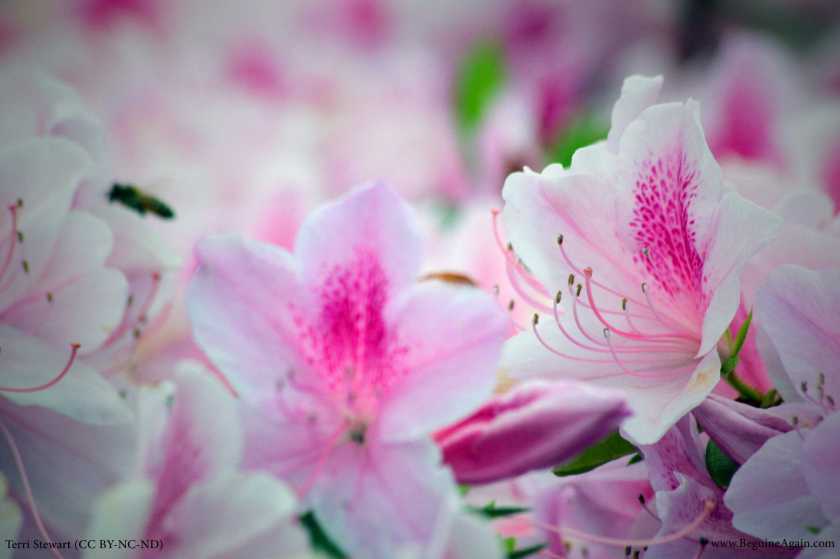
That is utterly delicious to me. I hope you enjoy the following haiku and perhaps, you will offer a poetic exploration of your own in the comments! I’d love to hear your thoughts.

the soul

peeking ’round corners

stretching frail tendrils upward

such a shy creature

flower
by Terri Stewart (CC BY-NC-ND)

Post, poem, and photo, Terri Stewart (c) 2014

terriTerri Stewart ~ a member of our Core Team,  comes from an eclectic background and considers herself to be grounded in contemplation and justice. She is the Director and Founder of the Youth Chaplaincy Coalition that serves youth affected by the justice system. As a graduate of Seattle University’s School of Theology and Ministry, she earned her Master’s of Divinity and a Post-Master’s Certificate in Spiritual Direction with honors and is a rare United Methodist student in the Jesuit Honor Society, Alpha Sigma Nu. She is a contributing author to the Abingdon Worship Annual.

Her online presence is “CloakedMonk.” This speaks to her grounding in contemplative arts (photography, mandala, poetry) and the need to live it out in the world. The cloak is the disguise of normalcy as she advocates for justice and peace. You can find her at www.cloakedmonk.com,www.twitter.com/cloakedmonk, and www.facebook.com/cloakedmonk.  To reach her for conversation, send a note to cloakedmonk@outlook.com.
Posted in Essay, Spiritual Practice, Terri Stewart

Sacred Space in Opposition

I have been at a conference all week where we have been discussing how to organize ourselves to create social change. One of the most fun exercises what a Bible study linking the Book of Esther from Hebrew scripture with organizing for social change.

In the story of Esther, there is no mention of the Divine Name or any prayers offered, instead, it is a primer for racism and overcoming broken political systems.

Plot summary:

King Ahasuerus wants his wife, Queen Vashti, to come and show off her beauty to a bunch of drunk men (including the King). She says, “No.” She is then banished because she is a bad example for all women and all women must “know their place.”

Then the King is on a hunt for another wife. Mordecai pimps out Esther and Esther is brought into the royal harem. Why? She is beautiful, but primarily because she found favor with the eunuchs and maid servants. And they taught her how to find favor with the king.

Haman, one of the king’s guys, gets all pissy about Mordecai not bowing to him and asks to write a law that would destroy the Jews. The King is then able to rubber stamp the law (he gives away his ring) while never getting his own hands dirty.

When the new law passes, the Jews and Mordecai where sack cloth and mourn. Esther hears about the situation from the Eunuchs and encourages Mordecai to wear normal clothing. Mordecai then has the Eunuchs relay to her the situation (she was definitely isolated).

Esther convinces the King that this is a bad situation and the injustice that would have wiped out the Jews is fixed.

Yay! Injustice is fixed!

So, we all face injustice in our context. It may be threats to peace, the justice system, economics, poverty, etc. But we all face it! And some are actively working to correct injustice–creating sacred, healing, wholly, holy, space. In organizing ourselves, the question becomes, can we name:

  • Who are the Kings?
  • Who is the Queen who will lay down their power in order to maintain a just world?
  • Who are the Mordecais? Those who would be persecuted?
  • Who are the Esthers? The ones who know the King and can be educated as to a new way of living justly?
  • And who are the maids and Eunuchs? The ones who are also persecuted and underprivileged? Who may have sympathy for the justice issue?

What is wonderful about this is that it allows us to think creatively rather than to think that those with power are the only ones who can cause change. In this story, everyone becomes a change agent! Change for a more just world is another way of creating sacred space.

So mote it be!

And now for some inspiration from slam poetry, “Addressing Food Inequality.”

Post, Terri Stewart (c) 2014

terriTerri Stewart ~ a member of our Core Team,  comes from an eclectic background and considers herself to be grounded in contemplation and justice. She is the Director and Founder of the Youth Chaplaincy Coalition that serves youth affected by the justice system. As a graduate of Seattle University’s School of Theology and Ministry, she earned her Master’s of Divinity and a Post-Master’s Certificate in Spiritual Direction with honors and is a rare United Methodist student in the Jesuit Honor Society, Alpha Sigma Nu. She is a contributing author to the Abingdon Worship Annual.

Her online presence is “CloakedMonk.” This speaks to her grounding in contemplative arts (photography, mandala, poetry) and the need to live it out in the world. The cloak is the disguise of normalcy as she advocates for justice and peace. You can find her at www.cloakedmonk.com,www.twitter.com/cloakedmonk, and www.facebook.com/cloakedmonk.  To reach her for conversation, send a note to cloakedmonk@outlook.com.


Posted in First Peoples, Joseph Hesch, poem, poetry, trees

Beyond the Pines

Once, a squirrel could travel from here
to the place the Kanienkehaka called
Beyond the Pines and never
touch the ground, not leave a track
for the People of the Flint to follow
like they stalked the white-tail deer.
From the River Muh-he-kun-ne-tuk
to Schau-naugh-ta-da the trace ran,
where I follow these tracks each day.

I see where the geese have penned
their cuneiform tales in the pond-side mud,
edited by the turtles’ tail-writ script.
I read the tracks of the students
on the running trail–the one
that runs for a time toward
that western place–like I’m one
with my Mohawk brothers,
trailing Englishmen from the Hudson’s shore
to where they’ll hew more and more pines
and tear down more of this
Haudenosaunee world.

Do their heels weigh heavier
in the dirt than their toes? Walking.
How deep? Carrying books.
Are their toes dug in, tossing behind
a spray of the history of their passing? Running.
Narrow feet? Girl. A pair side by side?
Someone stood to watch soccer practice.
Four feet, two narrow, two wide?
Perhaps a longer story than this moment.

Two squirrels cross my trail,
skittering across the ground
into their place there
behind that one lonely pine. I stopped
to parse their tiny prints, and
wonder about who will pause one day
to ponder all this jumble of tracks
I leave.

– Joseph Hesch

© 2014, poem and photograph (below), Joseph Hesch, All rights reserved

Hesch Profileproduct_thumbnail-3.phpJOSEPH HESCH (A Thing for Words) is a writer and poet from Albany, New York , an old friend of Bardo and a new core team member. Joe’s work is published in journals and anthologies coast-to-coast and worldwide. He posts poems and stories-in-progress on his blog, A Thing for Words.  An original staff member at dVerse Poets Pub website, Joe was named one of Writers Digest Editor Robert Lee Brewer’s “2011 Best Tweeps for Writers to Follow.” He is also a member of the Grass Roots Poetry Group and featured in their 2013 poetry anthology Petrichor Rising.

Posted in Essay, Poems/Poetry, Terri Stewart

Sacred Space in Music and the Next Generation (Cue Star Trek Theme Song)

I am bringing a piece that I wrote some time ago about music and children and words. It relates to the post from last week inspired by Dr. Cornell West and Rabbi Abraham Joshua Heschel. That focused on the pietic, the poetic, and the prophetic. This, inspired by my children, ties the three together for me.

I can almost hear everyone asking, “What do you mean?” Well, let me tell you! The pietic are those personal practices that bring greater spiritual freedom and spaciousness – music, prayer, walking – whatever floats your boat! Poetic is the words and the music that describe that inner spaciousness (quite literally what is below). And last, the prophetic, an outward movement of the inner spaciousness to bring greater freedom to the world. Here, quite literally, it is in my children as they are moving outward now bringing an inner spaciousness outward. This is what we do here.

In addition to the poem below, inspired by listening to my children get musical, I’ve linked in a Youtube recording from my son today. He was in the National Academy of Teachers of Singing (NATS) competition in Seattle today and placed second. He inspires me and in him and his friends, I see a generation coming of young people that continue to strive to bring an expansiveness to the cosmos that we have not felt or seen yet.

OK…the video is not necessary, but being the proud mama of this chick I have inflicted out into the world, I wanted to share! Thanks for your indulgence!

Love

by Terri Stewart, April 19, 2011
there is something

about that note
and the melody that
languidly curls in the air
a feathered piece of straw
catching your ear held
by the hands of mozart
and elvis and even
p.d.q. teasing
driftly softly down
blown by the soft
breeze of progeny
cascading joy rising up
like incense
holding the gift of
past, present, and future
the slightest brush of an
angel’s wing carrying
the melody onward

Terri Stewart ~ a member of our Core Team,  comes from an eclectic background and considers herself to be grounded in contemplation and justice. She is the Director and Founder of the Youth Chaplaincy Coalition that serves youth affected by the justice system. As a recent graduate of Seattle University’s School of Theology and Ministry, she earned her Master’s of Divinity and a Post-Master’s Certificate in Spiritual Direction with honors and is a rare United Methodist student in the Jesuit Honor Society, Alpha Sigma Nu. She is a contributing author to the Abingdon Worship Annual.

Her online presence is “CloakedMonk.” This speaks to her grounding in contemplative arts (photography, mandala, poetry) and the need to live it out in the world. The cloak is the disguise of normalcy as she advocates for justice and peace. You can find her at www.cloakedmonk.com,www.twitter.com/cloakedmonk, and www.facebook.com/cloakedmonk.  To reach her for conversation, send a note to cloakedmonk@outlook.com.
Posted in Christianity, General Interest, Spiritual Practice, Video

GET SERVICE, a message about compassion and understanding …


Courtesy of the Fellowship Bible Church of Little Rock, AR via friends Laurel D. and Brian B. Thank you!

Today is Ash Wednesday, the first day of the forty-day Lenten season which honors Christ’s contemplative forty-days in the desert. Whether or not you are Christian or even religious, this is a good time of year to step back,  take a breath and prepare for your personal spring and renewal.

Posted in Essay, Poems/Poetry, Spiritual Practice, Terri Stewart

Sacred Space and Anam Cara

The concept of Anam Cara is “soul friend” or the Celtic belief would be “soul bonding.”  John O’Donohue writes in Anam Cara: A Book of Celtic Wisdom, “If you send out goodness from yourself, or if you share that which is happy or good within you, it will all come back to you multiplied ten thousand times. In the kingdom of love there is no competition; there is no possessiveness or control. The more love you give away, the more love you will have.” 

Anam cara accepts you are you are. As a beautifully created creature of love. They see your inner light and mirror it back to you. According to John O’Donahue, “…You are joined in an ancient and eternal union with humanity that cuts across all barriers of time, convention, philosophy and definition. When you are blessed with an Anam Cara, the Irish believe, you have arrived at that most sacred place: home.”

My awakening today, is the awareness of the love that we I give and share with Anam Cara. I offer to you this poem and ask you, “Have you seen your Anam Cara? How would you describe Anam Cara?”

anam cara

i have been meaning

to sew that quilt

together. squares

sitting side-by-side

unconnected by

physical thread.

each one a perfect

gift of solitary beauty.

she sits

in pieces

waiting and

dare I say

taunts me to change

her separateness into a

cohesive creation sewing

warmth into each stitch

from rags to riches

so to speak

such lovely pieces

held together in my heart

anam cara

i know what the finished

piece

would be with each square

clinging tightly to one

another.

and she calls.

complete me.

intertwine our threads.

behold

each square a perfected

gift of beauty. together.

then i know

beyond what is seen

we are already stitched

together

photo by Martina Winkel cc licensed ( BY ) flickr
photo by Martina Winkel
cc licensed ( BY ) flickr

(c) 2014, Terri Stewart

REV. TERRI STEWART is The Bardo Group’s Sunday chaplain, senior content editor, and site co-administrator. She comes from an eclectic background and considers herself to be grounded in contemplation and justice. She is the Director and Founder of the Youth Chaplaincy Coalition that serves youth affected by the justice system. As a graduate of Seattle University’s School of Theology and Ministry, she earned her Master’s of Divinity and a Post-Master’s Certificate in Spiritual Direction.

Her online presence is “Cloaked Monk.” This speaks to her grounding in contemplative arts and the need to live it out in the world. The cloak is the disguise of normalcy as she advocates for justice and peace. You can find her at www.BeguineAgain.com ,www.twitter.com/cloakedmonk, and www.facebook.com/cloakedmonk.

Posted in Essay, General Interest, Spiritual Practice, Terri Stewart

Finding Sacred Space in the Story

Below is the beginning of a parable written by an unknown person. As an exercise of finding yourself and sacred space, please place yourself in the story from whatever perspective you feel speaks to you and finish the story! Are you a chicken? The eagle? The farmer? An unseen or unknown person? Let us know!

A long time ago in a remote valley, there lived a farmer. One day he got tired of the daily routine of running the farm and decided to climb the cliffs that brooded above the valley to see what lay beyond.

He climbed all day until he reached a ledge just below the top of the cliff; there, to his amazement was a nest, full of eggs.

Immediately he knew they were eagle’s eggs and, even though he knew it was profoundly un-ecological and almost certainly illegal, he carefully took one and stowed it in his pack; then seeing the sun was low in the sky, he realized it was too late in the day to make the top and slowly began to make his way down the cliff to his farm.

When he got home he put the egg in with the few chickens he kept in the yard. The mother hen was the proudest chicken you ever saw, sitting atop this magnificent egg; and the cockerel couldn’t have been prouder.

Sure enough, some weeks later, from the egg emerged a fine, healthy eglet. And as is in the gentle nature of chickens, they didn’t balk at the stranger in their midst and raised the majestic bird as one of their own.

So it was that the eagle grew up with its brother and sister chicks. It learned to do all the things chickens do: it clucked and cackled, scratching in the dirt for grits and worms, flapping its wings furiously,flying just a few feet in the air before crashing down to earth in a pile of dust and feathers.

It believed resolutely and absolutely it was a chicken.

Then, later in its life, the eagle, doing all the all the things chickens do – it clucked and cackled, scratching in the dirt for grits and worms, flapping its wings furiously,flying just a few feet in the air before crashing down to earth in a pile of dust and feathers – suddenly took flight and flew up into the nearest tree, high above his brother and sister chickens. And there he perched…

And now, you tell the rest of the story!

photo by Linda Tanner cc licensed (BY) flickr
photo by Linda Tanner
cc licensed (BY) flickr

(c) 2014, post, Terri Stewart

parable in its complete form found at http://www.spiritual-short-stories.com/spiritual-short-story-602-Chicken+and+the+Eagles.html

REV. TERRI STEWART is The Bardo Group’s Sunday chaplain, senior content editor, and site co-administrator. She comes from an eclectic background and considers herself to be grounded in contemplation and justice. She is the Director and Founder of the Youth Chaplaincy Coalition that serves youth affected by the justice system. As a graduate of Seattle University’s School of Theology and Ministry, she earned her Master’s of Divinity and a Post-Master’s Certificate in Spiritual Direction.

Her online presence is “Cloaked Monk.” This speaks to her grounding in contemplative arts and the need to live it out in the world. The cloak is the disguise of normalcy as she advocates for justice and peace. You can find her at www.BeguineAgain.com ,www.twitter.com/cloakedmonk, and www.facebook.com/cloakedmonk.

Posted in Essay, Spiritual Practice, Terri Stewart

Paradise Realized-Sacred Space in the Cosmos

flickr photo by Evan Leeson cc licensed (BY NC SA)
flickr photo by Evan Leeson
cc licensed (BY NC SA)

As I pondered “Bloggers in Planet Love” for Valentine’s Day, I thought that there is something to the visions of paradise that seem to permeate religious cultures. I never see paradise populated by buildings towering into the sky! There are always elements of lush green lands, towering trees, and people living as one with nature. That seems to be sacred space.

And sacred space is realized in different cultures almost always in natural spaces. I remember the journeys of Moses up the mountain top, zen mountain monasteries, the sacred Heart Butte of the Blackfeet…and more down to earth, the ordinary everydayness of working in a beautiful garden box. Connecting with the earth and with ancient rhythms.

Just a moment’s digression. Connecting with the earth. I want to change that to cosmos. I am thinking of the ancient Greek word kosmos. Kosmos is typically translated from ancient Greek to the word world or earth. But it really is equivalent to something like, “all the known existence.” Our cosmos is ever expanding. Our understanding of creation is also. Expanding in energy, connectivity, and creativity.

That is Paradise.

I’d like to take a moment to do a short meditation on realizing paradise and loving the cosmos. First, sit down, put your feet flat on the floor or ground. Let your arms rest comfortable. Let your gaze rest gently on the screen. Slow your breathing. Shake your body out, roll your head, roll your shoulders, settle into calmness.

Let us begin.

Breathe in, saying, “Earth”
Breathe out, saying, “Love”
Breathe in, saying, “Cosmos”
Breathe out, saying, “Love”
Breathe in, saying, “Earth”
Breathe out, saying, “Love”

Wiggle your toes. Scooch your feet into the floor a little. Feel the textures. Describe them. It is part of creation. Of paradise. Let your feet feel not only the floor and its coverings, but send your energy downward. Connect to the earth that supports you and all things.

Breathe in, saying, “Hello”
Breathe out, saying “Love”

As your energy goes downward through your feet to the floor, to the earth, ponder what is missing? Can you feel the absence in creation of a necessary energy? Is there something crying out for your attention? Ask the earth, the cosmos, what attention it wants from you.

Breathe in, saying, “What is”
Breathe out, saying, “Your desire?”

Resting your hands lightly on your hips, keep breathing, focusing on what you are hearing as an answer, through your feet. What is reverberating through your legs, into the root of your spine? This is the location of security, grounding, and survival. Keep asking the earth…

Breathe in, saying, “What is”
Breathe out, saying, “Your desire?”

Resting your hands lightly on your stomach, with your connection to the earth firm through your feet, let your attention travel from the root of your spine upward to the area under your bellybutton.  This is the location of sexuality, creativity, and relationships. How is this part of your body reacting to this connection and question? What are you feeling?

Keep asking the earth…

Breathe in, saying, “What is”
Breathe out, saying, “Your desire?”

Resting your hands lightly on your solar plexus or diaphragm, with your feet firmly grounded, feeling the energy reverberating upwards, let your attention travel to the solar plexus. How is this part of your body reacting to this connection and question? Here we find energy, vitality, and personal authority. What are you feeling?

Keep asking the earth…

Breathe in, saying, “What is”
Breathe out, saying, “Your desire?”

Resting your hands lightly on your heart, checking in with your feet, your naval, your solar plexus, move onward to your heart–the seat of balance, love and connection. How is your heart reacting to this journey? Is energy gathering here? Or is your heart at peace?

Keep asking the earth…

Breathe in, saying, “What is”
Breathe out, saying, “Your desire?”

Resting your hands lightly on your throat, moving onward to your throat, still holding a conscious connection to the earth through your feet and the root of your spine, do you feel anything? Sometimes, our voice feels silenced or choked. Other times, we want to sing out of joy! Can you see both? The beauty of the cosmos calling out in song? And the imbalance of the earth? Is your voice choked and suffering? Or is it singing and witnessing? The throat is the seat of communication and healing. What energy do you feel?

Keep asking the earth…

Breathe in, saying, “What is”
Breathe out, saying, “Your desire?”

Resting your hands lightly on your forehead, check in with the earth at your feet, wiggle your toes just a moment, see that everything is doing fine, move upward to just above your eyes. Here is the seat of your intuition and understanding. You have been listening to the earth. Asking, “What is your desire?” Do you sense an answer? Is the earth noisy today? Or quiet? What energy do you feel?

Keep asking the earth…

Breathe in, saying, “What is”
Breathe out, saying, “Your desire?”

Let your hands almost form over your head as if you are holding a hat in place, staying fully connected through your toes all the way to just above your head, check in with your whole self, with the whole earth, and ask if it is okay to move onward. Focus your thoughts into the space above your head. Here, is transcendental connection to all that is. What is it that you desire? What is it that the cosmos is desiring of you? Do you hear or feel a call?

Breathe in, saying, “Earth”
Breathe out, saying, “Love”
Breathe in, saying, “Cosmos”
Breathe out, saying, “Love”
Breathe in, saying, “Earth”
Breathe out, saying, “Love”

Shake your hands out, letting them drop to your sides. Move your attention from your crown, thanking it for the wisdom it has provided you this down. Move downwards, one by one, thanking your body for listening to you and to the earth.

Breath in, saying, “Dear Eyes”
Breath out, saying, “Thank you for understanding.”

Breath in, saying, “Dear Throat”
Breath out, saying, “Thank you for telling.”

Breath in, saying, “Dear Heart”
Breath out, saying, “Thank you for compassion.”

Breath in, saying, “Dear Diaphragm”
Breath out, saying, “Thank you for desire.”

Breath in, saying, “Dear Stomach”
Breath out, saying, “Thank you for creative answers.”

Breath in, saying, “Dear Spine”
Breath out, saying, “Thank you support.”

Let your attention travel back to your toes, concentrating on a full connection to the earth. Look to the earth and to the cosmos. Bow inwardly, inclining your head and your attention, wishing the earth, “Peace be with you.”

And peace be with you.

Shalom and amen,

~Terri

(c) 2014, post, Terri Stewart

REV. TERRI STEWART is The Bardo Group’s Sunday chaplain, senior content editor, and site co-administrator. She comes from an eclectic background and considers herself to be grounded in contemplation and justice. She is the Director and Founder of the Youth Chaplaincy Coalition that serves youth affected by the justice system. As a graduate of Seattle University’s School of Theology and Ministry, she earned her Master’s of Divinity and a Post-Master’s Certificate in Spiritual Direction.

Her online presence is “Cloaked Monk.” This speaks to her grounding in contemplative arts and the need to live it out in the world. The cloak is the disguise of normalcy as she advocates for justice and peace. You can find her at www.beguineagain.com ,www.twitter.com/cloakedmonk, and www.facebook.com/cloakedmonk.

Posted in Essay, Spiritual Practice, Terri Stewart

Inviting Sacred Space Into our Intentions

flickr photo by B Duss  cc licensed ( BY NC )
flickr photo by B Duss
cc licensed ( BY NC )

There is a lot said now about doing things “with intention.” Deepak Chopra says that “intention is the starting point of every spiritual journey.” But sometimes I think we take the concept of intention and confuse it with goals. Setting an intention, “live more compassionately,” becomes conflated with the actions that it takes to reach the goal of compassion. What is a more compassionate life? A life that feeds the hungry? Houses the homeless? Goes into places of deep discomfort? Maybe. It is here that our intention becomes about action or about doing.

But what if it is not about what we do to become a compassionate person, but about inviting compassion to fully invade our being. Dr. Dyer says that this is the process of intention is to allow freedom to enter your consciousness and letting go, becoming free. It separates from what you want and becomes what you are.

“You have to just be. You have to let go. You have to allow. You have to be free and make this your consciousness.” He continues, “Basically, what you would see is a frequency (of energy) that manifests itself through the process of giving, of allowing, of offering and of serving. It asks nothing back.”

Dr. Dyer illustrates the concept of giving without expectations by quoting the great poet Hafiz: “Even after all this time, the sun never says to the earth ‘you owe me.’ Just think of what a love like that can do. It lights up the whole world.”

It seems it is a process of claiming an intention, inviting it in, and then releasing it. Not that we should not be doing, but our aim is not in the doing, it is in the being.

My friend, Deborah Globus at LaPadre recently wrote a short ritual for intention setting. I’d like to share it here so you can, if you like, invite sacred space into your intentions … or … release your intentions to the sacred.

What You’ll Need:

  • Candles (tapers) and candle holders
  • Matches/lighter
  • Carving knife (pocket knives, steak knives and paring knives all work equally well.)
  • Sharpies markers for decoration (optional)

What You’ll Do:

Meditate on what you’d like to bring in

Choose 1-3 words or symbols to represent what you’d like to bring in

Carefully carve into the candle (or write it on with Sharpies or paint pens.)

Light your candle. As the wax melts your intention is released to the Universe.

Resources:

Monthly Newsletter from LaPadre http://archive.constantcontact.com/fs139/1101784704875/archive/1116388396325.html

“The Power of Intention” http://www.drwaynedyer.com/articles/the-power-of-intention

“The Power of Intention” http://archive.chopra.com/namaste/intention

Youtube Time Lapse of a Candle Melting http://www.youtube.com/watch?v=edtoA4vKMyE

(c) 2014, post, Terri Stewart
terri

REV. TERRI STEWART is The Bardo Group’s Sunday chaplain, senior content editor, and site co-administrator. She comes from an eclectic background and considers herself to be grounded in contemplation and justice. She is the Director and Founder of the Youth Chaplaincy Coalition that serves youth affected by the justice system. As a graduate of Seattle University’s School of Theology and Ministry, she earned her Master’s of Divinity and a Post-Master’s Certificate in Spiritual Direction. She is a contributing author to the Abingdon Worship Annual. (The 2014 issue just released!)

Her online presence is “Cloaked Monk.” This speaks to her grounding in contemplative arts and the need to live it out in the world. The cloak is the disguise of normalcy as she advocates for justice and peace. You can find her at www.beguineagain.com ,www.twitter.com/cloakedmonk, and www.facebook.com/cloakedmonk.  To reach her for conversation, send a note to cloakedmonk@outlook.com

Posted in Essay, Spiritual Practice, Terri Stewart

Finding Sacred Space in Mandala

I love the idea of Mandalas. Mandala means sacred circle in Sanskrit. The idea of sacred circles permeates the spiritual underpinnings of many traditions. The circle of Native American tradition where a sacred circle is danced, not to be broken. The circles of trinity in Christian tradition. The Mandala of Hindi and Buddhist tradition. The circular labyrinth that dates back up to 25,000 years. Walking a circle, dancing a circle, drumming a circle, drawing a circle, even singing a circle … “make the circle wide, make it wider still” … creates a moment of sacred space meeting the co-creative spirit of human and transcendence.

That is beauty.

Lately, I have been thinking about mandalas more than normal because I am co-organizing a mandala workshop called, “Finding Your Spiritual Identity with heART: A Mandala Workshop.” Julia Weaver, a mandala practitioner, will be coming to town and doing two workshops for me- one with the girls in detention (how awesome is that?!) and one for the people of Seattle.  I love that she is being so flexible in offering her gifts and talents.

That is also beauty.

So today, to create our sacred space, I’d like to do a mandala meditation. I am using one of my own images and some meditation ideas that I have found at jeweledlotus.com.

Take a moment and center yourself. Imagine a circle of protection, love, compassion, and mercy surrounding you. Let your gaze rest softly on the computer screen. Rest your feet comfortably on the ground if possible. Simply become as comfortable in your own spot as you can become. As Julia says (and which I will quote in the video!),

“As you gaze at a mandala,
breathe slowly, and relax your eyes.
See with your heart and listen for guidance.
Gently open to your own luminous Divinity.”

Shalom and Amen,

Terri

(c) 2014, post, Terri Stewart

terri

REV. TERRI STEWART is Into the Bardo’s  Sunday chaplain, senior content editor, and site co-administrator. She comes from an eclectic background and considers herself to be grounded in contemplation and justice. She is the Director and Founder of the Youth Chaplaincy Coalition that serves youth affected by the justice system. As a graduate of Seattle University’s School of Theology and Ministry, she earned her Master’s of Divinity and a Post-Master’s Certificate in Spiritual Direction. She is a contributing author to the Abingdon Worship Annual. (The 2014 issue just released!)

Her online presence is “Cloaked Monk.” This speaks to her grounding in contemplative arts and the need to live it out in the world. The cloak is the disguise of normalcy as she advocates for justice and peace. You can find her at www.beguineagain.com ,www.twitter.com/cloakedmonk, and www.facebook.com/cloakedmonk.  To reach her for conversation, send a note to cloakedmonk@outlook.com

Posted in Joseph Hesch, poem, Poems/Poetry, poetry

Rapture in Rivertown

Discarded tree 1

With January’s ice-scrim mist,
this riverside neighborhood
turns back to photo-proof
black, white and gauzy gray.
Holiday colors have faded
like mid-September memories.

Tinder-dry once-evergreens,
erstwhile harlequin window beacons
for passing ice-breakers,
now lie exhausted on streetside,
snow-dusted Christmas gravestones,
waiting for the herald crash and call
of the trash collecting Rapture.

And ice-darkened perennial trees,
stand sentinel nearby
at snow-footed attention,
lean black cemetery guardsmen,
their uniforms on backorder
until a too faraway Spring.

This poem came from my walks and runs along the Hudson shore over the past 20 years. During the holidays, you could see the gumdrop-lit Christmas trees in windows over in Rensselaer. By early January, they were gone, the snow had come and the ice had choked the river. “Rapture in Rivertown” is what I recall and imagine of those days.

– Joseph Hesch

© 2014, poem and photograph, Joseph Hesch, All rights reserved

Hesch Profileproduct_thumbnail-3.phpJOSEPH HESCH (A Thing for Words) is a writer and poet from Albany, New York , an old friend of Bardo and a new core team member. Joe’s work is published in journals and anthologies coast-to-coast and worldwide. He posts poems and stories-in-progress on his blog, A Thing for Words.  An original staff member at dVerse Poets Pub website, Joe was named one of Writers Digest Editor Robert Lee Brewer’s “2011 Best Tweeps for Writers to Follow.” He is also a member of the Grass Roots Poetry Group and featured in their 2013 poetry anthology Petrichor Rising.

Posted in Photography/Photographer, Spiritual Practice, Terri Stewart

Sacred Stillness

I am working valiantly on ordination papers this week. So I am appropriately resurrecting a post from http://www.BeguineAgain.com as our step into sacred space. And yes, I am ordained, but I am a newbie, so for the first two years we have to submit more papers.

Join me in listening to the beautiful chant by Velma Frye. It is a call to stillness. Rest. Quiet. And a reminder that stillness often is associated with darkness. Imagine the seeds germinating in the darkest earth. Seemingly still, but so much creative energy stirring up unbeknownst to observation! But the stillness is what nurtures it. The darkness. The coldness. Be still.

Be Still
by Velma Frye

Be still.
Be still.
Be still.
Go deep
into
the silence
of the night
and robe yourself
in darkness.

See with the heart
into the dark of the night.
So silent the night.
So dark the night.

Be still.
Be still.
Be still.
Be still.
Be still.
Be still.

What will you do to create stillness in your life?

How can you use darkness to create wholeness?

quiet

(c) 2014, post, Terri Stewart, CC license BY-NC
(c) 2013, lyrics and video, Velma Frye
(c) 2013, photo, Terri Stewart, CC license BY-NC-ND

..

REV. TERRI STEWART is Into the Bardo’s  Sunday chaplain, senior content editor, and site co-administrator. She comes from an eclectic background and considers herself to be grounded in contemplation and justice. She is the Director and Founder of the Youth Chaplaincy Coalition that serves youth affected by the justice system. As a graduate of Seattle University’s School of Theology and Ministry, she earned her Master’s of Divinity and a Post-Master’s Certificate in Spiritual Direction.

Her online presence is “Cloaked Monk.” This speaks to her grounding in contemplative arts and the need to live it out in the world. The cloak is the disguise of normalcy as she advocates for justice and peace. You can find her at www.beguineagain.com ,www.twitter.com/cloakedmonk, and www.facebook.com/cloakedmonk.  To reach her for conversation, send a note to cloakedmonk@outlook.com