Posted in Disability, Essay, General Interest, memoir, Mental Health, Michael Watson

The Olympics, Polio, and the Medicine Wheel, Part One

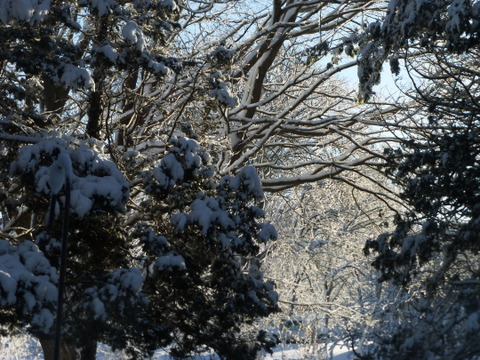
Snowy-MorningEditor’s Note: This is the first of a two-part piece on Perfectionism originally posted on Dreaming the World. Part II will post here tomorrow.

I am an elder, and as such I am given the task of teaching and supporting the young. On the Medicine Wheel of this lifetime I am in the Northwest, the place of honoring the challenges of my life, understanding them as best as I am able, and sharing what I have learned with others. Perhaps you will share your thoughts about the experiences I share below; I would greatly value that.

We, along with many others, spent a good deal of time during the past two weeks watching the Olympics. Over time we noticed, especially from NBC’s coverage, that the commentators seem to believe winning and perfection were all important. This is a sad thing. One does not have to watch much before one becomes aware the announcers are ceaselessly pointing out errors and failures. Rather than empathy for the competitors, one is barraged with demands for perfection and minute details about failure to achieve such.  There is very little celebration of the athletes who fail to meet the announcers’ or judges’ criteria.

This hits home on two fronts. The first is cultural. I was raised to appreciate the efforts of all. Winning is fun, but should not shame others. Nor should anyone be left behind after the games are over. Further, perfection was considered suspect. One was advised to build imperfection into one’s art and welcome it in one’s life. After all, we are not the Creator although we are aspects of His/Her creation. Only the Creator can be perfect, and it is likely even S/He makes mistakes; as we are reflective of the Creator this suggests that even mistakes can be good and holy. The unbridled pursuit of perfection endangers the individual and the culture, the community and the ecosystem.

The second part is I am a survivor of Bulbar Polio. My phsysiatrist says I am “a walking quad”; rather than disparaging, this is a simple statement of truth. I have severe neurological injuries; Polio destroyed motor neurons all over my body. My arms and hands have considerably diminished capacity; my legs and feet lack strength and mobility; breathing can be a challenge. I am not perfect by the dominant culture’s standards.

Add to this my Native American heritage and the soup becomes thick indeed. I once heard a man, who understandably thought he was with other Europeans, say something like,  “There is nothing more pathetic than a disabled Indian.”  What are we to do with that? Indeed, what are we to do with NBC’s virtual silence on the topic of the Para-Olympics?

Herein lies the difficulty. One one hand I was encouraged to accept  and honor imperfections. On the other, as a Polio survivor I was taught to do my level best to pass as normal, to overcome limitations, and to forget my illness and its  aftermath. Additionally, as a child in a Native family that was actively passing, I was taught to be invisible, a lesson that surely applied to Polio as well.

It is a profound challenge to resist the limiting messages of our families and the dehumanizing ones of the dominant culture. I have done my best, yet I have also spent much of my life seeking to achieve others’ views of perfection, even though not even normalcy was not an option.This has been painful.

I don’t know whether you have ever thought about the Wounded Healer.  In Traditional cultures ill youngsters are often expected, should they recover, to become healers. I use the term “recovery” loosely. Youngsters who face and survive catastrophic illness may not have the same physical capacities as their normative friends. Yet their illness may also give them abilities and insights not readily available to others. When the child is ill the healers do their best to aid. They also seek to discern the nature of the illness; often such illness are understood to be calls from the spirits, initiations into the realm of healers. When there is a spirit call, training in the healing arts accompanies recovery. The illness frequently leaves a footprint in the life and work of the survivor; he or she becomes a wounded healer, knowledgeable about many of the territories and challenges that accompany illness.

This is a different model than the academic learning focus of the West. Of course, the two paths are not mutually exclusive. Indeed, they may intersect, even overlap at times. Both address the needs of the body. Some Western trained healers have adopted the Indigenous understanding that the soul and psyche must also be attended to.  (Milton Erickson, although not to my knowledge Indian, comes to mind as someone who walked both roads well.)

I have come to this point on the Medicine Wheel by living my life from within this severely injured body. This is a sharp contrast to the physically perfection of elite Olympic athletes, or the health and wealth gurus we see on PBS and on innumerable infomercials. The television sages convey the message to us that illness, poverty, loneliness, and all other forms of suffering are moral failures. They do not speak this directly, rather they hold up their carefully managed perfection as a mirror to our human frailties. They offer advice, even salvation; for a fee we can be just like them. But I, and many others, cannot.  The very lifestyles they espouse harm us, and endanger our precious planetary ecosystem and all that lives therein. Where, I wonder is their wisdom and compassion?

We approach the Spring, the East in the Abenaki view of the Medicine Wheel, the place of rebirth and awakening. I am curious how my changing understanding of this beloved, traumatized body will blossom in the coming year.  I wonder whether our culture can set aside the deeply held values of independence, competition, and perfectionism that shaped the  our country (the very ones espoused by those television commentators). Can we own our imperfections, and acknowledge the harm we have inflicted on ourselves and so many others, inside and outside our country? Can we embrace those who suffer illness, poverty, displacement, abuse, or isolation?

As we follow the journey of the sun into the East, we are invited to begin again, to open our eyes and practice compassion and understanding. May we  find the courage to do so.

– Michael Watson, Ph.D.

© 2014, essay and photographs (includes the one below), Michael Watson, All rights reserved
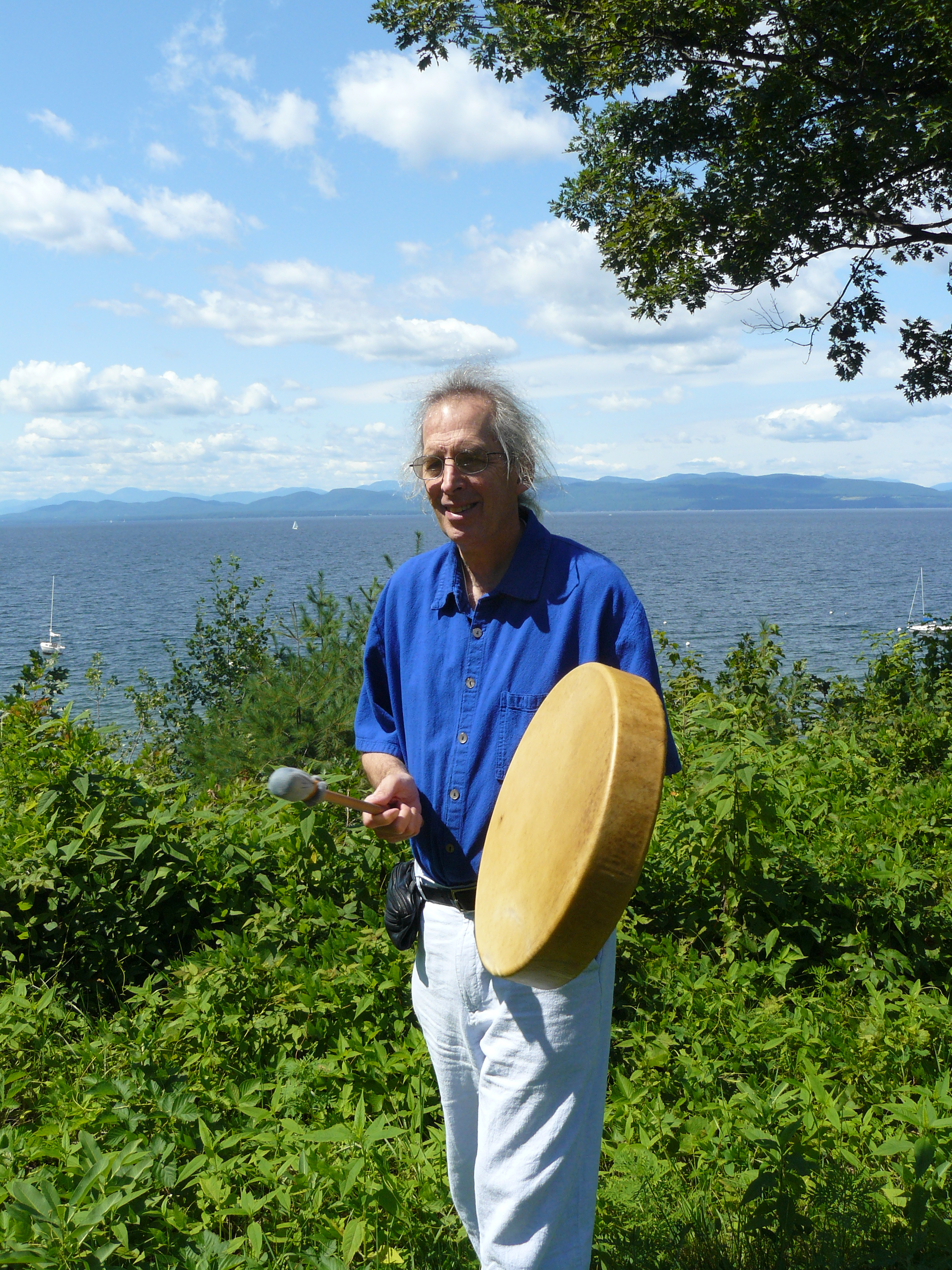
michael drumMICHAEL WATSON, M.A., Ph.D., LCMHC (Dreaming the World) ~ is a contributing editor to Into the Bardo, an essayist and a practitioner of the Shamanic arts, psychotherapist, educator and artist of Native American and European descent. He lives and works in Burlington, Vermont, where he teaches in undergraduate and graduate programs at Burlington College,. He was once Dean of Students there. Recently Michael has been teaching in India and Hong Kong. His experiences are documented on his blog. In childhood he had polio, an event that taught him much about challenge, struggle, isolation, and healing.

Posted in Corina L. Ravenscraft, General Interest, Mental Health

National Shut-In Visitation Day

February is such a long, dreary month, don’t you think? It has grey skies and brown landscapes, cold and wet outside, seemingly endless. Many folks are getting “Spring Fever” already, so tired of being cooped up inside with nothing to do.

Image borrowed from http://www.aclutteredmind.org/the-blogging-blahs/

I was looking for a way to make a post for February that didn’t have anything to do with Valentine’s Day. It seems like when the middle of January hits, it becomes the Hallmark season for hearts and candy and flowers, etc. I have nothing against Love, per se, I just wish it weren’t so commercialized, is all.

Image borrowed from http://www.treehugger.com/culture/be-my-anti-valentine.html

Anyway, I did some digging, and I discovered that there is a holiday in February that probably not many people know about: February 11th is “National Shut-In Visitation Day”. 🙂 I rather like that, because it shows the true spirit of “love” when people can take the time out of their busy lives to spend an hour or two with someone who never or hardly ever gets to go outside and enjoy so many of the things that a lot of us take for granted.

Image borrowed from http://weighing-success.blogspot.com/2013/02/february-11-national-shut-in-visitation.html

What if you couldn’t just go outside and take a walk when you wanted? Or what if you couldn’t just jump in your car and drive to the store when you needed? For thousands of people, this is the case. They may be bound to a wheel-chair. They may be in a nursing home or place where they are not allowed to just “get up and go”. They may be elderly, or sick, or blind, too young, too old, or a hundred other things that make them a “shut-in”.

The true spirit of LOVE, in my mind, is the one that connects ALL of us. It’s the one that reaches out with compassion to say, “I’m here. I care.” Even when…no, make that especially when…it’s to a stranger. So perhaps if you have an hour or so to spare, you could visit a nursing home, a children’s hospital, or someone you may even know personally who isn’t able to get out and enjoy life the way you do. Your visit might very well be the only bright spot in their day! 🙂 Wouldn’t it be wonderful to bring some happiness and cheer, some sunshine to someone who would really appreciate it? I guarantee you that if you do, you will BOTH be much better for it!

And maybe next year when February rolls around again, you’ll remember how nice it was to celebrate “National Shut-In Visitation Day”. Or heck, who says you have to wait until February? 😉

© 2014, essay, Corina Ravenscraft, illustration, Ursula Vernon All rights reserved

Editor’s note: This was supposed to post on February 11, which is National Shut-in Visitation Day. We apologize for the delay. It was the editor’s bad, not the writer’s.  

effecd1bf289d498b5944e37d8f4ee6fAbout dragonkatet Regarding the blog name, Dragon’s Dreams ~ The name comes from my love-affairs with both Dragons and Dreams (capital Ds). It’s another extension of who I am, a facet for expression; a place and way to reach other like-minded, creative individuals. I post a lot of poetry and images that fascinate or move me, because that’s my favorite way to view the world. I post about things important to me and the world in which we live, try to champion extra important political, societal and environmental issues, etc. Sometimes I wax philosophical, because it’s also a place where I always seem to learn about myself, too, by interacting with some of the brightest minds, souls and hearts out there. It’s all about ‘connection(s)’ and I don’t mean “net-working” with people for personal gain, but rather, the expansion of the 4 L’s: Light, Love, Laughter, Learning.

Posted in Naomi Baltuck, Peace & Justice, Photo Essay, Photography/Photographer

Black and White (or not)

A black and white photo is light and dark, its sharp contrasts easy on the eye.

Perhaps black and white is easier on the mind as well.  No difficult decisions, no wavering, no questioning right from wrong.  But real life is in color, with many subtle hues and shades.  Condemned prisoners who crossed over The Bridge of Sighs in Venice got one last peek at their beloved city.  Did they see their world in terms of black and white, or in color?  Perhaps one’s perception depended upon whether one was looking in or out, whether one was coming or going.

It is easy to cast judgements, until you have walked a mile in another person’s shoes, looked into her eyes, heard his story.  The world is not black and white.  It is the color of flesh and blood, with many gray areas.  What is the color of a human tear?

All images and words by Naomi Baltuck, copyright 2012

Note: For another facet of this topic,  check out this link by Carbon Leaf, The War Was in Color, and my post Remembering Uncle Lewis.

NaomiPHOTO1-300ppi51kAqFGEesL._SY300_NAOMI BALTUCK ~ is a Contributing Editor and Resident Storyteller here410xuqmD74L._SY300_ at Bardo. She is a world-traveler and an award-winning writer, photographer, and story-teller whose works of fiction and nonfiction are available through Amazon HERE. Naomi presents her wonderful photo-stories – always interesting and rich with meaning and humor – at Writing Between the Lines, Life from the Writer’s POV. She also conducts workshops such as Peace Porridge (multicultural stories to promote cooperation, goodwill, and peaceful coexistence), Whispers in the Graveyard (a spellbinding array of haunting and mysterious stories), Tandem Tales, Traveling Light Around the World, and others. For more on her programs visit Naomi Baltuck.com

Posted in Naomi Baltuck, Story Telling, Photo Story

Black and White (or Not)

A black and white photo is light and dark, its sharp contrasts easy on the eye.

Perhaps black and white is easier on the mind as well.  No difficult decisions, no wavering, no questioning right from wrong.  But real life is in color, with many subtle hues and shades.  Condemned prisoners who crossed over The Bridge of Sighs in Venice got one last peek at their beloved city.  Did they see their world in terms of black and white, or in color?  Perhaps one’s perception depended upon whether one was looking in or out, whether one was coming or going.

It is easy to cast judgements, until you have walked a mile in another person’s shoes, looked into her eyes, heard his story.  The world is not black and white.  It is the color of flesh and blood, with many gray areas.  What is the color of a human tear?

All images and words by Naomi Baltuck, copyright 2012

For another facet of this topic,  check out this link by Carbon Leaf, The War Was in Color, and my post Remembering Uncle Lewis.

– Naomi Baltuck

NaomiPHOTO1-300ppiNAOMI BALTUCK ~ is a Contributing Editor and Resident Storyteller here at Bardo. She is a world-traveler and an award-winning writer, photographer, and story-teller whose works of fiction and nonfiction are available through Amazon HERE. Naomi presents her wonderful photo-stories – always interesting and rich with meaning and humor – at Writing Between the Lines, Life from the Writer’s POV. She also conducts workshops such as Peace Porridge (multicultural stories to promote cooperation, goodwill, and peaceful coexistence), Whispers in the Graveyard (a spellbinding array of haunting and mysterious stories), Tandem Tales, Traveling Light Around the World, and others. For more on her programs visit Naomi Baltuck.com

Posted in Uncategorized

Gil Fronsdale on Empathy

This Sunday we bring you a dharma talk by Gil Fronsdal. Sunday Chaplain, Terri Stewart (ClockedMonk) is on vacation.

Gil_FronsdalGil Fronsdale is a Buddhist who has practiced Soto Zen and Vipassana since 1975, and is currently a Buddhist teacher who lives in the San Francisco Bay Area. Gil was trained as a Vipassana teacher by Jack Kornfield and is part of the Vipassana teachers’ collective at Spirit Rock Meditation Center. He was ordained as a Soto Zen priest at the San Francisco Zen Center in 1982 and was a Theravada monk in Burma in 1985. In 1995 he received Dharma transmission from Mel Weitsman, the abbot of the Berkeley Zen Center.

He is the guiding teacher of the Insight Meditation Center (IMC) of Redwood City, California. He has a PhD inBuddhist Studies from Stanford University. His many dharma talks available online contain basic information on meditation and Buddhism, as well as subtle concepts of Buddhism explained at the level of the lay person.” Wikipedia

Video uploaded to YouTube by insightmed.
Photo credit ~ Insight Meditation Center, Creative Commons Attribution-NonCommercial-No Deriv 3.0 Unported

Posted in Essay, Guest Writer

THE RATE RACE

kgrhqvk0e1np4un-bqbsbibsc60_35

THE RAT RACE

by

J.D. Gallagar

In 2011, researchers at the University of Chicago conducted a simple experiment to ascertain whether a rat would release another rat from a cage without being given a reward. The answer was yes. After several sessions, the rats learned intentionally and quickly to open the restrainer and release the caged rats. The rats also repeated the behaviour even when they were denied the reward of reunion. Even more astonishing, when the rats were presented with two cages, one containing a rat, the other chocolate, they chose to open both cages and “typically shared the chocolate”.

For the researchers, the conclusion was inescapable: the rats were displaying empathy. Announcing the results in Science the lead researcher, Peggy Mason, explained: “There is nothing in it except whatever feeling they get from helping another individual.”

This is the opening of an article I was reading recently,(read it HERE if you like) it was about Barack Obama, Republicans, gun control, rich people and poor people. I don’t really want to go into the whole political aspect of it. Everyone to their own. Personally I believe all sides of politics, Left or Right, Independent or Green will screw us all over without the slightest hesitation. But I am a cynic.

But what I found interesting about this is not the experiment but the subjects. Rats. How many times have we heard the term Rat Race or the expression: even if you win the race you are still a rat? Quite a lot I bet. Buy why rats? Is it this perception that they are lowly and dirty, poisonous, dangerous. Even in school (I don’t know about other places but here in Ireland) if someone called you a rat it was the worst insult you could receive, it meant you told on someone to a teacher, you ratted on them.

You squealed was another popular expression in the schoolyard, again it implied the same thing and again conjured up the image of the  rat.  A coward. The lowest of the low.

So the experiment was interesting in that it showed rats in a better light, and yet how strange it is that when rats help each other for little or no reward we call it empathy and when humans do it we call it socialism or communism and it is frowned upon, socialism is one of the worst insults you can throw at a politician in the Western world, it implies weakness.

Funny old world.

© 2013, illustrations and essay, J.D. Gallager, All rights reserved
Published here with the author’s permission

010_the_embrace_hr-copy-2J.D. Gallager is a: “Writer. Avid reader. Type 1 diabetic. Irish” and “A struggling author … struggling to convince people he is an author.” His blog is HERE  and his Amazon author’s page is HERE. Mr. Gallager writes fiction for adults and young adults. (Book cover art is property of the author.)