Posted in Charles W Martin, Poems/Poetry

the quilt…

the quilt

today
was quite warm
so i
was wondering
as i approached
the front porch
why aunt bea
was sitting
with a quilt
on her lap
then i noticed
she was mending it
and
although
i knew better
i still had to ask
why
aunt bea
said
this quilt
was hand sown
by my mother
and
given to me
on the day
i was married
its tight seams
were meant
to last a lifetime
though few do
its
patchwork patterns
of discarded cloth
are like
life’s broken dreams
and
fragmented moments
of joy
and
pain
all woven
into something new
if you look
at each part
separately
there is nothing
special
about them
but
when you
combine them
and
truly see
the full pattern
the beauty of life
and
the reasons for
holding on to it
become
quite clear

.
678ad505453d5a3ff2fcb744f13dedc7-1product_thumbnail.php41V9d9sj5nL._SY344_PJlook-inside-v2,TopRight,1,0_SH20_BO1,204,203,200_CHARLES W. MARTIN (Reading Between the Minds) — earned his Ph.D. in Speech and Language Pathology with an emphasis in statistics.  Throughout Charlie’s career, he maintained a devotion to the arts (literature/poetry, the theater, music and photography).  Since his retirement in 2010, he has turned his full attention to poetry and photography. He publishes a poem and a photographic art piece each day at Read Between the Minds, Poetry, Photograph and Random Thoughts of Life. He is noted as a poet of social conscience. Charlie has been blogging since January 31, 2010. He has self-published a book of poetry entitled The Hawk Chronicles  and will soon publish another book called A Bea in Your Bonnet: First Sting, featuring the renown Aunt Bea. In The Hawk Chronicles, Charlie provides a personification of his resident hawk with poems and photos taken over a two-year period. Charlie’s lastest book, When Spirits Touch, Dual Poetry, a collaboration with River Urke, is available through Amazon now.

Posted in Essay, Spiritual Practice, Terri Stewart

Finding the Sacred in Impermanence

Today I have been thinking about the beauty of impermanence. These thoughts were inspired by an artwork installation I saw recently called Shimmering Tree. Shimmering Tree is a projection of a digital tree onto a huge wall in a gallery. The tree is shimmery, animated, and changes seasons. But it is digital! I wondered about this digital artwork media installment sitting next to traditional portraiture or other more concrete forms of art. Shimmering Tree is art from digital artist Jennifer Steinkamp. An earlier piece of hers is Dervish:

It is a fascinating thing. Steinkamp’s work may be a valuable lesson to not become too attached to a physical manifestation and to embrace the beauty of what is.The inherent contradiction is that this temporary art is captured forever kn a digital form!

I think there may be a deeper spiritual practice lurking in the embrace of impermanence. This is more than recognizing that things change-it is a deep-seated gratitude for impermanence. A recognition of the beauty inherent in change, impermanence, evolution.

I wonder, what have I been holding onto that I need to let go of? Usually those things are behavioral for me. But it could be something else. Shoes. Books. Things. Sometimes I get this fleeting impression of impermanence when I wish I had my camera with me to capture a particularly beautiful vision. But I am forced, in that moment, to receive the image and to release it-with gratitude.

Thinking of impermanence and developing a greater appreciation for it led me to remember a video I saw from Ukraine’s Got Talent. This art is the epitome of grace, beauty, and impermanence.

Of course, life has always been impermanent. Art decays. But usually it is with us more than 5 minutes! Much art outlasts people! What are we going to do when everything has a lifespan tied to the technology cycle?

We better learn to master this! I wonder if there is one word you would like to offer as a movement towards seeing the beauty of impermanence? My word is: ego.

How about you?

Shalom and Amen,

Terri

© 2013, post , Terri Stewart, All rights reserved

terriREV. TERRI STEWART is Into the Bardo’s  Sunday chaplain, senior content editor, and site co-administrator. She comes from an eclectic background and considers herself to be grounded in contemplation and justice. She is the Director and Founder of the Youth Chaplaincy Coalition that serves youth affected by the justice system. As a graduate of Seattle University’s School of Theology and Ministry, she earned her Master’s of Divinity and a Post-Master’s Certificate in Spiritual Direction. She is a contributing author to the Abingdon Worship Annual. (The 2014 issue just released!)

Her online presence is “Cloaked Monk.” This speaks to her grounding in contemplative arts and the need to live it out in the world. The cloak is the disguise of normalcy as she advocates for justice and peace. You can find her at www.cloakedmonk.com, www.twitter.com/cloakedmonk, and www.facebook.com/cloakedmonk.  To reach her for conversation, send a note to cloakedmonk@outlook.com

Posted in Jamie Dedes, memoir, Poems/Poetry

sleeping without walls

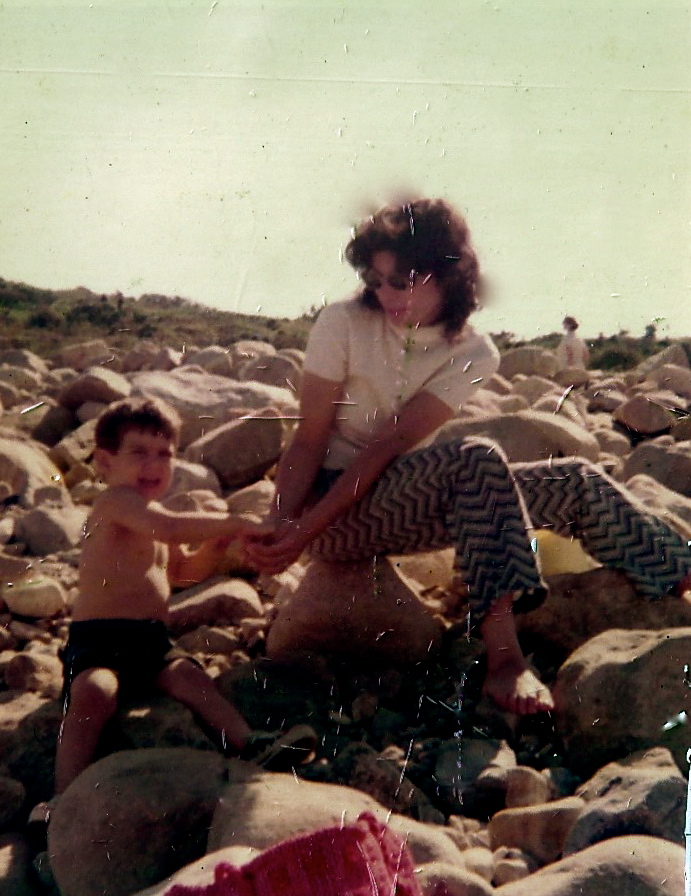
My mom died twenty-two years ago this month. She has been much on my mind these past few weeks.

squeezing a penny

my mother never knew the names for things
the trees were just trees, the flowers just flowers,
but she knew life as a sigh and love as a linchpin
and how to get to work and maneuver in the dark,
she could squeeze a penny and was known to force
tired feet into worn shoes, she could make them dance

Mom and Me 1950, Brooklyn
Mom and Me
1950, Brooklyn, NY

sleeping without walls

camp that year taught the art of sleeping outside
sleeping without walls, watching the stars and moon,
gathering dreams from sunsets and morning dew

we slept in bed-rolls configured of old white sheets
and army blankets made of itchy khaki-colored wool
i wondered if my uncles slept on them during the war,
as I wondered about many things, many things …
and that summer held other delights, climbing trees
and eating cherries without washing them, oh!

and there were blueberry bushes and fig trees and
i lined the path to our food hut with odd sunday stones,
my own bare prayer while the big girls were at Mass,
i marveled at my middle-aged mother’s plump knees
and marked her spirit for wearing shorts and for her
joining in children’s games and singing ‘round the fire

now i wonder at summer camp morphing into metaphor ~
all our lives we did those things: gathering dreams,
mom and me, outsider artists sleeping without walls

Mom and me 1980, San Francisco, CA
Mom and me
1980, San Francisco, CA

in the shadow of the moon

like lucid dreaming, like light-infused rain drops and
the untarnished silver stars above country terrain,
my mother calls to me from the shadow of the moon
my father beams his smile at me from the milky way
gone and gone, still their essence scents my nights

– Jamie Dedes

© 2013, poems and family photos, Jamie Dedes, All rights reserved

Photo on 2012-09-19 at 20.00JAMIE DEDES ~ My worldly tags are poet and writer. For nearly six years I’ve blogged at The Poet by Day,the journey in poem, formerly titled Musing by Moonlight.  Through the gift of poetry (mine and that of others), I enter sacred space.

Posted in Essay, Spiritual Practice, Terri Stewart

Finding Sacred Space Within Our Own Skin

I am attending a retreat this weekend. I have done two exercises today that stretched my own perception of myself. I’d like to offer one to you as a Spiritual Practice geared towards finding sacred space within your own skin and being willing to see yourself.

I don’t know about you, but that can be the most difficult spot for me to discover. Somehow, I can look at others and see their beauty, but acknowledging my own beauty seems at once terrifying, bold, and that I may fall short of being that … what? That person. That human. That woman. That mother. That chaplain. That presence of comfort. Oh, I think it is true that I fall short – we all do – but failing myself at simply just seeing myself is not okay!

Nowhere is that more present than in the myriad of photos I have of family and family vacations. Where am I? Behind the camera. I may be in 1 in a thousand photos. Seriously. It’s not okay! This Spiritual Practice is geared at self portraiture. It is a series of photos. (None of these photos are touched up. I am intentionally resisting the temptation!)

First exercise … find a place where you can intentionally photo bomb yourself with a weird background. I thought this was fun with a mural in the background. I think I can use this one when I am mad! This will let you have a humorous, gentle start!

WP_20131026_019

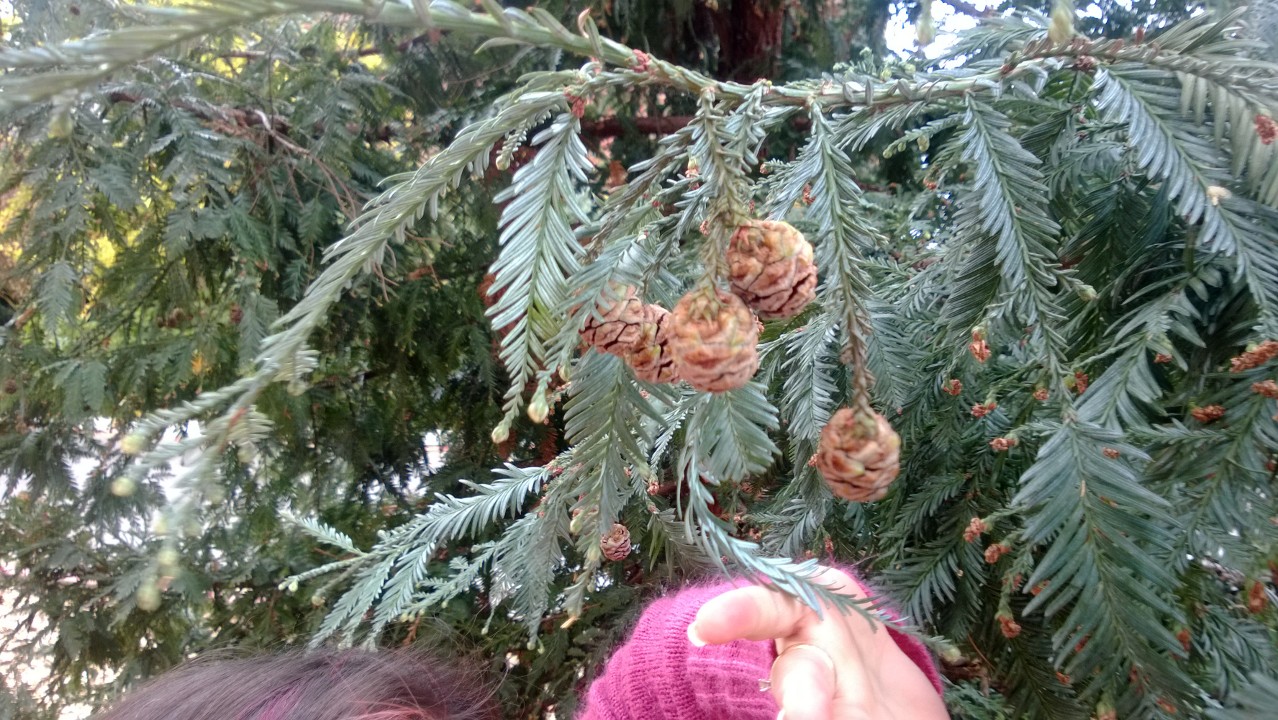
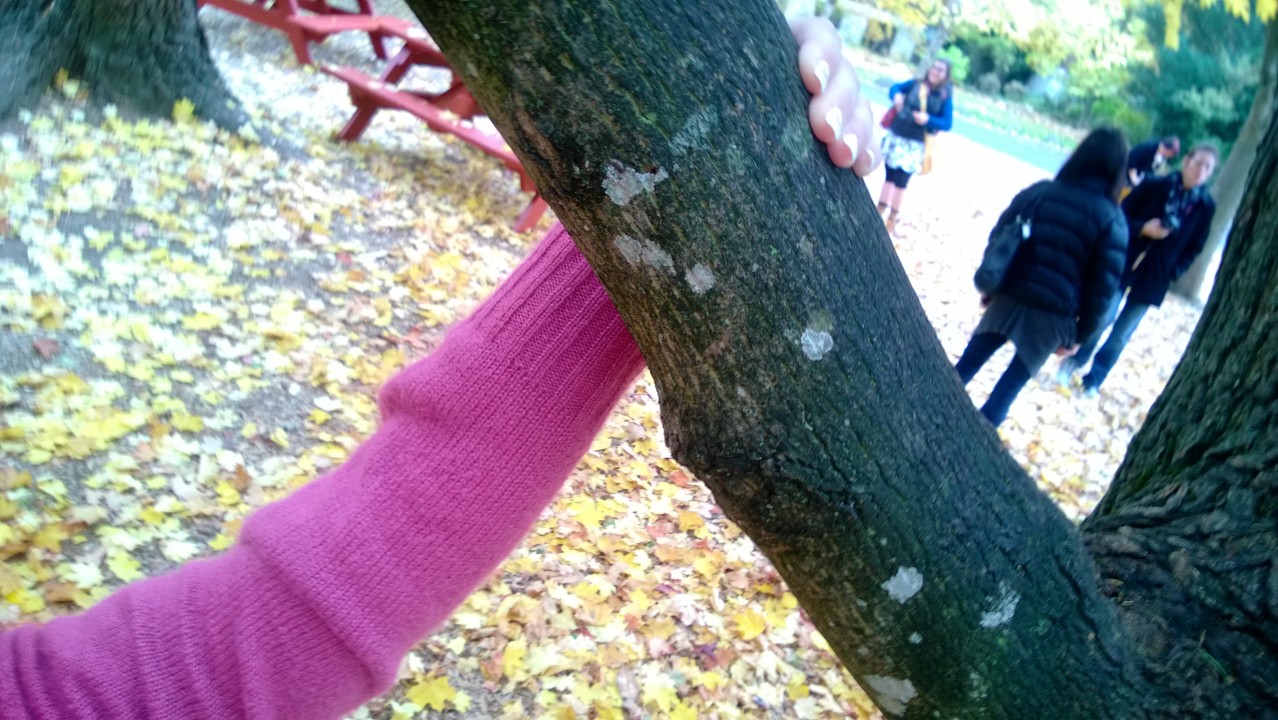
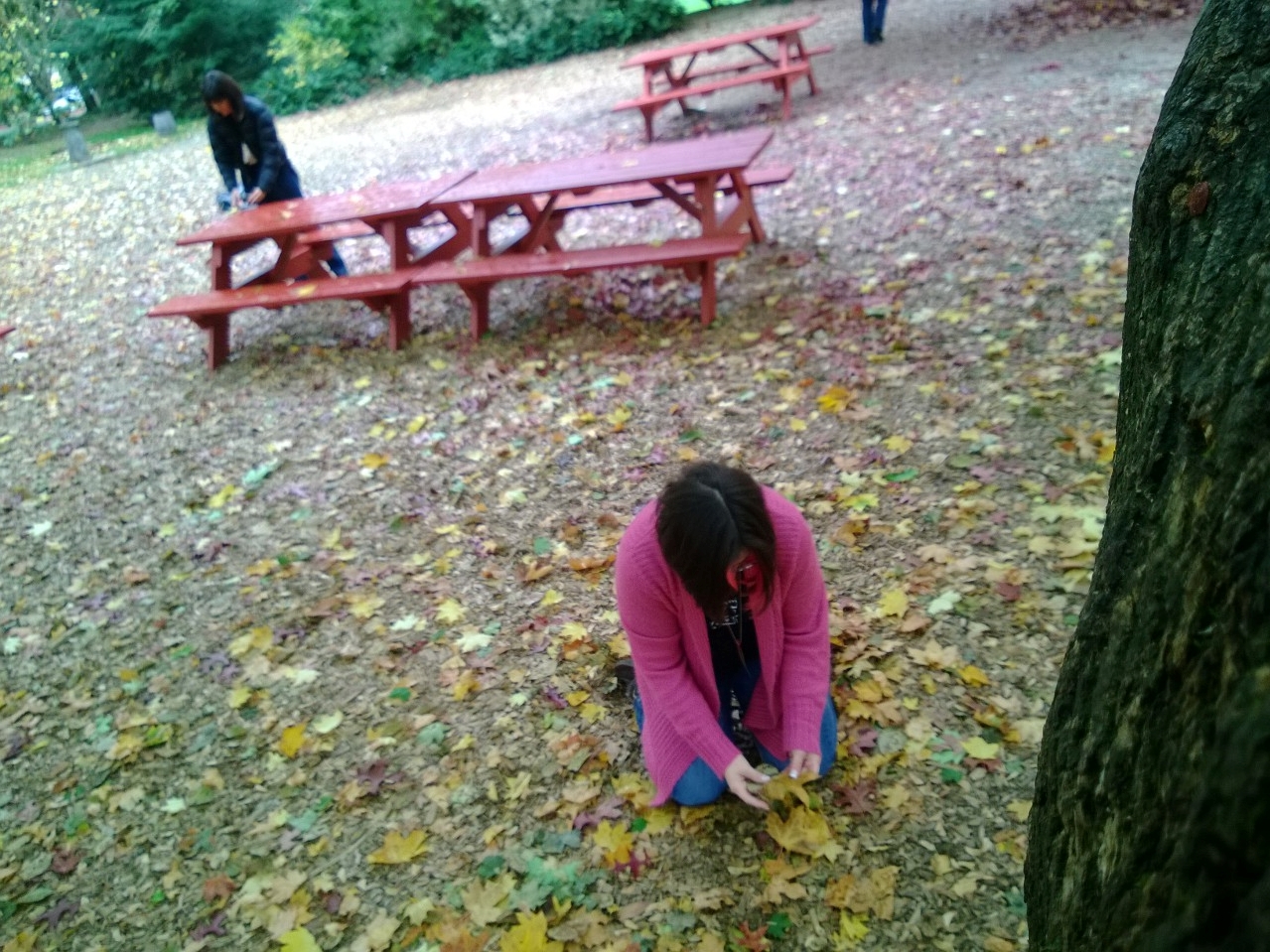
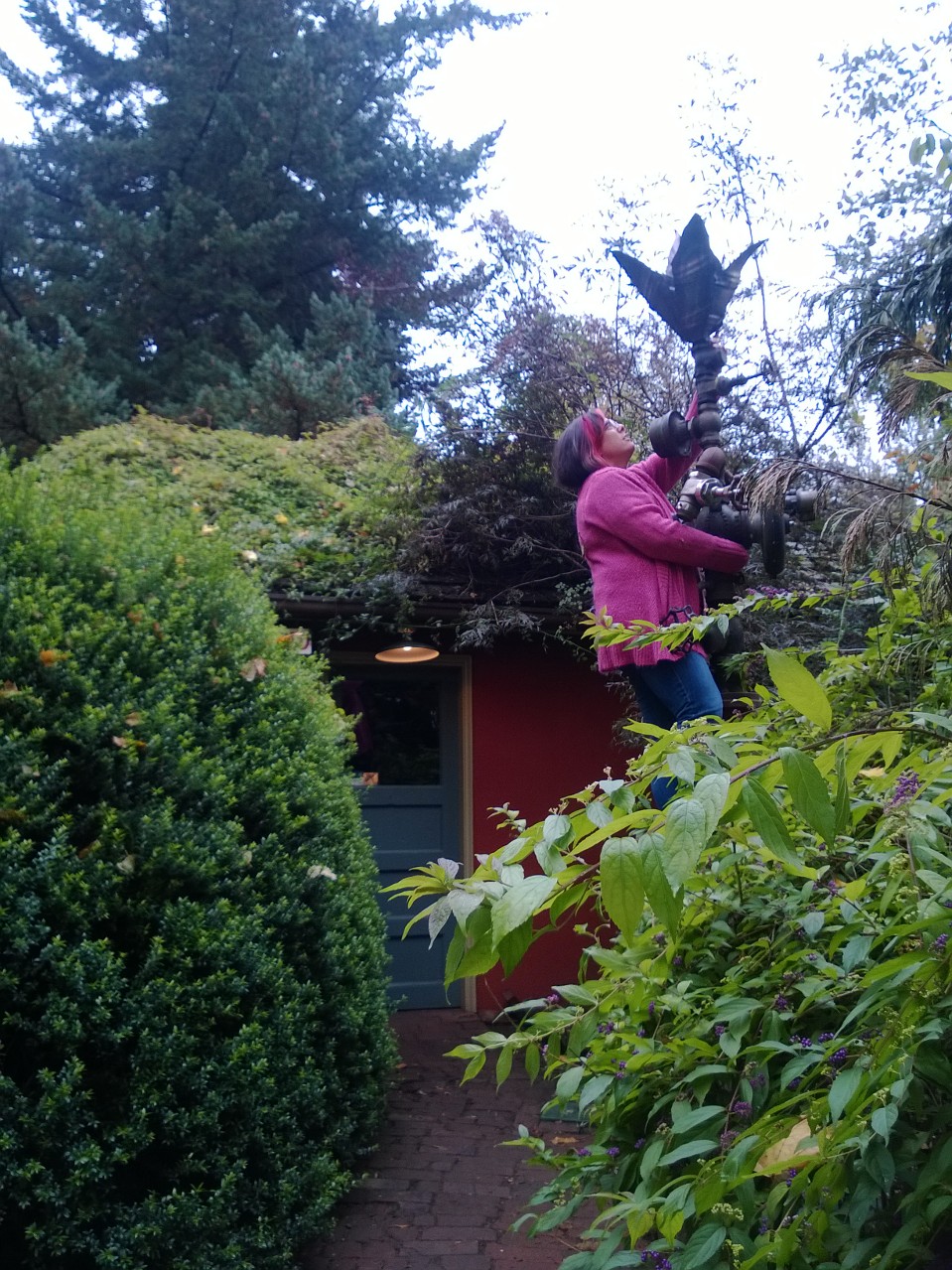
Next, consider what a self-portrait consists of … it is any part of you that is in a picture. Gather photos of you reaching for something, holding something, stepping onto a path, you name it! Hands, feet, hair!

WP_20131026_031

WP_20131026_028

WP_20131026_025

Next, learn to use that timer on your camera! I understand that iPhones have Gorilla and Windows phones have Auto Timer Camera. Now take full shots of yourself doing different things.

3_jpg

5_jpg (1)

12_jpg (1)

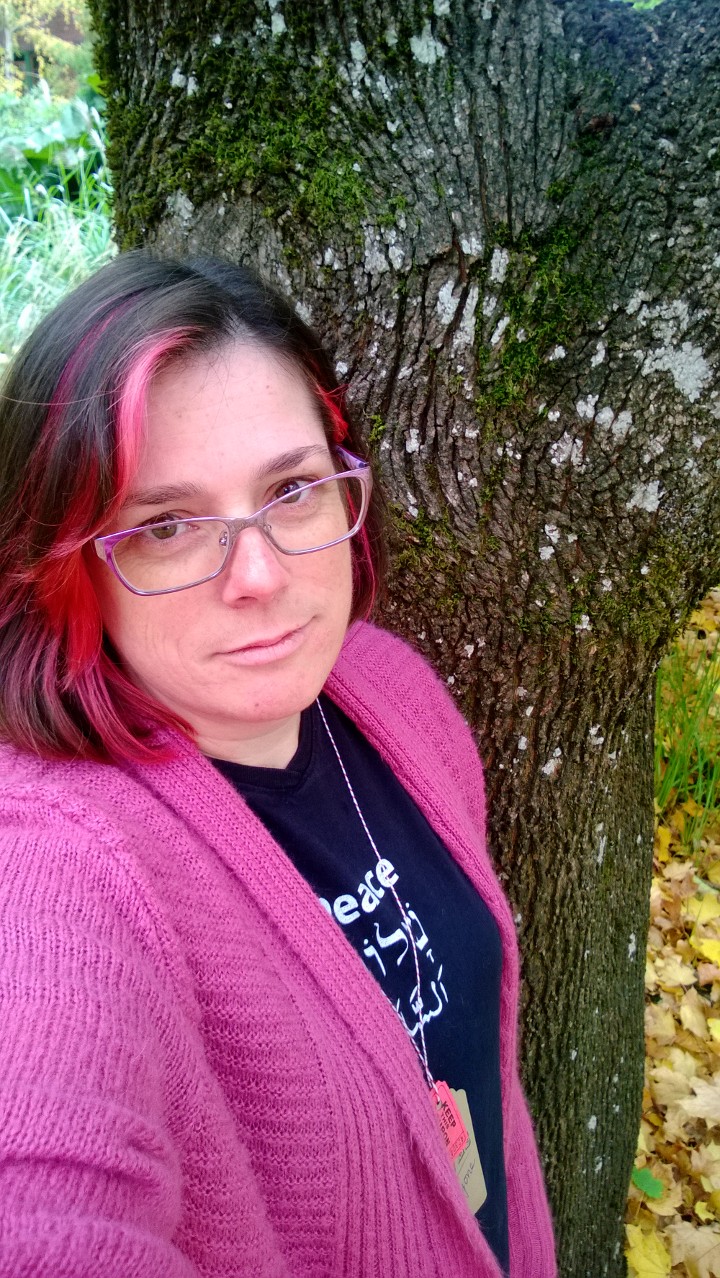
Last, look into the camera and be love. You may think of someone you love and gaze into the camera or think of loving yourself or think of loving the world. Start here. Be an image of love.

WP_20131026_034

I spend a lot of time “being love” in the world. Working with incarcerated and homeless youth. But without a loving foundation that includes spiritual practices that let me see and be myself, I won’t be able to sustain compassionate action. Even the healthiest egos need times of sustenance.

Shalom and Amen,

Terri

© 2013, post , Terri Stewart, All rights reserved

terriREV. TERRI STEWART is Into the Bardo’s  Sunday chaplain, senior content editor, and site co-administrator. She comes from an eclectic background and considers herself to be grounded in contemplation and justice. She is the Director and Founder of the Youth Chaplaincy Coalition that serves youth affected by the justice system. As a graduate of Seattle University’s School of Theology and Ministry, she earned her Master’s of Divinity and a Post-Master’s Certificate in Spiritual Direction. She is a contributing author to the Abingdon Worship Annual. (The 2014 issue just released!)

Her online presence is “Cloaked Monk.” This speaks to her grounding in contemplative arts and the need to live it out in the world. The cloak is the disguise of normalcy as she advocates for justice and peace. You can find her at www.cloakedmonk.com, www.twitter.com/cloakedmonk, and www.facebook.com/cloakedmonk.  To reach her for conversation, send a note to cloakedmonk@outlook.com

“A person with ubuntu is open and available to others, affirming of others, does not feel threatened that others are able and good, for he or she has a proper self-assurance that comes from knowing that he or she belongs in a greater whole and is diminished when others are humiliated or diminished, when others are tortured or oppressed.”
― Desmond Tutu

Posted in Essay, Spiritual Practice, Terri Stewart

It’s All Sacred Space II

"I AM" Sacred Space
“I AM”
Sacred Space

Following up on last week’s “It’s All Sacred Space.”

Two pastors that I know are extraordinary. They both pastor homeless people. One lived as a homeless person for two weeks so he could understand what was going on. The other is homeless. She refuses to live in a home and sleeps on the streets every night of her life. She takes this so seriously that given the opportunity to sleep inside at a convocation, she made special arrangements to sleep in the doorstep-declining housing thousands of miles away from her people. She is the only one who would have known! And nobody would have judged her in error for sleeping inside at a conference she was attending.

I am amazed at the depth of commitment they both have.

In my context, that would be sleeping in a detention center. I am not sure I am prepared to be locked up in order to be one with the people that I am committed to walking with.

But maybe that is because I am not viewing all space as sacred. If I imagine that a jail cell is the Cathedral of Notre Dame with an air of mystery, sacrament, and holiness…does that change the context? Maybe. But could I put on the blue scrubs, white t-shirt, white socks, and orange plastic flip-flops? Using harsh soaps, eating questionable food, everything? Hmmm. I am not sure I could ever do that. I am also not sure that it is a requirement to do so. But, perhaps what is a requirement is the holy imagination it takes to think of what this walk would be.

That is the spiritual practice I’d like to invite you into today, holy imagination. I believe that we are all called to support the least among us. In other words, those who cannot take care of themselves. Those our societies often label “other.” People who are “other” than us—outside the norm—impoverished, imprisoned, hungry, sick, non-gender conforming—whoever is being “othered.”

Who is your other?

Could it be someone from a different faith tradition? A different political point-of-view? Or any of those I listed above? Generally, there is always someone we “other-ize.” Even though I am working with people every day that are affected by incarceration, I found myself in a spot today where I felt the person I was sitting with was totally “other” from me. She is telling me flat-out that when she returns to her community, she will return to drug use and gang involvement. Period. She sees no other way. No other hope. That is hard for me to fathom. She says, “I will probably be dead by 21” without blinking. Wow. And sheesh. I need to find a way to sit with her in a way that is hopeful and not descend into other-izing her even though her current ideas are so foreign to my mind and heart.

If I use holy imagination, maybe I can put myself into her life and feel where her self-imposed traps come from. And seeing where the traps are, maybe I can point out a way she can negotiate the traps and bring herself greater freedom. I don’t know. I will continue to work on it.

Today, using your own holy imagination, can you take five minutes (really, 20 minutes is more like it!) to do some visualization work?

First, relax as much as you can. Keep working at it until you have quieted the monkey mind (or brain chatter—but my inner chatter is more like a monkey!).

When you have fully relaxed, set your intention. Here, I am suggesting your intention should be a conversation with whoever you “other-ize.” (Could it be yourself?)

Next, focus on what you want. Today, our desire is closer understanding. How can you begin to understand the figurative foreigner across from you? What questions can you ask in order to bring you deeper understanding? I am always amazed at my own capacity to carry assumptions. How can we leave assumptions and expectations behind so that there is room for increased understanding?

As realizations and understandings grow, there may be a struggle. Give your struggle up. It is like the monkey-brain. Keep offering both of these things away. I usually visualize putting these on a cloud and whooshing them out of my space. Don’t struggle too hard. If it isn’t happening, it isn’t happening. Then, don’t be too hard on yourself. There will be another day, another try.

Finally, don’t get tangled in negative thoughts—whoosh them away on that cloud! Experience your highest self—the one that sits in loving kindness, compassion, and hope.

When your conversation is complete (and you may get horrible answers, let’s be honest), hold onto the highest self for a moment and see yourself. See the person who took a risk today of entering scary, sacred space. A person who was willing to love. Look at yourself and see the sacred space within.

Shalom and Amen,

Terri

© 2013, post , Terri Stewart, All rights reserved

terriREV. TERRI STEWART is Into the Bardo’s  Sunday chaplain, senior content editor, and site co-administrator. She comes from an eclectic background and considers herself to be grounded in contemplation and justice. She is the Director and Founder of the Youth Chaplaincy Coalition that serves youth affected by the justice system. As a graduate of Seattle University’s School of Theology and Ministry, she earned her Master’s of Divinity and a Post-Master’s Certificate in Spiritual Direction. She is a contributing author to the Abingdon Worship Annual. (The 2014 issue just released!)

Her online presence is “Cloaked Monk.” This speaks to her grounding in contemplative arts and the need to live it out in the world. The cloak is the disguise of normalcy as she advocates for justice and peace. You can find her at www.cloakedmonk.com, www.twitter.com/cloakedmonk, and www.facebook.com/cloakedmonk.  To reach her for conversation, send a note to cloakedmonk@outlook.com

Posted in Essay, Spiritual Practice, Terri Stewart

It’s All Sacred Space

Star Trek, Captain Kirk and “Bones” (Dr. McCoy) using Universal Translators

Sometimes I think that we all need universal translators when we are trying to understand each other across cultures, belief systems, and personal social locations.

Often, though, it takes someone yelling at us to knock us out of our system of thinking and gives us the ability to see things in a new and visionary way that connects rather than divides. All too often we cannot get to this point because we walk away when we things are uncomfortable, challenging, or abrasive.

And no doubt, abrasive is yucky. Witness: the US government interactions right now.

What to do?

Enter deeply into the story of the other person. This is a spiritual practice. I call it Extreme Accompaniment (should I trademark that?). I was contemplating this further today as I was researching another article. My reading revealed to me that we get to radical acceptance of the other when:

  1. Everyone goes to uncomfortable places
  2. Step outside of social norms, forget what you think you know about the other
  3. Everyone involved becomes open to conversion
  4. Keep dialoguing past the rhetoric and abrasiveness
  5. Then, transformation and acceptance may occur (Congress, are you listening??)

Of course, there are limitations. You should not be in situations that may cause harm.  But I am more and more convinced that this deep listening is a spiritual practice. And it is a practice that our world does not do well right now. It is up to the artists and the contemplatives to lead a new revolution! A revolution of extreme accompaniment or of walking with other people. A practice of deeply listening and working with the other’s deepest desires. A practice of loving each other. Love is the universal translator.

If we listen and love, maybe we will all be able to see past the space debris and see the cosmos in each other’s souls.

Shalom and Amen,

Terri

© 2013, post , Terri Stewart, All rights reserved

terriREV. TERRI STEWART is Into the Bardo’s  Sunday chaplain, senior content editor, and site co-administrator. She comes from an eclectic background and considers herself to be grounded in contemplation and justice. She is the Director and Founder of the Youth Chaplaincy Coalition that serves youth affected by the justice system. As a graduate of Seattle University’s School of Theology and Ministry, she earned her Master’s of Divinity and a Post-Master’s Certificate in Spiritual Direction. She is a contributing author to the Abingdon Worship Annual. (The 2014 issue just released!)

Her online presence is “Cloaked Monk.” This speaks to her grounding in contemplative arts and the need to live it out in the world. The cloak is the disguise of normalcy as she advocates for justice and peace. You can find her at www.cloakedmonk.com, www.twitter.com/cloakedmonk, and www.facebook.com/cloakedmonk.  To reach her for conversation, send a note to cloakedmonk@outlook.com

Posted in Jamie Dedes, Poems/Poetry

I Remember the Amber Moon

file3761333734081When I remember you
I remember the amber moon
the burnished brown of the old oaks
their leaves like hands waving goodbye
As dusk transitioned to dark, stars alight,
we sat on the beach by slow cooking-fires,
their coals gone from hard black to gray dust
I cherished your warm hug in the chill of the night
and falling asleep, safe

I stopped loving you,
but I never stopped loving the memory of you
I carry that with me on lunatic trips of the heart ~
though my preference is to rest solitary on forest logs
with their stunning imperfections and
the secret-lives swirling in the sunless damp on which they rest

I think of the path that led from then to now,
a mix of smooth and rough along a rocky coast
I live near the sea to breath
I imagine you living, wherever you are
by an ocean with your skin still smelling of Old Spice,
with your well-formed hands, the hands of a pianist and surgeon,
and the high-tensile strength of your mind

In the odd geography of life, no one knows where we came from
or how it was, how it felt to be us in the days of promise
when the spell of Hudson Bay felt like a prayer to St. Christopher
That bay is no longer our safe harbor,
but it gave us our sturdy roots and strong wings
and so the nights, the nights by this bay are good
When I smile at the amber moon, it smiles at you

– Jamie Dedes

© 2013, poem, Jamie Dedes, All rights reserved 
Photo credit ~ Anne Lowe, Public Domain Pictures.net

Photo on 2012-09-19 at 20.00JAMIE DEDES ~ My worldly tags are poet and writer. For the past five years I’ve blogged at The Poet by Day,the journey in poem, formerly titled Musing by Moonlight.  Through the gift of poetry (mine and that of others), I enter sacred space.

Posted in Peace & Justice, Poems/Poetry, Timothy "T.J." Therien

POETS AGAINST WAR, #3: In the Name of Love, A Poem to All World Leaders by T.J. Therien

800px-Bombed_out_vehicles_AleppoIn the name of Love I sue for peace
I reach out with branch of olive
Sign your treaties that fighting may cease
Open wide the cage and free the dove
Remove iron fist from silken glove
From servitude and bondage release
Be the Leaders we are worthy of
In the name of Love I sue for peace
How many palms do I have to grease?
Sandbox antics, games of push and shove
Be ruled not by chaos and caprice
I reach out with branch of olive
Singing in a different octave
Place your armor on the mantelpiece
By whatever God hereinabove
Sign your treaties that fighting may cease
Or find your fate as did Sparta of Greece
In a goblet of blood and foxglove
The future of human-kind you lease
Open wide the cage and free the dove
Turn other cheek when push comes to shove
There is no golden fleece, no golden geese
Be the Leaders we are worthy of
Melt down all weapons, sign armistice
In the name of Love

– T.J. Therien

Invitation: We’d like you to join us – not only as readers – but as writers by putting links to your own anti-war or pro-peace poems in the comment sections. Next week we’ll gather the links together in one post and put them up as a single page headed “Poets  Against War.”  Thank you!

© 2013, poem and portrait, TJ Therien, All rights reserved
Photo credit ~ Bombed vehicles in Aleppo, October 6, 2012, courtesy of the Voice of America News and in the Public Domain

Snapshot_20110301_2TIMOTHY JAMES “TJ” THERIEN (Liars, Hypocrites & The Development of Human Emotions) ~ is a contributing writer to Into the Bardo. He has been blogging since November 2012 and has  garnered a significant and loyal following. He says in another poem “I am not a writer … I am possessed by unseen spirit/And my hand is so moved/Words dictated to me by inner voice/Muse speaks when she wants to speak…” That sounds an awful lot like work coming from sacred space. TJ tells us that he was born 1968 in Toronto, Ontario, Canada and current resides in The Eastern Townships, Quebec, Canada. He’s lived briefly in Calgary, Alberta, Canada, and Parry Sound, Ontario Canada. He participates in Poet’s Corner. His “About” is posted HERE.

Posted in Naomi Baltuck, Photo Essay, Photography/Photographer, Story Telling, Photo Story

Jack Shit: Just Say Yes

When my daughter Bea was a little girl, she found a seed in a seedless Satsuma, and planted it in a tiny pot on our kitchen windowsill.  She kept the soil moist and, to our delight, a tiny Satsuma tree sprouted.  We nearly lost hope when the little tree was infested with insects, but it hung on.  Through the years, we tried everything we could think of to bring it back to health. We washed it with dish soap to get rid of the bugs, and transplanted it to a bigger pot.  We tried covering the soil with plastic wrap, to keep the bugs away from the leaves.  In desperation, we trimmed it down to almost nothing, but it came back–and so did the bugs.  I half hoped it would die, just to be done with it.

Last summer I set it out on the deck, like a fish thrown back into the water, to sink or swim.  But the little tree liked the fresh air and sunshine, and grew greener and healthier than ever.  I brought it inside before the nights turned cold, and it’s back on the windowsill, perhaps gazing out at the yard and looking forward to warm summer nights.

We live our lives in hope.

Almost everything we do is an act of hope. Big ones and little ones.

Hope is writing this post, even when I couldn’t figure out the new Photobucket last night.  It’s trying a new flavor of yogurt.  It’s getting out of bed each morning.  It’s teaching your child to look both ways when crossing a street.  It’s writing the address of a friend with cancer into your address book—in ink.  Hope is page one of every new book you open.

It’s writing page one of a new manuscript before the last one has sold.  It’s everything from watering a plant to having a baby, from a blind date to getting married.  It’s why Jack planted his magic beans, against all odds and common sense.  Hope was the last most precious thing left to us, when Pandora opened up her box.  It’s more important than love, because as long as we have hope, love might yet grow.

A scientist studying nature vs. nurture put identical twins into separate rooms, one stocked with toys, candy, a real live pony.  The other he put into a room filled with manure.  When he went back to observe, the twin in the room of toys was sitting in the middle of it, crying.  “What’s wrong,” said the scientist.  The child replied, “I just know I’m going to break something and get in trouble.”  The scientist found the other child up to its ears in manure, laughing, leaping about, scooping up handfuls of the stuff and tossing it to one side.  “What are you doing?” asked the scientist.  The child answered, “With all this shit, there’s got to be a pony in here somewhere!”

Who says Jack doesn’t know shit?  Bring on the magic beans!

And with all the shit life throws at you, there’s got to be a pony in there somewhere.

All words and images c2013 Naomi Baltuck

NaomiPHOTO1-300ppi51kAqFGEesL._SY300_NAOMI BALTUCK ~ is a Contributing Editor and Resident Storyteller here at Bardo. She is a world-traveler and an award-winning writer, photographer, and story-teller whose works of fiction and nonfiction are available through Amazon HERE. Naomi presents her wonderful photo-stories – always interesting and rich with meaning and humor – at Writing Between the Lines, Life from the Writer’s POV. She also conducts workshops such as Peace Porridge (multicultural stories to promote cooperation, goodwill, and peaceful coexistence), Whispers in the Graveyard (a spellbinding array of haunting and mysterious stories), Tandem Tales, Traveling Light Around the World, and others. For more on her programs visit Naomi Baltuck.com

Posted in Essay, Jamie Dedes

Goddess Mothers and True Heroes

“All you need is a sense that there is no such thing as ‘no’ and everything is possible.” Moira Kelly

This shining face, this sweet spirit with reason to be bitter and yet he is not. He is a hero and pure inspiration. When our own Naomi Baltuck posted this video on Facebook, I was as touched as anyone would be. I had to wonder though about his mom. What kind of hero is she, I thought, remembering the heroes of my childhood: Josephine Baker and my spiritual mother, Pearl Buck. Each of these women grew their families in unique – and extraordinarily unselfish – ways.

“All my life, I have maintained that the people of the world can learn to live together in peace if they are not brought up in prejudice.”  Josephine Baker (1906-1975)

Josephine_Baker_1950Josephine Baker was born in America but became a French citizen. She was a dancer, singer, actress and civil-rights activist.  As a child living in St. Louis, Missouri, she suffered from discrimination, abandonment, and poverty.  As an adult she had one miscarriage. She adopted twelve children, two girls and ten boys. They were from diverse races and cultures because, in addition to caring for them, she wanted to show that people can get along despite their different backgrounds. In the early ’80s two of her sons went into business together. They started Chez Josephine, which is on Theatre Row (42nd Street) in Manhattan. They dedicated the restaurant to their adoptive mom’s memory and decorated it with her memorabilia.

“. . .  the test of a civilization is the way that it cares for its helpless members.” Pearl Buck (1892-1973)

220px-Pearl_Buck_(Nobel)Pearl Buck was an American novelist, writer, humanitarian and the first woman to be awarded the Noble Prize in Literature (1938).  She grew up in China and spent most of her life there until 1934. She had a deep affection for and knowledge of the countries of the East, not just China. She suffered through the Nanking Incident when the National Revolutionary Army captured Nanking (now Nanjing) in 1927.  Many Westerners were killed, their homes destroyed, and their property stolen.  Her only biological child, Carol, had phenylketonuria (PKU), which causes mental retardation and seizures.  She adopted seven children. At a time when mixed-race children were considered unadoptable, Pearl Buck founded Welcome House, Inc., the first international, interracial adoption agency. Welcome House has placed some five thousand children since it was established 1949.

“The greatest act of kindness changes generations. Wherever there is the greatest evil, the greatest good can be achieved.” Moira Kelly (b. 1964)

emmanuel-kellyThis brings us to a contemporary hero: the mother of Emanuel Kelly, the young man in the video. Moira Kelly is an Australian humanitarian whose work has garnered her many awards and acknowledgements.  When she was eight years old, after seeing a movie about Blessed Teresa of Calcutta (now Kolkata), Moira committed herself to working with disadvantaged children.  She is the legal guardian of twins from Bangladesh, Trisha and Krishna. They are surgically separated but originally cranially conjoined twins.  Moira Kelly also adopted the Iraqi-born Emmanuel and his brother Ahmet, both born with underdeveloped limbs. Among her efforts is Children First Foundation, formed to provide transportation and healthcare for children with urgent needs in developing countries.

These women are mothers in the best senses of that word. Their ideals are real and they stand by them. They have saved children from abandonment and loneliness, from poverty and hopelessness and, in some cases, from early death. They are goddess mothers and true heroes.

– Jamie Dedes

© 2013, essay, Jamie Dedes, All rights reserved
Video uploaded to YouTube by DrReaps
Photographs of Josephine Baker and Pearl Buck are in the U.S. Public Domain.
I don’t know the origin or copyright of the photograph of Moira Kelly and her sons. If it is yours, let me know and I’ll credit you or take it down as you wish.

Photo on 2012-09-19 at 20.00JAMIE DEDES ~ My worldly tags are poet and writer. For the past five years I’ve blogged at The Poet by Day,the journey in poem, formerly titled Musing by Moonlight.  Through the gift of poetry (mine and that of others), I enter sacred space.

Posted in Jamie Dedes, Poems/Poetry

Hero of the Practicalities

1-1235150176CC7S

for Kirby, in loving memory

What can I tell you?
She loved the guy …
She even loved the
scent of whiskey and cigarettes
She took due note of the clues
warning of devises and vices
that she’d never acquired
She didn’t care
He was charming

Coupled in delicate balance
a yin and yang of extremes
a second marriage of differences
Fog being the common denominator ~
though his drink didn’t mix well
with her off-in-the-clouds-somewhere being
The accountant of just-the-facts ma’am
and the dreamer of unlikely dreams
She was a trial

The bear who liked to escape to the woods
nonetheless some comfort, a decent person,
a hero of the practicalities,
a maker of omelets and fixer of things,
a reader, a gardener, an angry man

Anger . . .
. . . read pain
but you probably knew that
a pain that waltzed with Jack Daniels
lent itself to long diatribes
and Pilsner-invented pontifications
it skied through the veins
built road-blocks to his heart
and in the end,
in the end,
in the end
the pain did him in
that lost man
that well-meaning, decent
distant, funny, lost man

©2012,2013, poem, Jamie Dedes, All rights reserved
Illustration ~ Petr Kratochvil, Public Domain Pictures.net

Photo on 2012-09-19 at 20.00JAMIE DEDES ~ My worldly tags are poet and writer. For the past five years I’ve blogged at The Poet by Day,the journey in poem, formerly titled Musing by Moonlight.  Through the gift of poetry (mine and that of others), I enter sacred space.

Posted in Essay, General Interest, Guest Writer, Shakti Ghosal

Wishing You a Garbage-Free Week Ahead

418px-NYC_taxis

the work of Shakti Ghosal

One day I hopped in a taxi and we took off for the airport. We were driving in the right lane when suddenly a black car jumped out of a parking space right in front of us.

My taxi driver slammed on his brakes, skidded and missed the other car by just inches!

The driver of the other car whipped his head around and started yelling at us.

My taxi driver just smiled and waved at the guy.I mean, he was really friendly.

So I asked, ‘Why did you just do that? This guy could almost ruin your car and sent us to the hospital!’

This is when my taxi driver taught me what I now call, ‘Law of the Garbage Truck’  He explained that many people are like garbage trucks. They run around full of garbage, full of frustration, full of anger, and full of disappointments.

As and when their garbage piles up, they need a place to dump it and sometimes they’ll dump it on you.

Don’t take it personally. Just smile, wave, wish them well, and move on. Don’t take their garbage and spread it to other people at work, at home, or on the streets. The bottom line is that successful people do not let garbage trucks take over their day.

Life’s too short to wake up in the morning with regrets, So … Love the people who treat you right. Pray for the ones who don’t.

Life is 10 % what you make it.

AND

90 % how you take it!

Do resolve to have a great, garbage – free week ahead……..

in learning ……………….Shakti Ghosal

© 2013, essay, Shakti Ghosal, All rights reserved
Photo credit ~ Joseph Plotz via Wikipedia under Creative Commons Attribution 3.0 license.

Shakti Ghosal
Shakti Ghosal

SHAKTI GHOSAL ~ has been blogging (ESGEE musgings)since September 30, 2011. He was born at New Delhi, India. Shakti is an Engineer and  Management Post Graduate from IIM, Bangalore. Apart from Management theory, Shakti remains fascinated with diverse areas ranging from World History, Economic trends to Human Psychology & Development.

A senior management professional, Shakti has been professionally involved over twenty-five years at both international and India centric levels spanning diverse business areas and verticals. With a strong bias towards action and results, Shakti remains passionate about team empowerment and process improvement.

Shakti currently resides in the beautiful city of Muscat in Oman with wife Sanchita, a doctorate and an educationist. They are blessed with two lovely daughters, Riya and Piya.

Posted in Charles W Martin, Photography/Photographer, Poems/Poetry

traveling with blinders…

traveling with blinders

the first years
of the journey
to death
can be long
and
quite boring
its slow pace
lulls the traveler
into a false sense
of immortality
and
a lack of appreciation
of the small miracles
along the way
the first kiss
a lover’s long embrace
a kind word
offered
when only tears paint
what the heart feels
or
a gentle touch
after a nightmare
to comfort
the soul’s fears
all these things
seem unimportant
during the trek
from one life milestone
to the next
routine milestones
that occupy
the mind
as it travels
but
all too soon
the journey
is over
and
all that is left
are
some old photos
fading
as quickly
as the memory
of those moments
of
true
love

– Charles W. Martin

© 2013, poem and illustration, Charles W. Martin, All rights reserved

product_thumbnail.php678ad505453d5a3ff2fcb744f13dedc7-1CHARLES MARTIN (Reading Between the Minds) — earned his Ph.D. in Speech and Language Pathology with an emphasis in statistics. Throughout Charlie’s career, he maintained a devotion to the arts (literature/poetry, the theater, music and photography). Since his retirement in 2010, he has turned his full attention to poetry and photography. He publishes a poem and a photographic art piece each day at Read Between the Minds, Poetry, Photograph and Random Thoughts of Life. He is noted as a poet of social conscience. Charlie has been blogging since January 31, 2010. He has self-published a book of poetry entitled The Hawk Chronicles and will soon publish another book called A Bea in Your Bonnet: First Sting, featuring the renown Aunt Bea. In The Hawk Chronicles, Charlie provides a personification of his resident hawk with poems and photos taken over a two-year period.

Posted in Naomi Baltuck, Photo Essay, Photography/Photographer

No Such Thing As An Odd Couple

Couples come in all shapes and sizes.  They always have, since the beginning of time.


Life is short, and often cruel.  Finding true love, or even a true friend is not just a comfort.

It’s a miracle.

But I’ve seen it with my own two eyes. True love happens.

It is easy to recognize when you see it.

Love…

..in all its many forms…

…is a gift to us all.   It fills the world with light.

Let it shine!

All words and images copyright Naomi Baltuck 2012

NaomiPHOTO1-300ppi51kAqFGEesL._SY300_NAOMI BALTUCK ~ is a Contributing Editor and Resident Storyteller here410xuqmD74L._SY300_ at Bardo. She is a world-traveler and an award-winning writer, photographer, and story-teller whose works of fiction and nonfiction are available through Amazon HERE. Naomi presents her wonderful photo-stories – always interesting and rich with meaning and humor – at Writing Between the Lines, Life from the Writer’s POV. She also conducts workshops such as Peace Porridge (multicultural stories to promote cooperation, goodwill, and peaceful coexistence), Whispers in the Graveyard (a spellbinding array of haunting and mysterious stories), Tandem Tales, Traveling Light Around the World, and others. For more on her programs visit Naomi Baltuck.com

Posted in Art, find yourself, Guest Writer, Music

Underpainting With Love and Kindess

work by Leslie White 
.
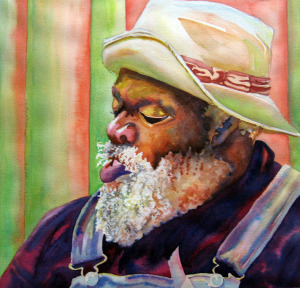
I could not believe my good fortune when I found a photo of Grandpa Elliot posted to the wet canvas photo reference library for artists.  It was a must-do for me..Several bloggers have made mention of underpaintings; the most recent being Amy from Souldipper found here. She asked me about an artist’s use of an underpainting.  I responded something like it is the foundation that we build our final work on. That made me think more on the subject as we were also talking about underpainting our lives with love and kindness.  Then I came across the photo of Grandpa Elliot who has actually underpainted his life with sharing music to millions in New Orleans and becoming part of the project, “Playing for Change”, a CD whose proceeds go to helping others.The other connection I can make about an underpainting is that it always, for me, sets the tone for where the light will fall in it. BINGO! I see the same in life with passing on kindness. Light is passed on through our kindness to others.  The above stage of my painting illustrates how I carved out areas where I wanted the light to fall.

grelliot

The above image is the finished result.

I can not think of a better way to start the weekend than this:

Video posted to YouTube by .

– Leslie White

leslieblue6LESLIE WHITE (lesliepaints) ~ is a guest writer here and an artist, teacher, book illustrator, and blogger. She’s been blogging since March 2009 and appreciated for the skill and beauty she shares. Her gifts to us are mini-lessons in a artistic technique. Often there is value added with life lessons, such as the one presented here.  Leslie shares information on new art products and techniques and enriches our understanding of and appreciation for art.  Her blog-posts go a long way toward encouraging others. She often enchantes us by sharing the work of her granddaughter and her students.


Posted in Essay, Naomi Baltuck

Today (we are all survivors)

We are all survivors, of our personal histories, our family lines, and of the human race.  Since the dawn of time, think of the families ended abruptly by a bullet, a spear, a club, a predator, illness, by accident and even by someone’s own hand.

Today is the anniversary of D-Day, the Normandy invasion in 1944.  It was the day my Uncle Lewis was launched onto the Normandy beaches into a cruel war.  I think it no coincidence that today is also the anniversary of my father’s death in 1965.

The day before he died, while his kids ran and laughed and played in the yard, my father planted a walnut tree—just a stick of a sapling–by the side of the house.  Did he know what he was going to do?  Did he plant that tree as his own memorial?

I hope not, because someone else is living in that little house in Detroit, and my Dad’s walnut tree is long gone, cut down in its prime.  This I know, because I drive past each time I go back to visit my Aunt Loena.   So these words must serve as a memorial to a World War II vet who came home without his little brother and best friend.  That was the sin his mother never forgave him for, the sin he could he never quite forgive himself for either.

My army buddy, Jack Oliver, attended boot camp with Uncle Lewis.  He helped me understand that my father was as much a victim of the war as my uncle.  When the War Department tallies the casualties, it counts the dead, the wounded, the missing in action.  But no one ever takes into account the broken hearts and broken families left by the wayside in the wake of war.  If they did, perhaps they would stop sending our children off to fight and die.

But today is a day a of forgiveness, a day of understanding, a day to be thankful that life goes on.  It is a day of sorrow, but most of all, today is a day to love.

– Naomi Baltuck

© 2012, essay and photographs, Naomi Baltuck, All rights reserved

NaomiPHOTO1-300ppi410xuqmD74L._SY300_NAOMI BALTUCK ~ is a Contributing Editor and Resident Storyteller here at Bardo. She is a world-traveler and an award-winning writer, photographer, and story-teller whose works of fiction and nonfiction are available through Amazon HERE. Naomi presents her wonderful photo-stories – always interesting and rich with meaning and humor – at Writing Between the Lines, Life from the Writer’s POV. She also conducts workshops such as Peace Porridge (multicultural stories to promote cooperation, goodwill, and peaceful coexistence), Whispers in the Graveyard (a spellbinding array of haunting and mysterious stories), Tandem Tales, Traveling Light Around the World, and others. For more on her programs visit Naomi Baltuck.com

Posted in Creative Nonfiction, Jamie Dedes, Uncategorized

Those Infamous New York Moms

Mom and Me 1950, Brooklyn
Mom and Me
1950, Brooklyn, NY

A woman in Brooklyn decided to prepare her will. She told her rabbi she had two final requests. First, she wanted to be cremated. Second, she wanted her ashes scattered over the local shopping mall.

‘Why the shopping mall?’ asked the rabbi.

‘Then I’ll be sure my daughters will visit me twice a week.’

I met my Jewish friend, Laurel, when she came to a meeting at our local meditation center in Northern California where we now live. Laurel and I  got on right away. We both like Broadway shows, music and opera, reading, writing, and good meals seasoned with great conversation. She’s from Great Neck, LI in Nassau County. I’m from

Me and Rich 1972, Montauk Point, LI, NY
Me and Rich
1972, Montauk Point, LI, NY

the Center of the Universe, Brooklyn. We’re about the same age. So we come from the same time and, essentially, the same place.

Now New York moms get a bad rap, especially Jewish moms – but none of us gets off free. Laurel reminded me of that yesterday with a stereotypical New York joke at the expense of mothers. These jokes usually illustrate moms making caustic remarks or their attempts to foster guilt in adult children. While we do use regional idioms and have a distinct style of delivery, I’m really not sure that mothers from our time and place have the corner on either caustic commentary or the laying on of guilt. New York moms can’t be the only ones who, when distressed by a child’s behavior, say or at least think – despite how treasured the child … and they are treasured – “For this I was in labor thirty-six hours.”

Like all of us, my mother was very much in process and very much a product of her place and time. Among other things, what that means is that modesty was a primary concern. For my Maronite (Eastern Catholic) mother this included modest dress, which in turn included girdles. Now I’ve got to tell you that until I hit forty I was mostly underweight. In fact at Christmas when I was nineteen, I stood 5′ 3 1/2″ and, though I was three months pregnant with my son, I weighed only ninety-three pounds. Nonetheless, from my thirteenth year until her death when I was forty, my mother was adamant that I should wear a girdle so that I wouldn’t “jiggle.” That would be immodest and unseemly. Only my mother, I would think, would put me through this torture for nothing. As my husband said, “What’s to jiggle? If she turned sideways and stuck out her tongue she’d look like a zipper.”

Those old, typically New York jokes at the expense of our mothers were funny because there’s an element of truth in them. Our mothers often did pave the pathways to their homes and hearts with guilt. They could be cruelly caustic. They were as tough as life. They tended to be rigid and narrow on some sensitive subjects. But they were also present. They were idealistic. They worked hard in their homes and at their jobs, where they were grossly underpaid. Many of them worked for hours each week to make the most unbelievably complex old world dinners for traditional Sundays that included religious services and large gatherings of extended family and orphaned friends and neighbors.

No matter how difficult things got, these sturdy immigrant and first-generation American women did not resort to drugs, alcohol, or beatings. They went to bat for us at school. They got us into the best schools they could afford and kept us in school for as long as they could afford to do so. They protected us from old lechers and young men who did not have “honorable” intentions. Kudos and compliments were about as common as Dodo birds in the twenty-first century; but secretly they were pleased and would proudly show photographs of us to their friends and boast of our accomplishments. It took me years to appreciate their insecurities and motivations.

Mom and me 1980, San Francisco, CA
Mom and me
1980, San Francisco, CA

You can tell by the posture in the photo to your right, that moving into my thirties, I was still struggling with mixed feelings. The reason in this particular case: Before I went to work one morning, I left money on the kitchen table for a pizza. I called home at 5:00 p.m. as I was leaving the office and asked my mother if she’d order the pizza right away because I was “starving.” I got home and “binged”: I ate one slice of pizza and left the crust. “I thought you were hungry,” Mom said. “I was.”  The fact that I was thirty and still “eating like a bird” and underweight disturbed her. In turn, I was disturbed because she was still trying to tell me how to eat. I do the same sort of thing to my son now, not about food, but about other things.

I miss my mother and am thinking of her even more than usual with Mother’s Day soon to arrive. I wish she was here nagging me to clean my plate. I finally understand. As the saying goes, “We grow too soon old and too late smart.”

– Jamie Dedes

© 2013, feature and all photographs (from our family album, please be respectful), Jamie Dedes, All rights reserved

Photo on 2012-09-19 at 20.00JAMIE DEDES ~ My worldly tags are poet and writer. For the past five years on medical retirement due to a chronic, potentially life-threatening illness, I’ve blogged at The Poet by Day, formerly titled Musing by Moonlight. The gift of illness is more time for poetry. Through the gift of poetry (mine and that of others), I enter sacred space, the common ground that is our true home.

Posted in Essay, Guest Writer

FROM HARPY’S REVIEW: The 10 Top Relationship Words That Aren’t Translatable Into English

OLYMPUS DIGITAL CAMERA

Published here with the permission of the author, Pamela Haag, who did the original research and writing. It was published on November 18, 2011 on The Big Think, which hosts Pamela’s blog, Harpy’s Review.  I thought it an interesting piece. Apparently, so did a lot of others.  It was blogged and reblogged often and generally without Pamela’s analysis and often without attribution to her. It took a bit of doing to find the source. All other postings I found of this piece were dated subsequent to Pamela’s. J.D.

Here are my top ten words, compiled from online collections, to describe love, desire and relationships that have no real English translation, but that capture subtle realities that even we English speakers have felt once or twice. As I came across these words I’d have the occasional epiphany: “Oh yeahThat’s what I was feeling…”

Mamihlapinatapei (Yagan, an indigenous language of Tierra del Fuego): The wordless yet meaningful look shared by two people who desire to initiate something, but are both reluctant to start. 

Oh yes, this is an exquisite word, compressing a thrilling and scary relationship moment. It’s that delicious, cusp-y moment of imminent seduction. Neither of you has mustered the courage to make a move, yet. Hands haven’t been placed on knees; you’ve not kissed. But you’ve both conveyed enough to know that it willhappen soon… very soon.

Yuanfen (Chinese): A relationship by fate or destiny. This is a complex concept. It draws on principles of predetermination in Chinese culture, which dictate relationships, encounters and affinities, mostly among lovers and friends.

From what I glean, in common usage yuanfen means the “binding force” that links two people together in any relationship.

But interestingly, “fate” isn’t the same thing as “destiny.” Even if lovers are fated to find each other they may not end up together. The proverb, “have fate without destiny,” describes couples who meet, but who don’t stay together, for whatever reason. It’s interesting, to distinguish in love between the fated and the destined. Romantic comedies, of course, confound the two.

Cafuné (Brazilian Portuguese): The act of tenderly running your fingers through someone’s hair.

Retrouvailles (French):  The happiness of meeting again after a long time.

This is such a basic concept, and so familiar to the growing ranks of commuter relationships, or to a relationship of lovers, who see each other only periodically for intense bursts of pleasure. I’m surprised we don’t have any equivalent word for this subset of relationship bliss. It’s a handy one for modern life.

Ilunga (Bantu): A person who is willing to forgive abuse the first time; tolerate it the second time, but never a third time.

Apparently, in 2004, this word won the award as the world’s most difficult to translate. Although at first, I thought it did have a clear phrase equivalent in English: It’s the “three strikes and you’re out” policy. But ilunga conveys a subtler concept, because the feelings are different with each “strike.” The word elegantly conveys the progression toward intolerance, and the different shades of emotion that we feel at each stop along the way.

Ilunga captures what I’ve described as the shade of gray complexity in marriages—Not abusive marriages, but marriages that involve infidelity, for example.  We’ve got tolerance, within reason, and we’ve got gradations of tolerance, and for different reasons. And then, we have our limit. The English language to describe this state of limits and tolerance flattens out the complexity into black and white, or binary code. You put up with it, or you don’t.  You “stick it out,” or not.

Ilunga restores the gray scale, where many of us at least occasionally find ourselves in relationships, trying to love imperfect people who’ve failed us and whom we ourselves have failed.

La Douleur Exquise (French): The heart-wrenching pain of wanting someone you can’t have.

When I came across this word I thought of “unrequited” love. It’s not quite the same, though. “Unrequited love” describes a relationship state, but not a state of mind. Unrequited love encompasses the lover who isn’t reciprocating, as well as the lover who desires. La douleur exquise gets at the emotional heartache, specifically, of being the one whose love is unreciprocated.

Koi No Yokan (Japanese): The sense upon first meeting a person that the two of you are going to fall into love.

This is different than “love at first sight,” since it implies that you might have a sense of imminent love, somewhere down the road, without yet feeling it. The term captures the intimation of inevitable love in the future, rather than the instant attraction implied by love at first sight.

Ya’aburnee (Arabic): “You bury me.” It’s a declaration of one’s hope that they’ll die before another person, because of how difficult it would be to live without them.

The online dictionary that lists this word calls it “morbid and beautiful.” It’s the “How Could I Live Without You?” slickly insincere cliché of dating, polished into a more earnest, poetic term.  

Forelsket: (Norwegian):  The euphoria you experience when you’re first falling in love.

This is a wonderful term for that blissful state, when all your senses are acute for the beloved, the pins and needles thrill of the novelty. There’s a phrase in English for this, but it’s clunky. It’s “New Relationship Energy,” or NRE.  

Saudade (Portuguese): The feeling of longing for someone that you love and is lost. Another linguist describes it as a “vague and constant desire for something that does not and probably cannot exist.”

It’s interesting that saudade accommodates in one word the haunting desire for a lost love, or for an imaginary, impossible, never-to-be-experienced love. Whether the object has been lost or will never exist, it feels the same to the seeker, and leaves her in the same place:  She has a desire with no future. Saudade doesn’t distinguish between a ghost, and a fantasy. Nor do our broken hearts, much of the time.

– Pamela Haag

© 2011, Pamela Haag, All Rights Reserved, posted on Into the Bardo with permission, bookcover design (below) courtesy of HarperCollins, All rights reserved

paperback_300PAMELA HAAG’S work spans a wide, and unusual, spectrum, all the way from academic scholarship to memoir. Thematically, it has consistently focused on women’s issues, feminism, and American culture, but she’s also written on topics as eclectic as the effort to rebuild the lower Manhattan subway lines after 9/11, 24-hour sports radio talk shows, and the experience of class mobility.

Haag’s latest book, Marriage Confidential: The Post-Romantic Age of Workhorse Wives, Royal Children, Undersexed Spouses, and Rebel Couples Who Are Rewriting the Rules, released by HarperCollins in May of 2011, draws on all of these strands of Haag’s unique professional biography to create almost a new genre, a weave of academic expertise, cultural history, creative nonfiction, memoir, storytelling, interviews, and commentary. Pamela’s blog, Harpy’s Review is hosted by Big Think. She writes a regular column, Marriage 3.0, for Psychology Today.