Posted in Essay, Spiritual Practice, Terri Stewart

Sacred Space in Particles

I am fascinated with astrophysics. And I am probably just skilled enough to be dangerously inept! One thing that just makes my heart flutter is the idea that all matter is already created! We can neither destroy or create matter. (Except that we can, according to the Higgs Boson discovery – but that will be for another discussion!)

In general terms, matter is neither destroyed or created so that essentially the particles we immerse ourselves in are the same particles that have been around forever and ever. The Oxygen molecule I breathe in was perhaps breathed in by some semi-ancient ancestor. Who would I choose to share breath with? Maybe I would connect to some fabulously wonderful pioneering women such as Christine de Pizan or Joan of Arc. Or maybe with some substantial spiritual leaders like Jesus of Nazareth, Gautama Siddartha, or Mary of Magdala. I could be breathing their particles!

I am also breathing the particles that were created at the moment of birth of the cosmos. That rapid expansion of the universe when it really did somehow go from nothing to something. Pushed outward in a violent burst of matter, light, and waves. Culminating in this moment. This time. At least for us. This moment is the culmination. Until the next moment, that is!

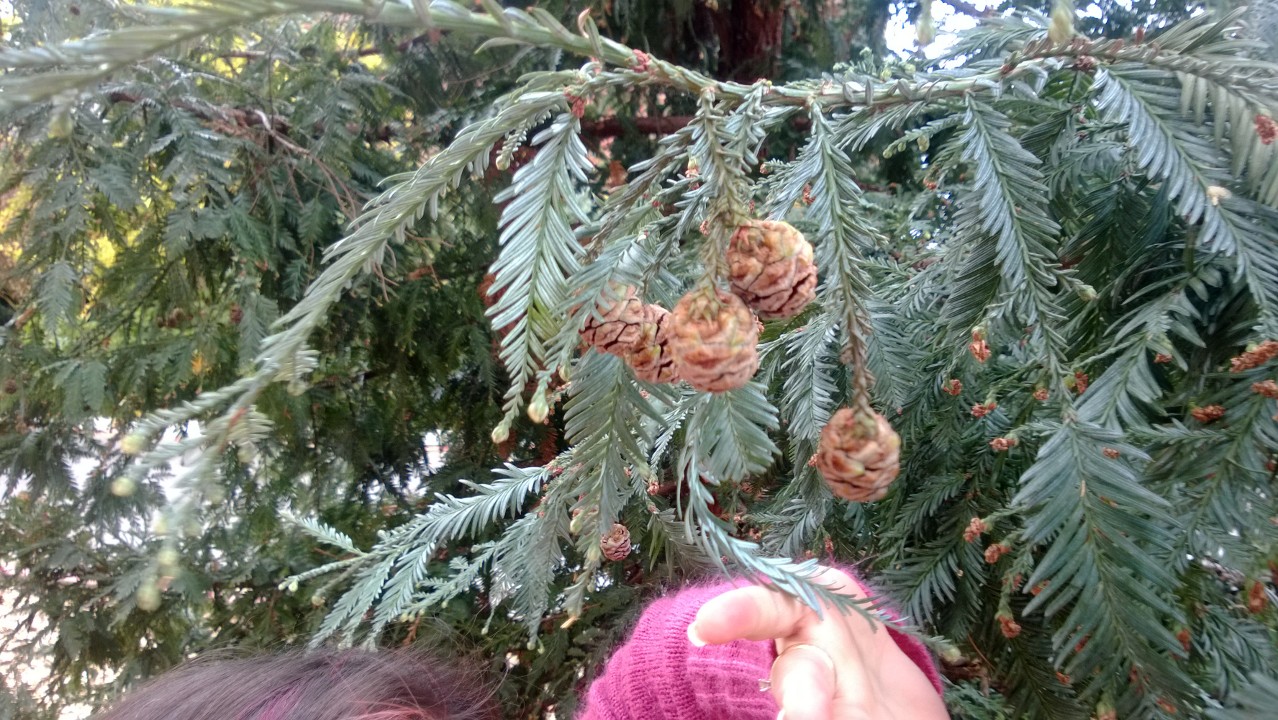
So, I was thinking cosmologically in this way and I stumbled across a book called, The Tree. It is a children’s book written by a Pacific Northwest author. I imagined the particularity of matter as residing in the tree. And then I read the story of how this book came about. The author received this story while sitting underneath a Douglas Fir in the Pacific Northwest. He received it as a song, not as a story. He sang it often for various events. Half-heartedly claiming that the tree wrote it.

Later, he was invited to a celebration to celebrate the return of the Madrona Point burial ground to the Lummi people. The tribal chief wanted to hear his song. He sang it. And then offered the story of the song’s origins with the additional wondering, “Did it really come from that ancient Douglas Fir?”

The tribal chief said, “It did. I recognize the tune.” He went on. “It is known in our tradition that each tree has its own song. Our music comes from them. We show our respect for the great trees by singing their songs and playing them on the flute. We must all work to save the ancient groves in our territory.”

Hmm. That is really quite beautiful.

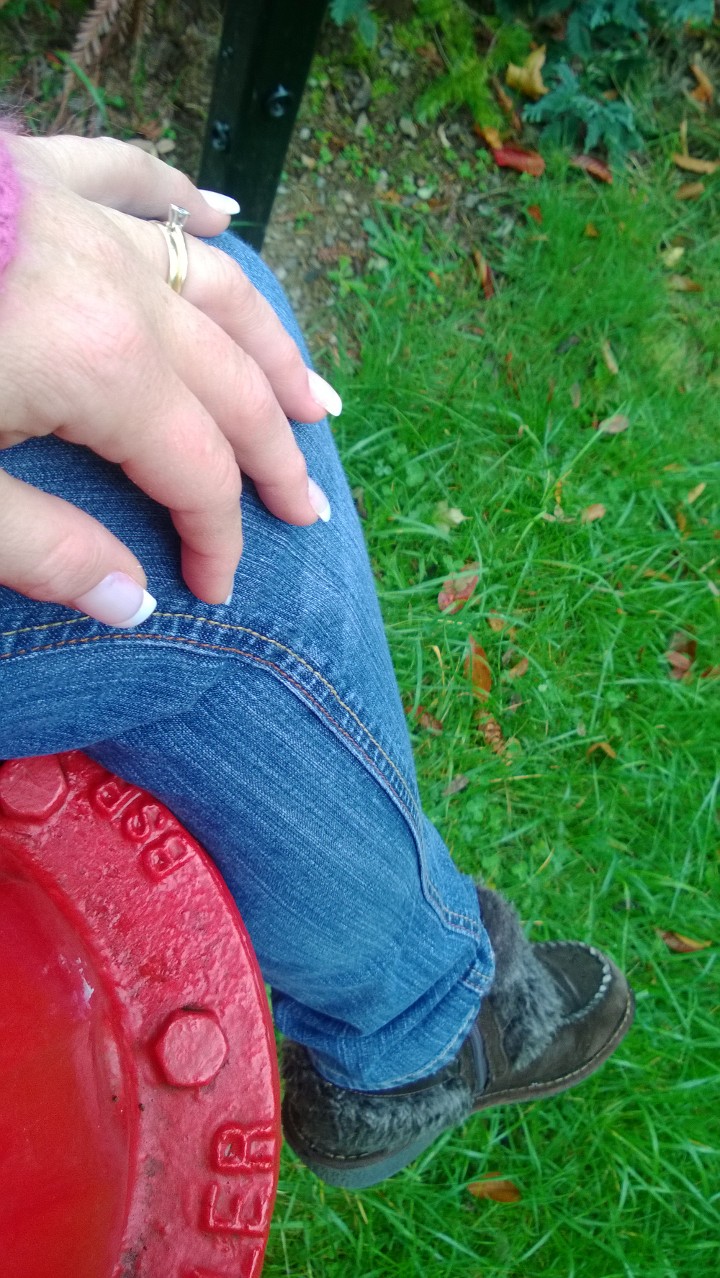
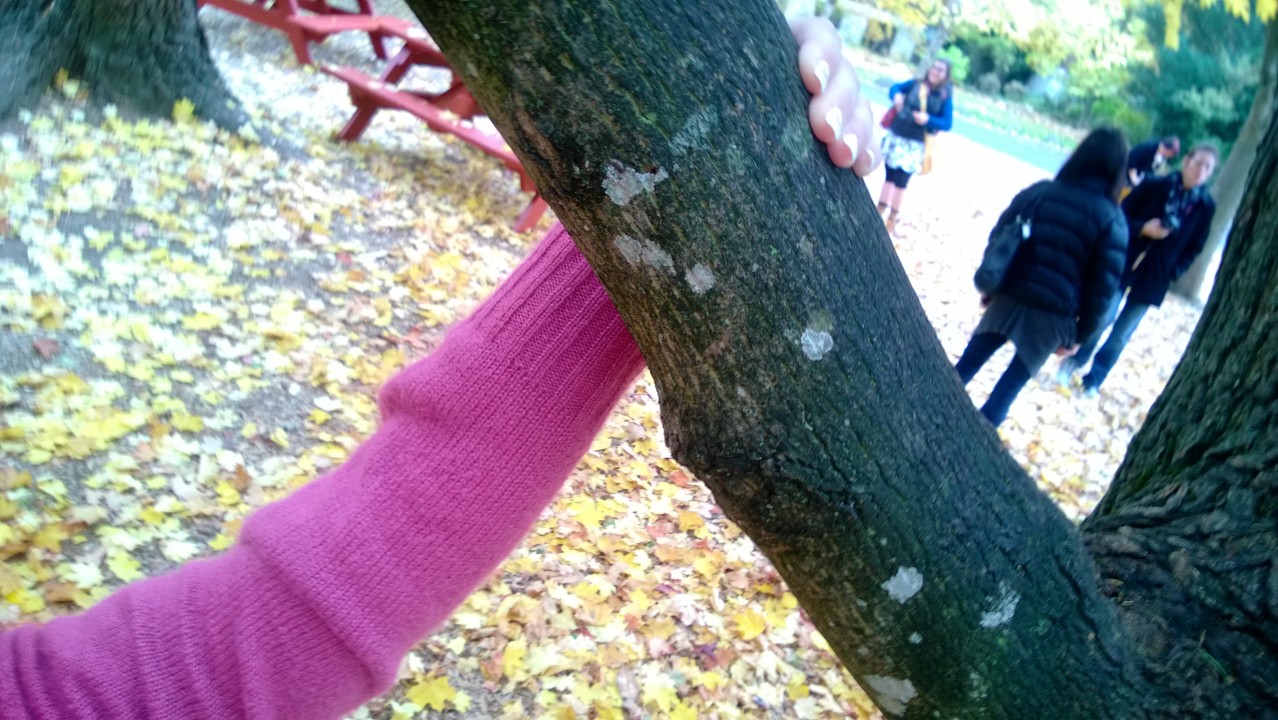
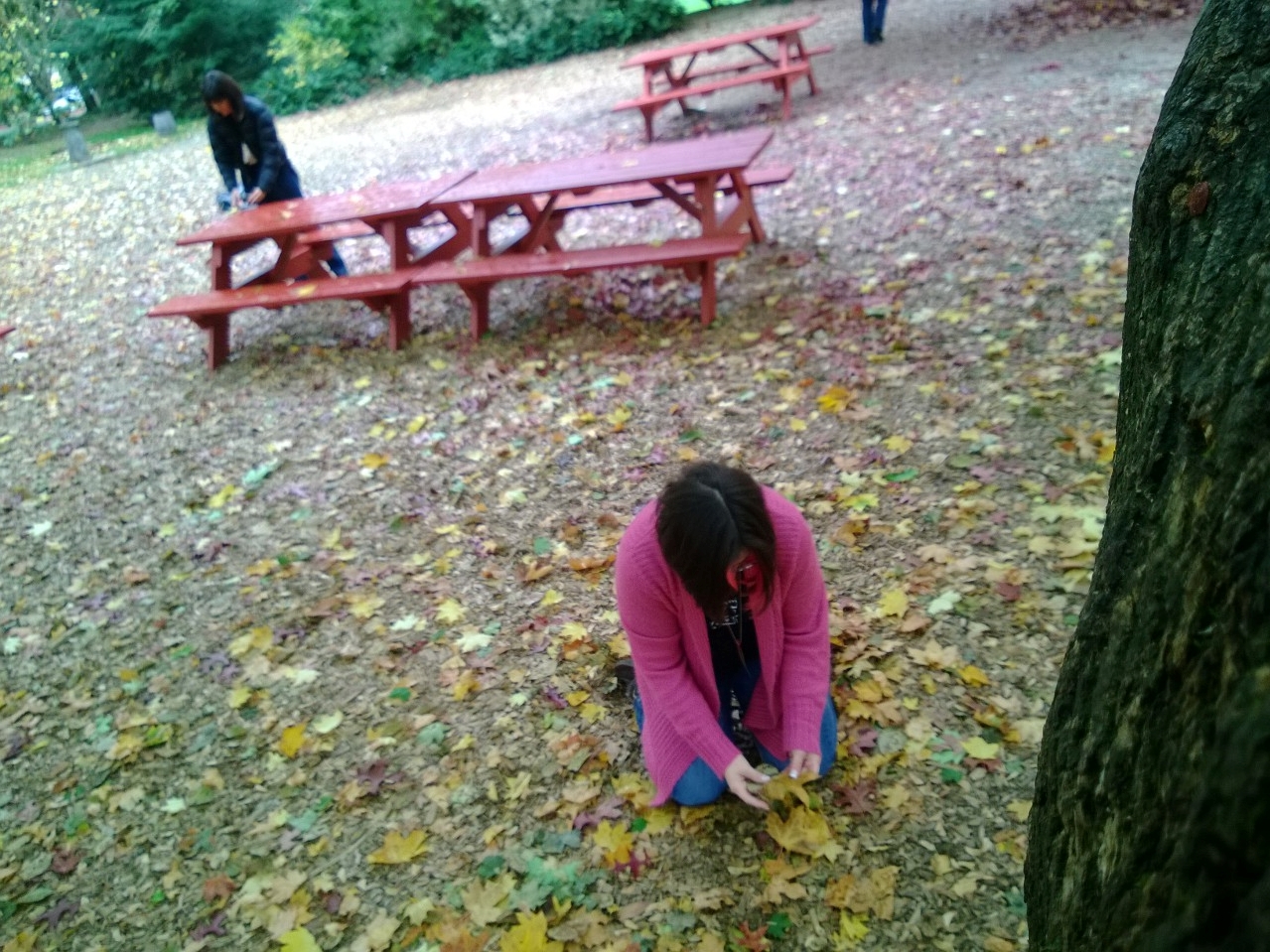
And so, for this offering in the quest towards finding sacred space, I invite you to connect with the particles of the cosmos, the particles of the tree, and to sit back and enter into the story of The Tree.

Shalom and Amen,

Terri

© 2013, post and video, Terri Stewart, All rights reserved

terriREV. TERRI STEWART is Into the Bardo’s  Sunday chaplain, senior content editor, and site co-administrator. She comes from an eclectic background and considers herself to be grounded in contemplation and justice. She is the Director and Founder of the Youth Chaplaincy Coalition that serves youth affected by the justice system. As a graduate of Seattle University’s School of Theology and Ministry, she earned her Master’s of Divinity and a Post-Master’s Certificate in Spiritual Direction. She is a contributing author to the Abingdon Worship Annual. (The 2014 issue just released!)

Her online presence is “Cloaked Monk.” This speaks to her grounding in contemplative arts and the need to live it out in the world. The cloak is the disguise of normalcy as she advocates for justice and peace. You can find her at www.cloakedmonk.com, www.twitter.com/cloakedmonk, and www.facebook.com/cloakedmonk.  To reach her for conversation, send a note to terri@cloakedmonk.com

Posted in Essay, Photography/Photographer, Priscilla Galasso, Spiritual Practice

Habit

Habit might be the enemy of Awareness or Mindfulness.  Doing things routinely without thinking is a practice that allows our mind to wander into the past or the future or the make believe without really being present.  Sometimes, this is just what I want to do!  Yes, I admit to blowing up Mah Jong tiles and Free Cell rows when I want to veg out.  But if I want to be truly alive, I try to pay attention to each present moment.

Thich Nhat Hahn gives a wonderful lesson to Oprah Winfrey on drinking tea mindfully in this clip.  Oprah, out of habit, takes a sip of her tea before the meditation even begins.  I smile, thinking, “how embarrassing!” and noting that I probably would have done the same thing if I wasn’t careful.

Habits can be comforting…and they can lull us to sleep.  Do you want to be awake?  Do you feel like there will be plenty of time to be dead later on?  I do.  Except when I don’t.  It takes a lot of psychic energy to be alive!  Think about all that’s involved when you do a simple thing like climb up a short flight of stairs.  Your weight is shifting, balancing, your muscles are contracting, your toes are gripping, your hand may reach out to the banister, your eyes are measuring the height of each step, you’re breathing with the exertion, and all while trying to remember what you’re going upstairs for!  Walking meditation, tea meditation, stairs meditation…it’s all the same practice of mindfulness.

This picture adds another aspect: Steve in meditation.  I see him every day.  I want to be mindful of that miracle.  He’s alive, different, changing, dynamic, and important.  So am I, but I have a long way to go on that one. Appreciating myself is the hardest practice for me.

Habit

– Priscilla Galasso

© 2013, essay and photographs (above and below), Priscilla Galasso, All rights reserved

004PRISCILLA GALASSO ~  started her blog at scillagrace.com to mark the beginning of her fiftieth year. Born to summer and given a name that means ‘ancient’, her travel through seasons of time and landscape has inspired her to create visual and verbal souvenirs of her journey.

Currently living in Wisconsin, she considers herself a lifelong learner and educator. She gives private voice lessons, is employed by two different museums and runs a business (Scholar & Poet Books, via eBay and ABE Books) with her partner, Steve.

Posted in Essay, Spiritual Practice, Terri Stewart

Finding Sacred Space In the Other

This week in my church, it has been filled with conflict and dissension. That makes for a tough week! Let me clarify – structurally, from the upper echelon of the decision-making bodies, there has been a reinforcement of codified discrimination and what I think is just pig-headed wrongness. Ha! I am not feeling very charitable at all. I always have the choice of staying within the system or leaving. But leaving does not really move the ball forward for me. Why? Because my basic anthropology is that we are all connected. Even if I left this system and surrounded myself with folks that were just like me (how irritating that would be!), I am still connected to the people that I find the most frustrating.

Harrumph.

Then, I discovered this exercise written by Troy Bronson in his book Drawn In. It is an exercise for integration and forgiveness. Or perhaps forgiveness and integration. I am fairly certain that full integration is not possible without forgiveness! At any rate, I have adapted his exercise and now I offer it to you as a spiritual practice to aid in integrating those people that drive us bananas.

Take a piece of paper and fold it in half twice so that you have four quadrants. In the bottom right list your enemies: those who mean harm to you and your family; those who are politically opposed to what you are for; those who persecute you and others associated with your causes and passions.

In the bottom left list your friends: advocates for those associated with your religious, political, or social causes. Write all of this so that both groups are at the bottom of the page, with only a crease separating them.

On the Horizon (c) 2013, Terri Stewart
On the Horizon
(c) 2013, Terri Stewart

Now, draw a horizontal line to separate both groups from the empty top half of the page. Read this adapted version of Psalm 121.

I look to the hills!
Where will I find help?
It will come from the immense force
that created the stars, sun, sky,
And earth.

You are protected by Love,
And Love will not sleep
Or stumble
Or snooze.
Love always is.
Protecting you,
Standing at your right side,

The Tree shades us from the sun
The sun will not harm you
Nor will the
Moon.
Protecting you,
Keeping you safe from
All
Dangers.

The incredible creative force
That was, that is, that shall be
Is with you.
Now and always.
Wherever you go.

Reflect on the line, “I look to the hills!” and imagine that the line you’ve drawn is a horizon line made by hills way off at the distance. Imagine your friends and your enemies looking into a future where all things are met with love, justice, and mercy. Where the separating walls between these two groups are healed and taken down. Where the grievances are forgiven. Where they gaze lightly upon one another and see beloved rather than the other.

Now, offer your thoughts to love and reconciliation choosing to step forward into the hills that were once a divider, but now, as we all step into them, cocoon us in beauty.

Adapted from Ephesians 2:11-22

Don’t forget that you used to be the other! The enemy! They used to call you crude and rude. You were a foreigner in this land with no understanding of tradition. You had no hope and were held far away from life giving love.

Creative, responsive love unites all in peace! Breaking down the laws that separate us – that separated us. Following religious rules that are not grounded in loving kindness is not helpful! We all suffer, feel pain. But we are all one, one body united together. We are in this one life together.

You are no longer a stranger or an enemy! You are beloved. Just as those you persecute are beloved. All who went before you are the foundation for who you are today. And it is held together by Love and grown into holy ground where Loving Kindness dwells.

You are part of that holy ground.
You are holy ground.
They are holy ground.
We are
Holy
Ground.

There is no near and no far.
There is only here.
Be one.

Shalom and Amen,

Terri

© 2013, post , Terri Stewart, All rights reserved

terriREV. TERRI STEWART is Into the Bardo’s  Sunday chaplain, senior content editor, and site co-administrator. She comes from an eclectic background and considers herself to be grounded in contemplation and justice. She is the Director and Founder of the Youth Chaplaincy Coalition that serves youth affected by the justice system. As a graduate of Seattle University’s School of Theology and Ministry, she earned her Master’s of Divinity and a Post-Master’s Certificate in Spiritual Direction. She is a contributing author to the Abingdon Worship Annual. (The 2014 issue just released!)

Her online presence is “Cloaked Monk.” This speaks to her grounding in contemplative arts and the need to live it out in the world. The cloak is the disguise of normalcy as she advocates for justice and peace. You can find her at www.cloakedmonk.com, www.twitter.com/cloakedmonk, and www.facebook.com/cloakedmonk.  To reach her for conversation, send a note to cloakedmonk@outlook.com

Posted in Essay, Spiritual Practice, Terri Stewart

Finding Sacred Space Within Our Own Skin

I am attending a retreat this weekend. I have done two exercises today that stretched my own perception of myself. I’d like to offer one to you as a Spiritual Practice geared towards finding sacred space within your own skin and being willing to see yourself.

I don’t know about you, but that can be the most difficult spot for me to discover. Somehow, I can look at others and see their beauty, but acknowledging my own beauty seems at once terrifying, bold, and that I may fall short of being that … what? That person. That human. That woman. That mother. That chaplain. That presence of comfort. Oh, I think it is true that I fall short – we all do – but failing myself at simply just seeing myself is not okay!

Nowhere is that more present than in the myriad of photos I have of family and family vacations. Where am I? Behind the camera. I may be in 1 in a thousand photos. Seriously. It’s not okay! This Spiritual Practice is geared at self portraiture. It is a series of photos. (None of these photos are touched up. I am intentionally resisting the temptation!)

First exercise … find a place where you can intentionally photo bomb yourself with a weird background. I thought this was fun with a mural in the background. I think I can use this one when I am mad! This will let you have a humorous, gentle start!

WP_20131026_019

Next, consider what a self-portrait consists of … it is any part of you that is in a picture. Gather photos of you reaching for something, holding something, stepping onto a path, you name it! Hands, feet, hair!

WP_20131026_031

WP_20131026_028

WP_20131026_025

Next, learn to use that timer on your camera! I understand that iPhones have Gorilla and Windows phones have Auto Timer Camera. Now take full shots of yourself doing different things.

3_jpg

5_jpg (1)

12_jpg (1)

Last, look into the camera and be love. You may think of someone you love and gaze into the camera or think of loving yourself or think of loving the world. Start here. Be an image of love.

WP_20131026_034

I spend a lot of time “being love” in the world. Working with incarcerated and homeless youth. But without a loving foundation that includes spiritual practices that let me see and be myself, I won’t be able to sustain compassionate action. Even the healthiest egos need times of sustenance.

Shalom and Amen,

Terri

© 2013, post , Terri Stewart, All rights reserved

terriREV. TERRI STEWART is Into the Bardo’s  Sunday chaplain, senior content editor, and site co-administrator. She comes from an eclectic background and considers herself to be grounded in contemplation and justice. She is the Director and Founder of the Youth Chaplaincy Coalition that serves youth affected by the justice system. As a graduate of Seattle University’s School of Theology and Ministry, she earned her Master’s of Divinity and a Post-Master’s Certificate in Spiritual Direction. She is a contributing author to the Abingdon Worship Annual. (The 2014 issue just released!)

Her online presence is “Cloaked Monk.” This speaks to her grounding in contemplative arts and the need to live it out in the world. The cloak is the disguise of normalcy as she advocates for justice and peace. You can find her at www.cloakedmonk.com, www.twitter.com/cloakedmonk, and www.facebook.com/cloakedmonk.  To reach her for conversation, send a note to cloakedmonk@outlook.com

“A person with ubuntu is open and available to others, affirming of others, does not feel threatened that others are able and good, for he or she has a proper self-assurance that comes from knowing that he or she belongs in a greater whole and is diminished when others are humiliated or diminished, when others are tortured or oppressed.”
― Desmond Tutu

Posted in Essay, Spiritual Practice, Terri Stewart

It’s All Sacred Space II

"I AM" Sacred Space
“I AM”
Sacred Space

Following up on last week’s “It’s All Sacred Space.”

Two pastors that I know are extraordinary. They both pastor homeless people. One lived as a homeless person for two weeks so he could understand what was going on. The other is homeless. She refuses to live in a home and sleeps on the streets every night of her life. She takes this so seriously that given the opportunity to sleep inside at a convocation, she made special arrangements to sleep in the doorstep-declining housing thousands of miles away from her people. She is the only one who would have known! And nobody would have judged her in error for sleeping inside at a conference she was attending.

I am amazed at the depth of commitment they both have.

In my context, that would be sleeping in a detention center. I am not sure I am prepared to be locked up in order to be one with the people that I am committed to walking with.

But maybe that is because I am not viewing all space as sacred. If I imagine that a jail cell is the Cathedral of Notre Dame with an air of mystery, sacrament, and holiness…does that change the context? Maybe. But could I put on the blue scrubs, white t-shirt, white socks, and orange plastic flip-flops? Using harsh soaps, eating questionable food, everything? Hmmm. I am not sure I could ever do that. I am also not sure that it is a requirement to do so. But, perhaps what is a requirement is the holy imagination it takes to think of what this walk would be.

That is the spiritual practice I’d like to invite you into today, holy imagination. I believe that we are all called to support the least among us. In other words, those who cannot take care of themselves. Those our societies often label “other.” People who are “other” than us—outside the norm—impoverished, imprisoned, hungry, sick, non-gender conforming—whoever is being “othered.”

Who is your other?

Could it be someone from a different faith tradition? A different political point-of-view? Or any of those I listed above? Generally, there is always someone we “other-ize.” Even though I am working with people every day that are affected by incarceration, I found myself in a spot today where I felt the person I was sitting with was totally “other” from me. She is telling me flat-out that when she returns to her community, she will return to drug use and gang involvement. Period. She sees no other way. No other hope. That is hard for me to fathom. She says, “I will probably be dead by 21” without blinking. Wow. And sheesh. I need to find a way to sit with her in a way that is hopeful and not descend into other-izing her even though her current ideas are so foreign to my mind and heart.

If I use holy imagination, maybe I can put myself into her life and feel where her self-imposed traps come from. And seeing where the traps are, maybe I can point out a way she can negotiate the traps and bring herself greater freedom. I don’t know. I will continue to work on it.

Today, using your own holy imagination, can you take five minutes (really, 20 minutes is more like it!) to do some visualization work?

First, relax as much as you can. Keep working at it until you have quieted the monkey mind (or brain chatter—but my inner chatter is more like a monkey!).

When you have fully relaxed, set your intention. Here, I am suggesting your intention should be a conversation with whoever you “other-ize.” (Could it be yourself?)

Next, focus on what you want. Today, our desire is closer understanding. How can you begin to understand the figurative foreigner across from you? What questions can you ask in order to bring you deeper understanding? I am always amazed at my own capacity to carry assumptions. How can we leave assumptions and expectations behind so that there is room for increased understanding?

As realizations and understandings grow, there may be a struggle. Give your struggle up. It is like the monkey-brain. Keep offering both of these things away. I usually visualize putting these on a cloud and whooshing them out of my space. Don’t struggle too hard. If it isn’t happening, it isn’t happening. Then, don’t be too hard on yourself. There will be another day, another try.

Finally, don’t get tangled in negative thoughts—whoosh them away on that cloud! Experience your highest self—the one that sits in loving kindness, compassion, and hope.

When your conversation is complete (and you may get horrible answers, let’s be honest), hold onto the highest self for a moment and see yourself. See the person who took a risk today of entering scary, sacred space. A person who was willing to love. Look at yourself and see the sacred space within.

Shalom and Amen,

Terri

© 2013, post , Terri Stewart, All rights reserved

terriREV. TERRI STEWART is Into the Bardo’s  Sunday chaplain, senior content editor, and site co-administrator. She comes from an eclectic background and considers herself to be grounded in contemplation and justice. She is the Director and Founder of the Youth Chaplaincy Coalition that serves youth affected by the justice system. As a graduate of Seattle University’s School of Theology and Ministry, she earned her Master’s of Divinity and a Post-Master’s Certificate in Spiritual Direction. She is a contributing author to the Abingdon Worship Annual. (The 2014 issue just released!)

Her online presence is “Cloaked Monk.” This speaks to her grounding in contemplative arts and the need to live it out in the world. The cloak is the disguise of normalcy as she advocates for justice and peace. You can find her at www.cloakedmonk.com, www.twitter.com/cloakedmonk, and www.facebook.com/cloakedmonk.  To reach her for conversation, send a note to cloakedmonk@outlook.com

Posted in Essay, Spiritual Practice, Terri Stewart

It’s All Sacred Space

Star Trek, Captain Kirk and “Bones” (Dr. McCoy) using Universal Translators

Sometimes I think that we all need universal translators when we are trying to understand each other across cultures, belief systems, and personal social locations.

Often, though, it takes someone yelling at us to knock us out of our system of thinking and gives us the ability to see things in a new and visionary way that connects rather than divides. All too often we cannot get to this point because we walk away when we things are uncomfortable, challenging, or abrasive.

And no doubt, abrasive is yucky. Witness: the US government interactions right now.

What to do?

Enter deeply into the story of the other person. This is a spiritual practice. I call it Extreme Accompaniment (should I trademark that?). I was contemplating this further today as I was researching another article. My reading revealed to me that we get to radical acceptance of the other when:

  1. Everyone goes to uncomfortable places
  2. Step outside of social norms, forget what you think you know about the other
  3. Everyone involved becomes open to conversion
  4. Keep dialoguing past the rhetoric and abrasiveness
  5. Then, transformation and acceptance may occur (Congress, are you listening??)

Of course, there are limitations. You should not be in situations that may cause harm.  But I am more and more convinced that this deep listening is a spiritual practice. And it is a practice that our world does not do well right now. It is up to the artists and the contemplatives to lead a new revolution! A revolution of extreme accompaniment or of walking with other people. A practice of deeply listening and working with the other’s deepest desires. A practice of loving each other. Love is the universal translator.

If we listen and love, maybe we will all be able to see past the space debris and see the cosmos in each other’s souls.

Shalom and Amen,

Terri

© 2013, post , Terri Stewart, All rights reserved

terriREV. TERRI STEWART is Into the Bardo’s  Sunday chaplain, senior content editor, and site co-administrator. She comes from an eclectic background and considers herself to be grounded in contemplation and justice. She is the Director and Founder of the Youth Chaplaincy Coalition that serves youth affected by the justice system. As a graduate of Seattle University’s School of Theology and Ministry, she earned her Master’s of Divinity and a Post-Master’s Certificate in Spiritual Direction. She is a contributing author to the Abingdon Worship Annual. (The 2014 issue just released!)

Her online presence is “Cloaked Monk.” This speaks to her grounding in contemplative arts and the need to live it out in the world. The cloak is the disguise of normalcy as she advocates for justice and peace. You can find her at www.cloakedmonk.com, www.twitter.com/cloakedmonk, and www.facebook.com/cloakedmonk.  To reach her for conversation, send a note to cloakedmonk@outlook.com

Posted in Essay, Spiritual Practice, Terri Stewart

Sacred Space – Invitation to Practice

Today, I’m giving you a two-fer. A post based in my spiritual practice of photography that led creating something new (an animation) and a tanka! And then an invitation.

Invitation to Contemplation

Where is your light today? What is inspiring you? Transforming you? What is allowing you to be love to the world?

“Your purpose in life is to find your purpose and give your whole heart and soul to it”
― Gautama Buddha

rolling downhill

exuberant joy bubbling

authenticity

laid in unity with joy

foundation – loving kindness

downhill_animation

Invitation to Participation

During Advent, the time for Christians where they are preparing for Christmas and the celebration of the birth of Jesus, we will be running a creative invitation based on scripture that are in the common daily reading plan for many Christian traditions.

I would like to invite people to pick a day and sponsor it.

What that means is, if you are a photographer, maybe you would like to choose a day such as December 10 where the focus in on the poor and needy being refreshed with water. That leaves a lot of room open for various images. On December 10, then we would post your photo here with the scripture and have an invitation to those around the world to offer their response via posting a link to their own blog! You would be leading the community on that particular day!

Is it necessary to be of the Christian faith?

No. It is sacred scripture for Christians, so please respect it. But you can approach it from your tradition (or from no tradition). The emphasis is on creative response and crystallizing meaning as it pertains to your path. Advent is also the beginning of the Christian calendar year, so a theme of beginning again is also in play.

Is it possible to peak at the scripture?

Yes! The scripture choices are posted here.

What is a creative response?

Photography, artwork, mandala, essay, poems (and the many types there are), music, drama. Something that re-imagines what the words are saying and crystallizes meaning. The meaning may be a traditional point-of-view or it may be something that turns us upside down!

RSVP and Technicalities

Please contact me at cloakedmonk@outlook.com to negotiate the day or days you would like to sponsor. Deadline for submissions: November 10, 2013. I will ask you for your choice of scripture(s), a brief bio (2-3 sentences), any links you want to make to blogs or other things, and, of course, your submission(s).

sunset

Shalom and Amen,

Terri

© 2013, post and photos, Terri Stewart, All rights reserved

terriREV. TERRI STEWART is Into the Bardo’s  Sunday chaplain, senior content editor, and site co-administrator. She comes from an eclectic background and considers herself to be grounded in contemplation and justice. She is the Director and Founder of the Youth Chaplaincy Coalition that serves youth affected by the justice system. As a graduate of Seattle University’s School of Theology and Ministry, she earned her Master’s of Divinity and a Post-Master’s Certificate in Spiritual Direction. She is a contributing author to the Abingdon Worship Annual. (The 2014 issue just released!)

Her online presence is “Cloaked Monk.” This speaks to her grounding in contemplative arts and the need to live it out in the world. The cloak is the disguise of normalcy as she advocates for justice and peace. You can find her at www.cloakedmonk.com, www.twitter.com/cloakedmonk, and www.facebook.com/cloakedmonk.  To reach her for conversation, send a note to cloakedmonk@outlook.com

Posted in Essay, Music, mystic, Peace & Justice, Photo Essay, Photography/Photographer, Poems/Poetry, Poets Against War Week, Spiritual Practice, Terri Stewart

Peace Give I to Thee

Wow, the first in the series of Poets Against War or Poets for Peace. Hopefully I can do it justice! In riffing on peace and war, several things came together in my mind – or rather, many things came hopping through it! I hope the resulting series of images, words, and music will act as a meditation for you on this first day of Poets Against War. This will be synchro-posted at my blog, http://www.cloakedmonk.com. Feel free to reblog or synchropost elsewhere just link back to here.

First, a meme (my new favorite weird thing to do – make memes)…

wonka

Second, I have been noodling this around and the predominant thought I had was to sing a duet with my son, Colin Stewart. Colin is 17 and much more talented than I! But we held it together in order to sing an old church song, Peace Give I to Thee. Colin is playing the ukelele and singing. I confess that our sound system is not wonderful, so we both tempered ourselves to not blow out the microphones. It is accompanied by photos I took in the Bellevue Botanical Garden which bring me incredible peace.

Finally, the nature of the quest: Poets Against War or Poets for Peace. So black and white, it begs a reflection.

dichotomy

war destroys peace

hate destroys love

butterfly destroys chrysalis

child destroys dandelion

lion destroys lamb

lamb redeems lion

dandelion redeems child

chrysalis redeems butterfly

love redeems hate

peace redeems war

unity

 butterfly

And another old favorite, “Breathe Deep” by the Lost Dogs which speaks to the unity of all-even when we are uncomfortable with that unity.

Peace Out!

Terri

© 2013, post and photos, Terri Stewart, All rights reserved

terriREV. TERRI STEWART is Into the Bardo’s  Sunday chaplain, senior content editor, and site co-administrator. She comes from an eclectic background and considers herself to be grounded in contemplation and justice. She is the Director and Founder of the Youth Chaplaincy Coalition that serves youth affected by the justice system. As a graduate of Seattle University’s School of Theology and Ministry, she earned her Master’s of Divinity and a Post-Master’s Certificate in Spiritual Direction. She is a contributing author to the Abingdon Worship Annual. (The 2014 issue just released!)

Her online presence is “Cloaked Monk.” This speaks to her grounding in contemplative arts and the need to live it out in the world. The cloak is the disguise of normalcy as she advocates for justice and peace. You can find her at www.cloakedmonk.com, www.twitter.com/cloakedmonk, and www.facebook.com/cloakedmonk.

Posted in Essay, Spiritual Practice, Terri Stewart, Uncategorized

Praying in Color

Praying in Color is a prayer or meditation practice that utilizes what I would categorize as doodling to help focus on that which you would pray or focus on. I consider it to be fun, but as previously discussed, I have spiritual ADHD and am inclined towards using visual tools in my spiritual expression. I developed this practice for myself using the book Praying in Color: Drawing a New Path to God by Sybil MacBeth.

With a clean sheet before you (or a good computer finger painting app – I used the app “Fingerpaint” for the Surface) and pens, markers, crayons, or pencils in hand, I invite you to enter into prayer…

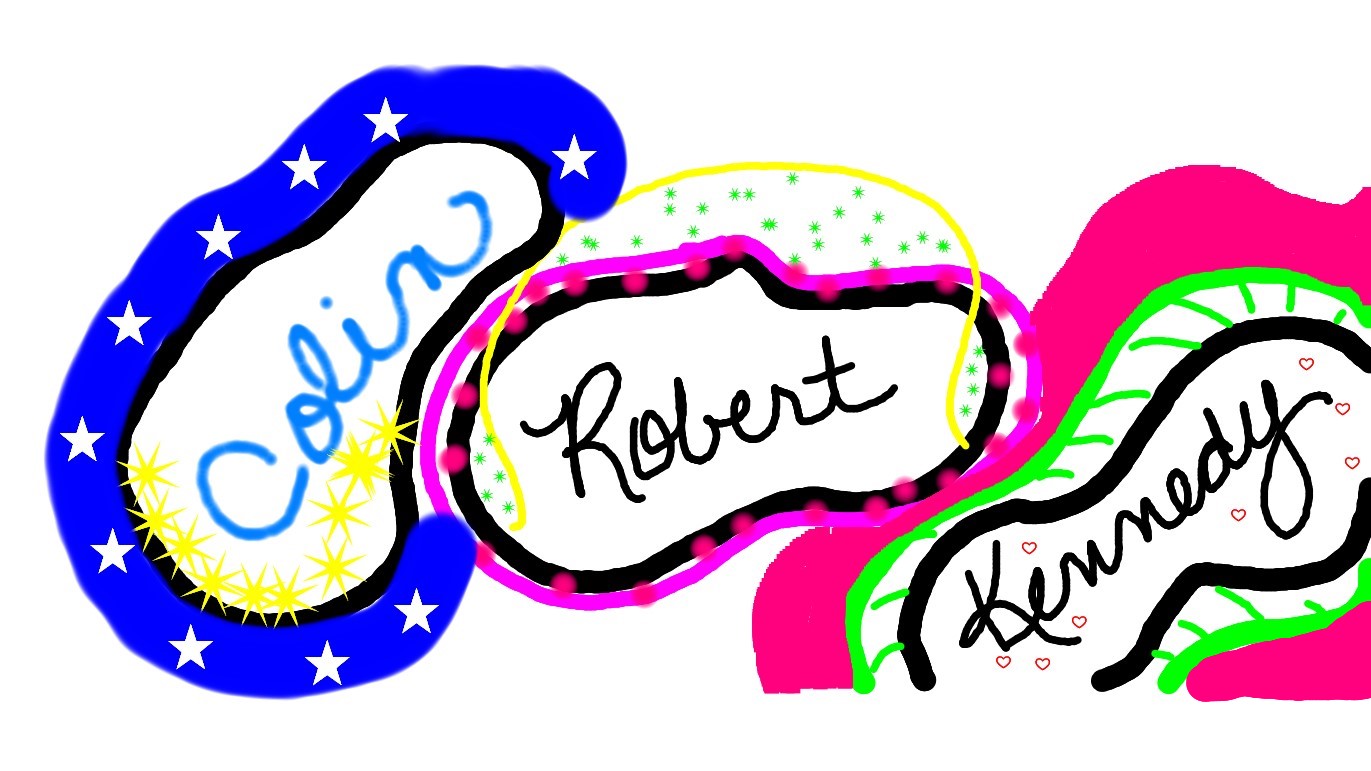
To begin, draw an imperfect shape and write the name of the person you wish to pray for:

1

Alternately, you could begin with your image of the divine, your own name, or even leaving the shape empty embracing the idea of the mystery in our midst.

Next, begin to add detail to the drawing…dots, lines, squiggles, wiggles, whatever you want! Don’t overthink, just go with the flow. This is not a place for your inner art critic to emerge. This is simple prayer. Continue to add detail to the drawing-each pen stroke an intentional prayer.

2

When you feel that this is complete, draw a new shape and add another person. But first, take a moment to close out the first person with some sort of closure to the prayer or meditation (amen, so be it, shalom, etc.). Also, you may want to take a cleansing pause before jumping onto the next person.  Or you may want to immediately move forward to the next person. Do what is right for you and the situation.

Repeat the process of drawing. Add doodads, color, and details.

4

Add another person to the prayer list. (And so on).

5

The most important thing to remember is that there is not any rules. You should follow the process where it leads you. And you will then create a personal prayer icon for you to carry with you throughout the day or days. You may even choose to post in someplace visible like your refrigerator! or you bathroom mirror. Or begin to enhance it further as days progress by adding words to focus your intentions.

6

If the words are distracting, put them away.

There you have it! Praying in Color – yet another way to access the deep love, mercy, and justice that resides within us all. You could easily do this and zip out names of people and zip in parts of the world worthy of deep concern … Syria, Kenya, Afghanistan…

Shalom and Amen!

~Terri


© 2013, post, Terri Stewart, All rights reserved

terriTERRI STEWART is Into the Bardo’s  Sunday chaplain, senior content editor, and site co-administrator. She comes from an eclectic background and considers herself to be grounded in contemplation and justice. She is the Director and Founder of the Youth Chaplaincy Coalition that serves youth affected by the justice system. As a graduate of Seattle University’s School of Theology and Ministry, she earned her Master’s of Divinity and a Post-Master’s Certificate in Spiritual Direction. She is a contributing author to the Abingdon Worship Annual. (The 2014 issue just released!)

Her online presence is “Cloaked Monk.” This speaks to her grounding in contemplative arts and the need to live it out in the world. The cloak is the disguise of normalcy as she advocates for justice and peace. You can find her at www.cloakedmonk.com, www.twitter.com/cloakedmonk, and www.facebook.com/cloakedmonk.  To reach her for conversation, send a note to cloakedmonk@outlook.com

Posted in General Interest, Meditation, Peace & Justice, Spiritual Practice

HEADS-UP: Tomorrow is U.N. International Peace Day … join the Global Synchronized Meditation

800px-Peace_Tattoo_San_Diego_County_Fair_2009September 21, 2013 is the United Nation’s International Peace Day. The theme this year is Education for Peace, including fostering respect, inclusiveness, and peaceful societies.

Many organizations across this beautiful blue orb of ours are marking the day with events of one sort or another. One of special interest is Unify’s Global Synchronized Meditation

BE THE PEACE

“The purpose of meditation is to awaken in us the skylight nature of mind, and to introduce us to that which we really are, our unchanging pure awareness that underlies the whole of life and death.

“In the stillness and silence of meditation, we glimpse and return to that deep inner nature that we so long ago lost sight of amid the busyness and distraction of our minds.”  Sogyal Rinpoche, Glimpse After Glimpse: Reflections of Living and Dying

Thanks to Mick B. for the Sogyal Rinpoche quote.
Photo credit ~ Patty Mooney via Wikipedia under Creative Commons Attribution-ShareAlike 3.0 unported license
Video uploaded to YouTube by UNIFYMEDIA2012

Posted in Art, Meditation, Paula Kuitenbrouwer, Spiritual Practice

Mindfulness in the 1600s

the work of Paula Kuitenbrouwer, a reblog of one of Paula’s Sonnetagsfreude – or Sunday Happiness – posts, which are an initiative of Maria at Kreativeberg.  …Enjoy!

61onuaotpol-_sl500_

brother-lawrence

A Kid’s Herb Book by Lesley Tierra for my daughter, and for me The Practice of The Presence of God by Brother Lawrence.

Sunday Happiness* is about finding time to read. Our society slows down; we all get some time for reflection.

My daughter explores the mysterious world of herbs with this magical, herbal workbook. It is about making your own healing potions, secret remedies, and magical salves.

My book is about mindful meditation.
Brother Lawrence, a monk in the 1600s, promised himself he would live day and night, in good and bad times, in God. He spent many years practising the presence of God in his life. His key to this practice was that he strove to be consciously aware of God’s presence at all times, which seems a perfect synonymy of (Christian) mindfulness.
.
To me it means that with everything I do, I ask myself if I’m acting in the best consciousness and ethical conscientiousness. With means, I need to be aware and practice self-discipline, carefulness, and thoroughness. It is very easy to wander away from awareness and thoroughness, like with any meditation. If this happens, I bring myself back into the presence of God. It is a wonderful meditation, but not an easy one. Having said that, the more you do this, the longer the stretches of time of being in God, or being mindful, do occur.
.
I started to read this tiny book months ago, and I do return to it often, because Brother Lawrence’s promise still inspires. To purposefully enjoy God’s presence, or mindfulness, in your life, is like opening up to small miracles. Pouring tea becomes a meditation and so does watering the flowers on the balcony. It is still a bit hard to feel the presence of God while paying bills (and all others worldly and bureaucratic chores ), but to stay mindful, to stay open for the presence of God non stop is what it is about. And when I succeed, I feel a happy appreciation for the smallest things in life.

masterpiecejunebig_1920259a

Rembrandt’s master work of his son, Titus van Rijn, in a monk’s habit

Is this book only for Christians? Not at all. I recommend it to all people who are interested in the spiritual life. It is about mindfulness in the 1600s.

Thich Nhat Hanh says, in one of his many books that I’ve read, that if you need the address of God, he will give it to you; it is Here and Now. Brother Lawrence would probably have said: God’s address is being in the presence of God.

Namaste,
Paula

© 2013, essay and photographs/artwork (below), Paula Kuitenbrouwer, All rights reserved

birdcardsPAULA KUITENBROUWER ~ is a regular contributor to Into the Bardo and a Dutch nature artist living in The Netherlands and sharing her work with us on her blog, Mindful Drawing and on her website.   In addition to art, Paula’s main interest is philosophy. She studied at the University of Utrecht and Amsterdam. She has lived in Eastern Europe and in Asia. Paula says that in Korea, “my family lived next to a Buddhist temple. In the early morning we would hear the monks chanting. During my hours of sauntering with my daughter through the beautiful temple gardens, I felt a blissful happiness that I try to capture in my drawings.” Paula sometimes teaches children’s art classes. She lives with her husband and daughter and close to her father. You can view her portfolio of mindful drawings HERE.

Posted in Essay, Photography/Photographer, Spiritual Practice, Terri Stewart

Prayer as Action for Peace

Saturday, September 7, 2013, was a call for worldwide prayer and fasting to focus on peace in Syria. I have seen many things happening–prayer vigils, personal meditation practices, marches, and communications with elected officials. We decided to offer a Labyrinth Walk for Peace at Bothell UMC in Bothell, WA in the morning. I gathered inter-faith prayers, we walked, prayed, and focused on bringing peace to the world. What follows is prayers and photos from that journey that became deeply personal for each attendant. There was a certain transition that occurred for me as I took in my surroundings and noticed Farmer Brown’s Garden. I began to see, literally, a connection between peacefulness and being fed. You will see.

Entering Sacred Space

prayers-for-peace-3

Sufi Prayer for Peace

Send Thy peace, O Lord, which is perfect and everlasting, that our souls may radiate peace.
Send Thy peace, O Lord, that we may think, act,
and speak harmoniously.
Send Thy peace, O Lord, that we may be contented
and thankful for Thy bountiful gifts.
Send Thy peace, O Lord, that amidst our worldly strife we may enjoy thy bliss.
Send Thy peace, O Lord, that we may endure all,
tolerate all in the thought of thy grace and mercy.
Send Thy peace, O Lord, that our lives may become a
divine vision, and in Thy light all darkness may vanish.
Send Thy peace, O Lord, our Father and Mother,
that we Thy children on earth may all unite in one family.
– Sufi Prayer

The Journey Begins

prayers-for-peace-6

An Islamic Prayer for Peace

In the Name of Allah, the beneficent, the merciful: Praise be to the Lord of the Universe
who has created us and made us into tribes and nations that we may know each other,
not that we may despise each other.

If the enemy incline towards peace, do thou also incline towards peace, and trust in God,
for the Lord is one that hears and knows all things.
And the servants of God Most Gracious are those who walk on the Earth in humility,
and when we address them, we say, “Peace.”
– U.N. Day of Prayer for World Peace 2

Walking Together in Ubuntu

prayers-for-peace-5

A Hindu Prayer for Peace

Supreme Lord, let there be peace in the sky and in the atmosphere.
Let there be peace in the plant world and in the forests.
Let the cosmic powers be peaceful.
Let the Brahman, the true essence and source of life, be peaceful.
Let there be undiluted and fulfilling peace everywhere.
– The Atharva Veda

All Are Invited to Be Fed

prayers-for-peace-1

Cheyenne Prayer for Peace

Let us know peace.
For as long as the moon shall rise,
For as long as the rivers shall flow,
For as long as the sun shall shine,
For as long as the grass shall grow,
Let us know peace.
– Cheyenne Prayer

Feeding the World in Spirit and Deed
Farmer Brown’s Garden at Bothell UMC

prayers-for-peace-7

A Jewish Prayer for Peace

Grant us peace. Your most precious gift,
O Eternal Source of Peace, and give us the will to proclaim its message to all the peoples of the earth.
Bless our country, that it may always be a stronghold of peace, and its advocate among the nations.
May contentment reign within its borders, health and happiness within its homes.
Strengthen the bonds of friendship among the inhabitants of all lands.
And may the love of Your name hallow every home and every heart.
Blessed is the Eternal God, the source of Peace.
– From The Gates of Prayer: The New Union Prayer Book, by the Central Conferences of American Rabbis

Growing Spiritually and Growing Food

prayers-for-peace-9

Buddhist Prayer for Loving Kindness

May all beings be peaceful.
May all beings be happy.
May all beings be safe.
May all beings awaken to
the light of their true nature.
May all beings be free.
– Metta Prayer

Loving Kindness through Loving Care

prayers-for-peace-8

A Christian Prayer for Peace

Blessed are the peacemakers, for they shall be called the children of God.
But I say to you that hear, love your enemies; do good to those who hate you;
bless those who curse you; pray for those who abuse you.
To those who strike you on the cheek, offer the other also;
and from those who take away your cloak, do not withhold your coat as well.
Give to everyone who begs from you, and of those who take away your goods,
do not ask them again. And as you wish that others would do to you, do so to them.
– U.N. Day of Prayer for World Peace 2

Becoming the Light Unto the World

prayers-for-peace-10

A Non Traditional Prayer for World Peace

Spirit of Life and Love, be present with all who are suffering terribly from violence.
Lift up the hearts of those who fear. And inspire courage among the peacemakers.
Be present with political leaders, ensuring a retreat from violence
and a procession towards the peace table.
Guide the hands of all those who are caring for the injured, the hungry and the grieving.
And, open our own hearts to compassion.
Remind us of our complicity and responsibility.
And lead us towards generous engagement—always towards a vision of peace.
–Adapted from the Unitarian Universalist Tradition

Shalom and Amen,

Terri

© 2013, post and photos, Terri Stewart, All rights reserved

terriREV. TERRI STEWART is Into the Bardo’s  Sunday chaplain, senior content editor, and site co-administrator. She comes from an eclectic background and considers herself to be grounded in contemplation and justice. She is the Director and Founder of the Youth Chaplaincy Coalition that serves youth affected by the justice system. As a graduate of Seattle University’s School of Theology and Ministry, she earned her Master’s of Divinity and a Post-Master’s Certificate in Spiritual Direction. She is a contributing author to the Abingdon Worship Annual. (The 2014 issue just released!)

Her online presence is “Cloaked Monk.” This speaks to her grounding in contemplative arts and the need to live it out in the world. The cloak is the disguise of normalcy as she advocates for justice and peace. You can find her at www.cloakedmonk.com, www.twitter.com/cloakedmonk, and www.facebook.com/cloakedmonk.  To reach her for conversation, send a note to cloakedmonk@outlook.com

Posted in Essay, General Interest, Meditation, Nature

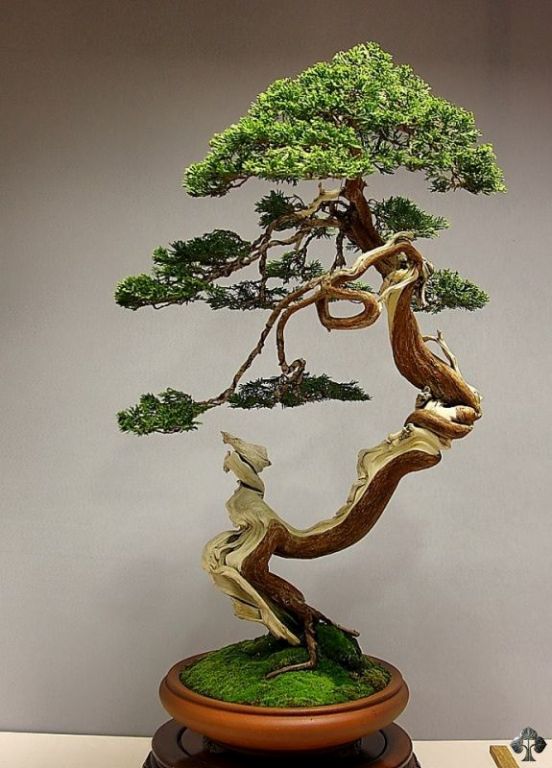
Bonsai

08-juniper-bonsai-blasco-pazI saw a bonsai tree earlier. Exquisitely arranged, perfect in its appearance. I admired it in awe, and then a thought crossed my mind and I couldn’t get rid of it: what exactly was it that I admired in a mutilated tree? The art of “educating” a plant to grow according to our own will? The way the small tree manages to “forget” about the cutting and the clumping and the trimming and the wiring and the all-together contortionism to which it is subjected, and simply grows?

What is the real beauty of a bonsai? Does it reside in the smallness? But smallness is relative – related to our own size. Do we create bonsais in order for them to make us feel bigger? An identical tree, though bigger than us, would be smaller than a mountain. But then again, an identical though bigger tree wouldn’t appear just as beautiful in different circumstances. We’d look at it with pity and say “poor tree, so twisted”, without realizing that the twisted one is our own view.

So, is it actually about the circumstances in which we look at it? Do we actually love the hidden wisdom of nature, letting us believe that we subdued it and forced it into shape, when in fact nature simply followed its course, surviving the circumstances? Is that what impresses? Or maybe the apparent resignation and submission of the tree under our touch?

Does the bonsai feel the awe in the eyes of his beholders? Does that comfort it in any way? Does our admiration in front of it MATTER? Or maybe what we actually do is subconsciously enjoy the tacit guilt spicing our admiration – a milder form of sadism under the pretext of art and beauty, excusing the cruelty. At this point at least half of you, dear readers, will protest and talk to me about the secular tradition of bonsai aesthetics and say that it’s not a proof of cruelty. Is it now? *smiling* Foot binding in China used to also be done under the pretext of beauty. How interestingly simple is actually the human essence…

But let me not divagate.

I liked the sight of that little bonsai. I sipped its beauty with all my strength and loved it and assumed the guilt for loving it – with awareness, with humility and shame. That bonsai bears the mark of human artistry – and maybe that is the “lesson” after all.

– Liliana Negoi

© 2013, essay, portrait below, and book cover art, Liliana Negoi, All rights reserved
Illustration ~ Juniper bonsai by Jose Luis Blasco Paz – the original one can be seen on http://www.bonsaiempire.com/blog/top10-bonsai.

IMG_7667the hidden well front coverLILIANA NEGOI (Endless Journey and in Romanian curcubee în alb şi negru) began to write poetry at eighteen – by accident – as she herself likes to remember, and has been exploring the depths of language ever since. Currently she is the author of three published volumes of poetry in English – which is not her mother tongue but one that she came to love especially because of writing: Sands and Shadows, Footsteps on the San – tanka collection and The Hidden Well.  The last one can also be heard in audio version, read by the author herself on her SoundCloud site HERE.  Many of her creations, both poetry and prose, have been published in various literary magazines.

Posted in Essay, Photography/Photographer, Spiritual Practice, Terri Stewart

A Prayer to Consider


I originally published this on my blog at cloakedmonk.com. I am reposting it here for a couple reasons – prayer is a great spiritual practice, whatever your understanding of prayer is. And I am at a conference called “Church Quake” in the DC area. It is a conference to aid United Methodist folks in helping to bring full inclusion to the church. Our theme has been “intersectionality.” What intersection of our understanding can come to the aid of an oppressed groups? We are related and interdependent as the prayer below says-we can see that when we consider our own woundedness and how we bring it to the altar of healing. Then what do we do? Consider the woundedness of others and help them find their way to healing. And so the pattern continues. Wounded becoming healing.

Henry Nouwen articulated the concept of the wounded healer quite well. Let me just share a quote from this Roman Catholic, PhD Psychologist, Theology teaching at Yale Divinity, depression suffering, book-writing, L’arche community loving, priest.

“When we honestly ask ourselves which person in our lives mean the most to us, we often find that it is those who, instead of giving advice, solutions, or cures, have chosen rather to share our pain and touch our wounds with a warm and tender hand. The friend who can be silent with us in a moment of despair or confusion, who can stay with us in an hour of grief and bereavement, who can tolerate not knowing, not curing, not healing and face with us the reality of our powerlessness, that is a friend who cares.”
― Henri J.M. Nouwen, The Road to Daybreak: A Spiritual Journey

Here, in this prayer, I find the intersectionality of flowers, interdependence, loving one another, an altar for all, and the healing of woundedness for the inclusion of all who are diverse and unique – precious and beautiful flowers.

A prayer in the Unitarian Universalist tradition by William G. Sinkford

In the presence of these flowers,
These representatives of Creation’s profound beauty:
Diverse and Unique, but Related and Interdependent,
These flowers which come to us as gifts from we know not where
And which we, in turn, choose to bring to our shared and common altar
As gifts to one another

In their presence we turn our thoughts to the mystery beyond mysteries
to the most sacred—which we never understand fully
but which we are granted revelatory glimpses of
in each of these flowers,
in each of your faces,
and through relationships with neighbors near and far

May they remind us of grace we have known in days past:
Forgiveness we have been granted, and provided.
Love, unearned and shared.
Recovery, begun and established.
Generosity, unforeseen and most sacred.

And may they inspire us now, and in days to come:
To seek,
To notice,
To embrace and,
To re-create beauty.
To give unto the world as exuberantly as these flowers.

yellow.center.flower

Go, be exuberant.

Shalom & Amen,

Terri

© 2013, post and photos, Terri Stewart, All rights reserved

© 2013, prayer, William Sinkford

terriREV. TERRI STEWART is Into the Bardo’s  Sunday chaplain, senior content editor, and site co-administrator. She comes from an eclectic background and considers herself to be grounded in contemplation and justice. She is the Director and Founder of the Youth Chaplaincy Coalition that serves youth affected by the justice system. As a graduate of Seattle University’s School of Theology and Ministry, she earned her Master’s of Divinity and a Post-Master’s Certificate in Spiritual Direction. She is a contributing author to the Abingdon Worship Annual. (The 2014 issue just released!)

Her online presence is “Cloaked Monk.” This speaks to her grounding in contemplative arts and the need to live it out in the world. The cloak is the disguise of normalcy as she advocates for justice and peace. You can find her at www.cloakedmonk.com, www.twitter.com/cloakedmonk, and www.facebook.com/cloakedmonk.  To reach her for conversation, send a note to cloakedmonk@outlook.com

Posted in Essay, Spiritual Practice, Terri Stewart

Sacred Space III

Continuing along the theme of sacred space, I would like to offer a method of creating sacred group space-especially in places of conflict or tension. Previous posts on sacred space are on the personal labyrinth and personal prayer patterns styled upon praying with beads.

Creating Sacred Group Space

Have you ever been in a situation where you needed to facilitate group sharing (or participate in) around a sticky topic or situation? It is really difficult to get people to move beyond finger pointing, conflict, and blaming. Eric Law developed a method that facilitates sharing in a sticky environment that offers mutual respect and honor to the participants. It is commonly called Eric Law’s Method of Mutual Invitation. I love using it!

Rev. Eric H. F. Law
(c) California-Pacific Conference of the UMC

One of the problems with most decision making settings is that a decision must be made! That necessitates a winner and a loser. It is rarely a win/win situation. Most often if one person wins, there is another person who loses or gives in. Eric Law’s Method of Mutual Invitation is not a decision making process, it is a listening process that can lead to deeper points and through long and hard work, lead to a consensus building model where every voice is heard and honored. It is at once simple and profound.

The Method

Mutual Invitation is a small group process designed to allow for inclusion and disciplined sharing in diverse settings, especially where there might be a variety of ages, ethnic backgrounds, different beliefs, or personality types present. The process allows for each person in the group to have an opportunity to share, as well as to participate in group dynamics. The process of Mutual Invitation can be adapted for different settings and purposes, e.g. family meal time, small group sharing, and office meetings.

Someone begins the sharing, related to the chosen topic.

  • The facilitator will set a time limit for each person.
  • No questions, responses, or interruptions are allowed during the process.

After the sharing there is a brief pause to allow the others to reflect upon what has been shared.

  • Responding begins after the pause. The pause should be stretched to a couple of minutes or longer if possible.
  • Responding is done by asking open ended questions designed to allow the person sharing to examine further her experience.

In a group sharing session, the person who is sharing invites the next person after others have responded to him/her.

  • Avoid inviting the person sitting next to you. This avoids the tendency to “go around in a circle.”
  • The goal of mutual invitation is to randomly invite the next person. This random invitation prevents distractions such as anticipating or worrying about what to share. Random invitation also helps keeps the focus on the person sharing.

The invited person may choose to share, to pass for now, or to pass.

  • Pass for now means she/he can share later when re-invited.
  • Pass indicates that she/he does not choose to share during this session.
  • Regardless of what the person chooses, she/he always invites the next person.

The process is repeated until everyone in the group has been invited. And every person has either responded or finished with a final pass.

Pattern sample:

  • Facilitator states the question being pondered and offers their own response.
  • Then silence is held for a couple minutes.
  • The group then asks questions-they must be either clarifying questions or open-ended questions. One person at a time.
  • The facilitator responds to questions as they come.
  • At the end of the questions, silence is held for a couple of minutes.
  • The facilitator invites the next person to share.
  • The next person responds with either their own sharing, a pass, or a pass for now.
  • Then silence is held for a couple of minutes.
  • The group then asks questions-they must be either clarifying questions or open-ended questions. One person at a time.
  • That person responds to questions as they come.
  • At the end of the questions, silence is held for a couple of minutes.
  • That person invites the next person to share.
  • And so on, until all have shared or responded with a final pass.

This sharing methodology, as simple as it is, has opened up sacred space. I love using it! Especially when confronted with sticky situations and group conflict. It keeps things calm, peaceful, and invites a sacred and healing quality to the space. You could even use it in a study environment! Imagine opening up a text and sharing responses in a group in this sacred, invitational manner! Beautiful.

The most profound time I have ever used this method involved a group in conflict. It was a group coming together after a major loss all with different ideas of how to move forward and very few ideas of how to sit in the loss. We used this method and brought out people’s fears, hopes, sorrows, and even some joys. It became a place of healing rather than a cantankerous committee meeting. It forced us to be still and to hold each other loosely and gently. Creating sacred space.

A bit about Rev. Eric Law:  He is an Episcopalian priest, is the founder and executive director of the Kaleidoscope Institute, the mission of which is to create inclusive and sustainable churches and communities. He has been writing and practicing for more than 20 years. He can be found online at The Sustainist.

Shalom and Amen,

Terri

© 2013, essay, Terri Stewart, All rights reserved

terriREV. TERRI STEWART is Into the Bardo’s  Sunday chaplain, senior content editor, and site co-administrator. She comes from an eclectic background and considers herself to be grounded in contemplation and justice. She is the Director and Founder of the Youth Chaplaincy Coalition that serves youth affected by the justice system. As a graduate of Seattle University’s School of Theology and Ministry, she earned her Master’s of Divinity and a Post-Master’s Certificate in Spiritual Direction. She is a contributing author to the Abingdon Worship Annual. (The 2014 issue just released!)

Her online presence is “Cloaked Monk.” This speaks to her grounding in contemplative arts and the need to live it out in the world. The cloak is the disguise of normalcy as she advocates for justice and peace. You can find her at www.cloakedmonk.com, www.twitter.com/cloakedmonk, and www.facebook.com/cloakedmonk.  To reach her for conversation, send a note to cloakedmonk@outlook.com

Posted in Essay, Spiritual Practice, Terri Stewart

Sacred Space Part II

Recently, I published a post on creating your own labyrinth as a way of making sacred space in a place where you may not be able to find a way to retreat to your preferred sacred space. This is a continuation upon that theme-creating sacred space in the midst of everyday living.

One thing my Spiritual Director and I agree upon is that I MIGHT have spiritual ADHD. Meaning, I need a variety of spiritual practices to keep me grounded. This totally makes sense since on the unofficial adult ADHD test I recently took, on a scale of 1-6 (6 being the most ADHD), I scored a six. Oh, yes. This penchant to need change and to be easily distracted often must be hemmed in by being very grounded in my own spiritual path while allowing myself the freedom to choose exercises, patterns, or methods from beyond my immediate experience.

This led me to take a workshop on praying with beads! Now, when I signed up for the workshop I knew that it was sponsored by an ecumenical organization so I assumed that it would be somewhat wide-open in its approach. I was wrong. It was a class on praying the Rosary. I am not Roman Catholic, and this was an ecumenical retreat, so I was a bit taken aback by the specific nature of the workshop. However, I decided to simply enter into the spirit of the situation and puzzle out my response later.

I am very glad that I did!

One of My Bracelets
One of My Bracelets

When I was able to reflect on the experience, I thought, “There must be a protestant version of this practice that would fulfill the tactile & prayerful longing that I have!” And I was right! Thank you search engine! I found a Unitarian Universalist Prayer Bead Practice. I cogitated on what I read there and then created my own practice. Now, I make prayer bead bracelets and use them to remind me to stay in touch with the sacred in my everyday living. It is one of the tools in my ADHD spiritual toolkit.

I adapted the main principle of the UUA prayer bead practice and utilized them for myself. I also make these for other folks selecting colors and images that I think will suit their spiritual journey. However, if you don’t have a bunch of beads lying around along with a crimper and all the stuff you need to make a bracelet, you can still do the prayer practice that I am about to outline by using your five fingers, starting at your thumb!

So here it is:

  1. My Hand-Each Finger a Bead
    My Hand-Each Finger a Bead

    See the “tail” on the bracelet? That is where you start or you can start with your thumb (lightly grasp the very end bead or the tip of your thumb) if you don’t have a bracelet or cannot make one. Sit still. Ground yourself. Rest gently with your eyes relaxed and gazing lightly or close your eyes, whatever is most comfortable to you. Here, focus on your image of the divine. Greet the divine and enter into the presence of holiness and join into a sacred moment. Hold this beloved image closely to your heart. Greetings of love, peace, serenity wash over you, through you, and into you. When you are ready, move up the tail of the bracelet or up your thumb to your hand. Feel each bead or feel each bend in your thumb.

  2. As you go up the beads, breath in and breath out at each small bead. Soon you will land on the large bead (not the clasp) or your fore finger. Here take time to envision those things you want to celebrate! This is a time for adoration, celebration, joy, happiness! Give all of this to your image of the divine and receive the gift that comes back to you whatever that may be. When you are ready, move to the next large bead (or your next finger tip) traveling slowly, thoughtfully, and with divine joy.
  3. At the next large bead, is the time to turn inward and look back at your day (or days before) and to offer a confession of where you have fallen short. For me, this is a time to admit where I have not been loving, peaceful, or justice seeking. Or a time to confess my lack of patience! This can be a time of sorrow, but it should not be a time of shame. We all fall short. Knowing we have, learning from it, and moving to the next bead is what this moment is for. When you are ready, move to the next large bead traveling slowly, thoughtfully, and with the knowledge that you can make mistakes and still return to a place of holiness and sacred healing.
  4. At the next large bead, it is time to name the things, people, and beings in the world that you are thankful for. Let love for the other wash over you and let gratitude sink deeply into you. It may be as simple as a favorite stuffed bear that has traveled with you since childhood. Gratitude in itself is a spiritual practice. Let it flow here. When you are ready, move slowly to the next large bead, touching each smaller bead and breathing in – breathing out at each touch. Do this with the understanding that as you find gratefulness in those around you, others are grateful for you and for who you are.
  5. At the final large bead, it is time to bring your concerns into sacred space. It could be concern for someone’s safety, for healing, for friends or family. Anything that is laying on your heart. Bring them into sacred, healing space. Here, depending on your space and time, you could do many things. You can talk with what is laying on your heart; hold it in love; offer it out to the world or the divine; or even do something creative with it.
  6. Finally, as close this part of the prayer, you will travel back to your initial image. Return to your thumb or return down the tail of the bracelet or beads. Breathing in and out at each small bead or bump along the way. As you return to your image, hold it, sit with it and when you are ready, leave it in whatever manner you are comfortable with. That could be namaste, amen, or a simple good-bye. Whichever way speaks to your path. Return to your every day living, bringing the sacred space you have made with you. Let it travel with you as you go about your day. Remembering that each time you touch your thumb or grasp a bead, that sacredness walks with and in you.

Shalom and Amen,

Terri

© 2013, post and photos, Terri Stewart, All rights reserved

terriREV. TERRI STEWART is Into the Bardo’s  Sunday chaplain, senior content editor, and site co-administrator. She comes from an eclectic background and considers herself to be grounded in contemplation and justice. She is the Director and Founder of the Youth Chaplaincy Coalition that serves youth affected by the justice system. As a graduate of Seattle University’s School of Theology and Ministry, she earned her Master’s of Divinity and a Post-Master’s Certificate in Spiritual Direction. She is a contributing author to the Abingdon Worship Annual. (The 2014 issue just released!)

Her online presence is “Cloaked Monk.” This speaks to her grounding in contemplative arts and the need to live it out in the world. The cloak is the disguise of normalcy as she advocates for justice and peace. You can find her at www.cloakedmonk.com, www.twitter.com/cloakedmonk, and www.facebook.com/cloakedmonk.  To reach her for conversation, send a note to cloakedmonk@outlook.com


Posted in Essay, Meditation, meditative, Music, Spiritual Practice, Terri Stewart, Uncategorized

Let Your Light Shine On

Finding Light
The Light Shines On

Where is your light today? What is leading you? What is giving you hope? Joy?

“When I find myself in times of trouble, mother Mary comes to me,
speaking words of wisdom, let it be.
And in my hour of darkness she is standing right in front of me,
speaking words of wisdom, let it be.

Let it be, let it be, let it be, let it be.
Whisper words of wisdom, let it be.

And when the broken hearted people living in the world agree,
there will be an answer, let it be.
For though they may be parted there is still a chance that they will see,
there will be an answer. let it be.

Let it be, let it be, …..

And when the night is cloudy, there is still a light, that shines on me,
shine until tomorrow, let it be.
I wake up to the sound of music, mother Mary comes to me,
speaking words of wisdom, let it be.

Let it be, let it be, …..”
― Paul McCartney

A note about the light fixture:

I photographed this light at the Merchant’s Cafe in Seattle, Washington. It is the first cafe in Seattle and has seen several iterations of its business as it was built, burned down, and built again. The interesting thing is that it is in the oldest part of Seattle (of course!). It was built in a building near first avenue. The tidal flats used to flood in every day, twice a day, up to third avenue. This makes doing business quite difficult! Seattle then had businesses build their buildings at least two stories tall. Then they raised all the roads, surrounding the existing buildings with raised roads. For a while, they put ladders at the streets so people would go off of the road, down the ladder, into the businesses.

Finally, they built sidewalks that connected the streets to the second story level of the buildings. So today, in Pioneer Square, when you enter the buildings, you are, in fact, entering the second story of the buildings that were placed there. If you look down, you will notice odd glass squares in the sidewalk. Those were originally skylights so that the first story of the buildings were kind of like an inside shopping mall with a view to the sidewalk above. So even there, in the midst of a buried first floor of these buildings, the light was still able to shine!

Such a fun history!

Shalom and Amen.

Terri

© 2013, post and photos, Terri Stewart, All rights reserved, originally posted at http://www.cloakedmonk.com

terriREV. TERRI STEWART is Into the Bardo’s  Sunday chaplain, senior content editor, and site co-administrator. She comes from an eclectic background and considers herself to be grounded in contemplation and justice. She is the Director and Founder of the Youth Chaplaincy Coalition that serves youth affected by the justice system. As a graduate of Seattle University’s School of Theology and Ministry, she earned her Master’s of Divinity and a Post-Master’s Certificate in Spiritual Direction. She is a contributing author to the Abingdon Worship Annual. (The 2014 issue just released!)

Her online presence is “Cloaked Monk.” This speaks to her grounding in contemplative arts and the need to live it out in the world. The cloak is the disguise of normalcy as she advocates for justice and peace. You can find her at www.cloakedmonk.com, www.twitter.com/cloakedmonk, and www.facebook.com/cloakedmonk.  To reach her for conversation, send a note to cloakedmonk@outlook.com

Posted in Essay, Meditation, meditative, Spiritual Practice, Terri Stewart, Uncategorized

Enter the Story – An Ignatian Style Meditation

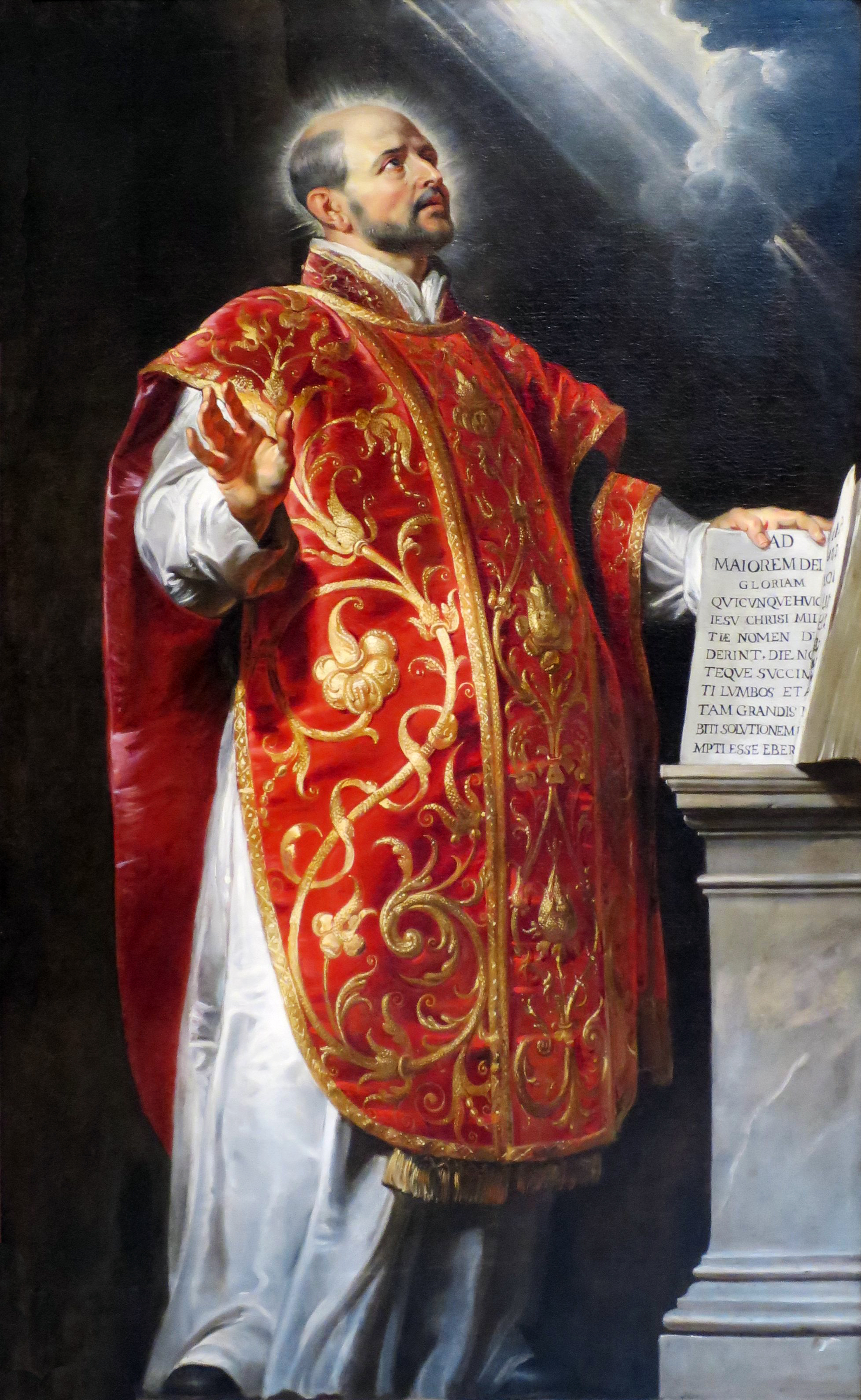
St. Ignatius of Loyola
From Wikipedia

St. Ignatius of Loyola, over time, became very concerned with spiritual practices. He developed one particular method that uses the imagination. It is sometimes called “Ignatian Contemplation.” Ignatian Contemplation uses the imagination as its center piece. In particular, using scripture and entering it using all the senses–feel the heat of the day, the dust in the road, or the smell of livestock. Enter the story in a complete way.

Today, I offer to you the story of the first king of Israel, Saul, and how he became the king. I ask you to use all your senses to enter the story. You may enter it as one of the characters or you may be a bystander. You may even be livestock! Whatever you choose, extend your reading of the story into your senses–taste, touch, smell, sight, sounds.

Take a moment and ground yourself. Sit comfortably, whatever that means for you. Take a breath in and release it.

Saul was at home, hanging out with his family and some of the donkeys escaped. Now Saul was a young, teenage boy–not viewed as a testosterone filled leader (although he is reported to be quite handsome!). Saul’s task, assigned by his family, was to go get the donkeys and return them  home!

So Saul goes on the road. He looked here and there, and the donkeys were not there. He looked over there and over here, and the donkeys were not there. Finally, the servant travelling with Saul says, “Let’s go ask the seer in town!” The seer was the prophet Samuel.

Saul travels to the seer, Samuel. Samuel tells Saul that he is destined to control the future of the Israelites. Saul says, “I’m a Benjamite, from the smallest clan! Surely not me!”

Samuel and Saul eat and then Samuel anoints Saul to become the king. Samuel then sends Saul on his way home.

Saul travels home with Samuel’s instructions. He travels home and even encounters other prophets on the road, goes into a prophetic frenzy with them, and continues towards home.

Upon his arrival home, his uncle asks, “Where have you been?!”

Saul said, “Well, we couldn’t find the donkeys, so we visited Samuel.” Saul says nothing of the anointing by Samuel, the prophetic frenzy on the side of the road, or of being made king! Nothing!

Then, Samuel comes to seek Saul out. Samuel gathers all the tribes together to “determine who will be king.” Samuel “casts lots.” (Throws dice!) Among the gathered tribes, he throws his dice, and Lo! The Tribe of Benjamin is chosen. Among the families in the tribe of Benjamin, he throws his dice, and Lo! The family of Matri was chosen. Among the people in the family of Matri, Samuel throws his dice, and Lo! Saul is chosen king.

But Saul is not there! They go to find him and he is hiding in the supply closet. Then Saul becomes the king.

What questions did that raise for you? Where were you in the story? Who were you? What will you become?

Shalom & Amen,

Terri

© 2013, post, Terri Stewart, All rights reserved

terriREV. TERRI STEWART is Into the Bardo’s  Sunday chaplain, senior content editor, and site co-administrator. She comes from an eclectic background and considers herself to be grounded in contemplation and justice. She is the Director and Founder of the Youth Chaplaincy Coalition that serves youth affected by the justice system. As a graduate of Seattle University’s School of Theology and Ministry, she earned her Master’s of Divinity and a Post-Master’s Certificate in Spiritual Direction. She is a contributing author to the Abingdon Worship Annual. (The 2014 issue just released!)

Her online presence is “Cloaked Monk.” This speaks to her grounding in contemplative arts and the need to live it out in the world. The cloak is the disguise of normalcy as she advocates for justice and peace. You can find her at www.cloakedmonk.com, www.twitter.com/cloakedmonk, and www.facebook.com/cloakedmonk.  To reach her for conversation, send a note to cloakedmonk@outlook.com