Posted in Joseph Hesch, poem, Poems/Poetry, poetry

Rapture in Rivertown

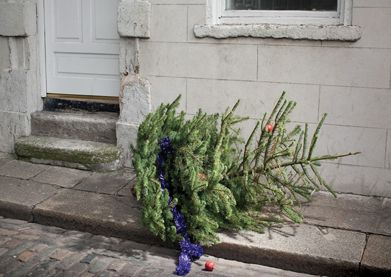
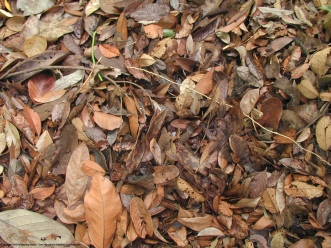
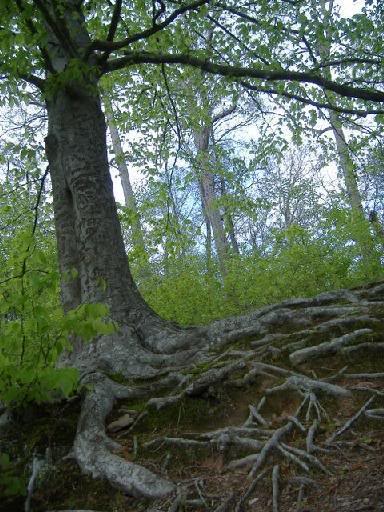
Discarded tree 1

With January’s ice-scrim mist,
this riverside neighborhood
turns back to photo-proof
black, white and gauzy gray.
Holiday colors have faded
like mid-September memories.

Tinder-dry once-evergreens,
erstwhile harlequin window beacons
for passing ice-breakers,
now lie exhausted on streetside,
snow-dusted Christmas gravestones,
waiting for the herald crash and call
of the trash collecting Rapture.

And ice-darkened perennial trees,
stand sentinel nearby
at snow-footed attention,
lean black cemetery guardsmen,
their uniforms on backorder
until a too faraway Spring.

This poem came from my walks and runs along the Hudson shore over the past 20 years. During the holidays, you could see the gumdrop-lit Christmas trees in windows over in Rensselaer. By early January, they were gone, the snow had come and the ice had choked the river. “Rapture in Rivertown” is what I recall and imagine of those days.

– Joseph Hesch

© 2014, poem and photograph, Joseph Hesch, All rights reserved

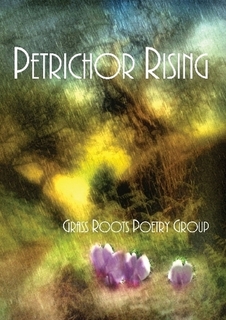
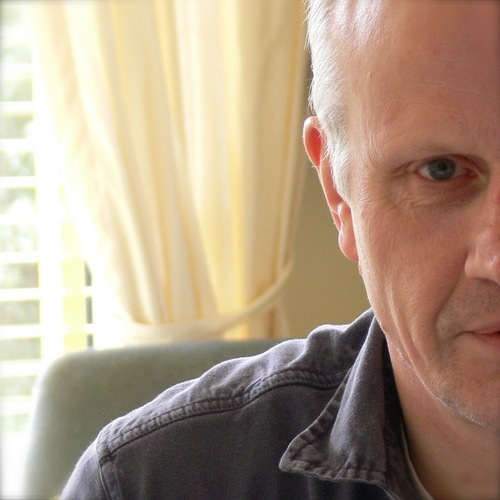
Hesch Profileproduct_thumbnail-3.phpJOSEPH HESCH (A Thing for Words) is a writer and poet from Albany, New York , an old friend of Bardo and a new core team member. Joe’s work is published in journals and anthologies coast-to-coast and worldwide. He posts poems and stories-in-progress on his blog, A Thing for Words.  An original staff member at dVerse Poets Pub website, Joe was named one of Writers Digest Editor Robert Lee Brewer’s “2011 Best Tweeps for Writers to Follow.” He is also a member of the Grass Roots Poetry Group and featured in their 2013 poetry anthology Petrichor Rising.

Posted in General Interest, Naomi Baltuck, Photo Essay, Photography/Photographer

The Flight of the Sparrow

Last summer I saw a baby Stellar Jay perched on my arbor, resting after trying out its wings. I looked away for an instant; when I looked back, it was gone.

It reminded me of something The Venerable Bede once said.  Bede was an Anglo-Saxon monk born in 672A.D.

In  The Ecclesiastical History of the English People he compares a person’s life to the flight of a sparrow.  Imagine sitting in a mead-hall at supper by the light of a blazing fire, while outside a winter storm rages.

A sparrow flies in one door of the hall, into the light, then darts out out another door, back into the cold dark night.  “So our lives appear for a short space,” said Bede, “but of what went before, or what is to follow, we are utterly ignorant.”

People have many different thoughts, feelings, beliefs and explanations as to what or if anything comes before…

…or after the sparrow’s flight.

Sooner or later each of us will fly out into the night.

That seems to be the only thing everyone can agree upon.

I don’t need to know all the answers before I fly back out.

I am right here, right now, basking in the warm and beautiful light of life.

Whatever happens outside the mead-hall won’t change the way I live my life here and now.

I have work I am passionate about…

..family I love and good friends to play with.

I care about issues in the wider world…

…and in my own little sphere.

I hope I can make some small difference…as a writer, a storyteller, a parent, a friend…

…and to leave even just a little nightlight shining…

…when my flight is done.
null

All words and images copyright Naomi Baltuck

NaomiPHOTO1-300ppi51kAqFGEesL._SY300_NAOMI BALTUCK ~ is a Contributing Editor and Resident Storyteller here410xuqmD74L._SY300_ at Bardo. She is a world-traveler and an award-winning writer, photographer, and story-teller whose works of fiction and nonfiction are available through Amazon HERE. Naomi presents her wonderful photo-stories – always interesting and rich with meaning and humor – at Writing Between the Lines, Life from the Writer’s POV. She also conducts workshops such as Peace Porridge (multicultural stories to promote cooperation, goodwill, and peaceful coexistence), Whispers in the Graveyard (a spellbinding array of haunting and mysterious stories), Tandem Tales, Traveling Light Around the World, and others. For more on her programs visit Naomi Baltuck.com

Posted in Essay, General Interest, Liz Rice-Sosne, Poems/Poetry, poetry, Spiritual Practice, Writing

Haiku – A Spiritual Experience

600px-Poecile-atricapilla-001I am sitting here trying to remember what prompted me to write one haiku per day during the first 6 months of 2012.  I was ill, that was the first reason for doing so.  I wished to remain connected to my writing community, keep alive my connection with the friends that I had met online.  I knew that I could not manage an article daily so I needed to write something short.  I decided that haiku was the answer.  Was there any shorter form of poetry?  The learning and the writing that year became for me a spiritual experience.  It taught me to see the world through a new and different lens.  I am so grateful for this experience

I have always been drawn to haiku even when young.  What can be said in 17 syllables, those three short lines of 5, 7, 5 syllables?  It would be easy – just compose three short lines of poetry a day.  Those thoughts will tell you just how little I knew of haiku when I began.  Experience has shown me that many Americans have little knowledge of haiku seeing it simply as three lines of poetry with the 5-7-5-syllable count.  If seen this way the reader and writer of haiku will never be fully satisfied.

The first thing that one should know is that the syllable count fits Japanese words or syllables.  Japanese words or syllables are nothing like English language syllables.  When attempting to write a haiku there are many things to consider before considering the word count.  The second thing that I learned is that it is often written in one line.  Just one.  In Japan that line is often written from top to bottom.  It is vertical.  I do not write vertically.

Poignancy in haiku is important.  The most important thing about haiku for me is very hard to put into language.  For I see haiku as a language all its own.   A haiku ties things together.  Haiku conveys the depths of nature’s beauty and its power.  Haiku shows ones relationship with nature.  One haiku can express in a few words what it might take a psychologist an entire magazine article to profess.  Haiku can evoke within the reader new understanding.  I equate haiku to light.  It can dazzle in brightness.  It can illuminate a path.  It can act as a halo separating yet conjoining reader and writer through the poem.  You are placed within the poem.  Haiku connects the ancient with the modern, the light with the dark, and nature with man/womankind.

The book to which I turn most often for reference is “The Haiku Handbook, How To Share Write and Teach Haiku,” by William J. Higginson.  I would go so far as to say that he has he has “lived” haiku, making his teachings easy to understand and to apply.  When writing haiku my goal is to be living in the moment, to be “living haiku.”  It is a spiritual moment.  I wish to express that moment to you so that you feel what I feel.  I believe Higginson tells us that haiku is about the eloquence of sharing those feelings.  It is easy to say to your friend: “the sky is beautiful.”  But in doing so, you do not really convey what you feel.   Nor are you conveying any degree of real beauty.  According to Higginson, when we share the depths of what we feel through haiku we are building community.   What more important act is there?

The first thing that I do when writing a haiku is search for a kigo.  A kigo is a season word and mandatory in haiku.  Your haiku should be driven by what you feel for your subject and your choice of kigo.   I view the kigo as an anchor.  There are numerous kigo databases online.  New words are always being added.

We have just experienced a foot of snow here in the midwest.  The last time we had so much snow was 1982.  This is an immense weather event here.  Along with subzero temperatures accompanied by wind many of us are pretty much homebound.  I would like to share this large weather experience with you by writing a haiku.  I edit and re-edit before I am happy with them.  Each of these are a part of my process for creating one haiku.

wall of snow – broken branches dangling from trees (this sounds awkward to me)

or

deep white snow – hidden branches (this coveys little feeling)

or

drifting snow – a chickadee’s cap (this possesses the essence of what I am looking for)

Final haiku:

blowing drifting snow – chickadee’s black cap

– Liz Rice-Sosne

© 2013, essay, Liz Rice-Stone, All rights reserved
Photo credit ~ Black-capped Chickadee via Wikipedia and under CC A-SA 3.0 unported license

unnamed-2LIZ RICE-SOSNE a.k.a. Raven Spirit (noh where), perhaps the oldest friend to Bardo, is the newest member of The Bardo Group Core Team. She is also our new Voices for Peace project outreach coordinator and our go-to person for all things related to haiku.  She says she “writes for no reason at all. It is simply a pleasure.” Blogging, mostly poetry, has produced numerous friends for whom she has a great appreciation. Liz is an experienced blogger, photographer and a trained shaman. We think her middle name should be “adventure.”

Posted in folk tale, General Interest, Naomi Baltuck, Photography/Photographer, story, Story Telling, Photo Story

The Most Noble Story

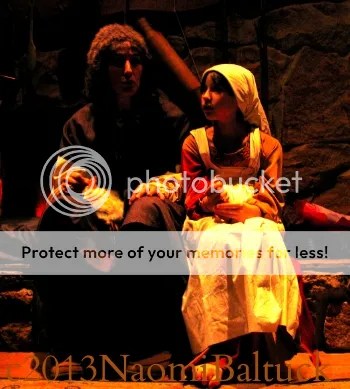
There was once a widow who had three sons, Alberto, Eduardo, an Ernesto. She had spent a lifetime trying to teach them the meaning of charity and compassion.

The day came when she knew she was dying, and would no longer be there to guide them.  She called her sons to her bedside.

“My sons, the only thing of value I have to leave you is my diamond ring. It was given to me by my mother, who had it from her mother, whose mother handed it down to her. It cannot be divided and it must not be sold, for one day, it shall go to one of your daughters.  Now I must decide which of you is most worthy of this treasure. Go, my sons, and do good in the world.  Come back in one week’s time and tell me your stories. The one who has performed the most noble deed shall inherit the diamond.”

By the time the three young men gathered again at her bedside, their poor mother was near death.

She said to her firstborn, “Alberto, tell me your story.”
“Well, Mother,” said the eldest, “after much thought, I gave half of everything I owned to the poor.”
“My son,” said the old woman, “no one can tell you that you haven’t performed a good deed. But it is not a noble deed, for have I not taught you that it is everyone’s responsibility to care for the needy?”


She said to her secondborn son, “Eduardo, tell me your story.”
He said, “Mama, I was passing the river when I saw a small child swept away in the current. I can hardly swim, but I jumped into the water and pulled the child out to safety.  It was only by the grace of God that I didn’t drown myself.”


“My son, you too have performed a good deed, but not a noble deed. Have I not taught you that everyone should be willing to lay down his life for that of a helpless child?”


The old woman said to her youngest son, “Eduardo, come tell me your story.”
Ernesto hesitated before taking her hand. “Mamacito,” he confessed, “I haven’t much to tell. As you know, I’ve no earthly goods, and I cannot swim a stroke. But I’ll tell you something that happened to me this week. Very early one morning I was walking in the mountains.

I came upon a man sleeping at the edge of a cliff. If he were to stir in his sleep, he would surely fall to his death on the rocks below. I determined to prevent this tragedy. I crept over, so as not to startle him awake. Then I saw that it was my bitter enemy, Juan Miguel. At first, I thought to leave him there, for the last time we met, Juan Miguel threatened to kill me if he ever got the chance. But deep down I knew what I had to do.
“As I put my arms around him, Juan awoke and I could see the fear in his eyes as he recognized me.
“’Don’t be afraid,’ I told him. I quickly rolled him away from the precipice to safety, and helped him to his feet. When Juan Miguel came toward me, I was sure he meant to kill me. But then he threw open his arms to embrace me.
“Juan said, ‘Last night darkness fell before I could get home. Rather than chance a misstep in the dark, I decided to spend the night where I was. I had no idea I was so close to the cliff edge. You saved my life, Ernesto, and after I treated you so poorly!’
“To make a long story short, Mamacita, Juan and I are no longer enemies, but have sworn to be friends forever.”

The old woman shed tears of joy. “My son, I have taught you well. That was truly a noble deed, and you are a noble man, for you risked your life to save a man sworn to kill you. With one act of kindness, you have transformed hatred into love and made the world a better place.” With her dying breath she told her sons, “The diamond shall go to Ernesto, but you must all remember that with each noble deed you perform, you shall add to the treasure that awaits you in Heaven.”


All three sons married and had children of their own. They, like their mother, taught their children the meaning of charity and compassion. When the time came, Ernesto left his mother’s diamond to one of his daughters.

But Alberto and Eduardo left their children a gem worth as much as any diamond, for their children held in their hearts their grandmother’s precious legacy, the story of the most noble story.

All photos copyright 2013 Naomi Baltuck

The Most Noble Story is from Apples From Heaven, copyright 1995 Naomi Baltuck, and retold from a folk tale of Mexico.

NaomiPHOTO1-300ppi51kAqFGEesL._SY300_NAOMI BALTUCK ~ is a Contributing Editor and Resident Storyteller here410xuqmD74L._SY300_ at Bardo. She is a world-traveler and an award-winning writer, photographer, and story-teller whose works of fiction and nonfiction are available through Amazon HERE. Naomi presents her wonderful photo-stories – always interesting and rich with meaning and humor – at Writing Between the Lines, Life from the Writer’s POV. She also conducts workshops such as Peace Porridge (multicultural stories to promote cooperation, goodwill, and peaceful coexistence), Whispers in the Graveyard (a spellbinding array of haunting and mysterious stories), Tandem Tales, Traveling Light Around the World, and others. For more on her programs visit Naomi Baltuck.com

Posted in Naomi Baltuck, Photo Essay, Photography/Photographer

Making Correct Change

Imagine a time when Manhattan was all forest.  Now the surviving trees are like living things herded into a corral of concrete and steel.

We have careened through time like a car without brakes…

In our wake a city of skyscrapers has sprung up where once a forest grew, but the city remembers its roots…

The past lurks, like a silent ghost, peeking out from dirty windows in the attic…

…or a little lost child, peering from between the legs of strangers in a crowd.

Beneath all the the glitz and glamor and bright lights…

…the old grand dame still thrives.

From past and present must come the future.

If we proceed with caution…

…careful reflection…

…and respect for all living things…

…the heart of the city will always be strong.

All images and words copyright 2013 Naomi Baltuck

NaomiPHOTO1-300ppi51kAqFGEesL._SY300_NAOMI BALTUCK ~ is a Contributing Editor and Resident Storyteller here410xuqmD74L._SY300_ at Bardo. She is a world-traveler and an award-winning writer, photographer, and story-teller whose works of fiction and nonfiction are available through Amazon HERE. Naomi presents her wonderful photo-stories – always interesting and rich with meaning and humor – at Writing Between the Lines, Life from the Writer’s POV. She also conducts workshops such as Peace Porridge (multicultural stories to promote cooperation, goodwill, and peaceful coexistence), Whispers in the Graveyard (a spellbinding array of haunting and mysterious stories), Tandem Tales, Traveling Light Around the World, and others. For more on her programs visit Naomi Baltuck.com

Posted in Poems/Poetry, Victoria C Slotto

Finis

I was there.

Weeks of waiting, watching,
wondering how you held on,
how you defied
the inevitable.

You clung to life,
her tenuous tendrils
all that kept you here.

I’ve watched the change
death brings
when so slow—
the fragile, fading
waning of vigor.

A life unnoticed—
when not a mark is made
or sound is heard,
you die alone.

But I was there.

This morning,
you let go
and fluttered to the ground
among so many others,

and I was there.

– Victoria C. Slotto

Photo Credit: Mayang.com

I’ve been watching the tree outside the window where I meditate. One leaf, glorious in the height of autumn caught my attention and I kept an eye on it until it dropped. For me, this is a metaphor. In my “past life,” I was in an religious order that watched with the dying 24/7. So often, the person had no one. So many lives go unnoticed. I think of this often when looking at all the leaves on a tree, or a field of sunflowers. And so it is.

© 2013, Victoria C. Slotto, All rights reserved

Victoria at the Palm Springs Writer's Expo March 2012
Victoria at the Palm Springs Writer’s Expo March 2012

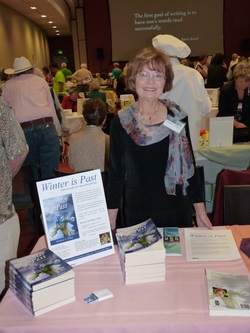
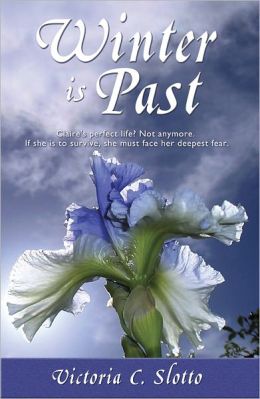
2940013445222_p0_v1_s260x420VICTORIA C. SLOTTO (Victoria C. Slotto, Author: Fiction, Poetry and Writing Prompts) ~ is an accomplished writer and poet. Winter is Past, published by Lucky Bat Books in 2012, is Victoria’s first novel. A second novel is in process. On Amazon and hot-off-the-press nonfiction is Beating the Odds: Support for Persons with Early Stage Dementia. Victoria’s ebooks (poetry and nonfiction) are free to Amazon Prime Members. Link HERE for Victoria’s Amazon page.

51tBOKHnyZL._AA160_Editor’s note: Congratulations, Victoria, on that the long awaited publication of print copies of Jacaranda Rain, Collected Poems, 2012, Beautifully done.

Posted in Naomi Baltuck, Photo Essay, Photography/Photographer

You Mean It’s NOT a River?

Some people say life is a river.  I think it’s more like a mountain.


It has its ups…

…and downs.

It can be glorious.

Mysterious.

Precarious.

Fraught with fire…

…and ice.

No one can climb it for you.

But, oh, what a trip.

As you find your way…

…the climb can be difficult.

The right path isn’t always clear.

But there will be beauty all around you.  In little things….

…or stretched out before you in all its grandeur.

In Hawaii they say love is like fog–there is no mountain on which it does not rest.

May there be friends to share the journey.

…to make you smile…

…to guide you…

…and support you.

Life is a delicate balance, a precious jewel, a piece of work.

Yes, look before you leap…

…and wear the proper footwear.

But as the saying goes, we don’t trip on mountains.  We trip on molehills.

All words and images c2013 Naomi Baltuck

NaomiPHOTO1-300ppi51kAqFGEesL._SY300_NAOMI BALTUCK ~ is a Contributing Editor and Resident Storyteller here410xuqmD74L._SY300_ at Bardo. She is a world-traveler and an award-winning writer, photographer, and story-teller whose works of fiction and nonfiction are available through Amazon HERE. Naomi presents her wonderful photo-stories – always interesting and rich with meaning and humor – at Writing Between the Lines, Life from the Writer’s POV. She also conducts workshops such as Peace Porridge (multicultural stories to promote cooperation, goodwill, and peaceful coexistence), Whispers in the Graveyard (a spellbinding array of haunting and mysterious stories), Tandem Tales, Traveling Light Around the World, and others. For more on her programs visit Naomi Baltuck.com

Posted in Jamie Dedes, Poems/Poetry

one lifetime after another

Angel and Dove, original watercolor by Gretchen Del Rio, all rights reserved
Angel and Dove, original watercolor by Gretchen Del Rio

one day, you’ll see, i’ll come back to hobnob
with ravens, to fly with the crows at the moment
of apple blossoms and the scent of magnolia ~
look for me winging among the white geese
in their practical formation, migrating to be here,
to keep house for you by the river …

i’ll be home in time for the bees in their slow heavy
search for nectar, when the grass unfurls, nib tipped ~
you’ll sense me as soft and fresh as a rose,
as gentle as a breeze of butterfly wings . . .

i’ll return to honor daisies in the depths of innocence,
i’ll be the raindrops rising dew-like on your brow ~
you’ll see me sliding happy down a comely jacaranda,
as feral as the wind circling the crape myrtle, you’ll
find me waiting, a small gray dove in the dovecot,
loving you, one lifetime after another.

– Jamie Dedes

© 2013, poem , Jamie Dedes, All rights reserved
© Illustration ~ Gretchen Del Rio, used here with Gretchen’s permission, All rights reserved

Photo on 2012-09-19 at 20.00JAMIE DEDES ~ My worldly tags are poet and writer. My most meaningful tags are mother and daughter. This is my sixth year of blogging  at The Poet by Day,the journey in poem, formerly titled Musing by Moonlight.  I’ve hosted The Bardo Group (formerly Into the Bardo) for three years come 22 February 2014. Through the gift of poetry (mine and that of others), I enter sacred space.

Posted in John Anstie, Poems/Poetry

Earth Prayer

[I cannot remember what it was that inspired this poem, but, when all is said and done, I think it and the photo from Max Mitrofanov speak for themselves]

Picture credit: Max Mitrofanov (via triumph.dev1antart.com)
Photo: Max Mitrofanov (via triumph.dev1antart.com)

Dear Earth,
mother of us all,
solar sister,
child of the Universe,
our common blood
was carbon, nitrogen,
oxygen and hydrogen,
in concert with the stars.

Astronomical forces
great voids imploding
then exploding in light
with dust and smell
of a thousand million
godless bombs
driven to extinction
by unlimited energy.

Facing the hideousness
of death at day’s end,
the weight of this life
seems so much lighter,
in the brightness
of our knowledge,
portending reunion
of the atoms we are.

Dear Earth,
mother of us all,
in your patience and
your tolerance of us,
breath a huge sigh
and remind us
who we are and
whence we came.

© 2013 John Anstie

Picture credit: Max Mitrofanov (via tr1umph.deviantart.com)

John_in_Pose_Half_Face351w-rH34dTL._BO2,204,203,200_PIsitb-sticker-arrow-click,TopRight,35,-76_AA300_SH20_OU01_JOHN ANSTIE (My Poetry Library and 42) ~ is a British poet and writer, a contributing editor here at Bardo, and multi-talented gentleman self-described as a “Family man, Grandfather, Occasional Musician, Amateur photographer and Film-maker, Apple-MAC user, Implementation Manager, and Engineer. John participates in d’Verse Poet’s Pub and is a player in New World Creative Union. He’s been blogging since the beginning of 2011. John is also an active member of The Poetry Society (cover1UK).

John has been involved in the recent publication of two anthologies that are the result of online collaborations among two international groups of amateur and professional poets. One of these is The Grass Roots Poetry Group, for which he produced and edited their anthology, “Petrichor* Rising. The other group is d’Verse Poet Pub, in which John’s poetry also appears The d’Verse Anthology: Voices of Contemporary World Poetry, produced and edited by Frank Watson.

* Petrichor – from the Greek pɛtrɨkər, the scent of rain on the dry earth.

Posted in Uncategorized

As You Like It (Reflections Upon the Art of Aging)

“All I ask is a tall ship and a star to steer her by…”


My mother and her sister Loena were best friends.  Wherever Loena went, she would sing or hum quietly to herself.  My mother used to introduce her to friends saying, “This is my sister Loena.  Don’t mind her; she hums.”

Mom was the one who used to bust Aunt Loena out of Detroit for road trips.  Sometimes to Washington, D.C. to visit my sister Miriam, to Maine to see my sister Constance, or to see me and my siblings in Seattle, especially if the Tigers were scheduled to play the Mariners.

Driving cross country to attend my wedding, they made a late-night stop at a hamburger joint in Iowa. They were laughing so hard the young man behind the counter came to their table and said, “Ladies, I don’t know where you’re going, but I want to come with you.”

Less than a year after Mom died, my first baby was born.  It was a wonder-full time, if bittersweet.  Aunt Loena’s visit was the next best thing to seeing my mom holding my baby in her arms.  I felt my mother’s presence, watching, smiling, loving.

But it was hard for Aunt Loena to get away.  She spent two decades housebound while caring for her mother-in-law, and then her husband.  No one blamed him for his frustration, but he yelled at everyone who came to visit or offer aid, and fired everyone my aunt hired to help with housework and eldercare.  It was emotionally isolating and physically exhausting.  She never complained, and joked that at least her medical appointments for heart trouble, cataract surgery, and blood transfusions got her out of the house.  Like my mother, she knew how to look for the bright spots.

The 911 response team knew her by name, as she had to call whenever her husband fell out of the recliner where he slept.  It was time for a nursing home.  She visited him twice a day, until she caught meningitis.  Her doctors didn’t think she’d survive.  I flew to Detroit to say goodbye, but Aunt Loena is a two-time cancer survivor, who has come back from the brink so many times she makes Rasputin look like a weenie.  It was a wake-up call, however.  She checked out of the hospital with a bucket list.  My aunt is 86, anemic, subject to dizzy spells and shortness of breath.  Oh, yes, and always up for an adventure, so long as it is wheelchair accessible.

https://i0.wp.com/i1176.photobucket.com/albums/x334/nbaltuck/IMG_7262-2-1.jpg

Aunt Loena with my sister Lee and my son Elijah

Our first adventure was a trip to Seattle.  We knew she had a great time, because wherever we went, she hummed to herself like a purring kitten.  That trip was just a warm-up for her dream trip to New York City.

Aunt Loena in Central Park with Bea and me.

When it was time to leave New York and go our separate ways, it was too sad to say goodbye, so instead we said, “Where to next?”  She’d always wanted to go the Shakespeare Festival in Stratford, Ontario.  So that’s what we did.  My son Eli flew in from college in Maine, I flew from Seattle, and my sister Lee joined us from the Upper Peninsula of Michigan.

 We went in October, to take in the fall colors as well as the plays.
I chose our motel for its name.

https://i0.wp.com/i1176.photobucket.com/albums/x334/nbaltuck/IMG_7280-1.jpg

In Stratford I discovered the secret to longevity–a nightly dose of Miss Vicky’s Salt and Vinegar Potato Chips!  Aunt Loena is a teetotaler, but she’s not afraid of a little salt and grease.  Got sugar?   Bring it on!

Each time we part, I fear another long drive or a cross country flight will prove too much.  We make a date and look forward to it, but  I always check before I make plane reservations.  “You’re sure?”  And she always says, “Oh, yes.  As long as I’m sitting down, it’s almost just the same as sitting at home.”

We promised to bring her to Seattle for fish and chips this summer, but Lee couldn’t make it.  I asked my friend Monica, also a Detroiter, if she’d consider escorting Aunt Loena.  The next morning I got her reply– she would be delighted!  What a gift to us all!  We couldn’t have pulled it off without her.  Monica and Aunt Loena had been hearing about each other for years, and felt like they already knew each other.  We kicked off a week-long PJ party by attending a performance of Cole Porter’s “Anything Goes.”   We also enjoyed Teatro Zinzanni’s very silly but impressive dinner theater show, “Gangsters of Love.”

Aunt Loena made her famous egg salad sandwiches.  Years ago, when we all drove to D.C. to visit our sister Miriam, we weren’t out of Detroit yet when Mom said, “Who’s ready for an egg salad sandwich?”  It was 10am, but so what?  We were ready for another one by lunchtime.

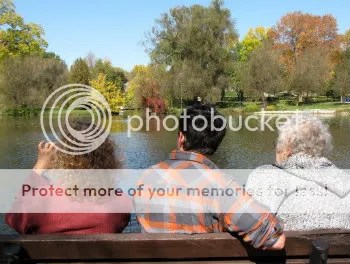
We picnicked at Green Lake–egg salad sandwiches, my brother Lew’s homemade cookies, and Salt and Vinegar Potato Chips.  We couldn’t get to a picnic table, because we didn’t have an all-terrain wheelchair, but from our park bench we had a gorgeous view of the lake.

I would love to take Aunt Loena to Hawaii or Europe; even she feels it might be too far.  But her eyes lit up when she said church friends had gone to a casino, and she thought it might be fun to try her luck just once–if there was a smoke-free one with wheelchair access.  I don’t know anything about casinos, but an internet search and a few phone calls was all it took to locate a smoke-free casino in Toledo, not far from their wonderful zoo.  I sent Aunt Loena home with a roll of quarters and a promise.  Guess where we’re going next spring!

Saying goodbye is hard.  Aunt Loena said Mom always told her, “Whatever happens, we won’t cry.  We’ll smile, kiss the kids goodbye, and stop the car around the corner to do our crying.”  And that’s what they always did, she said.  But this time we all had to cry, just a little.

Most people in my aunt’s situation prefer the security of a recliner, the proximity of their own doctors, and to be in control, even if that just means the remote to the television.  Who can blame them?  With advanced age, circumstances often change, especially where health, finances, and family support are concerned.  Aunt Loena lives her life as an adventure, and adjusts the size of her dreams as necessary.  But for her, everything is icing on the cake.  New York is as good as Hawaii, and Ohio is as good as New York.  But she would be just as happy humming quietly and playing cards with a friend while snacking on a bag of Miss VIcky’s Salt and Vinegar Potato Chips.

I want to grow old like Aunt Loena, to go out swinging or at least singing.  When I told her she was brave for coming all the way to Seattle, she laughed and said, “All I need is a wheelchair, and someone to push it.

You got it, Aunt Loena.  And you don’t even need to ask.

All words and images copyright 2012 Naomi Baltuck

NaomiPHOTO1-300ppi51kAqFGEesL._SY300_NAOMI BALTUCK ~ is a Contributing Editor and Resident Storyteller here410xuqmD74L._SY300_ at Bardo. She is a world-traveler and an award-winning writer, photographer, and story-teller whose works of fiction and nonfiction are available through Amazon HERE. Naomi presents her wonderful photo-stories – always interesting and rich with meaning and humor – at Writing Between the Lines, Life from the Writer’s POV. She also conducts workshops such as Peace Porridge (multicultural stories to promote cooperation, goodwill, and peaceful coexistence), Whispers in the Graveyard (a spellbinding array of haunting and mysterious stories), Tandem Tales, Traveling Light Around the World, and others. For more on her programs visit Naomi Baltuck.com
Posted in Corina L. Ravenscraft, Essay, Nature, Photography/Photographer, Poems/Poetry

Elder Box Elder

DunbarCaveTree

Editor’s Note: Terri Stewart’s regular Sunday posts are always a surprise. She doesn’t pop them into the blog until near midnight on Saturday, so we don’t get to see them until Sunday a.m….no editorial sneak-preview. In an interesting coincidence (synchronicity?), Corina L. Ravenscraft popped this one to Bardo before Terri’s post for this Sunday went up. It rather serves to reinforce Terri’s message, which we think makes it synchronicity and not coincidence. Like Terri’s post, it’s richly evocative. Enjoy…

.

Gnarled persistence, drove its thick roots down,

Conquered the rocks and divided the dirt.

Spread out its branches, claimed this piece of ground,

When people etched into its bark, it hurt.

.

It survived such scars from their careless blades,

Grew taller, stronger, bore fruit for the birds.

None picnicked beneath to enjoy its shades,

Hard roots ran rampant, to escape the words

.

Carved for all time on its beautiful skin.

There, by the cave, it was brave; weathered storms,

Bent branches without and strong spirit within,

The world demands change and the soul transforms.

.

Soft  spirit deep inside this elder tree,

Expanded, extended life through its roots.

The Native Americans set it free,

And chose its sacred heart wood for their flutes.

– Corina L. Ravenscraft

~ C.L.R. ~ © 2012, photo, poem, essay, All rights reserved

This is a photograph I took some time ago, of a really neat Box Elder tree in the Dunbar Cave Natural Area near my home. This tree has always fascinated me and it makes me sad to see how many people have carved their initials or names into its bark. My friends and I used to call it the “Ringwraith Tree” because it reminded us of the tree where Frodo hid from the Ringwraith, but Box Elders also have a very special place in Native American culture.

The Anasazi flutes were carved from these trees, and the originals were only carved from these trees. It was believed that the tree’s unique, sacred spirit was imparted into each flute carved.

The Anasazi flute is the flute played by Kokopelli, a Native American Indian fertility god. It is also said that the hunch on his back depicted the sacks of seeds and songs he carried. Legend also has it that the flute playing symbolized the transition of winter to spring. Kokopelli’s flute is said to be heard in the spring’s breeze, while bringing warmth. It is also said that he was the source of human conception. Legend has it, everyone in the village would sing and dance throughout the night when they heard Kokopelli play his flute. The next morning, every maiden in the village would be with child.“ For anyone who has never heard the beautiful, haunting sound of this flute, I invite you to watch and listen to the video below.  Enjoy!

Corina-1CORINA L. RAVENSCRAFT (Dragon’s Dreams) ~ is a regular contributor to Into the Bardo. She is a poet and writer, artist and librarian who has been charming us through her blog since 2000, longer than any blogger in our little blogging community.

Posted in Nature, Poems/Poetry, Renee Espriu

Catching Particles

81226116.9b8fXl5I.dragonflybrightinsunedit4655splintered wood from
a lightning struck tree
catching particles
of afternoon sun

like reflections
of another self
transformed in
Alice’s looking-glass

catching particles
of colored prisms
the waterfall dances
over time’s precipice

& the dragonfly is seen
catching particles
of each ray of sun
season of summer done

– Renee Espriu

© 2013, poem, Renee, Espriu, All rights reserved
Photo credit ~  the original work of rshmd via PBase

c796b9e96120fdf0ce6f8637fa73483cRENEE ESPRIU ~ is a creative prose writer and poet. She began delighting us with her work at Turtle Flight, My Muse & Angels in March 2011. The work she shares with us there includes short stories. Renee is a daughter, mother, grandmother, and seeker of spiritual peace and soul-filled freedom. She’s studied at the graduate level and has attended seminary. She describes her belief system as eclectic, encompassing many faiths. She believes “Nature is the basis of everything that is and everything that is also a part of Nature.”

Posted in Blaga Todorova, Photography/Photographer

On a rainy day …

Rain brings an unexpected peace to central Athens where protests are a regular thing. Here Bulgarian linguist, poet and photographer, Blaga Todorova, captures a certain beauty. J.D.

Between the shadows's avatarBetween the Shadows and the Soul

“Some people walk in the rain, others just get wet.” ― Roger Miller

We have been having couple of days with a very heavy rain and in one of those days I happened to be out with my camera. I didn’t take all the pictures I wanted to, my camera has very limited options when it comes to photographing rain, and I came back home completely wet, but it was exciting and refreshing to walk in the rain, it had this mysteriously sweet taste of something majestic ruling the atmosphere …

The reason why the roads in a very busy town like Athens are completely empty it is not because people here are afraid from the rain, but because that day there was a demonstration taking place. And when we have one of those demonstrations the center of Athens is closed and isolated. I’m not sure how much I approve of…

View original post 93 more words

Posted in Uncategorized

The Equinox and the Medicine Wheel

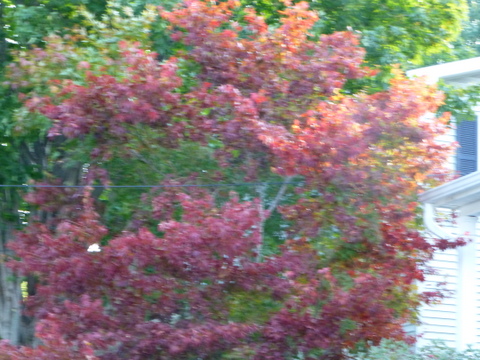
Early Autumn color, Vermont

Editorial note: My apologies to readers and to Michael for not scheduling this in sooner. An oversight on my part. J.D.

This is a reblog of a recent post to Dreaming The World.

This week marks the Autumn Equinox. The Equinoxes and other aspects of the calendar round are markers made by people; we need markers to make sense of our lives, to place ourselves in relationship to All That Is. Sometimes we forget the markers are of our creation, and we imagine they hold intrinsic meaning, rather than the meanings we assign them. This is a dangerous assumption as it tempts us to believe there is only one story, and it is true for all people, everywhere. Such thinking always causes great suffering.

Next week, in class, our friend, Alicia Daniel, is leading us in the creation and exploration of a Medicine Wheel. Alecia allows participants to explore, and assign values to, the directions.Given the freedom to make meaning opens the students to Mystery and Wonder. Not surprisingly, the values discovered by students often resemble the attributes assigned the directions by the Indigenous peoples who have lived here for thousands of years.

I usually teach the Medicine Wheel using attributes for the directions as I have been taught them by teachers from the Northeast, where we live. While there are small differences between tribal, even band, understandings of the directions, the general framework holds firm. As I understand it: The East is the place of birth and death, sunrise, spring, mentation, air, and all beings who fly. The South is home to fire, warm bloodeds, and the plants. It is the place of healing, noon time, and high summer. It is the direction of physicality, and in some traditions, sexuality. The West is home to water, dreaming, evening, and autumn. It is the place of responsibility and parenting, and of the Dream Time. The North is the home of the Ancestors and the rock people, the place of winter and night, the direction of clearly seeing the big picture, of vision. We journey sun-wise around the wheel, returning to the east to die and be reborn.

My Lakota kin likely say we are born and die in the West. That makes sense to them, where they live. The Medicine Wheel is a teaching about our locale and inner worlds, telling us much about local ecology, culture, and understanding of self. Wherever we are the Medicine Wheel speaks to us of our life journey, a road we share with the people and other beings who comprise the community in which we live.

In Western culture the wheel has a bad rap. Rather than a map for living a joyful, fulfilling life, it is often emblematic of being caged, or of soul killing work. In the East it may be something to be escaped. Yet, in Indigenous cultures around the world the wheel remains a powerful symbol for relationship, connection, and the good life.

This week we take a few minutes to acknowledge the Medicine Wheel that is our calendar year. We will express gratitude to Father Sun, and acknowledge Grandmother Water. Without them we would not have life. It is good to do this, and to have the opportunity to do so openly, for we remember the times, some quite recent, when we could not do so.

© 2013, essay and photographs (includes the one below), Michael Watson, All rights reserved

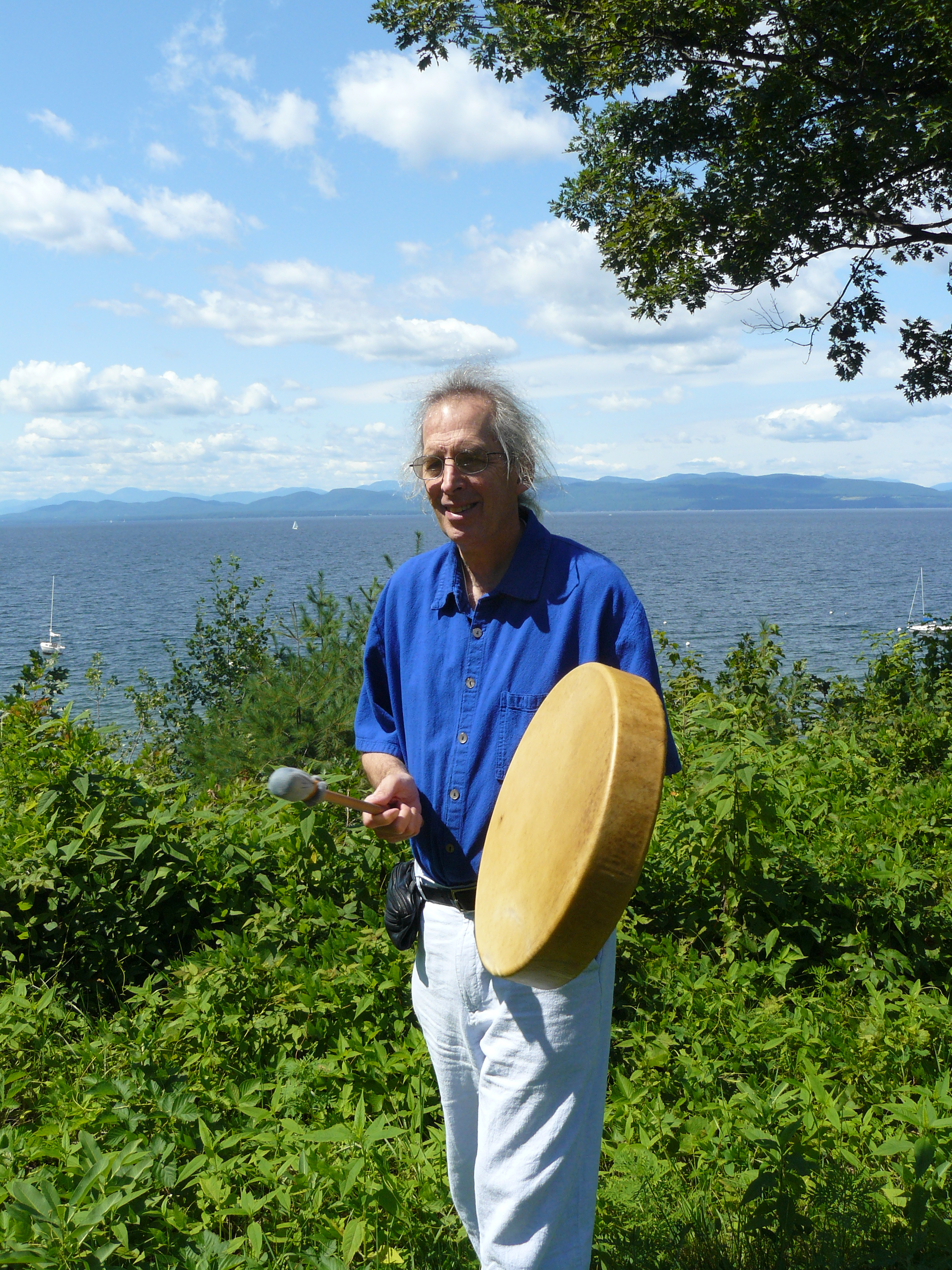
michael drumMICHAEL WATSON, M.A., Ph.D., LCMHC (Dreaming the World) ~ is a contributing editor to Into the Bardo, an essayist and a practitioner of the Shamanic arts, psychotherapist, educator and artist of Native American and European descent. He lives and works in Burlington, Vermont, where he teaches in undergraduate and graduate programs at Burlington College,. He was once Dean of Students there. Recently Michael has been teaching in India and Hong Kong. His experiences are documented on his blog. In childhood he had polio, an event that taught him much about challenge, struggle, isolation, and healing.

Posted in Contributing Writer, Creative Nonfiction, Essay, General Interest, Karen Fayeth, memoir, Poets/Writers, Writing

Inspiration Takes Flight

Editorial note and reminder: In two weeks, Wednesday, October 23, at 7 p.m. we will host a second writing challenge (Writer’s Fourth Wednesday) featuring Victoria C. Slotto, novelist and poet. The subject of this next challenge-yourself exercise is stream-of-consciousness. So writers read on, enjoy, write and mark your calendars for next week’s event. Mr Linky, which enables you to share your work with everyone, will remain open for seventy-two hours. Victoria and Jamie will visit all participants to read and comment.

Here an accomplished story-teller, Karen Fayeth (pronounced “faith” by the way), shares her experience of inspiration, story, and the NYC Midnight Flash Fiction competition.  

Each year I enjoy participating in the NYC Midnight Flash Fiction contest. The challenge is to write a 1,000 word story over the course of one weekend.

But there’s more! The approximately 700 participants are divided up into groups and each group is given a genre, location and an object. All three must be incorporated in the resulting story. The tale must truly be in the genre, the majority of the story must take place in the location and the object must show up at some point.

It’s always amazing to see the wide array of stories that come from the same genesis. This assignment of genre, location and object can either be entirely freeing, allowing the writer a head start to leap from, or it can be incredibly constraining. It all depends on what genre, location and object gets assigned.

For the first round of the 2013 contest, I was assigned the romance genre. Bleah. Not my favorite but not awful. The location was a haunted house. Hmm. Possibilities abound, but not really for a romance? Hmm. Ok. And my object was marshmallows.

That was my place to start. Over the course of many of these contests I find the judges tend to like if you use the location and object in unique ways, so I always try to think of a twist or a different facet to use in my story.

I was quite busy over this first weekend of competition, doing some work for my employer and taking care of personal business, so there I found myself Sunday morning with nary a word written and a deadline of 9pm that night.

I opened the windows to my studio and let the light pour in. I felt the breeze through the screens and sat down at my computer to make magic.

Magic. Ha! There I sat looking at the curser on my computer screen, willing the magic to begin. It blinked. I blinked.

No magic was happening.

So I subscribed to the “just write something” theory and got started. I began typing words and thoughts and a character sketch. It was going. The magic was not quite lifting off, but it was certainly gaining speed.

That is when something caught my eye outside of the window. A little splash of orange on that first day of Autumn.

I was surprised to see a Monarch butterfly resting on the bush just to the side of the building where I live.

I rushed to get my camera, attached the longest lens I have, popped the screen out of my window, and began taking photographs.

I’m sure glad I did.

Photo Copyright 2013, Karen Fayeth

This gorgeous lone Monarch Butterfly was hanging out in the warm sun, using the ol’ proboscis to drink some nectar and gathering pollen on spindly legs. You know, general butterfly business.

As I watched, a couple of bees were highly displeased at the presence of the butterfly and kept strafing him (I say him but I looked up Monarch butterflies online and I think this might actually be a female, but I’m not sure).

These bees were executing deep aggressive fly-bys that only caused the butterfly to flap his wings a bit but stay put. The bees were quite persistent. They dive-bombed and I kept snapping away. I have some crazy action shots that I’m still editing.

After a while, the butterfly flew off and I downloaded and looked through my photos, very pleased with the results.

Then I sat back in my chair and smiled. After the visit from Mr. (Ms?) Butterfly, I felt totally motivated and completely creative. I turned back to my story and banged out about 1,300 words in one sitting.

Then I set the story aside and let it percolate while my husband and I went to explore a local street fair.

When we came back I had fresh eyes and gave the story a hard edit. I managed to pare it down to 999 words and submitted it about 45 minutes before the deadline.

Man-oh-man, hitting send on that story sure felt good.

I owe an awesome creative surge to a visit from a pretty orange butterfly on the first day of Autumn.

© 2013, essay and photo, Karen Fayeth, All rights reserved

webheadshotKaren Fayeth ~ is one of our regular writers. She is our tech manager, site co-administrator along with Jamie and Terri, and fiction and creative nonfiction editor. She blogs at Oh Fair New Mexico. Born with the writer’s eye and the heart of a story-teller, Karen Fayeth’s work is colored by the Mexican, Native American, and Western influences of her roots in rural New Mexico complemented by a growing urban aesthetic. Karen now lives in the San Francisco Bay area. When she’s not spinning a tale, she works as a senior executive for a science and technology research organization.

Karen has won awards for her writing, photography, and art. Recent publication credits include a series of three features in New Mexico magazine, an essay in the online magazine Wild Violet, and a short story in Foliate Oak. Her story “What Leibniz Never Learned” will appear in the Fall edition of The Storyteller.

Posted in Essay, Michael Watson, Nature

The Crow

A few weeks ago we posted a Facebook video about a raven asking people for aid. The raven had encountered a porcupine and had quills embedded in its face. A couple of weeks later, we returned from our time in Maine to discover a severely injured a crow (close cousin to the Raven) in our back yard. Neighbors informed us the crow had slowly, with great intent, worked its way from the woods to our yard.

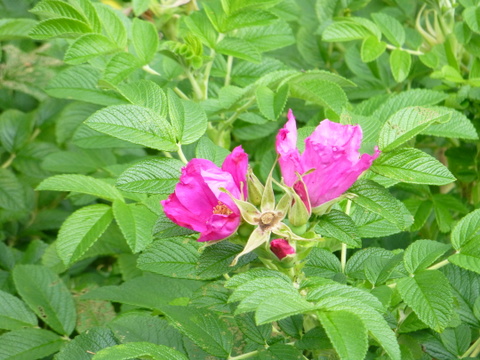
Beach Roses, MaineThe crow appeared to have a broken wing and was having difficulty standing. Upon closer inspection we discovered its foot was caught in a vine. The crow allowed me to release the trapped foot which appeared to help a little. We then offer the bird food and water, which it mostly ignored; it seemed to welcome a little gentle stroking. We then made phone calls. A former bird rehabilitator suggested we provide a box for shelter for the night as rain threatened. We then waited to hear from the crow specialist.

Yesterday morning the crow was still in our yard. Jennie took a neighbor’s advice and offered it some hard-boiled egg. The crow ate a very small portion. It seemed to be in pain so we talked over next steps, carefully weighing our options. Then the rehibilitator called; he could not make it to our house till evening, but suggested we place the crow in a cat carrier to keep it safe until he arrived. I carefully lifted the bird into the carrier and the crow fell on its side. We removed the bird briefly and placed some rags in the base of the carrier to offer some cushioning. When we returned the very large crow to the carrier we realized the bird, given the broken wing, was too large for it. We also realized the bird was not likely to survive, and after consulting the crow specialist, decided to take it to a vet to be put down.

I lifted it once more and placed it in a large recycling tub. As I was about to put the tub in the car, the crow looked me squarely in the eye, squawked loudly three times, and died. My strong impression was that the crow was expressing appreciation for our efforts, and probably chastising us a little for causing it pain. Anthropomorphizing? One had to be there.

We carefully buried the crow, performing ceremony for it. We had seen no other crows since our return, a strange absence given their frequenting of our yard and woods, and the presence of an injured member of the flock. We wondered whether the visiting crow had been ostracized by the flock. During the burial and ceremony I heard a solitary squawk from far away.

We were left with great sadness that we had, in our efforts to aid, caused the crow suffering, yet gratitude the crow had come to us. Today the sadness lingers. We are reminded of Crow’s large spirit, great intelligence and keen intent. We wish this crow a speedy and safe journey into the spirit world.

Michael Watson, Ph.D.

© 2013, essay and photographs (includes the one below), Michael Watson, All rights reserved

michael drumMICHAEL WATSON, M.A., Ph.D., LCMHC (Dreaming the World) ~ is a contributing editor to Into the Bardo, an essayist and a practitioner of the Shamanic arts, psychotherapist, educator and artist of Native American and European descent. He lives and works in Burlington, Vermont, where he teaches in undergraduate and graduate programs at Burlington College,. He was once Dean of Students there. Recently Michael has been teaching in India and Hong Kong. His experiences are documented on his blog. In childhood he had polio, an event that taught him much about challenge, struggle, isolation, and healing.

Posted in Marlene McNew, Poems/Poetry, Video

My Love for Mountain

My Love for Mountian is a video poem by Marlene McNew.

Marlene McNew"Veni, Vidi, Vici"
Marlene McNew
“Veni, Vidi, Vici”

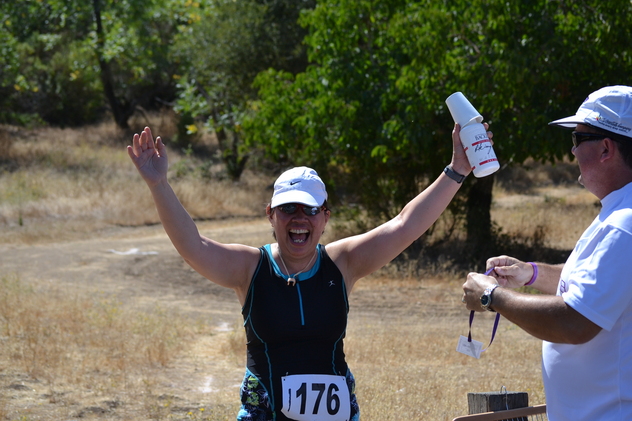
Marlene McNew ~ is a contributing writer to Into the Bardo. She began exhibiting symptoms of Parkinson’s Disease (P.D.) nine years ago. Her blog (Strange Gift) is a vehicle for sharing her interests and her experiences with P.D. Marlene is a master skier and triathlon competitor. She expresses her beautiful spirit through poems and paintings. Her YouTube channel is SkiDisiple.

Posted in Buddhism, Fiction, Michael Watson, Shamanism

A Force of Nature

Winooski RiverThe waters are rising. We have had many days of rain the past couple of months and the rivers are running high, many in flood. Here on the western flank of Vermont rain falls in the mountains and tumbles through rocky streams to the rivers, then into the lake. We are told the water is too cold, high, and fast for swimming, yet people, refusing to honor the Nature of the torrent, go swimming, often creating unhappy outcomes.

We are each a force of Nature, although we tend to forget this, individually and collectively. We seem to easily lose connection with the great powers that lie embodied within us, ignoring the joys and dangers they offer. It is so very easy to identify with mind or brawn, money and might, missing the deep connection implicit in recognizing one’s own Nature. Or perhaps we lose any connection to the force of our Nature, imagining we are powerless or fearful of the energies we intuit within us.

Power is a loaded word, drenched in the abuses ingrained in our various forms of governance, education, and sadly, even family and community. Too often power is power over rather than power with or through. Yet the shamans have always taught that we are each, like the raging river, a force to be honored and reckoned with. Shamanism, like zen, opens doorways to the realization of one’s true Nature. Dare we walk through?

© 2013, essay and photographs (includes portrait below), Michael Watson, All rights reserved

michael drumMICHAEL WATSON, M.A., Ph.D., LCMHC (Dreaming the World) ~ is a contributing editor to Into the Bardo, an essayist and a practitioner of the Shamanic arts, psychotherapist, educator and artist of Native American and European descent. He lives and works in Burlington, Vermont, where he teaches in undergraduate and graduate programs at Burlington College,. He was once Dean of Students there. Recently Michael has been teaching in India and Hong Kong. His experiences are documented on his blog. In childhood he had polio, an event that taught him much about challenge, struggle, isolation, and healing.