((Shakespeare has had quite an influence on my life, from his poetry to his plays, to the point that not a March can come without me thinking of Caesar and the dreaded “Ides of March”. This came to me the other day as I was thinking about those Ides…I think all Muses must somehow be drawn to thoughts of The Bard…hahaha. Good, bad, I leave it up to the reader to decide. But the sentiment behind it is one I believe in 100%. Enjoy. 🙂 ))
Beware the Ides, and bitter tides of Life That can catch you, drifting, unaware. Beware whispered doubts and inner asides That can make you feel A restless need to compare.
“Energy flows where attention goes.” I’ve heard it said, and choose to believe it. You’re the only one who truly knows What you want from life. So go, my friend. Be bold, retrieve it.
Cast aside the toxic multitudes, Stay clear of those who drag you down. Beware of those with swiftly-shifting moods, Like a riptide or current, You can fall in, and drown.
Leave the negative Nellies to their nots. Choose your path with purpose, Sans rose-colored glasses. Temper reality with positive thoughts; Rise above the plastic, saccharine masses.
Know your strengths, believe in who you are. Test limits, and accept that sometimes, You’ll fail. Self-confidence makes the journey less far, Be your own soothsayer — That’s how you’ll prevail.
About dragonkatet Regarding the blog name, Dragon’s Dreams~ The name comes from my love-affairs with both Dragons and Dreams (capital Ds). It’s another extension of who I am, a facet for expression; a place and way to reach other like-minded, creative individuals. I post a lot of poetry and images that fascinate or move me, because that’s my favorite way to view the world. I post about things important to me and the world in which we live, try to champion extra important political, societal and environmental issues, etc. Sometimes I wax philosophical, because it’s also a place where I always seem to learn about myself, too, by interacting with some of the brightest minds, souls and hearts out there. It’s all about ‘connection(s)’ and I don’t mean “net-working” with people for personal gain, but rather, the expansion of the 4 L’s: Light, Love, Laughter, Learning.
Archetypal Gothic Lady of Sorrows from a triptych by the Master of the Stauffenberg Altarpiece, Alsace c. 1455
I had written a poem for Mothering Sunday, or Mother’s Day as it is commercially known, which was a few months ago, now. However, I somehow felt it an appropriate story to raise here on Into The Bardo. This is because of the meaning I understand the word ‘Bardo’ has; that is to say a ‘transitional state’ that the Stabat Mater must have entered whilst having to process the extreme emotions provoked by such a harrowing experience, perhaps not the transitional state intended by Buddhist groups, who conceived of this condition, but a transitional state that will, more likely, have provided a protective blanket to help her through the pain.
The poem A Ballad for Stabat Mater struck me on several levels. I had already previously written a poem for my son’s thirtieth birthday (The Fourth Age of Man), basing it on William Shakespeare’s Seven Ages of Man (a monologue, which he wrote to open his play, “As You Like It”). Incidentally, I found it particularly poignant to note that my son had almost reached the same age as Jesus Christ was alleged to be, when his own mortal life ended. So, the latter never had the chance to taste the next three ages; or, perhaps, he lived all seven in that short span of life?
This poem, written in the form of a ballad, was, once again, influenced by Shakespeare’s “Seven Ages of Man”, but this time includes all seven ages. Also, it was, perhaps not surprisingly, heavily influenced by the Stabat Mater, that unforgettable and extraordinarily moving image of this religious icon, Mary, the mother of all mothers, as she stood and watched her own son die, painfully. Stabat mater dolorosa, meaning the sorrowful mother stood, is a masterful understatement. How many mothers could submit themselves to such unbelievable pain! And yet all mothers do, albeit mostly to a lesser extreme, for as long as they live.
I salute all mothers, however good or bad a mother you may think you are, you have still had to suffer for your children.
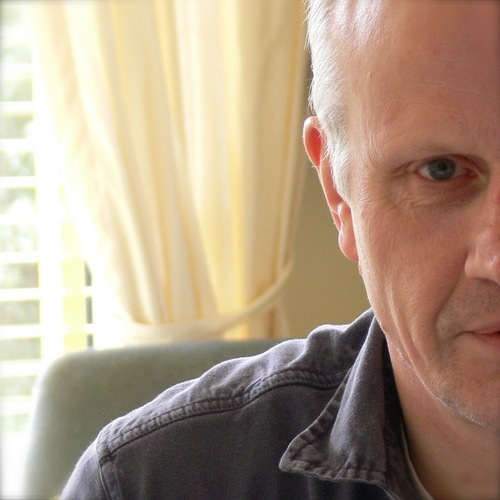
JOHN ANSTIE (My Poetry Library and 42) ~ is a British poet and writer, a contributing editor here at Bardo, and multi-talented gentleman self-described as a “Family man, Grandfather, Oc casional Musician, Amateur photographer and Film-maker, Apple-MAC user, Implementation Manager, and Engineer. John participates in d’Verse Poet’s Pub and is a player in New World Creative Union. He’s been blogging since the beginning of 2011. John is also an active member of The Poetry Society (UK).
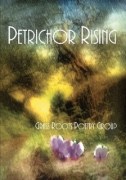
John has been involved in the recent publication of two anthologies that are the result of online collaborations among two international groups of amateur and professional poets. One of these is The Grass Roots Poetry Group, for which he produced and edited their anthology, “Petrichor* Rising“. The other group is d’Verse Poet Pub, in which John’s poetry also appears The d’Verse Anthology: Voices of Contemporary World Poetry, produced and edited by Frank Watson.
* Petrichor – from the Greek pɛtrɨkər, the scent of rain on the dry earth.

,_oeuvre_du_Maître_du_retable_de_Stauffenberg,_actif_au_15ème_siècle_(Musée_d%27Unterlinden,_Colmar).jpg)
 The BeZine