
Posted in General Interest, Peace & Justice, Waging Peace

Ukraine—Peace

Sunflower, digital art from photo
©2017 Kat Patton
The sunflower is Ukraine’s national flower.

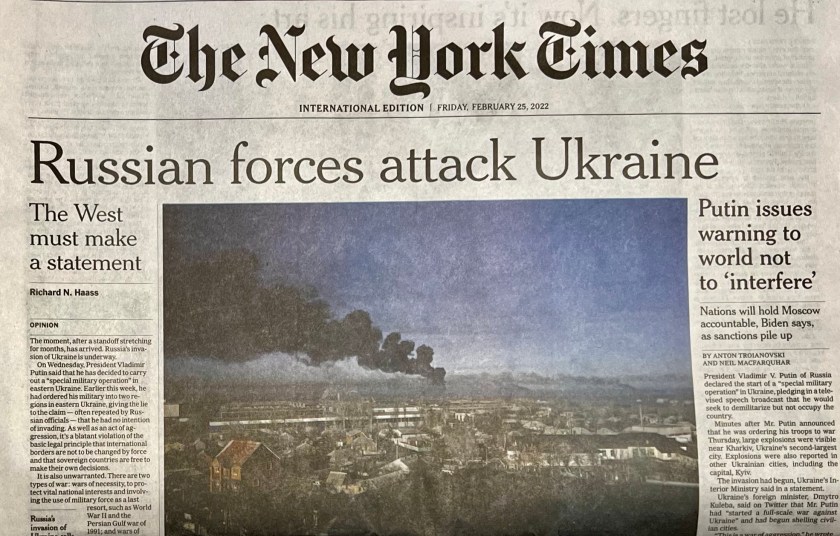
Even with all of the tensions and warnings, Russia’s all-out invasion of Ukraine on February 24, 2022, shocked the world. This violation of international law and Ukraine’s sovereignty could easily expand to a broader war. This puts progressives, as I think myself to be, in position of wondering how do we wage peace? Is there a path to peace?

As I write this, I don’t know.

Whatever the path to peace may be, the path for social justice would not allow for accepting Russia’s war on Ukraine. However, I also am aware that Western Imperialism has acted just as viciously in its own interests, and that the US and the West continue to promote wars in their interests.

Perhaps the #HackersAgainstPutin group could do infrastructure damage to stop the war? Anonymous claimed credit for knocking down Russian government websites. Would this be enough? And could this escalate to cyber warfare that would harm or even kill civilians if infrastructure fails in combatant countries?

Could a world-wide strike be the path, opposed to all war and demanding peace? Is such a thing possible even? How do we follow Gandhi’s path of non-violence and quickly grow it to a global scale? I can’t imagine that it could be done in time to help the people in Ukraine.

And history provides warnings about where this invasion could lead. In fact, Putin followed a playbook used in 1939. One of the demands Hitler presented for negotiation just before the invasion of Poland was “safeguarding the German minority in Poland.” Putin said in his speech announcing the invasion that its “goal is to protect people who have been abused by the genocide of the Kyiv regime for eight years.” By dawn of 24 February 2022, the Russian army attacked Ukraine with a blitzkrieg, aiming for military targets. The blitzkrieg strategy was first used pre-dawn of September 1, 1939, starting the invasion of Poland. The USSR joined Germany in attacking Poland on 17 September of that year.

How do we protect peace and simultaneously prevent further expansion through military force?

And who to stand behind for justice? It is not as though the U.S. does not use military force, directly and indirectly. The shadows of Vietnam, Irag, Libya, and Afghanistan loom over this battle. Can we trust the US and NATO to do the right thing?


CUNY Professor Peter Beinart offers an apt quote from 1943 to frame his argument that this time, we need to support the US, even progressives who rightly attack the US for its hypocrisy and war-mongering:

In 1943, the Hungarian-born journalist Arthur Koestler wrote: “In this war we are fighting against a total lie in the name of a half-truth.” That’s a good motto for American progressives to adopt in the wake of Russia’s full-scale invasion of Ukraine.

CUNY Professor Peter Beinart, “Russia speaks total lies. That doesn’t diminish America’s half-truths” in The Guardian

Beinart acknowledges the lies of the U.S.: Saying the US stands with Ukraine because America is committed to democracy and the “rules-based international order” is at best a half-truth. The US helps dictatorships like Saudi Arabia and the United Arab Emirates commit war crimes in Yemen, employs economic sanctions that deny people from Iran to Venezuela to Syria life-saving medicines, rips up international agreements like the Iran nuclear deal and Paris climate accords, and threatens the international criminal court if it investigates the US or Israel.

And then he goes on to explain the connection to the 1943 quote:

But this hypocrisy wouldn’t have fazed Koestler, because it’s nothing new. In 1943, the alliance that fought Hitler was led by a British prime minister who championed imperialism, an American president who presided over racial apartheid, and Joseph Stalin. Koestler’s point wasn’t that the US or Britain, let alone the USSR, were virtuous in general. It was that they were virtuous relative to Nazi Germany in the specific circumstances of the second world war, and that these sinful governments were the only ones with the geopolitical heft to stop a totalitarian takeover of Europe.

These extended quotes give the overall argument. Beinart continues to develop it with a focus on the invasion of Ukraine. He points out that there are times when Russia had been on the relatively virtuous side and the US not, with examples. And times when the US has been relatively virtuous, and Russia not. In the end, for this case, we have to think clearly and make a choice.

As Beinart writes: “But Koestler’s point was that progressives can puncture America’s pretensions to universal virtue while still recognizing that it is sometimes one of the few instruments available to combat evil.”

Peter Beinart’s essay is worth reading in full here.

While I do not support much of what the U.S. does, in this situation, I agree with Beinart that it is, relative to Putin’s invasion, the more virtuous side to support.


However, I still really want to find a non-violent path to peace for all. I recognize that, today, this seems an impossibly distant goal. It probably won’t be reached in my lifetime. Sadly, it has been made more distant, seemingly less possible, with this invasion.

My heart, thoughts, and good will goes out to the peoples of both Russia and Ukraine who are caught between the anvil and the hammer. May peace return.


I don’t know what will happen in Ukraine during the next two weeks, but as editor, I have decided to have a special section in The BeZine’s Spring issue, one devoted to peace in Ukraine. Give us your thoughts, share your poetry, send your art.

The Spring issue comes out on or shortly after 15 March.

Special Section Deadline: March 8.

Please consider submitting your work and please encourage your contacts to submit to this special section.

May Peace Prevail on Earth.

—Michael Dickel ©2022 except quotes

As I have been writing this blog post…this is breaking news:

One news brief on MSN (via AP)
two very different pronouncements
RUSSIA PUTS NUCLEAR FORCES ON ALERT

In a shocking move that immediately unearthed fears many thought permanently buried from the Cold War of the previous century, Putin ordered Russian nuclear weapons prepared for increased readiness to launch, ratcheting up tensions with Europe and the United States over the conflict that is dangerously poised to expand beyond the former frontiers of the defunct U.S.S.R.
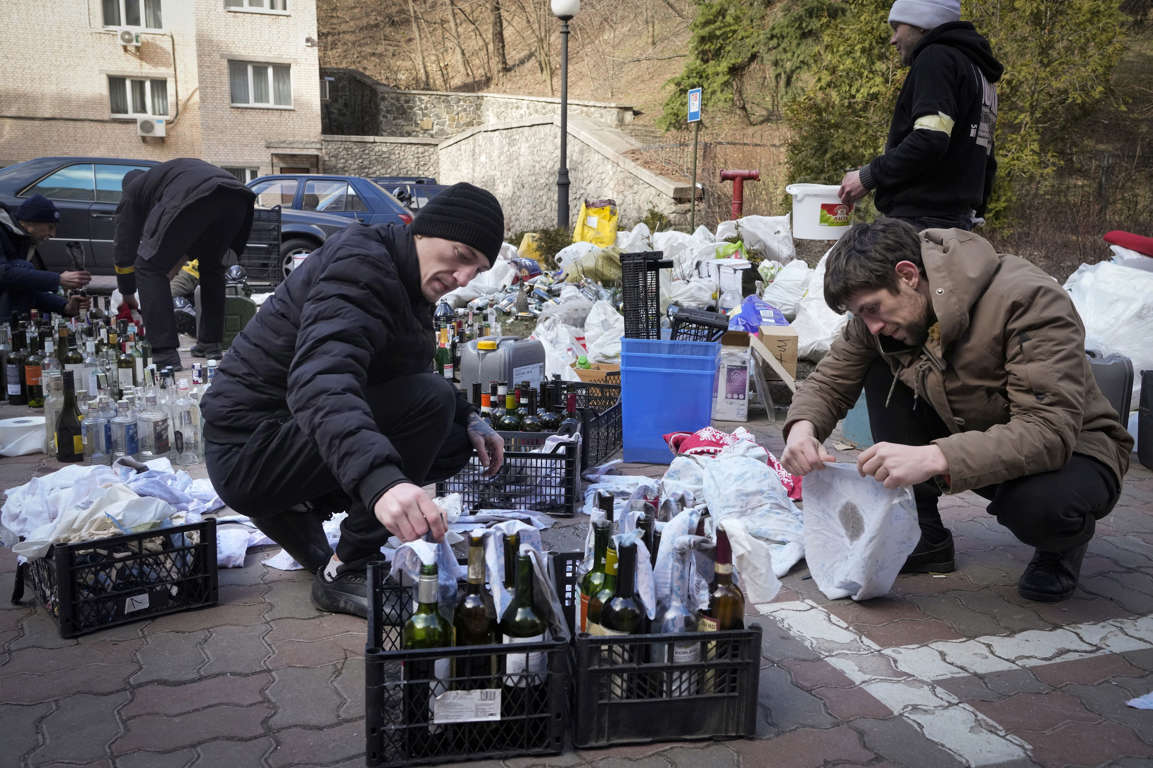
© Provided by Associated Press Members of civil defense prepare Molotov cocktails in a yard in Kyiv, Ukraine, Sunday, Feb. 27, 2022. A Ukrainian official says street fighting has broken out in Ukraine’s second-largest city of Kharkiv. Russian troops also put increasing pressure on strategic ports in the country’s south following a wave of attacks on airfields and fuel facilities elsewhere that appeared to mark a new phase of Russia’s invasion. (AP Photo/Efrem Lukatsky)

The Russian president told his defense minister and the chief of the military’s General Staff to put the nuclear deterrent forces in “special regime of combat duty.”

He said that leading NATO powers had made “aggressive statements” toward Russia in addition to stiff economic sanctions and cutting leading Russian banks from the SWIFT banking system.

RUSSIA AND UKRAINE TO HOLD TALKS

After rejecting Putin’s offer to meet in the Belarusian city of Homel on the grounds that their common neighbor was facilitating the Russia assault, Ukrainian president Volodymyr Zelenskyy agreed to send a Ukrainian delegation to meet with Russian counterparts at an unspecified time and location on the Belarusian border.

The announcement comes hours after Russia announced that its delegation had flown to Belarus to await talks. Ukrainian officials initially rejected the move, saying any talks should take place elsewhere than Belarus, a country that has supported Putin directly by allowing Russia to use its territory as a staging ground.
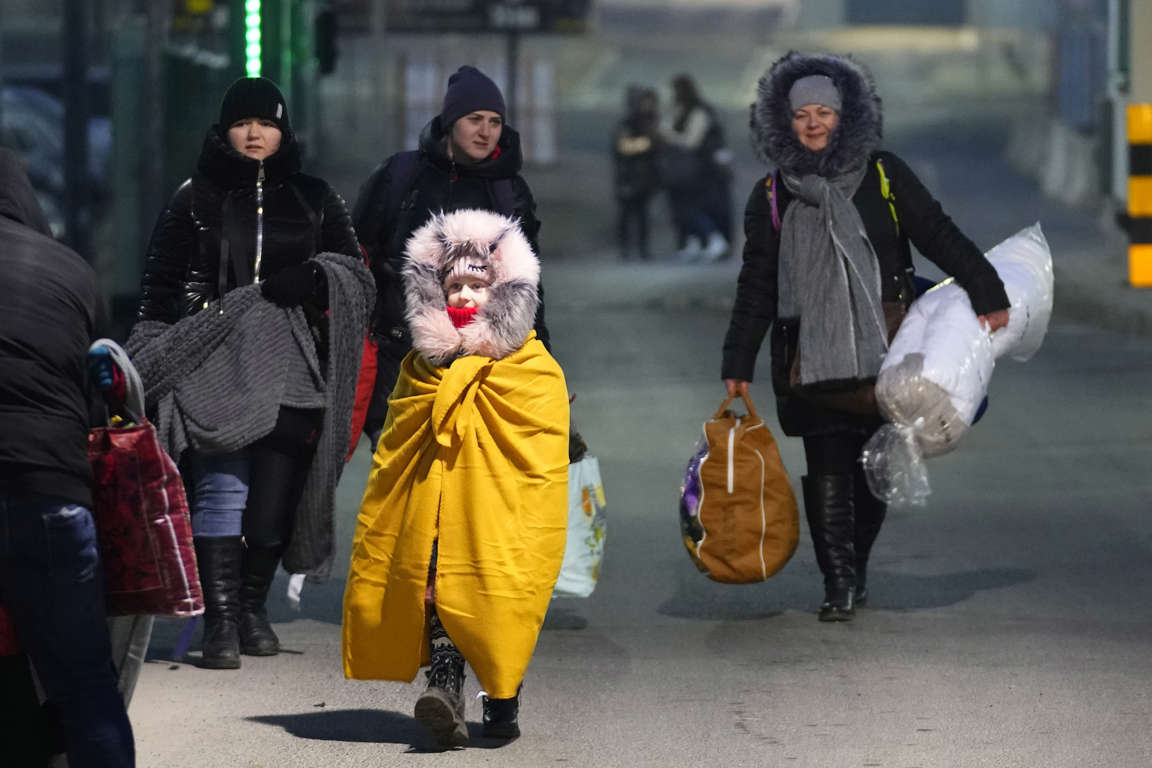
© Provided by Associated Press People fleeing the conflict in neighboring Ukraine cross the border in Przemysl, Poland, Sunday, Feb. 27, 2022. Street fighting broke out in Ukraine’s second-largest city Sunday and Russian troops put increasing pressure on strategic ports in the country’s south following a wave of attacks on airfields and fuel facilities elsewhere that appeared to mark a new phase of Russia’s invasion. (AP Photo/Petr David Josek)

Zelenskyy, who has refused to abandon Kyiv, named Warsaw, Bratislava, Istanbul, Budapest or Baku as alternative venues for talks, before accepting the Belarus border.

The Kremlin added later that Israeli Prime Minister Naftali Bennett had offered to help broker an end to fighting in a call with Putin. It didn’t say whether the Russian leader accepted.


More reading

Beauchamp, Zack. “Putin’s “Nazi” rhetoric reveals his terrifying war aims in Ukraine.” Vox. 24 February 2022 [accessed: 27 February 2022]

Beinart, Peter. “Russia speaks total lies. That doesn’t diminish America’s half-truths” The Guardian online 26 February 2022 [accessed: 27 Feb 2022]

Marker, Jake. “A Prayer for Those Who Stayed: Yearning for a peace that falls like wildflowers” Tablet 25 February 2022 [accessed: 27 February 2022]

Stanley, Jason. “The antisemitism animating Putin’s claim to ‘denazify’ Ukraine.” The Guardian online 26 February 2022 [accessed: 27 February 2022]

Posted in Essay, Liz Rice-Sosne, memoir, poem, Poems/Poetry, poetry

I Imagine …

I imagine Mummy

She is listening for Doodle Bugs

Running past St James Square

They make a swooshing noise before

Hitting their targets

Windows are darkening now

As she scurries by them

Like a mouse

Shades being pulled down

All light receding and gone

She is heading towards St Paul’s

She is meeting with a friend

At the statue of St Ann

Dinner was to soon follow

Constant gray clouds of dust

Engulfed her in dirt

London was under

Aerial bombardment

The Luftwaffe would spend

Fifty-seven nights

Bombing this great city

Wishing to eradicate it

From the face of the earth

This symbol of London and God

But London endured

St Paul’s remained standing

A symbol of British

endurance

Mummy lived to return home

To the USA

But I still imagine

I still wonder

Was it the war that

Shaped her personna

Making her harsh

She once said to me

During a phone call

With Mummy

Not long before her death

She told me that

The war was the most

Thrilling period of her life

I understand that feeling

I know what she was saying

She is gone

St Paul’s is standing

London thrives

Yet still I imagine

We all must come to terms with our upbringing.  For some there is more pain to work through than for others.  I had what one might call a proper upbringing.  Yet still, one filled with much pain.  My mother was not in London during those 57 nights of the Blitz.  This was of course poetic license on my part.  However, she was living in London during 1943 and 1944 in WWII.  She became a lifelong Anglophile.  This fact set up some difficult goals for her children to attain for they were not British (and we came after the war).

Sometimes due to her scrapbooks I feel as though I was there, in London during the war.

There was a time that I knew nothing about war.  A spiritual experience that I was willing to have in 2005, dictated that I learn about war.  Mummy never spoke of her work in London during WWII.  She worked for the US propaganda office or the OWI – Office of War Information.  I really never knew until I found two scrapbooks while cleaning out the family home.  Finding these scrapbooks made me realize what a vary brave woman she had been.  As a result, instead of harboring resentment towards her (resentment that she earned) I came to have significant admiration for her.

I wish to redo these books as they are in a state of disintegration.  However, it is exceptionally difficult for me to work with them.  I am very emotional about the subject.

Politicians never give thought to the consequences of wars into which they enter.  They have no clue as to the gravity of the collateral damage that accompanies their warring ways.  The United States of course had to enter WWII.  But, Hitler did not have to begin The War To End All Wars.  That war like so many have touched people down through the ages, times long past the end of the war in question.  War shapes people for generations to come.  Peace begins at home.  Not in the country, the state or the city.  No peace begins in the heart of the individual.  For it is when you get peaceful individuals together, one at a time that real peace begins to grow into a movement.  It becomes sizable and a peaceful nation is born.

The following paragraph is taken word for word out from Wikipedia:

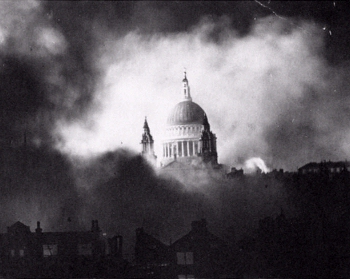
“On 31 December, the Daily Mail took the unusual step of publishing the photographer’s account of how he took the picture:[

I focused at intervals as the great dome loomed up through the smoke. Glares of many fires and sweeping clouds of smoke kept hiding the shape. Then a wind sprang up. Suddenly, the shining cross, dome and towers stood out like a symbol in the inferno. The scene was unbelievable. In that moment or two I released my shutter.”  – Herbert Mason

Stpaulsblitz

© 2013, essay and photographs, Liz Rice-Stone, All rights reserved

unnamed-2LIZ RICE-SOSNE a.k.a. Raven Spirit (noh where), perhaps the oldest friend to Bardo, is the newest member of The Bardo Group Core Team. She is also our new Voices for Peace project outreach coordinator and our go-to person for all things related to haiku.  She says she “writes for no reason at all. It is simply a pleasure.” Blogging, mostly poetry, has produced numerous friends for whom she has a great appreciation. Liz is an experienced blogger, photographer and a trained shaman. We think her middle name should be “adventure.”

BLOGGERS IN PLANET LOVE

Rainforest_Fatu_HivaPLEASE JOIN US: Beginning at  7 p.m. PST this evening, we are celebrating Valentine’s Day with love – not the love of and for another person – but our love for our mother planet ….

WE INVITE ALL writers, poets, artists, photographers, musicians and other creatives to join us at The Bardo Group for our Valentine’s Day event, BLOGGERS IN PLANET LOVE. Link in your work that shares your appreciation for the beauty of nature or your concern for environmental issues. You can share the url to your post via Mr. Linky, which will stay up for seventy-two hours. Corina Ravenscraft (DragonDreams) hosts. Jamie Dedes (The Poet by Day) will visit sites and comment. We hope you will also visit others and comment on their work, lending support and encouragement and making connection.

If tonight is date-night for you, remember that you do have seventy-two hours to link your work in. It doesn’t have to be a new or recent piece, just something in the spirit of the event, something that expresses your love of our planet.

Photo credit ~ Tropical Rainforest, Fatu Hiva Island, Marquesas Islands, French Polynesia by Benutzerseite: Makemake via German language Wikipedia under CC A-SA 3.0 Unported license.

Posted in Essay, Naomi Baltuck

Today (we are all survivors)

We are all survivors, of our personal histories, our family lines, and of the human race.  Since the dawn of time, think of the families ended abruptly by a bullet, a spear, a club, a predator, illness, by accident and even by someone’s own hand.

Today is the anniversary of D-Day, the Normandy invasion in 1944.  It was the day my Uncle Lewis was launched onto the Normandy beaches into a cruel war.  I think it no coincidence that today is also the anniversary of my father’s death in 1965.

The day before he died, while his kids ran and laughed and played in the yard, my father planted a walnut tree—just a stick of a sapling–by the side of the house.  Did he know what he was going to do?  Did he plant that tree as his own memorial?

I hope not, because someone else is living in that little house in Detroit, and my Dad’s walnut tree is long gone, cut down in its prime.  This I know, because I drive past each time I go back to visit my Aunt Loena.   So these words must serve as a memorial to a World War II vet who came home without his little brother and best friend.  That was the sin his mother never forgave him for, the sin he could he never quite forgive himself for either.

My army buddy, Jack Oliver, attended boot camp with Uncle Lewis.  He helped me understand that my father was as much a victim of the war as my uncle.  When the War Department tallies the casualties, it counts the dead, the wounded, the missing in action.  But no one ever takes into account the broken hearts and broken families left by the wayside in the wake of war.  If they did, perhaps they would stop sending our children off to fight and die.

But today is a day a of forgiveness, a day of understanding, a day to be thankful that life goes on.  It is a day of sorrow, but most of all, today is a day to love.

– Naomi Baltuck

© 2012, essay and photographs, Naomi Baltuck, All rights reserved

NaomiPHOTO1-300ppi410xuqmD74L._SY300_NAOMI BALTUCK ~ is a Contributing Editor and Resident Storyteller here at Bardo. She is a world-traveler and an award-winning writer, photographer, and story-teller whose works of fiction and nonfiction are available through Amazon HERE. Naomi presents her wonderful photo-stories – always interesting and rich with meaning and humor – at Writing Between the Lines, Life from the Writer’s POV. She also conducts workshops such as Peace Porridge (multicultural stories to promote cooperation, goodwill, and peaceful coexistence), Whispers in the Graveyard (a spellbinding array of haunting and mysterious stories), Tandem Tales, Traveling Light Around the World, and others. For more on her programs visit Naomi Baltuck.com