Posted in Teachers

EVERYWHERE IN THE WORLD human beings of every color, persuasion, and ethnicity dream …

MARTIN LUTHER KING, JR. (1929-1988), American Clergyman, Activist, and Leader of the American Civil-Rights Movement

Delivering I Have a Dream, 1963 at the Lincoln Memorial, Washington, D.C. U.S.A.

No one articulated the dream of human dignity with quite the same poetry and passion as Martin Luther King, Jr.

When we let freedom ring, when we let it ring from every village and every hamlet, from every state and every city, we will be able to speed up that day when all of God’s children, black men and white men, Jews and Gentiles, Protestants and Catholics, will be able to join hands and sing in the words of the old Negro spiritual, “Free at last! free at last! thank God Almighty, we are free at last!”

File:Martin Luther King Jr Signature2.svg

Editorial Note: We humans struggle for freedom in many circumstances and many places. In November of the same year that Dr. King delivered this speech, the first world-wide Prisoner of Conscience Week was honored. Such events remind us that no wo/man is truly free until all are free. 

MAY ALL SENTIENT BEINGS FIND PEACE

The photograph of Martin Luther King, Jr. is in the public domain and is viewed here courtesy of Wikipedia. The video of Dr. King was uploaded to YouTube by . The Joyful Noise gospel acapella group was uploaded to YouTube by .

Posted in Jamie Dedes, Poems/Poetry

HEART

·

HEART

by

Jamie Dedes

rhythm at the core

of lost and found

songs and celebrations

rattle of death and dirge

scent of garden

stench of compost

stored

waiting for the day

on a hero’s quest

you find memory

neatly boxed

in heart’s thrum

your weary eye

seeks reason

discovers meaning

as if

a silent artisan

preceeding you

formed your soul

gave downy wings

to your heart

fly free

© poem, Jamie Dedes, All rights reserved

Posted in Essay, Jamie Dedes

OUR ORIGINAL ASTRONAUTS

Miss Baker

In Huntsville, Ala., there is an unusual grave site where, instead of flowers, people sometimes leave bananas.

The gravestone reads: “Miss Bakersquirrel monkey, first U.S. animal to fly in space and return alive. May 28, 1959.”

Fifty years ago, when Baker made her famous flight, she had some company in the nose cone of the Jupiter ballistic missile: a rhesus monkey named Able.MORE [National Public Radio (NPR)May 28, 2009]

OUR ORIGINAL ASTRONAUTS

by

Jamie Dedes

One day when I was looking for a photograph of a squirrel monkey to post on The Cat’s MeowI found one on Wikipedia along with a photograph of Miss Baker, one of our earliest astronauts. I hadn’t thought about our monkey astronauts in years, but I do remember reading about them as a youngster and feeling angry that they were used without having a choice in the matter. Miss Baker (an eleven-ounce Peruvian-born squirrel monkey) and her companion, Able (a seven-pound American-born rhesus), were the first to come back alive. Miss Baker lived to be twenty-seven and died of kidney failure. Able died four days after the landing. She developed an infection after having an electrode removed.  Able is preserved and on display at the Smithsonian‘s National Air and Space Museum. I find this disturbing. Am I the only one?

The U.S. wasn’t the only country to shoot animals into space. Russia and France did. The Russians and the Americans sent up mice as well as monkeys.

Δ

A sweet little squirrel monkey

enjoying the relative freedom of the Fuji Safari Park in Japan.

Δ

© 2011, 2012 Jamie Dedes, All rights reserved

Video uploaded to YouTube by .

Photo credits ~ Grave stone by Ms. Miserable via Find a Grave. The photo of Able on her couch in display at the National Air and Space Museum is by RadioFan (talk) under the terms of the GNU Free Documentation License via Wikipedia. The monkey in Fuji Safari Park is in the public domain and via Wikipedia. Ms. Baker’s photo is in the public domain and via the U.S. Federal Governent.

Posted in Guest Writer, Poems/Poetry, Shamanism

SHAMANIC JOURNEY, Old Raven travels to Machu Picchu, Peru

Following the shaman. (2007)

·

SHAMANIC JOURNEY

by

Old Raven (RavenPress), All Rights Reserved

Still, stillness now
Quiet, center … centered now
Go deeply within
yourself.
Slowwwwww … ly
Deeply quiet.
Deep within
Space consummation.
Not hurtling … no, not hurtling towards the void.  But slowly advancing.
Slowwwwly … condense all thought.
Become nothing.
Find
your place
your opening
movvvve slowly towards
your opening.  Be still.
Enter.
Slide
down
through
the tunnel.
LAND.  Quietly.
Summon … your Power.
Summon your … Animal.
Let.
Let him/her
Now take you into the void.  Void.  VOID.
CIRCLE … find what you need.
bring it back.  BLOW.
Rattle … feather.
Return now … open, open, open … your … eyes.
·
The rocks carved to imitate the mountains … an alignment happened when the sun reached a certain place in the sky.
·
An Alter used for ceremony long ago.
·
Standing with my feet curled over the edge looking straight down 2600 feet, this is where I chose to lose my fear of heights.
·
Doing ceremony.
·
© 2011, 2012 poem and photographs, L. Rice-Sosne All Rights Reserved. No re-blogging or reprinting without the express permission of the author.

♥ ♥ ♥ ♥

OLD RAVEN writes poetry and memoir and shares her photography at RavenPress. She  lives with her husband and several pets and writes extensively about war and the suffering that results, especially post-traumatic stress disorder. She also touches on her own spiritual healing, shamanic studies, and the outcome of her shamanic journey. Currently Old Raven is working on a major project: a book about her mother’s experience of World War II, which we look forward to reading one day. Her mother worked for the United States Office of War Information (OWI). Old Raven just completed a five-year study of the Second World War, combat PTSD, and her father’s war experience.  She recently celebrated a birthday. We gratefully celebrate her here today. Please visit her blog to say “hi” and “happy birthday.” Happy Birthday, Liz.

Posted in Jamie Dedes, Meditation, Spiritual Practice, Teachers

THE BREATH WITHIN THE BREATH

KABIR (1440-1580), MYSTIC POET OF INDIA

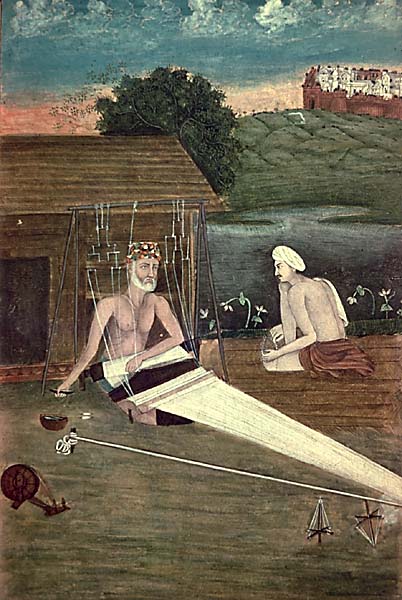
One of India’s great poets, Kabir’s gentle influence seems to have been broad and includes Sikhism, Bhakti, and the Sant Mat (path of the saints) sect, Kabir Panthis (Kabir’s Path). Sant Mat’s primary principle is a disciplined inward devotion to the Divine. One branch of that movement is Science of Spirituality under Sant Rajinder Singh Ji Maharaj, who has a substantial following in North and South America as well as India. Sant Mat spiritual practice involves Jyoti and Shabd meditation techniques. Jyoti is a basic practice in which the practitioner assumes a relaxed position and, with mind stilled, repeats any name of God with which s/he is comfortable. Shabd meditation is rather more complicated and involves an initiation process and a focus on the Inner Light and Sound.

In this reading of Kabir by Ram Dass, the core issues of life are explored. J.D.

·

© 2012 Jamie Dedes, All rights reserved

Illustration ~ public domain via Wikipedia

Video uploaded to YouTube by .

Posted in Fiction

ONE LAST CHRISTMAS POST, lest we forget the lessons of 1914

I’m preparing to get ready today for business as usual and there’s lots to share from Ann and Rob and other contributors. I decided to visit some blogs first. One of our contributors, Gayle Walters (Bodhirose’s Blog) had posted this historical fiction on her blog. It’s by children’s author, Aaron Shepard, and he allows it to be reblogged. It’s a short story based on the true events of the famous Christmas Eve truce of 1914 that Arthur Conan Doyle wrote of as “one human episode amid all the atrocities.” We do have moments of truce in our personal, spiritual, and political lives. If we could only make such moments a regular thing, our preferred m.o., if you will … Jamie Dedes

Parents and educators will find good stories and scripts for children’s plays at Mr. Shepard’s website HERE.

Copyright © 2001, 2003 by Aaron Shepard. May be freely copied and shared for any noncommercial purpose.

The story is formated as a letter ….

THE CHRISTMAS TRUCE
by
Aaron Shepard
Christmas Day, 1914

My dear sister Janet,

It is 2:00 in the morning and most of our men are asleep in their dugouts—yet I could not sleep myself before writing to you of the wonderful events of Christmas Eve. In truth, what happened seems almost like a fairy tale, and if I hadn’t been through it myself, I would scarce believe it. Just imagine: While you and the family sang carols before the fire there in London, I did the same with enemy soldiers here on the battlefields of France!

As I wrote before, there has been little serious fighting of late. The first battles of the war left so many dead that both sides have held back until replacements could come from home. So we have mostly stayed in our trenches and waited.

But what a terrible waiting it has been! Knowing that any moment an artillery shell might land and explode beside us in the trench, killing or maiming several men. And in daylight not daring to lift our heads above ground, for fear of a sniper’s bullet.

And the rain—it has fallen almost daily. Of course, it collects right in our trenches, where we must bail it out with pots and pans. And with the rain has come mud—a good foot or more deep. It splatters and cakes everything, and constantly sucks at our boots. One new recruit got his feet stuck in it, and then his hands too when he tried to get out—just like in that American story of the tar baby!

Through all this, we couldn’t help feeling curious about the German soldiers across the way. After all, they faced the same dangers we did, and slogged about in the same muck. What’s more, their first trench was only 50 yards from ours. Between us lay No Man’s Land, bordered on both sides by barbed wire—yet they were close enough we sometimes heard their voices.

Of course, we hated them when they killed our friends. But other times, we joked about them and almost felt we had something in common. And now it seems they felt the same.

Just yesterday morning—Christmas Eve Day—we had our first good freeze. Cold as we were, we welcomed it, because at least the mud froze solid. Everything was tinged white with frost, while a bright sun shone over all. Perfect Christmas weather.

During the day, there was little shelling or rifle fire from either side. And as darkness fell on our Christmas Eve, the shooting stopped entirely. Our first complete silence in months! We hoped it might promise a peaceful holiday, but we didn’t count on it. We’d been told the Germans might attack and try to catch us off guard.

I went to the dugout to rest, and lying on my cot, I must have drifted asleep. All at once my friend John was shaking me awake, saying, “Come and see! See what the Germans are doing!” I grabbed my rifle, stumbled out into the trench, and stuck my head cautiously above the sandbags.

I never hope to see a stranger and more lovely sight. Clusters of tiny lights were shining all along the German line, left and right as far as the eye could see.

“What is it?” I asked in bewilderment, and John answered, “Christmas trees!”

And so it was. The Germans had placed Christmas trees in front of their trenches, lit by candle or lantern like beacons of good will.

And then we heard their voices raised in song.

Stille nacht, heilige nacht . . . .

This carol may not yet be familiar to us in Britain, but John knew it and translated: “Silent night, holy night.” I’ve never heard one lovelier—or more meaningful, in that quiet, clear night, its dark softened by a first-quarter moon.

When the song finished, the men in our trenches applauded. Yes, British soldiers applauding Germans! Then one of our own men started singing, and we all joined in.

The first Nowell, the angel did say . . . .

In truth, we sounded not nearly as good as the Germans, with their fine harmonies. But they responded with enthusiastic applause of their own and then began another.

O Tannenbaum, o Tannenbaum . . . .

Then we replied.

O come all ye faithful . . . .

But this time they joined in, singing the same words in Latin.

Adeste fideles . . . .

British and German harmonizing across No Man’s Land! I would have thought nothing could be more amazing—but what came next was more so.

“English, come over!” we heard one of them shout. “You no shoot, we no shoot.”

There in the trenches, we looked at each other in bewilderment. Then one of us shouted jokingly, “You come over here.”

To our astonishment, we saw two figures rise from the trench, climb over their barbed wire, and advance unprotected across No Man’s Land. One of them called, “Send officer to talk.”

I saw one of our men lift his rifle to the ready, and no doubt others did the same—but our captain called out, “Hold your fire.” Then he climbed out and went to meet the Germans halfway. We heard them talking, and a few minutes later, the captain came back with a German cigar in his mouth!

“We’ve agreed there will be no shooting before midnight tomorrow,” he announced. “But sentries are to remain on duty, and the rest of you, stay alert.”

Across the way, we could make out groups of two or three men starting out of trenches and coming toward us. Then some of us were climbing out too, and in minutes more, there we were in No Man’s Land, over a hundred soldiers and officers of each side, shaking hands with men we’d been trying to kill just hours earlier!

Before long a bonfire was built, and around it we mingled—British khaki and German grey. I must say, the Germans were the better dressed, with fresh uniforms for the holiday.

Only a couple of our men knew German, but more of the Germans knew English. I asked one of them why that was.

“Because many have worked in England!” he said. “Before all this, I was a waiter at the Hotel Cecil. Perhaps I waited on your table!”

“Perhaps you did!” I said, laughing.

He told me he had a girlfriend in London and that the war had interrupted their plans for marriage. I told him, “Don’t worry. We’ll have you beat by Easter, then you can come back and marry the girl.”

He laughed at that. Then he asked if I’d send her a postcard he’d give me later, and I promised I would.

Another German had been a porter at Victoria Station. He showed me a picture of his family back in Munich. His eldest sister was so lovely, I said I should like to meet her someday. He beamed and said he would like that very much and gave me his family’s address.

Even those who could not converse could still exchange gifts—our cigarettes for their cigars, our tea for their coffee, our corned beef for their sausage. Badges and buttons from uniforms changed owners, and one of our lads walked off with the infamous spiked helmet! I myself traded a jackknife for a leather equipment belt—a fine souvenir to show when I get home.

Newspapers too changed hands, and the Germans howled with laughter at ours. They assured us that France was finished and Russia nearly beaten too. We told them that was nonsense, and one of them said, “Well, you believe your newspapers and we’ll believe ours.”

Clearly they are lied to—yet after meeting these men, I wonder how truthful our own newspapers have been. These are not the “savage barbarians” we’ve read so much about. They are men with homes and families, hopes and fears, principles and, yes, love of country. In other words, men like ourselves. Why are we led to believe otherwise?

As it grew late, a few more songs were traded around the fire, and then all joined in for—I am not lying to you—“Auld Lang Syne.” Then we parted with promises to meet again tomorrow, and even some talk of a football match.

I was just starting back to the trenches when an older German clutched my arm. “My God,” he said, “why cannot we have peace and all go home?”

I told him gently, “That you must ask your emperor.”

He looked at me then, searchingly. “Perhaps, my friend. But also we must ask our hearts.”

And so, dear sister, tell me, has there ever been such a Christmas Eve in all history? And what does it all mean, this impossible befriending of enemies?

For the fighting here, of course, it means regrettably little. Decent fellows those soldiers may be, but they follow orders and we do the same. Besides, we are here to stop their army and send it home, and never could we shirk that duty.

Still, one cannot help imagine what would happen if the spirit shown here were caught by the nations of the world. Of course, disputes must always arise. But what if our leaders were to offer well wishes in place of warnings? Songs in place of slurs? Presents in place of reprisals? Would not all war end at once?

All nations say they want peace. Yet on this Christmas morning, I wonder if we want it quite enough.

Your loving brother,
Tom
The photograph (via Wikipedia) is in the public domain: A cross, left near Ypres in Belgium in 1999, to commemorate the site of the Christmas Truce in 1914. The text reads:
1914 – The Khaki Chum’s Christmas Truce – 1999 – 85 Years – Lest We Forget.


Posted in Uncategorized

A LITTLE BUDDHIST HUMOR

smiley laugh tongue out

HAPPY TUESDAY 

ON THE LIGHT SIDE!

reblogged from Musing by Moonlight

·

Video uploaded to YouTube by 

Posted in Music, Poems/Poetry

EXPERIENCE OF THE INFINITE

On this occasion, hearing the call of a bird,

he closed his eyes …and the Infinite

passed into him

from all sides, so intimately that he 

believed he could

feel the stars, which had in the

meantime appeared …

gently resting within his breast

Rainer Maria Rilke

♥ ♥ ♥ ♥

MAY THE TRUE SPIRIT OF CHRISTMAS

– WHICH IS PEACE –

BE WITH ALL SENTIENT BEINGS

Photo credit ~ morgueFile

Video uploaded to YouTube by 

Posted in Fiction, General Interest

FOR CHRISTMAS EVE: A Story

CHRISTMAS WITH GRANDMA

by

Anon

I remember my first Christmas adventure with Grandma.

I was just a kid. I remember tearing across town on my bike to visit her. On the way, my big sister dropped the bomb: “There is no Santa Claus,” she jeered.  “Even dummies know that!”

My Grandma was not the gushy kind, never had been. I fled to her that day because I knew she would be straight with me. I knew Grandma always told the truth, and I knew that the truth always went down a whole lot easier when swallowed with one of her “world-famous” cinnamon buns. I knew they were  world-famous, because Grandma said so. It had to be true.

Grandma was home, and the buns were still warm. Between bites, I told her everything. She was ready for me.

“No Santa Claus?” she snorted…”Ridiculous!  Don’t you believe it! That rumor has been going around for years, and it makes me mad, plain mad!!

Now, put on your coat, and let’s go.”

“Go?  Go where Grandma”, I asked. I hadn’t even finished my second world-famous cinnamon bun.

“Where” turned out to be Kirby’s General Store, the one store in town that had a little bit of just about everything.

As we walked through its doors, Grandma handed me ten dollars. That was a bundle in those days.

“Take this money,” she said, “and buy something for someone who needs it.  I’ll wait for you in the car.”  Then she turned and walked out of Kirby’s.

I was only eight years old. I’d often gone shopping with my mother, but never had I shopped for anything all by myself.

The store seemed big and crowded, full of people scrambling to finish their Christmas shopping. For a few moments I just stood there, confused, clutching that ten-dollar bill, wondering what to buy, and who on earth to buy it for.

I thought of everybody I knew: my family, my friends, my neighbors, the kids at school, and the people who went to my church.  I was just about thought out, when I suddenly thought of Bobby Decker.  He was a kid with bad breath and messy hair, and he sat right behind me in Mrs. Pollock’s grade-two class.

Bobby Decker didn’t have a coat. I knew that because he never went out to recess during the winter.  His mother always wrote a note telling the teacher that he had a cough, but all we kids knew that Bobby Decker didn’t have a cough; he didn’t have a good coat.

I fingered the ten-dollar bill with growing excitement. I would buy Bobby Decker a coat!  I settled on red corduroy one that had a hood to it. It looked real warm, and he would like that.

“Is this a Christmas present for someone?”  The lady behind the counter asked kindly, as I laid my ten dollars down.

“Yes ma’am,” I replied shyly. “It’s for Bobby.” The nice lady smiled at me, as I told her about how Bobby really needed a good winter coat.  I didn’t get any change, but she put the coat in a bag, smiled again, and wished me a Merry Christmas.

That evening, Grandma helped me wrap the coat (a little tag fell out of the coat, and Grandma tucked it in her Bible) in Christmas paper and ribbons and wrote, “To Bobby, From Santa Claus” on it.

Grandma said that Santa always insisted on secrecy. Then she drove me over to Bobby Decker’s house, explaining as we went that I was now and forever officially, one of Santa’s helpers.

Grandma parked down the street from Bobby’s house, and she and I crept noiselessly and hid in the bushes by his front walk. Then Grandma gave me a nudge. “All right, Santa Claus,” she whispered, “get going.”

I took a deep breath, dashed for his front door, threw the present down on his step, pounded his door and flew back to the safety of the bushes and Grandma.

Together we waited breathlessly in the darkness for the front door to open. Finally it did, and there stood Bobby.

Fifty years haven’t dimmed the thrill of those moments spent shivering, beside my Grandma, in Bobby Decker’s bushes.

That night, I realized that those awful rumors about Santa Claus were just what Grandma said they were:  ridiculous.  Santa was alive and well, and we were on his team.

I still have the Bible, with the coat tag tucked inside: $19.95.

May you always have LOVE to share, HEALTH to spare and FRIENDS that care…

And may you always believe in the magic of Santa Claus!

Give back – what you can, where you can, whenever you can.

We don’t know the origin of this story or who wrote, but we hope you enjoyed it as much as we did. Our thanks to Linda F. for passing it on to us and to the anonymous author. 

Photo credit ~ morgueFile

Posted in Art, Buddhism

BUDDHIST ART: Animals

Video uploaded to YouTube by  

Extremely high quality Thai Buddha Head  from the Ayuthaya period. More finely cast and more artistically sculpted than most of the pieces created during that time. Loss of the earlobes, but otherwise a truly striking piece. The curator of The Buddha Gallery

One of his students asked Buddha, “Are you the messiah?”

“No,” answered Buddha.

“Then are you a healer?”

“No,” Buddha replied.

“Then are you a teacher?” the student asked.

“No,” Buddha replied.

“Then what are you?” The student was frustrated.

“I am awake,” replied the Buddha

Posted in Uncategorized

HAPPY CHANUKKAH!

To those who celebrate ..

HAPPY CHANUKKAH!

·

Photo credit ~ MathKnight under GNU Free Documentation License Version 1.2 via Wikipedia.

Posted in Poems/Poetry

THE PEACE OF WILD THINGS

THE PEACE OF WILD THINGS

by

Wendell Barry

When despair for the world grows in me
and I wake in the night at the least sound
in fear of what my life and my children’s lives may be,
I go and lie down where the wood drake
rests in his beauty on the water, and the great heron feeds.
I come into the peace of wild things
who do not tax their lives with forethought
of grief. I come into the presence of still water.
And I feel above me the day-blind stars
waiting with their light. For a time
I rest in the grace of the world, and am free.

·


Wendell Berry (born August 5, 1934) is an American man of letters, academic, cultural and economic critic, and farmer. He is a prolific author of novels, short stories, poems, and essays. He is also an elected member of the Fellowship of Southern Writers and a recipient of The National Humanities Medal. MORE

The poem is from Collected Poems of Wendell Berry, 1957-1982. Worth your time.

Photo credit ~ female wood duck at Crystal Springs Rhododendron Garden, Portand, Oregon, USA courtesy of kat+sam under Creative Commons Attribution 2.0 Generic License via Wikipedia

Photo credit ~ Wendell Berry courtesy of David Marshall under Creative Commons Attribution-Share Alike 2.0 Generic license via Wikipedia

Posted in Essay, Jamie Dedes

ELDER POWER: Growing Strong in Broken Places

ELDER POWER:

Growing Strong in Broken Places

by

Jamie Dedes

Authors, like coins, grow dear as they grow old; It is the rust we value, not the gold. – Alexander Pope

Originally published in the now defunct California Woman.

I come to this place of Elder Power through the experience of a chronic, potentially life-threatening illness. Illness is many things. It is a mentor, not chosen, not welcome, but a mentor nonetheless. It is a challenge that often breaks the bonds of affection, the temper of the spine, and the sharpness of the mind. It is a reminder to everyone involved of his or her fragility and mortality. Everyone is touched: family, friends, and colleagues. Everyone is changed and the good or ill of it is largely choice

My family and friends want me to help others by writing from a more clinical perspective, but it seems to me that the clinical lessons are less important than the life lessons. It is the life lessons that give us the strength to keep going, that are the true value to be shared, and that make us elders. To me “elder” implies more than “senior” or “senior citizen,” which I see as demographic terms for people who have reached retirement age. A senior is someone who has merely put in time, while elder is about attitude and state of mind. Elder implies one who has learned a few things along the way.

As a writer, it is the life lessons, not the clinical ones, which inspire and inform my work. I have learned, for example, that all humans are in process and therefore imperfect; and that, no matter what our differences are, the most important things are to remain open to communication and to accept and release our own follies and those of others. I have learned that neither illness nor threat of death preclude joy. I have learned that people who are joyful rarely do harm to themselves or others. I have learned that fear of death has to be directly addressed and then firmly put aside in favor of the business of living. As the saying goes: “It’s not over until it’s over.” Until then, we have responsibilities to others and ourselves. The only real difference between someone who has a life- threatening illness and someone who doesn’t is that the former is no longer in denial.

“If people bring so much courage to this world, “ wrote Hemingway in A Farewell to Arms, “the world has to kill them to break them. The world beaks everyone, and afterward, many are strong at the broken places. But those that will not break, it kills. It kills the very good and the very brave and the very gentle impartially. If you are none of these it will kill you too but there will be no special hurry.”

I am not good, or brave, or particularly gentle. Sometimes I let it all get me down. I descend into fear. I am impatient with process, with taking meds and going for seemingly endless tests and doctors’ appointments. Maybe that’s why I’ve outlived my original expiration date by ten years. My mother used to say, “Only the good die young.” My best quality may be that under my protective shell of intractability, I actually am willing to be broken and reformed. I suppose only time will tell if I have grown “strong at the broken places.”

So, here I stand, after twelve years of battle, at the dawn of a bright new day in a body that is now significantly disabled and quite a bit older. It’s still a good morning and a good body. I recognize I once dealt with a worse handicap than my current disabilities. That handicap is commonly referred to as “youth.” I survived. Maturity on the other hand is a true boon, a gift to savor and enjoy with layers of luxurious nuance I had not anticipated. I do not long for my youth. I love my graying hair. I love my wrinkles and the loose skin on my neck. I love the mild deformity of my feet. These things remind me that I am still here after all. I will not dye my hair, though I have. I will not get chemical injections or cosmetic surgery. I will not use rejuvenating grooming products that have been tested on defenseless animals. I am inspired by civil-rights-era African-Americans who sported Afros, said essentially “this is who we are and what we look like,” and chanted “black is beautiful.” I am graying. I am wrinkled. It’s all lovely and lyrical and makes me smile. It’s about ripeness, not rottenness. It’s honesty: what you see is what you get. Aging is beautiful. With maturity, one finds character refined and perspective broadened, energy expands and compassion flowers. The experience of joy comes more easily.

As survivors, we owe it to those who have gone on, to live in gratitude for this gift of a long life. How ungrateful and what an insult it is to them for us to bemoan our maturity and yearn for our youth as we so often do. What an incredible waste of time and energy such yearning is. Many don’t survive childhood in their impoverished and war-torn areas. Some others don’t survive childhood due to congenital or other diseases. My sister died by her own hand when she was twenty-seven. I have a wonderful, talented, smart friend in her mid-thirties who will pass within three months from this writing. Like you, I have relatives and friends who didn’t make it to fifty, much less sixty or seventy. All things considered, aging is a gift not a curse.

Some of our power comes from our sheer numbers. I read somewhere that we are some six hundred million strong worldwide. In each of our countries, we represent a huge political constituency, a lucrative market, and an enormous fount of energy, experience, and expertise. If that isn’t power in this modern world, what is? What a force for peace we could be. Some of our power comes from consciousness. We are awake now. We have learned how to live in the moment and how to live joyfully, hugely. That alone is a lesson to share. Some of our power comes from more time and focus. Many of us are retired or semi- retired or on disability, or soon will be. Implicit in that is the time to keep abreast of issues in our communities, countries, and our world. We can take the time and make the effort to get accurate information, to analyze carefully, and to share appropriately; that is, in a well considered, non-inflammatory, non-sensational manner. We can act with grit and grace.

Let us show that we are strong in the broken places. Let those of us who have this gift of long life seize on it and ply our elder power. Let’s live with joy, do good, and have fun. Most of all let us be generous with our love. Soon enough, when the time is ripe, our bodies will return to the earth. Our spirits will go wherever spirits go. The river of earthly life will continue to flow. Our children will see us reflected in the eyes of their children. Our grandchildren will strain to hear our voices in rustling leaves and breezes that whisper to them in the night. They will seek us out in moonlight and the warmth of the sun, in the roar of the oceans and the gentle meandering of a lazy brook. They will find us in the good earth and in the good hearts of the lives we’ve touched with concern and compassion.

© 2009  photo and essay, Jamie Dedes All rights reserved

Posted in Art, Buddhism

BUDDHIST ART and BUDDHA’S LISTS

Video posted to YouTube by The Buddha Gallery.

The Three Refuges: The Buddha, meaning the historical Buddha or anyone who has achieved enlightenment. The Darma, meaning the teachings of Buddha. The Sanga, meaning the community of practicing Buddhists.

The Four Noble Truths: Suffering, all living beings know suffering. The Cause of Suffering, attachment. Release from Suffering, is possible through he release of attachment. The Path Leading to the End of Suffering (Nirvana), the Noble Eightfold Path.

For more detailed information on the Buddha lists see the Barbara Stone’s The List of Buddha Lists and Wikipedia’sBuddha’s Lists.

May all sentient beings find peace.

Posted in General Interest, Teachers

CHRISTOPHER HITCHENS: Living Hugely, Dying Gracefully

This slideshow requires JavaScript.

I have seen the moment of my greatness flicker,
And I have seen the eternal Footman hold my coat, and snicker,
And in short, I was afraid.

—T. S. Eliot, “The Love Song of J. Alfred Prufrock.”

Living Hugely, Dying Gracefully

CHRISTOPHER HITCHENS

by

Jamie Dedes

CHRISTOPHER HITCHENS died yesterday of esophageal cancer at the age of sixty-two. Famous or infamous – depending on your view – for his atheism among other things, he is an example of one who lived hugely, was unapologetic, and died gracefully.

I don’t agree with a lot of what he wrote and said, but how dull when there are no differences. Life would be an intellectual wasteland. As long as we take our differences to the debate halls, the blogs, and the voting booth and not to the killing fields, it’s okay.

I admired his sharp mind and wit. Nonsmoking teetotaler I am, yet I appreciate the spirit in this – quoted from his New York Times obituary – “He also professed to have no regrets for a lifetime of heavy smoking and drinking. ‘Writing is what’s important to me, and anything that helps me do that…'” He honored himself right to the end even as he admitted that his lifestyle contributed to his illness. Hitchen’s attacked our sacred cows and some of them deserved attacking. He made us examine our dusty old assumptions in the privacy of our minds and indeed some came up lacking. I admire him enormously.

Perhaps more than anything, I admire the grace with which he lived with dying. He did a more honest and dignified job of it than many of us in our faith communities. He was diagnosed in June of 2010 and wrote about this journey in his Vanity Fair columns. The “cynical contrarian” had heart, perhaps even a kinder more generous heart than many an avowed theist.

I sometimes wish I were suffering in a good cause, or risking my life for the good of others, instead of just being a gravely endangered patient.”

He wrote that the

Prospect of death makes me sober, objective.”

He pursued his craft right to the end.

Cancer victimhood contains a permanent temptation to be self-centered and even solipsistic,” Hitchens wrote nearly a year ago in Vanity Fair, but his own final labors were anything but: in the last 12 months, he produced for this magazine a piece on U.S.-Pakistani relations in the wake of Osama bin Laden’s death, a portrait of Joan Didion, an essay on the Private Eyeretrospective at the Victoria and Albert Museum, a prediction about the future of democracy in Egypt, a meditation on the legacy of progressivism in Wisconsin, and a series of frankgraceful, and exquisitely written essays in which he chronicled the physical and spiritual effects of his disease. At the end, Hitchens was more engaged, relentless, hilarious, observant, and intelligent than just about everyone else—just as he had been for the last four decades.” Vanity Fair

He wrote with excruciating honesty.

Like so many of life’s varieties of experience, the novelty of a diagnosis of malignant cancer has a tendency to wear off. The thing begins to pall, even to become banal. One can become quite used to the specter of the eternal Footman, like some lethal old bore lurking in the hallway at the end of the evening, hoping for the chance to have a word. And I don’t so much object to his holding my coat in that marked manner, as if mutely reminding me that it’s time to be on my way. No, it’s the snickering that gets me down.

On a much-too-regular basis, the disease serves me up with a teasing special of the day, or a flavor of the month. It might be random sores and ulcers, on the tongue or in the mouth. Or why not a touch of peripheral neuropathy, involving numb and chilly feet? Daily existence becomes a babyish thing, measured out not in Prufrock’s coffee spoons but in tiny doses of nourishment, accompanied by heartening noises from onlookers, or solemn discussions of the operations of the digestive system, conducted with motherly strangers. On the less good days, I feel like that wooden-legged piglet belonging to a sadistically sentimental family that could bear to eat him only a chunk at a time. Except that cancer isn’t so … considerate.” MORE [Vanity Fair]

Thank you, Mr. Hitchens, for making me think and rethink.

Thank you, Vanity Fair, for hosting his work so regularly.

© 2011, Jamie Dedes All rights reserve

Photo credits ~ all the book covers are courtesy of Barnes & Noble. Hitchens at the podium at Portsmouth, England courtesy of ensceptico via Wikipedia under Creative Commons Attribution 2.0Generic license. Hitchens at third party protest at the Presidentical Debates Commission, Washington, D.C. September 28, 2000 via Wikipedia courtesy of Carolmooredc under the Creative Commons Attritubtion-Share Alike 3.0 Unported license. Hitchens in debate “Is God Great” with John Lennox at Samford University in Bermingham, Alambama March 3, 2009 via Wikpedia courtesy of stepher via Wikipedia under Creative Commons Attribution-Share Alike 2.0 Generic license.

Posted in Essay, Jamie Dedes

TIMES OF WAR, CHANCE FOR PEACE

DWIGHT D. EISENHOWER (1890-1969)

34TH PRESIDENT OF THE UNITED STATES

In office 1953 -1961

TIMES OF WAR, CHANCE FOR PEACE

by

Jamie Dedes

“Every gun that is made, every warship launched, every rocket fired, signifies in the final sense a theft from those who hunger and are not fed, those who are cold and not clothed … “ Dwight D. Eisenhower, 34th President of the United States of American (1953-1961)

That quote is from Eisenhower’s speech, A Chance for Peace, delivered in 1953 three months after he took office and on the occasion of the death of Joseph Stalin, Premier of the Soviet Union (1941 to 1953). The “just peace” that the world hoped for in 1945 at the end of World War II had not materialized. While the Korean War was coming to a close, the Cold War-era military conflicts in Indochina (Vietnam, Laos, and Cambodia) were slowly escalating. The United States would have advisory troops in Vietnam in 1954. The armed conflict in that region of the world would continue long past Eisenhower’s administration with U.S. involvement escalating in the 1960s and continuing until the Fall of Saigon in 1975.

Since the end of the Second World War and the Korean War, violent conflict continues unabated with thirteen wars (defined as 1,000 or more deaths per year) currently, including the War in Afghanistan and the Yemeni and Syrian uprisings of 2011. Smaller scale conflicts resulting in fewer than 1,000 deaths per year have been rife and in 2011 include the Sudan-SPLM-N conflict, the Yemeni al-Qaeda crackdown, and the 2011 clashes in Southern Sudan. Genocides didn’t end either. We’ve had eight genocides since the Holocaust of WWII. The number of rebel groups is now over one-hundred, which probably errs on the light side. Conflicts rise from economic and social instability, which could be addressed if we invested in butter, not guns. Even in 1953, Eisenhower pointed out that war isn’t sustainable:

This world in arms is not spending money alone.

It is spending the sweat of its laborers, the genius of its scientists, the hopes of its children.

The cost of one modern heavy bomber is this: a modern brick school in more than 30 cities.

It is two electric power plants, each serving a town of 60,000 population. It is two fine, fully equipped hospitals.

It is some fifty miles of concrete pavement.

We pay for a single fighter plane with a half million bushels of wheat.

We pay for a single destroyer with new homes that could have housed more than 8,000 people.

If governments don’t recognize that Earth and her people cannot be sustained by war, many of their citizens do. One modern peaceful protest for a sustainable world is of interest to all of us who read, write, and love both poetry and peace. It is 100 Thousand Poets for Change, which held its first world-wide rally on September 24, 2011 with 700 events in 550 cities representing 95 participating countries united to promote peaceful environmental, social, and political change. Poets, writers, artists, musicians, and photographers the world over demonstrated in solidarity. The next global event is scheduled for September 29, 2012. Throughout the year small, local events are delivered at a various venues. By invitation, 100 Thousand Poets for Change was at the Sharjah (an Arab Emirate) International Book Fair, which ran through November 27.  MujeebJaihoon reports, “From time immemorial, poetry has built better bridges between people than those with bricks and stones. And these bridges do not get old or obsolete…” [Change Is Born in the Womb of Poetry]

In A Chance for Peace Eisenhower pointed out, “No people on earth can be held, as a people, to be an enemy, for all humanity shares the common hunger for peace and fellowship and justice.” We do hunger, individually and collectively. Perhaps our chance for peace starts with you and me. Poem on …

© 2011 essay, Jamie Dedes All rights reserved

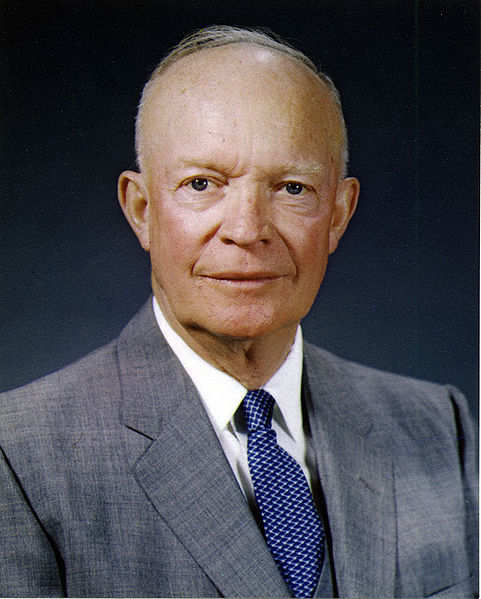
The photograph of Eisenhower is in the public domain

Posted in Art, Photography/Photographer, Wendy Alger

MEET WENDY ALGER, fine art photographer

WENDY ALGER (b. 1972), Chicago, IL, U.S.A.

Fine Art Photography

Photography. It’s like music … It’s like your favorite song, something you can listen to over and over and over again. You try to explain it to some and you can’t. That’s the feeling it gives me. It’s like traveling and you want to tell everyone how great it was … and I have that experience every time I pick up a camera. Wendy Alger.

·

MY FRIEND: WENDY ALGER

by

Jamie Dedes (The Poet by Day, a jouney in poem)

Initially, when Wendy started doing photography, it was a hobby. Then a friend suggested she become a photographer.  Wendy thought that sounded just right for her. Both her parents knew photography and her dad gave her one of his cameras and some lenses.

At the time, Wendy owned an old ’68 Mustang. She says she’d drive around and listen to music. When something called out to her, she’d stop and take photographs. That’s how she began to learn what subjects appealed to her. “I photographed everything that felt right and compelled me to keep taking photographs.” Slowly, she discovered the photographer within and her own distinctive style. “I enrolled at the Academy of Art University in San Francisco and trained there, where I learned manual SLR. I also learned how to use a dark room.”

Given Wendy’s vision challenges, I am always amazed at what she can do. She has visual impairment due to retinitis pigmentosa She tells me that new camera technologies make it easier. “I use a digital camera and I can review my pictures on the camera instead of in a dark room.I have a digital dark room, which consists of a laptop and Photoshop and Photoshop Lightroom. This allows me to transform and print my images at home. I also use visual memory … I remember feeling to get through a photo session.”

Wendy’s long-term goal: “To have my artwork  displayed in the same building as Walker Evans in my lifetime – not after – during! My vision problems are not stopping me. I never even think about that. After I was diagnosed and as soon as I got the money I bought my digital camera.”

Here is a small gallery of Wendy’s recent work with a digital camera. The photo at the head of the post and the first one below are self-portraits. Wendy’s photographs are copyright protected. You can see more of her work HERE.

© narrative, 2011 Jamie Dedes All rights reserved

© photographs, 2011 Wendy Rose Alger, All rights reserved

Posted in Jamie Dedes

HUG A COW, GIVE A PIG A TUMMY RUB, SNUGGLE WITH A TURKEY

SANCTUARY

by

Jamie Dedes

” ‘SOPHIE is a goat whose taste in books leans toward popular best sellers’, says Solana Mejia-Schnaufer, who reads aloud to her several times a week. ‘I know she likes The Hunger Games because she didn’t try to eat it. That wasn’t true of Animal Liberation.’ ” So begins a November 1 New York Times article that I linked through to this morning through gratefulness.org. The article is about The Gentle Barn, which gives sanctuary to abused and abandoned animals and healing gifts to worn and wounded humans. It is also the story of hope and healing for Solana, a woman previously inclined toward suicide.

A little early day research reveals that The Gentle Barn, founded by Ellie Laks in 1999 who runs it along with her husband, combines the best human values of compassion and stewardship, going beyond sanctuary for animals to provide profound and moving healing experiences for special-needs kids and grown-ups. The children include those in foster care and inner city youth on drugs, on probation, or in gangs. The adults suffer from emotional disorders and/or physical ones.

To read the inspiring stories of the animals and people helped at The Gentle Barn, link to the website HERE and the YouTube channel HERE. The sanctuary is open to the general public on Sundays and the admission is just $5 to help feed the animals. For many reasons, it’s unlikely that I’ll find myself in Southern California; but, if I did, I’d head straight for Santa Clarita and The Gentle Barn and, as Ellie Laks says, I’d “hug a cow, give a pig a tummy rub, and snuggle with a turkey.”

Here is a video about the rescue of a cow and calf. Grab your box of tissues …

© 2011, Jamie Dedes, all rights reserved

Photo credit ~ morgueFile

Video upload to YouTube by