Posted in 100,000 Poets, Musicians, Artists and Activists for Change, Artists and Activists for Change, General Interest, justice, Peace & Justice, The BeZine

Conversations on Poverty and Homelessness (Part 2)~ The BeZine, 100,000 Poets for Change

On our 2015 Facebook Page for 100,000 Poets for Change, we’ve been discussing poverty and homelessness.  I’m sharing some of the conversation there.  If you’d like to join us on Facebook, please let us know.  All are welcome. For the September 2015 issue of The BeZine, we’ll be exploring poverty and on September 26, we’ll hold our virtual event and we invite reader participation.  Instructions will be in our blog that day.  Links to everyone’s work will be collected and posted as a Page and also incorporated into a PDF that will be archived at 100,000 Poets (writers, artists, photographers, musicians and friends) for Change; i.e., peace and sustainability. 

image

This conversation was started on our The BeZine 100TPC 2015 Facebook Group Page by Michael Dickel (Fragments of Michael Dickel):

It’s only a little more than a month until 100 Thousand Poets for Change—Fifth Anniversary—26 September! Time to start some provocations…

Just to get us thinking abou the Poverty Theme next month—this was posted in a FB group, “Philosophy,” a while back but just appeared in my timeline.

The question I have is, does the standing man reach into his pocket because of empathy? Does he see that the beggar could be him? Or is it narcissism, that he sees an extension of himself (rather than seeing the person himself as separate)? Is he only giving b/c it is another version of himself (white male)? Would he reach into his pocket if he saw the Other?

I don’t ask these questions to be cynical, but because I think the cartoon suggests all of this and possibly more. Who do we see when we see poverty? Who do we help? Who do we wonder why they are not “making something” of their lives (as one commenter on the posted photo said he would ask “himself”—the beggar self—in this situation)?

Jamie asked me to take the lead for the poverty-100TPC page, if I understood correctly, so consider this a first provocation. I hope to put out a couple of more in the next couple of weeks.

Are they prompts? Inspiration? Irritants? I like the idea of provoking thoughts, creativity, ideas. So I call them provocations. Mainly, just use what generates something for you, ignore the rest or all if you’ve got your own excitement rolling.

– Michael Dickel

Some of the discussion that resulted from Michael’s prompt follows:

“Would he reach into his pocket if he saw the Other?” Heartbreaking that we even have to ask. And we know the artist’s perspective, he is not seeing the other.” Terri Stewart (Beguine Again)

“I’d like to think in the spiritual sense he’s seeing himself but that is wishful thinking, eh? Jamie Dedes (The Poet by Day)

“The ‘but for the grace of God, go I’ response. Maybe. I was more cynical…I was seeing the ego. Ego demands giving to look good. Ugh. I’ve been doing justice work too long.” Terri Stewart

“I think the cartoon suggest all of this—the empathy of “there but for the Grace of God” likely the intent of the artist. The ego the reflection in the mirror, and possibly also intent? Who knows, I guess about intent… and that sense of I will help those like me. And what about those not like me? Terri Stewart

The drawing is provocative. And privileged. And as such, regardless of intent, draws attention to our own privilege, those like me anyway, white male, sitting at my expensive computer writing on FaceBook, drinking good coffee, and not worrying about where my next meal will come from, just whether I can afford to install central AC.” Michael Dickel

What are YOUR thoughts? Please feel free to share them below.

The August issue of The BeZine will be published online on August 15. The theme for August is music.

Posted in 000 Poets, 100, Bardo News, General Interest, justice, Musicians, poem, Terri Stewart, The BeZine

Conversations on Poverty and Homelessness (Part 1) – The BeZine, 100,000 Poets for Change

On our 2015 Facebook Page for 100,000 Poets for Change, we’ve been discussing poverty and homelessness.  I’m sharing some of the conversation here.  If you’d like to join us on Facebook, please let us know.  All are welcome. For the September 2015 issue of The BeZine, we’ll be exploring poverty and on September 26, we’ll hold our virtual event and we invite reader participation.  Instructions will be in our blog that day.  Links to everyone’s work will be collected and posted as a Page and also incorporated into a PDF that will be archived at 100,000 Poets (writers, artists, photographers, musicians and friends) for Change; i.e., peace and sustainability. 

This portion of the discussion was begun by Terri Stewart (Beguine Again) with this video:

Among the responses:

Michael Dickel (Fragments of Michael Dickel):

“If you want change, let me throw it at you as hard as I can at your dirty face…”

Let me throw justice at you, let it hit your face
and wake us up. Let me throw opportunity at you,
let it hit your face and give us a chance.
Let me throw change at you, change in the world,
change creating justice and freedom,
change creating opportunity, real change
for all. Let me throw democracy at you, let it
hit us in the face so hard that it cracks open
and spills out into the land, everywhere, change—
real democracy, real hope, real opportunity.
Let me throw change and the stinking, rotten
carcass of consumer capitalism and greed at
those so privileged and shallow as to think white
teeth are more important than your humanity.
And then, god help me, let me find love
and compassion to throw as hard as I can
into our faces, into our lives, into the hearts
of us all, of us all standing here watching
in voyeuristic pleasures of despair.

– Michael Dickel

Corina Ravenscraft (Dragon’s Dreams):

“I want to shake all of those people who wrote those mean things and ask them what happened to their compassion? I want to ask them if their judgment makes them feel better about themselves and what they would do if they ever found themselves in such dire circumstances.”

John Anstie (My Poetry Library):

“Yes indeed, Corina, maybe no compassion, but where also is their insight?”

Please share YOUR thoughts below. Thank you!

The August issue of The BeZine will be published online on August 15.  The theme for August is music. 

Posted in General Interest, Nature

In Memory: Robert D. Rossel, Ph.D.

062One of the first of three (the others being Buddhist poet Ann Emerson and Methodist Minister Terri Stewart) to be invited to share work on this site was Robert D. Rossel, Ph.D. who passed away on Sunday, July 26, surrounded by his family. He participated here for about two-and-a-half years. Below – in memory – is a piece Rob wrote and shared here in 2011. We know many fondly remember Rob and his work. Enjoy!

Photograph California Quail in Golden Gate Park courtesy of Mila Zinkova under GNU Free Documentation License via Wikipedia.

Nature’s Gifts

by

Robert D. Rossel, Ph.D.

This morning I had an amazing encounter.   After a sleepless night,  I woke up late and decided to go for my morning walk in the local nature preserve behind my house.   It was drizzling slightly— a very gentle spring rain.    I was deep in an intense internal reverie as I entered the park.  I looked up and found myself  looking at three deer slightly ahead of me on the trail.  I instinctively calmed myself and walked slowly forward.   They didn’t seem in any hurry to leave as they often do when I encounter deer in the preserve.  It may have helped that I caught one of them, a two year old buck, in the middle of “doing his business.”    He turned around and looked at me head-on but didn’t move because he wanted to finish.  The others, perhaps encouraged by his unwillingness to stop what he was doing, were in no hurry to leave either.  They just managed to  keep  themselves at a safe distance as I slowly moved forward.     Very slowly, I walked forward.  The buck kept me in his gaze but didn’t move.    I was able to get maybe within six or eight feet of him, almost within reach.   Finally he finished his business and slowly walked away from the trail, still keeping me in his gaze.

Then while walking further, I encountered a mother quail and ten teeny, teeny, babies  walking into the tall grass on the side of the trail.   It was like a cartoon, the last little straggler trying to negotiate and jump over strands of weed and grass, mother scolding/encouraging them all to come along.  The little chicks must have been no more than a day old, very small, very cute.

Public domain photograph courtesy of Arpingstone.

Then I arrived at a farm in the middle of the preserve.  The farm is for families with children—goats, pigs, chickens and ducks to enjoy, and a cow, named Luna.   I have become very fond of this cow over many trips to the farm–perhaps because of my bovine heart valve.   She knows me now and accepts my touch, and will occasionally give me a big affectionate lick. (I haven’t brought myself yet to lick her back).    Anyway, she has been away for a while so they can repair her paddock and I haven’t  been able to see her.    But to my great delight she was there this morning, nursing a  baby bull and calf.  Even while occupied with her nursing babies, she recognized me and let me give her a few scratches and nuzzles.

I felt so gifted this morning by Nature.   It was as if in the inscrutable wisdom of nature the Gods found a way of bringing me out of my funk and deep reverie and welcomed me into the world.   All of my efforts at self-care in a painful, sleepless, night had utterly failed me.   But somehow Nature’s magic managed to touch me and bring me out of my funk and  reverie.   It amazes me  that this happens over and over again in my life.  When I seem to most need it, Nature finds a way to touch me.  I am grateful. I am also grateful that I am still able to be touched!

Photograph courtesy of Mandie Lancaster, Public Domain Pictures.net.

© 2011, words, Robert D. Rossel, All rights reserved; photos credits as indicated above.

Posted in 100,000 Poets, Musicians, Artists and Activists for Change, Peace & Justice, The BeZine

Year 5 of 100,000 Poets & Friends for Change: 400 events scheduled.

IMG_1250I just realized that I haven’t published an update for some time.  All the news is good.

Michael Rothenberg, co-founder of 100,000 Poets, Artists, Photographers, Musicians and Friends for Change [100TPC] – change being all that is peaceful and sustainable – reported yesterday that there are over 400 events scheduled in various places around the world to celebrate the fifth year of 100TPC.

Michael’s message:

“Don’t forget September 26 is the 5th Anniversary of 100 Thousand Poets for Change! So far over 400 events are confirmed for that day. If you believe that poetry, music, and all of the arts are capable of making a more peaceful and sustainable world then 100 Thousand Poets for Change is for you! Contact me with your name, city, country and email if you would like to organize an event in your town to celebrate this important day. I will sign you up!”

Meanwhile, we have over seventy people united with us on our Facebook discussion page, The BeZine 100TPC, 2015.  You are encouraged to join with us. Leave me a message in the comments area below if you want to be included. The more the better … we welcome diverse participation.  This year we are addressing “poverty.”

For Discussion Here:


Audrey Hepburn (1929-1993), American Actress

I took this photo outside a church theater. It reminded me of Actress Audrey Hepburn’s service as a UNICEF ambassador. She traveled widely as she worked on behalf of the poor and the hungry. She said, “I don’t believe in collective guilt, but I do believe in collective responsibility.” Your thoughts????

The Plan:

The tentative plan: On the 15th of September we will publish The BeZine as usual.  The theme is poverty.  We are reviewing submissions now.  Send them to bardogroup@gmail.com and put “poverty” in the subject line.  Nothing over 1,000 words please and nothing that is unkind. Thank you!

On 26 September we will publish a blog post. Readers are invited to join with us by putting the links to their own relevant work in the comment section or to connect via Mr. Linky (directions will be provided).  We encourage you to read everyone’s work and to comment. We will then collect everything into one Page and publish that on The Bardo Group site.  Michael Rothenberg will include a PDF of the Page in 100TPC archives.

American-Israeli poet, writer and educator, Michael Dickel (War Surrounds Us) will take the lead for the September issue. Michael has hosted live 100TPC events in Israel for the past two years, has a third event scheduled for this October, and attended The First World Conference on the Future of 100TPC.  You can read his article on that event: Salerno, il mio amore.

The next issue of The BeZine is scheduled for 15 August 2015. The theme is music. The July 2015 issue is up for your reading pleasure. The theme is imagination and the critical spirit.  Link HERE.

Posted in 000 Poets, 100, General Interest, Musicians, The BeZine Table of Contents

The BeZine, 15 July 2015, Vol. 1, Issue 9, Table of Contents with links

15 July 2015

 IMAGINATION and THE CRITICAL SPIRIT

The inspiration for this month’s theme is a quotation we think is Oscar Wilde’s.  That hasn’t been confirmed to everyone’s satisfaction, but it did grab our interest generating a bit of Facebook discussion and a few flying emails.

“The imagination imitates. It is the critical spirit that creates.”
Oscar Wilde

Three of our stars – Priscilla Galasso, Liliana Negoi and Corina Ravenscraft – have explored the theme in their essays.  They have a few thin threads in common but they each also have a unique view.  Read and join the conversation.  Does imagination imitate and critical spirit create?  If so, why and how?  If not ??? … Share your thoughts in the comments section below each essay.

We are thigh-deep in 100,000 Poets (and writers, artists, photographers, musicians and friends) for Change [100TPC]. In this issue we feature Michael Dickel’s article and photographs, Salerno, il mio amore about the first world conference on the future of 100TPC, which was held in Salerno, Italy just this past June.  Michael, an American-Israeli  Reform Jew, has organized two 100TPC events in Israel and is working on one scheduled for October this year.  Michael is also the lead person on The BeZine for our virtual event this September, which involves reader participation.

Not all of us are professional photographers but thanks to our smart phones many of us have become avocational photographers and will appreciate Seattle-based Rev. Terri Stewart’s thoughts in her two-part feature, Sacred Space and Photography.

Our poetry collection this month includes Algerian poet and Renaissance woman Imen Benyoub’s Elements, which will charm you and you might be surprised by some of the elements she includes.  You’ll be made to think, chuckle wryly and sigh as you read Michael Dickel’s My Free Poetry Book (a poem). Joe Hesch and Lily Negoi delight as always with their singular work. (Lily’s work, by the way, can be read in her native Romanian as well as in English at curcubee în alb şi negru.) And hang onto your seats for a good laugh with Naomi Shihab Nye’s When Did You Stop Being a Poet (One Boy Told Me).

Los Angeles-based Simone Frame MA CCC-SLP, RP is a new guest writer here with her feature Clarity Is Just Above Your Problems. Simone is the founder of Healing Life Insights. Welcome, Simone!

Opsimaths, Polymaths and Poets is an update including poems on Second Light Network of Women Poets (UK based but not restricted to the UK) and on ARTEMISpoetry.  Second Light partnered with The BeZine for interNational Poetry Month in April.  Three poems are included in the feature and – as I often say – the network is for women but the poetry is for everyone. 

Liliana Negoi’s A Closer God and Naomi Baltuck’s photostory, The Seeds of Creativity will both do your hearts good.

Enjoy the reading, learning and inspiration, be the peace, and visit us again. Please support our efforts with your comments and “likes.” You and your ideals and ideas are valued.

On behalf of Beguine Again and The Bardo Group and in the spirit of peace and community,
Jamie Dedes

TABLE OF CONTENTS WITH LINKS

Special Feature:
The First World Conference on the Future of 100TPC

Salerno, il mio amore, Michael Dickel

THEME:

IMAGINATION and THE CRITICAL SPIRIT

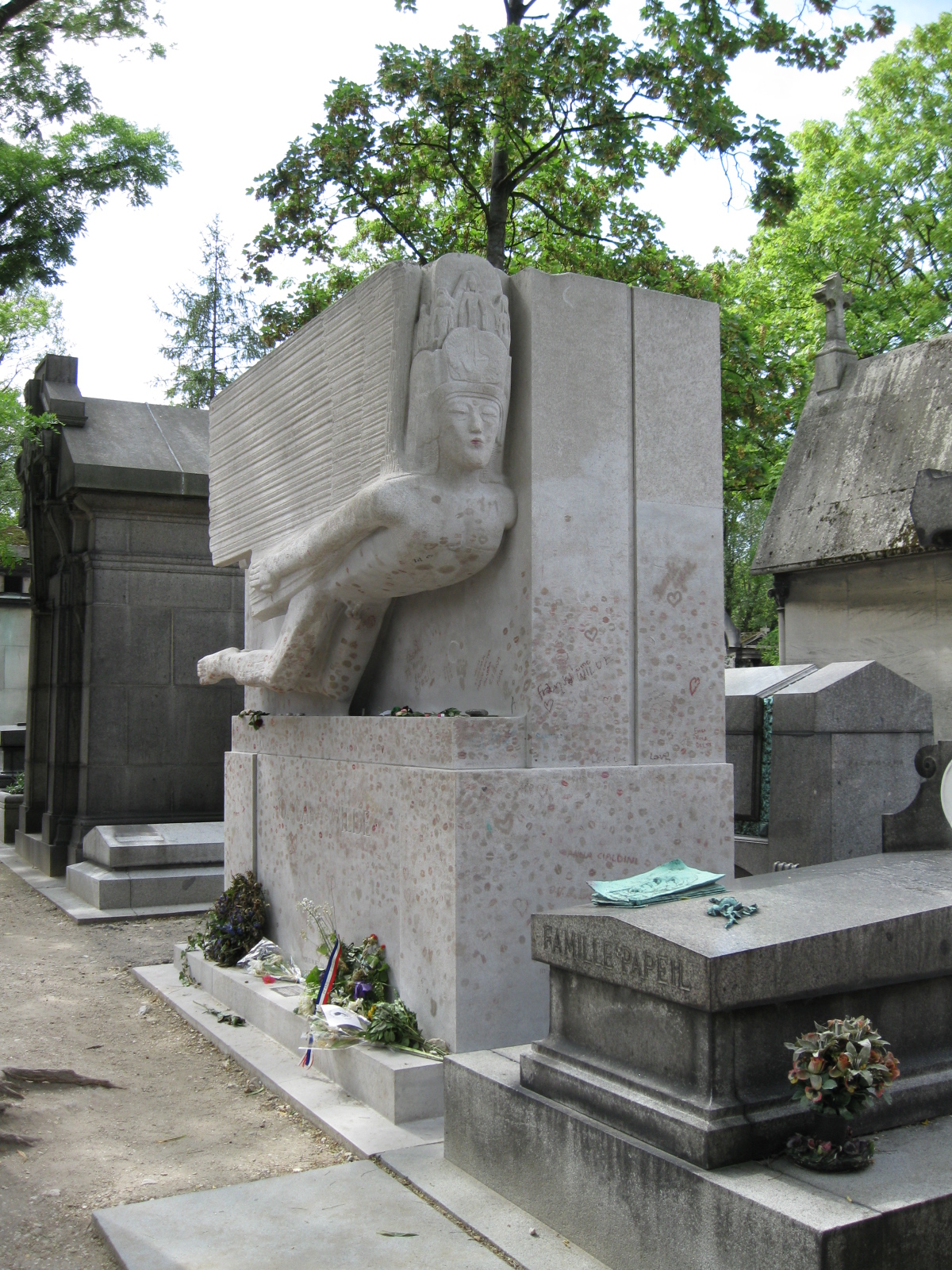
Tomb of Oscar Wilde designed by Sir Jacob Epstein

The tomb of Oscar Wilde in Division 89 of the Père Lachaise cemetery in Paris. 

“The imagination imitates. It is the critical spirit that creates.”
Oscar Wilde

Oscar Wilde and “The Critical Spirit”, Priscilla Galasso
God Particles, Liliana Negoi
What if?, Corina Ravenscraft

Photostory

The Seeds of Creativity, Naomi Baltuck

GENERAL INTEREST

Sacred Space and Photography

Sacred Space and Photography: Light, Terri Stewart
Sacred Space and Photography: Shadow, Terri Stewart

Poetry

Elements, Imen Benyoub
The Taste of Baklava, Jamie Dedes
The Transformation of Things, Jamie Dedes
My Free Poetry Book (a poem), Michael Dickel
Dust to Dust, Joseph Hesch
bladed, Liliana Negoi
When Did You Stop Being a Poet, Naomi Shihab Nye

Feature Articles/Essays

Opsimaths, Polymaths and Poets, Jamie Dedes
Clarity Is Just Above Your Problems, Simone Frame
The Closer God, Liliana Negoi

BIOS WITH LINKS TO OTHER WORKS BY OUR CORE TEAM AND GUEST WRITERS

FOR UPDATES AND INSPIRATION “LIKE” OUR FACEBOOK PAGE, THE BARDO GROUP/BEGUINE AGAIN

MISSION STATEMENT

Back Issues Archive
October/November 2014, First Issue
December 2014, Preparation
January 2015, The Divine Feminine
February 2015, Abundance/Lack of Abundance
March 2015, Renewal
April 2015, interNational Poetry Month
May 2015, Storytelling
June 2015, Diversity

Posted in Artists and Activists for Change, General Interest, Peace & Justice, TheBeZine

100 TPC … poets, writers, artists, photographers, musicians and friends in solidarity for positive change … POVERTY

IMG_1250POVERTY: Discussion on Bequine Again/The Bardo Group Facebook page (let me know in the comments section if you want to be included there) has made it evident that some definition – some framework – might be needed. As we stand in solidarity and share our art, essays, poetry, music and photography on Facebook and our blogs on September 26th, I think I can safely say on behalf of the leadership at 100TPC (stated core value: peace and sustainability) and Bequine Again/The Bardo Group, publishers of The Be Zine (stated core value: nonviolence), that we are not primarily focused on spiritual malaise, ennui, or existential angst, the kind of indulgences that might characterize those of us who don’t live with bombs dropping and who so fortunately have three meals a day, clean and plentiful water, housing, health care and education. We are not primarily concerned with the psychological/spiritual insecurity that results in the need to over accumulate. These are real, important and relevant issues that do have a place in discussion. However …

… our key objective is to shed a light on the often invisible MATERIAL POVERTY that results in the death of 22,000 children each day (UNICEF) and in the nearly one billion people who entered the 21st century with no education, no reading skills. We are talking about the ever-widening distance between the haves and the have-nots even within the developed countries, with the increasing numbers of homeless, “food insecure,” and the marginalized and disaffected.

We want to shed some light on the decreasing number of the world’s richest countries v the growing number of the world’s poorest countries. In 1820 the number of poor countries to wealthy was three-to-one. In 1992 it was seventy-two to one (1999 Human Development Report of the United Nations Development Programme – see also the Center for Economic and Policy Research). What do you think are the implications for all of us in that?

In short, our concerns are primarily centered on those issues that could be mitigated and perhaps resolved by deflecting investment in war to investment in people, by responsible consumerism, responsible corporate ethic and policy, and responsible national and global human development policy. We are of the same mind as Simone Weil (The Need for Roots, 1949)when she wrote that feeding the hungry is the most basic of human obligations and that “human progress” is defined by “ a transition to a state of human society in which people will not suffer from hunger.”

– Jamie Dedes

Posted in General Interest

100,000 Poets … and writers, artists, photographers, musicians and activists … for Change … Italy

IMG_1250


100,000 Poets for Change [100TC): poets and other artists and activists in world-wide solidarity for peace and sustainability.


While the great global event is scheduled for September 26 in 2015, there are local events staged at varying venues and times throughout the world. From June 3-8 the first world conference was held in Salerno, Italy. The video below shares the delightful work of some musicians at that conference. (The music starts at 1:20.) At The BeZine (a publication of Beguine Again and The Bardo Group), poet Michael Dickel (War Surrounds Us/Is a Rose Press) will report on the conference in Italy in the July 15 issue.

The BeZine is hosting a virtual 100TCP event for those who do not have access to any local venue or are homebound for whatever reason. We hope you’ll join us. We have chosen to shed our light on poverty this year.  More news on that to come here at The Poet by Day and on The BeZine blog.

We have a Facebook group going for our event.  If you are on Facebook and would like to join us there, let me know in the comments below and I’ll add you to the The BeZine 100TPC 2015 Discussion Group. We do ask that you keep on topic and communicate about relevant issues and concerns. Thank you!

If you are looking for a local 100TPC event go to 100TPC blog and scroll down the blogroll to your right to see what’s happening in your area and to find a contact. If you want to organize an event yourself, go to the Home Page for information.

Posted in 100,000 Poets, Musicians, Artists and Activists for Change, Poets/Writers, Sustainability

SAVE THE DATE: 26 Sept. 2015: 100,000+ poets in solidarity for peace and sustainability

Heads-up everyone: For the fifth year on September 26, 2015, more than 100,000 Poets (and artists, musicians, and other creatives and activist) will meet in town squares, theaters, on beaches, in cafes and probably some backyards in solidarity for a peaceful and sustainable world.

At The Bardo Group/Bequine Again, we’re hosting a virtual event so that those who have no neighborhood events to go to or who are home bound can participate.

At this writing founder Michael Ronthenberg, poet and publisher, reports that 300 events are already registered.  To see if there’s an event near you or to register an event in your neighborhood, go to the site. 

The following is a message from the founders of 100TPC:

Michael Rothenberg: Poet and editor of Big Bridge Press and zine

and

Terri Carrion: Associate editor and visual designer of Big Bridge Press and zine

100 THOUSAND POETS FOR CHANGE [100TPC] MOVEMENT for PEACE & SUSTAINABILITY!

Do you want to join other poets, musicians, and artists around the world in a demonstration/celebration to promote peace and sustainability and to call for serious social, environmental and political change? 

“What kind of CHANGE are we talking about?”

The first order of change is for poets, writers, musicians, artists, activists to get together to create and perform, educate and demonstrate, simultaneously, with other communities around the world. This changes how we see our local community and the global community. We have become incredibly alienated in recent years. We hardly know our neighbors down the street let alone our creative allies who live and share our concerns in other countries. We need to feel this kind of global solidarity. It is empowering . . .

… and there is trouble in the world. Wars, violation of human rights, ecocide, racism, genocide, gender inequality, homelessness, the lack of affordable medical care, police brutality, religious persecution, poverty, censorship, animal cruelty, and the list goes on and on.

Transformation towards peace and a more sustainable world are the major concerns and the global guiding principle for 100 TPC events. War is not sustainable. There is an increasing sense that we need to move forward and stop moving backwards. But we are trying not to be dogmatic. We hope that together we can develop our ideas of the “change/transformation” we are looking for as a global community , and that each local community group will decide their own specific area of focus for change for their particular event. All we ask is that local communities organize events about change within the guidelines of peace and sustainability.

“I want to organize in my area. How do we begin to organize?”

100 Thousand Poets for Change will help organize and find individuals in each area who would like to organize their local event.

If you are an organizer for your community you will consider a location for the event and begin to contact people in your area who want to participate in the event. Participation means contacting the media, posting the event on the web, in calendars, newspapers, etc., reading poems, doing a concert, performing in general, supplying cupcakes and beer (it’s up to you), demonstrating, putting up an information table, inviting guest speakers, musicians, etc., organizing an art exhibit, and documenting the event (this is important, too), and cleaning up, of course.

Organizers and participants will create their own local event as an expression of who they are locally. Do they want a a concert or a jam session, candlelight vigil or a circus, a march or a dance, poetry reading in a cafe or on the subway, do they want absolute silence, a group meditation on a main street; it’s up to the local organization.

However, groups should try to hold some part of the event, if not all of it, outdoors, in public view (not required). The point is to be seen and heard, not just stay behind closed walls. It is also important that the event be documented. Photos, audio, videos, poems, journals, paintings! Documentation is crucial. The rest of the 100 Thousand Poets for Change want to hear what you have to say about change and enjoy your creativity too! The documentation will be shared through a blog/website that I will set up, a blog/website where groups can share and announce event information, as well as post photos, videos, poetry, art, and thoughts. But an event doesn’t have to involve tons of people. It can be just you (the organizer) and your pet, on a street corner, with a sign. Just let me know what you are planning!

Every effort counts!

Each local organization determines what it wants to focus on, something broad like, peace, sustainability, justice, equality, or more specific causes like Health Care, or Freedom of Speech, or local environmental or social concerns that need attention in your particular area right now, etc. Organizations will then come up with a mission statement/manifesto that describes who they are and what they think and care about. Mission statements form arround the world have been collected and worked together into a grand statement of 100 Thousand Poets for Change.

Thank you for joining us!

Best, Michael Rothenberg and Terri Carrion

—————————–
Michael Rothenberg: Poet and editor of
Big Bridge Press and zine

Terri Carrion: Associate editor and visual designer of
Big Bridge Press and zine

Posted in General Interest, Islam, Religon, Spiritual, TheBeZine

The Month of Light

Wishing peace and happiness to our Muslim friends and contributors during this holy month of Ramadan. This feature article is by guest contributor Imen Benyoub (Algeria). It is from the February issue (theme: abundance/lack of abundance) of The BeZine. The first illustration is courtesy of American multimedia journalist and novelist (Bagdad Fixer), Ilene Presher. She found it online and shared it on her Facebook page. Ilene hosts a weekly radio show, TLV1Radio, Weekend Edition. The second illustration is courtesy of Russian photographer, Petr Kratochvil, Public Domain Pictures.net. J.D.

IMG_0479

Ramadan is the month of light, the month of reflection, blessings, generosity, devotion, change and sacrifice and a pillar of Islam as Prophet Mohammad (PBUH) said: “Islam is built upon five pillars: testifying that there is no God except Allah and that Mohammad is the messenger of Allah, performing prayer, paying the Zakah (charity), making the pilgrimage to the sacred house and fasting the month of Ramadan.

Ramadan is the ninth month of the Islamic calendar.  It is called the sacred month because it is observed worldwide by all Muslims as the month of fasting.  It’s twenty-nine or thirty days based on the visual sightings of the crescent moon.

Fasting in Islam means “to abstain.”  When you fast, you completely abstain from food, drinks, smoking and sexual intercourse from the break of dawn until sunset with an intention. This is not, however, all of it.  Real accomplished fasting is when you abstain from every behavior that is considered bad behavior in general.  It is something we share with Christianity and Judaism but with a lot of difference in details.

Who must fast? In general it is obligatory upon every Muslim, male or female, who is adult, sane, not sick or in a journey (traveling more than eighty kilometers). The exceptions to this are women who are in period or post-natal bleeding days, pregnant women and mothers who are beast-feeding.  These women are expected to make up the fast when they are in a condition to do so.  Those who are terribly sick, need constant medications, and those whose illness may be exacerbated by fasting.

When you fast, you will have two essential meals, sahur ( a pre-dawn meal). The Prophet Mohammad talked a lot about the reward and blessing of this meal, preferably left ’till the last half hour before dawn.  This meal will help you resist during the long hours of fasting during the day.  The second meal is iftar or break-fast, you take it immediately after sunset.

Along with exceptions mentioned above, there are a lot of permissible things a person can do that will not invalidate his or her fasting, like swimming in the sea when it’s too hot, with caution of not swallowing water, taking injections, doing blood tests, using toothpaste and eating or drinking unintentionally when someone forgets.

Fasting is a school of wisdom.  It has great spiritual and moral meaning too long to be listed in a few lines.  Beside its health benefits, it teaches patience and utility. It makes us closer to Allah because we are doing it out of love and seeking spiritual reward. It cleanses the soul from grudge and hatred. It teaches self-control and maturity.  Through fasting we learn to be selfless because we feel the pain of the poor and the hungry.

There is a beautiful sense of solidarity and community in Ramadan when everyone is helping, when mosques are filled, when relatives visit each other, when people forgive and start a new page, when a person vows to be good to others and when people stand in one line to pray.

Fasting can truly change a person’s heart when done with utter sincerity. It fills the heart with satisfaction, happiness and light because you’ll be rewarded double fo revery deed of goodness, every charity, every nice word you say, every verse of the Quran you read. When you realize that Allah gave hose who fast a special door in Heaven because of its holiness and significance.

ramadan-theme-11281531147LXCr-1

Every country celebrates Ramadan differently.  Traditions and customs change. The only thing that connects us all together is that magic that everyone feels during the month. The one I truly love is when the family celebrates the fasting of a child, encouraging him and helping him to understand what fasting truly is.  It is like a recharge for the year, a self-nourishing experience and one of the most exquisite a person can have.

Some sayings about Ramadan: on Prophet Mohammad (PBUH):

“When Ramadan enters, the gates of paradise are opened, the gates of hellfire are closed and all the devils are chained.”

“Every action a son of Adam does shall be multiplied; good action is by ten times its value up to 700 times.  Allah says: with the exception of Fasting, which belongs to me, and I reward it accordingly for, one abandons his desire and food or my sake.”

“Whoever observes fasts during the month of Ramadan out of sincere faith, and hoping to attain Allah’s rewards, then all his past sins will be forgiven.”

– Imen Benyoub

© 2015, feature article, Imen Benyoub, All rights reserved; 2015

Posted in Bardo News, General Interest, The B Zine, The BeZine Table of Contents

The BeZine, June 2015, Vol.1, Issue 8 – Table of Contents with Links

June 15, 2015

 DIVERSITY/INCLUSION

The evolution will be poemed, painted, photographed, documented, blogged, set to music and told in story.

The evolution will be delivered by a rainbow of human beings, everyday sort of folk ….  

The evolution will not be televised.

There are people for whom the arts exists almost exclusively as an aid to social change, to political discourse– not as some sort of didacticism – but as a discussion, a wake up call, a way of approaching some truth, finding some meaning, encouraging resolution. Many of us here number among them. All of us hope for kind, just and rational social change.

We write and dream about an inclusive appreciation of diversity that will promote a world without war, a world that respects all sentient life, all humans no matter their race or national origin, religion or lack thereof, economic or social status, mental or physical disability, age or sex, or sexual preference or gender orientation. We dream of a humanity that recognizes itself as an element of the natural environment not something apart from and over it.

We may be inspired by personal experience like Colin Stewart – our youngest ever contributor – who bravely articulates his experience of being bullied and marginalized in school in No Child Is Safe. Michael Watson, a therapist, a Native American shaman and a polio victim brings us  Still Here: Meditations on Disabilism and Lara/Trace Writes About Residential Schools, those schools established ” to save the person by removing the Indian.”

For some people the impetus is the direct experience of war, which is the ultimate expression of hate and exclusion. Silva Merjanian gifts us with an essay this month, As with any war …  Silva grew up in a war-torn Beirut. And, new to us is Michael Dickel, an American-Israeli who offers three poems from his new book War Surrounds Us.

Priscilla Galasso, whose appreciation for nature has birthed so many wonderful essays here, askes us to consider the diversity in nature, worthy of nurture and celebration not for ourselves but for its very isness in her essay Diversity and Car(ry)ing Capacity — Spiritual Lessons from Nature. 

The love of our children is a sure motivation to write about and work for respect and inclusion. We see this in Naomi Baltuck’s touching Mine (yours, ours), the second of our two lead features.

The muse is inspired by empathy and ideals, observation and proximity. Terri Stewart gives us one of our lead pieces this month, a moving poem, Created to Be Included. Sharon Frye shows a tender understanding of a Vietnamese refugee in her poem At Model Nails. This is the first time Sharon’s work is included here, but her poetry has found a home in many other publications including The Galway Review, The Portuguese journal, “O Equador das Coisas,” Mad Swirl, and The Blue Max Review (Ireland).

Sometimes the lives and work of  people who lived at other times and/or other places resonates for us. Roses and Their Homilies is an homage to Sor Juana Inez de la Cruz, the stellar poet of 17th Century New Spain. The clerical authority of her day simply could not put  her intellect together with her womanhood. Tragically for her and for us, this caused her to give up her writing five years before her death.

Each month the core team picks a theme.  We don’t dictate the slant.  We give everyone free rein. It’s always a surprise to see how the theme is addressed, who will hammer the theme dead on and who will address it obliquely. This month, when all the work was read, sorted and organized, most of us chose to “celebrate” diversity by illustrating just how slow and insufficient are the reforms and just how resistant humanity can be to inclusion. There is some deeply passionate work here.

I can’t help but think that the justice so many of us seek is rooted in transforming values. Hence, it is more evolutionary than revolutionary. Perhaps it is most evident in our blogosphere and social networking, in the heart-born prose and poems of simple folk like you and me with nary a politician or corporatist among us.

Perhaps the true evolution – the one that will foster permanent transformation – is a bottom-up thing, more likely to be blogged than broadcast, rising from homespun poetry and outsider art – sometimes rudimentary and awkward, but always quiet and true and slow like a secret whispered from one person to the next. It is something stewing even as we write, paint, make music, read and encourage one another. There is bone and muscle in what we do. Individually we have small “audiences.” Collectively we speak to enormous and geographically diverse populations.

I think I hear keyboards clicking and bare feet marching. Or perhaps poetic fancy has caught my spirit tonight and all is dream …I hope not. Write on … Read on … and be the peace …

So let some impact from my words echo resonance 
lend impulse to the bright looming dawn

Dennis Brutus (1924-2009), South African poet, journalist, activist and educator

In the spirit of peace, love and community,
Jamie Dedes

TABLE OF CONTENTS WITH LINKS

Diversity/Inclusion

Lead Features

Created To Be Included, Terri Stewart
Mine (yours, ours), Naomi Baltuck

LGBT

Darkness,  Colin Jon david Stewart
No Child Is Safe, Terri Stewart and Colin Jon david Stewart

Nature

Diversity and Car(ry)ing Capacity, Priscilla Galasso
Putting the “Action” in Activism, Corina Ravenscraft
The Clearest Way to the Universe, James Cowles

Native American

Lara/Trace Writes About Residential Schools, Michael Watson

Disabled

Still Here: Writing Against Disablism, Michael Watson

Refugee

At Model Nails, Sharon Frye

War/Conflict

Again, Michael Dickel
Musical Meditations, Michael Dickel
The Roses, Michael Dickel
As with any war …, Silva Merjanian
Borrowed Sugar, Silva Merjanian

Women

Roses and Their Homilies, Jamie Dedes

General Interest

Essay

British Bulldogs, Great Speeches … and poetry, John Anstie

Poetry

Rooftop Icarus, Joeseph Hesch
Prelude, Voice Aquiver, Sharon Frye
Growth Ring, Sharon Frye
Time Lapse, Liliana Negoi
for us, Liliana Negoi
dancing toward infinity, Jamie Dedes

Photo Stories

An Open Book, Naomi Baltuck
If Not for His Wife, Naomi Baltuck

OUR FABULOUS HEADER PHOTOGRAPH THIS MONTH IS THE WORK OF TERRI STEWART UNDER CC (BY-NC) LICENSE.

BIOS WITH LINKS TO OTHER WORKS BY OUR CORE TEAM AND GUEST WRITERS

FOR UPDATES AND INSPIRATION “LIKE” OUR FACEBOOK PAGE, THE BARDO GROUP/BEGUINE AGAIN

MISSION STATEMENT

Back Issues Archive
October/November 2014, First Issue
December 2014, Preparation
January 2015, The Divine Feminine
February 2015, Abundance/Lack of Abundance
March 2015, Renewal
April 2015, interNational Poetry Month
May 2015, Storytelling

Posted in General Interest

We’re Celebrating Diversity and Inclusion …

OUR THEME FOR JUNE IS DIVERSITY and we are celebrating – we are celebrating diversity in all its manifestations: sexual/gender orientation, race, religion, culture, national origin … even nature. What we are truly celebrating is respect – as inclusion – as a big step toward peace, understanding, justice … even environmental stewardship. The June issue of The BeZine is in process and will publish on June 15th. Please join us then. It’s an exciting issue. You won’t be disappointed. Meanwhile, we bring you this feature from the U.S. Library of Congress.

This flag celebrates LGBT pride. Photo courtesy of Ludovic Bertron under CC BY 2.0 license.

Lesbian, Gay, Bisexual and Transgender Pride Month (LGBT Pride Month) is currently celebrated each year in the month of June to honor the 1969 Stonewall riots in Manhattan. The Stonewall riots were a tipping point for the Gay Liberation Movement in the United States. In the United States the last Sunday in June was initially celebrated as “Gay Pride Day,” but the actual day was flexible. In major cities across the nation the “day” soon grew to encompass a month-long series of events. Today, celebrations include pride parades, picnics, parties, workshops, symposia and concerts, and LGBT Pride Month events attract millions of participants around the world. Memorials are held during this month for those members of the community who have been lost to hate crimes or HIV/AIDS. The purpose of the commemorative month is to recognize the impact that lesbian, gay, bisexual and transgender individuals have had on history locally, nationally, and internationally.

In 1994, a coalition of education-based organizations in the United States designated October as LGBT History Month. In 1995, a resolution passed by the General Assembly of the National Education Association included LGBT History Month within a list of commemorative months.

LGBT History Month  is also celebrated with annual month-long observances of lesbian, gay, bisexual and transgender history, along with the history of the gay rights and related civil rights movements. National Coming Out Day (October 11), as well as the first “March on Washington” in 1979, are commemorated in the LGBT community during LGBT History Month.

.
Executive and Legislative Documents
The Law Library of Congress has compiled guides to commemorative observations, including a comprehensive inventory of the Public Laws, Presidential Proclamations and congressional resolutions related to Lesbian, Gay, Bisexual and Transgender Pride Month Pride.

– The United States Library of Congress

Posted in Bardo News

a call to love . . . in other words, a call for respect …

Mission: a strongly felt aim, ambition or calling.

“A small body of determined spirits fired by an unquenchable faith in their mission can alter the course of history.” Mahatma Gandhi

INTRODUCTION TO BEGUINE AGAIN AND THE BARDO GROUP

We are a consolidation of two collaboratives with the shared core values of peace, justice and nonviolence.

At Beguine Again, an interfaith effort, you will find daily meditations, spiritual practice and inspirational posts. Beguine Again seeks to encourage, inspire and transform through personal spiritual experience. For further detail visit: Spritual Practices.

The Bardo Group is formed by writers, poets, story-tellers, artists, musicians, and spiritual teachers from the world over. The people who visit here to read, “Like,” and comment are as integral to this community as are the contributors. Visitors lend their energy, support, imagination and insights to this evolving community. Comments are open and kindly expressed perspectives and suggestions are welcome.

The Bardo Group no longer posts daily. Instead, along with Beguine Again, we are excited to present The BeZine, an eZine delivering a fresh new theme each month.
Our archive of three years of poems, essays, writing prompts, fiction, art, and video is accessible through the search feature.

MISSION STATEMENT

In collaboration with the Beguine Again team, the goal of The Bardo Group is to foster proximity and understanding through our shared love of the arts and humanities and all things spirited and to make – however modestly – a contribution toward personal healing and deference for the diverse ways people try to make moral, spiritual and intellectual sense of a world in which illness, violence, despair, loneliness and death are as prevalent as hope, friendship, reason and birth.

Our focus is on sacred space (common ground) as it is expressed through the arts. Our work covers a range of topics: spirituality, life, death, personal experience, culture, current events, history, art, and photography and film. We cover these topics in the form of reviews, essays, poetry, fiction and creative nonfiction, music, art, and photography. We share work here that is representative of universal human values however differently they might be expressed in our varied religions and cultures. We feel that our art and our Internet-facilitated social connection offer a means to see one another in our simple humanity, as brothers and sisters and not as “other.”

This is a space where we hope you’ll delight in learning how much you have in common with “other” peoples. We hope that your visits here will help you to love (respect) not fear.

We acknowledge that there are enormous theological differences and historical resentments that carve wedges among and within the traditions and ethnic or national groups, but we believe that ultimately self-preservation, common sense, and human solidarity will empower connections and collaboration and overcome division and disorder.

We ply our art, meditations, and prayer toward that tipping point when compromise – an admittedly imperfect peace – will overcome war and respect for life will topple resentment. That may not happen in our time, but it has to start somewhere and sometime and this is our modest contribution toward an end for which diverse people the world over are working and praying.

COPYRIGHT: 2011-2015, all rights reserved. Please do not print or post material from this site without asking permission of the author or authors. When in doubt, leave your request in the comments section under the post and the author will get back to you. Thank you!

Subscribe to enjoy every issue of The BeZine.  It will soon be available in PDF format for easier reading. Meanwhile, be sure to “like” and comment to let contributors know what you think and that you value their hard work and their contributions. The BeZine is entirely a volunteer effort, a gift of love. Any ads you see are not our own. They are WordPress ads used to defray their cost of hosting blogs and websites.

In the spirit of love, peace and community,
The Bardo Group/Beguine Again

bardogroup@gmail.com
The Bardo Group/Bequine Again Facebook Page

Update: June 10, 2015

Posted in General Interest

Your work … our work … is to change the world for the better …

photo 3-2“The poet or the revolutionary is there to articulate the necessity, but until the people themselves apprehend it, nothing can happen … Perhaps it can’t be done without the poet, but it certainly can’t be done without the people. The poet and the people get on generally very badly, and yet they need each other. The poet knows it sooner than the people do. The people usually know it after the poet is dead; but that’s all right. The point is to get your work done, and your work is to change the world.” James Baldwin (1924-1987), American poet, playwright, novelist and social critic

Your work … Our work … is to change the world for the better. Our mission statement is HERE.

The next issue of The BeZine will publish on June 15, 2015

Meanwhile, for spiritual information and inspiration please join us on Facebook:

The Bardo Group/Beguine Again Facebook Page

© 2014, photograph, Jamie Dedes, All rights reserved

Posted in General Interest, The B Zine, The BeZine Table of Contents

The BeZine, May 2015, Vol. 1, Issue 7

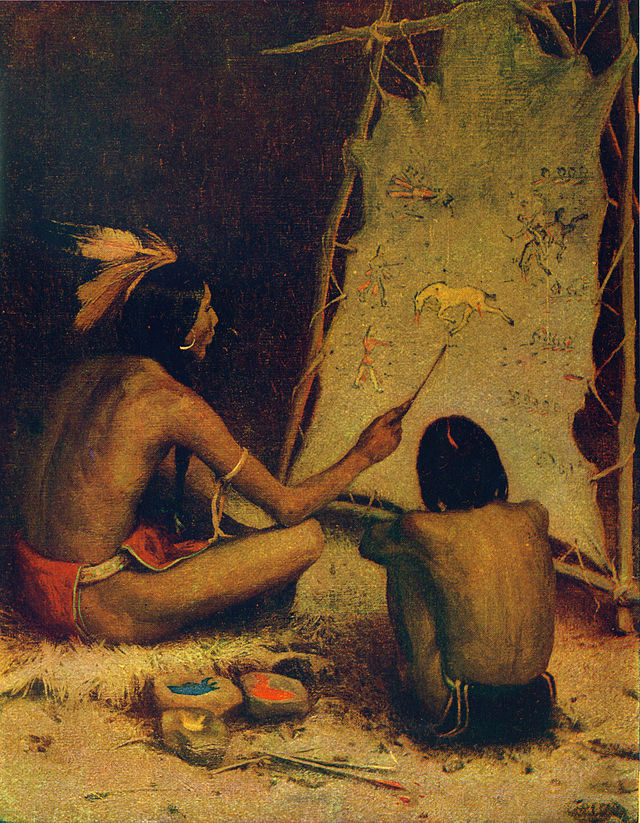
640px-The_Historian_(The_How_and_Why_Library)Storytelling: It’s a means by which we are entertained but also by which we explore meaning and develop our internal fortitude, our moral fiber, values and identity … At least that was the purpose before storytelling was so grossly co-opted by marketing with its push to accumulation and self-aggrandizement. This month in our lead feature, Healing Stories, Michael Watson, therapist and Native American shaman, explores the power of storytelling to heal in the context of tradition and of therapy.

Our resident professional storyteller, Naomi Baltuck, gifts us with four photo stories, small gems that will make you smile and laugh and remind you of what really matters in life.

The poem, Mourning Brooch, reflects on the power of memory when it evolves into story. John Anstie‘s poem is a love story for his grandson. How many of us have told our children or grandchildren stories about their birth, it’s meaning to us, and what we want to leave them as legacy? Turtle Speaks explores meaning in Native American stories about Turtle. Charlie Martin, Joe Hesch and Myra Schneider use poetry to tell their stories or those of others. For Charlie it’s all about social conscience, compassion and justice. For Joe Hesch it’s often about nature and history. For Myra it’s about the different ways that both fine art and everyday things move her … and by extension, us.

Señora Ortega’s Frijoles is a short story about dichos (sayings), which are used to pass tradition and values from one generation to the next … just like storytelling.

Silva Merjanian shares four poems from her second collection, Rumor (Cold River Press).  We introduced Silva here last month.  Silva’s poems tell us the stories of war – not simply a reaction to the news of war as in my own The Doves Have Flown – but her experience of war.

We shared in the last issue that Silva and her publisher are donating all profits from the sale of Rumor to the Syrian Armenian Relief Fund.  As I was preparing this intro I learned that thus far they have raised $1,397.73.  Well and kindly done, Silva.

The use of poetry to raise funds for worthy causes is not new to our contributors and readers.  John Anstie and the Grass Roots Poetry Group donate the funds from Petrichor Rising to UNICEF.  Therein lies another story featured this month: “Petrichor Rising” … or how the Twitterverse birthed friendships that in turn birthed a poetry collection …

With a nod toward spring in the Western Hemisphere, Corina Ravenscraft serves up a charming soupçon of gardening advice, a small treasury of hints to help you garden with simplicity, patience, and compassion.  It’s all about balance, whether you are caring for plants or for your own spirit.

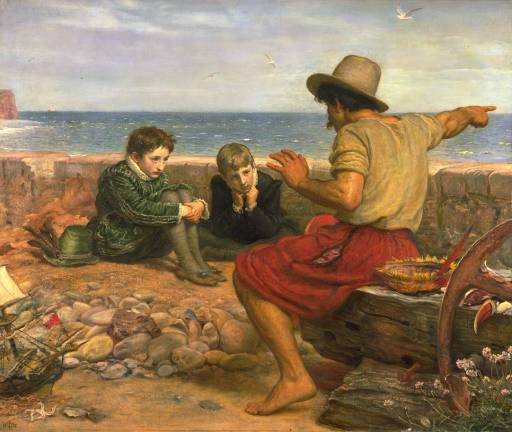
Millais_Boyhood_of_RaleighAs you go through your days, do your work and practice your art, we hope you keep in mind the meaning and value of the stories you hear and read and of your own story as it unfolds. We hope you’ll share your stories in the comment sections here or via books or blogs or at gatherings of family and friends.

Enjoy this issue.  Be sure to “like” and comment to let contributors know what you think and that you value their hard work and their contributions. The BeZine is entirely a volunteer effort, a gift of love. (Our mission statement is HERE.) Any ads you see are not our own.  They are WordPress ads used to defray their cost of hosting blogs and websites.

Be the peace.

Thanks for visiting us.
Jamie Dedes

Illustrations: Header via Wikipedia under CC BY-SA 2.0 license, A very fine par dated 1938 A.D. The epic of Pabuji is an oral epic in the Rajasthani language that tells of the deeds of the folk hero-deity Pabuji, who lived in the 14th century.; photo #1 (public domain) via The How and Why Library, E. Irving Couse, A. N. A.; The Historian; The Indian Artist is painting in sign language, on buckskin, the story of a battle with American Soldiers;  photo #2 (public domain) via Wikipedia, The Boyhood of Raleigh by Sir John Everett Millais, oil on canvas, 1870. A seafarer tells the young Sir Walter Raleigh and his brother the story of what happened out at sea.

Core Team and Guest Contributor Biographies

TABLE OF CONTENTS

Lead Feature

Healing Stories by Michael Watson, M.A., Ph.D., LCMHC

Photo Stories

Survival Stories by Naomi Baltuck
The Inside Story by Naomi Baltuck
To See the World by Naomi Baltuck
Rather Than Curse the Darkness by Naomi Baltuck

Fiction

 Señora Ortega’s Frijoles by Jamie Dedes

Poetry

An Apology from Your Grandfather by John Anstie

The Mourning Brooch by Jamie Dedes
Turtle Speaks by Jamie Dedes
The Doves Have Flown by Jamie Dedes

The Discovery of Grass by Joseph Hesch
In Audience with the Queen by Joseph Hesch

dance to life’s music by Charles W. Martin
no translation necessary by Charles W. Martin
honey … I swear this is for the birds … by Charles W. Martin

Beirut by Silva Merjanian
Collateral Damage by Silva Merjanian
Doves of Beirut by Silva Merjanian
Rooftop by Silva Merjanian

Bird by Myra Schneider
Milk Bottle by Myra Schneider

Feature Articles

Being a More Compassionate Gardener by Corina Ravenscraft

“Petrichor Rising” … or how the Twitterverse birthed friendships that in turn birthed a poetry collection … by John Anstie and Jamie Dedes

Posted in General Interest

Goulash

Editorial note: Well here we are in May already … hard to believe … and we are in the process of preparing the May 2015 issue of The BeZine for you. Look for it on May 15th. Meanwhile, we share here one of the more popular posts in the history Bardo, a poem, “Goulash,” by English poet, Myra Schneider.  Enjoy!

687px-2009-09-gulasch-pörkölt-paprikas-3

A crucial ingredient is the right frame of mind
so abandon all ideas of getting on. Stop pedalling,
dismount, go indoors and give yourself masses of time.
Then begin by heating a pool of oil in a frying pan
and, Mrs. Beeton style, take a dozen onions
even though the space you’re working in is smaller
than the scullery in a Victorian mansion. Pull off
the papery wrappings and feel the shiny globes’ solidity
before you chop. Fry the segments in three batches.
Don’t fuss about weeping eyes, with a wooden spoon
ease the pieces as they turn translucent and gold.
When you’ve browned but not burnt the cubes of beef
marry meat and onions in a deep pan, bless the mixture
with stock, spoonfuls of paprika, tomato purée
and crushed garlic. Enjoy the Pompeian-red warmth.
Outside, the sun is reddening the pale afternoon
and you’ll watch as it sinks behind blurring roofs,
the raised arms of trees, the intrepid viaduct.
In the kitchen’s triumph of colour and light the meat
is softening and everything in the pot is seeping
into everything else. By now you’re thinking of love:
the merging which bodies long for, the merging
that’s more than body. While you’re stirring the stew
it dawns on you how much you need darkness.
It lives in the underskirts of thickets where sealed buds
coddle green, where butterflies folded in hibernation,
could be crumpled leaves. It lives in the sky that carries
a deep sense of blue and a thin boat of moon angled
as if it’s rocking. It lives in the silent larder and upstairs
in the airing cupboard where a padded heart pumps
heat, in the well of bed where humans lace together.
Time to savour all this as the simmering continues,
as you lay the table and place at its centre a small jug
in which you’ve put three tentative roses and sprigs
of rosemary. At last you will sit down with friends
and ladle the dark red goulash onto plates bearing
beds of snowhite rice. As you eat the talk will be bright
as the garnets round your neck, as those buried
with an Anglo-Saxon king in a ship at Sutton Hoo,
and the ring of words will carry far into the night.

– Myra Schneider

Excerpt from Circling The Core (Enitharmon Press 2008)

© 2009, poem, portrait (below), and book cover art (below), Myra Schneider, All rights reserved and presented here with the permission of the poet. Photo credit ~ Pot of Goulash by Ralf Rolestschek via Wikipedia under Creative Commons Attribution-NonCommercial-NonDiriviative 3.0 U.S.

IMG_0032-1circling core_22MYRA SCHNEIDER ~ is a poet, a poetry and writing tutor, and the author of Writing My Way Through Cancer and, with John Killick, Writing Your Self. Her poetry collections, Circling the Core and Multiply the Moon, were published by Enitharmon Press. She has eight published collections. Her most recent work What Women Want was published earlier this year by Second Light Publications.

Myra’s long poems have been featured in Long Poem Magazine and Domestic Cherry. She co-edited with Dilys Wood, Parents, an anthology of poems by 114 women about their own parents. She started out writing fiction for children and teens. We first discovered Myra through her much-loved poem about an experience with cancer, The Red Dresswhich she generously shared with readers here in our Perspectives on Cancer series in 2011.

Currently Myra lives in North London, but she grew up in Scotland and in other parts of England. She lives with her husband and they have one son. Myra tutors through Poetry School, London. Her schedule of poetry readings is HERE.

Posted in General Interest, Poems/Poetry, poetry, Poets/Writers, The BeZine Table of Contents

The BeZine, April 2015, Volume 1, Issue 6 – Table of Contents with links

OUR THEME THIS MONTH:
POETRY in honor of
interNATIONAL POETRY MONTH

Mid-wife

A poem is as new as beginnings,
as fresh as the first day at school.

A poem is as bright as our admiration
for courage, our respect for freedom.

A poem is as early as the first leaf,
as white as the most swan-white cloud.

A poem is a drop of rain, a little
convex mirror with the prime of day in it.

A poem is so raw, so young that it has grown
no first, second or third skin.

Dilys Wood, All rights reserved

April 15, 2015

Poetry is that particular way of organizing our thoughts and imagination into music, emotion, image and story. Through poetry we live hugely, with more beauty, and we seek to break the limitations of our minds, to understand the powers that are living us (to borrow from Auden) and connect with the rest of humankind and that ineffable something that is greater than ourselves. It is both art and meditative practice. Ultimately it becomes a collaboration between writer and reader.

Celebrating poetry in April for interNational Poetry Month has been a Bardo Group tradition since 2011. This year, together with our partner, Second Light Network, our core team and our guest poets we bring you – as poets and poetry lovers – a rich collection of poems, resources and inspiration.

We are pleased to partner with Second Light Network of Women Poets and to bring to your attention the work of 100,000 Poets for Change and Stephen F. Austin State University Press, which recently published a new biography of Sylvia Plath by Julia Gordon-Bramer. Ms. Gordon-Bramer explores Plath’s work through her well known interest in Tarot and Qabalah.

It occurred to me as I was putting the final touches on this month’s The BeZine that there is a sub theme:  the way poets reach out not only with words – but with actions – to help make the world a better place.  Second Light Network reaches out to support women poets in their later years. 100,000 Poets for Change is a global effort  to raise awareness of environmental issues, climate change and human rights issues.  Poet Silva Zanoyan Merjanian, a Lebanese-American of Armenian decent, is donating the sales of her second book, Rumor (Cold River Press), to the Syrian Armenian Relief Fund. 

Second Light Network (SLN) of Women Poets

Founded by English poet Dilys Wood, SLN is all about encouraging and promoting the work of women in their third act, especially those who are coming to poetry for the first time late in life. Full membership is open to women over forty years and affiliate membership is open to those under forty. Visit Second Life Live for details. Membership is not limited to residents of the U.K.

SLN sponsors classes (including remote classes), is often able to make special arrangements for disabled, and publishes anthologies of women’s work and ARTEMISpoetry magazine (May and November). While the network is for women only, the poetry is for everyone.

– Jamie Dedes

The HEADER this month is the work of our AmeriQuebeckian poet Annie Wyndham, who publishes Salamander Cove. It has an irregular schedule. There’s a fine archive of poems from some of the world’s finest poets.

TABLE OF CONTENTS

BOOK EXCERPT

Fixed Stars Govern A Life: Decoding Sylvia Plath by Julia Gordon-Bramer.

SECOND LIGHT NETWORK (SLN) OF WOMEN POETS

About SLN
Second Light Welcomes Women Poets
Comments on Second Light: organization, publications and remote workshops
Enthusiastic Supporters of Second Light

Features from ARTEMISpoetry
Three Young Poets on Plath’s Influence by Kim Moore, Lavinia Singer and Sarah Westcott
We As Human Beings Must Not Forget, An Interview with Argentinian Poet Ana Becciú by Maria Jastrzębska
My Life in Poetry by Ann Stevenson
Petronella Checks Submission Guidelines by Kate Foley

100,000 POETS FOR CHANGE

Poets and Artists Raise Awareness, Work to Inspire Positive Change

Poems

Past Master by John Anstie
The Dream of a Poet by John Anstie

Le Fée Verte, Absinthe by Jamie Dedes
Blue Echo by Jamie Dedes
Wabi Sabi by Jamie Dedes

Father Sky by Priscilla Galasso
Morning Dove by Priscilla Galasso

How to Write a Poem by Joseph Hesch

The Saints in My Rain by Silva Zanoyan Merjanian; artwork by Steve McCabe
Converge by Silva Zanoyan Merjanian

race by Lilianna Negoi

The Will of the Quill by Corina Ravenscraft

Survival by Myra Schneider

Reel to Reel by Anne Stewart

Double Dutch by Terri Stewart

Reasons by Blaga Todorova
After Neruda by Blaga Todorova

Our Stories by Annie Wyndham

The BeZine, Issue 5
The BeZine, Issue 4
The BeZine, Issue 3
The BeZine, Issue 2
The BeZine, Issue 1

The Bardo Group/Beguine Again on Facebook

The BeZine is a publication of BequineAgain and The Bardo Group.

Posted in General Interest, Jamie Dedes, poem, Poems/Poetry, poetry

Free, Female, Of Motley Race, Sixty-five

IMG_7727I’ve been known to chat with birds in public places
To rescue lost worms sizzling on the pavement in summer
To photograph the irrepressable in every garden
To weave music, emotion and story into poetry
I’m known to be free, female, of motley race and sixty-five

© 2015, poem and photograph, Jamie Dedes (The Poet by Day), All rights reserved

The April issue of The BeZine will publish here this Wednesday, the 15th.

We’re celebrating interNational Poetry Month

in concert with Second Light Network of Women Poets (SLN).*

The BeZine is a publication of Bequine Again and The Bardo Group.

* Second Light Nework of Women Poets is open world-wide to women poets over forty.  Affiliate membership is available for those under 40. Details on SLN’s website

Posted in General Interest

Myra Schneider asks, “Who is poetry for?”

1815_coversNote: This full-length feature article is presented as an appropriate wrap after celebrating interNational Poetry Month (April). The feature was originally published by ARTEMISpoetry (13 November 2013) and is delivered here with the permission of the publisher (Second Light Live) and the author, Myra Schneider. Although Myra discusses poetry in Britain, we feel her observations apply to other countries as well. Jamaica only just appointed a poet laureate for the first time in fifty years. This month in the U.S. King Features Syndicate partnered with the American Academy of Poets to present poetry to the general public along with the news, which hasn’t been done in the U.S. for more than a generation.

Some months ago at one of the twice-yearly poetry readings, which I help organize for Poetry in Palmers Green, a woman I didn’t know, turned to me as she was leaving and said apologetically: ‘I’m afraid I don’t write poetry.’ It was as if she had been attending under false pretences. I told her we welcomed everyone and felt it important our audience didn’t only consist of writers. The conversation reminded me sharply that in Britain poetry is in the main seen as a separate world. Who would go to a concert feeling uncomfortable that she/he didn’t play a musical instrument?

Why is it that contemporary poetry is often viewed as a minority art form when there is often no more potent way of expressing and communicating vital aspects of life and thought?

One problem is the poor coverage of poetry by the media. BBC Radio 4 broadcasts the poetry request programme Poetry Please. The medium of radio is, in fact, ideal for poetry and Radio 4, which includes readings twice a day from prose books, could offer much more. However, there are some green shoots. Radio has given serious attention to some contemporary translations of classical poetry, such as Amy Kate Riach’s translation of The Seafarer broadcast with sound effects and music on Radio 4, summer 2012. This programme also included a discussion of the poem led by Simon Armitage. This year a Radio 4 play was based on the life of the poet Clare Holtham, drawing on her writing. Radio 4 is also due to broadcast in January next year, as an Afternoon Play, Pam Zinnemann-Hope’s adaptation of her book-length poem On Cigarette Papers about the lives of her parents. More programmes with a poetry focus would be valuable.

Television rarely gives attention to poets and poetry. Serious drama, art and classical music, are all featured on both radio and television. Over recent years national newspapers have cut down the space they give to poetry. At one time there was a daily poem in The Independent and a weekly poem in The Observer. These have been dropped. The Guardian usually features a very short poem in its Saturday Review and a long review of one collection by a well-known poet. It used also to include two or three short reviews. Few bookshops hold good collections of poetry.

The mainstream media’s focus on a very small number of ‘hyped’ poets disguises the great range of lesser-known but strong writers whose poetry deserves to be heard. A large number of poetry collections are published each year but potential readers have no pointers about what is on offer amongst this confusing variety. If they go into a bookshop which does have an extensive poetry section (rare!) they may alight on books in which the poetry is obscure, erudite or both and others which are streetwise or jokey. They may remember some poems from the past which they liked as children but have no idea how to make their way into contemporary poetry. Unless they chance upon a book they can relate to they will probably give up.

There are, however, certain organizations and individuals who are concerned to take poetry to a wider audience. The Bloodaxe anthology, Staying Alive, and its sequels include in themed sections a wide range of accessible contemporary, twentieth century together with a few earlier poems, that is poems whose language and rhythm communicate their general sense. In comparison with the normal sales of poetry books, these anthologies have had huge and deserved success.

In London the Southbank Centre offers a fair number of readings by acclaimed poets from the UK and overseas. These draw in some non-poets as does Poet in the City’s themed readings. The Poetry Libraries in London and Edinburgh are invaluable resources with their comprehensive collections of books for children as well as adults. Both stock magazines and leaflets, provide information and put on intimate readings by a wide range of poets. Poems on the Underground and the charity, Poems in the Waiting Room, both long-running, bring poetry to the many who are unused to hearing or reading poems. The Poetry Society, which sees part of its role as bringing poetry to the public and is the main organizer of National Poetry Day, helps promote Poems on the Underground.

Of prime importance is the work done, on whatever scale, by individuals who have found ways to introduce poetry directly to non-poets. I want to mention some of the very different examples I am aware of.

Deborah Alma, who wrote about her Emergency Poet Service in ARTEMISpoetry 10, is in great demand at city centre events and venues such as pubs as well as at poetry and arts festivals. She travels as a poetry ‘doctor’ in her adapted ambulance and comments, ‘What I do by “prescribing” a poem for their “empty-nest-syndrome”, their stress or heart-break, is show them that poetry has something to say, that it can speak intimately…I try to tailor the poem to their reading habits and taste. I really do believe that poetry is for and about everyone. I might recommend a Bloodaxe anthology…It works! And it matters.’

Poet Kaye Lee, who attends a WEA Writing for Pleasure class, was asked by the tutor, whose interest was prose, to run a poetry session. She told me it was difficult because although one member of the group had requested poetry most of the others were antagonistic, considering it outlandish and too difficult. She started by reading and discussing several accessible list poems by Ruth Fainlight and other poets as a lead-in to writing and gradually won the group over. Keeping to the format of beginning with themed poems, she now runs one very popular session every term. Some members of the group are reading poetry for pleasure at home.

This year the Second Light Network invited a few book-groups to accept copies of Mary MacRae’s posthumous poetry collection, Inside the Brightness of Red, to study her work and to send in reviews. Some book-groups had previously avoided poetry books and a typical comment was: ‘Only twice in the last fifteen years…have we ventured into poetry. The few reviews coaxed from our group suggest that we might do well to dedicate more evenings to poetry in the future.’ Though Mary MacRae was widely admired by fellow-poets, she did not have a high public profile. Nevertheless, the many new readers targeted by this project were able to appreciate both the power of her work: ‘This is a luscious book of poetry. It oozes beauty and wistfulness and is a joy to have by the bed – a poem at bedtime.’ Such enthusiasm makes you wonder what it would take to bring more people and more poetry back together (‘a poem at bedtime’?).

While she was manager of Palmers Green Bookshop Joanna Cameron, a non-poet who loves poetry, ran a series of successful poetry readings. Much of the audience was made up of customers who didn’t write poetry. Later, Joanna was a founder member of Poetry in Palmers Green and she has brought many non-poets to the readings. She now lives near Cambridge where she is putting on readings for Oxfam. She believes it is important to be inclusive while offering a high standard of poetry. She told me she’s seen tightly buttoned men cry at events and heard people saying, ‘I didn’t know poetry could be like that’.

Coming from a background of working in casinos and playwriting, William Ayot became interested in poetry, both reading and writing it, in the 1990s. He included poetry in rehab work he did in prisons and for many years he has used poetry as part of teaching leadership in boardrooms and business schools all over the world. Unable to find a poetry group when he moved to Chester some years ago, he started Poetry on the Border. The series offers accessible poets to large audiences, many of whom are not poets. Recently he set up NaCOT (National Centre for Oral Tradition) and poetry, of course, has a role in this.

Poet John Killick has done major work using poetry with people who have dementia. He writes down a person’s words and then shapes them on the page. The resulting text is then approved by the person and released for circulation among care staff, relatives and a wider public. Anthologies of these poems have been brought out by the publisher, Hawker. John is now mentoring other poets to work in the same way. He also gives readings from these poems and his own at events which link poetry and health issues. Earlier in his career he used poetry in full time educational work with prisoners and he has done poetry residences in hospices.

Other poets are making valuable contributions in healthcare areas. Rose Flint has used poetry in hospital wards, special units and community groups. Another example is Wendy French who has worked in various health areas and been chair of Lapidus, an organization concerned with writing for personal development which very much involves poetry. Survivors Poetry offers poetry and poetry writing to those have suffered mental illness.

It goes without saying that bringing poetry to children is of paramount importance and the Poetry Society see it an essential part of their role to send poets into schools. The work of Sue Dymoke and Anthony Wilson, poets and university lecturers who support teachers by showing them exciting ways of introducing poetry to their pupils, is immensely valuable.

The Internet also offers routes into poetry. In the Guardian Poem of the Week Carole Rumens presents a poem with detailed description and comment. Helen Ivory posts a daily poem on Ink Sweat and Tears, a site which sometimes includes reviews of poetry. Oxford Brookes Poetry Centre posts a weekly poem. Some enthusiastic poets have blogzines in which they regularly introduce poets, together with one of their poems, in an informal but informative way. These sites are helpful to those beginning to read poetry and experienced writers are likely to gain insights from them too.
Blogzines I particularly I admire are posted by Kim Moore, Anthony Wilson and Jamie Dedes.

Kim Moore begins her posts with a lively account of her poetry week, then moves on to her chosen poet and poem. She told me she hoped to normalize poetry as having a part of a working week. In his daily Lifesaving Poems Anthony Wilson (mentioned above) presents a poem which is key to him and includes the personal circumstances in which he came across it as part of his commentary. Jamie Dedes, a retired journalist who lives in California, loves and now writes poetry. She often features articles, poems and interviews with poets in her daily blogzine, The Poet by Day.

It is very clear that themes of wide general interest as well as an informal approach provide inviting routes into poetry. This was underlined for me by Kim Moore. She was asked, as a local writer, to take part in a reading by a visiting poet on the subject of pregnancy and breastfeeding. The evening, she told me, was very popular and though none of her poems had any connection with the subject and no one in the audience whom she spoke to her had ever been to a poetry reading before, she sold nine copies of her debut pamphlet.

Although the media view poetry as a minority art I take heart from the fact that there are organizations and generous individuals committed to fostering an interest in it. I would like to think their number is growing and also that some of those who read this article might consider developing their own ‘open house’ approach.

How might we contribute? Possibly by boldly offering our own creative and/or critical work to various media. Would a long poem or sequence of yours, adapted, suit a Radio 4 ‘Afternoon Play’. Have you considered such a submission? Are we willing to post reviews of excellent collections we have read? Do we dare to invite a book group that we attend – one that never trifles with poetry – to look at a suitably accessible, intriguing individual collection of poetry or an anthology?

I know that the editors of ARTEMISpoetry would welcome and consider printing any information about schemes for widening the audience for poetry. After all, we are worth it.

Myra Schneider

© 2013, essay and portrait below, Myra Schneider, All rights reserved; © 2014, illustration, Second Light Live, All rights reserved

References:

Amy Kate Riach, The Seafarer, Sylph Editions, 2010
Bloodaxe Books, http://www.bloodaxebooks.com
The Poetry Library, Southbank, London, http://www.poetrylibrary.org.uk
The Scottish Poetry Library, Edinburgh, http://www.scottishpoetrylibrary.org.uk/‎
Poems on the Underground, http://www.tfl.gov.uk/corporate/projectsandschemes/2437.aspx
The Poetry Society, http://www.poetrysociety.org.uk
Poems in the Waiting Room, http://www.poemsinthewaitingroom.org‎
Kaye Lee, http://www.secondlightlive.co.uk
Second light Network of Women Poets, http://www.secondlightlive.co.uk
Mary Macrae, Inside the Brightness of Red, Second Light Publications, 2010
Joanna Cameron, joannacameron@live.com
Deborah Alma, Emergency Poet, emergencypoet.com
William Ayot, http://www.williamayot.com
John Killick, http://www.dementiapositive.co.uk
Wendy French, wendyfrench.co.uk
Rose Flint, http://www.poetrypf.co.uk
Lapidus, http://www.lapidus.org.uk
Survivors Poetry, http://www.survivorspoetry.org
Anthony Wilson, http://anthonywilsonpoetry.com
Sue Dymoke, http://suedymokepoetry.com/books
Guardian Poem of the Week, http://www.theguardian.com/books/series/poemoftheweek‎
Oxford Brooks Poetry Centre, ah.brookes.ac.uk
Ink Sweat and Tears, http://www.ink-sweat-and-tears.com
The Poet by Day, http://musingbymoonlight.com
Kim Moore, http://kimmoorepoet.wordpress.com

How might you contribute? Possibly by boldly offering you own creative and/or critical work to various media. Would a long poem or sequence of yours, adapted, suit a Radio 4 ‘Afternoon Play’. Have you considered such a submission? Are you willing to post reviews of excellent collections we have read? Do you dare to invite a book group that you attend – one that never trifles with poetry – to look at a suitably accessible, intriguing individual collection of poetry or an anthology?

IMG_0032-1Myra’s long poems have been featured in Long Poem Magazine and Domestic Cherry. She co-edited with Dilys Wood, Parents, an anthology of poems by 114 women about their own parents. She started out writing fiction for children and teens. We first discovered Myra through her much-loved poem about an experience with cancer, The Red Dresswhich she generously shared with readers here in our Perspectives on Cancer series in 2011.

Currently Myra lives in North London, but she grew up in Scotland and in other parts of England. She lives with her husband and they have one son. Myra tutors through Poetry School, London. Her schedule of poetry readings is HERE.

The April issue of The BeZine will publish on April 15.

We’re celebrating interNational Poetry Month

in concert with Second Light Network of Women Poets (SLN)*

The BeZine is a publication of Bequine Again and The Bardo Group.

* Second Light Nework of Women Poets is open world-wide to women poets over forty. Details on SLN’s website.