The BeZine Blog

Posted in Uncategorized

To Edit, Perchance to Publish …

(On use of the English language)

” … To edit perchance to publish: ay, there’s the rub;

For in that edit of death what publishings may come

When we have shuffled off this mortal coil,

Must give us pause … “

(Editing liberties taken with Hamlet’s famous soliloquy, with thanks and apologies to William Shakespeare)

Jamie Dedes suggested that I should write about my experience of publishing.  I thought about this, but came to a conclusion that it would be pretentious to do so, because it would appear like someone, who had just successfully completed their first length of the swimming pool, writing a book on swimming the English channel!  However, there is something to write about in any experience, however humble.  So, I decided instead to write about it from a perspective, where I have a little more to offer.  This is the business of writing the English language.

Designing the book’s layout, selecting and agreeing cover designs, which fonts to use, finding someone to write a foreword, or not, decide who should write the introduction is much to do with publishing.  Reading it all front to back, back to front, several times over, has more to do with being competent in the language and brings much to bear on the business editing!
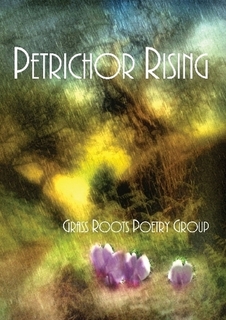
product_thumbnail-3.phpTo cast a glance at the experience I had in publishing “Petrichor Rising“, before the publisher came along, thinking that we might have to self-publish, I designed the layout, asked one of the group to write the introduction and, after playing with the idea of asking an award winning published poet I know to write a foreword (with the vain idea that it might give the book some kudos), eventually decided to write it myself.  All that remained was to get the covers designed and … Edit!

After several runs through it, I got to a point where I needed to ask ‘editorial questions’ of the contributing poets, which were in a variety of different forms. I felt sure that, if I were to uphold the integrity of the book, I was compelled to verify some of the simplest things, like spelling, grammar, English usage, the odd neologism and even the position of punctuation marks.

My golden rule was always that I should change not one single word without the consent of any of the authors.  So, I grabbed the horns!  Accordingly, I received a variety of responses, which ranged from unquestioning acceptance of my suggested edits, through “no that’s the way I intended it” to a significant re-editing of a poem. This was, or so I thought, one of the final hurdles to publication.

I eventually submitted the whole book to the publisher, who, within a short time had clearly read it through very thoroughly, because they returned it with a whole list of further edits, which comprised of spelling errors, general typo’s, even punctuation and the odd grammatical error!  An even greater shock to my pride was that a number of them were within my own writings! I had to agree with almost all of them!  What am I like! Evidently rather poor at self-editing!

As for English grammar, there are some rules that I’m keen on.  Even in poetry, I prefer to write English in complete sentences between full stops, with any main or subordinate clauses that have a subject and a predicate, any phrases suitably punctuated, words chosen for their proper meaning, as defined by a recognised dictionary (my preferred backstop is Fowler’s Concise Oxford English Dictionary) spelled correctly and, particularly in poetry, with no unnecessary repetition.

Amongst the rules I use, that I can rarely bring myself to break, include the use, in comparisons, of certain prepositions after the word ‘different’.  My personal loyalty lies with the traditional ‘from’; there are no circumstances under which ‘from’ cannot be used in this context; the alternatives used are ‘to’ (don’t know where this came from, but it is widely used in the media) and ‘than’ (more popular in North America), which sometimes permits a greater economy of words when ‘different’ is followed by a clause. So, in my book, it should be “different from”.

The next one is the split infinitive.  Once again, I would argue that there are no circumstances in which the infinitive form of a verb has to be separated from its preposition (‘to’) by any other word. The only possible exception could be in poetry, where one might want to split the infinitive for the sake of maintaining consistent scansion.  Even then, I would argue that there is no sentence that cannot be re-written in a different way, expressed with different words, to achieve the same effect; such is the variety of the English language.

Poets and writers have a great responsibility to communicate accurately, however perverse, complex or deep the story line. This super-fast digital age, with its plethora of social communication devices, has encouraged a laziness in the use of language and, therefore, a greater risk of misinterpretation, which transfers to our working lives too.  In the last twenty-five years of my working life, I witnessed a tendency for the generation, who have grown up with the digital computer age, to be ‘quick’, to empty the overloaded inbox as fast as they can and, in so doing, often write incomplete sentences that are easily misunderstood and that consequently waste time in clarification or, worse still, cause decisions to be wrong!

Economy of words is important in all writing, particularly poetry, which can only be enhanced by choosing the right words and concatenating them so as to achieve the meaning intended and, in this way, one should always aspire to achieve synergy, which is to say making the whole, the final result, greater than the sum of its parts. Shortening sentences, however, for the sake of speed is just lazy and symptomatic of an unwillingness to think more carefully about the language.

I hope, in any future attempt to publish a book, that I will remember this; remember how important it is to communicate our meaning accurately, and, thereby, truthfully.  As far as I am concerned, I am still learning.

– John Anstie

© John Anstie, essay, all rights reserved

RELATED FEATURE:

“Petrichor Rising” and how the Twitterverse birthed friendships that in turn birthed a poetry collection, by Jamie Dedes, The Poet by Day, the journey in poem
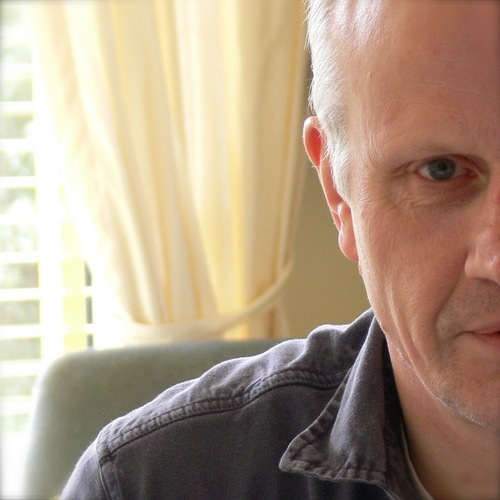
John_in_Pose_Half_Face351w-rH34dTL._BO2,204,203,200_PIsitb-sticker-arrow-click,TopRight,35,-76_AA300_SH20_OU01_JOHN ANSTIE (My Poetry Library and 42) ~ is a British poet and writer, a member of the core team here at Bardo, and multi-talented gentleman self-described as a “Family man, Grandfather, Occasional Musician, Amateur photographer and Film-maker, Apple-MAC user, Implementation Manager, and Engineer. John participates in d’Verse Poet’s Pub and is a player in New World Creative Union. He’s been blogging since the beginning of 2011. John is also an active member of The Poetry Society (UK).

John has been involved in the recent publication of two anthologies that are the result of online collaborations among two international groups of amateur and professional poets. One of these is The Grass Roots Poetry Group, for which he produced and edited the  anthology, “Petrichor* Rising. The other group is d’Verse Poet Pub, in which John’s poetry also appears in The d’Verse Anthology: Voices of Contemporary World Poetry, produced and edited by Frank Watson.

Posted in Niamh Clune, Poems/Poetry, Uncategorized

For the Innocents

emilie-parker-conn-shooting-victim-ap-578kb_606
Emilie Alice Parker

.

A year ago today, a man in Connecticut opened fire on innocents and educators. This poem is for them.

.

what evil wrought the twisted brier

causing him to open fire ~

slaughter hearts of innocents,

sweetest gifts of angels sent

among us, to remind us of

what’s essential, what is love

twisted mind whose wielded ‘right’

expressed his hate with gun of might

and snuffed them out, the madness toll

killed them twice ~ crushed the soul

put out the moon, pull down the stars

wrap the babe’s unsightly scars

make a shroud of blackened sky

so cold the slab on which they lie

cancel Christmas for all time

leave tears, for this, the greatest crime,

to wash their wounds of powder blast,

then dress them well, for this, their last

sleigh ride, to Santa’s sombred cave

then send them to their silent grave.

(c) Niamh Clune 2012, All rights reserved
Photo courtesy of the Parker Family via AP photo

430564_3240554249063_1337353112_n-1orange-petals-cover_page_001DR. NIAMH CLUNE (On the Plum Tree) ~ is the author of the Skyla McFee series: Orange Petals in a Storm, and Exaltation of a Rose. She is also the author of The Coming of the Feminine Christ: a ground-breaking spiritual psychology. Niamh received her Ph.D. from Surrey University on Acquiring Wisdom Through The Imagination and specialises in The Imaginal Mind and how the inborn, innate wisdom hidden in the soul informs our daily lives and stories. Niamh’s books are available in paperback (children’s books) and Kindle version (The Coming of the Feminine Christ). Dr. Clune is the CEO of Plum Tree Books and Art. Its online store is HERE.  Niamh’s Amazon page is HERE.

Posted in Priscilla Galasso

Have Some Divinity

The premise is this: for each day in December, instead of counting down on an Advent calendar, I’m counting the free gifts we all get every day.  (to see the rest of the month’s gifts, visit my blog!) Today’s gift is divinity, but I don’t mean the candy.  I mean The Divine, The Sacred, The Holy and experiences of them.  Don’t we all have the opportunity to receive that every day?  If you look for it, will you find it?  I think so.

So, what is sacred?  How do you recognize the divine and holy?  In art, there’s always a halo or a sunbeam to give you a clue.  What about here on earth?

‘Namaste’ is the Sanskrit greeting recognizing the existence of another person and the divine spark in that person, with the hands pressed together in front of the heart chakra.  I think the divine spark exists in every living thing as the breath of life.  Every encounter with a living thing is an experience of the divine.  We hardly ever act like that is true, however.  But we could.  Native Americans and many African tribes have hunting rituals that celebrate the sacred exchange of life.  The hunted animal is divine, sacrificing itself for the life of the hunter, and the hunter shows a holy appreciation.  Often, when I look at macro photography of living things, flower stamens, insects, mosses, I am compelled to worship the divine in the detail.  Life is sacred and beautiful.  Looking closely and deeply is a way to practice recognizing that.

In a dualistic world view, the mundane and the divine are polar opposites.  One is worldly, one is sacred.  If this world were imbued with holiness, if God became incarnate and entered flesh in this world, those opposites would run together like watercolors.  Many cultures believe this is the truth about life.  The waters under the firmament and the waters above the firmament are separated in one telling of the creation story, but the Spirit of God was moving over all of the waters from the very beginning, even in that story.  The understanding that divinity is everywhere has inspired people all over the globe for centuries.  This place we inhabit is special; it’s valuable.  It’s all holy.  This is the beginning of respect for the Universe and everything in it.  Somewhere in Western history, that idea lost its power.  Earth and everything in it became base and fallen.  Good turned to bad and life turned to death.  I’m not sure if that new idea has been very helpful.  I rather think it hasn’t.  And I don’t think it has to be that way.  It’s an idea, after all.  So if it’s not a helpful idea, why support it?  How would you rather live?  In a fallen world or in a world where the sacred and divine can be found everywhere?  Just wondering out loud.  I’m not saying that one idea is right and the other wrong.  The glass is neither half full nor half empty.  It’s a glass, and there’s water in it.  The rest is conceptual.  Why argue?  Choose how to live with the glass and the water.   As for me and my house, “I choose happy.”  (One of Jim’s conclusive statements.)

I hope this gives you something to ponder for today.  If you like, you can add a scene of Edmund Pevensie in Narnia being asked by the White Witch what he craves.  “It is dull, Son of Adam, to drink without eating.  What would you like best to eat?”  “Turkish Delight, please your Majesty!” he responds.  What if he had said, “Divinity”?  Same story, nuanced.  I would like to taste the sacred in this world, and I believe it’s here.

– Priscilla Galasso

© 2013, essay and photograph, Priscilla Galasso, All rights reserved

004PRISCILLA GALASSO ~ started her blog at scillagrace.com to mark the beginning of her fiftieth year. Born to summer and given a name that means ‘ancient’, her travel through seasons of time and landscape has inspired her to create visual and verbal souvenirs of her journey.

Currently living in Wisconsin, she considers herself a lifelong learner and educator. She gives private voice lessons, is employed by two different museums and runs a business (Scholar & Poet Books, via eBay and ABE Books) with her partner, Steve.

Posted in Jamie Dedes, Poems/Poetry

Perfection

[It is two years since I had what I can only describe as a powerful spiritual experience. I wrote about it at some length in an essay entitled “Child-God: Model for our Future… or Victim of our Failure?“. In brief, it was the result of spending a few short hours with my new grandson, my eldest daughter’s second child, in my arms, in the presence of my family. He was then a mere 7 days old. Last week, my son’s wife delivered me another grandson, whom I held for the first time at the age of five days. Although delivered at full term, he is still so tiny and vulnerable and it doesn’t matter how many new-born babies I see, their smallness never ceases to surprise me. The experience of holding my latest grandson, reminded me of this poem] …

baby-13719870150asI walked and wandered,
we talked, I sang,
but also had to sit awhile
for what seemed like an age.
You’d had a surfeit at the bar
you had leaked a bit
from both ends…
and seemed uncomfortable,
unhappy, not surprisingly.

This meant I had to change
your clothes completely!
I struggled for a while,
wishing this messy,
ear-rending moment away
but then…
amidst your own discomfort,
over which you sadly held
little or no control,
I saw a light, it wasn’t bright,
but bright enough;
slow burning, illuminating;
an oh so gentle warmth
that melted my impatient heart
and conferred on me
an unexpected gift
that no amount of money
could ever buy.

How is it that
we all spend so much time
chasing dreams;
seeking solutions
to problems we created;
searching for answers
to humanity’s eternal questions?
Craving, wanting, longing,
ever wishing for a bit
of luck, good fortune,
a favourable turn of dice;
that our numbers will come up
in life’s great lottery.

Don’t we all sometimes wish
for an elusive piece
of impossible magic,
the simple thought of which
dopes our senses
stupefies our rational thought;
makes us wish
that each of our Mondays
was a Friday;
dissolving our conscious lives
into hopelessness
and misery?

How then our dark, dark souls
so easily fall prey
to the business solutions
of Beelzebub;
to the chemical dependencies
of a crowded world;
the release afforded by
a liquid paradise;
perversely powdered
…perfection?

And yet…

and yet you,
all ten pounds of you,
after venting your lungs
– designed to strengthen them
against future exertions –
were unexpectedly becalmed.
As if absorbed by my plight,
your eyes lit up
by dark pools of the universe
and sucked me in…
hook, line and sinker.

Why could I not see this before,
this embodiment of all that’s good;
this absolute alcohol,
intoxicating, enthralling
absorbing and healing my soul,
melting my heart
into complete and utter
submission to your will.
And when you started to cry again,
it didn’t hurt so much,
the pain in my head subdued
as my whole system absorbed
this powerful essence
of you.

You then relaxed
and shuddered with a sigh
and I felt your body go
completely limp.
It was as if you
had made up your mind
to place your trust in me.
I felt an awesome responsibility.

Then, at once, I looked at you,
as if transformed;
you had cast your magic spell,
as if you had become the very thing
that, instinctively, I know you are;
know that you, who have
no knowledge,
no biass or understanding,
no prejudice, no judgement,
no hint of avarice or greed,
must be protected
from the repeated corruption
that man bestows upon man;
woman upon woman;
protected at all costs,
at any price…
with my life.

You are the Child-God,
the spiritual repository
of all of mankind’s hopes
and dreams:

the embodiment…

…of perfection

– John Anstie

(Read the author’s commentary on this Poem)

© 2011 John Anstie, All rights reserved
Photo credit ~ George Hoden, Public Domain Pictures.net

John_in_Pose_Half_Face351w-rH34dTL._BO2,204,203,200_PIsitb-sticker-arrow-click,TopRight,35,-76_AA300_SH20_OU01_JOHN ANSTIE (My Poetry Library and 42) ~ is a British poet and writer, a contributing editor here at Bardo, and multi-talented gentleman self-described as a “Family man, Grandfather, Occasional Musician, Amateur photographer and Film-maker, Apple-MAC user, Implementation Manager, and Engineer. John participates in d’Verse Poet’s Pub and is a player in New World Creative Union. He’s been blogging since the beginning of 2011. John is also an active member of The Poetry Society (cover1UK).

John has been involved in the recent publication of two anthologies that are the result of online collaborations among two international groups of amateur and professional poets. One of these is The Grass Roots Poetry Group, for which he produced and edited their anthology, “Petrichor* Rising. The other group is d’Verse Poet Pub, in which John’s poetry also appears The d’Verse Anthology: Voices of Contemporary World Poetry, produced and edited by Frank Watson.
* Petrichor – from the Greek pɛtrɨkər, the scent of rain on the dry earth.

Posted in Poems/Poetry, Victoria C Slotto

Finis

I was there.

Weeks of waiting, watching,
wondering how you held on,
how you defied
the inevitable.

You clung to life,
her tenuous tendrils
all that kept you here.

I’ve watched the change
death brings
when so slow—
the fragile, fading
waning of vigor.

A life unnoticed—
when not a mark is made
or sound is heard,
you die alone.

But I was there.

This morning,
you let go
and fluttered to the ground
among so many others,

and I was there.

– Victoria C. Slotto

Photo Credit: Mayang.com

I’ve been watching the tree outside the window where I meditate. One leaf, glorious in the height of autumn caught my attention and I kept an eye on it until it dropped. For me, this is a metaphor. In my “past life,” I was in an religious order that watched with the dying 24/7. So often, the person had no one. So many lives go unnoticed. I think of this often when looking at all the leaves on a tree, or a field of sunflowers. And so it is.

© 2013, Victoria C. Slotto, All rights reserved

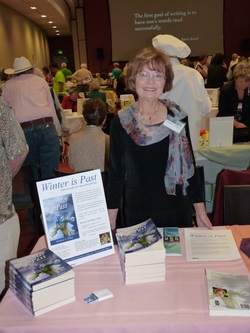
Victoria at the Palm Springs Writer's Expo March 2012
Victoria at the Palm Springs Writer’s Expo March 2012

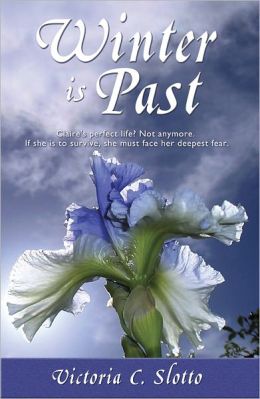
2940013445222_p0_v1_s260x420VICTORIA C. SLOTTO (Victoria C. Slotto, Author: Fiction, Poetry and Writing Prompts) ~ is an accomplished writer and poet. Winter is Past, published by Lucky Bat Books in 2012, is Victoria’s first novel. A second novel is in process. On Amazon and hot-off-the-press nonfiction is Beating the Odds: Support for Persons with Early Stage Dementia. Victoria’s ebooks (poetry and nonfiction) are free to Amazon Prime Members. Link HERE for Victoria’s Amazon page.

51tBOKHnyZL._AA160_Editor’s note: Congratulations, Victoria, on that the long awaited publication of print copies of Jacaranda Rain, Collected Poems, 2012, Beautifully done.

Posted in Naomi Baltuck, Photo Essay, Photography/Photographer

You Mean It’s NOT a River?

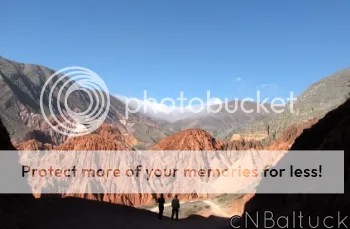
Some people say life is a river.  I think it’s more like a mountain.


It has its ups…

…and downs.

It can be glorious.

Mysterious.

Precarious.

Fraught with fire…

…and ice.

No one can climb it for you.

But, oh, what a trip.

As you find your way…

…the climb can be difficult.

The right path isn’t always clear.

But there will be beauty all around you.  In little things….

…or stretched out before you in all its grandeur.

In Hawaii they say love is like fog–there is no mountain on which it does not rest.

May there be friends to share the journey.

…to make you smile…

…to guide you…

…and support you.

Life is a delicate balance, a precious jewel, a piece of work.

Yes, look before you leap…

…and wear the proper footwear.

But as the saying goes, we don’t trip on mountains.  We trip on molehills.

All words and images c2013 Naomi Baltuck

NaomiPHOTO1-300ppi51kAqFGEesL._SY300_NAOMI BALTUCK ~ is a Contributing Editor and Resident Storyteller here410xuqmD74L._SY300_ at Bardo. She is a world-traveler and an award-winning writer, photographer, and story-teller whose works of fiction and nonfiction are available through Amazon HERE. Naomi presents her wonderful photo-stories – always interesting and rich with meaning and humor – at Writing Between the Lines, Life from the Writer’s POV. She also conducts workshops such as Peace Porridge (multicultural stories to promote cooperation, goodwill, and peaceful coexistence), Whispers in the Graveyard (a spellbinding array of haunting and mysterious stories), Tandem Tales, Traveling Light Around the World, and others. For more on her programs visit Naomi Baltuck.com

Posted in Jamie Dedes, Poems/Poetry

one lifetime after another

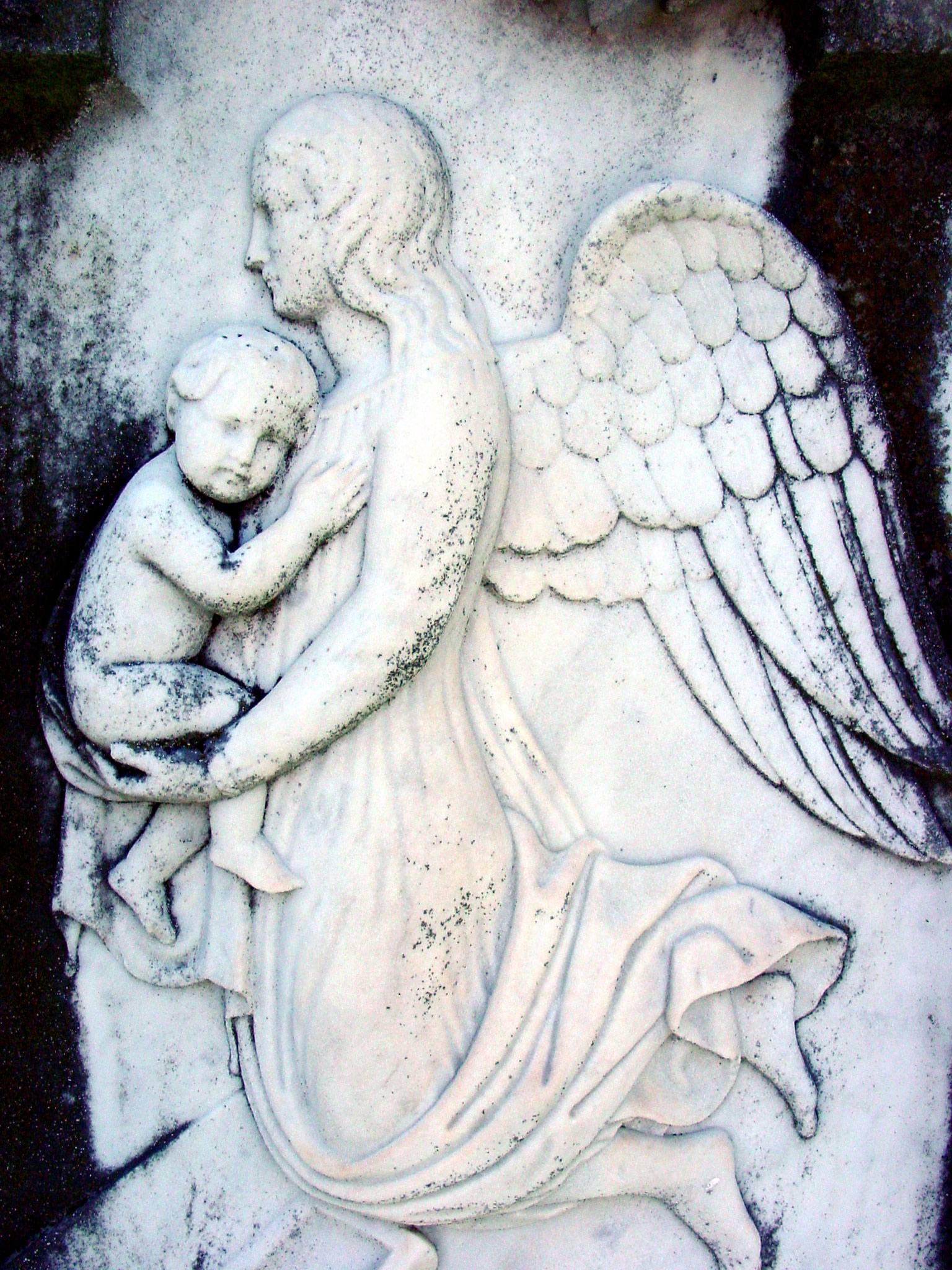
Angel and Dove, original watercolor by Gretchen Del Rio, all rights reserved
Angel and Dove, original watercolor by Gretchen Del Rio

one day, you’ll see, i’ll come back to hobnob
with ravens, to fly with the crows at the moment
of apple blossoms and the scent of magnolia ~
look for me winging among the white geese
in their practical formation, migrating to be here,
to keep house for you by the river …

i’ll be home in time for the bees in their slow heavy
search for nectar, when the grass unfurls, nib tipped ~
you’ll sense me as soft and fresh as a rose,
as gentle as a breeze of butterfly wings . . .

i’ll return to honor daisies in the depths of innocence,
i’ll be the raindrops rising dew-like on your brow ~
you’ll see me sliding happy down a comely jacaranda,
as feral as the wind circling the crape myrtle, you’ll
find me waiting, a small gray dove in the dovecot,
loving you, one lifetime after another.

– Jamie Dedes

© 2013, poem , Jamie Dedes, All rights reserved
© Illustration ~ Gretchen Del Rio, used here with Gretchen’s permission, All rights reserved

Photo on 2012-09-19 at 20.00JAMIE DEDES ~ My worldly tags are poet and writer. My most meaningful tags are mother and daughter. This is my sixth year of blogging  at The Poet by Day,the journey in poem, formerly titled Musing by Moonlight.  I’ve hosted The Bardo Group (formerly Into the Bardo) for three years come 22 February 2014. Through the gift of poetry (mine and that of others), I enter sacred space.

Posted in Buddhism

Celebrating Bodhi Day (December 8), the Day of the Siddhartha Gautama’s Awakening

“My heart, thus knowing, thus seeing, was released from the fermentation of sensuality, released from the fermentation of becoming, released from the fermentation of ignorance. With release, there was the knowledge, ‘Released.’ I discerned that ‘Birth is ended, the holy life fulfilled, the task done. There is nothing further for this world.’ “

SARANAI!

May the serenity of the Buddha be yours!

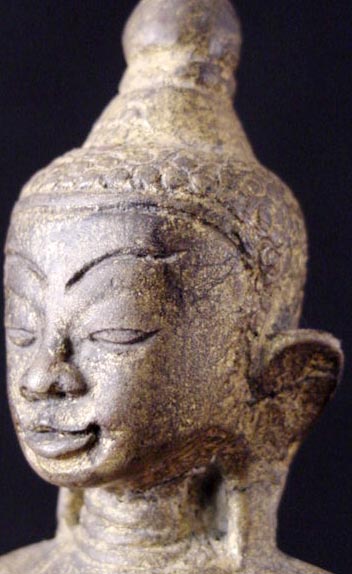
AavaPhoto credit: Thanks to the curator of The Buddha Gallery for this contribution in honor of Bodhi Day. This rare and exquisite 17th or possibly 18th Century Burmese Buddha is in a style of the late Ava/Early Shan.

Posted in Essay, poem, Poems/Poetry, poetry, Spiritual Practice, Terri Stewart

Naming Your Sacred Truth

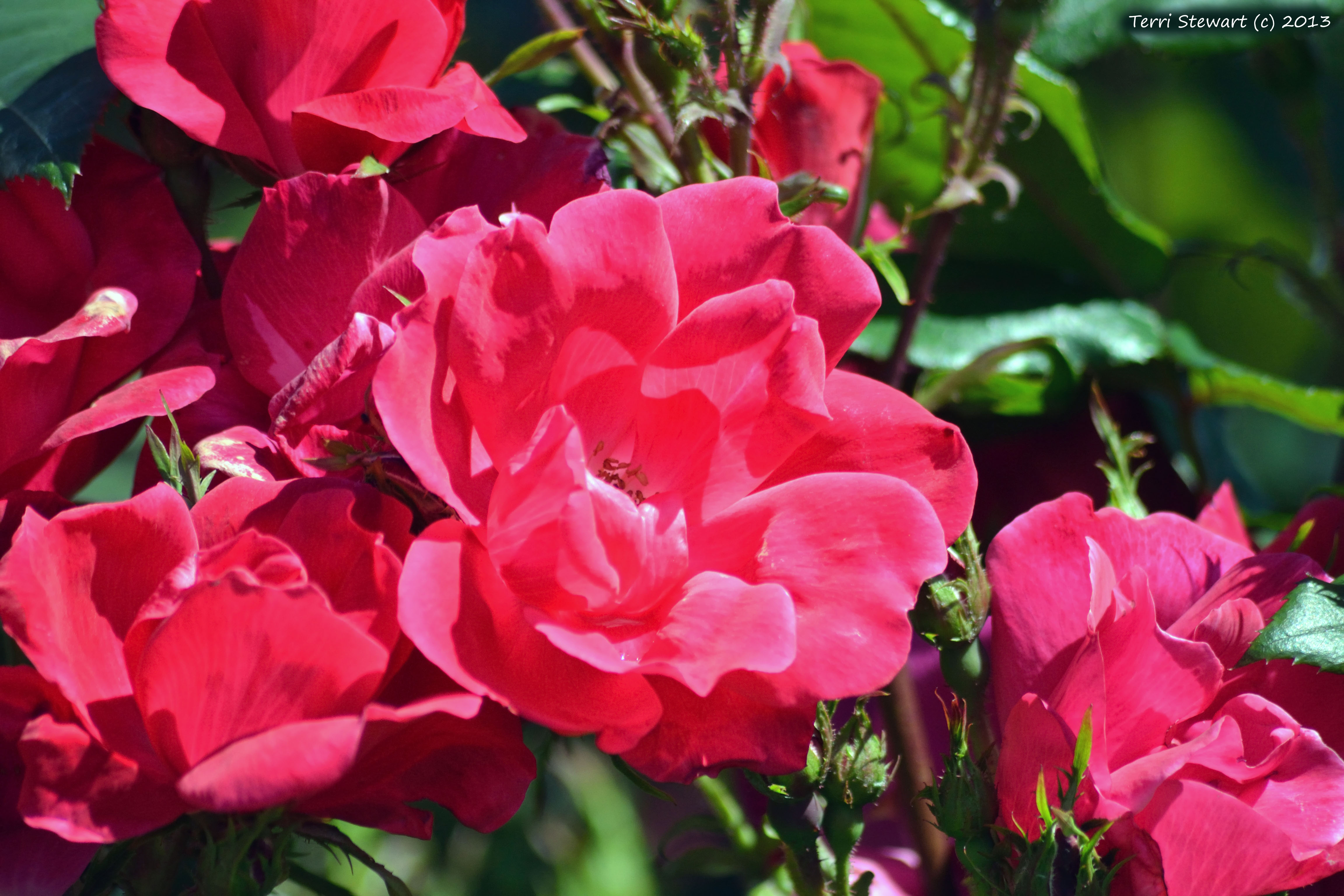
Gloriously Pink by Terri Stewart
Dazzling Pink

Recently, I took a personality test that was required for a program I am participating in. Sometimes, I feel like the most tested person in the world! Meyers Brigg, Gary Smalley, MMPI, an actual interview with a therapist—and I think there were other tests. My organization really, really wants their people to be healthy!

The unique thing about the most recent test – called the DISC – is that it created a public and private personality profile. My “two” personalities were not far off of each other, but they were different. Most significantly, my “D” or dominance trait is very high publicly and only moderately high privately. Meaning, I am bossy.

What a surprise!

Privately, though, my bossiness is exactly balanced with my expressive part of my personality. Meaning, I can be obnoxiously loud! Loud and bossy!

An even bigger surprise!

Not.

Those are just the harsh ways of looking at my personality. Really, I am the head of an organization – if I can’t provide direction, the organization will not succeed. And the expressive + directing can equal playful and silly. Or dramatic. That is the private me.

Question: What does this have to do with spiritual practices or sacred space?

Everything! There is the old adage, “Know thyself.” But it is also, “Know Your Story!” And “Tell Your Story!” (The whole expressive personality thing = exclamation points.)

I am reading a book called Your Mythic Journey by Sam Keen and Anne Valley-Fox. They go into a discussion of public and private personas. Sometimes we think about our authentic selves like it is only possible to be fulfilled if we are 100% “authentic.” Maybe. The questions that spring to my mind are: “Who is your authentic self?” “Is your public self any less important than your private self?” “Are we allowed to protect our fragile bits and keep them private?” “Can we hold personas these in dialogue?” “Is the private self always the healthy self?”

And on, and on.

Today, I’d like to encourage you to glimpse your public and private self through creating a fill-in-the-blank scenarios and then looking at all the words you accumulate to create a revelatory product that illumines the sacred being that we all are.

Pen and paper in hand, sit back and follow the prompts.

Your Public Self

  • Make a list of 10 words or phrases that best describe you using the prompt, “I am ______________ .”
  • Now rank the words/phrases in order of importance
  • Now cross them out one at a time until you are left with your most important trait.
  1. I am playful.
  2. I am smart.
  3. I am disorganized.
  4. I am also organized.
  5. I am faith-filled.
  6. I am compassionate.
  7. I am loud.
  8. I am wise.
  9. I am filled with ideas.
  10. I am creative.

  1. I am compassionate.
  2. I am playful.
  3. I am creative.
  4. I am filled with ideas.
  5. I am faith-filled.
  6. I am smart.
  7. I am loud.
  8. I am wise.
  9. I am also organized.
  10. I am disorganized.

What is your revelatory word? Please leave your word in the comments section to share.

If you would like to take this one step further, I encourage to take your 10 words/phrases and use them as word prompts to create a micro-poem (using as many or as few of the words as you like).

playful love

spatters life dripping

with painted ideas

of

dazzling pinks, blues, and yellows.

swarming compassionately

and loudly causing

chaos

while held together

in

sophic faith.

i. am.

Of course, my private self is not quite so lovey-dovey, dazzling pink, or wise. Often the chaos is on the rise internally or the struggles I have with health are masked out. But that will be a post for another day. Today, embrace the sacred space that you present to the world. I believe that when we don’t have enough faith in our own abilities to be compassionate or loving or wise, we can live into that reality until our inner space matches our outer space.

Shalom and Amen.

~Terri

P.S. I’d love to invite you over for a quick look at the Advent reflections that have been offered at BeguineAgain.com

Thursday, 11/28, The Tipping Point, Essay by Jamie Dedes (The Bardo Group)
Friday, 11/29, Simple Truths, Poem by Kathleen Tenpas
Saturday, 11/30, I Didn’t Want to Move, Essay by David Orendorff
Sunday, 12/1, World AIDS Day, Essay by Tracy Daugherty
Monday, 12/2, Fowler’s Snare, Collage by Judy Alkema
Tuesday, 12/3, An Advent Prayer, Prayer by Mark Sandlin
Wednesday, 12/4, An Angel Came Near, Essay by Tracy Daugherty
Thursday, 12/5, Washed, Poem by Terri Stewart
Friday, 12/6, Zoom In, Zoom Out, Essay by Catherine MacDonald
Saturday, 12/7, The Word Stands, Collage by Laura Esculcas
Sunday, 12/8, The Wolf, Storytelling by Jim Cyr

© 2013, post and photo , Terri Stewart, All rights reserved

terriREV. TERRI STEWART is Into the Bardo’s  Sunday chaplain, senior content editor, and site co-administrator. She comes from an eclectic background and considers herself to be grounded in contemplation and justice. She is the Director and Founder of the Youth Chaplaincy Coalition that serves youth affected by the justice system. As a graduate of Seattle University’s School of Theology and Ministry, she earned her Master’s of Divinity and a Post-Master’s Certificate in Spiritual Direction. She is a contributing author to the Abingdon Worship Annual. (The 2014 issue just released!)

Her online presence is “Cloaked Monk.” This speaks to her grounding in contemplative arts and the need to live it out in the world. The cloak is the disguise of normalcy as she advocates for justice and peace. You can find her at www.beguineagain.com , www.twitter.com/cloakedmonk, and www.facebook.com/cloakedmonk.  To reach her for conversation, send a note to cloakedmonk@outlook.com

Posted in Liliana Negoi, meditative, Mortality, story, Story Telling, Photo Story, Writing

Angel

file000537145929‘Mommy, my feet are cold…’

The words pierced her heart like sharp daggers. She felt a lump of tears dangerously knotting inside her throat, but she managed to swallow it and raised to find something warmer for the little boy who was trying to fall asleep by her side. Fighting with the need to scream, she put the only old patchy blanket left in the house over the other one already covering the small child, and crammed in the bed by his side, holding him in her arms and trying to help him get warmer. It was indeed cold in the tiny room, she had nothing left to burn in the stove, and the fact that it was freezing that night outside was not of any help either. She had spent whatever penny she still had on a bread, some cheese and a bottle of milk for the little one, and now she tried to ignore the feeling of despair rising within her soul. What was she going to do tomorrow?… A bit dizzy from hunger – was this the sixth or the seventh day since she had eaten last?! – she kissed the boy on his forehead and whispered:

‘Everything will be alright my little love…everything will be alright…just try to get some sleep…’

The child nestled in her arms and soon she was able to hear his regulate breathing, sign that he managed to enter the world of dreams. She realized though that it had gotten so cold in the room that her own breath was forming steams in the air, so she grabbed the coat from the chair next to the bed and put it also on the kid. Her back was beginning to freeze, and she began to shiver and shake, but she remained in the bed, making sure that whatever was left of her body heat was going towards her son. The shadow of a smile blossomed in her tired crying eyes – he was such a wonderful child…and she hated so much that she wasn’t able to give him everything she wanted…’Please, God, help me take care of him’, she prayed, while fighting the pain that was taking control over her chest. […]
[…] The child was dreaming – sweet childhood dreams, decked with chocolate and candies and other things he didn’t dare tell his mother about, for fear of seeing her cry…he loved his mother so much, and he knew she had no means to give him all those things. In his innocent wisdom he had chosen to ignore the typical childhood wishes in the day-to-day life and he dreamed of them only at night…the way he was doing now. Suddenly he saw her face next to him…beautiful and radiant…smiling…his mom was beautiful, and he always thought so, but this time she was such a ravishing appearance that he kept staring at her. She held him in her warm arms, always smiling and kissing him on his hair, and he heard her voice, calm and joyful this time ‘Everything will be alright my little love…everything will be alright…I’m always here…’. Then he felt arms carrying him and a warm light veiling him. ‘You’ll be fine, child, I’ll take care of you’, he heard someone. ‘Mommy, is this what an angel looks like?’, he asked with a feeble voice but got no answer…[…]

[…] Father Christian was carrying the boy in his arms as fast as he could. John was waiting in the carriage for him and when he saw the priest with the child in his arms he hurried down to help him.

‘What happened, father?’

‘We were too late John…she is with God now…she was already dead when I got inside, probably her heart failed because of the cold…but this little fellow here still lives, and I intend to keep him alive. Take me to Mary’s home, I need to leave him in a warm place and then come back and take care of his mother’s funeral…You’ll be fine, child, I’ll take care of you’, he further whispered into the boy’s ear. And then a soft murmur reached his hearing ‘Mommy, is this what an angel looks like?’

© 2013 Liliana Negoi

The photo attached was taken from http://morguefile.com.

IMG_7667LILIANA NEGOI  (Endless Journey and in Romanian curcubee în alb şi negru) ~ is a member of our core team on Into the Bardo. She is the author of three published volumes of poetry in English, which is not her mother tongue but one that she came to love especially because of writing: Sands and Shadows, Footsteps on the San – tanka collection and The Hidden Well.  The last one can also be heard in audio version, read by the author herself on her SoundCloud site HERE.  Many of her creations, both poetry and prose, have been published in various literary magazines.

Posted in Niamh Clune, Poems/Poetry

Madiba

nelson-mandelae280ac

Madiba was a fire dragon.
We breathe his air
Are shaped of his thoughts and aspirations
That lick though our minds
And light our hearts with fervent adoration

He taught us to see beyond skin
Into flesh, bone and sinew
Into the beating heart of Africa

He taught us to walk the burning ground with courage,
Even when afraid
To make partners of our enemies
And break chains of slavery
With weapons of love, compassion and understanding
Always demanding freedom’s righteousness

He will never die
He is a shaper of men
A man of history
An ancient of days
A World Saviour

(c) Niamh Clune

Photo in general use.

Editor’s Note: We’ve added the Nelson Mandela Children’s Fund to the links in the blogroll, should anyone care to make a donation in his memory.

430564_3240554249063_1337353112_n-1orange-petals-cover_page_001DR. NIAMH CLUNE (On the Plum Tree) ~ is the author of the Skyla McFee series: Orange Petals in a Storm, and Exaltation of a Rose. She is also the author of The Coming of the Feminine Christ: a ground-breaking spiritual psychology. Niamh received her Ph.D. from Surrey University on Acquiring Wisdom Through The Imagination and specialises in The Imaginal Mind and how the inborn, innate wisdom hidden in the soul informs our daily lives and stories. Niamh’s books are available in paperback (children’s books) and Kindle version (The Coming of the Feminine Christ). Her Amazon page is HERE.

Posted in  Mya Schneider, Poems/Poetry

Pigeons

1358915503p2230The morning is swallowed by its headlines:
an old man in Bosnia shot as he scurried
along a path to feed his pigeons.
I try not to see the open mouth
jutting from a black heap of coat.

Going into a room upstairs, I remember
two white pigeons I saw in Ravenna.
How they startled with life,
orange claws gripping the stone rim
of a bowl on a wall in a mausoleum.

For fifteen centuries one has dipped
its beak to drink cool aquamarine;
the other’s turned towards a cobalt sky.
What will soothe the cooped pigeons?
In a book I look at the hundreds of tessarae,

follow the shadow lines beneath
wings, the breasts shaped by fingers;
think of two hands blue-rivered
with veins, papered with skin, cupping
the feather softness over beating hearts.

Then I see faces grazed by fear,
slippered feet scrambling up a hill,
a bag of seed split and scattered,
birds’ wings frantic behind mesh,
an old man coffined in mud.

– Myra Schneider

from ‘Exits’ (Enitharmon 1994)
previously published in ‘The Observer’
‘Klaonica, Poems for Bosnia’ (Bloodaxe 1993)
and broadcast on ‘Stanza’ Radio 4 in 1994

© 2009, poem, portrait (below), and book cover art (below), Myra Schneider, All rights reserved and presented here with the permission of the poet.
Photo (Pigeon) courtesy morgueFile

IMG_0032-1circling core_22MYRA SCHNEIDER ~ is a poet, a poetry and writing tutor, and the author of Writing My Way Through Cancer and, with John Killick, Writing Your Self. Her poetry collections, Circling the Core and Multiply the Moon, were published by Enitharmon Press. She has eight published collections. Her most recent work What Women Want was published earlier this year by Second Light Publications.

Myra’s long poems have been featured in Long Poem Magazine and Domestic Cherry. She co-edited with Dilys Wood, Parents, an anthology of poems by 114 women about their own parents. She started out writing fiction for children and teens. We first discovered Myra through her much-loved poem about an experience with cancer, The Red Dresswhich she generously shared with readers here in our Perspectives on Cancer series in 2011.

Currently Myra lives in North London, but she grew up in Scotland and in other parts of England. She lives with her husband and they have one son. Myra tutors through Poetry School, London. Her schedule of poetry readings is HERE.

Posted in Christianity, Essay, Terri Stewart

Creating room and transformation at Christmas …

800px-Nativity_tree2011Originally published in Rethink Church. Published here with permission.

IT’S ALMOST CHRISTMAS!!! I hear this echoing in my head from years past—from my children’s years, from my own cries, and from my crazy Aunt Nancy (I love you!) who still calls me at zero-dark-thirty to wish me a Merry Christmas.

What I also remember is making lists of what I have bought for the in-laws to make sure everybody got the same quantity and the same monetary value. Making lists for my children so one was not valued in presents more than the other. And stressing out over finding that “perfect gift” for my oldest son who seemed to be unable to express desire for anything. ANYTHING. That is stressful.

But maybe he had the right idea all along! He was unattached to things.

Non-attachment to things of this world is a value greatly revered by the world’s great traditions. What if we slowed down, let non-attachment suffuse the Christmas* season, and began again? What would that mean? What would it look like in our lives?

What if we emptied our lives of the values of materialism, comparison to others, and over-abundance and instead filled it up with the values of spiritualism, self-inventory, and enough? What if we took a journey of emptying rather than filling?

The dichotomy is pretty stark. Empty vs. full. Nobody really wants to run around on empty or having nothing. But there is a trick. By slowing down our lives and refocusing our lives, we can begin again with an attitude pointed towards spiritualism, self-inventory, and being satisfied with enough. Adopting these three counter-cultural traits, creates freedom for new things to happen.

Simplifying creates room for more!

More what? More interior room to listen to that which calls you. More room to see those around you. More room to understand great joy. And more room to feel the world’s great grief. After listening, seeing, understanding, and feeling, there is one more thing—by simplifying, there is more room to offer great love in action to a hurting world.

By emptying, we create room. By making room, the possibility of personal transformation is created. By being transformed, the possibility of action is created. By committing acts of love, mercy, and justice, the possibility of world renovation is created.

And before long, we who were emptied have been filled with love.

Shalom,
Chaplain Terri Stewart

*Christmas season in the secular sense of the word as that time from the day after Thanksgiving to January 1.

©2013, essay, Terry Stewart, All rights reserved
Photo credit ~ Jeff Weese via Wikipedia and under Creative Commons Attribution 2.0 Generic license

terriREV. TERRI STEWART is The Bardo Group  Sunday chaplain, senior content editor, and site co-administrator. She comes from an eclectic background and considers herself to be grounded in contemplation and justice. She is the Director and Founder of the Youth Chaplaincy Coalition that serves youth affected by the justice system. As a graduate of Seattle University’s School of Theology and Ministry, she earned her Master’s of Divinity and a Post-Master’s Certificate in Spiritual Direction. She is a contributing author to the Abingdon Worship Annual.

Her online presence is “Cloaked Monk.” This speaks to her grounding in contemplative arts and the need to live it out in the world. The cloak is the disguise of normalcy as she advocates for justice and peace. You can find her at www.cloakedmonk.comwww.twitter.com/cloakedmonk, and www.facebook.com/cloakedmonk.  To reach her for conversation, send a note to cloakedmonk@outlook.com

Posted in Film/Documentaries/Reviews, General Interest, Music, Teachers, Video

Life Lessons from the Oldest Living Pianist, 109 year-old Alice Herz-Sommer

Our thanks to Laurel D. for contributing this film clip.

http://theladyinnumber6.com
https://www.facebook.com/theladyinnum…
The Lady in Number 6 is one of the most inspirational stories ever told. 109 year old, Alice Herz Sommer, the world’s oldest pianist and oldest holocaust survivor, shares her views on how to live a long happy life. She discusses the vital importance of music, laughter and having an optimistic outlook on life. This powerfully inspirational video tells her remarkable story of survival and how she managed to use her time in a Nazi concentration camp to empower herself and others with music. See the entire documentary at:
https://twitter.com/AliceTheFilm

Posted in Niamh Clune, Poems/Poetry

Shedding Old Skins

Clouds by Janet Beasley

.

My throat is dry from weeping into an ocean
Where a few more droplets will not create a swell.
Nor will the sound of tears spent
Be heard above the curlew cry
Or gulls greedy, dry-throated squawk for morsels.

Can I soar above the false cries, the shouts of fury,
The passion spent and wasted on others?
As I shed my skin and stand again within my core ~ within my light
And see it travel on the wind or move along the glistening wave
Until it reaches the shore?

© Niamh Clune, All rights reserved

430564_3240554249063_1337353112_n-1orange-petals-cover_page_001DR. NIAMH CLUNE (On the Plum Tree) ~ is the author of the Skyla McFee series: Orange Petals in a Storm, and Exaltation of a Rose. She is also the author of The Coming of the Feminine Christ: a ground-breaking spiritual psychology. Niamh received her Ph.D. from Surrey University on Acquiring Wisdom Through The Imagination and specialises in The Imaginal Mind and how the inborn, innate wisdom hidden in the soul informs our daily lives and stories. Niamh’s books are available in paperback (children’s books) and Kindle version (The Coming of the Feminine Christ). Her Amazon page is HERE.

Posted in Essay, Michael Watson, theatre/spoken word

Beyond Godot

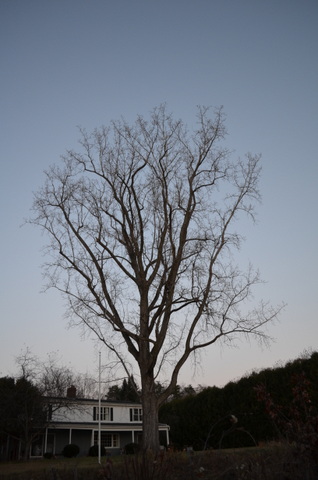
Winter TreeI first encountered Kandinski’s Concerning The Spiritual In Art while in college. While I did not necessarily experience his sense of the mystical nature of line and color, I did share, in my way, his passionate hope that art could be a vehicle for spirituality and social change. Over the years those ideas have informed my visual and performance work.

Although I no longer perform often, I continue to think about issues of theatre and performance. At the center of my theorizing, aesthetics meets concerns about ethnicity, race, class, gender and disability. In all my years of university training (BFA, two MA’s, and a Ph.D.) discussions of the power relationships inherent in aesthetic standards rarely arose. I venture to say that they never arose in my arts courses. Even those anthropology and psychology courses devoted to consideration of race, class, or gender largely ignored aesthetics as culturally mediated. Now I routinely explore the cultural construction of aesthetics with students in my courses, although they are not always comfortable with the material.

Recently I have been engaged in discussions about the societal and political dimensions of aesthetics with a variety of performance practitioners. These folks tend to land in one of three groups: teacher/artists, performance venue administrators, or performer/directors. Clearly, these categories frequently overlap, yet they remain useful. When in conversations with performer/directors I find we can usually comfortably discuss integrating persons of diverse races/ethnicities and genders into troupes, as long as the performers share an aesthetic. Perhaps not surprisingly in our present economic climate, they seem more concerned with audience than inclusion. Often, this means that performers are excluded based on disability or class. (Interestingly, some performance space administrators seem more interested in the narrative and performative power of pieces, and book innovative, inclusive companies, seek out audiences.)

Disability becomes an issue when performers bring physical or cognitive challenges to theatre. Performance making requires the creation of narrative structure if the piece is to convey meaning. The director shapes the narrative, and in so doing privileges some aesthetic choices over others. (The performance space can also shape the narrative; many stages are inaccessible!) The result is either more, or less, inclusive of both performers and audience members. (One may argue that the history of the Avante Guard, in which I was trained and participate, is one of theorizing inclusion while establishing ever more restrictive cultural elites.) Generally, directors seem to feel more comfortable making accommodations for performers who contribute to the director’s formal choices, rather than building performance around the considerable skills of the disabled, or other performers who demonstrate difference. This is understandable, yet problematic. After all, performance is about storytelling, and aesthetic choices inevitably convey the subtext for the director’s (and often the culture’s/society’s) preferred narrative. Exclusion is inevitable and it matters.

An example of  the exclusionary capacities of aesthetics took place in New Orleans a couple of years ago when a famous director from the Northeast brought his version of Waiting for Godot to town, ostensibly to make a statement about the plight of local people immediately following Katrina. Godot is a centerpiece of the Western theatre cannon, and the play in question was greeted with much critical applause. Yet the commentary about the play largely ignored the conditions of the performances. One of my acquaintances, a theatre person from the Big Easy, critiqued the play thus (my paraphrase) : “The piece sold out the Dome, but there were almost no people of color inside. Many people of color and local theater and performance artists were in the lobby trying to purchase tickets. It was embarrassing. On top of that, the play is about doing nothing, about futility. Here in New Orleans people were active after the storm, trying to help one another. We still are. Neither the media nor the play showed that. Local theatre people here have made a lot of performances showing the bravery and generosity of the people here during and after the storm, but those performances get little attention in the national media. Yet the production of Godot was in all the national media.”

Clearly the Avante Guard’s use of social engagement can be highly problematic, especially when performance is done for (some say “to”) culturally specific audiences, for instance, the New Orleans experience of Godot. Or consider a group of non-disabled actors creating and performing a show with disability themes to an audience of disabled persons. Let’s say many of  the stories utilized to create the performance had been gleaned from persons who were now in the audience. When asked why there are no disabled performers, the director responds, “We could find no disabled performers who could this physically demanding piece.” The performance may have been visually stunning and spiritually uplifting, but also conveyed a strong message of inaccessibility. The medium is, ultimately, the message. (Interestingly, in the Eighties, Bill T. Jones was harshly criticized for including persons with life threatening illnesses in his performances of Still Here, even thought those participants publicly praised Bill and spoke about the work as life changing.)

I’ve been exploring spirituality in the arts, and issues of inclusion and aesthetics since the 1960’s. There are now many people of color, disabled artists, and folks across a diversity of classes, ethnicities, and genders thinking, speaking, and writing about cultural coding in performance. That’s good; we need those voices. Many of those folks are making art that arises out of their thoughtful exploration of these issues. Often, these works are filled with spirit. I like to think we are, like the good folks of New Orleans, no longer waiting for Monsieur Godot.

Next time you attend a theatre or other performance event, consider paying attention to the cultural codes being enacted. What are the values implicit and explicit in the piece? Whose on stage and who isn’t? What description of reality is given preference? Are you invited to drink deeply from the well of Spirit? I hope you’ll let me know what you discover.

– Michael Watson, Ph.D.

© 2013, essay and photographs (includes the one below), Michael Watson, All rights reserved

michael drumMICHAEL WATSON, M.A., Ph.D., LCMHC (Dreaming the World) ~ is a contributing editor to Into the Bardo, an essayist and a practitioner of the Shamanic arts, psychotherapist, educator and artist of Native American and European descent. He lives and works in Burlington, Vermont, where he teaches in undergraduate and graduate programs at Burlington College,. He was once Dean of Students there. Recently Michael has been teaching in India and Hong Kong. His experiences are documented on his blog. In childhood he had polio, an event that taught him much about challenge, struggle, isolation, and healing.

Posted in Guest Writer, Poems/Poetry

Children’s Hospital Waiting Room

file0001166466273From this side of this window-

through this glass looking

down seventeen stories –

the world is a odd place.

.

The smell of rain

has become a distant memory.

Taxi cabs – thick bugs.

People- so much seed

scattered on a hard path.

.

Who would have thought

a tiny swish rising

through a stethoscope

could so change everything.

.

Here we are a congregation

Of the suspended –

Inhabitants of a sanitized purgatory –

A communion of those who wait.

.

Here the priests and prophets

wear blue scrubs

and white paper masks.

.

Why, I ask, is it that your tiny heart,

no larger than your tiny hand,

should refuse to grow?

What providence has brought us here?

What karma? There is no answer

.

so we wait.

We wait for our names to be called.

We wait.

– Bill Cook

© 2011, poem, Bill Cook, All rights reserved
Photo courtesy of morgueFile

Re-blogged with the permission of Bill Cook, Poetry Matters. Bill is an Ordained Elder in the United Methodist Church, serving a wonderfully diverse congregation.

  • His church: St. Paul UMC, Willingboro NJ.
  • BA. English Lit., Rutger’s, the State University, New Brunswick NJ.
  • M Div. New Brunswick Theological Seminary New Brunswick NJ.
  • D Min. Wesley Theological Seminary, Washington DC.
Posted in Bardo News

BARDO NEWS: Our New Name and Mission Statement, Looking forward to 2014, Congrats on NaNo~ing

800px-Rafael_-_El_Parnaso_(Estancia_del_Sello,_Roma,_1511)OUR NEW NAME AND SUBTITLE: THE BARDO GROUP, an international collective fostering proximity, peace and healing through our love of the arts and humanities 

We have added “Group” to our new name to be inclusive and accurate, acknowledging the many people who support this blogazine through linking, reblogs, mentions, comments and as core team members, contributors, guests and visitors. All are valued. This has never been a “my” blog. It has always been an “our” blog.

We’ve kept “Bardo” in the title because that word is associated with this site.

The Bardo Group is “international.” Our contributors are from: India, South Africa, North Africa, Saudi Arabia, China, Malaysia, Canada, the United States and England.

We are nurturing a growth that goes beyond the simple idea of “connectivity” to a more productive virtual “proximity” … think in terms of artistic gatherings  – not always formally organized – that you’ve read about and perhaps loved –  Bloomsbury in England or the cafe gatherings of the so-called Lost Generation in Paris of the 1920s or even the Algonquin Round Table in New York, also the 1920s, though we will forgo the pranks and practical jokes of the latter. (I’m not sure why nothing more recent comes to mind as I write this. Oh my … )

Like the artists in those groups, we are bonding. We create virtual proximity through authentic work, spiritual, artistic and pragmatic. Our collaborations are productive of book publishing (to come), meaningful virtual events for bloggers, and the nurture of new talent.

Submission Guidelines, Core Team Bios and Roster of Contributors and Guests: That Page currently in revision. Once completed it will include submission guidelines as well as bios for active core team members including recent additions to the team.

Inactive core team members have already been removed from the blogroll. Inactive is defined as three months.

No one is deleted from the blogroll or the roster as a punitive action, a judgement, or because of any artistic shortcoming – only because they haven’t submitted anything during the last three months, are no longer blogging, and/or they are unable to deliver posts that are complete and ready for publication, what we used to call “copy ready.” Core Team members must have an active personal WordPress blog so that they are able to submit work directly to The Bardo Group via their own blog.

Everyday Artists Rock: There is a lot in the blogging scene and on the Internet that is awkward, inaccurate, and ill-considered – even downright ugly, silly, or mean – but there’s also a lot work being done by lesser-knowns who don’t have the support of big name publishers or academia but produce work that is profoundly beautiful, high-minded, and uplifting. We think such everyday artists rock and deserve this as a wider venue, one which we hope will continue to grow as our liaisons evolve and proximity improves. “It takes a village to raise a child.” We are the village. Our works are our children. The longing for peace and healing is inspiration and motivation.

In other times, we might have been the ones to paint the walls of caves, tell stories around the fire, or recite our poems for the villagers on special occasions. We might have been the hermits of the mountains or deserts or the  teachers – the rabbis, imams, the old stoic philosophers, the shamans, the Buddhas and saints, quietly doing the work of comforting, stimulating thought and fostering change and growth through philosophy, religion, and the arts. We might have been the poets of old China, gently hanging our poems on trees in a park or garden; or those in Japan, quietly leaving our death poems by the side of our beds. As it is we are the bloggers, our artistry embedded in those hard-stone caves called search engines, waiting to be found and embraced.

Please stay with us as we continue to evolve as human beings, artists, bloggers and as The Bardo Group.

MISSION STATEMENT: We’ve written a more accurate “about” and renamed it more accurately “mission statement.”  You can read that HERE.

LOOKING AHEAD TO 2014: It does look like 2014 is going to be a big year:

  • Writers’ Fourth Wednesday with Victoria C. Slotto (Author, Fiction, Poetry and Writing Prompts) will start up again at 7 p.m. on January 22, 2014 and will run every fourth Wednesday p.m. through October 2014.
  • Bloggers in Planet Love: This is a heads-up on an event in the planning for Valentine’s Day 2014. Details to be determined and announced. Look for more news about this collaborative effort addressing climate and environmental concerns and the meaning of nature in our lives.
  • Poets Against War will run in concert with 100,000 Poets for Change, a global initiative scheduled for the week of September 27, 2014. We are working behind the scenes to get this organized.
  • Poets Against War anthology is in behind-the-scenes works as well.  We may have to flex on the date (tentatively we’ve targeted the first quarter of 2015) and the title is a working title. We are considering a different title since we hope to include art and photography, essays, and short stories. If you have a suggestion for a name, please leave it in the comments below. Thank you! This publication will not be restricted to those published here, so please stay tuned over the next months for more news.

TERRI STEWART has changed the name of her blog to BEGIN AGAIN: Slow Down, Begin Again: Spiritual Practices in Context.  Don’t forget to join the Advent celebration she’s initiated and sponsored. Today’s topic is World AIDS DAY, an Advent Reflection.

NIAMH CLUNE (On the Plum Tree) has been busy charming us with the energetic reworking of her website, Plum Tree Books (children’s educational books), and her inventive Facebook page. Imen Benyoub and Jamie Dedes, both of The Bardo Group, have columns on Niamh’s Facebook page. Imen’s column, With Love From Imen, posts on Mondays and Jamie’s, Soul Speak with Jamie Dedes, posts on Saturdays, but everyday there is a new treat from a different writer and many wonderful tidbits in-between all.

ADVENTURES IN HATS: Speaking of nurturing new talent, Beatrice “Bea” Gerrard, Naomi Baltuck’s (Writing Between the Lines, Life From a Writer’s POV) daughter, started a new blog, Adventures in Hats, to share her writing and drawings. Bea is a student at Standford University, Stanford, CA and she just completed this year’s NaNoWriMo challenge for the first time. Hooray! 🙂 Check out her newly birthed blog and cheer her on.

Someone whispered in our ear that Bea writes lovely poetry. Stay tuned.

NANOWRIMO: Congrats to all those who participated in this year’s (inter)National Novel Writing Month event, including  our own guest writer, T.J. Therien (Liars, Hypocrites & The Development of Human Emotion)T.J.’s novel is “The Scrolls of Sion: The Rise of the Dark Queen.” T.J. has detailed what he learned from this rigorous exercise in his post NaNoWriMo Dragon Slain.

FYI: The folks at NaNoWriMo also sponsor the Young Writers Program every November as well.

MICHAEL WATSON: This is one gentleman who is full of good surprises. Dreaming the World is not his only blog. In October he kindly reblogged one of Jamie Dedes’ posts on disability (Thank you, Michael!) and we discovered as a result that he has  Gimp Stories: A blog about Disability and Disability Issues, with an Emphasis on VermontSubsequently we found that he also has Journeys, Writing About Everyday Life.

Michael’s posts here are well-loved. In Such Wonderful FriendsDutch Nature Artist and The Bardo Group contributor, Paula Kuitenbrouwer (Mindful Drawing) mentioned our blog and said, “For a journey into the mind, I frequently visit [The Bardo Group], especially the blog posts by Michael Watson, Ph.D. an essayist and a practitioner of the Shamanic arts.” Thank you, Paula! 

DEMENTIA: Michael Watson caught our interest with his recent post on Dementia, Who We May Be: Considering Dementia.

“In many traditional Indigenous cultures folks think about human lives as sharing a trajectory. If we are blessed we may find ourselves traveling from childhood to childhood over many years. When we arrive at our second childhood there is a community of people who know and love us, and who will work together to keep us comfortable and protected. Nature is also helpful; illness and accident will likely aid us to pass over into spirit before we lose all sense of self.” Michael Watson

Another core team member, Victoria C. Slotto (Author, Fiction, Poetry and Writing Prompts), a retired nurse whose mother suffers from dementia has written Beating the Odds: Support for Persons with Early Stage Dementia eBook.  

Robert (Bob) Clark Young, a guest writer who engaged us with Escape from the Nursing Home has an elder care site HERE. His book, The SURVIVOR: How to Deal with Your Aging Parents, While Enriching Your Own Life, seeks a publisher. Bob says:

For my generation, this is one of the biggest issues in our lives. The senior population is rapidly increasing, and now we face the prospect of caring for ill, disabled, or even demented parents in their homes or in our own homes, perhaps for years to come.” Robert Clark Young

HER WINGS OF GLASS: Poets on the distaff side, don’t forget the deadline is January 15, 2014 for this anthology sponsored by Second Light Network in the UK. You don’t have to be in the UK to submit. Details are HERE.

IN YOU HAVE OTHER NEWS TO SHARE, please feel free to share it with us in the comments.

– The Bardo Group