“Your mother has escaped from the facility,” said the nurse on the phone.
I was still in Sacramento. I had just thrown my suitcase into the trunk of my car, and I had wanted to call the nursing home to check on my mom and her progress in physical therapy, one last time before I left for San Diego.
“Escaped? What do you mean, escaped?”
“Nobody knows where she is, sir.”
“How is that possible?”
“It looks like she just got out of her wheelchair and walked straight out the front door, past the front desk, when the receptionist was away. We’ve called the police,” the nurse assured me.
“What did you tell them? To look for an eighty-year-old woman in a hospital gown, pushing an I.V. pole?”
“They’ll find her, Mr. Young.”
“She was supposed to go home tomorrow.”
“I guess she couldn’t wait that long.” The nurse laughed. When my silence conveyed that this wasn’t funny, she said, “Don’t worry, sir. Residents escape from here all the time. We almost always get them back.”
“She has aphasia. Do you know what that is? She can’t speak clearly, because of her stroke. She can’t tell anybody who she is or where she lives. What if she gets hit by a car?”
“We’re not liable, Mr. Young.”
“What?”
“Your father signed our waiver form, which releases us from liability for bed sores, falls, and unauthorized self-release from our facility. It’s a condition of admittance.”
“This is unbelievable. I was just about to drive down to San Diego to help my dad bring her home and start caring for her.”
“You’re aware that she’s going to need twenty-four-hour supervision in your home, aren’t you? Otherwise she might start walking around, fall down, or even try to escape from your house in the middle of the night.”
“If your entire nursing staff can’t supervise her, how in the world are my father and me supposed to do it?”
She lowered her voice. “I took care of my own mother at home for ten years, sir. I thought I was going to go completely out of my mind.”
I drove toward San Diego with my heart dropping through my chest and stomach. I had never known this much stress in all my life, not knowing where my mother was or what was happening to her. Or what would happen once we found her and brought her home. A perpetual state of emergency was becoming the most powerful reality of my life. I didn’t yet understand that accepting a continuing sense of uncertainty would become my greatest source of strength.
When I called the nursing home from two hundred miles down the road, they had found my mom. She had never made it out of the parking lot. She was walking between the cars and the SUVs, too short to be seen, until a driver just avoided striking her.
When I reached San Diego it was dark, but I went directly to the nursing home. As I hurried into my mother’s room, she glanced up at me from bed and, with the lucidity that aphasiacs exhibit when they’re surprised, she said, “Oh, it’s my son. Let’s go home now.”
I bent over to kiss her on the temple. “Mom, how are you feeling?”
“Window face,” she said, “hotel hotel hotel—and oil.” For the rest of the visit, as I tried talking to her, she replied with her enthusiastic, broken aphasia.
Sharing the room was an elderly man with a group of Mexican women sitting around his bed. My mother is Mexican, but I don’t look Mexican, so they felt free to talk about my mom in Spanish:
“That poor old woman is crazy.”
“She said she has a boat waiting for her outside. She has Alzheimer’s.”
“She ran away today. They ought to lock her up in a closet. She’ll try to walk across the freeway.”
“It’s a shame. I’m glad we don’t have that in our family.”
“It’s hereditary. Her whole family will turn out that way someday, including all of her children and grandchildren.”
Rage blackened my mind so quickly that, for a moment, I was dizzy. Although I’d never heard the word aphasia before my mom’s stroke, I was now outraged for the rights of all the aphasic people of the world, for their right to express their needs, for their right to be understood, for their right not to be falsely labeled.
Yes, my mother’s ability to process and produce language had been compromised, but she knew exactly what she was trying to say, and she could understand most of what other people were saying. She was not a crazy person, nor did she have Alzheimer’s, nor was she “demented.”
I waited until the women had left and then I kissed my mother again and told her not to worry about anything people said. She nodded with relief. “In oil, in oil. It is their face, it is their windows.”
Her spirit—the same spirit that had led her to escape from a nursing home that she did not like—was intact.
The next morning, my father and I came to take her home. Together, we cared for her for four months, until my dad had a stroke and was paralyzed on the right side. Now I had two infirm seniors on my hands.
I cared for my mom for 45 months, until she passed away in May, 2012. I continue to care for my dad every day. I’ve been a caregiver in my parents’ home for 61 months now. I’m proud that my parents have been able to live in dignity and freedom in their own home, without being institutionalized. This is the most important, rewarding, and illuminating work that I have ever done.
Any person with a compassionate heart can learn to be a caregiver. This means that you can do it too.
ROBERT CLARK YOUNG ~ is a guest writer on Into the Bardo. He has worked as a caregiver in his parents’ home since 2008. “Escape from the Nursing Home” is excerpted from his book, THE SURVIVOR: How to Deal With Your Aging Parents, While Enriching Your Own Life. The book seeks a publisher. Robert’s other books are One of the Guys and Thank You for Keeping Me Sober. Visit his eldercare website HERE. His Amazon page is HERE.
Editorial Note (Jamie Dedes): In addition to being a caretaker, Robert is an accomplished novelist, writer, and editor. I first “met” Robert several years ago when he was the creative nonfiction editor for an online literary magazine. In submitting his bio to us, he was understated about his mission, which is an important one. He notes on Amazon:
“According to AARP, 61% of family care providers are women, with the typical caregiver being a 46-year-old female who is caring for one or both parents. Of the 39% of caregivers who are men, a majority are husbands of senior women, rather than sons. This gender imbalance in eldercare is one of the things we need to work to change.
“I’m unusual in being a male caregiver. One of the goals of this book is to help people understand that men can–and should–become nurturers.
“But my greatest wish is that this book will become a vital lifeline to everyone who, overnight, must face what first appears to be the devastating challenge of eldercare–a challenge that opens the way to unexpected growth and fulfillment for the caregiver. There is nothing to fear in eldercare. There is only joy, growth, and love.”
“Be kind whenever possible. It is always possible.” His Holiness, the 14th Dalai Lama of Tibet
A lifetime ago I was privileged to work with folks who were everyday heroes in desperate circumstances. They were people transitioning into the mainstream and the workplace from welfare, foster youth programs, homelessness, drug and alcohol rehabilitation, catastrophic illness, disability, prison, violent environments, and job layoffs and plant closures.
There were many things we could do to help our clients. We helped them find jobs and housing. We encouraged them to get G.E.D.s and vocational training or retraining. We found ways to address learning disabilities and get people out of abusive relationships. We offered classes on nutrition and parenting. We facilitated a sense of community and support. In true hero fashion, our clients worked hard. They took advantage of and were grateful for whatever was made available to them. They honored their contracts and did all the extra things that can make a difference between failure and success. Over eighty-percent successfully turned their lives around.
In those days, my responsibilities included teaching a three-unit community college career-development class. To provide inspiration through the often overwhelming ups-and-downs, some of us made our students Keep Smiling Bags. A Buddhist might call these bags a Metta* Bag; a Catholic, a Caritas* Bag; a Jew, a Chesid* Bag, a Muslim, a Birr bag. To a Native American it might be a Medicine Bag. Since I learn from all and affiliate with none, I just call it a Keep Smiling Bag. It’s a gift of love and inspiration and you might even say it’s about attitude adjustment.
In these trying times, you may have a few people in your life who could use a Keep Smiling Bag. The bags also make nice token gifts for birthdays or holidays or as get-well gifts or party favors. Those who are crafty may especially enjoy this exercise and will no doubt create beautiful and unusual presentations, perhaps doing the card in calligraphy or hand-crafting the bag or hand-sewing cloth pouches in place of paper bags.
If you do make Keep Smiling Bags, make them with the intention to heal.
Here are the supplies you’ll need to gather:
Small, cheerful gift bags
Little decorative erasers
Glass marbles
Colored rubber bands
Assorted colored crayons
Silk ribbons
Silver stars
Birthday candles
Hershey’s Hugs and Kisses
.
Gather the trinkets and place them into the bag.
.
Prepare this instruction card to go with the trinkets:
.
♥ ♥ ♥ ♥
These are a few things to get you through the day:
Eraser – to erase your negative self-talk
Marbles – for when you think you’ve lost yours (you haven’t)
Rubber band – s-t-r-e-t-c-h yourself into new activities. new points of view, new enthusiasms
Crayons – events may color your life, you choose the colors
Silk ribbon – to tie everything together when it seems life is falling apart
Stars – to get to the top of the mountain, you have to reach for the stars
Candle – your inner light shines bright no matter what the circumstances of your life
Hugs & Kisses – Someone cares. Me! 🙂.
♥ ♥ ♥ ♥
.
* metta, caritas, and chesid ~ all mean loving kindness, birr (Islam) deep love
JAMIE DEDES ~ My worldly tags are poet and writer. For the past five years I’ve blogged at The Poet by Day,the journey in poem, formerly titled Musing by Moonlight. Through the gift of poetry (mine and that of others), I enter sacred space.
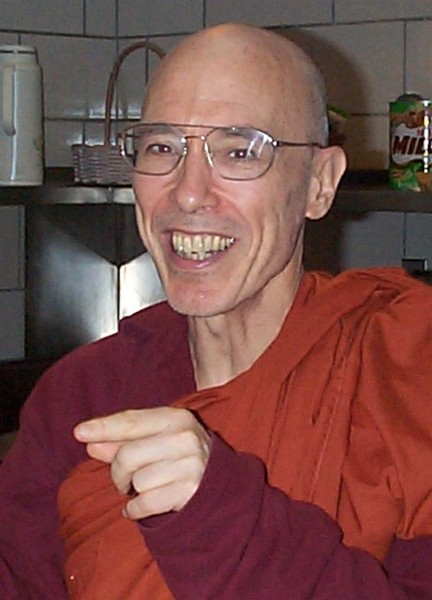
This just came in from Ven. Bhikkhu Bodhi, Buddist Global Relief. Walks are happening in: San Francisco, San Jose, Sacramento, and Los Angles, California; Willington, Connecticut; Tampa Bay, Florida; Ann Arbor, Michigan; St. Louis, Missouri; New York, New York; Houston, Texas; Seattle, Washington; Beanteay Meanchey, Cambodia; Nagpur, India.
. Dear Friends,
Today close to a billion people worldwide face hunger as a fact of daily life. Hunger and hunger-related illnesses claim ten million lives each year, half of them children. Hunger of such magnitude is not the result of a shortage of funds or a lack of food, but of a lack of care, a lack of will. In a world where trillions of dollars are spent on weapons and wars, the extent of hunger is a blemish on the soul of humanity. To redeem ourselves, we must learn to see ourselves in others, to recognize our obligation to ensure that all humankind can flourish together.
This fall, in different cities around the U.S. and abroad, Buddhist Global Relief will be holding its 4th “Walk to Feed the Hungry.” The walk is a gesture of care and compassion by which we express our commitment to helping our brothers and sisters in need. The purpose of the walk is to raise funds for our many projects that address hunger and malnutrition. Funds raised will support such BGR projects as right livelihood training for girls in Sri Lanka; meals and scholarships for poor kids in Haiti; food scholarships for girls and their families in Cambodia; education and vocational training for kids in Bangladesh; nutritional guidance and micronutrient supplements in Côte d’Ivoire; a tuition center for women and girls in India; urban gardens here in the U.S.; and sustainable agriculture programs in Cambodia, Vietnam, Sri Lanka, Kenya, Ethiopia, Rwanda, Haiti, India, and Malawi.
The BGR “Walk to Feed the Hungry” has become an American Buddhist tradition that is growing from year to year. Our first walk took place in New Jersey in October 2010. In 2011 we held three walks and last year a dozen walks, including solidarity walks in India and Cambodia. We expect a similar number this year. A walk like this offers us a channel to express our collective compassion in solidarity with the world’s poor. It’s also a great form of exercise and an opportunity to make new friends
I cordially invite you to join us on this walk. A “Walk to Feed the Hungry” will be held at various locations around the U.S. See our website for information about walks already planned. Please join us, register early, and mobilize members of your congregation, Dharma group, or community to participate as well. By creating a First Giving Fundraising page, you can enable your friends and relatives to share in the merits of the walk by supporting you in this worthy endeavor.
If you live too far from any of these places, you can organize a walk of your own or some other event with your friends or community members, such as a day of mindfulness, to raise funds to feed the hungry. Together, let’s show that we cherish the poor and needy of the earth like our own parents, children, brothers, and sisters.
Thank you so much.
With metta and a downpour of blessings,
Ven. Bhikkhu Bodhi
Founder and Chairperson
Photo credit ~ Ken and Visakha Kawasaki under Creative Commons Attribution-Share Alike 3.0 Unported license
A Heart Without Borders was originally published in On the Plum Tree and is shared here with the permission of author, Imen Benyoub, and publisher, Niamh Clune.
“Algerian, Imen Benyoub is a poet I have long admired. She writes with such feeling and movement. There is something veiled about her poems that entices you to want to dive into an underlying mystery.” Niamh Clune, Ph.D. (On the Plum Tree), creator of Plum Tree Books
Editorial Note: We are pleased to welcome Niamh Clune and Imen Benyoub to the Bardo community of readers and contributors. Niamh has joined us as one of the Core Team members and Imen as a guest writer. As a member of the Core Team, Niamh’s prophetic and mystical writing and art will regularly grace our pages and our hope is that Imen will share more of her work with us as well. Here Imen tells us of her love of poetry and her admiration for one of the poets of the more recent Palestinian diaspora, Nathalie Handal.
***
Nathalie Handal, Palestinian-American poet and playwright
When I write, I surrender.
Surrender my senses to a delicious chaos – my soul to reach a deeper abyss and my heart to travel outside its borders.
It is the freedom that comes with writing that made me live through my pen and left me endlessly caught between worlds and words.
It is the freedom that sent Nathalie Handal on a journey from New York to Andalucia – full of colours, textures, and fragrant with history, to recreate the journey of her favourite poet, Federico Garcia Lorca, in reverse, and reconnect with her Mediterranean Eastern roots.
I was confused about what to call a woman whose soul stretches across four continents, a woman with many identites and many homes. But after reading “Poet in Andalucia,” I realized she is a woman who does not recognize borders. Like a gypsy, she moves, collects memories, scents, music, visions of landscapes and secret longings and fuses them into poems.
Nathalie Handal, a poet, playwright, translator and editor was born to Palestinian parents from Bethelehem. She travelled extensively through the United States, Europe, Latin America and the Middle East. Like Mahmoud Darwish and many exiled Palestinian poets, she tries to give a new meaning and shape to the word “home,” and Andalucia with the richness and the complexity of its cultural and religious heritage reminds her of her own country, where Muslims, Christians and Jews live together in harmony and peace. Drowning in nostalgia for a beautiful yet sad past, Handal tries to revive traditions of Andalusian poets, along with the spirit of Lorca who inspires her work.
Her poems drip with sensuality and longing, woven in English, Arabic, French and Spanish, languages she grew up speaking as a result of her displacement, a special feature that gave her work a multi-layered depth and musicality.
Along with “Poet in Andalucia,” Handal published “The Lives Of Rain,” “The Neverfield” and “Love And Strange Horses.” She won numerous awards and she lectures worldwide.
Nathalie Handal is a universal poet; her poetry is a mirror to her lifestyle as a beautiful nomad in search for an identity. Her voice is honest and passionate, where the East embraces the West in a beautiful harmony.
IMEN BENYOUB – As indicated by Namh Clune in the introductory statement, Imenis a talented poet in her own right, hence this video that provides a sample. The poem is Imen’s. It is read by Eabha Rose (theartre of words). The music is by Trian Kayhatu (band camp).
I suspect that each of us can identify poets and writers who have had significant influence on our writing. Perhaps some of these who mentor us, whether or not they are aware of their influence, enjoy renown—Poet Laureates, Pulitzer or Nobel Prize winners, for example. Others may be more obscure poets or even those we have met in our blogging communities.
Photo: The Creative Penn
Those of us who have not had the advantage of higher education in our art still have the opportunity to learn independently by reading books on craft of writing and, above all, by drinking in the work of those we admire. Read, read, read is perhaps the wisest advice offered to writers of all ilk. My addiction to the intoxicating world of literary art is supported by the ease of access offered by the Internet and through my Kindle which offers free downloads of so many of our predecessors.
I invite you to take a moment, a pencil, and a piece of paper. Now, sit back and list a dozen or so wordsmiths whose art has helped shape your own. Here’s a sampling of those whom I’ve come up with: Mary Oliver, Jane Kenyon, Stanley Kunitz, Basho, William Wordsworth, Edna St. Vincent Millay, Jane Hirschfield, Robert Frost, William Carlos Williams, Wallace Stevens, Ted Kooser, Dorianne Laux,…oh, and I haven’t even started to think about you who I’ve encountered on the Internet.
A literary allusion in poetry is, simply put, a reference to another literary work. This can encompass sources such as mythology, the Bible, performance art, a novel, visual art or a poem. Think of it as a sort of hypertext, linking the reader to another piece of literature, art, or any form of creative expression. Examples of literary allusion also include ekphrasis and response poetry. Perhaps you are familiar with ekphrasis, when a work of visual art serves as the inspiration for a poem. A response poem is written, as it implies, in response to another poet, a sort of answering-back.
I will use a couple of my own poems as an example so that I don’t mess with copyright infringement.
I think the world will slowly expire, no need for ice, nor even fire. I fear Mother Earth will die of neglect, with a whimper, a sigh. Oh, I suspect she will quietly die.
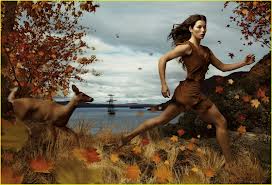
Pocahontas
Google Images
Do you flee
the doe
or imminent change?
Or do you both know
that nothing will ever
be the same?
Will I do the same
as illusions
shatter in my world?
For those of you who would like to play with allusion, in poetry, short fiction or essay, I offer you this prompt:
• Choose a work of art or poem (whatever) that has influenced your own writing and bring your own unique experience to the topic.
• Allude to an existing literary work or piece of art in your own creation
• Write a response poem, if you like. Answer back, either in agreement or opposition to the original piece.
• Write a poem in the style of one of your favorite poets. Be sure to reference the influential source. Include it, if it doesn’t infringe on copyrights…or provide a link if you are able.
• Allow the prompt to take you wherever you want to go. Just write.
To participate (and we hope you will):
• Write and post your work on your blog, citing the sources if you are able to, or providing a link.
• Access Mr. Linky at the bottom of this post and add your name and the direct URL of the poem from your blog or website.
• Visit other participants, if you are able. Read and comment on their submissions, especially those who have made the effort to visit you.
• Enjoy the process. You never know…someday you may make someone else’s list of influencers!
The first and only time, in my life so far, that a piece of music has inspired me to write a poem directly about it, was when I heard a piece of music, composed by Sir John Tavener in 1982 and performed by Harry Christophers’ The Sixteen, whose eighteen members produce the most sublime choral sound I’ve ever heard. It was only by listening to the music, not particularly paying much attention to the words, that I was inspired to write this piece, which is a Haiku Triplet. It wasn’t until a little time after completing the poem, which was originally intended as a devotion to my wife, that I discovered an interesting connection between the music and a famous poet, who inspired Tavener to compose it in the first place. Only when I listened to the words, did I discover that Tavener had based his composition on William Blake‘s poem The Lamb, part of Blake’sSongs of Innocence and Experience, published in 1789. A full circle had thus turned, from poem to music and back again. I find it quite stirring that William Blake’s poem inspired John Tavener to write music to it and, in turn, Tavener’s music alone, my own poem, whose theme turns back to Blake’s original, perhaps because I think the wording of my poem can also be interpreted as devotional in a religious sense. My original title was in fact The Lamb, because that is the title of Tavener’s composition.
John Tavener
The most significant feature of this composition, which had the greatest impact on my poetic inspiration, is the way that the music cycles alternately between a seemingly discordant, if not quite atonal, series of musical passages and delicious, heart melting harmonies. It had the most striking effect on me. I should confess that I didn’t particularly like the piece at first, but now, every time I listen to it, I am transfixed and cannot help myself tearing up and choking at its beauty. It seems simply to mirror the cycles of life’s experience – from its hardest and most difficult periods to its happiest and most joyous moments and, with it, our responsibility to stay strong, particularly for those we love, through good times and bad, from the discordant times to the harmonious ones.
I cannot find a YouTube recording of The Sixteen singing this piece, but because of its brevity and simplicity, it is important to hear it with the purity and perfection of the best voices, in order to capture its depth and spirit, and the Tenebrae Choir, founded by Nigel Short of the famous King’s Singers, here provide the nearest thing I can find to this quality:
I think I’ve captured the essence of the Japanese poetic form of haiku, which is the seventeen-syllable 5-7-5 three-line verse structure with a requirement to contain “season words,” or Kigo. The choice of this poetic form was very deliberate, not least because it is, by its very nature, capable of distilling the essence of its subject and because Tavener’s composition is also brief, at only three and a half minutes.
Notwithstanding the background, the fascinating influences, coincidences and connections, this poem was and is dedicated to my wife, with whom I have shared a few highs and lows during our nearly forty years together.
This may seem an odd thing to suggest you do, but, in spite of the fact that the choir is singing Blake’s words, I do like to read my poem (contemplatively), whilst listening to the music at the same time …
I leave it to you.
Devotion
(aka “The Lamb”)
From the coldest snow
To the warmest sun you go
And I go with you
From blossom of spring
To golden leaves of autumn
I bathe in your light
From the beginning
To ending of the seasons
I am ever yours.
[The poem was also published on the Marriott Love Poems Competition website in March 2011; it didn’t win any prizes, but gave me a bit of a buzz for a short while].
Photo credits ~ Blake sketch by by John Flaxman circa 1804 and in the U.S. public domain; Tavener by Clestur via Wikipedia and under Creative Commons Attribution 3.0 Unported license
You Tube video uploaded by shawshank4u
JOHN ANSTIE (My Poetry Library and 42) ~ is a British poet and writer, a contributing editor here at Bardo, and multi-talented gentleman self-described as a “Family man, Grandfather, Oc casional Musician, Amateur photographer and Film-maker, Apple-MAC user, Implementation Manager, and Engineer. John participates in d’Verse Poet’s Pub and is a player in New World Creative Union. He’s been blogging since the beginning of 2011. John is also an active member of The Poetry Society (UK).
John has been involved in the recent publication of two anthologies that are the result of online collaborations among two international groups of amateur and professional poets. One of these is The Grass Roots Poetry Group, for which he produced and edited their anthology, “Petrichor* Rising“. The other group is d’Verse Poet Pub, in which John’s poetry also appears The d’Verse Anthology: Voices of Contemporary World Poetry, produced and edited by Frank Watson.
* Petrichor – from the Greek pɛtrɨkər, the scent of rain on the dry earth.
“Sudden massive coronary events” are dominating my thinking lately. I am reading Joan Didion’s account of her husband’s death in The Year of Magical Thinking and recently browsed the pertinent pages of Ekaterina Gordeeva’s book My Sergei while waiting for Steve to glean salable items from Good Will on Tuesday. I am also writing my own memoirs of my husband Jim in a Continuing Ed course. What struck me this morning was the role of the grieving person’s best friend as hero. Not the knight-in-shining-armor type hero, but the simple, calming presence modelling a way to be. In a moment when shock obscures all notions of how to act, having a trusted person exhibit some caring, helpful behavior is a distinct grace.
My mother was that hero to me when my sister was killed in a car crash. Alice and I were traveling across country together, enjoying the freedom of being 20 and (almost) 17 when it happened. My mother cobbled together connecting flights from San Jose to reach me in Nebraska the next morning. She got me discharged from the hospital and set us up in a hotel while she went through all the details of bringing Alice’s ashes back to California. We went to the mortuary the next day. I was still rather zombie-like while my mother handled the business. Then the director asked us if we would like to see the body. “Absolutely,” was my mother’s reply. For some reason, I hadn’t realized that was why we were there. I hesitated. Mom led me into the room while the director closed the door. “Oh, honey,” she sighed as she approached the table. “No, she’s not there. She’s gone. Look here…” she began to comment on Alice’s wounds, on her swollen face and how old she looked, as if she were a battered wife decades in the future. My mom said something about all the suffering her daughter had been spared. Then she tenderly bend down and kissed that pale, waxy forehead. My mother has never looked more beautiful to me in all my life than she did at that moment. Strong, compassionate, wise and incredibly beautiful. I wanted to be like her, so I kissed my sister’s forehead, too.
photo credit: Dharam Kaur Khalsa
Gordeeva writes about her coach, Marina, prompting her to go into the ICU room where her husband lay. “Don’t be afraid. Go talk to him. He can still hear you.” She goes in and begins to unlace his skates, a normal gesture that helps loosen her words, her tears, her emotions. I remember our priest asking me and two of my daughters if we’d like to anoint Jim with some olive oil, bathe his face, and prepare his body to be taken away. It was a relief to excuse ourselves from the people downstairs in the living room and go up to him together, to say our goodbyes together, to touch him one more time. I am so grateful someone thought of allowing us that right then. We had another opportunity to say goodbye to his body at the funeral home later when my two other children came home. By then, I could take the lead with them and encourage them to approach. I can’t remember who started humming “Amazing Grace”, but we all joined in, musical family that we are, and swayed together, arms and bodies entwined.
In the aftermath of Jim’s death, my youngest daughter and I fought frequently. I didn’t know how to talk to her, to listen to her anger directed at me and recognize that she wasn’t hateful, only grieving. Steve was the one who suggested that she was hurt, not hurtful and agreed to sit by me while we attempted an honest conversation. My instinct was to run away. I was grateful to observe someone who could be calm and present, reasonable and compassionate in the face of powerful emotions that frightened me. He is adamant about not rescuing me, but equally determined to be the best friend he can be.
I hope that I will have opportunities to be a great friend to someone in grief. I would like to be a conduit of such grace.
PRISCILLA GALASSO ~ started her blog at scillagrace.com to mark the beginning of her fiftieth year. Born to summer and given a name that means ‘ancient’, her travel through seasons of time and landscape has inspired her to create visual and verbal souvenirs of her journey.
“My courage is in the affirmation of my part in co-creation”, she wrote in her first published poem, composed on her thirtieth birthday and submitted alongside her seven-year-old daughter’s poem to Cricket magazine. Her spiritual evolution began in an Episcopal environment and changed in pivotal moments: as a teenager, her twenty-year-old sister died next to her in a car crash and, decades later, Priscilla’s husband and the father of her four children died of coronary artery disease and diabetes in his sleep at the age of forty-seven Awakening to mindfulness and reconsidering established thought patterns continues to be an important part of her life work.
Currently living in Wisconsin, she considers herself a lifelong learner and educator. She gives private voice lessons, is employed by two different museums and runs a business (Scholar & Poet Books, via eBay and ABE Books) with her partner, Steve.
This piece is from Rev. Terri Stewart’s blog, “Clocked Monk.” It’s an acknowledgement of someone who is involved in doing some rather controversial work regarding civil rights and the justice system. J.D.
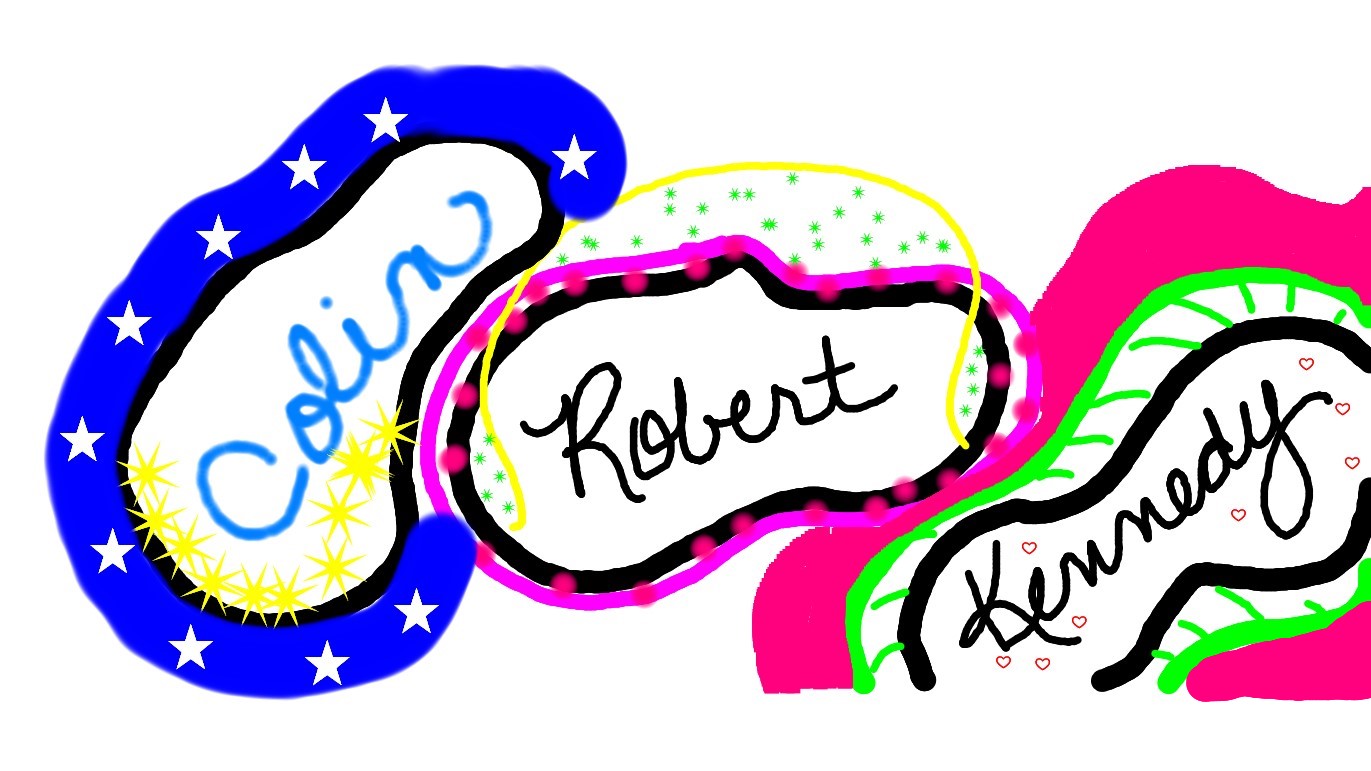
Praying in Color is a prayer or meditation practice that utilizes what I would categorize as doodling to help focus on that which you would pray or focus on. I consider it to be fun, but as previously discussed, I have spiritual ADHD and am inclined towards using visual tools in my spiritual expression. I developed this practice for myself using the book Praying in Color: Drawing a New Path to God by Sybil MacBeth.
With a clean sheet before you (or a good computer finger painting app – I used the app “Fingerpaint” for the Surface) and pens, markers, crayons, or pencils in hand, I invite you to enter into prayer…
To begin, draw an imperfect shape and write the name of the person you wish to pray for:
Alternately, you could begin with your image of the divine, your own name, or even leaving the shape empty embracing the idea of the mystery in our midst.
Next, begin to add detail to the drawing…dots, lines, squiggles, wiggles, whatever you want! Don’t overthink, just go with the flow. This is not a place for your inner art critic to emerge. This is simple prayer. Continue to add detail to the drawing-each pen stroke an intentional prayer.
When you feel that this is complete, draw a new shape and add another person. But first, take a moment to close out the first person with some sort of closure to the prayer or meditation (amen, so be it, shalom, etc.). Also, you may want to take a cleansing pause before jumping onto the next person. Or you may want to immediately move forward to the next person. Do what is right for you and the situation.
Repeat the process of drawing. Add doodads, color, and details.
Add another person to the prayer list. (And so on).
The most important thing to remember is that there is not any rules. You should follow the process where it leads you. And you will then create a personal prayer icon for you to carry with you throughout the day or days. You may even choose to post in someplace visible like your refrigerator! or you bathroom mirror. Or begin to enhance it further as days progress by adding words to focus your intentions.
If the words are distracting, put them away.
There you have it! Praying in Color – yet another way to access the deep love, mercy, and justice that resides within us all. You could easily do this and zip out names of people and zip in parts of the world worthy of deep concern … Syria, Kenya, Afghanistan…
TERRI STEWART is Into the Bardo’s Sunday chaplain, senior content editor, and site co-administrator. She comes from an eclectic background and considers herself to be grounded in contemplation and justice. She is the Director and Founder of the Youth Chaplaincy Coalition that serves youth affected by the justice system. As a graduate of Seattle University’s School of Theology and Ministry, she earned her Master’s of Divinity and a Post-Master’s Certificate in Spiritual Direction. She is a contributing author to the Abingdon Worship Annual. (The 2014 issue just released!)
When my daughter Bea was a little girl, she found a seed in a seedless Satsuma, and planted it in a tiny pot on our kitchen windowsill. She kept the soil moist and, to our delight, a tiny Satsuma tree sprouted. We nearly lost hope when the little tree was infested with insects, but it hung on. Through the years, we tried everything we could think of to bring it back to health. We washed it with dish soap to get rid of the bugs, and transplanted it to a bigger pot. We tried covering the soil with plastic wrap, to keep the bugs away from the leaves. In desperation, we trimmed it down to almost nothing, but it came back–and so did the bugs. I half hoped it would die, just to be done with it.
Last summer I set it out on the deck, like a fish thrown back into the water, to sink or swim. But the little tree liked the fresh air and sunshine, and grew greener and healthier than ever. I brought it inside before the nights turned cold, and it’s back on the windowsill, perhaps gazing out at the yard and looking forward to warm summer nights.
We live our lives in hope.
Almost everything we do is an act of hope. Big ones and little ones.
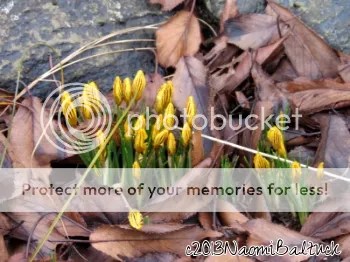
Hope is writing this post, even when I couldn’t figure out the new Photobucket last night. It’s trying a new flavor of yogurt. It’s getting out of bed each morning. It’s teaching your child to look both ways when crossing a street. It’s writing the address of a friend with cancer into your address book—in ink. Hope is page one of every new book you open.
It’s writing page one of a new manuscript before the last one has sold. It’s everything from watering a plant to having a baby, from a blind date to getting married. It’s why Jack planted his magic beans, against all odds and common sense. Hope was the last most precious thing left to us, when Pandora opened up her box. It’s more important than love, because as long as we have hope, love might yet grow.
A scientist studying nature vs. nurture put identical twins into separate rooms, one stocked with toys, candy, a real live pony. The other he put into a room filled with manure. When he went back to observe, the twin in the room of toys was sitting in the middle of it, crying. “What’s wrong,” said the scientist. The child replied, “I just know I’m going to break something and get in trouble.” The scientist found the other child up to its ears in manure, laughing, leaping about, scooping up handfuls of the stuff and tossing it to one side. “What are you doing?” asked the scientist. The child answered, “With all this shit, there’s got to be a pony in here somewhere!”
Who says Jack doesn’t know shit? Bring on the magic beans!
And with all the shit life throws at you, there’s got to be a pony in there somewhere.
All words and images c2013 Naomi Baltuck
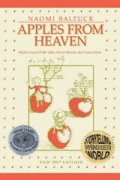
NAOMI BALTUCK ~ is a Contributing Editor and Resident Storyteller here at Bardo. She is a world-traveler and an award-winning writer, photographer, and story-teller whose works of fiction and nonfiction are available through Amazon HERE. Naomi presents her wonderful photo-stories – always interesting and rich with meaning and humor – at Writing Between the Lines, Life from the Writer’s POV. She also conducts workshops such as Peace Porridge (multicultural stories to promote cooperation, goodwill, and peaceful coexistence), Whispers in the Graveyard (a spellbinding array of haunting and mysterious stories), Tandem Tales, Traveling Light Around the World, and others. For more on her programs visit Naomi Baltuck.com
September 21, 2013 is the United Nation’s International Peace Day. The theme this year is Education for Peace, including fostering respect, inclusiveness, and peaceful societies.
Many organizations across this beautiful blue orb of ours are marking the day with events of one sort or another. One of special interest is Unify’s Global Synchronized Meditation …
BE THE PEACE
“The purpose of meditation is to awaken in us the skylight nature of mind, and to introduce us to that which we really are, our unchanging pure awareness that underlies the whole of life and death.
Thanks to Mick B. for the Sogyal Rinpoche quote. Photo credit ~ Patty Mooney via Wikipedia under Creative Commons Attribution-ShareAlike 3.0 unported license Video uploaded to YouTube by UNIFYMEDIA2012
A few weeks ago we posted a Facebook video about a raven asking people for aid. The raven had encountered a porcupine and had quills embedded in its face. A couple of weeks later, we returned from our time in Maine to discover a severely injured a crow (close cousin to the Raven) in our back yard. Neighbors informed us the crow had slowly, with great intent, worked its way from the woods to our yard.
The crow appeared to have a broken wing and was having difficulty standing. Upon closer inspection we discovered its foot was caught in a vine. The crow allowed me to release the trapped foot which appeared to help a little. We then offer the bird food and water, which it mostly ignored; it seemed to welcome a little gentle stroking. We then made phone calls. A former bird rehabilitator suggested we provide a box for shelter for the night as rain threatened. We then waited to hear from the crow specialist.
Yesterday morning the crow was still in our yard. Jennie took a neighbor’s advice and offered it some hard-boiled egg. The crow ate a very small portion. It seemed to be in pain so we talked over next steps, carefully weighing our options. Then the rehibilitator called; he could not make it to our house till evening, but suggested we place the crow in a cat carrier to keep it safe until he arrived. I carefully lifted the bird into the carrier and the crow fell on its side. We removed the bird briefly and placed some rags in the base of the carrier to offer some cushioning. When we returned the very large crow to the carrier we realized the bird, given the broken wing, was too large for it. We also realized the bird was not likely to survive, and after consulting the crow specialist, decided to take it to a vet to be put down.
I lifted it once more and placed it in a large recycling tub. As I was about to put the tub in the car, the crow looked me squarely in the eye, squawked loudly three times, and died. My strong impression was that the crow was expressing appreciation for our efforts, and probably chastising us a little for causing it pain. Anthropomorphizing? One had to be there.
We carefully buried the crow, performing ceremony for it. We had seen no other crows since our return, a strange absence given their frequenting of our yard and woods, and the presence of an injured member of the flock. We wondered whether the visiting crow had been ostracized by the flock. During the burial and ceremony I heard a solitary squawk from far away.
We were left with great sadness that we had, in our efforts to aid, caused the crow suffering, yet gratitude the crow had come to us. Today the sadness lingers. We are reminded of Crow’s large spirit, great intelligence and keen intent. We wish this crow a speedy and safe journey into the spirit world.
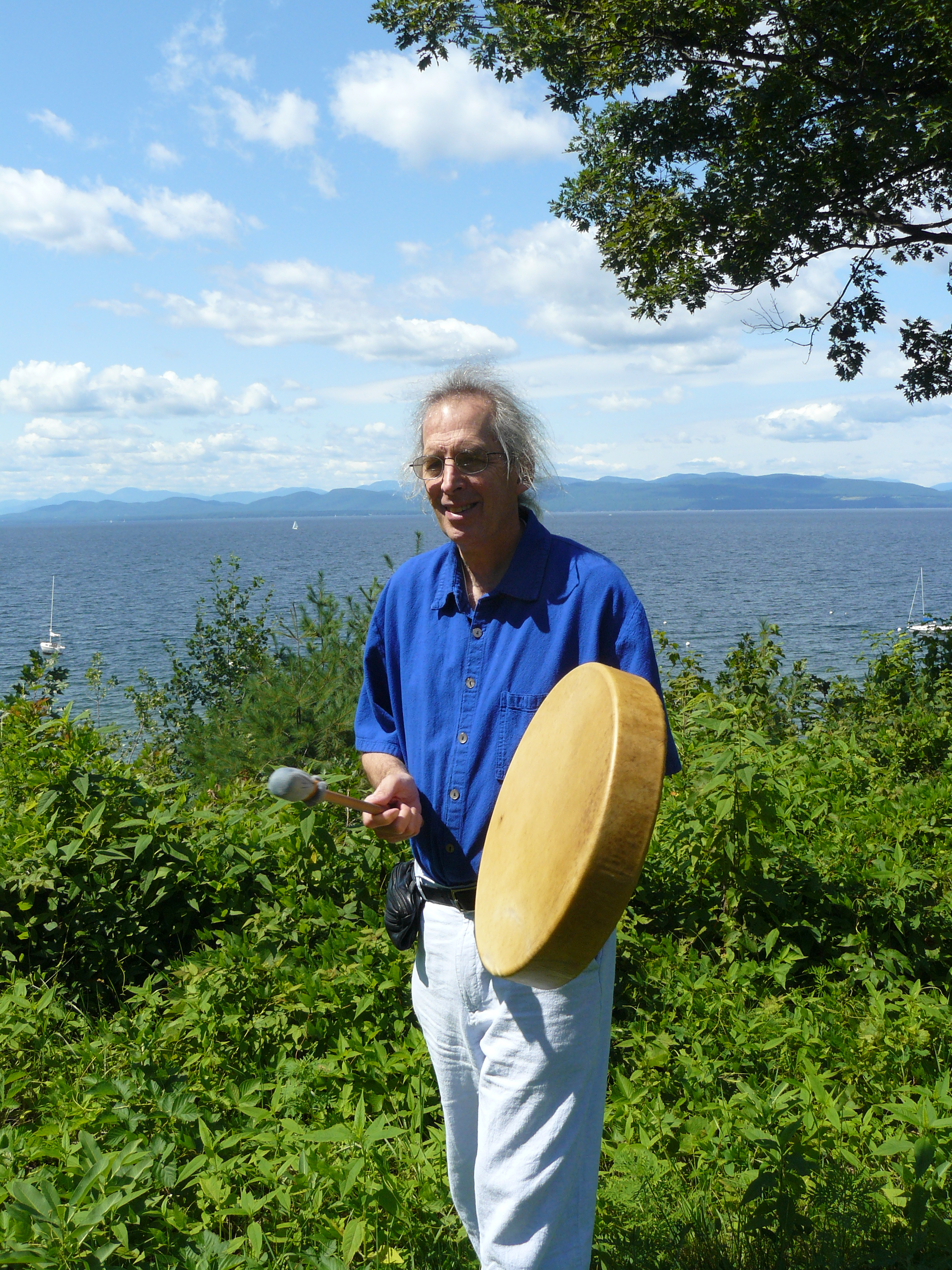
MICHAEL WATSON, M.A., Ph.D., LCMHC (Dreaming the World) ~ is a contributing editor to Into the Bardo, an essayist and a practitioner of the Shamanic arts, psychotherapist, educator and artist of Native American and European descent. He lives and works in Burlington, Vermont, where he teaches in undergraduate and graduate programs at Burlington College,. He was once Dean of Students there. Recently Michael has been teaching in India and Hong Kong. His experiences are documented on his blog. In childhood he had polio, an event that taught him much about challenge, struggle, isolation, and healing.
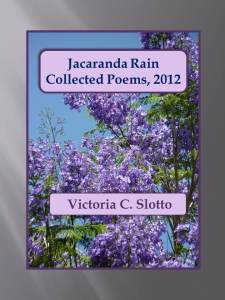
Editorial note and reminder: Next Wednesday, September 25, at 7 p.m. we will host a second writing challenge (Writer’s Fourth Wednesday) featuring Victoria C. Slotto, novelist and poet. The subject of next week’s challange is Literary Allusion. So writers read on, enjoy, write and mark your calendars for next week’s event. Mr Linky, which enables you to share your work with everyone, will remain open for seventy-two hours. Victoria will visit all participants to read and comment.
Here British poet, author and poetry teacher, Myra Schneider offers some thoughts on the possibilities and pitfalls of narrative poetry …
Myra Schneider
Narrative poetry is so different from lyrical that in many respects it is like another medium. A narrative poem needs to be structured as carefully as a novel and is likely to be less dense than a short poem yet it must still carry a sense of poetry, be more than condensed prose. What excites me most about this form is the chance to use voices very different from my own, to explore character, viewpoints and situations over a period of time. A narrative can express an idea in graphic action rather than in presenting it as an argument. Importantly, this medium can offer a route to writing about material which couldn’t be tackled in any other way.
Narrative poems are often rooted in difficult childhood and family experience. The great pitfall here is the danger of simply relating events as they happened intermixed with an outpouring of feelings. Releasing every detail of a painful memory on paper may be essential as a starting point but of course raw writing needs to be transformed to communicate to others. Selection, structuring and sometimes a measure of fictionalizing are necessary to convey the underlying truth to the reader. Widening the context beyond the narrator’s own reactions is likely to be a valuable contribution to the poem.
Donald Atkinson in his semi-autobiographical book-length A Sleep of Drowned Fathers and Kate Foley in her much shorter poem The Don’t Touch Garden have both written brilliant narratives with lively dialogue and sharp imagery showing different viewpoints in telescoped scenes which feature key moments or situations. Atkinson presents family life and traces his relationship with a violent and abusive father to a climactic incident when he is in his teens. His mother, who is trying to stand up for the children, calls him to help when her husband attacks her. The boy punches his father who collapses and it comes home to the reader that in reality the brutal man is very weak. The last sections show him as rich, isolated, sad and dying by accident in an appalling sex parlour. Yet what emerges is the narrator’s compassion and love for his father.
In The Don’t Touch Garden the narrator is an adopted child trying to make sense of the feeling that she didn’t fit with her mother. The climax of her story is the discovery of a bundle papers which reveal her identity. The adoptive mother is as much a focus as the child and there are graphic scenes which depict sympathetically the story of her background, marriage, and longing to have a child. Foley’s father, with whom she had a much easier relationship, is characterized in telling scenes. Important too is the wartime period in which the child grew up. There are very poignant moments in this many-stranded narrative which is told with wit, humour and economy.
The memory of childhood and relationships with parents can bring up such a welter of material it is difficult to find a route to a poetic narrative even though there is a strong urge to do so. This was my experience. I wanted to write about the way I was dominated by my father during my childhood and adult life and decided to create a fictional parallel with a main character whose life was very different life from mine. However, I couldn’t keep the fictional equivalent of my father under control. He ‘demanded’ sections in his voice which showed him behaving exactly as my father did. The result was he blotted out the daughter character and the poem didn’t develop properly. Discouraged after six months, I almost abandoned the poem but Mimi Khalvati gave me some encouraging feedback and I saw how to proceed. Looking back I realize I needed to write these ‘father scenes’ to clear an overwhelming anger out of my head. When I began again I confined the father to a few short scenes and fleshed out the narrative, widening the canvas with characters all of whom had difficulties to face in their lives. After about eighteen months the compressed novel Becoming found its shape.
Of course childhood and difficult personal relationships connected with it is only one source of personal subject matter for poems with a narrative element. Many poets (and non-poets) feel the need to write about the death of someone close and such poems often have a narrative drive. Understandably there is a desire to record every detail of a last illness but, as magazine editors and poetry judges are all too aware, writers often fall into the trap of offering a sad but drawn out story in which the material hasn’t been transformed.
Douglas Dunn’s moving book-length sequence, Elegies, about his wife Lesley’s illness and his own life after she died has a narrative thread but it is worth noting it barely touches on medical details and it doesn’t hammer out the harrowing day to day decline of his wife’s strength. What Dunn does is to make skilful shifts in chronology so that poems which recall incidents when Lesley was well are juxtaposed with graphic moments during the illness such as the couple looking at a hanging mobile of three seagulls made by a friend, the night before she died. These poems are sad yet celebratory and reveal the kind of person she was. The later part of the book traces the stages of grief and mourning which Dunn goes through as he re-lives events and finds ways of continuing to connect with his lost wife. Very controlled language and different kinds of strict form counterpoint the overwhelm of grief in this very moving sequence.
Many different kinds of personal material can trigger narrative poems. Gwyneth Lewis’s book-length Hospital Odysseywas inspired by her husband’s serious cancer illness and the frustration and fear she endured while he was undergoing treatment in an NHS hospital with all its inadequacies. Lewis turned the experience not into a painful account but a hugely inventive epic in nine books. She drew on the quest tradition, in particular Dante, but also created an extraordinary world in which matrons and consultants turn into creatures, diseases are personified, and microbes hold a manic ball. Maris, the heroine, is accompanied by two helpers rather as Dorothy was in the Wizard of Oz. Her search for her husband, Hardy, and for a way to find a cure that would save his life, takes her deeper and deeper into the underworld of hospital which perhaps is also a metaphor for the space in the human body. Lewis, following the literary tradition, sometimes addresses the reader and she is speaking for herself when she says the odyssey is one of healing that takes place in the head:
…….I won’t feel well
till this poem’s finished and I find what I mean
about health and loving. It’s a hospital,
this place I am constructing line by line.
There is satire and burlesque, as well as extremes of feeling in this complex and ambitious story. The whole, written in five line rhyming stanzas, is an extraordinary achievement and a wonderful illustration of how trauma can be transformed into a work of art which universalizes it.
Life experiences which have no direct connection with personal difficulties can also be the basis of narrative. I found it exciting to draw on my years of teaching disabled adults in writing Voicebox. The poem is entirely fiction but the trigger for the pivotal character, William, was a composite of clients I worked with, each of whom was wheelchair-bound and had speech problems. William, frustrated by his disabilities and his over-protective mother, is intelligent but antagonistic towards his mother, generally obstreperous and he lives mostly in fantasy. His outlet for self-expression is via his computer. Inventing him was liberating, great fun and extended my writing. Here is a brief excerpt from a poem he wrote after he’s seen a heron in a local park he went to with Katie, a neighbour and teacher, who’s taken an interest in him.
At middnight when the moon
berns whitely in the sky
William kreeps out to kiss his grilfrend
and heron snaps his beek at Mum
awders her to come to the park…
The thirty page poem is written in the voices of the four main characters, one of whom is Millie, William’s mother. All of them are in one sense or another finding their voices. I had already delved into this subject which has been an issue in my life. In Voicebox I found a new way to explore it.
Drawing on myth or fable also offers possibilities for narrative poems. In her book-length sequence, Meadowland, Louise Gluck harnessed the Odysseus story in a remarkable way. She interweaves poems in which Penelope, Telemachus (the son of Odysseus and Penelope) and Circe, in particular, put forward their own views. These offer a modern interpretation of the legend which connects with the story, also told in voice, of two contemporary un-named characters, whose marriage is falling apart. There is cutting humour as well as tenderness and pain in these poems which clearly reflect on personal experience. Gluck often draws on myth. In her book-length sequence Vita Nova, which has a strong sense of mourning, she turns to the Orpheus and Eurydice story. Classical stories, when used effectively as a base, heighten and universalize subject matter. Anne Cluysenaar makes the narrative of The Epic of Gilgamesh a frame for Clay, a long poem with different strands of reference including a strong meditative element.
I found re-telling the Orpheus story in contemporary terms and placing it in the London Underground offered surprising opportunities. With its many escalators, corridors and dark tunnels the Underground always fills me with a sense of drama and often seems to equate with Hades and other metaphorical underworlds. Details about the buskers, the dreadful suicides on the line, individuals I’d observed such as a thin pale girl with syringe marks all the way up her arm, gathered in my head. I pictured Eurydice following Orpheus up a long escalator before collapsing and envisaged him as a flute-playing busker who falls for a drug addict. Then I saw the drug pusher on whom Eurydice had been dependent, as the underworld king who would separate the couple. Other parallels suggested themselves. The myth seemed to strengthen my story and it allowed me to treat contemporary material I would not otherwise have dared to touch.
Historical characters and events can also be potent subject matter for narrative poems. It is crucial, however, in using this kind of material or classical stories that the poet brings something new to it. If there isn’t a re-interpretation or if the poet hasn’t found in the original material a driving point which gives the poem an illuminating focus the result is likely to be little more than a re-telling and will fail because it has no life of its own.
Elaine Feinstein was drawn to Lorenzo da Ponte, Mozart’s librettist, because she identified strongly with his sense of always being an outsider. His story was a strange one. The son of a poor Jewish tanner he was assimilated into European culture by the accident of family baptism and education, managed to move from a profligate life in Venice to the Emperor’s Court in Vienna and then, when out of favour, he made his way to New York. Amazed by his nerve and his ability to live on his wits as much as his talent, she conceived the narrative as a dramatic monologue, making da Ponte look back over his past with all its ironies at the point when he is living a humdrum life in America. The skilfully written poem, a salute to the librettist’s survival, points up the ironies of his ever-changing fortunes. It moves swiftly through his story but with graphic detail and the teller sometimes steps out of chronological order to make comments. The five line rhyming verses in iambics are a marvellous counterpoint to the subject matter. Form, of course, whether strict or free is as crucial in a narrative poem as any other.
Dilys Wood
Dilys Wood’s poem, The South Pole Inn, was triggered by a desire to write about early Antarctic exploration but she knew she must find an indirect approach to this well-documented subject. She hit on the idea of a dramatic narrative set in Ireland long after the main expeditions, intending to show the heroism of the men through the eyes of a woman. She chose Nell, wife of Tom Crean one of the participants, set the action in the Creans’ inn in Ireland and interwove the expedition material with references to the Irish troubles. She also invented a love-affair between Nell and Frank Worsley, another member of the expeditions, presenting him as a man who was more understanding of women than Tom. Combining fact and fiction was a challenge. There were others, in particular researching into the Irish Troubles and life in Western Ireland in the 1920s and later. She went to Ireland to see the South Pole Inn and the area round it. She also had to make sure the voices of its characters, were authentic. Nell was perceived as a capable woman frustrated by the way her husband sidelines her from ‘male’ action and as her story developed the theme of woman’s role became a major one. It was a tussle to control the plot and integrate the themes but after several drafts a remarkable poem emerged.
Carolyn Norton, a long narrative poem is included in this collection
Research, which is often essential when using known sources for a narrative poem, can also be a pitfall. It is all too easy to be carried away by fascinating information and include it without considering whether it is really relevant. Driven by anger that 150 years ago women were so powerless and that many women in the world still are, I wanted to write a poem about Caroline Norton. She was the first person in Victorian times to gain some rights for married woman and my intention was to highlight this as I felt she should be much better known. The problem was how to select details from her complicated life which would show how much she had to fight against and endure so that the reader would recognize the significance of her achievements. To do this, however carefully I selected, many facts needed to be included but the danger was the poem would read simply as an account. It was only when I hit upon the idea of a repeat with variations such as “What she did”, “What she didn’t do” to give a rhythm and act as a hook for selecting material, that I could begin.
In the last twenty years or so narrative poetry has reassumed its place as an important genre for some leading poets writing in English, including Derek Walcott and Les Murray. There isn’t space here to examine the wide canvasses of their epics, Omeros and Fredy Neptune. Omeros is set mainly in St. Lucia and Walcott weaves together fictional narratives based on the island’s present, past and his own experiences, creating some parallels with the Iliad. The island has played a crucial part in Walcott’s life and in this poem, among others, it features as a dominant character. I should mention that place often plays key role in narrative and this applies to several of the poems I’ve written about in this essay – Hospital Odyssey, for example. In Fredy Neptune Murray writes in an alter ego as a rough and ready Australian of German origin to produce a verse novel written as Fredy’s fantasy adventures. These take him to many parts of the world and incorporate the history of the period from the end of World War 1 to soon after the end of World War 2. Early in the story the shock of seeing Armenian women burnt to death by a mob makes him his lose his sense of touch, a condition which has metaphorical implications. In the later part of book he rescues a mentally disabled German boy. This strand of the story, which is haunting, was a way for Murray to write about his autistic son.
Omeros and Fredy Neptune are among the highest poetic achievements of our age. There are many pitfalls to be faced in writing poetic narrative but I hope I’ve shown the possibilities of the mode are unending.
Publications:
A Sleep of Drowned Fathers, Donald Atkinson, Peterloo 1989
Migrations, Anne Cluysenaar, Cinnamon Press 2011
Elegies, Douglas Dunn, Faber 1985
Gold, Elaine Feinstein, Carcanet 2000
Night & Other Animals, Kate Foley, The Green Lantern Press 2002
Meadowlands, Louise Gluck, Carcanet 1998; Vita Nova, Carcanet 2009
A Hospital Odyssey, Gwyneth Lewis, Bloodaxe 2010
Fredy Neptune, Les Murray, Carcanet 1998
Becoming, Myra Schneider 2007; Multiplying The Moon (Voicebox, Orpheus in the Underground), Enitharmon 2004, What Women Want, Second Light Publications 2012
Omeros, Derek Walcott, Faber 1990
Antarctica, Dilys Wood, Greendale Press 2008
The illustrations were not included in the original article and were added here by me. The portraits are the property of Myra Schneider and Dilys Wood and copyrighted. Book cover art is copyrighted and used here under fair use. J.D.
chopped and chewed and swallowed –
down we go
on eternity’s throat,
one bite of salty clay after another
to be recycled
and become the burnt sienna skies
of some obscure tomorrow.
fate chimes its’ eyelashes
like some odalisque its’ coin belt –
the boatman’s pockets are always full
with tradition’s eye seals.
we are but stairs
for humanity’s pretended
e-volution,
we circle meanings
like eagles circle unseen angels
up-above,
without ever touching them,
we live to ignore
and ignore to learn
the reason why history is repeating –
and talking tall
we show our real essence –
the spoiled mud flowing in our veins
keeps bringing bitter smiles
on god’s resigned mouth: ever non-grown-ups, these earthlings…
– fautly darwinism is the opening poem from Liliana Negoi’s poetry volume The Hidden Well, and can be heard in the author’s own reading on SoundCloud HERE.
.
LILIANA NEGOI (Endless Journey and in Romaniancurcubee în alb şi negru) is the author of three published volumes of poetry in English, which is not her mother tongue but one that she came to love especially because of writing: Sands and Shadows,Footsteps on the San – tanka collection and The Hidden Well. The last one can also be heard in audio version, read by the author herself on her SoundCloud site HERE. Many of her creations, both poetry and prose, have been published in various literary magazines.
As a little bit of back story, in the course of my life, I spent quite a few years in the company of a blues musician. By spending a little time with him, I also spent time around a lot of different blues musicians.
Men and women with a deep vein of soul and history and rhythm.
When you are around blues people, you hear a lot of stories. Telling stories is pretty much the foundation of being able to play the blues. As a storyteller in my own right, I used to soak in these stories, letting them enter my pores and fill my soul and tap my DNA on the shoulder and ask it to dance.
The stories are in me. Not all of them are true. Few of them are pretty.
All of this is a long winded lead up to a particular story I have in mind.
It goes something like this:
Back in the 1950’s in a small suburb of Dallas, Texas, two talented brothers grew up together.
Both had music in their bones and talent for playing the guitar. The world knows a little bit more about Stevie Ray Vaughan because of his breathtaking musical style and early death, but Jimmie Vaughan has also seen a fair bit of success with his music.
If you listen to each of their music, you can hear their very different styles. Stevie’s music was intense, complicated and at times frenetic. Jimmie likes to play a bit slower and wider and easier.
Legend has it that back in the day in Oak Cliff, Texas both boys not only liked guitars but they liked cars.
Stevie, unsurprisingly, liked real fast hot rod cars that he could jump in and race around town. Stevie used to vex the local police who couldn’t slow him down.
Jimmie on the other hand liked to cruise. He liked big, heavily finned, tuck and roll upholstered, Buick with a “smile” kind of cars. He’d put his girlfriend beside him on the bench seat and slowly roll through town, vexing the local police who wanted him to speed up.
I think of this story pretty frequently in relation to my own roll through life. My approach is more Jimmie than Stevie, though I admire Stevie very much.
Perhaps this owes to the slow “land of mañana” pace of where I grew up. We don’t move with alacrity in New Mexico and tend to be suspicious of those who do. When I still lived in the state and traveled to San Francisco or Boston for work, I was always comforted to come home, get off the plane, and visually see how slow people moved. Then I would match my pace to theirs and know I was home.
There is a great comfort in moving at a calm pace.
I find, however, that is not how the world thinks one should move.
Let’s take for example, New York City. In New York, you are supposed to walk fast. Very fast. Head straight, eyes forward, and walk.
Despite how much I love Manhattan, I have quite a hard time keeping up. The Good Man (my husband) was born in Brooklyn so moving at that pace comes natural. It does not come natural for me. I prefer to toddle along closer to the buildings and let the people pass me by on the outside of the sidewalk.
I am the person that New Yorkers yell at for walking too slow.
This all came back to mind this past week. It is New York Fashion week and I follow Nina Garcia, Marie Claire magazine’s Creative Director, on various social networking sites.
She has been posting photos from all of the various designer shows and I have been lapping them up like at kitten at a bowl of milk.
I may not have a figure for fashion, but I love it. I love seeing how textiles and stitches and notions come together to create something fantastic or ugly or offbeat.
So a couple of days ago, Ms. Garcia posted a photo of a sign she saw backstage at the Michael Kors Spring show. Oh my, I am a huge fan of Mr. Kors.
Here is the photo:
I read the words and my heart sank a little. I am happily romantic, strong and my own version of gorgeous.
But I don’t walk fast and with energy.
I would love to kill them with chic, but instead I must maintain my killer sense of humor.
For some reason, this really got under my skin and whispered to those demons in my head who heckled me and said that if I can’t walk fast and with energy, I am a nobody. They said I don’t measure up, don’t belong, don’t matter because I can’t keep up.
And that’s when I remembered the story about the Vaughan brothers.
I don’t need to race up and down the streets of New York. There are plenty of people who have that covered. I want to cruise the Manhattan blocks and tip my head upward to wonder at the buildings and smile and give my lungs room to breathe.
Slow though I walk, I always get where I’m going. Pink cheeked, a little sweaty and smiling.
Perhaps I am taking this hand written sign a little too close to heart. I’m sure this was simply a note of encouragement for the models walking the runway, reminding them to keep it peppy and light.
Perhaps it just hit me on a bad day when the demons were a little closer to the open door than I would like. I let them out to play awhile, really let them run, then I whistled and corralled them back into the pen.
And I remembered that a strong, courageous New Mexican doesn’t have to walk fast unless she wants to. That is true both when walking the Bosque or NYC’s Broadway.
Photo from the Instagram feed of Nina Garcia. All rights belong to her.
Karen Fayeth ~ is one of our regular writers. She is our tech manager, site co-administrator along with Jamie and Terri, and fiction and creative nonfiction editor. She blogs at Oh Fair New Mexico. Born with the writer’s eye and the heart of a story-teller, Karen Fayeth’s work is colored by the Mexican, Native American, and Western influences of her roots in rural New Mexico complemented by a growing urban aesthetic. Karen now lives in the San Francisco Bay area. When she’s not spinning a tale, she works as a senior executive for science and technology research organization.
Karen has won awards for her writing, photography, and art. Recent publication credits include a series of three features in New Mexico magazine, an essay with the online magazine Wild Violet, and a short story in Foliate Oak. Her story “What Leibniz Never Learned” will appear in the Fall edition of The Storyteller.
aunt bea said have you noticed that so much of the world’s timing for addressing human atrocities of war are seamlessly attached to global market profits it’s like closing the barn door after the cows have reached the pasture
. CHARLES W. MARTIN (Reading Between the Minds) — earned his Ph.D. in Speech and Language Pathology with an emphasis in statistics. Throughout Charlie’s career, he maintained a devotion to the arts (literature/poetry, the theater, music and photography). Since his retirement in 2010, he has turned his full attention to poetry and photography. He publishes a poem and a photographic art piece each day at Read Between the Minds, Poetry, Photograph and Random Thoughts of Life. He is noted as a poet of social conscience. Charlie has been blogging since January 31, 2010. He has self-published a book of poetry entitled The Hawk Chronicles and will soon publish another book called A Bea in Your Bonnet: First Sting, featuring the renown Aunt Bea. In The Hawk Chronicles, Charlie provides a personification of his resident hawk with poems and photos taken over a two-year period.
cc licensed flickr photo by OSU Special Collections
In Christian tradition, there is a story of Jesus walking down the street in a foreign town, a mother seeking healing for her daughter, and a strange and unique interplay between Rabbouni and a woman stepping outside of her traditional roles, demanding healing for her very ill daughter (Christian scripture, Mark 7:24-30).
In extra-biblical literature, the girl who needs healing is named Justa. Justa means “fair” or “upright.” Yep. Justice.
A friend and I were speaking about this story recently and we were remarking on one noticing in particular – Justa’s immediate needs were met, but what about her deepest desires? There is much to ponder here. When we see someone hungry, do we give them food? Possibly-some of us do. But do we take the time to discover their deepest desires? When do we slow down enough to notice with wide open eyes the deepest desires of the other? And then, instead of fixing or fulfilling those deepest desires, can we just become a container? A facilitator? How do we let Justa and her mother tell the story, have their immediate needs met, and discover their deepest desires?
So many questions!! The truth is, we can be slow enough, mindful enough, noticing enough to discover the deepest desires of the other. The truth is, so often we don’t. The truth is, when we can become a container of compassion and love, we will discover our own deepest desires.
Below is a poem I wrote for Justa in September, 2011. About 10 days before 9/11.
Justice
the daughter of
the discarded
canaanite woman
was named justice.
when justice lay on her
bed half crazed from
demons or schizophrenia
or whatever unnamed
disorder that bedeviled
her she was all that was
wrong with the world.
a separation of the haves
and have-nots. those who
have access to healthcare
healers and those who
must die alone and destitute.
justice reached
and crossed boundaries.
her spirit floated through
the wooded path alongside
her mother as they desperately
sought the one who could heal
and put her fractured
psyche back together.
justice became a jumble
of screams as
nails on a chalkboard
incessant bees buzzing
sulphur burning
and constant drip-drip-dripping
clamored intently intensely
inside her skull.
time was running out.
her mother ran
searching and seeking
tree limbs slapping her
in the face as she sprinted
through the wilderness
seeking out anyone who
would promise healing
encountering charlatans
and just the misunderstood
and even those that would
send her away. calling her
a dog.
not worthy of healing.
she wasn’t one of them.
finally, she sees the one
some call love walking down
the street.
mother screams out as
pain is ripped from her
heart like a bandage from
a fresh wound seeking
hope once again for
justice and knowing that
the hopeless seems so
much stronger.
love keeps on walking.
once more
mother bares her
psyche screaming hope
with barely a glimmer
on the horizon like candle
snuffers putting out all
the stars that exist.
except this
last
one.
finally
mother is heard and justice
is walking with her heart
receiving confirmation
of the great hope mother
always knew was there.
somewhere.
deep within.
a great symphony sprouted
in the heart of justice
with melody sung by
a white-throated sparrow
and harmony enchanted
by love.
REV. TERRI STEWART is Into the Bardo’s Sunday chaplain, senior content editor, and site co-administrator. She comes from an eclectic background and considers herself to be grounded in contemplation and justice. She is the Director and Founder of the Youth Chaplaincy Coalition that serves youth affected by the justice system. As a graduate of Seattle University’s School of Theology and Ministry, she earned her Master’s of Divinity and a Post-Master’s Certificate in Spiritual Direction. She is a contributing author to the Abingdon Worship Annual. (The 2014 issue just released!)
 I was still in Sacramento. I had just thrown my suitcase into the trunk of my car, and I had wanted to call the nursing home to check on my mom and her progress in physical therapy, one last time before I left for San Diego.
 ROBERT CLARK YOUNG ~ is a guest writer on Into the Bardo. He has worked as a caregiver in his parents’ home since 2008. “Escape from the Nursing Home” is excerpted from his book, THE SURVIVOR: How to Deal With Your Aging Parents, While Enriching Your Own Life. The book seeks a publisher. Robert’s other books are One of the Guys and Thank You for Keeping Me Sober. Visit his eldercare website HERE. His Amazon page is HERE.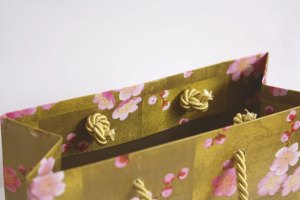




















 The BeZine