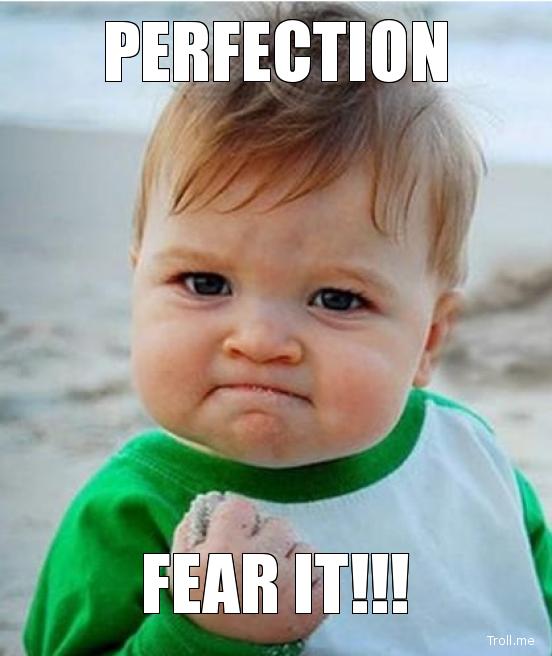
Recently, I read dragonkatet’s piece on “Perfection and Creation.” This got me to ruminating on the nature of perfection. In the United Methodist Church, clergy wannabe’s are required to answer the question, “Are you going on to perfection in this lifetime?” And the expected answer is “yes!”
I had heard a rumor in seminary by Dr. Jack Olive that perhaps our understanding of perfection is different than the understanding that early theologians and philosophers had. And that John Wesley turned to Eastern Orthodox wisdom in an effort to better understand perfection. That appealed to me because perfection seems so unattainable. What if there is a different way?
Corina got me thinking about all of this again! Is perfection unattainable? Is perfection only attributable to the Divine? What is up with this kind of pressure we put on ourselves? And as with everything, the truth is that our understanding has drastically changed over time. Which leaves us free to define perfection in a way that leads to greater life.
The Greek concept is where it all begins for western cultures. That word was “teleos.” In many cases, this word is understood to be completeness rather than the common understanding of perfection—“without flaw.”
Aristotle defines three meanings of perfection:
That which is complete.
That which is so good that nothing can be found better.
That which has attained its purpose.
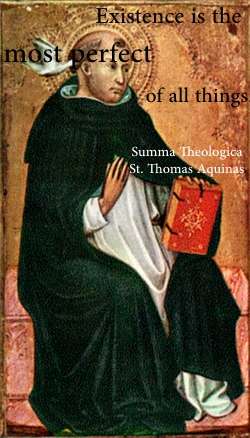
Thomas Aquinas goes on to give perfection a dual-fold meaning: That which is perfect in itself (its substance) andwhen it perfectly suits its purpose.
Other philosophers and theologians have defined perfection to be:
Endless
The greatest
Existence
Plato and Parmenides thought that the world was perfect. That it had perfect shape and motion (spherical/circular). The world is perfect, God is not. Attributing perfection, an intellectual concept of humanity, to the Divine, was a heresy.
However, later came the pantheist Stoics who attributed perfection to the Divine. Why? Because the Divine was equivalent with the world. Here, we are just one short step away from the modern idea that only the Divine is perfect and that we all suffer from an inability to be complete in our own bodies and to find and fulfill our purpose. Eventually, Aristotle’s First Cause and Christianity’s Creator became comingled in theology. Although perfection was still not attributed to the Divine as perfection was believed to be finite.
In the 9th century, philosopher Paschasius Radbertus said that “Everything is the more perfect, the more it resembles God.” But still, God was not perfect because of the finiteness ascribed to the concept of perfection. It is Rene Descartes who introduces perfection as applied to the Divine as he introduces the “perfections of God.” However, Descartes also states that “existence itself is perfection.” They may just have been going through a confusion of perfections!
The concept of perfection has undergone great changes throughout human history. “Nothing in the world is perfect”, to “Everything is perfect”; and from “Perfection is not an attribute of God”, to “Perfection is an attribute of God.” (Tatarkiewicz, “Ontological and Theological Perfection,” Dialetics and Humanism, vol. VIII, no. 1 (winter 1981), p. 192.)
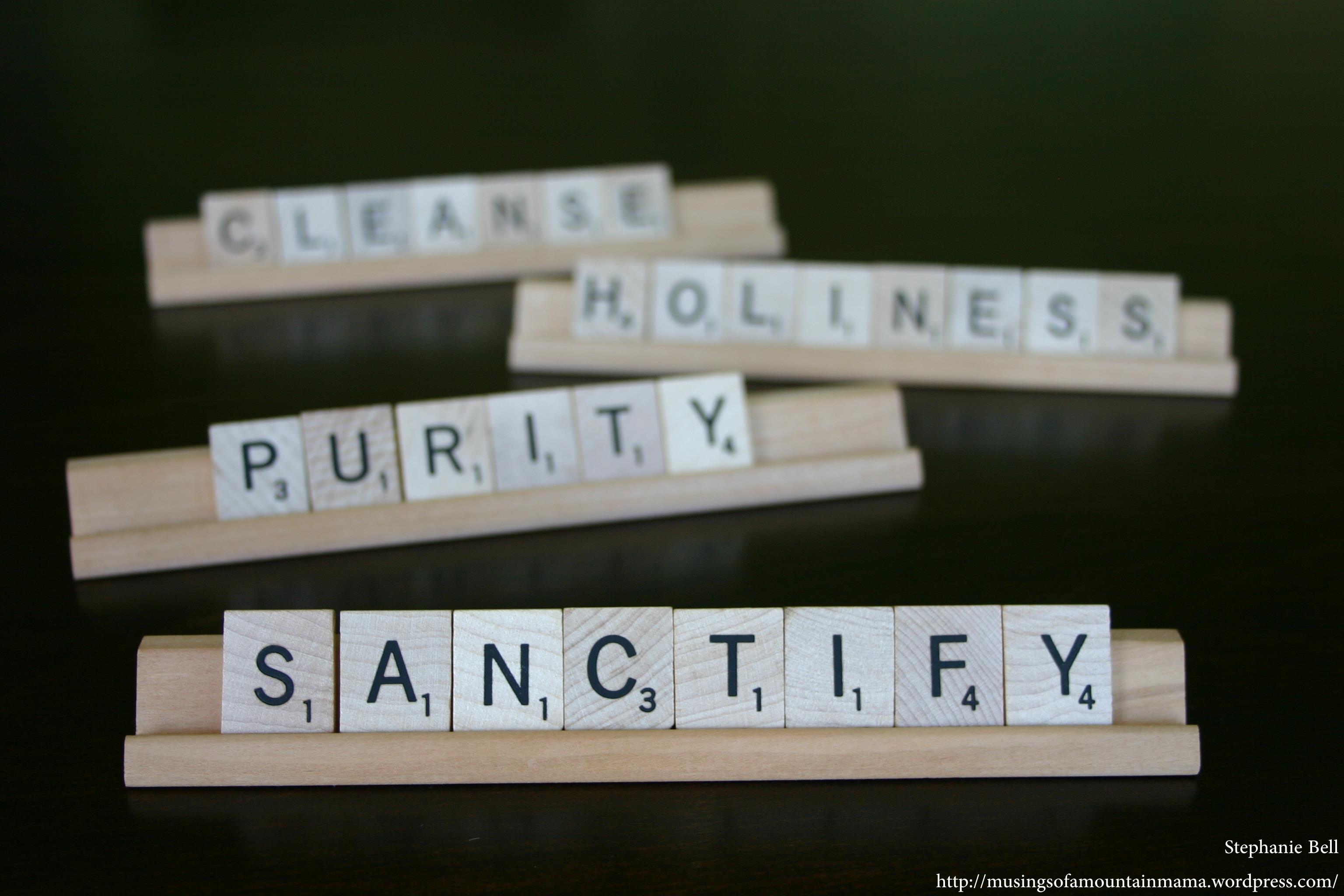
Perhaps it is time to render a definition of perfection that lifts us up and allows us to achieve completeness and fulfill our purpose. In Christianity, we often go back to “The Greatest Commandment.” That is “Love God and love your neighbor as yourself.” We then focus on the loving God part and then sometimes the loving your neighbor part but totally neglect the implied love yourself part. “Love your neighbor as yourself.” When we love ourselves, we can achieve completeness, find and fulfill a purpose! Artists gotta art. Preachers gotta preach. Poets gotta poem. Architects gotta design. Caretakers gotta care. And so on. Of course, within all of this is the tension between what we want and what we have. There are limits and sometimes part of loving is setting aside the dream and doing the chore. But that is still part of purpose. And it is still part of perfection.
John Wesley, the founder of Methodism, totally subscribes to the “Love God and love your neighbor as yourself” approach to perfection. He writes,
O grant that nothing in my soul May dwell, but thy pure love alone! O may thy love possess me whole, My joy, my treasure, and my crown ! Strange fires far from my heart remove; My every act, word, thought, be love!
I never heard that any one objected to this. And indeed who can object? Is not this the language, not only of every believer, but of every one that is truly awakened? But what have I wrote, to this day, which is either stronger or plainer? John Wesley, A Plain Account of Christian Perfection
Perfection is living life in such a way that “every act, word, thought, be love!” Easy peasy.
Perhaps living a life where everything is derived from love is not so easy. But it is something that I can ascribe to, and with practice, grow into. So perhaps perfection is the process that leads to a complete life fulfilled in acts of love–love that leads to justice, mercy, and humility.
We have a saying in my family, “Nothing to it, but to do it.” It’s meant to be a motivator, a call to action, and can be applied in many different situations. When it comes to the craft of creating, however, sometimes that motivation of knowing that “it needs to be done, so get to it”, isn’t enough. Some of us want to wait for the perfect time or inspiration in order to begin. Others of us start, only to become frustrated with how our efforts are proceeding.
It can be hard to create (whether it’s visual arts like painting or photography, or writing poetry, or coming up with a few bars for a new song) if/when you wait for the perfect inspiration to hit you or if you keep revising something in the quest for the perfect color, the perfect frame, word or note, etc.
Perfection is an illusion, anyway. But there are a couple of different schools of thought when it comes to applying “perfection” to the creation of one’s art. Some people feel that seeking perfection can lead to trying harder and ending up with something as close as you can get to perfect.
Others think that it can demoralize a person to the point of giving up (or not starting at all, which is worse).
Both approaches have their merits, and while both points of view can lead to success, I think they take very different types of people to make them work. Some people work better under pressure than others. Some enjoy more of a challenge than others do.
Which camp describes you? Does the search for perfection in your craft motivate you? Do you find that striving to reach your personal best leads to success in your creative endeavors? Or do you feel that all that pressure tends to backfire and leads to being paralyzed with inaction? Do revisions make you shudder? Do you “edit” as you go?
Regardless of which attitude toward “perfection” that you have, it’s important to realize that the true meaning of the word only belongs to the Divine. We may come close. In fact, finding peace and acceptance of ourselves as part of the Divine is necessary, realizing that we are perfect, exactly as we are. Can/Will you apply that same perspective to your art?
It may seem as if I am advocating the acceptance of ‘mediocrity’. I am not. By all means, aim for the moon, you may at least hit the stars! But also realize that everyone probably has a different idea of ‘perfection’, and, barring editors, publishers and the like, you have to be able to stop at a point in the creation and decide when it’s done, or when it’s “good enough”.
In the end, the matter of whether our creation(s) have achieved “perfection” is completely up to us. Only the artist knows and can decide when something is done, and whether or not it’s done to the satisfaction of the creator. Remember: YOU, as the artist/creator are the only one you have to satisfy. Maybe in many cases, “good enough” IS perfect. 😉
* * * * * * * * *
About dragonkatet Regarding the blog name, Dragon’s Dreams ~ The name comes from my love-affairs with both Dragons and Dreams (capital Ds). It’s another extension of who I am, a facet for expression; a place and way to reach other like-minded, creative individuals. I post a lot of poetry and images that fascinate or move me, because that’s my favorite way to view the world. I post about things important to me and the world in which we live, try to champion extra important political, societal and environmental issues, etc. Sometimes I wax philosophical, because it’s also a place where I always seem to learn about myself, too, by interacting with some of the brightest minds, souls and hearts out there. It’s all about ‘connection(s)’ and I don’t mean “net-working” with people for personal gain, but rather, the expansion of the 4 L’s: Light, Love, Laughter, Learning.
We are a Jewish-Native household and events in the Middle-East have deep resonance for us. For the past two weeks we have watched and thought about the fighting in Gaza, our sadness, and sense of helplessness, growing daily.
Of course, it is impossible to know, with any certainty, the truth of things. Propaganda is unleashed by both sides. Still, there is something terribly familiar about the one-sided nature of the conflict. The history of the U.S., like that of Palestine, is usually told from the view of the dominant power. From our Indian perspective, the story is vastly different from that told in most history books.
We watched as the colonial powers invited landless Europeans to emigrate, and forced criminals and others who were disenfranchised to do so. Thus, they created an ever-growing hunger for land, a tidal wave that would eventually sweep over us. We were under constant pressure to move West, and to relinquish our ancestral lands. The colonists made promises and gave us land that would be ours “forever”. Then they brought in settlers who lived in enclaves, always encroaching on our land. When our people attempted to defend the land the colonial powers had seeded to us, the colonial government made war against us. They killed our children and elders, and raped and murdered our women. They sought to destroy our cultures by stealing the land, our traditional knowledge and life-ways, and our children. Because we hold this knowledge, many of us remember, and observe remembrance of, the Shoah, the Holocaust, and acknowledge our kinship with those who were the victims of that genocide.
Let us remember that, like the Jews who made their way to the Holy Land, many of those early emigrants to our lands were the dispossessed. The British attempted to depopulate Ireland, Scotland, and Wales. They used war, famine, and desperation to drive people from their traditional lands. They employed “Acts of Enclosure” to force their own people to flee to the cities, hungry and destitute; many families eventually found their way to our lands. Because they understood colonialism and genocide, because they understood trauma, many of these early immigrants married Native people. But soon, propaganda, hunger, greed, and the rising tide of immigration overwhelmed us.
Although they had killed ninety-nine percent of our people, forcing us to live on tiny reserves, starving and desperate, they continued their attack. They banned hunting, and our drums and our ceremonies, the heart of our cultures. This is not ancient history, it continues, as governments grab what little land we retain and willy-nilly destroy our sacred sites. It continues as Non-Natives rape and murder our women, and jail our young people, in vastly disproportionate numbers. When I see destruction of olive groves in Palestine, and hear reports of the rape of women and the murder of children, I am reminded of this. When I see the Bedouins forced into reservations, their traditional nomadic life forbidden to them, my heart breaks in recognition.
This is an old story. Those with superior numbers and weapons take land from people who have lived in a place for untold centuries. They use resistance to their domination as an excuse to make war on the people. As they do so, they often target children, women, and elders. Too frequently, women are raped and/or killed, children are murdered or traumatized, the land that feeds the stomachs and culture of the people is stolen. Thus the future of the people is threatened. These are acts of genocide. We cannot remain silent when we witness them. Our ancestors lived through this. They remember and whisper their experience in our minds. They are always with us, and they do not forget.
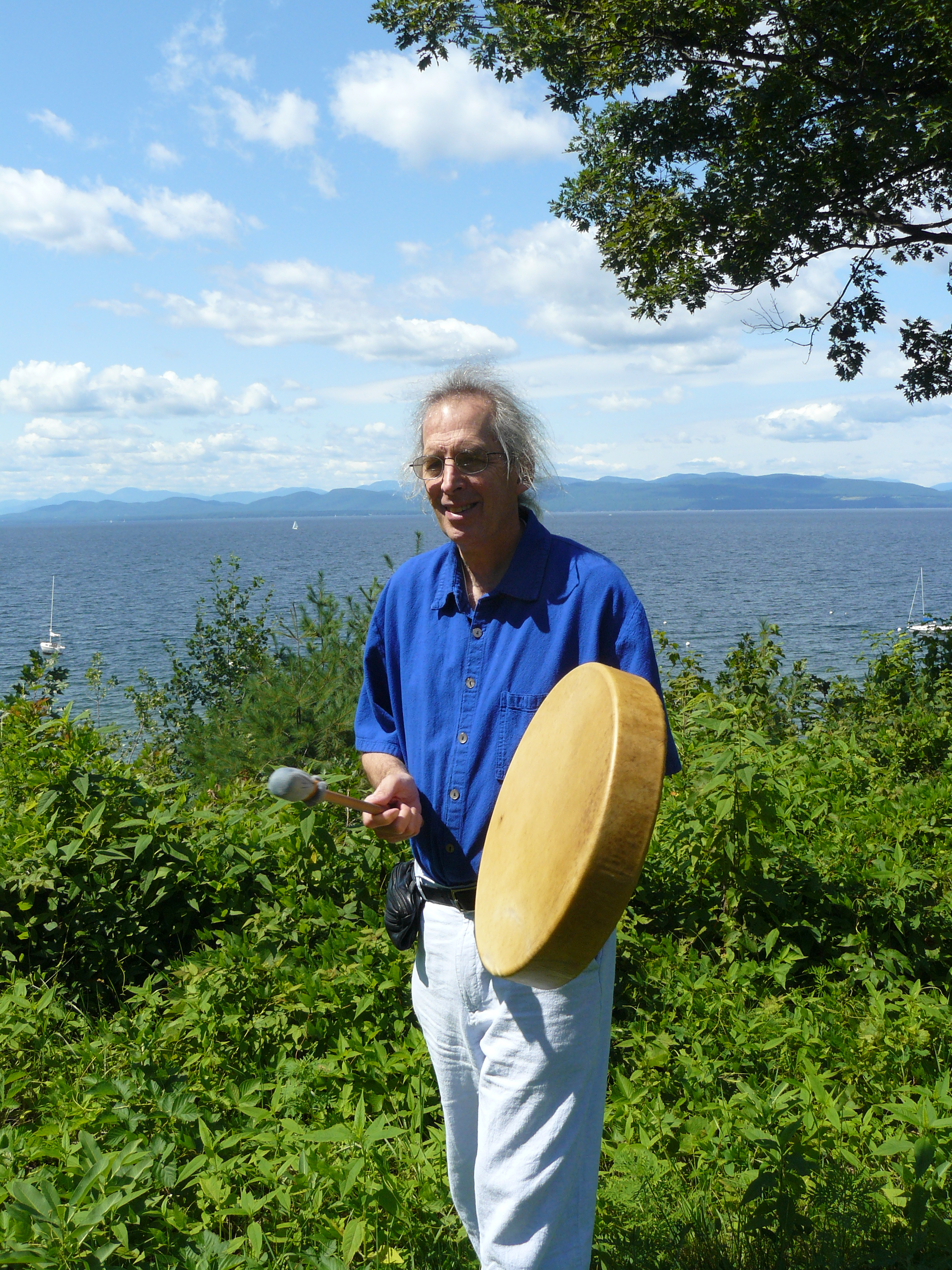
MICHAEL WATSON, M.A., Ph.D., LCMHC (Dreaming the World) ~ is a contributing editor to Into the Bardo, an essayist and a practitioner of the Shamanic arts, psychotherapist, educator and artist of Native American and European descent. He lives and works in Burlington, Vermont, where he teaches in undergraduate and graduate programs at Burlington College,. He was once Dean of Students there. Recently Michael has been teaching in India and Hong Kong. His experiences are documented on his blog. In childhood he had polio, an event that taught him much about challenge, struggle, isolation, and healing.
We are facing more threats to human freedoms than most of us can imagine, in an age of social mobility and easy worldwide communication. These threats come from, on the one hand, extremism, in all its forms, which is mostly visible because of a wide news coverage. On the other hand, a more subtle threat has, for a few decades now, been passing underneath our radar, because it is, more worryingly still, not being given any time by the main stream media – a fact, which I find utterly demoralising and disturbing, when we consider the implications and potential impact of these multinational corporation driven ‘free trade’ agreements, which represent nothing if not a new era of tyranny – corporate tyranny – which, if signed by the European Union, is likely to enable the enhancement of already excessive corporate power, which will not only degrade our hard won democracy, but will also enable large corporations to sue national governments if they pass legislation that adversely affects their commercial interests, at the expence of the taxpayer! (see the 38 Degrees missive and this revealing video).
I would like to take a breather from all of this to give this another perspective and offer you a voice from history, that is John Stuart Mill’s view on the liberty and freedom of the individual.
“The sole end for which mankind are warranted, individually or collectively, in interfering with the liberty of action of any of their number, is self-protection. That the only purpose for which power can be rightfully exercised over any member of a civilised community, against his will, is to prevent harm to others. His own good, either physical or moral, is not sufficient warrant. He cannot rightfully be compelled to do or forbear because it will be better for him to do so, because it will make him happier, because, in the opinion of others, to do so would be wise, or even right…The only part of the conduct of anyone, for which he is amenable to society, is that which concerns others. In the part which merely concerns him, his independence is, of right, absolute. Over himself, over his own body and mind, the individual is sovereign.”
Whilst his nineteenth century language is a little convoluted and archaic, the message is clear enough and sums up the crucial need for our individual freedoms. As ever was the case at any time in history, it is still true today that there are some very clever and powerful people in this world, who are hell bent on control of the most crucial resources on Mother Earth and therefore on a great majority of the world’s population. That we should respond with all the force of the massive voice and resources we currently have at our finger tips in the internet and the world wide web, is without question; that we appear not to be doing so at the moment, is not without question. In fact, it is this apparent lack of awareness, this lack of response from around the world that is the most worrying of all!
Please tell me I’m wrong about this.
~~~~~~~~~~~~~~~~~~~~~~~~~~~~~~~~
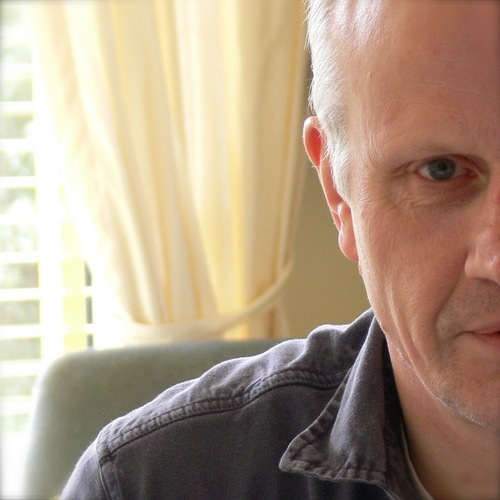
JOHN ANSTIE (My Poetry Library and 42) ~ is a British writer and poet, a contributing editor here at Bardo, and multi-talented gentleman self-described as a “Family man, Grandfather, Occasional Musician, Singer, Amateur photographer and Film-maker, Apple-MAC user, Implementation Manager, and Engineer”. He has participated in d’Verse Poet’s Pub and is a player in New World Creative Union as well as a being a ‘spoken-voice’ participant in Roger Allen Baut’s excellent ‘Blue Sky Highway‘ radio broadcasts. He’s been blogging since the beginning of 2011. He is also a member of The Poetry Society (UK).
*****
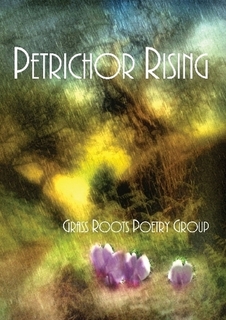
John has also been involved in the recent publication of two anthologies that are the result of online collaborations among two international groups of amateur and professional poets. One of these is The Grass Roots Poetry Group, for which he produced and edited their anthology, “Petrichor* Rising“. The other group is d’Verse Poet Pub, in which John’s poetry also appears The d’Verse Anthology: Voices of Contemporary World Poetry, produced and edited by Frank Watson.
* Petrichor – from the Greek pɛtrɨkər, the scent of rain on the dry earth.
Editor’s Note: Please join us for this event sponsored by The Bardo Group and hosted by Priscilla Galasso (scillagrace).
.
PRISCILLA GALASSO ~ started her blog at scillagrace.com to mark the beginning of her fiftieth year. Born to summer and given a name that means ‘ancient’, her travel through seasons of time and landscape has inspired her to create visual and verbal souvenirs of her journey. Currently living in Wisconsin, she considers herself a lifelong learner and educator. She gives private voice lessons, is employed by two different museums and runs a business (Scholar & Poet Books, via eBay and ABE Books) with her partner, Steve.
During the week of August 31 – September 6, The Bardo Group will post essays, photos and poems on Wilderness to coincide with the 50th anniversary of the Wilderness Act being signed into law in the U. S. You are encouraged to add your voice to ours on this site via Mister Linky or by sharing a link to your work in the comments section of any post that week. Although this is an U.S. event, we recognize that there are places all over the world that are still wild and that are protected by naturalists, scientists, governments and concerned citizens. Hence, we invite participation from everywhere. We think it would be a good thing for us to share information and insights about the world’s many wild places though poems, essays, photographs, music and videos. Please mark your calendars and plan to join us.
“…in Wildness is the preservation of the World. Every tree sends its fibers forth in search of the Wild. The cities import it at any price. Men plow and sail for it. From the forest and wilderness come the tonics and barks which brace mankind…I believe in the forest, and in the meadow, and in the night in which the corn grows. We require an infusion of hemlock, spruce or arbor vitae in our tea…” Henry David Thoreau, “Walking” 1862
“Ben Jonson exclaims: ‘How near to good is what is fair!’ So I would say, How near to good is what is wild! Life consists with wildness. The most alive is the wildest. Not yet subdued to man, its presence refreshes him. One who pressed forward incessantly and never rested from his labors, who grew fast and made infinite demands on life, would always find himself in a new country or wilderness, and surrounded by the raw material of life. He would be climbing over the prostrate stems of primitive forest-trees. Hope and the future for me are not in lawns and cultivated fields, not in towns and cities, but in the impervious and quaking swamps.” Henry David Thoreau, “Walking” 1862Find some solitude and some wild land and let your spirits explore!
Thank you to all who share their extraordinary and diverse works here, to those who read and comment, and to those who spread the word and reblog posts. Thanks to the Core Team for their consistency, commitment, and professionalism. You rock!
A few weeks ago, I started exploring finding sacred space in our bodies. I took a brief look at the need for sacred space because of the large influence of Western Christianity on our society and the world.
The upshot is that Western Christianity, whether we are Christian or not, has exerted a large influence on the social constructs of the world. This influence has taught that our bodies are to be reviled! Part of the process of reclaiming our bodies as sacred space has been to examine the historical underpinnings and how it is lived out in modern advertising and culture today. From the dualism of Plato to the rejection of sexuality by Augustine and the shaming of our bodies, we have and are experiencing a crisis of embodiment.
When we do not experience our own embodiment, we can divorce ourselves from hurting others. This is most tragically being lived out on the world stage in the crisis between Israel and Palestine. One most tragic headline is the kidnapping of three Israeli teens. These teens, kidnapped and killed, were mere tools on the world-stage. Because their lives, their bodies, did not matter. The work of Liberation Theologians and Philosophers is needed now more than ever to release us from thinking our own bodies and the bodies of others are less than worthwhile. It is tragic.
What is the solution? Unfortunately, the only way to experience our own bodies as sacred is to do interior work that can be difficult. Sociologist Brené Brown describes this problem as one of shame. We live in shame of ourselves and it then extends to others and leads to lives of scarcity rather than abundance. The interior work that we have to do to overcome shame is in three parts: (1) mindfulness, (2) joy, and (3) gratitude. It’s that easy. (Just joking!)
I would call it “being present.” You must remain present to the now in order to experience mindfulness, joy, and full gratitude. When we pop out of being present and drop into either looking too far into the past or too far into the future, we will lose it. Can you remember that moment of pure joy, maybe looking at something beautiful – a sunset, a child, a loved one, a flower – and then you start thinking of the “what ifs?” By losing being present, joy is lost, gratitude is lost, mindfulness is lost. We become lost and then the other becomes lost. By remaining present, our interior lives are expanded outwards to overflowing! Our bodies become sacred and other bodies become sacred. All of life, in every part of the cosmos, becomes sacred.
That is the Kingdom of Love made manifest! And remember, you are beautiful!
I am not quite done with the reading I wanted to do to create the final posting in the series of Sacred Space in the body, so I am going to share this recent post I wrote over at BeguineAgain.com.
…I was, I AM, I will always be…
Really, that’s the definition of the Holy Name that G*d passes on to Moses. This infinitive form of the verb “to be,” makes me think of even more! Reaching my fingers back through time and forward to the future.
Couple that with the declaration in the book of Genesis,
Let us make humans in our own image! Male AND female G*d created them
Lawrence T. Richardson expanded a bit on this. Instead of our traditional understanding that would be more of male OR female, G*d created them, it is male AND female. He is a transgender, queer-identified pastor, someone who has been created both male and female and claims both. Pastor Richardson talks of transgender people being the epitome of G*d since they are both male AND female rather than either/or. Now, I don’t really agree that there is a hierarchy of being most made in the image of G*d, but I do agree that the great I AM is embodied in all people.
One of the things I love about physics is the discussion of matter in regular plain-old Newtonian physics. Matter is neither created nor destroyed. Therefore, the dust that we experience has always been, is, and will always be. The things we breathe and touch that make us sneeze fits, have always been, are, and will always be. We are all connected through earthly and cosmic stardust (to dip into Carl Sagan’s language a bit). We, through our connection to the divine and through our connection to physical matter have always been, are, and will always be.
How can I not feel holiness, sacredness, the divine if we are not all connected?
stardust shimmers
ten thousand light years ago
birthing new life
It is at moments when I reflect on all that was, is, and shall be, that I feel fully connected and grounded in the Sacred Space in All That Is.
from the Hubble Telescope Infrared Horsehead Nebulae
Photograph from the Hubble Telescope, Creative Commons License
…
REV. TERRI STEWART is Into the Bardo’s Sunday chaplain, senior content editor, and site co-administrator. She comes from an eclectic background and considers herself to be grounded in contemplation and justice. She is the Director and Founder of the Youth Chaplaincy Coalition that serves youth affected by the justice system. As a graduate of Seattle University’s School of Theology and Ministry, she earned her Master’s of Divinity and a Post-Master’s Certificate in Spiritual Direction. She is a contributing author to the Abingdon Worship Annual. (The 2014 issue just released!)
Her online presence is “Cloaked Monk.” This speaks to her grounding in contemplative arts and the need to live it out in the world. The cloak is the disguise of normalcy as she advocates for justice and peace. You can find her at www.cloakedmonk.com, www.twitter.com/cloakedmonk, and www.facebook.com/cloakedmonk. To reach her for conversation, send a note to terri@cloakedmonk.com
Four weeks ago (plus one week off), I started exploring finding sacred space in our bodies. I took a brief look at the need for sacred space because of the large influence of Western Christianity on our society and the world. Additionally, the groundwork was laid for a holistic view of our bodies as sexual beings and the unity of being.
Today, the images, poems, and points address the issue of men and body liberation. The team who created this, myself, Denise Ritthaler, and Bjorn Peterson, used scripture, quotes, images, factoids, and music to make the point for healing our body image and considering our bodies sacred space. I am additionally adding an update of men and shame from Brené Brown.
Each subset of males see’s their body as either limiting or freeing. Either an asset or a liability.
Disappointment or embarrassment with body image is not talked about.
Men objectify others (esp. women) in the very ways they hope that they themselves are not objectified.
Men disguise their bodies (weights, tattoos, fashion)
Two examples come to us from Saul Williams and Brett Dennen. Mr. Williams talks about the inescapability of the realities that are attached to black, male bodies (explicit) while Mr. Dennen addresses the shame and guilt attached to the privilege of being Western-European-American and male.
WARNING: EXPLICIT: Saul WIlliams
Brett Dennen
In both cases, the artist laments the body as that which separates him from larger community and peace. The body is either used to marginalize or is a symbol of appropriation and bodily harm. The body is mournful, life-stealing, and restrictive.
Sociologist and author Brené Brown, PhD, offers this list of shame that men experience: (page 91-92, “Daring Greatly,” an abbreviated version of the list is below)
Shame is failure.
Shame is being wrong. Not doing it wrong, but being wrong.
Shame is a sense of being defective.
Shame happens when people think you’re soft.
Revealing any weakness is shaming.
Showing fear is shameful.
Shame is being seen as “the guy you can shove up against the lockers.”
[Men’s]worst fear is being criticized or ridiculed–either one of these is extremely shaming.
But the body is sacred! Kelly Brown Douglass: Divine incarnation affirms the holiness of all bodies. Sally McFague: Spirit and Matter are intrinsically related. Mayra Rivera: God’s transcendence in our embodiment “summons” us to a new ethic. Galatians 5:2 “Do not submit again to a yoke of slavery.”
Again, what’s theology got to do with it?
Body/Spirit dualism allows objectification (Kelly Brown Douglas)
Objectification leads to disembodiment in the sense of our body as unholy other
When we are disembodied, we can no longer connect to creation (Sally McFague)
When we are disembodied, we can no longer connect to the other (Mayra Rivera)
When we are disembodied, we can no longer connect to the other within our self (extrapolated from Mayra Rivera)
We can neither connect to immanence nor transcendence
Without immanence (experiencing our bodies) or
transcendence (experiencing the other),
we lose our sense of sacred.
And we become a befuddled mess. I hope that by experiencing the beauty and wisdom of our bodies presented here and in the other presentations, you will rebel against popular imagery and embrace the holistic sense of the life cycle.
Can I get an Amen?
Next week, I will look at this for one more week focusing on the good news that comes to us from the sources of spirituality and sociology. More Brené Brown! This next piece hasn’t been written, but I have ideas! Can you help me out by offering my the body-positive messages and quotes you receive from your spiritual paths and traditions?
P.S. From Brené Brown on women and shame (I wish I had read this book before I started this series rather than in the middle of it!) (From pages 85-86,”Daring Greatly,” abbreviated version)
Look perfect. Do perfect. Be perfect. Anything less is shaming.
Being judged by our mothers.
Being exposed–the flawed parts that you want to hide from everyone are revealed.
No matter what you achieve, what you’ve come from and survived will always keep you from feeling like you’re good enough.
Even though everyone knows there is no way to do it all, everyone still expects it. Shame is when you can’t pull off looking like it’s under control.
Never enough at home. Never enough at work. Never enough in bed. Never enough with my parents. Shame is never enough.
No seat at the cool table. The pretty girls are laughing.
Three weeks ago, I started exploring finding sacred space in our bodies. I took a brief look at the need for sacred space because of the large influence of Western Christianity on our society and the world. Additionally, the groundwork was laid for a holistic view of our bodies as sexual beings and the unity of being.
Today, the below video points to the issue of the elderly and body liberation. The team who created this, myself, Denise Ritthaler, and Bjorn Peterson, used scripture, quotes, images, factoids, and music to make the point for healing our body image and considering our bodies sacred space.
Again, what’s theology got to do with it?
Body/Spirit dualism allows objectification (Kelly Brown Douglas)
Objectification leads to disembodiment in the sense of our body as unholy other
When we are disembodied, we can no longer connect to creation (Sally McFague)
When we are disembodied, we can no longer connect to the other (Mayra Rivera)
When we are disembodied, we can no longer connect to the other within our self (extrapolated from Mayra Rivera)
We can neither connect to immanence nor transcendence
Without immanence (experiencing our bodies) or
transcendence (experiencing the other),
we lose our sense of sacred.
And we become a befuddled mess. I hope that by experiencing the beauty and wisdom of aging presented here, you will rebel against popular imagery and embrace the holistic sense of the life cycle.
I am interrupting my series on Sacred Space in the Body. I wish I could say that it was for a lofty reason, but the truth of the matter is that I wrote a sermon that took all the words out of my body and left me with nothing! And this is a beautiful post about resting and sabbath that I co-created with my FB friend and photographer, Tom Ganner. Originally published at BeguineAgain.com. I’ll be back on track with Sacred Space in the Elder Body next week.
Today’s theme of sacred space in rest is offered by photographer Tom Ganner. Tom is a photographer from Haines, Alaska. I met him last year when I went on a cruise. He toured us around Haines to all the “photography” spots. He was so gracious! I encourage you to look at his photography (http://www.timenspace.net/) and if you are in the area, take his tour!
“Rest is not idleness, and to lie sometimes on the grass under trees on a summer’s day, listening to the murmur of the water, or watching the clouds float across the sky, is by no means a waste of time.”
― John Lubbock, The Use Of Life
The high point of my summer has been two weeks with my grandson. I regret I have to take him down to Juneau today to return him home to Colorado. He says he wants to come back next year. Photo created up Haines Pass near Three Guardsmen. — with Oliver in Haines, AK.
“When we live without listening to the timing of things, when we live and work in twenty-four-hour shifts without rest – we are on war time, mobilized for battle. Yes, we are strong and capable people, we can work without stopping, faster and faster, electric lights making artificial day so the whole machine can labor without ceasing. But remember: No living thing lives like this. There are greater rhythms, seasons and hormonal cycles and sunsets and moonrises and great movements of seas and stars. We are part of the creation story, subject to all its laws and rhythms.”
― Wayne Muller, Sabbath: Finding Rest, Renewal, and Delight in Our Busy Lives
Another ho-hum day in paradise with grandson Oliver at David’s Cove. — in Haines, AK.
“The meaning of the Sabbath is to celebrate time rather than space. Six days a week we live under the tyranny of things of space; on the Sabbath we try to become attuned to holiness in time. It is a day on which we are called upon to share in what is eternal in time, to turn from the results of creation to the mystery of creation; from the world of creation to the creation of the world.”
― Abraham Joshua Heschel, The Sabbath
Last week, I started exploring finding sacred space in our bodies. I took a brief look at the need for sacred space because of the large influence of Western Christianity on our society and the world. Additionally, the groundwork was laid for a holistic view of our bodies as sexual beings and the unity of being.
Today, I will be speaking to the point of women and body image. I will be using images, factoids, and spoken word to make the point for healing our body image and considering our bodies sacred space
The problem: Pretty
According to society and the media, pretty is not:
Dark skin
Dark hair
Freckles
Fat
Crooked noses
Old
Or short
Pretty is:
Pale
I’d like to point out that even women I consider quite beautiful such as Beyonce, often have their skin “lightened” in Photoshop for magazine covers. I am sure this is the editor’s choice.
Tall
Skinny
Young
Sexualized
Vanity Fair magazine did a survey of who the most beautiful woman is in 2009 and Angelina Jolie won by a wide margin. I believe that she fits all of these categories, especially the sexualized presentation of women.
Often, in the media, sexualized women are used for no apparent reason. In this advertisement that popped up one day while I was working on research for this presentation, there is this woman presenting her legs and high heels…for an advertisement about school grants.
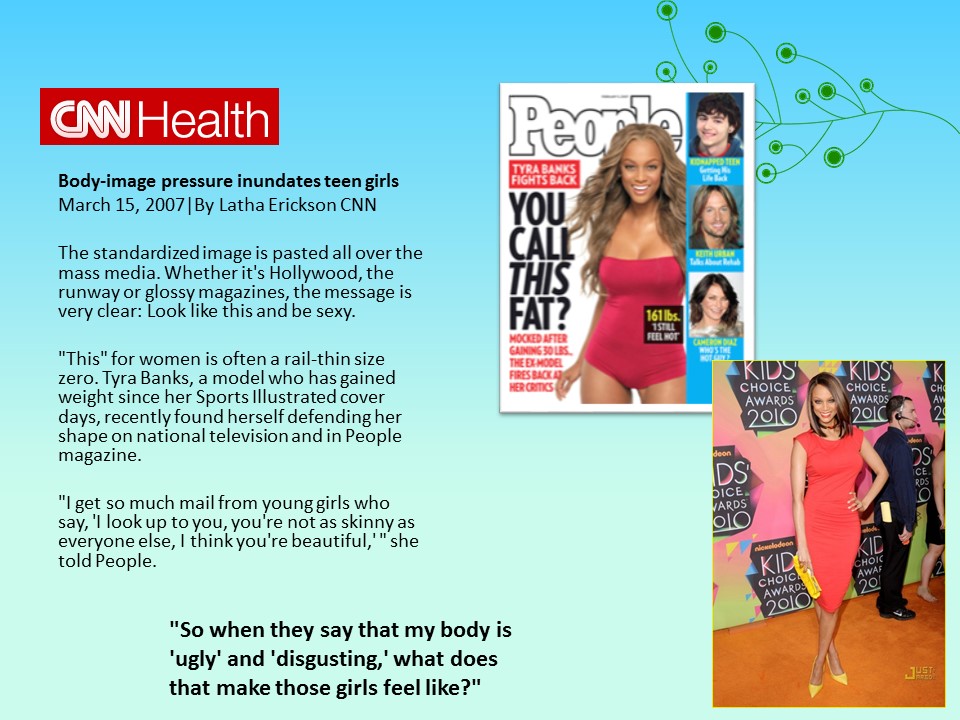
Popular media has a freedom to make fun of what pretty isn’t…whether it is fat, short, old, or freckled. Here Tyra Banks is being called fat. She is a role model for young women across America whether we like it or not. If people are associating fat with her and calling her ugly and disgusting, what does that do to our young women that admire her?
And now a personal story…
This is my my child Colin and his cousin Casey, my niece. These two kids both consider themselves fat at this time. Colin was afraid to wear “skinny jeans” because he thinks they make him look fat so he hides his body behind baggy basketball shorts and sweatshirts. Casey is in the same boat. They already don’t like their bodies.
Even models are not thin enough. Ralph Lauren ran this ad with this image in Japan. They then fired Filippa Hamilton for “breach of contract” which she says is because she was too big.
Here, Dove bravely shows us the evolution of beauty:
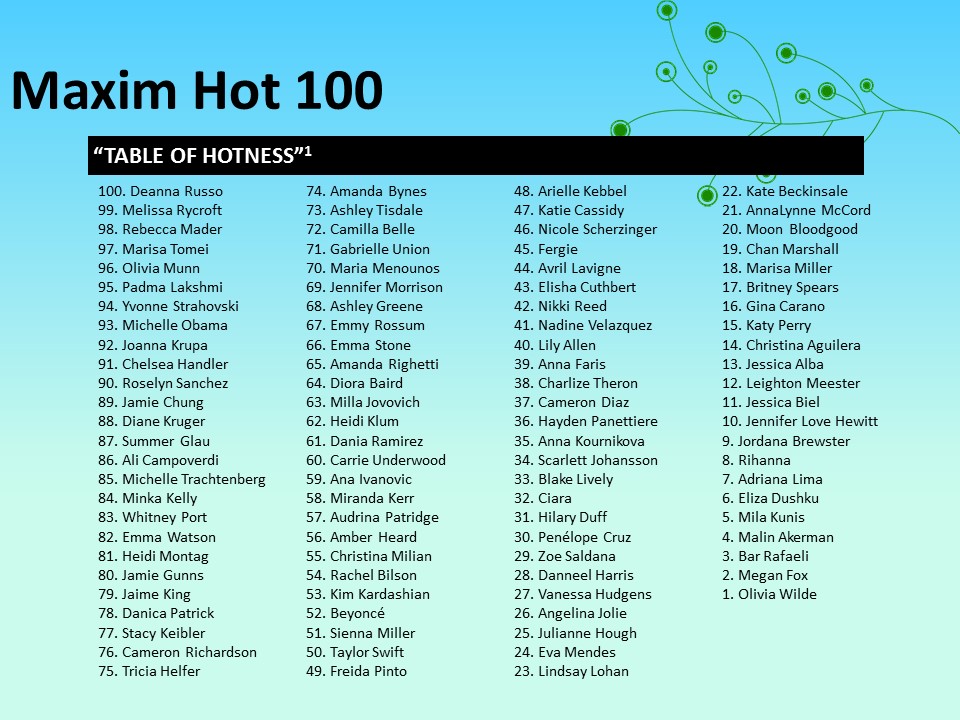
Here is the list of the Maxim Hot 100. Women and girls measure themselves against this list and this standard of beauty thinking it will bring
Happiness
Fulfillment
Joy
Wealth
Desire
And Self Worth
This is death dealing to our young women.
Teenagers who THINK they are overweight are at a higher risk of suicide.
Over 35 million people in the U.S. have an eating disorder of some kind…anorexia, bulimia, or binge eating. A huge percentage of these people are women. Up 95% of the people with anorexia or bulimia are women and 65% of people with a binge eating disorder are women. Or girls.
Eating disorders cause early onset of disease and illness.
This is being driven down to an earlier age…over 80% of 10 year olds fear being fat.
Again, this is death dealing. Young women are dying from eating disorders.
Just to contrast, Measuring against this standard of beauty actually brings
Depression
Sexual Disorder
Self Hatred
Self Mutilation
Eating Disorders
And Suicide
Popular music is no better. Here is an offensive song by the Macc Lads called “Ugly Women.” The lyrics include:
Thank God for ugly women, all the boilers bags and trolls, Just so they could get a shag they invented alcohol.
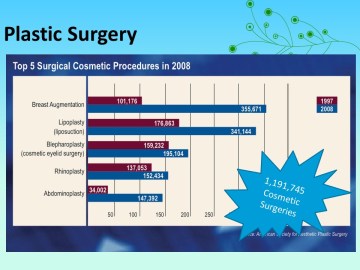
Speaking of self-mutilation and to that which Kathy Makkai spoke of so poignantly in her poem, nearly 1.2 cosmetic surgeries done for non-medical reasons were done in 2008.
Ridiculously, this is now being marketed in children’s books. There is a book called, “My Beautiful Mommy” available on amazon.
But there is good news! Our young women are changing and the world is moving into a place where we can consider our bodies and body image, sacred space.
Again, what’s theology got to do with it?
Body/Spirit dualism allows objectification (Kelly Brown Douglas)
Objectification leads to disembodiment in the sense of our body as unholy other
When we are disembodied, we can no longer connect to creation (Sally McFague)
When we are disembodied, we can no longer connect to the other (Mayra Rivera)
When we are disembodied, we can no longer connect to the other within our self (extrapolated from Mayra Rivera)
We can neither connect to immanence nor transcendence
Without immanence (experiencing our bodies) or
transcendence (experiencing the other),
we lose our sense of sacred.
And we become a befuddled mess. My hope and prayer is that you will hear the prophetic words of Kathy Makkai and the Girl’s Making Media and declare your body and your body image sacred space.
After a cool, damp week the sun is out! June is in full bloom, our perennial gardens bursting with color. In the the kitchen garden rows of tender plants have appeared in the raised beds, and we are eating mesclun. Lovely!
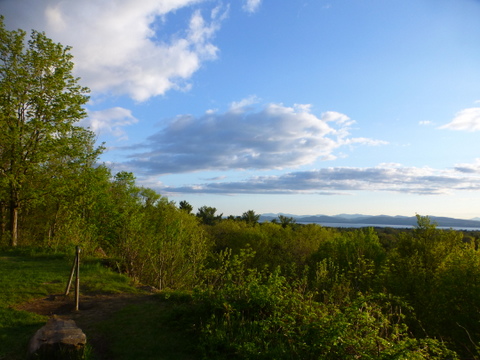
Here in Vermont the trees are a dense, lush green. Plants need to take full advantage of our four to five months of warm weather, and go about the tasks of reproducing and storing energy with vigor. In just a few weeks, by late July, the foliage will begin to thin, already preparing for the autumn to come.
We have stopped filling the feeders as the birds have other food sources available to them. Now that the feeders are empty we will likely take them down and store them until October. Come the first chilly days of autumn the birds will remind us to bring out the food; we have a good working relationship!
I recently read a post on Australis Incognita, an interview with an Australian Aboriginal elder, Uncle Paul Chapman. The essence of the conversation is that we learn who we are in the world by paying attention to the landscape and Nature. There is an ancient Indigenous knowing that we can’t figure it out by turning totally inward, as that is out of balance. We learn from bridging the worlds of inner an outer, self and landscape.
Reading Uncle Paul’s words reminded me we are of the landscapes we inhabit; we even have our own internal seasons. I often suggest to students that after we watch for a while we may begin to notice that sometimes the inside and outside worlds are in sync, other times not. Lately I have found myself diving deeply into the interior, even as I engage the Natural world as it bursts into furious activity.
Lately, I seem able to stand with a foot in each world, shifting between them as need be, and am rewarded by moments of grace. Grace reminds me to be grateful for my life, family and friends, and the Beauty surrounding me, even as I feel disappointed and angry with much that is unfurling in the world. Grace encourages me to be concerned for my grandchildren, and curious as to how we humans will manage the road ahead.
In dark, difficult, times it is easy to forget that summer invariably follows winter, and life sprouts anew when given any opportunity. This will be so as long as there is life on our precious blue-green planet. May we take refuge and comfort in that.
The sun has broken through and the sky is a brilliant blue. Over the lake a layer of clouds, white and bubbly, hangs. Trees and gardens are abloom, and the scent of lily-of-the-valley and lilac saturates the air. The day is beautiful. May we walk through this day in Beauty, together.
– Michael Watson
MICHAEL WATSON, M.A., Ph.D., LCMHC (Dreaming the World) ~ is a contributing editor to Into the Bardo, an essayist and a practitioner of the Shamanic arts, psychotherapist, educator and artist of Native American and European descent. He lives and works in Burlington, Vermont, where he teaches in undergraduate and graduate programs at Burlington College,. He was once Dean of Students there. Recently Michael has been teaching in India and Hong Kong. His experiences are documented on his blog. In childhood he had polio, an event that taught him much about challenge, struggle, isolation, and healing.
If you haven’t read or heard the tale, “The Man Who Planted Trees” by French author Jean Giono, it is a wonderful story about how one person can have a tremendous impact on the world! It’s also a story of how everything in nature, including man, is connected.
“The Man Who Planted Trees” by Jean Giono. Image borrowed from Wikipedia Commons, fair use agreement.
It tells about how a single, reclusive shepherd manages to successfully re-forest a barren and desolate area in the foothills of the Alps. Elzéard Bouffier, the shepherd, dedicates the latter half of his life to re-planting acorns, beech nuts and other tree seeds, one by one, patiently walking the land where nothing would grow and no water flowed, and the people who lived there were a hard, bitter folk.
When I first heard the tale, I thought that it was based on a true story. I later discovered that it is not. However, there have been real life counterparts! There is a man in Assam, India, named Jadav Payeng, who single-handedly managed to plant a forest covering 1,360 acres. Abdul Karim is yet another man in India who used the same method of planting trees as the shepherd in the story, and over a period of 19 years, created an entire forest from nothing. Another man, Ma Yongshun, was a forestry worker in China who planted more than 50,000 trees in his lifetime!
Tree gif from dragonkatet/photobucket.com
If you haven’t read or heard the story, may I suggest that you pick up a copy from your local library, or even better, watch the short, animated film below. It is an uplifting story full of hope and reassurance that no matter who or where you are, you CAN make a difference as only a single entity! Best of all, your actions may inspire others and create a ripple effect of good. 🙂
About dragonkatet Regarding the blog name, Dragon’s Dreams~ The name comes from my love-affairs with both Dragons and Dreams (capital Ds). It’s another extension of who I am, a facet for expression; a place and way to reach other like-minded, creative individuals. I post a lot of poetry and images that fascinate or move me, because that’s my favorite way to view the world. I post about things important to me and the world in which we live, try to champion extra important political, societal and environmental issues, etc. Sometimes I wax philosophical, because it’s also a place where I always seem to learn about myself, too, by interacting with some of the brightest minds, souls and hearts out there. It’s all about ‘connection(s)’ and I don’t mean “net-working” with people for personal gain, but rather, the expansion of the 4 L’s: Light, Love, Laughter, Learning.
I am going to resurrect and modify a presentation I did a few years ago with Terra Morgan, Bjorn Peterson, and Denise Ritthaler. In this presentation, we develop the case for a theology of Liberation of the Body. Although we use references, occasionally, from Christianity, the topics transcend that particularity. And unfortunately, this dialogue has framed much of western culture’s understanding of our bodies.
This will be a four part series looking at:
The case for a Liberation of the Body & Liberation of our sexual being
Liberation of women and particularly body image
Liberation of elder bodies
Liberation of men
(Note: This already is too gendered and separated! But it is the beginning of our thoughts on the topic).
And we just barely touch the iceberg!
Why do I consider this sacred space? I consider that we are in relationship with three things:
us and bodies
us and the world
us and the divine
If we are not at peace with our bodies, our own selves, our angst and anger will spill into our treatment of the world and into our understanding of the divine. If we believe the Divine is within, and within us we hurt ourselves, then the Divine is also hurt. If we believe the Divine is outside of us, and has caused this, the Divine becomes capable of vengeance and capricious pain. Either way, it seems a difficult place to hold. Throw in the world and how we use it, and we are done for. So in an effort to move into peacefulness within ourselves and then in relationship with the world, let us consider our bodies as sacred space worth liberating.
Additionally, since nobody has really written “Let’s liberate our bodies!” what you will experience may be music, images, factual stuff, poetry…it’s all fair game!
Do you want the geeky stuff? Here it is!
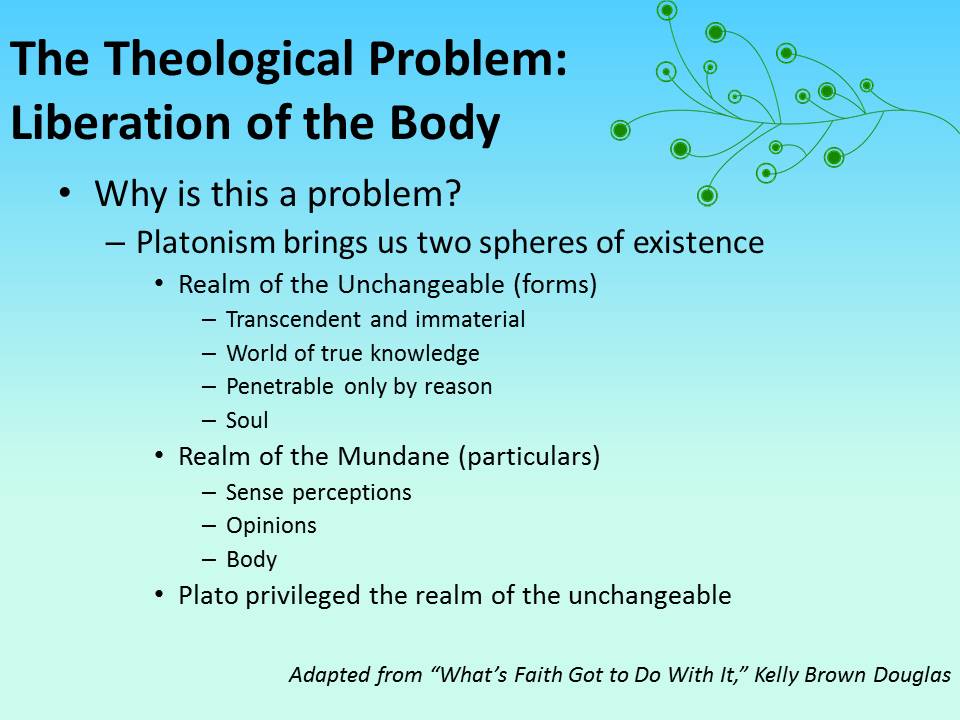
The Theological Problem: Liberation of the Body
We are talking about liberating the body in a variety of forms. It is a theological problem that has developed from Platonism which brings us the realm of forms and particulars. In forms we have transcendence, the soul, and reason. This is the optimal way of being in the world. In the particulars, we have our senses, opinions, and our body. This is not the preferred way of being in the world. Separating ourselves into dualistic (tri-istic?) bits ignores that we are one integrated body and only one way to experience our senses.
Platonism impacts Christianity through an interpretation of Jesus’ ascetic personal practices. Then Paul, who was Greek and had a greater influence from Platonic sources, brought a more extreme sexual ethic into his writings.
Then, through the source of tradition, we then have Augustine who tells us that the body is sinful and that the soul and reason are to be preferred. This places God as “out there.” Away from the body because clearly, God is not sinful, therefore, even though the Divine is incarnational, the Divine has nothing to do with the body.
Maya Rivera, theologian, says, “This privileges “sameness over difference, of the One over the multiplicity, of the universal over the particular…in such systems there is no place for real otherness. Totalities reduce persons to categories.” (Rivera, 57)
However, Neale Donald Walsh reminds us of the inseparability.
“Your mind holds the past,
your body holds the present,
your soul holds the future.
Put another way,
the mind analyzes and remembers,
the body experiences and feels,
the soul observes and knows.”
So who are we really?
We are the body of the Divine participating in one diverse reality that would cast us all as other.
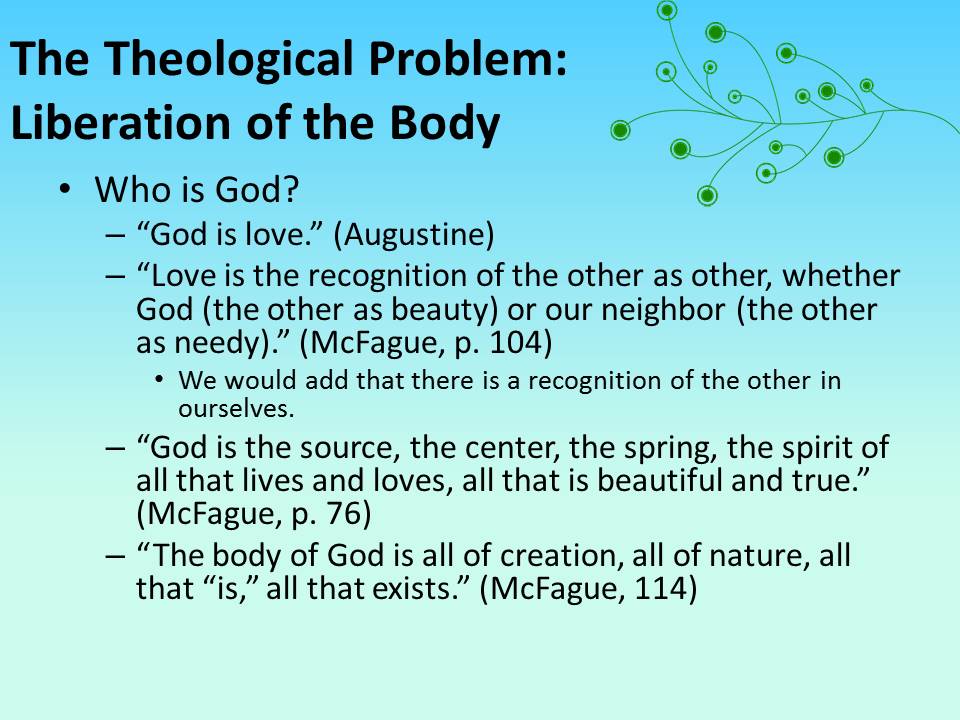
And who is the Divine?
God is love in the recognition that we and all of creation exist together and yet the Divine is so much more. The source, the center, the spring of existence. The Divine is other, existence is other, and we are other to ourselves. And yet, we are all each an incarnational part of Love’s cosmic creation.
This approach to liberation of the body is through a demonstration of what it means for humans as sexual beings, humans as women and their body image, humans as the elder body, and humans as men. (Note: I would also consider that this is entirely too gendered, but it is a starting point.)
…
Liberation of the Sexual Body
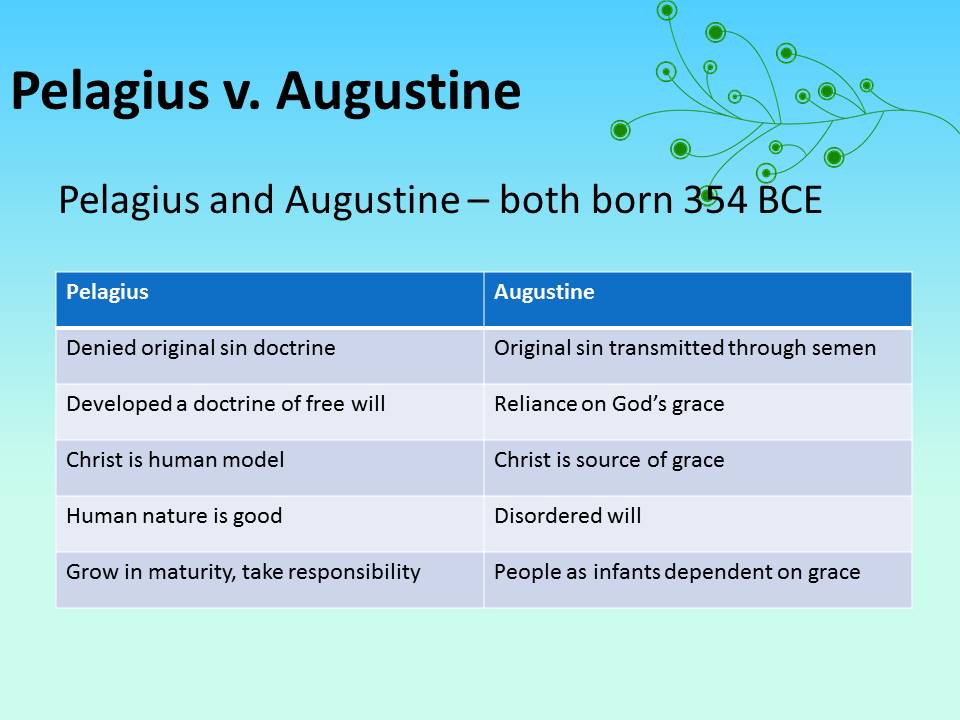
We are all sexual beings. Whether or not we have sex, we are sexual beings. In Western culture (and many others around the world), our sexuality is frowned upon. The appreciation for eros is limited. In ancient Greek, we have three words for love – agapos, philos, and eros. Each one describing a different aspect of love. Eros is believed to be that type of love that is the seat of creativity. In sexuality, we see this as the drive to have children – create! Some scholars believe that eros is the seat of all our creative desires. But our religious authorities rarely express this. This is because of a theological battle endured 1600+ years ago between Augustine and Pelagius.
If we had only chosen Pelagius! But the foundation is there to have a theology based in free-will and the idea that we are indeed born in a state of being good rather than in a state of being a worm. And it was good! Very, very good!
graphic created by Terri Stewart
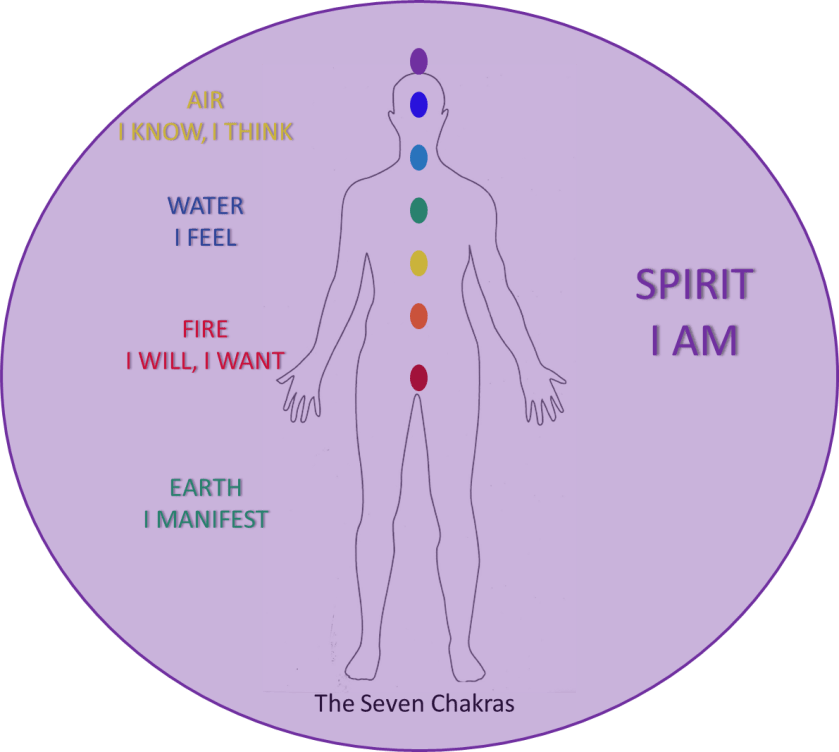
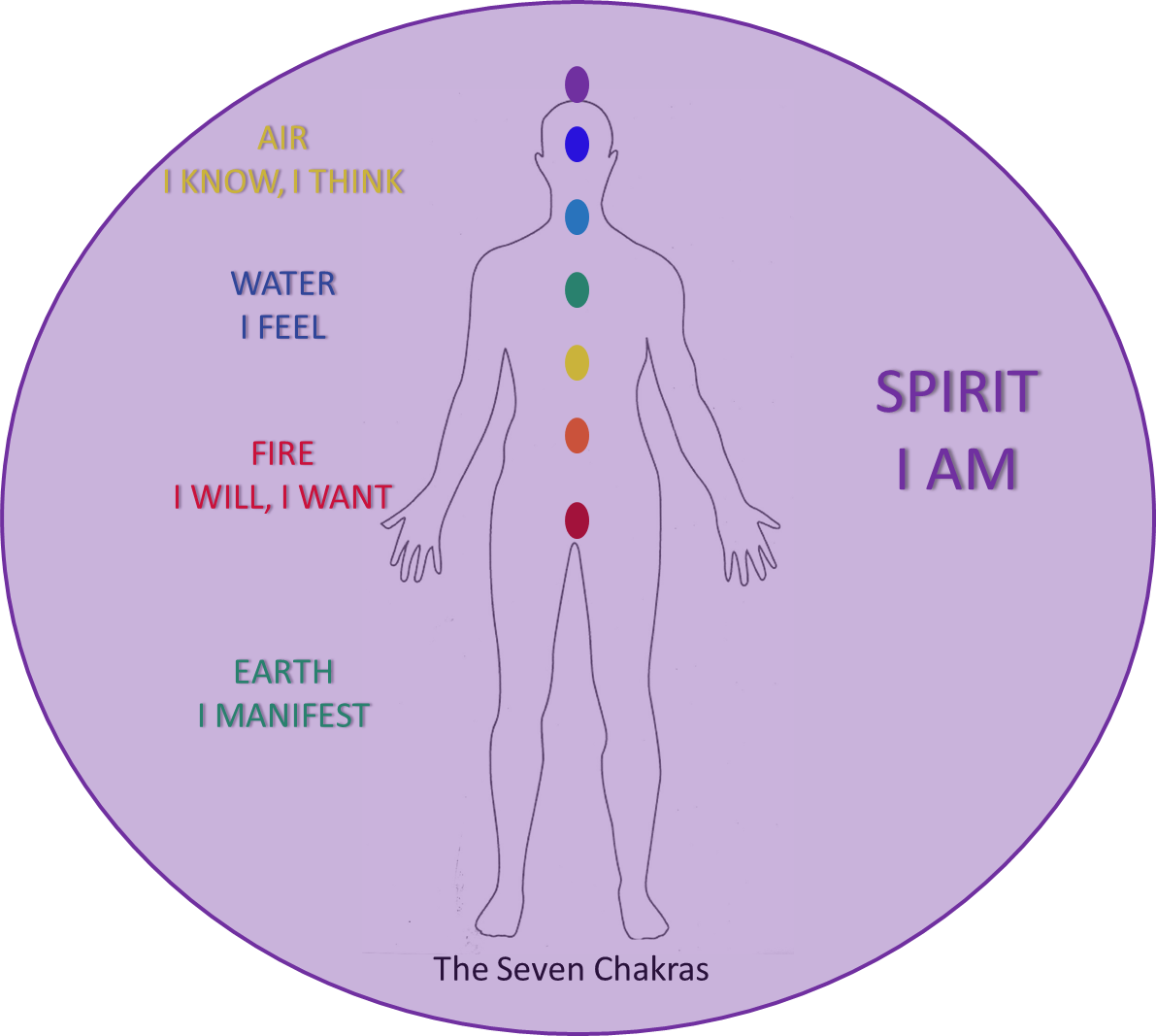
The Unity Church developed a philosophy of “The 12 Powers.” Spiritual abilities that we are perfectly able to express and that are present in every person. These powers hold that the body is good, very very good! This connects very nicely to the Chakras as described in so many ways and visualized to the right.
But through it all, from the beginning to now, the body, mind, and spirit has been connected to our bodies. Pelagius knew that and we can see it. And our creative, generative bodies can also experience being liberated through the concept of liberating our own bodies to give and receive love. We are created, we create. That is the Divine circle of our eros bodies.
One way to experience a liberated body grounded in eros-creativity is through music and movement. I encourage you to listen to the below, simple music and to move your body however you will–without shame or reservation. Reach an arm to the sky! Roll your head from side-to-side! Sway! Thou shalt do what thou shalt do! And this is the end of part 1, laying the groundwork for a Liberation of the Body and using cultural items to show that we are already liberated! Let’s claim our sexual, eros selves as liberated beings.
Ara, Flora, and Taylor. Girls Making Media: Episode 4, “Body Image.” Written and presented by Ara, Flora, and Taylor. Produced by WomanKraft. Youtube.com. http://www.youtube.com/watch?v=u4GoHhnNhm4
Takayanagi, Paul, Journal of Religious Gerontology, Volume 10, The Institute of Spirituality and Aging: Identifying and Promoting Spiritual Values of Elders, The Hawthorne Press, Inc. 1996
Cole, Thomas, R., The Journey of Life: A Cultural History of Aging in America, The Body As an Instrument of Control, “Women, Aging and Ethics”, New York: Cambridge University Press, Inc. 1992.
The Robert Wood Johnson Foundation, Last Acts – Rallying Points To Improve Care and Caring Near End of Life, National Resource Center on Diversity, “Diversity Notes”, September 2002.
Book FHR.com, “Better Access For Disabled Passengers at Prestwick Airport”, posted by Graham Greenaway October 9, 2008, http://www.fhr_net.co.uk/travel- news/1467/better_access_for- disabled_passengers_at_prestwick_airport
George William Heigho II — born July 10, 1933, died March 19, 2010.
Today I want to honor my dad and tell you about how I eventually gave him something in return for all he’d given me.
My dad was the most influential person in my life until I was married. He was the obvious authority in the family, very strict and powerful. His power was sometimes expressed in angry outbursts like a deep bellow, more often in calculated punishments encased in logical rationalizations. I knew he was to be obeyed. I also knew he could be playful. He loved to build with wooden blocks or sand. Elaborate structures would spread across the living room floor or the cottage beach front, and my dad would be lying on his side adding finishing touches long after I’d lost interest. He taught me verse after verse of silly songs with the most scholarly look on his face. He took photographs with his Leica and set up slide shows with a projector and tripod screen after dinner when I really begged him. He often grew frustrated with the mechanics of those contraptions, but I would wait hopefully that the show would go on forever. It was magic to see myself and my family from my dad’s perspective. He was such a mystery to me. I thought he was God for a long time. He certainly seemed smart enough to be. He was a very devout Episcopalian, Harvard-educated, a professor and a technical writer for IBM. He was an introvert, and loved the outdoors. When he retired, he would go off for long hikes in the California hills by himself. He also loved fine dining, opera, ballet, and museums. He took us to fabulously educational places — Jamaica, Cozumel, Hawaii, and the National Parks. He kept the dining room bookcase stacked with reference works and told us that it was unnecessary to argue in conversation over facts.
Camping in Alaska the summer after his senior year in High School: 1951.
My father was not skilled in communicating about emotions. He was a very private person. Raising four daughters through their teenaged years must have driven him somewhat mad. Tears, insecurities, enthusiasms and the fodder of our adolescent dreams seemed to mystify him. He would help me with my Trigonometry homework instead.
Playing with my dad, 1971.
I married a man of whom my father absolutely approved. He walked me down the aisle quite proudly. He feted my family and our guests at 4 baptisms when his grandchildren were born. I finally felt that I had succeeded in gaining his blessing and trust. Gradually, I began to work through the more difficult aspects of our relationship. He scared my young children with his style of discipline. I asked him to refrain and allow me to do it my way. He disowned my older sister for her choice of religion. For 20 years, that was a subject delicately opened and re-opened during my visits. I realized that there was still so much about this central figure in my life that I did not understand at all.
Grandpa George
In 2001, after the World Trade Center towers fell, I felt a great urgency to know my father better. I walked into a Christian bookstore and picked up a book called Always Daddy’s Girl: Understanding Your Father’s Impact on Who YouAre by H. Norman Wright. One of the chapters contained a Father Interview that listed dozens of questions aimed at bringing out the father’s life history and the meaning he assigned to those events. I decided to ask my father if he would answer some of these questions for me, by e-mail (since he lived more than 2,000 miles away). Being a writer, this was not a difficult proposition for him to accept. He decided how to break up the questions into his own groupings and sometimes re-phrase them completely to be more specific and understandable and dove in, essentially writing his own memoirs. I was amazed, fascinated, deeply touched and profoundly grateful at the correspondence I received. I printed each one and kept them. So did my mother. When I called on the telephone, each time he mentioned how grateful he was for my suggestion. He and my mother shared many hours reminiscing and putting together the connections of events and feelings of years and years of his life. On the phone, his repeated thanks began to be a bit eerie. Gradually, he developed more symptoms of dementia. His final years were spent in that wordless country we later identified as Alzheimer’s disease.
I could never have known at the time that the e-mails we exchanged would be the last record of my dad’s memory. To have it preserved is a gift that is priceless to the entire family. I finally learned something about the many deep wounds of his childhood, the interior life of his character development, his perception of my sister’s death at the age of 20 and his responsibility in the lives of his children. My father is no longer “perfect”, “smart”, “strict” or any other concept or adjective that I could assign him. He is simply the man, my father. I accept him completely and love and respect him more holistically than I did when I knew him as a child. That is the gift I want to give everyone.
I will close with this photo, taken in the summer of 2008 when my youngest daughter and I visited my father at the nursing home. I had been widowed 6 months, had not yet met Steve, and was anticipating my father’s imminent passing. My frozen smile and averted eyes are fascinating to me. That I feel I must face a camera and record an image is somehow rational and irrational at the same time. To honor life honestly is a difficult assignment. I press on.
PRISCILLA GALASSO ~ started her blog at scillagrace.com to mark the beginning of her fiftieth year. Born to summer and given a name that means ‘ancient’, her travel through seasons of time and landscape has inspired her to create visual and verbal souvenirs of her journey. Currently living in Wisconsin, she considers herself a lifelong learner and educator. She gives private voice lessons, is employed by two different museums and runs a business (Scholar & Poet Books, via eBay and ABE Books) with her partner, Steve.
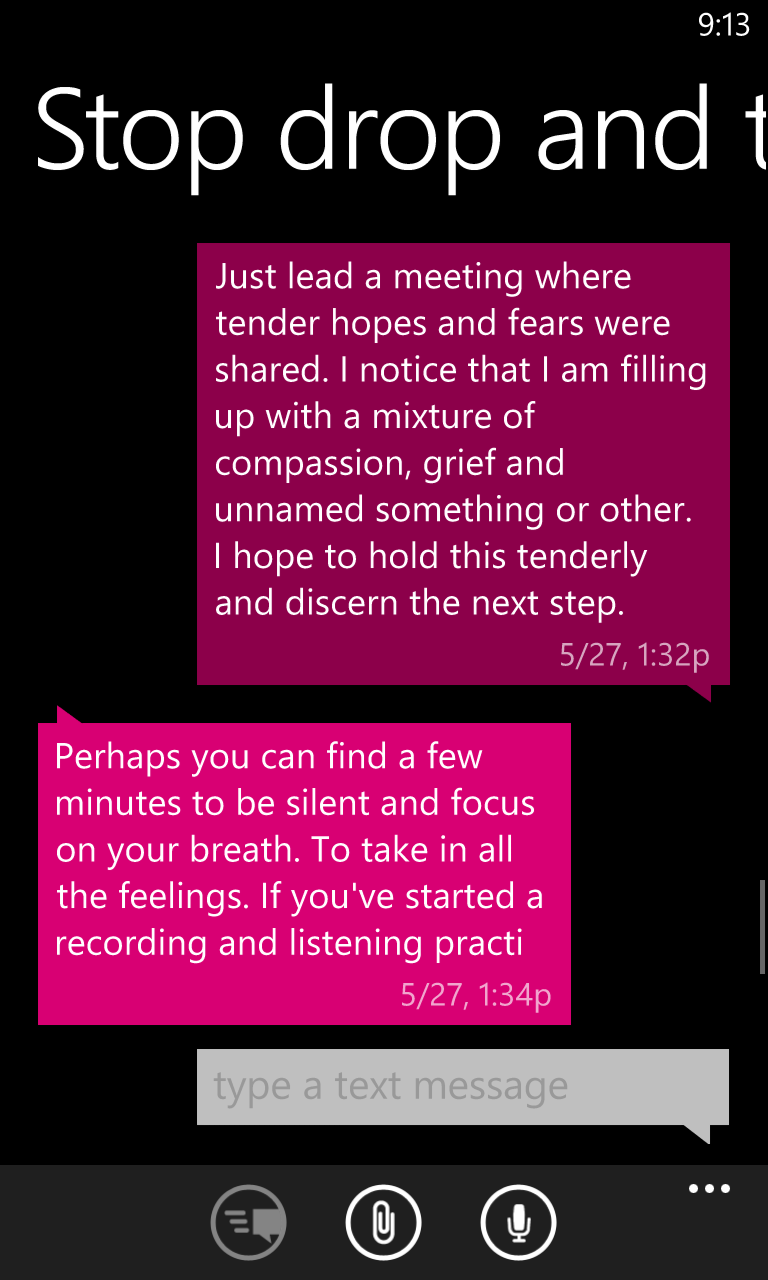
Sacred space in the text? There are one zillion texts that people can find sacred space in, so what do I mean? It’s not that text. The text I mean is your phone. Texting. Find sacred space in your phone via texting.
How?
By stopping right now! Noticing where you are and what you are doing, and texting it to an accountability partner.
Stop! State what process you are beginning.
Drop! Notice what are you feeling? Drop down into your heart. Now, what is your intention?
Text! Send it to an accountability partner.
That creates a moment of sacred space, each and every day. If you program it into your calendar to “Stop, Notice, and Text”, you will be able to become present to the situation at hand, state your feelings honestly, and move on into the next movement with grace and transparency. This is sacred.
Do you have someone you can be a Stop-Notice-Text accountability partner with? Or, can you text yourself?
Tell me what you think! I look forward to hearing from you.
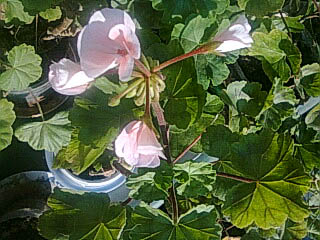
This morning I took my coffee and went to drink it in front of my house, enjoying some minutes of peace and quiet before the day starting to unfold. Some weeks ago I took outside the house some geraniums, and put them on a shelf near my entrance, and today I was watching them, thinking that I might have to move them back inside, because most of them didn’t seem to enjoy the weather too much. And just when this thought crossed my mind, I suddenly noticed four tiny buds blooming at the tip of one of the flowers, which I could have easily ignored, due to their pale pink colour. And when I came closer to take a picture of them, I also saw that, beneath the layer of leaves slowly drying, a new layer of leaves was coming to light, as if the flowers, now exposed to the outside conditions, was shedding its “skin” of fragile limbs and is now putting on another one, stronger and eager to live.
I then realized that it was Wednesday, and that I hadn’t written something in a while, because I was simply caught up with loads of personal things and it took me some time to untangle them all. At some point I even felt that I was never going to get out of the multitude of threads and tasks that surrounded me – fortunately, time proved me that anything can find itself a solution, with a little bit of patience and open-mindedness.
Today, looking at those geraniums blooming against the heavy odds, I understood (for the umpteenth time) that even when circumstances seem to be the harshest, one can still adapt and keep on living. And the flower power concept (which, as a funny coincidence, was the dress code of an event which I attended on the past Sunday) suddenly attained a new valence. Nature has its silent but splendid ways of teaching us its lessons – but only if and when we’re ready to learn them :).
@ 2014 Liliana Negoi, essay and photo
LILIANA NEGOI (Endless Journey and in Romaniancurcubee în alb şi negru) ~ is a member of our core team on Into the Bardo. She is the author of three published volumes of poetry in English, which is not her mother tongue but one that she came to love especially because of writing: Sands and Shadows,Footsteps on the San – tanka collection and The Hidden Well. The last one can also be heard in audio version, read by the author herself on her SoundCloud site HERE. She is also the author of a novel, Solo-Chess, available for free reading HERE. Many of her creations, both poetry and prose, have been published in various literary magazines.
Memorial Day in the USA has come and gone. I have been thinking a great deal about veterans of war recently. This is probably due to the really awful press about the U.S. Department of Veterans’ Affairs (Veterans’ Administration or VA) and Ray Shinseki. As many know he holds the the post that oversees the VA The proverbial “they want his head on a platter” underscores the culture of blame in this country – and perhaps worldwide. I know nothing about Mr. Shinseki, but I do know that there is enough blame to go around. The change of one man at the top will not right wrongs.
Thinking about this tragic situation with the VA made me think about the fact that we live in a “culture of blame” in this country. Watching the news makes it appear that it comes naturally to wish to affix blame immediately for any problem that is discovered among us. I know it well not just because I have seen it over and over but because I have lived it. I was raised in a culture of blame. I know what it feels like to be blamed at a young age for mistakes or problems that may or may not have been caused by me. I ask myself, why do we do that? When a problem is discovered anywhere, that problem should be carefully reviewed. Facts should be gathered. Then they should be weighed to determine how and where the problem originates. Pros and cons ought be carefully determined and then decisions made that fix the problem with a solution that makes the entire situation better. Instead of affixing blame we should fix the problem sooner and faster. We would then waste less time and make needed changes more quickly.
When I ask myself, “why do we live in a culture of blame?” I do not have the answer. Is it a result of the need to be the best and the brightest? For surely we can be none of those things while we make mistakes. Is that why we need to make those mistakes belong to another? That question makes me think back to the time when both my mother and my father stated to me that there are two places in life: “first and last,” with nothing in between. This was an especially difficult view as they entered their children into competitions during all months of the year. It is of course a farcical view of life and one that is not true. This view of life does not allow for mistakes to be made while one is growing up. And what are the mistakes made along life’s pathway? They are merely moments of growth. Without the mistakes that we make, we would not grow, we would not mature and we would not be able to reach our dreams. Personal mistakes when carefully reviewed and nurtured help us to develop empathy for others. Empathy is one of the most important of emotions to develop for empathy is the place of caring (for others).
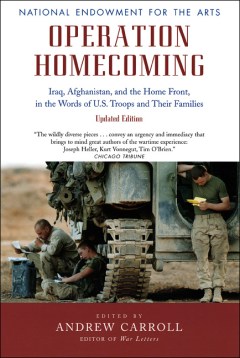
I spent two to three years at the VA as a volunteer in 2007 and 8. At that time I was developing my masters project while there. I was creating a booklet on creative writing for veterans. Oddly, due to the bad behavior of the one under whom I served (at the VA) this booklet did not come about. Instead I was to be responsible for bringing in and overseeing an event. Upon retrospect, this change was a very good thing. This event brought to the VA an expert author on creative writing with veterans. He had spent time in both Iraq and Afghanistan leading writing workshops for veterans I learned a great deal from him. My initial desire had been to work with young veterans returning from our most recent wars in Iraq and Afghanistan. Andrew Carroll edited Operation Homecoming. This book supported by the National Endowment for the Arts is a collection of writings by service men and women at war. I recommend it to all. In my opinion we live in these modern times too far removed from our wars. And they are our wars. Those who serve are doing so in the name of freedom whether or not we agree with the current war. The old adage “war is hell” is very true. If we (the citizens ) are far removed from war, we will confuse the war with the warrior. We blame the warrior for the war, then we forget that warrior upon their return home.
While at the VA I worked primarily with those who had been to Vietnam or those who had served during that time. Not all had seen combat. As a result of war many were not able to engage life fully. Writing gave them a way to do that. Writing about your war experiences allows some of the pressure that you experience to dissipate. By sharing your feelings on paper and then sharing them with a class of like minded people, some of the pressure is released. That is a healing moment. It is something that works for any situation, not just war. I was able to see much of the good that the VA does. And although my thesis was changed, I had the opportunity to work with someone who truly loved and cared for her patients. While at the VA I wrote the following poem.
An Observation
at this table this quiet place where they write this flat surface where poetry spills for the hungry ones those who wish to leave their wars behind where recidivism is high where eyes are glazed stares penetrating where nothing is given away not even longing empty bodies hollowed angered in a fog they write
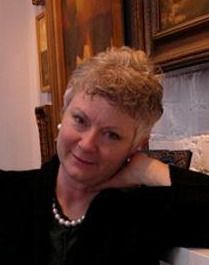
LIZ RICE-SOSNE a.k.a. Raven Spirit (noh where), perhaps the oldest friend to Bardo, is the newest member of The Bardo Group Core Team. She is also our new Voices for Peace project outreach coordinator and our go-to person for all things related to haiku. She says she “writes for no reason at all. It is simply a pleasure.” Blogging, mostly poetry, has produced many friends for whom she has a great appreciation. Liz is an experienced blogger, photographer and a trained shaman. We think her middle name should be “adventure.”

 Recently, I read dragonkatet’s piece on “Perfection and Creation.” This got me to ruminating on the nature of perfection. In the United Methodist Church, clergy wannabe’s are required to answer the question, “Are you going on to perfection in this lifetime?” And the expected answer is “yes!”
 Aristotle defines three meanings of perfection:
 Thomas Aquinas goes on to give perfection a dual-fold meaning: That which is perfect in itself (its substance) and when it perfectly suits its purpose.
 Perhaps it is time to render a definition of perfection that lifts us up and allows us to achieve completeness and fulfill our purpose. In Christianity, we often go back to “The Greatest Commandment.” That is “Love God and love your neighbor as yourself.” We then focus on the loving God part and then sometimes the loving your neighbor part but totally neglect the implied love yourself part. “Love your neighbor as yourself.” When we love ourselves, we can achieve completeness, find and fulfill a purpose! Artists gotta art. Preachers gotta preach. Poets gotta poem. Architects gotta design. Caretakers gotta care. And so on. Of course, within all of this is the tension between what we want and what we have. There are limits and sometimes part of loving is setting aside the dream and doing the chore. But that is still part of purpose. And it is still part of perfection.
 Perfection is living life in such a way that “every act, word, thought, be love!” Easy peasy.



 John has also been involved in the recent publication of two anthologies that are the result of online collaborations among two international groups of amateur and professional poets. One of these is The Grass Roots Poetry Group, for which he produced and edited their anthology, “




 This is my my child Colin and his cousin Casey, my niece. These two kids both consider themselves fat at this time. Colin was afraid to wear “skinny jeans” because he thinks they make him look fat so he hides his body behind baggy basketball shorts and sweatshirts. Casey is in the same boat. They already don’t like their bodies.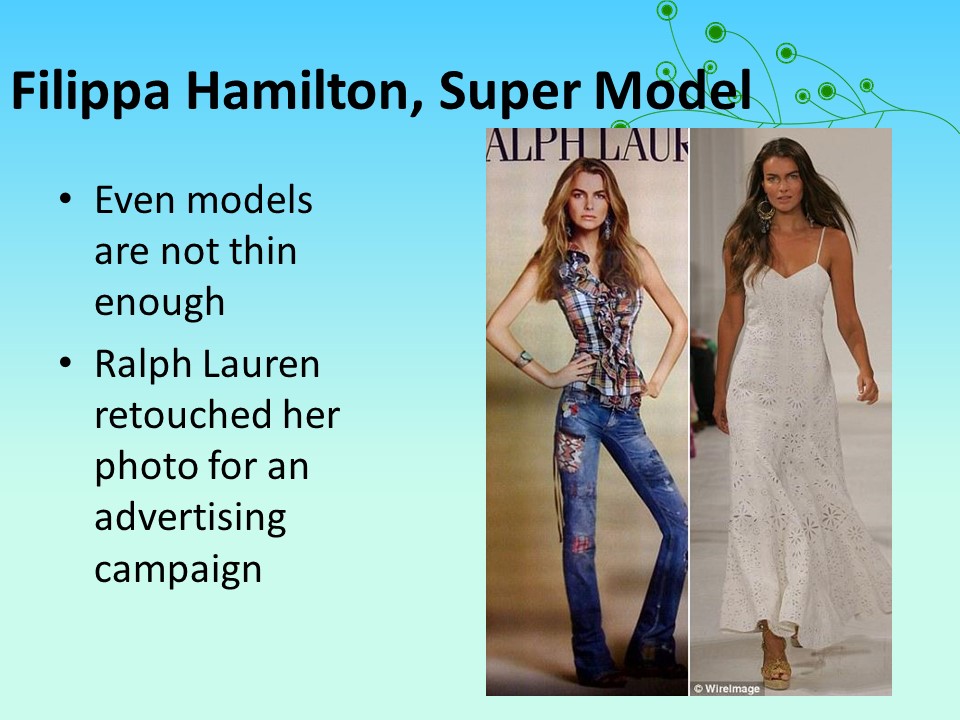





 The BeZine
