Editorial note and reminder: In two weeks, Wednesday, October 23, at 7 p.m. we will host a second writing challenge (Writer’s Fourth Wednesday) featuring Victoria C. Slotto, novelist and poet. The subject of this next challenge-yourself exercise is stream-of-consciousness. So writers read on, enjoy, write and mark your calendars for next week’s event. Mr Linky, which enables you to share your work with everyone, will remain open for seventy-two hours. Victoria and Jamie will visit all participants to read and comment.
Here an accomplished story-teller, Karen Fayeth (pronounced “faith” by the way), shares her experience of inspiration, story, and the NYC Midnight Flash Fiction competition.
Each year I enjoy participating in the NYC Midnight Flash Fiction contest. The challenge is to write a 1,000 word story over the course of one weekend.
But there’s more! The approximately 700 participants are divided up into groups and each group is given a genre, location and an object. All three must be incorporated in the resulting story. The tale must truly be in the genre, the majority of the story must take place in the location and the object must show up at some point.
It’s always amazing to see the wide array of stories that come from the same genesis. This assignment of genre, location and object can either be entirely freeing, allowing the writer a head start to leap from, or it can be incredibly constraining. It all depends on what genre, location and object gets assigned.
For the first round of the 2013 contest, I was assigned the romance genre. Bleah. Not my favorite but not awful. The location was a haunted house. Hmm. Possibilities abound, but not really for a romance? Hmm. Ok. And my object was marshmallows.
That was my place to start. Over the course of many of these contests I find the judges tend to like if you use the location and object in unique ways, so I always try to think of a twist or a different facet to use in my story.
I was quite busy over this first weekend of competition, doing some work for my employer and taking care of personal business, so there I found myself Sunday morning with nary a word written and a deadline of 9pm that night.
I opened the windows to my studio and let the light pour in. I felt the breeze through the screens and sat down at my computer to make magic.
Magic. Ha! There I sat looking at the curser on my computer screen, willing the magic to begin. It blinked. I blinked.
No magic was happening.
So I subscribed to the “just write something” theory and got started. I began typing words and thoughts and a character sketch. It was going. The magic was not quite lifting off, but it was certainly gaining speed.
That is when something caught my eye outside of the window. A little splash of orange on that first day of Autumn.
I was surprised to see a Monarch butterfly resting on the bush just to the side of the building where I live.
I rushed to get my camera, attached the longest lens I have, popped the screen out of my window, and began taking photographs.
I’m sure glad I did.
Photo Copyright 2013, Karen Fayeth
This gorgeous lone Monarch Butterfly was hanging out in the warm sun, using the ol’ proboscis to drink some nectar and gathering pollen on spindly legs. You know, general butterfly business.
As I watched, a couple of bees were highly displeased at the presence of the butterfly and kept strafing him (I say him but I looked up Monarch butterflies online and I think this might actually be a female, but I’m not sure).
These bees were executing deep aggressive fly-bys that only caused the butterfly to flap his wings a bit but stay put. The bees were quite persistent. They dive-bombed and I kept snapping away. I have some crazy action shots that I’m still editing.
After a while, the butterfly flew off and I downloaded and looked through my photos, very pleased with the results.
Then I sat back in my chair and smiled. After the visit from Mr. (Ms?) Butterfly, I felt totally motivated and completely creative. I turned back to my story and banged out about 1,300 words in one sitting.
Then I set the story aside and let it percolate while my husband and I went to explore a local street fair.
When we came back I had fresh eyes and gave the story a hard edit. I managed to pare it down to 999 words and submitted it about 45 minutes before the deadline.
Man-oh-man, hitting send on that story sure felt good.
I owe an awesome creative surge to a visit from a pretty orange butterfly on the first day of Autumn.
Karen Fayeth ~ is one of our regular writers. She is our tech manager, site co-administrator along with Jamie and Terri, and fiction and creative nonfiction editor. She blogs at Oh Fair New Mexico. Born with the writer’s eye and the heart of a story-teller, Karen Fayeth’s work is colored by the Mexican, Native American, and Western influences of her roots in rural New Mexico complemented by a growing urban aesthetic. Karen now lives in the San Francisco Bay area. When she’s not spinning a tale, she works as a senior executive for a science and technology research organization.
Karen has won awards for her writing, photography, and art. Recent publication credits include a series of three features in New Mexico magazine, an essay in the online magazine Wild Violet, and a short story in Foliate Oak. Her story “What Leibniz Never Learned” will appear in the Fall edition of The Storyteller.
POETS AGAINST WAR: Our profound appreciation to all those who read, wrote and contributed poems, links to poems and comments of such quality that they enrich this site for all. We are busy now preparing a summary and compiling the links and later this week everything will be delivered to you in a special post, which will also be loaded in as a page for easy access anytime. ♥
CALL FOR CONTRIBUTORS/CONTRIBUTIONS: We are also deeply appreciative of the people and talents offered in response to our most recent outreach. Three volunteers from the Core Team are handling this project and we will get back to everyone shortly. ♥
– Jamie Dedes
Photo credit ~ Peretz Partensky via Wikipedia under Creative Commons Attribution-Share Alike Generic 2.0 license
“Be kind whenever possible. It is always possible.” His Holiness, the 14th Dalai Lama of Tibet
A lifetime ago I was privileged to work with folks who were everyday heroes in desperate circumstances. They were people transitioning into the mainstream and the workplace from welfare, foster youth programs, homelessness, drug and alcohol rehabilitation, catastrophic illness, disability, prison, violent environments, and job layoffs and plant closures.
There were many things we could do to help our clients. We helped them find jobs and housing. We encouraged them to get G.E.D.s and vocational training or retraining. We found ways to address learning disabilities and get people out of abusive relationships. We offered classes on nutrition and parenting. We facilitated a sense of community and support. In true hero fashion, our clients worked hard. They took advantage of and were grateful for whatever was made available to them. They honored their contracts and did all the extra things that can make a difference between failure and success. Over eighty-percent successfully turned their lives around.
In those days, my responsibilities included teaching a three-unit community college career-development class. To provide inspiration through the often overwhelming ups-and-downs, some of us made our students Keep Smiling Bags. A Buddhist might call these bags a Metta* Bag; a Catholic, a Caritas* Bag; a Jew, a Chesid* Bag, a Muslim, a Birr bag. To a Native American it might be a Medicine Bag. Since I learn from all and affiliate with none, I just call it a Keep Smiling Bag. It’s a gift of love and inspiration and you might even say it’s about attitude adjustment.
In these trying times, you may have a few people in your life who could use a Keep Smiling Bag. The bags also make nice token gifts for birthdays or holidays or as get-well gifts or party favors. Those who are crafty may especially enjoy this exercise and will no doubt create beautiful and unusual presentations, perhaps doing the card in calligraphy or hand-crafting the bag or hand-sewing cloth pouches in place of paper bags.
If you do make Keep Smiling Bags, make them with the intention to heal.
Here are the supplies you’ll need to gather:
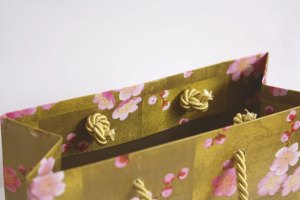
Small, cheerful gift bags
Little decorative erasers
Glass marbles
Colored rubber bands
Assorted colored crayons
Silk ribbons
Silver stars
Birthday candles
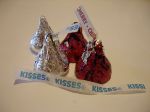
Hershey’s Hugs and Kisses
.
Gather the trinkets and place them into the bag.
.
Prepare this instruction card to go with the trinkets:
.
♥ ♥ ♥ ♥
These are a few things to get you through the day:
Eraser – to erase your negative self-talk
Marbles – for when you think you’ve lost yours (you haven’t)
Rubber band – s-t-r-e-t-c-h yourself into new activities. new points of view, new enthusiasms
Crayons – events may color your life, you choose the colors
Silk ribbon – to tie everything together when it seems life is falling apart
Stars – to get to the top of the mountain, you have to reach for the stars
Candle – your inner light shines bright no matter what the circumstances of your life
Hugs & Kisses – Someone cares. Me! 🙂.
♥ ♥ ♥ ♥
.
* metta, caritas, and chesid ~ all mean loving kindness, birr (Islam) deep love
JAMIE DEDES ~ My worldly tags are poet and writer. For the past five years I’ve blogged at The Poet by Day,the journey in poem, formerly titled Musing by Moonlight. Through the gift of poetry (mine and that of others), I enter sacred space.
A Heart Without Borders was originally published in On the Plum Tree and is shared here with the permission of author, Imen Benyoub, and publisher, Niamh Clune.
“Algerian, Imen Benyoub is a poet I have long admired. She writes with such feeling and movement. There is something veiled about her poems that entices you to want to dive into an underlying mystery.” Niamh Clune, Ph.D. (On the Plum Tree), creator of Plum Tree Books
Editorial Note: We are pleased to welcome Niamh Clune and Imen Benyoub to the Bardo community of readers and contributors. Niamh has joined us as one of the Core Team members and Imen as a guest writer. As a member of the Core Team, Niamh’s prophetic and mystical writing and art will regularly grace our pages and our hope is that Imen will share more of her work with us as well. Here Imen tells us of her love of poetry and her admiration for one of the poets of the more recent Palestinian diaspora, Nathalie Handal.
***
Nathalie Handal, Palestinian-American poet and playwright
When I write, I surrender.
Surrender my senses to a delicious chaos – my soul to reach a deeper abyss and my heart to travel outside its borders.
It is the freedom that comes with writing that made me live through my pen and left me endlessly caught between worlds and words.
It is the freedom that sent Nathalie Handal on a journey from New York to Andalucia – full of colours, textures, and fragrant with history, to recreate the journey of her favourite poet, Federico Garcia Lorca, in reverse, and reconnect with her Mediterranean Eastern roots.
I was confused about what to call a woman whose soul stretches across four continents, a woman with many identites and many homes. But after reading “Poet in Andalucia,” I realized she is a woman who does not recognize borders. Like a gypsy, she moves, collects memories, scents, music, visions of landscapes and secret longings and fuses them into poems.
Nathalie Handal, a poet, playwright, translator and editor was born to Palestinian parents from Bethelehem. She travelled extensively through the United States, Europe, Latin America and the Middle East. Like Mahmoud Darwish and many exiled Palestinian poets, she tries to give a new meaning and shape to the word “home,” and Andalucia with the richness and the complexity of its cultural and religious heritage reminds her of her own country, where Muslims, Christians and Jews live together in harmony and peace. Drowning in nostalgia for a beautiful yet sad past, Handal tries to revive traditions of Andalusian poets, along with the spirit of Lorca who inspires her work.
Her poems drip with sensuality and longing, woven in English, Arabic, French and Spanish, languages she grew up speaking as a result of her displacement, a special feature that gave her work a multi-layered depth and musicality.
Along with “Poet in Andalucia,” Handal published “The Lives Of Rain,” “The Neverfield” and “Love And Strange Horses.” She won numerous awards and she lectures worldwide.
Nathalie Handal is a universal poet; her poetry is a mirror to her lifestyle as a beautiful nomad in search for an identity. Her voice is honest and passionate, where the East embraces the West in a beautiful harmony.
IMEN BENYOUB – As indicated by Namh Clune in the introductory statement, Imenis a talented poet in her own right, hence this video that provides a sample. The poem is Imen’s. It is read by Eabha Rose (theartre of words). The music is by Trian Kayhatu (band camp).
“Sudden massive coronary events” are dominating my thinking lately. I am reading Joan Didion’s account of her husband’s death in The Year of Magical Thinking and recently browsed the pertinent pages of Ekaterina Gordeeva’s book My Sergei while waiting for Steve to glean salable items from Good Will on Tuesday. I am also writing my own memoirs of my husband Jim in a Continuing Ed course. What struck me this morning was the role of the grieving person’s best friend as hero. Not the knight-in-shining-armor type hero, but the simple, calming presence modelling a way to be. In a moment when shock obscures all notions of how to act, having a trusted person exhibit some caring, helpful behavior is a distinct grace.
My mother was that hero to me when my sister was killed in a car crash. Alice and I were traveling across country together, enjoying the freedom of being 20 and (almost) 17 when it happened. My mother cobbled together connecting flights from San Jose to reach me in Nebraska the next morning. She got me discharged from the hospital and set us up in a hotel while she went through all the details of bringing Alice’s ashes back to California. We went to the mortuary the next day. I was still rather zombie-like while my mother handled the business. Then the director asked us if we would like to see the body. “Absolutely,” was my mother’s reply. For some reason, I hadn’t realized that was why we were there. I hesitated. Mom led me into the room while the director closed the door. “Oh, honey,” she sighed as she approached the table. “No, she’s not there. She’s gone. Look here…” she began to comment on Alice’s wounds, on her swollen face and how old she looked, as if she were a battered wife decades in the future. My mom said something about all the suffering her daughter had been spared. Then she tenderly bend down and kissed that pale, waxy forehead. My mother has never looked more beautiful to me in all my life than she did at that moment. Strong, compassionate, wise and incredibly beautiful. I wanted to be like her, so I kissed my sister’s forehead, too.
photo credit: Dharam Kaur Khalsa
Gordeeva writes about her coach, Marina, prompting her to go into the ICU room where her husband lay. “Don’t be afraid. Go talk to him. He can still hear you.” She goes in and begins to unlace his skates, a normal gesture that helps loosen her words, her tears, her emotions. I remember our priest asking me and two of my daughters if we’d like to anoint Jim with some olive oil, bathe his face, and prepare his body to be taken away. It was a relief to excuse ourselves from the people downstairs in the living room and go up to him together, to say our goodbyes together, to touch him one more time. I am so grateful someone thought of allowing us that right then. We had another opportunity to say goodbye to his body at the funeral home later when my two other children came home. By then, I could take the lead with them and encourage them to approach. I can’t remember who started humming “Amazing Grace”, but we all joined in, musical family that we are, and swayed together, arms and bodies entwined.
In the aftermath of Jim’s death, my youngest daughter and I fought frequently. I didn’t know how to talk to her, to listen to her anger directed at me and recognize that she wasn’t hateful, only grieving. Steve was the one who suggested that she was hurt, not hurtful and agreed to sit by me while we attempted an honest conversation. My instinct was to run away. I was grateful to observe someone who could be calm and present, reasonable and compassionate in the face of powerful emotions that frightened me. He is adamant about not rescuing me, but equally determined to be the best friend he can be.
I hope that I will have opportunities to be a great friend to someone in grief. I would like to be a conduit of such grace.
PRISCILLA GALASSO ~ started her blog at scillagrace.com to mark the beginning of her fiftieth year. Born to summer and given a name that means ‘ancient’, her travel through seasons of time and landscape has inspired her to create visual and verbal souvenirs of her journey.
“My courage is in the affirmation of my part in co-creation”, she wrote in her first published poem, composed on her thirtieth birthday and submitted alongside her seven-year-old daughter’s poem to Cricket magazine. Her spiritual evolution began in an Episcopal environment and changed in pivotal moments: as a teenager, her twenty-year-old sister died next to her in a car crash and, decades later, Priscilla’s husband and the father of her four children died of coronary artery disease and diabetes in his sleep at the age of forty-seven Awakening to mindfulness and reconsidering established thought patterns continues to be an important part of her life work.
Currently living in Wisconsin, she considers herself a lifelong learner and educator. She gives private voice lessons, is employed by two different museums and runs a business (Scholar & Poet Books, via eBay and ABE Books) with her partner, Steve.
September 21, 2013 is the United Nation’s International Peace Day. The theme this year is Education for Peace, including fostering respect, inclusiveness, and peaceful societies.
Many organizations across this beautiful blue orb of ours are marking the day with events of one sort or another. One of special interest is Unify’s Global Synchronized Meditation …
BE THE PEACE
“The purpose of meditation is to awaken in us the skylight nature of mind, and to introduce us to that which we really are, our unchanging pure awareness that underlies the whole of life and death.
Thanks to Mick B. for the Sogyal Rinpoche quote. Photo credit ~ Patty Mooney via Wikipedia under Creative Commons Attribution-ShareAlike 3.0 unported license Video uploaded to YouTube by UNIFYMEDIA2012
As a little bit of back story, in the course of my life, I spent quite a few years in the company of a blues musician. By spending a little time with him, I also spent time around a lot of different blues musicians.
Men and women with a deep vein of soul and history and rhythm.
When you are around blues people, you hear a lot of stories. Telling stories is pretty much the foundation of being able to play the blues. As a storyteller in my own right, I used to soak in these stories, letting them enter my pores and fill my soul and tap my DNA on the shoulder and ask it to dance.
The stories are in me. Not all of them are true. Few of them are pretty.
All of this is a long winded lead up to a particular story I have in mind.
It goes something like this:
Back in the 1950’s in a small suburb of Dallas, Texas, two talented brothers grew up together.
Both had music in their bones and talent for playing the guitar. The world knows a little bit more about Stevie Ray Vaughan because of his breathtaking musical style and early death, but Jimmie Vaughan has also seen a fair bit of success with his music.
If you listen to each of their music, you can hear their very different styles. Stevie’s music was intense, complicated and at times frenetic. Jimmie likes to play a bit slower and wider and easier.
Legend has it that back in the day in Oak Cliff, Texas both boys not only liked guitars but they liked cars.
Stevie, unsurprisingly, liked real fast hot rod cars that he could jump in and race around town. Stevie used to vex the local police who couldn’t slow him down.
Jimmie on the other hand liked to cruise. He liked big, heavily finned, tuck and roll upholstered, Buick with a “smile” kind of cars. He’d put his girlfriend beside him on the bench seat and slowly roll through town, vexing the local police who wanted him to speed up.
I think of this story pretty frequently in relation to my own roll through life. My approach is more Jimmie than Stevie, though I admire Stevie very much.
Perhaps this owes to the slow “land of mañana” pace of where I grew up. We don’t move with alacrity in New Mexico and tend to be suspicious of those who do. When I still lived in the state and traveled to San Francisco or Boston for work, I was always comforted to come home, get off the plane, and visually see how slow people moved. Then I would match my pace to theirs and know I was home.
There is a great comfort in moving at a calm pace.
I find, however, that is not how the world thinks one should move.
Let’s take for example, New York City. In New York, you are supposed to walk fast. Very fast. Head straight, eyes forward, and walk.
Despite how much I love Manhattan, I have quite a hard time keeping up. The Good Man (my husband) was born in Brooklyn so moving at that pace comes natural. It does not come natural for me. I prefer to toddle along closer to the buildings and let the people pass me by on the outside of the sidewalk.
I am the person that New Yorkers yell at for walking too slow.
This all came back to mind this past week. It is New York Fashion week and I follow Nina Garcia, Marie Claire magazine’s Creative Director, on various social networking sites.
She has been posting photos from all of the various designer shows and I have been lapping them up like at kitten at a bowl of milk.
I may not have a figure for fashion, but I love it. I love seeing how textiles and stitches and notions come together to create something fantastic or ugly or offbeat.
So a couple of days ago, Ms. Garcia posted a photo of a sign she saw backstage at the Michael Kors Spring show. Oh my, I am a huge fan of Mr. Kors.
Here is the photo:
I read the words and my heart sank a little. I am happily romantic, strong and my own version of gorgeous.
But I don’t walk fast and with energy.
I would love to kill them with chic, but instead I must maintain my killer sense of humor.
For some reason, this really got under my skin and whispered to those demons in my head who heckled me and said that if I can’t walk fast and with energy, I am a nobody. They said I don’t measure up, don’t belong, don’t matter because I can’t keep up.
And that’s when I remembered the story about the Vaughan brothers.
I don’t need to race up and down the streets of New York. There are plenty of people who have that covered. I want to cruise the Manhattan blocks and tip my head upward to wonder at the buildings and smile and give my lungs room to breathe.
Slow though I walk, I always get where I’m going. Pink cheeked, a little sweaty and smiling.
Perhaps I am taking this hand written sign a little too close to heart. I’m sure this was simply a note of encouragement for the models walking the runway, reminding them to keep it peppy and light.
Perhaps it just hit me on a bad day when the demons were a little closer to the open door than I would like. I let them out to play awhile, really let them run, then I whistled and corralled them back into the pen.
And I remembered that a strong, courageous New Mexican doesn’t have to walk fast unless she wants to. That is true both when walking the Bosque or NYC’s Broadway.
Photo from the Instagram feed of Nina Garcia. All rights belong to her.
Karen Fayeth ~ is one of our regular writers. She is our tech manager, site co-administrator along with Jamie and Terri, and fiction and creative nonfiction editor. She blogs at Oh Fair New Mexico. Born with the writer’s eye and the heart of a story-teller, Karen Fayeth’s work is colored by the Mexican, Native American, and Western influences of her roots in rural New Mexico complemented by a growing urban aesthetic. Karen now lives in the San Francisco Bay area. When she’s not spinning a tale, she works as a senior executive for science and technology research organization.
Karen has won awards for her writing, photography, and art. Recent publication credits include a series of three features in New Mexico magazine, an essay with the online magazine Wild Violet, and a short story in Foliate Oak. Her story “What Leibniz Never Learned” will appear in the Fall edition of The Storyteller.
What is life? The flash of a firefly in the night, the breath of a buffalo in the wintertime. It is the little shadow which runs across the grass and loses itself in the sunset. –Native American Blackfeet–
Every man has a different idea of beautiful…best to take the gesture, the shadow of the branch, and let the mind create the tree.–Wm. Faulkner
A man cannot jump over his own shadow–Yiddish proverb
Beware the dog–it’s shadow will not bite. –Danish proverb–
Worry gives a small thing a big shadow. –Swedish proverb–
If you stand straight, you need not fear a crooked shadow.–Chinese proverb–
Observe carefully, and you will find wisdom even in the shadows. –African proverb–
One can live within the shadow of an idea without grasping it.–Elizabeth Bowen–
The shadow is often more interesting than the object itself.–Ellen Thompson–
There are dark shadows on earth, but its lights are stronger in the contrast.–Charles Dickens–
Imagination is the real and eternal world, of which this vegetable universe is but a faint shadow.–Wm. Blake (1757-1827)
No hill is without gravestones, no valley without shadows. –South African proverb–
Like our shadows, our wishes lengthen as our sun declines.–Edward Young–
Count your nights by stars, not shadows; count your life with smiles, not tears.–Italian proverb–
All images c2013 Naomi Baltuck
All words and images copyright 2012 Naomi Baltuck
NAOMI BALTUCK ~ is a Contributing Editor and Resident Storyteller here at Bardo. She is a world-traveler and an award-winning writer, photographer, and story-teller whose works of fiction and nonfiction are available through Amazon HERE. Naomi presents her wonderful photo-stories – always interesting and rich with meaning and humor – at Writing Between the Lines, Life from the Writer’s POV. She also conducts workshops such as Peace Porridge (multicultural stories to promote cooperation, goodwill, and peaceful coexistence), Whispers in the Graveyard (a spellbinding array of haunting and mysterious stories), Tandem Tales, Traveling Light Around the World, and others. For more on her programs visit Naomi Baltuck.com
I saw a bonsai tree earlier. Exquisitely arranged, perfect in its appearance. I admired it in awe, and then a thought crossed my mind and I couldn’t get rid of it: what exactly was it that I admired in a mutilated tree? The art of “educating” a plant to grow according to our own will? The way the small tree manages to “forget” about the cutting and the clumping and the trimming and the wiring and the all-together contortionism to which it is subjected, and simply grows?
What is the real beauty of a bonsai? Does it reside in the smallness? But smallness is relative – related to our own size. Do we create bonsais in order for them to make us feel bigger? An identical tree, though bigger than us, would be smaller than a mountain. But then again, an identical though bigger tree wouldn’t appear just as beautiful in different circumstances. We’d look at it with pity and say “poor tree, so twisted”, without realizing that the twisted one is our own view.
So, is it actually about the circumstances in which we look at it? Do we actually love the hidden wisdom of nature, letting us believe that we subdued it and forced it into shape, when in fact nature simply followed its course, surviving the circumstances? Is that what impresses? Or maybe the apparent resignation and submission of the tree under our touch?
Does the bonsai feel the awe in the eyes of his beholders? Does that comfort it in any way? Does our admiration in front of it MATTER? Or maybe what we actually do is subconsciously enjoy the tacit guilt spicing our admiration – a milder form of sadism under the pretext of art and beauty, excusing the cruelty. At this point at least half of you, dear readers, will protest and talk to me about the secular tradition of bonsai aesthetics and say that it’s not a proof of cruelty. Is it now? *smiling* Foot binding in China used to also be done under the pretext of beauty. How interestingly simple is actually the human essence…
But let me not divagate.
I liked the sight of that little bonsai. I sipped its beauty with all my strength and loved it and assumed the guilt for loving it – with awareness, with humility and shame. That bonsai bears the mark of human artistry – and maybe that is the “lesson” after all.
LILIANA NEGOI (Endless Journey and in Romaniancurcubee în alb şi negru) began to write poetry at eighteen – by accident – as she herself likes to remember, and has been exploring the depths of language ever since. Currently she is the author of three published volumes of poetry in English – which is not her mother tongue but one that she came to love especially because of writing: Sands and Shadows,Footsteps on the San – tanka collection and The Hidden Well. The last one can also be heard in audio version, read by the author herself on her SoundCloud site HERE. Many of her creations, both poetry and prose, have been published in various literary magazines.
Excerpts from His Holiness the Dalai Lama’s address to the inter-faith seminar organised by the International Association for Religious Freedom, Ladakh Group, in Leh on 25 August.
We are now in the twenty first century. The quality of research on both the inner and physical world has reached quite high levels, thanks to the tremendous stride in technological advancement and human intelligence. However, as some of the speakers said before, the world is also facing a lot of new problems, most of which are man-made. The root cause of these man-made problems is the inability of human beings to control their agitated minds. How to control such a state of mind is taught by the various religions of this world.” MORE
Photograph taken by an employee of the Executive Office of the President of the United States and as a work of the U.S. federal government it is in the public domain.
One day I hopped in a taxi and we took off for the airport. We were driving in the right lane when suddenly a black car jumped out of a parking space right in front of us.
My taxi driver slammed on his brakes, skidded and missed the other car by just inches!
The driver of the other car whipped his head around and started yelling at us.
My taxi driver just smiled and waved at the guy.I mean, he was really friendly.
So I asked, ‘Why did you just do that? This guy could almost ruin your car and sent us to the hospital!’
This is when my taxi driver taught me what I now call, ‘Law of the Garbage Truck’ He explained that many people are like garbage trucks. They run around full of garbage, full of frustration, full of anger, and full of disappointments.
As and when their garbage piles up, they need a place to dump it and sometimes they’ll dump it on you.
Don’t take it personally. Just smile, wave, wish them well, and move on. Don’t take their garbage and spread it to other people at work, at home, or on the streets. The bottom line is that successful people do not let garbage trucks take over their day.
Life’s too short to wake up in the morning with regrets, So … Love the people who treat you right. Pray for the ones who don’t.
Life is 10 % what you make it.
AND
90 % how you take it!
Do resolve to have a great, garbage – free week ahead……..
SHAKTI GHOSAL ~ has been blogging (ESGEE musgings)since September 30, 2011. He was born at New Delhi, India. Shakti is an Engineer and Management Post Graduate from IIM, Bangalore. Apart from Management theory, Shakti remains fascinated with diverse areas ranging from World History, Economic trends to Human Psychology & Development.
A senior management professional, Shakti has been professionally involved over twenty-five years at both international and India centric levels spanning diverse business areas and verticals. With a strong bias towards action and results, Shakti remains passionate about team empowerment and process improvement.
Shakti currently resides in the beautiful city of Muscat in Oman with wife Sanchita, a doctorate and an educationist. They are blessed with two lovely daughters, Riya and Piya.
[This piece was started some months ago, before I wrote the poem Fortune, featured here on the Into The Bardo a few weeks ago. That poem and this piece focus on a common theme, which is, perhaps more than any other in my writing life, a constant thread of philosophical thought for me. This is that, however much we may be short on fortune, there is never cause to give up on our hopes and dreams, or more realistically, our ‘visualisation’ of what we want from this life.]
~~~~~~~~~~~~~~~~~~~~~~~~~~~~~~~~~~~~~~~~~~~~~
Picture, via Google Images and courtesy Canvas Art (www.the-canvas-art-shop.co.uk)
“Oh what a tangled web we weave, When first we practise to deceive!”
(Sir Walter Scott, Marmion, Canto vi. Stanza 17.
Scottish author and novelist: 1771 to 1832).
Some days are better than others . . .
The better ones allow me to indulge myself in my passions. I could have walked the dog and come back feeling refreshed, or have attended a rehearsal with the Waldershelf Singers and feel utterly uplifted, or complete a piece of prose or, better, a poem and feel a sense of release. On other days, I feel disillusioned, cynical, angry, like throttling public figures (politicians) to within an inch of telling them what a bunch of useless, self-interested, lying, cheating ne’er-do-wells they are! … which they are, almost to a man (and woman) …
Why is it that, once human beings attach themselves to an organisation, an establishment, a business, a company, a corporation, a religion, or they declare their political affiliations, somehow, they lose the ability to tell the truth, assuming their integrity would allow them to differentiate between the truth and a lie, in the first place. They become overly deferential, assume the organisation’s rules are right and, worst of all, become somewhat apathetic and are inclined to assume the ‘elders’, senior leaders of the organisation are right and therefore entitled to our undying respect.
This subjugation of self, a denial of the person that was borne into this world, through that infinitely variable process, driven at its lowest level by chemistry and physics, in turn determined by the relevant genetic ‘pool’ and nurtured by the geographic, economic, demographic, societal and political environments it is our fortune, or misfortune, to have grown up in, is undeniable. This denial of the uniquely wired ‘self’ and its particular talents and aptitudes, opinions and attitudes, and the ability to discern right from wrong, truth from the lie, and I mean the real truth, the kind that only you yourself will know deep inside, is almost guaranteed.
Does it have to be this way?
I think that I’ve come to hold this position rather late in life. Questioning authority is the stuff of rebellious youth, isn’t it? When we didn’t know any better, few had any time for the opinions of young people, anyway!
Is it so, because we are too shallow? … I don’t think so, not for everyone, anyway.
Is it because we are too lazy or unable to think for ourselves … almost certainly for some.
Is it because we have to earn a living? … inevitably a contributory factor.
Is it due to the fact that, as human beings, in spite of our incredible capacity for ingenuity, we are still very insecure; none of us are ever entirely in control of our lives and I mean NONE of us, given the uncertainties of our own health and particularly of the natural world and what Mother Earth herself can throw at us! We therefore have to enwrap ourselves with a protective external blanket, woven by someone else’s dreams or designs, at one extreme by the premeditated manipulation of tyrannical leadership or, at another, simply by the desire to ensure the annual bonus, a generous pension, public honours, a knighthood … or simply the reassurance of knowing from where our next meal will come?
Is it because we are all limited in our capacity to take on too much information, store all the factors affecting any number of problems that face us each day; wrapped up in life’s complexity that sometimes threatens to overwhelm us, wouldn’t we prefer to take an easier option and permit others to make decisions for us, which acts as a perverse kind of freedom? Herein lies a major truth. But it’s not easy for managers and leaders either.
Contrary to the impression we might receive from those in stations so elevated, it may act as some comfort to those who aren’t to know that the higher up the ladder of success we go, in whatever field of human endeavour, the more insecure we get. Why, you ask? It is because we have our limits, all of us, and some of us are more limited than others; that is our birthright, given the variable abilities, with which we are endowed, the tactics and strategies we have learned and been taught to cope; it is the way we are wired. The higher up the ladder of success all this leads us, the stronger becomes our inclination, consciously and unconsciously, to hang on to whatever we’ve got; the more inclined we become to develop further selfish strategies to aid this survival process. That’s what it is to be human, well, at least to be an animal. Being human does, nevertheless, endow us with an extra ability: high intellect and, with it, a great responsibility and, yet, this tendency, this seemingly irresistible force, does inevitably lead to greed.
So what happens!
We get our heads down and graft, manoeuvre, wheel and deal, whatever it takes to gain influence, fame, attention, success, with whatever vanity or hope or need that has the greatest hold on our hearts, minds … and stomachs.
At some future moment in time, we then find ourselves, well, what’s the best word to describe it … trapped, yes trapped by our ambitions, needs, material greed, more than by hopes and dreams.
I should say something about dreams. Before you think I’m about to crush them, I’m not. As one who writes poetry and pieces of prose like this, I find dreams are just as important as the ambitions of a professional footballer I know, who learned, early on in his journey through that precarious profession, that visualising your goals (figuratively as well as literally in his case), that is imagining yourself scoring the goal, over and over again, is a truly powerful and effective way of motivating yourself to feel better about your abilities and potential. This is, for me, an unexpected way in which to feed the creative imagination; such is the process that leads to the products of human ingenuity as well as understanding and success. But, a word of warning about dreams! They can also be manipulative! They can be induced and ‘used’ by others to manipulate control over lives – take advertising, particularly on the television, as one example! We need to learn how to distinguish good from bad dreams, your own from other people’s dreams, just as we should be able to tell the difference between good and evil.
Now, I’m not necessarily talking about conspiracy theories here, about demons and evil people, who sit in back rooms and scheme to overthrow regimes or gain control of whole populations. No, I’m talking, for the moment at least, about the demons inside our heads; the ones that lead us to the point of paranoia, the fear of not being ‘successful’, wearing the right ‘fashion’, living in the right district, driving the right car, appearing in all the right ‘places’, doing what’s apparently ‘right’ in society … tricky concept this, but I’ll try to explain my thinking.
If you were to ask a child of five or six to tell you their dreams of how to make the world a better place, wouldn’t they give you magical answers, which involve the charm of fairy tale characters and imaginative, not to say unusual (and, sadly, unlikely) conclusions to their stories?
If you were to pose that same question to a child in their mid ‘teens, wouldn’t their answer be tainted with a little more realism, perhaps even a touch of hopeless, hormonal cynicism, whilst still retaining some of that childhood naiveté, a lack of what we grown-ups would call wisdom?
If you were to ask a grown up poet or a philosopher, I think their answer would come out in one of several subtle ways, but one thing is for sure, any poet, with integrity, that I know, would try to address all of the issues that confront us head on, in an honest way. This is perhaps because they rarely make a living from their writings and, therefore have no vested (financial) interest in it, other than for the integrity of their material and perhaps for a bit of recognition!
Even Poets …
Yes, even poets and philosophers have to live and pay their ‘rent’. So, somewhere along the path of life, we have to align ourselves with an organisation or two, toe the line and obey the rules. We most certainly should obey the law and, if we don’t agree with it, don’t break it, lobby to change it! There is nothing wrong with toeing the line, provided there is a fair share of integrity within the organisation; provided that we don’t lose sight of our own personal integrity, justice, beliefs, values and, above all else, what we know, deep down inside, makes each of us unique individuals, our identity.
For those, who are born with a genetic code that, given the right environment, encouragement and education, predestines them to a life of leadership and possibly even greatness, let us not forget that for those of us, who remain, whilst we may not have had the good fortune of the same faculties and opportunities, we do nevertheless represent the vast majority of the population of the world. So, if we do still have a vote in what can reasonably be described as a democracy, then we must use it or lose it! If we have the ability to write, we should do it! We must make our mark upon the paper, make our feelings, our values and beliefs known. Whilst we still have the freedom to do so, we have the ability to depose those in power who do conspire to deceive us, who have been corrupted by their privilege and who would continue to weald the power they have from such privilege for self interest. Otherwise we get what we deserve. If that happens to be a comfortable life that we’ve achieved by subordinating our own integrity, it is our choice, but, from where I am now in my life, I know that I would sooner follow and trust someone who refused to allow themselves to be trapped by the material rewards of compromising complicity, than one who, in the fullness of time, would be racked with regret, that they didn’t follow their conscience and their dream of a better life … a better world.
It would be wrong of me, however, to leave you with my totally cynical outlook, without mentioning that, thank God, there are some remarkable people in this world, who, at and on all sorts of levels, do remarkable work on behalf of their fellow human beings. Whether they be local community charity workers and volunteers, international aid workers or the likes of the inspired Mother Teresa of Calcutta’s Missionaries of Charity foundation, they are all driven, by some degree of selflessness, to improve the lot of the less fortunate and I have nothing but admiration for them.
If there is a moral to my tale, this long and rambling piece of prose, it is that I believe life can become much less complex, when we stop trying to satisfy someone else, when we discover the very best in ourselves. However unfair, unjust or unreasonably difficult life seems to be sometimes, we should never allow ourselves to give in to the pessimism that results from a state of despair at the world, to roll over on our backs with our legs in the air! We must never believe that someone else, whether it be a single person or a large faceless organisation, either has control over us or is beyond control by the voting, lobbying, plural us. For writers and poets in particular, as long as we can breath and weald a pen, we can do something, however small, and collectively we are able to make a difference, even if we don’t feel we can hop on the next flight to Africa, we musn’t allow ourselves to believe that we can’t still bring something to the table from our own unique armoury of intellectual skills. We can, above all, in our own way, be winners. It takes courage to step out of the crowd, but courage comes in many colours, one of which is being true to your innermost convictions. Fortune really can favour the bold.
[If you don’t already read it, you could do worse than by starting to read poetry now. Good poetry should open the eyes that are shut, elevate the spirit that is depressed and enrich the soul that is impoverished. Good poetry is the highest form of literature, which should tell us the way it is and feed us with deep insights that we would otherwise not experience; and I mean insights and creative thought that will enable change, not only in your own life, but also others.]
JOHN ANSTIE (My Poetry Library and 42) ~ is a British poet and writer, a contributing editor here at Bardo, and multi-talented gentleman self-described as a “Family man, Grandfather, Occasional Musician, Amateur photographer and Film-maker, Apple-MAC user, Implementation Manager, Engineer and general all-round good egg.” This he tells us with tongue firmly planted in cheek. Add grace and humor to the list.
John participates in d’Verse Poet’s Pub and is a player in New World Creative Union. He’s been blogging since 2011. John is also an active member of The Poetry Society (UK). He says of his work, “Much of my writing and my poetry focuses on the future and the important part that our children, and the way we treat them, play in this. It also spans a diversity of life’s experiences, some moving war poetry and particularly observations of life for a modern generation.
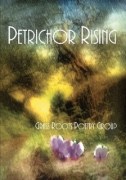
Also a member of Grass Roots Poetry Group John steered their anthology, Petrichor* Rising, into publication. It is now in print and available for purchase. “Petrichor Rising takes you on a journey that exposes you to the full spectrum of emotions, from barely concealed despair to hope, from love to sorrow, with a clear appreciation of nature’s value and humanity’s shortcomings. It rides a roller-coaster that moves you to consider many of life’s challenges from a different perspective, as all good poetry should. It is at once haunting, yet shocking, with aching nostalgia alongside enchanting stories of dragons. It gives you optimism and hope tinged with shadows of doubt. It writes about places never seen and humanity’s uncaring nature, in prosodic social commentaries and observations of the minutest details of life, mood, atmosphere and romance. It contains clever writing that brings you close to the edge of society, still capable of moving you, but not pulling any punches. It has poetry with a universal appeal covering subjects as varied as the loss of a cat or a harrowing account of the 7/7 London bombings, poetry that focuses on the roots of all that makes us respond to life and long for something better.”
* Petrichor – from the Greek pɛtrɨkər, the scent of rain on the dry earth.
A couple years ago, my husband and I had the chance to celebrate the Fourth of July with some good friends. There were six of us total (three couples), and we met at our friend’s house for a special treat.
One of our crew had just recently returned from a trip to Ethiopia. She and her husband are in process of adopting an adorable baby boy and she had to make a visit to work through the paperwork with the local courts.
While in country visiting her baby son and patiently working though the long process, she was treated on several occasions to the Ethiopian coffee ceremony.
On our Fourth of July holiday, she wanted to share this ceremony with us, her friends.
About the coffee ceremony, here’s a quote from Ethiopian ambassador Haile-Giros Gessesse:
“Coffee has social value in our society. It is deep rooted in our culture. The coffee ceremony in local areas is used mainly for social gatherings. In the mornings and evenings parents, especially mothers gather together for a coffee ceremony and also use it as a platform for exchanging information in their surroundings. It is a means of communication. When people sit down they usually spend three hours finalizing the ceremony, starting with the preparation, and then roasting to brewing it.”
Our friend had hauled home a big bag of green coffee beans, water hulled (the good stuff) not fire hulled, and we sat outside in the beautiful sun while she told us about the ceremony.
First, she roasted the beans on the grill. We watched as she shook and swirled the pan, much like a slow Jiffy pop motion.
When we all agreed that it looked like the beans were at a good medium roast each of us took in a whiff of the fantastic aroma from the pan.
Then we took turns using a mortar and pestle to smash the beans down to a nice grind. Every person took their turn and everyone contributed.
It was satisfying work to smash, smash, smash those crispy beans and release the beautiful scent and oils.
Once ready, the grinds were placed into a French press and once brewed, a round of coffee was poured into six cups.
This fresh roasted coffee was delicious! It had a floral aroma and tasted so light and mild. This coffee was perfect with just a touch of sugar and nothing else.
In keeping with tradition, we had three rounds of coffee while we discussed our lives, the news of the day, baseball, and got caught up with each other. This is an essential part of the ceremony, sharing community, support, and friendship.
Now, I love a great cup of coffee, but I rarely drink caffeinated coffee. After three cups I was ready to clean my house top to bottom, jog a thousand miles, and throw a 98mph fastball.
But it was a happy caffeinated high shared with dear friends.
I was honored to be a part of the ceremony and I can hardly wait until our friends bring home their baby boy. I hope to we can continue to give him a sense of community and family, maybe even over a cuppa or two…or three.
KAREN FAYETH ~ is one of our regular writers. She is our tech manager, site co-administrator along with Jamie and Terri, and fiction and creative nonfiction editor. She blogs at Oh Fair New Mexico. Born with the writer’s eye and the heart of a story-teller, Karen Fayeth’s work is colored by the Mexican, Native American, and Western influences of her roots in rural New Mexico complemented by a growing urban aesthetic. Karen now lives in the San Francisco Bay area. When she’s not spinning a tale, she works as a senior executive for science and technology research organization.
Karen has won awards for her writing, photography, and art. Recent publication credits include a series of three features in New Mexico magazine and an essay with the online magazine Wild Violet. Her latest short story “Quick, Quick Slow” was published in the May edition of Foliate Oak. Karen’s photography is garnering considerable attention, her photo titled “Bromance” (featuring Aubry Huff and Pat Burrell) was featured on MLB Network’s Intentional Talk hosted by Chris Rose and Kevin Millar.
I was at the Redwood Shores library the other day. They had a small display on the Ohlone Tribe. It made me think again of the Wiyot. They live in my dreams. Their name is pronounced Wee-yhot and it means Eel River. That was their home.
In the mid-eighties, for about a year-and-half, we lived near the Eel River in Humboldt County, an area about 200 miles north of San Francisco. It’s stunning and peaceful with dense redwood forests, wild rivers, and creeks that run dry in the summer and overflow in the winter. If you live in a rural area or grew up in one, you might take such things for granted. Having lived in cities all my life, it was magical to me. In the midst of that feral earth, in the stillness of leafy green days and velvet blue nights, it was easy for me to imagine the first peoples as they might have lived there in other times.
I fancied I could see them tending fires, boiling and drying acorns and then grinding them for flour, bathing in the river, raising their children, and hunting, gathering, and enjoying sacred ceremonies and tribal celebrations. I knew the same ancient sky-scrapping sequoias that watched over us had watched over them.
Our place was just short of four acres and rich with sequoia, madrone, oak, and some forty fruit trees. Blue jays flew in to feed in the morning and the quail marched down to visit at nightfall. Hawks and hummingbirds put on air shows. Rosemary thrived unattended. There was a beautiful lush 100-year-old rosebush. There were wild roses too. They gave us rose hips for cough syrup. Witches Broom lined our creek side with bright yellow. There were cascades of Japanese quince, which provided ample housing for the hummingbirds. Queen Ann’s lace* danced in the wind like ladies dressed for a ball. When they went to seed I collected the seeds for use in cooking. They have a taste somewhere between a carrot and caraway seed. The great bursts of blackberry bushes were a visual and edible delight.
I gathered fresh fruit almost every morning and every morning I thought of the people who preceded me more than a century ago and who picked berries there just like me. I did some research and found out that our property was once inhabited by the Wiyot peoples whose numbers were almost decimated in a genocide.
“Eureka newspapers of the time exulted at the night massacres conducted by the “good citizens of the area”. Good haul of Diggers and Tribe Exterminated! were 2 headlines from the Humboldt Times. Those who thought differently about it were shut up by force. Newspaper publisher and short story writer Bret Harte called it “cowardly butchery of sleeping women and children” — then had to flee ahead of a lynch mob that smashed his printing presses.” MORE [Wiyot Tribal Council Page]
* WARNING:If you are tempted to gather the seeds from Queen Ann’s lace, think twice. I didn’t know it at the time but it is hard to distinguish them from hemlock, which is poisonous.
JAMIE DEDES ~ My worldly tags are poet and writer. For the past five years I’ve blogged at The Poet by Day,the journey in poem, formerly titled Musing by Moonlight. Through the gift of poetry (mine and that of others), I enter sacred space.
This is a re-blog of my very first blog post ever from 2008! I have edited it a tiny bit.
Moral courage is a rarer commodity than bravery in battle or great intelligence. Yet it is the one essential, vital quality of those who seek to change a world which yields most painfully to change. – Robert F. Kennedy, in a speech in Capetown, South Africa, June 6, 1966. (Source: Wikiquote )
What are our sources of moral courage? I can tell you that I find moral outrage easy, but where does moral courage come from? Relying on my Methodist heritage, The Wesleyan Quadrilateral would have us examine scripture, tradition, reason, and experience in making deliberations. What does this tell me?
What does scripture say?
In Hebrew Scriptures and in Christian Scriptures, we are taught to care for the alien, orphan, widow, and poor among us. In the story of the adulterous woman (John 8:1-11), we see a Jesus that stands between the accusers and the marginalized. This is what Christians are called to do. Take action in the face of injustice and stop pain from happening. Jesus teaches us repeatedly that we are to extend our hands to the hungry, the poor, the marginalized, and those outside of authority. This continues from the Jewish traditions. In Hebrew Scripture, we are told in Micah 6:8 that we are to “do justice, love kindness, and to walk humbly” with God (NRSV). These teachings can be encapsulated in the single commandment “love your neighbor as yourself” (Gal 5:14). Leviticus 19:34 tells us that our neighbor is the alien among us. Christ tells us that our neighbor is people outside of the power structure that he ministers too—the bleeding woman, the blind, the demon-possessed, or the widow. Those are the neighbors Jesus stands with.
What does tradition say?
In the Methodist tradition, John Wesley spoke out against many issues facing his generation. This included human rights, slavery, prison reform, labor rights, and education reform. Methodists also have the Social Principles and the Book of Resolutions to guide thoughts and deliberations in our present day. Wesley emphasized shaping public policies that would ensure equal and fair education for all children.
What does experience say?
It is very difficult to quantify experience across the board, but if I just examine one system, the education system, we know, through social sciences and the statistics they bring us, that poverty is the single most important factor in education. Poverty riddled areas simply do not have access to a great education system. And unfortunately, for many minority ethnicities in the U.S., poverty riddled areas are disproportionately filled with them. Why would that be? A good source for thought is this YouTube video from Tim Wise–
And we know that poverty is a world wide problem as the recent collapse of the factory in Bangladesh illustrates. The women who were lost there are typically impoverished, but they were considered the lucky ones. They were one step above abject poverty and simply impoverished. The literacy rate is 59%. Poverty and lack of education go hand-in-hand.
Bereaved mothers hold up pictures of their daughters who died in the factory collapse, but whose remains have yet to be identified. Photograph: Jason Burke for the Guardian
There is much to be outraged about. Let us find moral courage.
What does reason say?
Is it reasonable to expect there to be poverty in the world? Is it reasonable to expect there to be violence in the world? Is it reasonable that we hurt each other by action and inaction? I would say no. Jesus does say that the poor will always be with us (Matt 26:11), but that is after he has said that the world will be judged by its treatment of the poor, the hurting, and the hopeless (Matt 25:31-46). Why would Jesus say this bit about the poor being with us always? Perhaps he knew that the entirety of believers would not follow his command to visit the imprisoned, feed the hungry, and to clothe the naked. What would it look like if all of our faith communities fought against poverty by directly participating in feeding, clothing, and visiting? That is why it is unreasonable–we hurt each other by our actions and inactions because we are not doing the simple things that Jesus told us. It is unreasonable. Reasonably, we know that if we had a global will, hunger would be eradicated. God would be so pleased, I believe, to see all children fed.
And last, with these sources of moral courage available to us, what do we do with it? Issues in the world today are so complex and systems are so vast that it seems a hopeless exercise. We must remember that we are not called to fix the whole world, but we are called to be faithful. Be faithful and to keep moving forward one step at a time. Maybe even one meal at a time.
(c) 2013 post, Terri Stewart, all rights reserved
…
TERRI STEWART is Into the Bardo’s Sunday chaplain, senior content editor, and site co-administrator. She comes from an eclectic background and considers herself to be grounded in contemplation and justice. She is the Director and Founder of the Youth Chaplaincy Coalition that serves youth affected by the justice system. As a graduate of Seattle University’s School of Theology and Ministry, she earned her Master’s of Divinity and a Post-Master’s Certificate in Spiritual Direction with honors and is a rare United Methodist student in the Jesuit Honor Society, Alpha Sigma Nu. She is a contributing author to the Abingdon Worship Annual.
As many know, today in the United States – July 4 – (I think it is already July 5 is some parts of the world) we celebrate our Independence Day, something that means a lot to us and may be greeted with mixed feelings if you live elsewhere in the world. Hence, I apprecate Terri’s handling of this occasion on her blog. I would also submit, that whatever good we reap in the world, whatever good this human race is able to accomplish, is done on the shoulders of those who came before us and laid the groundwork for equality and human rights. No matter our race or nationality, we all owe a debt to such diverse peacemakers as Martin Luther King, Thich Nhat Hanh, Nelson Mandla and Dennis Brutus and others on a list too long to share here. If you have someone whose work of peace and love is particularly meaningful to you, perhaps you will tell us who and why in the comment section. Thank you! Jamie Dedes
While traveling in Argentina, we visited La Recoleta Cemetery in Buenos Aires. Since 1822, nearly 5,000 mausoleums have been constructed in the highest fashion of the times, from Baroque and Neo-Gothic to Art Deco and Art Nouveau. La Recoleta is a city for the dead, with elegant marble tombs neatly laid out in blocks over fourteen acres.
Some are maintained, for love or pride. Others, like the poet Shelley’s statue of Ozymandias, have fallen into disrepair, covered with spider webs and graffiti, littered with broken glass and faded plastic flowers. Feral cats stare warily from their marble perches and skulk away sideways if approached.
We saw the grave of Eva Peron, and other statesmen, poets, generals, and presidents.
More interesting to me was the final resting place for a mother and her infant. They were not famous, but clearly they were loved. Did she and the child die in childbirth? Were they swept away by an epidemic, leaving behind the grieving husband and father who erected this memorial? Was he able to pick up the pieces of his broken life to find happiness again?
Wherever we go, we will find reminders of all the stories in this world that will never be told. When I took this photograph, I could be certain of only two things. Both mother and child were subject to an early and tragic demise. And, as seen by the lush green fern sprouting from the dust collecting in the cracks in the stone, life goes on.
All images and words copyright Naomi Baltuck
NAOMI BALTUCK ~ is a Contributing Editor and Resident Storyteller here at Bardo. She is a world-traveler and an award-winning writer, photographer, and story-teller whose works of fiction and nonfiction are available through Amazon HERE. Naomi presents her wonderful photo-stories – always interesting and rich with meaning and humor – at Writing Between the Lines, Life from the Writer’s POV. She also conducts workshops such as Peace Porridge (multicultural stories to promote cooperation, goodwill, and peaceful coexistence), Whispers in the Graveyard (a spellbinding array of haunting and mysterious stories), Tandem Tales, Traveling Light Around the World, and others. For more on her programs visit Naomi Baltuck.com

 Karen Fayeth ~ is one of our regular writers. She is our tech manager, site co-administrator along with Jamie and Terri, and fiction and creative nonfiction editor. She blogs at Oh Fair New Mexico. Born with the writer’s eye and the heart of a story-teller, Karen Fayeth’s work is colored by the Mexican, Native American, and Western influences of her roots in rural New Mexico complemented by a growing urban aesthetic. Karen now lives in the San Francisco Bay area. When she’s not spinning a tale, she works as a senior executive for a science and technology research organization.
.jpg)














 The BeZine