What a fetish we have
for being in balance, for
homeostasis in a golden mean, drone balancing the books of life.
Scales, balance, dead weights.
This dubious insistence upon equalities kicks out the untoward: albinos frozen in their pale,
stammerers and limpers struggling with impatient eyes looking on.
Like they’ve crossed over the line “for whites only.” And certainly you neurological ones should stay in place, out of sight, too.
If your proprioception snaps, too,
it’s the granddaddy of the bombing out of you as you know you to be.
This is the medical tyranny of the majority as de Tocqueville cautioned about democracy.
Now what you touch is somewhere, but just not here,
It’s always a reaching.
Your fingers lost your nose to feel find. Feel find has gone.
Like your whole being’s gone dyslexic: you neurological zoo.
No more you for you.
There is anger, too, when people don’t get that it’s out of your hands.
Slithering along between neurons,
that there’s nothing to do
when your nerves fail you.
This new kind of notness,
this neural obliteration
where you can perhaps start reconnecting you.
LINDA E. CHOWN grew up in Berkeley, Ca. in the days of action. Civil Rights arrests at Sheraton Palace and Auto Row. BA UC Berkeley Intellectual History; MA Creative Writing SFSU; PHd Comparative Literature University of Washington. Four books of poetry. Many poems published on line at Numero Cinq, Empty Mirror, The Bezine, Dura, Poet Head and others. Many articles on Oliver Sachs, Doris Lessing, Virginia Woolf, and many others. Twenty years in Spain with friends who lived through the worst of Franco. I was in Spain (Granada, Conil and Cádiz) during Franco’s rule, there the day of his death when people took to the streets in celebration. Interviewed nine major Spanish Women Novelists, including Ana María Matute and Carmen Laforet and Carmen Martín Gaite.
my grief
in listening to music that I cannot dance to
is just the feeling of my heart leaving my body
as it soars across the dance floor
begging my feet to follow
it is the same pleasurable agony
of missing the one you love,
my brain places each step
and says oh!
wouldn’t it feel good to move this way?
naively seeking a reunion
that will never arrive
but my affair
with listening to Pugliese,
the beast of the tango world
that dancers study for years to master,
is like having my body hurled across the room
against the walls
against the ceiling
it screams why
aren’t
you
dancing
you
will never be enough
you
are
not
worthy
And yet I return to it
to be thrown again
and again and again
a fractured soul
with a battered body
returning to her abusive lover
Illness is a worldly test of faith strength and trust. It comes any time and face
it, we must—from childhood to old age. Some are lucky, some not so fortunate.
Some are born without health, physical and mental; they need care respect and
love. Illness strikes from time to time,sometimes mild sometimes serious. It reminds
us of a power, greatest of all, a power who gives us the cure. Illness taught me
to surrender, accept the changes, and be patient.
And so I faced pain fever and bleeding until the body lay in a red pool on a flat table.
The doctor knew better to let me bleed. I lost a child. Three days and three nights, I just lay.
Life was kind to let me stay, engulfed in cold silence. I could not even pray. I knew that In God’s hands was the way.
Bleeding body and pain again. ‘This is normal’, they all said, and stared. I was a child, my mother cared, now I am a mother.
Would my child care? My child helped, but I myself, too, had to be brave. It all has to be a personal affair in the end.
To nature we all must bend.
Lying cross like on the operation table
I could not move. I was only able to
see the eyes, calm quiet concerned,
the face behind the mask.
I try to remember, but I forget—
my body half lifeless, numb and stiff.
I could not speak. I was only able to
breathe. Frightened, I heard my heart beat and someone’s faint talking, some words audible, some mumbled.
I tried to understand but failed.
Eyes met the eyes as I felt a quick cut,
a part of me slit, incised, painless,
speechless. I remained, while some
talking I heard; my arms now stiff,
I prayed for strength, dropping into
sleepy numbness. I surrendered.
Two unknown human beings—are
they angels from above, hidden behind
gowns and masks? I know not what they
do or how, but they are briskly active.
I shake, I hear a voice, ’15 more minutes’.
I meet the eyes, calm and serene, confident.
I feel secure. ‘It’s done’. I hear talking,
‘twenty minutes’, ‘ suction’, ,stitch’, ‘suction, stitch’.
Then I do not see the eyes anymore, nor
the angel figure. Legs, heavy, start tingling.
Shivering takes over, I tremble with cold.
More talking I hear,
‘blankets’ please; another one,
”I am feeling cold’; an electric heater
throws welcome heat on my face.
I cross my arms as if in embrace.
The shivering stops—I feel empty.
More eyes, I see, more talking I hear—
why is this room so warm?
Hustle bustle around,
my bed pushed, rolled, turned.
I feel nausea—I see personnel in green.
Am I smiling? Yes, for others, for I am brave.
Inside, my heart cries. I wish to keep looking
in those eyes so calm, so serene, so loving,
giving hope of life and saying, ‘all will be Ok’.
Time
Time,
It is a matter of time
All will be Ok.
Two months later:
As I was leaving the doctor’s room after showing her the test and physical examination reports, she looked at me directly in my eye and said, ‘you won’t be able to sit on the floor anymore’.
ANJUM WASIM DAR (Poetic Oceans) is one of the newest members of The BeZine core team.
Anjum was born in Srinagar (Indian occupied Kashmir) in 1949. Her family opted for and migrated to Pakistan after the Partition of India and she was educated in St Anne’s Presentation Convent Rawalpindi where she passed the Matriculation Examination in 1964. Anjum ji was a Graduate with Distinction in English in 1968 from the Punjab University, which ended the four years of College with many academic prizes and the All Round Best Student Cup, but she found she had to make extra efforts for the Masters Degree in English Literature/American Studies from the Punjab University of Pakistan since she was at the time also a back-to-college mom with three school-age children.
.
Her work required further studies, hence a Post Graduate Diploma in Teaching English as a Foreign Language (TEFL) from Allama Iqbal Open University Islamabad and a CPE, a proficiency certificate, from Cambridge University UK (LSE – Local Syndicate Examination – British Council) were added to her professional qualifications.
.
Anjum ji says she has always enjoyed writing poems, articles, and anecdotes and her written work found space in local magazines and newspapers. A real breakthrough came with the Internet when a poem submitted online was selected for the Bronze Medal Award and I was nominated as Poet of Merit 2000 USA. She accepted the Challenge of NANOWRIMO 2014 and Freedom is Not a Gift, A Dialogue of Memoirs, a novel form was the result. She was a winner, completing her 50,000 word draft in one month.
.
Although a Teacher and a Teacher Trainer by Profession, she is a colored-pencil artist and also enjoys knitting and is currently trying to learn Tunisian Crochet.
.
Memoir writing is her favorite form of creative expression.
Uncle John’s airedale watches the moon
with me as we walk. The man up there
does not excite a dog’s sense of smell.
John doesn’t understand
how I freed myself from the tv. This is more exciting than sex, he says. A man just walked on the moon.
The moonlight outside lacks magic
for him. Meanwhile, every possibility
sparkles on its river of quantum waves.
My Son’s Space
My son wants to find a planet
hotter than ours, but cooling rapidly.
We will trade places with the goldilocks
aliens so each of us finds a just-right home.
This is how he solves problems—missile attacks,
the climate crisis, poverty. He invents solutions,
builds models, gives all the energy and love
he has to liquid possibilities of rescue.
Hearing I have lymphoma doesn’t dissolve his glittering
resolve. He sits, quiet. Then he says, I will find a cure.
Artists painting river stones
at a flea market table yielded
pet rocks as Apollo reached the moon.
Mine had the moon lander.
I carried that promise of technology
with me until I turned from space.
Now, washed by dust and light from
other galaxies, my smooth head reflects
a chemotherapy travelogue. I retune
to technopoly and drifting planets.
A slightly different version appeared in: Black Bough, 20 July 2019, Issue 2, Broadside 9
Bio
Michael Dickel is a contributing editor for The BeZine. He writes on- & off-line & edits his blogZine, Meta/ Phor(e) /Play. His most recent poetry book, Nothing Remembers, came out from Finishing Line Press in September, 2019. He lives, writes, and teaches in Jerusalem.
ANTONI OOTO has and still looks for answers which he shares at times with poetry. He finds pleasure in reading the works of many poets such as WS Merwin, Jane Kenyon, Donald Hall, Elizabeth Bishop, Margret Atwood, and the humor of James Tate.
“I read various poet’s first thing in the morning aloud.
My wife and I discuss the structure, rhythm and beauty of the lines.”
Reading poetry aloud (he feels) allows the voice to find a cadence that the reader might miss when seeing the words on a page.
Antoni Ooto is a poet and flash fiction writer. He came to writing late after many years as an abstract expressionist artist. He eventually found his voice in poetry.
His works appear in Front Porch Review, Amethyst Review, The Ginger Collect, Soft Cartel, Eldritch Lake, Pilcrow & Dagger, Young Ravens Literary Review, and many others.
Antoni works in upstate New York with his wife poet, storyteller Judy DeCroce.
Earlier this week, as I was crossing the parking lot toward a grocery store, I noticed a man sitting on a motorcycle near the accessible parking spots– the spots closest to the door that are reserved for disabled people. I realized he was parked in one of the striped spaces between the accessible spots.
For a long time, I didn’t know what those striped areas were for. They provide wheelchair users the space necessary to lower their ramp or lift out of their car so they can get in and out. I also learned that many people who are unaware of their purpose, block these areas, thereby preventing the car next to them from loading wheelchairs/walkers on or off. An obstacle in the striped area means that disabled people may not be able to get in or out of their car.
I kept staring at the motorcycle, assessing, tempted to just go right up to the man and tell him to move but I’ve never told someone off for blocking disability parking before.
I had recently read a story about a disabled woman who was making a run to the grocery store during the busy holiday season, only to discover that the entire row of legally-mandated accessible parking spots was blocked by a truck selling Christmas trees. The few spots that were left were being used by customers loading their trees into their cars, preventing every person who actually needed those spots from using them.
Thankfully, the disabled woman managed to swipe a spot. If she hadn’t, she would have had to skip shopping or wait in the car while her husband and daughter shopped for her. But as soon as she left her car, she was forced to endure a shouting match with a customer who wanted to load her Christmas tree. “She stole my spot!” yelled the able-bodied woman who had 100 other parking spots to choose from.
The disabled woman reported the problem to store management, received a sincere apology, but half an hour later when they left the store, the truck was still there. The people in charge of enforcing the rules had not bothered to do so. Who knows how many disabled customers came and left, unable to shop because they had no place to park.
A woman in a wheel chair is blocked from getting into her car, due to another car parking over the striped lines of the accessible spot. Photo courtesy of Rachelle Chapman, Facebook.
I don’t think able-bodied people understand just how non-negotiable disabilities are. Some of us can walk, some of us can walk short distances. But when we cannot walk, or if we can only walk a maximum of 15 feet, that limit is not something we can push against. We can’t bargain with it. We can’t make it go away. A deaf person cannot negotiate with their level of hearing. A blind person cannot adjust their level of visual impairment.
Those of us who do have the flexibility to walk longer distances will often leave the accessible spots for someone else on the days that we don’t need them, precisely because we understand that others need them more. We don’t tend to ask for more than we need or round up our limitations for convenience. We play down our needs as often as possible.
I pondered over the story about the disabled woman and the christmas trees as I went inside the grocery store, trying to decide what I wanted to do about the blocked accessible spot. I imagined what it would be like to arrive for a normal boring shopping trip only to discover that you simply can’t get out of your car. I decided to wait a minute and if he was still there when I went back to check, I’d find a staff member and tell them to handle it.
And then I’d check back again to make sure the staff member had followed through.
For some reason, getting people to understand that people with disabilities need accommodation isn’t as simple as telling them. When a person whose job it is to serve customers, refuses to help or offers only verbal support with no action behind it, it reminds us that able-bodied customers will always be prioritized over disabled ones.
After about five minutes, I went and checked on the motorcycle. Thankfully it was gone.
But the awful feeling that crept over me when I saw it didn’t leave.
A man sits in his wheelchair at the bottom of a flight of stairs, looking exasperated at the lack of ramp. Photo courtesy of Photographee.eu, Adobe.
What if I hadn’t been there? Would anyone have noticed that there was a problem? In all likelihood, I’ve walked past the same situation multiple times and never thought twice about it. How often does this problem go completely unaddressed?
I don’t have a disability parking pass because I’m now strong enough to walk the extra distance without issue the vast majority of the time so in some ways, this issue doesn’t directly affect me. But the cultural attitude this problem is rooted in, does affect me.
When I worked as a cashier, customers would often place their money on the counter next to the credit card machine– outside of my reach. I told one man that I needed help with the money because I had trouble bending over. He snapped, “You shouldn’t be working here if you can’t bend over.”
Never mind that it would actually be illegal to fire me from a job that’s 99% customer service skills and multitasking, and only 1% bending-over. I heard this attitude from customers repeatedly whenever I asked for help: I shouldn’t be working there, it didn’t make sense that I was working there if I was disabled, I should really find another job. No one offered me a job of course, and no one was interested in hearing that I’d still need accommodation and assistance at a different job. I’d still be disabled.
It was that same message: You shouldn’t be here. Can you just not be here? I’m not interested in the mechanics of how you do that. Can you just stop? Can you just resolve my cognitive dissonance about disabled people lacking the accommodation they need to work comfortably or live without being required to work and let me pretend that’s not an issue?
If your disability prevents you from working, the average length of time it takes to be approved for disability assistance in the United States is two years. The first time you apply is almost always denied, as standard practice, regardless of your circumstances. You cannot work or bring in income during the time you’re waiting for your application, or you will be denied. And if you’re lucky enough to be approved, the amount you receive will not be enough to live on. If you make income from any additional resources or if you get married, your stipend can be revoked or reduced.
How do you survive in such a system? How can you not absorb that you should not exist?
Snow obscures a disability parking spot, making it almost unidentifiable. Photo courtesy of jbom411, Pixabay
Worst of all, these decisions are made and enforced by able-bodied people who just don’t listen when we say, “Actually, that’s not how this works.” We don’t have the power to set the record straight on what disabilities “look like,” or what resources we should have access to, or what real accessibility is. We just have to hope and pray and be thankful for what we get.
These ideas seep into you, affect your decisions, your opinions of yourself. You may not even realize they are there.
About a year after I became disabled, I noticed that something in my romantic relationship of four years had changed. My boyfriend felt less like a life partner and more like a companion.There were no changes in his behavior that were causing this shift. He wasn’t moving away from me. I was moving away from him.
Once it became clear that my disability was not temporary, I found myself believing that I could no longer be a good life partner for my boyfriend. My life was filled with so much maintenance, boring medical talk, careful balancing of treatments and resources, and always always new limitations. I couldn’t offer excitement or spontaneity or passion like I used to be able to. Why would he choose boring and limited? Why would he want me if I was disabled? Why would anyone?
While I managed to work through these feelings in this particular instance, the central issues beneath them popped up again. When I injured my arm, it took an incredible amount of courage to ask for the help I needed with cooking, cleaning, and other chores.
But even in the face of so many friends willing to help me, my self-esteem plummeted. I couldn’t use my arm or hand at all and the extra energy my body was spending on healing and reacting to pain meant that my focus was shot too. No cooking or baking projects, I could only type on my laptop for short periods of time; no writing, no event planning, no DJing, no any of the things I was good at. I could only read articles on my laptop, watch TV, and spend time with whoever was available to come to my house.
I found myself confronting some old ideas about myself: What value do I have if I can contribute nothing? Why would people want to be around me when all I do is take from them and I don’t give back? I have always needed to be giving 50% more than I take, and if the amount I take gets too high, I’m tortured with guilt. What was there to love about me if I didn’t have my talents to hide behind? What would happen to me if I spent large chunks of my life in this position?
I had these limiting beliefs about myself long before I became disabled, but the thoughts in my head were now reinforced, not just by me, but by society’s opinions of my disabled body.
At its center, I think the purpose of any kind of oppression is to minimize the existence of people like you. Whether that is by actively killing you, letting you die through neglect or lack of resources, by conceptually obliterating you, by making even you question whether you actually exist or not, or by punishing you for every moment you do exist. Oppression of any group seems to boil down to, “Everything that you’re doing right now, could you please not? Could you please just, cease to be?”
KELLA HANNA-WAYNE (Yopp), one of our newest Zine team members and a partner in our upcoming February series on illness and disability, is a disabled, chronically/mentally ill freelance writer who is the editor, publisher, and main writer for Yopp, a social justice blog dedicated to civil rights education, elevating voices of marginalized people, and reducing oppression; and for GlutenFreeNom.Com, a resource for learning the basics of gluten-free cooking and baking. Her work has been published in Ms. Magazine blog, Multiamory, Architrave Press and is forthcoming in a chapter of the book Twice Exceptional (2e) Beyond Learning Disabilities: Gifted Persons with Physical Disabilities. For fun, Kella organizes and DJ’s an argentine tango dancing event, bakes gluten-free masterpieces, sings loudly along with pop music, and makes cat noises. You can find her on Facebook, Twitter, Patreon, Medium, and Instagram.
“My disability exists not because I use a wheelchair, but because the broader environment isn’t accessible.” Stella Young, was an Australian comedian, journalist and disability rights activist. She was born with osteogenesis imperfecta and used a wheelchair for most of her life. When she was fourteen she audited the accessibility of the main street businesses of her hometown.
Throughout the month of February 2020 The BeZine blog is featuring a range of material on illness and disability in concert with Kella Hanna-Wayne’s YOPP!, a social justice blog dedicated to civil rights education, elevating voices of marginalized people and reducing oppression. Our intention in doing this is to give voice to those with illness and disabilities, to raise awareness of the issues and outcomes, and to offer workable alternatives for those who have to manage in environments that are not conducive to inclusion.
We’ve already had some question with regard to terminology: disabled v. differently abled. We respect each contributor’s chosen terminology, which will be reflected in their posts.
Kella and I are disabled and we both prefer that term over differently-abled. Here are my reasons:
There are things I – like many others – am absolutely unable to do. Period. End of story.
“Differently abled” is inherently meaningless in this context. All human beings are differently abled. Some are better at music, for example, and others are better at accounting.
Almost everyone has some degree of disability, especially as aging progresses. If you wear glasses, you are disabled and, depending on your occupation or interests, you might be unable to function without glasses.
A reference to anyone as a “differently-abled” individual, is a cruel euphemism. In my own case, for example, it diminishes the reality of my 24/7 life, which involves being on high-flow oxygen, being unable to lift anything heavy, being restricted to certain living conditions, often being restricted to bed, dealing with chronic bleeding due to a rare blood cancer, and living with extreme fatigue.
“Differently abled” implies a norm that does not exist. There is no one way to feel, to communicate, to educate oneself, or to ponder and create art. The implication is that anything that deviates from the fantasy norm is less than ideal, possibly even somehow wrong.
“Disabled” is not a disparagement. It’s truth. It’s accurate. Implicit is an acknowledgement that there are productivity and quality-of-life challenges that have everything to do with social, political, and cultural assumptions and structures and nothing to do with any one person’s atypical body or mind.
Finally, “differently-abled” is a stigmata that ignores the kinds of accommodations (including some life-changing technologies) that could be made available to help those many with atypical bodies and minds to lead fuller, richer lives and to contribute their energy and talent to help others and their communities.
This is the short story, the down and dirty of it. Input is welcome from readers and we hope that you will enjoy and benefit from contributors’ posts throughout the month. We are still open for submissions to the February blog-post series on illness and disability and for submissions to the March 15 issue of the Zine, themed “Waging Peace.” Submissions should be emailed to bardogroup@gmail.com.
In the spirit of love (respect) and community
and on behalf of The Bardo Group Beguines, Jamie Dedes
The BeZine, Managing Editor
There is a garden ring of stumps
guarded by Sugar pine and Douglas fir,
majestic in the shedding of needles,
forming a carpet of spongy pine duff.
The scent of rich decay coalesces with the perfume
of pine bark baked in sun at 5000 feet.
The cluck and cackle of one Gallus Gallus Domesticus
punctuates the susurrus of the creek pooling around rocks.
She grubs for earthworms and crickets, under the duff mounds
and rotting stumps, unaware of the shaft of sunlight
through the feathery branches illuminating the coil
of the Crotalus Oregonas. His brownish blotches melding green,
rattling the needles with his castanets, startling the hen
to hysterical squawks and shrieking cackles.
Her Salvation comes in a shovel
held like a fiery sword in the hand
of Archangel Michael, thrusting down,
severing the head from a gyrating body in space.
In the silence of the hen, the gasp of the wind
high in the trees, comes the thud of dirt clods
hitting metal, the fall of the head into the hole, buried.
The body hung to dry on the cabin side.
and pine needles raked to cover the blood.
By the creek, the Gallus Gallus Domesticus,
scratches the dirt, wallowing a hollow,
tossing dust on her feathers bathing her body in dirt,
chuckling with happy noises, standing, shaking,
and flinging the earth, from her feathers, cleansed of parasites,
in the garden of stumps, surrounded by pine,
with the murmur of creek and heat of the sun.
Idols (Isaiah 46)
Depression is the idol in my mind:
a bird of prey, perched on my tablets
of destiny, tearing the cuneiform symbols
off the damp clay. The idols are asses
loaded with gypsum bas-reliefs
depicting every dragon memory
in the event panels of my life.
I am that beast of burden, an onager
laboring westward, bearing the gold
and silver of shame, anxiety, and bitterness
to a new land where I have been summoned.
Your words shatter my stories and melt my fears.
They comfort me when I don’t understand
your purpose and what is to come.
The former things of ancient times
are recorded in my DNA because
You are my God and there is no other.
Bahia del Espiritu Santo (Bay of the Holy Spirit) dedicated to the LWML
Ascribe to the Bay
the Brown Pelican, the Watchman
on the piling, the prophet, gate-
keeping the muddy waters of Mobile Bay.
Ascribe to the Bay
the Laughing Gull, Black-headed, smirking
like the laugh of Sara behind
orange lifeboats strung along the Fantasy.
Ascribe to the Bay
bullrushes, shaggy carpet, shielding
Moses, the bass and the blue hyacinth
in the lush estuary of the Tensaw Delta.
Ascribe to the Bay
the osprey, the fishing-hawk, sheltering
in its nest in the crucified tangle
of cables of an abandoned crane.
Ascribe to the Bay
the Jubilee, the swarm of crabs, shrimp, and eels,
shimmy up the shore, filling washtubs
with God’s Firstfruits.
Ascribe to the Bay
the Resurrection Fern, dead-looking,
supported by the Live Oak branch,
waiting for the baptismal grace of water.
Ascribe to the Bay
the women who came, dressed
in purple, carrying banners in praise
to the Lord, missionaries with small boxes.
Ascribe to God
the glory of His creation and His plans for our mites
and our availability. We are the rivers flowing, flushing
the Bay on the third day to be reborn again.
BARBARA A. MEIER has spent the last four years living on the Southern Oregon Coast. She retired from teaching this summer and hopes to find time to travel and write. Her first Micro Chapbook, “Wildfire LAL 6” came out this summer from Ghost City Press. She has been published in The Poeming Pigeon, TD; LR Catching Fire Anthology and The Fourth River. https://basicallybarbmeier.wordpress.com/
Netted turtles suffocating whales,
fettered fish, life in the seas, no more
some fishermen’s tales, or of pirate ships
with towering sails, is now filled with
plastic tin can waste –
Smoky dust hangs everywhere, frightened
birds restlessly seek air, all clean, one large
falcon fell, and brought a 737 down to land,
real flier of the skies, is the bird or machine?
sunlight blocked, nothing pure nothing fresh
to taste, land weeps for flora and fauna, forests
denuded are falling to death, dinosaurs long gone
to rest hope new ones don’t surface, as water is
scarce and plants depressed- no more does the
nightingale sing, so loud is the clang and hi-fi din,
flowers are captives of terracotta pots, rubbish dumps
growing are up to the chin,
Colors all smudged –reflect the Earth’s distortion
my heart pains at the planet’s destruction-
have we left a place, free of pollution?
I wonder if ever we shall find a solution.
May the Lord so merciful and gracious
forgive us, for the dishonor and desecration.
Come forward, look around, let us take action,
It’s time we cleaned the land and cleared the ocean.
ANJUM WASIM DAR (Poetic Oceans), one of the three newest members of the Zine team, was born in Srinagar (Indian occupied Kashmir) in 1949. Her family opted for and migrated to Pakistan after the Partition of India and she was educated in St Anne’s Presentation Convent Rawalpindi where she passed the Matriculation Examination in 1964. Anjum ji was a Graduate with Distinction in English in 1968 from the Punjab University, which ended the four years of College with many academic prizes and the All Round Best Student Cup, but she found she had to make extra efforts for the Masters Degree in English Literature/American Studies from the Punjab University of Pakistan since she was at the time also a back-to-college mom with three school-age children.
Her work required further studies, hence a Post Graduate Diploma in Teaching English as a Foreign Language (TEFL) from Allama Iqbal Open University Islamabad and a CPE, a proficiency certificate, from Cambridge University UK (LSE – Local Syndicate Examination – British Council) were added to her professional qualifications.
The Bardo Group Beguines, publisher of The BeZine, is pleased to welcome Mbizo Chirasha, Anjum Wasim Dar, and Kella Hanna-Wayne to our team.
MBIZO CHIRASHA (Mbizo, The Black Poet) is a recipient of PEN Deutschland Exiled Writer Grant (2017), Literary Arts Projects Curator, Writer in Residence, Blogs Publisher, Arts for Human Rights/Peace Activism Catalyst, Social Media Publicist and Internationally Anthologized Writer, 2017 African Partner of the International Human Rights Arts Festival Exiled in Africa Program in New York. 2017 Grantee of the EU- Horn of Africa Defend Human Rights Defenders Protection Fund. Resident Curator of 100 Thousand Poets for Peace-Zimbabwe, Originator of Zimbabwe We Want Poetry Movement. He has published a collection of poetry, Good Morning President, and co-created another one Whispering Woes of Ganges and Zembezi with Indian poet Sweta Vikram.
ANJUM WASIM DAR (Poetic Oceans) was born in Srinagar (Indian occupied Kashmir) in 1949. Her family opted for and migrated to Pakistan after the Partition of India and she was educated in St Anne’s Presentation Convent Rawalpindi where she passed the Matriculation Examination in 1964. Anjum ji was a Graduate with Distinction in English in 1968 from the Punjab University, which ended the four years of College with many academic prizes and the All Round Best Student Cup, but she found she had to make extra efforts for the Masters Degree in English Literature/American Studies from the Punjab University of Pakistan since she was at the time also a back-to-college mom with three school-age children.
Her work required further studies, hence a Post Graduate Diploma in Teaching English as a Foreign Language (TEFL) from Allama Iqbal Open University Islamabad and a CPE, a proficiency certificate, from Cambridge University UK (LSE – Local Syndicate Examination – British Council) were added to her professional qualifications.
KELLA HANNA-WAYNE (Yopp) is a disabled, chronically/mentally ill freelance writer who is the editor, publisher, and main writer for Yopp, a social justice blog dedicated to civil rights education, elevating voices of marginalized people, and reducing oppression; and for GlutenFreeNom.Com, a resource for learning the basics of gluten-free cooking and baking. Her work has been published in Ms. Magazine blog, Multiamory, Architrave Press and is forthcoming in a chapter of the book Twice Exceptional (2e) Beyond Learning Disabilities: Gifted Persons with Physical Disabilities. For fun, Kella organizes and DJ’s an argentine tango dancing event, bakes gluten-free masterpieces, sings loudly along with pop music, and makes cat noises. You can find her on Facebook, Twitter, Patreon, Medium, and Instagram.
The BeZine thebezine.com
bardogroup@gmail.com
This is a digital publication founded by The Bardo Group Beguines, a virtual arts collective.
The Zine is published regularly each quarter and each Zine is themed:
March – Waging Peace;
June -Environmental Sustainability/Environmental Justice;
September – Social Justice; and
December – Life of the Spirit.
The BeZine communications and submissions go to bardogroup@gmail.com
The call for Zine submissions generally opens for 4-to-6 weeks before publication and closes on the 10th of the month in which the Zine is to be published. The Call for Submissions to the March 15 issue – themed Waging Peace – is currently open and will close on March 10. Submissions for the Zine blog may be sent at any time.
Our 2020 100TPC logo designed by team member Corina Ravenscraft (Dragon’s Dreams)
.
In September we also do 100,000 Poets (and others ) for Change. This is a global event (see 100TPC.org) and at The BeZine we do a virtual event in which everyone may participate from anywhere in the world. A virtual event also facilitates and encourages participation by the homebound. Contributing Editor, Michael Dickel (Meta/ Phor(e) /Play – Words, Images, & More) hosts. 100TPC is held on the fourth Saturday in September. We hold the event open for 24 hours, sometimes longer.
Occasionally, we have a theme for the month on the Zine blog. February 2020 is illness and disability. This may include mental illness. This event is co-hosted by YOPP!, a social justice blog dedicated to civil rights eduction, elevating voices of marginalized people, and reducing oppression, which was founded and is managed by Kella Hanna-Wayne, one of our new Zine team members.
We are not yet firm on doing April as poetry month but that will probably happen. It is likely that in August 2020 – like August 2019 – the blog will focus on Climate Action.
The Bezine also offers two Facebook Discussion Groups:
The BeZine 100TPC IS NOT a place to share poetry or announce publication. Through this group we’re especially interested in filling an information gap by collecting links to pieces on practical initiatives – ideas for taking action – from anywhere in the world, “best practices” so to speak that foster peace, sustainability and social justice, especially those that might be easily picked up and implemented elsewhere. This has been an uphill battle but the dream that people will regularly start using it for that thrives.
. The BeZine Arts and Humanities Page (not just for poetry) is a place to share all your arts activities and accomplishments, not just poetry, in the hope of inspiring one another and encouraging collaborations among the arts and within our community. Through this group you are invited to announce publications, showings, events et al. You are encouraged to share your videos: music, poetry readings, photography, art, film and so forth.
.
The BeZine is an entirely volunteer effort and we are unable to pay contributors but neither do we charge submission or subscription fees.
On behalf of The Bardo Group Beguines and
In the spirit of love (respect) and community, Jamie Dedes
Managing Editor
Department of Seaweed: Living Archive, 2018–ongoing; Julia Lohmann (German, b. 1977), Violaine Buet (French, b. 1977) and Jon Lister (New Zealander, b. 1977); Seaweed and rattan; Dimensions variable; Photo: Pierre-Yves Dinasquet, Department of Seaweed.
Cooper Hewitt, Smithsonian Design Museum has announced that a special exhibition, “Partnering with Nature,” will be on view at the World Economic Forum’s 50th Annual Meeting, Jan. 21 through Jan. 24 in Davos-Klosters, Switzerland. Drawing from the “Nature—Cooper Hewitt Design Triennial” exhibition originally organized by Cooper Hewitt and Cube design museum, this adaptation is a collaboration between the Smithsonian and the World Economic Forum (WEF). This is the fourth year that the Smithsonian and the WEF have collaborated on bringing an exhibition to the Annual Meeting in Davos. Installed in the Congress Centre, the exhibition will be offered alongside panels, workshops and other sessions organized by the WEF that address the ecological crisis and the Forum’s major focus on sustainability.
“A global platform for design, Cooper Hewitt is delighted to once again collaborate with the World Economic Forum and highlight the power of design to address the most significant environmental issues of our time,” said Caroline Baumann, director of the museum. “Through this powerful, interactive exhibition, Cooper Hewitt will invite leaders to rethink our relationship to nature and jumpstart the dialogue on sustainability practices on an international scale.”
Four installations will encourage participants to play with natural elements, learn about the symbiotic relationships in nature and be inspired to imagine a more cohesive approach to working with nature.
The works on view include:
Department of Seaweed Prototyping Workshop, 2019–20. Founded by Julia Lohmann in 2013, the Department of Seaweed brings together experts in design, science and craft to experiment with the fabrication processes and material properties of seaweed and explore possible applications of this plentiful and renewable resource. For the installation at Davos, Lohmann will create a seaweed structure, Hidaka-Ohmu, and have available living seaweed and a display of hanging, dried seaweed to show the materials used in the craft process. Participants will work with seaweed in a workshop with Lohmann’s team.
Tree of 40 Fruit, 2008–ongoing. Artist Sam Van Aken collapses an orchard of fruit trees into a single tree using centuries-old grafting techniques. Van Aken worked with Fructus, the Swiss Association for the Protection of Fruit Heritage, to identify, collect and graft 40 apple varieties onto a 6-year-old tree. The varieties originated, are historically grown, or are important commercial varieties in Switzerland. Van Aken maps the tree grafts with hand-drawn sketches that are color-coded to each blossom’s season. Participants will be invited to try bench grafting—a technique where scionwood is grafted to root systems to create new trees.
Totomoxtle, 2017–ongoing. Totomoxtle means “corn husk” in the Nahuatl language and refers to the brilliantly colored veneers made from native Mexican corn by designer Fernando Laposse. Since 2017, Laposse has collaborated with farmers, agronomists and scientists to reintroduce native varieties of corn that were decimated by industrial farming. The initiative has led to local job growth, a resurgence of craft and food traditions, and restoration of indigenous farming practices. Participants will join in the completion of a mosaic.
Algae Platform, 2019–20. Developed by Atelier Luma, a think-tank, workshop and space for research, production and learning, the Algae Platform investigates the potential of algae as an alternative material to plastic with many possible applications in the architecture and design field. Algae is a globally renewable resource that is found in natural, urban and industrial landscapes, and can be 3-D printed into vessels and extruded into filaments for textiles.
Related programming includes presentations by the designers in the Hub, followed by hands-on workshops. On Jan. 21, the designers from the Algae Platform and the Department of Seaweed will share the creative process of turning unwanted natural materials into art and everyday objects. On Jan. 23, the artists behind the Tree of 40 Fruit and Totomoxtle will discuss what ancient agricultural techniques can teach people about caring for the land. Additional programming during the series includes a Design by Nature session, Jan. 24, featuring Baumann in conversation with Netherlands-based artist and innovator Daan Roosegaarde who explores breakthrough ideas that bring nature and humans together in a sustainable way.
About Cooper Hewitt, Smithsonian Design Museum
Cooper Hewitt is America’s design museum. Inclusive, innovative and experimental, the museum’s dynamic exhibitions, education programs, master’s program, publications and online resources inspire, educate and empower people through design. An integral part of the Smithsonian Institution—the world’s largest museum, education and research complex—Cooper Hewitt is located on New York City’s Museum Mile in the historic, landmark Carnegie Mansion. Steward of one of the world’s most diverse and comprehensive design collections—over 210,000 objects that range from an ancient Egyptian faience cup dating to about 1100 BC to contemporary 3-D-printed objects and digital code—Cooper Hewitt welcomes everyone to discover the importance of design and its power to change the world. Cooper Hewitt knits digital into experiences to enhance ideas, extend reach beyond museum walls and enable greater access, personalization, experimentation and connection. The museum is fully accessible.
For more information, visit www.cooperhewitt.org or follow @cooperhewitt on Instagram, Facebook, Twitter and YouTube.
About The World Economic Forum
The World Economic Forum engages the foremost political, business, cultural and other leaders of society to shape global, regional and industry agendas. The World Economic Forum’s Annual Meeting brings together over 3,000 participants from governments, international organizations, business, civil society, media and culture from all over the world. The theme of the 50th annual meeting in Davos is Stakeholders for a Cohesive and Sustainable World.
Ah, Monday. Yesterday was record warm and windy; Saturday was just record warm. Today is seasonably cool and dark, thick cloud blocking much of January’s wan sunlight. The weekend was not just record warm. In much of New England temperatures were six or seven degrees above the old records for the date. This, probably inevitably, […]
‘May the warm winds of Heaven blow softly upon your house. May the Great Spirit bless all who enter there. May your moccasins make happy tracks in many snows, and may the rainbow always touch your shoulder. Cherokee prayer blessing
Look to the light, the light in the window, The simple lit candles that shimmer and shine. The message is clear as simple lit candles, The passion for freedom is yours and is mine. – Rabbi Dan Grossman
December is a month rich in the holy days of the Abrahamic traditions. Jews celebrate Hanukkah, a commemoration of the Jewish reclamation of The Temple of Jerusalem in 164 B.C.E. Christians celebrate Advent – a period of waiting for the birth of Christ – followed by His birth, Christmas. Muslims celebrate the birth of the Prophet in November or December depending on the lunar calendar. We do not need faith to appreciate the beautiful poems, music and artwork inspired by our religions, Abrahamic or others.
Look to the Light
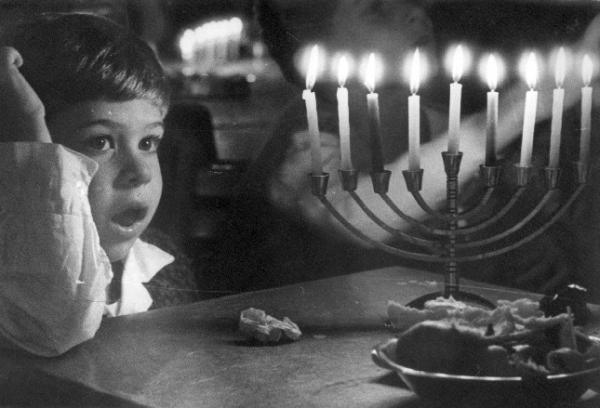
Menorah
In 164 B.C.E., the Syrians who ruled Israel took away the Jews’ right to practice their religion. Led by Judah Maccabee the Jews rebelled and succeeded in reclaiming their sovereignty and they rededicated The Temple of Jerusalem. The history of the celebration of Hanukkah has had some interesting turns in more recent times.
There’s a story of a young Polish soldier in then General George Washington’s army who held a solitary Hanukkah celebration on a cold night in Valley Forge, Pennsylvania. The soldier gently placed his family’s menorah in the snow and lighted the first of eight candles for the first night of Hanukkah. The man was perhaps a bit homesick and missing his family. He must have thought about how much they’d suffered over time from religious persecution. There were tears in his eyes when General Washington found him. Washington wondered what the young man was doing and why he was crying. The soldier told his general the story of Maccabee and the other Jews. It is said that Washington was heartened by the telling and moved on to battle and victory. That menorah is now on display at the Smithsonian Museum.
Yet another story surfaces in 1993 Billings, Montana where a family was lighting their menorah one night. As is custom, they placed the lighted menorah in the front window of their home where it was stoned by anti-Semites, as were the homes of other Jewish families that same evening. The town newspaper printed dozens of menorahs. Rev. Keith Torney, a minister of the First Congregational Church, United Church of Christ, distributed them to all the Christians and the paper menorahs were placed in windows all over Billings as a sign of solidarity and of respect for the freedom to practice religion as one’s conscience dictates.
Look to the Light is a commemorative poem written by Rabbi Daniel Grossman and set to music by Meira Warshauer. Enjoy! … but if you are viewing this from an email subscription, you’ll have to link through to the web/zine to view and hear it.
The Magnificat
The Ode of Theotokos (Song of the God Bearer)
It is only in the Gospel of Luke that we read of Mary’s recitation of this poem that harkens back to Jewish prophecy and is constructed in the traditional verse style of the times with mirroring and synonymous parallelism.
From the Book of Common Prayer
My soul doth magnify the Lord: and my spirit hath rejoiced in God my Saviour.
For he hath regardeded: the lowliness of his handmaiden.
For behold, from henceforth : all generations shall call me blessed.
For he that is mighty hath magnified me : and holy is his Name.
And his mercy is on them that respect him : throughout all generations.
He hath shewed strength with his arm : he hath scattered the proud in the imagination of their hearts.
He hath put down the mighty from their seat : and hath exalted the humble and meek.
He hath filled the hungry with good things : and the rich he hath sent empty away.
He remembering his mercy hath holden his servant Israel : as he promised to our forefathers, Abraham and his seed for ever.
The Prophet’s Nativity
A book explaining the meaning of the phrase Jashan e Eid Milad un Nabi
One poem that celebrates Mawlid, the birth of the Prophet, is exceptionally sweet. It was written by the Turkish Süleyman Çelebi (also known as Süleyman Of Bursa) who died in 1429. You’ll note that in addition to honoring the Prophet Mohammad, it honors three mothers: Asiya the mother of Moses, Mary the mother of Jesus, and Amina the mother of the Prophet.
12/21/2019 Correction from Anjum Wasim Dar (Poetic Oceans) “The Holy Prophet Mohammed pbuh wasborn on the 12 of Rabbiul Awal…according to Islamic HijriCalendar…this date is observed as His birthday/Eid eMilaad un Nabi…it can be in any month of the English year…not just November or December”
Mevlûd-i Peygamberi, Hymn of the Prophet’s Nativity
Some have said that of these charming three
One was Asiya of moonlike face,
One was Lady Mary without doubt,
And the third a houri beautiful.
Then these moonfaced three drew gently near
And they greeted me with kindness here;
Then they sat around me, and they gave
The good tidings of Muhammad’s birth;
Said to me: “A son like this your son
Has not come since God has made this world,
And the Mighty One did never grant
Such a lovely son as will be yours.
You have found great happiness,
O dear, For from you that virtuous one is born!
He that comes is King of Knowledge high,
Is the mine of gnosis and tawhid*
For the love of him the sky revolves,
Men and jinn are longing for his face.
This night is the night that he, so pure
Will suffuse the worlds with radiant light!
This night, earth becomes a Paradise,
This night God shows mercy to the world.
This night those with heart are filled with joy,
This night gives the lovers a new life.
Mercy for the worlds is Mustafa,
Sinners’ intercessors: Mustafa!
JAMIE DEDES is a freelance writer, poet, content editor, and blogger. She manages The BeZine thebezine.com and its associated activities and The Poet by Day jamiededes.com, an info hub for writers meant to encourage good but lesser-known poets, women and minority poets, outsider artists, and artists just finding their voices in maturity. The Poet by Day is dedicated to supporting freedom of artistic expression and human rights.
Thank you, Mbizo Chirasha, for making Jamie Dedes, Managing Editor, of “The BeZine” the featured profile of the year and for including the work of so many of our Zine friends and other worthy poets who pound the keyboard for peace, justice, and human rights including Anjum Wasim Dar and Michael Dickel, Contributing Editor to”The BeZine.”
Originally posted on Miombo Publishing: December dribbles her signature dance towards January, shaking off jackets of Christmas fever welcoming 2020 flipping pages into another millennium. We are capping this year of diversity with a blessing of global poetry. This journal celebrates the power in togetherness and the vintage of diversity .Poets and poems featured in…
“The BeZine” will be published today as scheduled, but probably rather late in the day. We’ve been running a bit behind, but what a delight in a world gone mad to encounter all the wisdom and compassion in the hearts of our contributors. I get to spend the day with these beautiful souls.
“There is a LIGHT in this world. A healing spirit more powerful than any darkness we may encounter. We sometime lose sight of this force when there is suffering, and too much pain. Then suddenly, the spirit will emerge through the lives of ordinary people who hear a call and answer in extraordinary ways.” Richard Attenborough
Jamie Dedes
The BeZine
Managing and Founding Editor
USDA logo for Supplemental Nutrition Assistance Program / Public Domain
“Almost 1.4 million veterans live in households that participate in SNAP (formerly food stamps), CBPP analysis of data from the Census Bureau’s American Community Survey finds. In every state, thousands of low-income veterans use SNAP to help put food on the table. Florida has the largest number of veterans participating in SNAP (120,000), followed by California and Texas (97,000 apiece). In Oregon, Rhode Island, West Virginia, and Washington, D.C., at least 10 percent of veterans live in households that received SNAP in the last year. SNAP Helps Almost 1.4 Million Low-Income Veterans, Including Thousands in Every State MORE, Center on Budget and Policy Priorities, byBRYNNE KEITH-JENNINGS and LEXIN CAI
the unconscionable dance in the canyons of power, lined with megalithic buildings, the edifice complex of the spin-meister’s lie, that the demigods can do anything – anything – walking this asphalt valley
a parade, flailing lemmings trussed and trusting their die-cut dreams to the pitiless whim of the military/ industrial/medical alliance, whose war-cries are of greed and arrogance, believing they’ll live forever, today’s sovereignty, tomorrow’s guarantee. But it’s
all delusion – cultures die and the hope-crushing architects of cuts and austerity measures are like the rich man in the Lazarus story, there’ll be some kind of backlash, some kind of hell to pay …
Rich Lazarus! richer in those gems, thy tears,Than Dives in the robes he wears:He scorns them now, but oh they’ll suit full wellWith the purple he must wear in hell”Richard Crenshaw (c.1613-1649), English cleric, teacher, metaphysical poet, Steps to the Temple. Sacred Poems, Delights of the Muses (1646)
New SNAP Rule Would Cost Many of Nation’s Poorest Their Food Aid
by Robert Greenstein, Center on Budget and Policy Priorities Statement
The emphases are mine. / J.D.
On December 4, the Trump Administration issued a draconian rule in the Supplemental Nutrition Assistance Program (SNAP, or food stamps) that will cut off basic food assistance for nearly 700,000 of the nation’s poorest and most destitute people. Those affected — SNAP participants ages 18 through 49 who aren’t raising minor children in their homes — are among the poorest of the poor, according to U.S. Department of Agriculture (USDA) data. Their average income is just 18 percent of the poverty line. Their average monthly SNAP benefits are about $165 per month.
A longstanding, harsh provision of SNAP limits these 18- through 49-year-olds to just three months of benefits, while not employed for at least 20 hours a week, out of every three years. Because of its severe nature, this provision of law also allows states to seek, and USDA to grant, waivers of this three-month cut-off for areas where insufficient jobs are available for these individuals, such as when unemployment is elevated.
From the provision’s enactment in 1996 until now, both Democratic and Republican presidents alike have operated under a common set of criteria in granting waivers from the three-month cut-off. And Democratic and Republican governors alike have sought and secured these waivers. Thirty-six states currently have waivers for parts of their state where unemployment is highest.
Now, the Trump Administration is abandoning this longstanding, bipartisan practice, however, and replacing it with a much more restrictive rule that will increase hunger and destitution. The new rule sharply restricts states’ ability to protect unemployed adults from the harsh time limit. It does so by substantially narrowing the criteria that states have most commonly used to qualify for waivers, thereby greatly shrinking the number of areas that can qualify for relief. As a result, the Trump Administration itself estimates that the rule will cut off basic food aid to nearly 700,000 unemployed or underemployed individuals.
Most of these individuals are ineligible for any other form of government financial assistance because they aren’t elderly, severely disabled, or raising minor children. For many of them, SNAP is the only assistance they can receive to help make ends meet.
What’s more, the final rule is more severe than the proposed rule, which itself was very harsh. States currently can request waivers when they experience rapidly rising unemployment, as typically occurs at the onset of economic downturns based on the Department of Labor’s determination that the state qualifies for extra federal unemployment benefits. But under the final rule, states must rely on historical data that would not reflect the onset of economic downturns until many months later. Moreover, far fewer areas will qualify for waivers during a widespread, national recession. A state with spiking unemployment reaching levels as high as 9 percent would not qualify for a waiver if national unemployment were also high, such as at 8 percent. This will limit a core strength of SNAP — its responsiveness to changes in economic conditions so that individuals who lose their source of income can quickly qualify for temporary food assistance. Instead of mitigating a recession’s harm, the new rule will exacerbate it.
Another Flawed “Work Requirement” Proposal
Adding to these concerns, although participation in a work or training program counts toward fulfilling the 20-hours-a-week requirement, states are not required to provide work or training slots to these individuals — and most states don’t. Furthermore, pounding the pavement and searching hard for a job does not count toward meeting the requirement. If you can’t find a 20-hour-a-week job on your own, you’re cut off SNAP anyway.
The Administration’s portrayal of the new rule as a reasonable “work requirement” thus is misleading — as noted, most states don’t offer any job, training opportunity, or slot in a work program to most people subject to the three-month limit. And people who are “playing by the rules” and looking hard for a job are cut off nonetheless.
In addition, the history of the three-month cut-off shows that some people who should qualify for an exemption from it because they suffer from a significant health condition often don’t get an exemption — and lose their SNAP benefits anyway, because they can’t satisfy the paperwork and other bureaucratic hurdles involved in securing an exemption. That’s especially troubling now, because the Administration is giving states little time to prepare for this sweeping change. Properly identifying which destitute individuals in formerly waived areas should be subject to the three-month time limit and which should be exempt (due to conditions that affect their ability to work) can require both training staff and allocating additional administrative resources.
Rule Hits People of Color, Those With Limited Education and in Rural Areas Hardest
Cutting off basic assistance doesn’t appear to help individuals get jobs, as research into the SNAP time limit, and similar rules in Medicaid, demonstrates. The rule will hit hardest those with the greatest difficulties in the labor market. That includes adults with no more than a high school education, whose unemployment rate is much higher than the overall unemployment rate; people living in rural areas where jobs are often harder to find; and people who are between jobs or whose employers have cut their hours to less than 20 hours a week, which is common in the very-low-wage labor market even when the economy is strong.
People of color are likely to lose benefits disproportionately under the rule, given their much higher unemployment rates and continued racial discrimination in labor markets. The African American unemployment rate has long been roughly double the non-Hispanic white unemployment rate. Studies have found that white job applicants are much likelier to receive callbacks after job applications or interviews than equally qualified Black applicants.
Here’s how the new rule will harm these groups. Under the new rule, an area can qualify for a waiver only if its average unemployment rate over a recent 24-month period has been 20 percent higher than the national average for the same time period and was 6 percent or higher. But a local area with an overall 5.8 percent unemployment rate can have an African American unemployment rate closer to 10 percent, as well as an unemployment rate around 10 percent for people of all races who are age 25 or over who lack a high school diploma or GED.
The Administration and House Republican leaders sought, but failed, to secure these policy changes as part of the farm bill that Congress passed on a bipartisan basis last year. The Administration is now implementing through executive action what it failed to secure through legislation.
Robert Greenstein, UDSA photograph / Public Domain
Instead of punishing those facing destitution and other difficult circumstances, the Administration should seek to assist them by pursuing policies such as more and better job training and employment programs, a higher minimum wage, and a strengthened Earned Income Tax Credit. Denying them basic food and nutrition is not the route that a fair and compassionate administration of either party should take.
Note: The Center on Budget and Policy Priorities (CBPP) is a progressive American think tank that analyzes the impact of federal and state government budget policies founded by Robert Greenstein, the author of this feature. CBPP is 501(c)(3) nonprofit organization, the Center’s stated mission is to “conduct research and analysis to help shape public debates over proposed budget and tax policies and to help ensure that policymakers consider the needs of low-income families and individuals in these debates.


 Michael Dickel is a contributing editor for The BeZine. He writes on- & off-line & edits his blogZine,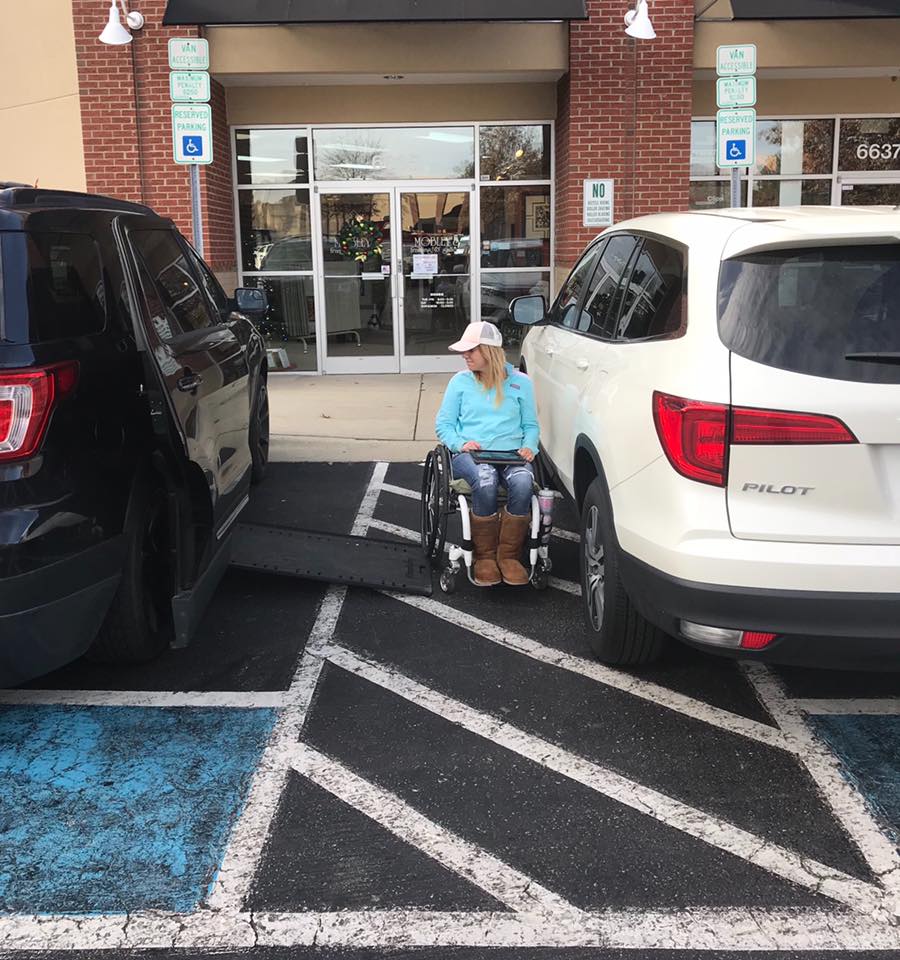


 KELLA HANNA-WAYNE (
 MBIZO CHIRASHA (
 ANJUM WASIM DAR (
 KELLA HANNA-WAYNE (
 The BeZine thebezine.com
 Our 2020 100TPC logo designed by team member Corina Ravenscraft (
 Department of Seaweed: Living Archive, 2018–ongoing; Julia Lohmann (German, b. 1977), Violaine Buet (French, b. 1977) and Jon Lister (New Zealander, b. 1977); Seaweed and rattan; Dimensions variable; Photo: Pierre-Yves Dinasquet, Department of Seaweed.







 The BeZine