Posted in Essay, General Interest, Guest Writer, Shakti Ghosal

Wishing You a Garbage-Free Week Ahead

418px-NYC_taxis

the work of Shakti Ghosal

One day I hopped in a taxi and we took off for the airport. We were driving in the right lane when suddenly a black car jumped out of a parking space right in front of us.

My taxi driver slammed on his brakes, skidded and missed the other car by just inches!

The driver of the other car whipped his head around and started yelling at us.

My taxi driver just smiled and waved at the guy.I mean, he was really friendly.

So I asked, ‘Why did you just do that? This guy could almost ruin your car and sent us to the hospital!’

This is when my taxi driver taught me what I now call, ‘Law of the Garbage Truck’  He explained that many people are like garbage trucks. They run around full of garbage, full of frustration, full of anger, and full of disappointments.

As and when their garbage piles up, they need a place to dump it and sometimes they’ll dump it on you.

Don’t take it personally. Just smile, wave, wish them well, and move on. Don’t take their garbage and spread it to other people at work, at home, or on the streets. The bottom line is that successful people do not let garbage trucks take over their day.

Life’s too short to wake up in the morning with regrets, So … Love the people who treat you right. Pray for the ones who don’t.

Life is 10 % what you make it.

AND

90 % how you take it!

Do resolve to have a great, garbage – free week ahead……..

in learning ……………….Shakti Ghosal

© 2013, essay, Shakti Ghosal, All rights reserved
Photo credit ~ Joseph Plotz via Wikipedia under Creative Commons Attribution 3.0 license.

Shakti Ghosal
Shakti Ghosal

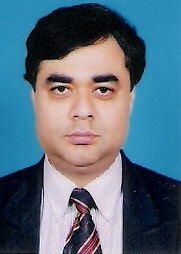
SHAKTI GHOSAL ~ has been blogging (ESGEE musgings)since September 30, 2011. He was born at New Delhi, India. Shakti is an Engineer and  Management Post Graduate from IIM, Bangalore. Apart from Management theory, Shakti remains fascinated with diverse areas ranging from World History, Economic trends to Human Psychology & Development.

A senior management professional, Shakti has been professionally involved over twenty-five years at both international and India centric levels spanning diverse business areas and verticals. With a strong bias towards action and results, Shakti remains passionate about team empowerment and process improvement.

Shakti currently resides in the beautiful city of Muscat in Oman with wife Sanchita, a doctorate and an educationist. They are blessed with two lovely daughters, Riya and Piya.

Posted in Essay, Guest Writer, Music, Poems/Poetry, teacher

MY TRUMPET TEACHER IS A POET: Is that cool?

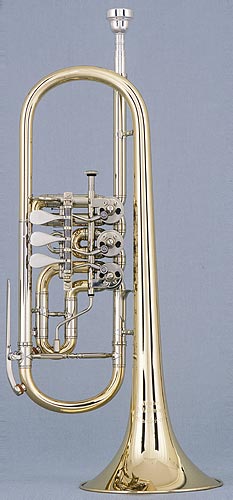
Trumpet_in_c_germanthe work of Kim Moore (Kim Moore, poetry), originally published in Artemis poetry and posted here with Ms. Moore’s permission and that of the publisher

When I was first asked to write an article exploring the links between being a poet and a trumpet teacher, my first reaction was panic. How could I possibly link my poetry life and my teaching/music life together? In my head they occupy two very separate spaces. Whilst pondering this, I grumpily thought of how often they seem to leech time and energy from each other, and it was this thought that made me realise they must be linked in some way and gave me the confidence to start writing.

I’ve only just started telling pupils that I write poetry – they often just look at me strangely. Then they ask what I write about – I usually change the subject and make them play a scale or something – because what poet likes to be asked what they write about? Especially when you are asked by a ten year old who is not going to be impressed by an airy flourish of my hand and a vague reference to gender politics.
.
At the beginning of 2012 I told one of my teenage pupils I’d got a job working as a poet in a men’s prison for ten weeks. He looked at me in disbelief, then did that clicking knuckles thing that’s all the rage with young people, before exclaiming with delight ‘You’re gonna get stabbed!’ followed by another click of his knuckles. When I appeared the next week with no puncture wounds, triumphant, he’d forgotten about the conversation already.
.
I’ve been working as a full time brass teacher for seven years – but in September 2012 I decided to reduce my contract down to four days a week to give myself more time to write. I teach in about 16 primary schools a week delivering a programme called ‘Wider Opportunities’ where every child in the class gets a brass instrument as well as the teacher and teaching assistants. I also run two brass bands and teach small groups of children as well.
.
I think the most important part of my job is to show both adults and children that music is for them. I can relate to thinking that it is not you see – being the only child in the school not allowed in the choir age eleven. The same thing happens in poetry – people think it is not for them – but it is surprising how many people in conversation will admit they have written a poem or ‘always wanted to learn to play a musical instrument’.
.
As I’m writing this article, I can see more and more connections. The role of peripatetic teacher is always that of an outsider – I’m not attached to any school and this loneliness is reminiscent of the work of being a poet, or a writer. My two worlds creep closer when I think of the way I had to learn as a new teacher, that my hope of guiding young players who spent every spare minute practising (as I did) off to music college was unlikely. I had to learn to let go of what I wanted, to understand that if my enjoyment of my job, my success, was measured by how much my pupils practised and whether they went off to music college, I would be a Very Miserable Teacher. I had to learn to listen to what my pupils wanted – and this transaction is often non-verbal because sometimes they don’t know either. Doesn’t this sound like poetry? The act of letting go, of relinquishing control is precisely what writing is to me. I learnt as a poet as well, that if I measured success by publication or prizes I would be a Very Miserable Poet.
.
Another part of my job is conducting a junior band. This is going to sound harsh, but conducting is all about imposing your will on the group. There is no room for anyone else to be creative. In fact, rehearsing is more like editing a poem – practising the same section over and over again, breaking the band down into parts so you can hear the weakest links – is exactly like reading your own poem over and over again, to find a line that will give way under scrutiny.
.
Teaching music and writing poetry are ultimately an act of balance – they both have that feeling of walking a tightrope, of words being vastly important. I often find myself using the same catchphrases when I’m teaching – they almost become your own personal clichés. I made a list of mine and turned it into a poem – it made it into my first pamphlet at the last minute and on the advice of my editor, Ann Sansom rather than any passion for it on my part – maybe it reminded me too much of work – but it is often the poem that people comment on – the most surprising people will confess they used to play a brass instrument or will say ‘I remember my trumpet teacher saying that to me when I was small’. And of course, the lines in my poem are not mine at all, really. They were given to me by my trumpet teacher and I remembered them, and repeated them to my pupils, like a poem, learnt by heart.
.
Teaching the Trumpet

I say: imagine you are drinking a glass of air.
Let the coldness hit the back of your throat.

Raise your shoulders to your ears, now let
them be. Get your cheeks to grip your teeth.

Imagine you are spitting tea leaves
from your tongue to start each note

so each one becomes the beginning of a word.
Sing the note inside your head then match it.

At home lie on the floor and pile books
on your stomach to check your breathing.

Or try and pin paper to the wall just by blowing.
I say: remember the man who played so loud

he burst a blood vessel in his eye? This was
because he was drunk, although I don’t tell

them that, I say it was because he was young,
and full of himself, and far away from home.

– Kim Moore

© 2013, essay and poem and portrait (below), Kim Moore, All rights reserved
Photo credit ~ trumpet by Benutzer:Achias under Creative Commons Attribution-ShareAlike 3.0 Unported license

Society of Authors Awards June 2011 Kim Moore  Eric Gregory AwardsKIM MOORE (Kim Moore, poetry) ~ works as a peripatetic brass teacher in Cumbria. In 2011kim-moore-if-we-could-speak-like-wolves_1 she won an Eric Gregory Award and the Geoffrey Dearmer Prize, and in 2012 her first pamphlet  If We Could Speak Like Wolves was a winner in the Poetry Business Pamphlet competition, judged by Carol Ann Duffy. It was selected as one of the Independent’s ‘Books of the Year’. Kim has been published in various magazines including The Rialto, Poetry Review, The TLS, Magma, and ARTEMISpoetry. She is currently working on her first collection. You can sample more of her poetry on her blog HERE.

,

artemis-1ARTEMIS poetry ~  the bi-annual journal (November and May) of the Second Light Network , a professional association of women poets. The journal is published under their Second Light Publications imprint. Members receive a copy as part of their membership benefits. Issues are available to non-members by subscription at £9 p.a. or as a one-off purchase at £5 a copy (plusp&p).

Posted in Culture/History, General Interest, Guest Writer, Karen Fayeth, memoir

For the Love of a Good Cuppa

A couple years ago, my husband and I had the chance to celebrate the Fourth of July with some good friends. There were six of us total (three couples), and we met at our friend’s house for a special treat.

One of our crew had just recently returned from a trip to Ethiopia. She and her husband are in process of adopting an adorable baby boy and she had to make a visit to work through the paperwork with the local courts.

While in country visiting her baby son and patiently working though the long process, she was treated on several occasions to the Ethiopian coffee ceremony.

On our Fourth of July holiday, she wanted to share this ceremony with us, her friends.

About the coffee ceremony, here’s a quote from Ethiopian ambassador Haile-Giros Gessesse:

“Coffee has social value in our society. It is deep rooted in our culture. The coffee ceremony in local areas is used mainly for social gatherings. In the mornings and evenings parents, especially mothers gather together for a coffee ceremony and also use it as a platform for exchanging information in their surroundings. It is a means of communication. When people sit down they usually spend three hours finalizing the ceremony, starting with the preparation, and then roasting to brewing it.”

Our friend had hauled home a big bag of green coffee beans, water hulled (the good stuff) not fire hulled, and we sat outside in the beautiful sun while she told us about the ceremony.

First, she roasted the beans on the grill. We watched as she shook and swirled the pan, much like a slow Jiffy pop motion.

When we all agreed that it looked like the beans were at a good medium roast each of us took in a whiff of the fantastic aroma from the pan.

Then we took turns using a mortar and pestle to smash the beans down to a nice grind. Every person took their turn and everyone contributed.

It was satisfying work to smash, smash, smash those crispy beans and release the beautiful scent and oils.

Once ready, the grinds were placed into a French press and once brewed, a round of coffee was poured into six cups.

This fresh roasted coffee was delicious! It had a floral aroma and tasted so light and mild. This coffee was perfect with just a touch of sugar and nothing else.

In keeping with tradition, we had three rounds of coffee while we discussed our lives, the news of the day, baseball, and got caught up with each other. This is an essential part of the ceremony, sharing community, support, and friendship.

Now, I love a great cup of coffee, but I rarely drink caffeinated coffee. After three cups I was ready to clean my house top to bottom, jog a thousand miles, and throw a 98mph fastball.

But it was a happy caffeinated high shared with dear friends.

I was honored to be a part of the ceremony and I can hardly wait until our friends bring home their baby boy. I hope to we can continue to give him a sense of community and family, maybe even over a cuppa or two…or three.

– Karen Fayeth

© 2013, essay, Karen Fayeth, All rights reserved
Photo and quote from a CRIEnglish.com article by Wei Tong.

webheadshotKAREN FAYETH ~ is one of our regular writers. She is our tech manager, site co-administrator along with Jamie and Terri, and fiction and creative nonfiction editor. She blogs at Oh Fair New Mexico. Born with the writer’s eye and the heart of a story-teller, Karen Fayeth’s work is colored by the Mexican, Native American, and Western influences of her roots in rural New Mexico complemented by a growing urban aesthetic. Karen now lives in the San Francisco Bay area. When she’s not spinning a tale, she works as a senior executive for science and technology research organization.

Karen has won awards for her writing, photography, and art. Recent publication credits include a series of three features in New Mexico magazine and an essay with the online magazine Wild Violet. Her latest short story “Quick, Quick Slow” was published in the May edition of Foliate Oak. Karen’s photography is garnering considerable attention, her photo titled “Bromance” (featuring Aubry Huff and Pat Burrell) was featured on MLB Network’s Intentional Talk hosted by Chris Rose and Kevin Millar.

Posted in Art, find yourself, Guest Writer, Music

Underpainting With Love and Kindess

work by Leslie White 
.
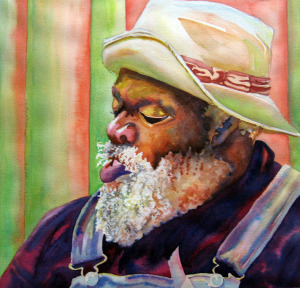
I could not believe my good fortune when I found a photo of Grandpa Elliot posted to the wet canvas photo reference library for artists.  It was a must-do for me..Several bloggers have made mention of underpaintings; the most recent being Amy from Souldipper found here. She asked me about an artist’s use of an underpainting.  I responded something like it is the foundation that we build our final work on. That made me think more on the subject as we were also talking about underpainting our lives with love and kindness.  Then I came across the photo of Grandpa Elliot who has actually underpainted his life with sharing music to millions in New Orleans and becoming part of the project, “Playing for Change”, a CD whose proceeds go to helping others.The other connection I can make about an underpainting is that it always, for me, sets the tone for where the light will fall in it. BINGO! I see the same in life with passing on kindness. Light is passed on through our kindness to others.  The above stage of my painting illustrates how I carved out areas where I wanted the light to fall.

grelliot

The above image is the finished result.

I can not think of a better way to start the weekend than this:

Video posted to YouTube by .

– Leslie White

leslieblue6LESLIE WHITE (lesliepaints) ~ is a guest writer here and an artist, teacher, book illustrator, and blogger. She’s been blogging since March 2009 and appreciated for the skill and beauty she shares. Her gifts to us are mini-lessons in a artistic technique. Often there is value added with life lessons, such as the one presented here.  Leslie shares information on new art products and techniques and enriches our understanding of and appreciation for art.  Her blog-posts go a long way toward encouraging others. She often enchantes us by sharing the work of her granddaughter and her students.


Posted in Essay, find yourself, Guest Writer

Who Would I Be Without My Story

the work of Shakti Ghosal ~

You are what exists before all stories. You are what remains when the story is understood.
Byron Katie, American speaker & author of  The Work

I muse about this Coaching question asked me.

So what is my story? As I think of this, I see its tentacles going into the past.

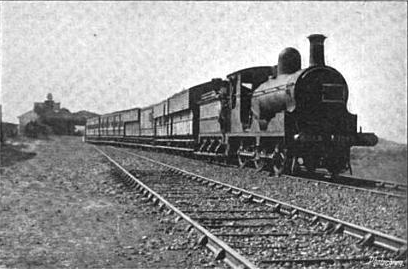
The year is 1911. A lowly placed accounts clerk of the British Accounts Service in India boards the Kalka Mail train from Calcutta with his family. He is shifting home to Delhi in accordance with the British colonial Government’s decision to shift the administrative capital of the Indian subcontinent there. He is following his work, the only thing he knows that sustains him and his family. He is my grandfather.

east_indian_railway_mail

ast forward fifty years and it is my father in the midst of a career in the Indian Audit and Accounts service. Now settled in Delhi, the capital of independent India. Content with a middle class lifestyle. So grooved in his office work that he feels insecure to take up an exciting consular opportunity in the US. He regrets it citing family constraints.

Fast forward another fifty years and it is I sitting at the desk in my office wondering what next. Having been on a sometimes exciting, sometimes lacklustre roller coaster ride through diverse business areas for three decades, I can claim fair knowledge of the nuts and bolts of corporate working. But like my grandfather and father, I see my work primarily as the means to provide a comfortable life to me and my family.

My story. The story in which working at an office desk equates to life comfort and sustenance. The story which I accept as me. And as I accept, I see it gaining power and dictating what I do. I see it protecting me in a ‘safe box’. As it allows me to peep through my perception coloured lenses and read meaning about the world at large. But as it protects, do I also see it confining and preventing me from setting forth, taking risks and achieving my true potential?

What is it that has embedded this ‘office work’ DNA in me thus? What is it that has made it such an integral part of my story? As I muse, I sense that in my office work DNA resides a gene harking back to the industrial revolution. A gene that through generations has altered my value system. And made me shift towards valuing business growth, productivity and profits over beauty, compassion, love and community ties. Over generations, the gene has also lured me away from simplicity and frugality and towards materialism. An attachment to materialistic possessions which has fuelled insecurity. And has manifested in my life through frantic work schedules, technology tying me down 24X7, scarcely any time to “stop by the woods” or “wander lonely as a cloud”.

So, who would I be without my story? Who would I be if I could shed the above DNA and gene? Would I have that glorious opportunity to start from a place where I am no longer confined and am free to define and implement what I think is important? What do I see?

I see myself slowing down, without the pressures of societal expectations of wealth and ownership. As I take personal responsibility to do that which is meaningful, creative and liberating to me.

I see myself effortlessly crossing those artificial barriers created by economic, social and racial compulsions.

I see in me the birth of a great willingness to learn. From all corners of the world. Unfettered and unhampered by beliefs of my education and experience.

Like the return of the Jedi, I see in me the comeback of the human heart. As I acknowledge intrinsic qualities like Empathy, Faith, Creativity and Interconnectedness and bring them centre stage.

I see how work would look like for me. Passion…. Art…… the pulse of the environment.

photo-0613

Who would I be without my stories?
Like a tree
Without the rustle of the leaves
Winter mind
Kind
Aligned
To the Inside
Inside the inside
A space so wide
It has no centre
Because it is centre

From Caitlin Frost’s Web log

In learning………………… Shakti Ghosal

© 2013, essay and photographs, Shakti Ghosal, All rights reserved

Shakti Ghosal
Shakti Ghosal

SHAKTI GHOSAL ~ has been blogging (ESGEE musgings)since September 30, 2011. He was born at New Delhi, India. Shakti is an Engineer and  Management Post Graduate from IIM, Bangalore. Apart from Management theory, Shakti remains fascinated with diverse areas ranging from World History, Economic trends to Human Psychology & Development.

A senior Management professional, Shakti has been professionally involved over twenty-five years at both International and India centric levels spanning diverse business areas and verticals. With a strong bias towards action and results, Shakti remains passionate about team empowerment and process improvement.

Shakti currently resides in the beautiful city of Muscat in Oman with wife Sanchita, a doctorate and an Educationist. They are blessed with two lovely daughters, Riya and Piya.

Posted in Essay, Guest Writer

The Noble Art of Reading in Bed

100_0088cropped-bedroom

the work of Valerie Davies

When I was young and naive, and a novice journalist, I wrote an article in a woman’s magazine which began:’ I got most of my education under the bed-clothes’, and went on to discuss children’s reading. Some wag must have been reading his wife’s copy, and the clipping appeared on the office notice-board amid crude male guffaws. Thank you chaps, I got the message. Not a quick learner, but I got there in the end.

Reading under the bed – clothes was the refuge of a child who was sent to bed at seven o clock every night, and allowed to read for fifteen minutes. Fifteen minutes! When I got older, and had more homework bed was set back to seven thirty, but the fifteen minute reading restriction still applied. Only a non-reader could have stipulated this ridiculous time limit, so under the bed-clothes it was. When I had no torch I knelt for hours, freezing in my night-clothes squinting to read by the crack of light under the door from the hall light.

Occasionally I tried the loo or the bathroom, but this was risky, as books aren’t easily hidden by a skinny child under a thin nightie. When I was fourteen I picked up Jane Eyre in the library. It exploded into my consciousness. I felt dazed and obsessed by the strange, compelling self-centred story. I could think of nothing else. I read it over and over again. I read it under the desk at school, in the bus and on the train, and of course, in bed.

Once the parents had gone to bed, I switched my light on with impunity, and read until I had finished Jane Eyre, and then started ‘Villette’, by which time it was heading for five o clock in the morning. Since I had to get up at six to cook my breakfast and catch the school bus at seven am, it seemed safer to stay awake, and soldier on. And having done it once, and finding it was possible to keep going without sleep, I quite often sacrificed my sleep for a good book after that.

Boarding school was tricky, but once again, there was always the bathroom. When I left home and became my own master, reading in bed became one of my favourite pastimes. Mostly literature and poetry in those palmy days. And usually then I had a bowl of apples to munch meditatively as the hours went by, or better still, a bar of chocolate. Sometimes decadence overcame me and I had a glass of lemonade. Marriage and motherhood dished all that of course, and reading in bed became a distant remembered pleasure.

But in the last few years since my husband’s snores have become so loud they wake me even when I’m sleeping in another room, we’ve taken a page out of the Royal Family’s domestic habits, and now sleep in separate rooms. This means I can read without disturbing him, and I’ve raised this noble pastime to a fine art.

Usually three books go to bed with me… something that I call mental knitting, a relaxing series like Georgette Heyer, (a much under-rated, very funny, witty and clever writer) or other light-hearted books like the hilarious Adrian Mole Diaries, or ‘The Jane Austen Book Club’. Georgette Heyer is sort of Jane Austen lite – but the blessed Jane is also a regular companion, along with the Thomas Hardy’s, George Eliot’s, Anthony Trollope’s, to re-read for the sheer pleasure of enjoying their writing again. In theory too, because I know the story, I kid myself I won’t be tempted to read too late. But that is a false premise. And as CS Lewis said, ‘I can’t imagine a man really enjoying a book and reading it only once.’

And then there’s the third category – those which are on the go, sometimes a new novel – Barbara Kingsolver at the moment, but not many of those – a biography, a history, a diary. And for real relaxation I sink into nature journals, often a classic like Flora Thompson’s: ‘Lark Rise at Candleford’ … Annie Dillard, Henry Beston or Ronald Lockley… mostly accounts of gentle, unpolluted country life.

But reading in bed isn’t just books. The bed matters too… preferably by the window… in summer with cool white linen-cotton blend sheets that have a silky feel, in winter comforting coloured flannelette to match the duvet. Pillows – plenty of them, to lean back on and others to support the elbows. Electric blanket a must in cold weather… I use it a bit like the hot tap in the bath… whenever it seems a bit chill, I switch it on until the bed is like toast again, and then prudently switch off again until the next time.

In summer, there’s the bliss of going to bed in day-light, knowing you have hours in front of you before dusk creeps up, before finally switching on the light. In winter, lamps on, curtains pulled, wood fire still burning in the sitting room to keep the house warm for when I emerge to make a cup of tea. And the bed, pyjamas warmed under the bed clothes on the electric blanket, cosy sheets and pillow slips, red mohair rug edged with wine-red satin, and a stash of peppermints to slowly chew as I turn the pages. No sounds, just the murmur of the soft sea, a distant owl, and occasionally a scuffle on the roof as a possum scrambles across. The sound of rain on the roof is good too.

The art of reading in bed is a silent, sybaritic, solitary joy and has nothing to do with going to sleep. It has everything to do with the pleasure of reading, frequently to the detriment of sleep. So I have to confess, in the words of L.M.Montgomery that : ‘I am simply a ‘book drunkard.’ Books have the same irresistible temptation for me that liquor has for its devotee. I cannot withstand them.’

– Valerie Davies

© 2013, essay, photograph, and portrait (below), Valerie Davies, All rights reserved

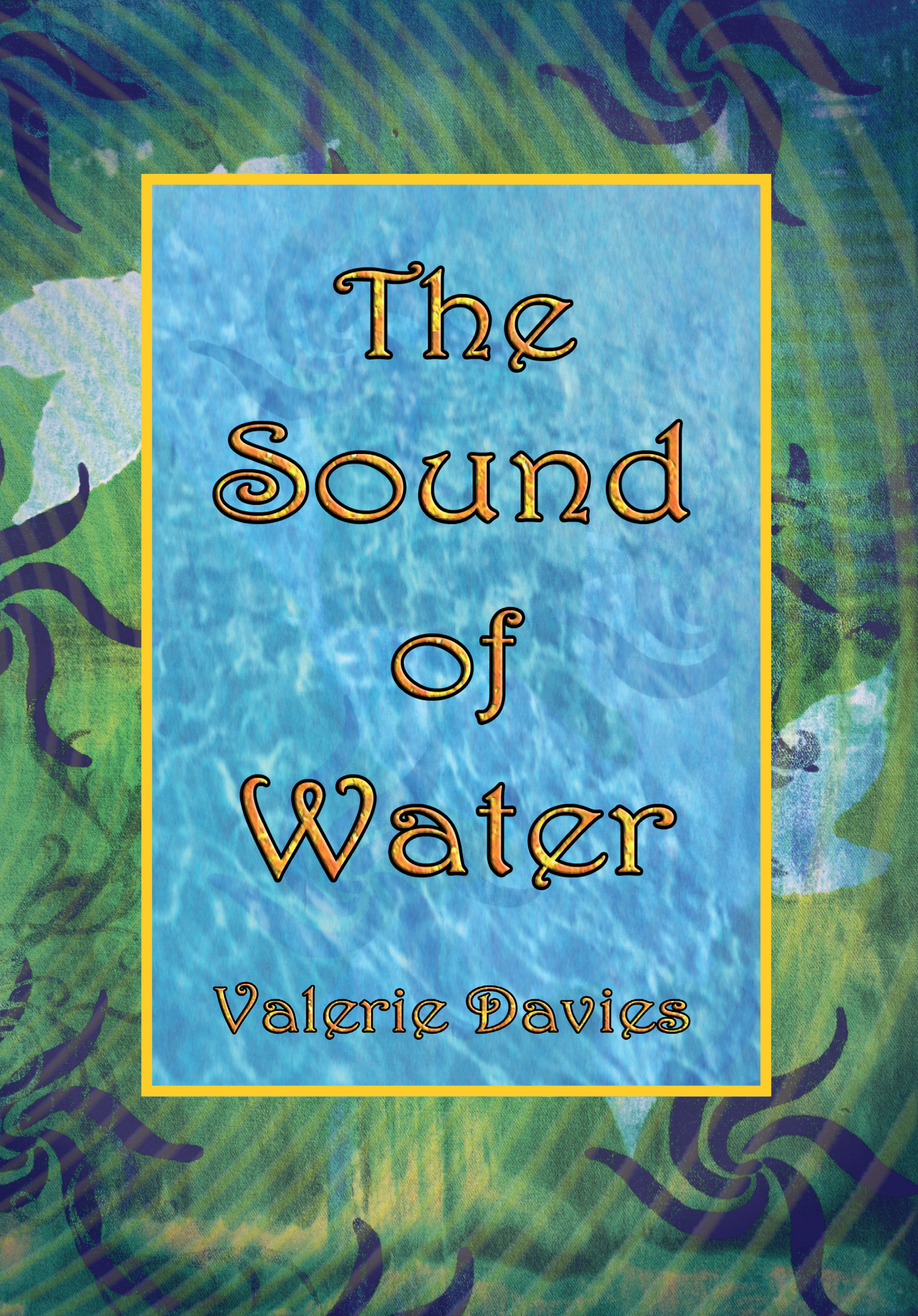
100_036634d750b1228d96f442911457fa49f7d5d3e2d8ea925f4a2067aec04be59b0e280856da42aad7d73b-thumbVALERIE DAVIES  (Valerie Davies.com) ~ our guest writer today, says she’s had an adventurous life, living through the Blitz in England, growing up in a military family, becoming a captain herself, and marrying into the military. Between one thing and another, she’s been around the world and back and had some truly hair-raising adventures. She’s worked as an editor and columnist. Valarie has been blogging for some time now. Her posts are chatty and full of wisdom and humor. They touch the heart. Valerie books are The Sound of Water and Chasing the Dragon. Find them HERE.

Posted in Guest Writer, Poems/Poetry

I’m beginning to live with future tense …

me-241I’m beginning to live with future tense
once more expanding my conjugations
to will and shall and verbs like hope the ones
I’ve been afraid to say out loud no sense
tempting the subjunctive when a sequence
of events in future perfect beckons
besieged still by emotional demons
I wobble precariously the pretense
of the conditional implying that
the ground could give way any minute and
I’d be plummeting through the past again
insecure disillusioned railing at
imperfect while trying to stop and stand
on the crust of could-be despite was-then

– Marilynn Mair

© 2013, poem and portrait, Marilynn Mair, All rights reserved

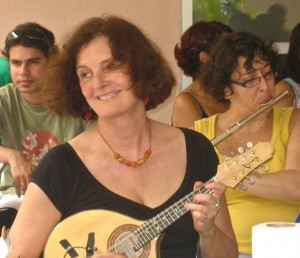
MARILYNN MAIR ~ of Celebrating a Year is known as the “angel of the tremolo” and “the first lady of mandolin”. Marilynn is Professor of Music at Roger Williams University, Bristol, Rhode Island. Her most recent CDs are Meu Bandolim and Enigmatica. Her most recent book is Brazilian Choro – A Method for Mandolin.  For more of Marilynn’s story, link HERE. Marilynn Mair is a contributing writer to Into the Bardo.

Posted in Guest Writer, Poems/Poetry

String Theory

600px-Calabi-Yau-alternate

the work of TJ Therein

Don’t ask me how, don’t ask me why
But energy will never die
It merely changes shape and form
Regardless of faith and decorum
All things are bound by this dharma
This my friend is part of Karma
We will die and in death disperse
Seeds upon wind of universe
On what ground those seeds settle and grow
Is something no one can really know
Some say angels with halos and wings
But we know nothing of these things
There is more to elephant than just tusk
And our bodies no more than mortal husk
It is the fruit that it contains
That baffles our little birdbrains
It confounds the fool as it does the wise
Because energy never dies

– Timothy James Therien

© 2013, poem and portrait (below), Timothy James Therien, All rights reserved
Photo credit ~ Scientific American cover, November 2007, under Creative Commons Attribution Share-Alike License 2.5 generic via Wikipedia

Snapshot_20110301_2TIMOTHY JAMES “TJ” THERIEN (Liars, Hypocrites & The Development of Human Emotions) ~ is a guest writer today on Into the Bardo. He has been blogging since November 2012 and has already garnered a significant and loyal following. He says in another poem “I am not a writer … I am possessed by unseen spirit/And my hand is so moved/Words dictated to me by inner voice/Muse speaks when she wants to speak…” That sounds an awful lot like work coming from sacred space. TJ tells us that he was born 1968 in Toronto, Ontario, Canada and current resides in The Eastern Townships, Quebec, Canada. He’s lived briefly in Calgary, Alberta, Canada, and Parry Sound, Ontario Canada. He participates in Poet’s Corner. His “About” is posted HERE.

Posted in Guest Writer, Poems/Poetry

Goulash

687px-2009-09-gulasch-pörkölt-paprikas-3

the work of Myra Schneider

A crucial ingredient is the right frame of mind
so abandon all ideas of getting on. Stop pedalling,
dismount, go indoors and give yourself masses of time.
Then begin by heating a pool of oil in a frying pan
and, Mrs. Beeton style, take a dozen onions
even though the space you’re working in is smaller
than the scullery in a Victorian mansion. Pull off
the papery wrappings and feel the shiny globes’ solidity
before you chop. Fry the segments in three batches.
Don’t fuss about weeping eyes, with a wooden spoon
ease the pieces as they turn translucent and gold.
When you’ve browned but not burnt the cubes of beef
marry meat and onions in a deep pan, bless the mixture
with stock, spoonfuls of paprika, tomato purée
and crushed garlic. Enjoy the Pompeian-red warmth.
Outside, the sun is reddening the pale afternoon
and you’ll watch as it sinks behind blurring roofs,
the raised arms of trees, the intrepid viaduct.
In the kitchen’s triumph of colour and light the meat
is softening and everything in the pot is seeping
into everything else. By now you’re thinking of love:
the merging which bodies long for, the merging
that’s more than body. While you’re stirring the stew
it dawns on you how much you need darkness.
It lives in the underskirts of thickets where sealed buds
coddle green, where butterflies folded in hibernation,
could be crumpled leaves. It lives in the sky that carries
a deep sense of blue and a thin boat of moon angled
as if it’s rocking. It lives in the silent larder and upstairs
in the airing cupboard where a padded heart pumps
heat, in the well of bed where humans lace together.
Time to savour all this as the simmering continues,
as you lay the table and place at its centre a small jug
in which you’ve put three tentative roses and sprigs
of rosemary. At last you will sit down with friends
and ladle the dark red goulash onto plates bearing
beds of snowhite rice. As you eat the talk will be bright
as the garnets round your neck, as those buried
with an Anglo-Saxon king in a ship at Sutton Hoo,
and the ring of words will carry far into the night.

– Myra Schneider

Circling The Core (Enitharmon Press 2008)

© 2009, poem, portrait (below), and book cover art (below), Myra Schneider, All rights reserved and presented here with the permission of the poet. Photo credit ~ Pot of Goulash by Ralf Rolestschek via Wikipedia under Creative Commons Attribution-NonCommercial-NonDiriviative 3.0 U.S.

IMG_0032-1circling core_22MYRA SCHNEIDER ~ is a poet, a poetry and writing tutor, and the author of Writing My Way Through Cancer and, with John Killick, Writing Your Self. Her poetry collections, Circling the Core and Multiply the Moon, were published by Enitharmon Press. She has eight published collections. Her most recent work What Women Want was published earlier this year by Second Light Publications.

Myra’s long poems have been featured in Long Poem Magazine and Domestic Cherry. She co-edited with Dilys Wood, Parents, an anthology of poems by 114 women about their own parents. She started out writing fiction for children and teens. We first discovered Myra through her much-loved poem about an experience with cancer, The Red Dresswhich she generously shared with readers here in our Perspectives on Cancer series in 2011.

Currently Myra lives in North London, but she grew up in Scotland and in other parts of England. She lives with her husband and they have one son. Myra tutors through Poetry School, London. Her schedule of poetry readings is HERE.

Posted in Creative Nonfiction, Essay, find yourself, General Interest, Guest Writer, Karen Fayeth, meditative

My Moment Of Zen

respiteIn a full to overflowing bathtub, I relax, soaking the ache out of legs and content to be surrounded by water. It’s not long before I slide down, legs crawling up the wall under the shower, head dipping below the surface. My right hand plugs my nose and my left hand covers my eyes like a sleep mask and water fills my ears.

I savor these few moments I have to just float in nothing.

The water amplifies noise but bends the sound waves into something more beautiful. Even the passing fire truck with its shrill siren and blaring horns sounds almost musical when passed through my warm, clear water. The rhythmic hum of the clothes dryer puts me in a trance and I enjoy this until my lungs ask politely and then not so politely if we can surface and take in some new, unused air.

I reluctantly rise up and gasp in a big breath and go under again. It’s just too delicious and quite addictive. This time I think about buying a snorkel so I can stay under the water and still breathe. I’ve considered buying a snorkel so I can stay under my bath water ever since I was a kid.

Even as a child I was drawn to the solace and quiet of being under water. One early evening as I was taking a bath and creating my own sensory isolation chamber, my mother walked in to check on me. As any protective mother of three children would do when presented with the sight of her youngest lying apparently lifeless in a bathtub full of water, she freaked out.

My mother yanked me from the water and shook me hard, shouting my name. I unplugged my nose and uncovered my eyes and said, “What?”

I got a well-deserved and thorough chewing out and was told in no uncertain terms that I was never to simply slide under the water and remain motionless. Ever.

When I later emerged from my bath and got dressed and ran a comb through my unruly long hair, I was confronted by my father who ripped into me for scaring my mother.

I always thought that was quite unfair. I didn’t set out to intentionally scare my mother. I simply wanted a moment, if even half a minute, where I didn’t exist in the world. Where everything was blocked out and time slowed down and sounds bent in pleasing ways.

My solution thereafter was to continue to dunk my head well below water and plug my nose with my right hand. With my left hand, I would raise it above the surface and wave it like the Queen on parade so that any passerby would know I was still conscious, just submerged.

This seemed a suitable solution for all. A nice compromise.

I’ve always wanted to visit one of those sensory isolation tanks. It sounds like a little slice of heaven to me. Floating in a tank with no light and hardly any sound and just the quiet to embrace me. Yes, I think I would love this very much.

The Good Man thinks I’m half a bubble off level to consider this. “I always figure while you are locked in there, the people outside will steal your stuff or do something weird,” he says.

This is how his mind works. This is not how my mind works.

A few years ago we visited a spa in Calistoga, California. The spas in Calistoga are known for their mud baths. You give them money and they allow you to slide your nekkid body into a warm tub of slightly sulphurous goo. The weight of the mud resists your body, you actually have to dig in there. Once settled, you are surrounded and suspended and oh my goodness I could have stayed in there for weeks.

The Good Man did not feel as kindly toward the mud. He said he was antsy the whole time he was in there and ready to vault from the tub. He couldn’t wait for it to be over. I never wanted it to stop.

Perhaps it’s something Freudian that I like to slip into warm suspended places and forget about things for a while. I choose to think it rather normal to want to seek out genuine moments of respite where the world and all its crazy spinning and shouting and clanking and cruelty goes away, for just a moment. For as long as it takes me to hold my breath.

Until I buy a snorkel.

– Karen Fayeth

© Karen Fayeth, copyright 2013, all rights reserved. Bathtub image found on Rodale.com and all rights remain with the website and photographer. Bio photograph by Claudia Akers.

webheadshotKAREN FAYETH ~ is one of our regular contributing writers. She is our new tech manager, site co-administrator along with Jamie and Terri, and fiction and creative nonfiction editor. She blogs at Oh Fair New Mexico. Born with the writer’s eye and the heart of a story-teller, Karen Fayeth’s work is colored by the Mexican, Native American, and Western influences of her roots in rural New Mexico complemented by a growing urban aesthetic. Karen now lives in the San Francisco Bay area. When she’s not spinning a tale, she works as a senior executive for science and technology research organization.

Karen has won awards for her writing, photography, and art. Recent publication credits include a series of three features in New Mexico magazine and an essay with the online magazine Wild Violet. Her latest short story will be published in the May edition of Foliate Oak. Karen’s photography is garnering considerable attention, her photo titled “Bromance” (featuring Aubry Huff and Pat Burrell) was featured on MLB Network’s Intentional Talk hosted by Chris Rose and Kevin Millar.

Posted in Fiction, Guest Writer

Shadows …

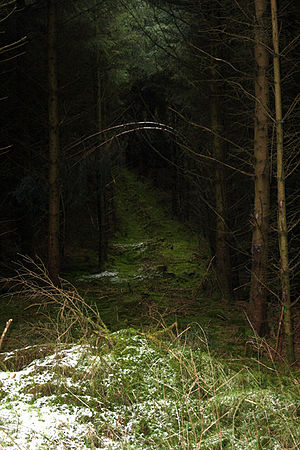
Auchenroddan Forest
Auchenroddan Forest

In the deep-rooted shadows upon which the forest stands, where nothing grows except moss and the debris piles of winter-felled branches and twigs, they heard the stuttering k-r-r-r-r-r-k like that of an opening door to a derelict shack.

But around Jerry Lilly and his brother Ben, padding through the shadows, there was no abandoned home except last year’s finch’s nest and the insect domicile within the pine upon which a woodpecker hammered another k-r-r-r-r-k.

“This noise where there’s nothing around creeps me out, man,” Ben said.

“Someday, little brother, you’ll find such ‘noise,’ as you call it, a blanket of quiet comfort, the caress of natural music far from the crash and soul-crunching violence in the city to which you’ll run as often as possible for its peace,” said Jerry.

“Okay, I get it, but it’s so darn dark in here, how the hell are we supposed to see anything well enough to shoot it?” Ben said, shifting the new rifle to his shoulder and swinging it around in carefree arcs.

– Joseph Hesch

© 2013, Joseph Hesch, story and the portrait below, All rights reserved

Hesch ProfileJOSEPH HESCH (A Thing for Words) is a writer and poet from Albany, New York. This delightfully ironic flash-fiction piece is what we hope will be the first of many contributions to Into the Bardo. Joe’s poems and stories are inspired by his almost 400-year-old hometown, but most spring from his many travels between his right ear and his left ear. A former journalist, Joe has written for a living for more than thirty years and only recently convinced himself to rediscover the writer he once thought he was. Five years ago he began to write short fiction. Two years later, in a serendipitous response to a blinding case of writer’s block, he wrote his first poem…ever. He hasn’t looked back.

Joe’s work is published in journals and anthologies coast-to-coast and worldwide. He posts poems and stories-in-progress on his blog, A Thing for Words.  An original staff member at dVerse Poets Pub website, Joe was named one of Writers Digest Editor Robert Lee Brewer’s “2011 Best Tweeps for Writers to Follow.”

Posted in Essay, Guest Writer

FROM HARPY’S REVIEW: The 10 Top Relationship Words That Aren’t Translatable Into English

OLYMPUS DIGITAL CAMERA

Published here with the permission of the author, Pamela Haag, who did the original research and writing. It was published on November 18, 2011 on The Big Think, which hosts Pamela’s blog, Harpy’s Review.  I thought it an interesting piece. Apparently, so did a lot of others.  It was blogged and reblogged often and generally without Pamela’s analysis and often without attribution to her. It took a bit of doing to find the source. All other postings I found of this piece were dated subsequent to Pamela’s. J.D.

Here are my top ten words, compiled from online collections, to describe love, desire and relationships that have no real English translation, but that capture subtle realities that even we English speakers have felt once or twice. As I came across these words I’d have the occasional epiphany: “Oh yeahThat’s what I was feeling…”

Mamihlapinatapei (Yagan, an indigenous language of Tierra del Fuego): The wordless yet meaningful look shared by two people who desire to initiate something, but are both reluctant to start. 

Oh yes, this is an exquisite word, compressing a thrilling and scary relationship moment. It’s that delicious, cusp-y moment of imminent seduction. Neither of you has mustered the courage to make a move, yet. Hands haven’t been placed on knees; you’ve not kissed. But you’ve both conveyed enough to know that it willhappen soon… very soon.

Yuanfen (Chinese): A relationship by fate or destiny. This is a complex concept. It draws on principles of predetermination in Chinese culture, which dictate relationships, encounters and affinities, mostly among lovers and friends.

From what I glean, in common usage yuanfen means the “binding force” that links two people together in any relationship.

But interestingly, “fate” isn’t the same thing as “destiny.” Even if lovers are fated to find each other they may not end up together. The proverb, “have fate without destiny,” describes couples who meet, but who don’t stay together, for whatever reason. It’s interesting, to distinguish in love between the fated and the destined. Romantic comedies, of course, confound the two.

Cafuné (Brazilian Portuguese): The act of tenderly running your fingers through someone’s hair.

Retrouvailles (French):  The happiness of meeting again after a long time.

This is such a basic concept, and so familiar to the growing ranks of commuter relationships, or to a relationship of lovers, who see each other only periodically for intense bursts of pleasure. I’m surprised we don’t have any equivalent word for this subset of relationship bliss. It’s a handy one for modern life.

Ilunga (Bantu): A person who is willing to forgive abuse the first time; tolerate it the second time, but never a third time.

Apparently, in 2004, this word won the award as the world’s most difficult to translate. Although at first, I thought it did have a clear phrase equivalent in English: It’s the “three strikes and you’re out” policy. But ilunga conveys a subtler concept, because the feelings are different with each “strike.” The word elegantly conveys the progression toward intolerance, and the different shades of emotion that we feel at each stop along the way.

Ilunga captures what I’ve described as the shade of gray complexity in marriages—Not abusive marriages, but marriages that involve infidelity, for example.  We’ve got tolerance, within reason, and we’ve got gradations of tolerance, and for different reasons. And then, we have our limit. The English language to describe this state of limits and tolerance flattens out the complexity into black and white, or binary code. You put up with it, or you don’t.  You “stick it out,” or not.

Ilunga restores the gray scale, where many of us at least occasionally find ourselves in relationships, trying to love imperfect people who’ve failed us and whom we ourselves have failed.

La Douleur Exquise (French): The heart-wrenching pain of wanting someone you can’t have.

When I came across this word I thought of “unrequited” love. It’s not quite the same, though. “Unrequited love” describes a relationship state, but not a state of mind. Unrequited love encompasses the lover who isn’t reciprocating, as well as the lover who desires. La douleur exquise gets at the emotional heartache, specifically, of being the one whose love is unreciprocated.

Koi No Yokan (Japanese): The sense upon first meeting a person that the two of you are going to fall into love.

This is different than “love at first sight,” since it implies that you might have a sense of imminent love, somewhere down the road, without yet feeling it. The term captures the intimation of inevitable love in the future, rather than the instant attraction implied by love at first sight.

Ya’aburnee (Arabic): “You bury me.” It’s a declaration of one’s hope that they’ll die before another person, because of how difficult it would be to live without them.

The online dictionary that lists this word calls it “morbid and beautiful.” It’s the “How Could I Live Without You?” slickly insincere cliché of dating, polished into a more earnest, poetic term.  

Forelsket: (Norwegian):  The euphoria you experience when you’re first falling in love.

This is a wonderful term for that blissful state, when all your senses are acute for the beloved, the pins and needles thrill of the novelty. There’s a phrase in English for this, but it’s clunky. It’s “New Relationship Energy,” or NRE.  

Saudade (Portuguese): The feeling of longing for someone that you love and is lost. Another linguist describes it as a “vague and constant desire for something that does not and probably cannot exist.”

It’s interesting that saudade accommodates in one word the haunting desire for a lost love, or for an imaginary, impossible, never-to-be-experienced love. Whether the object has been lost or will never exist, it feels the same to the seeker, and leaves her in the same place:  She has a desire with no future. Saudade doesn’t distinguish between a ghost, and a fantasy. Nor do our broken hearts, much of the time.

– Pamela Haag

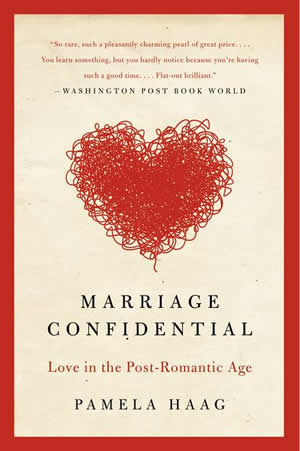
© 2011, Pamela Haag, All Rights Reserved, posted on Into the Bardo with permission, bookcover design (below) courtesy of HarperCollins, All rights reserved
paperback_300PAMELA HAAG’S work spans a wide, and unusual, spectrum, all the way from academic scholarship to memoir. Thematically, it has consistently focused on women’s issues, feminism, and American culture, but she’s also written on topics as eclectic as the effort to rebuild the lower Manhattan subway lines after 9/11, 24-hour sports radio talk shows, and the experience of class mobility.

Haag’s latest book, Marriage Confidential: The Post-Romantic Age of Workhorse Wives, Royal Children, Undersexed Spouses, and Rebel Couples Who Are Rewriting the Rules, released by HarperCollins in May of 2011, draws on all of these strands of Haag’s unique professional biography to create almost a new genre, a weave of academic expertise, cultural history, creative nonfiction, memoir, storytelling, interviews, and commentary. Pamela’s blog, Harpy’s Review is hosted by Big Think. She writes a regular column, Marriage 3.0, for Psychology Today.

Posted in Essay, Guest Writer, Peace & Justice

Mindful Steps to End Hunger

Charles W. Elliot

By Charles W. Elliot

Posted here with the permission of Buddhist Global Relief (BGW)

Hunger remains a problem and we think it is not inappropriate to post this again, an essay by Charles W. Elliot that we featured a couple of years ago. On the blog roll to the right, there is a link to BGW ‘s donation page in the event that you are inspired to make a donation. We don’t take donations or any remuneration for the work on this site; but, if you get something out of what is presented on Bardo, we encourage you to support one of the organizations we support or another worthy charity of your choosing. Let’s collaborate to keep the good works going. In gratitude, Jamie Dedes

The simplest act of eating a piece of fruit is inevitably embedded in a complex web of systems: economic, agricultural, financial, and environmental. In attending mindfully to this act, we can discern myriad interdependent phenomena: the beginningless origins of its seeds, the earth from which the fruit grew, the laboring hands that brought the food to our table. The same mindfulness will show how our own lives depend upon the efforts of others, the essential kindness of countless strangers. And in recalling this kindness, we should be ready to take steps to repay it. One such way is to carefully consider the needs of others, and where we find that basic human needs remain unmet because of injustice, we should be motivated to act.

The Universal Declaration on the Eradication of Hunger and Malnutrition states that “society today already possesses sufficient resources, organisational ability and technology and hence the competence to [eradicate hunger].” While food supplies are abundant, access to that food is not. In 2010, 925 million people suffered from chronic hunger, representing one in seven of a global population approaching 7 billion.

Access to adequate food, as indispensable to basic human survival, is a matter of social justice. One of the earliest pronouncements of global governance on fundamental human rights was the U.N. General Assembly’s simple declaration: “Everyone has the right to a standard of living adequate for the health and well-being of himself and of his family, including food[.]” (Universal Declaration of Human Rights, Article 25, paragraph 1, 1948.) If food has been recognized as a human right since the end of World War II, and if society has the resources and competence to end hunger, we should ask ourselves: why are so many millions still hungry?

Of course, there is no single answer to that question. Like all other phenomena, the persistence and spread of human hunger is a complex dependent-arising involving many interwoven causes. Two disturbing factors are financial speculation, which drove commodity prices sky-high in 2007-2008, and the increasing diversion of crops from food production to biofuel production. Thus, the portion of U.S. corn grown to produce corn-based ethanol rose from 15% in 2006 to an estimated 40% in 2011. Other factors include catastrophic weather conditions such as droughts and floods, and global climate change, which has an adverse impact on water supplies and land, especially in the developing world. At the same time, urban sprawl reduces available farmland, while the urban middle class consumes more meat and processed food, which in turn demands more land, water, and energy.

While resources for food dwindle, governmental policies, particularly in the West, have become increasingly hostile to the poor. The shredding of social safety nets puts at risk an ever-larger number of people who need help in the face of poor economic conditions. Last year, about 25% of the House of Representatives voted to eliminate foreign food aid. Such policies appeal to the notion that the world is a zero-sum game, that any help we offer another family will mean that we get less and that we cannot afford fairness. Here in the U.S. help for the poor is in jeopardy. In my home state of Pennsylvania, food stamp use has risen 50% from 1.2 million people in 2008 to 1.8 million today. Despite the increasing need driven by the Great Recession, the current governor proposes to disqualify anyone with assets of more than $5,500—for example, a bank account or a second car—from food stamp eligibility. As a result, it is estimated that 4,023 Pennsylvania households will lose their food stamp benefits on May 1 of this year.

Battling institutional and entrenched social injustice helps alleviate hunger because poverty is at the root of hunger, and the root cause of poverty is powerlessness: the “powerlessness of those who lack resources such as land and water to grow food, jobs to earn money to buy food, an adequate food safety net and food reserves, and adequate nutrition.” (The Downward Spiral of Hunger: Causes & Solutions)

There are many small steps we can take to end hunger, but we must be prepared to respond to the call of conscience to help others and to restore social justice. A key step is to rebuild and enhance small-scale local food systems and turn away from globally concentrated control of food production and distribution. Ultimately, we should reject the domination of agriculture by large corporate agribusiness, and confront corporate attempts to control the very seeds of life with their patented genetically-modified “single generation” seeds.

At the neighborhood scale here in the U.S., community food gardens are springing up even in major cities like New York City and Detroit. Food waste and post-harvest losses could be remedied to make more food available to those in need. Greater investment in small-scale agriculture in rural areas and urban agriculture in the cities would empower the poor and hungry.

At Buddhist Global Relief, we are taking our own small steps. For example, we provide village-scale training in intensified rice cultivation to rural farmers in Cambodia and Vietnam, helping to build their capacity and confidence in applying sustainable agriculture techniques. These techniques dramatically boost yields without expensive external inputs. BGR funds tools and seeds to impoverished families in Cambodia to grow cash crops and home vegetable gardens. Following each harvest, each family then gives the same amount of seed they received to another local family, thus establishing a community of mutual support. BGR helps train villagers in Kenya and Malawi in small-scale agricultural techniques that nurture healthy soil fertility, produce high yields, conserve resources, and meet the basic need of people to independently feed themselves.

Such small steps, taken collectively by Buddhist Global Relief and countless others, are helping to empower the poor, reduce poverty, and alleviate the suffering of hunger. Neither the complexity of the manifold causes of hunger nor the daunting statistics of global poverty should deter us from acting out of compassion and generosity. In the Buddhist tradition, the embodiment of compassion, AvalokiteshvaraGuanyin Kwannon, is often depicted not just with a thousand eyes to gaze upon the suffering in the world, but with a thousand hands to aid those who suffer. Of course, not even a thousand arms are enough to help the billion people who suffer from hunger. But if we recognize each motivated human heart as the eyes and hands of Avalokiteshvara, each of us acting in our own way, in our own communities, might yet help to end hunger in our generation.

Charles W. Ellliott, a member of the Board of Directors of Buddhist Global Relief, is a lawyer practicing environmental, land use, and human rights law.

© 2012, photo and essay, Buddhist Global Relief, All rights reserved

Posted in Guest Writer, Poems/Poetry

Children’s Hospital, a poem

CHILREN’S HOSPITAL, WAITING ROOM

by

Rev. Bill Cook Poetry Matters

From this side of this window-
through this glass looking
down seventeen stories –
the world is a odd place.
.
The smell of rain
has become a distant memory.
Taxi cabs – thick bugs.
People- so much seed
scattered on a hard path.
.
Who would have thought
a tiny swish rising
through a stethoscope
could so change everything.
.
Here we are a congregation
Of the suspended –
Inhabitants of a sanitized purgatory –
A communion of those who wait.
.
Here the priests and prophets
wear blue scrubs
and white paper masks.
.
Why, I ask, is it that your tiny heart,
no larger than your tiny hand,
should refuse to grow?
What providence has brought us here?
What karma? There is no answer
.
so we wait.
We wait for our names to be called.
We wait.

– Bill Cook, Poetry Matters

Re-blogged with the permission of Bill Cook, Poetry Matters. Bill is an Ordained Elder in the United Methodist Church, serving a wonderfully diverse congregation.

  • His church: St. Paul UMC, Willingboro NJ.
  • BA. English Lit., Rutger’s, the State University, New Brunswick NJ.
  • M Div. New Brunswick Theological Seminary New Brunswick NJ.
  • D Min. Wesley Theological Seminary, Washington DC.

Although Bill’s had a life long love of reading poetry, he’s relatively new to writing and publishing it. In addition to his poetry blog, Poetry Matters, he has three other blogs that address spiritual matters. Most recently his poem Lost was picked up for publication by a regional poetry magazine.

Posted in Art, Guest Writer

Kindly Kitchens …

Female Bullfinchcolored pencils c Paul Kuitenbrouwer
Female Bullfinch
colored pencils
c Paula Kuitenbrouwer

International Women’s Day 2013

by

Paula Kuitenbrouwer (Mindful Drawing)

Editor’s Note: Life happens and I apologize for bringing this post of Paula’s to you so late after the day it honors. Nonetheless, the message of kindness must always be delivered; and, I think her message is valid and beautifully delivered. I thought it important that we share it with you here. Jamie Dedes

This year’s theme for International Women’s Day is ‘A promise is a promise: Time for action to end violence against women‘. I suggest we stretch that promise and for one day we end the violence against female animals too.

See, it is known that mostly female animals suffer because of our meat industry. Cows, hens, goats, and sheep have to produce a crazy amount of meat (off spring), milk, and eggs. Dairy cows have a natural lifespan of 20 years, however their factory farmed lifespan is only 5-6 years. Sheep have a natural lifespan of 12 years, but the factory farmed lifespan for lambs is only 3 months. Apart from that, we use drugs to squeeze in 3 lambkins every two years. Hens have a natural lifespan of 7 years, but live much, much shorter due to the poultry-industry.

So, if you want to participate low profile, in International Women’s day, this day could be your (first) vegan day. If we all do that, it will help to reduce suffering, even if it is only for one day.

As a vegan myself, I can assure you that eating vegan is wonderful. Just leave out all animal products and there you are. Your food is animal – especially female-animal – friendly and as a bonus it is good for your health, weight, and karma.

Here are my inspirational vegan connections and female friends, slowly changing the world in to a better place for female animals:
Lee Aiken’s great recipes are at Plenty Sweet Enough;
Susan Voisin’s wonderful recipes are at Fat Free Vegan Kitchen;
Janie shares great ideas at Gluten Free Vegan Me;
Angela show us her vegan wonders at The Great Vegan Caper
Veronica Grace’s delicious recipes are at Low Fat Vegan Chef.
Rhonda Dunlap inspires us with her Vegan Pinterest broads.
Do sink your teeth in Marilyn Peterson’s 
Vegan Bite by Bite book
… and if you are in need of a lovely teen book on a vegan dog, here is Marian Hailey-Moss’s A Dog named Randall

www.CompassionateCook.com
http://www.CompassionateCook.com

© 2013, art and essay, Paula Kuitenbrouwer, All rights reserved

PAULA KUITENBROUWER is a Dutch nature artist living The Netherlands and sharing her work with us on her blog, Mindful Drawing, and on her website. You can purchase her art HERE. In addition to art, Paula’s main interest is philosophy. She studied at the University of Utrecht and Amsterdam. She has lived in Eastern Europe and in Asia. Paula says that in Korea, “my family lived next to a Buddhist temple. In the early morning we would hear the monks chanting. During my hours of sauntering with my daughter through the beautiful temple gardens, I felt a blissful happiness that I try to capture in my drawings.” Paula sometimes teaches children’s art classes. She lives with her husband and daughter and close to her father. We are frequently honored with and most grateful for guest posts from Paula.

Posted in Buddhism, Guest Writer

A lovely thought for the journey today from Terri Stewart (aka Cloaked Monk). Her blog is worth your visit. Brief and lovely meditative moments. Thank you, Terri!

Posted in Essay, General Interest, Guest Writer

LIFE INTO ART

2-1-13-2LIFE INTO ART

by

Marilynn Mair (Celebrating a Year)

I think, looking back at my wayward path through the years, that the most valuable life skill one needs to develop in order to succeed, is to learn how to improvise. Life will never be smooth or rosy, except in very small stretches. Opportunities for your skill set may never materialize, love may not be as generous to you as you are to it, life as you planned it will definitely at some point go astray. Set-backs and tragedies await, and if you are to cope, to carry on, you need to be able to take a hard look at the pieces on the board and figure your best way forward. Right where you stand, right where you never expected to be. Imagination helps, optimism is a crucial ingredient even if it seems to have temporarily disappeared. No one teaches us how to do this, we learn from necessity. But it certainly puts jazz in a whole different perspective. And poetry, abstract painting, things most people think they don’t understand. Because, really, we are all just learning how to make life imitate art.

I think that if all we had in life to guide us was this paragraph by Marilynn Mair, we’d be okay. Life is the art of taking the jarring notes, the unlikely word, the unexpected juxtapositions, the odd shadings and turning them into something lovely. Life is the teacher. Art is the text. Creating art is survival, the way we work out understanding and meaning. Jamie Dedes

© 2013,essay and photographs, Marilynn Mair, All rights reserved

Rs-roda-016-e1335986264463-300x258MARILYNN MAIR ~ of Celebrating a Year is known as the “angel of the tremolo” and “the first lady of mandolin”. Marilynn is Professor of Music at Roger Williams University, Bristol, Rhode Island. Her most recent CDs are Meu Bandolim and Enigmatica. Her most recent book is Brazilian Choro – A Method for Mandolin.  For more of Marilynn’s story, link HERE. Marilynn Mair is a contributing writer to Into the Bardo.

Posted in Essay, General Interest, Guest Writer, Uncategorized

I hope you enjoy this interesting piece by Manu Kurup, which he has done with a delightfully light touch. Jamie Dedes