“Be kind whenever possible. It is always possible.” His Holiness, the 14th Dalai Lama of Tibet
A lifetime ago I was privileged to work with folks who were everyday heroes in desperate circumstances. They were people transitioning into the mainstream and the workplace from welfare, foster youth programs, homelessness, drug and alcohol rehabilitation, catastrophic illness, disability, prison, violent environments, and job layoffs and plant closures.
There were many things we could do to help our clients. We helped them find jobs and housing. We encouraged them to get G.E.D.s and vocational training or retraining. We found ways to address learning disabilities and get people out of abusive relationships. We offered classes on nutrition and parenting. We facilitated a sense of community and support. In true hero fashion, our clients worked hard. They took advantage of and were grateful for whatever was made available to them. They honored their contracts and did all the extra things that can make a difference between failure and success. Over eighty-percent successfully turned their lives around.
In those days, my responsibilities included teaching a three-unit community college career-development class. To provide inspiration through the often overwhelming ups-and-downs, some of us made our students Keep Smiling Bags. A Buddhist might call these bags a Metta* Bag; a Catholic, a Caritas* Bag; a Jew, a Chesid* Bag, a Muslim, a Birr bag. To a Native American it might be a Medicine Bag. Since I learn from all and affiliate with none, I just call it a Keep Smiling Bag. It’s a gift of love and inspiration and you might even say it’s about attitude adjustment.
In these trying times, you may have a few people in your life who could use a Keep Smiling Bag. The bags also make nice token gifts for birthdays or holidays or as get-well gifts or party favors. Those who are crafty may especially enjoy this exercise and will no doubt create beautiful and unusual presentations, perhaps doing the card in calligraphy or hand-crafting the bag or hand-sewing cloth pouches in place of paper bags.
If you do make Keep Smiling Bags, make them with the intention to heal.
Here are the supplies you’ll need to gather:
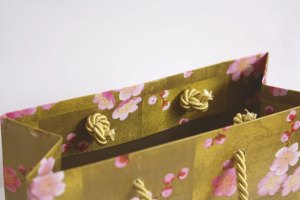
Small, cheerful gift bags
Little decorative erasers
Glass marbles
Colored rubber bands
Assorted colored crayons
Silk ribbons
Silver stars
Birthday candles
Hershey’s Hugs and Kisses
.
Gather the trinkets and place them into the bag.
.
Prepare this instruction card to go with the trinkets:
.
♥ ♥ ♥ ♥
These are a few things to get you through the day:
Eraser – to erase your negative self-talk
Marbles – for when you think you’ve lost yours (you haven’t)
Rubber band – s-t-r-e-t-c-h yourself into new activities. new points of view, new enthusiasms
Crayons – events may color your life, you choose the colors
Silk ribbon – to tie everything together when it seems life is falling apart
Stars – to get to the top of the mountain, you have to reach for the stars
Candle – your inner light shines bright no matter what the circumstances of your life
Hugs & Kisses – Someone cares. Me! 🙂.
♥ ♥ ♥ ♥
.
* metta, caritas, and chesid ~ all mean loving kindness, birr (Islam) deep love
JAMIE DEDES ~ My worldly tags are poet and writer. For the past five years I’ve blogged at The Poet by Day,the journey in poem, formerly titled Musing by Moonlight. Through the gift of poetry (mine and that of others), I enter sacred space.
“The apricot throws itself on the ground. It is crushed and trampled for its next life.” Yang Mija “sees” while walking through an orchard and takes notes in her poetry notebook
This movie speaks quietly about life and art, devastation and redemption. Like the most refined poetry, it is nuanced, honest and dramatic without being melodramatic or manipulative. It is a spare work, whittled down to essentials. It whispers. It never shouts. Its pacing is leisurely and thoughtful. There is no suggestive music here to help you grasp the story’s progression. There are no stars who have been nipped, tucked, brushed, trussed and boosted. These people are real. They could be me or you or our next-door neighbor. The story could be anyone’s story anywhere in the world. Indeed, Director Lee Chang-dong got the basic idea for the screenplay from a news report..
“ … this story was finally born from a combination of different elements: the sexual assault case, the suicide of a girl, and the lady in her 60s writing a poem.” Lee Chang-dong in an interview HERE
Yoon Jeong-hee stars in the leading role (Yang Mija) and it is the lean script (though the movie is over two hours long) and Jeon-hee’s exquisitely understated acting that transfix us. Watch her face. Watch her body movements. These also are a kind of poetry.
“I’m quite a poet. I do like flowers and say odd things.” Yang Mija
Yang Mija is a sixty-six year-old grandmother charged with the care of a teenaged grandson, Jongwook – or Wook – whose mother is divorced and living in Busan. Wook is lazy and ungrateful and shows no respect for his grandmother or sensitivity to her age and her loneliness.
“You’re sprouting a mustache but acting like a child.” Yang Mija to Wook
Wook is part of a “gang” of male friends, fellow students, who over the course of six months repeatedly rape a young woman who subsequently drowns herself. News of this comes coincident with Yang Mija’s diagnosis of Alzheimer’s disease and her first poetry class. It is her poetry classes and effort to write a poem that provide the through-line for this story.
“The most important thing is seeing.” the poetry instructor to the class on the first day
We walk alongside Yang Mija as she struggles with these multiple challenges – not without some humor – and sorts through her emotions regarding her grandson’s actions, her sympathy for the drowned girl, and the desire of other parents to hide the boys’ culpability by buying off the drowned girl’s mother. While Yang Mija may be suffering the early stages of memory loss, she hasn’t lost her moral compass.
As she moves from one experience to the next, Yang Mija questions: How do you write a poem? Where does the poetry come from? When she decides how she is going to handle her grandson, she is finally able to write her poem.
Agnes’s Song
How is it over there?
How lonely is it?
Is it still glowing red at sunset?
Are the birds still singing on
the way to the forest?
Can you receive the letter
I dared not send?
Can I convey the confession
I dared not make?
Will time pass and roses fade?
Now it is time to say goodbye,
Like the wind that lingers
And then goes, just like shadows.
To promises that never came,
To the love sealed till the end,
To the grass kissing my weary ankles,
and to the tiny footsteps following me,
It is time to say goodbye.
Now as darkness falls
will a candle be lit again?
Here I pray nobody shall cry
and for you to know
how deeply I loved you.
The long wait in the middle
of a hot summer day.
An old path resembling my father’s face.
Even the lonesome wild flower
shyly turning away.
How deeply I loved.
How my heart fluttered at
hearing your faint song.
I bless you
before crossing the black river
with my soul’s last breath.
I am beginning to dream…
A bright sunny morning again I awake,
blinded by the light and meet you
standing by me.
– Yang Mija
“It is not difficult to write a poem. It is difficult to have the heart to write a poem.” the poetry instructor on the last day of class. Yang Meja is not in attendance but has left a bouquet of flowers and her poem
Both thumbs up on this one.
There are probably a lot of places you can go to rent or buy this, but I streamed it from Amazon.
JAMIE DEDES ~ My worldly tags are poet and writer. For the past five years I’ve blogged at The Poet by Day,the journey in poem, formerly titled Musing by Moonlight. Through the gift of poetry (mine and that of others), I enter sacred space.
“All you need is a sense that there is no such thing as ‘no’ and everything is possible.” Moira Kelly
This shining face, this sweet spirit with reason to be bitter and yet he is not. He is a hero and pure inspiration. When our own Naomi Baltuck posted this video on Facebook, I was as touched as anyone would be. I had to wonder though about his mom. What kind of hero is she, I thought, remembering the heroes of my childhood: Josephine Baker and my spiritual mother, Pearl Buck. Each of these women grew their families in unique – and extraordinarily unselfish – ways.
“All my life, I have maintained that the people of the world can learn to live together in peace if they are not brought up in prejudice.” Josephine Baker (1906-1975)
Josephine Baker was born in America but became a French citizen. She was a dancer, singer, actress and civil-rights activist. As a child living in St. Louis, Missouri, she suffered from discrimination, abandonment, and poverty. As an adult she had one miscarriage. She adopted twelve children, two girls and ten boys. They were from diverse races and cultures because, in addition to caring for them, she wanted to show that people can get along despite their different backgrounds. In the early ’80s two of her sons went into business together. They started Chez Josephine, which is on Theatre Row (42nd Street) in Manhattan. They dedicated the restaurant to their adoptive mom’s memory and decorated it with her memorabilia.
“. . . the test of a civilization is the way that it cares for its helpless members.”Pearl Buck (1892-1973)
Pearl Buck was an American novelist, writer, humanitarian and the first woman to be awarded the Noble Prize in Literature (1938). She grew up in China and spent most of her life there until 1934. She had a deep affection for and knowledge of the countries of the East, not just China. She suffered through the Nanking Incident when the National Revolutionary Army captured Nanking (now Nanjing) in 1927. Many Westerners were killed, their homes destroyed, and their property stolen. Her only biological child, Carol, had phenylketonuria (PKU), which causes mental retardation and seizures. She adopted seven children. At a time when mixed-race children were considered unadoptable, Pearl Buck founded Welcome House, Inc., the first international, interracial adoption agency. Welcome House has placed some five thousand children since it was established 1949.
“The greatest act of kindness changes generations. Wherever there is the greatest evil, the greatest good can be achieved.” Moira Kelly (b. 1964)
This brings us to a contemporary hero: the mother of Emanuel Kelly, the young man in the video. Moira Kelly is an Australian humanitarian whose work has garnered her many awards and acknowledgements. When she was eight years old, after seeing a movie about Blessed Teresa of Calcutta (now Kolkata), Moira committed herself to working with disadvantaged children. She is the legal guardian of twins from Bangladesh, Trisha and Krishna. They are surgically separated but originally cranially conjoined twins. Moira Kelly also adopted the Iraqi-born Emmanuel and his brother Ahmet, both born with underdeveloped limbs. Among her efforts is Children First Foundation, formed to provide transportation and healthcare for children with urgent needs in developing countries.
These women are mothers in the best senses of that word. Their ideals are real and they stand by them. They have saved children from abandonment and loneliness, from poverty and hopelessness and, in some cases, from early death. They are goddess mothers and true heroes.
JAMIE DEDES ~ My worldly tags are poet and writer. For the past five years I’ve blogged at The Poet by Day,the journey in poem, formerly titled Musing by Moonlight. Through the gift of poetry (mine and that of others), I enter sacred space.
we live on Turtle Island and turtle is my totem ~
she speaks in the easy way only turtle can,
as one who is at home in herself, at home between
her plastron and carapace, wisdom in her measured
gait, her introversion a model for freedom, for cutting
the nets spun of wars and deceptions . . .
she is the everyday re-enchantment of my solitary
cosmos, my solidarity with life, i read her pastoral
letters in green on green, the sweet grasses and seas,
she speaks of connectedness, the basic constituents
of enigma, wizardry; and in the insanity of the times,
how best to journey and retrieve this world’s soul . . .
she is the unrushed cure for nature-deficit,
that consuming affliction, the spawn of culture’s
back-lighted screens and advertising of every bilk
turtle healing is simple peace and master lessons in
self-containment, she draws me into my meditations
and back along the first path of Maka Ina, the forgotten
primal path of earth ways and feminine energies and
the rhythms of grandmother moon whirling me heavenward.
– Jamie Dedes
Turtle ~ totem or power animal representing earth in Native American tradition
Turtle Island ~ in Iroquois tradition, when the earth was covered over with water, sundry animals attempted to create land by swimming to the bottom of the ocean and hauling up dirt. Muskrat succeeded. He placed the dirt on the back of Turtle, which grew into the landmass known today as North America.
Maka Ina ~ Lakota (Sioux) ~ “maka” is earth and “ina” is mother, so Mother Earth. Earth teachings were/are considered a path to wholeness (heaven).
JAMIE DEDES ~ My worldly tags are poet and writer. For the past five years I’ve blogged at The Poet by Day,the journey in poem, formerly titled Musing by Moonlight. Through the gift of poetry (mine and that of others), I enter sacred space.
JAMIE DEDES ~ My worldly tags are poet and writer. For the past five years I’ve blogged at The Poet by Day,the journey in poem, formerly titled Musing by Moonlight. Through the gift of poetry (mine and that of others), I enter sacred space.
What can I tell you?
She loved the guy …
She even loved the
scent of whiskey and cigarettes
She took due note of the clues
warning of devises and vices
that she’d never acquired
She didn’t care He was charming
Coupled in delicate balance
a yin and yang of extremes
a second marriage of differences
Fog being the common denominator ~
though his drink didn’t mix well
with her off-in-the-clouds-somewhere being
The accountant of just-the-facts ma’am
and the dreamer of unlikely dreams She was a trial
The bear who liked to escape to the woods
nonetheless some comfort, a decent person,
a hero of the practicalities,
a maker of omelets and fixer of things,
a reader, a gardener, an angry man
Anger . . .
. . . read pain but you probably knew that
a pain that waltzed with Jack Daniels
lent itself to long diatribes
and Pilsner-invented pontifications
it skied through the veins
built road-blocks to his heart
and in the end,
in the end, in the end
the pain did him in that lost man
that well-meaning, decent
distant, funny, lost man
JAMIE DEDES ~ My worldly tags are poet and writer. For the past five years I’ve blogged at The Poet by Day,the journey in poem, formerly titled Musing by Moonlight. Through the gift of poetry (mine and that of others), I enter sacred space.
Japanese tea house: reflects the wabi sabi aesthetic, Kenroku-en Garden
if only i knew
what the artist knows
about the great
perfection in imperfection
i would sip grace slowly
at the ragged edges of the creek
kiss the pitted
face of the moon
befriend the sea
though it can be a danger
embrace the thunder of a waterfall
as if its strains were a symphony
prostrate myself atop the rank dregs on the forest floor,
worshiping them as a breeding ground for fertile seeds
and the home of a million small lives
if i knew what the artist knows,
then i wouldn’t be afraid to die,
to leave everyone
i would be sure that some part of me
would remain present
and that one day you would join me
as the dusky branch of a river or the
bright moment of the flowering desert
if i knew what the artist knows,
i would surely respond body and soul
to the echo of eternity in rough earthy things
i would not fear decay or work undone
i would travel like the river through its rugged, irregular channels
comfortable in this life; imperfect, impermanent, and incomplete
JAMIE DEDES ~ My worldly tags are poet and writer. For the past five years I’ve blogged at The Poet by Day,the journey in poem, formerly titled Musing by Moonlight. Through the gift of poetry (mine and that of others), I enter sacred space.
i awoke
it was the golden light
the moon camping out
casting my room in the
glow of its fire
i thought
for a moment
unsure of my place
forgetting
what city
what state
what day
seconds passed
soundless
slowly peeling away
the veil, the confusion
i melted into
the golden light
breathed myself
into sleep again
done
and done
as easily perhaps
as breathing into
eternal sleep
so frail and fragile
is this anchor
this silver thread
this castle of solitude
this just me
inside me
inside life
JAMIE DEDES ~ My worldly tags are poet and writer. For the past five years I’ve blogged at The Poet by Day,the journey in poem, formerly titled Musing by Moonlight. Through the gift of poetry (mine and that of others), I enter sacred space.
I was at the Redwood Shores library the other day. They had a small display on the Ohlone Tribe. It made me think again of the Wiyot. They live in my dreams. Their name is pronounced Wee-yhot and it means Eel River. That was their home.
In the mid-eighties, for about a year-and-half, we lived near the Eel River in Humboldt County, an area about 200 miles north of San Francisco. It’s stunning and peaceful with dense redwood forests, wild rivers, and creeks that run dry in the summer and overflow in the winter. If you live in a rural area or grew up in one, you might take such things for granted. Having lived in cities all my life, it was magical to me. In the midst of that feral earth, in the stillness of leafy green days and velvet blue nights, it was easy for me to imagine the first peoples as they might have lived there in other times.
I fancied I could see them tending fires, boiling and drying acorns and then grinding them for flour, bathing in the river, raising their children, and hunting, gathering, and enjoying sacred ceremonies and tribal celebrations. I knew the same ancient sky-scrapping sequoias that watched over us had watched over them.
Our place was just short of four acres and rich with sequoia, madrone, oak, and some forty fruit trees. Blue jays flew in to feed in the morning and the quail marched down to visit at nightfall. Hawks and hummingbirds put on air shows. Rosemary thrived unattended. There was a beautiful lush 100-year-old rosebush. There were wild roses too. They gave us rose hips for cough syrup. Witches Broom lined our creek side with bright yellow. There were cascades of Japanese quince, which provided ample housing for the hummingbirds. Queen Ann’s lace* danced in the wind like ladies dressed for a ball. When they went to seed I collected the seeds for use in cooking. They have a taste somewhere between a carrot and caraway seed. The great bursts of blackberry bushes were a visual and edible delight.
I gathered fresh fruit almost every morning and every morning I thought of the people who preceded me more than a century ago and who picked berries there just like me. I did some research and found out that our property was once inhabited by the Wiyot peoples whose numbers were almost decimated in a genocide.
“Eureka newspapers of the time exulted at the night massacres conducted by the “good citizens of the area”. Good haul of Diggers and Tribe Exterminated! were 2 headlines from the Humboldt Times. Those who thought differently about it were shut up by force. Newspaper publisher and short story writer Bret Harte called it “cowardly butchery of sleeping women and children” — then had to flee ahead of a lynch mob that smashed his printing presses.” MORE [Wiyot Tribal Council Page]
* WARNING:If you are tempted to gather the seeds from Queen Ann’s lace, think twice. I didn’t know it at the time but it is hard to distinguish them from hemlock, which is poisonous.
JAMIE DEDES ~ My worldly tags are poet and writer. For the past five years I’ve blogged at The Poet by Day,the journey in poem, formerly titled Musing by Moonlight. Through the gift of poetry (mine and that of others), I enter sacred space.
Writing in a far and broken country
my pen knows its kinship with the dark forest,
asks direction of its trees, celebrates its quiet amity
over the din of plastic medicine vials, the 40-foot
serpentine specter of cannulae, the hiss and sigh
of an oxygen compressor amid layered silences.
We are named on a long list of regional poets.
The region is the sickroom where the palm and
birch outside the window know their meaning.
Lend a shaman ear.
Trees will speak, will tell you that we are found.
We are here, not lost in our vessels but found
in the hallowed company of shaman poets
on a vision quest Call it illness.
Call it artful.
Strike up the hill. Cry out for the Sacred Dream,
for the purpose of your life and its contusions.
A comforting infinity breaks through any grieving
fiercely embraced: The great dream comes to you.
The trees come to you. They speak in their voices,
which are – after all – your true voice . . .
Whenever life takes, it leaves behind the key to its
wide and wild essence. Unlock the door. Listen …
the voices offer solace and the privilege of poetry.
JAMIE DEDES ~ My worldly tags are poet and writer. For the past five years I’ve blogged at The Poet by Day,the journey in poem, formerly titled Musing by Moonlight. Through the gift of poetry (mine and that of others), I enter sacred space.
JAMIE DEDES ~ My worldly tags are poet and writer. For the past five years I’ve blogged at The Poet by Day,the journey in poem, formerly titled Musing by Moonlight. Through the gift of poetry (mine and that of others), I enter sacred space.
This is why you were born, to pass me by, DNA of our ancestors, it’s your turn to fly, to be the center, the triumph, the culmination.
Though not quite zero at bone and marrow, you ~ are a merry new story, adhering to Conrad’s dictum, with shocks and surprises in every line and chapter.
Your book, your life, your metaphor, wearing truth as your dermis, seeking tears, not blood, and like all good art you changed me for the better,
having read you, I’ll never be the same. So time, My Heart, time now to fly, to leave this nest, the generations on which you stand, this is why you were born, now it’s your turn to fly …
Note: Conrad’s dictum is that the writer’s first responsibility is to help the reader see.
The great American novelist and educator, Toni Morrison, once wrote that it is the job of parents to provide their children both safe harbor and wings. This poem was written some time ago to convince myself, not my son. He did what son’s naturally do.
Time has seen our roles reverse in some ways. My son has the most generous heart and has had my back for thirteen years, ushering me to my pulmonologist/critical care specialist and through sundry procedures and surgeries (always my advocate), moving me to new digs each time I have to downsize, taking me home with him when I couldn’t be left alone, keeping me in computers and tech toys. Yet, our children are our children. As Naomi said yesterday in Part I, “. . . long after they’ve gone gray, long after they are elderly orphans…they will still be our babies. “
From my vantage point as my mother’s daughter and my son’s mother, I’ve learned that making family is just another kind of love story, one in which love is not circumscribed. As we pass this love along to succeeding generations, it grows in depth and breadth. We are better people for it and the whole world becomes a better place. In the end, even mom’s are given wings and the nest in never truly empty when love remains to fill in the spaces.
JAMIE DEDES is a poet and the founder of Into the Bardo. She is aformer freelance feature writer and columnist whose topic specialties were employment, vocational training, and business. She finds the blessing of medical retirement to be opportunity to play: to indulge in writing poetry, creative nonfiction, and fiction.
Jamie’s primary playground is The Poet by Day, the journey in poem (formerly Musing by Moonlight) where at any time you can read five of her most recent poems along with a growing collection of Sunday posts on poetry, poets, and writers. She finds inspiration everywhere and in everyone. Her work is informed by the values of the multicultural/multiracial environment and classical Eastern and Roman Christianity in which she was raised as well as by a more recent introduction to Buddhism. Jamie has an abiding faith in the value of a life of the mind and spirit to heal and in the inestimable value of art and music, poetry and writing as spiritual practice.
it must be painful for them to write, those poets in tough-times and hard places
where blood and tears and poverty contaminate the air, stain the sidewalks, and consume the people
the blood must be soul-sick and rusted and tasting of acid, not salt, and the poems meant to heal the writer and stroke the cheeks of the wounded, to dry their eyes and gently kiss their gray heads
to poem under such conditions must be like walking shoeless on glass shards
perhaps the most sacred thing in the dream-time meadow of poets’ desire is light
can you awaken to meet the Divine on the battlefield, in the camps, in government housing or in the ghettos?
if so, you are a saint, not simply a lyrist
2.
in my small world, my civilized world, people fall asleep reading or after making love or playing in the yard with their children
if they wander it is through books and planned travel
there are luxuries
there is food
there is cleanliness and paper on which to write
no bombs are dropping
there is almost certain dignity
3.
in San Francisco we walk along the beach at night, near the Cliff House
we walk to the sound of the waves, the sound of the Universe chanting its praise
our feet are bare and relish the comfort of cool sand
the air is clear and cold and easy to breathe, tasting of salt and smelling of sea life
here is a pristine moment of peace
i want to bequeath this peace to you, to everyone, as though it were a cherished heirloom
it is really a birthright
i want to plunge into the waters and gather the oceans to offer as sacramental wine in my cupped hands
i want to braid the seaweed into garlands for everyone to wear, hanging over their hearts, a symbol of affection
i want to collect pine cones from the trees that congregate along the coast and feed them to the children to remind them to love the earth and all its creatures, themselves included, and to say …
do not make war in your heart or upon your mother’s body
JAMIE DEDES ~ My worldly tags are poet and writer. For the past five years I’ve blogged at The Poet by Day,the journey in poem, formerly titled Musing by Moonlight. Through the gift of poetry (mine and that of others), I enter sacred space.
No hesitation to break the silences,
to unite others with his verses, to
pierce sleep with the sharpened lance
of his reason, weaving his stanzas
and schemes into the warp and weft
of a marriage, with a single purpose ~ Peace. He tore at the knotted rhizome
and adventitious roots of hate and
despair, pressing on for the renewed
rootedness of hope and its fresh bright
blooms of honesty and courage, it was
his job to husband the survival of the
most refined proclivities of the heart
He planted his poems as seed in the
fertile ground of our best sensibilities
JAMIE DEDES ~ My worldly tags are poet and writer. For the past five years I’ve blogged at The Poet by Day,the journey in poem, formerly titled Musing by Moonlight. Through the gift of poetry (mine and that of others), I enter sacred space.
“And Caesar’s spirit, raging for revenge, With Atë by his side come hot from hell, Shall in these confines with a monarch’s voice Cry “Havoc!” and let slip the dogs of war, That this foul deed shall smell above the earth With carrion men, groaning for burial.”
Julius Caesar Act 3, scene 1
we have need of gods
an ancient irony
like blood that needs heat
to sweat out the mysteries
to rage in revenge
to reconcile sacrifice
to repel condemnation
to simmer our gratitude
for the many wonders
as misunderstood
as all the horrors
relieve us we pray
in our righteous moments
from the sins of others their guns, their bombs their swords of hate
lives and livelihoods cut short
in genocides renamed –
semantics play large
in wars of loathing
and vile justifications
relieve us we pray
from children killing children
from executions in the street
from brothers killing brothers
from sisters unleashed
like the dogs of war
like a belly full of cancer
like an aorta swelling
our gods cry ‘havoc’
in traps set by rulers
by teachers at schools
and in places of worship
by parents at dinner table
our legs immobilized
like wolves ensnared
we chew at our feet
attempts at freedom
cripple and break us
and everywhere
mouthing lies
groaning in denial
bowing to gutter rats
scraping to vultures
the false gods of our making
Photo credit ~ the “Ludovisi Ares”, Ares- the Greek God of War and Bloodlust via Wikipedia by Marie-Lan Nguyen and generously released into the public domain.
JAMIE DEDES ~ My worldly tags are poet and writer. For the past five years I’ve blogged at The Poet by Day,the journey in poem, formerly titled Musing by Moonlight. Through the gift of poetry (mine and that of others), I enter sacred space.
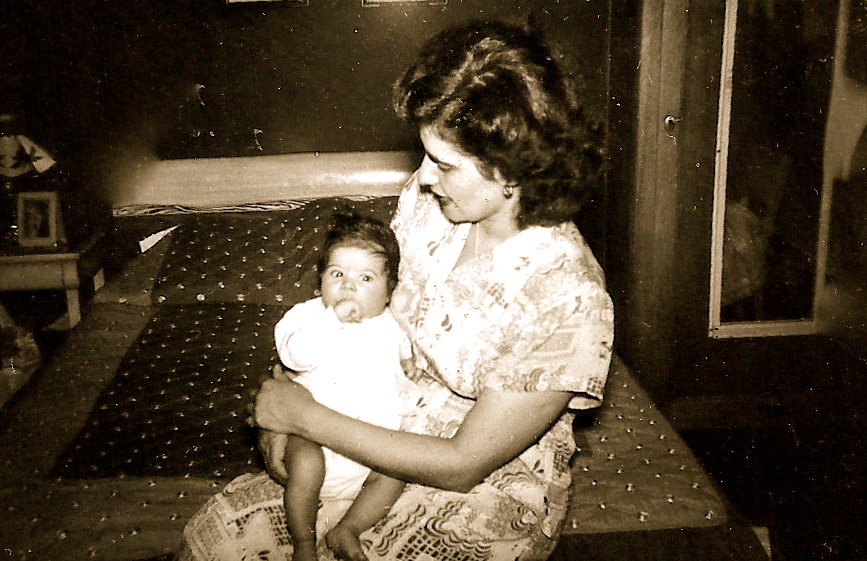
I am the keeper of the dreams and the memories, the matrix where the generations converge, the record-book held between familial bookends. I am responsible for passing her life on to him that she may continue to live and that he may understand the consequences of history and culture as common people do.
He is the vindication of hope, his and ours. Her heart is the place were hope started. I can hardly think of my son without also thinking of my mother. They are the two people I love most in this world, though one of them – Mom – is no longer here. So for the record, I’m not sure why, but the occasional pancake breakfasts I had with her at Oscar’s of the Waldorf are on my mind. We had rituals we honored until life had its way with her.
______
We spent time savoring the hotel before going into Oscar’s for breakfast. The Waldorf was decorated with so much gold color that despite the muted lighting we felt we were having our moment in the sun. The jewel-colored furnishings and plush carpeting invited us to find a place to sit. We indulged in wide-eyed rounds of people watching. The businessmen seemed busy with self-importance. The women fussed with their manifest charm. We always stopped in the ladies’ room with its uniformed attendants continually present. They provided each guest with a freshly laundered terry-cloth towel and double-wrapped soaps, lavender-scented. Mom would tip the attendant a quarter and give me a quarter to tip her too.
Waldorf Lobby & Clock
An important ritual was a visit to the Waldorf Astoria Clock in the main lobby. I’ve read that it’s there still, all two tons of it. It’s a place where people find one another. I’ll meet you at the clock. Everyone knows that means the clock inside the Waldorf-Astoria at Park Avenue. It’s a towering thing, the actual clock sitting below a replica of the Lady Liberty, hope of immigrants, and above some bronze carvings and an octagonal base of marble and mahogany. Standing near the clock gave us the sense of a history of which we were not a part. It offered the illusion of privilege, the true secret spice that made the blueberry pancakes at Oscar’s so delicious. The famed maître d’hôtel, Oscar Tschirky, Oscar of the Waldorf, was no longer there. He died in 1950, the year I was born.
_______
My mom loved the Waldorf and Oscar’s blueberry pancakes as she did everything she felt characteristic of culture and good breeding. Being well bred meant you recognized quality in a person or product: women who wore pearls, men who always tipped their hats in greeting, and dresses with wide hems. Well-bred meant you didn’t swear or use colloquialisms. It meant that if you were a boy you never cried. If you were a girl you didn’t display your intelligence. You didn’t run. You didn’t shout. You never went out without wearing hat, gloves, and girdle. You sacrificed sports and ballet at nine. You didn’t risk turning any tidbit of excess fat into unseemly muscle.
Given my illegitimate birth – which occurred when my mother was thirty-six – combined with our roots, peasant not patrician, and our working-class status in this country, it seemed Mom was forever posturing. Nonetheless, over time I convinced myself that my mother was indeed a most cultivated person. Hence my birth had to be a virgin birth. That would explain my father’s absence, though there was no kindly Joseph to lend an aura of respectability. Mom advised me never to kiss a boy. Kissing could cause pregnancy. Well, yes, if one thing leads to another, but how would my mom know?
’50s Style Theater seating
Mom’s interest in culture was insatiable. What she viewed as high culture most people would see as popular culture. We consumed it regularly and with religious fervor. We were fickle about our temples of worship. We opened our hearts at the Harbor Theater on Wednesday night, the RKO on Saturday afternoon, the Loew’s Alpine on Sunday, and for whatever reruns were on television at any given time. Because of movies we knew what to dream. They were our world; their luminaries our goddesses and gods. Audrey Hepburn, goddess of fashion. Cyd Charisse, goddess of posture. Katherine Hepburn, the great goddess of elocution. Grace Kelly inspired us to wear pearls, however faux our own five-and-dime pearls were. We did our best to meet the standard. Fred Astaire, Gene Kelly, and Jimmy Stewart were the gentlemen gods who shaped our expectations of men.
Our home back then was a one-bedroom Brooklyn apartment on the top floor of a six-story four-section complex that was built in the 1920s before the Wall Street Crash of 1929. Each of the four sections had an elevator, often in disrepair. Our apartment had French windows, which we found romantic and from which we could see the lights of the Verrazano-Narrows Bridge at night. The bridge didn’t open until 1964 and so it came to our landscape late. The requisite fire escape was outside the kitchen window, the only window without a radiator below its sill. It made a fine place to sit and read, write stories, and watch the cars below and the clouds above.
Our apartment, D61, was often blessed with rain in the form of leaks. Manna dropped from the ceiling in the guise of paint chips. If the people downstairs were too noisy, we tapped on the wood floor with the end of a broomstick. When there was no heat or hot water we consulted with the landlord’s wife, a common woman whose carelessly open closet displayed a frowzy collection of cotton house-dresses and limp lifeless sweaters. Mom always sniffed as we walked away, her sensibility offended. She said the woman’s hair was entirely too long and youthfully styled for someone of her station and maturity.
I remember my mother as so refined that when conflict arose between us she never fought or yelled or slammed a fist on the table. After a quiet well-barbed soliloquy, she went silent. If Mom’s anger was white-hot, she might not talk to me for years. The last episode of protracted silence extended from my fifteenth birthday until after my marriage. I no longer remember my original offense but a rebellious marriage to someone of a different ethnicity did nothing to serve the cause of reconciliation.
________
There’s my mother, the little girl on your left. She’s about seven in that sepia photograph – circa 1921 – where she stands alongside her mother and three of her six siblings. My mother’s mother is pregnant and in her mid-twenties. There would be four more children that survived out of eighteen pregnancies. Mom told me my grandmother was married off at twelve to a seventeen-year-old boy-man with something of a temper. They immigrated to this United States of America after the first two children were born, one boy (thank God!) and one girl.
I often look at that photograph of my mother and wonder what she was thinking. What did she long for? As she made her way around the old neighborhood and tried to grow beets in a wooden box on the tenement fire escape, certainly she dreamed of dressing in the latest rage. When, through the aegis of the New York Times Fresh Air Fund, she spent a month each summer at the Muzzi’s farm upstate, no doubt she fantasized about living where the air is clear and the spaces packed tight with solitude and well-occupied with growing green things. She often talked with longing of the fresh vegetables at the Muzzi’s and of a large accommodating farm kitchen.
Mom once landed a part in an elementary-school version of Aïda and got to wear a costume and make-up. Her father had her remove the red lipstick that was provided by a teacher. As an adult, Mom collected lipsticks. You wouldn’t believe how many different shades of red there are and how poetic the names: autumn rose, wild ruby, crimson dew …
Over time, the hope of being valued by a good man, of living in a garden apartment with something more than an efficiency kitchen, moved slowly out of reach. As Mom grew older, less nubile, and more invisible, she became more artful with her war paint and her dress. She no longer wore what jewelry she had as decoration, but as amulets.
Her decline must have started when she was pregnant with me. Coincident with that, she was diagnosed with cancer for the first time. Through the years and bit by excruciating bit, she lost organs: a breast now, then her thyroid, then her womb, a kidney and finally the second breast and lymph glands. I’m just a shell, she’d tell me before warming her soul by the cold fire of a movie screen. She would fight cancer on-and-off all her life. When the end came, she died in my arms of breast and colon cancer. She was seventy-six.
Mom was a good numbers person, always able to find work as a full-charge bookkeeper. When I was twelve, a particularly exciting opportunity came her way. A prospective employer flew her – a Kelly Girl ®, forty-eight years old – to D.C. for a trial assignment and a job interview. When she arrived, she found the possibility of permanent employment required a full medical exam. The exam, along with work history and evaluation, would be submitted to the board for review. All those men would see it. They might even discuss her lack of womanly organs at the board meeting, complete with board notes for the record. Embarrassed, Mom declined the interview, packed her bag, and found her way to the airport. That afternoon, she arrived back in New York at Idlewild.
Our Subway Station
The next morning, without even a nod to the well-bred goddesses and gods of mortal fancy, Mom threw on some clothes and grabbed my hand. An hour or so later we were in Manhattan. We went straight into Oscar’s. We didn’t stop in the hotel lobby for people-watching or give quarters to the ladies’ room attendant. We didn’t pay our respects to the Waldorf Astoria Clock. We just ate. Rather, I should say I watched. Mom ate. She cut her pancakes at punitive angles and made doleful jabs at the pieces with her fork. When she finished her serving, she moved on to mine. By the time Mom gulped her third coffee, paid the bill, and left a grudging tip, even my child-mind understood that our visits to Oscar’s for blueberry pancakes would no longer be part of a wistful dream. Lacking sacred ritual, they would devolve into compulsion. This was the beginning of Mom eating much too much and of me not eating quite enough. While Mom endeavored to bury her dreams, I sought to scrap their bones bare and set them free.
JAMIE DEDES ~ My worldly tags are poet and writer. I’m in my fifth year of blogging at The Poet by Day, the journey in poem, formerly titled Musing by Moonlight. Through the gift of poetry (mine and that of others), I enter sacred space.
A woman in Brooklyn decided to prepare her will. She told her rabbi she had two final requests. First, she wanted to be cremated. Second, she wanted her ashes scattered over the local shopping mall.
‘Why the shopping mall?’ asked the rabbi.
‘Then I’ll be sure my daughters will visit me twice a week.’
I met my Jewish friend, Laurel, when she came to a meeting at our local meditation center in Northern California where we now live. Laurel and I got on right away. We both like Broadway shows, music and opera, reading, writing, and good meals seasoned with great conversation. She’s from Great Neck, LI in Nassau County. I’m from
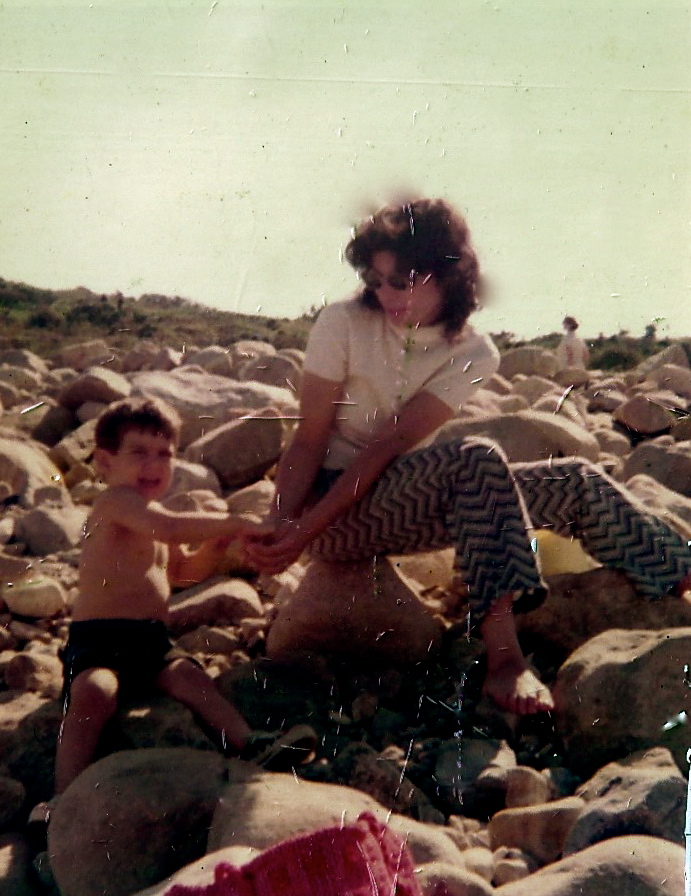
Me and Rich 1972, Montauk Point, LI, NY
the Center of the Universe, Brooklyn. We’re about the same age. So we come from the same time and, essentially, the same place.
Now New York moms get a bad rap, especially Jewish moms – but none of us gets off free. Laurel reminded me of that yesterday with a stereotypical New York joke at the expense of mothers. These jokes usually illustrate moms making caustic remarks or their attempts to foster guilt in adult children. While we do use regional idioms and have a distinct style of delivery, I’m really not sure that mothers from our time and place have the corner on either caustic commentary or the laying on of guilt. New York moms can’t be the only ones who, when distressed by a child’s behavior, say or at least think – despite how treasured the child … and they are treasured – “For this I was in labor thirty-six hours.”
Like all of us, my mother was very much in process and very much a product of her place and time. Among other things, what that means is that modesty was a primary concern. For my Maronite (Eastern Catholic) mother this included modest dress, which in turn included girdles. Now I’ve got to tell you that until I hit forty I was mostly underweight. In fact at Christmas when I was nineteen, I stood 5′ 3 1/2″ and, though I was three months pregnant with my son, I weighed only ninety-three pounds. Nonetheless, from my thirteenth year until her death when I was forty, my mother was adamant that I should wear a girdle so that I wouldn’t “jiggle.” That would be immodest and unseemly. Only my mother, I would think, would put me through this torture for nothing. As my husband said, “What’s to jiggle? If she turned sideways and stuck out her tongue she’d look like a zipper.”
Those old, typically New York jokes at the expense of our mothers were funny because there’s an element of truth in them. Our mothers often did pave the pathways to their homes and hearts with guilt. They could be cruelly caustic. They were as tough as life. They tended to be rigid and narrow on some sensitive subjects. But they were also present. They were idealistic. They worked hard in their homes and at their jobs, where they were grossly underpaid. Many of them worked for hours each week to make the most unbelievably complex old world dinners for traditional Sundays that included religious services and large gatherings of extended family and orphaned friends and neighbors.
No matter how difficult things got, these sturdy immigrant and first-generation American women did not resort to drugs, alcohol, or beatings. They went to bat for us at school. They got us into the best schools they could afford and kept us in school for as long as they could afford to do so. They protected us from old lechers and young men who did not have “honorable” intentions. Kudos and compliments were about as common as Dodo birds in the twenty-first century; but secretly they were pleased and would proudly show photographs of us to their friends and boast of our accomplishments. It took me years to appreciate their insecurities and motivations.
Mom and me 1980, San Francisco, CA
You can tell by the posture in the photo to your right, that moving into my thirties, I was still struggling with mixed feelings. The reason in this particular case: Before I went to work one morning, I left money on the kitchen table for a pizza. I called home at 5:00 p.m. as I was leaving the office and asked my mother if she’d order the pizza right away because I was “starving.” I got home and “binged”: I ate one slice of pizza and left the crust. “I thought you were hungry,” Mom said. “I was.” The fact that I was thirty and still “eating like a bird” and underweight disturbed her. In turn, I was disturbed because she was still trying to tell me how to eat. I do the same sort of thing to my son now, not about food, but about other things.
I miss my mother and am thinking of her even more than usual with Mother’s Day soon to arrive. I wish she was here nagging me to clean my plate. I finally understand. As the saying goes, “We grow too soon old and too late smart.”
JAMIE DEDES ~ My worldly tags are poet and writer. For the past five years on medical retirement due to a chronic, potentially life-threatening illness, I’ve blogged at The Poet by Day, formerly titled Musing by Moonlight. The gift of illness is more time for poetry. Through the gift of poetry (mine and that of others), I enter sacred space, the common ground that is our true home.
“Artist” ~ generally refers to people who express visually. Sometimes it refers to folks in the entertainment industry. In criticism it may also refer to other forms of expression…music, poetry, writing and so on. As used here and generally on this site, it refers to one who creates out of their inner vision, no matter what form of expression the creation takes. It implies a unity of inspiration, practice, and craft. This is for you … ♥
– Jamie Dedes
Illustration ~ The Goddess Kalliopē (Calliope), Homer’s muse for the Odyssey and the Illiad, in a painting by Simon Vouet
JAMIE DEDES ~ My worldly tags are poet and writer. I’m in my fifth year of blogging at The Poet by Day, the journey in poem, formerly titled Musing by Moonlight. Through the gift of poetry (mine and that of others), I enter sacred space.
 JAMIE DEDES ~ My worldly tags are poet and writer. For the past five years I’ve blogged at The Poet by Day,the journey in poem, formerly titled Musing by Moonlight. Through the gift of poetry (mine and that of others), I enter sacred space.








_-_La_Nuit_(1883).jpg "William-Adolphe_Bouguereau_(1825-1905)_-_La_Nuit_(1883)")





 The BeZine


