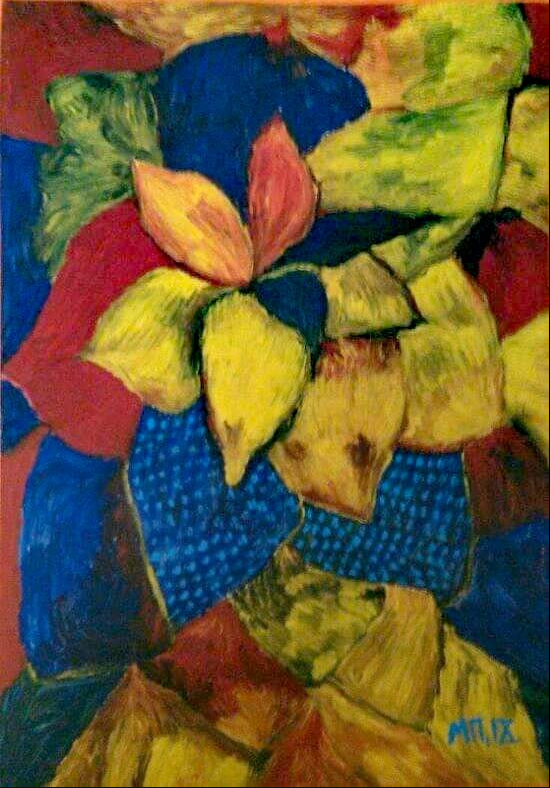
Art: Pines, Ester Karen Aida ©2021
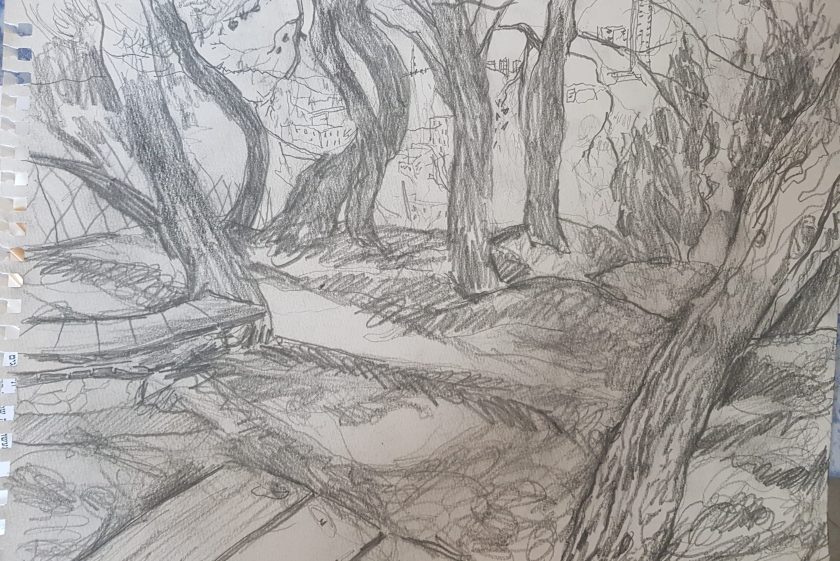
Art: Pines, Ester Karen Aida ©2021
Art: Pines, Ester Karen Aida ©2021
A Letter to an American Friend
originally written in 2017
In January 2017 I went to Beit Jala, a Palestinian town close to Bethlehem, for an International Intensive Training of nine days, to study Non-Violent Communication. NVC, the brain-child of Dr. Marshall Rosenberg, is known as a ‘language of the heart’ which enables compassionate connection with oneself and others.
It’s also a set of skills including both careful listening, and advocacy for one’s own needs. The training session I attended was designed as an experiment in living and working together, and I’ve wanted to recount to you a few of the moments during that time that stuck with me, from nightmarish—in prolonged awareness of suffering and bloodshed—to inspiring.
I’ve been thinking of the painful social rifts both here in Israel and in the US. The problems can feel hopelessly complex when considered strategically, even as a lot of people are working very hard to solve them. And yet it seems strange now in the telling: I confess to feeling low because this international group I only just met has dispersed. We flocked and clumped at the coffee urn or on the stairs, padding out of our rooms of a morning in the guest house together. We challenged one another to expand our minds and hearts- not self-consciously, it happened simply, moved by one another’s stories and the practice of active listening. Given the reality you report, this sense seems—with a rush—all the sweeter.
I need so much to try to understand what has made our close group connection possible.
Given that I’m a woman close to 50, pushing a walker, I was oddly at an advantage in a group of strangers who want to begin to understand each other- for the part of our group under the age of 30, they must know I won’t actually tell them they should wear shoes on the cold tile– but I wanted to. It was easy to connect with the middle-aged Palestinians, some of whom are community leaders, and many of whom are not new to Non-Violent Communication. When I asked how their neighbors take to their chatting up Israelis, several replied, I am respected within my community.
Our informal conversations take place in Hebrew. Not my native tongue, not usually theirs. It’s amusing and frustrating by turns. And in that initial brokenness there is less of the extraneous. Like having a speech impediment, the only thing worth the effort, at length, is to speak one’s truth. If our conversations are a walk together along a path, we are three faces with one seeing heart between us, we’re the lame, ancient ones of Rabbi Nachman’s Tales.
“ —Is that what you mean?” The careful attention and constant feedback required just to get my friend’s literal meaning straight proves a good model: I am also learning to check whether I accurately get what she feels underlying her words.
My question as to how others will be received at home is also background to something I don’t completely understand yet for myself. I made a choice as to how to present myself which I had not thought out carefully before arriving at the conference.
I am part of a small minority of relative liberals in my neighborhood, a National-Religious community within a more-traditional area of Jerusalem. When I voice views that are inclusive towards Arabs, neighbors often want to re-direct me into awareness that it’s a harsh reality: they want to kill us. Or, the ‘silent majority,’ they’ll say, if it exists, has no power over the brainwashing of Hamas. As voiced on my street these are not usually angry messages, nor vengeant. I too, do not want to perpetuate these images by stating them—it’s that it is crucially important to hear in them real fear, and concern for safety. Possibly there’s a subtext too of despair expressed as cynicism? What’s going on with those people on the other side? There is no one to talk to.
It’s both their steadfast hope in some unknown other ‘to talk to’- a commitment to the human spirit, together with the vulnerability of this position; and the taking up of individual power by no longer being silent, that causes me to feel that I’ve stumbled upon a cadre of heroes in the Palestinian women and men clustered in stuffed chairs in the Talitha Kumi hotel lobby.
Well, there I was, at a training group of roughly 100 people. And while in my daily life I’m humored by my community of religious zionists, here I was part of an even mix of Palestinians and Israelis, plus some who are neither, some who are both- with two other observant Jews. And there were a few Israeli settlers. I was one of the closest, for having spent seven years in Tekoa, and in belonging to a community which believes that God, through history, having returned the Jewish people to our homeland, is the beginnings of an eschatological shift toward humanity’s redemption. (Does it need saying? —there is no Jewish scriptural source and no commandment which requires excluding groups other than Jews from living in modern Israel.) The only voice in the room courageous enough to speak for the Jewish ancient love for the Land of Israel, and their right to belong here, came from a liberal Jew from Australia; how could I Iet him unpopularly represent us, alone?
After he had led the way I told our group, I expect that the Palestinians did not come to a non-violent communication session to speak only to those who agree with them- what kind of training would that be?
Later I learned that there is a phrase, “eating humus together,” which the activists-among-activists use for a sort of complacency that can develop among left-wing Israelis and Arabs.
The skills that we have been learning do not focus on debating our ideologies. I think you got it: a path of the heart—in any case I would be at a loss in trying to think my way out of this wet paper bag! How remarkable that these same Palestinian friends, some of whom have spent years in Israeli prisons, are still talking to me at the line-up to the coffee urn.
I feel confused because while my religious lifestyle may look outwardly extreme or dogmatic, I don’t resonate to those descriptions, but to the ethical concern I have seen in Jewish tradition, and the spiritual wisdom of rabbinic tradition. And now I have a bunch of people who may think I’m a radical ideologue of the right, yet I spend most of my time when the Arab-Israeli conflict hits the news, debriefing my children in the face of strong judgements they hear around them.
As I say, many of the senior Palestinians who attended, are focused, committed to using NVC in communal life. Economic factors and peer pressure can both be prohibitive. Some of the Arabic-speakers already use NVC regularly and teach regional workshops in the skills—in Mazen’s case, also from his home. He and one school principal—whom I admire for her measured words—have been involved in NVC for some [10] years.
If the factors stacked against them for the Palestinian participants cause them to be present in a more concrete way, for other participants, the deeper needs that brought them here vary. There were Jews from around the world, and very altruistic Americans and Europeans—8 individuals who were not Muslim, nor Jewish—these people often brought the particularly calm wisdom of distance. Many Israelis hoped to use NVC to enrich their personal lives, make like-minded connections, even as they too feel the day-to-day pain of the conflict here.
You may be wondering at this point about something that made me uneasy—it does seem a tremendous luxury that there were folks, I for one—who do experience NVC as personal enrichment rubbing shoulders with people who came here out of a sense of emergency conditions in the streets. A Palestinian community worker remarked, in our closing session, on this gap that we all had simply lived with until then without comment. In NVC form, he looked deeper into this potential grievance to see a need, and express his hope: that there will be a time when bloodshed is not a topic of discussion at such meetings, and Palestinian villagers too will have the relaxation of mind required to nurture the self.
I feel I’ve given you mostly lite sociology, not the personal stories that make people real to each other. I haven’t yet adequately conveyed a few of the human stories that, by the workshop’s end, would fill me till I felt I would brim over.
One of the first days of the Training. I meet Ayat, a self-possessed woman in jeans, a hjiab, blue eyeliner. We’ve broken into smaller discussion groups; our prompt is “Trust and Creativity.” She begins, “there is deep trust among my family. They trust me to travel to this conference, far from our very traditional village.” As I unpack all that this may imply, I wonder, is Ayat married? Does that figure in?
In this group of eight women, Ayat and I seem to be the most traditionally religious. In a sense the odd ones out. I decide to tell the group how my 13-yr-old was invited to the writing workshop her instructor now gives for adults, an hour across Jerusalem by bus. I tell them how I’m so careful to explain (when the time comes for parent-teacher meetings) that I went in person to check out the other students. That I insist my daughter calls me when she gets on the bus, each direction.
Yet, still, I see something draw back in her teacher’s face. We don’t do this in my community.
What precautions do we take to protect children, and which to protect the needs of women? Which needs of women?
When I was growing up on the East Coast of the US, when you confessed your challenges or fragilities among other women (or at least commiserated), you bonded. As our session comes to a close, I raise my eyes to those of Ayat, who does not see me. If you recall your honky-tonk—this is what’s running through my mind: “everybody loves me, baby/ what’s the matter with you?/ What did I do/ to offend you?”
I want to mention the Bereaved Families organization.
It was shared, life-shattering pain- not a pissing contest, not comparing Nakba vs Holocaust- that Rami and Bassam were there to communicate. Shared pain brought them to the conclusion that violence must not continue.
As a parent, coach or teacher, and any who devote themselves to nurture minds and hearts—there’s a certain maturity of perspective that one may find unfolding within. It’s something like this that had entered the room. Rami Elhanan’s 14-year old daughter was killed in a cafe bombing, but he wants to offer a message that it’s not anti-semitic to disagree with policies of the Israeli government. He describes that it’s his very Jewish upbringing that prompts him: Do not stand idly by the blood of your neighbor.
For Bassam, just as he fights now to create something positive of the memory of his 10 yr-old daughter, killed by a stray Israeli bullet, he is equally fighting this new path of peace for the lives of his five remaining children.
Many of the questions from listeners related to the personal conversion for each, as individuals, of anger and pain, at once private and collective, to a constructive driving force to end war. A movement of hope, when after losing a child, we wondered whether it would be possible to get out of bed in the morning.
On his virtually alchemical conversion, he says, My hatred would have destroyed me. I do this foremost for myself.
It wasn’t the first thing that came up, but in the course of conversation with our group, Bassam told us that after ‘graduating from prison’ he went on to a Master’s degree in Holocaust Studies; he visited the camps in Europe and wept there. He had wanted to understand the enemy so as to ‘conquer the enemy within.’ To be clear about this, We are doing this work to have a reason to get out of mourning. We are doing this to give meaning to meaningless killing. Not to hug each other and eat humus together. This he asserted before an audience half of which reclined on mattresses and reed mats, one striped shawl nestled upon another like a pack of drowsing puppies.
Bassam told us, it’s not a selfless love of the other that motivates him. I won’t offer you a blow-by-blow of the ten minutes of what I would have to call respectful tension when the discussion did turn directly to the political, to atrocities; there were queries and perspectives by Israelis and Jews from around the world—the 60-person group was able to maintain order and desire to hear out all sentiments until Bassam clarified that it was not his intention to compare our suffering. All this was going on in English with simultaneous translation to Arabic. It was indeed easy to become momentarily confused. If it had been the orientation of the group to take offense, we would have found a way.
Ayat spoke, and I had it in me to listen. Yet, later my mind- dull- refuses to recall her precise words. I think I hear: ‘The horrors the Israelis have inflicted and still inflict on the Arabs are incomprehensible. It is not possible to compare any other suffering to that which Palestinian mothers have experienced.’
Such bald judgements are rarely articulated in the environment of NVC, and my mind feels like I’ve walked into a tree. I turn to the person next to me. I briefly mime a hammer-blow to my brain, and then a forward movement of my heart. He is another new friend, a middle-aged Palestinian; just now he’s returning a look as if his understanding includes me, then splashes outward to every tile of the floor.
Our facilitator, a senior NVC trainer from Seattle, had asked the group beforehand to be mindful of the tools of NVC throughout the talk. We are learning to steer away from mental sparring in private and group interactions, toward a learnable skill of listening from the heart. The idea is to search for deeper human feelings and needs underlying the messages so often couched in divisive words.
One parent told Rami, “My daughter chose National Service rather than army service, in line with the way we had raised our children. Then my son chose combat duty, and I prayed every day that he would neither be killed nor kill anyone… yet it happened too, that my soldier son encountered a disabled Arab man who kept missing his bus, because others would crowd ahead of him. He helped the man to his bus, and continued on with him until he reached his village.
It was Bassam who responded. For four years I feared for the life of my then 13-year old son, who wanted revenge and threw stones. I prayed he would not be shot. (Bassam’s son did eventually join his father in non-violent activism.) I felt as I listened that Bassam connected with this father’s worry. And with a certain frustration tinged with helplessness.
Rami, in closing the presentation: At any moment your bubble might burst.
I wonder: can the polarization in the USA feel so harrowing to you, too, as to be overwhelming?
I’d like to hear what you have to say about this business of ‘hugging each other and eating humus together.’ My personal take is that there’s a place for this- our conversations, this letter- the NVC training was at times a kind of family feast, and I think we need this too to sustain ourselves. It makes me wonder if Bassam’s strident tone voices a common need that we do not stop there, it’s not enough.
We have divided into “home groups” of six or seven to discuss whatever may be spilling over in us personally. There are three Israelis in my group and four Palestinians, Ayat among them. Doron says, about Ayat’s earlier assertions: I found your words really hard to hear, but I appreciate that you’re not being ‘fake nice’. I’m impressed by your authenticity.
A Palestinian friend quickly explains that Ayat is new to NVC; in his view she expressed herself through indictments of Israelis out of a lack of skills to do otherwise.
It takes a few minutes to find a translator to render “authenticity”; “tzidik” sounds to my ears, like the Hebrew for “justice.” Doron is making clear efforts to offer this positive feedback to Ayat. I am reminded that until this outburst Ayat has spoken very little. I recall my heart pounding a few times when I felt a need to speak before the larger group. To draw attention to myself—I found this excruciating. I sense the force of emotion required for Ayat to stand and speak. When Doron’s affirmation of her directness and honesty registers with Ayat, her face relaxes and breaks into a smile that’s both a bit awkward, and warm. I haven’t seen it until now.
From anecdotes like these, I had wanted to draw observations about conditions that make it a little easier for us to meet each other, whatever the nature of our rifts… small notes such as how it was that when I confessed to Shiran (precisely in saying goodbye!) how moved I was by her care for my kashrut needs, I was rewarded by a flood of her personal stories.
Thursday nearing day’s-end, we discuss plans for Friday. There will be a Muslim contingent leaving for an hour to worship at a nearby mosque, while sessions will continue as planned in their absence. (Possibly the delicate accommodation of Islamic, Jewish, Christian and any other religious observances seemed such an enormous task- one best avoided?) A few women arrange to light Shabbat candles during the short afternoon break- at 3:30, it will be an hour earlier than necessary. But each training session is important; we make small adjustments where possible because we need one another for this work of the heart.
Friday morning I awake knowing there will be no time to shower and change just before candle-lighting. I prepare before leaving my room. I’m dressed to the hilt, wearing a BoHo dress from an ultra-orthodox shop and garnets—to breakfast in the dining hall.
Time for the first session. I sink into the anonymity of a row of seats in the main hall. Within a medicated brain-fog, my norm til noon, I’m sipping coffee. Movement to my right, dark fabric against my upper arm. Ayat is in the chair next to me. Her dress is sprinkled with cross-stitch Bethlehem embroidery, delicate and intricate, one page of an antique dictionary. The seeing is a hearing: hours of patient handwork, and deeper, the old language of craft that bespeaks time’s stretch beyond one lifetime. Beautiful, Jamila, I tell her. She has on sequined, gold-tone platform shoes. She indicates that this dress is her mother’s work, and yes, it’s in honor of Jumma, Friday.
You start to lose track of which language you use between you, or whether there have been words.
After you asked whether there had been a women’s march in Jerusalem, and virtually the following week there was a much more immediate response in Jerusalem to the immigration ban, I thought, huh, sloggy empathy? or simply that we emotionally prioritize what feels closest?
I want to play out the workings of that in slow-motion because it seems useful to observe.
I am so far away from you, in the Middle East, that tomorrow these events will surely affect me but there is a lag—it seems as if they don’t actually touch me in the moment that they come down for you. (On a deeper level I believe that what hurts one of us or one group hurts all of us: Karma or Midda keneged midda.) In cases where I may not feel a spontaneous movement of the heart I have to actively imagine with my head before it trickles down to my heart- this is actually the process that I have seen in the best of liberal thinking and that it seems to me you have trained yourself in, for decades. (Empathy as spiritual or moral imagination?) I don’t know why I am such a slow learner in its broader implications. More on that momentarily—just now I register your anger.
I have been wondering if my own anger in my local example of Israeli society, would feel more alive in me if I were still now living in Tekoa, where just down the road, youths bombarded drivers with rocks the very week of the training, and a soldier killed a 17-year old. (So often it’s our young men who pay the price when our collective anger torques through their bodies.)
But I haven’t lived there in seventeen years. Our conflict in this region feels so old. At times, endless. It’s now partly my own life experience that prompts my awareness of the self-preserving disjuncture of my heart from the ‘other side’. If I observe then feel this, it allows me a trickle of empathy even toward those who are not committed to non-violence and who would kill my sort of people.
This doesn’t imply a new identity as a self-hating ____ (Jew or liberal or whatever one may be), only a more flexible, expansive identity, and an awareness that we have the capacity to contain one another’s anger and other hard and soft emotions by being present to them in stillness, and we will not be burnt up by them.
I don’t mean to suggest that if we simply listen to each other, we will all agree, but that by focusing on needs rather than strategies, our emotional investment shifts to mutual respect and care for understandable needs.
At times during the training sessions, running through my head: why did it take so long for me to join you?
—here is a group who wants to connect from the heart in our common humanity.
Where was i?
I needed to care for and protect my family.
I am a father, I am a mother; sometimes ‘my family’ was so narrow in scope. And I had not enough of a trait deemed essential by the Mishna (Ethics of the Fathers), that of “haRo-eh et haNolad”, foresight as to what will come to pass, born of my attitudes and actions, or lack of them. How long it took for me to exercise some historical-spiritual awareness. Most of my own lifetime. The examples of Palestinians who feel existentially threatened by an opposing group yet who chose non-violence and dialogue after prison, inspire me. When I hear you sensing your own radicalization, it concerns me very greatly: you’ve cared for the seed of my possibility for empathy by the example of your own long commitment to activism on behalf of those unlike you. So beautiful—that core seems to attest what the human heart makes of any -isms, only flimsier or rougher clothing.
©2021 Ester Karen Aida
All rights reserved

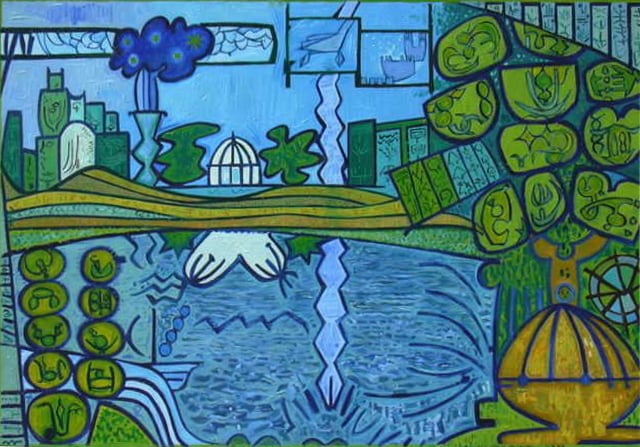
Can I dare to start to get hopeful?
It’s been a day since the ceasefire, and I’m praying for the start of our healing.
I extend my condolences to families who’ve lost loved ones. Nothing is more horrid than Innocent children getting killed in the disputes of angry men.
My heart goes out to anyone who suffered injuries in body, soul and property, there is a lot of mending and healing that needs to happen now.
You know, when a battle ends, the people of violence go back to sharpening their swords and practicing their aim, in anticipation for the next round, which will probably arrive if they had a say in it.
However, people of peace go back to building the bridges above the chasms that were torn between people and between nations.
We have followed people of war for so long, I really do hope we wisen up and start following the people of peace. I hope we put our minds and energies to the work of rebuilding and healing.
אפשר להעז ולהתחיל לקוות לטוב?

כבר יממה מאז הפסקת האש, ואני מתפללת לתחילת ההחלמה.

תנחומיי לכל משפחה שאיבדה יקרים. אין דבר יותר נורא מילד שנהרג בגלל מלחמות
 של גברים זועמים.

ליבי יוצא לכל מי שחווה פגיעה בגוף, בנפש או ברכוש, הרבה החלמה ובנייה מחדש
יצטרכו לקרות עכשיו.

אתם יודעים, כשנגמר קרב, אנשי המלחמה חוזרים להשחזת החרבות ולאימונים
בטווחי היריות, כהכנה לסיבוב הבא, שסביר להניח שיגיע אם תהיה להם יד בדבר.

בזמן הזה, אנשי השלום חוזרים לבניית הגשרים מעל התהומות שנפערו בין
אנשים ועמים.

כבר יותר מדי זמן שאנחנו הולכים אחר אנשי המלחמה, אני באמת מקווה שנחכים
ונתחיל ללכת אחרי אנשי השלום. שנשקיע את האנרגיות שלנו בבנייה והחלמה.

מה זה פרויקט המילה הטובה?

קמפיין אונליין שיזמתי כדי להעצים תכניות חינוכיות בנושא הסובלנות וההידברות.
 אתם יכולים להירתם ע"י קניית החולצה באתר.
הלינק מעלה.هل بالامكان الابتداء بالتفاؤل؟

مر علينا يوم كامل منذ وقف الاطلاق، وكلي امل ان نبدأ عملية الشفاء.

جم التعازي لكل عائلة فقدت فقيدا. ليس هنالك شيء اسوأ من موت الاطفال بسبب حروب الرجال.

قلبي مع كل من تضرر في جسمه او روحه او ملكه، امامنا الكثير من الشفاء والبناء.

اتعلمون؟ في نهاية المعركه، يعود اهل الحرب الى شحذ السيوف وممارسة الاطلاق الى الهدف، استعدادا للمعركة القادمه، التي لا بد وانها ستأتي ان كانت لهم سيطرة بالموضوع.

 في هذا الوقت، يعود اهل السلام الى بناء الجسور فوق الهوى الواسعة التي انفتحت بين الاشخاص والشعوب.

تبعنا اهل الحرب مدة طويله، كلي امل ان نتبع اهل السلام وان نستثمر قوانا وطاقاتنا في تعجيل الشفاء والبناء.
©2021 Ameen Al-bayed, El-Fawwar refugee camp, near Otniel, teacher of Non-violent Communication who participated in interreligious meetings at Beit Knesset (Synagogue) Dati-leumi, Har Nof, Jerusalem. All rights reserved
What is the magic answer to the thorny questions that it seems have resonated throughout human history? What can individuals do to move us toward a genuinely lasting peace on this sacred Earth of ours; on this, the only place that we and foreseeable generations have to live? What can we do to make us honest and worthy of the quest? It seems instead that we prefer the old formula that promises to advance us toward yet another round of talks; another ‘agreement’ that so often it turns out is not worth the paper on which it is written. Wherever we look in the world, this pattern repeats itself. Yet, after another round of protests, of raising funds to help the beleaguered and vulnerable local population, we in the affluent West sit back in our comfy armchairs, consuming our unnecessary little pieces of luxury … and I am no exception to this!
Once again, in the past month, the hornets’ nest has been well and truly stirred between Israel and Palestine; stirred by fear, anxiety and anger; by Lord knows who. Which party, which troublemakers, which gang, which international sponsor, who has a vested interest in maintaining the status quo … of division, conflict and any hope there may be of unifying the nations? As ever, the previously drawn, well established lines have been punctured and drawn into question. There is now another, yet it is always felt, fragile truce. The circumstances of this, as with all conflicts, is fraught with complexity, with entrenched views and attitudes, with ideological positions, with stubborn refusal to yield their politically, geographically and materially sensitive attitudes and policies.
We have spent a year fighting a common enemy, which for a time brought us together in our common cause to survive. How astonishingly resilient and industrious are those ordinary people, the medical professions, scientists and all those involved in enabling that survival. But as the black veil of this hidden, insidious enemy is lifted from our eyes, once again, sadly, we begin to see the all too familiar lines being drawn. The rifts between nations, territories, communities, even families, re-emerge.
There is therefore a question that needs to be asked: where is that elusive quality of humanity, that emotion that makes us glow and renews and binds our spirits? Where is Joy?
A unique relationship between two spiritual leaders from different religious spheres, those of Buddhism and Christianity, His Holiness the Dalia Lama and Archbishop Desmond Tutu can provide us with some answers. That Joy is a by-product; a by-product of what, I hear you ask? It is not easy in a life driven by material rather than spiritual concerns, but a solution is possible simply because the human character is such that we are capable of achieving great things in times of great need and a will to make changes to our personal and thereby collective lives. Practising the ‘Eight Pillars of Joy’ is the action we need that will give rise to this elusive by-product of Joy.
In their book of long conversations on the subject of joy, the Dalai Lama and Desmond Tutu developed some guiding principles, which they summarised rather happily as “The Eight Pillars of Joy” …
Perspective – there are many different angles
Humility – trying to be humble and modest
Humour – Laughter is much better
Acceptance – the only place where change can begin
Forgiveness – freeing ourselves from the burden of our past
Gratitude – appreciating what we have and life itself
Compassion – affirmation by meditation, prayer and fasting
Generosity – unconditional giving can be a source of ultimate Joy.
Achieving this and feeling the resultant Joy in our hearts and minds, I cannot see any other result than one further by-product, which is Peace.
There is evidence in this issue of the BeZine, as you might expect, in Corina Ravenscraft’s poem, “Asking for a Friend”, which cleverly moves from the ‘I’ to the ‘We’, from the personal to the collective, and on to a compelling final question. In the Joe Hesch poem, “Holding on to My Last Breath” he too hits home with the message that before we can wage peace collectively, we have to find it within ourselves. Then there is an essay on non violent communication, by Ester Karen Aida, which challenges us to address our seasoned prejudices by asking questions of each other and focussing in on our inherent truths. And there is so much more to bend your minds to thinking in completely different ways.
Wherever we are in our personal struggles … we need to take the first step and start today.
© 2021 John Anstie
Mbizo sent these to The BeZine submissions email in recent days. I can report that he is alive and not in custody. I have clarified that he wishes for them to be published. I have lightly edited the essay with Mbizo’s review.
—Michael Dickel, Editor, The BeZine
a short essay
My story is unique and very much extraordinary because I am poet, a human rights poetivist. I have refused to bow down. A radical wordsmith that stubbornly refused to toe the line, to tone down my grinding imagery and crude metaphor. I write what surrounds me, the most critical of it in Africa is livelihood, citizens, voters people, government and leadership. As an African child, poet, writer, artivist or griot your story is fashioned by inequality, hunger, injustice. corruption and disgruntlement. Political leadership that bashes the rights of citizens through extortion, political violence, vote rigging, money laundering and mafia style business cartels.
I am a poet and an African griot who refused to repent into the church of rogue political elite. I started as a messenger of our village traditional cultures and later delved into the deep flesh of matters that affect my people as perpetuated by rulership that has caused gushes on me emotionally, spiritually and mentally. I have since lost cadres home, family, nation and abroad. I am labeled the enemy of the state. I have seen and lived in the midst of forests of death and bushes of hell. I have been running not reading.
It is not revolutionary to see a failing state and you remain mum and silent. It is not revolutionary to see and watch dictators scheming the national cake alone and we remain daft and silent. Corruption has since burrowed through sacks of confidence in most cities and nations. Poets are usually bought not to say or to see evil but to commercialize their verses and metaphors as praise singers; injustice continues and unfairness continues to burn ladders of justice.
The tragedy is revolutionary badges and lanterns of hope are given to those who Speak lies, those who see no evil, to those who loot, kill and destroy. The paradox is poets like me, purveyors of truth, are trounced out of their villages to be persecuted in dungeons of disgrace. We are bowled out of birth lands to be dowsed in climes of despair. We are given titles that are equalized to unpatriotic and other hopeless totems of rue because we refused to walk and talk the language of political thievery.
The African poet of resistance remains a prisoner dressed in the garb of prejudice for society and others among his peers are drenched in the fear of losing lives, jobs and favors if they walk alongside him in his lane; the revolutionary, protest poet walks alone in the dark valleys of death and his bed. Thorns await everytime he sneezes verses of truth, raw imagery and crude proverbs pointing to those sitting on high thrones and rabid minions. When ever chunks of truth are written by a so-called dissident poet, the system becomes a serpent and the state becomes rogue and the poet is gnashed, his lashing tongue is burnt.
Usually, when that happens peers squeeze themselves into their shells of fear; in fear of victimization, few remain of strong and foreign peers who stand firm because the rogue system cannot catch them and net them the same way they can do to the revolutionary artivist poet and his band of peers. Some peers are bought by pieces of gold to sell out the strongest ones and sometimes truth and genuineness are slaughtered on the slabs of poverty, corruption and extortion.
Humanity has lost the green color of life, the solid stead of dignity. Few pieces of gold can repent a true desciple into a daredevil qualified to kill and devour truth. Even though the African resistance poet is rich with expression, proverb and truth, he lacks life, money, mobility and material that his opponents are blessed with and poverty with despair are weapons used against him to keep under the grind of suffering. As the system becomes rogue, the poet is discarded to peripherals of dust where humanity does not exist.
This protest fortune-teller has gathered writings, written writings and created platforms for other artivists, writers, poets and others. His stories are immersed in crying metaphor, blood-drenched imagery, heart-rending irony, and all that is crude satire. His hybrid writings are dipped in beef roast of reason and his political commentary is the throb of a national drumbeat that was left unattended for the past 40 years.
Poverty is the song that cranks the brains of his people, his people are drunk on cheap propaganda. His killers are not tired of chasing this poet griot artivist who is running still.
The Tragedy is that the world has gone rogue, favor now goes with political affiliation, social inclination or cultural denomination or else you die choking with chunks of your poetry or you are strangled by the powers you tell the truth to; maybe where you run for refuge there are peers to your hunters and your killers and you become easy prey to predators you know and don’t know.
The Tragedy those homemates, those classmates, those of bloodline never saw you hailing a slogan and they don’t know how or if a poet becomes a political victim. They are psyched that a poet is an entertainer, a praise singer, a street actor and stand up speaker with lyrics oiling the throne of the king and queen. They are ignorant of my ordeals, of my revolutionary stance, my radical stead; they think I am insane. They are ignorant.
This is the tragedy of an African Poet of resistance.
a poem
Your prolific role is to see value in every citizen
I am a citizen carrying crude metaphors of truth in the caves of my mind
I am a Zimbabwean holding on to the raw scepter of true images of my land, our country
I am a people yearning for power elite to repent from corruption
I am a griot crying for bureaucrats to repent from stealing the national fat
I respect the flag, it's colors and its meaning, I am born by ancestors that saluted chimurenga
I am a fighter of truth and for justice, I am haunted, threatened and intercepted for speaking the truth
Art is a gift, poetry is a weapon of mass instruction, Zimbabwe is the country I know, country I was born, a country I know best of caves, heroes, plains, meadows and rivers
A country rich but a stolen country, stolen of truth, stolen of love, stolen of free speech
poets are national assets, recorders of history, fortunetellers of past, present and future
We do not to agree to make a country and to build peace
 I thought the second republic is for all in the republic .
I never knew it is of the selected few,
I am voice crying in the wilderness, son of the soil haunted at home by minions of the state and l thrown into wild bushes for hyenas to feed on
Which crime have committed that makes me unwanted and unZimbabwean
The bones of mothers cry for me in the land of my birth, bones of my fathers are weeping for me
Zimbabwe carry the throne, thistle, roses, pain, laughter, hope and cries of my people
For when Zimbabwe and security minions give me a break
Is it a crime to write the poetic graffiti of crude truth
For when shall we remain praise singers of some things that do not praise
I always thought as griots our role is to sing truth Power and then corridors of power are sanitized
Truth is the only detergent washing the dirty linen of the state and we walk clean, loved and United
Mine is not a violent statement, it is a message to remind you that I am citizen, a child of Zimbabwe, haunted by securocratic intelligence inside and outside the country
The second republic as I was taught is the dispensation of truth, free speech and embraces all
We all got faults from high ranks of power,
I have written no placards but poetry, my slogan is poetry of resistance
If I die today, tomorrow or the day after I know that I died telling the truth to power
Death by the way the way of God, I have sacrificed to die writing true poetry immersed in jugs of satire and dishes crude imagery
I have lived a life as a defender of truth, as a writer of raw metaphor
Expressing the hard feelings of my pain and the pain at home
I will not weep on my death, but my death is not a way to surrender, it is to say, there is always that time to rest, to leave others carrying on with the revolutionary literary candles
If you are true, you lay a wreath alongside my poetic peers on my supposed shallow grave
They will call me homeless, country less, fatherless and motherless
But some will say here lies a poet, a griot, a son of the soil, a fighter and all
But if I don't die tonight I will continue the fight for truth and I know one day you will see the truth of my resistance poetry and protest letters and I will be buried decently next to the caves of my ancestors
I have done my prayers that even in dreams, death, life or writing, I will not be defeated,
This is my epitaph to the man that is myself, a man who has fought many struggles
I am rejected, haunted and persecuted by his own people
Where are you mr president
My brilliance, my shallowness, my poetry, my controversial political commentary and my hybrid narratives are an assert to the land dipped in tanks of corruption, murky waters of political toxicity,unfairness and other
I respect those doing good, fighting to build the nation but there is an elephant in the room injustice, human rights abuses, lack of free speech and corruption
I respect those speaking the truth and every time they are gagged
President, I am a griot crying in the wilderness

I moved to Jordan with Peace Corps in 2004, less than a year after my country invaded Iraq, just before the torture at Abu Ghraib Prison came to light. My fellow Jordanian teachers brought the gruesome images to school, insisting, “You must look at these pictures. These are our brothers.” By the end of that year, two devastating battles had been fought in the streets of Fallujah.
Early in my second year, Operation Smile asked if Peace Corps Volunteers could assist their medical mission by staying at an Amman hotel with forty Iraqi children, each with one parent. Most had only rarely left their villages, never stayed in a hotel, certainly never left Iraq. They were asking us, with our Arabic and intercultural fluency, to keep the parents calm and informed, and entertain the children.
I almost didn’t do it.
It should have been depressing, living with forty families from the impoverished Iraqi countryside — ravaged by American-made land mines, littered with the remains of radioactive American bomb casings, and now sprayed with insurgent gunfire and IEDs. I was sure I would be so distraught by the deformities of these children that I wouldn’t be able to look at them, let alone help them.
I volunteered anyway, because I needed to do something for this country that my country had invaded, for these families in need so close to my new Jordanian home.
My first encounter was in the hotel lobby at check-in with Nour, a chubby little girl, nine months old. Her mother had brought her to Jordan to have a double cleft repaired that divided her upper lip in three. For a moment, she became her deformity. Then she smiled and transformed. “Nour” means light, and a delighted glow radiated from her fat round face and big liquid eyes when she looked up at me and grinned. There was only one thing to do. I grinned back, tickling the bib of her red ruffled dress until we both giggled.
After Nour, it was easy to love them all. I wasn’t disgusted or even uncomfortable. They were blithely happy babies, cheerful, playful, and I was instantly charmed. It took me longer to appreciate the quiet strength of their mothers.
I especially loved two-year-old Serdar. His parents had been given special dispensation to both come with their son, because in addition to his cleft lip and cleft palate, he was blind, deaf and possibly autistic. Then, after he arrived in Amman, the doctors doing his pre-op found a hole in his heart. Despite all that, he energized that whole dim hotel dining room.
After dinner, his parents sat Serdar on top of a big round table. He rolled over onto his belly, pressing his cheek and ear to the navy blue polyester tablecloth. Though deaf, he could feel people talking through the table beneath.
His father tapped lightly on the table’s edge. Serdar tapped back, arms and legs splayed out to the four directions. He mimicked flawlessly his father’s more and more complex rhythms, keeping perfect time.
Then his father started doing drum rolls, at first softly with his fingertips on the edge of the table, a light crescendo growing faster and louder, until he was pounding the table like thunder with both palms. Serdar’s back arched, his hands and feet slapped against the table, and he gave a great, loud peal of laughter.
His delight rang out across the room. Heads lifted and turned. I moved closer, grinning, enchanted. The war was a world away. Caught up in the innocent joy of the moment, it was impossible not to laugh with Serdar.
His father decrescendoed, bringing the drumroll down to just the light, intermittent tapping of two fingertips on the table edge. Serdar laid down his arms and legs and pressed his ear to the tablecloth again, listening intently to the light tap-tap and chortling softly to himself. Then his father started again, faster and louder, drawing out that peal of uninhibited laughter once more.
Crowding around the table without speaking, we all got involved at the peak of the crescendo, then dropped away one by one as the drumroll came back down again. Serdar entertained a dozen of us for nearly an hour, helping us forget entirely where we were and what was happening back in his homeland.
More than half the children came with their mothers. Some framed their faces in loose hijab of navy blue or espresso brown, but most wore black headscarves. They all wore chador, a large semicircle of black cloth. The center of the straight edge balanced on the crowns of their heads, trailing to the ground all around, held closed under their chins with one hand. The chador rippled and billowed in even the slight wind of a woman’s own passing, lending a poetic, ethereal quality to these mothers, petite and demur and preferring the company of other women.
One mother was none of those things. She was tall, with a long, blocky face, lined and leathery from sun and wind. There was a faint patina of sandy dirt permanently ground into the lower edge of her chador, made of a thicker material that didn’t billow so romantically. I guessed from her thick, coarse hands and her easy manner with the fathers that she must have been a Bedouin shepherd or farmer like my Jordanian neighbors.
She stopped me after dinner one evening, taking my forearm firmly in her big, dark hand, the skin dry and cracked. “Do you know what my name is?” she asked. She had a booming outdoor voice in the dark, low-ceilinged dining room. “My name is Amreeka.”
“W-allah? Really?” I wasn’t sure what to say, or if she was pulling my leg. She had spoken slowly and clearly enough, in a thick Bedouin accent almost identical to my Jordanian neighbors, but amreeka means America.
She laughed at my confusion and gestured expansively. “My parents named me Amreeka because you supported us in the war” — this must have been the Iran-Iraq War — “and my parents thought you would bring progress and democracy to Iraq. And now here you are, helping my daughter. Thank God for you!”
Though Operation Smile’s doctors hailed from across the Western world, Amreeka would go back to Iraq and say that Americans had fixed her daughter’s cleft lip. In the Bedouin tribes, disability may be seen as a family’s punishment from God for some sin, tarnishing the reputations of whole extended families. This surgery meant that not only Amreeka’s daughter, but her sisters and her girl cousins would have better marriage prospects, that Amreeka and her husband might look forward in their later years to the support of a more successful son-in-law.
That is, if there were enough hale and whole young men remaining for her daughters to marry, and if those young men lived into Amreeka’s later years. If Amreeka lived into her own later years. With American soldiers’ fingers nervous on the trigger, and desperate Iraqis perpetrating their own violence, Amreeka’s future and her daughters’ futures were far from certain or rosy.
Still, she remained certain that America held the key. I feared she would be brutally disappointed, but I couldn’t make myself contradict her optimism.
The war in Iraq was the daily reality back home for these families, and a frequent topic of conversation. They kept using a word to refer to American soldiers that sounded like the Arabic word Hmaar—donkey. Arabs use it much the way Americans do, as in, “You jackass!”
Yet, it was clear from the Iraqis’ tone and body language that they were speaking kindly, even fondly of these hamar. Finally, another Volunteer realized that it had nothing to do with donkeys. This hamar was an English loan word — from Hummer or Humvee — referring to a patrol of Coalition soldiers in an armored vehicle.
“The Hummer saw my son’s harelip when we were on the way to the market,” one mother said, tugging her filmy, slippery chador back into place on the crown of her head. “We always wave and smile at the Hummers and say thank you for helping us.”
These women did not see themselves as I saw them, as victims of my arrogant, angry government. The Hummers had brought war and death. American troops had bombed infrastructure, destroyed their priceless ancient monuments, brought chaos, insurgency and Al Qaeda to their country.
Yet, these women were grateful, and this was not that often-infuriating practice of Arab hospitality where they tell the polite fiction they think their host wants to hear. They were not talking to me. They said these things to each other, and they said them with confident sincerity. So I listened as best I could with my imperfect Arabic, and tried to understand.
The young, pretty mother continued, “Usually, we thank them from a distance. We don’t get too near the Hummers. It makes them nervous. But one day, a soldier waved at us to come closer, me and my son.” He was a slight boy beside her, about seven, hesitant to meet my gaze.
I listened silently, worried what would come next. I knew the Hummers were harbingers of destruction.
“The soldier smiled at me and my son. He said hello,” she said. “He asked him his name. My son is shy. He wouldn’t answer.” Shy seemed the wrong word. The children at the hotel were more reticent, subjected all of their short lives to shame and ridicule from their neighbors, and then the traumas of war and occupation.
“Then he leaned down from his Hummer and gave me the paper with information about Operation Smile. That’s how we got here.” Other mothers jumped into the conversation with their own stories about how the Hummers had won their hearts and minds.
Every time I hear the news from Iraq, I remember those families. Nour should now be finishing elementary school. Does her smile still glow? Do her big doe eyes still dance? I cannot imagine what she has seen, or how it may have dimmed her light.
Operation Smile arranged for another organization to take Serdar and his parents to London for open heart surgery, and then the facial reconstruction he had come to Jordan for. I remember him as a toddler, but he should be a teenager now. Is he still the happy drummer boy on that dining room table? Is he still strong-limbed and pudgy with a pealing laugh that fills the room? Or have explosions vibrating up through his living room floor tempered his joie de vivre?
Amreeka’s daughter should be in her twenties, married with at least one baby of her own. Are her children healthy? Maybe Amreeka’s village of farmers and shepherds is small enough to have escaped the violence, the bloody conflict, the decimated manhood.
I’m still reaching for Amreeka’s optimism.
In 2014, Iraqi cities fell like dominoes to the fanatics calling themselves “Islamic State.” Yezidis who had managed to survive both Saddam and the occupation now starved on mountaintops. Journalists lost their heads trying to plead the Iraqi cause. I click through pictures of women walking back into Mosul, after the Iraqi army had retreated and the extremists had taken control.
I see their black chador rippling and dancing on the dusty wind. They turn and reach out black-gloved hands for small children just out of frame. I want to grab them by the shoulders and shout, “W-allahi—By God, why? Why would you go back there?”
“W-allahi,” they say, “why not? Now it’s the fundamentalists, before them the Hummers, before them Saddam, before him the British, before them the Ottomans. Ma shaa’ allah—What God hath wrought! All we can do is go back to our homes, where our grandfathers lived and their grandfathers. Allahu ‘alem—God knows, and His will be done.”
Demur but determined, they float away down the streets of Mosul, steadfast pillars of black smoke silhouetted against the pockmarked shells of their whitewashed homes. And I remind myself that Iraq is also the land of Nour’s smile, and of Serdar’s laughter. When Mosul is liberated, it will be these women, these children and their children who rebuild. If there is to be peace, it will be theirs.
I struggle for Amreeka’s optimism, but I still have hope.
Allahu ‘alem.
“The Peace of Iraq’s Mothers” previously appeared in Re-Creating Our Common Chord anthology, Wising Up Press, September 2019; and DoveTales, An International Journal of The Arts, May 2017; first appeared in New Madrid, Journal of Contemporary Literature vol. 7, no. 1: Winter 2017.
©2021 Maryah Converse
All rights reserved
According to Jewish tradition, there are 613 Commandments (Mitzvot) in the Torah (The Hebrew Scriptures / Five Books of Moses). I’ve been taught that the Rabbinic tradition holds that repetition in the Torah indicates importance, especially for Mitzvot. The famous Ten Utterances (Ten Commandments in the Christian tradition) occur twice, in slightly different form. Another Mitvah (Commandment) however, occurs as many as 36 times: to not mistreat and even to love the Stranger (Ger, in Hebrew).
Rabbi Eliezer explains that the Torah “warns against the wronging of a ger in thirty-six places; others say, in forty-six places” (Bava Metzia 59b cited by Rabbi Lord Jonathan Sacks).
Why do I mix “not mistreat” with “love”? This this passage in Leviticus, among others in the Torah:
“When a stranger lives with you in your land, do not mistreat him. The stranger living with you must be treated as one of your native-born. Love him as yourself, for you were strangers in Egypt. I am the Lord your God” (Leviticus 19:33–34).
Today, there are two types of ger—the ger toshav (foreign resident) and the ger tzedek (righteous convert). Some today interpret the mitzvah of loving the Stranger as a reference to converts because of this. This justifies discrimination and oppression of the Other, for example, refugees. However, this interpretation is illogical. For the passages say, “you were strangers in Egypt.” And this phrase usually appears with the admonition to love a stranger.
Jews were outsiders in Egypt and eventually enslaved as a perceived threat. They were not converts. Rabbi and Professor David Golinkin tells us: “The Bible is not familiar with a ger tzedek or righteous convert. In the Bible, a ger is a stranger or resident alien of non-Israelite origin living in Israel” (Erev Pesach: ”The Stranger Within Your Gates”). He later quotes another occurrence of this mitzvah from Exodus:
“‘You shall not wrong or oppress a stranger, for you were strangers in the land of Egypt’ (Exodus 22:20) The rabbis interpreted this to mean that you may not oppress a ger toshav either verbally or monetarily (Maimonides, Hilkhot Mekhirah 14:15-16; Shulhan Arukh Hoshen Mishpat 228:2)” (Erev Pesach: ”The Stranger Within Your Gates”).
So, who is the Stranger?
An earlier passage a few verses up in Leviticus from what I quoted earlier gives a clue: “You shall neither take revenge from nor bear a grudge against the members of your people; you shall love your neighbor as yourself. I am the Lord” (Leviticus 19:18). When compared to Leviticus 19:33 which says about the stranger to “Love him as yourself,” Rabbi Sacks does, the echo suggests to me that the Stranger is also our neighbor. Does this mean those who live in proximity, that is, our neighhborhood?
Some indeed argue resident alien, someone who is legally living with you. I have hear oral arguments that this is “the stranger within your gates” (Exodus 20:10). However, the passage from Exodus where I find this (also translate in the JPS Torah edition: “the stranger within your settlements”) refers not to loving the Stranger and does not mention “for you were strangers in Egypt.” It is the mitzvah not to work on the Sabbath, and includes those who live with you (also son, daughter, your slaves, your cattle…with the stranger listed last among those specified in addition to “you” who shall not labor).
The phrase that frequently accompanies the mitzvah of treating well and loving the stranger, “for you were strangers in Egypt,” provides a wider scope than the neighborhood—at least the dynasty of Egypt in size. And I would suggest that if we think of the whole earth as our current residence, and countries as neighborhoods, we could got further. Any stranger on earth—now less foreign from from another nation, but more stranger from another neighborhood, someone we don’t know well or at all. The “them” of “us and them.”
And this Other, all others, while we may still perceive an “us” and a “them,” the mitzvah here is to not mistreat, better, to treat well, and more than that, to love. How to love the stranger? As ourselves.
Empathy
How do we approach this revolutionary loving of the erstwhile threatening “them”? Perhaps we begin by finding common ground. The most grounding common principle for such a radical notion? That “they” are human beings desiring and deserving social connections of being treated well and loved, as are “we.” In ways small and large, we can seek to take steps to look at other human beings and see in them reflections of our own desiring and deserving of love. Thus, they become one of us.
And this is a principle of the godhead / creative force. As the Israelites are about to enter The Promised Land, Moses tells them that The Creator “shows no partiality and accepts no bribes. God defends the cause of the fatherless and the widow, and loves the stranger, giving the stranger food and clothing. And you are to love those who are strangers, for you yourselves were strangers in Egypt” (Deuteronomy 10:17–19). May we thus spiritually enter The Promised Land through loving our neighbor by finding common ground.
This is not an easy or quick task. Rachel Farbiarz explores the question of “you were strangers in Egypt.” We were not. And in the end, Moses (according to the narrative) outlives those who left Egypt. The Israelites he tells this to at the end of the journey in the wilderness were not those from the beginning of that journey. She tells us this:
“…helps us understand that empathy is work, that there is something awkward and uncomfortable about its habit. We must be schooled in its compulsory nature no less than 36 times, tutored in its essentialness through the heuristic of self-deception: ‘It was you who were a slave; it is you who knows the heart of a stranger.’ Moses’ elision [of the change in generations] thus helps us internalize that empathy is not always and already there, burrowed inside like a jack-in-the-box, awaiting an opening to spring forth. It is rather an iterative effort that demands rehearsal and repetition” (Treatment of the Stranger: Our existential relationship to our ancestors and how we learn empathy).
May peace prevail on earth.
©2021 Michael Dickel
All rights reserved

Volume 8 March 15, 2021 Issue 1
Volume 8 March 15, 2021 Issue 1
SustainABILITY
Cover art: Sadness of Water
Kat Patton
Colored Pencil, 11″ X 14″
This month’s issue of The BeZine, on SustainABILITY, comes at a time when we struggle to sustain our health, our societies, and our planet against difficult and challenging times. Pandemic, political extremism, and the climate crisis collide in a “perfect storm” of disruption. Yet, with resilience and resolve, we struggle with the challenges, and at our human best, some of us do manage to work together respectfully to face them.
The writers, musicians, and artists in our Spring issue approach all of those challenges to sustaining ourselves day to day and more. They come from Bulgaria, Hungary, Ireland, Kenya, Kosovo, Pakistan, Portugal, the UK, Zimbabwe, and the US. I am writing this at The Jerusalem Botanical Gardens. The diversity of perspectives and approaches to the challenges we face and the path forward will provoke and inspire readers. Most of all, we hope that the artists and writers in The BeZine will help you, dear readers, to sustain your spirit, creativity, and dignity in some small way or other.
With this first issue of our eighth volume (year), you may notice some changes. Most of the changes are tweaks here and there to the visible look of the pages. One very visible change is the Table of Contents below—this is a first step in a work in progress. Using a technical, behind-the-scenes tool of WordPress, the entries in our ToC are now automatically generated. As we learn to use the tool better, we will refine the formatting.
Also new this issue, there is a button at the top of the ToC for browsing the whole issue. If you click on that, you will arrive at the “Cover.” As you scroll down, you will see this Intro and ToC again. However, keep on scrolling and you will be able to see all of the pages of the journal. Just keep scrolling to keep reading.
And, in case you want to come back to the ToC, you will find a button to do just that at the bottom of each content page—it is a small version of Kat Patton’s wonderful cover art.
During this year we will continue to work on the look, feel, and design of The BeZine. In our way, this is how we are working to sustain the Zine, in the hopes that this will make a better experience for you, our readers.

Spiritual Practice

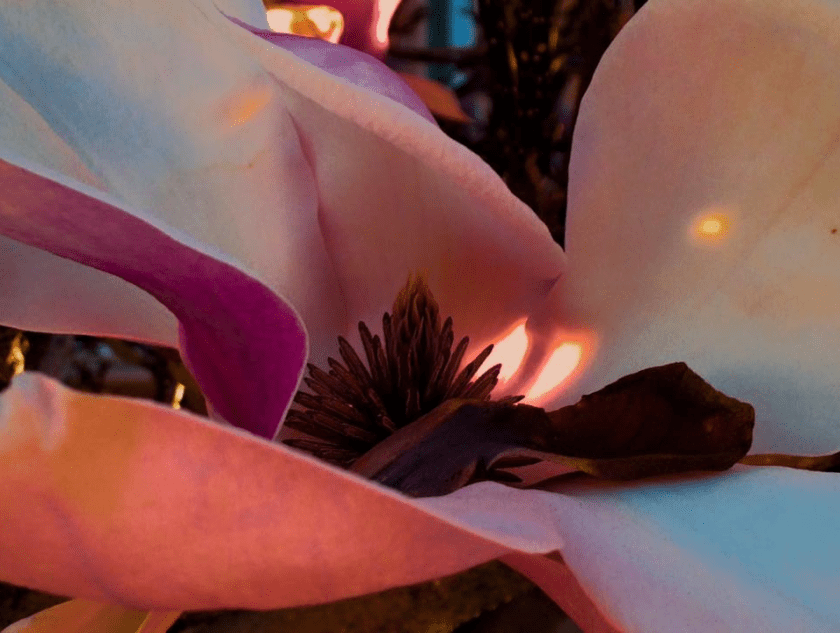
Photo: Untitled IV, Jamie Dedes ©2020
In this edition of the BeZine we have once again dedicated a section to tributes, elegies, eulogies and poems for Jamie Dedes, because the period between her passing in November and the publication of the December issue, was so short that we barely had a chance to breathe, take it all in and capture all the contributions from her many friends and fans.
One very notable friend and, it needs to be elaborated, a very important collaborator in the early days of Jamie’s mission, giving no uncertain weight to the establishment of ‘Into the Bardo’ and eventually the ‘BeZine’ was someone, who was otherwise know as the ‘CloakedMonk’. This is the Rev. Terri Jane Stewart.
After the December edition the BeZine went to press, I caught up with Terri, who was in shock at the news of Jamie’s passing and feeling unable to offer anything except the following, very honest and heartfelt, response. At this point it is worthy of mention that Terri’s daily work involves administering to the needs of people in the community, many of whom are already very challenged by life, but which last year will also have involved dealing with the tragic effects of the pandemic. To end the year with the loss of a close personal friend will have been as much as any human being would ever hope to cope with.
Here is what Terri had to say to me in December…
“This year has been full of tremendous sorrow. I have been unable or unwilling, perhaps, truly to process what the loss of Jamie means to me personally. I have a special gift for ducking and weaving away from uncomfortable feelings until such a time as they smack me in the face. I think we all do that sometimes.
Jamie and I met so many years ago as two kindred spirits in the internet space, trying to create more justice, more peace, more kindness and more understanding. I am proud of the legacy that Jamie built and that we were privileged enough to journey with her on this mission. I am sure that her spirit is with us in every movement towards justice and inclusion. I miss her greatly, even while knowing that she is still with us.
Thank you for the opportunity to offer a few small reflections.”
Since these words just before Christmas, Terri has been kind enough to send me a much fuller account, which provides more history, insight and colour to her friendship and collaboration with Jamie and, as will be revealed, that Terri clearly played a major part in the eventual establishment of what we have come to know and love as ‘The BeZine’.
I would like to offer our thanks to Terri for taking the time to write for us. I have found it very helpful to read, in just the same way as attending Jamie’s memorial service before Christmas, organised for us by her son, Richard, his wife, Karen Fayeth and Jamie’s cousin and lifelong friend, Daniel Sormani, who cast much more light on Jamie’s life going way back to the start of her life’s journey in New York.
Terri’s response in many ways provides an introduction to how it all began, but there are several more personal contributions to the many memories of Jamie Dedes, from those who did not get a chance to submit to the December issue or for those who have more that they would like to say about that personality, with whom we shared so much and to whom we owe so much …
here’s to G Jamie Dedes.
John Anstie
March 2021
©2021 John Anstie
All rights reserved
I can’t even remember what year it was that Jamie and I connected via online poetry sharing parties. They were those challenges inviting you to post your own poem and then to go and visit the sites of others. It was a way of creating community and connection among a loosely knit group of people who appreciated the unique artistic efforts we each made [1].
Eventually, Jamie dreamed of the website Into the Bardo while I was steeped in “CloakedMonk.” CloakedMonk was my online persona as I navigated seminary and wasn’t really sure I wanted the powers that would approve my ordination to know the full depth of my thoughts. I considered myself a “monk in disguise.” Jamie invited me to join the effort of Into the Bardo as the Sunday Chaplain in 2013. I would make weekly posts about spirituality and spiritual practices.
Simultaneously, I expanded my online presence from simply CloakedMonk to BeguineAgain, a website with spiritual practices and writing based on the ancient model inherited from the Beguines communities of the Flanders area in Western Europe, whose origins are to be found in the early part of the second millennium, becoming established in the 13th-16th centuries. The Beguines were a community that was formed from adversity and were organized and run by the community—not the church, city, or nobility—and they supported each other as long as they were needed.
As Jamie and I grew closer together, we dreamed of transforming Into the Bardo and BeguineAgain into a cohesive community that worked together. By 2016, Into the Bardo became the BeZine, and BeguineAgain expanded its practices to be more interfaith, ecumenical, and social-justice oriented. Well, to be honest, for both Jamie and I, it wasn’t a stretch to step into social justice! Connecting with 100 Thousand Poets for Change [2] firmly cemented our transition.
Eventually, BeguineAgain lived out its purpose, just as the ancient Beguine communities lived out their purpose, and we stopped writing for it. However, the BeZine was firmly launched and grew to become a force for peace, with justice, in our world.
When Jamie passed, it was and still is, hard for me to imagine the BeZine without her. Sometimes, it is even hard to imagine my own efforts without her gaze on my words. But one thing I do know is that she wanted the BeZine to live beyond her and for it to continue being a force for peace with justice. She dreamed of collecting voices from around the world and actively working to bring poets into safe relationships when they are from threat-filled environments. She dreamed of actions that brought the poetic vision to life. She dreamed of a connected life that honored the bumblebee, the tree, and the human. Her dream is my dream. I hope that it can be our dream.
Peace,
Rev. Terri Jane Stewart
(they/them/their)
Terri Stewart is a pastor in the United Methodist tradition and is the Steward of Connection at Circle Faith Future (CFF). The vision of CFF is building hope in a fractured world. Terri’s primary ways of connecting is with incarcerated youth and in building resilient communities. Terri has an MDIV from Seattle University and is in progress towards a PhD in leadership studies.
©2021 Terri Stewart
All rights reserved
Ed. Notes:
[1] This makes reference to the ‘dVerse – Poets Pub’ Open Link night. Back to text.
[2] 100 Thousand Poets for Change or 100TPC is an activist movement that was founded in March 2011 by Michael Rothenberg and Terri Carrion to promote peace, social justice, and sustainability by actively organising creative events around the World. It focuses on an annual event at the end of September, which coincides with the September edition of the BeZine and a special BeZine Virtual 100TPC (see a short history written by Jamie Dedes here). Back to text.
Pain in pinnacles of the past
Faded outbursts of memories to hold
The queer tides of the knotted
Picks and turns; nailed but not twisted
Agile monuments of the past
The sighs of grief engraved for the purest
Sips of shooting pain
Thrown in ordeals of a nutshell
Horrific
Pain is what it says
It can never be kind
©️ January 2021 Benedicta (Akosua) Boamah
All rights reserved
Life is a mysterious web of intricate interdependent relationships, and diversity is at its heart.
Kenny Ausubel
Dear Jamie,

Ji we never met on this Earthly abode,
yet we were together by soul spirit thought and words
Our virtual meeting place was the Japanese garden close
 to your home full of sweet scented flowers and small ponds of water
You were so happy to shift in the one room studio
which had more open space and place for the Life Line... oxygen

Oh Dear Jamie Ji your trips to the hospital would make me feel so
helpless, for long hours nothing except prayers gave me hope that
all would be well, and it did, for many days, as Allah Most Gracious
gave time to share creative positive work and you shared more than
your strength and heart could bear. You lifted so many who needed the support,
your affectionate inspiration, grace and encouragement just
wafted like the soft breeze of summer spersed with tender tweets of
birds who sounded like a choir in harmony, singing a prayer then
a hymn.

But Jamie Ji on this Earth, the Creator's most blessed gift,
humanity suffered severely due to the shortage of the one thing
you too needed most—"oxygen".

Jamie Ji I never knew that a few days after you won the struggle
and quietly passed on to the promised heaven I would be down
on the prayer mat asking the Almighty for mercy forgiveness and
help for the same 'Oxygen for my own son in law, caught in the lungs
by Covid19, breathing heavily, within hours was put on the ventilator.

Confined, I felt extremely helpless, grieved and holding
on to your thoughts, your brave spirit and uplifting shower of
smiling stickers that would tingle and brighten up the mini screen
of the mobile, but the phone was silent this time, and so were you,
no words came through and my heart, laden with
sorrow asked me, "Think of how Jamie Ji must have felt?"

It was a severe hypoxic moment and as time passed no oxygen
had any effect. It was time. Time to go home for Salman,
time for us all to be patient, to accept the divine will, to wait.

Time took over. Your Japanese Garden will never wither.
Life gives hope for some time as flowers will bloom silently,
unnoticed, in the deep snow and emerge with lovely colors
to spread fragrance all around.

Constantly with your thoughts inspiration and guidance.

A.
©2021 Anjum Wasim Dar
All rights reserved
Respected G Jamie Dedes had this special skill and vision for selecting quotes from various authors and preceding them with her own poetic expressions. She dearly loved nature, flowers, tall green trees and gardens, specially the Japanese gardens. She wished to merge her spirit with that of nature and sink deeply into its beauty. Here she quotes from Anne Frank’s famous diary.
The best remedy for those who are afraid, lonely or unhappy is to go outside, somewhere where they can be quite alone with the heavens, nature and God. Because only then does one feel that all is as it should be and that God wishes to see people happy, amidst the simple beauty of nature. As longs as this exists, and it certainly always will, I know that then there will always be comfort for every sorrow, whatever the circumstances may be. And I firmly believe that nature brings solace in all troubles.
Anne Frank, The Diary of a Young Girl
I was greatly inspired and wrote the following lines in response to Jamie Ji’s quote. My poem was featured in Jamie’s “The Poet by Day” blog at www.jamiededes.com on 28th August 2019.
“In the Beginning or In the End, a poem by Anjum Wasim Dar…posted by Jamie Dedes. In Nature, Poem/Poetry.”
In the beginning or in the end, we are but particles
unknown, powerless realizing changes that emerge
in our soul and spirit, settle in the blood and flesh,
becoming one with us, invaders to us, they occupy
our spaces, our inner chambers, pollute the air we
breathe, but all this is part of the nature that we so
dearly love, appreciate and be happy and peaceful
with, nature too loves us dearly seeking to possess
sometimes abruptly sometimes slowly, silently so
quietly that we are caught unawares, sometimes
with terror and fear, the strength then lies not in
defense but in the bravery to face and fight it, all
our prayers merge with the majesty and grandeur
of nature, its beauty color and sweet fragrance,
combine as love meets love and differences
disappear, spaces vanish and glorious heavens appear.
©2021 Anjum Wasim Dar
All rights reserved
In Memory of G Jamie Dedes
From the silence of a room
where others would be drowned
you breached the net of pain
and strife to inspire and unite.

No cause too small or big your
voice called others to the cause
of love and care for the world
and all that live on it in unity and peace:

Your dream will live on.

For you are now at peace
flown from pain and loss
and passed your dreams to others
to dream on for you.
©2021 Carolyn O’Connell
All rights reserved

Art: Peace, Kat Patton ©2020
older, older,

this slow retreat of you
vanishing like one glove lost

while you are ending,
someone, somewhere,
is beginning

from woman to woman
our songs stride in odd moments
watching soft dark not far from here

simple as an apron—
stronger than night

your feet may stumble
hers will run

older, older, older

I know time has stopped
and another, begins
where a spirit has just passed
©2021 Judy DeCroce
All rights reserved



 The BeZine