Planet Earth rotates on its axis         oblivious to the  doom
            soon to grip the inhabitants
The temperature  rises             bubbling snow atop glaciers
          evaporates into the atmosphere
Polar bears go in search of their homes.
The ocean swells up in despair          the rainforest weeps in
     misery
Fires flicker            dry grass ignites              orange red
flames dance            across the parched land
     screaming sirens signal            the need to evacuate
             before it’s too late
Crisp air chokes on pollution         Climate shrugs in disbelief
Fossil fuels burn            toxic gases escaping
            into the troposphere          send ribbons of smoke
     spiraling upward           into the stratosphere
            penetrating the ozone layer.
Ultraviolet radiation bent on destruction.
     Smirks at life on earth
The sun rises and sets with precision         mocking man on his
     collision course with destiny
NASA’s Aqua Satellite Captures Devastating Wildfires in Oregon, September 2010 Credit: NASAWorldview
…writes for the sheer pleasure of writing and has been doing so from the time she was a teenager. She has been a Civil Rights activist, taught elementary school for twenty-five years, worked with her husband, Grachan Moncur III, arranging musical compositions and performing with him on different occasions. She also self-published a book entitled Diary of an Inner-City Teacher. She wanted the reader to see the classroom experience from a different perspective. Now she is a retired teacher and a seasoned senior who still loves to write. Currently she is the director of the House of Love Soup Kitchen/Pantry. Her short story, Phantasm, recently appeared online in Rigorous.
I start sawing it off, just the one trunk
and then I remember to ask
permission of the tree   lay hands on it
wait a moment   wonder
what can I give in return?   start
sawing again    an awkward angle
if it hurts you it should pain me too
then   I hope maybe I’m kind of
returning you to the privacy
of your own privet heritage
(or is the privet hedge a human construct,
not your natural state?) but
I’m sawing every which way because
unlike Potawatomi black ash basket weavers
I do. not. know.   what I’m doing

I’m sawing until I hear you tear, begin to break
I keep sawing your clean bright interior
I keep sawing with my hand on your
     footlegtrunkshoulderarm
and then you’re down, separated from your siblings
and now yes  there’s more room for my patio umbrella
my    you’re heavy and I pitch you onto the lawn
and then I    with actual drops of
sweaty anguish on my forehead    I heft you
onto my shoulder and walk toward the pile of yard trim
whispering
             I bless your wayward growing
             I bless your foot of rooting
             I bless your leg of standing
             I bless your trunk of ringing bark
             I bless your shouldering of branches and leaves
             I bless your arm and hand of waving each
                           			and every season

and instead of laying you on the pile of yard trim
I exert my weakling gratitude and stand you up
against a manmade wooden fence  so that the end
does not feel so quick.
Where, as the sun rises, the same old birds announce
     light again and all seems well;
Where, as each minute seven new souls arrive snatching
     at breath, water, life;
Where, as the children are sleeping in the next room,
     gas leaks from the stove all night;
Where, as we clothe ourselves, shreds of plastic fall
     from our bodies to shower the soil;
Where, as fifth grade, in its overheated classroom, asks
      if the sun will explode;
Where, as we inhabit in this generation a right to
     prosperity and also low prices;
Where, as we have long since crossed local apparent
     noon and approach our twilight;
Where, as each minute four hundred eighty-three
     trees meet our diamond swords;
Where, as night falls, longitude by longitude, we
     resist with switches;
Where, as some hit the drive-through, some open a
     can and some put on a pot to boil,
                                                                          for we all must eat;

Be it therefore resolved that everything is happening
     here, and now,
to each and every one of us; and if your liberation is
     bound up with mine,
then let us be here now, and brew the coffee and stew
     the beans and
walk the children to school together, allowing a narrow
     latitude of grace
and keeping our eye on the bending arc of this place, this
     small patch and grand horizon,
Where, as, we live.
…is the author of two collections of poetry for young readers as well as contributions to journals and anthologies for both adults and children. She taught in public schools for 35 years and recently served on the NCTE Excellence in Poetry Award Committee. Heidi now coaches young writers and provides poetry enrichment classes in Montgomery County, MD.
Going, Going , Gone!!

The Auctioneer stands on his rostrum gavel in hand
the sale’s about to begin.
Bidders are ready in the room, phone, and internet
ready to bid for the jewels in this sale.
Lot 1
The green farmlands—jade
Ready  to develop and import all our food
Bidding is fierce
Australia, Canada, Yankee Developers
bid high
as the Gavel goes down.
Lot 2
The National Parks & Forests—emerald lots
Millionaires move
a unique lot not found easily
opportunity for development
houses, theme parks, holiday experiences will give great return.
The gavel goes down.
Lot 3
N.H.S. & Social Care
Designed for free health and care, a choice diamond
Tycoons not in the game
bid
hands rise, phones screech, the Net’s Screen Spins
The Gavel Crashes at 10,000 billion.
Lot 4
Rivers & Reactors—Plus Shorelines
Water and Energy so full of possibilities
this is the Gold Chain
undreamed-of this find, buried for many a decade
the bidding last for hours
The gavel goes down!
Davenham Delights (Cheshire Secrets)
I walk through this village, where once I stayed,
among the old flower-strewn houses and shops:
an ancient Cheshire place. It retains a playhouse
where the residents show talents, plays old and new,
 a restaurant to gather and celebrate with an Italian.

Here's shops to buy cards, dresses, fill up plastic
containers with as much as desired: dried fruits
nuts, flours, pastas, preserves and vinegars:
you’ll find eco household cleaners
and beautiful goods .
There’s a café
where we sit eating freshly baked tea cake
and chatting for an hour before leaving
to Riverside Organics.

Once just a farm but diversification
has made it a place to fill my cupboards
with breads, meat, store cupboard basics
and local delights to put in the freezer.
Outside in the yard we sit to look over the river
enjoying ice cream from their cow’s milk -
fields filled with lambs in spring’s sunshine
Barnton’s Church spire topping the view.

Another lane leads
to a farm where canal boats gather:
a mooring for winter where waterlilies sprout
between boats as Glampers & Wild Campers
scatter the fields that once grazed cattle
we stop at its café. A pop-up Pizza hut
delights evening campfires food.
River Power
Above the river water a steel screw
rises its rings silver-haired in sun
its goddess gaze
falling on the water flowing past
the lock, once the route of barges
carrying salt or coal;

an ancient technology
is being resurrected for today
this screw turned by the river
lights the town, creates heat.

No need for power stations
nuclear or coal
the screw converts the river’s powers
to clean electricity as Archimedes
knew long ago.
…was born and lived in London but moved to Cheshire in 2017. Her collection, Timelines came out in 2014 from Indigo Dreams. Here work has been included in Anthologies, including Quality of Mersey, Under the Blue Bridge, The Stones Speak Their Language, among others. She is a member of Vale Royal Writers, Ormond Poetry, and Poetry PF.
     A neighbor needing sunlight, open space
     Coyote’s don’t sing here anymore
Don’t talk and laugh at each other now
A neighbor needing sunlight, open space
     clear cut a huge swath of woods
To plant his more than 50 fruit trees
     That slowly spread as they end up quite large
He also made a mighty large size lawn
     Where once grew many ‘hidey’ places
Foxes and wild turkeys native haunts
     A chainsaw chorus for so many months
Wood to burn for stove and fireplace
     Where now no trees to stop the brutal winds
     Birds have gone to other places to sing
A silent sadness on the treeless land
     The thrill to hear coyote’s again
Has slowly disappeared over many years
Moon Song, Sketch by jsburl
The Voice of Our Planet
In honor of and tribute to Greta Thunberg
Our planet cries "Help me, I die a slow death
  my heart is the air that all creatures must breathe
  my lungs are the forests cut down by mankin
  my stomach the ocean a slow dying space
  my body the earth and the changes it makes
  my head is mankind for the good or the bad
  my enemy pollution of chemical kinds
  my pets are all creatures that fight for their lives

I remember the last huge drastic die off
  the planet survived but only a few
  of all creatures survived that horrific event
  caused by the many volcanic eruptions
  debris in the air blocking sun from the earth
  as I watch global warming making more clouds
  as it makes glaciers melt and waters to rise
  but I hear Greta Thunberg appealing for help

She talks of her young people friends of her age
  16 year old's worrying about what they face
  as they grow watching changes that threaten their world
  and maybe there won't be a livable earth
  100 more years from today
I pray that help isn't too little too late"
Before Plastic Bags
    Think 1950’s—Before Plastic Bags
There were cans of all sizes and shapes
Metal ones didn’t make trees get cut down

But plastic makes sturdy buckets that crack
     Brittle that needs to be thrown away
     And bags clogging oceans, killing ocean life
     Clogging and littering lands and waters

A pervasive habit almost impossible to break
     Thankfully replaced by recycled paper
…lives in Chichester NY. She is an artist, musician, and poet. She loves nature, and is always outside, doing gardening and lawn duties at eighty years young. She is a non-electronic gadget person, and proud of that. Books are her life, after art. She sells her artwork locally around Woodstock. To contact, she uses snail mail: 3 Rion Road, Chichester, NY 12416
Wind-driven beasts roam
	the sandless coasts,
PVC feet
	ankle-deep in
new marshes,
	aerating
salt-caked, flooded soil.

Solar scales line their back
	sails
undulate as their
	halting
gaits move into
	the future.
The plastic spines of a new

ichthyosaur click like thick
	groves
of bamboo, their visible
	backbones
in man-made motion.
	And those
who made them—

fled inland, their only future.
That Strange Pull
My mouth is a buoyant chasm
filled with song.

Words, notes stiff as icicles
tow themselves up from memory,

stand at the edge of my lips,
and leap, disrupting the air

with "Love Me Do."
The old tunes are intrepid explorers,

weathering ice blooms in my brain.
They locate lyrics I knew

when my mouth leapt
to meet yours.
Spring, you perpetual activist,
you resist Winter’s cold rantings,
feign mindlessness, non-action.

You understand when it’s time
to return to your peaceful roots,
and engage the underground.

As soon as the weather
eases its compassionless rhetoric,
you’re out there marching.

I see you pushing
against hard earth until it breaks,
and there’s room for you to rise.
…is an author, educator, and Pushcart Prize-nominated poet. Her chapbook, Mountain, Log, Salt, and Stone won the Harriss Poetry Prize. Laura’s award-winning children’s novels include The Last Fifth Grade of Emerson Elementary, Takedown, and Sydney Taylor Notable A Place at the Table, written with Saadia Faruqi. She teaches writing at Vermont College of Fine. Welcome to Monsterville, her poetry collection for children, was illustrated by poet Michael Rothenberg.
The weather’s moody
as a middle-schooler—storm and chill,
then unexpected warmth.
Unsure whether to hunker down
or pack a picnic lunch, we ride
the wave, pretending it’s a “normal cycle”
that will right itself in the end.
What season’s this supposed to be?
my daughter asks. Sometimes
disaster happens for no reason we can predict.
The car’s brakes fail, the baby’s
heart stops beating during birth.
Other times the future’s obvious as car exhaust
against torn sky. Still, we’re all tired
of the polar bear on her melting raft, wide-eyed
and white as a bride.
Holland’s been preparing—
building roads that rise
when the dikes break. Here politicians
spoon smooth lies into our eager mouths.
What will we tell our children as earth blares
her angst, and we have no dikes, no Watcher,
Dreamer, or Sleeper to keep
the water-wolf from our door?
If you lack character, lean on money.
Homeless folks lack the hygiene of money.

Wendy O showed her nipples, grabbed her crotch,
licked a sledgehammer. Said, What’s obscene is money.

One sister got soft being loved. The sick
one craved pity. The third grew mean from money.

Stop drinking, cut carbs, sweat in saunas,
juice kale. You can’t get clean from money.

Scrambling, hungry, poor from birth. Too many
live under the guillotine of money.

Not the chartreuse of sunlit leaves, turquoise of
Florida waves. His eyes were the green of money.

More ego-boosting than sex, a stronger
upper than amphetamine—money.

A tunnel, then light, at the start. Thickening
dark at the end. In between—money.

Scarier than vampires or demons,
he dressed on Halloween as money.

Vital to a baby, milk. To a
child, love and play. To a teen, money.

Shame worms nibble my life, won’t let me
forget what I’ve done and been for money.

Loving it’s the root of every evil,
Chaucer said. There’s no vaccine against money.

Though he begged, Stay the night, Alison, he
had no books, just one magazine—Money.
I knew what was coming.
He’d pawned the stereo, sold
Mama’s rings. Slave
to the twist in his guts,

the insatiable craving.
What chance did love have?
Seen through pain-mad eyes,
I wasn’t even real.

The first one was a fisherman—sour
beard, wide-knuckled hands.
I left my body behind.
Again and again Father sold me,

stuffing the cash in his coat
and rushing off to feed,
while I prayed myself
into a mare or bird.

Each time I swore
would be the last.
I heard the ocean’s call,
planned to leave at dawn.

I couldn’t run.
Daughter-training tethered me,
my devotion limitless
and futile as his struggle to be full.
…has published seven full-length collections, Zombies at the Disco (Jacar Press, 2020), Caught in the Myth (NYQ Books, 2019), Dazzle (Jacar Press, 2017), Masterplan, collaborative poems with Eric Greinke (Presa Press, 2018), Ordinary Magic, (NYQ Books, 2016), Dangerous Enough (Presa Press 2014), and They Sing at Midnight, which won the 2003 Many Mountains Moving Poetry Award; as well as three chapbooks. She has been awarded Poetry’s Frederick Bock Prize and New York Quarterly’s Madeline Sadin Award.
Ozone hole over Antarctica could heal entirely by 2066
says UN says the news which says to me
that the Earth so fucked by climate change
it’s clenching its butthole shut so hard it’s
     going to disappear.

Somehow, we sidestepped the Robocop 2 dystopia
with blue sunscreen SPF in the thousands.
We haven’t lost the ozone layer but
I’d buy that for a dollar if it would stop the extinctions.

Sheila Watt-Cloutier proposes, at the Circumpolar Council,
that the Inuit and other Nordic peoples have
the right to be cold.
The rest have the obligation to ensure that right.

That would slow the extinctions.
Instead, I will be paying so much more while mineral miners
apply sunscreen to their short-sleeved arms
under Mount Erebus.
That ring outside the Roche limit,
and Weywot, the tiny moon;
we call their system Plutoids
because of our concepts of Tartarus and Hades,
distances so far from where solar flares unfurl
that we think in spiritual concepts instead of quantitative.
We great apes. We who assume all celestial bodies
but our own
are “natural.”

If only we looked down again at our proudly upright ankles
we would have seen the Quokka:
with their spheroid cheeks and fur,
their low-gravity mass,
their penchant for circling an object of study
from so very far away.

We might have realized
the ring of Quaoar is constructed
by its Arctic people,
that their burrowed cities account
for reduced gravity and miscalculated distances,
the dirt from their millennia of tunnels
and subways and geothermal
civilization

the flung-up backfill flown far
in Centaur gravity, kicking like Centaurs engineers,
so tiny clods of dust and pebbles would coalesce.
With the advent of space hops, and glass helmets,
the Quokka Empire could populate the ring,
establish a spaceport on Weywot,
aim for a world closer to tropical sand...

...And that is how the societies
on the Pacific coast of North America
came to know Quaoar as the source of life and worlds
and Weywot as his son.
According to the latest Intergovernmental Panel on Climate Change2022 report, the negative effects of human beings on the environment and climate change are irreversible; it was in this context of urgency that the Conference of the Parties to the United Nations Framework Convention on Climate Change (COP27) in Sharm-El-Sheik ended on November 20th with what most observers described as a mixed outcome.
It is clear that global warming is accelerating very noticeably while the major decisions that are envisaged to fight against it in general have relatively close deadlines in terms of economical planning but perhaps they are too far in considering the reality of the speed of such changes?
Among their devastating effects such as intense heat, drought, violent and deadly storms, floods, the spread and development of new viruses and pathogens, we must certainly not overlook the disastrous impact of global warming as well as pollution on agricultural crops, fruit growing, animal husbandry, fish farming and other food production.
With the repercussions of the war in Ukraine, the delayed effects of the COVID 19 pandemic, whose virus is still spreading, and the bird flu, which all add to this alarming situation, we can fear for the food supply of populations in the near future.
Aren’t there already geographic areas in our world affected by famine due to global warming? Certainly local armed conflicts and guerrillas have their share of responsibility, but if you look closely, aren’t we all involved in a global war situation today, with its share of impacts on transport costs, raw material and energy costs, inflation, etc.
The living conditions on Earth are deteriorating more and more, and if we consider the possibility of new important climatic events, I envisage a very uncertain situation in the near future regarding our food resources.
At the Erasmus Foundation, of which I am a part, (The Erasmus Foundation, Teaching and Healing Centre, Laxfield, Suffolk, England) we receive teachings by Spirit and our spiritual tutors often talk about this subject. They invite us to talk about it in turn, to raise awareness and invite people to prepare themselves to face future food supply problems.
If we look at reality, we can only think of preparing to face the disastrous consequences that we have caused and unfortunately that we are still causing by our lack of respect for the living world of our environment and of our Earth, which is our only food resource and our only source of life.
People in authority and governments should consider how necessary it will be to have provisions with large quantities of stored food and drinking water in order to be able to distribute them to those in need. As times might get harder and harder, it is important to think about what might collectively be needed in the future to feed people. Also, if countries could be ready to come together to talk about what might be needed for the future, the nations could perhaps communicate about food supply and organize themselves in that way.
I have written a letter to a great number of authorities in France, to several French European Deputies and to several Embassies in Paris to beg them to think about this.
Now what could one do at a personal level? The first thing that occurs to me is to consider the quantity of meat that humans can eat in a day or a week or a year, for the meat business has got a very big impact on global warming especially through deforestation. It is now recognized that meat is not necessary in a balanced diet, the proteins can be provided by a mixture of vegetables, legumes, eggs and dairy products. Some people have chosen to be vegan and are fit and in good health when they mix vegetable proteins well.
I find it important to mention cattle farming among other things, but of course I am sure that you all know how to reduce your impact on global warming, as not only one has to adapt to the climate crisis but not without firstly considering the root causes.
Secondly, one could store some food according to one’s means. This is possible if you have a garden, as you can grow your own crops or learn to grow food by yourself, if you are able to do it. Is it not interesting to see that good programs about gardening are on TV and good tutorials can be found online as well? It shows a growing interest in natural ways for people to grow their own veggies.
We can see here a new practice of shared gardens that is developing in some suburbs. People come from the nearby city to grow crops together. The garden is a friendly place where people can talk together, exchange ideas and work the earth together in natural ways, and in the due season they harvest the fruits of their work, often with a growing self-esteem.
I think that mankind needs to adapt now. Global warming is becoming more extreme and mankind needs to change urgently. From what Spirit tells us, I understand that if we want this Earth and its inhabitants to survive, a big effort is required, for the Earth is completely out of balance and will only be brought back to balance when men and women take responsibility for themselves.
I believe that there is no other way to put the world back to God-sanity; individually one should acknowledge one’s structure, which is a spirit living in a human body, and get to know oneself, to accept to be guided by the inner self, the true self, one’s mind. The importance of living in truth will then be evident and with Truth so many things will then become possible.
Also working through our flaws individually, which is part of spiritual development, is very important because it will be necessary in order to work together fairly and in confidence to adapt to this crisis. Whereas at present, with our flaws being so strong, it is difficult to imagine how to work together without being too greedy, jealous or self-centered.
So it is at first an individual road that is inside all of us, a path to walk through leading to spiritual fulfillment and to the possibility to live better; to respect oneself and others, to live perhaps in little communities where each has one’s place and duty to help, each one according to their own gifts and abilities, working together for the benefit of all the group.
In conclusion, I hope that you understand the need to store some food for yourself, and perhaps to be shared with others who are living around you, friends, families, or others you may find in need in the coming difficult times, as I said according to your means. And perhaps you may accept the need to rely on spiritual Truth, for it is with truth that mankind can survive this difficult crisis we are living in at present.
…met The Erasmus Foundation in 1986, a spiritual teaching and healing centre in the UK, whose courses she continues to follow through zoom meetings from France. She has had a number of articles published in their magazine. She also takes part in the podcasts they regularly put on line and continues to write, wishing to share the spiritual knowledge gained from this Foundation.
Last night the propaganda minister dribbled a fake peace dance

Mother and other mothers ululated to that adulterated signature jive.

We all sang to the psalms of the land, pain is carved unto our bones like a plague of the stolen throne

We drank our tears, our hearts drowning in rock-armpits of streams gushing with bloody conspiracy,
And that faked peace-dance is the fall of another political soul, the death of another protester

Another dissident and another revolutionary combatant

We chanted the iron-knuckle slogan, shame wetting the beautiful rags of torn presidential regalia

Hung unto our hatred-soaked flesh-frames

We ate morsels of drought relief, guts aching from pangs of hypocrisy, we lost our daughters in charcoals of forced sexual gigs, we sipped from jugs of sorrow as sons are defiant stray dogs roasted for elections dinner

Decades ago, we rattled colonial dynasties with the gusto of new land/new freedom/new hope/new dawn

And we ate political sausages every morning and we supplicate to long dead combatants for another freedom, we rocked the revolutionary jive   at the dawn of new black cockerel shrill, freedom songs combed the land once roughened by bullet and washed by blood

And again, today we lick the wounds of corruption and munch the omelet of poverty

We are another country born out of revolutionary struggle, as we walk on carpets of bones and breathe the wind that remain the spirits of medium kindreds long gone, Nandi/Nehanda/Nerfetiti/Nzinga/Murenga/Mutapa/Changamire/

We are not another country,
we are not the bottoms of another country

We cousins of soshangane,
makosetive,
gaza,
lewanika,
dinizulu,
Zwangendaba
and Dingiswayo
and
 grandchildren of Azania
and sons/daughters of Tanzania

Tonight we are dancing another jive, a riyal dribble, a majestic dance,

Misizulu KaZwelithini, the heir apparent of the Zwelithini ka Bhekizulu becomes another King, descendants of Chaka Zulu, great great great grandchildren of Senzangakhona kaJamaa

Another country, another nation,
royal nation in Azania land,
the rainbow nation
and the rainbow is written on every rock

Back in Jozi, the City of gold

Tito is writing a blockbuster of a political recipe, Juju walks unto the morning dew of truth

Doves, owls and honeybirds are singing in proverbs, the paradox of the rainbow-land

Throwing the economic rags unto the faces of saboteurs and spitting verbal phlegm unto the rigid apparitions of apartheid,

Mkonto Wesizwe is the spear of nation, Steve Biko rising, Jo-Slovo resurrecting

Cyril dances to Mbaqanga and praying in Kalanga tongues,

Msholozi walks free and sings Zulu poetry to the Amaqawe

Marikana bones are burning in the sun, long dead and long forgotten, Xenophobia scars are still the ghetto signature of another country,

This is another country, every beverage is laced with xenophobia lingo

Beyond the mighty river, the crocodiles are still chewing big fish and gnashing bones of small breams

Their bellies are fattened by election beef and propaganda chicken curry,
last night their sweet beverage was the voters roll
and their after-dinner light meal is the radical nationalist-communist manifesto,
they sing hymns of Castro, Stalin, Mao and Lenin

Rains are falling, sun is also burning, the land is boiling and stewing under the grind of hunger

We are another country of another country
Midnight City
The night is a discord of feverish yearnings from loud vendors, incessant gun claps, and disorderly tenor of car horns. The air is taunted with baritones of groaning old engines coughing their way out of the wincing city. The streets are writhing under the heavy grip of teargas and alcohol laced urine of vagabonds. Tonight, the city is a naked harlot. Its dance is the thud of state police’s steely boots in mad run and chase arrests of drug peddlers, sex vendors and forex dealing rascals. Drunk scumbags are wetting street pavements with filthy and snort. Somewhere closer to an old and dingy police post, a trail of blood led my eyes into the moonlit dingy street. Stray dogs are tearing apart fresh meat from a dumped baby. Maybe the new mother is night crawling in those disease sodden corridor brothels or a trainee recruit of crank brewing in gutter taverns. While the unknown father might be some notorious criminal on police wanted list. Maybe a potbellied fat cat talkative about gender equity and child rights bills in parliamentary sessions. Paradox! The growls of fighting dogs resonate with rushed groans of masturbating suspects in sordid police cells. I am watching the night from the roof of an old city brothel.
Downtown under the old bridge, between the bottoms of the frail city. Delinquent boys, serial drunks, life rejects and diehard ex-convicts are sharing a joint under the hesitant wink of the shivering moon. A battalion. They are easing their bones after a day’s hunt of food in rubbish jungles. Today their dinner is a dozen of expired tins of beef and a crate of burnt bread crumbs. A lucrative dinner. They laugh their poverty away between puffs of marijuana and gulps of alleyway brewed crank. Next to their anopheles infested hovel is a narrow stream shitting dysentery and vomiting typhoid. The stream is choked to stagnancy by used condoms, old wigs, decaying bodies and human faeces. Behind them is an old railway station and a dilapidated cemetery, usually a haven of wayward cheap sex predators and their raunchy prey. Every night, the bridge slide into a din of food battles, masturbation groans, mosquito whistles, catfights and lung wrenching influenza. Sexual groans by morons and drunk harlots add flavour to the daily festival.
The red tin roofed railway station is Satan’s pigsty, where the devil reward wayward young lives with the deadly virus, he then releases them into the city to spray infections like pesticide. Unknowingly and knowingly many dice like sprayed green fleas in trances of midnight excitement. Mortuaries are harvesting virus-caused deaths every day of God. Sometimes the old bridge battalion spent nights digging up the dead to take away the coffins for resale.
When the battalion is asleep you can hear footsteps of tired snores and drunken dreams floating along with rot of corrupted wind. Delinquent boys hallucinate under the grip of evil spirits. Ex-convicts are haunted by souls of people they killed. You hear them pleading for forgiveness in the depth their nightmares. Cheap harlots supplicate to god to release them from devil’s grip. The terminally ill and oldest ones die many times under the attack paediatric and asthma seizures. They are resilient, they rose with the sun like everybody else. The battalion is mix of small crime and big crime ex-convicts, drug addicts and just wanderers. They are now a tired lot, exhausted by their past and present. The old bridge is their only home. A permanent home in summer, winter or rains season. Young sinners prowl the bridge in feverish hunt of food delicacies and good sex, despite the pariah conditions. The bridge is an export and import station of tuberculosis, dysentery and syphilis. Everyone’s penis is rotting from decade long syphilis wounds.
Adjacent to the bridge, just across the railway station life goes on under the veil of frail city lights. Goat bearded maestros, street intellectuals and sloganeering imbeciles’ prowl city bars and pimp shebeens. They drown their filthy anger in brown and green bottles. Raunchy dances, raucous laughter’s, political gossip and beer are daily lubricants to their heavily depressed mental boxes. Big fish, well-polished town fellas and important persons come here to spend nights cuddling the bottoms of sex vendors as well as hips of beer mugs. They enjoy their daily toil away from the maddening wives. Every Friday is a happy day, beer is cheap and sex is free. The City night club becomes a hive of pole dancing, break dancing, pimping and gambling. The club entry point is characterized by broken sheaths of used condoms, chopped fingers, blood trails, stubbed cigars, torn wigs and many other laughable paraphernalia. Marriages are made and broken in this den of sins. Here is where, political players deposit the country’s future in pink bras. Mugs of cheap whisky castrate city leaders into useless imbeciles and the deadly virus is planted in many lives like maize seed.
At midnight, the city wears its black gown. A lone gutter owl introduces wizards and their cousin sisters into the playground. Illegal vendors invade the streets like ruthless migrant grasshoppers. Madhubula. They pawn everything from stereos to wedding rings to sugar and crank.
From where I am seated right now, I see the city prostituting our lives and taking bribes. Corrupt shadows crawling from one street to the other, hustling for dirty dollars. Alley way sex escapades, blind couples making kids under the quilt of pavement shadows. Heartless doctors peddling hospital drugs. Minister’s wives fornicating with bodyguards and garden tenders. Stray dogs feasting from used and broken condoms. Village mothers bussed in to sing for an absent president.
The balcony smells of unprotected sex. A Viagra peddler is grinding a pole dancer without a condom and she is vomiting because of his ruthless pounding. Her snort perfumes the brothel canteen with a rude smell of cheap whisky and beef bones. Her vomit also smells like an expired locally made pesticide, galatrox. A potbellied anopheles is enjoying Christmas from the pair’s alcohol greased blood. The dancer feverishly winks to the moon and the frail moon winks back. The drama continues.
Towards dawn the city wears a grey robe in the glow of the first twilight. The battalion sit around flames of cardboard boxes made fire. Their limbs are as black as burnt wood in the first rays of dawn. Their eyes are red like hungry hyenas. And they are ready to pounce at anything that can end the war inside their bellies. As the city yawns out the night’s hangover, somewhere over the bridge, white robbed prophets are bluffing in tongues and their pilgrims are singing in praise. A motorcade siren wails loudly and suddenly fades into thin air. Bus engines puffs their stale fart onto the bridge, the battalion coughs in a synchronized chorus. Touts are already in the streets as usual; the city becomes a virgin again. A cuffed evangelist is pleading to a defiant young police woman. A swarm of drunken wanderers are pursuing behind them, chanting vulgar creamed songs. The echo of their nonsense is drowned by another siren of the new president’s motorcade. It’s the 23rd of November 2019. The city throws away the black and grey gowns. It wears a dark green combat and is remote-paused into a presidential minute of silence.
…is the founder of the Writing Ukraine Prize (2022-23), UNESCO-RILA Affiliate Artist (University of Glasgow, School of Education, Scotland).2020 Poet of Residence at the Fictional Café (International literary culture Writers Space).2019 IHRAF Pan Writivism/African Fellow .2020 free-Speech Fellow at PEN -Germany Writers in Exile Program. Resident Coordinator at All Africa Live Poetry Symposium (100TPC, Africa, Israel, global).Festival Poet at Poesia de Medellin (Columbia), Guest Writer at University of Glasgow Creative Writing Programme (Sept 2020). Guest Speaker at SpokenWordOonline (Paris).2019 live literature hub Producer at Sotambe Film Arts Festival (Kitwe, Zambia). 2015 Jury President at Shungunamutitima Film Festival (Livingstone, Zambia).2009 Poet in Residence at ICACD (Accra, Ghana). 2009 Fellow at UNESCO-Photo Novel Intensive Training (Tanzania).2 011 United States Embassy, Harare Guest Poet at World Poetry Day (Harare, Zimbabwe).2007 Producer/Coordinator of This is Artist Artist in Residence Project (Goethe-Zentrum, Harare) 2006 United Nations Tribute to Kofi Annan Poet. 2003 ZIBF ,100 Best Books Young literary/writing delegate to Goteborg Book Fair (Sweden). Chirasha is the Publisher of the Time of the Poet Republic. Curator of WOMAWORDS Literary Press. Editor in Chief at Brave Voices Poetry Journal. Chief Blogger at Porcupine-Quill blog(wixsite). Founder/Curator at African Writers Caravan. Author of Mbizo Chirasha (African William Blake) blog journal. Mbizo Chirasha was the Creative Director of Girlchild Creativity Project and Urban Colleges Writers Prize. Author of A Letter to the President (Mwanaka Media, Zimbabwe), Pilgrims of Zame( FootPrint, Malawi). Co-Authored Whispering Woes of Ganges and Zambezi (Cyberpress), Curated/Co-Edited Corpses of Unity, Second Name of the Earth is Peace(Anti-war collection,USA) , Co-edited Bilingual Digital Anthololgy Street Voices (Germany), Edited Voices of Africa: A Call for Freedom Anthology( USA) and Disgrace-land (Kindle collection)/
The low growl of an engine followed by the slam of a truck door: these are the first sounds that herald my impending death. They are sounds I’ve heard nearly every day of my life, though the years have altered them slightly, making engines quieter, truck doors more of a solid clunk rather than the rattle of metal on metal. They’ve always been little more than white noise, of no consequence to me. Until today, that is. But I’m too distracted by the joyful chorus of late spring to notice. The cheerful chirrups of chickadees, the faint hum of tractors turning the soil in faraway fields, the tinkling of wind chimes on the breeze, the skitter of squirrels as they chase one another through the dry leaves at my feet: this is the music I wait for all year. The promise of its return gives me the strength to endure the monotonous days of winter, with their feeble sunlight and bitter gusts of wind and unrelenting coats of thick ice.
On days like today, I’m always transported back to my youth. Back to Millie, my first friend. My only real friend. The feeling of the sun’s golden rays beating down on me always brings me back to the June days when Millie would steal away with a glass of lemonade and a tattered leather-bound journal, how she’d lie beside me in the shade spilling her secrets until her mother would call out that it was time to milk the cows or feed the chickens or whatever other chore needed doing. She’d always look back at me with longing and regret, as if there was nothing in the world she’d rather be doing than spending time with me. There were so many of us back then, but I know I was her favorite. I was much smaller than I am now, willowy and vulnerable, and I like to think that she chose me because she saw in me the same things she saw in herself.
It’s Millie I’m thinking about when the truck pulls up, the engine and the door slam sounding far too innocuous to be anything sinister. I watch a man get out of the truck and cross the lawn to the front steps, where he shakes the hand of the man from the house— the new house, massive, with its stone face and solar-paneled roof, standing so tall and so solid it’s like the little old farmhouse with its yellowed clapboard siding and tired front porch never existed. To them, it hasn’t, I suppose. The only place it exists now is in my memory.
I watch the man from the truck and the man from the house disappear into the backyard and drift back to memories of Millie. Now, she’s older, taller, and so am I. It’s late, almost midnight, the nearly full moon drenching the thick carpet of summer grass in pale blue light, the bellow of frogs and clicking of insects and occasional hoot of an owl saturating the night air with life. Millie is sitting beside me, her breathing shallow, her body unnaturally still, waiting. She occasionally stands, paces back and forth along the cattle fence, then returns to sit by my side. Finally, she sees him. Samuel. He’s walking down the dusty lane, the tiny flickering flame of his lantern casting golden light on his face, which breaks into an unbridled grin when he catches sight of her. She stands to greet him, kisses him, grabs him by the hand and pulls him toward me. They lie in the grass by my feet, whispering, giggling, tumbling, murmuring, sighing. Revisiting this memory always brings me so much joy. Millie’s happiness is my happiness.
From there, other memories tumble like a handful of snapshots swept up in a breeze. Samuel, broad shouldered and square jawed in his moss-colored uniform, holding Millie in a tearful embrace, whispered promises of waiting and of returning. Millie skipping to the mailbox in a gingham dress and bare feet, or walking in wellies and a rain slicker, or trudging in a heavy coat and snow boots, how I’d hold my breath until she released hers each time she slipped her finger beneath the seal of the envelope. The days on end when she’d leave the mailbox empty-handed, how she’d pause beside me until the tears passed. Millie in a gown of ivory lace holding a bouquet of larkspur and daisies, or in a housedress singing lullabies to a cooing infant in a pram, or in a wool sweater reading from a worn copy of Alice in Wonderland while her children sat cross-legged around her, or in dungarees pulling up soil-crusted carrots and beets from the sun warmed garden.
The kaleidoscope of memory is interrupted by the two men, who are heading toward the front yard, closer to me, the tenor of their voices stiff and businesslike but the words too far away to make out. The man from the house scans the yard, his eyes passing over me without actually seeing me, just as they did the day he first came here, back when the ground was still marked by the deep grooves of excavator tires hastily covered with grass seed, the smells of sawdust and polyurethane still hanging in the air. The lawn was always filled with people in those days—real estate agents with shiny cars talking to fathers in pressed khaki pants and weary mothers sorting through brochures while their children roamed the yard, hanging from my limbs or smacking me with sticks to pass the time. The disinterest with which the man from the house regards me reminds me of another man, in another time, and that brings my thoughts back to Millie.
She’s older now—much older—as am I. Only I’ve continued to grow taller and stronger, while she’s begun to wither like a flower at the end of its season. Her back is hunched, her voice a bit warbly as she sings “Amazing Grace” while her leathery hands toil in the garden, pulling the weeds that have sprouted among the tomato and cucumber vines. A man pulls up in a sleek black car, strolls over to her with an air of authority. “Grandmother,” I hear him say, his voice cold like the traveling salesmen I’ve seen visit over the years rather than warm like family. “We’ve found the most wonderful retirement home for you. You’re going to love it. There’s even a bus that will take you to the farmer’s market. You’ll never have to work in the garden again.” It’s not until he gets back into his expensive car that she leans against me and the tears fall, her frail frame supported by my sturdy one. She runs her hand over me as she has so many times, the tears falling harder as her fingers trace the grooves where M + S is carved, surrounded by a heart, just over my heart. Her sobs continue to echo in my ears for the months that follow, until they’re drowned out by the mechanical whine of excavators and the constant thuds of wood and concrete and plaster landing in the dumpster.
Now, the two men are getting closer, the man from the truck jotting notes on a pad of paper, the man from the house occasionally looking down at his phone. The man from the house looks up at me, finally seeing me, and gestures in my direction. “What are your thoughts about this one?”
The man from the truck looks me up and down, appraising me. “She’s very healthy,” he replies, and I feel myself stand a bit prouder as I always do when I receive a compliment, though it seems to happen less often now despite the fact that I’ve only grown more magnificent with age.
“A little too close to the house, though, don’t you think?” He strokes his clean-shaven chin, looking from me to the house and back again. “I’d hate to see the damage it could do in a storm. It could take out my whole master suite.”
The man from the truck shrugs. “It’s your call,” he says. “She’s a beauty, though. Has to be at least a hundred years old. A rare thing these days, especially in this neighborhood.”
The man from the house shrugs, unimpressed. “Tag this one, too.”
The man from the truck hesitates for just a moment, his eyes traveling up my full height again and back down, a glimmer of reverence and admiration in his eyes that reminds me of the way Millie used to look at me. “If you say so,” he says. He removes an aerosol can from his belt and holds it to my heart, two swipes of his wrist marking an X in fluorescent pink.
I have withstood a great deal over the years. I’ve been chilled to the bone by bleak, sunless winters that felt like they’d never end. Droughts have left me parched, beseeching the sky to provide. Nor’easters have brought violent winds that have divorced me from some of my appendages. I’ve watched my brothers and sisters and cousins ravaged and disfigured by disease, fallen by lightning strikes, devoured alive by a scourge of caterpillars. My flesh has been bored into by woodpeckers and beetles, my extremities weighed down by heavy snows and hawks nests and the occasional barn cat.
Not to mention the things that have been done to me by people. The times I’ve been grazed with pellets by neighborhood kids with BB guns, covered in toilet paper by mischievous teens on moonless October nights. The times my chest has been pierced by nails, made to hold signs about yard sales and lost dogs and advertisements for landscaping companies. The late winter days when a metal tap has been driven into my spine, left for weeks to drain my life-blood drop by drop.
If I could survive all that—thrive, even, in the face of such adversity—then surely it meant I’d live forever.
Once, back in the days of real estate agents and fathers in khaki pants and mothers with brochures, a woman in a black blazer and high-heeled pumps gestured to the new house and said, “This one is called The Maple. It is our largest model at almost 4,000 square feet. Great layout for entertaining.”
“The Maple?” a man had chortled. He was wearing jeans, not khaki pants. “The Oak, The Spruce, The Birch, The Magnolia. That’s the American way, isn’t it? Cutting down trees and naming McMansions after them.”
I hadn’t truly understood then. Just like I hadn’t truly understood Millie’s tears the day her grandson came, though I thought I had. After all, her happiness was my happiness. And her sadness was mine as well.
It isn’t until this moment, the day-glow pink paint drying on my chest, its noxious fumes diffusing with each passing breeze, that I know what it means to be deemed obsolete.
…studied English and education at Quinnipiac University and the University of Connecticut. She worked as an English teacher and reading interventionist before shifting her focus to writing. A lifelong New Englander, she currently lives in Connecticut with her husband and three children, where she is working on her first novel and serving on the board of her local library.
The tree who knew that a church would one day stand on this piece of land, where his roots kissed the earth, that tree stood tall and grew just about here, where the church tower now rises, legend says.
When Iliora was born, the tree was as tall as a sapling. Still wrestling the summer storms. When Iliora started growing taller the tree, challenged, shot up and his branches nearly touched the sky. It certainly looked that way whenever Iliora lay under his green shade. Whenever Iliora climbed to its top branch on which she nestled, safe, her eyes cast far away. The world certainly looked grand from up here. And it was hers. The tree had gifted it to her.
But when Iliora married and moved over the hill and built a home, the tree grew taller so he could keep an eye on our girl, how the people of his hamlet called her.
Then one day…he’d nearly cut him down, Iliora’s husband, for they needed wood, good wood. But Iliora stopped him, grabbed his wrist so the shiny ax blade danced through the air, and sliced a strand of her long hair…A cloud moved over the sun and shadowed his brow. So they built their home underneath a rock instead. And a cosy place it was. And happy, unlike any other dwelling the villagers had ever seen. So they called it Chilioara, Iliora’s cave.
Soon more families settled there. And soon a church was needed.
Iliora was not around anymore to protect her tree. Other men, younger, cut it down, carried it on their strong backs over the hill, shaped it into planks, and used the planks here and there, where it was needed, for the altar, for the door frame, for the roof, and one plank even made it into the tower. A small tower, for it was a tiny wooden church. Chilioara’s church.
Now blessed with a church the community grew. And it grew. Eventually a bigger church was needed, a stone church built.
Many moons later, perhaps by the way the trees grew and the wind blew, or by the way the stars dripped across the heavens, another girl spotted her future on the other side of a hill. Where greener pasture grew, and an azure sky. And she moved, then he moved. They built, they lived, they grew another family together, happy ’til the day a church was needed. For there was space, just right. There in the clearing, see?
The tiny wooden church from Chilioara was brought over the hill to Doba, piece by piece on the men’s strong backs. And rebuilt here: the altar, the door frame, the roof, the tower…
Legend says that the tree had known. He’d known from the beginning that one day a church would stand in its place.
In a lecture entitled “Health is Membership” delivered at a conference on “Spirituality and Healing” held in Louisville, Kentucky, on October 17, 1994, Wendell Berry unpacks the notion of health as wholeness, particularly with respect to a person’s community and physical or geographical place.[i] After rehearsing the etymology of health in terms of “heal,” “whole,” and “holy,” Berry claims, “wholeness is not just the sense of completeness in ourselves but also is the sense of belonging to others and to our place” and concludes his claim with “health is not divided.”[ii] In other words, it is not limited to a single body part or even to a single body but it is the product of a collection of bodies organically related to one another and physically located in a particular geographic place. Health then is not just personal but also public and even planetary, and such health has important implications for the current coronavirus disease 2019 (COVID-19) pandemic.
Berry develops his notion of health based on several personal beliefs. One belief is that wholeness is rooted in love and that this love is what sustains the wholeness not only of the induvial but also of the individual’s community and place. Another belief is that wholeness is equivalent to health, and in defense of this belief he quotes the botanist Albert Howard, “the whole problem of health in soil, plant, animal, and man [is] one great subject.”[iii] In other words, for Berry health is ecological at its very foundation. If the soil, plants, and animals are healthful, then so is humanity. Thus, “a place and all its creatures,” according to Berry, “is the smallest unit of health and that to speak of the health of an isolated individual is a contradiction in terms.”[iv] One final belief is in the materiality of the body and place as it relates to health. For Berry, “to respect the body fully [in terms of its health] is to honor fully its materiality.”[v] And he goes on to reject the divide between the physical and the spiritual as relevant to a person’s heath, which brings us to two major assumptions that he critiques.
According to Berry, modern industrialized medicine assumes both dualism and reductionism to frame its approach to health. And he acknowledges that he “would like to purge my own mind and language of such terms as ‘spiritual’ [and] ‘physical.’”[vi] What he argues is that a person is composed of “one continuous fabric” embedded within its place. For Berry, nothing is really gained by dividing the person into a false dualism of body and spirit. Rather, it leads to loss of personhood through the second assumption—reductionism. Modern medicine, he argues, analogizes the body to a machine and then reduces it to parts that can be separated from the body as a whole and treated individually. The impact on medicine is over specialization such that a gastroenterologist “will pay attention only to your stomach” but not to your “home, community, and family.”[vii] The Harvard physician Francis Peabody made a similar observation almost a century ago when he encouraged clinicians to paint an “impressionistic painting of the patient surrounded by his home, his work, his relations, his friends, his joys, sorrows, hopes, and fears.”[viii] Finally, Berry critiques this analogy of the body with a machine in that a machine lacking fuel is simply idle while a body lacking food, water, etc., is a “cadaver.”
Berry continues critiquing reductionism by confronting the notion that the mind is comparable to a computer. For him, just as the body is not a machine so the mind is not a computer. To support his position, Berry distinguishes between knowledge and information. Knowledge pertains to “the ability to do or say the right thing at the right time.”[ix] In other words, knowledge is a type of wisdom that allows a person to act appropriately. Information, on the other hand, is simply “data.” “Whereas knowledge moves and forms acts,” Berry insists, “information is inert.”[x] Only minds can produce knowledge not computers and to compare minds to computers is to lose knowledge in a morass of information or data. Berry’s distinction between knowledge and information is reminiscent of T.S. Eliot’s chorus from The Rock: “Where is the knowledge we have lost in information.”[xi] For Berry then, health, particularly mental health, is not simply the smooth running of a computer that analyzes data qua information but rather it is the wise analysis of such information qua knowledge that allows a person to behave healthfully towards not only oneself and others but also the environment.
Midway through the lecture, Berry queries whether modern industrialized medicine can “produce an adequate definition of health.”[xii] In an interesting move, he claims that a definition of health is not complete unless it includes death, not just in the abstract but also in the concrete. For him, death—in contrast to modern medicine’s belief—is not a “curable disease” but a constraint on human existence and one not necessarily to be lamented but celebrated. In other words, for a life lived well death is a fitting closure and must be afforded dignity. This is an important observation. Modern industrial medicine marshals all of its power and resources to save lives or to prolong life, and when a life is lost medicine considers itself a failure. But death, Berry argues, is part of the cycle of life. He returns to Howard for support and claims that Howard “saw accurately that the issue of human health is inseparable from the health of the soil, and he saw too that we humans must responsibly occupy our place in the cycle of birth, growth, maturity, death, and decay, which is the health of the world.”[xiii] In other words, for the soil to be healthful its health must be returned by those living beings that borrowed it for their health. Finally, for Berry, the dead no longer occupy the place of life but the place of death—cemeteries separated from the living. Historically, the dead were buried on the land in which they lived, and their graves served as reminders for their offspring of their lives.
As noted above, Berry’s notion of health in terms of membership in a community located in a particular place has important implications for the current COVID-19 pandemic. One notable implication is that the pandemic is the outcome of wounding the earth’s ecology. That wounding provides opportunities for pathogens, like severe acute respiratory syndrome coronavirus-2 (SARS CoV-2), to cross over into the human population with dire consequences, especially since COVID-19 is a zoonotic disease. The pandemic is a clarion call that we must utilize our ecology in a wise and sustainable manner and protect our planet’s health, otherwise it might become inhospitable or unhealthful for us. Another implication of Berry’s notion of health in terms of the pandemic is just how much our personal health is tethered to our community’s health. If a community is healthful in the use of its environment, then the chances of its members being infected with the SARS-CoV-2 are diminished. But if the community is unhealthful, then the chances are augmented. A good example is our industrialized food system, especially animal husbandry. Workers in slaughterhouses have been particularly susceptible to coronavirus infection.[xiv] As Gracy Olmstead sums up the relevance of Berry’s wisdom for the COVID-19 pandemic times, “we are indeed part of a membership, and that our health is therefore predicated on more than our own physical resilience. To be healthy, we must acknowledge—and love—the entire web of life we are part of.”[xv]
In conclusion, Berry’s notion of health as communal membership is still salient today as it was when he first delivered the lecture almost three decades ago—particularly with respect to the COVID-19 pandemic. First, health is more than simply a personal attribute that is severed from the public arena. Rather, it is embedded or associated physically with the public and planet, both in terms of others and place. And this has implications for political health as well. As Philip Ball writes, “We cannot expect good public health to be valued and nurtured if political health is poor.”[xvi] We need healthful politics to ensure resilient public health. Moreover, health flourishes when we are compassionate with one another and our ecology rather than exploitive. Finally, Berry’s lecture is also a clarion call for inculcating humanistic values into medicine. Medicine must treat the patient as a whole person in terms of the patient’s biological, psychological, social, and ecological dimensions. Not to do so is to provide medical care that is fragmented and ineffectual, and in the end such care is injurious to the health not only of the individual but also of the community and its place.
…is a philosopher of medicine at Baylor University and has published extensively in the area, including an introductory text to the subject (Springer 2008). He is also a philosopher of science, who studied under Thomas Kuhn at MIT, and has written a book on Kuhn (Bloomsbury 2015) and an article in The Times Literary Supplement (17 January 2018).
[xv]. Gracy Olmstead, “Wendell Berry’s Wisdom in a Time of Pandemic,” Breaking Ground (4 June 2020). breakingground.us/coronavirus-health-is-membership/.
[xvi]. Philip Ball, “What the COVID-19 Pandemic Reveals About Science, Policy, and Society,” Interface Focus 11, no. 6 (2021): 20210022, 9. https://doi.org/10.1098/rsfs.2021.0022.
It is peaceful swimming with my pod back toward the open sea where things should be safer for us. The saltwater zips around us as we anticipate lunch and swim through beauty. It is magnificent here with the pod tranquilly cutting through the blue sea as we anticipate lunch. We are swimming up to the surface now so we can each take a big breath to prepare for diving down to the depths to catch giant squids. It’s so beautiful being in the pod. I imagine admiring our synchronicity from above. Our swimming strokes are exactly matched. We look as graceful as we are. For a moment I feel so much a part of the group—as if the other whales are attached to me–that I almost forget I am a separate whale with my own thoughts and opinions.
A wave blocks my blowhole momentarily reminding me there are threats everywhere and that I must be vigilant. But it was so peaceful when I felt as one with my pod. If it wasn’t for the terrifying but true story Grandmother told me and, let’s face it, that depressing novel that I found in the ocean and put in my large brain, I could easily overlook the fact that I must remain on the alert. I remind myself that although I may not have told the pod, my secret name is Dick Moby, and I am fierce enough to handle anything.
We swim on some more in the pristine blue water, before I start to hear excited clicking and commotion in the pod.
“We are taking a detour. Something must have happened up ahead,” clicks my young cousin. She dropped back a bit after swimming upside down but has nosed her way up. I heard her saying “Excuse me, excuse me, I have to get to the front,” earlier as we swam.
Before you know it, she’ll be right behind my Great Aunt who always leads the pod.
I am so mad at my young cousin for skipping ahead, that for the moment I ignore the other clicks around me.
Then I decide to change my mind.
What do I care? I ask myself. So, my young cousin is pushing her way to the front. It shouldn’t bother me since I am not comfortable with being in charge and have never made that my goal.
One of these days, my young cousin will tell me what to do and I’ll either go ahead and do it or not–depending on what kind of mood that I’m in.
I reflect that bossy people are rarely happy even when they are in their element and telling others what to do.
I’ve seen my Great Aunt being bossy—almost all the time. But I have never seen her happy, except for the time earlier today when she was communing with the Human who was among the pod in the water. Maybe that is why she wanted to take us to find the Humans–even if it meant that we might be beached–after the Human left. Her experience was so good that she wanted to recreate it.
I keep swimming—gently parting the water with my pod—and thinking how nice that it was that we saw the kelp forest and the sea meadow where I imagine a Seahorse lived. Maybe it is the life growing inside of me, but I do feel more peaceful than usual. I haven’t told my pod yet that I am with calf because they will make too much of a commotion. Besides, I think telling them—since it is still early—may be bad luck.
Then a wave smacks me alongside my head which is halfway exposed above the water line so that I can breathe freely. The slap of the wave jolts me into paying attention to what is happening in the present moment. I listen to the clicks of my pod members who are chatting excitedly.
“We are making a wide circle around an island,” explains one of my sisters who is now swimming next to me.
“It’s not just any island,” clicks a whale, whose voice pattern I don’t recognize, on the other side of her. “It’s a Human-made Island, and it doesn’t have any sand or dirt.”
“I’ve heard of these islands,” replies my sister. “They’re all over the place and they are made entirely of plastic bottles and nylon fishing nets and other things. In fact, they are made entirely of plastic—which I hear never goes away.”
Marine debris in Hawaii as seen from below. (Source)
“I’ve heard that some of the seabirds mistake the plastic for small fish because it’s shiny and eat what they can. Then they get sick and die,” clicks the other whale.
“That’s right, and some of the whales eat the plastic too, my sister responds. “They seem to especially like the nylon fishing nets that are everywhere these days. Maybe the whales mistake them for squid. Then the whales die and sink to the depths where they decay and are eaten by sharks, or they are washed ashore.”
“That’s awful,” I grumble. “So, what do you think of your darling Humans now?”
“What!?” the whale on the other side of my sister clicks back. “I didn’t even see you there. I guess you heard what we were talking about?”
“Of course,” I say. “The plastic island sounds awful. I was out swimming earlier and when I came back the pod was communing around a Human diver. I was just wondering what you think of Humans now that we are forced to go around the plastic island that was caused by their bad behavior.”
I am holding back. I didn’t tell my sister what I think of Humans. She may have inferred that I would never trust them, but I didn’t say that. I just asked her what she thought. It was an honest question.
She is quiet for a moment. Then she begins clicking.
“I was in the pod when we were communing around the human,” she says pointedly. “You don’t have to tell me what you saw because I was there. We don’t know that it’s the Human’s fault—the one who came to visit us. Maybe some of the Humans are upset about the plastic islands, too. Maybe they are sad when we wash up on the beaches with plastic inside of us. Maybe the plastic is bad for them also.”
A father and son on a makeshift boat paddle through garbage as they collect plastic bottles that they can sell in junkshops in Manila, Philippines. (Source).
My jaw drops. I had asked her what she thought of the Humans. I didn’t tell her what I thought based on Grandmother’s stories and that thick book in my head. My sister had never wanted to hear Grandmother’s stories. Even when she was a calf, she’d get a look on her face and swim away. I, on the other hand, would stay with Grandmother and happily listen to her stories over and again.
Now, I see the results of my sister not listening to the story of our late Great Aunt (another Great Aunt from the one who is living) who had wanted to see her calf again, so she rammed the boat and the ship of those who tried to destroy her with their harpoons.
My sister had an entirely different take on Humans than I did. Not only did she like them, she also had no problem giving them the benefit of the doubt in saying essentially that Humans are not all alike. I know that not all Humans are our enemies. I know that some worship us and I’ve heard that some help us. But it’s complicated because we often need help since the Humans created the conditions that are making us suffer.
For instance, it’s the Humans who leave their nylon fishing nets around in the first place and that’s why we are at their mercy. And the Humans bring the ships to the area that make the loud noises that end up being so frightening to us that we swim away often to dangerously shallow waters and sometimes get beached and die. I know it’s the stories of the bad Human behavior in my head and in the past that make me wary of Humans.
That’s why when I saw my pod trusting a Human, I became extra skeptical.
But now I am forced to reconsider. Maybe some Humans aren’t all that bad.
My sister had spoken thoughtfully and eloquently. She was sure of what she said, and she left me speechless. I don’t know what to click in reply.
So, I swim ahead a little bit to where there is an opening and squint my left eye so I can see better. The island of plastic stretched on forever and was less than seventy-five feet away. That would only be about two lengths if I turned forward and swam straight toward the island. Of course, I wasn’t going to do that. For one thing, I had no intention of washing up on a beach with a belly full of plastic. I also didn’t know how deep and wide the island was, and I did not plan on suffocating because I could not come up for air.
As we swam past the island, we were on the surface. My sister and the other whales around me were silent. We gazed at the plastic island as if we were seeing a premonition of the future when all the sea might be filled with plastic debris. Even my young cousin was silent. This was her future. I couldn’t see her eyes since she was ahead of me. But I imagined a single tear sliding out of her eye.
The island stretched on and on as far as my eye could see. We would be swimming around it for a long time before we would feel free enough in the open sea to dive down deep and catch lunch. As I stared at it, I saw the plastic island glittering under the sun. If I didn’t know that it represented death, I might think it was beautiful.
I could see how a bird could mistake the plastic for a fish and eat the wrong thing. After all, the sun glitters on fish jumping out of the waves too.
When thinking about what to write for this quarter’s issue of The BeZine’s theme of sustainABILITY, I went in search of possible solutions to food insecurity/famine around the world. All humans need food (and water!) to survive. You may have heard a little about the idea of eating insects (Entomophagy) but it’s not something that has really been overly publicized or shared on social media as a viable solution here in the West. And yet, “it is widely estimated that insects are currently regularly consumed by about two billion people, around a quarter of the world’s population” (Entomophagy: A Resource Guide).
Astounded, I embarked on a rabbit-hole journey of discovery. I like bugs, generally, with some exceptions, and the idea of them as a food source is kind of fascinating to me. Yes, there is revulsion, too, but I think a lot of that is probably because of my western culture upbringing.
There are people out there who care about “food insecurity” (famine) and areas of the world that suffer from it and are trying to help find a solution. In fact, it’s one of the biggest threats to humans created by Climate Change (aside from water scarcity becoming more common). That’s one of the largest reasons driving this research into whether or not insects could be an answer.
There are so many places in the world where they can’t raise “traditional” farm animals (cattle, pigs, chickens, etc.), and in the places where they CAN, a lot of those places don’t have the water or food resources left over to do it (raise farm animals). The amount of water alone needed to raise farm animals and the food they need to eat is unreal (especially if that water is also needed by people).
You may never quit eating meat, but it’s a very real problem, and we’ve (humans) been kicking the can down the road for a while, now. It’s part of what is driving the push for edible insects – a sustainable food model.
Regarding the safety of eating insects, it’s a complicated problem. It depends a lot on whether or not the bugs are “wild caught” or “farm raised”. If catching the bugs from the wild and eating them, you run the risks of ingesting pesticide residues, heavy metals and parasites or bacteria. But the biggest safety risk, is allergens (whether wild caught or farm raised) – similar to the allergy that people have when eating crustaceans or seafood. Many people aren’t even aware they’re allergic until they EAT the food, and by then, it could be too late. You also have the problem of stable “shelf life” and how long the bugs can be stored as food. If farm-raised, you must be aware of mycotoxins (molds), which can grow on the food that the bugs eat and be ingested.
There are some plainly false posts and videos out there, claiming that it’s not safe to eat bugs, but as the Library of Congress Research Guides show, people have been eating bugs for tens of thousands of years. Regarding the claim that eating chitin is like eating ground up glass particles, that is simply not true. There is concern of ground up chitin being inhaled as a possible allergen, but not actual consumption by eating.
“Chitin Is Not Glass”
Chitin, a material found in insects’ exoskeletons, is mostly composed of calcium carbonate. Silicate glass is a type of glass that is both hard and light. As a result, chitin is technically a glass-free material. ” The scientific breakdown of exactly what makes up chitin and what it is (amino acid chains and polymers), are here—Chitin: The Building Block Of Insect Exoskeletons.
Here’s another example of one of the misleading posts out there (mainly on social media). It’s good to take things you read on social media with a grain of salt, and even better, to fact check the claims.
It does point out that more research needs to be done, so it’s not the “end all, be all” about the issue. The Food and Agricultural Organization of the United Nations (FAO) has done in-depth studies of edible insects and covers all of the above concerns and more, if you care to look at it. This PDF, Looking at Edible Insects from a Food Safety Perspective is 108 pages, but the safety concerns start on page 15.
There is quite a bit of scientific, peer-reviewed research already done and currently being done on the matter. I would suggest trusting THOSE sources more than social media. Yes, more investigation needs to be done, but so far, the idea seems to have merit. If it can help alleviate famine in the poorer parts of the world AND be sustainable, then I think those are good goals. 😊
And so I go into the woods. As I go in under the trees,
dependably, almost at once, and by nothing I do, things fall
into place. I am less important than I thought, the human race
is less important than I thought. I rejoice in that.
—Wendell Berry, A Native Hill
The redwoods stretch high towards the cloud-speckled sky. They provide shade at the intersections of their branches and leaves, through which thin beams of light filter through.
From my spot beneath them at Redwood Regional Park, I listen to a hawk caw from its perched positioned above, its body occluded by (and submerged in) the leaves. Its caw is ribbity, as if there were a frog caught inside its throat.
Other birds make noises too, sounding like tiny droplets of water hitting against granite or porcelain. Not a full song, just distinct and crisp little cheeps—each a single solid note emitted sequentially from a separate beak. Some sound like specks of uncooked macaroni landing on a surface made from wind chime.
I wonder what these birds high up in their trees are saying to each other with their “chips,” if anything.
Twenty feet away, a bilingual woman with a large group of young explorers is teaching her kids to respect nature—specifically trees’ bodily autonomy.
When she catches one student ripping bark off a redwood: “How would you like it if a little monster came up to you and pulled the skin off your face?” she asks, after explaining to him how bark serves trees the same protective function that skin offers humans.
Her student, who then tries to reattach the bark to its rightful owner, asks the teacher if she has tape.
“Just don’t do it again,” she gently counsels him in response, while playfully ruffling his hair.
I come here on my own because nature restores me. Some might write this off as woo-woo, but that doesn’t stop me from believing it: that partial answers to some of our problems (at times) might even await us here.
Maybe they’ll surface in the quiet. Or if they don’t, at least in nature we find some strength to navigate them. Maybe we accept that they’re unanswerable—and in our ‘reconnected to self” state, can temporarily make peace with that uncertainty.
Coming here aids in that. Here where the pure and unadorned trees are just being themselves—no pressure to be anything more as they stretch tall and serene towards the cloud-speckled sky. Out here I’m not comparing myself to others, nor am I wracked with FOMO—because I can’t think ofa more nourishing place to be.
Nature’s authenticity coaxes my own out from beneath blankets and layers of performativity. I come to the redwood forest to rid my mind of filters. I come here to return to my purest form.
“We can tell with certainty that trees can hear, smell, communicate—and they can definitely remember. They can sense water, light, danger. They can send signals to other plants and help each other. They’re much more alive than most people realize,” wrote Elif Shafak.
Nature has a way of quietly assuring you that you’re whole and complete without asking or taking anything from you.
I can’t say the same about humans.
Enjoy nature and accept what she has to offer, on her terms—rather than colonize and try to change Her. The boy in The Giving Tree understood this lesson when he was young. The older he got though, the more that modern life seemed to siphon it out from within him. Perhaps it became lost to capitalism—a system that profits from our indifference to nature.
“They pluck our leaves and gorge themselves on our fruit, and yet still they do not see us,” wrote a fig tree in Shafak’s novel The Island of Missing Trees.
I think about where our planet would be if a greater number of us treated our connection with nature more similarly to how we treat our other close relationships. If we, as Muriel Barbary phrased it in her book The Elegance of the Hedgehog, chose to “honor this beauty that owes us nothing.”
Maybe if more of us did, we wouldn’t be here.
Here, where, according to Tara Duggan, the Western monarch butterfly is rapidly disappearing. “The number of graceful, black and orange winged insects overwintering in coastal California this year dropped to under 2,000, compared with more than 29,000 the year before,” she wrote in The San Francisco Chronicle. “And that was already a fraction of its previous population.”
Here, where Jaime Lowe wrote in Breathing Fire, “Sequoias, hundreds of feet tall, usually die from old age, collapsing under their own weight, but now some were dying from dehydration, rotted inside and out.”
Here, where in Kurtis Alexander’s words, “At least one tenth of the planet’s giant sequoia trees are believed to have been wiped out by a single wildfire last year,” (6/4/21 SF Chronicle).
“Nature is innately brutal,” some say in defense of humans. Some scoff at the idea of a complicated and unruly entity simplified to “innocent victim.”
Some plants and animals are akin to humans in their ruthless competition with one another, they argue. Certain species of tall trees can block light from reaching neighboring organisms, for instance. It’s only once they fall over and die that light finds its way in, giving other trees and flowers the chance to grow. If it hadn’t been us humans, some other species would have stepped in to establish dominion.
Maybe no creature is exempt from nature’s barbarities. And yet, the amount of destruction—as well as the rate at which humans have destroyed—is unprecedented and unnatural. We’ve tipped whatever precarious balance existed before, taking far more than our share. It’s about degree and proportion, and the human contribution to planetary degradation is astronomically disproportionate.
I think of all the signs the past few years pointing to disruption in the earthly tapestry. California’s infamous September orange day was one. That day, social media statuses and memes depicting our final days abounded. One Facebook friend asked whether there was a such thing as “taking an Apocalypse day” off from work (“asking for the entire Bay Area currently trying to find good Zoom lighting with the orange tint out the window.”)
What stood out most was the eerie day-long silence. Usually I’d hear squirrels scuffling through the leaves out back, or raccoons tapping at the roof. Birds would sing.
That day though, the only audible noise was BART whooshing by in the distance every twenty or so minutes. At 12:48 pm one bird on its own cheeped for for about thirty seconds before disappearing back into the darkness of wherever he’d been before.
Back in March 2020, I wondered if we would see any improvements on this front. Maybe the break in human activity would benefit the natural world. Animals did seem to be re-establishing partial dominion—goats had taken over a town in Ireland. Water in the Venice canal looked clean and vibrant in the pictures. One family found a moose swimming in their backyard pool.
Benefits like reduced air pollution from fewer cars on the road proved to be short-lived though.
In trying to play God, humans have tampered with the natural order of things. Our actions are of a greater scale than the competition and occasional intra (or even inter) species ruthlessness that we might witness occurring naturally within the animal kingdom.
I’m also not sure that it’s nature itself that’s insatiable and destructive. I wonder if more accurately, the parts of it that are noble and pure and kind are inevitably more vulnerable. They’re more vulnerable to evisceration by their more sinister and opportunistic shadow halves.
A few weeks later, I’m outside a brewery in Susanville, California. At the picnic table next to me sit a young couple and their dog. The sun is behaving in a fickle manner.
Click: It departs / switches off. Click: it comes back.
“The sun just like, can’t make up its mind,” the boyfriend observes.
“It’s annoying,” the girlfriend comments.
Their young pit-bull’s chin remains against the pebbled ground, opinionless—or just too fatigued to offer one.
The shifting temperatures are uncomfortable. Yet out here the air is fresh and limitless nature surrounds us. And so I remind myself:
Before any humans walked the earth, the sun shone. She came and She went, She glimmered and dimmed, She did her own thing, with no one around to grumble in response.
Back to the redwoods.
Nearby, pine needles and twigs of varying thickness—some bare, others blanketed by pistachio-green moss—scatter the dusty ground.
I watch as a squirrel hugs an acorn to his chest, only to quickly drop it. Moments later he skitters to the other side of the path, in typical stop-motion jerky squirrel fashion.
Bikes zip up and down the trails, gears buzzing like insects. Helmeted, masked up, and with sunglasses on, the riders look like insects too.
I wish I could wrap up these musings with a tidy conclusion. Previous drafts of it (from a couple years ago) said:I think of a world with starkly less nature. One where you have to drive hours or days to find an environment even remotely similar to the piney one I’m breathing in right now.
That world feels so sad and empty. I hope that’s not where we’re headed. The people written off as alarmists—I’d like them to be wrong, and I’m sure they’d like more than anything to be missing the mark as well.
I want the smell of piney bark to continue gently pulling people out of sleep in the morning. I want our feet, after cutting through bushes and stepping over pinecones, to squish into muddy marshland. I want us to stare down in awe as we pass over wet grass that looks like the lustrous green hair of a mermaid.
Hundreds of years down the road, squirrels will still scurry in stop-motion fashion and birds will continue to sing, and we’ll continue to hear the calming drip-drip-drip sound our beaked friends put forth, as I did today. Days like the orange one, where animals scuttle and flutter confused and disoriented, will become but a memory, never to repeat.
I don’t feel like I can end this way though, without feeling disingenuous—or like I’ve fallen prey to magical thinking. What feels more truthful now is that global warming is a reality. This planet as we know it won’t remain this way forever.
At the redwood forest that day I breathe in this heartening reminder, together with the smell of pines and campfire charcoal. I take in my surroundings and settle back into the almost quiet (‘almost’ because mosquitoes still buzz and kids’ shouts remain audible).
I take a still-shot in my mind of it all. Then folding up my chair, I listen to a little girl who seems to be on the same page:
“I wanna stay here all day! Then go to bed next to her (*the redwood tree). And wake up tomorrow and say Good morning, Tree.” And as I walk the wooded path back towards my car, I make a promise to return to places like these for as long as we all still can.
…is an LGBTQ bilingual writer and Spanish medical interpreter who Eleni was born, raised, and currently resides in the California Bay Area. Her work has been published in Them, Tiny Buddha, The Mighty, Breath and Shadow, Elephant Journal, The Gay and Lesbian Review, and Introvert Dear among others. She currently writes the monthly column “Queer Girl Q&A” for Out Front Magazine. You can follow her on IG eleni_steph_writer and read stories from her time as a rideshare driver.
Those white birds who flew away, these are human souls, these are those who were reborn, fill them with grain, let them eat…Let them know that we remember them…
I was so stupid that my life flew by before me, but I didn’t notice it…I didn’t see anything, I just breathed and ran somewhere. I didn’t notice anything, nothing…
Retreat
—What is my heart to you?
—It’s a ray of hope…
A found fragment, like what you lost when summer, kill yourself to find it.
Where do the birds fly?
Perhaps they become ghosts or turn into little shoots.
— Have you lost something?
— No…But I saw a light in the grass, maybe it’s a bird.
—Why do you think there?
—She had feathers. I found one here…
He took a long shard shining like a blade from his pocket and handed it to me. Sharp and cold, it was a bird’s feather and I remembered it, I imprinted the image in my memory.
I would never have thought that this is possible…
Those who once lived, and perhaps did not live, but thought that he lives, also want to be born again, anew, in a better era, have better skin and be better…
Episode three
A bird shining like the sun flew up to me and sat on my shoulder, she sang something in my ear, then rose high into the sky and turned into a point, and then completely disappeared like a finger, became a ghost for me. Is that possible?
She shone brighter than the sun in the darkness, but she was always alone and could never be better or worse, a black raven in the sun and white and shining in the light of a moon star.
I sat on a stone bench and thought, then I took out a notebook and began to write, I began to describe her as a zoologist; I once graduated from the institute and received a master’s degree in zoology and philosophy. And why only? I made a small drawing in the margins, trying to draw a wonderful bright plumage, but I made only a pitiful semblance of a model, I forgot myself about what I should do, and it was a lot…
And I went home, almost forgetting about the incident, forgetting about the miracle.
When you remember everything that is behind, it becomes only dust, dreams are like fragments in the eyes, sometimes they need to be taken out.
…is an artist, graphic artist, illustrator. She graduated from the State Academy of Slavic Cultures with a degree in art, and also has a bachelor’s degree in design. Her first solo exhibition “My soul is like a wild hawk” (2002) was held in the Museum of Maxim Bagdanovich. In her works, she raises themes of ecology, in 2005 she devoted a series of works to the Chernobyl disaster, she draws on anti-war topics.



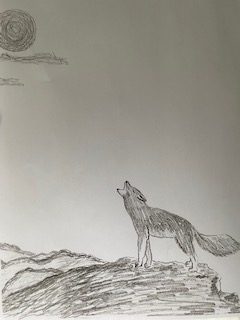



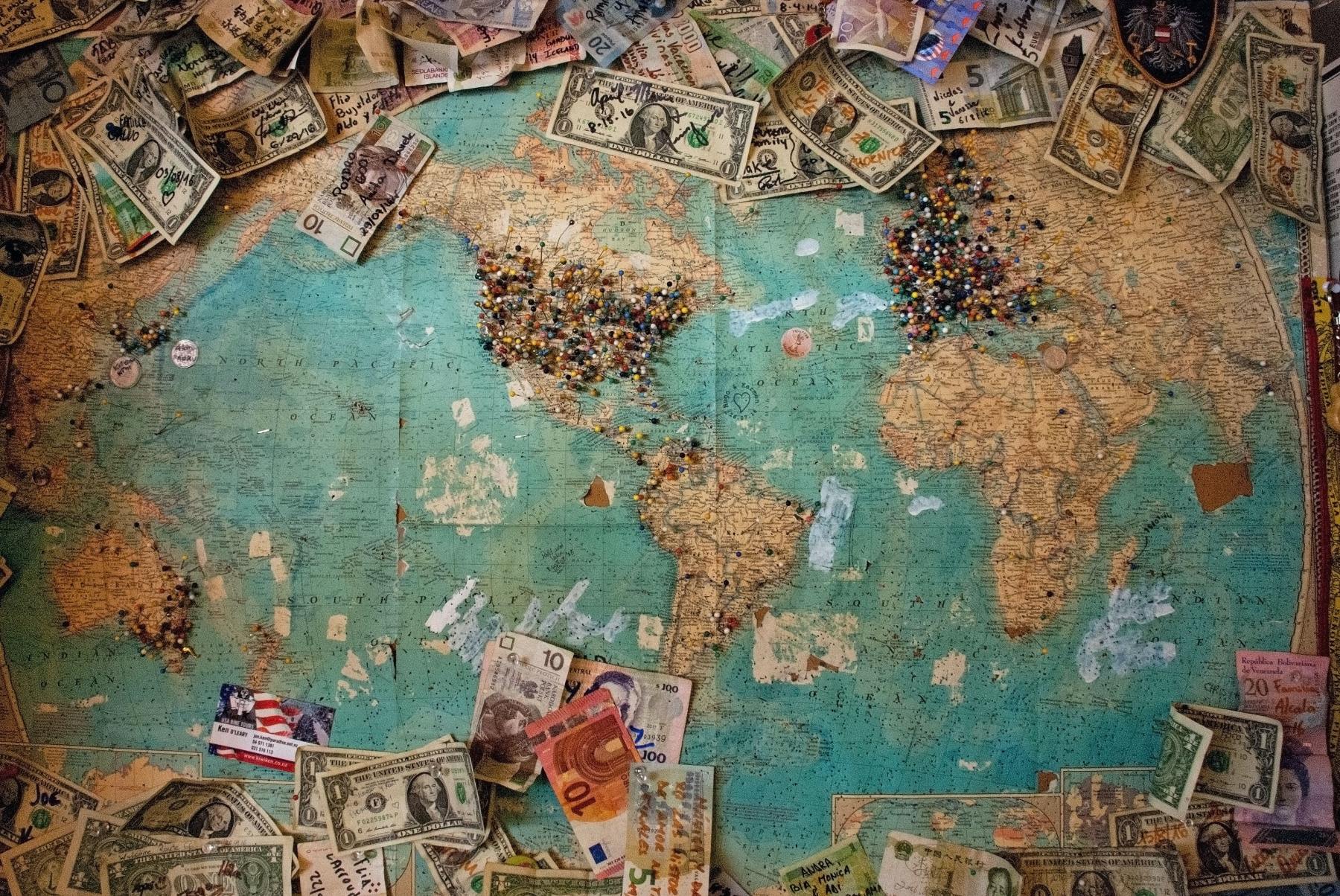

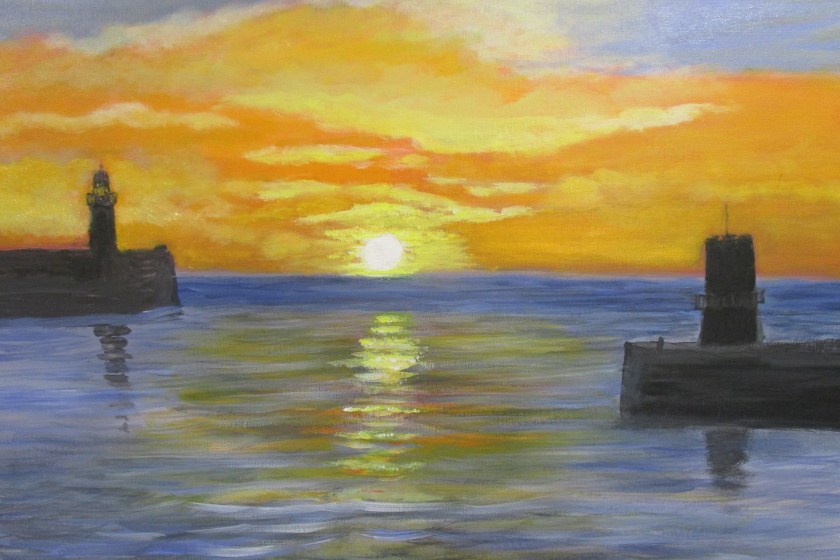


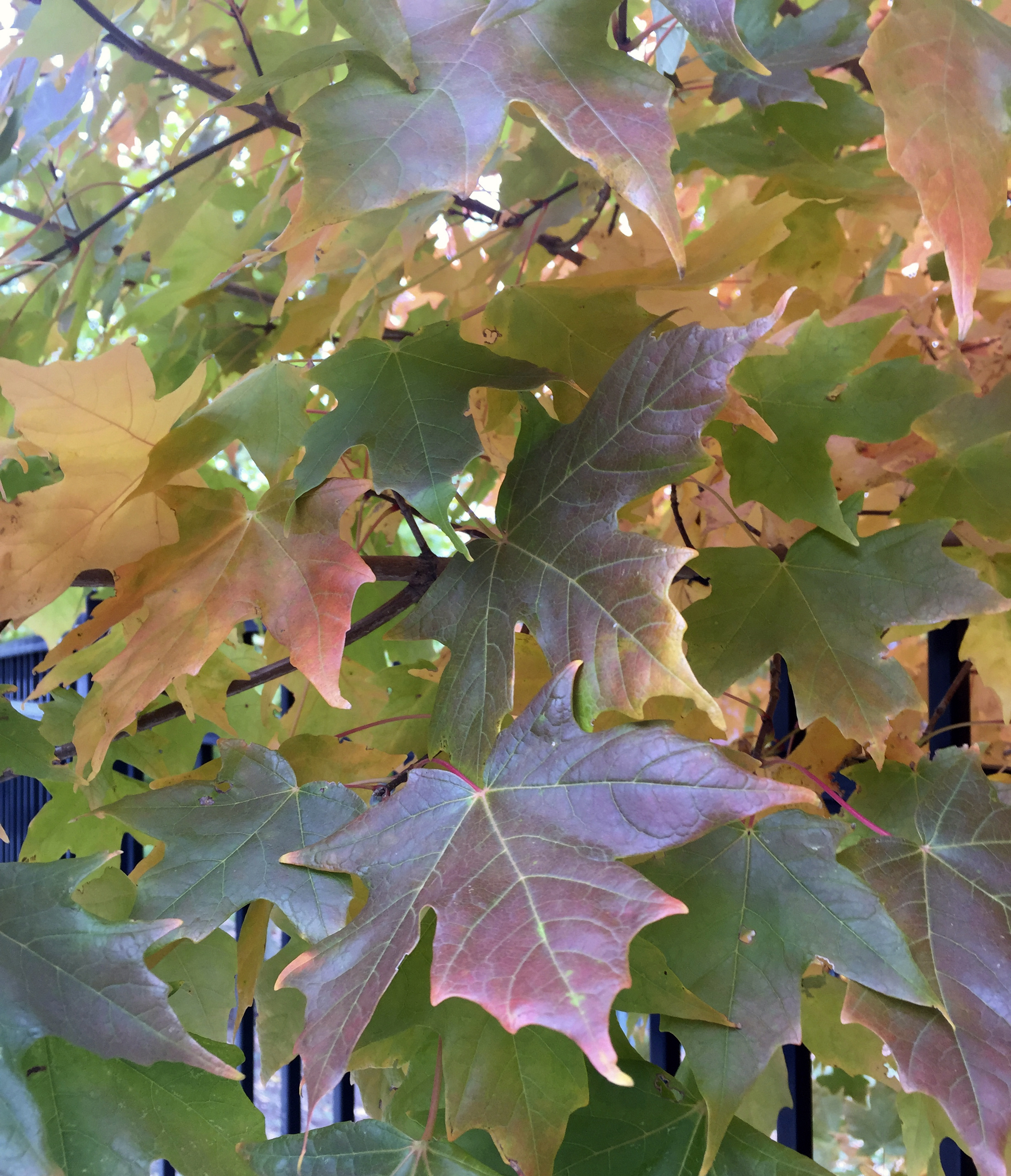
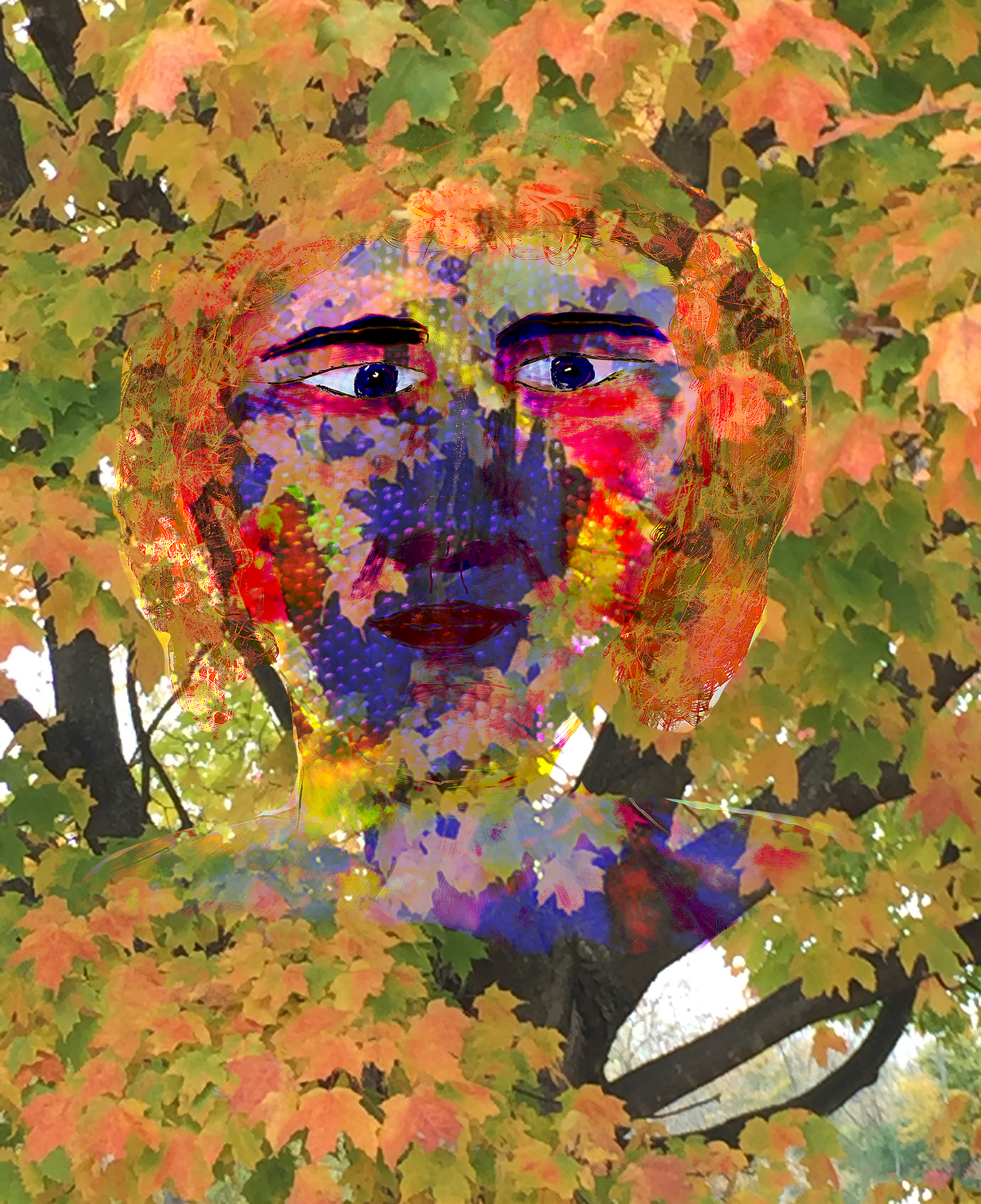



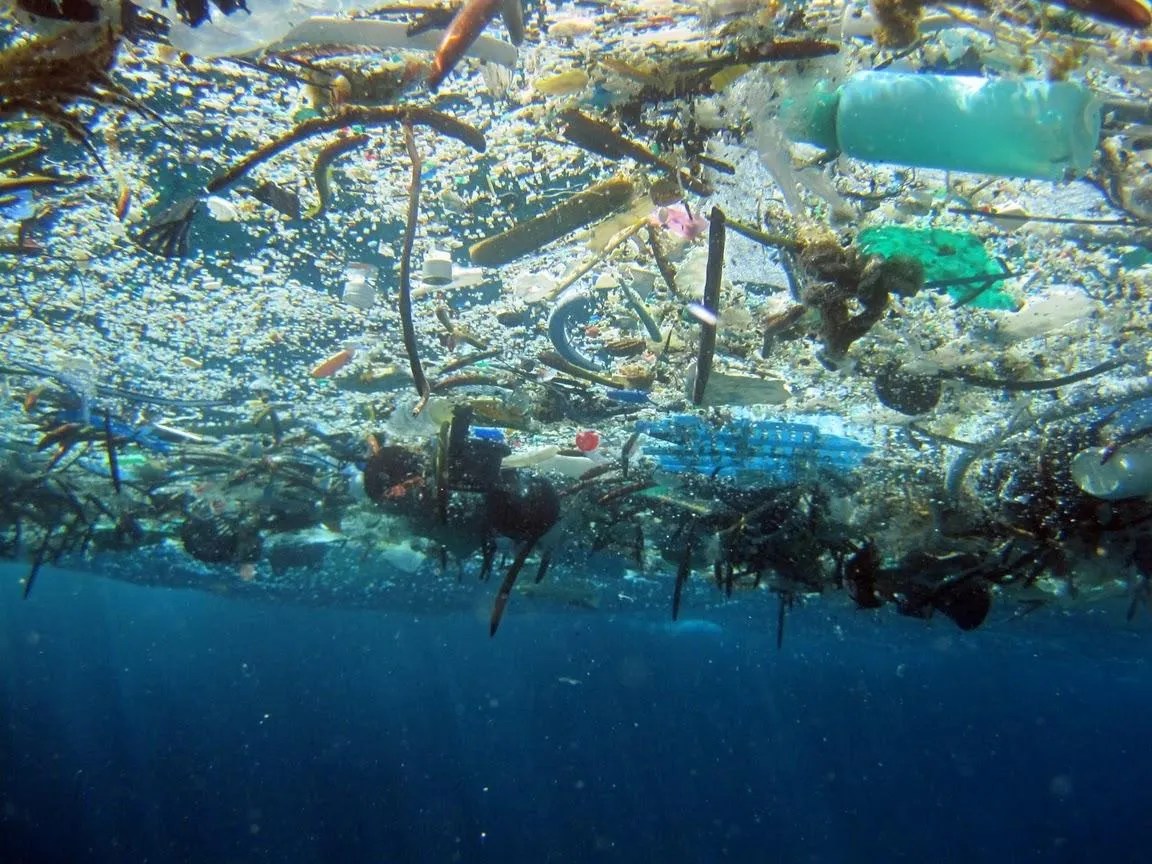


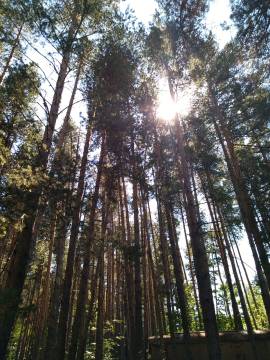


 The BeZine