Photograph: Waterbird, Michael Dickel ©2017
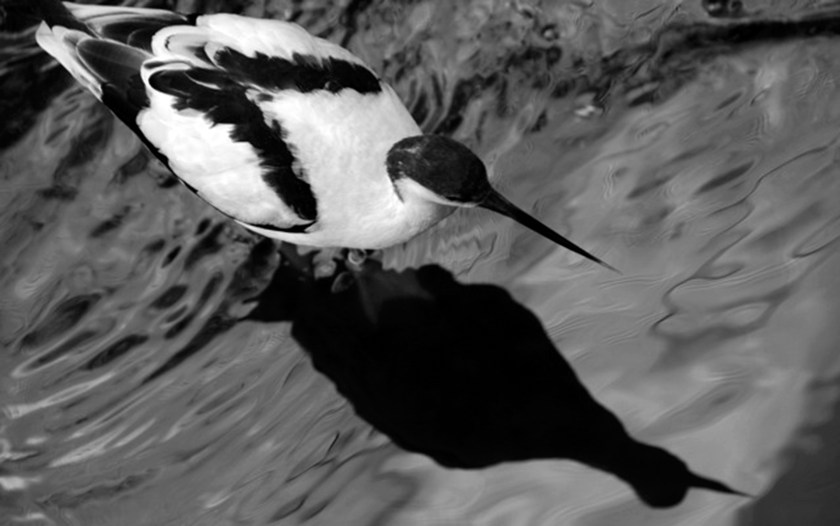
Photograph: Waterbird, Michael Dickel ©2017
Photograph: Waterbird, Michael Dickel ©2017

Solomon’s Song
I can fly
	above crowds
		over landscapes
I can flee
	& I can float
I can be…
		…free

One day I told my schoolmates that
The memories       the sensation
	were so clear       so real
Prove it to us, they laughed

I was earthbound

Many years have passed
	since that day       those times
& I have not thought of
	how I used to flee
		float       fly

But today       in a moment’s rest
	I remember       my flight
& deep in my Being
	I feel       still       sometimes
		I do       in my Dreams

Suddenly I hear Solomon’s Song
	sung in Toni’s voice
		in Milkman’s voice
I hear Solomon’s Song
	clearly       so near

& again       again
	I, too, want to sing
		with Solomon
& fly freely
	floating       soaring

I want…
I drift in blues & greens
	of tranquil seas & healing dreams


In my mind awakening
	the rainbow blends
		choosing carefully from
			the colored pencil box


I drift
	embraced by my future homeland


A voice gently speaks
				No, it is time to leave
				A new day is yellowing


I drift
	touching the necklaces
		cascading blue       new
My hand rests upon them
	Mine are missing

				No, here is the one
					of our Caribbean
				The other we shall search for
				There
That voice hangs the serpentine
	of slim midnight beads
		around my neck
Its medallions rest in the valley
	of my plumpened breasts
					Come       greet this new day


I drift between transparent jade & turquoise
	diving into the sea
		of a future lover’s arms


The other world reaches
	through the balcony doors
		towards my curled body

Out there the rising sun
	is yellowing fractured clouds
Orange seeps softly
	washed by the all-night rain


							Come       come
								Greet this new day
							All roads will lead there


I drift
	into this body
		still reddened by the
			blood pumping through arteries
I drift from crimson to pink
	knowing all roads will lead there
		into the throbbing muscle
			of my heart

Text and Art ©2022 Lorraine Caputo
All rights reserved
…poet-translator-travel writer, has works appearing in over 300 journals on six continents and 23 collections of poetry–including the upcoming In the Jaguar Valley (dancing girl press, 2022) and Caribbean Interludes (Origami Poems Project, 2022). Her writing has been nominated for the Best of the Net. She journeys through Latin America, listening to the voices of the pueblos and Earth.
Once I walked yellow with flecks
The Berlin wall was falling,  far away
I could not have then seen strawberries
glistening on the hedge.
Endings are old new beginnings.
They do cry for salt after all.
They mix sears of pain with a curse of Cain.

On my walk I fried tulips
Cried aloud the names of lovers their races and places.
Until all at once  the field of strawberries glistened
and my beating heart
a Euphoria of happiness.
 Beginnings are new old endings.
And we start out over again.
Murder and defamation shook my house down,
left me lying in cold damp weeds, squishy.
Persnickety. Sometimes going up Snake Road,
the stars outside in open night made
my thumbs bump uncontrollably and I ran
to find the top of any hill,
any thing

Those days I thought of James Meredith,  Medgar Evans
and I screamed into green air with the crickets
piping red loud. Death was in the air and how,
like Mercé Rodoreda's epic “Death in Spring,”
hypocrisy was snapping my garter belt tight on my thighs.
This mystery time went two  ways for or against.
Cucumbers and carrot sticks kept us soused
in quiescent racism and maudlin pretense.

Death in Africa and shootings in Alabama left me
knowing the world was in apocalypse now
Bleeding sheer bone spit. Meanwhile people
everywhere kept dying, electrocuted hung and shot.
UN speeches blared.
A bleeding bristling bone split.

We should go up at once, and possess it,
for we are well able to overcome it.
—Caleb, Num. 13:30
Whenever tides spun avid
Wherever it was inevitably dark
Annie sang soft whisper memories,
of what was said quiet in her parents
bed.
At first glance she was a small circumference
in others views—
one gentle cell dreaming.

Her mind waters welled
like the tides blood
and Annie without knowing
why searched in her gentle blue
for Caleb a man all strenuous!
He of the mind’s rough face.

His voice a rocket to Annie’s
stillness   Sometimes she even
thought quiet like a night star,
some times calm dreaming
her intransitive wonders running.

Caleb he burned too hot for her cool
she felt in this soft black cave the souls,
spirits of the balmy present, turning and turning
Annie could not reach the off switch
to silence restless Caleb burning.
She tried turning off that switch
To un-wriggle his wrestling
ongoing transitive chaos.

And Annie bless her she said
I want to slide
not to possess
to roam not to own
reds periwinkles and blue hyenas
the best.
The sun is fading before my eyes
As I try to make sense of my life that
is in many baskets. Many kitchen doors
with high ranging stoves and tilting floors and bonfires.
It’s odd the sun is fading and I am not.
My heart is a cauldron of music sound love and sadness.
The sun will not always fade. While I am around
I’ll stay a flaming cauldron.
This year many leaves are thick
with matter and hang themselves on,
burning with unique brightness
in the cauldron of life loving eyes.
©2022 Linda Chown
All rights reserved
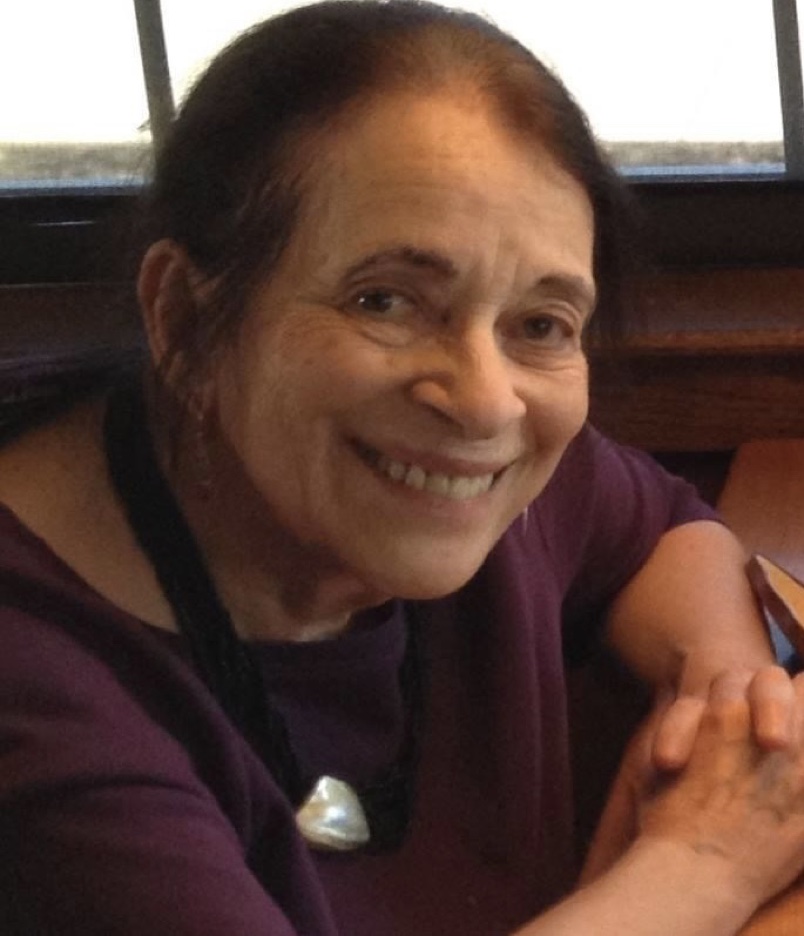
…was West Coast Berkeley born and raised with the light of freedom. Educated at UC Berkeley and San Francisco State, Linda has taught, protested and lived internationally. Her last book, Sunfishing, can be bought at Amazon. She grew up surrounded by radicals, experimentation and innovation, and is proud to continue her radicalism.
Website / Blog Linked
Still, quiet, silence the mind
The ghosts that invade will determine your day
Silence, still, & quiet your mind
Removing the ghosts one by one.
You who own the world’s pain, please
give some of it back
          you don’t deserve it all.
You have told me for hours
about your miseries,
but you have not even begun
          to understand mine.
It is the violence that makes us mad
If we are at the point where a man
Is better off in jail than free, then
          where is God?
                    the old man
has entered the mirror of sand
“what are you doing, sir, what are you looking for
                    in the pearly shade?
what are you looking for
          there in the sand?”

“soon all these houses will be torn down”
          said the old man
          nothing left but the trees”
I said “never will someone come out
          of the darkness and rob thee”

but he said
“the weapons that were
           once out there
and sharpened themselves for war
          are now inside us
                    sharpening themselves
          sharpening themselves
                    inside thee”
©2022 Dennis Formento
All rights reserved

…lives in Slidell, Louisiana, USA, near his native New Orleans. Books of poetry include Spirit Vessels and Looking for An Out Place (FootHills Publishing, 2018 and 2010.) Cineplex (Paper Press, 2014,) Edited Mesechabe: The Journal of Surregionalism 1990-2001 and fronted the free-jazz/free-verse band, the Frank Zappatistas. St. Tammany Parish organizer of poetry events for 100,000 Poets for Change, a network of poets for peace, sustainability and justice world-wide.
Be as water now,
you, who fear the change.
Rain heavy on the ocean.
You, once buoyed by air,
vaporous, skating across skies,
grew too ripe.
Do not cling to your lightness.
Let your own weight
pull you down from the heavens.
Mourn not the fall.
Delight in the thick dance
of your descending,
like an angel
incarnating,
out of love for the touchable earth.

Let the ground feel you.

On the road a dying gala.
Wing torn, bent backwards,
red flesh showing, white bone.
It slept,
but not in the sleep of death
yet.

I thought of moving
its delicate body,
as it lay unmoving—
to take it out of the path
of racing conquerors
blackening red earth.

But I didn't know how
to pick it up gently,
and as a truck passed,
it woke,
lifted its head
and cried out into the sky!
The squawks faded,
but still its eyes gazed.

Was it numb to the pain
or feeling fire and needles?

How long
had it been dying?

I could do nothing.

But I would not look away.
I sat with it
as its heart beat slow.
I will not look away
from suffering.

I could not look away.
I will not look away.

Seeing dying, painful dying,
is so much more alive,
heart rending,
present,
life beating,
ebbing, flowing,
dissolving—
seeing dying is so much more
than seeing death.

My heart tore
in sympathy with its bloody flesh.
©2022 Mitchell Stirzaker
All Rights Reserved

…is a poet and philosopher based in Sydney, Australia. He is inspired by great works from history, from the poetic philosophy of Epicureans, to the suttas of Buddhists, and the existential writings of the 19th and 20th centuries. He seeks to express both various existential struggles and visions of paths to harmony between people situated differently in the world, and between human self and more than human world.
Envision— a word packed full of hope
And purpose. A race. An attesting to
The profound moments that start with a
Smile— while getting to know you through
Other school-related means, meaning
How we know one another before is history
The door for mystery stands with thick
Hinges on these broken lands
Pain cries out and tension is thick in
Cities, where bricks are used to
School the Black, Brown and White bodies.
Intentions may be good — wasn’t
Meant to hurt nobody!
Sharpened pencils are the least of these
Kids’ worries when guns are packed
With lead.
Full of pride, you started with
A crown — a frown I could not make
Growing up in the capital of your state
Of mind.
The crown fell some years ago,
Disappointed to see the fractures of
Race, could create an earthquake.
Make no mistake from the city in which
We are born from—
Built from Native Americans
These hills which
Runners take breaks
Someone else was supposed to clean you up!
Make you a dreamland for all who came
Instead of creating fear
Where people have nothing to be but nice.
No one knows how to just be; restless bodies
Create an enemy of trust
Come, Lord Jesus!
This is my war cry
Taking that with my passions
Lust for change is tame
There is hope in the reframing and a
Friendship gained.
©2022 Nicole Triscari
All rights reserved

…is a blogger, mother of one (and one on the way!), and teacher. She is currently a stay-at-home mom, who is passionate about poetry, education, and creating a home that welcomes people.
Big egos, little egos. Egos wandering all about.
When conceit becomes arrogance,
One turns into a swan without elegance.
A red herring, shining but pungent,
Glittering, with an acridity and without alacrity.
Humility, without humiliation, is the noblest goal,
Protruding above the surface like a sandy shoal.
An act of servility, leads to a state of humility,
Encouraged to overcome one’s inner swine.
And in the enigmatic aftermath,
King Midas, Icarus and Prometheus, all forgot to stay on the path.

A hero for the Boomers,
Could become one for the next generation of TikTok Zoomers?
What is your quest?
Is it the task that you do best?

Let’s not judge our tokens, like Hadji, for their identities,
Rather, because of their propensities.
Find the valor of Race Bannon,
And fire it into the world like a cannon.

Confront Baron von Freulich,
And do it with a little cheek.
Look and assess the situation,
Thusly, contributing to his abdication.

Become loyal like Bandit,
And let your consciousness be expanded.
Then you’ll be like Johnny Quest,
With a pluck to which the world can attest.
©2022 Daniel Weiss
All rights reserved

…was born in Hollywood, CA, graduated as a psychology major from the University of California, Santa Cruz. Received his PhD at the Christian-Albrechts-Universitaet, Kiel Germany in linguistics. He has been a community organizer, musician and Waldorf teacher.

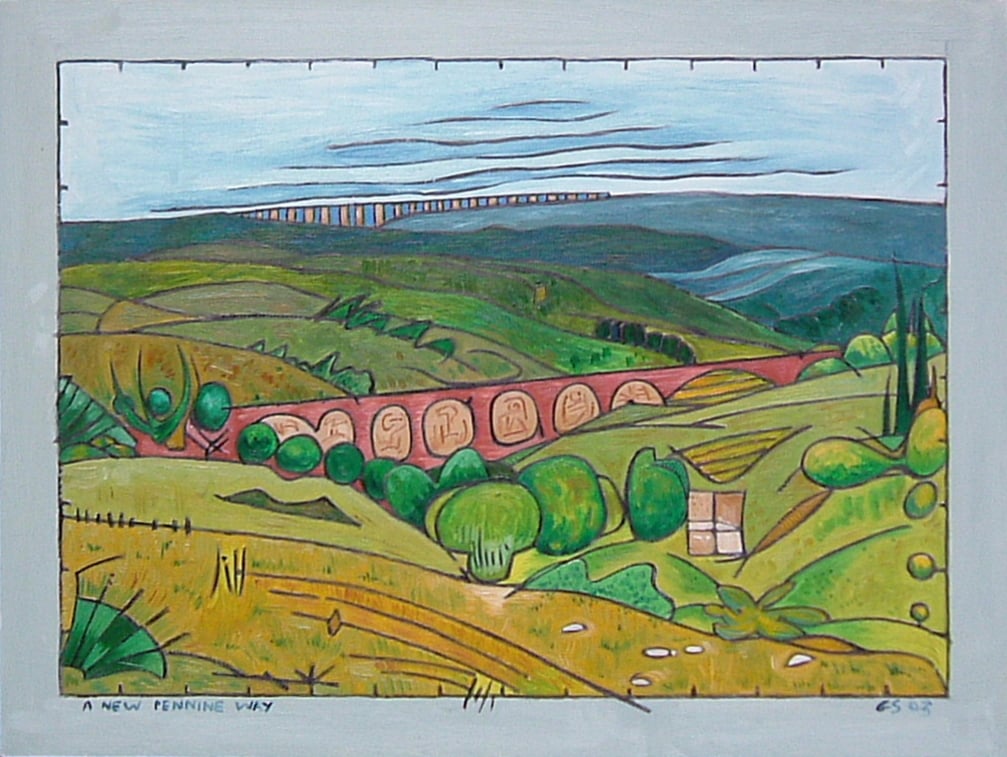
Art: The Gate You Only Go through Once to the Path that Leads Nowhere, Gerry Shepherd ©2022
Humanity is certainly facing one of the greatest challenges this Earth has ever known. Indeed, by abusing the resources that are generously offered by our Mother Earth, by disturbing ecosystems and climates, by relentlessly destroying its environment, Human Beings have made life on Earth very difficult for all living creatures. Having lost their balance, the natural elements can no longer provide worldwide what people need to sustain our needs, and the various conflicts in the World are making the situation even worse.
I started to attend the Erasmus Foundation, a Spiritual teaching and healing Centre, based in Laxfield in England, when I was living in England in the 1980s; and today I continue to receive knowledge that helps me, in a certain measure, to understand what we are going through at present. I have been taught that this is the end of the 5th civilisation and that what happens today has got a meaning, because we are human spirits who came to live a life on this Earth that is a school. Maybe today I would even say that I see it as a laboratory where God, whom we call the Great Mind, our creator, allows us, his children, to make the worst mistakes with the aim to help us learn and grow spiritually accordingly, for is it not by making mistakes that we learn the best lessons in life?
Also, in the face of the collapse of our living environment, in the incomprehension when seeing all those who prefer to continue to reap financial profit without taking into account the dramatic consequences on the climate and the environment, what gives me strength is the acceptance that there is a force working upon me, a force with which I can meld, and the acceptance that in this wise force, things are as they ought to be.
God, whom we call the Great Mind, has not only created all that is living in the Universe but he designed a great plan for life, a great evolution plan where everyone has their place, and just the recognition that I belong to this plan tapestried by the Great Mind gives me peace in the acceptance that I am as the Creator made me and that I am where God wants me to be. Our Spirit teachers have also told us that this should not be the end of life on Earth but a very challenging time that gives Humanity the opportunity to evolve and grow in making the right choices. Thanks to Humankind’s efforts we should then move on to the 6th Civilisation.
Now, I do not think that I can change the World, I think that all I can change is myself, and there perhaps lies the key—that if many are wanting to make the effort to try to change themselves with the aim to change for the better, then perhaps the World will change for the better as a consequence.
Where to find the energy we need to change? Well that energy, don’t you think it is here inside all of us? As we are human spirits, our true self that is our spirit is here inside our body, which is just an envelope for this lifetime.
It is then in calming the brain through meditation that we can let our spirit surface, our spirit that is our link with the Great Mind, is our own little tiny crystal where all the strength we may need is available. It is just for us to search for it and to develop it.
I also believe that anyone can pray. Personally, I pray to the Great Mind every morning to ask God to give me the strength and the courage to be as the Creator would like me to be; I am sure that help comes, if only one tries to help oneself. We all know that: “help yourself and heaven will help you.” From experience I know this to be true.
And perhaps the best way to fuel others’ engines of change could be by example?

Now, certainly, the first step to start with is to search to know oneself. It is evident for all that we have got good qualities as well as flaws. We are humans and this is naturally part of our structure when being on Earth. Therefore, in analysing myself I can see my qualities and my flaws, and I can learn to accept them so that I can work through them, trying to diminish what I see that is not right. In looking closely at myself I can discover what needs to be polished, and I can try in an everyday manner to do what is needed to become a little better, a little more acceptable to others. I then start to feel more comfortable with myself, and then, feeling more comfortable with myself, I can feel more comfortable with others. In seeing and accepting my own flaws, I can then accept others’ flaws and differences; in understanding myself better, I can understand others and become more tolerant. At the Erasmus Foundation, we believe in the Great Mind and in reincarnation ,which is for us logic in an eternally developing life design, and realising that I have led many different lives before this one in different physical forms, cultures, colours, gives me tolerance, as well.
Also, in becoming more comfortable with myself, and with the help of meditation, I can gradually identify more with my spiritual dimension. I thus identify more with all living things and, as a consequence, in identifying myself with the Natural Law, I can feel a part of it, a part of Creation and in harmony with all that is living, all creatures, and the Earth itself. If many people develop self-respect and respect for the Living, in my eyes, this is a good way to see the World changing for the better one day.
Having seen it before, I believe as well that Man is so made that it is in front of adversity that he develops his best qualities, and this is the reason why I think that it is in facing even more serious problems that are to take place in the coming years—such as the financial crash, flooding, droughts, natural events and illnesses that some scientists have foreseen for some time now—that People will really search for this inner strength and also will link together to form groups to stand together in front of the difficulties of life and find solutions to move forward.
I believe in the Great Mind’s plan prepared for his children, and in the fact that he made us very resourceful creatures by giving us the tools and the ability to adapt and to become more resilient. It is up to us, and it is also perhaps in opening our eyes to the reality of this world of today and preparing ourselves individually as well as collectively when possible, that we’ll be able to cope and help each other through the time of turmoil that is ahead.

This is the reason why I have hope. In a way, I would rather say that I have great expectations for the future because, when Humanity will find itself, when People will recognise their true stature, rediscovering the most important part of Humanity is the human spirit, people will open their eyes in truth, will see all the mistakes made, and will be able to put all that went wrong back into balance. It will take time, for sure, but this mechanical age will gradually move over to the 6th Civilisation that will be much more spiritual, much more beautiful. Our teachers in the Foundation tell us that it will be very colourful, with great discoveries and advancements in many ways that perhaps we cannot imagine today—new technologies, new sources of energies, new ways in education, in medicine, in growing food, in supplying shelter and housing—all with respect and while sharing resources. Also, People will be working together with Nature and no more against it.
Today, we can witness the most evil world that has ever existed, there is so much falsehood everywhere, can we rely on what is told to us? Can we rely on what is sold to us as food to be eaten, as water to be drunk, and so on?
Now, following the events that are to occur and through our spiritual development, truth will develop and will prevail, falsehood will be recognised by all for what it is and will be rejected. Then this World will be most beautiful and a place to live in quietude where evil will be overcome and much diminished in strength.
We at the Erasmus Foundation are lucky to know that there is much to look forward to, and this, too, is part of my strength, together with my confidence in the Great Mind.
©2022 Corine Beauseigneur
All rights reserved
…first met The Erasmus Foundation in 1986, which is a spiritual teaching and healing centre in the UK, whose courses I continue to follow through zoom meetings from France. I have had a number of articles published in their magazine. I also take part in the podcasts they regularly put on line and I continue to write wishing to share the spiritual knowledge gained from this Foundation. The Erasmus Foundation Podcast, ‘Visualisations from the Erasmus Foundation’ can be found on Amazon’s Audible site.
“For just 15 dollars a month you can change the life of a needy youngster,” came a pleading voice from the TV screen. “Won’t you open your heart to the need of a youngster in poverty.”
My children looked at me. “Can we Mom?”
“Oh please, please, can we send some money to a poor little kid?”
I smiled. “I’ve already called the 800 number for details. Would you two be willing to pitch in?”
After nodding enthusiastically, my daughter opted for a girl, while my son had no such preference.
“Fine, we’ll ask for a girl.” I put down my coffee mug. “And now I am going to tell you a story.”
The kids’ faces lit up. They liked my homespun tales, and by being able to weave in a moral here and there, I used those stories as a convenient teaching tool.
Only this time, instead of concocting a tale, I dug up one of my childhood memories:
When I was about five years of age, I was living in a small village in Germany, and my wardrobe consisted of a simple frock for everyday activities as well as a Dirndl-style dress with a lace-trimmed white apron for church attendance, and for special events that were so rare as to be basically non-existent.
Shoes were also a luxury to be kept aside for the cold days of the year. In the summer, my playmates and I ran around on bare feet. This not only reduced the wear and tear of our limited footwear. On rainy days, it also allowed us the cheap pleasure of stomping around on the unpaved village street and letting the gooey mud ooze through the cracks between our toes.
Those were the late 1940’s—when the nightmare of World War II still lingered painfully in everyone’s heart and mind—and people didn’t complain much about mere inconveniences. Just being alive was a privilege. However, the severe shortage of food posed a real challenge—and the search for something to pacify our growling stomachs dominated our existence.
At least we were lucky enough to live in the countryside, where we received occasional handouts from the local farmers, and few people would send a child away empty-handed. So, whenever I went to bed with a full belly, I considered it a good day.
One afternoon, while lingering near the small baroque church at the end of our hillside town, I spotted a jeep coming up the incline. I glanced curiously at the two uniformed man inside, and then grew afraid when they pulled up right next to me and I didn’t understand a word they were saying. In those days, the idea of aliens had not yet taken hold, but as far as I was concerned, those two strangers may just as well have come from another planet.
“Americans,” one of them said, first pointing at himself and then at his buddy.
Realizing that he frightened me, he reached into the jeep and pulled up a large, elongated hemp sack. It looked like something to be used for storing farm produce, such as grain.
The soldier pointed at it, “Food.”
When I just kept staring at him, his friend yelled, “Essen.”

“Essen?” I asked, my heart beating faster—but no longer due to any fight or flight mode.
Both nodded and dropped their bulky present on the ground. When they gestured for me to take it, I threw myself on top of it and let out a joyful cry.
The sack was big and heavy, and I was a mere wisp of a youngster. Nevertheless, the thrilling thought of edible items at my fingertips must have empowered me with something akin to child-hero-super-strength. Half pushing, half pulling, I hauled my loot back to the room I occupied with my mother in a nearby farmhouse. By courtesy of the government, the locals had to make space available for us refugees and, needless to say, this intrusion of folk’s privacy was not always welcomed.
Our tiny assigned living area held only the basics. But at least we had a bed to sleep in as well as a stove for cooking and keeping warm.
When my mother saw what I was battling, her eyes grew big.
“Child, what in the world…?” Reaching down to give me a hand, she saw the label attached to the hemp.
“It’s in English,” she muttered, before shouting, “Little one, I think we just hit the jackpot. This seems to be an American care package.”
She pried open the metal clamp holding the top together. Then she shook the contents onto the floor—and suddenly it was Christmas for us.
Too much time has gone by for me to remember everything we received that day, but there were most likely jars filled with jams, jellies, canned meat, and packages of other durable food items.
Picking up a round metal container, my mother gasped. “Oh goodness, I can’t believe it. This is real coffee. I will enjoy every drop of it—after so many months of pouring hot water on stove-roasted grains, pretending it to be a tasty brew. So, let’s reserve it for a special occasion.”
Then she swung me around. “Oh, what the heck—let’s celebrate right now. Getting this surprise gift is about as special as it gets. I shall have a cup of coffee—and…” she reached down, picked up a rectangular tablet and tore the paper open, “…you shall have a treat as well.”
Breaking off a large wedge of something flat and brown, she told me to open my mouth. Then she reverently placed the mystery food on my tongue. “Now, eat it!”
I bit down, chewed, then grimaced and spit out a glistening sticky brown glob. “Yeck, I don’t like soap, Mom.”
It took a few more tries before I learned to appreciate this strange stuff called chocolate. Never having tasted it before, I had reacted strictly to how it felt inside my mouth, and I had not found that lumpy sensation to be very enjoyable.
The arrival of that care package shone a beaming light into the dreariness of my mother’s existence at that time. As a child, I didn’t experience those days as particularly gloomy. In fact, I still think often fondly of my wonderfully carefree childhood in the country, since my “Mutti” always made sure that I had what I needed, even if she had to go without.
However, the warm and giving spirit inherent in that care package will forever remind me of the kindness of the American people who are now so very much a part of my world.
I also like to believe that the instant happiness shared so long ago by two soldiers and a five-year-old girl was destined to remain a highlight in our respective memories.
Determined to keep this caring spirit alive, I considered it wise to start right at home—with implanting a dose of empathy and goodwill into my own offspring.
“Recycling Good Will” previously appeared in the journal Heart of Flesh (2020).
©2022 Helga Gruendler-Schierloh
All rights reserved
…is a bilingual writer with a degree in journalism and graduate credits in linguistics. Her short stories, articles, essays, and poetry have been published in the United States, the United Kingdom, and Canada. In 2013, her flash story, “The Wanderer,” won Pacific Review’s annual writing contest, and her debut novel, “Burying Leo,” a MeToo story released in 2017, placed second in women’s fiction during Pen Craft Awards’ 2018 writing competition.
“Your dress is so pretty, Eva. See how it matches those beautiful flowers?”
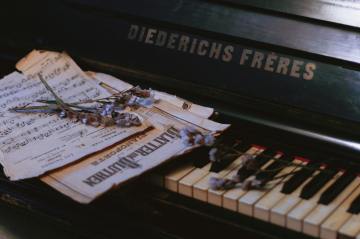
Eva’s grandmother, Sharon, points toward a large bouquet of flowers resting atop the waist-high wall separating the small church’s seating area from the altar. Containing pink and white lilies, blue delphinium, English lavender, and both red and yellow roses, the flowers provide Eva a moment to settle her nerves by inhaling the fresh aromas. On the left and right sides of the wall, two staircases provide access an expansive area which contains a lectern, the altar itself, and a baby grand piano. This piano occupies Eva’s attention, and she stands at attention while staring at it, her nerves still unsettled. Eva’s mother, Rachel, gently massages her daughter’s shoulder in another attempt to put her at ease.
“Eva,” speaks a voice from behind the three women, “so glad you can make it.”
Daughter, mother, and grandmother turn in unison to face Ms. Reynolds, Eva’s piano instructor. She welcomes them with a warm smile before speaking again.
“I don’t think we’ve met,” directs Ms. Reynolds towards Sharon.
“This is my mother, Sharon,” answers Rachel.
“Three generations are here this afternoon,” adds Sharon proudly while lifting a gold, Hamsa necklace from the lapel of her blouse, “plus a fourth generation in memory. This belonged to Eva’s great-grandmother, Judith.”
“How nice,” replies Ms. Reynolds while eyeing the room for other families she needs to say hello to. As music director of Frond’s Bay Academy in addition to a part-time piano instructor at this church, she has a few ‘deep pockets families’ from the “Academy” that demand a few minutes of small talk. Not sure how long she’s been ignoring this particular family, she changes the subject. “Eva, dear, if you want to practice there are two rooms outside you can use.”
“Thank you, Ms. Reynolds,” says Eva while curtseying instinctively with a nervous smile.
Ms. Reynolds nods politely while quickly moving away to wave and smile excessively at another family. Eva shuffles her feet towards the hallway, still unsure of the environment. She holds her book to her chest and stares at the worn, greenish beige carpet directly in front of her. She walks tensely, her gait not generating enough lateral motion to shift the pink ribbon at the bottom of her braided auburn hair. The pink ribbon rests perfectly along her spine, as if it’s been pinned there.
“I hope she’s not too nervous,” says Rachel to her mother. “This is her first recital, and we don’t frequent churches very much.”
“We don’t frequent churches at all, Rachel,” laughs Sharon while scanning the pews for a place with a direct view of the piano. “I don’t even think this place is shaped like a cross, aren’t they supposed to be?”
“That’s because this is a multi-purpose building. There are offices, classrooms, and I think a gymnasium. It’s non-denominational.”
“What does non-denominational mean?” asks Sharon.
“I don’t think anyone really knows, mom. It’s one of those Christian mysteries.”
With smirks that result from feeling so out of place, Rachel and Sharon find a pew with the best available view of the piano and sit down. Loud footsteps echo through the small church as a heavy-set man stomps down the aisle before his wife signals to him. He reluctantly turns, retracing his steps to join his wife and daughter who sit close to the exit.
“That’s not a bad idea,” comments Sharon, “they can sneak out when their child’s done.”
“I don’t think that guy can sneak anywhere, mom,” laughs Rachel. “He’s either very clumsy or very drunk.” She pauses to lean close to her mother and whisper, “Given what I’ve heard, it’s probably the latter.”
“Really? It’s only two p.m. on a Thursday.”
“His son and Eva were in the same 7th grade class last year. That dad’s got quite a reputation.”
“What about his wife?” whispers Sharon. “She looks a lot better than he does. Seems like an odd couple?”
“For the money,” mouths Rachel before whispering, “which is why they attend Frond’s Bay Academy.”
While Sharon continues looking around the church, Rachel intermittently rubs her thumb across the screen of her phone. The endless scroll of various social media apps immediately blocks out her surroundings. This means that Sharon sees Eva enter the church first. She grabs Rachel’s forearm to get her daughter’s attention, applying a level of pressure that leave faint nail marks in Rachel’s arm. Sharon stares towards Eva, with Rachel quickly following her gaze. The innocent nervousness adorning Eva’s face moments ago is gone, replaced by red eyes, a flushed face, and a quivering bottom lip.
“Look at Eva,” whispers Sharon as the continued pressure from her fingers on Rachel’s forearm almost causes Rachel to drop her phone; both women’s motherly instincts tell them that something’s very, very wrong.
Rachel sees the forming tears overcoming her 13-year-old daughter and fears an emotional outburst. Rather than ask if she’s ok, Rachel walks toward her before calmly saying, “Let’s go outside,” to which Eva replies with an anxious nod. With an arm around her daughter’s shoulders, Rachel leads the way, followed closely by Sharon. Sharon smiles uncomfortably at the faceless sets of eyes who watch them leave.
“What’s wrong, Eva, are you nervous?” asks her mother once they are outside the building and a safe distance from the entrance.
Eva responds by presenting her music book, titled, Favorite Hebrew Songs for Piano, to her mother with shaking hands. Eva whispers, “Ein Keiloheinu,” before releasing her grasp on the book. Knowing Eva references the song she will play, Rachel opens to the correct page and gasps. She struggles to stay calm and manages to hand the book to her mother. Sharon looks at it with the experienced perspective of someone familiar enough with antisemitism to be horrified without appearing shocked or surprised. Across the first page of the musical number is drawn a swastika, with the phrase, “You will not REPLACE us!” written underneath. The word, “replace” is underlined for additional emphasis.
“I think it was Logan,” whimpers Eva as the desire to cry dissipates and an empty feeling replaces her initial shock. “He laughed when he passed me in the hallway.”
“Start at the beginning, Eva,” interjects Sharon, her eyes narrowing as anger becomes her dominant emotion.
“I was practicing my piece in one of the classrooms. I left to use the bathroom. The book was open to the song. When I returned, the book was closed. When I opened it up again,” Eva sobs before composing herself enough to mutter, “it was there.”
“But,” asks Rachel gently, “when did you see Logan?”
“He passed me as I returned to the classroom from the bathroom. He did it while I was gone.”
“Who is this Logan?” asks Sharon.
“The son of that drunken oaf I pointed out earlier, the one who is trouble.”
“What are we gonna to do, mom? What are we gonna do, grandma?” pleads Eva.
Eva wears the expression of one who knows she has been wronged but lacks the strength or confidence to know how to handle it. She has been instructed by countless teachers and adults that this sort of behavior is inappropriate and to tell someone. This time, however, feels different. Eva’s seen and heard so many evil words and actions go unpunished; she isn’t sure she trusts those adults anymore. All the lessons in school, all the posters on the walls about inclusion, and, yet, this happened. Even worse, Logan exhibited no shame. Instead, he snickered as if proud of his antics, like he wouldn’t get punished.
“We need to tell Ms. Reynolds,” says Rachel. She takes the music book from Sharon before adding, “she needs to see this, and Logan needs to get in trouble. A lot of trouble.”
“I mean the recital,” replies Eva softly as tears finally descend from her cheeks. “How am I supposed to play? Everyone will see it. I will see it.” After a sob she states, “it’s not fair.”
“The car is right there, Eva,” states Rachel while looking towards it. “We can leave; you don’t need to play. I can tell Ms. Reynolds what happened.”
“No,” exclaims Sharon with a tone that draws her daughter and granddaughter’s eyes to her. “She will play. She needs to play.”
“Mom, please.”
“Grandma, no, I can’t. Not now.”
“Listen, Eva,” begins Sharon quietly but clearly, “I need to tell you something, and then you can decide what you want to do. Your great-grandmother, Judith, was a young girl like you once. She played piano, too, remember I told you that—how she would play it?”
“I do.”
“She spent three years in a concentration camp, Eva. There was no piano for her to play. There was no way to celebrate her culture. She never saw her parents again. Yet, she would hum the Ein Keiloheinu to herself, so she would never forget it.” Sharon pauses to remove her necklace and holds it in front of her, so Eva can see it. “She hid this necklace, too, because it was the only connection left to her family.” Sharon steps closer to Eva. “That’s why I think you should play that song, Eva, do you understand?”
“But the book, grandma,” responds Eva with repressed panic. “Everyone will see.”
“Eva’s got a point, mom,” adds Rachel in a whisper, trying to support her daughter without offending her mother and her family history. “There’s no way to hide what’s on that page.”
The three women pause to try and capture their swirling emotions. The faint melody of “Twinkle, twinkle little star” alerts them to the start of the recital and the immediacy of their impending decision.
“That song lives in your heart, Eva, like it lived in your great-grandmother’s,” declares Sharon while placing the Hamsa necklace around her granddaughter’s neck and closing the clasp. “You don’t need the book.” Sharon kisses her granddaughter’s cheek before standing, stepping back, and giving Eva a moment to decide.
“I want to play,” declares Eva boldly.
“Are you sure, Eva?” asks Rachel.
“I am sure, and I’m up next.”
Eva strides past her mother and grandmother, pink ribbon bouncing from one shoulder blade to another as her pace increases. She moves quickly through the door, not stopping or making eye contact with anyone until she reaches the piano. After quickly nodding to the audience, she casts a cold stare towards Logan before sitting down, placing her hands on the keys, and playing.
Rachel and Sharon do not return to their seats, deciding instead to wait at the doorway so Eva’s entrance will be remembered. Holding hands, mother and daughter share a moment that spans generations. Warmth, love, and tears move silently between them. Sitting directly across, Logan and his father squirm in defeat.
Eva plays beautifully, remembering every note.
©2022 Michael Mulvey
All rights reserved
…is a happily married father of four currently residing in Jacksonville, Florida. He recently participated in a panel discussion explaining the importance of teaching the attacks of 9/11 to high school and college students sponsored by The Friends of Flight 93. Mike also had two short pieces, “Worst Enemy” and “What Sound Does an Empty Nest Make,” published in the Florida Writers Association April 2022 and August 2022 Newsletters.
The theme for this quarter’s BeZine issue is “A Life of the Spirit: Fuel For Change”.
I have felt compelled to blog about something that’s been bothering me, in the hopes that it might resonate with even one other person. I’m sure it will. There was a story some years ago about an NYPD Police Officer who used his own money to buy boots for a homeless man he encountered on his beat on a bitterly cold winter night. You may have seen/read it. Like so many others, I was touched at the kindness and compassion of the human heart and it renewed my hope in humanity once again. 🙂 So that’s all well and good, and ties in nicely with the spirit of Christmas and the general “Good Will toward Men” sentiment. Great!

A couple of days later, there was a follow-up story which let people know that the homeless man was once again without the socks and boots that the cop so generously had given him.
The $100 pair of boots that Officer DePrimo had bought for him at a Skechers store on Nov. 14 were nowhere to be seen. “Those shoes are hidden. They are worth a lot of money,” Mr. Hillman said in an interview on Broadway in the 70s. “I could lose my life.”
Mr. Hillman, 54, was by turns aggrieved, grateful and taken aback by all the attention that had come his way—even as he struggled to figure out what to do about it. “I was put on YouTube, I was put on everything without permission. What do I get?” he said. “This went around the world, and I want a piece of the pie.” He did not recall the photo being taken but remembered well the gift from Officer DePrimo. “I appreciate what the officer did, don’t get me wrong,” he said. “I wish there were more people like him in the world.”
At another point he said: “I want to thank everyone that got onto this thing. I want to thank them from the bottom of my heart. It meant a lot to me. And to the officer, first and foremost.” —New York Times, 12/03/2012
So I looked at the comments section (probably a mistake, but force of habit). I was appalled at how many people were condemning Mr. Hillman for getting rid of the boots he had been given and laughing at the cop for being ‘naive.’ All I could think of was the vast difference in people cheering compassion and then turning that act of generosity into judgement against both the giver and the person who had received it.
No, it doesn’t take away from the cop’s good intentions. But I wanted to ask each and every person commenting with things like “You know he sold them for money for drugs or booze” or “The cop should have known he would just sell them. Why waste that kind of money?” etc. etc.—I wanted to ask them, “How do YOU know and who are YOU to judge?!”
None of us have walked in Mr. Hillman’s boots. We don’t know his story, we don’t know what demons he battles. And in the end, you know what? It doesn’t matter, because when you take it upon yourself to point fingers and judge someone else, just remember there are three fingers pointing back at YOU.
Now…the main reason I’m writing this is because it’s damned cold outside tonight. Twenty-seven degrees is the current temp and it’s not done dropping yet. Do any of you know of a homeless person who could use a blanket? How about thermal packs for their hands/feet? How about the notion of “Pay it Forward”?
If we ALL just helped three people this winter, REALLY helped them, and then those three people help three others…it’s the power of 1 + 1 into infinity. We could really change the world and make a difference in so many lives. Please consider doing just ONE random act of kindness for someone who desperately needs it this season, or every day, if you’re of a mind to! You see…kindness is a much better way to make the world a better place than passing judgement on others. Kindness battles the collective negativity of judgement. The world is cold and dark enough as it is. How about we all make it just a little bit brighter? 🙂
©2022 C.L.R.
All rights reserved

From Real to Ideal, from Gritty to Goddess, “365 Days of Gutsy Women” is an entertaining, enlightening read that will leave you with more respect and admiration of the “Fairer Sex” than ever before. When I first got the book, I thought it would be like one of those inspirational calendars that has a quote/devotional for each day kind of thing, and I was ready to read about one woman a day. But once I started reading, I didn’t want to stop at just one!
Rosemary Roenfanz has put together quite the collection of women. I was intrigued by the things I learned about both the women I already knew and those new to me. She has divided the book into categories, with different types of women for different days of the week. For example, Mondays are dedicated to Activists and Rebels, Thursdays are Authors and Poets, and Sundays are reserved for Goddesses, and so on. Even if a reader were curious about only one of the categories of women, there is still a rich and engaging tapestry of facts to be gleaned about them.
There are well-known names, of course; famous women that many of us learned about in school, like Cleopatra VII, Marie Curie or Harriet Tubman. But there are also more obscure women, like Sister Nivedita, who “worked tirelessly for education reform” in India and opened a girls’ school in Calcutta, teaching and assisting women during the bubonic plague in 1899. There is also Susie Walking Bear Yellowtail, who “was known as the “Grandmother of American Indian Nurses.” She constantly sought to improve the health and lives of those Indians still living on reservations and was even awarded the “President’s Award for Outstanding Nursing” by J.F.K. in 1962.
There are so many more examples, all of them interesting, and some of them astonishing in their depth and scope of accomplishments or life stories. The examples in this book show how brave, intelligent, creative and determined all of these extraordinary women could be. I appreciated that Ms. Roenfanz was careful to cover an array of races, ages and philosophical and spiritual bents in the women she has gathered. This gem of a book would make an outstanding, inspirational gift for any young woman unsure of herself or her place in society and history. I cannot possibly do it the justice it deserves or recommend it highly enough – you’ll just have to read it for yourself and see! 😊
©2022 C.L.R.
All rights reserved
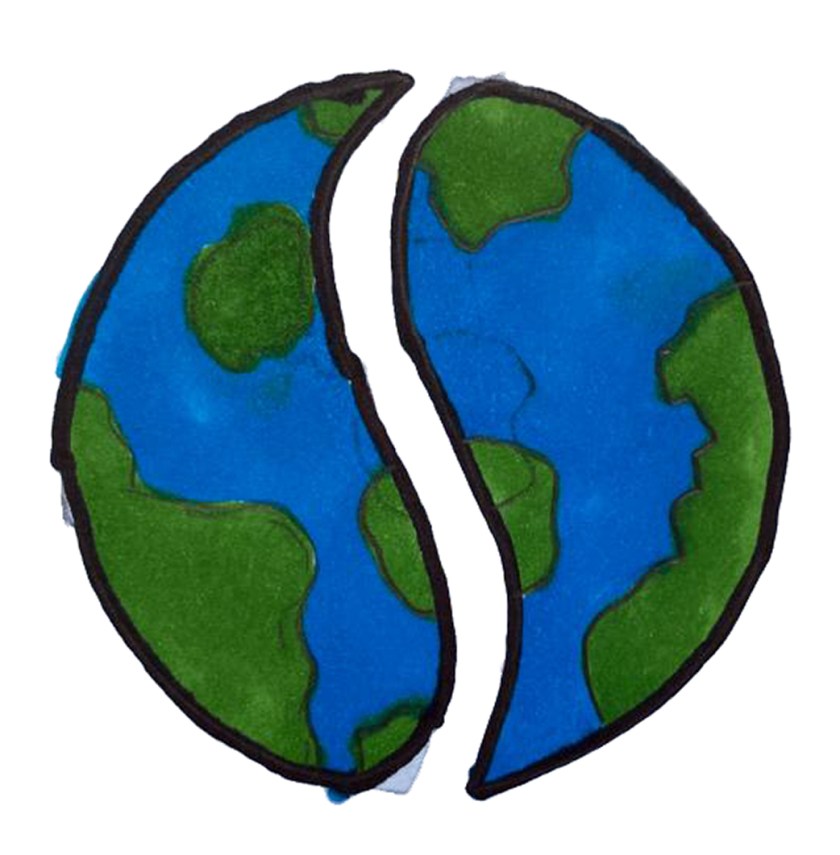
Art: Yin Yang Earth, Isaac Wilfond (age 11) ©2022

 The BeZine