Volume 9 Life of the Spirit and Activism Issue 4
fuel for change


Volume 9 Life of the Spirit and Activism Issue 4
fuel for change
Volume 9 Winter 2022 Issue 4

Life of the Spirit
&
Activism
fuel for change
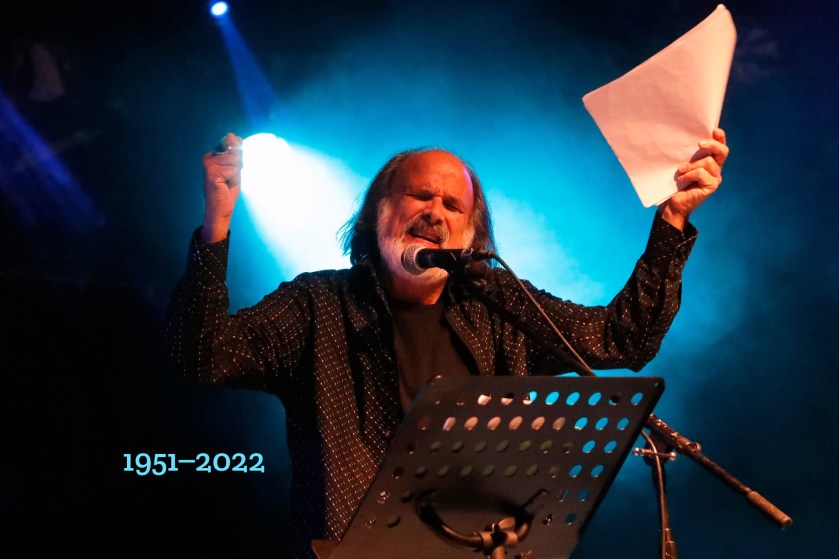
Cover art: Photo of Michael Rotenberg (1951–2022) Performing Poetry | Photo from Facebook Profile
So much seems off course—climate crisis, Ukraine war, rising fascism, depleted energy for resisting—where do we find fuel to keep up the struggle for change? In the pages of this issue glimmer hopes, stars in dark nights, dreams—alongside outrage, compassion, and the fire that makes us all (as Youssef Alaoui says early in this issue). That star-sun-moon fire—the Holy Spirit to some, the light of Creation to others, stardust to many, Enlightenment shining forth for still others—this spirit moves us all to love, to care for our siblings and cousins, to awaken and rise up from ashes of despair and sing our songs.
The political right attacks “woke” and wields the word as a weapon against “…any left-leaning policy that it [wants] to condemn,” Professor Esau McCaulley writes when discussing the last Sunday sermon given by the Rev. Dr. Martin Luther King, Jr., “Remaining Awake Through a Great Revolution.” Prof. McCaulley tells us that “…although King doesn’t say the word ‘woke,’ he uses the concept as it was understood by many Black folks then…” (NYTimes “The Kind of Revolution That Martin Luther King Jr. Envisioned” 13 Jan 2023).
Citing the story of Rip Van Winkle, Dr. King points out that a little noticed sign in the story is of great importance. When he goes up to the mountains to sleep, it shows King George III; when he comes down it shows George Washington. The change leaves him feeling lost and confused, not knowing the world. Rip Van Winkle slept through a revolution that changed that world. King warns that too many people are sleeping through three revolutions—technological change, weapons of mass destruction, and the social revolution of human rights.
Sound familiar?

While Dr. King talks about how in 1968 the geological world had shrunk and time quickened through modern jet travel, how our word balanced on the brink of nuclear destruction, but also how a great outcry for freedom was being heard around the globe. He reminds us that our neighbors had become global, not just down the street. That we had to care for our neighbors everywhere there was oppression and injustice.
Sound familiar?
Today the world has shrunk even smaller, with instantaneous communication and live video connections worldwide. New war technologies are deadlier, from more powerful nuclear bombs to precision missiles to drones—and nuclear sabre-rattling again clanks in our collective ears. Yet, the rising fascism, nationalism, and autocracy we see, while looming dark and dangerous, is also a strong reaction to the “great revolution” Dr. King spoke of. The revolution continues to grow and spread. And reactionary forces, out of fear or hate, push back, seeking to repress, to protect inequalities of wealth and power that benefit them (or to create new ones that will benefit them), and to go back to the past. There are even those who have recently extolled slavery in the US political right (see for examples: These Politicians Praise Slavery, US Senator Tom Cotton defends slavery remarks, and The rightwing US textbooks that teach slavery as ‘black immigration’).
“We hold these truths to be self-evident, that all men are created equal, that they are endowed by their Creator with certain inalienable Rights, that among these are Life, Liberty, and the pursuit of Happiness.” But if a [person] doesn’t have a job or an income, [that person] has neither life nor liberty nor the possibility for the pursuit of happiness. [That person] merely exists. We are coming to ask America to be true to the huge promissory note that it signed years ago.
Rev. Dr. Martin Luther King, Jr
“Remaining Awake Through a Great Revolution”
[edited for gender neutrality]
The Rev. Dr. Martin Luther King, Jr., gave that sermon at Washington National Cathedral on March 31, 1968. A few days later, he was murdered in Memphis, TN, April 4, 1968. Many of the issues he addressed, such as economic reparations (in the US and globally) remain hotly contested and difficult to address. It will be 55 years this April since Dr. King died. We must remain awake. As tired as I feel, and right now I feel weary to the bone, we must awaken. We must stay awake. We must embrace “woke,” not as a label, but as action of mind, body, and soul. We must not let the darkness numb us into decades of sleep. In that wakening, we will find energy—from the light of creation within the world and within us.
A YouTube video of the sermon is embedded in this issue of The BeZine.

Michael Rothenberg and his partner, Terri Carrion, founded 100 Thousand Poets for Change (100TPC). From early in the (almost decade) of The BeZine’s existence, we have participated in the annual celebration of activism in poetry. Our three recurring focusing themes: Peace, Sustainability, and Social Justice come directly from the 2015 100TPC World Conference in 2015. I attended that conference and reported about it here and elsewhere on my return. These three themes already were throughout The BeZine, along with an ecumencal and inclusive theme of life of the spirit. We chose to focus on the three 100TPC themes in solidarity with 100TPC, and added our own, Life of the Spirit and Activism.
Michael left this world 21 November 2022. He was tireless as an activist, a writer, a friend, a performer, and an organizer. He remained awake to the very end, creating when he could, working collaboratively with others, and caring for others even as his life slipped away. We open this issue with 7 poems and an essay by some of his (and my) friends who were in Salerno in 2015, dedicated to Michael’s memory and delivered here with love for him and for Terri. I introduce that section separately, with my own personal thoughts written a few days after he moved on from this world. At the end of the In Memory of Michael Rothenberg section, there is a YouTube from a Zoom reading that many of us from the Salerno World Conference participated in to remember and honor Michael together.
What can I say? From election deniers and mid-term results in the U.S., to the most right-wing government newly elected in Israel (where I live), to Michael’s loss, to war, to climate crisis…sometimes it all overwhelms. But I was also busy with a major project which had a deadline that conflicted with our production schedule, and this was good. This is the winter issue, and it is indeed still winter. But it is more than a month later than usual. My personal apologies.

We have a new editor joining to help us, beginning with the next issue. And we would like to invite contributors and readers to become more involved. We get occasional offers to review books, and would like to do this (particularly, but not only, for contributors). We could use help proofreading online. We could use help with the blog (contributing and editing). This is all volunteer work; none of us gets paid. If you have interest in joining our team, look over the submissions guidelines and mission statement to get a better idea of what we try to do here. Use the submission email to contact me—provide a paragraph or two of introduction about your experience, why you would like to help, and what you would like to help with. A resume is optional. Put “I’d like to join The BeZine Team” in the subject line, so I know you are applying. And I will get back to you as quickly as I can.
—Michael Dickel
Editor, The BeZine
Your Portfolio Archive currently has no entries. You can start creating them on your dashboard.

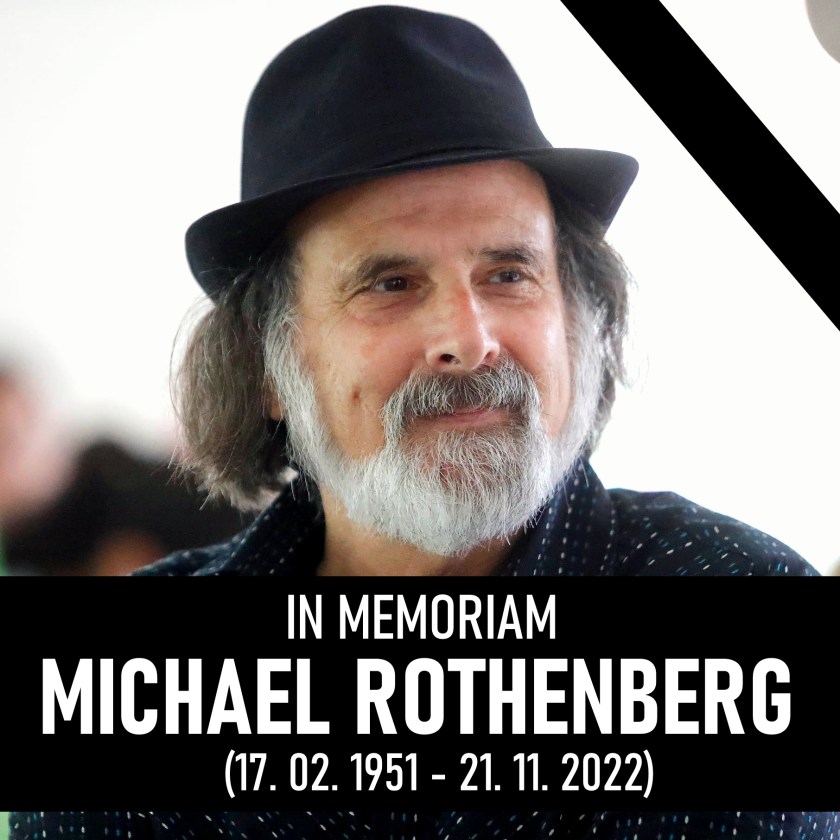

On Monday, 21 November 2022, at around 11 PM EST, Michael Rothenberg left the world. Even though he had told me that he had cancer and I had recently heard that he went into hospice care, the news of his death that arrived yesterday devastated me. Michael was a close friend, a relationship first built online and then cemented in person at the 2015 100 Thousand Poets for Change (100TPC) World Conference in Salerno, Italy. Over the years we communicated online by text and voice. He would send me poems he was working on, and I would send him my drafts. We each reviewed works-in-progress of the other—often as not arguing over lines and words in the spirit of making the work stronger. We spent time together when I had the honor of being in a 100TPC writer’s residency in Tallahassee, Florida, where he and his wife Terri Carrion moved to from the Bay Area of California. We shared work, giving each other feedback during the day. And we explored the area, ate in local restaurants and visited local bars to hear local music, often with Terri Carrion, his partner.

That week 17 high school students were murdered and others injured in Parkland, near Ft. Lauderdale, FL. Michael, as he seemed wired to do, responded both with outrage and with a plan to use poetry to respond. I recall sitting next to him as he began to plan work with others online and I shared ideas and contacted others to arrange 100TPC poetry readings in response, focused on the Parkland shootings but also all other gun violence and the need for socio-cultural change to stop the killings. And soon there were others organizing readings for Parkland, independent of our efforts—synchronicity at work. Of course, mass gun killings haven’t stopped. Neither has poetry or protest against it.

As I write this, there have been two mass shootings this week, the second last night—Colorado Springs, CO, and Chesapeake, VA. And it’s only Wednesday. I seem to hear Michael’s voice in my head, “What are we going to do?” He insisted that others join him to fight oppression, war, the climate crisis, social injustice in any form. And he included himself in his urgings—What are we going to do?
Michael, of blessed memory, and his partner, Terri Carrion, founded 100 Thousand Poets for Change in March 2011. In 2014, Jamie Dedes, of blessed memory, our founding editor, began an online 100TPC event for those who wanted to participate but were homebound or distant from in person events. At the Salerno conference, those of us present decided to focus globally on three interrelated issues: peace, environmental sustainability, and social justice. When The BeZine went from monthly to quarterly, we chose to use these three themes in our rotating quarterly themes, adding life of the spirit and activism to make four. We see life of the spirit (broadly defined) as being integral to supporting our activism, our art, our lives, and our values. Michael, z”l, Terri, and 100TPC have influenced and supported the mission of The BeZine.

Michael also founded or co-founded Big Bridge, Poets in Need, Read a Poem to a Child and many other events and projects. In recent years he has worked as the poet behind the Ecosound Ensemble, a poetry and music performance group based in Tallahassee. He wrote many books of poetry. He painted. He collaborated with many. He grew orchids and bromeliads. He enjoyed friends. He mentored many, argued with all, and loved people.
We will miss Michael Rothenberg at The BeZine. I will miss my friend. His poetry and activist spirit will live on, though, this I believe.
—Michael Dickel, 23 November 2023


Except where otherwise noted, photos from Michael Rothenberg’s FaceBook page. Copyright belongs to original photographer or to Michael Rothenberg’s estate. Text ©2023 Michael Dickel
Originally published on The BeZine Blog 23.11.2022
Update: The following pages of this section of The BeZine are in honor and memory of our dear friend, Michael Rothenberg— poems, photographs, and an essay by friends, fellow 100TPC activists, writers who all know each other through Michael, Terri, and met together, with so many other fellow 100TPC activists from all over the world, at the 100TPC 2015 Word Conference in Salerno, Italy.
Rose petals mound of their own
before you die, as you are dying
comets spin their tails in heaven
a single powerful thought appears
loudest colors form a cloud
this image is meant to connect you
wondrous being, magnificent creature
back to your original form

A silvery pond in starry earth
is your personal portal
beyond it, a thousand skies, ripe for taking
you can retreat before your time
if you ask and you never ask, you always tell
maybe you can figure what that thought is
harmful truth or memories unsifted
you might spend the rest of your life trying

More you bellow, more they bury
if you manage to discover this thought
mountains of dust, rivers of charnel
you can always go within it
golden mirror reflects only the night
or use the thought for deepest meditation
garlands of lotus and twirling feathers
humans can command

Golden mountain, blaze of trees
once you discover the sacred image
script hidden deep in emerald
you will be immediately brought
do not be afraid, stand brave eyes open
into the frankness of death
your absolute truth is never evil

Do not go there yet
bleary wanderer
you will know your time
For ND, PCR, VB
Our story begins out here
where everything begins
and ends

We are of the stars and
that’s why we marvel at them
so when we look to the sky
and consider the divine
we are intuitively looking back
at our origins

Cosmos is the deepest mirror
a bottomless lake dotted with fire
larger than tools can measure
reflecting our faces back to us
humming the consciousness of all things
~
As far away as you can get
is where you find your soul

Far from city lights we have come
to witness the brilliance of the sky
one of us can control the stars
with a twist of his hand
we watch shapes he makes for hours
shivering on the desert floor

And what is a star but a heaving
alchemical cauldron of pure light
pure creativity
rich in life-giving elements
these are a million fires he says
same as our sun
our star, this is us

Watch these embryonic souls
dance and leap from the surface
of the sun, lightning winds of fire
to scatter across the cosmos
like dandelion blooms

Look, this one will be the soul of a comet
this one will be a moon worm or a martian
astronaut, this one will drape and fold
at the heart of the Aurora Borealis
and who are we but alchemical vats
of power and creativity
~
Our souls are inextricably linked in cosmic
rhythm, twisted together like
branches, to build you or strangle you
depending on how you treat your people
yes the people are yours and you are theirs

Then he speaks to us at length
regarding the exogenous rhythm
of the unicorn and challenges us
to consider just how far
one could possibly go with a person:

Is it your friend, your enemy
your rival, your lover?
all of the above, treat one another
with dignity
we are children of the stars
siblings forever

We sing the Marseillaise together
in hushed tones then, with surprising venom
he says you know who they are coming for
don’t you, they’re coming for you
~
We do not know whether to cry
in fear or leap for joy, have we
finally lost our minds?
We rush to the cities to find out
droves filling streets in protest
we find the Marseillaise crumpled
in the gutter with all the old songs

People sing new songs
they bring new fire to share
with others and that prompts
newer fire and parades of such light
it was true, they had come for us
to forge new ways to navigate the stars

I turn to you and we see
flames dance in one another’s eyes
tiny salamanders turning on their tails
smoke and colors fill the air
we know the future is inevitable
and we say

every child of the sun
together we are the fire
©2022 Youssef Alaoui-Fdili
All rights reserved

…is an Arab-Latino, born in California. His mother is Colombiana. His father was Moroccan. The Alaoui-Fdilis are originally from Fez. His brothers and aunts and uncles and cousins are today mostly in Casablanca and Rabat. His family and heritage are an endless source of inspiration for his varied, dark, spiritual and carnal writings. He has an MFA in Poetics from New College of California. There, he studied Classical Arabic, Spanish Baroque and Contemporary Moroccan poetry. He is also well versed in the most dour and macabre literature of the 19th Century. His poems have appeared in Exquisite Corpse, 580 Split, Cherry Bleeds, Virgogray Press, Red Fez, Big Bridge, Dusie Press, Paris Lit Up, The Opiate, and nominated for a Pushcart at Full of Crow. Youssef is an original creator of the East Bay literary arts festival “Beast Crawl.” In 2012 he created Paper Press Books & Associates Publishing Company. This press offers several important books of poetry and one poetry and art compendium.
Words aren’t sufficient to describe your pure soul
for my friend, Michael Rothenberg
It’s an honor to have known someone like you, but unfortunate to lose!

You left my friend,
beaten by many challenges
yet unbowed
with your big heart.
You strived to shelter
all the poets you called brothers.

You encouraged and gave us hope
that the poets would change
the world for the better.
As for other things, you’d say
Who cares about anything else!
I called you brother,
and you’d call me, my little brother.
I’d ask you about fame,
and you’d say, first me,
and then if something is left,
I’ll bestow it on you.
You’d poke fun of me,
while comforting at the same time,
showing me how things function.

For the poets, you’d say
academics and professors think they know it all,
and only they know how to write,
but don’t recognize others.
Yet, to be a poet, one
doesn’t need a fancy degree,
but a soul with a poetic sense
that gives life to arrays.

We met in Salerno—
you were close, a kindred spirit
with everyone,
though it was the first time
you met some of us.
So I, with all of you poets,
without knowing you,
accept you here gathered.

You gathered us
and we became as family.

You and Terri,
Drita and I,
I’d explain the meaning of their names
in both languages, Albanian and English.

Michael,
a person such as you is hard to find,
even harder to become.


Photos from Salerno, Italy
©2015 Michael Dickel
You gave us hope,
courage,
as well as support
to act and call out for
Peace, Justice and Sustainability!

You shared the loss
of your only son, Kosmos,
and the loss of your brother,
what tragedy.
You’d worry about your inheritance
as it would all extinguish with you,
as in “The Last Mohican,”
who fought for his essence.
And I’d tell you that
the eternal flame
never gets extinguished.
When we last spoke,
you told me of your cancer
and how worried you were about Terri,
who juggled to care in one room with your health
and the other,
with therapy for her mother,
who was in a deathbed—
and for Terri,
death was knocking on two doors all the while,
I overheard you say, take care of Ziggy.
It’s what you told Terri?

Ugh, I felt terrible
watching you from a laptop monitor,
unable to help you
other than comfort you with words.
Yet I was amazed by your strength,
with which you’d wrap yourself,
not giving up.
Withstanding!

When Menka messaged me,
to tell me that you were ill
and that doctors had told Terri
that you had three to four days left,
and only a few hours later a message from Lisa
Michael died last night around 11:00pm.
He went peacefully.

!!!

Michael left us, a voice whispered in my head.

I was dumbfounded.
Speechless.
Tears poured from my eyes
for you my dear friend,
for you who had nothing else, but life in poetry…
Text ©2022 Faruk Buzhala
All rights reserved
…is a well-known poet from Ferizaj, Kosovo, writing in his mother-tongue, Albanian. He was born in 9 March 1968 in Pristina. He is the former manager and leader of “De Rada,” a literary association, from 2012 until 2018, and also the representative of Kosovo to the 100 TPC organization. In addition to poems, he also writes short stories, essays, literary reviews, traveltales, etc. Faruk Buzhala is an organizer and manager of many events in Ferizaj. His poems have been translated to English, Italian, Spanish, French, German, Croatian and Chinese, and are published in anthologies.
for Michael Rothenberg
All poets write about death…
—Bob Rosenthal
So I sit and listen and see you as if
you were really there—but you weren’t—
living in this invisible city, toying
with the idea of an invisible city
an international community
                                    of poets

As if we were sitting on a bench
in a park where young people run free—
who can’t see the old men just sitting there
minds aglow, but their hands cold—
the invisible city exists alongside the real,
in the lap of the visible—just like
you and I looking at our hands
but not at each other—
                                    but we’re talking

I was just thinking of you— and now I hear
I’ll never see you again, I’ve been shielded once more
from death. Deaths I didn’t see—
the invisible deaths of my parents
my mother’s catatonic dementia
my father, alone but happy
deaths by aneurysm, auto crash
kidney disease, black lung pneumonia
murder, cancer. If it is true
that a successful poet who lives a long life
writes more and more about death
then you had your turn—
But no one has to be successful to die
and so I know I’m going
to write about death
whether I’m good at it or not. And seventy-one
is not very old to die, Michael, you had more
                                    to give

Farewell, Michael, struggling with anger
farewell, Michael, cooling arguments on-line
farewell, Michael, with your hand gripping my hand
farewell, Michael, was somebody there
to invite your soul to paradise or
another incarnation where
this life’s imperfections
can be knocked off your human shape
and will your remains settle into earth and water
                                    go to ground

Your soul— if there is
such a thing as soul—
now enters the wind tunnel
to be taken on its way
Grief echoes in large houses
full of empty rooms
in the house where Terri
wakes up daily, now alone
speaking to no one until
                                    she’s ready

Which way was your head turned, Michael?
Where were your hands?  What last words
did you hear?  Who spoke to you, & did you know
when you closed your eyes for the final time
who loved you?  I don’t think angels exist—
but in that final condition you didn’t go unsanctified.
Those were your hands—here are mine.
Does a dying person remember being born?
Did you know you were sanctified?
Whatever this agnostic wish can be
for you—now—your suffering
                                    is over.
©2022 Dennis Formento
All rights reserved
All poets write about death: Bob Rosenthal was poet Allen Ginsberg’s assistant at the time of his death, and reported this observation about Allen’s passing in the documentary, No More to Say and Nothing to Weep For, an Elegy for Allen Ginsberg, Optic Nerve productions, Colin Still, director, 2006 [link].
…lives in Slidell, Louisiana, USA, near his native New Orleans. Books of poetry include Spirit Vessels and Looking for An Out Place (FootHills Publishing, 2018 and 2010.) Cineplex (Paper Press, 2014,) Edited Mesechabe: The Journal of Surregionalism 1990-2001 and fronted the free-jazz/free-verse band, the Frank Zappatistas. St. Tammany Parish organizer of poetry events for 100,000 Poets for Change, a network of poets for peace, sustainability and justice world-wide.
This is a project that I like to call meditation through poetry and it happened on Christmas Eve when Michael sat by d ocean and sent his poetry through d waves in my house where I received d salty smell of d eternal life that we live. —Mitko Gogov, 31 Dec. 2011

Ed. note: The poems below are from Mitko's blog, in _d @Potru's wor(L)d.

Today, when Ziggy
(the dog) and I
go down to the ocean
we’ll send you a poem

Some wild ribbon
Invisible soul
birds in flight
across chrome waters

We will wait
for your silent reply
Look for a word
and world of peace

Riding back
over bright breakers
from your land-
locked European country

*

A Sea-Monkey
I was born and raised
in Florida

Learned my liquid life
Now, I am pulled
by the moon

Birth and inevitability
Yes, the ocean
gives us power

Tells us the rolling universe
does not belong to us
No matter how hard

we try to destroy it

*

Godless power
Chrome waves

Sun’s flames
soak my brow

Ziggy stops to dig in the sand
Barks at the blue-black raven

calling from the stranded
boulder on Shell Beach

*

I’d go crazy living on an island
surrounded by a fevered sea of woe

and sapphire horizons

I plan for a busier tomorrow
But I can’t get the ocean out of my head

You could crave another island

But whatever’s there I can’t describe
Lupine, thistle, and wild oats

on the bluff
Something I think I see, but can’t

Imagination
inscribed in the mercurial sky

I wait for an explosion

*

This is not a good year for Tyrants!
Copper skies above Tahrir Square

Here comes that crashing thought
That currency I sent away over the expanse

to be read by you, Mitko
Tear gas clouds in Tahrir Square

Coming back tied and frayed around a rugged headland
We have had enough of this enslavement!

Men and women, boys and girls with stones
Give them what they want

Don’t wait for permission from the headquarters
Authorization from the Opera

Live long and without endorsements

*

The dog still barks, but can’t say exactly what he believes
Is that a dragon or civilization burning on the beach?

Coming in or going out
I can’t tell which way the poetry is running

A wave followed by another wave followed by another
Tide of the underworld rushing overall, blowing silver

over shipwrecked shores and tortured skies
A sleeper wave slashing

Pillars of…

*

I asked the California badger
on the road back home
Do you find this dream amusing?

There was something vicious in his response
Is the human condition just entertainment?

I ask the badger
about Political gamesmanship
and coppery metaphors

Slung across the heavens
like Handel’s Messiah?

No reply!

This is not a domestic animal!

*

O, Brother from another great continent
Beyond shimmering cataclysmic fever

Foam and light rushing up over my feet
Mammoth rubbings on mammoth stones…

Oh Macedonian Brother

I went down to the ocean today and the sky and sun and water
were blinding and gorgeous chrome, so I kind of got caught

in light and isolation and could think of nothing else
.
“Poem for Mitko” ©2011 Michael Rothenberg
All rights reserved
.lips are touching salty waves,
oceans playin’ with d messages lost in them.
We think that inside float
maternal fluid which nourishes us while we sleep
as teddy bears, as kangaroos
in d
wombs
inside.

*

We fly with our messages
like freed birds from their cage…
Love is transferred through cosmic channels!
..an uncle somewhere far across the pond
sit on the shore,
caressing the existence of his thoughts
sending them far away to me
to be returned as hidden universes.
The day ends…

…and, somewhere there Jesus is born.

*

dogs bark in joy,
about one I know for sure.
In these bottles we keep all
d messages, those which are yet to be sent
condemning the mystery of not knowing.

!Telepathy is a pact with mice. .. you hear me?

*

We signalize d existence,
as fireflies in summer. .. even d Indians would envy us
for d art of connecting.
Do we hear each other or d waves are too strong?!
I hear how d water cleans our souls. these salty rocks
one day will fall apart!
We run lost as we should
win this marathon, but not
all waves end at the same place?

*

Embraced each other with d thoughts that returns
—boomerang technique is more active nowadays.
The end of reason is near,
in d rain we hide d cry of our fear.
At the end of the day

:all stars are falling down
—but they not fade;

they glow us from closer!

night lights,
they make d passion for more myth!

*

We reserve space in d universe
as if d hotel of our life has remained with(out)
no rooms. Guests are our memories…
fill d beds and under them they hide Us
from ourselves..*

Here the lake is calm
…dreaming of its elder brothers and sisters
will there be a river born to bring me
at d sea,
will there be a sea born
to bring me to you?

*

The Absolute dives with special equipment
we the trackers are dolphins
we close our snouts while we breathe,
yet, our ears fill with water.

Can we hear d water composition
for the rain, for d snow that melts in us
or icicles are born?

In my house a wave is coming,
from d ocean is, We say…
on my walls dark blue worlds
aquarium filled with indigo sky

.my fishes are dreaming d Big Water
Lemurians dears ~

.
Introductory note and “.OCEANia and :Christmas” ©2011 Mitko Gogov
All rights reserved

…lives in Macedonia, where he writes poetry, short stories, essays and journalism. He writes haiku, senryu, renga, which he publishes occasionally in the micro blogosphere twitter, but once published in London by Yoko Ono as well. His work so far has been present and translated in several anthologies, collections and journals for literature and art in India, Pakistan, Philippines, USA, Russia, Spain, Mexico, Argentina, Czech Republic, Germany, Serbia, Croatia, Albania, Bulgaria… His collection “Ice Water” was published in 2011 in Serbia, and in 2014 issued in Macedonia, in the edition “Fires” for the publishing house “Antolog,” supported by the Ministry of culture. Photo from 100TPC World Conference in Salerno, Italy, ©2015 Michael Dickel
for Michael Rothenberg
Will someone rescue these demented lines
from the fever and fury of their loss?

The season on fire
the moon is out a-harvesting this fall
its tuft of hair unruly on its brow.

What reckoning awaits?

The past, a wrinkle
a ridge to stumble over
and enter the urn of the hollowed self.

Amigo, are you there?

Call him Michael.
Call him Mike.
He does not hear you anymore.

Beyond the harvest moon
a black-crowned night heron
shakes its wings and prepares to fly.

Can you hear the dwellers of these marshes?
Their odes to the subterfuge that is life?
Hermano, it is you I am trying to reach.

In a blaze of blue flames
the bird is on the wing
its breath glittering gold dust.

But it is dark here.
And the moon has not yet run out of its spite.

Go in peace
for your breath is now spores of light on the wind’s back
floating across oceans and continents
seeded in the hearts of young and old alike.

One body only you have shed
and, bird, taken another.

©2022 Waqas Khwaja
All rights reserved

…has published four collections of poetry, Hold Your Breath, No One Waits for the Train, Mariam’s Lament, and Six Geese from a Tomb at Medum, and a literary travelogue, Writers and Landscapes, about his experiences as a fellow of the International Writers Program, University of Iowa, in addition to three edited anthologies of Pakistani literature, Cactus, Mornings in the Wilderness, and Short Stories from Pakistan. He served as translation editor (and contributor) for Modern Poetry of Pakistan, a Pakistan Academy of Letters project supported by a grant from the National Endowment of the Arts, showcasing translations of poems by 44 poets from Pakistan’s national and regional languages. He guest-edited a special issue of scholarly articles on Pakistani Literature for the Journal of Commonwealth and Postcolonial Studies and another, on Pakistani poetry, for Atlanta Review. Khwaja is the Ellen Douglass Leyburn Professor of English at Agnes Scott College where he teaches courses in Postcolonial literature, British Romanticism, The Gothic, Literature of Empire, Victorian novel, 19th century poetry, and Creative Writing.
For Michael Rothenberg and Terri Carrion
A hundred thousand stars
break over the world
Someone so forever
has gone

A hundred thousand tears
A hundred thousand medical documents burning
A hundred thousand winds bearing away useless smoke
but that voice lives
It leaps the flames
transcends the page

Bad medicine didn't stop it
this voice that drew us in
brought us face to face
language to language
He and his beloved
centering a wheel
with a hundred thousand spokes
We came from all around the globe to you
Many threads pulled into one cloth
a garment for change
but now having organized the bards
you are called
to align the stars
leaving at our centre
a beloved space
sacred with absence

But earth will not be silent
one hundred thousand memories
will guard will amplify what you have left
The shouts that shook Salerno
will shout even louder now
against the deadlock the gridlocks
of injustice

How dare death take you so soon
How dare grief
colonize so many throats
wring so many hands

Those lungs that took in life
and bellowed out poetry
that turned air into love
how dare they fail you
feeding aquifer and ocean
with tears
that should have been hallelujahs
©2022 Robert Priest
All rights reserved
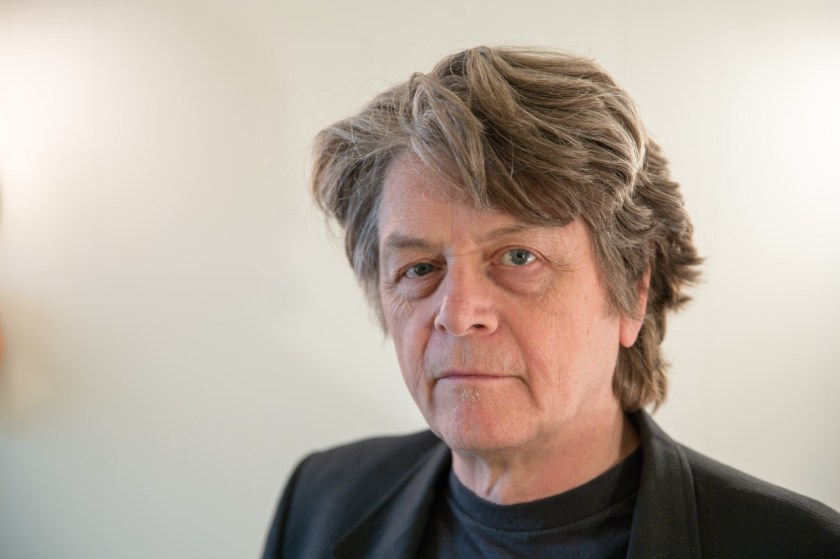
…is literary poet in the tradition of Neruda and Mayakovsky, a composer of lush love poems, a singer-songwriter, a widely quoted aphorist, a children’s poet and novelist. He is a mainstay of the literary/spoken word/music circuit both in Canada and abroad. His words have been quoted in the Farmer’s Almanac, debated in the Ontario Legislature, sung on Sesame Street, posted in Toronto’s transit system, broadcast on MuchMusic, released on numerous CDs, quoted by politicians, and widely published in textbooks and anthologies.
The last flight I took before the Covid-19 pandemic lockdown was a trip to Tallahassee, Florida. I spent a few days with my friends Michael Rothenberg and Terri Carrion, the founders of 100 Thousand Poets for Change and the Read a Poem to a Child initiative.
We didn’t know then, in January 2020, that the dark shadow of the Covid-19 pandemic was about to overtake us. Michael and I sat talking at a wooden picnic table outside Wakulla Springs State Park, one of his favorite places. Decades ago, the classic monster movie Creature from the Black Lagoon filmed scenes in the springs’ pristine water. But we had our own shadows and monsters to deal with. Michael had recently lost his only son, Cosmos, to addiction. My own college-aged son was clawing his way out of a years-long depression.

As we ate brown bag sandwiches and drank old-fashioned phosphate sodas from the park’s historic lodge, we shared the hurt and confusion of grief. After Cosmos’ death, Michael had been unable to write for a time. In need of a creative outlet, he began working with art therapist Annie McFarland on a series of colorful abstract illustrations.
Then, two days after I returned home, Michael sent me an image that marked a departure in his work. Here was a blue-jean colored monster with six pink feet, blowing green bubbles. I drafted a poem about a child who is surprised to see a monster moving into the house next door. As a gift for Michael, I recorded the poem and sent it, hoping it would bring some lightness to his day.
The next day, Michael sent a sketch of a monster with balloons hovering in the background. I wrote “Monsters Don’t Have Birthdays,” and messaged Michael, “The second monster has such a sweet expression. It inspired the last line of the poem,” in which a monster is surprised at his human friends’ empathy toward him.
Almost immediately, a concept began to take shape. This was one of Michael’s great gifts. When creative inspiration struck, he ran with it, whether that it led him to draw whimsical creatures, or to form a global network of poets committed to social justice.
Monster after monster showed up in our message thread. I scrambled to keep up with Michael’s creative energy. My response poems described children interacting with the monsters, most of whom represented—to my mind, Michael hated to interpret his own drawings—an emotion or state of being: fear, curiosity, self-love, sadness. “I like the idea of encouraging readers to sit with a feeling and then let it evolve,” I told Michael about a poem entitled “When I Cry.” “Not to brush the sadness away or deny it, but to see it as part of the whole range of emotions.”
In the initial shock of the pandemic, when our normal lives came to a sudden halt, working on Welcome to Monsterville shook us both out of our habitual worries, anxieties, and ways of thinking. It gave Michael and me a way to befriend the unexpected, to make art out of the monstrous unknown.
Both of us suffered new losses. My mother-in-law passed away, and Michael’s brother Bruce. And yet, we had this playful, wonderful collaboration to turn to. There was a joy when we dug into human emotions through the process of creative play. We helped each other when one of us got stuck, all the while engaging in a side conversation, writing messages back and forth about the nature of creativity. We talked about art as a necessary outlet, a grounding force when we’re feeling overwhelmed by emotion

“I just let the ideas come. No judgement,” I told Michael when he complimented a poem draft. He replied, “It is the only way for me. The imagination stays flowing that way.” He likened our process to performing his poetry accompanied by live music. “It’s all about my relationship with [the] musicians,” Michael said. “We’re in it together.”
Ours was a two year conversation about the creative process, whether Michael was adding layers of watercolor to an inked drawing, or I was revising a poem, line by line. Reading through our message thread again after Michael’s recent death, I’m reminded of the sense of delight my dear friend and I felt at embarking on this creative conversation together.
Although I am sitting with my grief—alongside Michael’s vast community of friends, poets, and activists—it is with the knowledge that the creative conversations Michael began with so many of us are still ongoing. This spring, when our book Welcome to Monsterville is published by Apprentice House Press, I will be introducing children to Michael’s monsters, inviting them to play with art and words inspired by his work.
“I like the idea of a child’s wildest, monstrous impulses being beautiful—to be witnessed instead of shunned or corrected,” I once told Michael.
“We are all monsters,” he said.
©2022 Laura Shovan
All rights reserved

…is an author, educator, and Pushcart Prize-nominated poet. Her chapbook, Mountain, Log, Salt, and Stone won the Harriss Poetry Prize. Laura’s award-winning children’s novels include The Last Fifth Grade of Emerson Elementary, Takedown, and Sydney Taylor Notable A Place at the Table, written with Saadia Faruqi. She teaches writing at Vermont College of Fine. Welcome to Monsterville, her poetry collection for children, was illustrated by poet Michael Rothenberg.
When the heartbeat and pulse of the inevitable Lake Jackson
are no longer a marshy bother, I too, with any luck, will disappear.
—Michael Rothenberg, "On Lake Jackson"
I think you are getting it all wrong
	my friend,
because no matter where we go,
	we never completely disappear.
	Certainly
		you can appreciate	what I am saying here.

I have been learning this the hard way
	as one death after another
		weighs down upon me this past year
old school friend
	vibrant work friend
	dearest artist friend
	three mentors in one year
	and my father who left almost four years ago now
which seems like only
						yesterday.

I’m telling you,
no one who writes
		           paints
			             teaches
				                cooks
				           	          breathes
						                        or dreams

ever disappears completely
because
	marks are left
	seeds planted
	roads traveled

and even
	when the ocean washes away
		the last footprints
			from the face of the beach,
				the sand remembers who stood there
and who carried
		the smallest
				grains of it away
							to other shores.
March 30, 2017

for Michael Rothenberg
We go back a long way, you and I.
On the night we met,
you were words on a screen and a picture
of a man in front of a sunflower,
who said he was looking for poets,

one hundred thousand of them
to organize poetry readings, to share words.

Words of Change!

I answered the call and we became friends,
and words became threads that held us.

For twelve years, you brought a world
of poets together every September
floating up their words to make
many skies, one sky.
Many dreams, one dream.

You had a dream
to make the world a better place.
I had a dream to help.
There was joy along the way
and never-ending sorrow.

Grievances, uncertainties, and a long list
of injustices that had us screaming for change.
Not for ego—never ego—but to make
a difference, to right the wrongs of this world.

Now, you are gone, but not gone.
Not here, but here.
Cancer took your body,
but not your words.

Before you left, you told me a story
of an alpaca blanket that you bought in Colombia,
when you were twenty and wide-eyed,
brimming over with the music of the world.
That blanket carried you, kept you, sang you to sleep,

and made you feel as if you could live forever,
so much easier to believe that at twenty than seventy.

But the story is that the blanket was destroyed
by a chance toss into the washing machine,
then, the dryer. All this done by a well-meaning caregiver,
who offered to buy you a new blanket,
not understanding that it was not the blanket that mattered,
but the dream that it embodied.

And now you have taken a new shroud,
one we will all wear, each in our own time.

Wherever you are now, I know you will meet the soul
of the alpaca and thank him for the wool he gave.
He knows you loved him for the blanket he became,
just as the world will always know you and love you

for the words you have become.
December 1, 2022
©2022 Lisa Vihos
All rights reserved


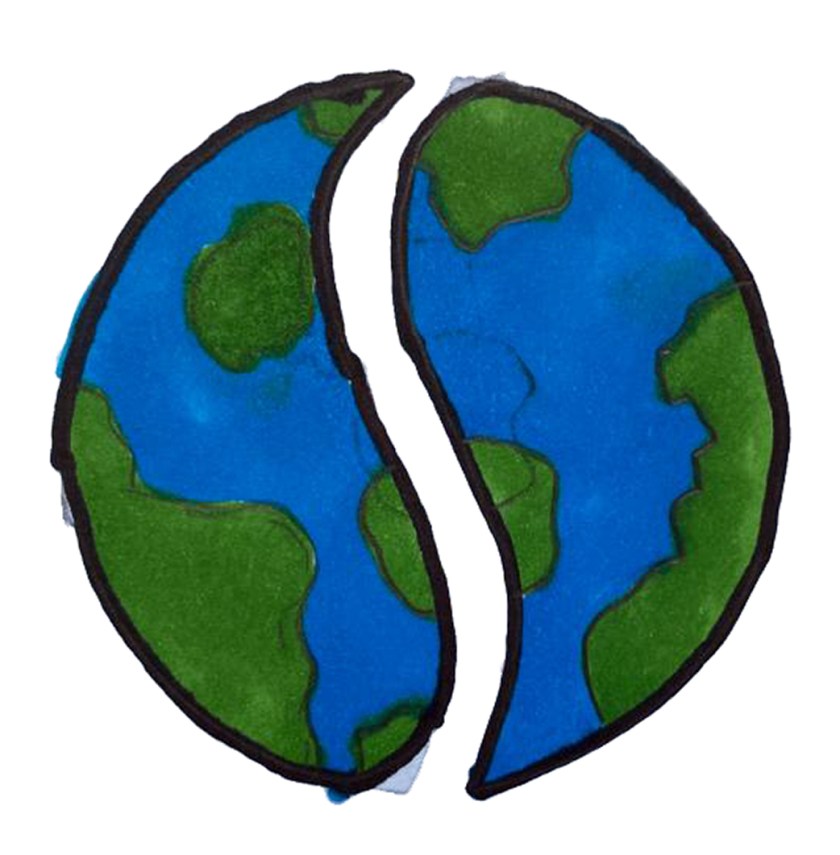
Art: Yin Yang Earth, Isaac Wilfond (age 11) ©2022
I am your sister and your mother and the mother
of the children you fathered after you left me

I took you out of your parents’ house
taught you the desire to be free, the need to settle down

I come from a fragrant ocher city
cistern for poets, gate to the heavens

I live in open spaces, near river banks and estuaries
in mountains and in forests

The evening sun renders my skin bronze
I caress the waning shimmer, inhale the smell of fertile soil

humidity -- crescent of creation, essence of intimacy
Earth-bound is my piety
I worship best in nature

I knew shelter, I knew pleasure
I took care of flesh and blood

I skipped barefoot through summer rain
rose pear smell mingling with my pulse

I was courage, I was patience
wine and bread were always on my table

How strange it is, not to be seen

I bestow my lustrous berries
my rocking chairs, my seat in the family car
I am your sister and your mother and the mother of your children.
I carry universes, untold love.
©2022 Julia Knobloch
All rights reserved

…is studying to be a rabbi as well as being a poet and literary event organizer. As part of her studies, she is living this year in Jerusalem.
Website / Blog Linked
he often drew his own hands.
he wrote the hand springs out of the body.
the hand is where the human body and space meet
slightly opening the hand unfastens a piece of space around it
and when the fingers close again slowly
the “being” of this piece of space changes
hidden within the fist
space is the nucleus  it gives life and volume from the inside

I set the framed print of Chillida’s cupped hand
next to my Havdalah things
maybe  this Basque artist is descended from marranos.
he might not even know why or when to cup his hand,
this very specific mysterious gesture.

I never really understood the gesture
cupping your hand so your fingernails reflect
the light of those two flames.
is it the flame is it the reflection?
lamely I thought the flickering fingers
are agitating   for the   work-a-day week.

maybe Chillida’s cupped hand
protects Shabbat space
now   it will open to free it   like a bird
till those two little flames   once again
free the cup of   Shabbat space.
11 November 2014

Some time ago I had an experience with someone’s baby…a random occasion when innocent
physical contact strikes harmonics      old music long dormant awakens      even prefiguring events
to come.
Little feet pushed against my ribs and belly
Little hands pulled my beads and sucking amber
set up quivers in my guts.
the next one drooling smelling sweet or faintly urine
may not be my neighbor’s but my daughter’s

Bittersweet the feeling and recall
Of others that pushed and climbed my thighs
And drew long gulping draughts
Curling perfect fingers and eyelashes

Four generations of daughters each opening the womb
Jo         born to Ruth         August Berman, 1928    Worcester, Mass
Shira born to Jo         Berman Milgrom, 1951    Newark, NJ
Talia born to Shira         Milgrom, 1976     Los Angeles
Oren born to Talia         Milgrom Elcott, 2009    New York City

I began to take it          personal     the biblical genealogies
The ubiquitous wearisome begats
The hoary unpronounceable names
And the rhythmic staccato
Va yoled… va yehi
He begat     and he     lived
Va yoled… va yehi
They are all masculine         only the men do it?

How about
Va tahar… va teled
She got pregnant
She gave birth
Va tahar    va teled
How does that feel
How does that sound
Equal pay for equal labor         only the women do it
2009
©2022 Jo Milgrom
All rights reserved

…is an artist and poet living in Jerusalem.
When my neighbor’s tree
crashes through the roof,
allowing storm water to flood
our kitchen, his insurance company
has to pay nothing. Though
the tree’s roots tunnel through his soil
and the snapped trunk stands
on his grass, the part that broke
had leaned across the property line.
I’m a therapist—I understand
where we end up matters
more than where we start.
A friend of mine married
her one-night stand. Another
wed her “soul mate,” lawyers
got the house in the divorce.
Today on my couch a woman,
incest survivor, squelched wife,
tells me she feels in her body
strength to leave. Her thin arms
lift as she speaks, fingers
reaching toward the light.
from Dazzle (Jacar Press, 2017)
This is our new dance, my mother calls out,
suddenly unable to walk, as my father
half drags, half carries her down the hall.

       Once she dressed for dancing in big
       earrings, clingy gowns. I watched her twist
       her thick hair, then paint

       her suddenly mysterious face.
       My father watched the clock.
       Fumbling with buttons, she tried

       to sooth him, Soon, I promise. Soon.
       He grumped out to wait
       in the car. I helped her raise

       her zipper, clasp a strand
       of pearls. Her hands
       shook when he honked the horn.

Days of couch to bathroom, chair to bed,
the living room and back. Despite bursitis
he maneuvers her, my mother wrapped

in a bathrobe, scarves and wig discarded,
apologizing, This is too much for you.
Step, pause, shuffle, shift of weight,

step, step, turn, my father
watching her, his movements slow and tender
as though they had all the time in the world.
from Dangerous Enough (Presa Press, 2014)

Every life needs edges.
I protect you from the meadow’s
wanton splendor,
passion running amok.

Lean against my law
the way a child lets go
into a father’s arms. Pruned
and tethered vines bear stronger fruit.

Defy me
if the sobbing
of jailed innocents
grows louder than rain.

Kill me
when the names
for animals and sky
replace the animals and sky.
from Ordinary Magic (NYQ Books, 2016)
©2022 Alison Stone
All rights reserved

…has published seven full-length collections, Zombies at the Disco (Jacar Press, 2020), Caught in the Myth (NYQ Books, 2019), Dazzle (Jacar Press, 2017), Masterplan, collaborative poems with Eric Greinke (Presa Press, 2018), Ordinary Magic, (NYQ Books, 2016), Dangerous Enough (Presa Press 2014), and They Sing at Midnight, which won the 2003 Many Mountains Moving Poetry Award; as well as three chapbooks. She has been awarded Poetry’s Frederick Bock Prize and New York Quarterly’s Madeline Sadin Award.
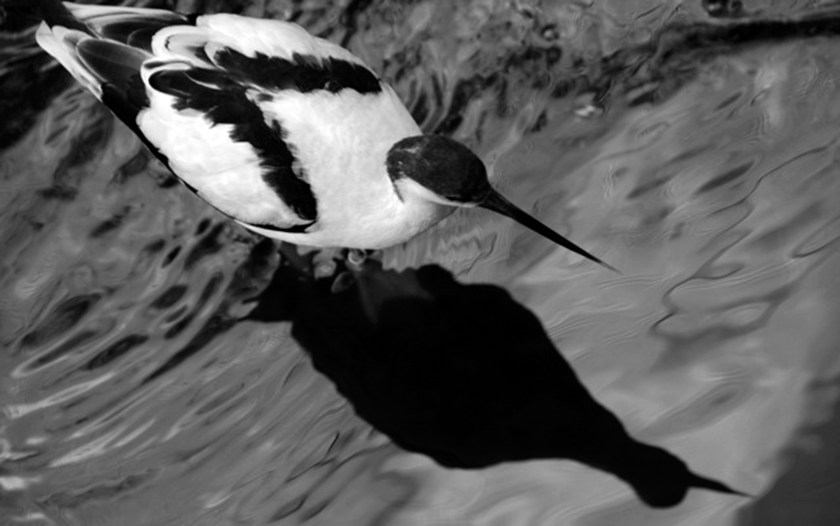
Photograph: Waterbird, Michael Dickel ©2017

Solomon’s Song
I can fly
	above crowds
		over landscapes
I can flee
	& I can float
I can be…
		…free

One day I told my schoolmates that
The memories       the sensation
	were so clear       so real
Prove it to us, they laughed

I was earthbound

Many years have passed
	since that day       those times
& I have not thought of
	how I used to flee
		float       fly

But today       in a moment’s rest
	I remember       my flight
& deep in my Being
	I feel       still       sometimes
		I do       in my Dreams

Suddenly I hear Solomon’s Song
	sung in Toni’s voice
		in Milkman’s voice
I hear Solomon’s Song
	clearly       so near

& again       again
	I, too, want to sing
		with Solomon
& fly freely
	floating       soaring

I want…
I drift in blues & greens
	of tranquil seas & healing dreams


In my mind awakening
	the rainbow blends
		choosing carefully from
			the colored pencil box


I drift
	embraced by my future homeland


A voice gently speaks
				No, it is time to leave
				A new day is yellowing


I drift
	touching the necklaces
		cascading blue       new
My hand rests upon them
	Mine are missing

				No, here is the one
					of our Caribbean
				The other we shall search for
				There
That voice hangs the serpentine
	of slim midnight beads
		around my neck
Its medallions rest in the valley
	of my plumpened breasts
					Come       greet this new day


I drift between transparent jade & turquoise
	diving into the sea
		of a future lover’s arms


The other world reaches
	through the balcony doors
		towards my curled body

Out there the rising sun
	is yellowing fractured clouds
Orange seeps softly
	washed by the all-night rain


							Come       come
								Greet this new day
							All roads will lead there


I drift
	into this body
		still reddened by the
			blood pumping through arteries
I drift from crimson to pink
	knowing all roads will lead there
		into the throbbing muscle
			of my heart
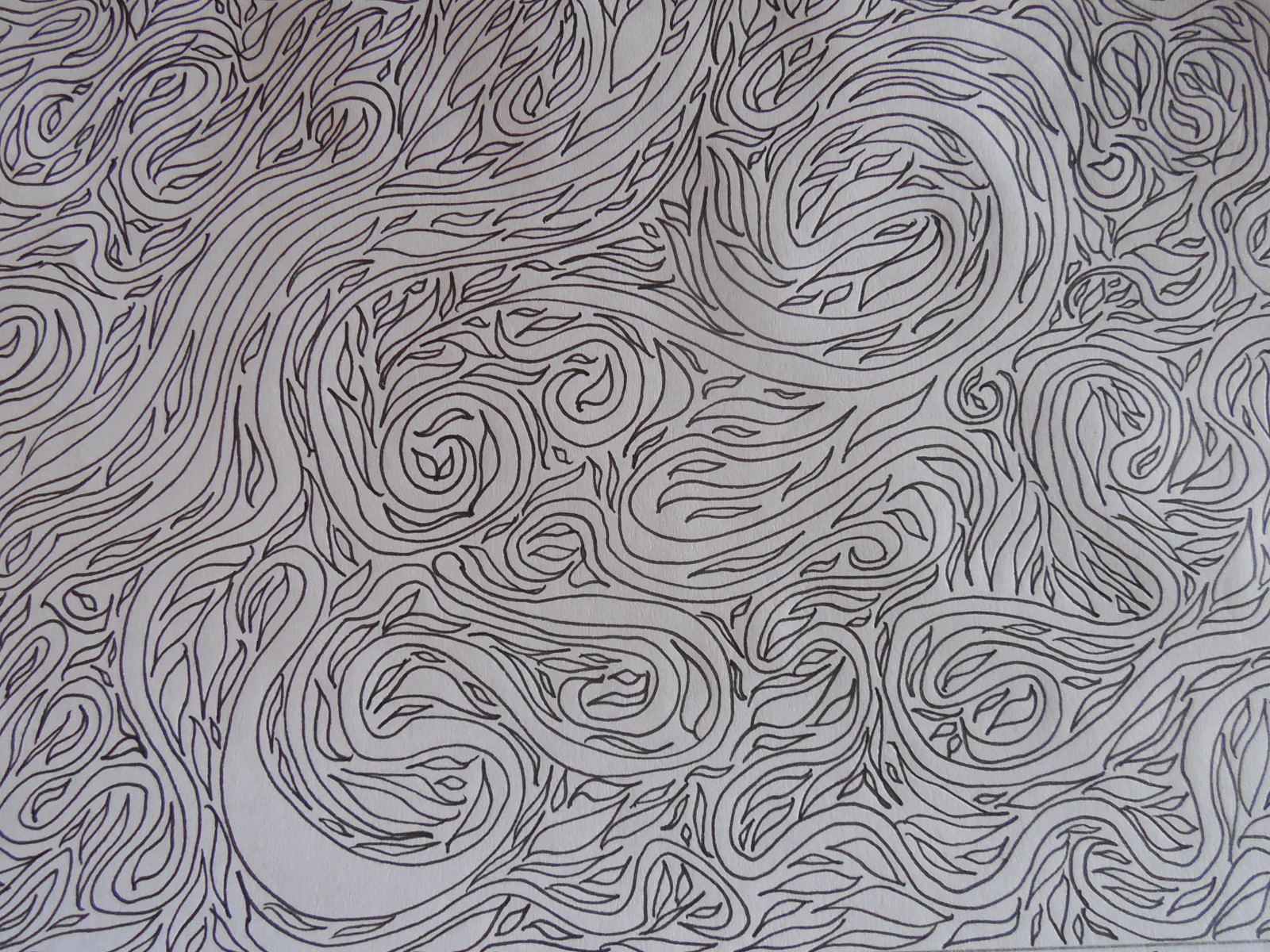
Text and Art ©2022 Lorraine Caputo
All rights reserved
…poet-translator-travel writer, has works appearing in over 300 journals on six continents and 23 collections of poetry–including the upcoming In the Jaguar Valley (dancing girl press, 2022) and Caribbean Interludes (Origami Poems Project, 2022). Her writing has been nominated for the Best of the Net. She journeys through Latin America, listening to the voices of the pueblos and Earth.
Once I walked yellow with flecks
The Berlin wall was falling,  far away
I could not have then seen strawberries
glistening on the hedge.
Endings are old new beginnings.
They do cry for salt after all.
They mix sears of pain with a curse of Cain.

On my walk I fried tulips
Cried aloud the names of lovers their races and places.
Until all at once  the field of strawberries glistened
and my beating heart
a Euphoria of happiness.
 Beginnings are new old endings.
And we start out over again.
Murder and defamation shook my house down,
left me lying in cold damp weeds, squishy.
Persnickety. Sometimes going up Snake Road,
the stars outside in open night made
my thumbs bump uncontrollably and I ran
to find the top of any hill,
any thing

Those days I thought of James Meredith,  Medgar Evans
and I screamed into green air with the crickets
piping red loud. Death was in the air and how,
like Mercé Rodoreda's epic “Death in Spring,”
hypocrisy was snapping my garter belt tight on my thighs.
This mystery time went two  ways for or against.
Cucumbers and carrot sticks kept us soused
in quiescent racism and maudlin pretense.

Death in Africa and shootings in Alabama left me
knowing the world was in apocalypse now
Bleeding sheer bone spit. Meanwhile people
everywhere kept dying, electrocuted hung and shot.
UN speeches blared.
A bleeding bristling bone split.

We should go up at once, and possess it,
for we are well able to overcome it.
—Caleb, Num. 13:30
Whenever tides spun avid
Wherever it was inevitably dark
Annie sang soft whisper memories,
of what was said quiet in her parents
bed.
At first glance she was a small circumference
in others views—
one gentle cell dreaming.

Her mind waters welled
like the tides blood
and Annie without knowing
why searched in her gentle blue
for Caleb a man all strenuous!
He of the mind’s rough face.

His voice a rocket to Annie’s
stillness   Sometimes she even
thought quiet like a night star,
some times calm dreaming
her intransitive wonders running.

Caleb he burned too hot for her cool
she felt in this soft black cave the souls,
spirits of the balmy present, turning and turning
Annie could not reach the off switch
to silence restless Caleb burning.
She tried turning off that switch
To un-wriggle his wrestling
ongoing transitive chaos.

And Annie bless her she said
I want to slide
not to possess
to roam not to own
reds periwinkles and blue hyenas
the best.
The sun is fading before my eyes
As I try to make sense of my life that
is in many baskets. Many kitchen doors
with high ranging stoves and tilting floors and bonfires.
It’s odd the sun is fading and I am not.
My heart is a cauldron of music sound love and sadness.
The sun will not always fade. While I am around
I’ll stay a flaming cauldron.
This year many leaves are thick
with matter and hang themselves on,
burning with unique brightness
in the cauldron of life loving eyes.
©2022 Linda Chown
All rights reserved
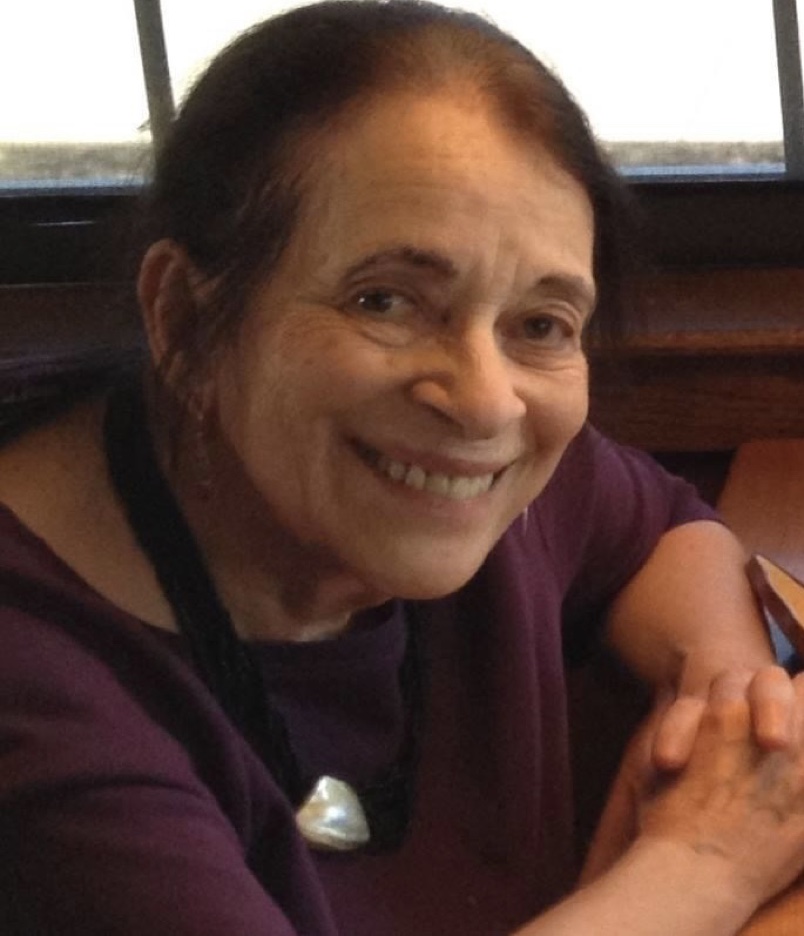
…was West Coast Berkeley born and raised with the light of freedom. Educated at UC Berkeley and San Francisco State, Linda has taught, protested and lived internationally. Her last book, Sunfishing, can be bought at Amazon. She grew up surrounded by radicals, experimentation and innovation, and is proud to continue her radicalism.
Website / Blog Linked
Still, quiet, silence the mind
The ghosts that invade will determine your day
Silence, still, & quiet your mind
Removing the ghosts one by one.
You who own the world’s pain, please
give some of it back
          you don’t deserve it all.
You have told me for hours
about your miseries,
but you have not even begun
          to understand mine.
It is the violence that makes us mad
If we are at the point where a man
Is better off in jail than free, then
          where is God?
                    the old man
has entered the mirror of sand
“what are you doing, sir, what are you looking for
                    in the pearly shade?
what are you looking for
          there in the sand?”

“soon all these houses will be torn down”
          said the old man
          nothing left but the trees”
I said “never will someone come out
          of the darkness and rob thee”

but he said
“the weapons that were
           once out there
and sharpened themselves for war
          are now inside us
                    sharpening themselves
          sharpening themselves
                    inside thee”
©2022 Dennis Formento
All rights reserved

…lives in Slidell, Louisiana, USA, near his native New Orleans. Books of poetry include Spirit Vessels and Looking for An Out Place (FootHills Publishing, 2018 and 2010.) Cineplex (Paper Press, 2014,) Edited Mesechabe: The Journal of Surregionalism 1990-2001 and fronted the free-jazz/free-verse band, the Frank Zappatistas. St. Tammany Parish organizer of poetry events for 100,000 Poets for Change, a network of poets for peace, sustainability and justice world-wide.
Be as water now,
you, who fear the change.
Rain heavy on the ocean.
You, once buoyed by air,
vaporous, skating across skies,
grew too ripe.
Do not cling to your lightness.
Let your own weight
pull you down from the heavens.
Mourn not the fall.
Delight in the thick dance
of your descending,
like an angel
incarnating,
out of love for the touchable earth.

Let the ground feel you.

On the road a dying gala.
Wing torn, bent backwards,
red flesh showing, white bone.
It slept,
but not in the sleep of death
yet.

I thought of moving
its delicate body,
as it lay unmoving—
to take it out of the path
of racing conquerors
blackening red earth.

But I didn't know how
to pick it up gently,
and as a truck passed,
it woke,
lifted its head
and cried out into the sky!
The squawks faded,
but still its eyes gazed.

Was it numb to the pain
or feeling fire and needles?

How long
had it been dying?

I could do nothing.

But I would not look away.
I sat with it
as its heart beat slow.
I will not look away
from suffering.

I could not look away.
I will not look away.

Seeing dying, painful dying,
is so much more alive,
heart rending,
present,
life beating,
ebbing, flowing,
dissolving—
seeing dying is so much more
than seeing death.

My heart tore
in sympathy with its bloody flesh.
©2022 Mitchell Stirzaker
All Rights Reserved
…is a poet and philosopher based in Sydney, Australia. He is inspired by great works from history, from the poetic philosophy of Epicureans, to the suttas of Buddhists, and the existential writings of the 19th and 20th centuries. He seeks to express both various existential struggles and visions of paths to harmony between people situated differently in the world, and between human self and more than human world.
Envision— a word packed full of hope
And purpose. A race. An attesting to
The profound moments that start with a
Smile— while getting to know you through
Other school-related means, meaning
How we know one another before is history
The door for mystery stands with thick
Hinges on these broken lands
Pain cries out and tension is thick in
Cities, where bricks are used to
School the Black, Brown and White bodies.
Intentions may be good — wasn’t
Meant to hurt nobody!
Sharpened pencils are the least of these
Kids’ worries when guns are packed
With lead.
Full of pride, you started with
A crown — a frown I could not make
Growing up in the capital of your state
Of mind.
The crown fell some years ago,
Disappointed to see the fractures of
Race, could create an earthquake.
Make no mistake from the city in which
We are born from—
Built from Native Americans
These hills which
Runners take breaks
Someone else was supposed to clean you up!
Make you a dreamland for all who came
Instead of creating fear
Where people have nothing to be but nice.
No one knows how to just be; restless bodies
Create an enemy of trust
Come, Lord Jesus!
This is my war cry
Taking that with my passions
Lust for change is tame
There is hope in the reframing and a
Friendship gained.
©2022 Nicole Triscari
All rights reserved

…is a blogger, mother of one (and one on the way!), and teacher. She is currently a stay-at-home mom, who is passionate about poetry, education, and creating a home that welcomes people.
Big egos, little egos. Egos wandering all about.
When conceit becomes arrogance,
One turns into a swan without elegance.
A red herring, shining but pungent,
Glittering, with an acridity and without alacrity.
Humility, without humiliation, is the noblest goal,
Protruding above the surface like a sandy shoal.
An act of servility, leads to a state of humility,
Encouraged to overcome one’s inner swine.
And in the enigmatic aftermath,
King Midas, Icarus and Prometheus, all forgot to stay on the path.

A hero for the Boomers,
Could become one for the next generation of TikTok Zoomers?
What is your quest?
Is it the task that you do best?

Let’s not judge our tokens, like Hadji, for their identities,
Rather, because of their propensities.
Find the valor of Race Bannon,
And fire it into the world like a cannon.

Confront Baron von Freulich,
And do it with a little cheek.
Look and assess the situation,
Thusly, contributing to his abdication.

Become loyal like Bandit,
And let your consciousness be expanded.
Then you’ll be like Johnny Quest,
With a pluck to which the world can attest.
©2022 Daniel Weiss
All rights reserved

…was born in Hollywood, CA, graduated as a psychology major from the University of California, Santa Cruz. Received his PhD at the Christian-Albrechts-Universitaet, Kiel Germany in linguistics. He has been a community organizer, musician and Waldorf teacher.

Art: The Gate You Only Go through Once to the Path that Leads Nowhere, Gerry Shepherd ©2022
Humanity is certainly facing one of the greatest challenges this Earth has ever known. Indeed, by abusing the resources that are generously offered by our Mother Earth, by disturbing ecosystems and climates, by relentlessly destroying its environment, Human Beings have made life on Earth very difficult for all living creatures. Having lost their balance, the natural elements can no longer provide worldwide what people need to sustain our needs, and the various conflicts in the World are making the situation even worse.
I started to attend the Erasmus Foundation, a Spiritual teaching and healing Centre, based in Laxfield in England, when I was living in England in the 1980s; and today I continue to receive knowledge that helps me, in a certain measure, to understand what we are going through at present. I have been taught that this is the end of the 5th civilisation and that what happens today has got a meaning, because we are human spirits who came to live a life on this Earth that is a school. Maybe today I would even say that I see it as a laboratory where God, whom we call the Great Mind, our creator, allows us, his children, to make the worst mistakes with the aim to help us learn and grow spiritually accordingly, for is it not by making mistakes that we learn the best lessons in life?
Also, in the face of the collapse of our living environment, in the incomprehension when seeing all those who prefer to continue to reap financial profit without taking into account the dramatic consequences on the climate and the environment, what gives me strength is the acceptance that there is a force working upon me, a force with which I can meld, and the acceptance that in this wise force, things are as they ought to be.
God, whom we call the Great Mind, has not only created all that is living in the Universe but he designed a great plan for life, a great evolution plan where everyone has their place, and just the recognition that I belong to this plan tapestried by the Great Mind gives me peace in the acceptance that I am as the Creator made me and that I am where God wants me to be. Our Spirit teachers have also told us that this should not be the end of life on Earth but a very challenging time that gives Humanity the opportunity to evolve and grow in making the right choices. Thanks to Humankind’s efforts we should then move on to the 6th Civilisation.
Now, I do not think that I can change the World, I think that all I can change is myself, and there perhaps lies the key—that if many are wanting to make the effort to try to change themselves with the aim to change for the better, then perhaps the World will change for the better as a consequence.
Where to find the energy we need to change? Well that energy, don’t you think it is here inside all of us? As we are human spirits, our true self that is our spirit is here inside our body, which is just an envelope for this lifetime.
It is then in calming the brain through meditation that we can let our spirit surface, our spirit that is our link with the Great Mind, is our own little tiny crystal where all the strength we may need is available. It is just for us to search for it and to develop it.
I also believe that anyone can pray. Personally, I pray to the Great Mind every morning to ask God to give me the strength and the courage to be as the Creator would like me to be; I am sure that help comes, if only one tries to help oneself. We all know that: “help yourself and heaven will help you.” From experience I know this to be true.
And perhaps the best way to fuel others’ engines of change could be by example?

Now, certainly, the first step to start with is to search to know oneself. It is evident for all that we have got good qualities as well as flaws. We are humans and this is naturally part of our structure when being on Earth. Therefore, in analysing myself I can see my qualities and my flaws, and I can learn to accept them so that I can work through them, trying to diminish what I see that is not right. In looking closely at myself I can discover what needs to be polished, and I can try in an everyday manner to do what is needed to become a little better, a little more acceptable to others. I then start to feel more comfortable with myself, and then, feeling more comfortable with myself, I can feel more comfortable with others. In seeing and accepting my own flaws, I can then accept others’ flaws and differences; in understanding myself better, I can understand others and become more tolerant. At the Erasmus Foundation, we believe in the Great Mind and in reincarnation ,which is for us logic in an eternally developing life design, and realising that I have led many different lives before this one in different physical forms, cultures, colours, gives me tolerance, as well.
Also, in becoming more comfortable with myself, and with the help of meditation, I can gradually identify more with my spiritual dimension. I thus identify more with all living things and, as a consequence, in identifying myself with the Natural Law, I can feel a part of it, a part of Creation and in harmony with all that is living, all creatures, and the Earth itself. If many people develop self-respect and respect for the Living, in my eyes, this is a good way to see the World changing for the better one day.
Having seen it before, I believe as well that Man is so made that it is in front of adversity that he develops his best qualities, and this is the reason why I think that it is in facing even more serious problems that are to take place in the coming years—such as the financial crash, flooding, droughts, natural events and illnesses that some scientists have foreseen for some time now—that People will really search for this inner strength and also will link together to form groups to stand together in front of the difficulties of life and find solutions to move forward.
I believe in the Great Mind’s plan prepared for his children, and in the fact that he made us very resourceful creatures by giving us the tools and the ability to adapt and to become more resilient. It is up to us, and it is also perhaps in opening our eyes to the reality of this world of today and preparing ourselves individually as well as collectively when possible, that we’ll be able to cope and help each other through the time of turmoil that is ahead.

This is the reason why I have hope. In a way, I would rather say that I have great expectations for the future because, when Humanity will find itself, when People will recognise their true stature, rediscovering the most important part of Humanity is the human spirit, people will open their eyes in truth, will see all the mistakes made, and will be able to put all that went wrong back into balance. It will take time, for sure, but this mechanical age will gradually move over to the 6th Civilisation that will be much more spiritual, much more beautiful. Our teachers in the Foundation tell us that it will be very colourful, with great discoveries and advancements in many ways that perhaps we cannot imagine today—new technologies, new sources of energies, new ways in education, in medicine, in growing food, in supplying shelter and housing—all with respect and while sharing resources. Also, People will be working together with Nature and no more against it.
Today, we can witness the most evil world that has ever existed, there is so much falsehood everywhere, can we rely on what is told to us? Can we rely on what is sold to us as food to be eaten, as water to be drunk, and so on?
Now, following the events that are to occur and through our spiritual development, truth will develop and will prevail, falsehood will be recognised by all for what it is and will be rejected. Then this World will be most beautiful and a place to live in quietude where evil will be overcome and much diminished in strength.
We at the Erasmus Foundation are lucky to know that there is much to look forward to, and this, too, is part of my strength, together with my confidence in the Great Mind.
©2022 Corine Beauseigneur
All rights reserved
…first met The Erasmus Foundation in 1986, which is a spiritual teaching and healing centre in the UK, whose courses I continue to follow through zoom meetings from France. I have had a number of articles published in their magazine. I also take part in the podcasts they regularly put on line and I continue to write wishing to share the spiritual knowledge gained from this Foundation. The Erasmus Foundation Podcast, ‘Visualisations from the Erasmus Foundation’ can be found on Amazon’s Audible site.
“For just 15 dollars a month you can change the life of a needy youngster,” came a pleading voice from the TV screen. “Won’t you open your heart to the need of a youngster in poverty.”
My children looked at me. “Can we Mom?”
“Oh please, please, can we send some money to a poor little kid?”
I smiled. “I’ve already called the 800 number for details. Would you two be willing to pitch in?”
After nodding enthusiastically, my daughter opted for a girl, while my son had no such preference.
“Fine, we’ll ask for a girl.” I put down my coffee mug. “And now I am going to tell you a story.”
The kids’ faces lit up. They liked my homespun tales, and by being able to weave in a moral here and there, I used those stories as a convenient teaching tool.
Only this time, instead of concocting a tale, I dug up one of my childhood memories:
When I was about five years of age, I was living in a small village in Germany, and my wardrobe consisted of a simple frock for everyday activities as well as a Dirndl-style dress with a lace-trimmed white apron for church attendance, and for special events that were so rare as to be basically non-existent.
Shoes were also a luxury to be kept aside for the cold days of the year. In the summer, my playmates and I ran around on bare feet. This not only reduced the wear and tear of our limited footwear. On rainy days, it also allowed us the cheap pleasure of stomping around on the unpaved village street and letting the gooey mud ooze through the cracks between our toes.
Those were the late 1940’s—when the nightmare of World War II still lingered painfully in everyone’s heart and mind—and people didn’t complain much about mere inconveniences. Just being alive was a privilege. However, the severe shortage of food posed a real challenge—and the search for something to pacify our growling stomachs dominated our existence.
At least we were lucky enough to live in the countryside, where we received occasional handouts from the local farmers, and few people would send a child away empty-handed. So, whenever I went to bed with a full belly, I considered it a good day.
One afternoon, while lingering near the small baroque church at the end of our hillside town, I spotted a jeep coming up the incline. I glanced curiously at the two uniformed man inside, and then grew afraid when they pulled up right next to me and I didn’t understand a word they were saying. In those days, the idea of aliens had not yet taken hold, but as far as I was concerned, those two strangers may just as well have come from another planet.
“Americans,” one of them said, first pointing at himself and then at his buddy.
Realizing that he frightened me, he reached into the jeep and pulled up a large, elongated hemp sack. It looked like something to be used for storing farm produce, such as grain.
The soldier pointed at it, “Food.”
When I just kept staring at him, his friend yelled, “Essen.”

“Essen?” I asked, my heart beating faster—but no longer due to any fight or flight mode.
Both nodded and dropped their bulky present on the ground. When they gestured for me to take it, I threw myself on top of it and let out a joyful cry.
The sack was big and heavy, and I was a mere wisp of a youngster. Nevertheless, the thrilling thought of edible items at my fingertips must have empowered me with something akin to child-hero-super-strength. Half pushing, half pulling, I hauled my loot back to the room I occupied with my mother in a nearby farmhouse. By courtesy of the government, the locals had to make space available for us refugees and, needless to say, this intrusion of folk’s privacy was not always welcomed.
Our tiny assigned living area held only the basics. But at least we had a bed to sleep in as well as a stove for cooking and keeping warm.
When my mother saw what I was battling, her eyes grew big.
“Child, what in the world…?” Reaching down to give me a hand, she saw the label attached to the hemp.
“It’s in English,” she muttered, before shouting, “Little one, I think we just hit the jackpot. This seems to be an American care package.”
She pried open the metal clamp holding the top together. Then she shook the contents onto the floor—and suddenly it was Christmas for us.
Too much time has gone by for me to remember everything we received that day, but there were most likely jars filled with jams, jellies, canned meat, and packages of other durable food items.
Picking up a round metal container, my mother gasped. “Oh goodness, I can’t believe it. This is real coffee. I will enjoy every drop of it—after so many months of pouring hot water on stove-roasted grains, pretending it to be a tasty brew. So, let’s reserve it for a special occasion.”
Then she swung me around. “Oh, what the heck—let’s celebrate right now. Getting this surprise gift is about as special as it gets. I shall have a cup of coffee—and…” she reached down, picked up a rectangular tablet and tore the paper open, “…you shall have a treat as well.”
Breaking off a large wedge of something flat and brown, she told me to open my mouth. Then she reverently placed the mystery food on my tongue. “Now, eat it!”
I bit down, chewed, then grimaced and spit out a glistening sticky brown glob. “Yeck, I don’t like soap, Mom.”
It took a few more tries before I learned to appreciate this strange stuff called chocolate. Never having tasted it before, I had reacted strictly to how it felt inside my mouth, and I had not found that lumpy sensation to be very enjoyable.
The arrival of that care package shone a beaming light into the dreariness of my mother’s existence at that time. As a child, I didn’t experience those days as particularly gloomy. In fact, I still think often fondly of my wonderfully carefree childhood in the country, since my “Mutti” always made sure that I had what I needed, even if she had to go without.
However, the warm and giving spirit inherent in that care package will forever remind me of the kindness of the American people who are now so very much a part of my world.
I also like to believe that the instant happiness shared so long ago by two soldiers and a five-year-old girl was destined to remain a highlight in our respective memories.
Determined to keep this caring spirit alive, I considered it wise to start right at home—with implanting a dose of empathy and goodwill into my own offspring.
“Recycling Good Will” previously appeared in the journal Heart of Flesh (2020).
©2022 Helga Gruendler-Schierloh
All rights reserved
…is a bilingual writer with a degree in journalism and graduate credits in linguistics. Her short stories, articles, essays, and poetry have been published in the United States, the United Kingdom, and Canada. In 2013, her flash story, “The Wanderer,” won Pacific Review’s annual writing contest, and her debut novel, “Burying Leo,” a MeToo story released in 2017, placed second in women’s fiction during Pen Craft Awards’ 2018 writing competition.
“Your dress is so pretty, Eva. See how it matches those beautiful flowers?”
Eva’s grandmother, Sharon, points toward a large bouquet of flowers resting atop the waist-high wall separating the small church’s seating area from the altar. Containing pink and white lilies, blue delphinium, English lavender, and both red and yellow roses, the flowers provide Eva a moment to settle her nerves by inhaling the fresh aromas. On the left and right sides of the wall, two staircases provide access an expansive area which contains a lectern, the altar itself, and a baby grand piano. This piano occupies Eva’s attention, and she stands at attention while staring at it, her nerves still unsettled. Eva’s mother, Rachel, gently massages her daughter’s shoulder in another attempt to put her at ease.
“Eva,” speaks a voice from behind the three women, “so glad you can make it.”
Daughter, mother, and grandmother turn in unison to face Ms. Reynolds, Eva’s piano instructor. She welcomes them with a warm smile before speaking again.
“I don’t think we’ve met,” directs Ms. Reynolds towards Sharon.
“This is my mother, Sharon,” answers Rachel.
“Three generations are here this afternoon,” adds Sharon proudly while lifting a gold, Hamsa necklace from the lapel of her blouse, “plus a fourth generation in memory. This belonged to Eva’s great-grandmother, Judith.”
“How nice,” replies Ms. Reynolds while eyeing the room for other families she needs to say hello to. As music director of Frond’s Bay Academy in addition to a part-time piano instructor at this church, she has a few ‘deep pockets families’ from the “Academy” that demand a few minutes of small talk. Not sure how long she’s been ignoring this particular family, she changes the subject. “Eva, dear, if you want to practice there are two rooms outside you can use.”
“Thank you, Ms. Reynolds,” says Eva while curtseying instinctively with a nervous smile.
Ms. Reynolds nods politely while quickly moving away to wave and smile excessively at another family. Eva shuffles her feet towards the hallway, still unsure of the environment. She holds her book to her chest and stares at the worn, greenish beige carpet directly in front of her. She walks tensely, her gait not generating enough lateral motion to shift the pink ribbon at the bottom of her braided auburn hair. The pink ribbon rests perfectly along her spine, as if it’s been pinned there.
“I hope she’s not too nervous,” says Rachel to her mother. “This is her first recital, and we don’t frequent churches very much.”
“We don’t frequent churches at all, Rachel,” laughs Sharon while scanning the pews for a place with a direct view of the piano. “I don’t even think this place is shaped like a cross, aren’t they supposed to be?”
“That’s because this is a multi-purpose building. There are offices, classrooms, and I think a gymnasium. It’s non-denominational.”
“What does non-denominational mean?” asks Sharon.
“I don’t think anyone really knows, mom. It’s one of those Christian mysteries.”
With smirks that result from feeling so out of place, Rachel and Sharon find a pew with the best available view of the piano and sit down. Loud footsteps echo through the small church as a heavy-set man stomps down the aisle before his wife signals to him. He reluctantly turns, retracing his steps to join his wife and daughter who sit close to the exit.
“That’s not a bad idea,” comments Sharon, “they can sneak out when their child’s done.”
“I don’t think that guy can sneak anywhere, mom,” laughs Rachel. “He’s either very clumsy or very drunk.” She pauses to lean close to her mother and whisper, “Given what I’ve heard, it’s probably the latter.”
“Really? It’s only two p.m. on a Thursday.”
“His son and Eva were in the same 7th grade class last year. That dad’s got quite a reputation.”
“What about his wife?” whispers Sharon. “She looks a lot better than he does. Seems like an odd couple?”
“For the money,” mouths Rachel before whispering, “which is why they attend Frond’s Bay Academy.”
While Sharon continues looking around the church, Rachel intermittently rubs her thumb across the screen of her phone. The endless scroll of various social media apps immediately blocks out her surroundings. This means that Sharon sees Eva enter the church first. She grabs Rachel’s forearm to get her daughter’s attention, applying a level of pressure that leave faint nail marks in Rachel’s arm. Sharon stares towards Eva, with Rachel quickly following her gaze. The innocent nervousness adorning Eva’s face moments ago is gone, replaced by red eyes, a flushed face, and a quivering bottom lip.
“Look at Eva,” whispers Sharon as the continued pressure from her fingers on Rachel’s forearm almost causes Rachel to drop her phone; both women’s motherly instincts tell them that something’s very, very wrong.
Rachel sees the forming tears overcoming her 13-year-old daughter and fears an emotional outburst. Rather than ask if she’s ok, Rachel walks toward her before calmly saying, “Let’s go outside,” to which Eva replies with an anxious nod. With an arm around her daughter’s shoulders, Rachel leads the way, followed closely by Sharon. Sharon smiles uncomfortably at the faceless sets of eyes who watch them leave.
“What’s wrong, Eva, are you nervous?” asks her mother once they are outside the building and a safe distance from the entrance.
Eva responds by presenting her music book, titled, Favorite Hebrew Songs for Piano, to her mother with shaking hands. Eva whispers, “Ein Keiloheinu,” before releasing her grasp on the book. Knowing Eva references the song she will play, Rachel opens to the correct page and gasps. She struggles to stay calm and manages to hand the book to her mother. Sharon looks at it with the experienced perspective of someone familiar enough with antisemitism to be horrified without appearing shocked or surprised. Across the first page of the musical number is drawn a swastika, with the phrase, “You will not REPLACE us!” written underneath. The word, “replace” is underlined for additional emphasis.
“I think it was Logan,” whimpers Eva as the desire to cry dissipates and an empty feeling replaces her initial shock. “He laughed when he passed me in the hallway.”
“Start at the beginning, Eva,” interjects Sharon, her eyes narrowing as anger becomes her dominant emotion.
“I was practicing my piece in one of the classrooms. I left to use the bathroom. The book was open to the song. When I returned, the book was closed. When I opened it up again,” Eva sobs before composing herself enough to mutter, “it was there.”
“But,” asks Rachel gently, “when did you see Logan?”
“He passed me as I returned to the classroom from the bathroom. He did it while I was gone.”
“Who is this Logan?” asks Sharon.
“The son of that drunken oaf I pointed out earlier, the one who is trouble.”
“What are we gonna to do, mom? What are we gonna do, grandma?” pleads Eva.
Eva wears the expression of one who knows she has been wronged but lacks the strength or confidence to know how to handle it. She has been instructed by countless teachers and adults that this sort of behavior is inappropriate and to tell someone. This time, however, feels different. Eva’s seen and heard so many evil words and actions go unpunished; she isn’t sure she trusts those adults anymore. All the lessons in school, all the posters on the walls about inclusion, and, yet, this happened. Even worse, Logan exhibited no shame. Instead, he snickered as if proud of his antics, like he wouldn’t get punished.
“We need to tell Ms. Reynolds,” says Rachel. She takes the music book from Sharon before adding, “she needs to see this, and Logan needs to get in trouble. A lot of trouble.”
“I mean the recital,” replies Eva softly as tears finally descend from her cheeks. “How am I supposed to play? Everyone will see it. I will see it.” After a sob she states, “it’s not fair.”
“The car is right there, Eva,” states Rachel while looking towards it. “We can leave; you don’t need to play. I can tell Ms. Reynolds what happened.”
“No,” exclaims Sharon with a tone that draws her daughter and granddaughter’s eyes to her. “She will play. She needs to play.”
“Mom, please.”
“Grandma, no, I can’t. Not now.”
“Listen, Eva,” begins Sharon quietly but clearly, “I need to tell you something, and then you can decide what you want to do. Your great-grandmother, Judith, was a young girl like you once. She played piano, too, remember I told you that—how she would play it?”
“I do.”
“She spent three years in a concentration camp, Eva. There was no piano for her to play. There was no way to celebrate her culture. She never saw her parents again. Yet, she would hum the Ein Keiloheinu to herself, so she would never forget it.” Sharon pauses to remove her necklace and holds it in front of her, so Eva can see it. “She hid this necklace, too, because it was the only connection left to her family.” Sharon steps closer to Eva. “That’s why I think you should play that song, Eva, do you understand?”
“But the book, grandma,” responds Eva with repressed panic. “Everyone will see.”
“Eva’s got a point, mom,” adds Rachel in a whisper, trying to support her daughter without offending her mother and her family history. “There’s no way to hide what’s on that page.”
The three women pause to try and capture their swirling emotions. The faint melody of “Twinkle, twinkle little star” alerts them to the start of the recital and the immediacy of their impending decision.
“That song lives in your heart, Eva, like it lived in your great-grandmother’s,” declares Sharon while placing the Hamsa necklace around her granddaughter’s neck and closing the clasp. “You don’t need the book.” Sharon kisses her granddaughter’s cheek before standing, stepping back, and giving Eva a moment to decide.
“I want to play,” declares Eva boldly.
“Are you sure, Eva?” asks Rachel.
“I am sure, and I’m up next.”
Eva strides past her mother and grandmother, pink ribbon bouncing from one shoulder blade to another as her pace increases. She moves quickly through the door, not stopping or making eye contact with anyone until she reaches the piano. After quickly nodding to the audience, she casts a cold stare towards Logan before sitting down, placing her hands on the keys, and playing.
Rachel and Sharon do not return to their seats, deciding instead to wait at the doorway so Eva’s entrance will be remembered. Holding hands, mother and daughter share a moment that spans generations. Warmth, love, and tears move silently between them. Sitting directly across, Logan and his father squirm in defeat.
Eva plays beautifully, remembering every note.
©2022 Michael Mulvey
All rights reserved
…is a happily married father of four currently residing in Jacksonville, Florida. He recently participated in a panel discussion explaining the importance of teaching the attacks of 9/11 to high school and college students sponsored by The Friends of Flight 93. Mike also had two short pieces, “Worst Enemy” and “What Sound Does an Empty Nest Make,” published in the Florida Writers Association April 2022 and August 2022 Newsletters.
The theme for this quarter’s BeZine issue is “A Life of the Spirit: Fuel For Change”.
I have felt compelled to blog about something that’s been bothering me, in the hopes that it might resonate with even one other person. I’m sure it will. There was a story some years ago about an NYPD Police Officer who used his own money to buy boots for a homeless man he encountered on his beat on a bitterly cold winter night. You may have seen/read it. Like so many others, I was touched at the kindness and compassion of the human heart and it renewed my hope in humanity once again. 🙂 So that’s all well and good, and ties in nicely with the spirit of Christmas and the general “Good Will toward Men” sentiment. Great!

A couple of days later, there was a follow-up story which let people know that the homeless man was once again without the socks and boots that the cop so generously had given him.
The $100 pair of boots that Officer DePrimo had bought for him at a Skechers store on Nov. 14 were nowhere to be seen. “Those shoes are hidden. They are worth a lot of money,” Mr. Hillman said in an interview on Broadway in the 70s. “I could lose my life.”
Mr. Hillman, 54, was by turns aggrieved, grateful and taken aback by all the attention that had come his way—even as he struggled to figure out what to do about it. “I was put on YouTube, I was put on everything without permission. What do I get?” he said. “This went around the world, and I want a piece of the pie.” He did not recall the photo being taken but remembered well the gift from Officer DePrimo. “I appreciate what the officer did, don’t get me wrong,” he said. “I wish there were more people like him in the world.”
At another point he said: “I want to thank everyone that got onto this thing. I want to thank them from the bottom of my heart. It meant a lot to me. And to the officer, first and foremost.” —New York Times, 12/03/2012
So I looked at the comments section (probably a mistake, but force of habit). I was appalled at how many people were condemning Mr. Hillman for getting rid of the boots he had been given and laughing at the cop for being ‘naive.’ All I could think of was the vast difference in people cheering compassion and then turning that act of generosity into judgement against both the giver and the person who had received it.
No, it doesn’t take away from the cop’s good intentions. But I wanted to ask each and every person commenting with things like “You know he sold them for money for drugs or booze” or “The cop should have known he would just sell them. Why waste that kind of money?” etc. etc.—I wanted to ask them, “How do YOU know and who are YOU to judge?!”
None of us have walked in Mr. Hillman’s boots. We don’t know his story, we don’t know what demons he battles. And in the end, you know what? It doesn’t matter, because when you take it upon yourself to point fingers and judge someone else, just remember there are three fingers pointing back at YOU.
Now…the main reason I’m writing this is because it’s damned cold outside tonight. Twenty-seven degrees is the current temp and it’s not done dropping yet. Do any of you know of a homeless person who could use a blanket? How about thermal packs for their hands/feet? How about the notion of “Pay it Forward”?
If we ALL just helped three people this winter, REALLY helped them, and then those three people help three others…it’s the power of 1 + 1 into infinity. We could really change the world and make a difference in so many lives. Please consider doing just ONE random act of kindness for someone who desperately needs it this season, or every day, if you’re of a mind to! You see…kindness is a much better way to make the world a better place than passing judgement on others. Kindness battles the collective negativity of judgement. The world is cold and dark enough as it is. How about we all make it just a little bit brighter? 🙂
©2022 C.L.R.
All rights reserved

From Real to Ideal, from Gritty to Goddess, “365 Days of Gutsy Women” is an entertaining, enlightening read that will leave you with more respect and admiration of the “Fairer Sex” than ever before. When I first got the book, I thought it would be like one of those inspirational calendars that has a quote/devotional for each day kind of thing, and I was ready to read about one woman a day. But once I started reading, I didn’t want to stop at just one!
Rosemary Roenfanz has put together quite the collection of women. I was intrigued by the things I learned about both the women I already knew and those new to me. She has divided the book into categories, with different types of women for different days of the week. For example, Mondays are dedicated to Activists and Rebels, Thursdays are Authors and Poets, and Sundays are reserved for Goddesses, and so on. Even if a reader were curious about only one of the categories of women, there is still a rich and engaging tapestry of facts to be gleaned about them.
There are well-known names, of course; famous women that many of us learned about in school, like Cleopatra VII, Marie Curie or Harriet Tubman. But there are also more obscure women, like Sister Nivedita, who “worked tirelessly for education reform” in India and opened a girls’ school in Calcutta, teaching and assisting women during the bubonic plague in 1899. There is also Susie Walking Bear Yellowtail, who “was known as the “Grandmother of American Indian Nurses.” She constantly sought to improve the health and lives of those Indians still living on reservations and was even awarded the “President’s Award for Outstanding Nursing” by J.F.K. in 1962.
There are so many more examples, all of them interesting, and some of them astonishing in their depth and scope of accomplishments or life stories. The examples in this book show how brave, intelligent, creative and determined all of these extraordinary women could be. I appreciated that Ms. Roenfanz was careful to cover an array of races, ages and philosophical and spiritual bents in the women she has gathered. This gem of a book would make an outstanding, inspirational gift for any young woman unsure of herself or her place in society and history. I cannot possibly do it the justice it deserves or recommend it highly enough – you’ll just have to read it for yourself and see! 😊
©2022 C.L.R.
All rights reserved
Art: Yin Yang Earth, Isaac Wilfond (age 11) ©2022


