Posted in Essay, Meditation, meditative, Music, Spiritual Practice, Terri Stewart, Uncategorized

Let Your Light Shine On

Finding Light
The Light Shines On

Where is your light today? What is leading you? What is giving you hope? Joy?

“When I find myself in times of trouble, mother Mary comes to me,
speaking words of wisdom, let it be.
And in my hour of darkness she is standing right in front of me,
speaking words of wisdom, let it be.

Let it be, let it be, let it be, let it be.
Whisper words of wisdom, let it be.

And when the broken hearted people living in the world agree,
there will be an answer, let it be.
For though they may be parted there is still a chance that they will see,
there will be an answer. let it be.

Let it be, let it be, …..

And when the night is cloudy, there is still a light, that shines on me,
shine until tomorrow, let it be.
I wake up to the sound of music, mother Mary comes to me,
speaking words of wisdom, let it be.

Let it be, let it be, …..”
― Paul McCartney

A note about the light fixture:

I photographed this light at the Merchant’s Cafe in Seattle, Washington. It is the first cafe in Seattle and has seen several iterations of its business as it was built, burned down, and built again. The interesting thing is that it is in the oldest part of Seattle (of course!). It was built in a building near first avenue. The tidal flats used to flood in every day, twice a day, up to third avenue. This makes doing business quite difficult! Seattle then had businesses build their buildings at least two stories tall. Then they raised all the roads, surrounding the existing buildings with raised roads. For a while, they put ladders at the streets so people would go off of the road, down the ladder, into the businesses.

Finally, they built sidewalks that connected the streets to the second story level of the buildings. So today, in Pioneer Square, when you enter the buildings, you are, in fact, entering the second story of the buildings that were placed there. If you look down, you will notice odd glass squares in the sidewalk. Those were originally skylights so that the first story of the buildings were kind of like an inside shopping mall with a view to the sidewalk above. So even there, in the midst of a buried first floor of these buildings, the light was still able to shine!

Such a fun history!

Shalom and Amen.

Terri

© 2013, post and photos, Terri Stewart, All rights reserved, originally posted at http://www.cloakedmonk.com

terriREV. TERRI STEWART is Into the Bardo’s  Sunday chaplain, senior content editor, and site co-administrator. She comes from an eclectic background and considers herself to be grounded in contemplation and justice. She is the Director and Founder of the Youth Chaplaincy Coalition that serves youth affected by the justice system. As a graduate of Seattle University’s School of Theology and Ministry, she earned her Master’s of Divinity and a Post-Master’s Certificate in Spiritual Direction. She is a contributing author to the Abingdon Worship Annual. (The 2014 issue just released!)

Her online presence is “Cloaked Monk.” This speaks to her grounding in contemplative arts and the need to live it out in the world. The cloak is the disguise of normalcy as she advocates for justice and peace. You can find her at www.cloakedmonk.com, www.twitter.com/cloakedmonk, and www.facebook.com/cloakedmonk.  To reach her for conversation, send a note to cloakedmonk@outlook.com

Posted in Naomi Baltuck, Photo Essay, Photography/Photographer, Story Telling, Photo Story

The Seed of Creativity

When my daughter Bea was a little girl, she found a seed in a seedless Satsuma, and was inspired to plant it in a paper cup.  Our little Satsuma tree has lived on our kitchen windowsill for years now, a reminder that unexpected marvels can come from a single seed.  Creativity is a seed that grows ideas.

It helps us to see beauty in the ordinary.

Or, upon reflection, to take the ordinary and transform it.

Sometimes inspiration comes to us in a flood.


Sometimes in a flash.

Or even in hindsight.

More often,  it comes in disguise.

Or as a creative response to something we feel passionate about.

Perhaps we are inspired by another artist…as in Bea’s sculpture, The Ice Scream.

I love working with a creative team…

Sometimes it’s a process.

…but the end result is worth it.

However it comes to you, wherever you find your inspiration, you are never too young…


Or too old….


To fly with it!

May all your ideas and inspirations be fruitful!

Copyright 2012 words and photographs, Naomi Baltuck.

All images and words copyright Naomi Baltuck

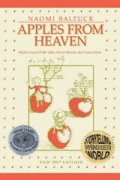
NaomiPHOTO1-300ppi51kAqFGEesL._SY300_NAOMI BALTUCK ~ is a Contributing Editor and Resident Storyteller here410xuqmD74L._SY300_ at Bardo. She is a world-traveler and an award-winning writer, photographer, and story-teller whose works of fiction and nonfiction are available through Amazon HERE. Naomi presents her wonderful photo-stories – always interesting and rich with meaning and humor – at Writing Between the Lines, Life from the Writer’s POV. She also conducts workshops such as Peace Porridge (multicultural stories to promote cooperation, goodwill, and peaceful coexistence), Whispers in the Graveyard (a spellbinding array of haunting and mysterious stories), Tandem Tales, Traveling Light Around the World, and others. For more on her programs visit Naomi Baltuck.com

Posted in Contributing Writer, General Interest, Karen Fayeth

From Father to Son to Daughter

After my dad passed away several years ago, my mom gave me possession of the family collection of photo albums and scrap books, and I made the solemn promise I’d keep them safe.

It was an easy promise because I adore all the family artifacts. As a kid, I used to dive into the scrapbook pages and smile at photos of my hot young mom (she was stunning!) and my smart young dad (he was geeky!).

My mom was a great scrapbooker and I have mountains of artifacts to explore including photos, family letters and souvenirs.

The hand written letters are what I cherish the most. Reading words inked out in the strong hand of my great grandfather on his official stationary gives me a sense of connection to a man I never knew, yet his very DNA is alive within me. I can learn who he was by the choice of language and the surety of his pen stroke.

My grandfather on my father’s side was also a good letter writer. He had a keen sense for telling the mundane facts while inserting a good dose of wry humor. He was close to all eight of his children and since my father had moved a good distance from home, the two stayed close by writing letters.

Among the piles of correspondence I found a gem in an envelope from my grandfather to my father. It was typewritten using carbon paper, so perhaps my grandfather was making copies for all of his kids.

Because the photo (below) of an old letter may be difficult to read, here is what it says:

12 Things To Remember

* *

1. The value of time

2. The success of perseverance.

3. The pleasure of working.

4. The dignity of simplicity.

5. The worth of character.

6. The power of kindness.

7. The influence of example.

8. The obligation of duty.

9. The wisdom of economy.

10. The virtue of patience.

11. The improvement of talent.

12. The joy of originating.

The handwritten bit up in the corner says, “Read weekly, a good guide – Dad”

Such simple words that encapsulate such very strong values. This is endearing fatherly advice to a son and it is timeless. This was written in 1949, but is just as applicable 64 years later.

This advice was passed from father to son, and holding it in my hands it passes again, now from from father to daughter.

This guide has meaning to me and gives me much to ponder as I wade through another busy work week and think about who I am and who I came from.

And who I want to be.

To all fathers and grandfathers, I wish you a very joyful Father’s Day. May your own good words find their way through the generations.

***

© Karen Fayeth, copyright 2013, all rights reserved. The family photo of the author and her father and the image of the letter are covered under copyright. Please be respectful.

webheadshotKAREN FAYETH ~ is one of our regular contributing writers. She is our new tech manager, site co-administrator along with Jamie and Terri, and fiction and creative nonfiction editor. She blogs at Oh Fair New Mexico. Born with the writer’s eye and the heart of a story-teller, Karen Fayeth’s work is colored by the Mexican, Native American, and Western influences of her roots in rural New Mexico complemented by a growing urban aesthetic. Karen now lives in the San Francisco Bay area. When she’s not spinning a tale, she works as a senior executive for science and technology research organization.

Karen has won awards for her writing, photography, and art. Recent publication credits include a series of three features in New Mexico magazine and an essay with the online magazine Wild Violet. Her latest short story will be published in the May edition of Foliate Oak. Karen’s photography is garnering considerable attention, her photo titled “Bromance” (featuring Aubry Huff and Pat Burrell) was featured on MLB Network’s Intentional Talk hosted by Chris Rose and Kevin Millar.

Posted in Contributing Writer, Poems/Poetry

Hot Chocolate With Mary

oliver1

the work of Victoria C. Slotto

The leaves of an elm splash
dappled sunlight on the forest
floor. A chill lingers in the
air so we share hot chocolate
from a thermos, pour the creamy
liquid into insulated mugs.

Age does not prevent her
from sprawling on the earth
she loves so passionately.
She leans against the tree’s
stout trunk, says, “I’m yours.”

My mouth is dry like when
the dentist stuffs it full of
cotton rolls. Disbelief numbs
me till she laughs—a sound
as real as songs of her beloved
birds that sing their prayers
in unison from the surrounding
branches and marshy meadows.

“I’m yours,” she says again,
reminding me I’m here to do
the interview I’ve wished for,
nurtured in my imagination
since I discovered her.

“Your life,” I coax, knowing
that but a single word suffices.

As for myself
I swung the door open and there was
The wordless singing world. And I ran for my life.

“You ran to it?”

“Yes, immersed myself in beauty.”
While on and on the sparrow sings.

“And aging? If you don’t mind, that is.”

In the deep fall, don’t you imagine the leaves think
how comfortable it will be to touch
the earth…?”

…and what shall I wish for myself but,
being so struck by the lightning of years
to live with what is left, loving.

“Any regrets?”

There wasn’t
time enough for all the wonderful things
I could think of to do

In a single day…

“If you could choreograph your death?”

…Maybe on a midsummer night’s eve,
And without fanfare.

“About death?”

So it is
if the heart has devoted itself to love, there is
not a single inch of emptiness. Gladness gleams
all the way to the grave.

“And after?”

If there’s a temple, I haven’t found it yet,
I simply go on drifting, in the heaven of grass
and the weeds.

She takes her leave.
I watch her walk across the fields,
stopping to listen
or to follow the flight of a heron.
She’s alone now
with Percy her dog
and memories of having lived well.

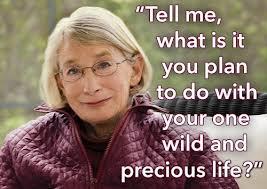
I would do just about anything to spend an hour with Mary Oliver, a poet who has touched my life and my writing so deeply. This is an imagined interview. The responses in italics are all snippets of her poetry chosen from  New and Selected Poems, Volume Two.

– Victoria C. Slotto

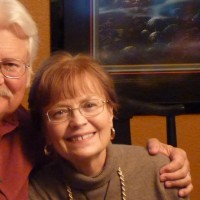
Victoria and Dave Slotto
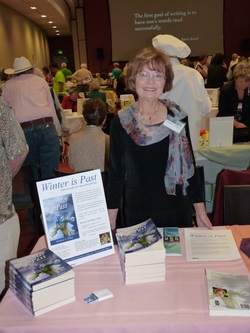
Victoria at the Palm Springs Writer's Expo March 2012
Victoria at the Palm Springs Writer’s Expo March 2012

VICTORIA C. SLOTTO (Victoria C. Slotto, Author: Fiction, Poetry and Writing Prompts) ~  a Contributing Writer to Into the Bardo ,attributes her writing influences to her spirituality, her dealings with grief and loss, and nature. Having spent twenty-eight years as a nun, Victoria left the convent but continued to work as a nurse in the fields of death and dying, Victoria has seen and experienced much. A result of Victoria’s life experience is the ability to connect with readers on an intimate level. She resides in Reno, Nevada, with her husband and two dogs and spends several months of the year in Palm Desert, California.

Winter is Past is her first novel. It was published in 2012 by Lucky Bat Books. She has a second novel in process and also a poetry chapbook. Victoria is also an accomplished blogger and poet who has assumed a leadership role in d’Verse Poet’s Pub. You can read more ofher fine poetry HERE.

Posted in Art, Jamie Dedes, Poems/Poetry

Jan Phillips’ The Artist’s Creed

Calliope

Artist” ~ generally refers to people who express visually. Sometimes it refers to folks in the entertainment industry. In criticism it may also refer to other forms of expression…music, poetry, writing and so on. As used here and generally on this site, it refers to one who creates out of their inner vision, no matter what form of expression the creation takes. It implies a unity of inspiration, practice, and craft. This is for you … ♥

– Jamie Dedes

Illustration ~ The Goddess Kalliopē (Calliope), Homer’s muse for the Odyssey and the Illiad, in a painting by Simon Vouet

The Artist’s Creed by Jan Philips:


The video is by Jan Phillips

Photo on 2012-09-19 at 20.00JAMIE DEDES ~ My worldly tags are poet and writer.  I’m in my fifth year of blogging at The Poet by Day, the journey in poem, formerly titled Musing by Moonlight.  Through the gift of poetry (mine and that of others), I enter sacred space.

Posted in Photography/Photographer

Divine Look

This lovely photo and message from Ajaytao says it all.

Posted in Marlene McNew, Poems/Poetry

THE PATH THAT SKIS TAKE

The Path that Skis Take is a video poem by Marlene McNew.

Marlene McNew"Veni, Vidi, Vici"
Marlene McNew
“Veni, Vidi, Vici”

Marlene McNew ~ is a contributing writer to Into the Bardo. She began exhibiting symptoms of Parkinson’s Disease (P.D.) nine years ago. Her blog (Strange Gift) is a vehicle for sharing her interests and her experiences with P.D. Marlene is a master skier and triathlon competitor. She expresses her beautiful spirit through poems and paintings.  Her YouTube channel is SkiDisiple.

Posted in Guest Writer, Teachers

VISIONING A PEACEABLE KINGDOM

Video posted on YouTube by daryndamae

Well the bear will be gentle,
And the wolves will be tame.
And the lion shall lay down by the lamb, oh yes.
And the beasts from the wild,
Shall be lead by a child.
And I’ll be changed, changed from this creature that I am, oh yes.

From the song Peace In The Valley by Thomas A. Dorsey

a004
web-1
“Teachers, angels and bodhisattvas come in many guises.”

Reblogged from Gypsy’s place: The Cat’s Meow.

© Gypsy photo, 2013, KarenFayeth, All rights reserved
Kitty gif courtesy of Cat Stuff: Thousands of Animations
Video uploaded to YouTube by bisonfilms

Posted in General Interest, Guest Writer

Mei Rozavian posts as the spirit moves her … and it always seems to move her to share beauty, insight, and inspiration. Every post of hers is just as sweet as this one. Jamie Dedes

meiro's avatarpart of journey

577880_393114467431557_409894121_n

*

When you help someone who is lost and confused;

When you hold someone who is sad and grieving;

When you hug someone who is unhappy and hopeless;

You too will feel healed and whole.

   – Dr Jeff Mulan –
*
***
– mei –
*
*

View original post

Posted in Essay, Guest Writer

Our dear artist-friend, Paula Kuitenbrouwer, shares her thoughts on homesickness and being at home wherever you are. Be sure to link through to her site and enjoy her “Mindful Drawing.” J.D.

Posted in Teachers

FOLLOWING YOUR PATH

“IF YOU CAN SEE YOUR PATH LAID OUT IN FRONT OF YOU STEP BY STEP,

YOU KNOW IT’S NOT YOUR PATH.

YOUR OWN PATH YOU MAKE WITH EVERY STEP YOU TAKE.

THAT’S WHY IT’S YOUR PATH.”

Joseph Campbell (1904-1987)

American mythologist, educator, writer

 ·
·
Posted in Teachers

OPENING DOORS

“FOLLOW YOUR BLISS

AND THE UNIVERSE WILL OPEN DOORS FOR YOU

WHERE THERE WERE ONLY WALLS.”

Joseph Campbell (1904-1987)

American mythologist, educator, writer

·

Photo credit ~ Zondor via Wikipedia under the Creative Commons Attribution-ShareAlike 3.0 unported license.

·

Posted in Fiction

ONE LAST CHRISTMAS POST, lest we forget the lessons of 1914

I’m preparing to get ready today for business as usual and there’s lots to share from Ann and Rob and other contributors. I decided to visit some blogs first. One of our contributors, Gayle Walters (Bodhirose’s Blog) had posted this historical fiction on her blog. It’s by children’s author, Aaron Shepard, and he allows it to be reblogged. It’s a short story based on the true events of the famous Christmas Eve truce of 1914 that Arthur Conan Doyle wrote of as “one human episode amid all the atrocities.” We do have moments of truce in our personal, spiritual, and political lives. If we could only make such moments a regular thing, our preferred m.o., if you will … Jamie Dedes

Parents and educators will find good stories and scripts for children’s plays at Mr. Shepard’s website HERE.

Copyright © 2001, 2003 by Aaron Shepard. May be freely copied and shared for any noncommercial purpose.

The story is formated as a letter ….

THE CHRISTMAS TRUCE
by
Aaron Shepard
Christmas Day, 1914

My dear sister Janet,

It is 2:00 in the morning and most of our men are asleep in their dugouts—yet I could not sleep myself before writing to you of the wonderful events of Christmas Eve. In truth, what happened seems almost like a fairy tale, and if I hadn’t been through it myself, I would scarce believe it. Just imagine: While you and the family sang carols before the fire there in London, I did the same with enemy soldiers here on the battlefields of France!

As I wrote before, there has been little serious fighting of late. The first battles of the war left so many dead that both sides have held back until replacements could come from home. So we have mostly stayed in our trenches and waited.

But what a terrible waiting it has been! Knowing that any moment an artillery shell might land and explode beside us in the trench, killing or maiming several men. And in daylight not daring to lift our heads above ground, for fear of a sniper’s bullet.

And the rain—it has fallen almost daily. Of course, it collects right in our trenches, where we must bail it out with pots and pans. And with the rain has come mud—a good foot or more deep. It splatters and cakes everything, and constantly sucks at our boots. One new recruit got his feet stuck in it, and then his hands too when he tried to get out—just like in that American story of the tar baby!

Through all this, we couldn’t help feeling curious about the German soldiers across the way. After all, they faced the same dangers we did, and slogged about in the same muck. What’s more, their first trench was only 50 yards from ours. Between us lay No Man’s Land, bordered on both sides by barbed wire—yet they were close enough we sometimes heard their voices.

Of course, we hated them when they killed our friends. But other times, we joked about them and almost felt we had something in common. And now it seems they felt the same.

Just yesterday morning—Christmas Eve Day—we had our first good freeze. Cold as we were, we welcomed it, because at least the mud froze solid. Everything was tinged white with frost, while a bright sun shone over all. Perfect Christmas weather.

During the day, there was little shelling or rifle fire from either side. And as darkness fell on our Christmas Eve, the shooting stopped entirely. Our first complete silence in months! We hoped it might promise a peaceful holiday, but we didn’t count on it. We’d been told the Germans might attack and try to catch us off guard.

I went to the dugout to rest, and lying on my cot, I must have drifted asleep. All at once my friend John was shaking me awake, saying, “Come and see! See what the Germans are doing!” I grabbed my rifle, stumbled out into the trench, and stuck my head cautiously above the sandbags.

I never hope to see a stranger and more lovely sight. Clusters of tiny lights were shining all along the German line, left and right as far as the eye could see.

“What is it?” I asked in bewilderment, and John answered, “Christmas trees!”

And so it was. The Germans had placed Christmas trees in front of their trenches, lit by candle or lantern like beacons of good will.

And then we heard their voices raised in song.

Stille nacht, heilige nacht . . . .

This carol may not yet be familiar to us in Britain, but John knew it and translated: “Silent night, holy night.” I’ve never heard one lovelier—or more meaningful, in that quiet, clear night, its dark softened by a first-quarter moon.

When the song finished, the men in our trenches applauded. Yes, British soldiers applauding Germans! Then one of our own men started singing, and we all joined in.

The first Nowell, the angel did say . . . .

In truth, we sounded not nearly as good as the Germans, with their fine harmonies. But they responded with enthusiastic applause of their own and then began another.

O Tannenbaum, o Tannenbaum . . . .

Then we replied.

O come all ye faithful . . . .

But this time they joined in, singing the same words in Latin.

Adeste fideles . . . .

British and German harmonizing across No Man’s Land! I would have thought nothing could be more amazing—but what came next was more so.

“English, come over!” we heard one of them shout. “You no shoot, we no shoot.”

There in the trenches, we looked at each other in bewilderment. Then one of us shouted jokingly, “You come over here.”

To our astonishment, we saw two figures rise from the trench, climb over their barbed wire, and advance unprotected across No Man’s Land. One of them called, “Send officer to talk.”

I saw one of our men lift his rifle to the ready, and no doubt others did the same—but our captain called out, “Hold your fire.” Then he climbed out and went to meet the Germans halfway. We heard them talking, and a few minutes later, the captain came back with a German cigar in his mouth!

“We’ve agreed there will be no shooting before midnight tomorrow,” he announced. “But sentries are to remain on duty, and the rest of you, stay alert.”

Across the way, we could make out groups of two or three men starting out of trenches and coming toward us. Then some of us were climbing out too, and in minutes more, there we were in No Man’s Land, over a hundred soldiers and officers of each side, shaking hands with men we’d been trying to kill just hours earlier!

Before long a bonfire was built, and around it we mingled—British khaki and German grey. I must say, the Germans were the better dressed, with fresh uniforms for the holiday.

Only a couple of our men knew German, but more of the Germans knew English. I asked one of them why that was.

“Because many have worked in England!” he said. “Before all this, I was a waiter at the Hotel Cecil. Perhaps I waited on your table!”

“Perhaps you did!” I said, laughing.

He told me he had a girlfriend in London and that the war had interrupted their plans for marriage. I told him, “Don’t worry. We’ll have you beat by Easter, then you can come back and marry the girl.”

He laughed at that. Then he asked if I’d send her a postcard he’d give me later, and I promised I would.

Another German had been a porter at Victoria Station. He showed me a picture of his family back in Munich. His eldest sister was so lovely, I said I should like to meet her someday. He beamed and said he would like that very much and gave me his family’s address.

Even those who could not converse could still exchange gifts—our cigarettes for their cigars, our tea for their coffee, our corned beef for their sausage. Badges and buttons from uniforms changed owners, and one of our lads walked off with the infamous spiked helmet! I myself traded a jackknife for a leather equipment belt—a fine souvenir to show when I get home.

Newspapers too changed hands, and the Germans howled with laughter at ours. They assured us that France was finished and Russia nearly beaten too. We told them that was nonsense, and one of them said, “Well, you believe your newspapers and we’ll believe ours.”

Clearly they are lied to—yet after meeting these men, I wonder how truthful our own newspapers have been. These are not the “savage barbarians” we’ve read so much about. They are men with homes and families, hopes and fears, principles and, yes, love of country. In other words, men like ourselves. Why are we led to believe otherwise?

As it grew late, a few more songs were traded around the fire, and then all joined in for—I am not lying to you—“Auld Lang Syne.” Then we parted with promises to meet again tomorrow, and even some talk of a football match.

I was just starting back to the trenches when an older German clutched my arm. “My God,” he said, “why cannot we have peace and all go home?”

I told him gently, “That you must ask your emperor.”

He looked at me then, searchingly. “Perhaps, my friend. But also we must ask our hearts.”

And so, dear sister, tell me, has there ever been such a Christmas Eve in all history? And what does it all mean, this impossible befriending of enemies?

For the fighting here, of course, it means regrettably little. Decent fellows those soldiers may be, but they follow orders and we do the same. Besides, we are here to stop their army and send it home, and never could we shirk that duty.

Still, one cannot help imagine what would happen if the spirit shown here were caught by the nations of the world. Of course, disputes must always arise. But what if our leaders were to offer well wishes in place of warnings? Songs in place of slurs? Presents in place of reprisals? Would not all war end at once?

All nations say they want peace. Yet on this Christmas morning, I wonder if we want it quite enough.
Your loving brother,
Tom
The photograph (via Wikipedia) is in the public domain: A cross, left near Ypres in Belgium in 1999, to commemorate the site of the Christmas Truce in 1914. The text reads:
1914 – The Khaki Chum’s Christmas Truce – 1999 – 85 Years – Lest We Forget.


Posted in Jamie Dedes, Poems/Poetry

DONE

DONE

by

Jamie Dedes

I watched it all over my friend’s dear shoulder,

that day of living and dying and celebrating

like a garden snake the shedding of the skin,

the detritus of material man with its hunger and

wild, woody creative soul, sketching ruby-jeweled

memories in sand to be blown like a Tibetan mandala

across Timelessness while he, lone monk, gripped

by systems on systems of hospital wiring, billing,

approvals, and laws around funerals and burials,

estates, plans, and proposals for headstones and

the where, when, and how of a memorial service,

the left-overs of his life to be sorted, stashed, stored

or sent  to the right people in the right places. Done!

… as though there had been nothing. No one.

♥♥♥♥

NOT DONE YET

* Dedicated to Group *

A Chinese advertisement based on a true story.

Inspiring. Give it a chance. I don’t think you’ll regret the time.

Thanks Laurel! 🙂

Posted to YouTube by .