As many know, today in the United States – July 4 – (I think it is already July 5 is some parts of the world) we celebrate our Independence Day, something that means a lot to us and may be greeted with mixed feelings if you live elsewhere in the world. Hence, I apprecate Terri’s handling of this occasion on her blog. I would also submit, that whatever good we reap in the world, whatever good this human race is able to accomplish, is done on the shoulders of those who came before us and laid the groundwork for equality and human rights. No matter our race or nationality, we all owe a debt to such diverse peacemakers as Martin Luther King, Thich Nhat Hanh, Nelson Mandla and Dennis Brutus and others on a list too long to share here. If you have someone whose work of peace and love is particularly meaningful to you, perhaps you will tell us who and why in the comment section. Thank you! Jamie Dedes
Tag: peace
Today (we are all survivors)

We are all survivors, of our personal histories, our family lines, and of the human race. Since the dawn of time, think of the families ended abruptly by a bullet, a spear, a club, a predator, illness, by accident and even by someone’s own hand.
Today is the anniversary of D-Day, the Normandy invasion in 1944. It was the day my Uncle Lewis was launched onto the Normandy beaches into a cruel war. I think it no coincidence that today is also the anniversary of my father’s death in 1965.
The day before he died, while his kids ran and laughed and played in the yard, my father planted a walnut tree—just a stick of a sapling–by the side of the house. Did he know what he was going to do? Did he plant that tree as his own memorial?
I hope not, because someone else is living in that little house in Detroit, and my Dad’s walnut tree is long gone, cut down in its prime. This I know, because I drive past each time I go back to visit my Aunt Loena. So these words must serve as a memorial to a World War II vet who came home without his little brother and best friend. That was the sin his mother never forgave him for, the sin he could he never quite forgive himself for either.
My army buddy, Jack Oliver, attended boot camp with Uncle Lewis. He helped me understand that my father was as much a victim of the war as my uncle. When the War Department tallies the casualties, it counts the dead, the wounded, the missing in action. But no one ever takes into account the broken hearts and broken families left by the wayside in the wake of war. If they did, perhaps they would stop sending our children off to fight and die.
But today is a day a of forgiveness, a day of understanding, a day to be thankful that life goes on. It is a day of sorrow, but most of all, today is a day to love.

– Naomi Baltuck
© 2012, essay and photographs, Naomi Baltuck, All rights reserved

 NAOMI BALTUCK ~ is a Contributing Editor and Resident Storyteller here at Bardo. She is a world-traveler and an award-winning writer, photographer, and story-teller whose works of fiction and nonfiction are available through Amazon HERE. Naomi presents her wonderful photo-stories – always interesting and rich with meaning and humor – at Writing Between the Lines, Life from the Writer’s POV. She also conducts workshops such as Peace Porridge (multicultural stories to promote cooperation, goodwill, and peaceful coexistence), Whispers in the Graveyard (a spellbinding array of haunting and mysterious stories), Tandem Tales, Traveling Light Around the World, and others. For more on her programs visit Naomi Baltuck.com
My Moment Of Zen
 In a full to overflowing bathtub, I relax, soaking the ache out of legs and content to be surrounded by water. It’s not long before I slide down, legs crawling up the wall under the shower, head dipping below the surface. My right hand plugs my nose and my left hand covers my eyes like a sleep mask and water fills my ears.
I savor these few moments I have to just float in nothing.
The water amplifies noise but bends the sound waves into something more beautiful. Even the passing fire truck with its shrill siren and blaring horns sounds almost musical when passed through my warm, clear water. The rhythmic hum of the clothes dryer puts me in a trance and I enjoy this until my lungs ask politely and then not so politely if we can surface and take in some new, unused air.
I reluctantly rise up and gasp in a big breath and go under again. It’s just too delicious and quite addictive. This time I think about buying a snorkel so I can stay under the water and still breathe. I’ve considered buying a snorkel so I can stay under my bath water ever since I was a kid.
Even as a child I was drawn to the solace and quiet of being under water. One early evening as I was taking a bath and creating my own sensory isolation chamber, my mother walked in to check on me. As any protective mother of three children would do when presented with the sight of her youngest lying apparently lifeless in a bathtub full of water, she freaked out.
My mother yanked me from the water and shook me hard, shouting my name. I unplugged my nose and uncovered my eyes and said, “What?”
I got a well-deserved and thorough chewing out and was told in no uncertain terms that I was never to simply slide under the water and remain motionless. Ever.
When I later emerged from my bath and got dressed and ran a comb through my unruly long hair, I was confronted by my father who ripped into me for scaring my mother.
I always thought that was quite unfair. I didn’t set out to intentionally scare my mother. I simply wanted a moment, if even half a minute, where I didn’t exist in the world. Where everything was blocked out and time slowed down and sounds bent in pleasing ways.
My solution thereafter was to continue to dunk my head well below water and plug my nose with my right hand. With my left hand, I would raise it above the surface and wave it like the Queen on parade so that any passerby would know I was still conscious, just submerged.
This seemed a suitable solution for all. A nice compromise.
I’ve always wanted to visit one of those sensory isolation tanks. It sounds like a little slice of heaven to me. Floating in a tank with no light and hardly any sound and just the quiet to embrace me. Yes, I think I would love this very much.
The Good Man thinks I’m half a bubble off level to consider this. “I always figure while you are locked in there, the people outside will steal your stuff or do something weird,” he says.
This is how his mind works. This is not how my mind works.
A few years ago we visited a spa in Calistoga, California. The spas in Calistoga are known for their mud baths. You give them money and they allow you to slide your nekkid body into a warm tub of slightly sulphurous goo. The weight of the mud resists your body, you actually have to dig in there. Once settled, you are surrounded and suspended and oh my goodness I could have stayed in there for weeks.
The Good Man did not feel as kindly toward the mud. He said he was antsy the whole time he was in there and ready to vault from the tub. He couldn’t wait for it to be over. I never wanted it to stop.
Perhaps it’s something Freudian that I like to slip into warm suspended places and forget about things for a while. I choose to think it rather normal to want to seek out genuine moments of respite where the world and all its crazy spinning and shouting and clanking and cruelty goes away, for just a moment. For as long as it takes me to hold my breath.
Until I buy a snorkel.
– Karen Fayeth
© Karen Fayeth, copyright 2013, all rights reserved. Bathtub image found on Rodale.com and all rights remain with the website and photographer. Bio photograph by Claudia Akers.
 KAREN FAYETH ~ is one of our regular contributing writers. She is our new tech manager, site co-administrator along with Jamie and Terri, and fiction and creative nonfiction editor. She blogs at Oh Fair New Mexico. Born with the writer’s eye and the heart of a story-teller, Karen Fayeth’s work is colored by the Mexican, Native American, and Western influences of her roots in rural New Mexico complemented by a growing urban aesthetic. Karen now lives in the San Francisco Bay area. When she’s not spinning a tale, she works as a senior executive for science and technology research organization.
Karen has won awards for her writing, photography, and art. Recent publication credits include a series of three features in New Mexico magazine and an essay with the online magazine Wild Violet. Her latest short story will be published in the May edition of Foliate Oak. Karen’s photography is garnering considerable attention, her photo titled “Bromance” (featuring Aubry Huff and Pat Burrell) was featured on MLB Network’s Intentional Talk hosted by Chris Rose and Kevin Millar.
I Never Saw Another Butterfly

Butterfly Boy Bronze Statue unveiled at Jane Bancroft Cook Library (Florida), January 28, 2010
Sculptor, Sidney Fagin.
.
I NEVER SAW ANOTHER BUTTERLY
The last, the very last,
So richly, brightly, dazzlingly yellow.
Perhaps if the sun’s tears would sing
against a white stone. . . .
Such, such a yellow
Is carried lightly ‘way up high.
It went away I’m sure because it wished to
kiss the world good-bye.
For seven weeks I’ve lived in here,
Penned up inside this ghetto.
But I have found what I love here.
The dandelions call to me
And the white chestnut branches in the court.
Only I never saw another butterfly.
That butterfly was the last one.
Butterflies don’t live in here,
in the ghetto.
– Pavel Friedmann
Pavel Friedmann was born in Prague on January 7, 1921. He was deported to Terezin on April 26, 1942 and later to Auschwitz, where he died on September 29, 1944. At least 960,000 Jews were killed in Auschwitz. Other victims included approximately 74,000 Poles, 21,000 Roma (Gypsies), and 15,000 Soviet prisoners of war; and 10,000-15,000 members of other nationalities (Soviet civilians, Czechs, Yugoslavs, French, Germans, and Austrians). Women, men, children.
 While it is common to say “never again” … meaning that event we refer to as THE Holocaust … it’s important to remember that there are Holocausts (genocides) in process now and there have been many in our history … think of Armenia, Rawanda, the Congo, Cambodia, Vietnam, Sudan, Iraq, Somalia, North Korea, the Kurdish peoples, Syria, Palestine … Time and past time to put an end to it …
I like to remember the lesson taught by Pastor Martin Niemoller (1892-1984) – a victim of the Nazis – and passed on to us. There is some controversy over the many versions of his “First they came …” It is often presented as a poem. The great jazz musician, Charles Mingus, recites a version before his musical composition, Don’t Let It Happen Here. In any event, the point is made: political apathy is dangerous.
First they came for the Jews
and I did not speak out-
because I was not a Jew.
Then they came for the Communists
and I did not speak out-
because I was not a Communist.
Then they came for the trade unionists
and I did not speak out-
because I was not a trade unionist.
Then they came for me-
and there was no one left
to speak out for me.– Pastor Martin Niemoller
– Jamie Dedes
Photo credits: Sidney Fagin – New College of Florida; German postage stamp with sketch of Pastor Martin Niemoeller (licensing status unclear ) via Wikipedia
From Weaponry to Livingry …

Note: The origin of this artwork is unkown. If it is yours, please let us know and we will credit or take it down, whichever you’d like.
FINDING YOURSELF Part 1: The Freedom of “I Don’t Know”
 Today begins the first of three features on finding yourself. “Be True to Yourself” would be another good name for this series with the perspectives of three writers:
.
Part 1: The Freedom of “I Don’t Know” ~ Natasha Head
Part 2: What story do you have to tell? ~ Terri Stewart
Part 3: On the Razor’s Edge ~ Jamie Dedes
The Freedom of “I Don’t Know” …
There is a peace to be found in releasing labels, brands and notions we are conditioned with before we even have a chance to determine if this is who we want to be. Every day, I feel as though I am failing in the expectations others have for me, yet…I know I cannot let their preconditioned labels define me.
The little bit of myself I have been able to hang on to, throughout all the many roles we get sucked into, shows in my writing. If I had to name the biggest reason why I do write, it’s to hang on to me. The one thing I can be sure of in this world is the girl sitting in the dark corner alone, tattered notebook and cheap pen, ink spots on her fingers and a desire to be left alone with her thoughts.
This is my church. I can enter anywhere, on any day, at any time. I am always accepted, I am always welcomed, and I always feel…right.
I think that sense of “right” is one of the hardest things to find in this world. For so long, I tried to shape myself to fit in so many ways others told me I had to in order to be part of the crowd. They would fight me tooth and nail when I asked a question they couldn’t answer. They would belittle and scorn me for not taking as faith what they never had the courage to question. Where is the poetry if we are not allowed to question? Where do great ideas and new discoveries come from if we are not pushed and encouraged to seek further.
When they come at me now…wanting to know my beliefs, where I pray, where I’m going to go when I die…I’ve learned they already know the answer they want to hear…and I’ve learned the only compassionate one I can give, so as not to offend and engage is “I don’t know.” Really…what other honest answer is there? It turns a soldier into teacher, a teacher to a guide, and suddenly a new path unfolds with an invitation to explore. I have learned so very much…simply by admitting, I don’t know.
And at the end of the day…how much does it matter if it steals from the gift this lifetime is? Our true blessings are found in the now. In the time we have right now to help, to lift up, to learn, to love. Imagine, if the world could stop debating what is personal and individual to everyone, and simply come together to make the most of where we’re at with what we have? If there’s one thing I do know…it would have to make it a much better place…a much better now.
– Natasha Head
© 2013, essay and portrait, Natasha Head, All rights reserved
Photo credit ~ Petr Kratochvil, Public Domain Pictures.ent
 NATASHA HEAD debut poetry collection (from Winter Goose Publishing) was Nothing Left to Lose, a Pushcart Prize nominee for 2012. A year later – almost to the day – her newest offering, Pulse. was released. Natasha blogs at The Tashtoo Parlour and participates in a leadership role on d’Verse ~ Poets Pub. She is the founder and coordinator of New World Creative Union.
Deconstructing Peace
 DECONSTRUCTING PEACE
by
Jamie Dedes (The Poet by Day, the journey in poem)
the tawny moon is good fortune’s evening grace
it draps itself on the dwindling day’s calm
while mystic mountains rise pristine and high
above an earthy base, the wizard Merlin’s realm,
with memories of a green and primal past …
…….of rootedness
…………..essential things
the air is a sweet-and-salty caramel
and Peace!
a lively Peace …
visits on the briny spray and
delights at the meeting of land and sea
at rhythms of the ocean against the shore
the waves drift in and out, fling and toss
stop, start, begin again and then again
lilting, the dew drop of a mother’s kiss
it’s the mother’s kiss …
but moonlight wanes at the liminal hour
and Peace!
capricious Peace …
sees the moon incised with holographs
from the wind-whipped edges of the Earth
read the tales of valour and cowardice
…….the blight of war
…………..the naked lives
sundering tragedies under the heel of armies
citizen’s fleeing the lacerations of their plight
frozen in the crashing horror of their fright
in this amethyst veiled night . . .
the sense of peace deconstructed
on the rise of dawn, its shredding light
© 2013, poem, All rights reserved
Photo credit ~ Phil Downs, Public Domain Pictures.net
 JAMIE DEDES ~ My worldly tags are poet and writer. For the past five years on medical retirement due to a chronic, potentially life-threatening illness, I’ve blogged at The Poet by Day, formerly titled Musing by Moonlight. The gift of illness is more time for poetry. Through the gift of poetry (mine and that of others), I enter sacred space.
Connecticut, Delhi and HO’OPONONO
Connecticut, Delhi and HO’OPONONO
by
Shakti Ghosal (ESGEE musings)
What we feel and think and are is to a great extent determined by the state of our ductless glands and viscera.” ~Aldous Huxley, English author, 20th century
Over the last month the media streams have remained clogged with two events. First,the horrific massacre of school children and teachers in Connecticut, USA. Second, the barbaric rape and “murder” of an Indian medical student in Delhi.
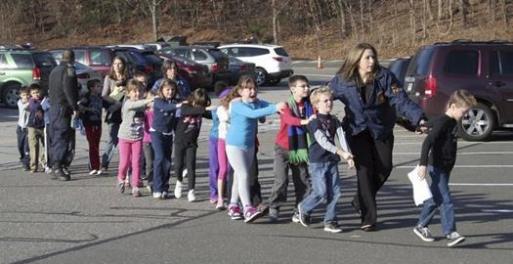

As part of an increasingly aware and connected society, we remain quick to rationalise into the underlying reasons and ascribe blame. The flickering screens become full with debates and sermons as questions and suggestions fly thick and fast.
• Why does the U.S. Government not take up with the National Rifle Association and amend the gun ownership laws?
• What makes the Indian police so insensitive and ill equipped to take care of women safety on the roads?
• If, as it now emerges, gunman Adam Lanza displayed worrisome and awkward behaviour, why did his mother not do something about it?
• What was the trigger for the gang of rapists to have conducted themselves in such a brutal and violent manner?
…and so on, the list goes on and on.

We may sit in judgement and hold holier than thou perceptions. As we take time out to show our solidarity with the cause and impatience and distrust with the ‘powers that be’. Or we may choose to get involved with our hearts, indulge in emotional outpourings and feel we are doing our bit. Either way we do not take responsibility for what happened.
But could it be that as we come across such evil and darkness in the world, there lies a seed of responsibility within us? When we accept the status quo of injustice on the plea that this is how it has been? When we prefer to remain an onlooker to a crime perpetrated on someone else? When we spend our energy to protect our own cocoon only? When we expect the Government and the police to follow standards of morality and behaviour higher than our own?
My thoughts flit to Joe Vitale and his book “Zero Limits”. About therapist Dr.Hew Len and his handling of a ward of criminally insane patients. Dr. Len never saw patients but only reviewed their files. As he looked at the files, he would work on himself by repeating the following universal mantras.
• I am sorry.
• Please forgive me.
• I thank you
• I love you.
And as he worked and improved himself, the patients started to improve and heal!
Dr. Hew Len was following the concept of HO’OPONONO, a Hawaiian word dealing with “extreme responsibility” which requires the person to take total responsibility of his life including all people and situations coming into it. A ‘tough to swallow’ and bizarre concept on first sight!

But as I muse on the need to take responsibility of anything that shows up in our life, absolutely everything, I start seeing a continuum. Between extreme responsibility and that of reconciliation and forgiveness. I also come face to face with my Karma in that I must be willing to experience myself what I have allowed to happen to others, either by my inaction or inability.
And today in this new millennium, as we sit on the explosive powder keg of increasing disparity, isolation of the ‘left behinds’ in fast changing societies and values and technology driven, rapid creation of awareness and beliefs, could HO’OPONONO show us the way forward?
In learning……… Shakti Ghosal
Acknowledgement: Zero Limits: The Secret Hawaiian System for Wealth, Health, Peace, and More by Joe Vitale & Ihaleakala Hew Len, Dec. 2008.
© 2013, Shakti Ghosal, All rights reserved

Shakti Ghosal ~ has been blogging (ESGEE musgings)since September 30, 2011. He was born at New Delhi, India. Shakti is an Engineer and Management Post Graduate from IIM, Bangalore. Apart from Management theory, Shakti remains fascinated with diverse areas ranging from World History, Economic trends to Human Psychology & Development.
A senior Management professional, Shakti has been professionally involved over twenty-five years at both International and India centric levels spanning diverse business areas and verticals. With a strong bias towards action and results, Shakti remains passionate about team empowerment and process improvement.
Shakti currently resides in the beautiful city of Muscat in Oman with wife Sanchita, a doctorate and an Educationist. They are blessed with two lovely daughters, Riya and Piya.
KAREN ARMSTRONG – A CHARTER FOR COMPASSION GROWS

KAREN ARMSTRONG (b. 1944), British Author, Commentator, Academic
Charter for Compassion
“Karen Armstrong is a former Catholic nun who left the convent to study literature, becoming one of the most provocative and original thinkers on the role of religion in the modern world, and a leading international authority on faiths, religious fundamentalism and monotheism.
Her poignant and captivating talks have sparked worldwide debate and healthy discussion. Her bestselling books, including Twelve Steps to a Compassionate Life and A History of God, examine the differences and the profound similarities between Christianity, Islam, and Judaism, and their impact on world events.
In 2008, she was awarded the TED Prize in recognition and support of her call for a council of religious and spiritual leaders to draw up a “Charter for Compassion” that applies shared moral priorities to foster greater global understanding based on the principles of justice and respect. The project has grown to a considerable international following, and a network of Compassionate Cities is emerging that endorse the Charter and find ways to implement it practically, realistically and creatively.
As a speaker and writer, she asserts that all major religions embrace the core principle of compassion and the Golden Rule, and also emphasizes that many of today’s religions bear similar strains of fundamentalism borne of frustration with contemporary life and current events.” ( – Official Biography of Karen Armstrong.)
KAREN ARMSTRONG – A CHARTER FOR COMPASSION GROWS
by
Amy Nora Doyle (souldipper)
Contribution Writer, Into the Bardo
On our tiny island, a group recently finished its study of Karen’s book,“Twelve Steps to A Compassionate Life”. The same group seized an opportunity, on March 22, to share a live video of Ms. Armstrong accepting a prestigious award from the Simon Fraser University in Vancouver. In recognition of her exceptional work with Compassion, Vancouver dedicated 12 days in which to dialogue about compassion, in a variety of ways, throughout the city.
The Charter for Compassion begins:
“The principle of compassion lies at the heart of all religious, ethical and spiritual traditions, calling us always to treat all others as we wish to be treated ourselves. Compassion impels us to work tirelessly to alleviate the suffering of our fellow creatures, to dethrone ourselves from the centre of our world and put another there, and to honour the inviolable sanctity of every single human being, treating everybody, without exception, with absolute justice, equity and respect.”
(The complete Charter is available here.)
.
Karen Armstrong – Simon Fraser University – March 22, 2012

.
Those of us who watched Ms. Armstrong’s acceptance of the SFU award, discussed, at its completion, how we envisioned enhancing compassion in our community. Though time may provide a more profound conclusion, most of us agreed that Compassion is an inner condition through which each of us may filter our actions and exchanges throughout the community. In support of this commitment, the local book club, one of 500 worldwide, will again offer a study of Karen’s 12 steps to compassion.
Our group may have been influenced by the Rev. Alisdair Smith, Deacon and Business Chaplain for Christ Church Cathedral in Vancouver. As he introduced Karen, he shared a phenomenal story about a dear friend – a woman who suffers from severe bouts of depression. She gave Alisdair permission to share her story with us.
In my words:
The depression became severe enough that the woman knew she had to go to the hospital. With all the courage, will and determination she could muster, she called an ambulance.
A male attendant rode quietly beside her in the back of the ambulance. As the vehicle wound its way through traffic, the man remained silent, but dutifully attended to any concern for comfort or safety.
After some time, he turned to face her. He held her hand and looked into her eyes. He said, “We are almost at the hospital. I want to tell you that while I have been in your presence, I have discerned that you are a very creative, kind and intelligent woman.
Therefore, when we arrive, I will step out of this ambulance and wait for you to take my hand so you may step down on your own. We will walk together to Emergency and you will hold your head high with the dignity that is yours to claim. There is no reason or need to be or feel embarrassed.
Are you willing?”
The woman did exactly as he suggested. Her life was transformed.
Though she is still plagued with depression, it only takes a moment to reflect on this incredible act of compassion, performed by a stranger, that dispelled and diminished the degree of debilitating power that depression would otherwise demand.
I watched Karen Armstrong’s Ted Talk in 2008. I became a member of the Charter for Compassion in 2009. I committed to being a compassionate person.
Big deal, I thought. That’s not doing much for the Charter.
I found out it is.
Especially if we each do our best with every opportunity that inevitably comes our way.
I keep forgetting about the hummingbird and the forest fire.
© 2012, essay – Amy Nora Doyle, All rights reserved
© photos ~ courtesy of A Charter for Compassion, all rights reserved, used here under fair use
♥ ♥ ♥ ♥
If you have the time for this 22 minute video, you might find it gratifying to hear Ms. Armstrong’s TED award acceptance. J.D.
COMPASSION AT THE CORE

1st Row: Christian Cross, Jewish Star of David, Hindu Aumkar
2nd Row: Islamic Star and crescent, Buddhist Wheel of Dharma, Shinto Torii
3rd Row: Sikh Khanda, Bahá’í star, Jain Ahimsa Symbol
COMPASSION AT THE CORE
by
Jamie Dedes
“Compassion is the pillar of world peace.” H.H. 14th Dalai Lama, A Human Approach to World Peace
The peaceful path of compassion is at the core of all the wisdom traditions, the conduits by which grace flows into our lives. If our species is to overcome current conflicts and truly be at peace with ourselves, we must tread the compassionate path and we must do it with bone and muscle as well as heart and mind. It must be a path where service and meditation converge.
In the Summa Theologiae, the great work of St. Thomas Aquinas, he suggests just that. He defines mercy (a virtue) as “the compassion in our hearts for another person’s misery, a compassion which drives us to do what we can to help him.” He describes mercy as having two aspects “affective” – or emotional – and “effective,” which is positive action.
We all have something to teach. We all have something to learn ~
People from varied traditions come to Buddhism – not to convert – but to learn the meditative skills that Buddhism teaches. Buddhists also have lessons to learn from other religions:
“…many Buddhists are interested in learning social service from Christianity. Many Christian traditions emphasize that their monks and nuns be involved in teaching, in hospital work, caring for the elderly, for orphans, and so on . . . Buddhists can learn social service from the Christians.” H.H. 14th Dalai Lama, The Buddhist View toward Other Religions
Meditative practice is central to Buddhism. Along with devotions (prayers and religious observance), action (good works) is central to Christianity and the other Abrahamic traditions, which is not to imply that there are no meditative practices or that inward practice is more important than outward action. Rather, each has its place and they are complementary. Our meditative practices enhance tranquility, ensuring that our good works are appropriate and done in the right spirit.
A compassionate heart is moved to embrace and not to judge. A compassionate hand is moved to work and to sacrifice for the greater good. Selflessness, well-seated in compassion, implies action that both materially and spiritually benefits others. The Dalai Lama and Thích Nhất Hạnh, social activists as well as spiritual leaders, are the very breath of compassion and they and the people in the organizations they lead endlessly provide selfless service and share spiritual solace with all.
Buddhism in the West is a relatively new practice. To my knowledge it is only recently that American Buddhists have organized for relief efforts with Buddhist Global Relief (BGR), which in its short life has implemented quite a number of effective projects. The main mission of BGR is hunger, not simply addressing it in its immediacy but also advocating for changes within our global food systems that will ensure social justice and ecological sustainability. BGR was started by American Buddhist monk and scholar, the Ven. Bhikkhu Bodhi, calling attention to the “narrowly inward focus of American Buddhism” and its neglect of social engagement. Moslems, Jews, and Christians have long-standing organizations for global relief and social activism.
It is healing grace when social services are delivered on a nonsectarian basis and without the expectation of conversion. The Koran admonishes (2:257): “Let there be no compulsion in religion.”
We’re each born into a path or choose (or forego) one. Our devotion to one religion shouldn’t prevent respect for the others. Abū al-Muġīṭ Husayn Manṣūr al-Ḥallāğ (Mansur Al-Hallaj, 858-922), the Persian Sufi teacher and poet wrote from his own perspective:
“My heart has opened into every form. It is a pasture for gazelles, a cloister for Christian monks, a temple for idols, the Ka’ba of the pilgrim, the tables of the Torah and the book for Koran. I practice the religion of Love. In whatever directions its caravans advance, the religion of Love shall be my religion and my faith.”
Maybe we humans will come as close to peace and perfection as we can when we combine the “specialties” of Buddhism and the Abrahamic traditions ~
Compassion without meditation can result in cruelty and confusion. Compassion without action is insufficient to address concerns of the human condition.
Orthodox Christianity offers us guidelines for corporal (material) works of mercy:
- feed the hungry
- give drink to the thirsty
- clothe the naked
- house the homeless
- visit the sick
- engage in conscientious activism
- bury the dead
The guidelines for spiritual works of mercy are:
- share insight with the spiritually curious
- counsel the fearful
- provide brotherly support for those who live unwisely
- bear wrongs patiently
- forgive offenses willingly
- comfort those who are suffering
- pray (unify with the Ineffable) for the welfare of the living and the dead
In the ideal, these guidelines are not simply implemented in the privacy of our own prayers and meditations or with detachment in supporting civic and religious charities, but one-to-one in our everyday lives and in a spirit of unity. Mystical Judaism teaches us that: “Kindness gives to another. Compassion knows no other.”
There are 114 chapters in the Islamic scriptures, the Koran. Each begins with the principled: Bismillah ir-Rahman ir-Rahim (In the name of God, most Gracious, most Compassionate). This reminds me of the classical Christian ideal expressed in the Koinḗ Greek agápē, the love of Christ or God for humankind. I suspect it is also – like agápē – a call to action: to live in harmony with the Divine and all creation, that is to live with grace and mercy.
Charity, self-control, and compassion are the central virtues of Hinduism. Ahimsa (do no harm) is part of the Hindu ideal of compassion. This implies action, not just abstinence.
Perhaps this wisdom from an unknown saint or bodhisattva provides us the best advice for our own peace of heart and our species’ survival ~
“The true happiness that man has searched for since the dawn of time, that inner gold that awaits any person who holds compassionately the key of generosity: Do something for your fellow-man … and you shall truly have the gold.”
Gratitude is compassion’s fulcrum ~
“The roots of all goodness lie in the soil of appreciation for goodness.” H.H. 14th Dalai Lama
Gratitude is also the emotion that compels us to give back by caring compassionately for our fellow humans and providing responsible and loving stewardship of the animals who are our companions in nature and this mother earth that sustains us. This does, of course, preclude war which is a danger to all living things.
Expressing gratitude in some way to those who are kind and caring is what nurtures their gift of compassion so that the giver can continue to give and also learn to receive. The natural law of balance is then honored.
May our compassionate paths be fully human and traveled quietly, without pronouncement, conceit, sectarianism, or self-righteousness. May our compassion be a thing of the heart and mind -yes! – but also bolstered with bone and muscle and seasoned with gratitude. May all sentient beings find peace.
© 2012, essay, Jamie Dedes All rights reserved
Illustration ~ religious symbols by Rusus via Wikipedia and released into the public domain
THE DEPTHS OF YOUR HEART

Jalāl ad-Dīn Muḥammad Rūmī
Sufi Mystic and Poet (1207 A.D. – 1273 A.D.
Born in what is now Afghanistan, Died in Turkey
♥
Your heart is the size of an ocean.
Go find yourself in its hidden depths.
Rumi
♥
Wishing you peace of heart. Always.
Jamie
·
Credit ~ The illustration of Rumi is in the U. S public domain.
Video ~ upload to YouTube by Mevlanaism.
EVERYWHERE IN THE WORLD human beings of every color, persuasion, and ethnicity dream …
 MARTIN LUTHER KING, JR. (1929-1988), American Clergyman, Activist, and Leader of the American Civil-Rights Movement
Delivering I Have a Dream, 1963 at the Lincoln Memorial, Washington, D.C. U.S.A.
No one articulated the dream of human dignity with quite the same poetry and passion as Martin Luther King, Jr.
When we let freedom ring, when we let it ring from every village and every hamlet, from every state and every city, we will be able to speed up that day when all of God’s children, black men and white men, Jews and Gentiles, Protestants and Catholics, will be able to join hands and sing in the words of the old Negro spiritual, “Free at last! free at last! thank God Almighty, we are free at last!”

Editorial Note: We humans struggle for freedom in many circumstances and many places. In November of the same year that Dr. King delivered this speech, the first world-wide Prisoner of Conscience Week was honored. Such events remind us that no wo/man is truly free until all are free.
MAY ALL SENTIENT BEINGS FIND PEACE
The photograph of Martin Luther King, Jr. is in the public domain and is viewed here courtesy of Wikipedia. The video of Dr. King was uploaded to YouTube by sullentoys . The Joyful Noise gospel acapella group was uploaded to YouTube by LadyKej.
ONE LAST CHRISTMAS POST, lest we forget the lessons of 1914

I’m preparing to get ready today for business as usual and there’s lots to share from Ann and Rob and other contributors. I decided to visit some blogs first. One of our contributors, Gayle Walters (Bodhirose’s Blog) had posted this historical fiction on her blog. It’s by children’s author, Aaron Shepard, and he allows it to be reblogged. It’s a short story based on the true events of the famous Christmas Eve truce of 1914 that Arthur Conan Doyle wrote of as “one human episode amid all the atrocities.” We do have moments of truce in our personal, spiritual, and political lives. If we could only make such moments a regular thing, our preferred m.o., if you will … Jamie Dedes
Parents and educators will find good stories and scripts for children’s plays at Mr. Shepard’s website HERE.
Copyright © 2001, 2003 by Aaron Shepard. May be freely copied and shared for any noncommercial purpose.
♥
The story is formated as a letter ….
THE CHRISTMAS TRUCE
by
Aaron Shepard
|
Christmas Day, 1914
|
My dear sister Janet,
It is 2:00 in the morning and most of our men are asleep in their dugouts—yet I could not sleep myself before writing to you of the wonderful events of Christmas Eve. In truth, what happened seems almost like a fairy tale, and if I hadn’t been through it myself, I would scarce believe it. Just imagine: While you and the family sang carols before the fire there in London, I did the same with enemy soldiers here on the battlefields of France!
As I wrote before, there has been little serious fighting of late. The first battles of the war left so many dead that both sides have held back until replacements could come from home. So we have mostly stayed in our trenches and waited.
But what a terrible waiting it has been! Knowing that any moment an artillery shell might land and explode beside us in the trench, killing or maiming several men. And in daylight not daring to lift our heads above ground, for fear of a sniper’s bullet.
And the rain—it has fallen almost daily. Of course, it collects right in our trenches, where we must bail it out with pots and pans. And with the rain has come mud—a good foot or more deep. It splatters and cakes everything, and constantly sucks at our boots. One new recruit got his feet stuck in it, and then his hands too when he tried to get out—just like in that American story of the tar baby!
Through all this, we couldn’t help feeling curious about the German soldiers across the way. After all, they faced the same dangers we did, and slogged about in the same muck. What’s more, their first trench was only 50 yards from ours. Between us lay No Man’s Land, bordered on both sides by barbed wire—yet they were close enough we sometimes heard their voices.
Of course, we hated them when they killed our friends. But other times, we joked about them and almost felt we had something in common. And now it seems they felt the same.
Just yesterday morning—Christmas Eve Day—we had our first good freeze. Cold as we were, we welcomed it, because at least the mud froze solid. Everything was tinged white with frost, while a bright sun shone over all. Perfect Christmas weather.
During the day, there was little shelling or rifle fire from either side. And as darkness fell on our Christmas Eve, the shooting stopped entirely. Our first complete silence in months! We hoped it might promise a peaceful holiday, but we didn’t count on it. We’d been told the Germans might attack and try to catch us off guard.
I went to the dugout to rest, and lying on my cot, I must have drifted asleep. All at once my friend John was shaking me awake, saying, “Come and see! See what the Germans are doing!” I grabbed my rifle, stumbled out into the trench, and stuck my head cautiously above the sandbags.
I never hope to see a stranger and more lovely sight. Clusters of tiny lights were shining all along the German line, left and right as far as the eye could see.
“What is it?” I asked in bewilderment, and John answered, “Christmas trees!”
And so it was. The Germans had placed Christmas trees in front of their trenches, lit by candle or lantern like beacons of good will.
And then we heard their voices raised in song.
Stille nacht, heilige nacht . . . .
This carol may not yet be familiar to us in Britain, but John knew it and translated: “Silent night, holy night.” I’ve never heard one lovelier—or more meaningful, in that quiet, clear night, its dark softened by a first-quarter moon.
When the song finished, the men in our trenches applauded. Yes, British soldiers applauding Germans! Then one of our own men started singing, and we all joined in.
The first Nowell, the angel did say . . . .
In truth, we sounded not nearly as good as the Germans, with their fine harmonies. But they responded with enthusiastic applause of their own and then began another.
O Tannenbaum, o Tannenbaum . . . .
Then we replied.
O come all ye faithful . . . .
But this time they joined in, singing the same words in Latin.
Adeste fideles . . . .
British and German harmonizing across No Man’s Land! I would have thought nothing could be more amazing—but what came next was more so.
“English, come over!” we heard one of them shout. “You no shoot, we no shoot.”
There in the trenches, we looked at each other in bewilderment. Then one of us shouted jokingly, “You come over here.”
To our astonishment, we saw two figures rise from the trench, climb over their barbed wire, and advance unprotected across No Man’s Land. One of them called, “Send officer to talk.”
I saw one of our men lift his rifle to the ready, and no doubt others did the same—but our captain called out, “Hold your fire.” Then he climbed out and went to meet the Germans halfway. We heard them talking, and a few minutes later, the captain came back with a German cigar in his mouth!
“We’ve agreed there will be no shooting before midnight tomorrow,” he announced. “But sentries are to remain on duty, and the rest of you, stay alert.”
Across the way, we could make out groups of two or three men starting out of trenches and coming toward us. Then some of us were climbing out too, and in minutes more, there we were in No Man’s Land, over a hundred soldiers and officers of each side, shaking hands with men we’d been trying to kill just hours earlier!
Before long a bonfire was built, and around it we mingled—British khaki and German grey. I must say, the Germans were the better dressed, with fresh uniforms for the holiday.
Only a couple of our men knew German, but more of the Germans knew English. I asked one of them why that was.
“Because many have worked in England!” he said. “Before all this, I was a waiter at the Hotel Cecil. Perhaps I waited on your table!”
“Perhaps you did!” I said, laughing.
He told me he had a girlfriend in London and that the war had interrupted their plans for marriage. I told him, “Don’t worry. We’ll have you beat by Easter, then you can come back and marry the girl.”
He laughed at that. Then he asked if I’d send her a postcard he’d give me later, and I promised I would.
Another German had been a porter at Victoria Station. He showed me a picture of his family back in Munich. His eldest sister was so lovely, I said I should like to meet her someday. He beamed and said he would like that very much and gave me his family’s address.
Even those who could not converse could still exchange gifts—our cigarettes for their cigars, our tea for their coffee, our corned beef for their sausage. Badges and buttons from uniforms changed owners, and one of our lads walked off with the infamous spiked helmet! I myself traded a jackknife for a leather equipment belt—a fine souvenir to show when I get home.
Newspapers too changed hands, and the Germans howled with laughter at ours. They assured us that France was finished and Russia nearly beaten too. We told them that was nonsense, and one of them said, “Well, you believe your newspapers and we’ll believe ours.”
Clearly they are lied to—yet after meeting these men, I wonder how truthful our own newspapers have been. These are not the “savage barbarians” we’ve read so much about. They are men with homes and families, hopes and fears, principles and, yes, love of country. In other words, men like ourselves. Why are we led to believe otherwise?
As it grew late, a few more songs were traded around the fire, and then all joined in for—I am not lying to you—“Auld Lang Syne.” Then we parted with promises to meet again tomorrow, and even some talk of a football match.
I was just starting back to the trenches when an older German clutched my arm. “My God,” he said, “why cannot we have peace and all go home?”
I told him gently, “That you must ask your emperor.”
He looked at me then, searchingly. “Perhaps, my friend. But also we must ask our hearts.”
And so, dear sister, tell me, has there ever been such a Christmas Eve in all history? And what does it all mean, this impossible befriending of enemies?
For the fighting here, of course, it means regrettably little. Decent fellows those soldiers may be, but they follow orders and we do the same. Besides, we are here to stop their army and send it home, and never could we shirk that duty.
Still, one cannot help imagine what would happen if the spirit shown here were caught by the nations of the world. Of course, disputes must always arise. But what if our leaders were to offer well wishes in place of warnings? Songs in place of slurs? Presents in place of reprisals? Would not all war end at once?
All nations say they want peace. Yet on this Christmas morning, I wonder if we want it quite enough.
|
Your loving brother,
Tom |
The photograph (via Wikipedia) is in the public domain: A cross, left near Ypres in Belgium in 1999, to commemorate the site of the Christmas Truce in 1914. The text reads:
1914 – The Khaki Chum’s Christmas Truce – 1999 – 85 Years – Lest We Forget.
1914 – The Khaki Chum’s Christmas Truce – 1999 – 85 Years – Lest We Forget.
ELDER POWER: Growing Strong in Broken Places

ELDER POWER:
Growing Strong in Broken Places
by
Jamie Dedes
Authors, like coins, grow dear as they grow old; It is the rust we value, not the gold. – Alexander Pope
Originally published in the now defunct California Woman.
I come to this place of Elder Power through the experience of a chronic, potentially life-threatening illness. Illness is many things. It is a mentor, not chosen, not welcome, but a mentor nonetheless. It is a challenge that often breaks the bonds of affection, the temper of the spine, and the sharpness of the mind. It is a reminder to everyone involved of his or her fragility and mortality. Everyone is touched: family, friends, and colleagues. Everyone is changed and the good or ill of it is largely choice
My family and friends want me to help others by writing from a more clinical perspective, but it seems to me that the clinical lessons are less important than the life lessons. It is the life lessons that give us the strength to keep going, that are the true value to be shared, and that make us elders. To me “elder” implies more than “senior” or “senior citizen,” which I see as demographic terms for people who have reached retirement age. A senior is someone who has merely put in time, while elder is about attitude and state of mind. Elder implies one who has learned a few things along the way.
As a writer, it is the life lessons, not the clinical ones, which inspire and inform my work. I have learned, for example, that all humans are in process and therefore imperfect; and that, no matter what our differences are, the most important things are to remain open to communication and to accept and release our own follies and those of others. I have learned that neither illness nor threat of death preclude joy. I have learned that people who are joyful rarely do harm to themselves or others. I have learned that fear of death has to be directly addressed and then firmly put aside in favor of the business of living. As the saying goes: “It’s not over until it’s over.” Until then, we have responsibilities to others and ourselves. The only real difference between someone who has a life- threatening illness and someone who doesn’t is that the former is no longer in denial.
“If people bring so much courage to this world, “ wrote Hemingway in A Farewell to Arms, “the world has to kill them to break them. The world beaks everyone, and afterward, many are strong at the broken places. But those that will not break, it kills. It kills the very good and the very brave and the very gentle impartially. If you are none of these it will kill you too but there will be no special hurry.”
I am not good, or brave, or particularly gentle. Sometimes I let it all get me down. I descend into fear. I am impatient with process, with taking meds and going for seemingly endless tests and doctors’ appointments. Maybe that’s why I’ve outlived my original expiration date by ten years. My mother used to say, “Only the good die young.” My best quality may be that under my protective shell of intractability, I actually am willing to be broken and reformed. I suppose only time will tell if I have grown “strong at the broken places.”
So, here I stand, after twelve years of battle, at the dawn of a bright new day in a body that is now significantly disabled and quite a bit older. It’s still a good morning and a good body. I recognize I once dealt with a worse handicap than my current disabilities. That handicap is commonly referred to as “youth.” I survived. Maturity on the other hand is a true boon, a gift to savor and enjoy with layers of luxurious nuance I had not anticipated. I do not long for my youth. I love my graying hair. I love my wrinkles and the loose skin on my neck. I love the mild deformity of my feet. These things remind me that I am still here after all. I will not dye my hair, though I have. I will not get chemical injections or cosmetic surgery. I will not use rejuvenating grooming products that have been tested on defenseless animals. I am inspired by civil-rights-era African-Americans who sported Afros, said essentially “this is who we are and what we look like,” and chanted “black is beautiful.” I am graying. I am wrinkled. It’s all lovely and lyrical and makes me smile. It’s about ripeness, not rottenness. It’s honesty: what you see is what you get. Aging is beautiful. With maturity, one finds character refined and perspective broadened, energy expands and compassion flowers. The experience of joy comes more easily.
As survivors, we owe it to those who have gone on, to live in gratitude for this gift of a long life. How ungrateful and what an insult it is to them for us to bemoan our maturity and yearn for our youth as we so often do. What an incredible waste of time and energy such yearning is. Many don’t survive childhood in their impoverished and war-torn areas. Some others don’t survive childhood due to congenital or other diseases. My sister died by her own hand when she was twenty-seven. I have a wonderful, talented, smart friend in her mid-thirties who will pass within three months from this writing. Like you, I have relatives and friends who didn’t make it to fifty, much less sixty or seventy. All things considered, aging is a gift not a curse.
Some of our power comes from our sheer numbers. I read somewhere that we are some six hundred million strong worldwide. In each of our countries, we represent a huge political constituency, a lucrative market, and an enormous fount of energy, experience, and expertise. If that isn’t power in this modern world, what is? What a force for peace we could be. Some of our power comes from consciousness. We are awake now. We have learned how to live in the moment and how to live joyfully, hugely. That alone is a lesson to share. Some of our power comes from more time and focus. Many of us are retired or semi- retired or on disability, or soon will be. Implicit in that is the time to keep abreast of issues in our communities, countries, and our world. We can take the time and make the effort to get accurate information, to analyze carefully, and to share appropriately; that is, in a well considered, non-inflammatory, non-sensational manner. We can act with grit and grace.
Let us show that we are strong in the broken places. Let those of us who have this gift of long life seize on it and ply our elder power. Let’s live with joy, do good, and have fun. Most of all let us be generous with our love. Soon enough, when the time is ripe, our bodies will return to the earth. Our spirits will go wherever spirits go. The river of earthly life will continue to flow. Our children will see us reflected in the eyes of their children. Our grandchildren will strain to hear our voices in rustling leaves and breezes that whisper to them in the night. They will seek us out in moonlight and the warmth of the sun, in the roar of the oceans and the gentle meandering of a lazy brook. They will find us in the good earth and in the good hearts of the lives we’ve touched with concern and compassion.
© 2009 photo and essay, Jamie Dedes All rights reserved
TIMES OF WAR, CHANCE FOR PEACE
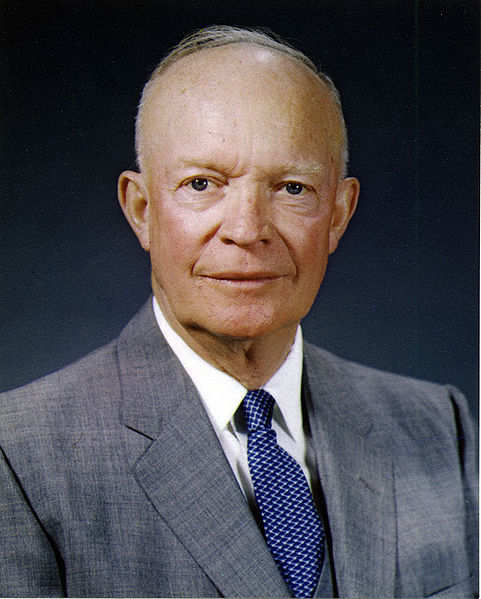 DWIGHT D. EISENHOWER (1890-1969)
34TH PRESIDENT OF THE UNITED STATES
In office 1953 -1961
TIMES OF WAR, CHANCE FOR PEACE
by
Jamie Dedes
“Every gun that is made, every warship launched, every rocket fired, signifies in the final sense a theft from those who hunger and are not fed, those who are cold and not clothed … “ Dwight D. Eisenhower, 34th President of the United States of American (1953-1961)
That quote is from Eisenhower’s speech, A Chance for Peace, delivered in 1953 three months after he took office and on the occasion of the death of Joseph Stalin, Premier of the Soviet Union (1941 to 1953). The “just peace” that the world hoped for in 1945 at the end of World War II had not materialized. While the Korean War was coming to a close, the Cold War-era military conflicts in Indochina (Vietnam, Laos, and Cambodia) were slowly escalating. The United States would have advisory troops in Vietnam in 1954. The armed conflict in that region of the world would continue long past Eisenhower’s administration with U.S. involvement escalating in the 1960s and continuing until the Fall of Saigon in 1975.
Since the end of the Second World War and the Korean War, violent conflict continues unabated with thirteen wars (defined as 1,000 or more deaths per year) currently, including the War in Afghanistan and the Yemeni and Syrian uprisings of 2011. Smaller scale conflicts resulting in fewer than 1,000 deaths per year have been rife and in 2011 include the Sudan-SPLM-N conflict, the Yemeni al-Qaeda crackdown, and the 2011 clashes in Southern Sudan. Genocides didn’t end either. We’ve had eight genocides since the Holocaust of WWII. The number of rebel groups is now over one-hundred, which probably errs on the light side. Conflicts rise from economic and social instability, which could be addressed if we invested in butter, not guns. Even in 1953, Eisenhower pointed out that war isn’t sustainable:
This world in arms is not spending money alone.
It is spending the sweat of its laborers, the genius of its scientists, the hopes of its children.
The cost of one modern heavy bomber is this: a modern brick school in more than 30 cities.
It is two electric power plants, each serving a town of 60,000 population. It is two fine, fully equipped hospitals.
It is some fifty miles of concrete pavement.
We pay for a single fighter plane with a half million bushels of wheat.
We pay for a single destroyer with new homes that could have housed more than 8,000 people.
If governments don’t recognize that Earth and her people cannot be sustained by war, many of their citizens do. One modern peaceful protest for a sustainable world is of interest to all of us who read, write, and love both poetry and peace. It is 100 Thousand Poets for Change, which held its first world-wide rally on September 24, 2011 with 700 events in 550 cities representing 95 participating countries united to promote peaceful environmental, social, and political change. Poets, writers, artists, musicians, and photographers the world over demonstrated in solidarity. The next global event is scheduled for September 29, 2012. Throughout the year small, local events are delivered at a various venues. By invitation, 100 Thousand Poets for Change was at the Sharjah (an Arab Emirate) International Book Fair, which ran through November 27. MujeebJaihoon reports, “From time immemorial, poetry has built better bridges between people than those with bricks and stones. And these bridges do not get old or obsolete…” [Change Is Born in the Womb of Poetry]
In A Chance for Peace Eisenhower pointed out, “No people on earth can be held, as a people, to be an enemy, for all humanity shares the common hunger for peace and fellowship and justice.” We do hunger, individually and collectively. Perhaps our chance for peace starts with you and me. Poem on …
© 2011 essay, Jamie Dedes All rights reserved
The photograph of Eisenhower is in the public domain
POET ACTIVISTS IN SOLIDARITY

“From time immemorial, poetry has built better bridges between people than those with bricks and stones. And these bridges do not get old or obsolete … ” [Change Is Born in the Womb of Poetry] MujeebJaihoon
POET ACTIVISTS IN SOLIDARITY
by
Jamie Dedes
After much resistance, I finally joined Facebook under my name HERE and created a page for Into the Bardo HERE. Facebook is yet another something that can consume too much time, but it’s also a gold mine of information and introductions to talented, responsible folks from around the world. Through poet-Friend connections I recently received an invitation to participate in:
100 THOUSAND POETS OF THE WORLD (100 Thousand Poets for Change) – This puts me in mind of Sam Hamill‘s Poets Against the War, when hundreds of poets marched and read outside the White House in protest against the war in Iraq. That was a well-defined effort. In this case the first question that comes to mind is “What kind of change?”
The first order of change is for poets, writers, artists, anybody, to actually get together to create and perform, educate and demonstrate, simultaneously, with other communities around the world. This will change how we see our local community and the global community. We have all become incredibly alienated in recent years. We hardly know our neighbors down the street let alone our creative allies who live and share our concerns in other countries. We need to feel this kind of global solidarity. I think it will be empowering. Excerpt from the press release of March 2011 announcing the the first 100 Poets for Change global event that was held on September 24, 2011. The next global event is scheduled for September 29, 2012.
100 Thousand Poets for Change is a unified effort among activist poets, artists, photographers, and musicians working toward a sustainable world through simultaneous events held across the globe, basically consciousness raising and peaceful protest. This September under the umbrella of 100 Thousand Poets for Change, 700 events were held in 550 cities representing 95 participating countries united to promote environmental, social, and political change. That’s pretty amazing and down-right gratifying. 100 Thousand Poets for Change is not getting the press that the Occupy movement is getting, but it is striking by virtue of its size, support, and sustainability.
Bob Holman and Margery Snyder, in an article on About.com said, “the beauty of the concept of 100 Thousand Poets for Change is that it is completely decentralized and completely inclusive.” All those involved are hoping, through their actions and events, to seize and redirect the political and social dialogue of the day and turn the narrative of civilization towards peace and sustainability.
Throughout the year, there are also small local events. Even as you read here today, the Sharjah International Book Fair is in progress will run through November 27. 100 Thousand Poets for Change was invited to participate and is actively doing so.
If this effort sounds like something that interests you as a poet and/or citizen of the world, check out the website HERE.
POETS AGAINST THE WAR started in 2003 by Sam Hamill is now defunct, but all the poems have been placed in a university archive. I was honored to find that two of mine are included. Sadly the web domain has been assumed by others for advertising. However, there is a bound collection of some of the original poems, Sam Hamill, Poets Against the War.
Δ

AUDRE LORDE (1934 – 1992)
Caribbean-American poet, writer, activist
trying to make power out of hatred and destruction
trying to heal my dying son with kisses
Power by Audre Lorde, The Collected Poems of Audre Lorde
NOTABLE AND QUOTABLE
“[Poetry begins] that process by which we insure the future because we know so much more than we understand. We must first examine our feelings for questions, because all the rest has been programmed. We have been taught how to understand, and in terms that will insure not creativity, but the status quo. If we are looking for something which is new and something which is vital, we must look first into the chaos within ourselves. That will help us in the directions that we need to go–that’s why our poetry is so essential, is so vital. Now whether poetry has the responsibility to effect social change . . . it doesn’t really matter. As we get in touch with the things that we feel are intolerable, in our lives, they become more and more intolerable. If we just once dealt with how much we hate most of what we do, there would be no holding us back from changing it. This is true with any kind of movement. This is the way in which the philosopher/Queen, the poet-warrior leads.” Audra Lorde in an interview Karla Hammond, American Poetry Review, March-April 1980
© Jamie Dedes, 2011 All rights reserved
photo credit ~ Audra Lorde (1980) by K. Kendall via Wikipedia and licensed under Creative Commons Attribution 2.0 Generic.
PERSPECTIVES ON CANCER #29: Nothing

NOTHING
by
Jamie Dedes
·
no buddha, no bodhi tree
no earth upon which to sit
in silent meditation
no suffering, no not suffering
nothing
rest assured
·
© poem, Jamie Dedes, 2011 all right reserved
Photo credit ~ Photo credit ~ A small temple beneath the Bodhi tree, Bodh Gaya, built in 7th century, after the original built by King Ashoka in 3rd century BCE, ca. 1810, British Library, public domain photograph via Wikipedia
♥ ♥ ♥ ♥
Jamie Dedes ~ is a former freelance feature writer and columnist whose topic specialties were employment, vocational training, and business. She finds the blessing of medical retirement to be more time to indulge in her poetry, creative nonfiction, and fiction. She has two novels in progress, one in final edits, and is pulling together a poetry collection. Her primary playground is Musing by Moonlight. She is the founder and editor/administrator of Into the Bardo. Jamie’s mother was diagnosed with cancer the first time at thirty-six. She went three rounds with breast cancer, one with thyroid cancer, and died at seventy-six of breast and colon cancer.
PEACE …

BUDDHA
Hatred does not cease by hatred, but only by love; this is the eternal rule.
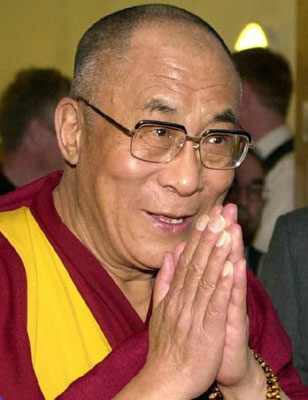 14th DALAI LAMA, TENZIN GYATSO
We can never obtain peace in the outer world until we make peace with ourselves.

RUMI
Out beyond ideas of wrong-doing and right doing
there is a field. I’ll meet you there.
 RABBI HILLEL THE ELDER
What is hateful to thyself do not do to another. That is the whole law, the rest is commentary.
 PARAMAHANSA YOGANANDA
Kindness is the light that dissolves all walls between souls, families, and nations.
 ST. PAUL THE APOSTLE
So now faith, hope, and love abide, these three; but the greatest of these is love.
PEACE AND LOVE:
DECISIONS, NOT PRAYERS
 Artist’s rendition: Reflection Memorial
Site of the Twin Towers, New York City
 The BeZine