Posted in poem, Poems/Poetry, poetry, Writing

One Poet, “One Art,” One Villanelle…the practiced precision of poetry

51yTZd+toIL._SY300_When people are good at what the do – no matter what their jobs are – their work seems effortless. We never see the hours of practice behind the dancer’s bravura performance or the pianist’s breathtaking delivery nor the years of experience behind the actor’s overnight success, the accountant’s instant analysis or the cook’s fabulously original meal pulled together with left-overs and pantry odds-and-ends. And so it is with the practiced precision of poetry …

Elizabeth Bishop’s One Art  seems effortless but over the course of years she rewrote it seventeen times. It’s humbling to note that someone this brilliant still struggled. One of the reasons that I tend to take down the poems on my blog is that they’re often drafts, even when I delude myself into thinking they’re not. I come back to them sometime later and small important things make me cringe and seem to shout for attention: the glaringly misplaced or missing comma, the inappropriate or inaccurate word and the major issues like overheated emotion, flawed logic or the disordered stanza. In my own small, insignificant way, I relate to Elizabeth Bishop’s struggle to get it just right.

In the short video that follows Professor M. Mark at Vassar College (Bishop’s alma mater) discusses Elizabeth Bishop, her work, and her only villanelle*, the renowned poem, One Art, which is included in The Complete Poems 1926-1978 (recommended reading). .

– Jamie Dedes.

One Art

The art of losing isn’t hard to master;
so many things seem filled with the intent
to be lost that their loss is no disaster.

Lose something every day. Accept the fluster
of lost door keys, an hour badly spent.
The art of losing isn’t hard to master.

Then practice losing farther, losing faster:
places, and names, and where it was you meant
to travel. None of these will bring disaster.

I lost my mother’s watch. And look! my last, or
next-to-last, of three loved houses went.
The art of losing isn’t hard to master.

I lost two cities, lovely ones. And, vaster,
some realms I owned, two rivers, a continent.
I miss them, but it wasn’t a disaster.

—Even losing you (the joking voice, a gesture
I love) I shan’t have lied. It’s evident
the art of losing’s not too hard to master
though it may look like (Write it!) like disaster.

– Elizabeth Bishop

Video uploaded by Vassar College.

* Vinanelle ~ a nineteen-line poem with two rhymes throughout, consisting of five tercets and a quatrain, with the first and third lines of the opening tercet recurring alternately at the end of the other tercets and with both repeated at the close of the concluding quatrain. New Oxford American Dictionary

photo-on-2012-09-19-at-19-541JAMIE DEDES (The Poet by Day)~ I am a mother and a medically retired (disabled) elder. The graces of poetry, art, music, writing and reading continue to evolve as a sources of wonder and solace, as a creative outlet, and as a part of my spiritual practice.

Posted in Essay, Liz Rice-Sosne, memoir, poem, Poems/Poetry, poetry

I Imagine …

I imagine Mummy

She is listening for Doodle Bugs

Running past St James Square

They make a swooshing noise before

Hitting their targets

Windows are darkening now

As she scurries by them

Like a mouse

Shades being pulled down

All light receding and gone

She is heading towards St Paul’s

She is meeting with a friend

At the statue of St Ann

Dinner was to soon follow

Constant gray clouds of dust

Engulfed her in dirt

London was under

Aerial bombardment

The Luftwaffe would spend

Fifty-seven nights

Bombing this great city

Wishing to eradicate it

From the face of the earth

This symbol of London and God

But London endured

St Paul’s remained standing

A symbol of British

endurance

Mummy lived to return home

To the USA

But I still imagine

I still wonder

Was it the war that

Shaped her personna

Making her harsh

She once said to me

During a phone call

With Mummy

Not long before her death

She told me that

The war was the most

Thrilling period of her life

I understand that feeling

I know what she was saying

She is gone

St Paul’s is standing

London thrives

Yet still I imagine

We all must come to terms with our upbringing.  For some there is more pain to work through than for others.  I had what one might call a proper upbringing.  Yet still, one filled with much pain.  My mother was not in London during those 57 nights of the Blitz.  This was of course poetic license on my part.  However, she was living in London during 1943 and 1944 in WWII.  She became a lifelong Anglophile.  This fact set up some difficult goals for her children to attain for they were not British (and we came after the war).

Sometimes due to her scrapbooks I feel as though I was there, in London during the war.

There was a time that I knew nothing about war.  A spiritual experience that I was willing to have in 2005, dictated that I learn about war.  Mummy never spoke of her work in London during WWII.  She worked for the US propaganda office or the OWI – Office of War Information.  I really never knew until I found two scrapbooks while cleaning out the family home.  Finding these scrapbooks made me realize what a vary brave woman she had been.  As a result, instead of harboring resentment towards her (resentment that she earned) I came to have significant admiration for her.

I wish to redo these books as they are in a state of disintegration.  However, it is exceptionally difficult for me to work with them.  I am very emotional about the subject.

Politicians never give thought to the consequences of wars into which they enter.  They have no clue as to the gravity of the collateral damage that accompanies their warring ways.  The United States of course had to enter WWII.  But, Hitler did not have to begin The War To End All Wars.  That war like so many have touched people down through the ages, times long past the end of the war in question.  War shapes people for generations to come.  Peace begins at home.  Not in the country, the state or the city.  No peace begins in the heart of the individual.  For it is when you get peaceful individuals together, one at a time that real peace begins to grow into a movement.  It becomes sizable and a peaceful nation is born.

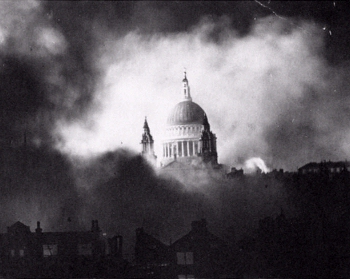
The following paragraph is taken word for word out from Wikipedia:

“On 31 December, the Daily Mail took the unusual step of publishing the photographer’s account of how he took the picture:[

I focused at intervals as the great dome loomed up through the smoke. Glares of many fires and sweeping clouds of smoke kept hiding the shape. Then a wind sprang up. Suddenly, the shining cross, dome and towers stood out like a symbol in the inferno. The scene was unbelievable. In that moment or two I released my shutter.”  – Herbert Mason

Stpaulsblitz

© 2013, essay and photographs, Liz Rice-Stone, All rights reserved

unnamed-2LIZ RICE-SOSNE a.k.a. Raven Spirit (noh where), perhaps the oldest friend to Bardo, is the newest member of The Bardo Group Core Team. She is also our new Voices for Peace project outreach coordinator and our go-to person for all things related to haiku.  She says she “writes for no reason at all. It is simply a pleasure.” Blogging, mostly poetry, has produced numerous friends for whom she has a great appreciation. Liz is an experienced blogger, photographer and a trained shaman. We think her middle name should be “adventure.”

BLOGGERS IN PLANET LOVE

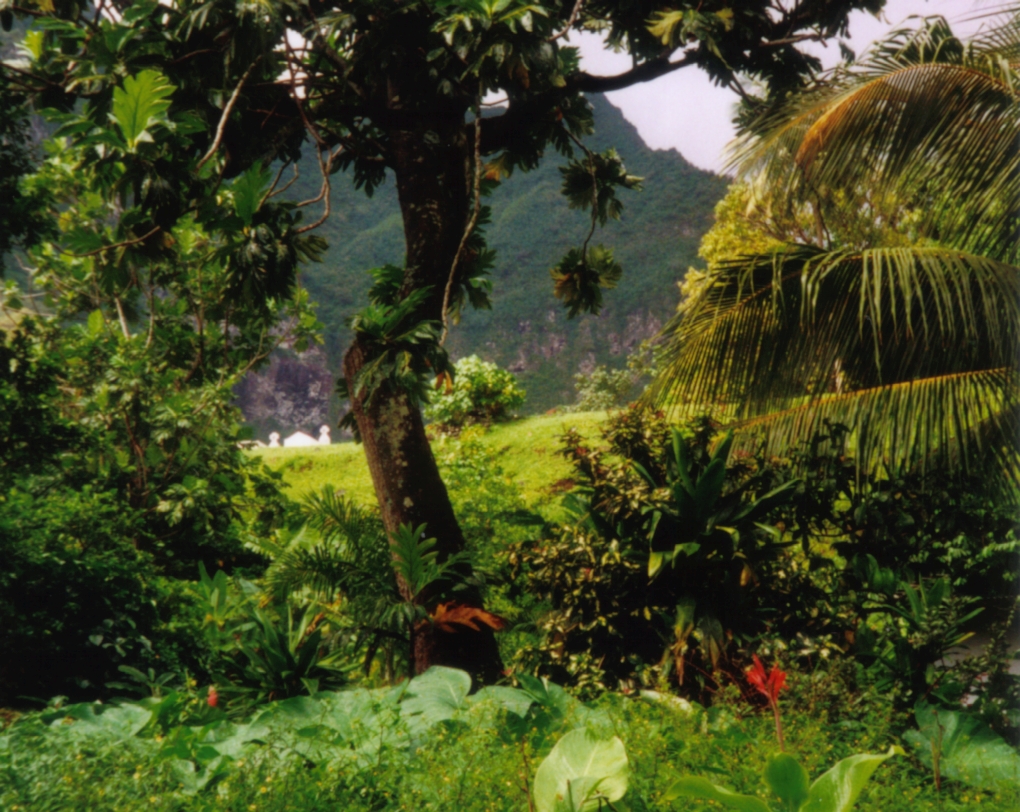
Rainforest_Fatu_HivaPLEASE JOIN US: Beginning at  7 p.m. PST this evening, we are celebrating Valentine’s Day with love – not the love of and for another person – but our love for our mother planet ….

WE INVITE ALL writers, poets, artists, photographers, musicians and other creatives to join us at The Bardo Group for our Valentine’s Day event, BLOGGERS IN PLANET LOVE. Link in your work that shares your appreciation for the beauty of nature or your concern for environmental issues. You can share the url to your post via Mr. Linky, which will stay up for seventy-two hours. Corina Ravenscraft (DragonDreams) hosts. Jamie Dedes (The Poet by Day) will visit sites and comment. We hope you will also visit others and comment on their work, lending support and encouragement and making connection.

If tonight is date-night for you, remember that you do have seventy-two hours to link your work in. It doesn’t have to be a new or recent piece, just something in the spirit of the event, something that expresses your love of our planet.

Photo credit ~ Tropical Rainforest, Fatu Hiva Island, Marquesas Islands, French Polynesia by Benutzerseite: Makemake via German language Wikipedia under CC A-SA 3.0 Unported license.

Posted in Niamh Clune, poem, Poems/Poetry, poetry

Into The Blue

would I were sure-footed,precipice
not stumble, fall for you,
be exposed on craggy precipice,
tumble into blue.

would the wind might carry me,
to distant, silky shore
holding my heart tenderly
breaking it no more.

then would I dance lightly,
arabesque with perfect poise
never losing my sure-footing
never hear the rushing noise
of pulsing rivered life-blood
coursing through my veins
as fool, I step off madly
to break my heart again.

copyright 2013 Niamh Clune

430564_3240554249063_1337353112_n-1orange-petals-cover_page_001DR. NIAMH CLUNE (Plum Tree Books Blog) ~ is the author of the Skyla McFee series: Orange Petals in a Storm, and Exaltation of a Rose. She is also the author of The Coming of the Feminine Christ: a ground-breaking spiritual psychology. Niamh received her Ph.D. from Surrey University on Acquiring Wisdom Through The Imagination and specialises in The Imaginal Mind and how the inborn, innate wisdom hidden in the soul informs our daily lives and stories. Niamh’s books are available in paperback (children’s books) and Kindle version (The Coming of the Feminine Christ). Dr. Clune is the CEO of Plum Tree Books and Art. Its online store is HERE.  Niamh’s Amazon page is HERE.

Posted in poem, Poems/Poetry, poetry

night-blooming lovers

file0001371332238 maybe a thing about particles and waves
or wave-particles and the way light works
and moves, the way soulmates’ eyes ignite
into stardust, the way some ancient god

smiled and blinked, flicked an able wrist
to strew some billion stars across a darkly
barren sky, then asked his goddess to
suspend the yellow moon, a caress so

softly lighted, it stirred the hopeful hearts of
night-blooming lovers into endless devotion,
though for sure the years run like the cheetah
and soon-or-late all hearts quake asunder,
just as sure as moonlight and stardust and
the way a true love fills in the fault lines

– Jamie Dedes

© 2013, poem, Jamie Dedes, All rights reserved
Photo courtesy of morgueFile

A ROMANTIC VALENTINE’S DAY POST because Valentine’s Day itself will be devoted to our BLOGGERS IN PLANET LOVE event, which will start on Valentine’s Day at 7 p.m., that is Friday, February 14. We invite writers, poets, artists, musicians and other creatives to join in by linking your work that shares your appreciation for the beauty of nature or your concern for environmental issues. You can share the url to your post via Mr. Linky, which will stay up for seventy-two hours. Corina Ravenscraft (DragonDreams) hosts and Jamie Dedes (The Poet by Day) will visit sites and comment. We hope you will also visit others and comment on their work, lending support and encouragement.

photo-on-2012-09-19-at-19-541JAMIE DEDES (The Poet by Day)~ I am a mother and a medically retired (disabled) elder. The graces of poetry, art, music, writing and reading continue to evolve as a sources of wonder and solace, as a creative outlet, and as a part of my spiritual practice.
Posted in poem, Poems/Poetry, poetry

New Mother, Turning to the Kora

20140104-184807When you still fit
my arms
like an instrument
beating rhythms
at my heart, you would, at times,
cry without cease,
without reason–without reason that I
could reason out–and I, almost without
reason myself, would play a music
of Kora and guitar
in which the strings,
sounding of bells,
plucked us from the closed-in walls
and wails,
lifted us
from the hard wood floor we walked, transported us
to some bigger brighter world where sun streamed
vibrationally, where leaves echoed, where
life strolled, where tears caught in scrunched cheeks seemed almost
ripples re-centering a well
on a day when one
craved water, a natural wrinkle
of wells and water.

Whirled shine glinted
upon our faces whether we looked
up or down, and even though, in that apartment,
metal gates shadowed the nearest windows;
we knew–even as an infant you could hear–
that the music held want as well
as tinkle, that knells mourn even as
they proclaim, that the lone also
harmonizes,
still you at last would smile, me
too, as if both of us were tuned
by those stringed scales,
so gratefully tethered.

– Karin Gustafson

© 2014, original artwork, poem and portrait (below), Karin Gustafson, All rights reserved

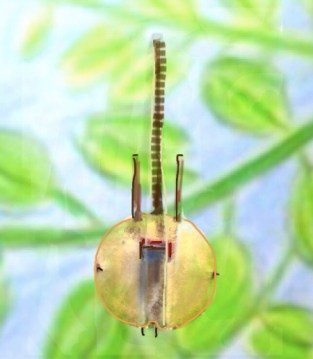
Kora ~ a twenty-one string bridge-harp used extensively in West Africa

photo-46KARIN GUSTAFSON (Manicddaily) ~ a guest contributor to Bardo focuses (sometimes) on the interface between creativity and stress, with a side of little elephant drawings. She is a writer and illustrator, having published a collection of poetry, Going on Somewherea children’s counting book, 1 Mississippi ( for lovers of light, water. and pachyderms) and, most recently,Nose Divea light-hearted mystery novel about teenagers, Broadway musicals, love, noses, New York City.  (More information about the books may be found at www.BackStrokeBooks.com and at Amazon.)  Since July 2009, Karin has been engaging visitors to her blog with her observations, poetry and artwork, especially her elephant sketches and cartoons. She is an active participant in d’Verse Poets Pub and a member of its d’Team.

Posted in Joseph Hesch, poem, Poems/Poetry, poetry

Cold Comfort

In one hand, the ruddy-faced,
ragged wanderer wraps a coffee cup
and his smoke. The other he keeps
in the pocket of his third-hand Mets jacket.
Whether he’s grasping something within
or just trying to keep it warm
is a mystery. Chances are 4-to-1
no cash shares those five fingers’ berth.

Joyous, the drifter throws smiles
like sunbeams right into the faces
of the straight-life, shivering souls with whom
he coasts these stark morning streets.
Their eyes are up too, but they focus
past the runny-nosed no one shuffling nearby,
seeing instead only the faces in the
steamed-up coffee-shop window.

The same familiar, frowning reflections
as yesterday’s.

– Joseph Hesch

© 2014, poem and photograph, Joseph Hesch, All rights reserved

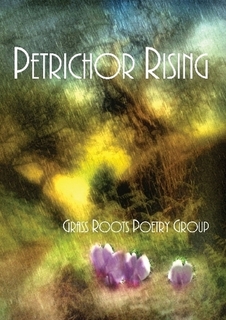
Hesch Profileproduct_thumbnail-3.phpJOSEPH HESCH (A Thing for Words) is a writer and poet from Albany, New York , an old friend of Bardo and a new core team member. Joe’s work is published in journals and anthologies coast-to-coast and worldwide. He posts poems and stories-in-progress on his blog, A Thing for Words.  An original staff member at dVerse Poets Pub website, Joe was named one of Writers Digest Editor Robert Lee Brewer’s “2011 Best Tweeps for Writers to Follow.” He is also a member of the Grass Roots Poetry Group and featured in their 2013 poetry anthology Petrichor Rising.

Posted in Nature, poem, Poems/Poetry, poetry, Victoria C Slotto, Victoria C. Slotto

outside my window, life goes on

Photo: Victoria Slotto

outside my window, our neighbor putters in her garden.
her roses languish while weeds have their way.

chemo, a fourth round, has taken its toll.
a few wispy hairs blow in the soft breeze.

i close my door gently behind me and we exchange a quick hug.
fear of crushing fragile bones holds me back a little

though her spirit soars, strong, unwavering
like the circling hawk above us, sun on golden wings.

at a distance a blackbird caws,
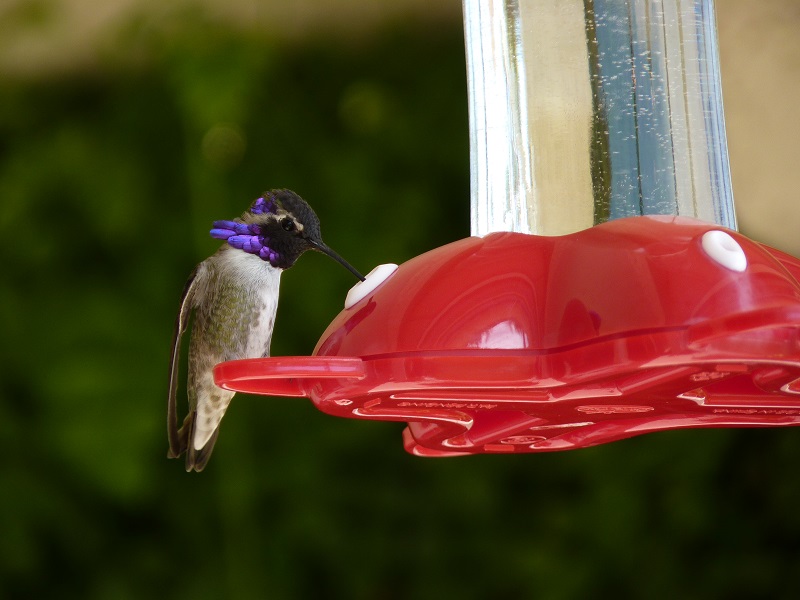
while hummingbird savors nectar,

drinks in the sweetness of the moment,
unafraid of that which is to come.

– Victoria Slotto

Photo: David Slotto
Photo: David Slotto

© 2014, poem and all photographs, Victoria Slotto, All rights reserved

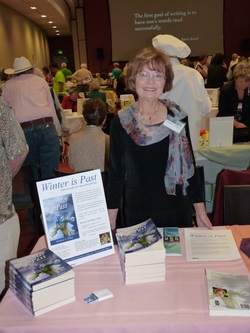
Victoria at the Palm Springs Writer's Expo March 2012
Victoria at the Palm Springs Writer’s Expo March 2012

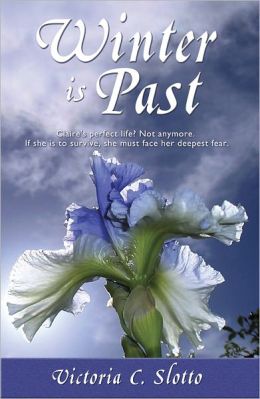
2940013445222_p0_v1_s260x420VICTORIA C. SLOTTO (Victoria C. Slotto, Author: Fiction, Poetry and Writing Prompts) ~ is an accomplished writer and poet. Winter is Past, published by Lucky Bat Books in 2012, is Victoria’s first novel. A second novel is in process. On Amazon and hot-off-the-press nonfiction is Beating the Odds: Support for Persons with Early Stage Dementia. Victoria’s ebooks (poetry and nonfiction) are free to Amazon Prime Members. Link HERE for Victoria’s Amazon page.

Editorial note: Congratulations, Victoria, on that the long awaited publication of print copies of Jacaranda Rain, Collected Poems, 2012, Beautifully done.

Writers’ Fourth Wednesday is hosted by Victoria from January through October and always posts at 7 p.m. PST.

Posted in Culture/History, Poems/Poetry, poetry, Poets/Writers, Video

RAY BRADBURRY: Part I, At his charming best ~ “If Only We Had Been Taller” …

Video uploaded to YouTube by JPLnews.

41us4g0+esL._SL500_SY300_IF ONLY WE HAD BEEN TALLER

The fence we walked between the years
Did balance us serene;
It was a place half in the sky where
In the green of leaf and promising of peach
We’d reach our hands to touch and almost touch the sky,
If we could reach and touch, we said,
‘Twould teach us not to, never to, be dead.

We ached and almost touched that stuff;
Our reach was never quite enough.
If only we had taller been,
And touched God’s cuff, His hem,
We would not have to sleep away and go with them
Who’ve gone before,
Who, short as we, stood tall as they could stand
And hoped by stretching thus to keep their land,
Their home, their hearth, their flesh and soul.
But they, like us, were standing in a hole.

O, Thomas, will a Race one day stand really tall
Across the Void, across the Universe and all?
And measured out with rocket fire,
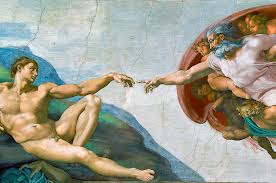
At last put Adam’s finger forth
As on the Sistine Ceiling,
And God’s hand come down the other way
To measure Man and find him Good,
And Gift him with Forever’s Day?
I work for that.

Short man. Large dream. I send my rockets forth between my ears,
Hoping an inch of Good is worth a pound of years.
Aching to hear a voice cry back along the universal Mall:
We’ve reached Alpha Centauri!
We’re tall, O God, we’re tall!

– Ray Bradbury

© Estate of Ray Bradbury

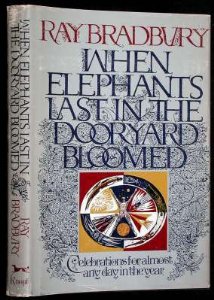
Ray Bradbury’s When Elephants Last in the Doorway Bloomed is a collection of poems in which he writes wistfully about childhood and about inventors, scientist, and explorers, often using religious imagery.

Posted in Jamie Dedes, Poems/Poetry, Poets/Writers

January Is On the Wane

file000592821988with a nod to Juana Inés de la Cruz

January is on the wane
leaving behind early dark and champagne hopes
for the genus Rosa. Wild or tame, they’re lovely.

Garden roses need pruning, solicitous cultivation ~
Layer shorter under taller, drape on trellises
and over pergolas, the promise of color and fragrance,
climbers retelling their stories in ballet up stone walls,
an heirloom lace of tea roses, a voluptuous panorama
rhymed with shrubs and rock roses in poetic repetition.
Feminine pulchritude: their majesties in royal reds
or sometimes subdued in pink or purple gentility,
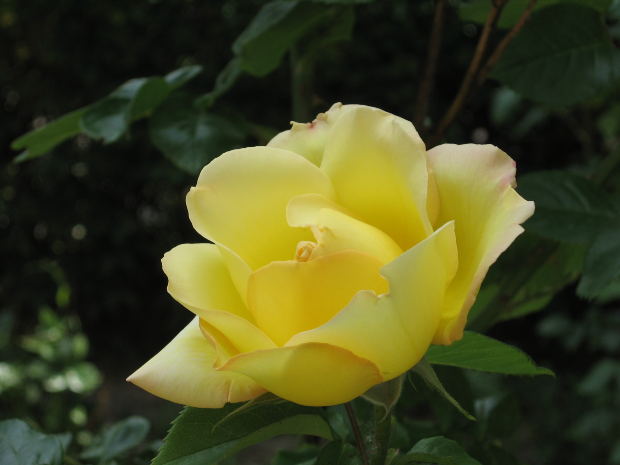
a cadmium-yellow civil sensibility, their haute couture.

Is it the thorned rose we love or the way it mirrors us
in our own beauty and flaw and our flow into decrepitude?
They remind of our mortality with blooms, ebbs, and bows
to fate, a noble death to rise again in season, after Lazarus.
Divinely fulsome, the genus Rosa, sun-lighted reflexed ~
And January? January is ever on the wane.

© 2013, poem, Jamie Dedes, All rights reserved
Photo courtesy of morgueFile

Portrait by Fray Miguel de Herrera (1700-1789)

The work that was the jumping off point for my poem is one by the Mexican nun, Sor Juana Inés de la Cruz (1551-1695), who lived during the time when Mexico was a part of the Spanish empire. Sor Juana was an ambitious writer, self-taught, and a Baroque poet. She belonged to the Order of St. Jerome. I am enamored of her work and find her life interesting. She was brilliant, independent and nonconforming.

Sor Juana was a writer, playwright and a Baroque poet. She was hungry for learning and was self-educated. From childhood, she set her own demanding educational goals. These three famous quotes of hers are telling:

“I don’t study to know more, but to ignore less.”

“One can perfectly well philosophize while cooking supper.”

“…for there seemed to be no cause for a head to be adorned with hair and naked of learning…”

For those who might be interested, here is her poem Rosa in Spanish and in English.

Rosa divina que en gentil cultura
eres, con tu fragrante sutileza,
magisterio purpureo en la belleza,
enseñanza nevada a la hermosura.
Amago de la humana arquitectura,
ejemplo de la vana gentileza,
en cuyo ser unió naturaleza
la cuna alegre y triste sepultura.
¡Cuán altiva en tu pompa, presumida,
soberbia, el riesgo de morir desdeñas,
y luego desmayada y encogida
de tu caduco ser das mustias señas,
con que con docta muerte y necia vida,
viviendo engañas y muriendo enseñas!

Rose, heaven’s flower versed in grace,
from your subtle censers you dispense
on beauty, scarlet homilies,
snowy lessons in loveliness.
Frail emblem of our human framing,
prophetess of cultivation’s ruin,
in whose chambers nature beds
the cradle’s joys in sepulchral gloom.
So haughty in your youth, presumptuous bloom,
so archly death’s approaches you disdained.
Yet even as blossoms soon fade and fray
to the tattered copes of our noon’s collapse –
so through life’s low masquerades and death’s high craft,
your living veils all your dying unmasks.

– Juana Inés de la Cruz

Illustration and poem in the public domain. Source of translation unknown.

photo-on-2012-09-19-at-19-541JAMIE DEDES (The Poet by Day)~ I am a mom and a medically retired (disabled) elder. The graces of poetry, art, music, writing and reading continue to evolve as a sources of wonder and solace, as a creative outlet, and as a part of my spiritual practice.

Posted in Joseph Hesch, poem, Poems/Poetry, poetry

Rapture in Rivertown

Discarded tree 1

With January’s ice-scrim mist,
this riverside neighborhood
turns back to photo-proof
black, white and gauzy gray.
Holiday colors have faded
like mid-September memories.

Tinder-dry once-evergreens,
erstwhile harlequin window beacons
for passing ice-breakers,
now lie exhausted on streetside,
snow-dusted Christmas gravestones,
waiting for the herald crash and call
of the trash collecting Rapture.

And ice-darkened perennial trees,
stand sentinel nearby
at snow-footed attention,
lean black cemetery guardsmen,
their uniforms on backorder
until a too faraway Spring.

This poem came from my walks and runs along the Hudson shore over the past 20 years. During the holidays, you could see the gumdrop-lit Christmas trees in windows over in Rensselaer. By early January, they were gone, the snow had come and the ice had choked the river. “Rapture in Rivertown” is what I recall and imagine of those days.

– Joseph Hesch

© 2014, poem and photograph, Joseph Hesch, All rights reserved

Hesch Profileproduct_thumbnail-3.phpJOSEPH HESCH (A Thing for Words) is a writer and poet from Albany, New York , an old friend of Bardo and a new core team member. Joe’s work is published in journals and anthologies coast-to-coast and worldwide. He posts poems and stories-in-progress on his blog, A Thing for Words.  An original staff member at dVerse Poets Pub website, Joe was named one of Writers Digest Editor Robert Lee Brewer’s “2011 Best Tweeps for Writers to Follow.” He is also a member of the Grass Roots Poetry Group and featured in their 2013 poetry anthology Petrichor Rising.

Posted in Poems/Poetry, poetry, Poets/Writers, Victoria C Slotto, Writers' Fourth Wednesday, Writing

WRITERS’ FOURTH WEDNESDAY: God Is a Verb–and so Are We!

Many writers, myself included, are in love with words. In some traditions, words acquire a sacred dimension. Creation comes into being through God’s word in the Hebrew scripture. The Word became flesh in Christian belief. I often use the letters of the Hebrew alphabet to lead me into meditation as they are considered to hold the power of creation and are full of symbolic meaning and creative energy.

A few years ago I read a book by Rabbi David Cooper titled “God is a Verb.” His understanding is that God has not ceased the work of creation and that God asks us to become co-creators with him. Rabbi Cooper calls this activity of God God-ing and refers to our participation as, for example, David-ing in his case, or, in mine, Victoria-ing. As each of us uses our talents in art or writing or photography we continue the work of creation. So take your own name, add that –ing and go to it!

Image: history.com
Image: history.com

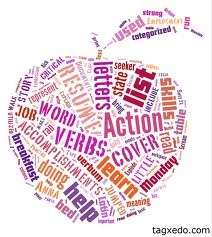
For today’s post and writing prompt, I’d like to take a look at the role of verbs. When I first ventured into the world of creative writing, one of my major flaws involved an abundant use of passive voice and boring verbs, hyperbolic adjectives and taxing adverbs…perhaps because so much of my early writing emerged in the context of business. Although I haven’t yet “arrived,” participation in critique groups and reading about the art of writing, offered an important insight: active verbs give life to prose and poetry. My earlier attempts to create character and description often fell flat.

Adverbs and adjectives are part of our language for a reason—to add color, texture and other artistic elements to our verbal armory, but discriminating use of these words, peppered with verbs that rock, do make a difference. While there is a role for telling and judicious use of passive voice, success lies in knowing how to achieve balance.

Here are a couple of examples/definitions of what I’m trying to say:

Passive voice—when something is done to the object:
The child was bitten by a bee.

Active voice, the subject is the doer:
The bee bit the child.

And overuse of adjectives and adverbs:
The hefty pass-kicker adroitly kicked the ball between the goal post in spite of the blustery wind.

I’d like to share a poem posted by fellow poet, Jane Hewey on her blog:

Scar Hopping
Copyright: Jane Hewey

Glacial divides bypass
the dusty canyons thrusting
their will. Moons crawl
through midnights; I want
to touch your singular hurt,
wrap it with my hands
and light-soaked cloths.

I would warm it through
your thick white skin, force myself
into its cold-singe. I want
to evoke you out of the scar
like arctic char augured
from an eight inch ice hole.

http://janehewey.wordpress.com/View all posts by janehewey

I’ve added italics to some of the singular verb and verb derivatives (such as gerunds) Jane chose. While she does use descriptors, the verbs add so much to the flow and strength of the poem.

I hope this inspire you to write a poem, flash fiction or essay incorporating a rich use of verbs. You may want to select something from your archives that never quite satisfied you and try to spice it us a bit. Maybe it’s heavy on adverbs and adjectives, even bordering on “purple prose.” Or grab a dictionary and discover a verb or two that’s new to you.

Feel free to share your results, if you like. To join in:

  • Write your poem and post it on your blog or website;
  • Copy and paste the direct URL to your poem to Mr. Linky at the bottom of this post, adding your name or identifier where he prompts you;
  • I’ll visit you and comment and we hope that you will visit and encourage one another
  • Above all, have fun and remember—you are a co-creator!

Special thanks to Jane for allowing me to share her copyrighted poem

Image: tagxedo
Image: foxhugh.com

.

(Portions of this post were recently offered at dVerse Poets’ Pub, another site for which I write each month. If you write poetry and are not familiar with this poetry community, it is a source of excellent articles about all things poetic and offers several prompts each week, including a night for Open Links!)

_____________

Victoria at the Palm Springs Writer's Expo March 2012
Victoria at the Palm Springs Writer’s Expo March 2012

2940013445222_p0_v1_s260x420VICTORIA C. SLOTTO (Victoria C. Slotto, Author: Fiction, Poetry and Writing Prompts) ~ is an accomplished writer and poet. Winter is Past, published by Lucky Bat Books in 2012, is Victoria’s first novel. A second novel is in process. On Amazon and hot-off-the-press nonfiction is Beating the Odds: Support for Persons with Early Stage Dementia. Victoria’s ebooks (poetry and nonfiction) are free to Amazon Prime Members. Link HERE for Victoria’s Amazon page.

Editorial note: Congratulations, Victoria, on that the long awaited publication of print copies of Jacaranda Rain, Collected Poems, 2012, Beautifully done.

Writers’ Fourth Wednesday is hosted by Victoria from January through October and always posts at 7 p.m. PST.

Posted in Corina L. Ravenscraft, poem, story

A few bits of Soul Sustenance – A story, a quote and a poem

One of the things I like about parables or fables is that they have seeds of truth and wisdom condensed into “bite-sized” amounts of reading. I enjoy looking for new ones which I haven’t read and sometimes come across old favorites. For those of you seeking “Truth” (and all that the word with a capital “T” entails) I offer the following story:

The seeker of truth

“After years of searching, the seeker was told to go to a cave, in which he would find a well. ‘Ask the well what is truth’, he was advised, ‘and the well will reveal it to you’. Having found the well, the seeker asked that most fundamental question. And from the depths came the answer, ‘Go to the village crossroad: there you shall find what you are seeking’.

Full of hope and anticipation the man ran to the crossroad to find only three rather uninteresting shops. One shop was selling pieces of metal, another sold wood, and thin wires were for sale in the third. Nothing and no one there seemed to have much to do with the revelation of truth.

Disappointed, the seeker returned to the well to demand an explanation, but he was told only, ‘You will understand in the future.’ When the man protested, all he got in return were the echoes of his own shouts. Indignant for having been made a fool of – or so he thought at the time – the seeker continued his wanderings in search of truth. As years went by, the memory of his experience at the well gradually faded until one night, while he was walking in the moonlight, the sound of sitar music caught his attention. It was wonderful music and it was played with great mastery and inspiration.

Profoundly moved, the truth seeker felt drawn towards the player. He looked at the fingers dancing over the strings. He became aware of the sitar itself. And then suddenly he exploded in a cry of joyous recognition: the sitar was made out of wires and pieces of metal and wood just like those he had once seen in the three stores and had thought it to be without any particular significance.

At last he understood the message of the well: we have already been given everything we need: our task is to assemble and use it in the appropriate way. Nothing is meaningful so long as we perceive only separate fragments. But as soon as the fragments come together into a synthesis, a new entity emerges, whose nature we could not have foreseen by considering the fragments alone.” ~ Author Unknown Source

For those of you unfamiliar with the wonderful sounds of a Sitar (the instrument mentioned in the story above), I offer the following beautiful example from one of the greatest players of our time, Ravi Shankar:

In addition to truth, one also needs moments of stillness and meditation to keep balance in life. The photo below is mine, but the quote is Lao Tzu’s:

Be stillAnd lastly, a poem written a while ago about something I rarely get to witness, since I’m a night-owl by nature:

~ Sunrise Sighs ~

Today, for the first time in a small while, I was awake to witness a fresh sunrise.

The purpled-pink fingers crept up like a smile,

gently waking the crisp air of still-sleepy skies.

Vaporous flames of bright orange hues, licking the velvet of dew-kissed dawn,

Sleep promised me a solid, deep, dreamless snooze,

But rapt in my awe, I stayed awake and gazed on.

I love the quiet, hushed hours of Night; they keep me content in a solitary peace,

But the rare, glimpsed glory of Morning’s soft light

Makes me ache with a sweetness that begs for release.

~ C.L.R. ~ ©

effecd1bf289d498b5944e37d8f4ee6fAbout dragonkatet Regarding the blog name, Dragon’s Dreams ~ The name comes from my love-affairs with both Dragons and Dreams (capital Ds). It’s another extension of who I am, a facet for expression; a place and way to reach other like-minded, creative individuals. I post a lot of poetry and images that fascinate or move me, because that’s my favorite way to view the world. I post about things important to me and the world in which we live, try to champion extra important political, societal and environmental issues, etc. Sometimes I wax philosophical, because it’s also a place where I always seem to learn about myself, too, by interacting with some of the brightest minds, souls and hearts out there. It’s all about ‘connection(s)’ and I don’t mean “net-working” with people for personal gain, but rather, the expansion of the 4 L’s: Light, Love, Laughter, Learning.

Posted in Essay, General Interest, Liz Rice-Sosne, Poems/Poetry, poetry, Spiritual Practice, Writing

Haiku – A Spiritual Experience

600px-Poecile-atricapilla-001I am sitting here trying to remember what prompted me to write one haiku per day during the first 6 months of 2012.  I was ill, that was the first reason for doing so.  I wished to remain connected to my writing community, keep alive my connection with the friends that I had met online.  I knew that I could not manage an article daily so I needed to write something short.  I decided that haiku was the answer.  Was there any shorter form of poetry?  The learning and the writing that year became for me a spiritual experience.  It taught me to see the world through a new and different lens.  I am so grateful for this experience

I have always been drawn to haiku even when young.  What can be said in 17 syllables, those three short lines of 5, 7, 5 syllables?  It would be easy – just compose three short lines of poetry a day.  Those thoughts will tell you just how little I knew of haiku when I began.  Experience has shown me that many Americans have little knowledge of haiku seeing it simply as three lines of poetry with the 5-7-5-syllable count.  If seen this way the reader and writer of haiku will never be fully satisfied.

The first thing that one should know is that the syllable count fits Japanese words or syllables.  Japanese words or syllables are nothing like English language syllables.  When attempting to write a haiku there are many things to consider before considering the word count.  The second thing that I learned is that it is often written in one line.  Just one.  In Japan that line is often written from top to bottom.  It is vertical.  I do not write vertically.

Poignancy in haiku is important.  The most important thing about haiku for me is very hard to put into language.  For I see haiku as a language all its own.   A haiku ties things together.  Haiku conveys the depths of nature’s beauty and its power.  Haiku shows ones relationship with nature.  One haiku can express in a few words what it might take a psychologist an entire magazine article to profess.  Haiku can evoke within the reader new understanding.  I equate haiku to light.  It can dazzle in brightness.  It can illuminate a path.  It can act as a halo separating yet conjoining reader and writer through the poem.  You are placed within the poem.  Haiku connects the ancient with the modern, the light with the dark, and nature with man/womankind.

The book to which I turn most often for reference is “The Haiku Handbook, How To Share Write and Teach Haiku,” by William J. Higginson.  I would go so far as to say that he has he has “lived” haiku, making his teachings easy to understand and to apply.  When writing haiku my goal is to be living in the moment, to be “living haiku.”  It is a spiritual moment.  I wish to express that moment to you so that you feel what I feel.  I believe Higginson tells us that haiku is about the eloquence of sharing those feelings.  It is easy to say to your friend: “the sky is beautiful.”  But in doing so, you do not really convey what you feel.   Nor are you conveying any degree of real beauty.  According to Higginson, when we share the depths of what we feel through haiku we are building community.   What more important act is there?

The first thing that I do when writing a haiku is search for a kigo.  A kigo is a season word and mandatory in haiku.  Your haiku should be driven by what you feel for your subject and your choice of kigo.   I view the kigo as an anchor.  There are numerous kigo databases online.  New words are always being added.

We have just experienced a foot of snow here in the midwest.  The last time we had so much snow was 1982.  This is an immense weather event here.  Along with subzero temperatures accompanied by wind many of us are pretty much homebound.  I would like to share this large weather experience with you by writing a haiku.  I edit and re-edit before I am happy with them.  Each of these are a part of my process for creating one haiku.

wall of snow – broken branches dangling from trees (this sounds awkward to me)

or

deep white snow – hidden branches (this coveys little feeling)

or

drifting snow – a chickadee’s cap (this possesses the essence of what I am looking for)

Final haiku:

blowing drifting snow – chickadee’s black cap

– Liz Rice-Sosne

© 2013, essay, Liz Rice-Stone, All rights reserved
Photo credit ~ Black-capped Chickadee via Wikipedia and under CC A-SA 3.0 unported license

unnamed-2LIZ RICE-SOSNE a.k.a. Raven Spirit (noh where), perhaps the oldest friend to Bardo, is the newest member of The Bardo Group Core Team. She is also our new Voices for Peace project outreach coordinator and our go-to person for all things related to haiku.  She says she “writes for no reason at all. It is simply a pleasure.” Blogging, mostly poetry, has produced numerous friends for whom she has a great appreciation. Liz is an experienced blogger, photographer and a trained shaman. We think her middle name should be “adventure.”

Posted in Jamie Dedes, Poems/Poetry

it was the golden light …

800px-dovedale_by_moonlight_-_oberlini awoke
it was the golden light
the moon camping out
casting my room in the
glow of its fire

i thought
for a moment
unsure of my place
forgetting
what city
what state
what day

seconds passed
soundless

slowly peeling away
the veil, the confusion
i melted into
the golden light
breathed myself
into sleep again
done

and done
as easily perhaps
as breathing into
eternal sleep
so frail and fragile
is this anchor
this silver thread
this castle of solitude
this just me
inside me
inside life

– Jamie Dedes

© 2013, poem, Jamie Dedes, All rights reserved
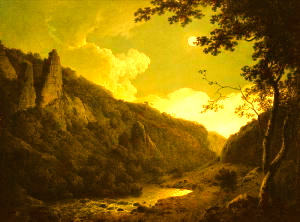
Illustration ~ from Allen Memorial Art Museum (Oberlin College) a photograph Joseph Wright of Derby’s (English Derby, 1734-1797) Dovedale by Moonlight (ca.1784-85). Description/details HERE. It’s original colors are greens and I have change the exposure and color to go with the poem.

photo-on-2012-09-19-at-19-541JAMIE DEDES (The Poet by Day)~ I am a mom and a medically-retired (disabled) elder. The graces of poetry, art, music, writing and reading continue to evolve as a sources of wonder and solace, as a creative outlet, and as a part of my spiritual practice.

Posted in poem, Poems/Poetry, Poets/Writers

Inside the Brightness of Red

This month Victoria Slotto will host “Writer’s Fourth Wednesday” writing prompt on January 22 at 7 p.m. here at The Bardo Group. She invites any and all to participate. Victoria will set up Mr. Linky and leave it up for three days so that we can all link in our scribbles whether poems, fiction or creative nonfiction.

I hope this reblogged piece on the English poet Mary MacRae will help to start the creative juices running and perhaps inspire some confidence in those others who are also coming to their art late in life. J. D.

Jamie Dedes's avatarJamie Dedes' THE POET BY DAY Webzine

NOTE: Originally published here about two years ago, this post is worthy of a wider audience and more than one read; and so, with some additions, I post it again for the benefit new readers and old. Among other things, the evolution of Mary’s poetic grace in her maturity is certain inspiration for those who come to their art late in life as she did. Enjoy …

Mary MacRae “wrote and published poetry for only the last ten years of her life, after ill-health forced her to take early retirement from teaching. She taught for 15 years at the James Allen Girls School (JAGS), Dulwich, London. Her commitment to writing led to her deep involvement with the first years of the Poetry School under Mimi Khalvati, studying with Mimi and Myra Schneider, whose advanced poetry workshop she attended for 8 years. In these groups her exceptional talent…

View original post 1,298 more words

Posted in Jamie Dedes, Peace & Justice, Poems/Poetry

I Want To Make It Sane Again

file0001824554659what must it be like for you in your part of the world?

there is only silence, I don’t know your name, i know only
that the fire of life makes us one in this, the human journey,
search and return, reaching for the sun, running through mud

walking the gauntlet without a prayer or a blessing

our eyes meet in secret, our hearts open on the fringe,
one breath and the wind blows, one tear and seas rise,
on the street where you live, your friends are all gone

the houses are crushed and the doves have flown

there is only silence, no children playing, no laughter
here and there a light remains to speak to you of loneliness,
my breath caught in my throat, i want to make it sane again

“Sometime they’ll give a war and nobody will come.”
Carl Sandburg (1878-1967), American poet, writer, and editor

– Jamie Dedes

©2013, poem, Jamie Dedes, All rights reserved, Photo courtesy of morgueFile

photo-on-2012-09-19-at-19-541JAMIE DEDES (The Poet by Day)~ I am a mom and a medically retired (disabled) elder. The graces of poetry, art, music, writing and reading continue to evolve as a sources of wonder and solace, as a creative outlet, and as a part of my spiritual practice.
Posted in Charles W Martin, Photography/Photographer, Poems/Poetry

holographic images

holographic images

these children you see
homeless hungry and alone
are to be ignored
their fate is not yours
nor that of your dear children
no need to look up
finish your coffee
catch the downtown train to work
you’ll feel better then
we have really tried
to make them invisible
but their holograms
for moral reasons
reappear from time to time
not to worry friend
winter vacation
is at hand so forget them
have another drink
give us a moment
to erase their visual file
from your memory
they’re a hologram
nothing more than an image
that somehow can bleed

.
678ad505453d5a3ff2fcb744f13dedc7-1product_thumbnail.php41V9d9sj5nL._SY344_PJlook-inside-v2,TopRight,1,0_SH20_BO1,204,203,200_CHARLES W. MARTIN (Reading Between the Minds) — earned his Ph.D. in Speech and Language Pathology with an emphasis in statistics.  Throughout Charlie’s career, he maintained a devotion to the arts (literature/poetry, the theater, music and photography).  Since his retirement in 2010, he has turned his full attention to poetry and photography. He publishes a poem and a photographic art piece each day at Read Between the Minds, Poetry, Photograph and Random Thoughts of Life. He is noted as a poet of social conscience. Charlie has been blogging since January 31, 2010. He has self-published a book of poetry entitled The Hawk Chronicles  and will soon publish another book called A Bea in Your Bonnet: First Sting, featuring the renown Aunt Bea. In The Hawk Chronicles, Charlie provides a personification of his resident hawk with poems and photos taken over a two-year period. Charlie’s lastest book, When Spirits Touch, Dual Poetry, a collaboration with River Urke, is available through Amazon now.

Posted in Charles W Martin, Nelson Mandela, Peace & Justice, Photography/Photographer, poem, poetry

mandela…

mandela

once
or twice
in a lifetime
an ancient returns
showing
the way
not
as a prophet
or
god-like figure
but as
a man
or
a woman
willing to expend
all their life forces
to open
the minds
of all those
willing
to listen
and
do
as they
have done
the world
always
sees
them
and
offers up
great praise
so
when they die
mourners
shed tears
in the rain
but
the world
quickly
loses its way
in the fog
of greed
until
the next
ancient
is
reborn

.
678ad505453d5a3ff2fcb744f13dedc7-1product_thumbnail.php41V9d9sj5nL._SY344_PJlook-inside-v2,TopRight,1,0_SH20_BO1,204,203,200_CHARLES W. MARTIN (Reading Between the Minds) — earned his Ph.D. in Speech and Language Pathology with an emphasis in statistics. Throughout Charlie’s career, he maintained a devotion to the arts (literature/poetry, the theater, music and photography). Since his retirement in 2010, he has turned his full attention to poetry and photography. He publishes a poem and a photographic art piece each day at Read Between the Minds, Poetry, Photograph and Random Thoughts of Life. He is noted as a poet of social conscience. Charlie has been blogging since January 31, 2010. He has self-published a book of poetry entitled The Hawk Chronicles and will soon publish another book called A Bea in Your Bonnet: First Sting, featuring the renown Aunt Bea. In The Hawk Chronicles, Charlie provides a personification of his resident hawk with poems and photos taken over a two-year period. Charlie’s lastest book, When Spirits Touch, Dual Poetry, a collaboration with River Urke, is available through Amazon now.