Posted in General Interest, story, Video

A StoryCorps Story: a mother, a son, two secrets and much love

“But behind all your stories is always your mother’s story, because hers is where yours begins.”
― Mitch Albom (b. 1958) American author and journalist, quote from For One More Day

Our thanks to Laurel D. for suggesting this one.

Posted in Poems/Poetry

Such, Such Is Death

CHARLES HAMILTON SORLEY (1895 – 1915)

British Poet

Charles Hamilton Sorley was born in Aberdeen in 1894. The son of the profressor of moral philosphy at Aberdeen University, Sorley was extremely intelligent and won a scholarship to Marlborough College.

In 1913 Sorely spent a year in Germany before taking up the offer of a place at University college, Cambridge. When war (World War I) was declared in August 1914, Sorley returned to England and enlisted in the British Army. He joined the Suffolk Regiment and after several months training, Lieutenant Sorly was sent to the Western Front.

Sorley arrived in France in May 1915 and after three months was promoted to captain. Charles Hamilton Sorley was killed by a sniper at the Battle of Loos on October 13, 1915. He left only 37 complete poems, including the one he wrote just before he was killed, When You See Millions of the Mouthless Dead. Sorley’s posthumous book, Marlborough and Other Poems* was popular and achieved critical success when it was published in 1916.  [adapted from Spartacus Educational, a site developed by John Simpkin (MPhil.), British educator, historian, and member of the European History E-Learning Project] J.D.

·

SUCH, SUCH IS DEATH (1915)

by

Charles Hamilton Sorley 

·

Such, such is Death: no triumph: no defeat:

Only an empty pail, a slate rubbed clean,

A merciful putting away of what has been.

And this we know: Death is not Life, effete,

Life crushed, the broken pail. We who have seen

So marvellous things know well the end not yet.

Victor and vanquished are a-one in death:

Coward and brave: friend, foe. Ghosts do not say,

“Come, what was your record when you drew breath?”

But a big blot has hid each yesterday

So poor, so manifestly incomplete.

And your bright Promise, withered long and sped,

Is touched, stirs, rises, opens and grows sweet

And blossoms and is you, when you are dead.

·

TO GERMANY (1914)

by

Charles Hamilton Sorely 

You are blind like us. Your hurt no man designed,
And no man claimed the conquest of your land.
But gropers both through fields of thought confined
We stumble and we do not understand.
You only saw your future bigly planned,
And we, the tapering paths of our own mind,
And in each other’s dearest ways we stand,
And hiss and hate. And the blind fight the blind.

When it is peace, then we may view again
With new-won eyes each other’s truer form
And wonder. Grown more loving-kind and warm
We’ll grasp firm hands and laugh at the old pain,
When it is peace. But until peace, the storm
The darkness and the thunder and the rain.

Photo credit ~ a cropped and retouched version of a portrait of British soldier poet, Charles Hamitlton Sorely dated c. 1914/1915, since Mr. Sorely is in uniform here and was enlisted in 1914 and killed in 1915. The photo was first published in 1918. The collection of his poems came out in 1919. The photo is from For Remembrance: Soldier Poets Who Have Fallen in the War. The photograph is in the public domain.

*Poems ~ excepts from Marlborough and Other Poems by Charles Hamilton Sorely. It would appear that this book is currently in the public domain. You can read the entire book on or download it from Internet Archives HERE.

Posted in General Interest, Nature, Photography/Photographer

May 21, 2014

To help us continue our close of interNational Photography Month, what could be better than this lovely iris and poetic musing from Marilynn Mair, mandlinist, bandolimist, writer, photographer and wannabe Brasileira? Marilynn is Professor of Music at Roger Williams University in Bristol, Rhode Island. In some circles she is known as the First Lady of Mandolin.

Posted in Bardo News, General Interest, Photography/Photographer, Poets/Writers

BARDO NEWS: SecondLight Network of Women Poets celebrates its 20th Anniversary; a Poetry Competition; A Bea in Your Bonnet; interNational Photography Month (wrap-up); 100,000 Poets for Change

Second Light Network Founder, Dilys Wood

SECOND LIGHT 20th ANNIVERSARY! The Bardo Group community extends to Second Light Network (women poets forty-years old or better) our best wishes, appreciation, and congratulations for its on-target focus, fine work and unrelenting commitment to poets, poetry, and to giving women in their third act a second chance. Special kudos to poet and founder, Dilys Wood, and all those who provide regular support to us here at The Bardo Group especially poets Myra Schneider who keeps us informed, provides us with wonderful poetry and instructive feature articles and Ann Stewart who so ably assists us with the details of coordination.

Jackie Kay (b. 1961), Scottish poet and novelist is the 2014 Second Light Network Long and Short poetry competion, photo by Slowking4 under CC A - Noncommercial Unported License
Jackie Kay (b. 1961), Scottish poet and novelist is judge for the 2014 Second Light Network Long and Short poetry competition, photo by Slowking4 under CC A – Noncommercial Unported License

SECOND LIGHT POETRY COMPETITION DEADLINE: TUESDAY 17th JUNE. Judge: Multi-award-winning JACKIE KAY. Long and Short Poems by Women. (‘Long’ = 50+ lines). 1st Prize £300 (in each category). More cash & book prizes + publication in ARTEMISpoetry + London reading. Enter by post or online.

Amongst Jackie Kay’s many poetry awards and prizes are the Forward, Saltire, Scottish Arts Council (for The Adoption Papers) and a shortlisting for Costa. She also writes award-winning fiction both for adults and children, and for stage and TV. She is Professor of Creative Writing at Newcastle University. She was awarded an MBE in 2006, and made a fellow of the Royal Society of Literature in 2002.

£300 First Prize for each of Long (no upper limit) and Short (max 50 lines) poems

£100 Second Prize (1 poem from either category)

£50 Third Prize (1 poem from either category)

Commended poets: book prizes

Winning & Commended Poets published (in full or extract) in ARTEMISpoetry

A reading will be organised for winners in London in Autumn 2014.

Entry: £6 each per long poem. Short poems: £4 each or £9 for 3, £14 for 8. Enter by post (2 copies) or online.

Complete details HERE. PLEASE NOTE THAT ALTHOUGH SECOND LIGHT NETWORK OF WOMEN POETS IS BASED IN ENGLAND, MEMBERSHIP IS OPEN WORLDWIDE AND SUBMISSIONS TO ARTEMISpoetry and to various anthologies and competitions are considered from women anywhere in the world. You do not need to be a member to submit your work to be considered for publication.

product_thumbnail-1.phpA BEA IN YOUR BONNET, FIRST STING: If Charlie Martin has felt his ears ringing this month, it’s probably because we’ve been reading – and talking about – his newest collection and are delighted with it. It was worth the wait. It’s filled with humor, irony and folksy wisdom.

Charlie says, “Bea In Your Bonnet: First Sting is a collection of germinal poems featuring Aunt Bea. Aunt Bea’s voice is one I’ve heard almost every day of my life. Family observations, lessons, and advice given to me and every other family member who had the good sense to listen. Her homespun philosophy most likely will not be found in any collegiate textbooks or for that matter in any local town crier newspaper catering to city dwellers. Indeed, she has a different way of viewing the world; a bit old fashion, sassy, and steely at times but a viewpoint which has engaged my imagination and heart. I sincerely hope you too will find some morsel of wisdom in her personal observations and interpretations of life’s events, but do watch out for her stingers.”


******

unnamed-17YOU BRING TO THE ACT OF PHOTOGRAPHY all the pictures you have seen, the books you have read, the music you have heard, the people you have loved.” Ansel Adams (1902-1984), American photographer and environmentalist

interNATIONAL PHOTOGRAPHY MONTH: We’ve spent a good portion of our May posts on photography in honor of this celebration. We’ve explored photography as art, journalism, documentary, story, creative outlet, means to enter sacred space and as spiritual practice. In case you’ve missed any of these delicious and sometime provocative posts, here are the links/subjects covered:

interNational Photography Month, join us in celebrating this art form, May 1

The Very Picture, a photo-essay/story by Naomi Baltuck, May 2

Sacred Space in the Frame, a Sunday meditation by Terri Stewart, May 4

St. Louis Arch, a meditation by Liz Rice-Sosne (a.k.a. Raven Spirit), May 5

Life is Like a Camera, May 9

Sacred Space in Photograph: Perspective, a Sunday meditation by Terri Stewart, May 11

Photographs “are made with the eye, heart and head.” French Photographer Henri Cartier-Bresson: The Decisive Moment, May 11

interNational Photography Month: Wordless Wednesday essay and event host, Prisciall Galasso, May 14

About My Friend, Wendy Alger, Fine Arts Photographer by Jamie Dedes, May 16

Sacred Space and Light, a Sunday meditation by Terri Stewart, May 18

Through a Lens Darkly: How African-Americans Use Photography to Shape Their Cultural Representation, May 18

Tempest in a Teapot, a photo essay/story by Naomi Baltuck, May 20

Travel Themes: Blossoms by Imelda de Castro-Santore, May 20

Fusion: The Synergy of Images and Words by Steve McCurry, May 21

Expanding the Circle: The Engaged Photographer, May 22

Photoshopping My Life by Charles W. Martin

stalking the wild tombstone by Jamie Dedes, May 24

Sacred Space and Photography: Light v 2, a Sunday meditation by Terri Stewart

TIDBITS: Niamh Clune reports that she is  busy busy expanding  Plum Tree Books children’s division. Liz Rice-Sosne (noh where) and Jamie Dedes (The Poet by Day) have both moved to new digs and are recuperating from exhausing work and the many complications (anticipated and unanticipated) that are always involved in such endeavors. Both will be back online more frequently soon, as will Liliana Negoi (Endless Journey and in Romanian curcubee în alb şi negru) who has been up to some truly interesting things, which we hope she’ll share with us.

and Golden Lens Awards to:

WRITER’S FOURTH WEDNESDAY/Coming up 28 May: Writers’ Fourth Wednesday prompt is hosted by poet, novelist and writing coach, Victoria C. Slotto, from January through October. Victoria’s next Fourth Wednesday writers’ prompt will post at 12:01 a.m. PST on May 28. Please join us. Mister Linky will remain open for seventy-two hours so that you can link your response to this blog.If you find Mister Linky too combersom to use, please feel free to leave your link in the comments section on Wednesday. Victoria and Jamie will read and comment and we hope you will read each other’s work as well, comment and encourage.

cropped-100TPfCNEW3

Julio-Pavanetti-del-Liceo-Poético-de-Benidorm1-300x189THE BEST FOR LAST:

POETS AND ARTISTS OF EVERY ILK GATHER FOR POSITIVE CHANGE AROUND THE WORLD: As part of the planning process for 100,000 Poets for Change in Septermber, we are interviewing one of the founders of the event, Michael Rothenberg, poet, songwriter, editor and environmentalist. (Terri Carrion, poet, writer and photographer is the other founder.) We will complete the interview and deliver it here sometime in June. It’s a work in progress right now. The Bardo Group is officially partnered with 100,000 Poets for Change. We will sponsor a virtual event. Liz Rice-Sosne (noh where) hosts.

Thank you to all who share their extraordinary and diverse works here, to those who read and comment, and to those who spread the word and reblog posts. Thanks to the Core Team for their consistency, commitment, and professionalism. You rock!

In the spirit of peace, love and community,

THE BARDO GROUP

The Bardo Group, Facebook Page

bardogroup@gmail.com

Photo credits ~ all portraits belong to those whom they picture unless otherwise indicated; roses by Jamie Dedes, © 2014, All rights reserved; 100,000 Poets for Change banner belongs to that organization.

Posted in Photography/Photographer, Video

Expanding the Circle: The Engaged Photographer

In this video, photographer and Moving Walls exhibition co-curator Susan Meiselas, an American documentary photographer, discusses documentary photography’s potential to connect and move audiences by “expanding the circle of knowledge” about human rights and social justice issues.

The video also features a variety of work by photographers supported by the Open Society Institute Documentary Photography Project. The project funds photographers who go beyond documentation, using images to foster civic engagement, organizing, advocacy, outreach, public awareness education, and media attention.

Opening photograph: © Eric Gottesman

Words and video courtesy of Open Society

Posted in General Interest, Photography/Photographer

Fusion: The Synergy of Images and Words

“The Synergy of Images and Words” from Steve McCurry, (b. 1950) American photojournalist. McCurry says, “If you wait people will forget your camera and the soul will drift up into view.”

McCurry’s work has been published widely with frequent credits in Vanity Fair and National Geographic. His most recent books are “The Iconic Photographs:” and “The Unguarded Moment.” In 1985 Houghton-Mifflin Company published his “The Imperial Way” with text by Paul Theroux.

Steve McCurry is a WordPress blogger as well as a world-class photographer.

Posted in General Interest, Nature

TRAVEL THEME: BLOSSOMS

The lovely young mother, Imelda, delights her thousand-plus followers with her artful photographs of flowers sometimes found in unexpected places. Often, as with these two Lily of the Valley, Imelda pairs her photos with a sort poem. Bravo, Imelda …

Imelda's avatarMY WALL


Lily of the Valley

Their scent calls to the eyes
to show them a thousand delights –
Lily of the Valley of the purest white.

Lily of the Valley2

For AILSA’s TRAVEL THEME:  BLOSSOM.

View original post

Posted in Culture/History, General Interest, Guest Writer, Imen Benyoub, Music, Peace & Justice

Music, Language of the Soul

1912340_522627457840294_1074926792_n

“Music is…a higher revelation than all wisdom and philosophy”
Ludwig Van Beethoven.

Sarajevo under siege…a city in ruins that wakes up on the sound of shelling and bombing and sleeps on that of mourners. This beautiful city, so rich in history, architecture and art suffered the horrors of a four years siege considered the longest in modern history, and became Europe’s capital of hell since the war broke in 1992, to coincide with another atrocious civil war that broke in my own country and lasted almost ten years, what we Algerians know as “the dark decade”.

At 4 pm on May 27, people were queuing in front of a bakery in Sarajevo for bread; a mortar shell dropped in the middle and killed 22 people instantly. A man witnessed the massacre and was so appalled by the sight of blood and torn bodies so he decided to do something.

This man was Vedran Smailović, a widely recognized and talented cellist who went everyday for 22 days to the bombed site the exact time of the massacre and played cello, in honour of those who died in front of him and all of the victims, all those hiding from snipers’ bullets, the refugees, the hungry, the wounded, the destroyed homes and for his smouldering, exhausted city that struggled to survive.

This man sent a prayer of peace through his music, that the city of his heart might witness a brighter future, and he became the symbol of peace all over Bosnia, playing in graveyards and bombed sites, despite the shelling and fired bullets, Smailović was engulfed by light, the light of hope he was spreading all over the battered city. No crowd applauding to his performance, just Angels protecting him.

It’s been years since the dreadful siege and the civil war in my country ended, but did Sarajevo recover from its dark past? Did my people ever forget? the victims, the mass graves, and the fear they lived in all those years…

We are never entirely healed of our memory.

Al Yarmouk refugee camp in Damascus Syria, another Sarajevo, another siege, people dying from a severe lack of food, water and medical supplies, massive destruction of homes and buildings, for weeks the Government forces besieged the camp and starved its people on purpose, the majority of them Palestinians who were exiled from their country in 1948, they found themselves caught against their will in a merciless war that made Damascus, a beautiful and rich city…Middle East’s capital of hell.

History repeats itself, it always strikes me how it does, and not always in the gentlest way, I believed it with all my being when I saw young men with a battered piano in the middle of rubble playing music and singing for peace and freedom, I said: if Vedran Smailović could see those proud and defiant guys whose souls are connected to his, one of them a pianist who started playing since he was six, he used to repair musical instruments with his father and studied music in the university of Homs*, the others, just ordinary people praying for the end of the war, and dreaming of a safe united country again in their own way.

They sang: “Oh displaced people, return; the journey has gone for too long. Yarmouk we are a part of you and that will never change.”

Smailović would have loved what those Palestinians did, because he, of all people will understand the meaning of creating beauty amid destruction, and defying death with the language of the soul…Music

(I would secretly thank that man who set up his piano in front of armed police, a day after protesters in Kiev brought down the statue of Lenin, and played Chopin…he inspired me to write this post)

*Homs: a Syrian city

Editorial note:  A partial translation of the song and apologies for any inaccuracy.
“from among the ruins and under the ashes, the [Palestinian] phoenix sings for life and will rise again for the cause of freedom …”

– Imen Benyoub

© 2014, essay, Imen Benyoub, All rights reserved; photo credit ~ Rashid Essa (Almadon News), youth in Al Yarmouk Refugee Camp, ” © electronic cities” under CC A-SA, no modification to photograph is allowed

.

pictureIMEN BENYOUB ~ is a multilingual, multi-talented writer, poet, and artist living in Guelma, Algeria. She is a regular contributor to Into the Bardo and to On the Plum Tree and Plum Tree Books Facebook page.

Posted in General Interest, Photography/Photographer

Photographs “are made with the eye, heart and head.” French Photographer Henri Cartier-Bresson: The Decisive Moment

This slideshow requires JavaScript.

Cartier-Bresson’s, The Decisive Moment, the 1952 US edition of Images à la sauvette. The book contains the term “the decisive moment” now synonymous with Cartier-Bresson:

“There is nothing in this world that does not have a decisive moment.”

“It is an illusion that photos are made with the camera… they are made with the eye, heart and head.” – Henri Cartier-Bresson (1908-2004), French photograph said to be the father of photojournalist

Posted in General Interest, Mental Health, Photography/Photographer

Life is like a camera …

10174913_10152114069673030_5496555897153827500_n

photographic inspiration for a

HAPPY interNATIONAL PHOTOGRAPHY MONTH!


and a joy-filled life!


You are invited to share your photography

with us here on May 14 for Wordless Wednesday

hosted by Priscilla Galasso (scillagrace)


Posted in General Interest, Photography/Photographer

interNational Photography Month, join us in celebrating this art form

“When words become unclear, I shall focus with photographs. When images become inadequate, I shall be content with silence.” Ansel Adams (1902-1984), American photographer

As with interNational Poetry Month, we are recreating National Photography Month, an event sponsored by the American Photography Association, into our own event that crosses borders. This was a spur-of-the moment decision of the core team and the hope is share work, ideas, and perhaps some instruction on photography as record, story, spiritual practice/meditation and fine art. We’ll also have at least one Wordless Wednesday to allow everyone to link in their own work. While there will be quite a few posts on or including exemplary photography, there will still be posts dedicated to poetry, essay and other arts.

Annie Leibovitz by Robert Scoble under CC A 2.0 generic license

To begin this evening, we share a short video, So There You Go, featuring the world-renown American portrait photographer, Annie Leibovitz (b.1949).

“Born in Waterbury, Connecticut, on October 2, 1949, Leibovitz is the third of six children. She is a third-generation American whose great-grandparents were Jewish immigrants from Central and Eastern Europe. Her father’s parents had emigrated from Romania.  Her mother, Marilyn Edith, née Heit, was a modern dance instructor of Estonian Jewish heritage; her father, Samuel Leibovitz, was a lieutenant colonel in the U.S. Air Force. The family moved frequently with her father’s duty assignments, and she took her first pictures when he was stationed in the Philippines during the Vietnam War.

At Northwood High School,  she became interested in various artistic endeavors, and began to write and play music. She attended the San Francisco Art Institute, where she studied painting. For several years, she continued to develop her photography skills while working various jobs, including a stint on a kibbutz in Amir, Israel, for several months in 1969.” bio courtesy of Wikipedia

Posted in  Mya Schneider, General Interest, poetry, Poets/Writers, Writing

Myra Schneider asks, “Who is poetry for?”

1815_coversNote: This full-length feature article is presented as an appropriate wrap after celebrating interNational Poetry Month (April). The feature was originally published by ARTEMISpoetry (13 November 2013) and is delivered here with the permission of the publisher (Second Light Live) and the author, Myra Schneider. Although Myra discusses poetry in Britain, we feel her observations apply to other countries as well. Jamaica only just appointed a poet laureate for the first time in fifty years. This month in the U.S. King Features Syndicate partnered with the American Academy of Poets to present poetry to the general public along with the news, which hasn’t been done in the U.S. for more than a generation.

Some months ago at one of the twice-yearly poetry readings, which I help organize for Poetry in Palmers Green, a woman I didn’t know, turned to me as she was leaving and said apologetically: ‘I’m afraid I don’t write poetry.’ It was as if she had been attending under false pretences. I told her we welcomed everyone and felt it important our audience didn’t only consist of writers. The conversation reminded me sharply that in Britain poetry is in the main seen as a separate world. Who would go to a concert feeling uncomfortable that she/he didn’t play a musical instrument?

Why is it that contemporary poetry is often viewed as a minority art form when there is often no more potent way of expressing and communicating vital aspects of life and thought?

One problem is the poor coverage of poetry by the media. BBC Radio 4 broadcasts the poetry request programme Poetry Please. The medium of radio is, in fact, ideal for poetry and Radio 4, which includes readings twice a day from prose books, could offer much more. However, there are some green shoots. Radio has given serious attention to some contemporary translations of classical poetry, such as Amy Kate Riach’s translation of The Seafarer broadcast with sound effects and music on Radio 4, summer 2012. This programme also included a discussion of the poem led by Simon Armitage. This year a Radio 4 play was based on the life of the poet Clare Holtham, drawing on her writing. Radio 4 is also due to broadcast in January next year, as an Afternoon Play, Pam Zinnemann-Hope’s adaptation of her book-length poem On Cigarette Papers about the lives of her parents. More programmes with a poetry focus would be valuable.

Television rarely gives attention to poets and poetry. Serious drama, art and classical music, are all featured on both radio and television. Over recent years national newspapers have cut down the space they give to poetry. At one time there was a daily poem in The Independent and a weekly poem in The Observer. These have been dropped. The Guardian usually features a very short poem in its Saturday Review and a long review of one collection by a well-known poet. It used also to include two or three short reviews. Few bookshops hold good collections of poetry.

The mainstream media’s focus on a very small number of ‘hyped’ poets disguises the great range of lesser-known but strong writers whose poetry deserves to be heard. A large number of poetry collections are published each year but potential readers have no pointers about what is on offer amongst this confusing variety. If they go into a bookshop which does have an extensive poetry section (rare!) they may alight on books in which the poetry is obscure, erudite or both and others which are streetwise or jokey. They may remember some poems from the past which they liked as children but have no idea how to make their way into contemporary poetry. Unless they chance upon a book they can relate to they will probably give up.

There are, however, certain organizations and individuals who are concerned to take poetry to a wider audience. The Bloodaxe anthology, Staying Alive, and its sequels include in themed sections a wide range of accessible contemporary, twentieth century together with a few earlier poems, that is poems whose language and rhythm communicate their general sense. In comparison with the normal sales of poetry books, these anthologies have had huge and deserved success.

In London the Southbank Centre offers a fair number of readings by acclaimed poets from the UK and overseas. These draw in some non-poets as does Poet in the City’s themed readings. The Poetry Libraries in London and Edinburgh are invaluable resources with their comprehensive collections of books for children as well as adults. Both stock magazines and leaflets, provide information and put on intimate readings by a wide range of poets. Poems on the Underground and the charity, Poems in the Waiting Room, both long-running, bring poetry to the many who are unused to hearing or reading poems. The Poetry Society, which sees part of its role as bringing poetry to the public and is the main organizer of National Poetry Day, helps promote Poems on the Underground.

Of prime importance is the work done, on whatever scale, by individuals who have found ways to introduce poetry directly to non-poets. I want to mention some of the very different examples I am aware of.

Deborah Alma, who wrote about her Emergency Poet Service in ARTEMISpoetry 10, is in great demand at city centre events and venues such as pubs as well as at poetry and arts festivals. She travels as a poetry ‘doctor’ in her adapted ambulance and comments, ‘What I do by “prescribing” a poem for their “empty-nest-syndrome”, their stress or heart-break, is show them that poetry has something to say, that it can speak intimately…I try to tailor the poem to their reading habits and taste. I really do believe that poetry is for and about everyone. I might recommend a Bloodaxe anthology…It works! And it matters.’

Poet Kaye Lee, who attends a WEA Writing for Pleasure class, was asked by the tutor, whose interest was prose, to run a poetry session. She told me it was difficult because although one member of the group had requested poetry most of the others were antagonistic, considering it outlandish and too difficult. She started by reading and discussing several accessible list poems by Ruth Fainlight and other poets as a lead-in to writing and gradually won the group over. Keeping to the format of beginning with themed poems, she now runs one very popular session every term. Some members of the group are reading poetry for pleasure at home.

This year the Second Light Network invited a few book-groups to accept copies of Mary MacRae’s posthumous poetry collection, Inside the Brightness of Red, to study her work and to send in reviews. Some book-groups had previously avoided poetry books and a typical comment was: ‘Only twice in the last fifteen years…have we ventured into poetry. The few reviews coaxed from our group suggest that we might do well to dedicate more evenings to poetry in the future.’ Though Mary MacRae was widely admired by fellow-poets, she did not have a high public profile. Nevertheless, the many new readers targeted by this project were able to appreciate both the power of her work: ‘This is a luscious book of poetry. It oozes beauty and wistfulness and is a joy to have by the bed – a poem at bedtime.’ Such enthusiasm makes you wonder what it would take to bring more people and more poetry back together (‘a poem at bedtime’?).

While she was manager of Palmers Green Bookshop Joanna Cameron, a non-poet who loves poetry, ran a series of successful poetry readings. Much of the audience was made up of customers who didn’t write poetry. Later, Joanna was a founder member of Poetry in Palmers Green and she has brought many non-poets to the readings. She now lives near Cambridge where she is putting on readings for Oxfam. She believes it is important to be inclusive while offering a high standard of poetry. She told me she’s seen tightly buttoned men cry at events and heard people saying, ‘I didn’t know poetry could be like that’.

Coming from a background of working in casinos and playwriting, William Ayot became interested in poetry, both reading and writing it, in the 1990s. He included poetry in rehab work he did in prisons and for many years he has used poetry as part of teaching leadership in boardrooms and business schools all over the world. Unable to find a poetry group when he moved to Chester some years ago, he started Poetry on the Border. The series offers accessible poets to large audiences, many of whom are not poets. Recently he set up NaCOT (National Centre for Oral Tradition) and poetry, of course, has a role in this.

Poet John Killick has done major work using poetry with people who have dementia. He writes down a person’s words and then shapes them on the page. The resulting text is then approved by the person and released for circulation among care staff, relatives and a wider public. Anthologies of these poems have been brought out by the publisher, Hawker. John is now mentoring other poets to work in the same way. He also gives readings from these poems and his own at events which link poetry and health issues. Earlier in his career he used poetry in full time educational work with prisoners and he has done poetry residences in hospices.

Other poets are making valuable contributions in healthcare areas. Rose Flint has used poetry in hospital wards, special units and community groups. Another example is Wendy French who has worked in various health areas and been chair of Lapidus, an organization concerned with writing for personal development which very much involves poetry. Survivors Poetry offers poetry and poetry writing to those have suffered mental illness.

It goes without saying that bringing poetry to children is of paramount importance and the Poetry Society see it an essential part of their role to send poets into schools. The work of Sue Dymoke and Anthony Wilson, poets and university lecturers who support teachers by showing them exciting ways of introducing poetry to their pupils, is immensely valuable.

The Internet also offers routes into poetry. In the Guardian Poem of the Week Carole Rumens presents a poem with detailed description and comment. Helen Ivory posts a daily poem on Ink Sweat and Tears, a site which sometimes includes reviews of poetry. Oxford Brookes Poetry Centre posts a weekly poem. Some enthusiastic poets have blogzines in which they regularly introduce poets, together with one of their poems, in an informal but informative way. These sites are helpful to those beginning to read poetry and experienced writers are likely to gain insights from them too.
Blogzines I particularly I admire are posted by Kim Moore, Anthony Wilson and Jamie Dedes.

Kim Moore begins her posts with a lively account of her poetry week, then moves on to her chosen poet and poem. She told me she hoped to normalize poetry as having a part of a working week. In his daily Lifesaving Poems Anthony Wilson (mentioned above) presents a poem which is key to him and includes the personal circumstances in which he came across it as part of his commentary. Jamie Dedes, a retired journalist who lives in California, loves and now writes poetry. She often features articles, poems and interviews with poets in her daily blogzine, The Poet by Day.

It is very clear that themes of wide general interest as well as an informal approach provide inviting routes into poetry. This was underlined for me by Kim Moore. She was asked, as a local writer, to take part in a reading by a visiting poet on the subject of pregnancy and breastfeeding. The evening, she told me, was very popular and though none of her poems had any connection with the subject and no one in the audience whom she spoke to her had ever been to a poetry reading before, she sold nine copies of her debut pamphlet.

Although the media view poetry as a minority art I take heart from the fact that there are organizations and generous individuals committed to fostering an interest in it. I would like to think their number is growing and also that some of those who read this article might consider developing their own ‘open house’ approach.

How might we contribute? Possibly by boldly offering our own creative and/or critical work to various media. Would a long poem or sequence of yours, adapted, suit a Radio 4 ‘Afternoon Play’. Have you considered such a submission? Are we willing to post reviews of excellent collections we have read? Do we dare to invite a book group that we attend – one that never trifles with poetry – to look at a suitably accessible, intriguing individual collection of poetry or an anthology?

I know that the editors of ARTEMISpoetry would welcome and consider printing any information about schemes for widening the audience for poetry. After all, we are worth it.

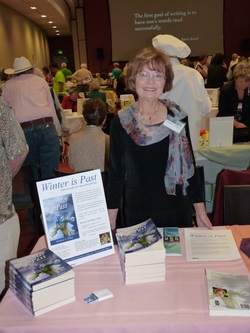
Myra Schneider

© 2013, essay and portrait below, Myra Schneider, All rights reserved; © 2014, illustration, Second Light Live, All rights reserved

References:

Amy Kate Riach, The Seafarer, Sylph Editions, 2010
Bloodaxe Books, http://www.bloodaxebooks.com
The Poetry Library, Southbank, London, http://www.poetrylibrary.org.uk
The Scottish Poetry Library, Edinburgh, http://www.scottishpoetrylibrary.org.uk/‎
Poems on the Underground, http://www.tfl.gov.uk/corporate/projectsandschemes/2437.aspx
The Poetry Society, http://www.poetrysociety.org.uk
Poems in the Waiting Room, http://www.poemsinthewaitingroom.org‎
Kaye Lee, http://www.secondlightlive.co.uk
Second light Network of Women Poets, http://www.secondlightlive.co.uk
Mary Macrae, Inside the Brightness of Red, Second Light Publications, 2010
Joanna Cameron, joannacameron@live.com
Deborah Alma, Emergency Poet, emergencypoet.com
William Ayot, http://www.williamayot.com
John Killick, http://www.dementiapositive.co.uk
Wendy French, wendyfrench.co.uk
Rose Flint, http://www.poetrypf.co.uk
Lapidus, http://www.lapidus.org.uk
Survivors Poetry, http://www.survivorspoetry.org
Anthony Wilson, http://anthonywilsonpoetry.com
Sue Dymoke, http://suedymokepoetry.com/books
Guardian Poem of the Week, http://www.theguardian.com/books/series/poemoftheweek‎
Oxford Brooks Poetry Centre, ah.brookes.ac.uk
Ink Sweat and Tears, http://www.ink-sweat-and-tears.com
The Poet by Day, http://musingbymoonlight.com
Kim Moore, http://kimmoorepoet.wordpress.com

How might you contribute? Possibly by boldly offering you own creative and/or critical work to various media. Would a long poem or sequence of yours, adapted, suit a Radio 4 ‘Afternoon Play’. Have you considered such a submission? Are you willing to post reviews of excellent collections we have read? Do you dare to invite a book group that you attend – one that never trifles with poetry – to look at a suitably accessible, intriguing individual collection of poetry or an anthology?

IMG_0032-1Myra’s long poems have been featured in Long Poem Magazine and Domestic Cherry. She co-edited with Dilys Wood, Parents, an anthology of poems by 114 women about their own parents. She started out writing fiction for children and teens. We first discovered Myra through her much-loved poem about an experience with cancer, The Red Dresswhich she generously shared with readers here in our Perspectives on Cancer series in 2011.

Currently Myra lives in North London, but she grew up in Scotland and in other parts of England. She lives with her husband and they have one son. Myra tutors through Poetry School, London. Her schedule of poetry readings is HERE.

Posted in General Interest, Guest Writer, poem, Poems/Poetry, poetry

Burnt Mustard

In micro pots I scattered chilly seeds a week ago
sunflower a couple of days back
yesterday mustard

trying to push away a gift of space
suffusing the air with its acrid smell of loss

A vacuum sucks thoughts till I have none left
to appraise
I am
water draining through loam
spring cleaning myself
though that feels like being robbed

Arrivals are better at sustaining life
I hug and hold myself from draining out
through the tiny holes in the pots

There is a creamy curry in a blackened dish
spoilt by attention wandering through
spicy sunflower fields

There too a smell of burnt seeds preceded me
Strange
The mustard hasn’t sprouted
yet it has claimed the breeze

– Reena Prasad

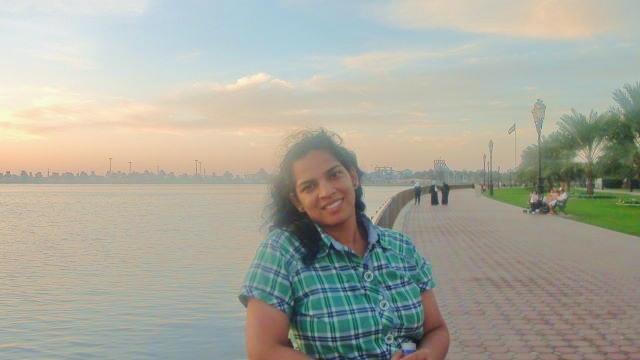
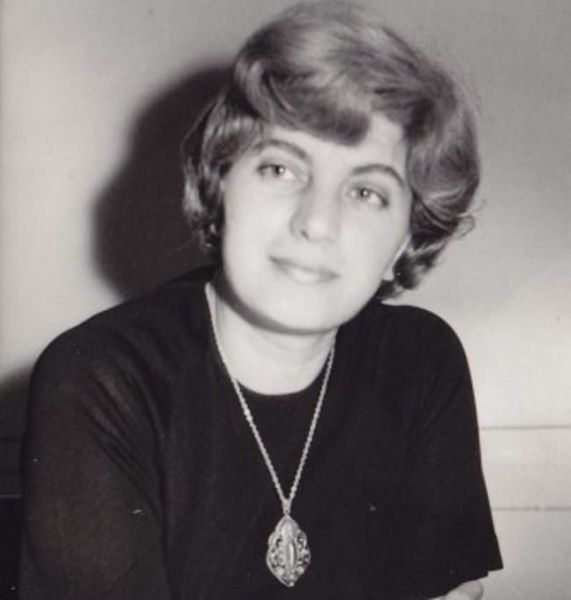
(c) Reena Prasad, poem and portrait below

reeREENA PRASAD (Butterflies of Time, a canvas of poetry) ~ is a poet from India, now based in Sharjah. She has several poems published in English anthology collections (Change, Indus Valley, Love in Verses, Musings–a Mosaic, eight anthologies by Barry Mowles and Friends and ten of Brian Wrixon’s anthologies, also in online jounals: Carty’s Poetry Journal, Indian Ruminations, Indian Review and in online magazines such as Youth Ki Awaaz and Thanal Online. Her poems have found place among the winning entries in contests by Writer’s Cafe, Ekphrasis India and Poets Corner. She is a contributor to many international journals like

The Copperfield Review, First Literary Review-East, Angle Journal, Poetry Quarterly etc.

Posted in Bardo News, General Interest

BARDO NEWS: Enitharmon Press Launches 3 Poetry Collections; Connotation Press Call for Submissions; Plum Tree Books’ Children’s Imprint; interNational Poetry Month celebrations… and more…read on…

KUDOS FIRST Terri Stewart has been selected to present a first person monologue at the Network of Biblical Storytellers Conference in Los Angeles in August. She was also selected to teach a workshop titled “Developing First Person Monologues with Integrity.” She will be the keynote speaker at the United Methodist Women’s (Pacific Northwest) conference in October. She is speaking there on Creating Safe Space.

interNATIONAL POETRY MONTH is coming to an end. We recreated this annual April event, which is national in Canada and the United States, into an international celebration inclusive of everyone in our collective and consistent with our philosophy. Poetry – as all art – knows no borders.

What a good time we shared with readers and writers as we enriched one another’s lives. We published ten poems on the blog, were introduced to the lives and work of two poets, the Bulgarian Blaga Dimitrova (courtesy of Blaga Todorova) and the American Chirlane McCray (courtesy of Jamie Dedes), and sponsored two reader-participation events: Writers’ Fourth Wednesday hosted by Victoria C. Slotto and A Poem in Your Pocket hosted by Corina Ravenscraft.

We are pleased to share the news that Elegy to Damascus from the exquisite pen of Algerian Imen Benyoub garnered much attention, including two re-blogs and nearly fifty Facebook “Likes.” The poem is very much in the spirit of Bardo.

WHO IS POETRY FOR? This coming Wednesday as we put closure on poetry month – but not poetry – we share an essay from Bardo friend, Myra Schneider, who is much appreciated for her work as a poet and teacher, a consultant to Second Light Network and for her encouragement of others to read and write poetry for well-being. Myra asks, “Who is Poetry For?” and invites suggestions on how we might widen the audience for poetry. Feel free to offer suggestions in the comments section whether you are invested in this art as vocation or avocation or as an enthusiastic reader.

SECOND LIGHT NETWORK‘s next issue of ARTEMISpoetry is due out in May. The network’s anthology Her Wings of Glass is forthcoming this October. On Wednesday a review of the November issue by Jamie Dedes will post on The Poet by Day. Note: Second Light Network was founded and is based in England but its membership is open to women world-wide. See the site for more info on membership qualifications, membership costs and benefits.

PLUM TREE BOOKS (PTB) Niamh Clune announced this week that PTB had a face-lift. “We are focussing on DR. NANA PLUM’S AMAZING BOOKS FOR CHILDREN and have updated our web-site accordingly.”

The launch of the new web-site is on Saturday 3rd of May. “We hope you will join us then for story-telling and more.” Niamh has invited us to visit, so do save the date and lend your support. For a taste of what’s to come, visit Dr. Nana Plum’s Story Corner.

PTB Anthology in the works: Niamh reports thatwe have received some wonderful poetry submissions and art for our Mother anthology. There is still time to send in yours.”

BRAVO! A pat on the metaphorical back of Jamaica, which just this month named its first National Poet Laureate in fifty years. Read all about it HERE.

YOUTH POET LAUREATES: Los Angeles County Youth have until May 19th to submit work to Urban Word, which will name one talented person (aged 14-19)LA Youth Poet Laureate. Details HERE.

In January at Mayor Bill de Blasio’s inauguration, New York’s Youth Poet Laureate, Ramya Ramana, read her poem entitled New York City, a poem dedicated to Mr. de Blasio.

YOUTH CORNER: The Bardo Group is still looking for a youth – aged 19-24- to run a Youth Poetry Corner. Email us at bardogroup@gmail.com if you are interested.

ENITHARMON PRESS: The media team at Enitharmon Press alerts us to the publication of three new books of poetry in May with announcements of book launches in London for those in our collective who live or are visiting the area.

BOOK LAUNCH INVITES, 1, 13, 22 May 2014

This slideshow requires JavaScript.

SOME LETTERS NEVER SENT by Neil Curry ~ “Deceptively relaxed in tone, these verse letters – sometimes serious, sometimes whimsical – are addressed to such figures as Angelea Carter, the Venerable Bede and from Odysseus to Gilbert White’s tortoise, on topics as diverse as smallpox and the paintings of Vermeer, landscape-gardening, the King James Bible and Eddie Eddi Stobart’s lorries on the M6. There has not been a collection of verse letters of this nature since the Epistles of the Roman poet Horace and, fittingly, it is to Horace that the final letter is addressed, partly by way of apology.”

SOONER OR LATER FRANK by Jeremy Reed “Sooner or Later Frank finds Jeremy Reed optimising his London quarter of Soho and the West End, its outlaws, opportune strangers and rogue mavericks condensed into poems coloured by an imagery that pushes pioneering edges towards final frontiers. Right on the big city moment, and with an eye for arresting acute visual detail, Reed makes the capital into personal affairs. His characteristic love of glamour, rock music, seasonal step-changes, and a Ballardian preoccupation with the visionary render this new PBS Recommendation, in John Ashbery’s words on Reed’s recent work, ‘a dazzling tour de force.'” You’ll find the poem that lends its name to the book HERE.

THE ORCHID BOAT by Lee Harwood ~ “A weave of stories: some personal, some historical, some real, some imaginary. Often these stories may co-exist in a poem just as they do in one’s everyday mind, as a collage mirroring our own perception of the world. It is a mix that can include Alexandria or China or Brighton or North Wales. These interwoven stories insist on the acceptance of contradictions and complexity in people and in life; a recognition characteristic of Harwood’s poetry and shaped by his acknowledged influences: Gide, de Montherlant and Cavafy, John Ashbery and Frank O’Hara. In Harwood’s poems the richest material and tone is found in ‘the ordinary’, and in The Orchid Boat this focus is thrown into even greater relief as he explores the power and weight of memories.”

CALL FOR SUBMISSIONS: Robert (Bob) Clark Young tells us that, “As the creative nonfiction editor for Connotation Press, I’m always looking for new essays. I invite you to submit nonfiction on a topic of your choice. I’m looking for creative nonfiction, narrative nonfiction, memoirs, and personal essays–with the understanding that these categories often overlap. Up to 10,000 words. Please submit work directly to me at robertclarkyoung@connotationpress.com. I look forward to reading your work.”

Bob was a guest writer on Bardo. In his piece, Escape from the Nursing Home, he shared his story – and the rewards – of caring for elderly and infirm parents.

SAVE THE DATES

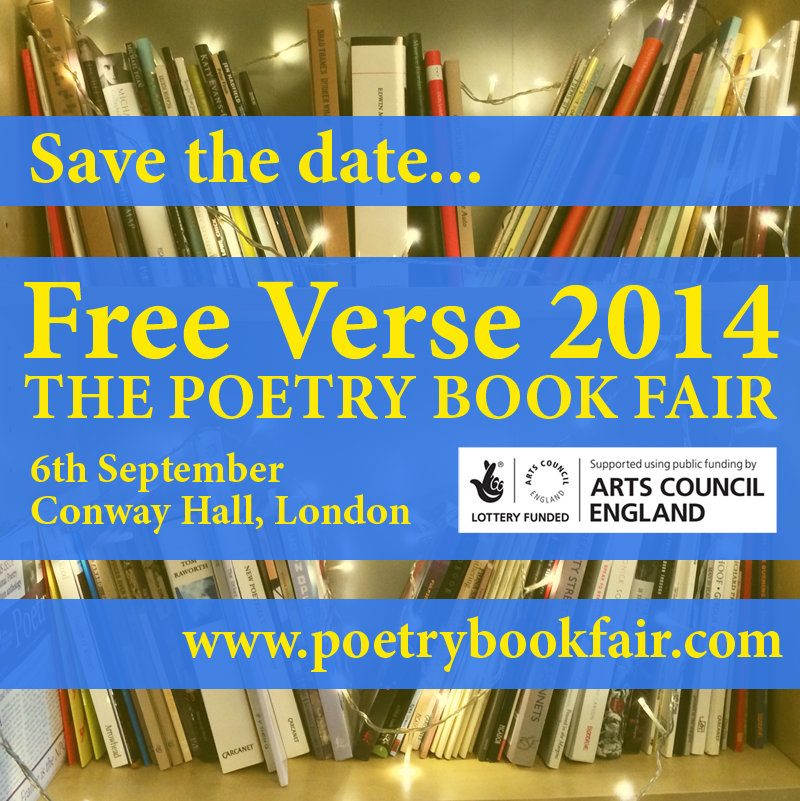
From Oxford Brookes Poetry Centre and the Arts Council of England

10157346_646561198748661_273577449520339020_n-1

From The Bardo Group: While we don’t have a striking poster such as the one above, we do have some fun and interesting virtual events coming up:

  • WRITER’S FOURTH WEDNESDAY prompt hosted by Victoria C. Slotto is scheduled next for May 28th.

  • VOICES FOR PEACE PROJECT in concert with 100,000 Poets for Change (Michael Rothbenberg and Terri Carrion organizers) is hosted by Liz Rice-Sosne and scheduled for September 27, 2014. We are officially partnered with 100,000 Poets of Change as of April 10, 2014.

Join us on our Facebook Page

BARDO NEWS: Thanks to everyone who contributed today’s news. The next news day is May 25, 2014 and the deadline to get your news into the next post is Friday, May 23, 2014.

Email: bardogroup@wordpress.com.

If you missed the deadline for this post, please feel free to share your news in the comments section.

– The Bardo Group

Posted in Imen Benyoub, Peace & Justice, Poems/Poetry, poetry

Elegy to Damascus


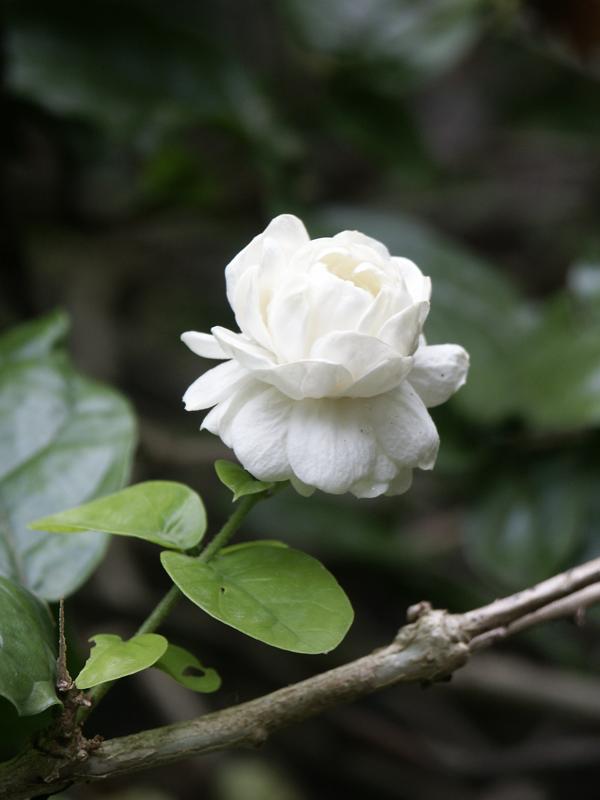
Arabian Jasmine (another name for Damascus is City of Jasmine)

He writes with a wounded language
He is a stranger
The alphabet bleeds when it’s heavy with memory
And poems will always taste
Of dry blood

Everything wounds him
In his naked solitude
Light wounds his face
A wing of a dove and a passing cloud
Wound his orphan shoulder

He writes and his wound becomes a full moon
That bleeds white in the darkness of his exile
It becomes a silk road where he travels alone
He rubs its sides with salt
And adorns it with statues
White as his pain

His wound is an unanswered prayer
His wound is a city
*****
Streets of Damascus, streets of the heart
Minarets and church bells mourn
O bride of the East with your veil soaked in blood

Your face is a dusty cracked mirror
Your womb is full of thorns

Somewhere
A poet dreams of his childhood house
His mother’s bread
His father’s prayer carpet
And the smell of henna and rose water
On the hands of a woman

He doesn’t know that his house is a graveyard
And Damascus is no longer pregnant with jasmine

– Imen Benyoub

 ©2014, poem, Imen Benyoub, All rights reserved

Photo credit ~ via Wikipedia by Scott Zone under CC A 2.0 Generic license

.

pictureIMEN BENYOUB ~ is a miltilingual, multi-talented writer, poet, and artist living in Guelma, Algeria. She is a regular contributor to Into the Bardo and to On the Plum Tree and Plum Tree Books Facebook page.

Posted in Victoria C. Slotto, Writers' Fourth Wednesday

HEADS UP: Writers’ Fourth Wednesday is tomorrow …

Victoria at the Palm Springs Writer's Expo March 2012
Victoria at the Palm Springs Writer’s Expo March 2012

Poet, novelist and writing coach, Victoria C. Slotto is host. The prompt is about writing with color and it will go up at 12:01 a.m. PST on this blog. We hope you link in your own work – you have seventy-two hours to do so – and share it with us and that you will visit and support other participants.

Photo credit ~ Victoria Slotto, All rights reserved

Posted in Art, Beauty, Essay, Paula Kuitenbrouwer, Spiritual Practice

Empty Space as an Aesthetic Significance

I’ve read an intriguing quote in Japanese Women Don’t Get Old or Fat by Naomi Moriyama;

‘The importance of ‘empty’ space in the presentation of Japanese cuisine can scarcely be exaggerated. Receptacles are never filled to the brim, but are left with a certain margin of emptiness- emptiness of an aesthetic significance comparable to that in a Zen ink painting‘.

(Chef Masaru Yammamoto).

Considering the importance of empty space is what I do when I draw or paint. Often an empty space is needed to guide the viewer to the place that needs his attention. Other times, empty space is filled with suspense. Because empty space can create guidance, tension and calm contemplation, it is full of possibility.

Isn’t possibility what emptiness is? The emptiness or absence of sound means a bird can fill it with its song. Emptiness as possibility works in compositions exactly the same. An empty place can be filled in or left open.

It is important to notice what exists in an empty space. If I paint a bird on the left side of my drawing looking at the right, what is the bird looking at? The empty space isn’t empty at all. It is full of possibilities. Is the bird looking at a mate? Or a prowling cat? Not filling up an empty space often works well; it adds more possibility, tension or imagination to a painting. Other times a large empty space is too dominating or too much a void, in that case, doing something with it is better. It is a place that offers calm contemplation, leave it open.

If you are a home educator, don’t teach you child that the whole page or canvas needs to be filled in. (The only reason why you should offer an art assignment in which nobody is allowed to leave the class room before his paper is completely covered, is when your students need to overcome shyness, self restrained, or inhibition).

If you are a creative therapist or an understanding friend, sit down with your client or friend, and analyse his doodle or drawing by asking what is going on in its empty space. Talk, investigate, and dream together. You will be surprised how many possibilities or interpretations will emerge.

If you are a parent and your young child is proudly showing you a painting, play with your child. Ask what is going on with the objects that are drawn, and what is happening within the empty space. Then built a story on what the child tells you. Your child will charm and entertain you with pure child fantasies. Empty spaces are full possibilities.

You thought empty space is boring or shows a lack of imagination? Or a bad composition? Certainly not always, often quite the opposite.

Returning to the book on Japanese food; I always dread the moment when I have to stop drawing in order to prepare a dinner. From now on, I will plan to continue my mindful meditation by bringing aesthetic principles into my kitchen.

– Paula Kuitenbrouwer

© 2013, essay and photographs and artwork (above and below), Paula Kuitenbrouwer, All rights reserved

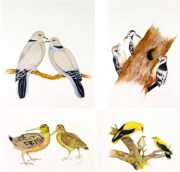
birdcardsPAULA KUITENBROUWER ~ is a regular contributor to Into the Bardo and a Dutch nature artist living in The Netherlands and sharing her work with us on her blog, Mindful Drawing and on her website.   In addition to art, Paula’s main interest is philosophy. She studied at the University of Utrecht and Amsterdam. She has lived in Eastern Europe and in Asia. Paula says that in Korea, “my family lived next to a Buddhist temple. In the early morning we would hear the monks chanting. During my hours of sauntering with my daughter through the beautiful temple gardens, I felt a blissful happiness that I try to capture in my drawings.” Paula sometimes teaches children’s art classes. She lives with her husband and daughter and close to her father. You can view her portfolio of mindful drawings HERE.

Posted in Essay, Guest Writer, Poems/Poetry, Poets/Writers

The Burden of a Shared Name

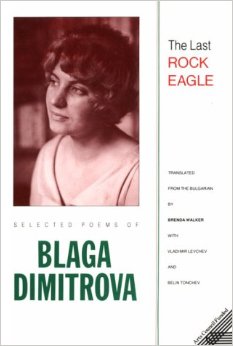
571px-Blaga_Dimitrova_YounI used to hate her, foolish, a teenager’s hate that can only be explained in a parallel universe where logic doesn’t exist. I was a sixteen-year-old girl in a class with additional studies of mathematics. I was supposed to have the sharp brain, the emotion-free behavior required for someone who was a shining star in solving mathematical problems. Then suddenly there it was: the literature lesson about her and one of her poems I don’t even remember. The teacher decided that I was the one who should talk about her that day because of the first name we shared. 41GHNKWJ10L._SY344_BO1,204,203,200_

It was a disaster! I hadn’t read a word from what was written in the school books about her and her poetry. When I was asked the question ‘What do you think Blaga Dimitrova’s poem symbolizes?’ all I could think about to answer was, “The only person who really knows what the words in a poem meant is the author herself. We, as readers, can interpret as we feel right and only hope we’ve reached close enough the thoughts of the writer.’ Wrong answer! A bunch of literature critics that wrote the school book of literature, had already decided what her poetry signified, just like they had decided what every other writer we had studied represents with their work.

I got a bad mark that day and I had come to a conclusion that no one should want to be a poet in a country where we are told what to think. The bad mark wasn’t the worst. After the lesson everyone started calling me Dimitrova. I didn’t like it, I could feel it was meant to be a joke with my personality; to label me with the weakness of feelings only poetry could carry because this is what I used to think about poetry and poets – weak people spilling their weaknesses… Ridiculous, isn’t it? And who knew that I would become one of those weak people. Who knew that one day I would learn  to squander my emotions elegantly on a piece of paper and love doing it too?

At the same time Blaga Dimitrova was vice president of my country, Bulgaria. That was another reason to dislike her. I didn’t dislike her because she was in politics. Who was I to judge someone I have seen only on tv? I disliked Dimitrova because I couldn’t understand why a sane person would stand to support the President we had at that time, and I just couldn’t understand why he was elected. I didn’t know him either. I was way too naïve and young to have the maturity to understand the political situation, but on his face was written all over “I’m capable of nothing.”

When a year later Blaga Dimitrova resigned from her post as a Vice-President due to a disagreement with the President she gained my respect and with that come the urge to re-evaluate her poetry. It was a shock to find that I actually loved her style, her words. The first poem I read and understood from her was:

Tag

I keep forgetting my clock
to escape the time.
But it catches up with me and I whirl
with the whopping, falling leaves.

I enter the sea with the clock on my wrist
to drown the time.
But it slaps me in the face
with the bells of the foam.

I’m not counting the beats of the pendulum;
I want to put the time away.
But it lands right on my nose
with the first snow.

At night I don’t set the alarm
with the hope the time will stop.
But it’s waiting for me in the cold bed
with love already gone.

– Blaga Dimitrova

Then I read her novel Journey Toward Myself.  It’s a book about a girl who tries to escape her past, which is not an easy task in the years of communism, especially if you were born in the wrong family. The message is rather strong and easy to apply to anyone of us. No matter how much we travel and how much we search for the person we are supposed to be, sometimes what we are meant to be is right there where we started our journey.

My favorite quote from Blaga Dimitrova’s book is: “I blessed him with a smile. It dissolved him completely. There was no need for words. I should have tried with a smile at first. I tend to forget that this is my most faithful weapon. I have never thought what impact a smile can have. Only here in the land of rocks and coarse people I found the strength of my smile. It’s worth to travel so far for such a discovery of your own possibilities.”

It’s somewhat hard to explain Blaga Dimitrova’s work and to try to extract a short conclusion that could fit into one review. There is always that special feeling left in the heart after you read her. Maybe that’s why I grew very fond of her poems and stories over the years and maybe that’s why it’s really difficult to fit everything I want to say about her in one blog post.

I can tell you that she comes from a family with professional parents. Her mother was a teacher and her father was a lawyer. She attended a roster of prestigious schools and gained an education that supported her talent. She was honored with many literature awards.

One of her books, Avalanche, was made into an acclaimed movie,  one of the best Bulgarian movies ever in my opinion. Some of Blaga Dimitrova’s work was forbidden in the 80s, because of the strong anti- communism touch. I could tell you that some people liked her and some not. Be it for her political views, be it for her writing, it doesn’t matter to me. On the 2nd of May in 2003 after a long battle with cancer, Blaga Dimitrova died. She was eight-one years old.

I believe on that day Bulgaria lost a great talent. Many years have passed. I am no longer the sixteen-year-old girl who didn’t know how to appreciate the good things in life. I have left Bulgaria for my own reasons and maybe I am still traveling towards myself to find who I really am. It hurts sometimes when I go back home to see that nothing from great people like Blaga Dimitrova was passed on to the new generation. Sometimes I still feel the burden of the shared name with the poetess, not because I am embarrassed to be connected to the weakness of poetry, but because I am afraid I will not be able to stand up worthy of the name Blaga like Ms. Dimitrova did with her talent. I love so many of Blaga Dimitrova’s poems, it’s hard to choose the best, but this one I had written on my wall in the room where I was living during my years at University. It is the one I cherish most.

Lyrical

In the sunset of every love
occurs pain and sadness.
After sunset every night
comes darkness and silence.

When somebody leaves you,
you don’t have the strength to stop him.
When you see that love dies
you can’t die along with it.

You understand that the dreams have never been real
that you have loved, but there wasn’t love,
that the memories are a pain that has fled already,
that you were happy, but you didn’t notice it.

– Blaga Dimitrova

For everything I have translated in this post, there probably could be a better translation. I’ve said it many times, some poems are best to be read in the language they have been written, but I did the best I could. My thanks to The Bardo Group for the opportunity to share the story and poems of a great Bulgarian poetess with readers here in honor of interNational Poetry Month.

© 2014, essay, Blaga Todorova, All rights reserved
Photo credit ~ Merolina under CCA-SA 3.0 Unported license via Wikimedia Commons

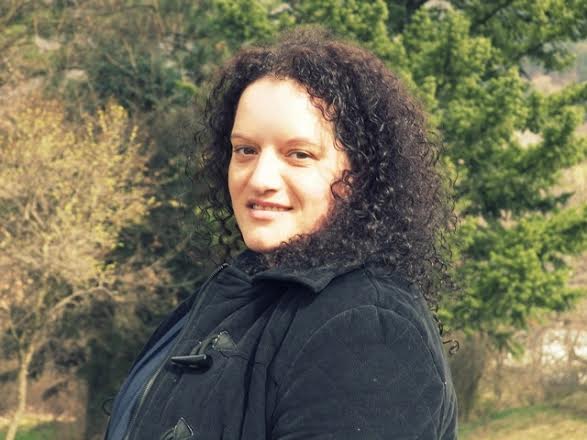
unnamed-6BLAGA TODOROVA (Between the Shadows and the Soul) ~ was born in Bulgaria, lives in Greece and doesn’t stop dreaming about finding new country for herself. She doesn’t consider herself a writer, but just someone who sometimes is lucky enough to be at the right place, with the right person, with the background of the right music that will bring the right words. Blaga has been blogging for many years now and has won the friendship and following of other poets and writers for her insights, humor and sense of romance and of justice. English is not her first language, but she uses it well and it is her favorite language for her favorite artistic pursuit, writing. She has a novel in progress. She is also a rather accomplished photographer.