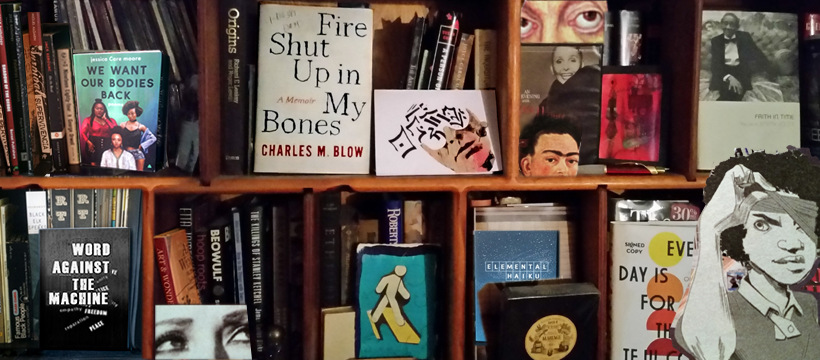

Peace

(1921)
the stick stood in the corner of the kitchen
a constant threat; stoking, as it was meant to,
chronic intimidation
he had a man’s right to deliver his blows
to vent his anger and his self-contempt
to cause suffering for the insufferable
someone had to make it up to him,
his loss-of-face to race, creed and poverty
for her part, eve’s daughter was ripe,
shamed by her intrinsic sinfulness,
worn by her constant pregnancies
her femininity: tired and task-bound,
guilt flowing freely, as all-consuming as lava
[relief, only in death]
and the seventh child was born to die
and the man was demanding his bread
she wrapped the girl in swaddling cloth,
placed her gently by the stove, and
while the newborn made busy with dying,
the woman prepared him his meal
– Jamie Dedes

© 2015, poem, Jamie Dedes, All rights reserved; illustration source is the National Center on Domestic and Sexual Violence, the photograph used here is by moggs oceanlane under CC BY 2.o license
I “met” Terri Stewart online in 2011 when I visited her blog Beguine Again, which at that time was entitled Cloaked Monk. “Beguine” Again – after the Beguines, a lay semi-monastic Christian order of the 13th-16th centuries in Northern Europe. It was committed to – among other things – caring for the sick and the poor.
I was impressed with Terri’s commitment to spiritual ritual and her openness to the wisdom and beauty in religious traditions, including traditions other than her own. I valued her respect for diversity, both social and spiritual, so I eventually invited her to become the Sunday Chaplain for what was then a blog entitled Into the Bardo.
Since that time, we’ve evolved into a group (The Bardo Group) of clerics and poets, writers and other creatives representing varied traditions and cultures and sharing the core values of respect and nonviolence. We work in the interest of peace, sustainability and social justice. We publish The BeZine. Our thirteenth issue comes out on November 15th. The theme is At-risk Youth. Terri is taking the lead for that issue, making this the perfect time for readers and colleagues to get to know her better. Hence this interview … Enjoy!

Jamie: I have a sense that you were committed to social justice long before you decided to study theology and become a minister. Is that correct? What was the stimulus and what was the first project on which you worked?
Terri: When I first joined the church in 2001, I was looking for a connection to community. What I discovered was inequality in the church and an avoidance of social issues that drove wedges between people. It was like that uncomfortable Thanksgiving dinner. Everybody is at the table, but only a few were allowed at the grown-up’s table. And! disagreements were glossed over for the sake of unity.
My biggest issue with the church was its lack of inclusion for LGBTQIAP individuals. In response to that, and as a mirror of the greater structure of the United Methodist Church (UMC) world-wide church, I founded the Church & Society committee. This was an attempt to get people talking and to be able to step into social issue learning and leadership. I soon found myself embroiled in controversy as two issues marched through Washington state. In 2004, there was a church trial in the town next to my home town that was an attempt to defrock a lesbian pastor. Also, just prior to the trial, I was involved in a march on the capitol in Olympia for marriage equality.
The upshot was that I was yelled at like I was a child! “Are you trying to destroy the church?”
Then, when I went to seminary, I chose a Jesuit (The Society of Jesus) institution. Liberation theology, post-colonial theology, process theology…all of these things continued to crack me open to the human condition and to the interconnectedness of all that is.
As my first forays into social justice was basically full inclusion for LGBTQIAP individuals within the UMC church, I would count myself unsuccessful. The UMC church continues to have harmful language in its official rulebook (the ominously named Book of Discipline). I continue to advocate and am on the national board of Reconciling Ministries Network. Our goal has been full inclusion. I think we are beginning to realize that we need a second goal, that of creating safe space.
Also! At the same time this was all swirling around, I started volunteering with Kairos Prison Ministry in 2003. Kairos provides spiritual renewal retreats within the prison setting. Working with Kairos (Ancient Greek for “the right time” as opposed to chronos which is “watch time”) started me on a path towards understanding the full systems that impact the lives of those who are incarcerated.
Jamie: How and when did the focus transition to incarcerated youth? What is the most important thing you would like us to understand about the youth being served?
Terri: As I worked with Kairos, I started out working with incarcerated men. Then with incarcerated women. And then with women whose loved ones were incarcerated. I worked my way into leadership positions. Eventually, we thought, “What about youth whose loved ones are incarcerated?” So we wrote a program just for them.
At the same time, I was called into ordained ministry. I went to seminary. In my second year of seminary, I was required to do an internship. My internship was at the King County Youth Detention Center (KCJDC), Seattle, Washington. I basically never left.
The thing to know about the youth at KCJDC and at the state level institutions I serve, is that they are traumatized youth. The average ACE (Adverse Childhood Experiences) score for incarcerated youth is 92 out of 100. Most of us would be in therapy with that high of a score! Instead, these youth are incarcerated. We could change that by having trauma informed teaching practices in communities where generational trauma has occurred or by having mental health centers with trauma treatment available. Destigmatizing therapy would be grand!
Jamie: Tell us about Youth Chaplaincy Coalition, how other ministers may get involved and what the public can do to help.
Terri: The Youth Chaplaincy Coalition developed out of my internship at KCJDC. We realized that there was a need to organize, train, and supervise religious volunteers so that the youth would get the best care possible.
While we started at KCJDC, we now are state-wide. I run a mentoring program called MAP that aids youth in developing transition plans for when they go home. Since the kids go home all over Washington, I need volunteers in every city!
My dream is to teach people across the world how the MAP program works and how easy it is to walk with those affected by incarceration. There is also a training called “Healing Communities” that teaches communities how to use their gifts in aid of those affected by incarceration. If every church was a Healing Community and every city had trained mentors, we could transform the world! Well, we could at least change one child’s life. If you want to be involved or talk to me, you can email me at YCC-Chaplain@thechurchcouncil.org
My biggest need is financial support. I take a very small stipend and am responsible for all my own fundraising needs. I often make decisions this way, “Should I do my work today? Or should I do fundraising today?” Although I should view fundraising as work, I often give it a lower prioritization! So donations would be especially appreciated. I persuaded the Church Council of Greater Seattle to adopt the organization so we are a legit 501c3 and we have an accountant doing all the financial stuff! That is a great gift to me!
Donations can be sent to:
Youth Chaplaincy Coalition
PO Box 18467
Seattle, WA 98118
Be sure and put YCC or Youth Chaplaincy on the memo line.
Jamie: What made you decide to go into ministry? What is the most rewarding aspect of that commitment?
Terri: When I first experienced a call to ministry, I thought I was going bananas. My first reaction was, “Who me?” or “I must be over-tired!” The call I experienced felt like a direct communication from the Divine telling me to go deeper. As I went deeper into understanding the call of ministry, I discovered it was a call to ordained ministry.
The most rewarding part of the commitment to a sacramental ministry is when I see a person’s eyes light up with the understanding that they are, indeed, holy and good—a living sacrament.
Jamie: Tell us about “cloaked monk” and the place of ritual in our lives.
The Cloaked Monk developed out of a commitment to daily spiritual practices in ordinary life (the monk part) and that I was kind of disguised—like wearing a cloak!
I believe that ritual marks out sacramentality in our daily lives. Sacramentality is that connection to one another and to the Divine. It is a way of marking time that moves away from chronological time (Greek: chronos) and into marking the fullness of time (Greek: kairos). It also allows us to fully be present without living in the past or rushing into the future. This is especially important in our transient age of moving here and there faster and faster. Rituals grounded in generational practices connect us through time and space to another age. There is also the place for new rituals created that uplift new and modern experiences that our ancestors would never have imagined. They can be a celebration, a grounding, a remembering, or a lament.
The ancient Celts had thin places. They were places that the veil between the earth and beyond seem especially vulnerable to one another. Places where the things of heaven could pass to the earth and where things of the earth could pass to heaven. Stonehenge is one such place. Or labyrinths. Ritual, when it is meaningful, creates this thin place.
Jamie: Why should readers care about people and issues that don’t seem to touch their lives directly?
Terri: Unfortunately, it seems that issues of justice and mercy do not intersect with ordinary lives. Incarceration seems far away from us. Refugees in Syria seem far away. Violence in Palestine seems so very far away. But it all tangles together like my bag of knitting yarn. I am a very poor knitter. My yarns always get tangled and I don’t know what to do. And when it is in my bag, it will suck in all the other little things in there! Resources or things I might need become tangled up in the yarn. Those are resources that I need. They might be resources that others need.
In Washington, we spend about $9,600 per student to educate them. We spend about $45,000 per prisoner to incarcerate them. What we know is that by reading scores in the 4th grade, we can predict incarceration rates because we do not fully fund our schools. What if we were able to direct our resources into education? All students would benefit.
I imagine that it is like boats rising in a tide. A rising tide raises all boats. Yours, mine, everyone’s!
© 2015, most words and all photographs, Terri Stewart, All rights reserved
As always, Gretchen Del Rio shares soulful artwork and wise thoughts: “The role spirituality plays is best seen in a person’s walk and heard in the words they speak.
Both acts exemplify living in prayer.
……..tony ten fingers…Lakota “
 watercolor aceo 10/2015
By Terri Stewart: this was originally posted on Terri’s Beguine Again blog …
I have to admit it. In my community, I sometimes get frustrated with people who want to always DO stuff. What they don’t realize is that my vocation consists of doing things for people all. the. time. I’m a chaplain. And I’m a pastor. And I run a volunteer organization. And I’m a teacher. And I’m a parent. And a spouse. And this…and that… All the co-identities that pull at my core consist of doing identities.
This doing-ness is different from busy-ness. It is definitely focused on creating moments of grace, love, mercy, and justice in the here and now. But sometimes, I admit it, I want less doing-ness and more being-ness. This became apparent to me recently when I was meeting with my small group and the question arose, “What do you need?” We were meeting outside on a beautiful fall day. Within my vision, I saw a seagull circling overhead. My immediate answer was, “This. I need this.” I need sitting still. I need soaring above. I need unity with all of creation. In that moment, my one true desire was being-ness.
Ok, I admit it. I lead an extraordinary life. I am blessed beyond measure to be able to fulfill my life of ministry and call. Most people do not have the privilege and means to be able to march in the street when needed or to testify before the Senate or to delve into something completely new. These are all things done because I have the resources to support me. That is why my community wants to do stuff. They crave the connection to one another and to the Divine that happens when we are in service to one another, to a greater Good, and to the world. Unfortunately, while making this greater connection, the connection to the divine spark within is neglected.
The greater question is, how do we nurture both the spark within and the connection to all that is? John Wesley is reported to have said, “There is no holiness but social holiness.” Sometimes we think social means social justice. And that is certainly part of it. But what it really means is society. All of us. Desmond Tutu spoke of Ubuntu theology when he said, “I am because we are; we are because I am.”
In this profound connection of me and we, being-ness happens. Becoming happens. Transformation happens. Holiness happens. But it is a dance. The me-ness and the we-ness dance together in a beautiful ballet that sometimes features a solo, a duet, or an entire ensemble. What makes it so incredible is the variety of dances and the people that weave in and out seamlessly featuring some, one, or all.
How do we continue to nurture our solitary spark and our communal spark? There is an old song that goes, “It only takes a spark to get a fire going.” But I have to tell you, when I have lit fires in the past, it sometimes takes a lot more than one little tiny spark! In fact, I have resorted to using charcoal lighter fluid on campfires during times that the wood was wet. So that little spark needs some stuff! It needs something to catch ahold of and it may need some fuel. But by itself, it will die. It takes a bunch of stuff to get a fire going no matter what that song says!
Sabbath practices are definitely one way to nurture the solitary spark and the communal spark. It is a time to unplug from busy-ness and doing-ness and to enter into being-ness and becoming-ness. I don’t think that there is anyway to truly have a Sabbath practice without involving other people! I usually take Sabbath on Mondays. I have had to train everyone, including my family, that Sabbath is Monday and I won’t reply to work emails. So now I get emails that start, “I know it’s Monday, so don’t read this right now…” The whole community is keeping Sabbath with me whether they know it or not!
For Sabbath, I will contemplate my true desire. Build up my spark so that when it is time to create a fire, I am ready to join the community.
What will you do to build your solitary spark? How will that lead to action in the community?

Behind the scenes we’re working to pull together the wealth of insight and artistry shared for 100,000 Poets (and friends) for Change into a commemorative page, the content of which will also be archived at Stanford University, Stanford, California. Thank you to all who contributed, read, commented, shared links and supported this worthwhile effort here as a virtual event or in one of some 500 cities around the world.
While the big event is over for this year, the goals are ongoing as this video indicates. The work for Peace, Sustainability and Social Justice is a never-ending journey. So the question each one of us asks ourselves is what next? What action can I take? What small part of the big project can I take on? It is, after all, up to each of us to “be the change.”
We have decided to continue with our 100TPC Facebook group discussion page. Let us know if you are interested in being part of that. This year our theme was poverty. The environment and environmental justice are themes for 2016. Your input to that is welcome.
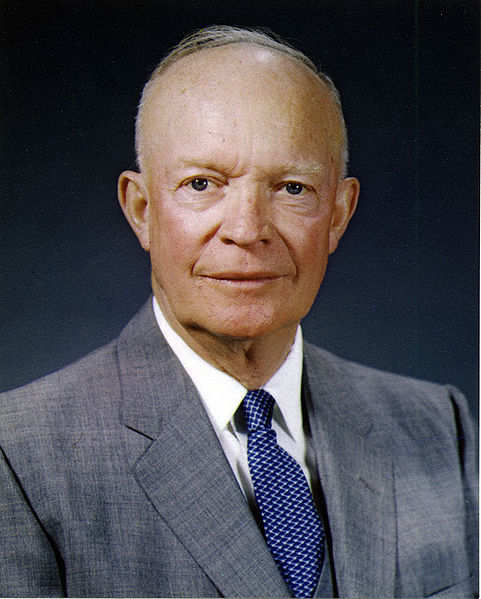 DWIGHT D. EISENHOWER (1890-1969)
34TH PRESIDENT OF THE UNITED STATES
In office 1953 -1961
“Every gun that is made, every warship launched, every rocket fired, signifies in the final sense a theft from those who hunger and are not fed, those who are cold and not clothed … “ Dwight D. Eisenhower
Note: I wrote this piece on December 13, 2011 after I learned of the first 100,000 Poets for Change (100TPC). Seemed appropriate to pull it out, dust it off and share it once again since our theme for this year for 100TPC is “poverty.”
The quote above is from Eisenhower’s speech, A Chance for Peace, delivered in 1953 three months after he took office and on the occasion of the death of Joseph Stalin, Premier of the Soviet Union (1941 to 1953). The “just peace” that the world hoped for in 1945 at the end of World War II had not materialized. While the Korean War was coming to a close, the Cold War-era military conflicts in Indochina (Vietnam, Laos, and Cambodia) were slowly escalating. The United States would have advisory troops in Vietnam in 1954. The armed conflict in that region of the world would continue long past Eisenhower’s administration with U.S. involvement escalating in the 1960s and continuing until the Fall of Saigon in 1975.
Since the end of the Second World War and the Korean War, violent conflict continues unabated with thirteen wars (defined as 1,000 or more deaths per year) currently, including the War in Afghanistan and the Yemeni and Syrian uprisings of 2011. Smaller scale conflicts resulting in fewer than 1,000 deaths per year have been rife and in 2011 include the Sudan-SPLM-N conflict, the Yemeni al-Qaeda crackdown, and the 2011 clashes in Southern Sudan. (And now in 2015, we have to add among the world’s many current conflicts the war in Syria, which is displacing more people than any war since WWII. According to an recent and comprehensive article, How Syrians Are Dying (worth your attention) in The New York Times, 200,000 have been killed over the past four-and-a-half years.)
Genocides didn’t end either. We’ve had eight genocides since the Holocaust of WWII, including that which is ongoing in Palestine. The number of rebel groups is now over one-hundred, which probably errs on the light side. Conflicts rise from economic and social instability and what amounts to vigilante “justice,” most of which could be addressed if our governments invested in butter, not guns; if they included rather than marginalized; if they listened and responded rather than disenfranchised.
Even in 1953, Eisenhower pointed out that war isn’t sustainable:
This world in arms is not spending money alone.
It is spending the sweat of its laborers, the genius of its scientists, the hopes of its children.
The cost of one modern heavy bomber is this: a modern brick school in more than 30 cities.
It is two electric power plants, each serving a town of 60,000 population. It is two fine, fully equipped hospitals.
It is some fifty miles of concrete pavement.
We pay for a single fighter plane with a half million bushels of wheat.
We pay for a single destroyer with new homes that could have housed more than 8,000 people.
If governments don’t recognize that Earth and her people cannot be sustained by war, many of their citizens do. One modern peaceful protest for a sustainable world is of interest to all of us who read, write, and love both poetry and peace. It is 100 Thousand Poets for Change, which held its first world-wide rally on September 24, 2011 with 700 events in 550 cities representing 95 participating countries united to support peaceful environmental, social, and political change.
Poets, writers, artists, musicians, and photographers the world over demonstrated in solidarity. The next global event is scheduled for September 29, 2012. Throughout the year small, local events are delivered at a various venues. By invitation, 100 Thousand Poets for Change was at the Sharjah (an Arab Emirate) International Book Fair, which ran through November 27. Mujeeb Jaihoon reports,
“From time immemorial, poetry has built better bridges between people than those with bricks and stones. And these bridges do not get old or obsolete…” (Change Is Born in the Womb of Poetry)
In A Chance for Peace Eisenhower pointed out,
“No people on earth can be held, as a people, to be an enemy, for all humanity shares the common hunger for peace and fellowship and justice.”
We do hunger, individually and collectively. Perhaps our chance for peace starts with you and me. Poem on …
… and join us this year at The BeZine blog on 26 September 2015 and add your voice to ours for our (yours and mine) 100TPC, poets and friends virtual event for a peaceful, sustainable and just world.
© 2011, essay, Jamie Dedes All rights reserved; The photograph of Eisenhower is in the public domain.

For those who are not familiar with this holy day …
“Rosh Hashanah (Hebrew: רֹאשׁ הַשָּׁנָה, literally “head of the year”) is the Jewish New Year. The Biblical name for this holiday is Yom Teruah (Hebrew: יוֹם תְּרוּעָה, literally “day [of] shouting/raising a noise”) or the Feast of Trumpets. It is the first of the High Holy Days or יָמִים נוֹרָאִים Yamim Nora’im (“Days of Awe”) which usually occur in the early autumn of the Northern Hemisphere. Rosh Hashanah is a two-day celebration, which begins on the first day of Tishrei. Tishrei is the first month of the Jewish civil year, but the seventh month of the ecclesiastical year.” MORE [Wikipedia]
The Bardo Group and Beguine Again
Photo credit: Olve Utne under Creative Commons Attribution-Share Alike 2.5 Generic License.

O God! O God! that it were possible
To undo things done; to call back yesterday
That Time could turn up his swift sandy glass,
To untell the days, and to redeem these hours.
— Thomas Heywood (1574?-1641), A Woman Killed with Kindness (Act 4, Sc. 6)
Photograph courtesy of Wally Gobetz under CC BY 2.0 license.
by Terri Stewart (Beguine Again)
“Faith is not the clinging to a shrine but an endless pilgrimage of the heart.”
~Rabbi Abraham Joshua Heschel
…
Trevor Hudson, in his book A Mile in My Shoes, describes living daily life as living daily pilgrimage into the suffering of others. Life as a daily pilgrimage includes:
I was thinking of this as I was pondering the great tragedy that is taking place in Syria. Bodies are washing up on the shores of the Mediterranean of little children and families fleeing. It is simply horrifying. An excellent explanation of what is happening is here.
About 6 years ago, when I first started working at the juvenile detention center, I was playing cards with some boys in the detention center. As we played games, the boys were sharing their stories. One of the boys happened to be from Syria. He left Syria and moved to the states after seeing his parents murdered in front of him. He came here to live with his auntie. He could barely read or write. He was in detention for violent behavior. Imagine that. He had anger issues. I thought it was horrifying then. It seems it just keeps on getting worse.
Trevor Hudson would have us travel into the suffering as a pilgrim, not as a voyeur or as a consumer, but as a sacred journey. Being present to pain. Listening to their stories without imposing outside values. And noticing. Noticing who they are. Sometimes that is the most sacred gift of all. I think on that day years ago, for that young man from Syria, that is what he longed for. Simply to be noticed.
Maybe this Sabbath day we can take a moment and be present to those who suffer near us. Take a pilgrimage with them–a sacred journey into the heart.
Shalom,


Editorial Note: The September issue of The BeZine will be out on the 15th and we’re all set for the big event on the 26th. Meanwhile …

– Jamie Dedes

These are busy days for Michael Rothenberg and Terri Carrion who founded 100,000 Poets for Change. Michael announced yesterday that 500 events are now scheduled for September 26, 2015, the fifth anniversary of this global initiative for change; that is, for peace and sustainability.
For those who are just catching up with us, 100 Thousand Poets for Change, or 100TPC, is an international grassroots educational organization focusing on the arts, especially poetry, music, and the literary arts. It was founded in 2011 by Michael Rothenberg and Terri Carrion and is centered on a world-wide event each September. This past June the first World Conference on 100TPC was held in Salerno, Italy.
There are also several offshoots cropping up: 100,000 Photographers for Change, 100,000 Drummers for Change … and so on. A little searching on Facebook and you’ll find them, though the umbrella for all, 100TPC, does include a range of artistic specialties and friends of the arts and is not limited to poets and poetry.
We – that is The Bardo Group and Beguine Again, publishers of The BeZine are hosting a virtual event and you are all invited to attend and add links to your own relevent work. The links will be collected and published in a Page on The BeZine site and also archived at 100TPC. Michael Dickel (Fragments of Michael Dickel) of The Bardo Group is the lead for this event. Michael is also the organizer of an event scheduled in Israel this October. You can contact him via his blog or message him on Facebook if you have an interest in participating there.
Meanwhile, here is an introduction to the visionary founders of 100TPC, Michael Rothenberg and Terri Carrion:
MICHAEL ROTHENBERG was born in Miami Beach, Florida in 1951, and has been living in the San Francisco Bay Area for the past 37 years. Currently Michael is living and creating among the redwoods.
Michael is co-founder of Shelldance Orchid Gardens in Pacifica, which is dedicated to the cultivation of orchids and bromeliads. He is a poet, painter, songwriter, and editor of Big Bridge Press and Big Bridge, a webzine of poetry and everything else.
In 2011 he and Terri Carrion co-founded the global poetry movement 100 Thousand Poets for Change. His songs have appeared in Hollywood Pictures’ Shadowhunter and Black Day, Blue Night, and most recently, TriStar Pictures’ Outside Ozona. Other songs have been recorded on CDs including: Bob Malone’s The Darkest Part of The Night (Caught Up in Christmas) and Bob Malone (Raydaddy’s Blues), Difficult Woman by Renee Geyer, Global Blues Deficit by Cody Palance, The Woodys by The Woodys, and Schell Game by Johnny Lee Schell.
Michael’s poetry books and broadsides are archived at the University of Francisco, and are held in the Special Collection libraries of Brown University, Claremont Colleges, University of Kansas, the New York Public Library, UC-Berkeley, UC-Davis, and UC-Santa Cruz.
His most recent collection of poems is Indefinite Detention: A Dog Story (Ekstasis Editions 2013) and Murder (Paper Press, 2013) My Youth As A Train published by Foothills Publishing in September 2010.
TERRI CARRION was conceived in Venezuela and born in New York to a Galician mother and Cuban father. She grew up in Los Angeles where she spent her youth skateboarding and slam-dancing.
Terri Carrion earned her MFA at Florida International University in Miami, where she taught Freshman English and Creative Writing, edited and designed the graduate literary magazine Gulfstream, taught poetry to High School docents at the Museum of Contemporary Art in North Miami and started a reading series at the local Luna Star Café. In her final semester at FIU, she was Program Director for the Study Abroad Program, Creative Writing in Dublin, Ireland.
Her poetry, fiction, non-fiction and photography has been published in many print magazines as well as online, including The Cream City Review, Hanging Loose, Pearl, Penumbra, Exquisite Corpse, Mangrove, Kick Ass Review, Jack, Mipoesia, Dead Drunk Dublin, and Physik Garden among others.
Her collaborative poem with Michael Rothenberg, Cartographic Anomaly was published in the anthology, Saints of Hysteria, A Half-Century of Collaborative American Poetry and her chapbook Lazy Tongue was published by D Press in the summer of 2007.
Terri’s most recent projects includes collaborating on a trilingual Galician Anthology, (from Galician to Spanish to English) and co-editing an online selection of the bi-lingual anthology of Venezuelan women writers, Profiles of Night, both to appear in late August, on BigBridge.org., for which she is assistant editor and art designer. Currently, she is learning how to play the accordion. Terri Carrion lives under the redwoods and above the Russian River in Guerneville, Ca. with her partner in crime Michael Rothenberg, and her dogs Chiqui and Ziggy.
Editors note: The theme for our September issue is poverty. It is part of our 100,000 Poets (and other artists and friends) for Change event (change being peace and sustainability) to be held here as a virtual event on 26 September 2015. Michael Dickel takes the lead on this project and the September issue. Here’s an opportunity to get to know him better. Michael’s vision: “… hope must/ still remain with those who cross/ borders, ignore false lines and divisions/” is consistent with the mission of Bequine Again and The Bardo Group, publishers of The BeZine. The September issue will post on the 15th. J.D.
 “That some of those labelled as enemies
have crossed the lines to offer condolences
at the mourning tents; that the mourning
families spoke to each other as parents
and cried on each others’ shoulders;
that we cried for the children who died
on both sides of the divide; that the
war began anyway; that hope must
still remain with those who cross
borders, ignore false lines and divisions;
that children should be allowed to live;
that we must cry for all children who die”
– Michael Dickel, (Mosquitos) War Surrounds Us
Jerusalem, Summer 2014: Michael Dickel and his family including Moshe (3 years) and Naomi (1 year) hear the air raid sirens, find safety in shelters, and don’t find relief during vacation travels. In a country smaller than New Jersey, there is no escaping the grumbling wars that encircle. So Michael did what writers and poets do. He bore witness. He picked up his pen and recorded thoughts, feelings, sounds, fears, colors, events and concerns in poetry. The result is his third collection of poems, a chapbook, War Surrounds Us.
While some use poetry to galvanize war, Michael’s poetry is a cry for peace. He watched the provocations between Israel and Hamas that resulted in war in 2014 and he illustrates the insanity.
And the retaliation
Continues, reptilian and cold,
retaliation the perpetrator
of all massacres.
Though the poems change their pacing and structure, they present a cohesive logical and emotional flow, one that takes you blood and bone into the heart of Michael’s experience as a human being, a poet, a Jew, a father and husband. He touches the humanity in all of us with his record of the tension between summer outings and death tolls, life as usual and the omnipresence of war. Both thumbs up on this one. Bravo, Michael.
– Jamie Dedes
Poems from War Surrounds Us:
Again
Musical Meditations
The Roses
TLV1 Interview and Poetry Reading

MY INTERVIEW WITH MICHAEL DICKEL:
Jamie: Putting together a poetry collection and ordering the work in a way that enhances the meaning and clarity of poems included is not easy. One of the first things to strike me about the collection as a whole is how it flows, so well in fact that it reads almost like one long poem. I found that quality contributed to the work’s readability. How did you work out the order? Was it consciously ordered or did it arise organically out of the experience of the war?
Michael: I’m very gratified that you noticed this about my book. I hadn’t thought of it quite in that sense, of being one poem, but I like that it reads that way. The sense of a book holding together, a collection of poems having some coherence, is important to me. I don’t think my first book achieved this very well, although it has some flow poem to poem. The whole is not focused, though. My second book has a sense of motion and narrative, from the Midwest where I grew up to arriving and living in Israel, and now being part of the Mid-East. However, War Surrounds Us, my third book, finally has a sense of focus that the other two did not.
Unfortunately, I probably can’t take too much credit for that coherence. Even more unfortunate, a real war raged in Gaza, with rockets also hitting the Jerusalem area, not that far from where I live. As we know now, thousands died, most apparently civilians, many children. Just across the border to the Northeast, diagonally opposite of Gaza, a much larger scale conflict burned and still burns through Syria—with even larger death tolls and even more atrocities over a longer time. These wars had, and still have, a huge impact on me and my family.
During last summer, the summer of 2014, this reality of war surrounding us had all of my attention. And it came out in my writing as obsession with the war, my family, the dissonance between living everyday life and the reality of death and destruction a missile’s throw away. So the topic filled my poems those months, as it did my thoughts. And the poems emerged as events unfolded over time, so a sort of narrative wove into them—not a plot, mind you, not exactly, anyway.
This gives a chronological structure to the book. However, not all of the poems appear in the order I wrote them. I did move some around, seeing connections in a theme or image—if it did not jar the sense of the underlying chronology of the war. Some of the events in our life could move around, and I did move some poems to places where I thought they fit better. I also revised the poems, reading from beginning to end several times, trying to smooth out the flow. A few of the poems I actually wrote or started before this phase of the ongoing conflict broke out—but where they also fit into a pattern, I included them. In the end, I moved and revised intuitively, following my own sense of flow and connection. I’m glad that it seems to have worked for you, as a reader, too.
Jamie: What is the place of the poet and poetry in war? Can poetry, art and literature move us to peace? How and why?
Michael: This is a difficult question. Historically, one place of poets was to call the soldiers to war, to rile them up and denounce the enemy. There is a famous poem from the Hebrew Scriptures. Balaam is called by Balak to curse Jacob and his army. The story sets a talking donkey who sees an angel with a sword and other obstacles in his way, but long story short, he arrives and raises his voice. He is the poet who is supposed to curse the enemy. Instead, he begins, “How beautiful your tents, O Jacob…” and recites a poem that is now part of the Jewish liturgy. This is not necessarily a peace poem, but it shows words and their power to curse of bless. I think the place of the poet is to bless and, rather than curse, to witness with clear sight.
There is a long history of poet as witness and observer. Czeslaw Milosz in The Witness of Poetry and Carolyn Forché, following him, in her books Against Forgetting: Twentieth Century Poetry of Witness and Poetry of Witness, which goes back to the 16th Century, argue that the poet’s role is to observe and bear witness to the world—to the darkness, the atrocities, genocide, war… Forché quotes Bertolt Brecht: “In these dark times, will there also be singing? / Yes, there will be singing. / About the dark times.” I think that is what we do as poets. That’s what I hope that War Surrounds Us does at its best, albeit as much a witnessing of my own family and context as of the Other. Then, as feminist theory has taught me, the personal is political, the political personal.
 Can art and literature move us to peace? I don’t know. I hope it can move us to see more clearly, to feel more acutely, and to embrace our humanity and the humanity of others. Perhaps that will move us toward peace. There is so much to do, and it is as the rabbinic wisdom says about healing creation: it may not be ours to see the work completed, but that does not free us from the responsibility to do the work. As poets, we make a contribution. I hope the songs about the dark times will also be blessings for us all.
Jamie: Tell us about your life as a poet. When did you start and how did you pursue the path? How do you carve out time for it in a life that includes work, children and community responsibilities. You live on a kibbutz, I think.
Michael: Well, starting at the end, no, I don’t live on a kibbutz, I live in Jerusalem (the pre-1967 side of the Green Line). I do teach English at a college that was started by the Kibbutz Movement as a teacher’s college in the 1960s, now Kibbutzim College of Education, Arts and Technology. That appears in my email signature and confuses some people outside of Israel, who think I teach as part of living at a kibbutz. I’m actually more like adjunct faculty, but no one at the college works directly for a kibbutz as far as I know, and the college is open to anybody who qualifies.
While I only have a short day, from when the kids of my current family go to pre-school until I pick them up, I also usually only teach part-time. Some semesters I teach full-time or even more, but usually not. And, many of my courses in the past couple of years have been online, meeting only a few times during the semester. This helps.
My wife works full-time in high tech, which allows us to survive on my irregular, adjunct pay. She also has some flexibility, which allows her to usually be free to pick up the kids as needed around my teaching schedule, and we have on occasion hired someone to help with the kids so I could teach, not so much for my writing. But that has allowed writing time on other days.
Mostly, I write during those few hours when the kids are at pre-school, after the kids have gone to bed, or even later, after my wife has also gone to bed. If I’m working on a deadline or a large project, such as some of the freelance work I do for film production companies, I write after my wife gets home from work even if the kids are still awake. Usually, though, I write when I find time, and I find time when I don’t have other obligations.
Perhaps of relevance to this book, the writing took over. I was late in getting papers back to students and delayed other obligations and deadlines, even canceling a couple of other projects—although it was not just the writing, but the whole experience of the war, dealing with it and wanting to be very present with my children. As the poems relate, we went to the Galilee, in the North, for a month, a vacation we have taken before. Last summer, though, it had extra urgency because of the war. Unfortunately, during an outing picking apples in the Golan Heights, we heard artillery across the border in Syria, and that’s when I wrote the title poem of the book, “War Surrounds Us.”
The summer before, on that same month-long getaway, I wrote a lot of flash fiction, which makes up most of my next book, which should come out by the end of the year. I wrote during both summers when the kids were napping or after their bedtime, mostly. The place we stay in, a friend’s house (he travels every summer), has a lovely courtyard, and after the children went to bed, Aviva and I would sit out in it, usually with a glass of wine. She would read or work online and I would write on my laptop into the night. It was lovely and romantic.
I have to say that I almost don’t remember a time when I didn’t write poetry or stories. I recall trying to stop on a few occasions, either to work in some other aspect of my life, or when I did a different kind of writing, such as for my dissertation (which devolved into creative writing for more than half of it). But really, going back into my early years, I wrote stories or poems of some sort—influenced I suppose by A. A. Milne, Sol Silverstein, Kenneth Grahame and, later, Mark Twain and even Shakespeare. I had books of Roman and Greek myths, the Lambs’ bowdlerized Shakespeare for children, and some Arthurian tales as a child, not to mention shelves of Golden Books. Later, I read Madeleine L’Engle and a lot of science fiction. And everything I read made me also want to write.
I owe the earliest of my poems that I can remember to exercises from grade school teachers, one in 3rd grade, maybe 4th, the other in 6th grade. However, I’m sure that I wrote stories and possibly “poems” earlier. My first sense that I could become a poet arrived via a junior high school teacher, who encouraged me to submit some poetry to a school contest. I tied for first place.
So, I started writing forever ago. By the time of the junior high contest, I had read e e cummings, Emily Dickinson, some Whitman. By 9th grade, I discovered the Beats through a recording of Ginsberg reading “Kaddish” and other poems. Hearing him read the poems, then reading them myself, changed everything.
Alongside this development, one of my brothers brought Dylan records home that I listened to. All three of my brothers, with my parents’ tacit approval, played folk music and protest music in the form of songs of Woody Guthrie; The Weavers; Joan Baez; Peter, Paul and Mary; in addition to Dylan. These influenced both my writing and my world view. The same year that I came across Ginsberg’s work, I was involved in anti-war activity in my high school. That spring, four students were shot at Kent State. In another way, that changed everything, too.
Writing, activism, and politics, for me have always been interwoven. I also heard that year about “The Woman’s Movement,” which today we call Feminism. Later, much later, I would read and take to heart the idea of the personal being political, the body being political. I think my poems, even the most personal, always have a political and theoretical lens. And the most philosophical or political or theoretical, also have a personal lens. I don’t think that we can help but do that, but I try to be aware of the various lenses, of using their different foci deliberately as part of my craft. I’m not sure that is the current trend, and much of my work doesn’t fit well in spoken word or slam settings (some of it fits). However, this is my poetry and poetics—and they arise from a specific cultural context, the complexity of which I could not begin to convey in less than a lifetime of writing.
My development from those awakening moments looked like this: I read. I wrote. I shared my work with other people who wrote. Sometimes I talked with others about writing. My first degree in college was in psychology, not English, because I naively thought that psych would help me understand the human condition and that English would “ruin” – suppress – my writing voice. However, I took a lot of literature courses and my study abroad term focused entirely on literature.
After college, I had a career as a counselor working with runaways, with street teens, with children undergoing in-patient psych evaluations, and in a crisis intervention and suicide prevention center—a career that taught me a lot about politics, gender, race, and justice. I continued to write, often about some of the most disturbing realities that I encountered, but not well.
I had been out of college nearly a decade when I took some courses in creative writing at the University of Minnesota, at the suggestion of some friends in a writing group who had also taken some. One of the professors encouraged me to apply to the Creative Writing Program, where I was accepted. The acceptance was a poignant moment—I was out of state at my father’s burial. My now ex-wife remained back with our then 2 year-old daughter. She saw the letter in the mail, so called and read it to me. It was also my 32nd birthday. So many emotions all at the same time. Mostly, I remember wishing I could have told my father—from when he first heard that I’d applied, every phone call we had included his asking if I had heard yet if I had been accepted. It was the most direct way he had of saying he was proud.
Jamie: Tell us a little about 100,000 Poets for Change (100TPC) in Israel and how people can get in touch with you if they want to participate this year. Are you able to manage a mix of Arabs and Jews?
Michael: The thing about 100TPC is that it’s pretty loose, as an organization, and very anarchic in governance. Which is to say, I’m not sure there is something I could call 100TPC in Israel. There’s a wonderful poet in Haifa who does some events, I don’t think every year. She is very active in peace activism and poetry. There’s an Israeli mentor of mine, Karen Alkalay-Gut, who has organized 100TPC events in Tel Aviv since the first year. For the past two years, I organized a poetry reading in Jerusalem. The first one was small, a few people I knew and cajoled into reading. The second one was much larger, over 25 poets. We had one Arab writer, who writes in English, at the second reading. Her poetry is powerful and personal, written as an Arab woman, a mother, and an Israeli. An Arab musician was going to join us, but he had a conflict arise with a paying gig. It is difficult to manage the practical, political, and social barriers, but people do it here. I am just learning a bit how to do this now.
For this year, I am working with two other organizations—the Lindberg Peace Foundation, which has held annual Poetry for Peace events. This year will be the 40th anniversary (yartzheit, in Hebrew) of Miriam Lindberg’s tragic death at the age of 18. She wrote poetry, was a peace activist, and also an environmental activist. Her mother was a poet and professor, and passed away a few years ago. Joining us in planning the Jerusalem event will be the Interfaith Center for Sustainable Development. Their mission as I understand it is to develop interfaith leadership for common goals related to eco-justice that would also provide a model for solving the Middle East conflicts.
The Jerusalem events won’t be the same date as the national event (26 September)—our dates will be 15–16 October, to honor the 40th anniversary of Miriam Lindberg’s death. Dorit Weissman, a Hebrew-language poet and playwright, also has become part of 100TPC this year, and she and I are having a smaller reading on 8 October with other poets.
We are just setting up a Facebook page for organizing with the three groups, 100TPC, the foundation, and the center. People could look for me on FB and send me a chat message there to be in touch. I hope that we will have the events posted on FB in the next few weeks, but we are still working on the details. The devil is always in the details, as the saying goes.
Michael will host The BeZine‘s virtual 100TPC this 26 September 2015.
Be the peace.
© 2015, book review, Jamie Dedes, All rights reserved; words, poetry, photographs of Michael, Michael Dickel, All rights reserved; cover illustration, The Evolution of Music, by Jerry Ingeman, All rights reserved
FOR UPDATES AND INSPIRATION “LIKE” OUR FACEBOOK PAGE, THE BARDO GROUP/BEGUINE AGAIN
Note: On our (The Bardo Group and Beguine Again, publishers of The BeZine) 2015 Facebook Page for 100,000 Poets for Change, we’ve been discussing poverty, which is our theme for September. I’m sharing some of the conversation there. If you’d like to join us on Facebook, please let us know. All are welcome. For the September 2015 issue of The BeZine, we’ll be exploring poverty and on September 26, we’ll hold our virtual event and we invite reader participation. Instructions will be in our blog that day. Links to everyone’s work will be collected and posted as a Page and also incorporated into a PDF that will be archived at 100,000 Poets (writers, artists, photographers, musicians and friends) for Change; i.e., peace and sustainability.

Thanks to Terri Stewart (Beguine Again) and Michael Dickel (Fragments of Michael Dickel) for encouraging thought and discussion around poverty and homelessness. How about exploring poverty and hunger, often referred to these days as “food insecurity?” (Better, I think, to call it by its true name.)
One question, for example: How do our consumption patterns contribute to hunger? We first started thinking about and taking action on this (those of us who have been around long enough) with the publication of Frances Moore Lappe’s Diet for a Small Planet in 1971 in which she explored the roots of hunger, poverty and environmental crises.
Here is part of an overview of the UN’s 1998 report on inequity in consumption courtesy of Anup Shah of Global Issues :
“Today’s consumption is undermining the environmental resource base. It is exacerbating inequalities. And the dynamics of the consumption-poverty-inequality-environment nexus are accelerating. If the trends continue without change — not redistributing from high-income to low-income consumers, not shifting from polluting to cleaner goods and production technologies, not promoting goods that empower poor producers, not shifting priority from consumption for conspicuous display to meeting basic needs — today’s problems of consumption and human development will worsen.
… The real issue is not consumption itself but its patterns and effects.
… Inequalities in consumption are stark. Globally, the 20% of the world’s people in the highest-income countries account for 86% of total private consumption expenditures — the poorest 20% a minuscule 1.3%. More specifically, the richest fifth:
Consume 45% of all meat and fish, the poorest fifth 5%
Consume 58% of total energy, the poorest fifth less than 4%
Have 74% of all telephone lines, the poorest fifth 1.5%
Consume 84% of all paper, the poorest fifth 1.1%
Own 87% of the world’s vehicle fleet, the poorest fifth less than 1%
Runaway growth in consumption in the past 50 years is putting strains on the environment never before seen.”
— Human Development Report 1998 Overview, United Nations Development Programme (UNDP) — Emphasis Added. Figures quoted use data from 1995
– Posted by me last night on The BeZine 100 100TPC 2015 Facebook Public Group Page
Here is some of the discussion that followed. Please add your own thoughts in the comments section below.
“There was a report by Oxfam, a couple of years ago I think, that produced even more extreme statistics regarding the very small percentage of those who own the vast majority of the world’s assets! I shall have to dig it out.” John Anstie
“interesting and arresting….but let’s not forget waste….have you ever seen what supermarkets throw away each day? It’s criminal.” Jacqueline Dick
“In a number of urban areas, groups collect “waste” from groceries and even restaurants to distribute to those in need. It should be done more widely. And, for the environment, what is beyond salvage should be composted, not tossed into landfills or incinerators.” Michael Dickel
“I wonder how many of us are vegan or willing to go go vegan because land used to feed and raise meat and poultry can be put to better use – and more environmentally sound use – to sufficiently feed the earth’s population on plants? Lappe first brought this to our attention in ’71 followed by many others including John Robbins and Will Tuttle*. There is sufficient body of study to support this, which along with animal cruelty and human health is driving the trend to plant-based food consumption.” Jamie Dedes
* If people don’t have enough to eat, don’t have clean water, and don’t have employment, their anger will foster hostilities. So, for those who feel disconnected from hunger issues because it’s not in front of them and they have enough to eat, I would submit that in the interest of self-preservation world hunger needs to be faced and addressed compassionately and pragmatically. I don’t know how many people outside the vegan community are familiar with Will Tuttle’s work. Dr. Tuttle is professional pianist and composer, he’s an eloquent spokesperson for the vegan imperative. I strongly recommend his book The World Peace Diet: Eating for Spiritual Health and Harmony.
The reference to “Earthlings” in the video is about the movie, which I reviewed in 2011 and which I have scheduled to post here tomorrow.
May all sentient beings find peace.
May all beings be peaceful.
May all beings be happy.
May all beings be safe.
May all beings awaken to
the light of their true nature.
May all beings be free.
– Metta (amity, good will) Prayer (Buddhist)
Photo credit: Jamie Dedes

 The BeZine
