The BeZine Blog

Posted in Essay, Spiritual Practice, Terri Stewart

Finding Sacred Space in Mandala

I love the idea of Mandalas. Mandala means sacred circle in Sanskrit. The idea of sacred circles permeates the spiritual underpinnings of many traditions. The circle of Native American tradition where a sacred circle is danced, not to be broken. The circles of trinity in Christian tradition. The Mandala of Hindi and Buddhist tradition. The circular labyrinth that dates back up to 25,000 years. Walking a circle, dancing a circle, drumming a circle, drawing a circle, even singing a circle … “make the circle wide, make it wider still” … creates a moment of sacred space meeting the co-creative spirit of human and transcendence.

That is beauty.

Lately, I have been thinking about mandalas more than normal because I am co-organizing a mandala workshop called, “Finding Your Spiritual Identity with heART: A Mandala Workshop.” Julia Weaver, a mandala practitioner, will be coming to town and doing two workshops for me- one with the girls in detention (how awesome is that?!) and one for the people of Seattle.  I love that she is being so flexible in offering her gifts and talents.

That is also beauty.

So today, to create our sacred space, I’d like to do a mandala meditation. I am using one of my own images and some meditation ideas that I have found at jeweledlotus.com.

Take a moment and center yourself. Imagine a circle of protection, love, compassion, and mercy surrounding you. Let your gaze rest softly on the computer screen. Rest your feet comfortably on the ground if possible. Simply become as comfortable in your own spot as you can become. As Julia says (and which I will quote in the video!),

“As you gaze at a mandala,
breathe slowly, and relax your eyes.
See with your heart and listen for guidance.
Gently open to your own luminous Divinity.”

Shalom and Amen,

Terri

(c) 2014, post, Terri Stewart

terri

REV. TERRI STEWART is Into the Bardo’s  Sunday chaplain, senior content editor, and site co-administrator. She comes from an eclectic background and considers herself to be grounded in contemplation and justice. She is the Director and Founder of the Youth Chaplaincy Coalition that serves youth affected by the justice system. As a graduate of Seattle University’s School of Theology and Ministry, she earned her Master’s of Divinity and a Post-Master’s Certificate in Spiritual Direction. She is a contributing author to the Abingdon Worship Annual. (The 2014 issue just released!)

Her online presence is “Cloaked Monk.” This speaks to her grounding in contemplative arts and the need to live it out in the world. The cloak is the disguise of normalcy as she advocates for justice and peace. You can find her at www.beguineagain.com ,www.twitter.com/cloakedmonk, and www.facebook.com/cloakedmonk.  To reach her for conversation, send a note to cloakedmonk@outlook.com

Posted in General Interest

Of Rest and School

We like to encourage young writers and are happy to introduce Colin Stewart with his very fine post today on Begin Again … Please visit and cheer him on.  J.D.

Posted in Jamie Dedes, Poems/Poetry, Poets/Writers

January Is On the Wane

file000592821988with a nod to Juana Inés de la Cruz

January is on the wane
leaving behind early dark and champagne hopes
for the genus Rosa. Wild or tame, they’re lovely.

Garden roses need pruning, solicitous cultivation ~
Layer shorter under taller, drape on trellises
and over pergolas, the promise of color and fragrance,
climbers retelling their stories in ballet up stone walls,
an heirloom lace of tea roses, a voluptuous panorama
rhymed with shrubs and rock roses in poetic repetition.
Feminine pulchritude: their majesties in royal reds
or sometimes subdued in pink or purple gentility,
a cadmium-yellow civil sensibility, their haute couture.

Is it the thorned rose we love or the way it mirrors us
in our own beauty and flaw and our flow into decrepitude?
They remind of our mortality with blooms, ebbs, and bows
to fate, a noble death to rise again in season, after Lazarus.
Divinely fulsome, the genus Rosa, sun-lighted reflexed ~
And January? January is ever on the wane.

© 2013, poem, Jamie Dedes, All rights reserved
Photo courtesy of morgueFile

Portrait by Fray Miguel de Herrera (1700-1789)

The work that was the jumping off point for my poem is one by the Mexican nun, Sor Juana Inés de la Cruz (1551-1695), who lived during the time when Mexico was a part of the Spanish empire. Sor Juana was an ambitious writer, self-taught, and a Baroque poet. She belonged to the Order of St. Jerome. I am enamored of her work and find her life interesting. She was brilliant, independent and nonconforming.

Sor Juana was a writer, playwright and a Baroque poet. She was hungry for learning and was self-educated. From childhood, she set her own demanding educational goals. These three famous quotes of hers are telling:

“I don’t study to know more, but to ignore less.”

“One can perfectly well philosophize while cooking supper.”

“…for there seemed to be no cause for a head to be adorned with hair and naked of learning…”

For those who might be interested, here is her poem Rosa in Spanish and in English.

Rosa divina que en gentil cultura
eres, con tu fragrante sutileza,
magisterio purpureo en la belleza,
enseñanza nevada a la hermosura.
Amago de la humana arquitectura,
ejemplo de la vana gentileza,
en cuyo ser unió naturaleza
la cuna alegre y triste sepultura.
¡Cuán altiva en tu pompa, presumida,
soberbia, el riesgo de morir desdeñas,
y luego desmayada y encogida
de tu caduco ser das mustias señas,
con que con docta muerte y necia vida,
viviendo engañas y muriendo enseñas!

Rose, heaven’s flower versed in grace,
from your subtle censers you dispense
on beauty, scarlet homilies,
snowy lessons in loveliness.
Frail emblem of our human framing,
prophetess of cultivation’s ruin,
in whose chambers nature beds
the cradle’s joys in sepulchral gloom.
So haughty in your youth, presumptuous bloom,
so archly death’s approaches you disdained.
Yet even as blossoms soon fade and fray
to the tattered copes of our noon’s collapse –
so through life’s low masquerades and death’s high craft,
your living veils all your dying unmasks.

– Juana Inés de la Cruz

Illustration and poem in the public domain. Source of translation unknown.

photo-on-2012-09-19-at-19-541JAMIE DEDES (The Poet by Day)~ I am a mom and a medically retired (disabled) elder. The graces of poetry, art, music, writing and reading continue to evolve as a sources of wonder and solace, as a creative outlet, and as a part of my spiritual practice.

Posted in Essay, General Interest

Joy in January

The temperature on my car dashboard said -10 degrees this morning.  A “polar vortex” has moved into Milwaukee, and my partner Steve is a US Postal Service mail carrier.  He will be working outside today despite warnings (no doubt escalated by our sensationalizing media) about frostbite and hypothermia.  However, he is excited about the opportunity to live in the moment, make decisions one after another, and flow with the realities of the environment.   His attitude reminds me that we can choose to feel victimized and we can choose to feel joyful.  The following is a post on Joy that I first published 2 years ago.

Joy to the World

Gift of the Universe #22:  JOY!

I truly believe that joy is available to everyone.  No one is denied the opportunity to be joyful.  Many people on this planet will never have a full stomach or adequate shelter or enough material wealth to climb out of poverty, but believe it or not, some of those very people know joy.

“Joy is not in things; it is in us.”  – Richard Wagner

“Participate joyfully in the sorrows of the world. We cannot cure the world of sorrows, but we can choose to live in joy.”  – Joseph Campbell

My late husband was ill for many years.  He went under the knife for open heart surgery when he was just 31.  He suffered a host of medical problems stemming from diabetes, always believing that he would get the disease under control.  When he realized that was not going to happen, he said, “Okay, I’m sick.  I can be sick and miserable, or I can be sick and happy.  I choose happy.  Pain is inevitable, misery is optional.”  I really admire him for coming up with that maxim, and for embodying it.  The night before he died, he called me at work and asked if I’d like to go out to dinner.  Our daughters were out for the evening, and he took the opportunity to enjoy a ‘date’ with me.  We went to a local sports bar & grill and enjoyed veggie appetizers and sandwiches.  Our youngest called from rehearsal to say she was not feeling well and was coming home early, so we went home to be with her.   Jim was tired, so he took his medications, hooked up to his dialysis machine and CPAP and watched some TV.  When I came up to bed, he turned off the TV and the light.  We fell asleep holding hands.  He never woke up.  And he never complained.  Some people claim that “if you haven’t got your health, you haven’t got anything”.  I don’t buy that.  Jim didn’t have health, but he had joy and love and he knew it.

Many people would foreswear food, health, housing, and money in order to find joy in an ascetic lifestyle.  Mendicants, yogis, monks, and priests of different faiths have adopted austere practices in order to experience the bliss of enlightenment.

“Joy is the most infallible sign of the presence of God.”  – Pierre Teilhard de Chardin

“The fullness of joy is to behold God in everything.”  – Julian of Norwich

This is a deep and serious topic, and much too heavy for me to write about today.  My brain is circling closer to Dr. Seuss and The Grinch who puzzles how the Whos could be singing without “ribbons and tags, packages, boxes and bags”.  Perhaps joy means a little bit more than the glee we feel when we get a shiny, new present.  Happiness is fleeting.  Joy is deeply felt.

“This is the true joy in life, the being used for a purpose recognized by yourself as a mighty one; the being thoroughly worn out before you are thrown on the scrap heap; the being a force of Nature instead of a feverish selfish little clod of ailments and grievances complaining that the world will not devote itself to making you happy.”  – George Bernard Shaw

I’ve got to say that the way I have most felt this joy of being used for a mighty purpose and force of Nature is through mothering.  I know what it is to be thoroughly worn out and joyful.  I know what it is to feel like nobody is devoting himself to my happiness and not to complain because I am finding so much joy in devoting myself to someone else’s well-being.  Not that I didn’t complain occasionally (hey! I’m human!).  I always felt that mothering mattered.  That I was truly making a difference, a big one, to at least four people in the world.  I smiled at my babies even when I was not feeling joyful, and joy emerged.   Never underestimate the effect of a smile.  Check out this Still Face Experiment by Dr. Tronick on youtube.  http://www.youtube.com/watch?v=apzXGEbZht0

“Sometimes your joy is the source of your smile, but sometimes your smile can be the source of your joy.” – Thich Nhat Hahn

My joyful (and crazy!) kids

Are you smiling every day?  I’m sure I am.  I even busted a belly laugh today as Steve was describing a Giotto fresco…of Mary and Joseph… kissing at the gates of Bethlehem…with Snoopy in the background.  He speaks like a nerd who knows everything, and then I realize he’s joking with me.  I fall for it all the time and then get to laugh at him and at myself.  Steve’s identity motto, which he came up with at a psychology school retreat, is “I am the joy in change and movement”.  I am really benefiting from his perspective because I am often afraid of change and movement.  I so don’t need to be.  There is freedom in allowing joy into your life.

Let Heaven and Nature sing…and see if you don’t find yourself singing along.  Rejoice, my friends.

– Priscilla Galasso

© 2011, 2014, essay and photograph, Priscilla Galasso, All rights reserved

004PRISCILLA GALASSO ~ started her blog at scillagrace.com to mark the beginning of her fiftieth year. Born to summer and given a name that means ‘ancient’, her travel through seasons of time and landscape has inspired her to create visual and verbal souvenirs of her journey.

Currently living in Wisconsin, she considers herself a lifelong learner and educator. She gives private voice lessons, is employed by two different museums and runs a business (Scholar & Poet Books, via eBay and ABE Books) with her partner, Steve.

Posted in Essay, John Anstie, Niamh Clune, Poets/Writers

The Wednesday Poetry Corner With John Anstie

Collaborations works! Here’s a fine essay by our own John Anstie hosted by our Niamh Clune on her Plum Tree Books blog … read on ….

Dr Niamh's avatarNiamh Clune

I am delighted to finally welcome John Anstie to the Wednesday corner. I have been wanting to post John’s fine piece for months now, but like many things we want to do in life, lists intervene. Anyhow, I know you will enjoy John. Not only os he a very fine poet, he is a fine writer of prose also. He is precise and studied and has produced and been involved in some very fine poetry anthologies. Great to have you here, John.

By John Anstie

When Niamh asked me who is my favourite poet or poem, I found this question impossible to answer. I can only nominate any that I have read, thus far; so the answer may change in time. William Shakespeare should be one, because of his huge influence on the English language and he championed one of my favoured forms of scansion, iambic pentameter; that he wrote…

View original post 580 more words

Posted in Joseph Hesch, poem, Poems/Poetry, poetry

Rapture in Rivertown

Discarded tree 1

With January’s ice-scrim mist,
this riverside neighborhood
turns back to photo-proof
black, white and gauzy gray.
Holiday colors have faded
like mid-September memories.

Tinder-dry once-evergreens,
erstwhile harlequin window beacons
for passing ice-breakers,
now lie exhausted on streetside,
snow-dusted Christmas gravestones,
waiting for the herald crash and call
of the trash collecting Rapture.

And ice-darkened perennial trees,
stand sentinel nearby
at snow-footed attention,
lean black cemetery guardsmen,
their uniforms on backorder
until a too faraway Spring.

This poem came from my walks and runs along the Hudson shore over the past 20 years. During the holidays, you could see the gumdrop-lit Christmas trees in windows over in Rensselaer. By early January, they were gone, the snow had come and the ice had choked the river. “Rapture in Rivertown” is what I recall and imagine of those days.

– Joseph Hesch

© 2014, poem and photograph, Joseph Hesch, All rights reserved

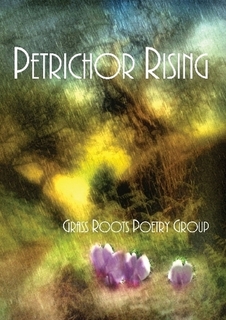
Hesch Profileproduct_thumbnail-3.phpJOSEPH HESCH (A Thing for Words) is a writer and poet from Albany, New York , an old friend of Bardo and a new core team member. Joe’s work is published in journals and anthologies coast-to-coast and worldwide. He posts poems and stories-in-progress on his blog, A Thing for Words.  An original staff member at dVerse Poets Pub website, Joe was named one of Writers Digest Editor Robert Lee Brewer’s “2011 Best Tweeps for Writers to Follow.” He is also a member of the Grass Roots Poetry Group and featured in their 2013 poetry anthology Petrichor Rising.

Posted in Poems/Poetry, poetry, Poets/Writers, Victoria C Slotto, Writers' Fourth Wednesday, Writing

WRITERS’ FOURTH WEDNESDAY: God Is a Verb–and so Are We!

Many writers, myself included, are in love with words. In some traditions, words acquire a sacred dimension. Creation comes into being through God’s word in the Hebrew scripture. The Word became flesh in Christian belief. I often use the letters of the Hebrew alphabet to lead me into meditation as they are considered to hold the power of creation and are full of symbolic meaning and creative energy.

A few years ago I read a book by Rabbi David Cooper titled “God is a Verb.” His understanding is that God has not ceased the work of creation and that God asks us to become co-creators with him. Rabbi Cooper calls this activity of God God-ing and refers to our participation as, for example, David-ing in his case, or, in mine, Victoria-ing. As each of us uses our talents in art or writing or photography we continue the work of creation. So take your own name, add that –ing and go to it!

Image: history.com
Image: history.com

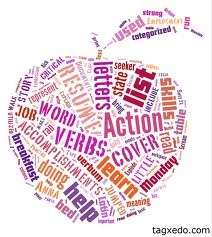
For today’s post and writing prompt, I’d like to take a look at the role of verbs. When I first ventured into the world of creative writing, one of my major flaws involved an abundant use of passive voice and boring verbs, hyperbolic adjectives and taxing adverbs…perhaps because so much of my early writing emerged in the context of business. Although I haven’t yet “arrived,” participation in critique groups and reading about the art of writing, offered an important insight: active verbs give life to prose and poetry. My earlier attempts to create character and description often fell flat.

Adverbs and adjectives are part of our language for a reason—to add color, texture and other artistic elements to our verbal armory, but discriminating use of these words, peppered with verbs that rock, do make a difference. While there is a role for telling and judicious use of passive voice, success lies in knowing how to achieve balance.

Here are a couple of examples/definitions of what I’m trying to say:

Passive voice—when something is done to the object:
The child was bitten by a bee.

Active voice, the subject is the doer:
The bee bit the child.

And overuse of adjectives and adverbs:
The hefty pass-kicker adroitly kicked the ball between the goal post in spite of the blustery wind.

I’d like to share a poem posted by fellow poet, Jane Hewey on her blog:

Scar Hopping
Copyright: Jane Hewey

Glacial divides bypass
the dusty canyons thrusting
their will. Moons crawl
through midnights; I want
to touch your singular hurt,
wrap it with my hands
and light-soaked cloths.

I would warm it through
your thick white skin, force myself
into its cold-singe. I want
to evoke you out of the scar
like arctic char augured
from an eight inch ice hole.

http://janehewey.wordpress.com/View all posts by janehewey

I’ve added italics to some of the singular verb and verb derivatives (such as gerunds) Jane chose. While she does use descriptors, the verbs add so much to the flow and strength of the poem.

I hope this inspire you to write a poem, flash fiction or essay incorporating a rich use of verbs. You may want to select something from your archives that never quite satisfied you and try to spice it us a bit. Maybe it’s heavy on adverbs and adjectives, even bordering on “purple prose.” Or grab a dictionary and discover a verb or two that’s new to you.

Feel free to share your results, if you like. To join in:

  • Write your poem and post it on your blog or website;
  • Copy and paste the direct URL to your poem to Mr. Linky at the bottom of this post, adding your name or identifier where he prompts you;
  • I’ll visit you and comment and we hope that you will visit and encourage one another
  • Above all, have fun and remember—you are a co-creator!

Special thanks to Jane for allowing me to share her copyrighted poem

Image: tagxedo
Image: foxhugh.com

.

(Portions of this post were recently offered at dVerse Poets’ Pub, another site for which I write each month. If you write poetry and are not familiar with this poetry community, it is a source of excellent articles about all things poetic and offers several prompts each week, including a night for Open Links!)

_____________

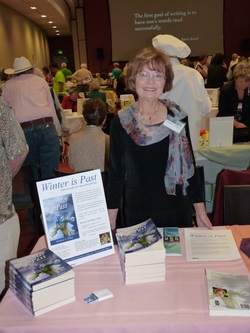
Victoria at the Palm Springs Writer's Expo March 2012
Victoria at the Palm Springs Writer’s Expo March 2012

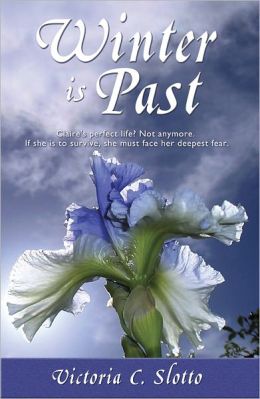
2940013445222_p0_v1_s260x420VICTORIA C. SLOTTO (Victoria C. Slotto, Author: Fiction, Poetry and Writing Prompts) ~ is an accomplished writer and poet. Winter is Past, published by Lucky Bat Books in 2012, is Victoria’s first novel. A second novel is in process. On Amazon and hot-off-the-press nonfiction is Beating the Odds: Support for Persons with Early Stage Dementia. Victoria’s ebooks (poetry and nonfiction) are free to Amazon Prime Members. Link HERE for Victoria’s Amazon page.

Editorial note: Congratulations, Victoria, on that the long awaited publication of print copies of Jacaranda Rain, Collected Poems, 2012, Beautifully done.

Writers’ Fourth Wednesday is hosted by Victoria from January through October and always posts at 7 p.m. PST.

Posted in Charles W Martin, poem, poetry

buddy can you lend…

buddy can you lend

how well
do you
need to know
a soul
to
care
do you
need to be
on
a first-name basis
or
have shared
some common
moment of
pain
or
epiphany
or
is
your
faith
enough

678ad505453d5a3ff2fcb744f13dedc7-1product_thumbnail.php41V9d9sj5nL._SY344_PJlook-inside-v2,TopRight,1,0_SH20_BO1,204,203,200_CHARLES W. MARTIN (Reading Between the Minds) — earned his Ph.D. in Speech and Language Pathology with an emphasis in statistics. Throughout Charlie’s career, he maintained a devotion to the arts (literature/poetry, the theater, music and photography). Since his retirement in 2010, he has turned his full attention to poetry and photography. He publishes a poem and a photographic art piece each day at Read Between the Minds, Poetry, Photograph and Random Thoughts of Life. He is noted as a poet of social conscience. Charlie has been blogging since January 31, 2010. He has self-published a book of poetry entitled The Hawk Chronicles and will soon publish another book called A Bea in Your Bonnet: First Sting, featuring the renown Aunt Bea. In The Hawk Chronicles, Charlie provides a personification of his resident hawk with poems and photos taken over a two-year period. Charlie’s lastest book, When Spirits Touch, Dual Poetry, a collaboration with River Urke, is available through Amazon now.

Posted in Dance, Disability, General Interest, Music, Video

Stepping out of devastation: “Level Up” with Vienna Teng, featuring b-boy Tommy Guns-Ly of ILL-Abilities

Our thanks to Laurel D. for sharing Vienna Teng’s video with us …

This crowd-funded (Kickstarter) video by the remarkable singer and song-writer Vienna Teng was released in December. The song Level Up is featured in her album Aims which was released last September. In this video, Ms. Teng moves through four scenes of devastation including one featuring b-boy Tommy Guns-Ly, dancer, bone cancer survivor and amputee. Tommy Guns-ly is part of the ILL-Abilities crew.

“Originally created in 2007 with the idea of being a “Super Crew” of disabled dancers, it is now becoming a global movement helping to spread the message: No Excuses, No Limits. ILL-Abilities’ mission is to redefine society’s view of disability, promote empowerment, and encourage limitless possibilities through motivational entertainment.”
Source: Breakin Convention.

“I am unstoppable.” Tommy Guns-Ly

Posted in Essay, General Interest, Guest Writer, memoir

Some Thoughts on Adoption

Editorial Note: In April 2013, John Nooney wrote a series on his adoption. We think his message is an important one and he agreed to cut the 12,000 word feature down to 1,000 words to accommodate the needs of this site, a frankly heroic effort and something for which we are most appreciative. After reading this post, you may wish to read the longer piece on John’s blog HERE and we encourage you to do so. The details are interesting and thought-provoking.

hands-together-871294932977UgO“Have you found your birth-mother?” is, more often than not, the first thing people ask me when I mention I am an adopted child.

Think about that.

When you share information about yourself, it is the first response that matters most; the first reply has the biggest emotional impact.

So, if the first response to news of adoption is wanting to know if you’ve found your birth-mother (often stated as Real Mother), one begins to feel they need to seek her out.

People ask this particular question, breathless with excited anticipation of an affirmative answer — they’re wanting a feel good story, with a big, bold headline: “Adopted Child Reunited With Real Mother!”

The question ends up making me feel as if the asker somehow views my adoptive parents (the people I think of as my only parents) as being inferior to Real Parents. It’s like they imagine I was kidnapped from my Real Mother, raised by people pretending to be my parents, and that I need to be rescued and returned to The Real Parents.

It’s insane.

And, it’s hurtful.

I’ve not spent much time thinking about my birth-parents. Sure, I’m curious what they look like, what their story is, and, more importantly, what their medical history is, so I know what to watch for. Other than that, I have little interest in them. Not for bad reasons — I don’t hate them for giving me up for adoption. I think my birth-mother made the best choice she knew how to make at the time. When people want to know if I’ve sought her out, I begin to wonder if there’s something wrong with me. Am I supposed to find her? Is there supposed to be a yearning for my Real Mother’s loving arms?

They say mothers have an unbreakable bond with the child they carried in their womb, that they’d do anything to protect that child. Am I, as the child in the womb, supposed to have that same unbreakable bond?

I don’t feel that bond.

I thought of searching, but when I began to think about the consequences of finding my birth-mother, I lost interest. What if she was married to a billionaire? Would I then hate my middle-class roots? What if she turned out to be a meth-addicted prostitute? How would I feel then? Knowledge can be dangerous. I was scared of what I might find — and what I might or might not feel.

I’ve spent many helpful hours in therapy over the years, though I’ve left several therapists because they’ve tried to convince me that my issues started by being abandoned by my birth-mother; that even though I was newborn, I was able to sense her abandoning of me, and its impact is at the root of many of my issues.

One thing I have absolutely no doubt about: I do not feel that my birth mother abandoned me.

We don’t know what communication passes between mother and fetus —  though we often surmise. Perhaps because giving up a child is such a gut-wrenching decision for a mother, the trauma she feels imprints itself on her unborn child, and, perhaps, leaves some children with a sense of an emotional abandonment

Maybe there is a reverse that is also true: maybe a mother can tell her unborn child that it is being given up for the best reasons, that the decision she is making is one made out of an unimaginable love — a love that wants her child to have a home better than the one she can provide. And, maybe, communicating that love can leave an adopted child feeling that it hasn’t been abandoned, but that it is a child, being given as a gift — a great gift.

Sentimental claptrap? Maybe.

Our society runs on the belief of individuality. We take pride that we’re all different, that everyone’s story is not the same. Yet, we’ll try to claim that every adopted child should feel abandoned? It makes no sense. We are either all different, with different stories, or we’re not.

Growing up, my mother told me a story:
“There was a man and a woman who loved each other very much. They wanted to have a family, but, unfortunately they couldn’t have kids. One day, they got a phone call — there was a young woman who was having a baby, but, she was young, and was struggling to make ends meet. She wanted her baby to have a better home than she was able to give him. She knew that the man and woman would give her baby a loving home. So, the man and woman got on a plane, and, when they came home, they had the young girl’s baby with them. They were very happy to have him, and they loved him very much. There are many kids in this world who live in homes where they aren’t loved or wanted,” my mom would say, “and adopted children are special: they’re wanted very much.”

Mom would ask if I knew who the man and woman were, and I’d say “you and dad”.  It was a story I liked to told, and would often ask to hear it.  I especially liked the ending: they were happy to have him; they loved him.
Adoption gives birth to thoughts and feelings across the emotional spectrum: from feelings of profound love, to feelings of despair and abandonment. Mixed in with those feelings, at least for me, is a sense of loyalty to the people who adopted me, who opened their hearts and home to me. Along with that sense of loyalty goes a sense of obligation: to believe that adoption is ok, that it’s a wonderful, loving thing. I grew up in an environment that felt loving, so it was something I never questioned.

I’m adopted, but it doesn’t change the fact that my family is as much a family as anyone else’s family.  We’ve managed to look past the wounds and the scars that all families accumulate over the years. I like to think that in spite of all the pain and hurt, that when we look at each other, we see the love, see the strength of a love that’s been tested and that still holds us together.

This is my telling of one person’s adoption: mine. I am in no way trying to say that my words apply to all adopted children. My opinions on adoption may be different than yours — and, that’s ok. Adoption, just like any other family issue, is unique to each individual and each family. Please do not interpret my words as a generalization of the experiences of all adopted children. This is my tale, my story, my thoughts.  

– John Nooney

(c) 2013, feature article, John Nooney, All rights reserved
Photo credit ~ Vera Kratochvil, Public Domain Pictures.net

unnamed-3JOHN NOONEY (Johnbalaya) ~ lives in Aurora, Colorado with his partner of thirteen years, his ninety-year-old mother and their three dogs.
Posted in Photography/Photographer, Spiritual Practice, Terri Stewart

Sacred Stillness

I am working valiantly on ordination papers this week. So I am appropriately resurrecting a post from http://www.BeguineAgain.com as our step into sacred space. And yes, I am ordained, but I am a newbie, so for the first two years we have to submit more papers.

Join me in listening to the beautiful chant by Velma Frye. It is a call to stillness. Rest. Quiet. And a reminder that stillness often is associated with darkness. Imagine the seeds germinating in the darkest earth. Seemingly still, but so much creative energy stirring up unbeknownst to observation! But the stillness is what nurtures it. The darkness. The coldness. Be still.

Be Still
by Velma Frye

Be still.
Be still.
Be still.
Go deep
into
the silence
of the night
and robe yourself
in darkness.

See with the heart
into the dark of the night.
So silent the night.
So dark the night.

Be still.
Be still.
Be still.
Be still.
Be still.
Be still.

What will you do to create stillness in your life?

How can you use darkness to create wholeness?

quiet

(c) 2014, post, Terri Stewart, CC license BY-NC
(c) 2013, lyrics and video, Velma Frye
(c) 2013, photo, Terri Stewart, CC license BY-NC-ND

..

REV. TERRI STEWART is Into the Bardo’s  Sunday chaplain, senior content editor, and site co-administrator. She comes from an eclectic background and considers herself to be grounded in contemplation and justice. She is the Director and Founder of the Youth Chaplaincy Coalition that serves youth affected by the justice system. As a graduate of Seattle University’s School of Theology and Ministry, she earned her Master’s of Divinity and a Post-Master’s Certificate in Spiritual Direction.

Her online presence is “Cloaked Monk.” This speaks to her grounding in contemplative arts and the need to live it out in the world. The cloak is the disguise of normalcy as she advocates for justice and peace. You can find her at www.beguineagain.com ,www.twitter.com/cloakedmonk, and www.facebook.com/cloakedmonk.  To reach her for conversation, send a note to cloakedmonk@outlook.com

Posted in General Interest, Naomi Baltuck, Photo Essay, Photography/Photographer

The Flight of the Sparrow

Last summer I saw a baby Stellar Jay perched on my arbor, resting after trying out its wings. I looked away for an instant; when I looked back, it was gone.

It reminded me of something The Venerable Bede once said.  Bede was an Anglo-Saxon monk born in 672A.D.

In  The Ecclesiastical History of the English People he compares a person’s life to the flight of a sparrow.  Imagine sitting in a mead-hall at supper by the light of a blazing fire, while outside a winter storm rages.

A sparrow flies in one door of the hall, into the light, then darts out out another door, back into the cold dark night.  “So our lives appear for a short space,” said Bede, “but of what went before, or what is to follow, we are utterly ignorant.”

People have many different thoughts, feelings, beliefs and explanations as to what or if anything comes before…

…or after the sparrow’s flight.

Sooner or later each of us will fly out into the night.

That seems to be the only thing everyone can agree upon.

I don’t need to know all the answers before I fly back out.

I am right here, right now, basking in the warm and beautiful light of life.

Whatever happens outside the mead-hall won’t change the way I live my life here and now.

I have work I am passionate about…

..family I love and good friends to play with.

I care about issues in the wider world…

…and in my own little sphere.

I hope I can make some small difference…as a writer, a storyteller, a parent, a friend…

…and to leave even just a little nightlight shining…

…when my flight is done.
null

All words and images copyright Naomi Baltuck

NaomiPHOTO1-300ppi51kAqFGEesL._SY300_NAOMI BALTUCK ~ is a Contributing Editor and Resident Storyteller here410xuqmD74L._SY300_ at Bardo. She is a world-traveler and an award-winning writer, photographer, and story-teller whose works of fiction and nonfiction are available through Amazon HERE. Naomi presents her wonderful photo-stories – always interesting and rich with meaning and humor – at Writing Between the Lines, Life from the Writer’s POV. She also conducts workshops such as Peace Porridge (multicultural stories to promote cooperation, goodwill, and peaceful coexistence), Whispers in the Graveyard (a spellbinding array of haunting and mysterious stories), Tandem Tales, Traveling Light Around the World, and others. For more on her programs visit Naomi Baltuck.com

Posted in Corina L. Ravenscraft, poem, story

A few bits of Soul Sustenance – A story, a quote and a poem

One of the things I like about parables or fables is that they have seeds of truth and wisdom condensed into “bite-sized” amounts of reading. I enjoy looking for new ones which I haven’t read and sometimes come across old favorites. For those of you seeking “Truth” (and all that the word with a capital “T” entails) I offer the following story:

The seeker of truth

“After years of searching, the seeker was told to go to a cave, in which he would find a well. ‘Ask the well what is truth’, he was advised, ‘and the well will reveal it to you’. Having found the well, the seeker asked that most fundamental question. And from the depths came the answer, ‘Go to the village crossroad: there you shall find what you are seeking’.

Full of hope and anticipation the man ran to the crossroad to find only three rather uninteresting shops. One shop was selling pieces of metal, another sold wood, and thin wires were for sale in the third. Nothing and no one there seemed to have much to do with the revelation of truth.

Disappointed, the seeker returned to the well to demand an explanation, but he was told only, ‘You will understand in the future.’ When the man protested, all he got in return were the echoes of his own shouts. Indignant for having been made a fool of – or so he thought at the time – the seeker continued his wanderings in search of truth. As years went by, the memory of his experience at the well gradually faded until one night, while he was walking in the moonlight, the sound of sitar music caught his attention. It was wonderful music and it was played with great mastery and inspiration.

Profoundly moved, the truth seeker felt drawn towards the player. He looked at the fingers dancing over the strings. He became aware of the sitar itself. And then suddenly he exploded in a cry of joyous recognition: the sitar was made out of wires and pieces of metal and wood just like those he had once seen in the three stores and had thought it to be without any particular significance.

At last he understood the message of the well: we have already been given everything we need: our task is to assemble and use it in the appropriate way. Nothing is meaningful so long as we perceive only separate fragments. But as soon as the fragments come together into a synthesis, a new entity emerges, whose nature we could not have foreseen by considering the fragments alone.” ~ Author Unknown Source

For those of you unfamiliar with the wonderful sounds of a Sitar (the instrument mentioned in the story above), I offer the following beautiful example from one of the greatest players of our time, Ravi Shankar:

In addition to truth, one also needs moments of stillness and meditation to keep balance in life. The photo below is mine, but the quote is Lao Tzu’s:

Be stillAnd lastly, a poem written a while ago about something I rarely get to witness, since I’m a night-owl by nature:

~ Sunrise Sighs ~

Today, for the first time in a small while, I was awake to witness a fresh sunrise.

The purpled-pink fingers crept up like a smile,

gently waking the crisp air of still-sleepy skies.

Vaporous flames of bright orange hues, licking the velvet of dew-kissed dawn,

Sleep promised me a solid, deep, dreamless snooze,

But rapt in my awe, I stayed awake and gazed on.

I love the quiet, hushed hours of Night; they keep me content in a solitary peace,

But the rare, glimpsed glory of Morning’s soft light

Makes me ache with a sweetness that begs for release.

~ C.L.R. ~ ©

effecd1bf289d498b5944e37d8f4ee6fAbout dragonkatet Regarding the blog name, Dragon’s Dreams ~ The name comes from my love-affairs with both Dragons and Dreams (capital Ds). It’s another extension of who I am, a facet for expression; a place and way to reach other like-minded, creative individuals. I post a lot of poetry and images that fascinate or move me, because that’s my favorite way to view the world. I post about things important to me and the world in which we live, try to champion extra important political, societal and environmental issues, etc. Sometimes I wax philosophical, because it’s also a place where I always seem to learn about myself, too, by interacting with some of the brightest minds, souls and hearts out there. It’s all about ‘connection(s)’ and I don’t mean “net-working” with people for personal gain, but rather, the expansion of the 4 L’s: Light, Love, Laughter, Learning.

Posted in Essay, General Interest, Liz Rice-Sosne, Poems/Poetry, poetry, Spiritual Practice, Writing

Haiku – A Spiritual Experience

600px-Poecile-atricapilla-001I am sitting here trying to remember what prompted me to write one haiku per day during the first 6 months of 2012.  I was ill, that was the first reason for doing so.  I wished to remain connected to my writing community, keep alive my connection with the friends that I had met online.  I knew that I could not manage an article daily so I needed to write something short.  I decided that haiku was the answer.  Was there any shorter form of poetry?  The learning and the writing that year became for me a spiritual experience.  It taught me to see the world through a new and different lens.  I am so grateful for this experience

I have always been drawn to haiku even when young.  What can be said in 17 syllables, those three short lines of 5, 7, 5 syllables?  It would be easy – just compose three short lines of poetry a day.  Those thoughts will tell you just how little I knew of haiku when I began.  Experience has shown me that many Americans have little knowledge of haiku seeing it simply as three lines of poetry with the 5-7-5-syllable count.  If seen this way the reader and writer of haiku will never be fully satisfied.

The first thing that one should know is that the syllable count fits Japanese words or syllables.  Japanese words or syllables are nothing like English language syllables.  When attempting to write a haiku there are many things to consider before considering the word count.  The second thing that I learned is that it is often written in one line.  Just one.  In Japan that line is often written from top to bottom.  It is vertical.  I do not write vertically.

Poignancy in haiku is important.  The most important thing about haiku for me is very hard to put into language.  For I see haiku as a language all its own.   A haiku ties things together.  Haiku conveys the depths of nature’s beauty and its power.  Haiku shows ones relationship with nature.  One haiku can express in a few words what it might take a psychologist an entire magazine article to profess.  Haiku can evoke within the reader new understanding.  I equate haiku to light.  It can dazzle in brightness.  It can illuminate a path.  It can act as a halo separating yet conjoining reader and writer through the poem.  You are placed within the poem.  Haiku connects the ancient with the modern, the light with the dark, and nature with man/womankind.

The book to which I turn most often for reference is “The Haiku Handbook, How To Share Write and Teach Haiku,” by William J. Higginson.  I would go so far as to say that he has he has “lived” haiku, making his teachings easy to understand and to apply.  When writing haiku my goal is to be living in the moment, to be “living haiku.”  It is a spiritual moment.  I wish to express that moment to you so that you feel what I feel.  I believe Higginson tells us that haiku is about the eloquence of sharing those feelings.  It is easy to say to your friend: “the sky is beautiful.”  But in doing so, you do not really convey what you feel.   Nor are you conveying any degree of real beauty.  According to Higginson, when we share the depths of what we feel through haiku we are building community.   What more important act is there?

The first thing that I do when writing a haiku is search for a kigo.  A kigo is a season word and mandatory in haiku.  Your haiku should be driven by what you feel for your subject and your choice of kigo.   I view the kigo as an anchor.  There are numerous kigo databases online.  New words are always being added.

We have just experienced a foot of snow here in the midwest.  The last time we had so much snow was 1982.  This is an immense weather event here.  Along with subzero temperatures accompanied by wind many of us are pretty much homebound.  I would like to share this large weather experience with you by writing a haiku.  I edit and re-edit before I am happy with them.  Each of these are a part of my process for creating one haiku.

wall of snow – broken branches dangling from trees (this sounds awkward to me)

or

deep white snow – hidden branches (this coveys little feeling)

or

drifting snow – a chickadee’s cap (this possesses the essence of what I am looking for)

Final haiku:

blowing drifting snow – chickadee’s black cap

– Liz Rice-Sosne

© 2013, essay, Liz Rice-Stone, All rights reserved
Photo credit ~ Black-capped Chickadee via Wikipedia and under CC A-SA 3.0 unported license

unnamed-2LIZ RICE-SOSNE a.k.a. Raven Spirit (noh where), perhaps the oldest friend to Bardo, is the newest member of The Bardo Group Core Team. She is also our new Voices for Peace project outreach coordinator and our go-to person for all things related to haiku.  She says she “writes for no reason at all. It is simply a pleasure.” Blogging, mostly poetry, has produced numerous friends for whom she has a great appreciation. Liz is an experienced blogger, photographer and a trained shaman. We think her middle name should be “adventure.”

Posted in Jamie Dedes, Poems/Poetry

it was the golden light …

800px-dovedale_by_moonlight_-_oberlini awoke
it was the golden light
the moon camping out
casting my room in the
glow of its fire

i thought
for a moment
unsure of my place
forgetting
what city
what state
what day

seconds passed
soundless

slowly peeling away
the veil, the confusion
i melted into
the golden light
breathed myself
into sleep again
done

and done
as easily perhaps
as breathing into
eternal sleep
so frail and fragile
is this anchor
this silver thread
this castle of solitude
this just me
inside me
inside life

– Jamie Dedes

© 2013, poem, Jamie Dedes, All rights reserved
Illustration ~ from Allen Memorial Art Museum (Oberlin College) a photograph Joseph Wright of Derby’s (English Derby, 1734-1797) Dovedale by Moonlight (ca.1784-85). Description/details HERE. It’s original colors are greens and I have change the exposure and color to go with the poem.

photo-on-2012-09-19-at-19-541JAMIE DEDES (The Poet by Day)~ I am a mom and a medically-retired (disabled) elder. The graces of poetry, art, music, writing and reading continue to evolve as a sources of wonder and solace, as a creative outlet, and as a part of my spiritual practice.

Posted in Essay, Photography/Photographer, Priscilla Galasso

Peace on Earth

In December, I reblogged a series of posts acknowledging the free gifts that are available to humanity every day.  The idea was to approximate an Advent calendar, opening a door to reveal a treasure each day as a count down to Christmas.  This one was first published on the 23rd day of the month.  — scillagrace

It is Day #23 in the December countdown.  Today’s gift is Peace.  Ahh, peace.  Take a deep breath.  Relax the muscles around your skull; feel  your ears and eyebrows pull backward; close your eyes and roll your head. Do you feel a sense of well-being?  Julian of Norwich claims that God himself spoke these often quoted words to her, “All shall be well, and all shall be well, and all manner of thing shall be well.”  Do you believe that’s true?  Do you believe that’s possible?  I do, although I don’t always act as though I do. I forget.

Wikipedia uses these phrases to define peace:  “safety, welfare, prosperity, security, fortune,  friendliness… a relationship between any people characterized by respect, justice and goodwill… calm, serenity, a meditative approach”.  Where does peace come from?  Buddha, the Dalai Lama and many others will tell you that peace comes from within, not without.

“The first peace, which is the most important, is that which comes within the souls of people when they realize their relationship, their oneness with the universe and all its powers, and when they realize that at the center of the universe dwells the Great Spirit, and that this center is really everywhere, it is within each of us.” – Black Elk

But perhaps, there are things outside of you that will remind you of the peace which dwells within you.

“Climb the mountains and get their good tidings. Nature’s peace will flow into you as sunshine flows into trees. The winds will blow their own freshness into you, and the storms their energy, while cares will drop away from you like the leaves of Autumn.” – John Muir

Do you feel peace in your mind and body and soul all at once?  Do you descend into peace from your head down?

“I do not want the peace which passeth understanding, I want the understanding which bringeth peace.” – Helen Keller

I suppose each of us must find his/her own journey into peace.  Anxieties and conflicts are particular and personal.  Facing each one head-on is not a passive task.  Making peace is not for the weak of heart.  “Blessed are the peacemakers, for they shall be called children of God.”  Is God about making peace?  Is making peace the work of the Universe?  Is it perhaps that joyful effort that gives life meaning?

“Peace is not merely a distant goal that we seek, but a means by which we arrive at that goal.”  – Martin Luther King, Jr.

If we can make peace between ourselves and God, ourselves and Nature, can we then make peace between ourselves and others?

“If we are peaceful, if we are happy, we can smile and blossom like a flower, and everyone in our family, our entire society, will benefit from our peace.” – Thich Nhat Hahn

“What can you do to promote world peace? Go home and love your family.” – Mother Theresa

Steve constantly reminds me that in every situation, especially in those which cause anxiety and conflict to arise, I have 3 choices.  I can hide/run away.  I can try to change the situation.  I can change myself.  The first option doesn’t exactly make peace; it simply avoids confrontation.  You can hide away all day long and still feel the fear of whatever it is that scared you.  So, why do I often employ that choice?  Because I lack courage and I’m lazy.  I sometimes pick that choice first to give me time to screw up my will and motivation.  I don’t want to get stuck there, though.

Trying to change the situation requires engagement.  Making peace with hunger, poverty, sickness, and distress this way requires an understanding of  causes and effects on all different levels.  It requires negotiation, and it requires cooperation.  You don’t always get all that is required to change a situation.  Not all situations can be changed.  Death is the big one that comes to mind here.  You can’t hide or run away from it, and you can’t change the situation so that you don’t have to experience it.  Now what?

Change yourself.  Sometimes the only way to make peace with something is to change your thinking, your belief, your approach, your attachment, your aversion, your ignorance or some other aspect of yourself.  “If you can’t beat ‘em, join ‘em!” is the simplistic way to say it.  If you’d “rather fight than switch” (old cigarette commercial – pop philosophy at its finest), then you have chosen to fight, not to make peace.  Our egos make it really tough to change ourselves.  Sometimes we’d rather fight, sometimes we’d rather die, sometimes we’d rather do anything than change ourselves.  You have to ask yourself very seriously what your ultimate goal is to get past this one.  Is your goal to keep your ego intact or is your goal to make peace?   I’ve come across a lot of phrases that address this ego dilemma: “take up your cross”, “turn the other cheek”, “deny yourself”, “die to self”.  I think that dogma is probably more an ego thing than a peace thing.   If you can’t let go of your religious beliefs in the interest of peace, then your religion is more about yourself than it is about God, in my humble opinion.   I love the part of the movie “Gandhi” where he counsels a Hindu man who is distraught at having murdered a Muslim child.  “Raise a Muslim child and make sure you raise him as a Muslim, not as a Hindu. This is the only way you can purge your sins.”  This is true wisdom about peace.

Give peace a chance. It requires your will, it requires your strength, and it requires you to lay aside will & strength.  I am looking forward to enjoying the peace that my family and I have created.  We are still creating it, and will be our whole lives long.

– Priscilla Galasso

© 2013, essay and photograph, Priscilla Galasso, All rights reserved

004PRISCILLA GALASSO ~ started her blog at scillagrace.com to mark the beginning of her fiftieth year. Born to summer and given a name that means ‘ancient’, her travel through seasons of time and landscape has inspired her to create visual and verbal souvenirs of her journey.

Currently living in Wisconsin, she considers herself a lifelong learner and educator. She gives private voice lessons, is employed by two different museums and runs a business (Scholar & Poet Books, via eBay and ABE Books) with her partner, Steve.

Posted in poem, Poems/Poetry, Poets/Writers

Inside the Brightness of Red

This month Victoria Slotto will host “Writer’s Fourth Wednesday” writing prompt on January 22 at 7 p.m. here at The Bardo Group. She invites any and all to participate. Victoria will set up Mr. Linky and leave it up for three days so that we can all link in our scribbles whether poems, fiction or creative nonfiction.

I hope this reblogged piece on the English poet Mary MacRae will help to start the creative juices running and perhaps inspire some confidence in those others who are also coming to their art late in life. J. D.

Jamie Dedes's avatarJamie Dedes' THE POET BY DAY Webzine

NOTE: Originally published here about two years ago, this post is worthy of a wider audience and more than one read; and so, with some additions, I post it again for the benefit new readers and old. Among other things, the evolution of Mary’s poetic grace in her maturity is certain inspiration for those who come to their art late in life as she did. Enjoy …

Mary MacRae “wrote and published poetry for only the last ten years of her life, after ill-health forced her to take early retirement from teaching. She taught for 15 years at the James Allen Girls School (JAGS), Dulwich, London. Her commitment to writing led to her deep involvement with the first years of the Poetry School under Mimi Khalvati, studying with Mimi and Myra Schneider, whose advanced poetry workshop she attended for 8 years. In these groups her exceptional talent…

View original post 1,298 more words

Posted in General Interest

The Legend of Tír na nÓg by Niamh Clune

niamh
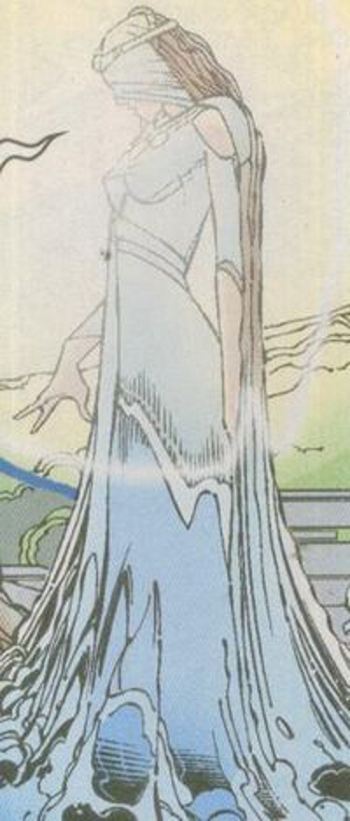
First seen in The Hulk Comic #18 1974

Niamh Chinn Óir mounted her white stallion to ride the warm, west wind. Her golden hair, wild and free as horse’s mane danced in gay abandon. This journey, fit for none other than she of the faery folk had not been made for centuries. Leaving Tír na nÓg far behind, she crossed the perilous ocean.

What lover’s call had summoned her?

What sweet voice, carried on sea mist had entered her slumber? She would know his name.

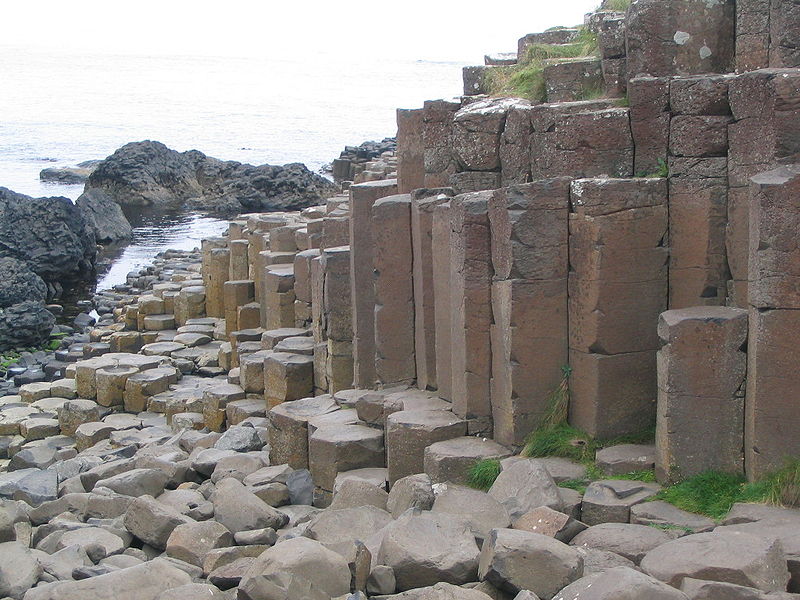
The Giant's Causeway.
The Giant’s Causeway.

Oisín, son of Fionn mac Cumhaill sat on a rock gazing over the crashing sea. The young warrior-bard paused from his labour, disturbed as he was by unquenched longing. His father, fierce and wise chieftain of the Fianna had conquered the Scottish giant Cú Chulainn. Oisin was tasked to write the victory for posterity making it known to all those who were destined to belong to the future.

A wind stirred his hair, just a whisper that carried sweet, unfathomable promise.  He was lifted up into the air, dazzled by golden streams of sunlight. He looked upon the face of Niamh and knew the one for whom he had longed.

celtic-horseShe carried him across the sea to Tír na nÓg, the land of Eternal Youth. The journey was the passing of a second. No mortal had ever crossed the perilous ocean to the edge of time, to the furthest, western-most reaches of the world where faery and mortal knew no distance or fear between them.

She was his arbour; him, the conqueror of all he surveyed ~ prince of timelessness.

But mortality is ruled by time. And soon the restless spirit summoned him to his father’s purpose. In his deepest heart he was of the blood-line race of Fianna and must return to Ireland to attend his kin.

Niamh warned him of succumbing to his mortal destiny. “If you set foot on Irish soil, it will be your end.” Echoes of her warning called after him on the high-pitched voice of the ill wind that carried him home.

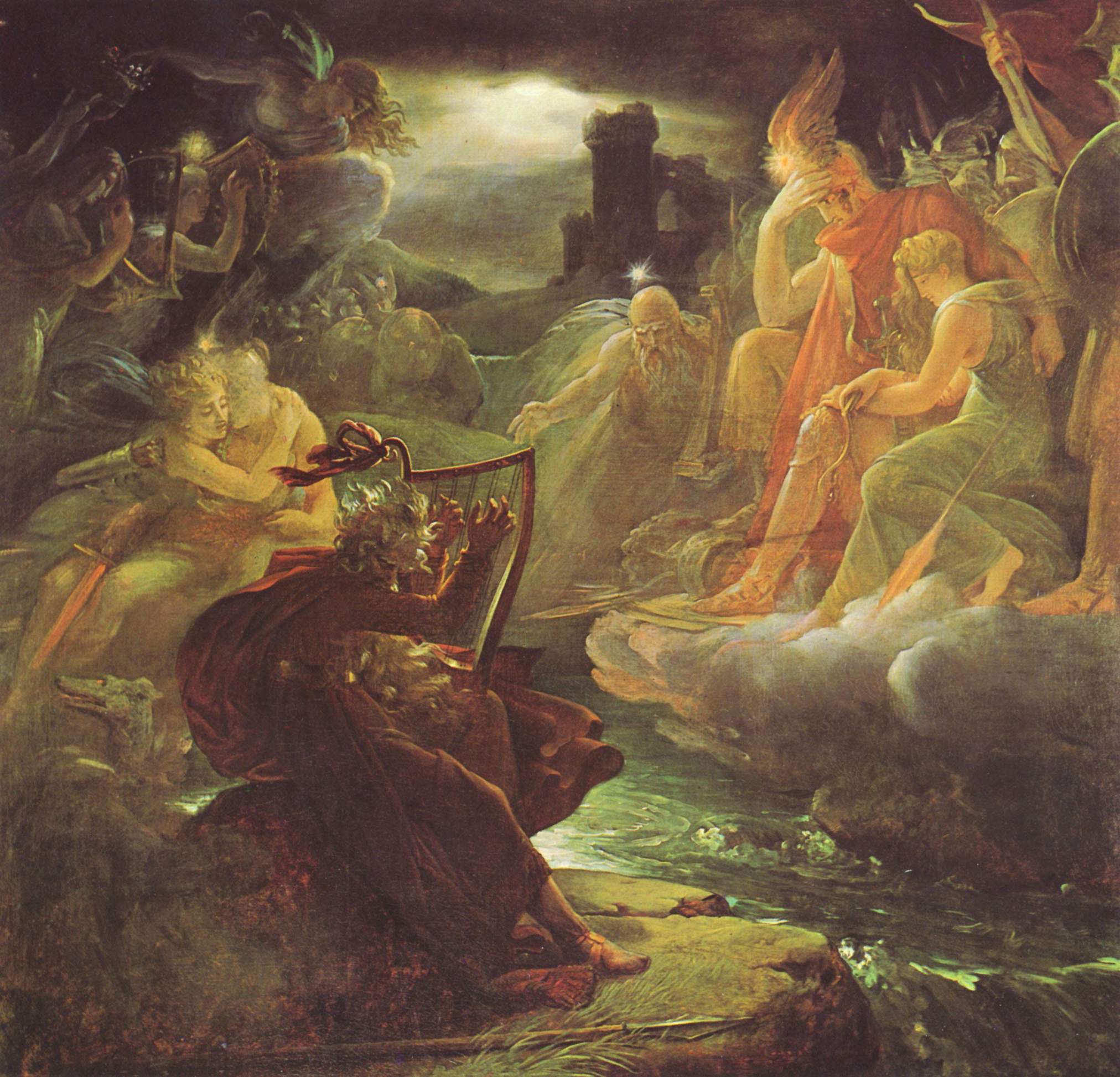
François Pascal Simon Gérard: Oisin.

Oisín was shocked at how his land and people had changed. He was a giant among men. Fields were cleared, forests cut down. Hunting had given way to farming.   He sighted a group of workers as they struggled to lift a boulder and clear a new tillage. The boulder was of no consequence to Oisín. He leant from his horse to toss it aside. As he did so, his stirrup broke and he fell to the ground. Ageing in an instant, the three hundred years that had passed claimed him and returned him to the soil from whence he had come,

In Oisín’s passing, contact with faery was lost forever. Niamh came no more to the Emerald Isle. Although I hear it told that her name lives still in some of Erin’s daughters.

© 2013, story Niamh Clune, All rights reserved

.

.

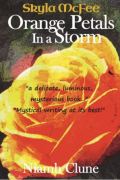
430564_3240554249063_1337353112_n-1orange-petals-cover_page_001DR. NIAMH CLUNE (Plum Tree Books Blog) ~ is the author of the Skyla McFee series: Orange Petals in a Storm, and Exaltation of a Rose. She is also the author of The Coming of the Feminine Christ: a ground-breaking spiritual psychology. Niamh received her Ph.D. from Surrey University on Acquiring Wisdom Through The Imagination and specialises in The Imaginal Mind and how the inborn, innate wisdom hidden in the soul informs our daily lives and stories. Niamh’s books are available in paperback (children’s books) and Kindle version (The Coming of the Feminine Christ). Dr. Clune is the CEO of Plum Tree Books and Art. Its online store is HERE.  Niamh’s Amazon page is HERE.