The BeZine Blog

Posted in Spiritual Practice, Victoria C Slotto

Kavannah–Intention

Although I am not Jewish, I have found much nourishment in studying spiritual aspects of Judaism, in particular the Hebrew Alphabet (Aleph Beit). Jewish mystics and scholars believe that God used the letters of the Aleph Beit to bring about creation. Consider the power of the Word.

Source: jewfaq.com
Source: jewfaq.com

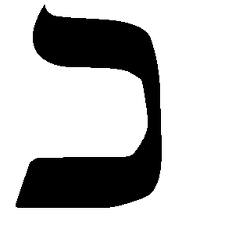
This morning I spent time with the letter Kaph. It means “palm” as in the palm of the hand. There is power in the hand–we raise a hand in blessing, we use our hands in the act of creating, through the hand healers channel their healing energy–think of Jesus, or Reiki Masters. It is intention, kavannah, that enables this power. Kaph is the first letter of kavannah and, as such, invites us to bring intentionality to our daily actions.

Photo Credit: theseedof hope.com

A few hours ago I spent some time doing the domestic thing: folding laundry, doing the dishes, a quick “pick up/put away storm” around the house. The idea of kavannah came to mind and, as I was making the bed, I realized that I can do it grudgingly or with grace. Bringing the intention of love to simple chores transforms them–making our home a blessing. It’s true that this is something I learned at an early age, but it’s something I have to continue to strive to remember. It’s so easy to slip into unconsciousness and go through the actions of every day without awareness.

So, we write. How can kavannah/intention affect this part of our life? What happens when, before we put our palms on the keyboard, we remember that we are instruments of the divine creative Spirit?

The Letter Kaph
The Letter Kaph

This is a re-blog of a post I wrote in July of 2010. As I’ve become more involved in poetry communities, I’d like to add one more thought–the importance of bringing KAVANNAH/INTENTION to our comments. Are comments just to attract more hits, or are they truly there to encourage our fellow bloggers? 

Have a wonderful week.

Reference: If you have any interest in learning more about the Hebrew Alphabet, there are a number of books on the subject listed on Amazon.com.  The one by Richard Siedman is very accessible. A very erudite scholar, Michael Munk, wrote an in-depth, volume the include Gematria, the study of sacred numbers.

– Victoria C. Slotto

© 2013, essay, Victoria Slotto, All rights reserved

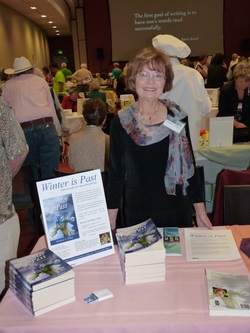
Victoria at the Palm Springs Writer's Expo March 2012
Victoria at the Palm Springs Writer’s Expo March 2012

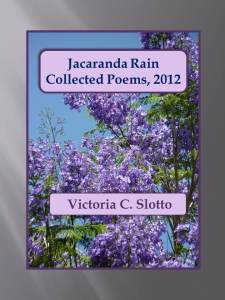
jr-cover-2VICTORIA C. SLOTTO (Victoria C. Slotto, Author: Fiction, Poetry and Writing Prompts) ~  is an accomplished writer and poet. Winter is Past, published by Lucky Bat Books in 2012is Victoria’s first novel.  A second novel is in process.  Jacaranda Rain — Collected poems, 2012 is available on Amazon, as is the hot-off-the-press nonfiction, Beating the Odds: Support for Persons with Early Stage Dementia. Victoria’s poetry collection and non-fiction book are free to Amazon Prime Members.  Link HERE for Victoria’s Amazon page.

Posted in Art, Meditation, Paula Kuitenbrouwer, Spiritual Practice

Mindfulness in the 1600s

the work of Paula Kuitenbrouwer, a reblog of one of Paula’s Sonnetagsfreude – or Sunday Happiness – posts, which are an initiative of Maria at Kreativeberg.  …Enjoy!

61onuaotpol-_sl500_

brother-lawrence

A Kid’s Herb Book by Lesley Tierra for my daughter, and for me The Practice of The Presence of God by Brother Lawrence.

Sunday Happiness* is about finding time to read. Our society slows down; we all get some time for reflection.

My daughter explores the mysterious world of herbs with this magical, herbal workbook. It is about making your own healing potions, secret remedies, and magical salves.

My book is about mindful meditation.
Brother Lawrence, a monk in the 1600s, promised himself he would live day and night, in good and bad times, in God. He spent many years practising the presence of God in his life. His key to this practice was that he strove to be consciously aware of God’s presence at all times, which seems a perfect synonymy of (Christian) mindfulness.
.
To me it means that with everything I do, I ask myself if I’m acting in the best consciousness and ethical conscientiousness. With means, I need to be aware and practice self-discipline, carefulness, and thoroughness. It is very easy to wander away from awareness and thoroughness, like with any meditation. If this happens, I bring myself back into the presence of God. It is a wonderful meditation, but not an easy one. Having said that, the more you do this, the longer the stretches of time of being in God, or being mindful, do occur.
.
I started to read this tiny book months ago, and I do return to it often, because Brother Lawrence’s promise still inspires. To purposefully enjoy God’s presence, or mindfulness, in your life, is like opening up to small miracles. Pouring tea becomes a meditation and so does watering the flowers on the balcony. It is still a bit hard to feel the presence of God while paying bills (and all others worldly and bureaucratic chores ), but to stay mindful, to stay open for the presence of God non stop is what it is about. And when I succeed, I feel a happy appreciation for the smallest things in life.

masterpiecejunebig_1920259a

Rembrandt’s master work of his son, Titus van Rijn, in a monk’s habit

Is this book only for Christians? Not at all. I recommend it to all people who are interested in the spiritual life. It is about mindfulness in the 1600s.

Thich Nhat Hanh says, in one of his many books that I’ve read, that if you need the address of God, he will give it to you; it is Here and Now. Brother Lawrence would probably have said: God’s address is being in the presence of God.

Namaste,
Paula

© 2013, essay and photographs/artwork (below), Paula Kuitenbrouwer, All rights reserved

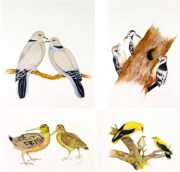
birdcardsPAULA KUITENBROUWER ~ is a regular contributor to Into the Bardo and a Dutch nature artist living in The Netherlands and sharing her work with us on her blog, Mindful Drawing and on her website.   In addition to art, Paula’s main interest is philosophy. She studied at the University of Utrecht and Amsterdam. She has lived in Eastern Europe and in Asia. Paula says that in Korea, “my family lived next to a Buddhist temple. In the early morning we would hear the monks chanting. During my hours of sauntering with my daughter through the beautiful temple gardens, I felt a blissful happiness that I try to capture in my drawings.” Paula sometimes teaches children’s art classes. She lives with her husband and daughter and close to her father. You can view her portfolio of mindful drawings HERE.

Posted in Charles W Martin, Peace & Justice, Poems/Poetry

this ain’t no foreign war…

this ain't no foreign war

boots
heels strike hard
against city streets
beneath their weight
lies the blood
of children
caught in the crossfire
of human greed
boots
heels strike hard
chiraq to la
gang border wars
death’s small bags
sold and bought
this is civil war
where are our troops
boots
heels strike hard
spin doctors’ barrage
has replaced truth
all is well
ask the dead
but they have no voice
so listen to me
boots
heels strike hard
against your eardrums
the dead call out
this is war
and we are
losing the battle
to save children’s lives

– Charles W. Martin

© 2013, poem, illustrations and book cover art, Charles W. Martin, All rights reserved

.
678ad505453d5a3ff2fcb744f13dedc7-1product_thumbnail.phpCHARLES W. MARTIN (Reading Between the Minds) — earned his Ph.D. in Speech and Language Pathology with an emphasis in statistics.  Throughout Charlie’s career, he maintained a devotion to the arts (literature/poetry, the theater, music and photography).  Since his retirement in 2010, he has turned his full attention to poetry and photography. He publishes a poem and a photographic art piece each day at Read Between the Minds, Poetry, Photograph and Random Thoughts of Life. He is noted as a poet of social conscience. Charlie has been blogging since January 31, 2010. He has self-published a book of poetry entitled The Hawk Chronicles  and will soon publish another book called A Bea in Your Bonnet: First Sting, featuring the renown Aunt Bea. In The Hawk Chronicles, Charlie provides a personification of his resident hawk with poems and photos taken over a two-year period.

Posted in Creative Nonfiction, Priscilla Galasso, Story Telling, Photo Story

“Jerry,” Faulkner and the Laundromat

0014the work of Priscilla Galasso  

“The Bardo” is a place of transition, perhaps akin to Purgatory. It is common ground and a sacred space of sorts. It’s intriguing to think of the Laundromat as a place like that  . . .

David Attenborough makes a point in The Life of Mammals video about “Social Climbers” – monkeys. He says that you can tell how large a monkey’s social group is by the size of his brain. Baboons live in large, complex social structures and have the largest brains of all the monkeys. Surviving and thriving in a social environment means that you have to be able to assess situations and make an array of decisions – how to make allies and with whom, how and when and whom to fight, how to secure a mate and improve your chances of passing on your genes. Navigating social life is even more brain-bending if you’re human, I think. More subtleties are involved. Here’s a case in point: the laundromat.

When Jim and I were first married, I did laundry at the laundromat. I hated going there, for several reasons. First of all, I was pregnant. The smells nauseated me; the physical demands of standing to fold and hoisting large loads of clothes around exhausted me. It was a depressing place to be physically, but perhaps even more uncomfortable was the social aspect. You never know what strangers you might encounter. I have had some rather pleasant days at the laundromat. I met a psychic, once, who was very interesting. She could tell I was skeptical and not receptive, but she kept on talking to me nevertheless. Gradually, I relaxed and figured out how to respect her and appreciate her and communicate that to her. We parted with a hug and wished each other well. Mostly, I get a pleasant experience if I can do my laundry in silence and read a few short stories at the same time. What I often find is that the laundromat is a place to observe human suffering, my own and others’.

I happened to have selected a book of short stories by William Faulkner as my laundry companion. I grabbed it off of Steve’s stack figuring that short stories would fit nicely into those periods of time between cycles, and I wouldn’t mind being interrupted or distracted as much as I would if I were trying to tackle “heavier” reading. What I didn’t think about was that these stories of post-Civil War race relations would be cast for me on a backdrop of the urban reality of this century…and that the same awkward tensions would result. I felt like some of his characters, eavesdropping in the kitchen, when people in the laundromat would chatter on their cell phones to friends and social agents. Outwardly, I guess I was trying to be invisible. I couldn’t help picking up snatches of their lives and wondering about their stories. For example, Jerry and his family…

I’ve seen Jerry twice now. Yesterday, I recognized him as I approached the laundromat. He was wearing a diaper under sweatpants, shoes, and no shirt. He was hitting his head repeatedly and grunting. Or maybe it was more like moaning. The woman he was with may have been his mother. She was in a wheelchair with an artificial leg that looked like a sandbag. He was with another woman as well, perhaps his sister. She was the one doing the laundry. I remembered them from a month ago. They came with about seven large, black garbage bags full of clothes. They took a social services shuttle bus to get there; I knew this from hearing the mother make cell phone calls about being picked up. This woman had the sweetest, kindest voice you would ever hope to hear. Her voice was full of compassion and pain; it was lilting and rich and Southern. I would cast her as a black Mammy in one of Faulkner’s stories. Her manners were impeccable. If she had to pass around me, she excused herself, and I felt like apologizing profusely for being in the way. Her daughter (?), the other woman, spoke almost unintelligibly as she did the laundry and corralled Jerry. Even the woman in the wheelchair told her, “I can’t understand what you’re saying.” Jerry likes to wander. They don’t want him to wander out to the street and get hit by a car. They don’t want him to bother the other people in the building. Their voices called out periodically, “Jerry. Jerry, come over here.” “Jerry, honey. Stop! Jerry, come here.”

When Jerry wanders near me, I don’t know what to do. I keep my head down and my eyes in my book. Would I frighten him if I made eye contact? Would he frighten me? Another gentleman was there. He helped bring Jerry back inside when he wandered out. The mother thanked him, “You’re so sweet. Thank you, sir.” They exchanged names. He told her that he has a grandson who was hit by a car at age seven; the grandson is now twenty-five and has brain damage. “Oh, so you know. You understand,” she sighed. I learned that Jerry is thirty-two years old.

In the other corner of the room, there was a mother with a five-year old daughter, London. She looked about five, anyway. London had a pacifier. I heard her mother yelling at her. “London! Get up offa that floor! Sit your butt down here!” Her voice was sharp and angry. London began to cry. There is not much to interest a five-year-old in the laundromat. She hadn’t brought any toys or books to occupy her.

The mother talked on her cell phone while London played with the lid of the laundry hamper. I made eye contact with the child as we went about our business. She silently bent her wrist toward me, while sucking her pacifier. “Oh, did you hurt yourself?” I asked. “London! Get out of the way!” her mother said.

In the Faulkner story, Master Saucier Weddell is trying to get back to Mississippi from Virginia. He is the defeated. He and his traveling companion, his former slave who is very attached to him and his family, find themselves in Tennessee at a farmhouse. These victors are extremely suspicious. They think Mr. Weddell is a Negro. Actually, he’s Cherokee and French. The story is short, but intense. The traveler and the farmer’s younger son end up being killed in an ambush by the farmer and his Union soldier son, Vatch. The last two sentences read, “He watched the rifle elongate and then rise and diminish slowly and become a round spot against the white shape of Vatch’s face like a period on a page. Crouching, the Negro’s eyes rushed wild and steady and red, like those of a cornered animal.”

I finished my laundry in silence. I waved my fingers and mouthed “goodbye” to London who had been banished to the corner. Her mother didn’t see me.

At home, the late afternoon sun shines down on the quilt on my bed. Steve isn’t home, and it’s very quiet. I feel like crying. My brain is not big enough to figure out why.

– Pricilla Galasso

© 2013, story/creative nonfiction and photographs, Pricilla Galasso, All rights reserved

004PRISCILLA GALASSO ~ is a contributor to Into the Bardo. She started her blog at scillagrace.com to mark the beginning of her fiftieth year. Born to summer and given a name that means ‘ancient’, her travel through seasons of time and landscape has inspired her to create visual and verbal souvenirs of her journey.

“My courage is in the affirmation of my part in co-creation”, she wrote in her first published poem, composed on her thirtieth birthday and submitted alongside her seven-year-old daughter’s poem to Cricket magazine. Her spiritual evolution began in an Episcopal environment and changed in pivotal moments: as a teenager, her twenty-year-old sister died next to her in a car crash and, decades later, Priscilla’s husband and the father of her four children died of coronary artery disease and diabetes in his sleep at the age of forty-seven  Awakening to mindfulness and reconsidering established thought patterns continues to be an important part of her life work.

Currently living in Wisconsin, she considers herself a lifelong learner and educator. She gives private voice lessons, is employed by two different museums and runs a business (Scholar & Poet Books, via eBay and ABE Books) with her partner, Steve.

Posted in Essay, Photography/Photographer, Spiritual Practice, Terri Stewart

Prayer as Action for Peace

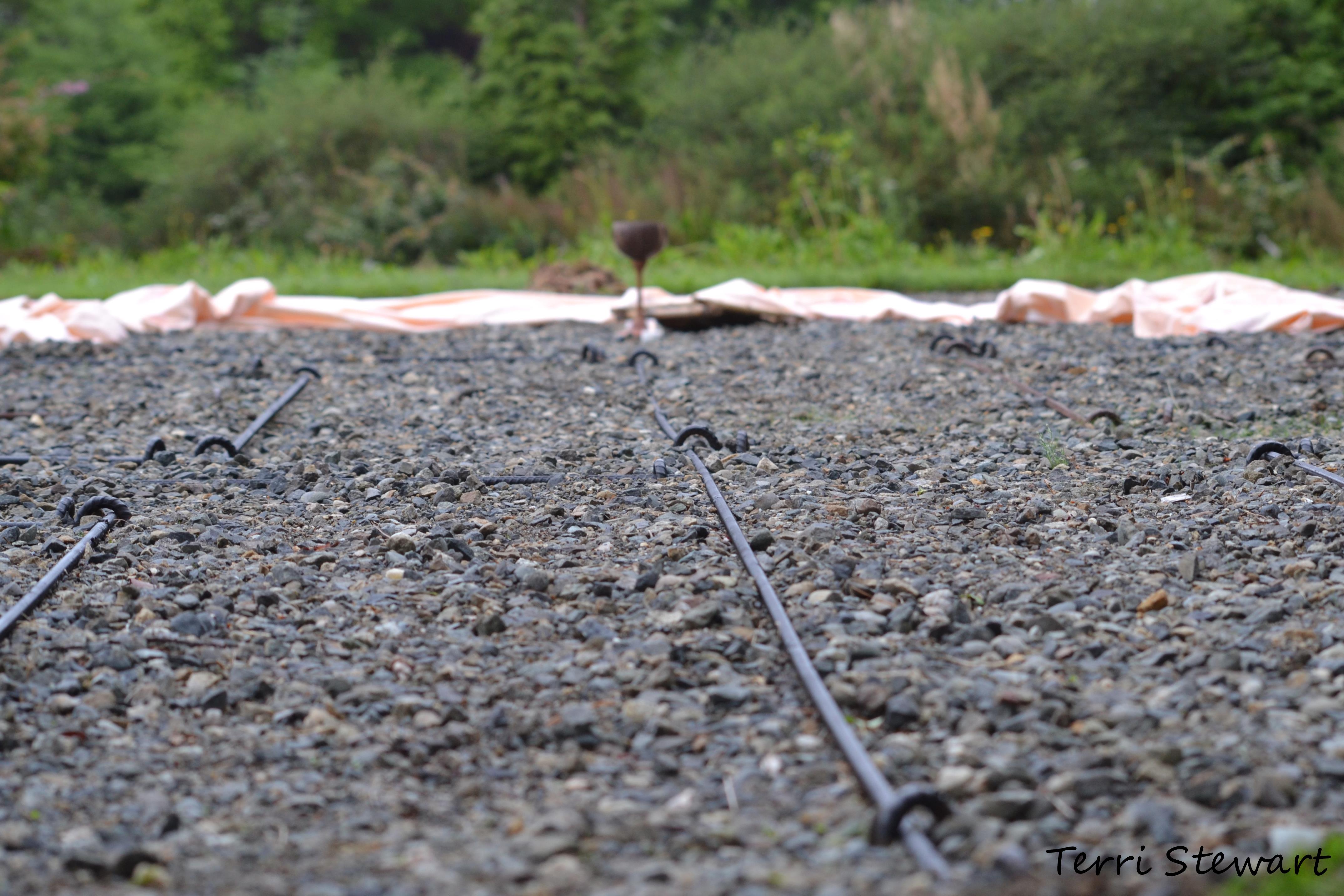
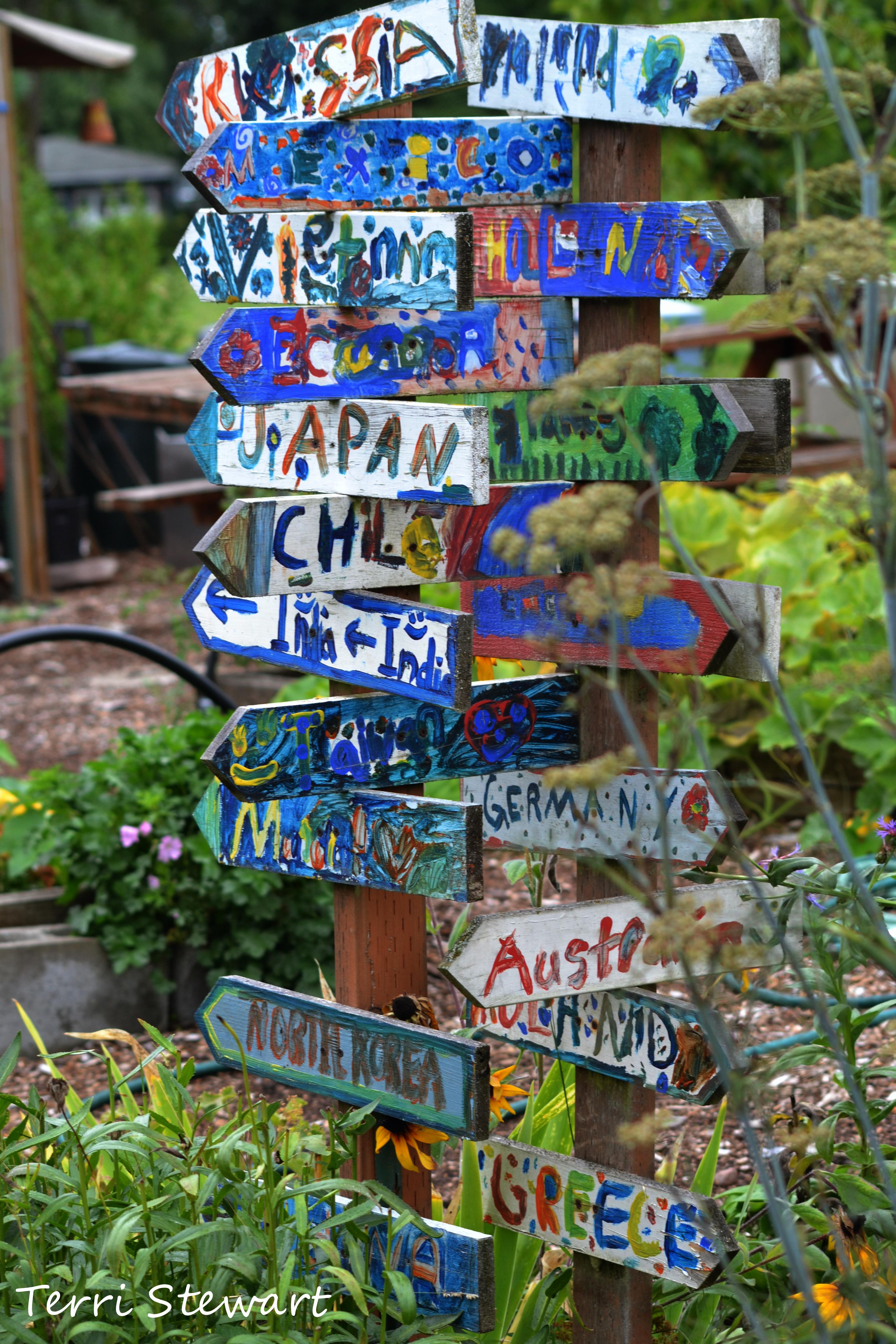
Saturday, September 7, 2013, was a call for worldwide prayer and fasting to focus on peace in Syria. I have seen many things happening–prayer vigils, personal meditation practices, marches, and communications with elected officials. We decided to offer a Labyrinth Walk for Peace at Bothell UMC in Bothell, WA in the morning. I gathered inter-faith prayers, we walked, prayed, and focused on bringing peace to the world. What follows is prayers and photos from that journey that became deeply personal for each attendant. There was a certain transition that occurred for me as I took in my surroundings and noticed Farmer Brown’s Garden. I began to see, literally, a connection between peacefulness and being fed. You will see.

Entering Sacred Space

prayers-for-peace-3

Sufi Prayer for Peace

Send Thy peace, O Lord, which is perfect and everlasting, that our souls may radiate peace.
Send Thy peace, O Lord, that we may think, act,
and speak harmoniously.
Send Thy peace, O Lord, that we may be contented
and thankful for Thy bountiful gifts.
Send Thy peace, O Lord, that amidst our worldly strife we may enjoy thy bliss.
Send Thy peace, O Lord, that we may endure all,
tolerate all in the thought of thy grace and mercy.
Send Thy peace, O Lord, that our lives may become a
divine vision, and in Thy light all darkness may vanish.
Send Thy peace, O Lord, our Father and Mother,
that we Thy children on earth may all unite in one family.
– Sufi Prayer

The Journey Begins

prayers-for-peace-6

An Islamic Prayer for Peace

In the Name of Allah, the beneficent, the merciful: Praise be to the Lord of the Universe
who has created us and made us into tribes and nations that we may know each other,
not that we may despise each other.

If the enemy incline towards peace, do thou also incline towards peace, and trust in God,
for the Lord is one that hears and knows all things.
And the servants of God Most Gracious are those who walk on the Earth in humility,
and when we address them, we say, “Peace.”
– U.N. Day of Prayer for World Peace 2

Walking Together in Ubuntu
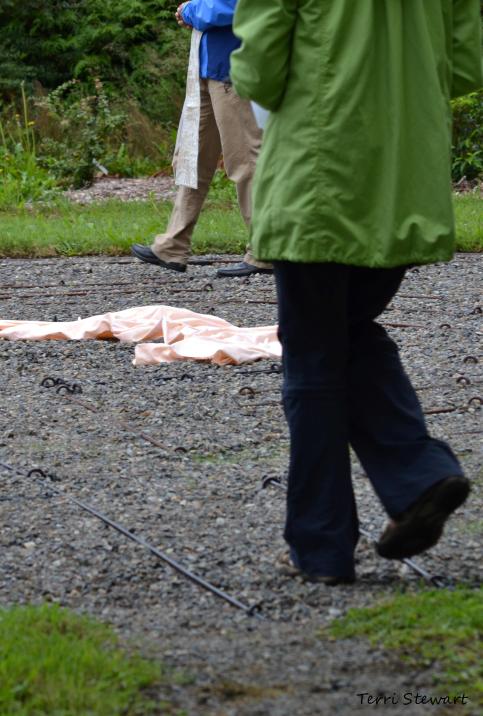
prayers-for-peace-5

A Hindu Prayer for Peace

Supreme Lord, let there be peace in the sky and in the atmosphere.
Let there be peace in the plant world and in the forests.
Let the cosmic powers be peaceful.
Let the Brahman, the true essence and source of life, be peaceful.
Let there be undiluted and fulfilling peace everywhere.
– The Atharva Veda

All Are Invited to Be Fed
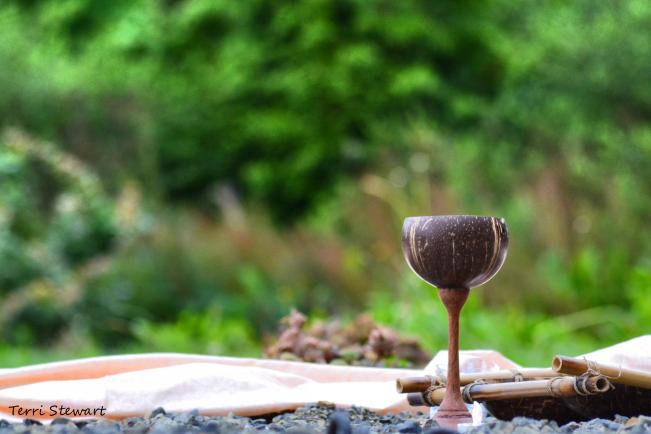
prayers-for-peace-1

Cheyenne Prayer for Peace

Let us know peace.
For as long as the moon shall rise,
For as long as the rivers shall flow,
For as long as the sun shall shine,
For as long as the grass shall grow,
Let us know peace.
– Cheyenne Prayer

Feeding the World in Spirit and Deed
Farmer Brown’s Garden at Bothell UMC

prayers-for-peace-7

A Jewish Prayer for Peace

Grant us peace. Your most precious gift,
O Eternal Source of Peace, and give us the will to proclaim its message to all the peoples of the earth.
Bless our country, that it may always be a stronghold of peace, and its advocate among the nations.
May contentment reign within its borders, health and happiness within its homes.
Strengthen the bonds of friendship among the inhabitants of all lands.
And may the love of Your name hallow every home and every heart.
Blessed is the Eternal God, the source of Peace.
– From The Gates of Prayer: The New Union Prayer Book, by the Central Conferences of American Rabbis

Growing Spiritually and Growing Food

prayers-for-peace-9

Buddhist Prayer for Loving Kindness

May all beings be peaceful.
May all beings be happy.
May all beings be safe.
May all beings awaken to
the light of their true nature.
May all beings be free.
– Metta Prayer

Loving Kindness through Loving Care

prayers-for-peace-8

A Christian Prayer for Peace

Blessed are the peacemakers, for they shall be called the children of God.
But I say to you that hear, love your enemies; do good to those who hate you;
bless those who curse you; pray for those who abuse you.
To those who strike you on the cheek, offer the other also;
and from those who take away your cloak, do not withhold your coat as well.
Give to everyone who begs from you, and of those who take away your goods,
do not ask them again. And as you wish that others would do to you, do so to them.
– U.N. Day of Prayer for World Peace 2

Becoming the Light Unto the World

prayers-for-peace-10

A Non Traditional Prayer for World Peace

Spirit of Life and Love, be present with all who are suffering terribly from violence.
Lift up the hearts of those who fear. And inspire courage among the peacemakers.
Be present with political leaders, ensuring a retreat from violence
and a procession towards the peace table.
Guide the hands of all those who are caring for the injured, the hungry and the grieving.
And, open our own hearts to compassion.
Remind us of our complicity and responsibility.
And lead us towards generous engagement—always towards a vision of peace.
–Adapted from the Unitarian Universalist Tradition

Shalom and Amen,

Terri

© 2013, post and photos, Terri Stewart, All rights reserved
terriREV. TERRI STEWART is Into the Bardo’s  Sunday chaplain, senior content editor, and site co-administrator. She comes from an eclectic background and considers herself to be grounded in contemplation and justice. She is the Director and Founder of the Youth Chaplaincy Coalition that serves youth affected by the justice system. As a graduate of Seattle University’s School of Theology and Ministry, she earned her Master’s of Divinity and a Post-Master’s Certificate in Spiritual Direction. She is a contributing author to the Abingdon Worship Annual. (The 2014 issue just released!)

Her online presence is “Cloaked Monk.” This speaks to her grounding in contemplative arts and the need to live it out in the world. The cloak is the disguise of normalcy as she advocates for justice and peace. You can find her at www.cloakedmonk.com, www.twitter.com/cloakedmonk, and www.facebook.com/cloakedmonk.  To reach her for conversation, send a note to cloakedmonk@outlook.com

Posted in Essay, John Anstie, Poems/Poetry, teacher

Enduring Ancient Wisdom

Jalāl ad-Dīn Muhammad Balkhī (1207-1273), Iranian poet, jurist and theologian, and Sufi mystic
Jalāl ad-Dīn Muhammad  Rumi (1207-1273), Persian poet, jurist and theologian, and Sufi mystic

I’m trying to follow the theme of an essay, which I wrote for Into the Bardo, “Fortes Fortuna Adiuvat (Fortune Favours The Bold)”, which was published here at the beginning of August. It was a deeply thoughtful piece that probably comes from my own anxieties at the state of the world. In consequence, it became an overly long and involved treatise, in which I tried to encapsulate my understanding of what needs to happen to rescue the human race from itself.

An impossible dream, you might say, and you could be right. However, a couple of weeks after publishing it, I stumbled upon something that struck me between the eyes! It was an eight hundred year old poem, which felt as if it were a personal message from somewhere unknown! Also, another article that was posted here on Into The Bardo, last Saturday, A Biassed Mind Cannot Grasp Reality: A Message from the Dalai Lama, (Excerpts from His Holiness the Dalai Lama’s address to the inter-faith seminar organised by the International Association for Religious Freedom, Ladakh Group, in Leh on 25 August), spoke of how human ‘agitation’ was the cause of many of our woes. This was a particularly enlightening read; I recommend it to you highly.

The first three verses of this poem, appeared from Rumi’s Facebook page and struck me in a number of ways, not least of all because it represents a special milestone in the recognition of so much that I believe about the human condition, which is to recognise our own individuality, our own convictions and that, I would argue, we should take responsibility for our own actions. I had, therefore to seek out its source and find the rest of the poem, written by that much revered Thirteenth Century Persian poet, jurist, theologian and Sufi mystic, Jalāl ad-Dīn Muhammad Rūmī.

“Everything you see has its roots in the unseen world” – isn’t this the space between our ears?

“Why do you weep? The source is within you” – ditto

I have, for a long time, recognised that, whilst we may cover ourselves with a veneer of sophistication, we cannot hide from the frailty of our very human condition. The Industrial Revolution, the engineering and technology, which has resulted over the following two hundred and fifty years, may have produced some remarkable examples of our ingenuity, but the problems of the world that remain, which are, for the most part, of our own making, are the same in essence as they were when this poem was written nearly eight hundred years ago, when humans were still humans, but without the technology. It seems a strange irony that this could be a sign that our resultant wealth, which is far more widely distributed than it was eight hundred years ago, has blurred our vision of life’s purpose, whilst at the same time (certainly in the case of this post) aided it, with computer technology.

When we’ve learned this lesson, when we’ve learned, not just how to recognise this fact, but how to respond to it, to imbue the young minds of future generations with the knowledge that they need to discover how they are going to embrace all cultures, all religions and all manner of human personalities (because we adults have not made a great job of it so far and are clearly not entirely capable of teaching them) then, and only then, will we be truly able to move on as a race … and awaken to that much vaunted new dawn, that enlightenment.

I give you the words of one, who probably knew much more and was more qualified than most of us living today to understand the human condition …

A Garden Beyond Paradise

Everything you see has its roots
in the unseen world.
The forms may change,
yet the essence remains the same.
Every wondrous sight will vanish,
every sweet word will fade.
But do not be disheartened,
The Source they come from is eternal—
growing, branching out,
giving new life and new joy.
Why do you weep?—
That Source is within you,
and this whole world
is springing up from it.
The Source is full,
its waters are ever-flowing;
Do not grieve,
drink your fill!
Don’t think it will ever run dry—
This is the endless Ocean!
From the moment you came into this world,
a ladder was placed in front of you
that you might transcend it.
From earth, you became plant,
from plant you became animal.
Afterwards you became a human being,
endowed with knowledge, intellect and faith.
Behold the body, born of dust—
how perfect it has become!
Why should you fear its end?
When were you ever made less by dying?
When you pass beyond this human form,
no doubt you will become an angel
and soar through the heavens!
But don’t stop there.
Even heavenly bodies grow old.
Pass again from the heavenly realm
and plunge into the ocean of Consciousness.
Let the drop of water that is you
become a hundred mighty seas.
But do not think that the drop alone
becomes the Ocean—
the Ocean, too, becomes the drop!

– Jelaluddin Rumi

A Garden Beyond Paradise: The Mystical Poetry of Rumi
(translated by Jonathan Star), Bantam Books, NY, 1992, pp. 148-149
Edited by Peter Y. Chou, WisdomPortal.com

© 2013, essay and portrait below, John Anstie, All rights reserved

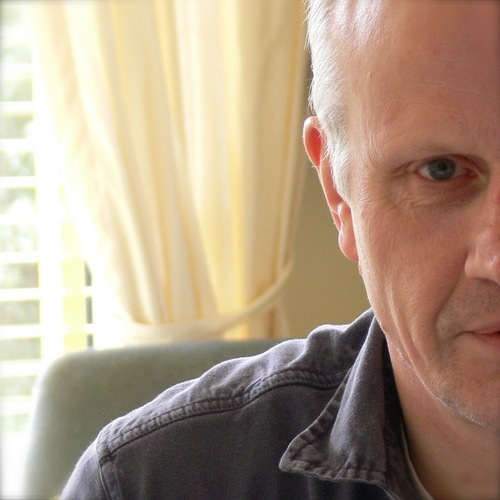
John_in_Pose_Half_Face3JOHN ANSTIE (My Poetry Library and 42) ~ is a British poet and writer, a contributing editor here at Bardo, and multi-talented gentleman self-described as a “Family man, Grandfather, Oc casional Musician, Amateur photographer and Film-maker, Apple-MAC user, Implementation Manager, and Engineer.  John participates in d’Verse Poet’s Pub and is a player in New World Creative Union. He’s been blogging since the beginning of 2011. John is also an active member of The Poetry Society (UK).

product_thumbnail.php51w-rH34dTL._BO2,204,203,200_PIsitb-sticker-arrow-click,TopRight,35,-76_AA300_SH20_OU01_

John has been involved in the recent publication of two anthologies that are the result of online collaborations among two international groups of amateur and professional poets. One of these is The Grass Roots Poetry Group, for which he produced and edited their anthology, “Petrichor* Rising. The other group is d’Verse Poet Pub, in which John’s poetry also appears The d’Verse Anthology: Voices of Contemporary World Poetry, produced and edited by Frank Watson.

Petrichor – from the Greek pɛtrɨkər, the scent of rain on the dry earth.

Posted in Art, Photography/Photographer, Spiritual Practice

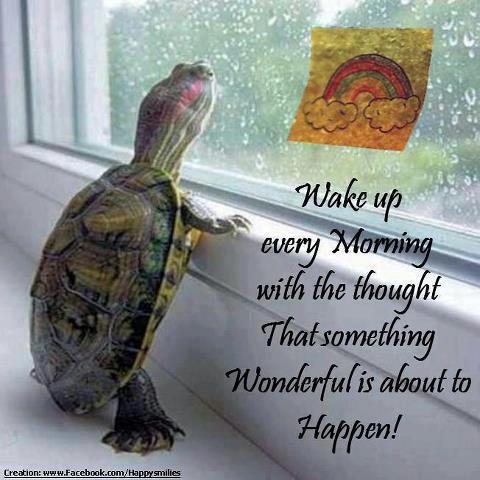
Wake up … and smile …

389780_465947996760474_1351227272_n
Our appreciation to Happy Smiles for this charming photo and inspirational thought.

Posted in Art, General Interest, Naomi Baltuck, Photo Essay, Photography/Photographer

Shadowplay

What is life?  The flash of a firefly in the night, the breath of a buffalo in the wintertime.  It is the little shadow which runs across the grass and loses itself in the sunset.  –Native American Blackfeet–


Every man has a different idea of beautiful…best to take the gesture, the shadow of the branch, and let the mind create the tree.–Wm. Faulkner

A man cannot jump over his own shadow–Yiddish proverb

Beware the dog–it’s shadow will not bite.  –Danish proverb–

Worry gives a small thing a big shadow.  –Swedish proverb–

If you stand straight, you need not fear a crooked shadow.–Chinese proverb–

Observe carefully, and you will find wisdom even in the shadows. –African proverb–

One can live within the shadow of an idea without grasping it.–Elizabeth Bowen–

The shadow is often more interesting than the object itself.–Ellen Thompson–

There are dark shadows on earth, but its lights are stronger in the contrast.–Charles Dickens–

Imagination is the real and eternal world, of which this vegetable universe is but a faint shadow.–Wm. Blake (1757-1827)

No hill is without gravestones, no valley without shadows. –South African proverb–

Like our shadows, our wishes lengthen as our sun declines.–Edward Young–

Count your nights by stars, not shadows; count your life with smiles, not tears.–Italian proverb–

All images c2013 Naomi Baltuck

https://i0.wp.com/i1176.photobucket.com/albums/x334/nbaltuck/IMG_5158-1.jpg


All words and images copyright 2012 Naomi Baltuck

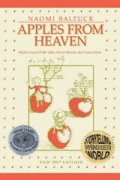
NaomiPHOTO1-300ppi51kAqFGEesL._SY300_NAOMI BALTUCK ~ is a Contributing Editor and Resident Storyteller here410xuqmD74L._SY300_ at Bardo. She is a world-traveler and an award-winning writer, photographer, and story-teller whose works of fiction and nonfiction are available through Amazon HERE. Naomi presents her wonderful photo-stories – always interesting and rich with meaning and humor – at Writing Between the Lines, Life from the Writer’s POV. She also conducts workshops such as Peace Porridge (multicultural stories to promote cooperation, goodwill, and peaceful coexistence), Whispers in the Graveyard (a spellbinding array of haunting and mysterious stories), Tandem Tales, Traveling Light Around the World, and others. For more on her programs visit Naomi Baltuck.com

Posted in Essay, Judaism, Michael Watson, Spiritual Practice

Lessons From The Seer of Lublin

Autumn Colors, Nova ScotiaLast night we went to the synagogue for a healing service and to recite selichot in preparation for Rosh Hashanah. During the service one of the Rabbis told a story about the Seer of Lublin, a Hasidic Master who lived from 1745 to 1815.

Briefly the tale is this. A Hasid travels some distance to see The Seer who looks at him and tells him that since he (the visitor) is to die that night, he should go to a hotel in a nearby village to do so. The Seer explains that as it is the Sabbath a dead body in his house would create enormous problems. The man dutifully sets off for the village, only to meet a cart filled with Hasidim on their way into Lublin to spend the Sabbath with The Seer. They ask him why he is going in the WRONG DIRECTION, and he explains that the Rabbi has sent him away to die. The Hasidim respond that if he is to die he should certainly come with them so as not to die alone. He climbs into the cart and they set off for the city. Soon the men ask our tired journeyer, seeing as he obviously has money, to buy spirits to keep them happy and warm on the trip. He complies and soon all are happily singing and swapping tales. As they travel towards the city our Hasid is heaped with praise, blessings, and hopes for a long a prosperous life. When finally the crew arrives back at the Rabbi’s house, the Rabbi looks at our traveler and says, “Oh, you are indeed lucky. The blessings of your fellows have warded off Death.” It is said the man lived well for several more years.

Having told the tale, the Rabbi spoke to the power of blessing. She assured us she was not convinced blessing another has power in itself, and express concern about magical thinking. She was more certain that gathering in community opens the door to healing. She also spoke about what she saw as shamanic elements in the story. I have long considered the best Hasidic Rebbes to be shamans. Indeed, in many texts The Seer is portrayed as a great shaman, as are many of the best Hasidic Rebbes. After all, he can see the future, determine whether something is fated, and utilize whatever wiggle room is available to aid the members of his extended community to a different fate.

Today I’ve been thinking about the story, as well as the service. It seems to me The Seer saw a way to awaken the Wise Healer within the traveler. Perhaps he knew the man would meet fellow Hasids on their way into town, as The Seer’s congregation was far-flung, yet united in the task of reaching the Rabbi’s home before darkness and the beginning of the Sabbath. Maybe he felt secure in the likelihood his congregants would never let a fellow Hasid die alone.  Maybe he, like the founder of Hasidism, The Baal Shen Tov, could, through the good graces of All That Is, intervene directly in the man’s fate. We do not know, and that, too, is part of the mystery and the story.

So this evening we begin the Jewish High Holy Days, the time of remembrance, atonement, and forgiveness, a time we are invited to thoughtfully consider our individual and communal lives. Although I am not Jewish, the rest of our household is, and over the years this time of year has become dear to me. Like the Rabbi I, too, have doubts about magical thinking. Yet, I also believe in the power of compassion, prayer, and joy to awaken the Healer Within persons and communities. Luckily, we have these stories, arising from many traditions, to remind us of our connection to the Creator, one another, and the larger world.

Michael Watson, Ph.D.

© 2013, essay and photographs (includes the one below), Michael Watson, All rights reserved

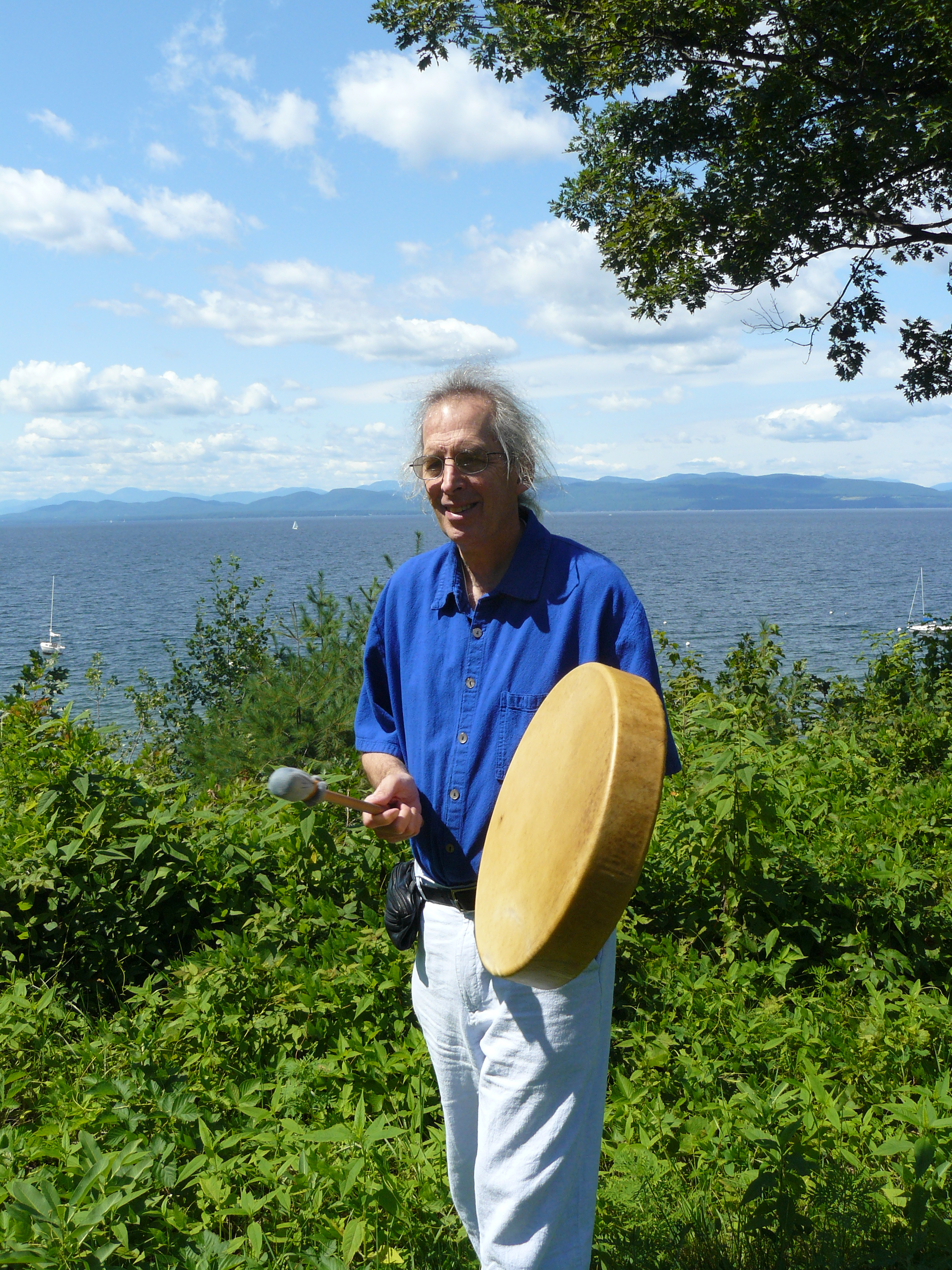
michael drumMICHAEL WATSON, M.A., Ph.D., LCMHC (Dreaming the World) ~ is a contributing editor to Into the Bardo, an essayist and a practitioner of the Shamanic arts, psychotherapist, educator and artist of Native American and European descent. He lives and works in Burlington, Vermont, where he teaches in undergraduate and graduate programs at Burlington College,. He was once Dean of Students there. Recently Michael has been teaching in India and Hong Kong. His experiences are documented on his blog. In childhood he had polio, an event that taught him much about challenge, struggle, isolation, and healing.

Posted in Essay, General Interest, Meditation, Nature

Bonsai

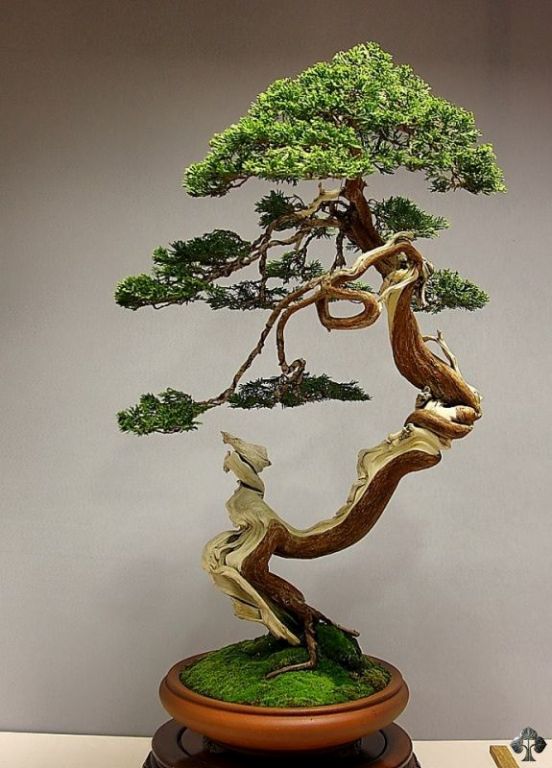
08-juniper-bonsai-blasco-pazI saw a bonsai tree earlier. Exquisitely arranged, perfect in its appearance. I admired it in awe, and then a thought crossed my mind and I couldn’t get rid of it: what exactly was it that I admired in a mutilated tree? The art of “educating” a plant to grow according to our own will? The way the small tree manages to “forget” about the cutting and the clumping and the trimming and the wiring and the all-together contortionism to which it is subjected, and simply grows?

What is the real beauty of a bonsai? Does it reside in the smallness? But smallness is relative – related to our own size. Do we create bonsais in order for them to make us feel bigger? An identical tree, though bigger than us, would be smaller than a mountain. But then again, an identical though bigger tree wouldn’t appear just as beautiful in different circumstances. We’d look at it with pity and say “poor tree, so twisted”, without realizing that the twisted one is our own view.

So, is it actually about the circumstances in which we look at it? Do we actually love the hidden wisdom of nature, letting us believe that we subdued it and forced it into shape, when in fact nature simply followed its course, surviving the circumstances? Is that what impresses? Or maybe the apparent resignation and submission of the tree under our touch?

Does the bonsai feel the awe in the eyes of his beholders? Does that comfort it in any way? Does our admiration in front of it MATTER? Or maybe what we actually do is subconsciously enjoy the tacit guilt spicing our admiration – a milder form of sadism under the pretext of art and beauty, excusing the cruelty. At this point at least half of you, dear readers, will protest and talk to me about the secular tradition of bonsai aesthetics and say that it’s not a proof of cruelty. Is it now? *smiling* Foot binding in China used to also be done under the pretext of beauty. How interestingly simple is actually the human essence…

But let me not divagate.

I liked the sight of that little bonsai. I sipped its beauty with all my strength and loved it and assumed the guilt for loving it – with awareness, with humility and shame. That bonsai bears the mark of human artistry – and maybe that is the “lesson” after all.

– Liliana Negoi

© 2013, essay, portrait below, and book cover art, Liliana Negoi, All rights reserved
Illustration ~ Juniper bonsai by Jose Luis Blasco Paz – the original one can be seen on http://www.bonsaiempire.com/blog/top10-bonsai.

IMG_7667the hidden well front coverLILIANA NEGOI (Endless Journey and in Romanian curcubee în alb şi negru) began to write poetry at eighteen – by accident – as she herself likes to remember, and has been exploring the depths of language ever since. Currently she is the author of three published volumes of poetry in English – which is not her mother tongue but one that she came to love especially because of writing: Sands and Shadows, Footsteps on the San – tanka collection and The Hidden Well.  The last one can also be heard in audio version, read by the author herself on her SoundCloud site HERE.  Many of her creations, both poetry and prose, have been published in various literary magazines.

Posted in Charles W Martin, Peace & Justice, Poems/Poetry

a question of validity…

a question of validity

oh your arguments
well prepared – true premises
but your conclusions

your fine conclusions
placed you well above the law
like those you oppose

– Charles W. Martin

© 2013, poem, illustrations and book cover art, Charles W.  Martin, All rights reserved

.
678ad505453d5a3ff2fcb744f13dedc7-1product_thumbnail.phpCHARLES W. MARTIN (Reading Between the Minds) — earned his Ph.D. in Speech and Language Pathology with an emphasis in statistics.  Throughout Charlie’s career, he maintained a devotion to the arts (literature/poetry, the theater, music and photography).  Since his retirement in 2010, he has turned his full attention to poetry and photography. He publishes a poem and a photographic art piece each day at Read Between the Minds, Poetry, Photograph and Random Thoughts of Life. He is noted as a poet of social conscience. Charlie has been blogging since January 31, 2010. He has self-published a book of poetry entitled The Hawk Chronicles  and will soon publish another book called A Bea in Your Bonnet: First Sting, featuring the renown Aunt Bea. In The Hawk Chronicles, Charlie provides a personification of his resident hawk with poems and photos taken over a two-year period.

Posted in Essay, Photography/Photographer, Spiritual Practice, Terri Stewart

A Prayer to Consider


I originally published this on my blog at cloakedmonk.com. I am reposting it here for a couple reasons – prayer is a great spiritual practice, whatever your understanding of prayer is. And I am at a conference called “Church Quake” in the DC area. It is a conference to aid United Methodist folks in helping to bring full inclusion to the church. Our theme has been “intersectionality.” What intersection of our understanding can come to the aid of an oppressed groups? We are related and interdependent as the prayer below says-we can see that when we consider our own woundedness and how we bring it to the altar of healing. Then what do we do? Consider the woundedness of others and help them find their way to healing. And so the pattern continues. Wounded becoming healing.

Henry Nouwen articulated the concept of the wounded healer quite well. Let me just share a quote from this Roman Catholic, PhD Psychologist, Theology teaching at Yale Divinity, depression suffering, book-writing, L’arche community loving, priest.

“When we honestly ask ourselves which person in our lives mean the most to us, we often find that it is those who, instead of giving advice, solutions, or cures, have chosen rather to share our pain and touch our wounds with a warm and tender hand. The friend who can be silent with us in a moment of despair or confusion, who can stay with us in an hour of grief and bereavement, who can tolerate not knowing, not curing, not healing and face with us the reality of our powerlessness, that is a friend who cares.”
― Henri J.M. Nouwen, The Road to Daybreak: A Spiritual Journey

Here, in this prayer, I find the intersectionality of flowers, interdependence, loving one another, an altar for all, and the healing of woundedness for the inclusion of all who are diverse and unique – precious and beautiful flowers.

A prayer in the Unitarian Universalist tradition by William G. Sinkford

In the presence of these flowers,
These representatives of Creation’s profound beauty:
Diverse and Unique, but Related and Interdependent,
These flowers which come to us as gifts from we know not where
And which we, in turn, choose to bring to our shared and common altar
As gifts to one another

In their presence we turn our thoughts to the mystery beyond mysteries
to the most sacred—which we never understand fully
but which we are granted revelatory glimpses of
in each of these flowers,
in each of your faces,
and through relationships with neighbors near and far

May they remind us of grace we have known in days past:
Forgiveness we have been granted, and provided.
Love, unearned and shared.
Recovery, begun and established.
Generosity, unforeseen and most sacred.

And may they inspire us now, and in days to come:
To seek,
To notice,
To embrace and,
To re-create beauty.
To give unto the world as exuberantly as these flowers.

yellow.center.flower

Go, be exuberant.

Shalom & Amen,

Terri

© 2013, post and photos, Terri Stewart, All rights reserved

© 2013, prayer, William Sinkford

terriREV. TERRI STEWART is Into the Bardo’s  Sunday chaplain, senior content editor, and site co-administrator. She comes from an eclectic background and considers herself to be grounded in contemplation and justice. She is the Director and Founder of the Youth Chaplaincy Coalition that serves youth affected by the justice system. As a graduate of Seattle University’s School of Theology and Ministry, she earned her Master’s of Divinity and a Post-Master’s Certificate in Spiritual Direction. She is a contributing author to the Abingdon Worship Annual. (The 2014 issue just released!)

Her online presence is “Cloaked Monk.” This speaks to her grounding in contemplative arts and the need to live it out in the world. The cloak is the disguise of normalcy as she advocates for justice and peace. You can find her at www.cloakedmonk.com, www.twitter.com/cloakedmonk, and www.facebook.com/cloakedmonk.  To reach her for conversation, send a note to cloakedmonk@outlook.com

Posted in teacher, Terri Stewart

Sabbath Saturday-Resting in Fellowship

… and it being Saturday and a Sabbath celebration for many people, we are reblogging our own Terri Stewart’s Saturday post …

Posted in Buddhism, Disability, Michael Watson

Accesibility and the Dharma or The Pitfalls of Cherry Floors

Vermont Zen CenterA few weeks ago we attended the 25th Anniversary Celebration at the our local zen center. The day was splendid, and the ceremonies moving.

I have had a rather rocky relationship with the Zen Center due to issues of accessibility. Sometimes the Center has been very accommodating, other times attending functions there has been a challenge. Visits go best when I remember to bring my own slippers. Unfortunately, on the day of the Anniversary Celebration my slippers were at the office and I forgot to stop and pick them up.

The Zen Center has beautiful, very slippery, cherry floors, and I do best there when I can keep my brace and shoes on. For the celebration the staff of the center provided surgical slippers to those of us who need to keep shoes on. Unfortunately, the surgical slippers proved to be very slippery, and I had difficulty keeping my balance even with crutches. After the formal ceremony we left the Center building to attend a Taiko performance outside. When others returned to the building to listen to a storytelling performance I chose to remain safely outside.

During lunch I spoke about accessibility issues with some of the Zen Center staff. The gist of the conversation was that the Zen Center policy places protecting the cherry floors above providing accessibility for disabled visitors and members. It also became clear the policy is a source of discomfort within the center.

Since the celebration I’ve been wondering about the tension between the lack of access at the center for us folks with mobility issues, and the Buddha’s insistence on making the Dharma and Sangha available to all. I also wonder how it could be that in a structure so lovingly designed and built there could be so little attention to accessibility.

Very much like the monks in one of my favorite zen stories, I’ve crossed that river but seem unable to put this one down.

Michael Watson, Ph.D.

© 2013, essay and photographs (includes the one below), Michael Watson, All rights reserved

michael drumMICHAEL WATSON, M.A., Ph.D., LCMHC (Dreaming the World) ~ is a contributing editor to Into the Bardo, an essayist and a practitioner of the Shamanic arts, psychotherapist, educator and artist of Native American and European descent. He lives and works in Burlington, Vermont, where he teaches in undergraduate and graduate programs at Burlington College,. He was once Dean of Students there. Recently Michael has been teaching in India and Hong Kong. His experiences are documented on his blog. In childhood he had polio, an event that taught him much about challenge, struggle, isolation, and healing.

Posted in Essay, General Interest, teacher

A Biased Mind Cannot Grasp Reality: A Message from the Dalai Lama

Dalai_Lama_at_WhiteHouse_(cropped)Excerpts from His Holiness the Dalai Lama’s address to the inter-faith seminar organised by the International Association for Religious Freedom, Ladakh Group, in Leh on 25 August.

We are now in the twenty ­first century. The quality of research on both the inner and physical world has reached quite high levels, thanks to the tremendous stride in technological advancement and human intelligence. However, as some of the speakers said before, the world is also facing a lot of new problems, most of which are man­-made. The root cause of these man­-made problems is the inability of human beings to control their agitated minds. How to control such a state of mind is taught by the various religions of this world.” MORE 

Photograph taken by an employee of the Executive Office of the President of the United States and as a work of the U.S. federal government it is in the public domain.

Posted in Essay, Music, Spiritual Practice

Pondering – on silence

the work of Liliana Negoi

389px-Faras_Saint_Anne_(detail)I was reading about John Cage today and his famous piece, 4’33”. As you may know, that is a composition conceived in 1952, meant for any instrument (or combination of instruments), and the score instructs the performer(s) to not play the instrument(s) during the entire duration of the piece, which is meant to consist of the sounds of the environment that the listeners hear while it is performed, although it is commonly perceived as “four minutes thirty-three seconds of silence”.

The reason why I was reading that is less important, the irony was that there was an awful amount of noise around me while I was plunging into Cage’s reasons to write a piece about silence. Now, precisely at the time when I was sort of praying for a miracle that would stop all that noise, my eyes fell on the fragment quoted below:

“In 1951, Cage visited the anechoic chamber at Harvard University. An anechoic chamber is a room designed in such a way that the walls, ceiling and floor absorb all sounds made in the room, rather than reflecting them as echoes. Such a chamber is also externally sound-proofed. Cage entered the chamber expecting to hear silence, but he wrote later, ‘I heard two sounds, one high and one low. When I described them to the engineer in charge, he informed me that the high one was my nervous system in operation, the low one my blood in circulation.’ Cage had gone to a place where he expected total silence, and yet heard sound. ‘Until I die there will be sounds. And they will continue following my death. One need not fear about the future of music.’ The realisation as he saw it of the impossibility of silence led to the composition of 4′33″.”

And lo! While I was reading that, the huge noise around me stopped, and I was able to hear the music of my neurons, chewing on the relative silence suddenly fallen upon my surroundings . Quite a poetic coincidence, if I may add.
But coming back to the point, what people grew to call as “silence” is merely the absence of sounds. An absence otherwise relative, as demonstrated by the quote above – for our own body always plays its own music, above the absolute state of silence. Sometimes we like it, sometimes we don’t, simply because silence, like all things, is sometimes necessary, and other times it should be replaced by something else. There can be silence in the middle of the storm, as well as it can lack in the middle of some anechoic chamber. What matters most is not the physical silence that we experience, but the mental one, when the mind comes to that state of silence called peace – because that is when we actually “hear” our soul.

– Liliana Negoi

© 2013, essay, portrait below, and book cover art, Liliana Negoi, All rights reserved
Illustration ~ St. Anne by an anonymous painter in Faras, which was a major city in Lower Nugia between what is now Egypt and the Sudan. It is housed in the National Museum in Warsaw and the photograph of it is released into the U.S. Public Domain.

IMG_7667the hidden well front coverLILIANA NEGOI (Endless Journey and in Romanian curcubee în alb şi negru) began to write poetry at eighteen – by accident – as she herself likes to remember, and has been exploring the depths of language ever since. Currently she is the author of three published volumes of poetry in English – which is not her mother tongue but one that she came to love especially because of writing: Sands and Shadows, Footstep on the San – tanka collection and The Hidden Well.  The last one can also be heard in audio version, read by the author herself on her SoundCloud site HERE.  Many of her creations, both poetry and prose, have been published in various literary magazines.

Posted in General Interest, Music, Photo Essay

When Words Fail

“When words fail, music speaks.” This photo essay from Steve McCurry is simply fabulous, as all his work is. J.D.

Posted in Essay, Fiction, Uncategorized, Victoria C Slotto, Writers' Fourth Wednesday, Writing

WRITERS’ FOURTH WEDNESDAY: Character Development in Fiction

Photo Credit: Pinterest

A while back, I attended a writer’s conference session about character development. The speaker suggested using astrological signs as a means to create believable, consistent characters. My knowledge of astrology is scant, but I tried to apply it to the characters in my first novel, Winter is Past. The results weren’t what I’d hoped for.

When I worked in the area of nursing education, human resources and spirituality, I had the opportunity to delve into Myers-Briggs…a personality evaluation tool that assesses behavior based on four areas of response: Introversion versus extraversion, Intuitive versus sensate, Thinking versus Feeling and Perceptive versus Judgmental. The latter may not be so self-explanatory but I use the example of my parents: my dad would be ready to go somewhere 20 minutes ahead of time, while my mother would change her mind a few more times about what she wanted to wear. Think: structured versus easy-going.

I returned to my draft manuscript, and applied the Myers-Briggs, using this tool to help me re-create the major characters with the result of more consistent, believable players. For my second novel The Sin of His Father, I wrote out character profiles before I even began to write, again using the Myers-Briggs. It has made it so much easier.

Photo Credit: vivalamanosphere.com

There is an old book called Please Understand Me that explains all the possible profile combinations and how they play out in real life. If you can find it, it’s been a godsend.

I’m addicted to The Learning Company‘s Great Courses, university level programs presented by the highest quality professors. One of the courses, The Art of Reading is taught by Professor Timothy Spurgin of Lawrence University. The lectures are well-organized, clearly presented and as applicable to writers as to readers.

An important point from the lecture on characters addresses developing round characters. The concept of a round character, as opposed to a flat one, was presented by E. M. Forster in his book, Aspects of the Novel. Simply put, a round character is one who will capture the reader’s interest because of his unpredictability, his complexity and the changes he undergoes during the course of the story. And this is key: “The test of a round character is whether it is capable of surprising in a convincing way.” (Forster)

While a protagonist needs to draw the sympathy of the reader, he should have some character flaws. Inversely, your antagonist should have something that makes him, if not attractive, at least capable of being understood. Just like us–no one is all good or all bad.

As you write, reflect upon your own reaction to the key characters in your manuscript. Are you able to identify with them to some degree? Are there things that, if you were that person, you might be ashamed of or want to change? Are there events or reactions which are surprising without being totally out-of-character (unconvincing)? Is your character someone you would want to know, or avoid?

One thing I find helpful when writing fiction is to base my characters on a composite of people I know or with whom I have been acquainted. You can even take someone who is in the public eye. I try not to use one person because I would never want anyone to say to me, “That’s me, isn’t it?” My mother once thought a character was her because I set a scene in a room in her house! And this secondary character was not, initially, a nice person.

I hope this brief reflection on characters will be helpful to those of you who have an interest in writing fiction. In a future post, I’ll share a character development worksheet that I prepared for  a character in novel #2 to give you something to hang your words on!

We’d like to invite you to share a brief paragraph or poem of your own presenting a character you’ve created or known somewhere along the road. There are two ways you can do it:

  • Preferably, post your description on your own blog or website, then copy and paste the direct URL into the Mr. Linky, which is included at below at the end of this post.  He will also ask you to include your name or another identifier.
  • If you prefer, add your character sketch to the comments section.
  • It’s nice, though not required to read others and leave a like or comment. I will visit all of them.

Happy writing; enjoy the process!

– Victoria

EDITOR’S NOTE: Mr. Linky is below Victoria’s bio ~

Victoria at the Palm Springs Writer's Expo March 2012
Victoria at the Palm Springs Writer’s Expo March 2012

jr-cover-2VICTORIA C. SLOTTO (Victoria C. Slotto, Author: Fiction, Poetry and Writing Prompts) ~  is an accomplished writer and poet. Winter is Past, published by Lucky Bat Books in 2012is Victoria’s first novel.  A second novel is in process.  Jacaranda Rain — Collected poems, 2012 is available on Amazon, as is the hot-off-the-press nonfiction, Beating the Odds: Support for Persons with Early Stage Dementia. Victoria’s poetry collection and non-fiction book are free to Amazon Prime Members.  Link HERE for Victoria’s Amazon page.