Posted in animals/animal welfare/interspecies connections, Corina L. Ravenscraft, Environment/Deep Ecology/Climate Change, Nature, Story Telling, Photo Story, Video

The Power of Collective Creativity

As creative individuals, it’s rewarding when we can use our skills to make something that “speaks” to others. Whether it’s the written word, the visual arts, music or performance arts, “The Arts” have always been a way to make powerful statements about politics, religion, war, the environment. It’s a way to make your own opinion known about these and other things that usually embody a very personal, individual set of beliefs or values. It has been said that any “successful” piece of art is one that evokes an emotional response (be it good or bad).

image borrowed from http://www.edutopia.org/arts-music-curriculum-child-development

image borrowed from http://www.edutopia.org/arts-music-curriculum-child-development

Throughout history, there are scads of examples of “The Arts” changing the world in some way. I’m not just talking about changing the “Art World”, though there are plenty of examples of that, too. But consider things like cave paintings. Once discovered, they completely changed the way that modern mankind viewed our cave-dwelling ancestors! Or how about Shakespeare and his influence of adding around 1700 words to the English language, or his play “Othello” which brought the idea of inter-racial love to the forefront of peoples’ minds?

image borrowed from http://www.durbeckarchive.com/plays.htm

image borrowed from http://www.durbeckarchive.com/plays.htm

The song “Imagine” by John Lennon became something of a “global” anthem for peace, because anyone, anywhere could relate to the desire of human beings for peace instead of war. The photograph of the young, naked Vietnamese girl running away from a napalm attack in the 1970′s shocked enough people to significantly swell the anti-Vietnam movement here in America.

image borrowed from http://www.telegraph.co.uk/news/worldnews/asia/vietnam/7735854/Vietnam-War-girl-in-the-picture-reunited-with-journalist-who-saved-her-life.html

image borrowed from http://www.telegraph.co.uk/news/worldnews/asia/vietnam/7735854/Vietnam-War-girl-in-the-picture-reunited-with-journalist-who-saved-her-life.html

I’m sure you can think of numerous examples, but the point is that Art has POWER.

Now take that creative energy and then multiply it, with many artists working for the same cause…and the possibilities are astounding! I’d like to share a video I recently watched from here regarding the POWER of a “Collective Creative Conscience”. It gave me hope and inspiration that we CAN (and DO) change the world in better ways than we ever thought possible! Enjoy! :)


Corina L. Ravenscraft

© 2013, essay and portrait (below), Corina Ravenscraft, All rights reserved

Corina-1CORINA L. RAVENSCRAFT (Dragon’s Dreams) ~ is an old friend of The Bardo Group and a new member of the Core Team. She is a poet and writer, artist and librarian who has been charming us through her blog since 2000, longer than any blogger in our little blogging community.  In the her engaging “about” on her blog HERE, Corina says, “I’m not a materialistic person, because I’ve learned that it’s not the “things” in life which really count, but the people you connect with, whose lives you touch or who touch yours. I don’t take anyone or anything for granted because I know from experience that it can all disappear in the blink of a cosmic eye.  People and animals are so much more important (and interesting!) to me than any kind of material possessions.”

Posted in animals/animal welfare/interspecies connections, Environment/Deep Ecology/Climate Change, Liliana Negoi, Nature

On Christmas

Don’t let the title fool you . . .  because this post is prescheduled and because I will not write about Christmas in the traditional way, mainly because it isn’t today (as in “today, when I’m actually writing this text”) and also because everybody writes about Christmas these days, so I thought that a change would be good. Therefore I’ll write about the things that are going through my mind in this moment.

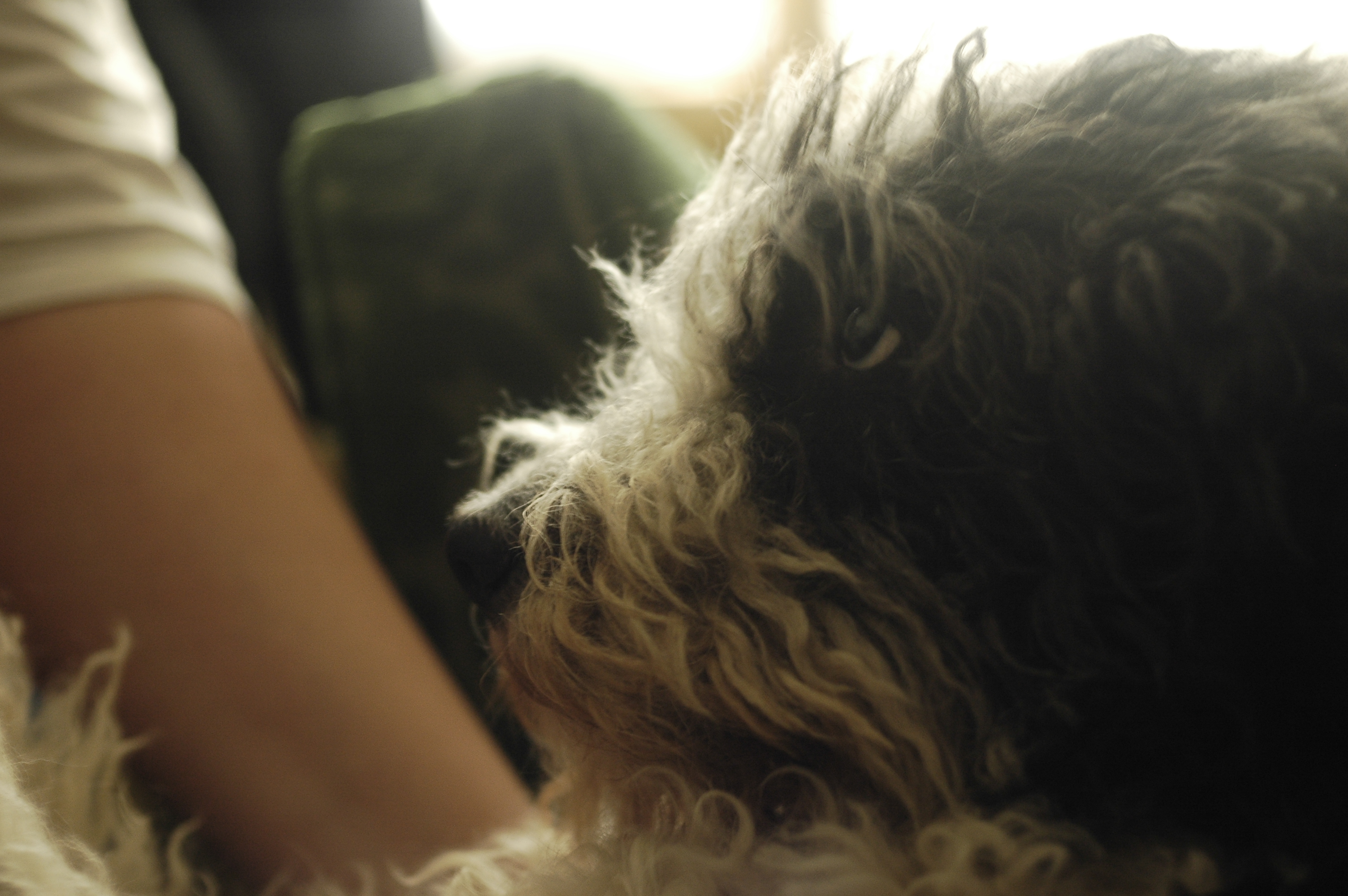
It’s rather early now, while I’m writing this, and the only company I have at this time is that of my dog, Bella, who constantly pushes me with her nose, in search for my hand. And while I caress her and look at her, I cannot help seeing the need for love in her eyes. She’s a member of our family for about ten years now (which is a lot of time for a dog) and everybody loves her. Some would say she’s been lucky. And the thought that pops in my mind now is “why do animals need to be lucky in order for people to love them”?

What did animals (in general) ever do wrong in order to deserve the harsh treatment given to them by certain representatives of the human species (otherwise nothing else than some supposedly evolved mammals)? Think about the stray dogs or cats, the experiments on mice and monkeys and other animals, the cruel hunting parties menacing with extinction certain species, and the list could go on.

I was asking myself at some point in time what is the purpose of flies – I honestly can’t stand them, and I’m sure that most of you can say the same – and a friend of mine told me that they simply are food for birds, and it’s good that they exist, because otherwise the birds would have to find food from other sources, and who knows what those would be?! His answer left me thinking. We already know that, should bees be extinct, everybody, but EVERYBODY on the face of the planet would have to suffer, that affected would be the ecosystem. The fact that we haven’t yet found out the hidden purpose of some animal, insect or plant doesn’t mean that it has none. It simply means that our understanding is still VERY limited. And that should make us cautious, careful, when interacting with all the life forms on our planet. And first of all with the planet itself – the biggest living organism with which we ever interacted directly.

I once bumped into a highly caustic text which stated that “should any animal species go extinct, so would the rest of life on earth, but should humankind go extinct, life on this planet would flourish.” Now, I like to think that we’re not THAT indispensable on this planet – such thought would be too painful. But what if we are? This acid poison of the “what if” should make us all stop for a second from what we’re doing and ponder. Maybe then we’d realize that it isn’t the dog that is lucky for having lived with us for ten years, but we are the lucky ones, having had for ten years such a loyal and loving friend. We are the lucky ones to have been born on a planet with so much potential, a place of such an indescribable beauty. We are the lucky ones to benefit from all the resources of this splendid parent we call Mother Earth. And we should all be thankful for that.

I think it’s not that bad, to see your luck in the eyes of a loving dog, on a Saturday morning :). Merry Christmas to all of you!

_DSC0787

© 2013 Liliana Negoi

____________________________________________________

The text is mine, the image (my dog, Bella) was taken some years ago by a very dear friend of mine, Mihai :).

IMG_7667LILIANA NEGOI  (Endless Journey and in Romanian curcubee în alb şi negru) ~ is a member of our core team on Into the Bardo. She is the author of three published volumes of poetry in English, which is not her mother tongue but one that she came to love especially because of writing: Sands and Shadows, Footsteps on the San – tanka collection and The Hidden Well.  The last one can also be heard in audio version, read by the author herself on her SoundCloud site HERE.  Many of her creations, both poetry and prose, have been published in various literary magazines.

Posted in Corina L. Ravenscraft, Essay, Nature, Photography/Photographer, Poems/Poetry

Elder Box Elder

DunbarCaveTree

Editor’s Note: Terri Stewart’s regular Sunday posts are always a surprise. She doesn’t pop them into the blog until near midnight on Saturday, so we don’t get to see them until Sunday a.m….no editorial sneak-preview. In an interesting coincidence (synchronicity?), Corina L. Ravenscraft popped this one to Bardo before Terri’s post for this Sunday went up. It rather serves to reinforce Terri’s message, which we think makes it synchronicity and not coincidence. Like Terri’s post, it’s richly evocative. Enjoy…

.

Gnarled persistence, drove its thick roots down,

Conquered the rocks and divided the dirt.

Spread out its branches, claimed this piece of ground,

When people etched into its bark, it hurt.

.

It survived such scars from their careless blades,

Grew taller, stronger, bore fruit for the birds.

None picnicked beneath to enjoy its shades,

Hard roots ran rampant, to escape the words

.

Carved for all time on its beautiful skin.

There, by the cave, it was brave; weathered storms,

Bent branches without and strong spirit within,

The world demands change and the soul transforms.

.

Soft  spirit deep inside this elder tree,

Expanded, extended life through its roots.

The Native Americans set it free,

And chose its sacred heart wood for their flutes.

– Corina L. Ravenscraft

~ C.L.R. ~ © 2012, photo, poem, essay, All rights reserved

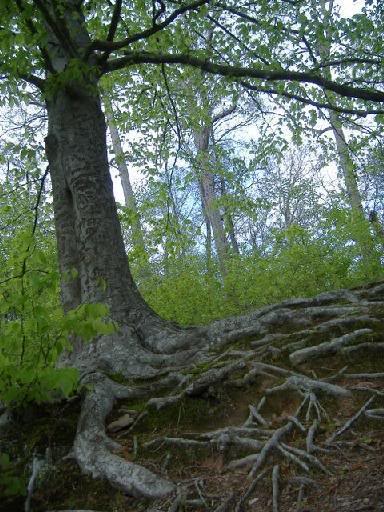
This is a photograph I took some time ago, of a really neat Box Elder tree in the Dunbar Cave Natural Area near my home. This tree has always fascinated me and it makes me sad to see how many people have carved their initials or names into its bark. My friends and I used to call it the “Ringwraith Tree” because it reminded us of the tree where Frodo hid from the Ringwraith, but Box Elders also have a very special place in Native American culture.

The Anasazi flutes were carved from these trees, and the originals were only carved from these trees. It was believed that the tree’s unique, sacred spirit was imparted into each flute carved.

The Anasazi flute is the flute played by Kokopelli, a Native American Indian fertility god. It is also said that the hunch on his back depicted the sacks of seeds and songs he carried. Legend also has it that the flute playing symbolized the transition of winter to spring. Kokopelli’s flute is said to be heard in the spring’s breeze, while bringing warmth. It is also said that he was the source of human conception. Legend has it, everyone in the village would sing and dance throughout the night when they heard Kokopelli play his flute. The next morning, every maiden in the village would be with child.“ For anyone who has never heard the beautiful, haunting sound of this flute, I invite you to watch and listen to the video below.  Enjoy!

Corina-1CORINA L. RAVENSCRAFT (Dragon’s Dreams) ~ is a regular contributor to Into the Bardo. She is a poet and writer, artist and librarian who has been charming us through her blog since 2000, longer than any blogger in our little blogging community.

Posted in Illness/life-threatening illness, Liliana Negoi, Meditation, meditative, Mortality, Nature

On gifts

A couple of days ago I went with my husband to help an old lady friend prepare her apartment for renovating. After moving some furniture around the house and readying the space for the next step, we wanted to leave. The old lady, however, didn’t want to let us go away until she gifted me with some things of hers, including several flower pots, which, she said, were anyway deprived of care, since she doesn’t actually live in that apartment and only comes there once in a while. I took those flowers with gladness, not necessarily because they were gifts, but because they are pieces of life coming from a person whose life is hurrying towards its end.

The lady in question is about 65 years old and suffers from bone cancer in final stage, and despite that, and despite the even worse situation that her own son suffers from multiple sclerosis, she still finds within herself the power to not only smile, but to actually laugh and enjoy what is left of her life, and even make fun of the horrible sickness eating her alive.

While I was preparing those flower pots to take them home, I had a small conversation with her, and one thing that she said remained with me, like a second gift: “There is so little that we actually have in this world, no matter how much we possess!” In her eyes, when she said that, I thought I noticed a glint of pain, but in the next second it was gone, and she told me that she would give me all the rest of the flowers, if I wanted them, and I happily accepted. A strange tone of joy crossed her voice when talking again, as if she was suddenly relieved for the flowers’ fate, and so we established that next time we go to that apartment we would take the rest of the pots too. Then we left.

There are many gifts that we receive in this life. Many objects, many proofs of our evanescent nature. Most of them get lost along the way, and we forget about them, expecting others in exchange. There are, however, irreplaceable gifts, like, for instance, every single day that we live on this earth. Do not let that waste – because at nightfall, the day will have passed anyway – but it’s up to each of us to not let it go in vain.

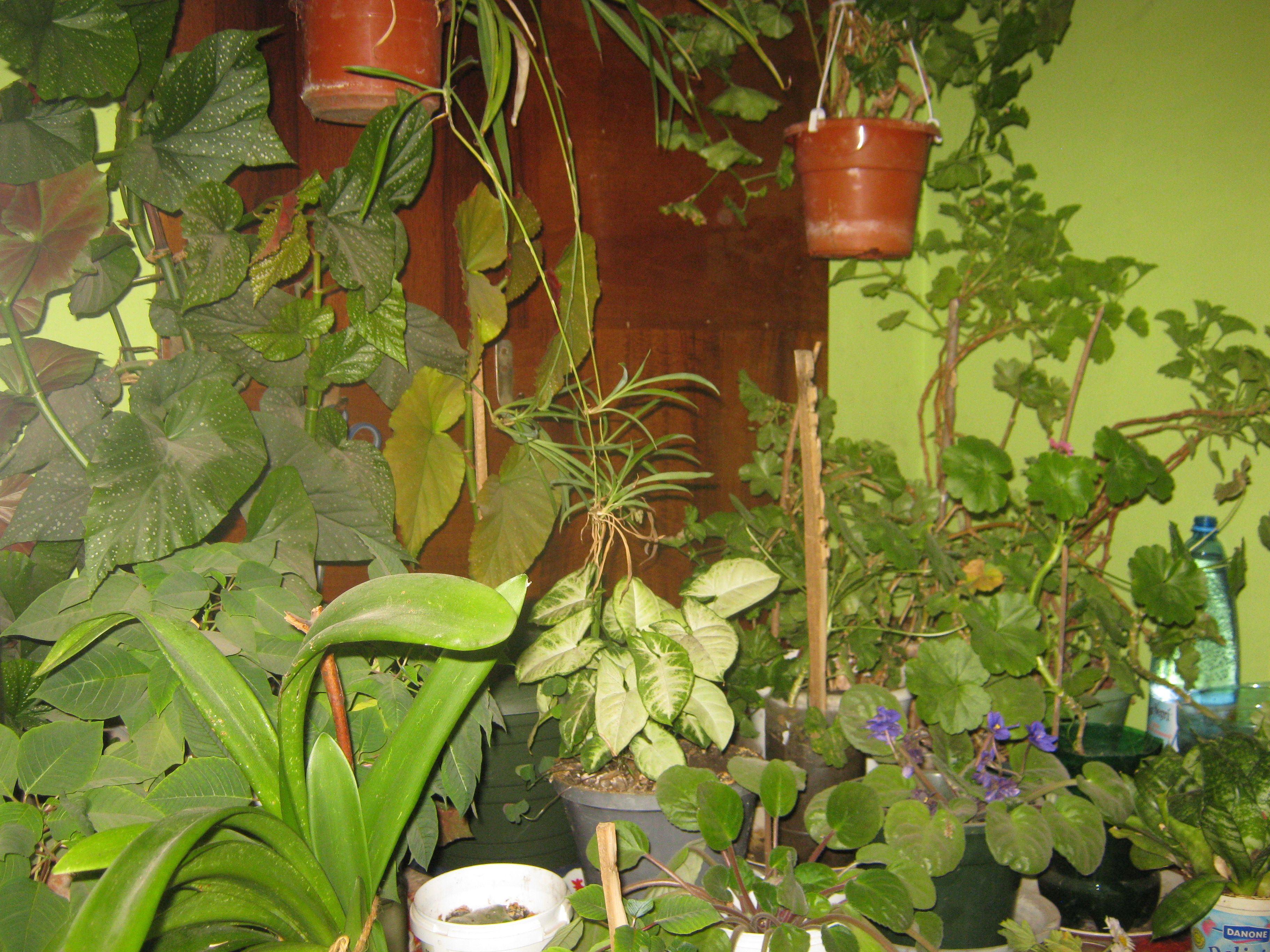
IMG_9119The flowers that I took from her are now in my own house, making friends with my older vegetal tenants, and I don’t know which gift was more important – the plants, which she turned into a sudden piece of heritage for me, or the splinter of her own life and wisdom that she decided to share with me. I do know though that, even after she will be gone (no matter when that will happen) she will still be alive for me in each of those flowers.

© 2013 Liliana Negoi

Both text and photo belong to Liliana Negoi.

IMG_7667LILIANA NEGOI  (Endless Journey and in Romanian curcubee în alb şi negru) ~ is a member of our core team on Into the Bardo. She is the author of three published volumes of poetry in English, which is not her mother tongue but one that she came to love especially because of writing: Sands and Shadows, Footsteps on the San – tanka collection and The Hidden Well.  The last one can also be heard in audio version, read by the author herself on her SoundCloud site HERE.  Many of her creations, both poetry and prose, have been published in various literary magazines.

Posted in Nature, Poems/Poetry, Renee Espriu

Catching Particles

81226116.9b8fXl5I.dragonflybrightinsunedit4655splintered wood from
a lightning struck tree
catching particles
of afternoon sun

like reflections
of another self
transformed in
Alice’s looking-glass

catching particles
of colored prisms
the waterfall dances
over time’s precipice

& the dragonfly is seen
catching particles
of each ray of sun
season of summer done

– Renee Espriu

© 2013, poem, Renee, Espriu, All rights reserved
Photo credit ~  the original work of rshmd via PBase

c796b9e96120fdf0ce6f8637fa73483cRENEE ESPRIU ~ is a creative prose writer and poet. She began delighting us with her work at Turtle Flight, My Muse & Angels in March 2011. The work she shares with us there includes short stories. Renee is a daughter, mother, grandmother, and seeker of spiritual peace and soul-filled freedom. She’s studied at the graduate level and has attended seminary. She describes her belief system as eclectic, encompassing many faiths. She believes “Nature is the basis of everything that is and everything that is also a part of Nature.”

Posted in animals/animal welfare/interspecies connections, justice, Nature, Video

The Thing About Love …

1235299_420196981434754_1007045779_n

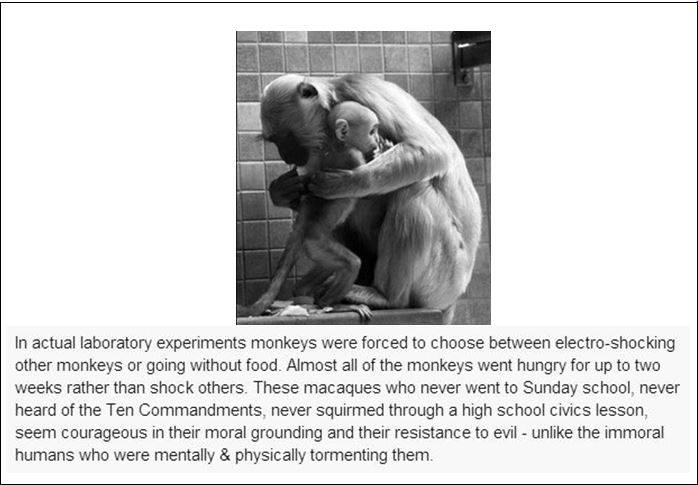
We humans labor under the conceit that we are the only animals that grieve and have an impluse to be protective. Similar outcomes as those described above resulted from experiments performed on rats. See our feature The Rate Race by J.D. Galleger.

On the upside: Monkey Trek: A Rescue … Smile! 🙂 It’s about love …

– compiled by Jamie Dedes
Posted in Liliana Negoi, Meditation, meditative, Nature, Poems/Poetry

panta rhei – sestina

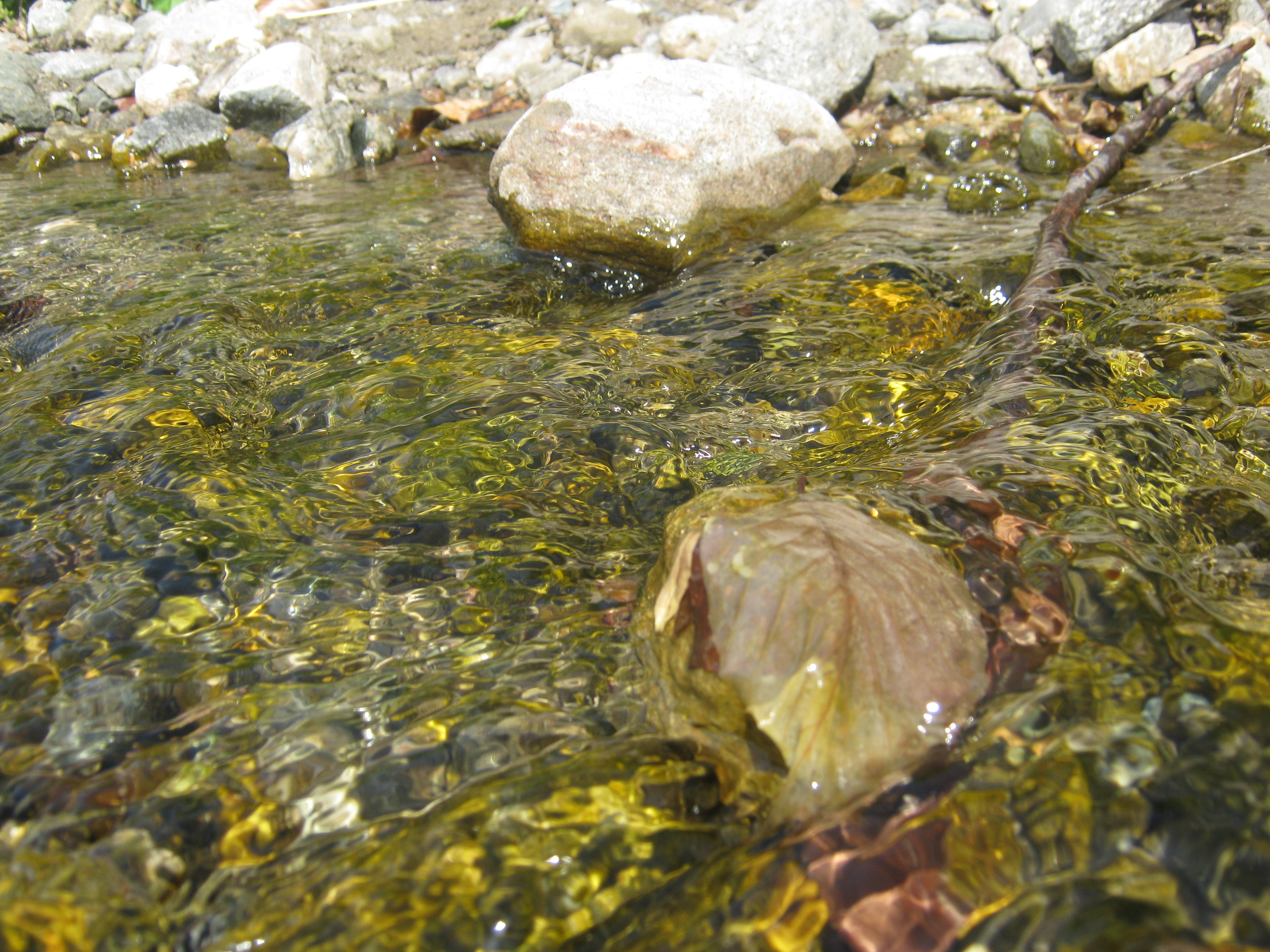
IMG_7742

sometimes a river dances shining blue,
reflecting in its ripples wind’s soft chime,
allowing leaves to shiver in its true
embrace, like rosaries of dust and time –
when river whirls like that, enjoy the view,
‘tis then that all the strings around it rhyme.

and when the river, wind and sunlight rhyme
you’ll see that suddenly all shades of blue
will turn to playful sheens, and all the view
will twin the chink of angels’ voices chime –
when river whirls like that, it means it’s time
to clear your heart and hear it beating true.

you’ll be amazed how simple and how true
is the entire universe’s rhyme
when you ignore the bounds of space and time
and dip your mind in river’s hues of blue –
the bonds of nature’s dreams are just a chime
embroidered on world’s gossamery view.

just breathe – inhale the beauty of the view
and feel its fragrance, delicate and true,
imbibe yourself with river’s purling chime.
when river’s waves will be your breathing’s rhyme
you will have learned a drop of wisdom blue
to nurture you until the end of time.

you’ll see that there’s no past or future time –
‘tis only present guiding all the view.
the uselessness of human clocks’ true-blue
becomes overt when what they draw as true
within the river’s dancing doesn’t rhyme,
when it reflects the world within a chime.

the river whirls and whispers in its chime
of ancient lessons crossing over time
to match the future lessons’ ageless rhyme –
when river dances, bringing to your view
the timeless wisdom shining bright and true,
just listen to its ever-knowing blue –

within the rhyme of river’s whirling chime
the neverending blue dissolves the time –
raw view of nature’s essence streaming true.

– Liliana Negoi

© 2013, photographs and poem, Liliana Negoi, All rights reserved

The audio version of the above poem can be listened to on Soundcloud. More about the sestina form can be learned from here and about panta rhei here.

IMG_7667LILIANA NEGOI  (Endless Journey and in Romanian curcubee în alb şi negru) ~ is a member of our core team on Into the Bardo. She is the author of three published volumes of poetry in English, which is not her mother tongue but one that she came to love especially because of writing: Sands and Shadows, Footsteps on the San – tanka collection and The Hidden Well.  The last one can also be heard in audio version, read by the author herself on her SoundCloud site HERE.  Many of her creations, both poetry and prose, have been published in various literary magazines.

Posted in Liliana Negoi, Meditation, meditative, mystic, Nature, Spiritual Practice

On miracles

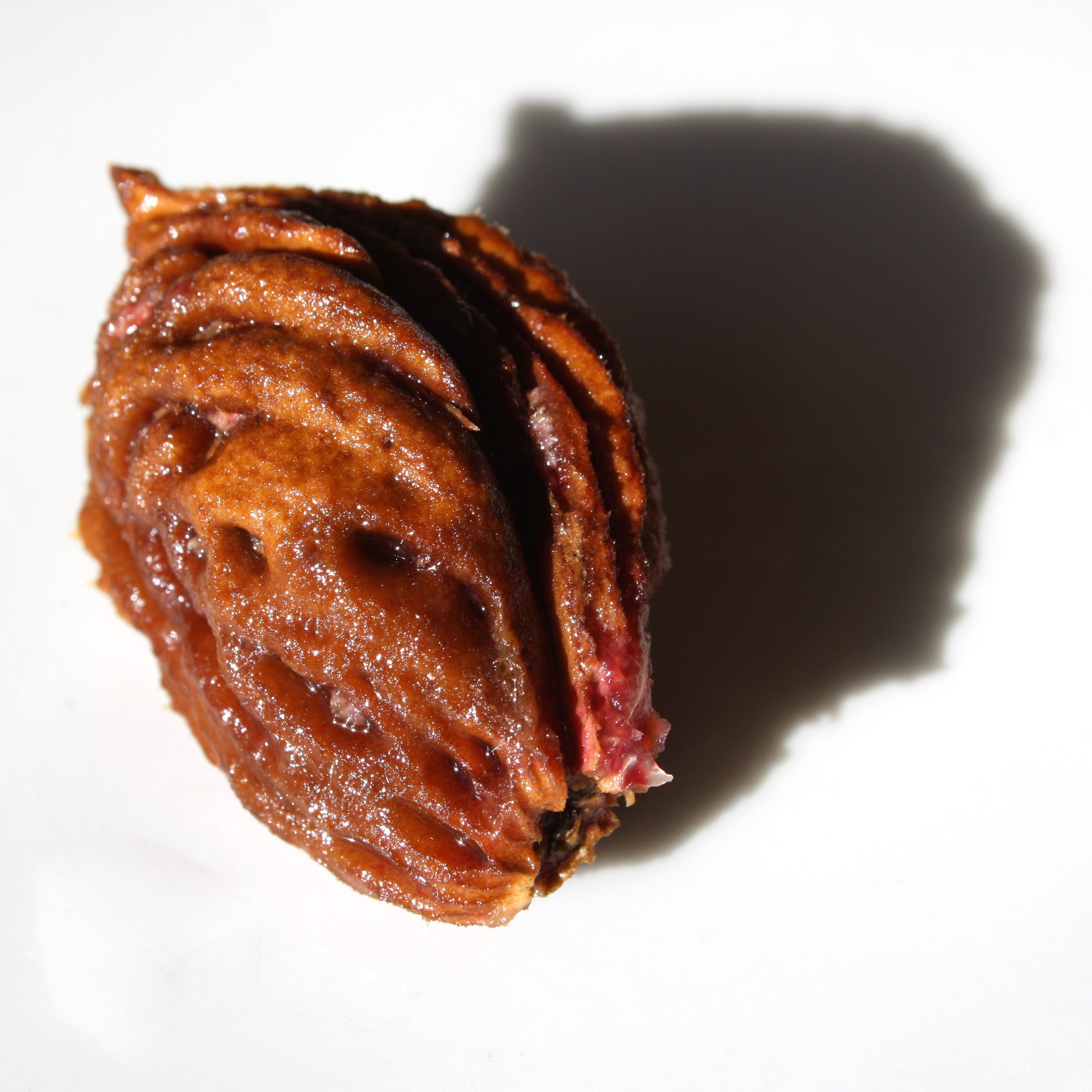
peach-pitMy younger son found a peach pit today, and in his innocence decided to plant it. So he dug a hole, put the pit inside it, covered it and then watered it. He said “I put as much water as it needed to grow. And it will grow. I think tomorrow it will grow.” I smiled at his confident statement and as he moved further I found myself ardently hoping that his tree would indeed grow, not necessarily in order for us to have a peach tree in the yard (though it would be nice – note to self, plant a peach tree a.s.a.p.) but because I want my children to find reasons to believe in miracles in about everything – especially when they help creating them.

The word “miracle” originates from the Late Latin miraculum, meaning “wonder”, “marvel”, from mirari – “to wonder at”. Apparently, as the Merriam-Webster dictionary explains to us, the word’s first known use was in the 12th century. However, miracles happened before that time for sure, even if they were named differently. People used this word or others to point towards “events not ascribable to human power or the laws of nature and consequently attributed to a supernatural, especially divine, agency”. If you come to think of it, miracles birthed and killed gods through the means of man’s limited power of understanding, because in certain people they touched their fear, while in others they touched their curiosity. That’s how religion and science were born.

The best thing about miracles though is that they make us grow. All of us. One way or another they push us higher, farther, and even if officially they stop being miracles in the second when we discover their explanation, they still remain miracles in our hearts, because due to them we expanded our knowledge.

Maybe there will be no peach tree growing from that pit. But I do know that in my child’s heart, the peach tree rooted already – and THAT is more important than anything else.

© 2013 Liliana Negoi

The image used was taken from http://www.photos-public-domain.com/2012/03/10/peach-pit/.

IMG_7667LILIANA NEGOI  (Endless Journey and in Romanian curcubee în alb şi negru) ~ is a member of our core team on Into the Bardo. She is the author of three published volumes of poetry in English, which is not her mother tongue but one that she came to love especially because of writing: Sands and Shadows, Footsteps on the San – tanka collection and The Hidden Well.  The last one can also be heard in audio version, read by the author herself on her SoundCloud site HERE.  Many of her creations, both poetry and prose, have been published in various literary magazines.

Posted in Essay, Michael Watson, Nature

The Crow

A few weeks ago we posted a Facebook video about a raven asking people for aid. The raven had encountered a porcupine and had quills embedded in its face. A couple of weeks later, we returned from our time in Maine to discover a severely injured a crow (close cousin to the Raven) in our back yard. Neighbors informed us the crow had slowly, with great intent, worked its way from the woods to our yard.

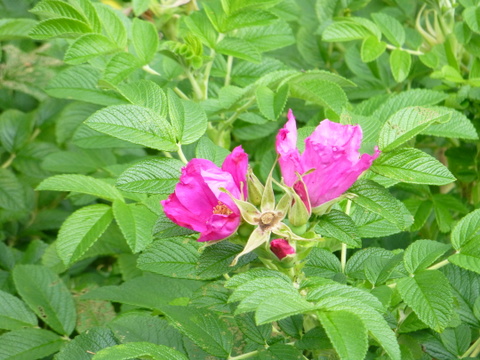
Beach Roses, MaineThe crow appeared to have a broken wing and was having difficulty standing. Upon closer inspection we discovered its foot was caught in a vine. The crow allowed me to release the trapped foot which appeared to help a little. We then offer the bird food and water, which it mostly ignored; it seemed to welcome a little gentle stroking. We then made phone calls. A former bird rehabilitator suggested we provide a box for shelter for the night as rain threatened. We then waited to hear from the crow specialist.

Yesterday morning the crow was still in our yard. Jennie took a neighbor’s advice and offered it some hard-boiled egg. The crow ate a very small portion. It seemed to be in pain so we talked over next steps, carefully weighing our options. Then the rehibilitator called; he could not make it to our house till evening, but suggested we place the crow in a cat carrier to keep it safe until he arrived. I carefully lifted the bird into the carrier and the crow fell on its side. We removed the bird briefly and placed some rags in the base of the carrier to offer some cushioning. When we returned the very large crow to the carrier we realized the bird, given the broken wing, was too large for it. We also realized the bird was not likely to survive, and after consulting the crow specialist, decided to take it to a vet to be put down.

I lifted it once more and placed it in a large recycling tub. As I was about to put the tub in the car, the crow looked me squarely in the eye, squawked loudly three times, and died. My strong impression was that the crow was expressing appreciation for our efforts, and probably chastising us a little for causing it pain. Anthropomorphizing? One had to be there.

We carefully buried the crow, performing ceremony for it. We had seen no other crows since our return, a strange absence given their frequenting of our yard and woods, and the presence of an injured member of the flock. We wondered whether the visiting crow had been ostracized by the flock. During the burial and ceremony I heard a solitary squawk from far away.

We were left with great sadness that we had, in our efforts to aid, caused the crow suffering, yet gratitude the crow had come to us. Today the sadness lingers. We are reminded of Crow’s large spirit, great intelligence and keen intent. We wish this crow a speedy and safe journey into the spirit world.

Michael Watson, Ph.D.

© 2013, essay and photographs (includes the one below), Michael Watson, All rights reserved

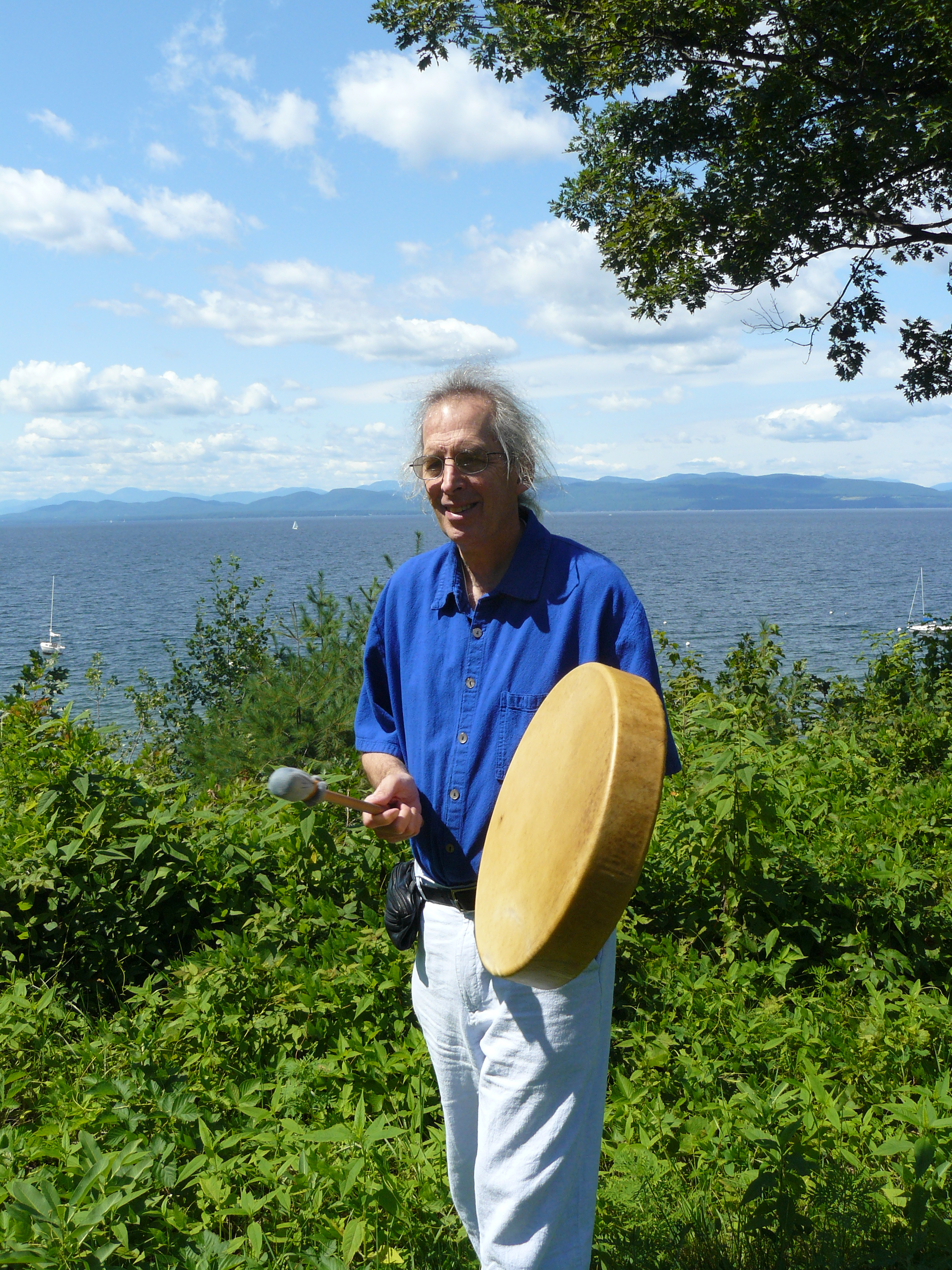
michael drumMICHAEL WATSON, M.A., Ph.D., LCMHC (Dreaming the World) ~ is a contributing editor to Into the Bardo, an essayist and a practitioner of the Shamanic arts, psychotherapist, educator and artist of Native American and European descent. He lives and works in Burlington, Vermont, where he teaches in undergraduate and graduate programs at Burlington College,. He was once Dean of Students there. Recently Michael has been teaching in India and Hong Kong. His experiences are documented on his blog. In childhood he had polio, an event that taught him much about challenge, struggle, isolation, and healing.

Posted in Essay, General Interest, Meditation, Nature

Bonsai

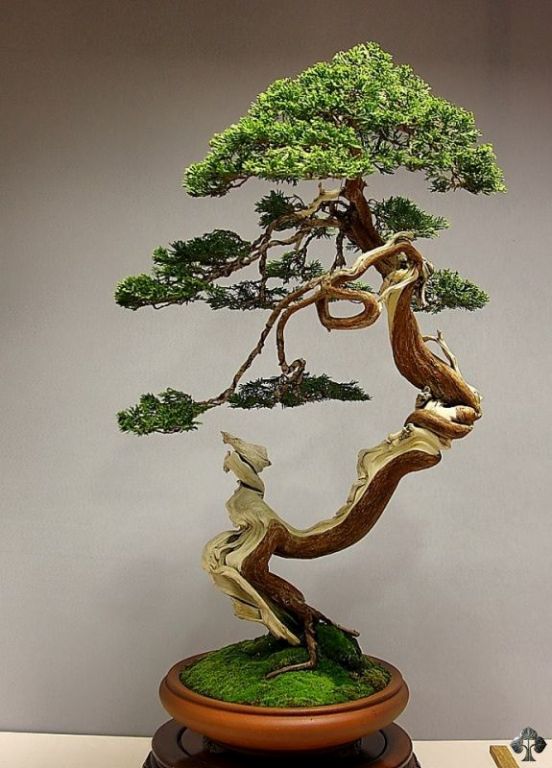
08-juniper-bonsai-blasco-pazI saw a bonsai tree earlier. Exquisitely arranged, perfect in its appearance. I admired it in awe, and then a thought crossed my mind and I couldn’t get rid of it: what exactly was it that I admired in a mutilated tree? The art of “educating” a plant to grow according to our own will? The way the small tree manages to “forget” about the cutting and the clumping and the trimming and the wiring and the all-together contortionism to which it is subjected, and simply grows?

What is the real beauty of a bonsai? Does it reside in the smallness? But smallness is relative – related to our own size. Do we create bonsais in order for them to make us feel bigger? An identical tree, though bigger than us, would be smaller than a mountain. But then again, an identical though bigger tree wouldn’t appear just as beautiful in different circumstances. We’d look at it with pity and say “poor tree, so twisted”, without realizing that the twisted one is our own view.

So, is it actually about the circumstances in which we look at it? Do we actually love the hidden wisdom of nature, letting us believe that we subdued it and forced it into shape, when in fact nature simply followed its course, surviving the circumstances? Is that what impresses? Or maybe the apparent resignation and submission of the tree under our touch?

Does the bonsai feel the awe in the eyes of his beholders? Does that comfort it in any way? Does our admiration in front of it MATTER? Or maybe what we actually do is subconsciously enjoy the tacit guilt spicing our admiration – a milder form of sadism under the pretext of art and beauty, excusing the cruelty. At this point at least half of you, dear readers, will protest and talk to me about the secular tradition of bonsai aesthetics and say that it’s not a proof of cruelty. Is it now? *smiling* Foot binding in China used to also be done under the pretext of beauty. How interestingly simple is actually the human essence…

But let me not divagate.

I liked the sight of that little bonsai. I sipped its beauty with all my strength and loved it and assumed the guilt for loving it – with awareness, with humility and shame. That bonsai bears the mark of human artistry – and maybe that is the “lesson” after all.

– Liliana Negoi

© 2013, essay, portrait below, and book cover art, Liliana Negoi, All rights reserved
Illustration ~ Juniper bonsai by Jose Luis Blasco Paz – the original one can be seen on http://www.bonsaiempire.com/blog/top10-bonsai.

IMG_7667the hidden well front coverLILIANA NEGOI (Endless Journey and in Romanian curcubee în alb şi negru) began to write poetry at eighteen – by accident – as she herself likes to remember, and has been exploring the depths of language ever since. Currently she is the author of three published volumes of poetry in English – which is not her mother tongue but one that she came to love especially because of writing: Sands and Shadows, Footsteps on the San – tanka collection and The Hidden Well.  The last one can also be heard in audio version, read by the author herself on her SoundCloud site HERE.  Many of her creations, both poetry and prose, have been published in various literary magazines.

Posted in Culture/History, Essay, Mental Health, Michael Watson, Nature, Shamanism, Spiritual Practice

Working With the Spirits

Shrine, Chennai, India

Eight years ago we purchased a dilapidated cottage, took it down to studs, and with the aid of a brilliant contractor, built a wonderful home. Since then we have developed much-loved gardens on our small plot of urban land.

As the late effects of Polio have become more challenging for me to manage, Jennie has become the tender of those beds. We both care deeply about the garden’s well-being, but much of my limited energy is needed for our healing and teaching work. I am grateful to Jennie for reminding me that healing and teaching are also forms of gardening, other ways of working with spirit.

In the seven years we have lived in our home we’ve been quietly working with the spirits of the land. This is a tad challenging as we live in a residential neighborhood and all ceremony is public. My teachers always said one should be polite, humble, and do ceremony anyway. This simple advice turns out to be remarkably complex in practice.

The spirits of the land are often profoundly responsive to gratitude and ceremony. One evening during our most recent Asia trip we were asked to do a simple traditional shamanic ceremony for a group of college students. This was to be a simple show-and-tell, yet, as sometimes happens, the ceremony took on a momentum of its own, becoming profoundly moving and healing for all present.

When we returned home to Vermont we told our friend and colleague, Julie Soquet, about the experience. Julie listened to our story, considered it for a moment, then said, “The spirits of the land must be really alive and receptive there.”  I was stunned by her naming of the missed obvious. Local gods and spirits are routinely honored in both India and Hong Kong, and Jennie and I had spoken after the ceremony about how we felt the presence, support, and appreciation of the spirits. (There was an active shrine directly across the street from where we were conducting the ceremony.)

The other night, in dream, I was reminded we are loaned our bodies for our stay here on Pachamama. Our bodies are sacred; they are Medicine bundles. At the end of our lives we give our bodies back to the Earth. Pachamama asks that we grow the spirit and power of these bundles, so that when we return them they benefit Her and all beings. In the dream I was asked simply to keep this in mind as I made my way through what remains of my walk here. There were no other instructions, no “shoulds”, no “musts”. Expressing gratitude to the myriad beings who make our lives possible is part of that way of walking and gardening. I wonder how these simple, profound truths will enter into our work.

Michael Watson, Ph.D.

© 2013, essay and photographs (includes portrait below), Michael Watson, All rights reserved

michael drumMICHAEL WATSON, M.A., Ph.D., LCMHC (Dreaming the World) ~ is a contributing editor to Into the Bardo, an essayist and a practitioner of the Shamanic arts, psychotherapist, educator and artist of Native American and European descent. He lives and works in Burlington, Vermont, where he teaches in undergraduate and graduate programs at Burlington College,. He was once Dean of Students there. Recently Michael has been teaching in India and Hong Kong. His experiences are documented on his blog. In childhood he had polio, an event that taught him much about challenge, struggle, isolation, and healing.

Posted in Essay, General Interest, Jamie Dedes, justice, Nature

The Wiyot of Eel River

I was at the Redwood Shores library the other day. They had a small display on the Ohlone Tribe. It made me think again of the Wiyot. They live in my dreams. Their name is pronounced Wee-yhot and it means Eel River. That was their home.

In the mid-eighties, for about a year-and-half, we lived near the Eel River in Humboldt County, an area about 200 miles north of San Francisco. It’s stunning and peaceful with dense redwood forests, wild rivers, and creeks that run dry in the summer and overflow in the winter. If you live in a rural area or grew up in one, you might take such things for granted. Having lived in cities all my life, it was magical to me. In the midst of that feral earth, in the stillness of leafy green days and velvet blue nights, it was easy for me to imagine the first peoples as they might have lived there in other times.

I fancied I could see them tending fires, boiling and drying acorns and then grinding them for flour, bathing in the river, raising their children, and hunting, gathering, and enjoying sacred ceremonies and tribal celebrations. I knew the same ancient sky-scrapping sequoias that watched over us had watched over them.

Our place was just short of four acres and rich with sequoia, madrone, oak, and some forty fruit trees. Blue jays flew in to feed in the morning and the quail marched down to visit at nightfall. Hawks and hummingbirds put on air shows. Rosemary thrived unattended. There was a beautiful lush 100-year-old rosebush. There were wild roses too. They gave us rose hips for cough syrup. Witches Broom lined our creek side with bright yellow. There were cascades of Japanese quince, which provided ample housing for the hummingbirds. Queen Ann’s lace* danced in the wind like ladies dressed for a ball. When they went to seed I collected the seeds for use in cooking. They have a taste somewhere between a carrot and caraway seed. The great bursts of blackberry bushes were a visual and edible delight.

I gathered fresh fruit almost every morning and every morning I thought of the people who preceded me more than a century ago and who picked berries there just like me. I did some research and found out that our property was once inhabited by the Wiyot peoples whose numbers were almost decimated in a genocide.

“Eureka newspapers of the time exulted at the night massacres conducted by the “good citizens of the area”. Good haul of Diggers and Tribe Exterminated! were 2 headlines from the Humboldt Times. Those who thought differently about it were shut up by force. Newspaper publisher and short story writer Bret Harte called it “cowardly butchery of sleeping women and children” — then had to flee ahead of a lynch mob that smashed his printing presses.” MORE [Wiyot Tribal Council Page]

* WARNING: If you are tempted to gather the seeds from Queen Ann’s lace, think twice. I didn’t know it at the time but it is hard to distinguish them from hemlock, which is poisonous. 

© 2012, Jamie Dedes, All rights reserved
Photo credit ~ Eel River by Jan Kronsell and released into the worldwide public domain.

Photo on 2012-09-19 at 20.00JAMIE DEDES ~ My worldly tags are poet and writer. For the past five years I’ve blogged at The Poet by Day,the journey in poem, formerly titled Musing by Moonlight.  Through the gift of poetry (mine and that of others), I enter sacred space.

Posted in Jamie Dedes, Nature, Poems/Poetry

The Return of Primordial Night

Nyx, Greek Goddess of the Night

our parent’s ghosts harvested wildflowers
near the beach at Big Sur

they were deaf to the threat in thunder,
but we were trapped in the rain and waves
and the overflow from the melting ice

weeds began to grow in freezers and
once the lights went out the rugs unraveled,
and the sheep reclaimed their wool

the computers went down
their screens black as the wicked water,
in whirling chaos they morphed into drums

every fetus turned in the womb,
the men went to the mountain tops
and the women sheltered in caves

the souls of saints and sinners
were run through a cosmic wash cycle
after the spin dry, we started anew

only the shades of our parents remain,
they’re waiting for us at Big Sur
buried under the Santa Lucia Mountains

© 2012, Jamie Dedes, All rights reserved
Painting ~ La Nuit by William-Adolphe Bouguereau (1825 – 1905) via Wikipedia and in the public domain.

Photo on 2012-09-19 at 20.00JAMIE DEDES ~ My worldly tags are poet and writer. For the past five years I’ve blogged at The Poet by Day,the journey in poem, formerly titled Musing by Moonlight.  Through the gift of poetry (mine and that of others), I enter sacred space.

Posted in Essay, Nature, Photography/Photographer, Spiritual Practice, story, Story Telling, Photo Story, Terri Stewart

One Foot in Front of the Other

Walking is a spiritual practice that I am predisposed to. After all, photography would not happen unless I walked around! Simply putting one foot in front of the other, time after time, without expectation of arrival at an end point is a contemplative practice. Recently, though, I discovered a new way of viewing walking as a contemplative practice. This practice had an end point and I was completely aware of all the w’s – who, what, when, where, why. I was not letting go and receiving images (well a little). I was literally focused on my feet and putting my feet, one step at a time, on stable ground.

And this is a metaphor. Sometimes, sitting at our desk or listening to our loved ones, can be a practice of just being aware of what is now and putting your best effort towards arriving at the next now. One step at a time.

As you continue reading, consider the questions, “In what area of my life can I start (or continue) putting one foot in front of the other? What new story will be created?

Here is my story.

Monday, I went hiking to Bridal Veil Falls / Lake Serene in the Central Cascade mountains of Washington. It was a spectacular day. (The weather is forecast to be fabulous all week-long in Seattle leading me to believe somebody is playing with our emotions.) I felt confident I could do the +7 mile hike. BUT I forgot to look at the way the path is (smooth vs. rocky) and the grade or “up-ness.”

I started out on the popular path and asked a co-hiker what to expect and she told me it was steep but that it was worth it. And that there were a lot of switchbacks. OK. I can do this! I will just take my time and be careful.

In February of this year, I was going through a diagnosis of Celiac disease. Now most folks just think that this is digestive only. Well, it is not. It causes inflammation in every part of my body. It grew tumors in my ovaries. I had a period for 3 weeks. I was severely anemic. The test didn’t say, “Low,” it said “Alert!” I could not walk up a short hill without being severely out of breath because I had very few mature red blood cells to carry oxygen around. In short, it stank.

And, over the last few years I have had surgery on my left ankle (torn tendon) and my right foot (two! neuromas crowding out my middle toes). I couldn’t walk without pain until, oh, last year after the neuroma surgery. Generally, I count every pain-free step a success. Would my feet hold out? Always a question. And with the ankle surgery, I generally look for nice, solid, flat ground so my ankle will not roll.

Rats! This path is not smooth. Very rocky. Wet sometimes. Muddy sometimes. But mostly rock, rock, rock. Keep my eyes down and make sure my feet land on flat spots! That’s the plan.

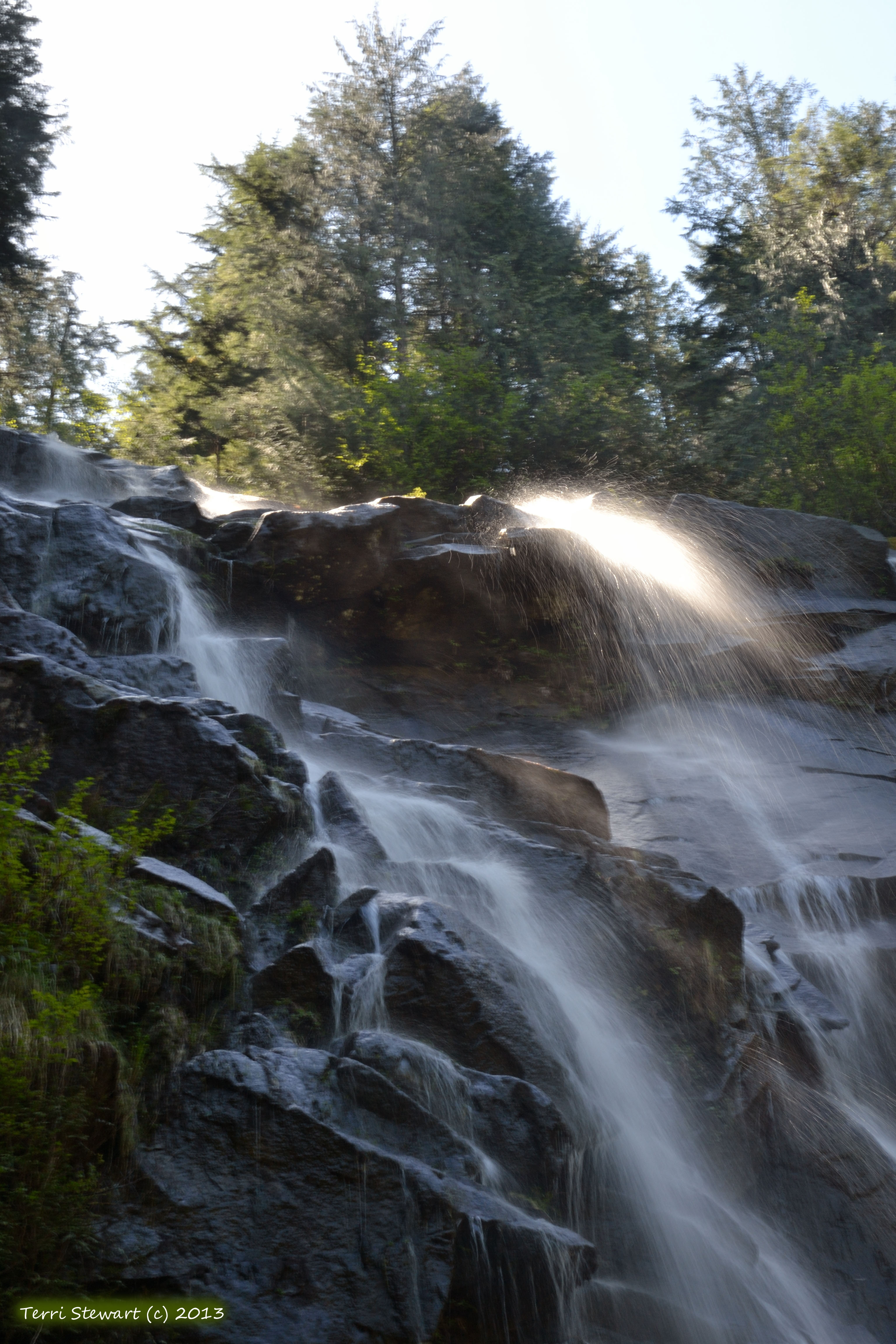
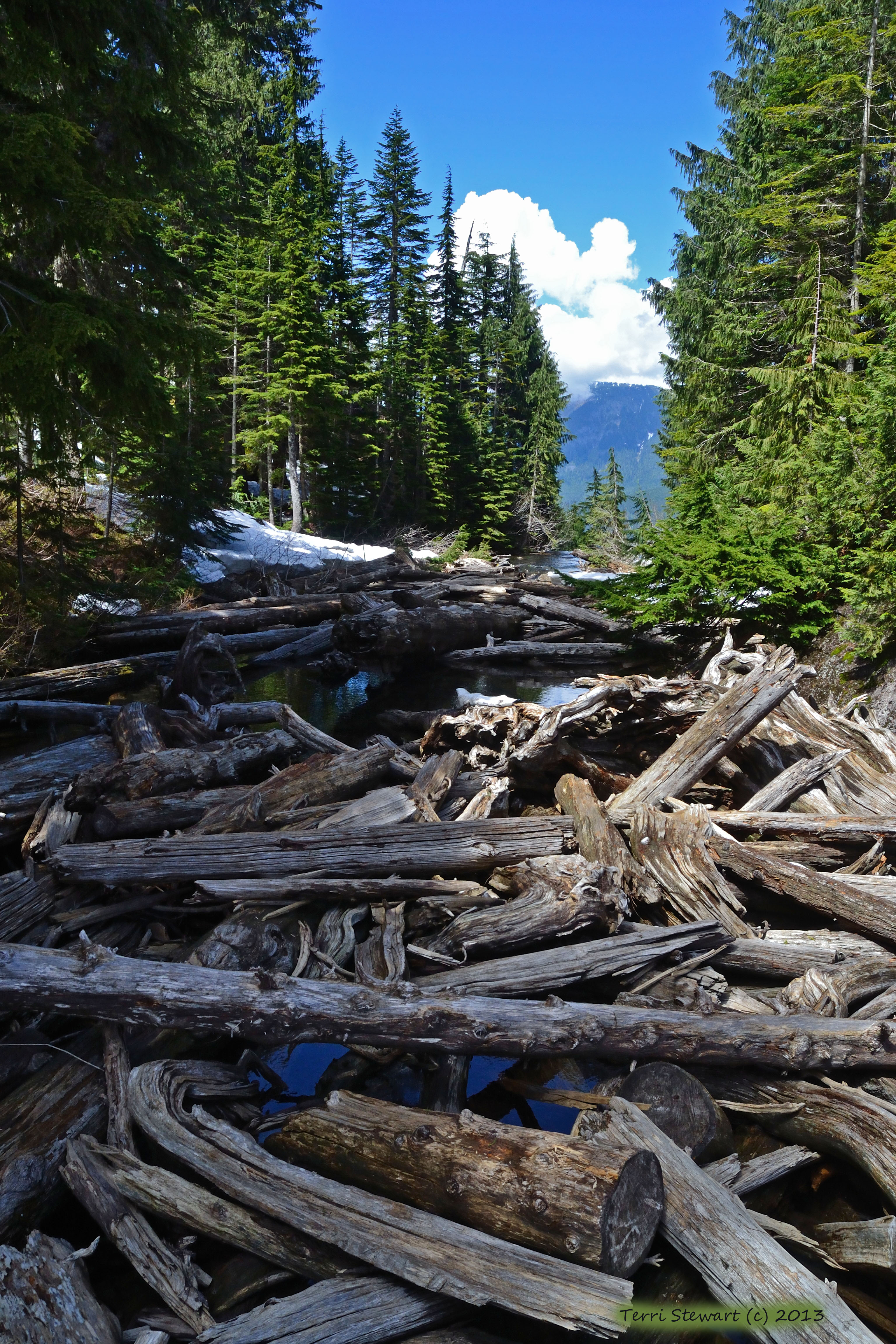
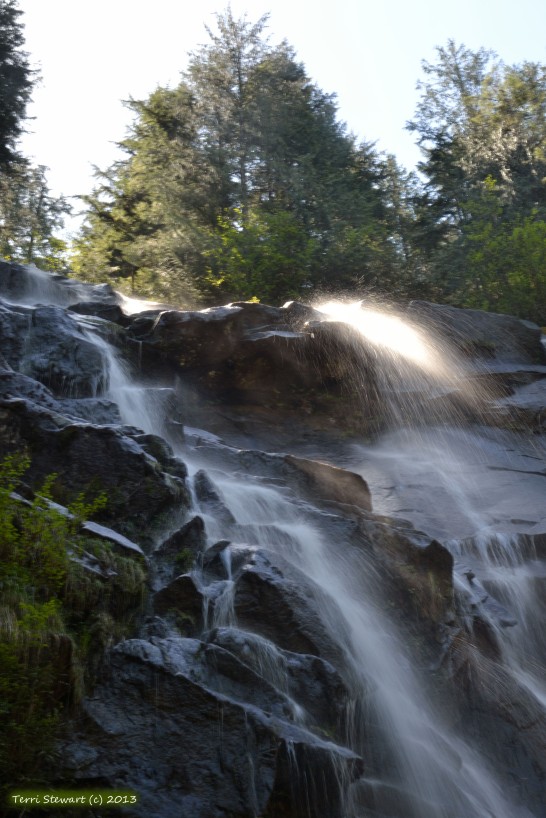
Anyway, I started up the path at my own pace. I got a little less than two miles in and found the below sight. I tried really hard to capture this thing that was happening with the sun and the water! It looked like liquid sunshine was pouring off the top of the waterfall. My eyes received the beautiful image of sunshine being poured down the mountain, could my camera receive it? A little.
Walkabouts__2013-06-03_12-05-17

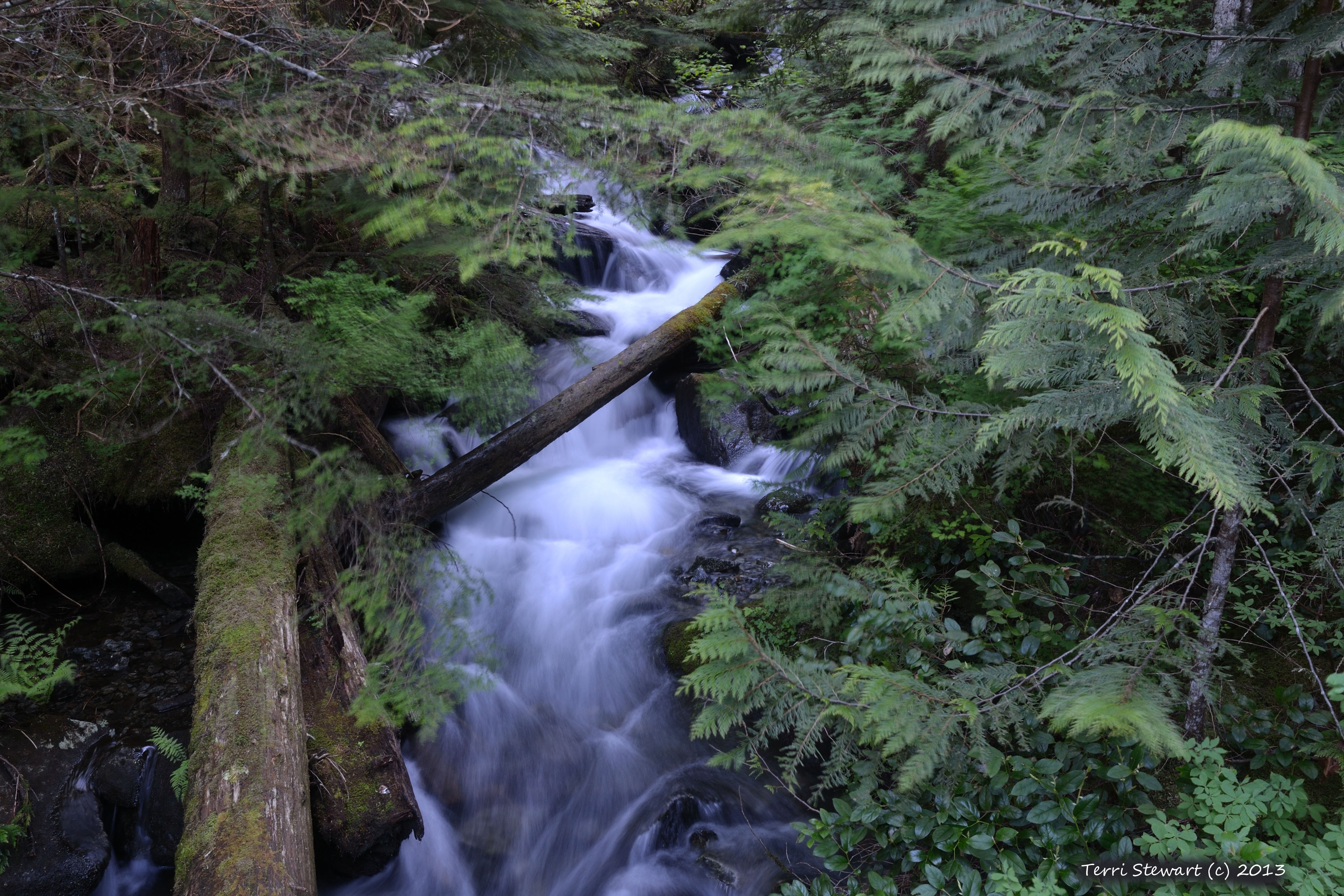
At any rate, it was astounding. And it was the second set of falls I had seen. This mountain is one big slab of granite! (Hence the rocky path) And there is water everywhere. Well, okay, not everywhere, but in a lot of places. It was hard to get a good picture, but earlier, there was a set of falls that were very tall and jagged. But the trees were very overgrown so you could only get glimpses of the splash of light and water. This is the very bottom of that series. I received beautiful images of flowing water.
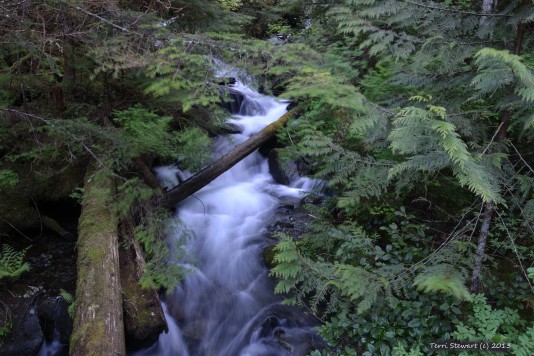
Walkabouts__2013-06-03_16-17-40

I got past the falls and it was two miles to Lake Serene. I was feeling good so decided my body could do this! I kept on going. And going. Up and up. Picking my way carefully through rocks. Resting when I felt overwhelmed. Then there came a moment when I thought that I was not going to be able to do it. I grounded my feet to the earth and drew on the strength of my God and the strength of the earth. I breathed deeply. This had become a spiritual quest.

I kept on going. But at that moment, I felt like giving up. I soon encountered a woman and her dog. They were resting. (Yay for rest!). I asked her how much further. She said, “When you feel like you have been through the worst possible climb, then it is just a bit more up and a little down and you’re there.”

OK. The worst possible climb. I can surely get to this.

I went up and encountered massive rocky path, with only about a 9″ clearance to skinny through. Surely, this is the worst possible spot.

I kept going and encountered another massive rocky path, with water and slipperiness. Surely, this is the worst possible spot.

Add water and repeat.

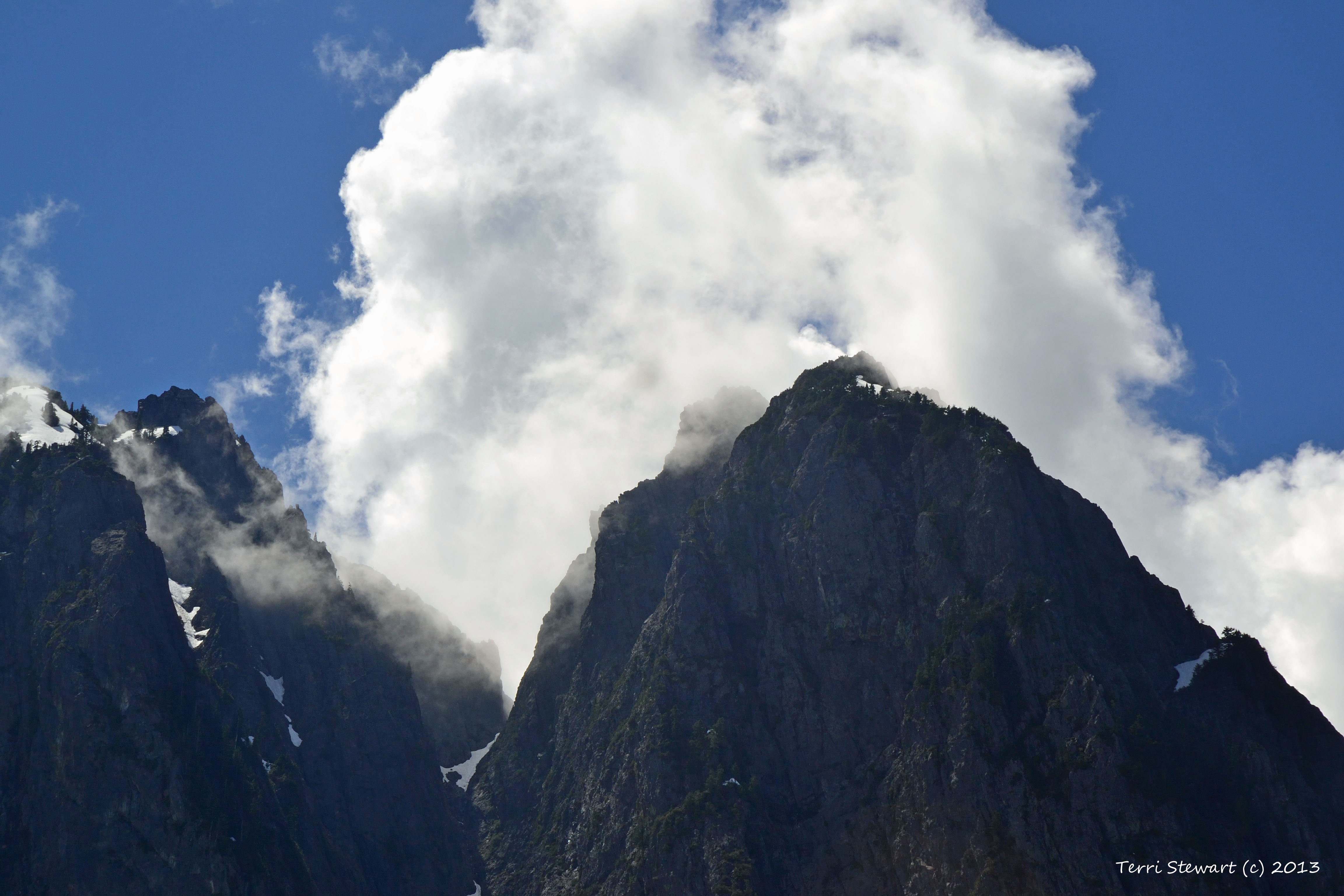
Finally, I broke through the shadows of the forest into a sunny meadowy type area (is it a meadow if it is on the side of a mountain?). I looked up and my breath left my body. It. Was. Amazing. I received the most beautiful blues intermingled with a dark granite mountain and white fluffy clouds rising like steam. I remember the story of Moses going up the mountain to be with his God and going into the cloud. This is a place to connect with spiritual strength. I felt strengthened, encouraged, excited, and alive. A complete contrast to how I felt when I was in the shadows.
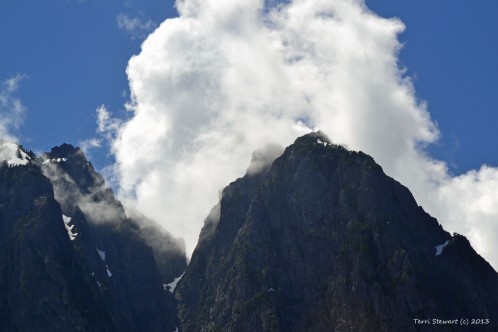
Walkabouts__2013-06-03_13-56-59

I was now in the sun, with this incredible sight, having passed through at least 5 stretches of the worst climb ever. And I saw another worst climb ever in front of me. But my spirits were jubilant. I was in the light and had left the darkness. Amen!

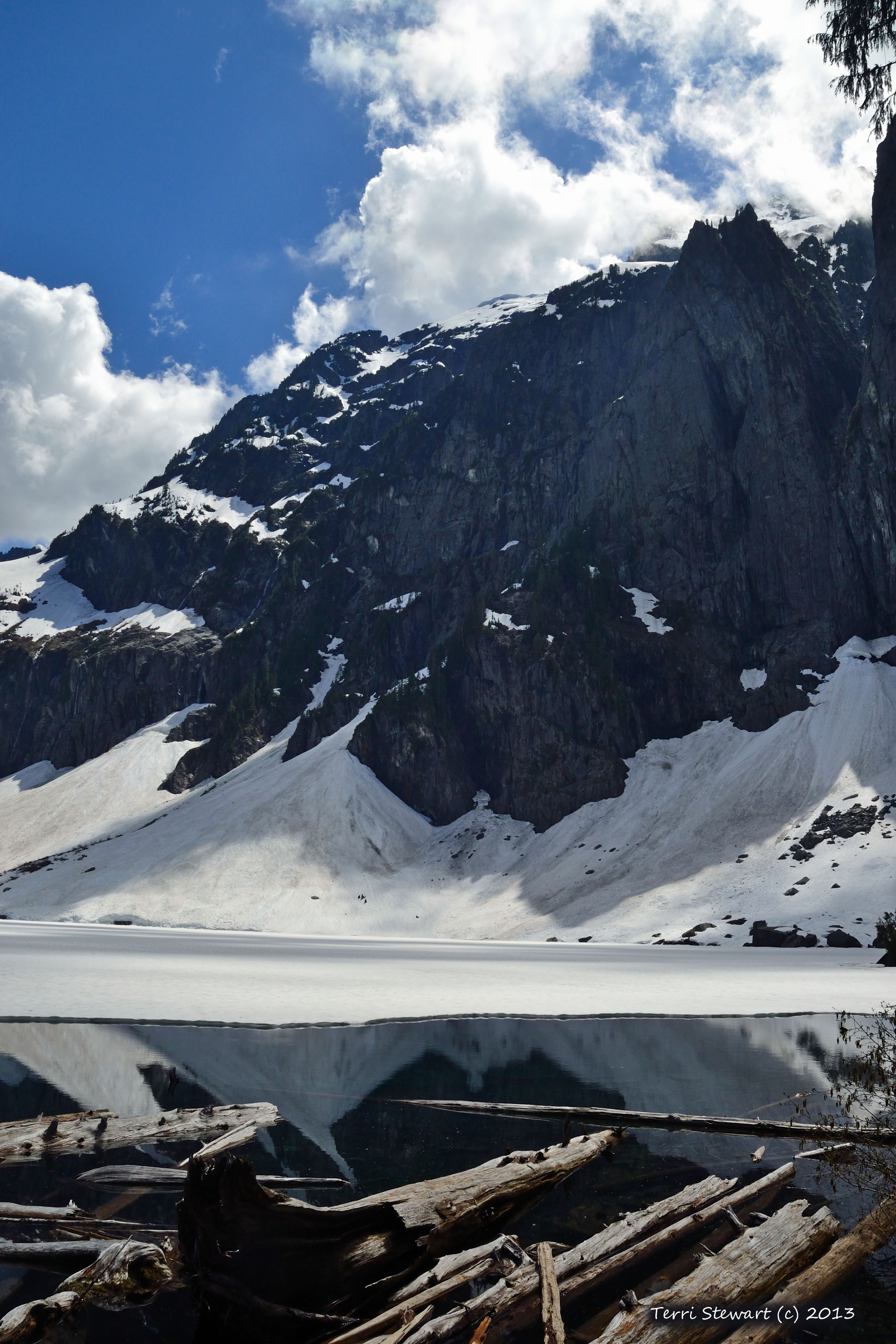
I kept on going. There was one more seriously worst climb ahead and then I was there. Lake Serene.
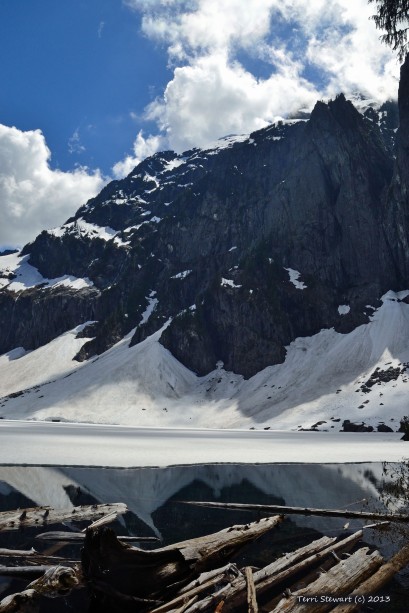
Walkabouts__2013-06-03_14-25-52

In fact, this lake feeds into the waterfalls pictured earlier. I had climbed all the way around to the other side. Here is what the top of the waterfall looks like from this same point, just facing the other way.
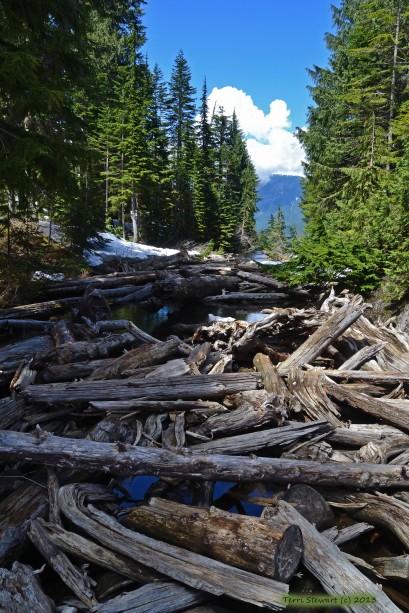
Walkabouts__2013-06-03_14-25-23

I clambered through the snow a bit and sat at the closest point I could get to the top of the waterfall. Ate lunch. Relaxed a moment.

Time to head back down. Surely, down would be easier! It always is. Mostly.

On the way down, I kept my head down looking to keep my feet planted so my ankle will not turn. I almost made it. Darn it. One misstep and a turned ankle. Choice – fall in a way to minimize injury or try to get that wobbly ankle to hold me up. Quick decision – my ankle will not withstand the effort to stay firmly up. Fall it is! Sheesh. I hate rocky, downhill, paths. Now, cuts and bruises, scratches and blood. I would hate to see what I looked like.

I crossed back in front of the amazing waterfall that poured sunshine and the woman I had met earlier was there with her dog! She was resting. Her dog decided to try to clean up the scratches on my legs a bit (ha ha!). We chatted a bit and she moved on. I stayed and tried to get some more photos of the falls and take a rest. Oh, and to use the water to wash my arm which has a pretty serious scratch(es).

But, gosh darn it, I did it! I am still on the path. I can still walk. My body is sustaining me. This is such a big deal, you have no idea. I was misdiagnosed for at least 20 years. To be able to do this is the most awesomely amazing thing ever. My muscles don’t even hurt as much today as they did on days the inflammation from being celiac made them hurt. (That was a bad sentence, sorry.)

I kept going. And I made it back to my car by about 5:00 p.m.

The quest was complete.

I am proud that I had the perseverance to keep on pushing through. My blood tests still say “alert” on the iron portion, but it is improving. My ankles and feet are okay today. My right arm and right shin are pretty banged up, but as long as nobody touches them (!) I will be fine.

The return hike took 2 hours. It took me 4 hours to go up.

Walking or hiking as a spiritual practice, for me, is typically about opening myself up to the images around me. Receiving images that I sometimes share here or on my blog. This time, though, it transformed into something else. Instead of receiving the beauty around me, I had to dig deep to connect to the strength of the earth, strength of my faith, and to the strength in my own body in order to find sustenance for the journey. This is a new kind of spiritual practice for me.  I had thought, Monday night, that I would not be eager to repeat this experience. But I am. Focusing on putting one foot in front of the other in this way gave me a faith in myself that I sometimes lack. Especially in my own body’s ability to sustain me. That is my new story. I trust my body.

Blessed be.

Shalom and Amen.

~Chaplain Terri

Adapted from a post at my blog. Trials on the Trail.

© 2013, post & photos, Terri Stewart, All rights reserved

terriTERRI STEWART is Into the Bardo’s  Sunday chaplain, senior content editor, and site co-administrator. She comes from an eclectic background and considers herself to be grounded in contemplation and justice. She is the Director and Founder of the Youth Chaplaincy Coalition that serves youth affected by the justice system. As a graduate of Seattle University’s School of Theology and Ministry, she earned her Master’s of Divinity and a Post-Master’s Certificate in Spiritual Direction with honors and is a rare United Methodist student in the Jesuit Honor Society, Alpha Sigma Nu. She is a contributing author to the Abingdon Worship Annual.

Her online presence is “Cloaked Monk.” This speaks to her grounding in contemplative arts and the need to live it out in the world. The cloak is the disguise of normalcy as she advocates for justice and peace. You can find her at www.cloakedmonk.com, www.twitter.com/cloakedmonk, and www.facebook.com/cloakedmonk.  To reach her for conversation, send a note to cloakedmonk@outlook.com

Posted in Art, Nature, Paula Kuitenbrouwer

Honoring the Mother

Mother’s Day is a celebration honouring mothers and motherhood, maternal bonds, and the influence of mothers in society. Nowhere it says it is only for human mothers, so let’s have a look at two bird-mothers.

baby_birds_hiding_under_mother_wing
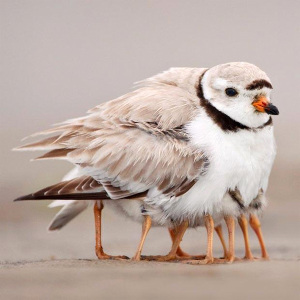
The first second I saw this photo, I thought it was gross because the bird looked distorted. However, a serious deformation as having 4 pair of extra feet is a bit too much to take. Close inspection learns that this Common Ringed Plover is sheltering her chicks from the cold wind that can make their habitat, the beach, rather unpleasant. Mummy Ringed Plover will regularly do this till the chicks have replaced their fluffy down with insulating feathers.

Imagine being a chick Ringed Plover and just walking into the warm, insulating plumage of your big mum and having a chat with your siblings. I bet mummy-bird is enjoying this peaceful moment of having all her chicks near her too.

This peaceful moment is a pause in the paradoxical task that characterizes motherhood; mothers have to keep their offspring close to gear them safely in to adulthood, adulthood that is all about growing away from the parents. Keeping them close in order to let them go.

Here is another mummy-bird, shielding her chicks to keep them safe and warm.

70-dove-under-the-wing-from-e-mail

I like to point out that I can’t state for sure that above photos are depicting mums with chicks. The Dove and Common Ringed Plover can be fathers. They can be those excellent fathers that care about their youngsters. Mothering isn’t exclusively done by mothers. Therefore, if Mother’s Day is about mothering, caring and loving, we should celebrate Mother’s Day with all who care, love, and share. And this includes childless couples, cooks, nurses, doctors, and all those who take others under their wings for a cuddle, a dinner, a supporting hug, or a bit of warmth.

– Paula Kuitenbrouwer

© 2013, essay, photographs and artwork, Paula Kuitenbrouwer, All rights reserved

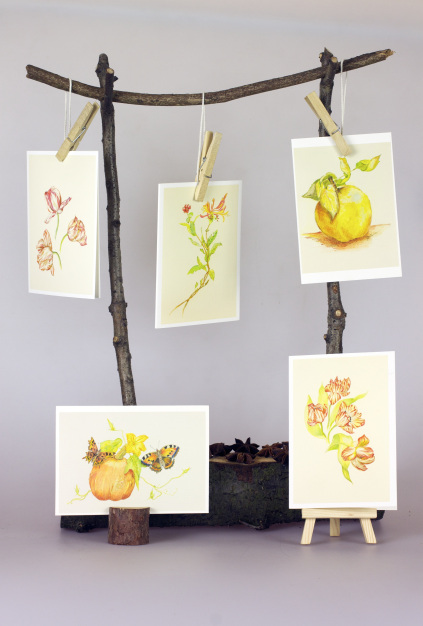
mg_4414paulaPAULA KUITENBROUWER is a Dutch nature artist living The Netherlands and sharing her work with us on her blog, Mindful Drawing and on her website. Paula says, “Mother’s Day is about a hug or a poem. Nothing more is needed. But if gifts are given; flowers express gratitude and love.”  She’s designed a Mother’s Day Gift-set for the 12th of May.You can purchase her art HERE.

In addition to art, Paula’s main interest is philosophy. She studied at the University of Utrecht and Amsterdam. She has lived in Eastern Europe and in Asia. Paula says that in Korea, “my family lived next to a Buddhist temple. In the early morning we would hear the monks chanting. During my hours of sauntering with my daughter through the beautiful temple gardens, I felt a blissful happiness that I try to capture in my drawings.” Paula sometimes teaches children’s art classes. She lives with her husband and daughter and close to her father. We are often honored with and most grateful for the wise and gentle posts from our much-valued Paula.