Posted in Peace & Justice, Spiritual Practice, Terri Stewart

LISTEN and LOVE: Working with At-Risk Youth

Listen, Listen, Love, Love: Working with At-Risk Youth, an open letter from our own Rev. Terri Stewart. I appreciate what she’s doing – I’ve worked with at-risk youth too – so I wanted to share this with everyone.  J.D.

1381796454ha80uHi! I’m Terri Stewart, the founder of the YOUTH CHAPLAINCY COALITION, Seattle, Washington. I work with youth who are affected by incarceration. That can be youth who are in prison, youth who have left prison, or youth whose parents have been or are in prison. There is a consistent theme – prison.

“Then the righteous will answer him, ‘Lord, when was it that we saw you hungry and gave you food, or thirsty and gave you something to drink? 38 And when was it that we saw you a stranger and welcomed you, or naked and gave you clothing? 39 And when was it that we saw you sick or in prison and visited you?’ 40 And the king will answer them, ‘Truly I tell you, just as you did it to one of the least of these who are members of my family, you did it to me.’”(Matthew 25:37-40)

I love working with these youth and their families. My typical week is filled with driving from Woodinville to Seattle to Snoqualmie to Kirkland to Yakima and back home again. At least it isn’t all in one day!

Why do I do this crazy amount of driving? Because we practice what I call Extreme Accompaniment ministry. An Accompaniment ministry is when you walk with someone listening and loving. You don’t walk in front, leading them. You don’t walk behind, pushing them. You walk with them, wherever their path leads. Sometimes that path starts at King County Youth Detention Center and leads to Echo Glen Children’s Home in Snoqualmie and then to the Ridgeview Girl’s Group Home in Yakima! It can be a circuitous route! But Extreme Accompaniment has the possibility to cause restoration, transformation, and healing unlike any other method.

The difficulty of this method lies in its intensity and commitment. There are few called to travel with a marginalized youth for 12 months or more. But that is what makes it Extreme! And it is extremely fun! Extremely fulfilling! Extremely challenging! And Extremely transformative!

Right now, the ministry has 3 needs: volunteers, donations, and committed, daily prayer warriors.

Prayer Warriors: I always lecture the volunteers that work for me that their spiritual grounding comes first—without great spiritual practices of Bible reading, prayer, and accountability groups, they will not be able to maintain a healthy ministry. Given that, I list prayer warriors as the #1 priority! The spiritual grounding of the chaplaincy comes first.

Volunteers: We need people to join in the task of Extreme Accompaniment. If you feel called to a 12 month commitment of one-on-one relationship with a youth affected by incarceration, we need to talk!

There are three exciting ways this can be experienced:

Neighborhood Youth Mission Team: This is the Extreme Accompaniment of following a youth from incarceration at King County Youth Detention Center to wherever that youth’s path may go.

Mentors in Mission: This program works with youth before they are incarcerated who are in the at-risk category—from low-income homes and with incarcerated parents. This is a weekly mentor opportunity/meeting combined with the mission work of creating a community garden for the youth’s family. A ministry two-fer! You help a child and you feed their family!

Kairos Prison Ministry Torch Mentoring: Here, you commit to participating to a spiritual renewal retreat within a detention setting where you will meet a youth and walk beside them for the time after the retreat until they move on to their next steps.

Additionally, we need administrative support to maintain our Facebook, Twitter, and web presence. A data entry specialist to do a few hours of work a week. And traditional chaplain volunteers to enter the detention centers.

Donations: Currently, all the financing comes from what little time I have left over to devote to raising funds. That means not very much! We need donations to buy supplies, pay for gas, buy Bibles, etc.

If you would like more information about any of these items or opportunities, please contact me at YCC-Chaplain@TheChurchCouncil.org or call me at 425-531-1756.

Shalom,

Rev. Terri Stewart

Youth Chaplaincy website
Youth Chaplaincy Facebook Page
Chaplaincy Program Ministers to Some of Seattle’s Most Troubled Youngsters, The Seattle Times
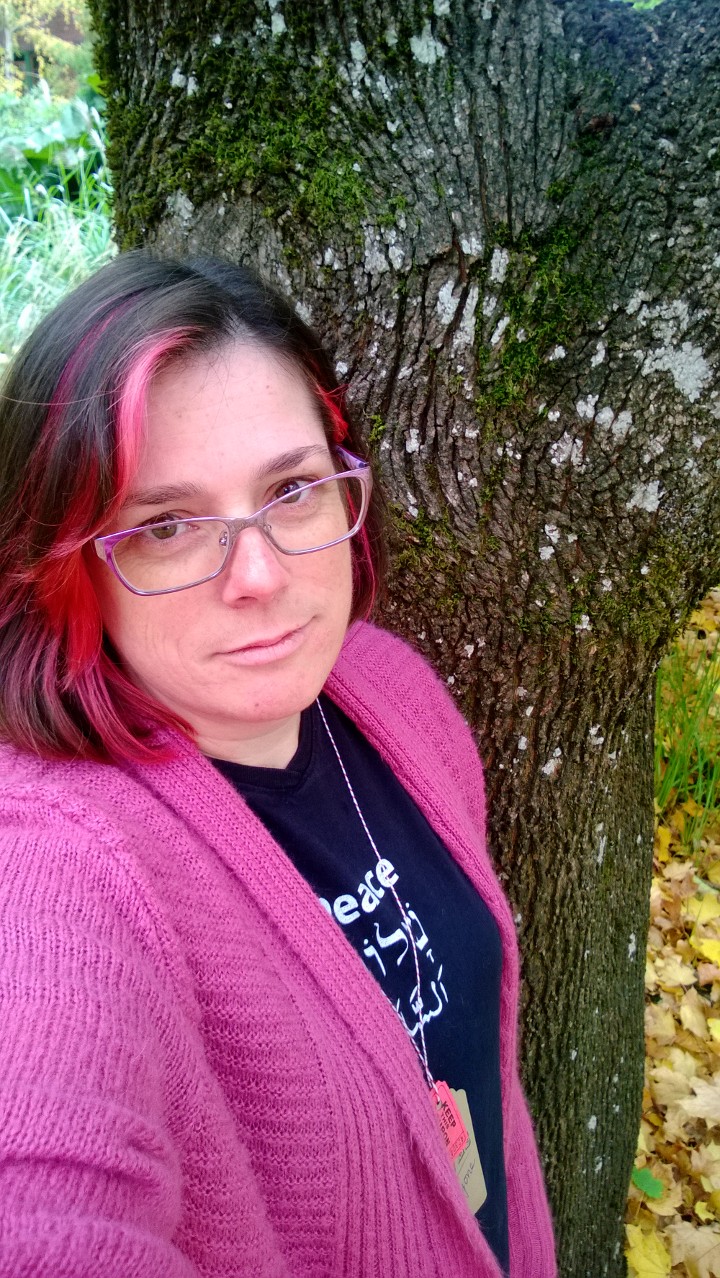
WP_20131026_034REV. TERRI STEWART is Into the Bardo’s  Sunday chaplain, senior content editor, and site co-administrator. She comes from an eclectic background and considers herself to be grounded in contemplation and justice. She is the Director and Founder of the Youth Chaplaincy Coalition that serves youth affected by the justice system. As a graduate of Seattle University’s School of Theology and Ministry, she earned her Master’s of Divinity and a Post-Master’s Certificate in Spiritual Direction. She is a contributing author to the Abingdon Worship Annual. (The 2014 issue just released!)

Her online presence is Cloaked Monk. This speaks to her grounding in contemplative arts and the need to live it out in the world. The cloak is the disguise of normalcy as she advocates for justice and peace. You can find her at www.cloakedmonk.com, www.twitter.com/cloakedmonk, and www.facebook.com/cloakedmonk.  To reach her for conversation, send a note to cloakedmonk@outlook.com

Posted in Essay, grief, Spiritual Practice, story, Terri Stewart

Sacred Grief: Shabbat Shalom

Leningrad_Codex_Carpet_page_eThe power is out! I am sharing something I wrote in November 2010. I think it speaks to the spiritual practice of grief work and for preparing for difficult seasons of life. I am going to let it stand as a piece and not edit it on my phone! I hope you enjoy this glimpse into my past.

Often we think of Sabbath as Sunday. In fact, traditionally, Sunday is the Day of the Lord and sundown Friday to sundown Saturday remains the Sabbath time. Recently I went to Shabbat service at Kol Ami to experience the beginning of Sabbath, a dedicated time of reflecting on giving our lives and all there is to God. Going to a Jewish service is a little unnerving as it is generally in Hebrew, however, the Siddur (what would be like a hymnal) is written in Hebrew and English. It also has the transliteration so you can follow along. Whew! That allowed me to sort of keep up.

When I entered the Narthex to join Kol Ami during Shabbat, I was a little nervous. After all, I know what we think when new people come and visit us! Often it is “Hooray!” How odd would it be to become the new person again? And how odd is it to become the new person within a building that I know so well? When I entered, Rabbi Glickman almost recognized me. I said hello and put myself into context for him. He introduced me to a lovely couple in the congregation. I got there just in time to hear their tales of recent loss to Rabbi Glickman. My heart tugged because I know those tales of loss. It has been an entire year devoted to loss for me and to the dangerous work of going through this liminal time in my life. Late last summer we had to put down Sarah, our dog of fourteen years. In October I finally did some very heavy grief work for my mother. In February, a good friend at school died. And not only did he die, but I was the one who had to break the news to my school community. I presided over his memorial service. And then, the capper for me was the loss of my brother in May. Oy vey! And then there have been smaller losses since then. But these were the big boulders for me. The interesting thing that I learned was that each time a smaller loss, it taps into that bigger well of grief that has built up. So even a smaller thing like the ROTC soldier at Seattle U who was killed in Iraq recently, brings up the bigger grief and you have to deal with it again. Then I met Maria and her husband.

Maria shared with me at the Shabbos service recent news they have had of a close friend dying. And this was layered on top of huge challenges they have had over the last year. They are an older couple and have had to face challenging health situations that seem to be coming at them in waves. On top of that, they lost their grandson seven years ago. So these smaller challenges and griefs are tapping into that huge loss in their life. I was so very aware that even though there were many differences between us (religion, culture, age), that coming together in our grief to share the loss together on Shabbat as we recite the Kaddish together was an amazing experiment. Kaddish is recited for all who grieve and is an amazing response of faith. In the deepest grief, the responsive prayer is one of praise to God. It is:

Glorified and sanctified be God’s great name throughout the world which He has created according to His will. May He establish His kingdom in your lifetime and during your days, and within the life of the entire House of Israel, speedily and soon; and say, Amen.

May His great name be blessed forever and to all eternity.

Blessed and praised, glorified and exalted, extolled and honored, adored and lauded be the name of the Holy One, blessed be He, beyond all the blessings and hymns, praises and consolations that are ever spoken in the world; and say, Amen.

May there be abundant peace from heaven, and life, for u and for all Israel; and say, Amen. He who creates peace in His celestial heights, may He create peace for us and for all Israel; and say, Amen.

I am also reminded of all the hurts that can come to us during this upcoming Advent and Christmas season. For children of alcoholic parents, for recovering addicts, for people undergoing the birth of a new way of having family, for those suddenly without family, for those who are alone, even for those of us who very much need to watch our food intake—it can be challenging at best and a minefield at worst. I think my wish for advent, for this time of growth, is that we all can embrace change and loss where we need to knowing that it is gestating into something new that may bring forth a beautiful new life. And in this time of gestation, that we may claim together, the magnificence and glory of our creator who creates peace for us all.

Love,
Terri

© 2013, post , Terri Stewart, All rights reserved
Illustration ~ Leningrad Codex cover. This is from a very old mauscript of the Hebrew bible. A former possession of Karaïte Jews written circa 1010 C.E. The photograph by Shmuel ben Ya’akov is in the United States public domain.

WP_20131026_034REV. TERRI STEWART is Into the Bardo’s  Sunday chaplain, senior content editor, and site co-administrator. She comes from an eclectic background and considers herself to be grounded in contemplation and justice. She is the Director and Founder of the Youth Chaplaincy Coalition that serves youth affected by the justice system. As a graduate of Seattle University’s School of Theology and Ministry, she earned her Master’s of Divinity and a Post-Master’s Certificate in Spiritual Direction. She is a contributing author to the Abingdon Worship Annual. (The 2014 issue just released!)

Her online presence is Cloaked Monk. This speaks to her grounding in contemplative arts and the need to live it out in the world. The cloak is the disguise of normalcy as she advocates for justice and peace. You can find her at www.cloakedmonk.com, www.twitter.com/cloakedmonk, and www.facebook.com/cloakedmonk.  To reach her for conversation, send a note to cloakedmonk@outlook.com

Posted in Essay, Spiritual Practice, Terri Stewart

Finding Sacred Space Within Our Own Skin

I am attending a retreat this weekend. I have done two exercises today that stretched my own perception of myself. I’d like to offer one to you as a Spiritual Practice geared towards finding sacred space within your own skin and being willing to see yourself.

I don’t know about you, but that can be the most difficult spot for me to discover. Somehow, I can look at others and see their beauty, but acknowledging my own beauty seems at once terrifying, bold, and that I may fall short of being that … what? That person. That human. That woman. That mother. That chaplain. That presence of comfort. Oh, I think it is true that I fall short – we all do – but failing myself at simply just seeing myself is not okay!

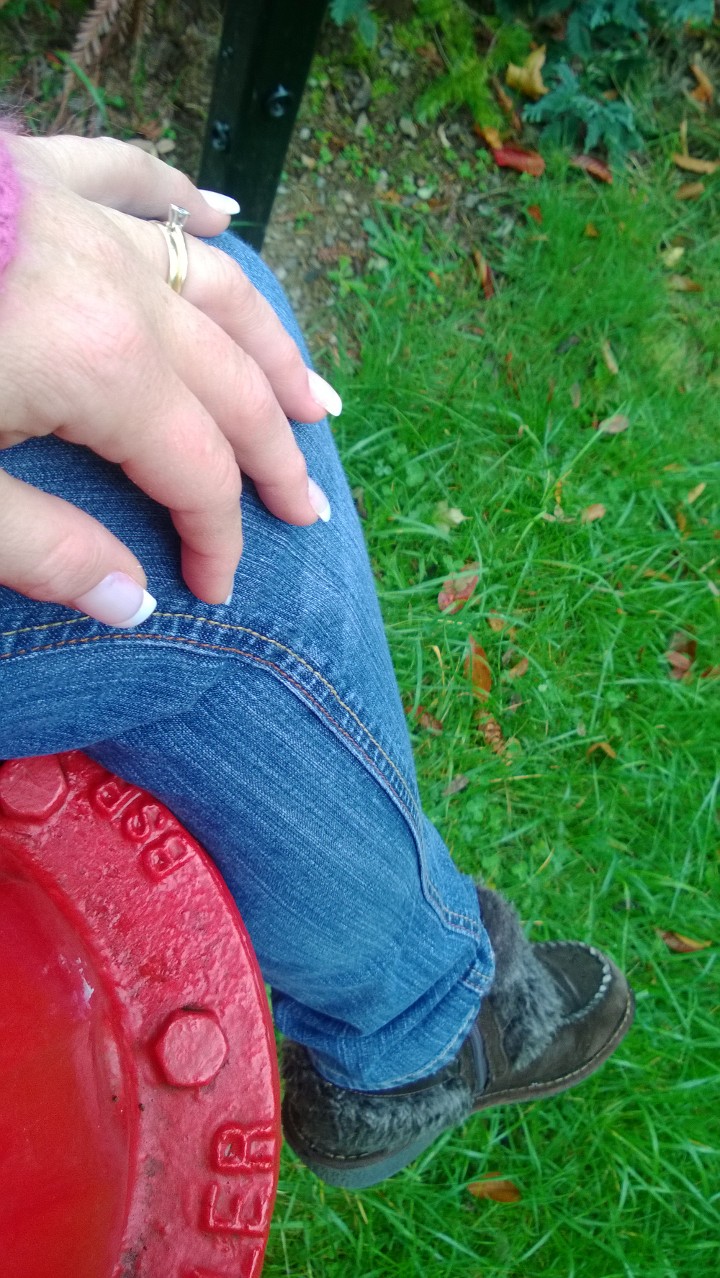
Nowhere is that more present than in the myriad of photos I have of family and family vacations. Where am I? Behind the camera. I may be in 1 in a thousand photos. Seriously. It’s not okay! This Spiritual Practice is geared at self portraiture. It is a series of photos. (None of these photos are touched up. I am intentionally resisting the temptation!)

First exercise … find a place where you can intentionally photo bomb yourself with a weird background. I thought this was fun with a mural in the background. I think I can use this one when I am mad! This will let you have a humorous, gentle start!

WP_20131026_019

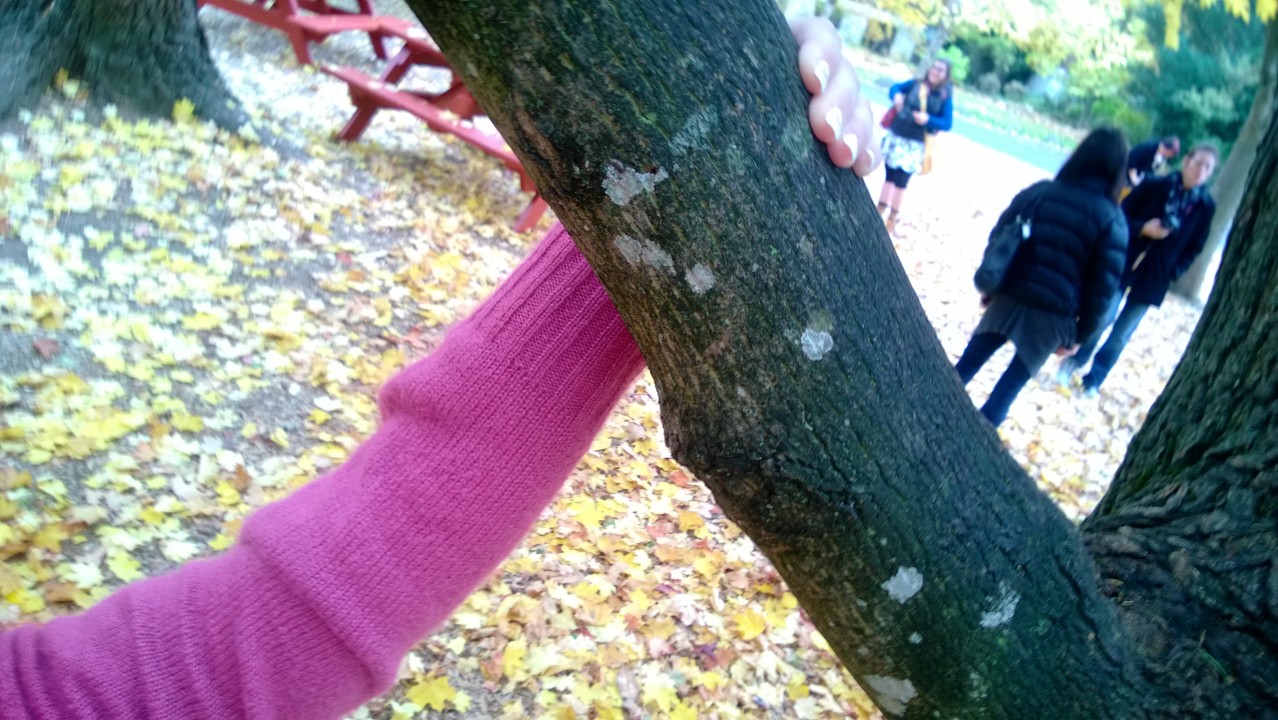
Next, consider what a self-portrait consists of … it is any part of you that is in a picture. Gather photos of you reaching for something, holding something, stepping onto a path, you name it! Hands, feet, hair!

WP_20131026_031

WP_20131026_028

WP_20131026_025

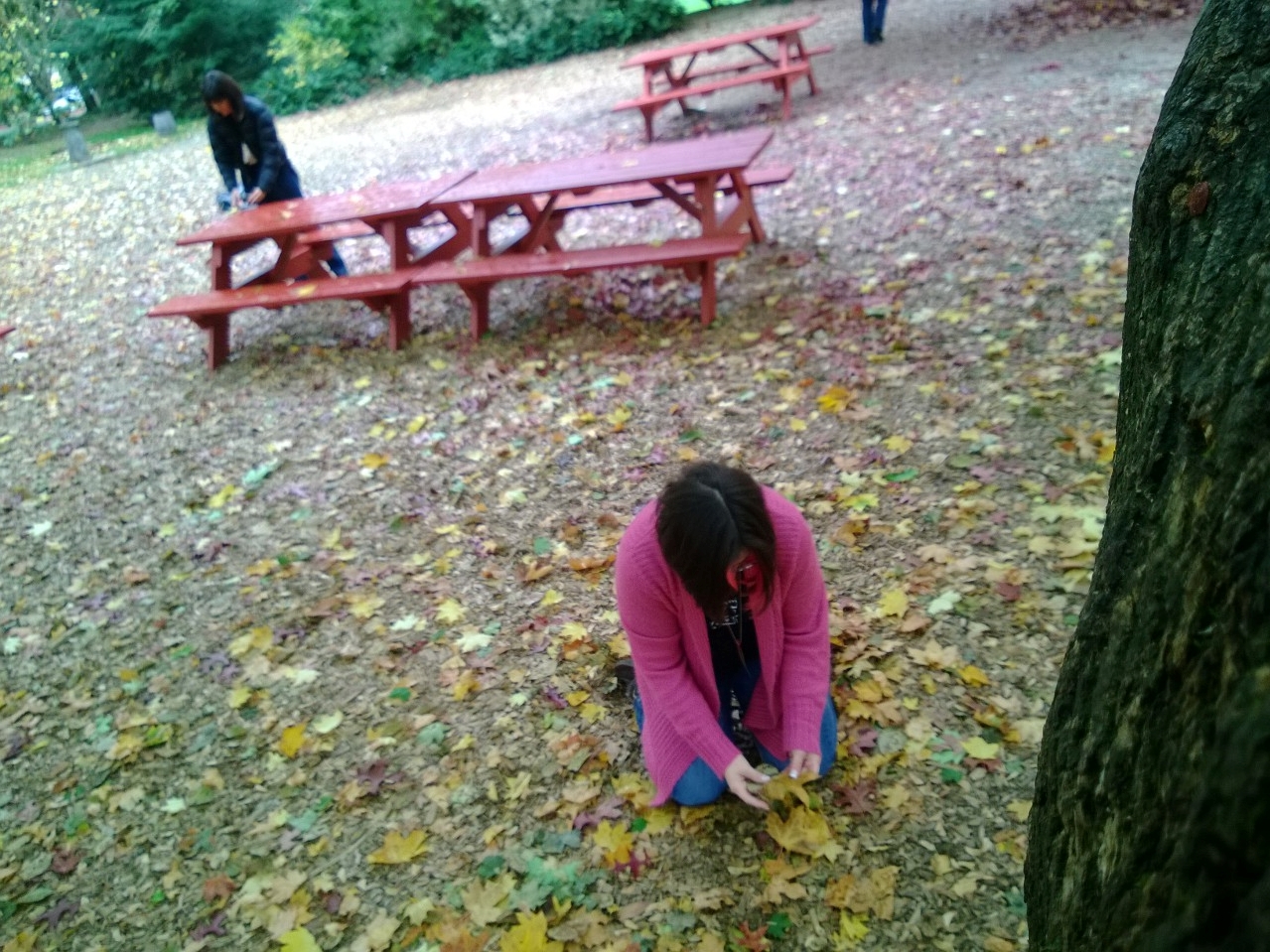
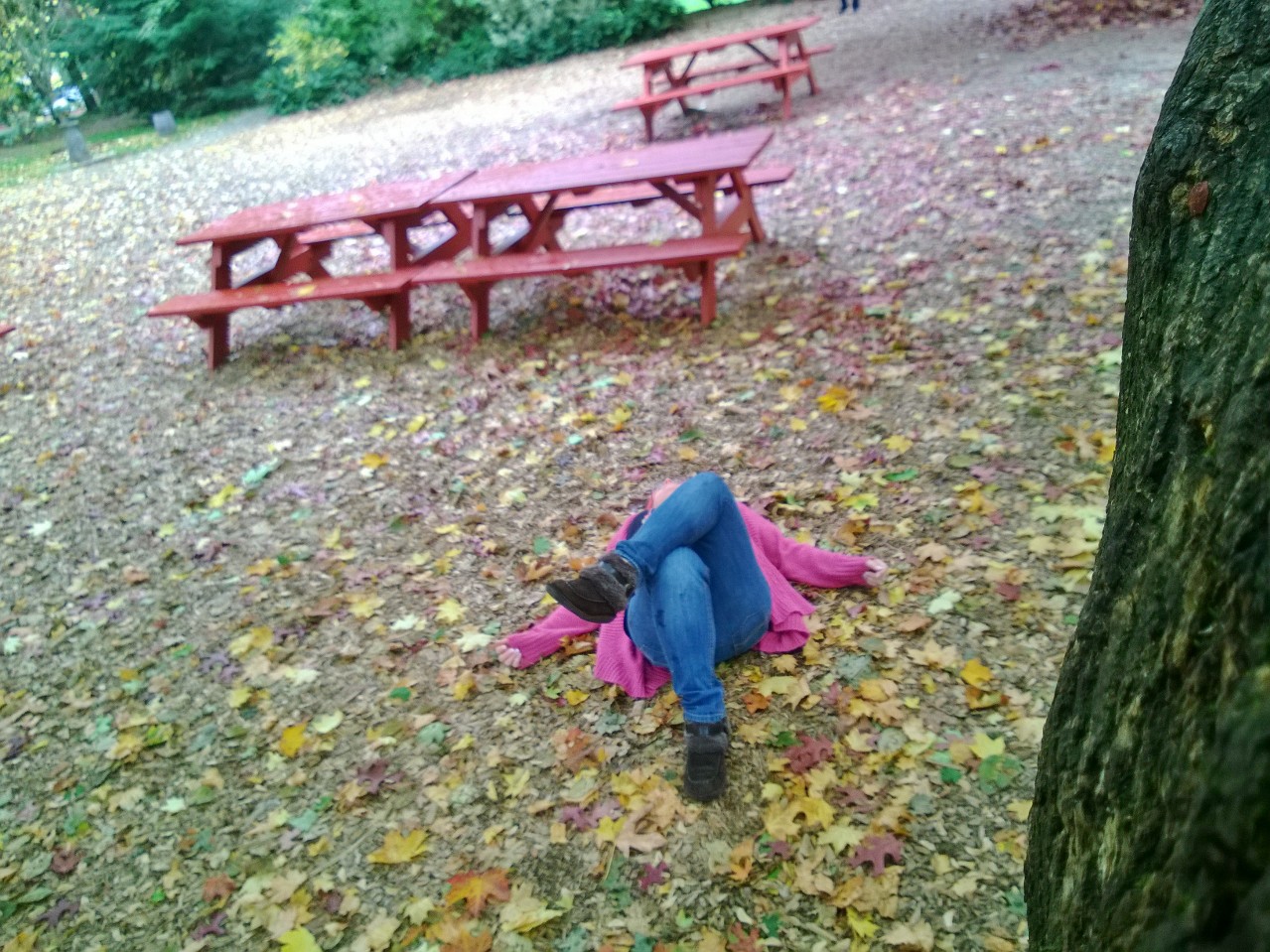
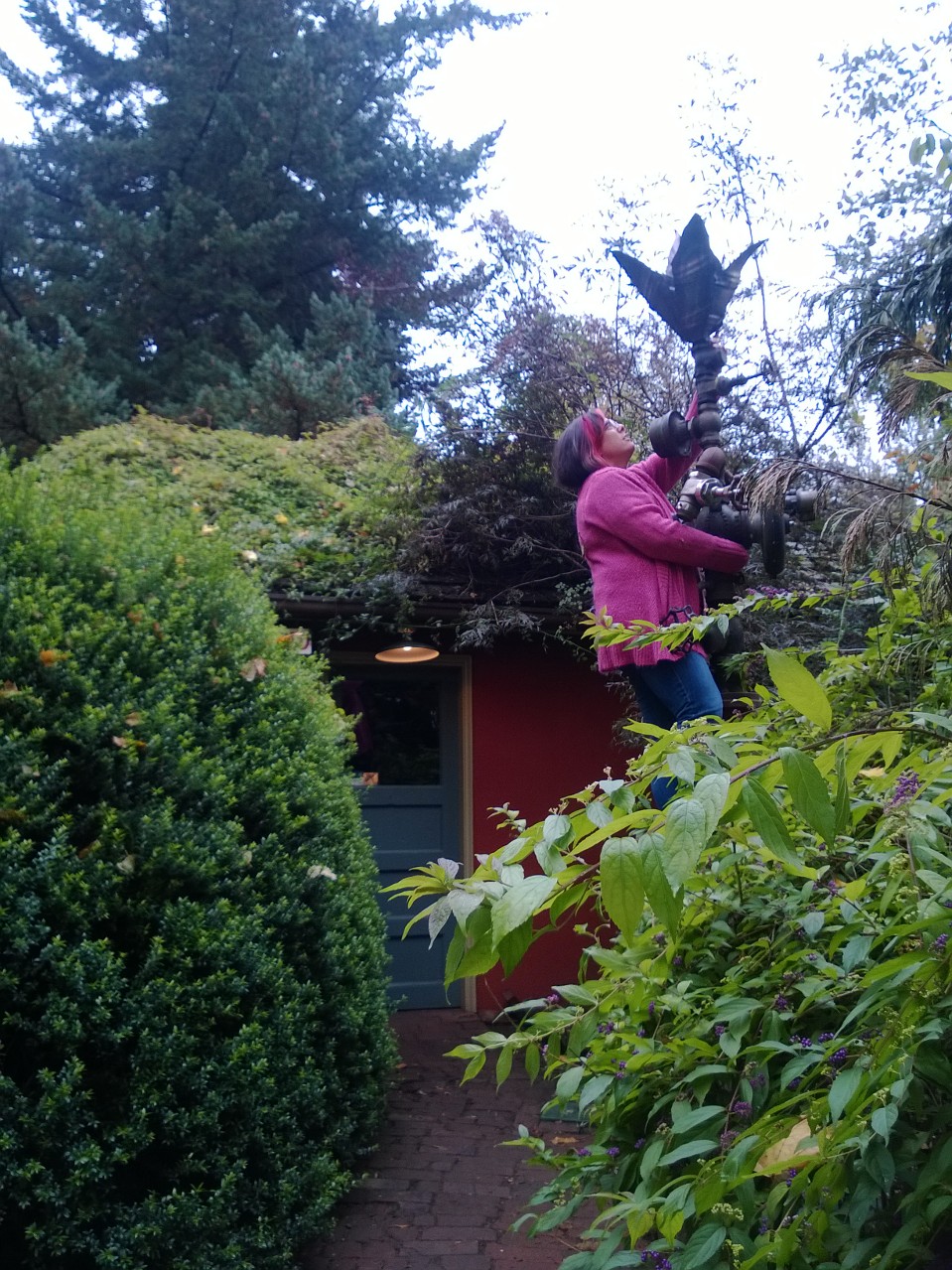
Next, learn to use that timer on your camera! I understand that iPhones have Gorilla and Windows phones have Auto Timer Camera. Now take full shots of yourself doing different things.

3_jpg

5_jpg (1)

12_jpg (1)

Last, look into the camera and be love. You may think of someone you love and gaze into the camera or think of loving yourself or think of loving the world. Start here. Be an image of love.

WP_20131026_034

I spend a lot of time “being love” in the world. Working with incarcerated and homeless youth. But without a loving foundation that includes spiritual practices that let me see and be myself, I won’t be able to sustain compassionate action. Even the healthiest egos need times of sustenance.

Shalom and Amen,

Terri

© 2013, post , Terri Stewart, All rights reserved

terriREV. TERRI STEWART is Into the Bardo’s  Sunday chaplain, senior content editor, and site co-administrator. She comes from an eclectic background and considers herself to be grounded in contemplation and justice. She is the Director and Founder of the Youth Chaplaincy Coalition that serves youth affected by the justice system. As a graduate of Seattle University’s School of Theology and Ministry, she earned her Master’s of Divinity and a Post-Master’s Certificate in Spiritual Direction. She is a contributing author to the Abingdon Worship Annual. (The 2014 issue just released!)

Her online presence is “Cloaked Monk.” This speaks to her grounding in contemplative arts and the need to live it out in the world. The cloak is the disguise of normalcy as she advocates for justice and peace. You can find her at www.cloakedmonk.com, www.twitter.com/cloakedmonk, and www.facebook.com/cloakedmonk.  To reach her for conversation, send a note to cloakedmonk@outlook.com
“A person with ubuntu is open and available to others, affirming of others, does not feel threatened that others are able and good, for he or she has a proper self-assurance that comes from knowing that he or she belongs in a greater whole and is diminished when others are humiliated or diminished, when others are tortured or oppressed.”
― Desmond Tutu

Posted in Liliana Negoi, Meditation, meditative, mystic, Nature, Spiritual Practice

On miracles

peach-pitMy younger son found a peach pit today, and in his innocence decided to plant it. So he dug a hole, put the pit inside it, covered it and then watered it. He said “I put as much water as it needed to grow. And it will grow. I think tomorrow it will grow.” I smiled at his confident statement and as he moved further I found myself ardently hoping that his tree would indeed grow, not necessarily in order for us to have a peach tree in the yard (though it would be nice – note to self, plant a peach tree a.s.a.p.) but because I want my children to find reasons to believe in miracles in about everything – especially when they help creating them.

The word “miracle” originates from the Late Latin miraculum, meaning “wonder”, “marvel”, from mirari – “to wonder at”. Apparently, as the Merriam-Webster dictionary explains to us, the word’s first known use was in the 12th century. However, miracles happened before that time for sure, even if they were named differently. People used this word or others to point towards “events not ascribable to human power or the laws of nature and consequently attributed to a supernatural, especially divine, agency”. If you come to think of it, miracles birthed and killed gods through the means of man’s limited power of understanding, because in certain people they touched their fear, while in others they touched their curiosity. That’s how religion and science were born.

The best thing about miracles though is that they make us grow. All of us. One way or another they push us higher, farther, and even if officially they stop being miracles in the second when we discover their explanation, they still remain miracles in our hearts, because due to them we expanded our knowledge.

Maybe there will be no peach tree growing from that pit. But I do know that in my child’s heart, the peach tree rooted already – and THAT is more important than anything else.

© 2013 Liliana Negoi

The image used was taken from http://www.photos-public-domain.com/2012/03/10/peach-pit/.

IMG_7667LILIANA NEGOI  (Endless Journey and in Romanian curcubee în alb şi negru) ~ is a member of our core team on Into the Bardo. She is the author of three published volumes of poetry in English, which is not her mother tongue but one that she came to love especially because of writing: Sands and Shadows, Footsteps on the San – tanka collection and The Hidden Well.  The last one can also be heard in audio version, read by the author herself on her SoundCloud site HERE.  Many of her creations, both poetry and prose, have been published in various literary magazines.

Posted in Essay, Spiritual Practice, Terri Stewart

It’s All Sacred Space II

"I AM" Sacred Space
“I AM”
Sacred Space

Following up on last week’s “It’s All Sacred Space.”

Two pastors that I know are extraordinary. They both pastor homeless people. One lived as a homeless person for two weeks so he could understand what was going on. The other is homeless. She refuses to live in a home and sleeps on the streets every night of her life. She takes this so seriously that given the opportunity to sleep inside at a convocation, she made special arrangements to sleep in the doorstep-declining housing thousands of miles away from her people. She is the only one who would have known! And nobody would have judged her in error for sleeping inside at a conference she was attending.

I am amazed at the depth of commitment they both have.

In my context, that would be sleeping in a detention center. I am not sure I am prepared to be locked up in order to be one with the people that I am committed to walking with.

But maybe that is because I am not viewing all space as sacred. If I imagine that a jail cell is the Cathedral of Notre Dame with an air of mystery, sacrament, and holiness…does that change the context? Maybe. But could I put on the blue scrubs, white t-shirt, white socks, and orange plastic flip-flops? Using harsh soaps, eating questionable food, everything? Hmmm. I am not sure I could ever do that. I am also not sure that it is a requirement to do so. But, perhaps what is a requirement is the holy imagination it takes to think of what this walk would be.

That is the spiritual practice I’d like to invite you into today, holy imagination. I believe that we are all called to support the least among us. In other words, those who cannot take care of themselves. Those our societies often label “other.” People who are “other” than us—outside the norm—impoverished, imprisoned, hungry, sick, non-gender conforming—whoever is being “othered.”

Who is your other?

Could it be someone from a different faith tradition? A different political point-of-view? Or any of those I listed above? Generally, there is always someone we “other-ize.” Even though I am working with people every day that are affected by incarceration, I found myself in a spot today where I felt the person I was sitting with was totally “other” from me. She is telling me flat-out that when she returns to her community, she will return to drug use and gang involvement. Period. She sees no other way. No other hope. That is hard for me to fathom. She says, “I will probably be dead by 21” without blinking. Wow. And sheesh. I need to find a way to sit with her in a way that is hopeful and not descend into other-izing her even though her current ideas are so foreign to my mind and heart.

If I use holy imagination, maybe I can put myself into her life and feel where her self-imposed traps come from. And seeing where the traps are, maybe I can point out a way she can negotiate the traps and bring herself greater freedom. I don’t know. I will continue to work on it.

Today, using your own holy imagination, can you take five minutes (really, 20 minutes is more like it!) to do some visualization work?

First, relax as much as you can. Keep working at it until you have quieted the monkey mind (or brain chatter—but my inner chatter is more like a monkey!).

When you have fully relaxed, set your intention. Here, I am suggesting your intention should be a conversation with whoever you “other-ize.” (Could it be yourself?)

Next, focus on what you want. Today, our desire is closer understanding. How can you begin to understand the figurative foreigner across from you? What questions can you ask in order to bring you deeper understanding? I am always amazed at my own capacity to carry assumptions. How can we leave assumptions and expectations behind so that there is room for increased understanding?

As realizations and understandings grow, there may be a struggle. Give your struggle up. It is like the monkey-brain. Keep offering both of these things away. I usually visualize putting these on a cloud and whooshing them out of my space. Don’t struggle too hard. If it isn’t happening, it isn’t happening. Then, don’t be too hard on yourself. There will be another day, another try.

Finally, don’t get tangled in negative thoughts—whoosh them away on that cloud! Experience your highest self—the one that sits in loving kindness, compassion, and hope.

When your conversation is complete (and you may get horrible answers, let’s be honest), hold onto the highest self for a moment and see yourself. See the person who took a risk today of entering scary, sacred space. A person who was willing to love. Look at yourself and see the sacred space within.

Shalom and Amen,

Terri

© 2013, post , Terri Stewart, All rights reserved

terriREV. TERRI STEWART is Into the Bardo’s  Sunday chaplain, senior content editor, and site co-administrator. She comes from an eclectic background and considers herself to be grounded in contemplation and justice. She is the Director and Founder of the Youth Chaplaincy Coalition that serves youth affected by the justice system. As a graduate of Seattle University’s School of Theology and Ministry, she earned her Master’s of Divinity and a Post-Master’s Certificate in Spiritual Direction. She is a contributing author to the Abingdon Worship Annual. (The 2014 issue just released!)

Her online presence is “Cloaked Monk.” This speaks to her grounding in contemplative arts and the need to live it out in the world. The cloak is the disguise of normalcy as she advocates for justice and peace. You can find her at www.cloakedmonk.com, www.twitter.com/cloakedmonk, and www.facebook.com/cloakedmonk.  To reach her for conversation, send a note to cloakedmonk@outlook.com
Posted in Art, Paula Kuitenbrouwer, Spiritual Practice

Mindfully Drinking Jasmine Tea

2013-05-09-at-11-02-47

To drink your Jasmine tea with awareness, you might like to….

220px-jasminum_sambac_grand_duke_of_tuscany

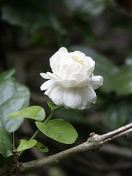
….admire the origin of your tea, the Jasmine shrub with its white flowers.

You can spend some thoughts on how the shrub lived and bloomed, and how the flowers smell. Your tea is scented with Jasmine flowers; do you see the whitish leaves? If you have bought Jasmine pearls, you could appreciate how they unfold.

200px-jasmine_pearls

Sniff the relaxing scent of Jasmine. Does this bring back memories? Happy memories? Do you like to let go something before you will enjoy your tea? Feel the warm tea mug and enjoy the drinking. Thoughts, scent, and taste…observe them all.

Do you get distracted or is your tea finished? Feel the tranquillizing effect of your mindful tea session by being grateful for this mindful moment.

mg_3971

2011-12-12-at-14-20-04

What are your thoughts on Jasmine tea and mindfully drinking scented tea? Is Jasmine growing in your garden? Have you painted its flowers? I invite you to add your link in the comment section.

– Paula Kuitenbrouwer

© 2013, essay and photographs and artwork (above and below), Paula Kuitenbrouwer, All rights reserved

birdcardsPAULA KUITENBROUWER ~ is a regular contributor to Into the Bardo and a Dutch nature artist living in The Netherlands and sharing her work with us on her blog, Mindful Drawing and on her website.   In addition to art, Paula’s main interest is philosophy. She studied at the University of Utrecht and Amsterdam. She has lived in Eastern Europe and in Asia. Paula says that in Korea, “my family lived next to a Buddhist temple. In the early morning we would hear the monks chanting. During my hours of sauntering with my daughter through the beautiful temple gardens, I felt a blissful happiness that I try to capture in my drawings.” Paula sometimes teaches children’s art classes. She lives with her husband and daughter and close to her father. You can view her portfolio of mindful drawings HERE.

Posted in Essay, Spiritual Practice, Terri Stewart

It’s All Sacred Space

Star Trek, Captain Kirk and “Bones” (Dr. McCoy) using Universal Translators

Sometimes I think that we all need universal translators when we are trying to understand each other across cultures, belief systems, and personal social locations.

Often, though, it takes someone yelling at us to knock us out of our system of thinking and gives us the ability to see things in a new and visionary way that connects rather than divides. All too often we cannot get to this point because we walk away when we things are uncomfortable, challenging, or abrasive.

And no doubt, abrasive is yucky. Witness: the US government interactions right now.

What to do?

Enter deeply into the story of the other person. This is a spiritual practice. I call it Extreme Accompaniment (should I trademark that?). I was contemplating this further today as I was researching another article. My reading revealed to me that we get to radical acceptance of the other when:

  1. Everyone goes to uncomfortable places
  2. Step outside of social norms, forget what you think you know about the other
  3. Everyone involved becomes open to conversion
  4. Keep dialoguing past the rhetoric and abrasiveness
  5. Then, transformation and acceptance may occur (Congress, are you listening??)

Of course, there are limitations. You should not be in situations that may cause harm.  But I am more and more convinced that this deep listening is a spiritual practice. And it is a practice that our world does not do well right now. It is up to the artists and the contemplatives to lead a new revolution! A revolution of extreme accompaniment or of walking with other people. A practice of deeply listening and working with the other’s deepest desires. A practice of loving each other. Love is the universal translator.

If we listen and love, maybe we will all be able to see past the space debris and see the cosmos in each other’s souls.

Shalom and Amen,

Terri

© 2013, post , Terri Stewart, All rights reserved

terriREV. TERRI STEWART is Into the Bardo’s  Sunday chaplain, senior content editor, and site co-administrator. She comes from an eclectic background and considers herself to be grounded in contemplation and justice. She is the Director and Founder of the Youth Chaplaincy Coalition that serves youth affected by the justice system. As a graduate of Seattle University’s School of Theology and Ministry, she earned her Master’s of Divinity and a Post-Master’s Certificate in Spiritual Direction. She is a contributing author to the Abingdon Worship Annual. (The 2014 issue just released!)

Her online presence is “Cloaked Monk.” This speaks to her grounding in contemplative arts and the need to live it out in the world. The cloak is the disguise of normalcy as she advocates for justice and peace. You can find her at www.cloakedmonk.com, www.twitter.com/cloakedmonk, and www.facebook.com/cloakedmonk.  To reach her for conversation, send a note to cloakedmonk@outlook.com
Posted in Essay, Spiritual Practice, Terri Stewart

Sacred Space – Invitation to Practice

Today, I’m giving you a two-fer. A post based in my spiritual practice of photography that led creating something new (an animation) and a tanka! And then an invitation.

Invitation to Contemplation

Where is your light today? What is inspiring you? Transforming you? What is allowing you to be love to the world?

“Your purpose in life is to find your purpose and give your whole heart and soul to it”
― Gautama Buddha

rolling downhill

exuberant joy bubbling

authenticity

laid in unity with joy

foundation – loving kindness

downhill_animation

Invitation to Participation

During Advent, the time for Christians where they are preparing for Christmas and the celebration of the birth of Jesus, we will be running a creative invitation based on scripture that are in the common daily reading plan for many Christian traditions.

I would like to invite people to pick a day and sponsor it.

What that means is, if you are a photographer, maybe you would like to choose a day such as December 10 where the focus in on the poor and needy being refreshed with water. That leaves a lot of room open for various images. On December 10, then we would post your photo here with the scripture and have an invitation to those around the world to offer their response via posting a link to their own blog! You would be leading the community on that particular day!

Is it necessary to be of the Christian faith?

No. It is sacred scripture for Christians, so please respect it. But you can approach it from your tradition (or from no tradition). The emphasis is on creative response and crystallizing meaning as it pertains to your path. Advent is also the beginning of the Christian calendar year, so a theme of beginning again is also in play.

Is it possible to peak at the scripture?

Yes! The scripture choices are posted here.

What is a creative response?

Photography, artwork, mandala, essay, poems (and the many types there are), music, drama. Something that re-imagines what the words are saying and crystallizes meaning. The meaning may be a traditional point-of-view or it may be something that turns us upside down!

RSVP and Technicalities

Please contact me at cloakedmonk@outlook.com to negotiate the day or days you would like to sponsor. Deadline for submissions: November 10, 2013. I will ask you for your choice of scripture(s), a brief bio (2-3 sentences), any links you want to make to blogs or other things, and, of course, your submission(s).

sunset

Shalom and Amen,

Terri

© 2013, post and photos, Terri Stewart, All rights reserved

terriREV. TERRI STEWART is Into the Bardo’s  Sunday chaplain, senior content editor, and site co-administrator. She comes from an eclectic background and considers herself to be grounded in contemplation and justice. She is the Director and Founder of the Youth Chaplaincy Coalition that serves youth affected by the justice system. As a graduate of Seattle University’s School of Theology and Ministry, she earned her Master’s of Divinity and a Post-Master’s Certificate in Spiritual Direction. She is a contributing author to the Abingdon Worship Annual. (The 2014 issue just released!)

Her online presence is “Cloaked Monk.” This speaks to her grounding in contemplative arts and the need to live it out in the world. The cloak is the disguise of normalcy as she advocates for justice and peace. You can find her at www.cloakedmonk.com, www.twitter.com/cloakedmonk, and www.facebook.com/cloakedmonk.  To reach her for conversation, send a note to cloakedmonk@outlook.com
Posted in Essay, Music, mystic, Peace & Justice, Photo Essay, Photography/Photographer, Poems/Poetry, Poets Against War Week, Spiritual Practice, Terri Stewart

Peace Give I to Thee

Wow, the first in the series of Poets Against War or Poets for Peace. Hopefully I can do it justice! In riffing on peace and war, several things came together in my mind – or rather, many things came hopping through it! I hope the resulting series of images, words, and music will act as a meditation for you on this first day of Poets Against War. This will be synchro-posted at my blog, http://www.cloakedmonk.com. Feel free to reblog or synchropost elsewhere just link back to here.

First, a meme (my new favorite weird thing to do – make memes)…

wonka

Second, I have been noodling this around and the predominant thought I had was to sing a duet with my son, Colin Stewart. Colin is 17 and much more talented than I! But we held it together in order to sing an old church song, Peace Give I to Thee. Colin is playing the ukelele and singing. I confess that our sound system is not wonderful, so we both tempered ourselves to not blow out the microphones. It is accompanied by photos I took in the Bellevue Botanical Garden which bring me incredible peace.

Finally, the nature of the quest: Poets Against War or Poets for Peace. So black and white, it begs a reflection.

dichotomy

war destroys peace

hate destroys love

butterfly destroys chrysalis

child destroys dandelion

lion destroys lamb

lamb redeems lion

dandelion redeems child

chrysalis redeems butterfly

love redeems hate

peace redeems war

unity

 butterfly

And another old favorite, “Breathe Deep” by the Lost Dogs which speaks to the unity of all-even when we are uncomfortable with that unity.

Peace Out!

Terri

© 2013, post and photos, Terri Stewart, All rights reserved

terriREV. TERRI STEWART is Into the Bardo’s  Sunday chaplain, senior content editor, and site co-administrator. She comes from an eclectic background and considers herself to be grounded in contemplation and justice. She is the Director and Founder of the Youth Chaplaincy Coalition that serves youth affected by the justice system. As a graduate of Seattle University’s School of Theology and Ministry, she earned her Master’s of Divinity and a Post-Master’s Certificate in Spiritual Direction. She is a contributing author to the Abingdon Worship Annual. (The 2014 issue just released!)

Her online presence is “Cloaked Monk.” This speaks to her grounding in contemplative arts and the need to live it out in the world. The cloak is the disguise of normalcy as she advocates for justice and peace. You can find her at www.cloakedmonk.com, www.twitter.com/cloakedmonk, and www.facebook.com/cloakedmonk.

Posted in Essay, Spiritual Practice, Terri Stewart, Uncategorized

Praying in Color

Praying in Color is a prayer or meditation practice that utilizes what I would categorize as doodling to help focus on that which you would pray or focus on. I consider it to be fun, but as previously discussed, I have spiritual ADHD and am inclined towards using visual tools in my spiritual expression. I developed this practice for myself using the book Praying in Color: Drawing a New Path to God by Sybil MacBeth.

With a clean sheet before you (or a good computer finger painting app – I used the app “Fingerpaint” for the Surface) and pens, markers, crayons, or pencils in hand, I invite you to enter into prayer…

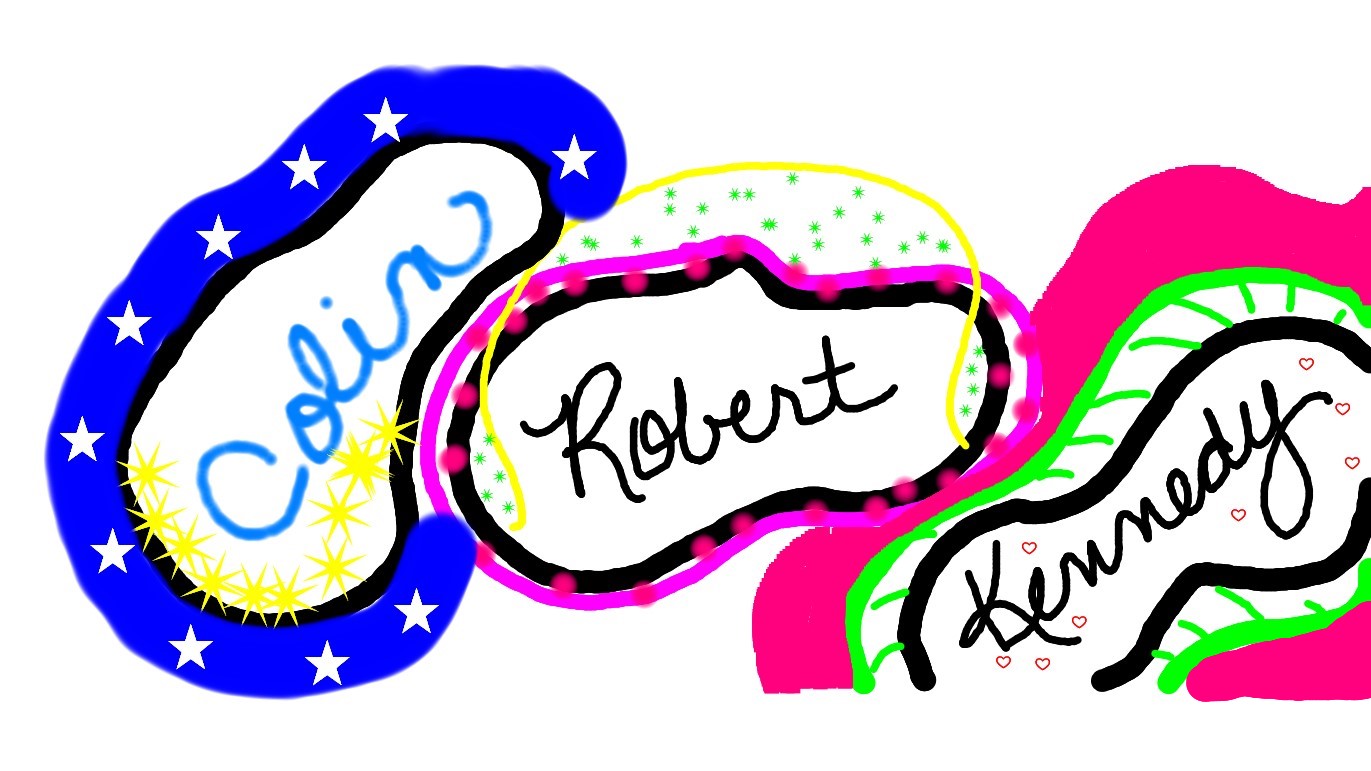
To begin, draw an imperfect shape and write the name of the person you wish to pray for:

1

Alternately, you could begin with your image of the divine, your own name, or even leaving the shape empty embracing the idea of the mystery in our midst.

Next, begin to add detail to the drawing…dots, lines, squiggles, wiggles, whatever you want! Don’t overthink, just go with the flow. This is not a place for your inner art critic to emerge. This is simple prayer. Continue to add detail to the drawing-each pen stroke an intentional prayer.

2

When you feel that this is complete, draw a new shape and add another person. But first, take a moment to close out the first person with some sort of closure to the prayer or meditation (amen, so be it, shalom, etc.). Also, you may want to take a cleansing pause before jumping onto the next person.  Or you may want to immediately move forward to the next person. Do what is right for you and the situation.

Repeat the process of drawing. Add doodads, color, and details.

4

Add another person to the prayer list. (And so on).

5

The most important thing to remember is that there is not any rules. You should follow the process where it leads you. And you will then create a personal prayer icon for you to carry with you throughout the day or days. You may even choose to post in someplace visible like your refrigerator! or you bathroom mirror. Or begin to enhance it further as days progress by adding words to focus your intentions.

6

If the words are distracting, put them away.

There you have it! Praying in Color – yet another way to access the deep love, mercy, and justice that resides within us all. You could easily do this and zip out names of people and zip in parts of the world worthy of deep concern … Syria, Kenya, Afghanistan…

Shalom and Amen!

~Terri


© 2013, post, Terri Stewart, All rights reserved

terriTERRI STEWART is Into the Bardo’s  Sunday chaplain, senior content editor, and site co-administrator. She comes from an eclectic background and considers herself to be grounded in contemplation and justice. She is the Director and Founder of the Youth Chaplaincy Coalition that serves youth affected by the justice system. As a graduate of Seattle University’s School of Theology and Ministry, she earned her Master’s of Divinity and a Post-Master’s Certificate in Spiritual Direction. She is a contributing author to the Abingdon Worship Annual. (The 2014 issue just released!)

Her online presence is “Cloaked Monk.” This speaks to her grounding in contemplative arts and the need to live it out in the world. The cloak is the disguise of normalcy as she advocates for justice and peace. You can find her at www.cloakedmonk.com, www.twitter.com/cloakedmonk, and www.facebook.com/cloakedmonk.  To reach her for conversation, send a note to cloakedmonk@outlook.com
Posted in General Interest, Meditation, Peace & Justice, Spiritual Practice

HEADS-UP: Tomorrow is U.N. International Peace Day … join the Global Synchronized Meditation

800px-Peace_Tattoo_San_Diego_County_Fair_2009September 21, 2013 is the United Nation’s International Peace Day. The theme this year is Education for Peace, including fostering respect, inclusiveness, and peaceful societies.

Many organizations across this beautiful blue orb of ours are marking the day with events of one sort or another. One of special interest is Unify’s Global Synchronized Meditation

BE THE PEACE

“The purpose of meditation is to awaken in us the skylight nature of mind, and to introduce us to that which we really are, our unchanging pure awareness that underlies the whole of life and death.

“In the stillness and silence of meditation, we glimpse and return to that deep inner nature that we so long ago lost sight of amid the busyness and distraction of our minds.”  Sogyal Rinpoche, Glimpse After Glimpse: Reflections of Living and Dying

Thanks to Mick B. for the Sogyal Rinpoche quote.
Photo credit ~ Patty Mooney via Wikipedia under Creative Commons Attribution-ShareAlike 3.0 unported license
Video uploaded to YouTube by UNIFYMEDIA2012

Posted in Essay, Spiritual Practice, Terri Stewart

The Story of Justice

womeninfield
cc licensed flickr photo by OSU Special Collections

In Christian tradition, there is a story of Jesus walking down the street in a foreign town, a mother seeking healing for her daughter, and a strange and unique interplay between Rabbouni and a woman stepping outside of her traditional roles, demanding healing for her very ill daughter (Christian scripture, Mark 7:24-30).

In extra-biblical literature, the girl who needs healing is named Justa. Justa means “fair” or “upright.” Yep. Justice.

A friend and I were speaking about this story recently and we were remarking on one noticing in particular – Justa’s immediate needs were met, but what about her deepest desires? There is much to ponder here. When we see someone hungry, do we give them food? Possibly-some of us do. But do we take the time to discover their deepest desires? When do we slow down enough to notice with wide open eyes the deepest desires of the other? And then, instead of fixing or fulfilling those deepest desires, can we just become a container? A facilitator? How do we let Justa and her mother tell the story, have their immediate needs met, and discover their deepest desires?

So many questions!! The truth is, we can be slow enough, mindful enough, noticing enough to discover the deepest desires of the other. The truth is, so often we don’t. The truth is, when we can become a container of compassion and love, we will discover our own deepest desires.

Below is a poem I wrote for Justa in September, 2011. About 10 days before 9/11.

Justice

the daughter of
the discarded
canaanite woman
was named justice.

when justice lay on her
bed half crazed from
demons or schizophrenia
or whatever unnamed
disorder that bedeviled
her she was all that was
wrong with the world.

a separation of the haves
and have-nots.  those who
have access to healthcare
healers and those who
must die alone and destitute.

justice reached
and crossed boundaries.

her spirit floated through
the wooded path alongside
her mother as they desperately
sought the one who could heal
and put her fractured
psyche back together.

justice became a jumble
of screams as
nails on a chalkboard
incessant bees buzzing
sulphur burning
and constant drip-drip-dripping
clamored intently intensely
inside her skull.

time was running out.

her mother ran
searching and seeking
tree limbs slapping her
in the face as she sprinted
through the wilderness
seeking out anyone who
would promise healing
encountering charlatans
and just the misunderstood
and even those that would
send her away.  calling her
a dog.

not worthy of healing.
she wasn’t one of them.

finally, she sees the one
some call love walking down
the street.

mother screams out as
pain is ripped from her
heart like a bandage from
a fresh wound seeking
hope once again for
justice and knowing that
the hopeless seems so
much stronger.

love keeps on walking.

once more
mother bares her
psyche screaming hope
with barely a glimmer
on the horizon like candle
snuffers putting out all
the stars that exist.

except this
last
one.

finally
mother is heard and justice
is walking with her heart
receiving confirmation
of the great hope mother
always knew was there.

somewhere.
deep within.

a great symphony sprouted
in the heart of justice
with melody sung by
a white-throated sparrow
and harmony enchanted
by love.

Shalom and Amen,

Terri

© 2013, post and photos, Terri Stewart, All rights reserved

terriREV. TERRI STEWART is Into the Bardo’s  Sunday chaplain, senior content editor, and site co-administrator. She comes from an eclectic background and considers herself to be grounded in contemplation and justice. She is the Director and Founder of the Youth Chaplaincy Coalition that serves youth affected by the justice system. As a graduate of Seattle University’s School of Theology and Ministry, she earned her Master’s of Divinity and a Post-Master’s Certificate in Spiritual Direction. She is a contributing author to the Abingdon Worship Annual. (The 2014 issue just released!)

Her online presence is “Cloaked Monk.” This speaks to her grounding in contemplative arts and the need to live it out in the world. The cloak is the disguise of normalcy as she advocates for justice and peace. You can find her at www.cloakedmonk.com, www.twitter.com/cloakedmonk, and www.facebook.com/cloakedmonk.  To reach her for conversation, send a note to cloakedmonk@outlook.com
Posted in Spiritual Practice, Victoria C Slotto

Kavannah–Intention

Although I am not Jewish, I have found much nourishment in studying spiritual aspects of Judaism, in particular the Hebrew Alphabet (Aleph Beit). Jewish mystics and scholars believe that God used the letters of the Aleph Beit to bring about creation. Consider the power of the Word.

Source: jewfaq.com
Source: jewfaq.com

This morning I spent time with the letter Kaph. It means “palm” as in the palm of the hand. There is power in the hand–we raise a hand in blessing, we use our hands in the act of creating, through the hand healers channel their healing energy–think of Jesus, or Reiki Masters. It is intention, kavannah, that enables this power. Kaph is the first letter of kavannah and, as such, invites us to bring intentionality to our daily actions.

Photo Credit: theseedof hope.com

A few hours ago I spent some time doing the domestic thing: folding laundry, doing the dishes, a quick “pick up/put away storm” around the house. The idea of kavannah came to mind and, as I was making the bed, I realized that I can do it grudgingly or with grace. Bringing the intention of love to simple chores transforms them–making our home a blessing. It’s true that this is something I learned at an early age, but it’s something I have to continue to strive to remember. It’s so easy to slip into unconsciousness and go through the actions of every day without awareness.

So, we write. How can kavannah/intention affect this part of our life? What happens when, before we put our palms on the keyboard, we remember that we are instruments of the divine creative Spirit?

The Letter Kaph
The Letter Kaph

This is a re-blog of a post I wrote in July of 2010. As I’ve become more involved in poetry communities, I’d like to add one more thought–the importance of bringing KAVANNAH/INTENTION to our comments. Are comments just to attract more hits, or are they truly there to encourage our fellow bloggers? 

Have a wonderful week.

Reference: If you have any interest in learning more about the Hebrew Alphabet, there are a number of books on the subject listed on Amazon.com.  The one by Richard Siedman is very accessible. A very erudite scholar, Michael Munk, wrote an in-depth, volume the include Gematria, the study of sacred numbers.

– Victoria C. Slotto

© 2013, essay, Victoria Slotto, All rights reserved

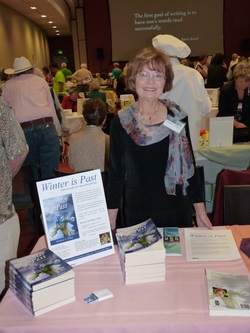
Victoria at the Palm Springs Writer's Expo March 2012
Victoria at the Palm Springs Writer’s Expo March 2012

jr-cover-2VICTORIA C. SLOTTO (Victoria C. Slotto, Author: Fiction, Poetry and Writing Prompts) ~  is an accomplished writer and poet. Winter is Past, published by Lucky Bat Books in 2012is Victoria’s first novel.  A second novel is in process.  Jacaranda Rain — Collected poems, 2012 is available on Amazon, as is the hot-off-the-press nonfiction, Beating the Odds: Support for Persons with Early Stage Dementia. Victoria’s poetry collection and non-fiction book are free to Amazon Prime Members.  Link HERE for Victoria’s Amazon page.

Posted in Art, Meditation, Paula Kuitenbrouwer, Spiritual Practice

Mindfulness in the 1600s

the work of Paula Kuitenbrouwer, a reblog of one of Paula’s Sonnetagsfreude – or Sunday Happiness – posts, which are an initiative of Maria at Kreativeberg.  …Enjoy!

61onuaotpol-_sl500_

brother-lawrence

A Kid’s Herb Book by Lesley Tierra for my daughter, and for me The Practice of The Presence of God by Brother Lawrence.

Sunday Happiness* is about finding time to read. Our society slows down; we all get some time for reflection.

My daughter explores the mysterious world of herbs with this magical, herbal workbook. It is about making your own healing potions, secret remedies, and magical salves.

My book is about mindful meditation.
Brother Lawrence, a monk in the 1600s, promised himself he would live day and night, in good and bad times, in God. He spent many years practising the presence of God in his life. His key to this practice was that he strove to be consciously aware of God’s presence at all times, which seems a perfect synonymy of (Christian) mindfulness.
.
To me it means that with everything I do, I ask myself if I’m acting in the best consciousness and ethical conscientiousness. With means, I need to be aware and practice self-discipline, carefulness, and thoroughness. It is very easy to wander away from awareness and thoroughness, like with any meditation. If this happens, I bring myself back into the presence of God. It is a wonderful meditation, but not an easy one. Having said that, the more you do this, the longer the stretches of time of being in God, or being mindful, do occur.
.
I started to read this tiny book months ago, and I do return to it often, because Brother Lawrence’s promise still inspires. To purposefully enjoy God’s presence, or mindfulness, in your life, is like opening up to small miracles. Pouring tea becomes a meditation and so does watering the flowers on the balcony. It is still a bit hard to feel the presence of God while paying bills (and all others worldly and bureaucratic chores ), but to stay mindful, to stay open for the presence of God non stop is what it is about. And when I succeed, I feel a happy appreciation for the smallest things in life.

masterpiecejunebig_1920259a

Rembrandt’s master work of his son, Titus van Rijn, in a monk’s habit

Is this book only for Christians? Not at all. I recommend it to all people who are interested in the spiritual life. It is about mindfulness in the 1600s.

Thich Nhat Hanh says, in one of his many books that I’ve read, that if you need the address of God, he will give it to you; it is Here and Now. Brother Lawrence would probably have said: God’s address is being in the presence of God.

Namaste,
Paula

© 2013, essay and photographs/artwork (below), Paula Kuitenbrouwer, All rights reserved

birdcardsPAULA KUITENBROUWER ~ is a regular contributor to Into the Bardo and a Dutch nature artist living in The Netherlands and sharing her work with us on her blog, Mindful Drawing and on her website.   In addition to art, Paula’s main interest is philosophy. She studied at the University of Utrecht and Amsterdam. She has lived in Eastern Europe and in Asia. Paula says that in Korea, “my family lived next to a Buddhist temple. In the early morning we would hear the monks chanting. During my hours of sauntering with my daughter through the beautiful temple gardens, I felt a blissful happiness that I try to capture in my drawings.” Paula sometimes teaches children’s art classes. She lives with her husband and daughter and close to her father. You can view her portfolio of mindful drawings HERE.

Posted in Essay, Photography/Photographer, Spiritual Practice, Terri Stewart

Prayer as Action for Peace

Saturday, September 7, 2013, was a call for worldwide prayer and fasting to focus on peace in Syria. I have seen many things happening–prayer vigils, personal meditation practices, marches, and communications with elected officials. We decided to offer a Labyrinth Walk for Peace at Bothell UMC in Bothell, WA in the morning. I gathered inter-faith prayers, we walked, prayed, and focused on bringing peace to the world. What follows is prayers and photos from that journey that became deeply personal for each attendant. There was a certain transition that occurred for me as I took in my surroundings and noticed Farmer Brown’s Garden. I began to see, literally, a connection between peacefulness and being fed. You will see.

Entering Sacred Space

prayers-for-peace-3

Sufi Prayer for Peace

Send Thy peace, O Lord, which is perfect and everlasting, that our souls may radiate peace.
Send Thy peace, O Lord, that we may think, act,
and speak harmoniously.
Send Thy peace, O Lord, that we may be contented
and thankful for Thy bountiful gifts.
Send Thy peace, O Lord, that amidst our worldly strife we may enjoy thy bliss.
Send Thy peace, O Lord, that we may endure all,
tolerate all in the thought of thy grace and mercy.
Send Thy peace, O Lord, that our lives may become a
divine vision, and in Thy light all darkness may vanish.
Send Thy peace, O Lord, our Father and Mother,
that we Thy children on earth may all unite in one family.
– Sufi Prayer

The Journey Begins

prayers-for-peace-6

An Islamic Prayer for Peace

In the Name of Allah, the beneficent, the merciful: Praise be to the Lord of the Universe
who has created us and made us into tribes and nations that we may know each other,
not that we may despise each other.

If the enemy incline towards peace, do thou also incline towards peace, and trust in God,
for the Lord is one that hears and knows all things.
And the servants of God Most Gracious are those who walk on the Earth in humility,
and when we address them, we say, “Peace.”
– U.N. Day of Prayer for World Peace 2

Walking Together in Ubuntu

prayers-for-peace-5

A Hindu Prayer for Peace

Supreme Lord, let there be peace in the sky and in the atmosphere.
Let there be peace in the plant world and in the forests.
Let the cosmic powers be peaceful.
Let the Brahman, the true essence and source of life, be peaceful.
Let there be undiluted and fulfilling peace everywhere.
– The Atharva Veda

All Are Invited to Be Fed

prayers-for-peace-1

Cheyenne Prayer for Peace

Let us know peace.
For as long as the moon shall rise,
For as long as the rivers shall flow,
For as long as the sun shall shine,
For as long as the grass shall grow,
Let us know peace.
– Cheyenne Prayer

Feeding the World in Spirit and Deed
Farmer Brown’s Garden at Bothell UMC

prayers-for-peace-7

A Jewish Prayer for Peace

Grant us peace. Your most precious gift,
O Eternal Source of Peace, and give us the will to proclaim its message to all the peoples of the earth.
Bless our country, that it may always be a stronghold of peace, and its advocate among the nations.
May contentment reign within its borders, health and happiness within its homes.
Strengthen the bonds of friendship among the inhabitants of all lands.
And may the love of Your name hallow every home and every heart.
Blessed is the Eternal God, the source of Peace.
– From The Gates of Prayer: The New Union Prayer Book, by the Central Conferences of American Rabbis

Growing Spiritually and Growing Food

prayers-for-peace-9

Buddhist Prayer for Loving Kindness

May all beings be peaceful.
May all beings be happy.
May all beings be safe.
May all beings awaken to
the light of their true nature.
May all beings be free.
– Metta Prayer

Loving Kindness through Loving Care

prayers-for-peace-8

A Christian Prayer for Peace

Blessed are the peacemakers, for they shall be called the children of God.
But I say to you that hear, love your enemies; do good to those who hate you;
bless those who curse you; pray for those who abuse you.
To those who strike you on the cheek, offer the other also;
and from those who take away your cloak, do not withhold your coat as well.
Give to everyone who begs from you, and of those who take away your goods,
do not ask them again. And as you wish that others would do to you, do so to them.
– U.N. Day of Prayer for World Peace 2

Becoming the Light Unto the World

prayers-for-peace-10

A Non Traditional Prayer for World Peace

Spirit of Life and Love, be present with all who are suffering terribly from violence.
Lift up the hearts of those who fear. And inspire courage among the peacemakers.
Be present with political leaders, ensuring a retreat from violence
and a procession towards the peace table.
Guide the hands of all those who are caring for the injured, the hungry and the grieving.
And, open our own hearts to compassion.
Remind us of our complicity and responsibility.
And lead us towards generous engagement—always towards a vision of peace.
–Adapted from the Unitarian Universalist Tradition

Shalom and Amen,

Terri

© 2013, post and photos, Terri Stewart, All rights reserved

terriREV. TERRI STEWART is Into the Bardo’s  Sunday chaplain, senior content editor, and site co-administrator. She comes from an eclectic background and considers herself to be grounded in contemplation and justice. She is the Director and Founder of the Youth Chaplaincy Coalition that serves youth affected by the justice system. As a graduate of Seattle University’s School of Theology and Ministry, she earned her Master’s of Divinity and a Post-Master’s Certificate in Spiritual Direction. She is a contributing author to the Abingdon Worship Annual. (The 2014 issue just released!)

Her online presence is “Cloaked Monk.” This speaks to her grounding in contemplative arts and the need to live it out in the world. The cloak is the disguise of normalcy as she advocates for justice and peace. You can find her at www.cloakedmonk.com, www.twitter.com/cloakedmonk, and www.facebook.com/cloakedmonk.  To reach her for conversation, send a note to cloakedmonk@outlook.com

Posted in Art, Photography/Photographer, Spiritual Practice

Wake up … and smile …

389780_465947996760474_1351227272_n
Our appreciation to Happy Smiles for this charming photo and inspirational thought.

Posted in Essay, Judaism, Michael Watson, Spiritual Practice

Lessons From The Seer of Lublin

Autumn Colors, Nova ScotiaLast night we went to the synagogue for a healing service and to recite selichot in preparation for Rosh Hashanah. During the service one of the Rabbis told a story about the Seer of Lublin, a Hasidic Master who lived from 1745 to 1815.
Briefly the tale is this. A Hasid travels some distance to see The Seer who looks at him and tells him that since he (the visitor) is to die that night, he should go to a hotel in a nearby village to do so. The Seer explains that as it is the Sabbath a dead body in his house would create enormous problems. The man dutifully sets off for the village, only to meet a cart filled with Hasidim on their way into Lublin to spend the Sabbath with The Seer. They ask him why he is going in the WRONG DIRECTION, and he explains that the Rabbi has sent him away to die. The Hasidim respond that if he is to die he should certainly come with them so as not to die alone. He climbs into the cart and they set off for the city. Soon the men ask our tired journeyer, seeing as he obviously has money, to buy spirits to keep them happy and warm on the trip. He complies and soon all are happily singing and swapping tales. As they travel towards the city our Hasid is heaped with praise, blessings, and hopes for a long a prosperous life. When finally the crew arrives back at the Rabbi’s house, the Rabbi looks at our traveler and says, “Oh, you are indeed lucky. The blessings of your fellows have warded off Death.” It is said the man lived well for several more years.

Having told the tale, the Rabbi spoke to the power of blessing. She assured us she was not convinced blessing another has power in itself, and express concern about magical thinking. She was more certain that gathering in community opens the door to healing. She also spoke about what she saw as shamanic elements in the story. I have long considered the best Hasidic Rebbes to be shamans. Indeed, in many texts The Seer is portrayed as a great shaman, as are many of the best Hasidic Rebbes. After all, he can see the future, determine whether something is fated, and utilize whatever wiggle room is available to aid the members of his extended community to a different fate.

Today I’ve been thinking about the story, as well as the service. It seems to me The Seer saw a way to awaken the Wise Healer within the traveler. Perhaps he knew the man would meet fellow Hasids on their way into town, as The Seer’s congregation was far-flung, yet united in the task of reaching the Rabbi’s home before darkness and the beginning of the Sabbath. Maybe he felt secure in the likelihood his congregants would never let a fellow Hasid die alone.  Maybe he, like the founder of Hasidism, The Baal Shen Tov, could, through the good graces of All That Is, intervene directly in the man’s fate. We do not know, and that, too, is part of the mystery and the story.

So this evening we begin the Jewish High Holy Days, the time of remembrance, atonement, and forgiveness, a time we are invited to thoughtfully consider our individual and communal lives. Although I am not Jewish, the rest of our household is, and over the years this time of year has become dear to me. Like the Rabbi I, too, have doubts about magical thinking. Yet, I also believe in the power of compassion, prayer, and joy to awaken the Healer Within persons and communities. Luckily, we have these stories, arising from many traditions, to remind us of our connection to the Creator, one another, and the larger world.

Michael Watson, Ph.D.

© 2013, essay and photographs (includes the one below), Michael Watson, All rights reserved

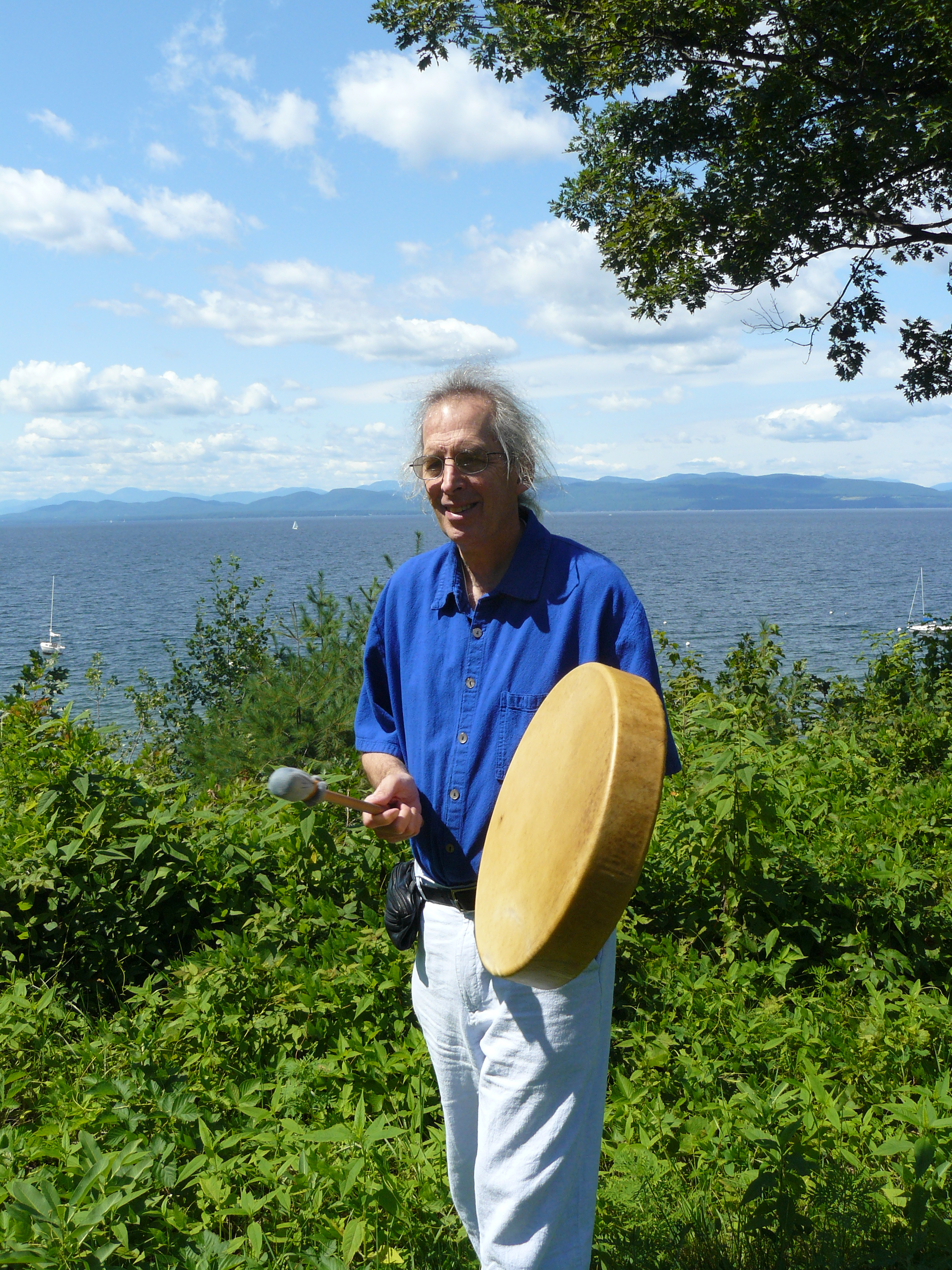
michael drumMICHAEL WATSON, M.A., Ph.D., LCMHC (Dreaming the World) ~ is a contributing editor to Into the Bardo, an essayist and a practitioner of the Shamanic arts, psychotherapist, educator and artist of Native American and European descent. He lives and works in Burlington, Vermont, where he teaches in undergraduate and graduate programs at Burlington College,. He was once Dean of Students there. Recently Michael has been teaching in India and Hong Kong. His experiences are documented on his blog. In childhood he had polio, an event that taught him much about challenge, struggle, isolation, and healing.

Posted in Essay, Photography/Photographer, Spiritual Practice, Terri Stewart

A Prayer to Consider


I originally published this on my blog at cloakedmonk.com. I am reposting it here for a couple reasons – prayer is a great spiritual practice, whatever your understanding of prayer is. And I am at a conference called “Church Quake” in the DC area. It is a conference to aid United Methodist folks in helping to bring full inclusion to the church. Our theme has been “intersectionality.” What intersection of our understanding can come to the aid of an oppressed groups? We are related and interdependent as the prayer below says-we can see that when we consider our own woundedness and how we bring it to the altar of healing. Then what do we do? Consider the woundedness of others and help them find their way to healing. And so the pattern continues. Wounded becoming healing.

Henry Nouwen articulated the concept of the wounded healer quite well. Let me just share a quote from this Roman Catholic, PhD Psychologist, Theology teaching at Yale Divinity, depression suffering, book-writing, L’arche community loving, priest.

“When we honestly ask ourselves which person in our lives mean the most to us, we often find that it is those who, instead of giving advice, solutions, or cures, have chosen rather to share our pain and touch our wounds with a warm and tender hand. The friend who can be silent with us in a moment of despair or confusion, who can stay with us in an hour of grief and bereavement, who can tolerate not knowing, not curing, not healing and face with us the reality of our powerlessness, that is a friend who cares.”
― Henri J.M. Nouwen, The Road to Daybreak: A Spiritual Journey

Here, in this prayer, I find the intersectionality of flowers, interdependence, loving one another, an altar for all, and the healing of woundedness for the inclusion of all who are diverse and unique – precious and beautiful flowers.

A prayer in the Unitarian Universalist tradition by William G. Sinkford

In the presence of these flowers,
These representatives of Creation’s profound beauty:
Diverse and Unique, but Related and Interdependent,
These flowers which come to us as gifts from we know not where
And which we, in turn, choose to bring to our shared and common altar
As gifts to one another

In their presence we turn our thoughts to the mystery beyond mysteries
to the most sacred—which we never understand fully
but which we are granted revelatory glimpses of
in each of these flowers,
in each of your faces,
and through relationships with neighbors near and far

May they remind us of grace we have known in days past:
Forgiveness we have been granted, and provided.
Love, unearned and shared.
Recovery, begun and established.
Generosity, unforeseen and most sacred.

And may they inspire us now, and in days to come:
To seek,
To notice,
To embrace and,
To re-create beauty.
To give unto the world as exuberantly as these flowers.

yellow.center.flower

Go, be exuberant.

Shalom & Amen,

Terri

© 2013, post and photos, Terri Stewart, All rights reserved

© 2013, prayer, William Sinkford

terriREV. TERRI STEWART is Into the Bardo’s  Sunday chaplain, senior content editor, and site co-administrator. She comes from an eclectic background and considers herself to be grounded in contemplation and justice. She is the Director and Founder of the Youth Chaplaincy Coalition that serves youth affected by the justice system. As a graduate of Seattle University’s School of Theology and Ministry, she earned her Master’s of Divinity and a Post-Master’s Certificate in Spiritual Direction. She is a contributing author to the Abingdon Worship Annual. (The 2014 issue just released!)

Her online presence is “Cloaked Monk.” This speaks to her grounding in contemplative arts and the need to live it out in the world. The cloak is the disguise of normalcy as she advocates for justice and peace. You can find her at www.cloakedmonk.com, www.twitter.com/cloakedmonk, and www.facebook.com/cloakedmonk.  To reach her for conversation, send a note to cloakedmonk@outlook.com