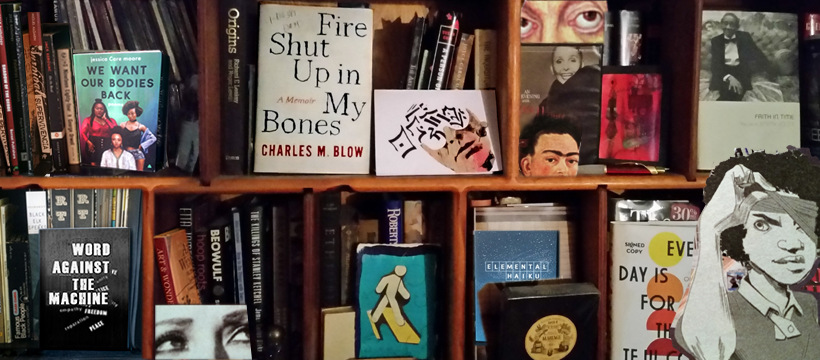
Chosen by Corina Ravenscraft
©2021 EALLIN (http://www.Eallin.com) for Caritas Internationalis
All rights reserved
Chosen by Corina Ravenscraft
©2021 EALLIN (http://www.Eallin.com) for Caritas Internationalis
All rights reserved
Grace Petrie from her album ‘There’s No Such Thing as a Protest Singer’, expressing a youthful and ever valid point of view. —John Anstie
©2016 Grace Petrie
All rights reserved

Art: Winona Railroad Siding, Michael Dickel ©2021
The end of last year, 2020, amongst so many momentous events of the last decade, in my little part of the world, marked the tenth anniversary of the start of my blogging experience along with some serious social media activity! That’s a long time in some lives, but it seems like a very short time for me. It has nonetheless been a huge journey, not only on a creative level, but also in terms of our history. Much writing, editing, publishing and the production of a poetry anthology, becoming a core member of a quarterly blog (The BeZine), becoming a founding member of a new, but small chamber choir and an invitation to join one of the UK’s top barbershop choruses, with whom I won a gold medal in 2019. Much change politically, socially and economically.
In this same decade, seven precious new lives were added to my family, one of whom was tragically lost. In the past year or so, we have lost some good friends to a serious virus.
The events of the past year and a half – not forgetting one or two other (some would argue astonishing) historical political changes in the decade – would have sounded like a science-fiction future; perhaps even armageddon. Our non-fiction past tells us that, over the most recent century or two, only during armed conflicts have we witnessed heavier losses in such a short time all over the World. But something marks out this period as different. In some ways it has many parallels in history, but in others, it does not. Yes, there have been plagues before, but not the level of advances in medical science that have never been more evident than now. Throughout the administration and management of the pandemic, somehow, perhaps a little unexpectedly, it also seems to have had the effect of widening inequity between the ’haves’ and the ’have nots’. For most of the latter it has been traumatic; for a some of the former, they seem to have thrived during a period of social stress. Rather like in times of war, there are always those who do more than contribute, they profit handsomely from it. And we shouldn’t forget those in political power, who can’t resist basking in the glory of the battle against the virus, rather than giving all the credit to the medical professionals and scientists, who are the heroes.
We have better medical science, better communication and thereby a greater ability to cooperate and collaborate to solve the challenges we face. But then, what marks out this year as different. It is the politics of division, and jumped up political partisans headed by egocentric soldiers of fortune, whose sole purpose seems to have been to stir trouble, divide and conquer. On top of this, economic policies and our obsession with consumption, growth and of servicing debt has had a massive toll on our security. This starts with personal debt that enabled us to spend, spend, spend until some of us have accrued more debt than we can sustain and have become controlled by those whose money we borrow, and who thereby become the richer for it. So now we know why we have been encouraged to consume; lured into incessant materialism. The major banks have benefitted massively throughout the Covid-19 pandemic by the process of large companies having to shore up their balance sheets. In turn, the national debt of the country has burgeoned and will eventually be shouldered, as ever, by the ‘little people’, that is us, the individuals, who cannot avoid paying their taxes. It will take many years to bring this debt, which was already burgeoning prior to the lockdown, back to a manageable level. In the mean time, during which millions have suffered privation, a few enterprising, greedy, exploitative, gold digging (circle those that apply in your own world) trans-national companies and a few well placed individuals have become significantly better off, it could be argued by a process of morally ‘unjust enrichment’.
Our health service, the treasured NHS, the UK’s largest remaining, but decreasingly publicly owned service, highly valued by us, the people, but, worryingly, also highly valued by the aforesaid international corporate community, particularly those healthcare companies and corporations, who have been lusting over getting their hands on its assets for decades – has been and, as I write, still is being overwhelmed by the demands of the number of cases of Covid-19 on top of all the usual seasonal afflictions that need to be treated in hospitals.
I have it first hand from a friend, a consultant in respiratory medicine, who has been at the front line of the fight against Covid-19 since it started, and who found herself becoming a counselling shoulder for junior doctors and colleagues from other disciplines, who themselves were traumatised by the unfolding crisis. She is now faced with the moral, ethical and psychologically challenging task of treating patients suffering from the serious effects of Covid-19, a majority of whom are self declared ’anti-vaxxers’. I wonder if they realise how lucky they are and how much they owe to these remarkable, caring professionals.
In the past year, we have witnessed significant loss of life, of living and livelihood, of community, togetherness and society. Furlough and business support packages have been kind to some but not to others. Added to all this, divisive politics has had a toxic effect on our sense of common purpose and our faith in the systems of governance and democracy itself. It could be argued that this has been engineered and sponsored by those, who fear a loss of control, a loss of income on many different levels, but there are those currently in power, who have begun to demonstrate not only a greater degree of blatant corruption but also such an arrogant sense of entitlement that they feel they can get away with it. Our economy, our mental and physical health, our morale have been beggared, not only by natural forces, but also, under the smokescreen of viral pandemic, by mismanagement and by opportunist manipulation of circumstances to the benefit of the few and at the cost of the many. Can this, can it ever, by any stretch of the imagination, be called fair? Could it be called social justice? Speaking at least for myself, I feel an insatiable, deep hunger for some humanity, some corrective social justice.
We should, I confess, nonetheless afford some concession and equity to the ‘haves’ as well as the ‘have nots’. There are those of us ‘little people’, who have undeniably benefitted from this ‘age of plenty’ and virtually uninterrupted economic growth over the past several decades, probably since World War Two. However, had we collectively foreseen the effect that our hunger for material things, admittedly driven by our gullibility for the ubiquitous marketing and advertising slogans that have etched their deceptions into our consciousness, then we might have avoided this parlous political and economic situation, if not the pandemic … but then that would be the subject of another essay.
But most of us mere mortals didn’t foresee this coming. We enjoyed it whilst we had it and now we are in danger of losing it, but for one thing.
We do seem to have lost so much in the past decade, but I feel the spirit of Peace, Sustainability and Social Justice still persists not only amongst a sizeable, silent majority but also amongst a precious few outspoken individuals in the world. It remains as our guiding light at The BeZine and, let’s hope, with many of those who regularly read these pages. We soldier on. We still retain hope that common sense, a common purpose, the common conscience will prevail. Here at the BeZine, this may be thanks to the life and spirit of one of those tireless and outspoken campaigners, the BeZine’s creator and co-founder, Jamie Dedes.
©2021 John Ansties
All rights reserved

“The more you can escape from how horrible things really are, the less it’s going to bother you…and then, the worse things get.”
― Frank Zappa
I admit it. Life is a lot easier when I choose to ignore the things which make me unhappy or uncomfortable. I’m not particularly proud of it, but I admit that I do it. I think we all tend to do this to some extent. It’s a self defense mechanism which allows us to feel better about ourselves, our behavior, our actions (or in-actions). The problem is when we spend so much time in willful ignorance that others suffer, whether they’re other people, animals or plants.

Reality can be a cold bitch. Humans can be unimaginably cruel and so many times, we’re willing to look the other way. Why? Perhaps we feel helpless to do anything about the situation. Maybe we’re afraid of being ridiculed, ostracized for doing something differently. It takes tremendous courage to be the only one to stand up and say, “No. I will not do this because it is wrong.” It takes conviction and strength of heart. And sometimes, it takes a willingness to suffer, yourself, in order to make a point.

The compassionate soul cannot abide injustice and suffering in the world – it wants to help – in any way it can. As a compassionate soul, I have to consider certain things about my lifestyle and how they affects others. In recent years, my diet has come under my personal scrutiny because of revelations about where some of my food comes from; specifically, factory farming. It finally penetrated the veil of willful ignorance I had built so that I could continue to eat what I wanted when I wanted and not have to feel bad about it.
Am I a Vegan? No, but I’m trying to be a more compassionate consumer. I used to have bacon every week. Now it’s once a month or less. I used to eat eggs and chicken several times a week. Now I eat eggs maybe once a month and chicken once a week. I’ve almost completely stopped eating red meat. I’m also in the process of working on dairy. The thing is, you have to be able to live with your conscience and find what works for you. At the same time, I understand that not everyone shares my view. I’m not out to convert or guilt trip anyone. But I do wish that more people would take a long, hard look at how their actions possibly contribute to unnecessary suffering.

The video below IS safe for work. It doesn’t show the blood, or violence, in factory farming, but it does show us how we, as consumers, are manipulated into embracing willful ignorance. It’s a very thought-provoking 7 minutes. I hope you’ll watch it and let me know what you think. It’s okay to be upset or disturbed by what the presenter says. Believe me when I tell you that there are many, many other videos with far more upsetting and disturbing visuals/themes regarding factory farming. You can Google the phrase and see for yourself. Or not. Be warned: once you see it, you can’t “un-see” it. That’s how it works. It’s definitely “Food for thought”.

Volume 8 Waging Peace Issue 2
Volume 8 June 15, 2021 Issue 2

Waging Peace
through finding common ground
Cover art: Still Life with Goldfish and Lotus
Kat Patton
Digital Image
The theme for the summer issue of 2021 is Waging Peace through Common Ground. To wage peace by common ground, we must develop empathy. We must learn to see each other, hear our words, and feel our emotions. This is the work of us as individuals. And we have to then find the links that would allow us to work together on common ground for the common good. And among the pressing common goods that need working, next to and intertwined with social justice and climate change, is peace.
In the past weeks war broke out again here in Israel. While the leaders of Israel and Hammas may demonstrate little empathy for the other side, the people do feel empathy—especially for the children killed, for the children hiding in shelters in fear on both sides. For children missing childhood. Ameen al-Bayed, a Palestinian, and Ester Karen Aida, an Israeli Jew, contribute essays that demonstrate and call for empathy. Both do work in Non-Violent Communication. Other contributors address the Palestinian-Israeli conflict, as well. And still other contributors address a range of topics related to waging peace—from mental well-being to social justice to the environment and more—and the need for common ground.
Finding common ground does not mean agreeing with objectionable, unethical, or criminal ideas and behavior. For me, it means using empathy to understand another person or group of people where possible, and recognizing what beliefs, experiences, and goals we have in common (among other possible commonalities). Before the the war here in Israel a group of political party leaders with seemingly little common ground began forming a coalition, which they completed after the ceasefire. This week a new government was sworn in to replace Benjamin Netanyahu, after 12 years.
For the first time an Israeli-Arab party has joined an Israel government, with a cabinet ministerial post as part of the deal. A far-right religious party leader will have the first term as prime minister in a power-sharing agreement and a centrist party leader the second. The party has left-wing Meretz and centrist-left Labor parties, a strong secularist party and the far-right religious party. This is also the most diverse cabinet in history. Besides unseating Netanyahu, which they succeeded in doing, what could they have in common?
Bret Stephens, a former editor-in-chief of The Jerusalem Post and now a columnist for The New York Times, suggests today (15 June) that they have formed a truly democratic coalition built on creating a functioning government that will work together to run the state. They have chosen a pragmatic solution to assure that the government of Israel can move on from a divisive politics headed by Netanyahu to a pragmatic politics. Each party had to let go of platform planks and ideological values while negotiating core issues of the most immediate concern. This is finding common ground.
The government hasn’t been sworn in for even 48 hours as I write this. Its experiment may not work. Possibly, though, this historic government will help a divisive, “blood sport,” politics move into a more inclusive and practical politics that can compromise in the areas we don’t have in common while focusing on moving forward on those areas in most need—our urgent common ground:
May peace prevail on earth.
—Michael Dickel, Editor
With the first issue of our eighth volume (year), you may have noticed some changes. Most of the changes are tweaks here and there to the visible look of the pages. One very visible change is the Table of Contents below. Using a technical, behind-the-scenes tool of WordPress, the entries in our ToC are now automatically generated. As we learn to use the tool better, we will refine the formatting.
Also new since last issue, there is a button at the top of the ToC for browsing the whole issue. If you click on that, you will arrive at the “Cover.” As you scroll down, you will see this Intro and ToC again. However, keep on scrolling and you will be able to see all of the pages of the journal. Just keep scrolling to keep reading.
And, in case you want to come back to the ToC, you will find a button to do just that at the bottom of each content page—it is a small version of Kat Patton’s wonderful cover art.
During this year we will continue to work on the look, feel, and design of The BeZine. This is how we are working to sustain the Zine, in hopes that this will make a better experience for you, our readers.
Spiritual Practice


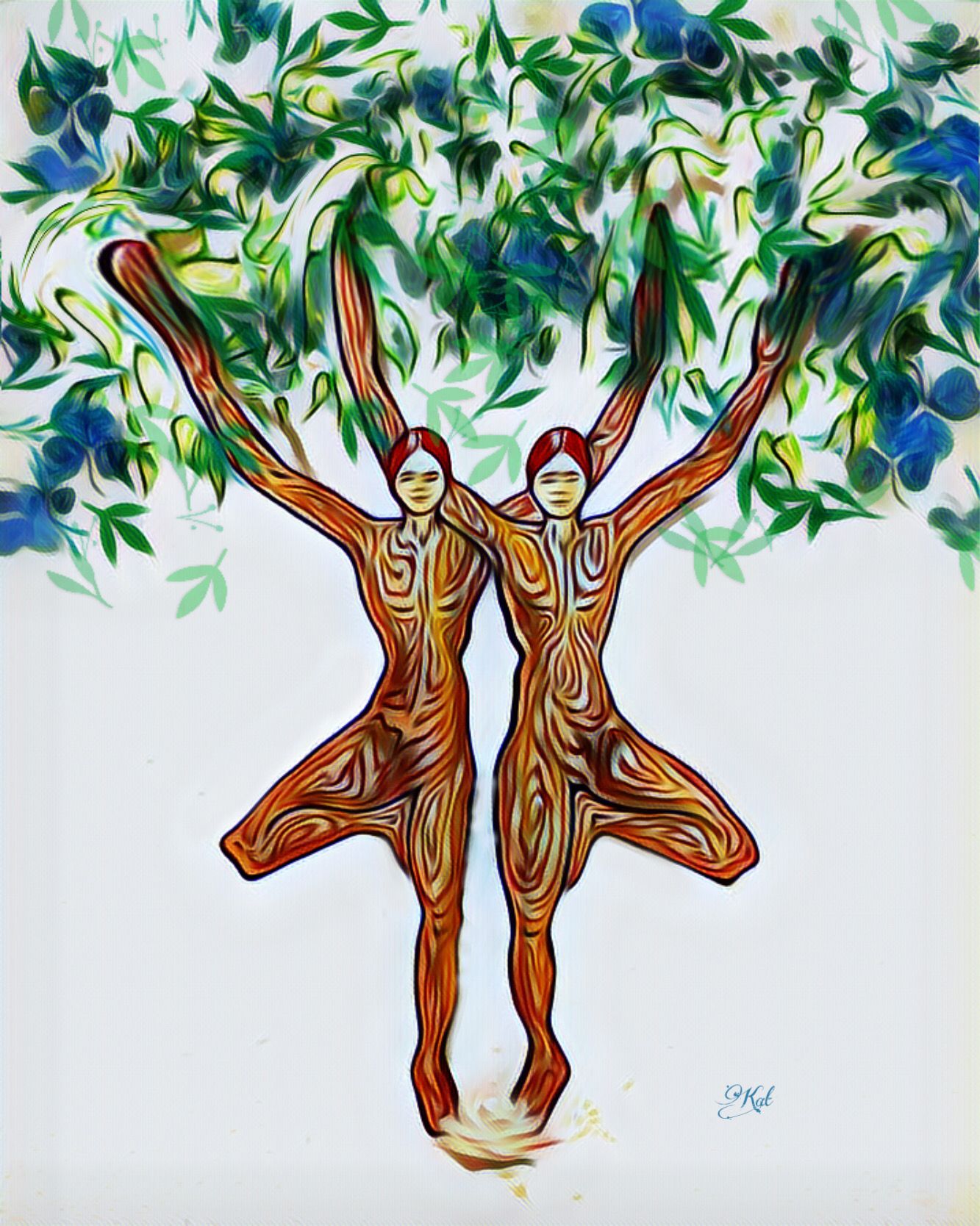
Art: The Duality of Zen, Kat Patton ©2020
Since this iconic song was written and introduced to the world by Paul Simon and Art Garfunkel on their album of the same name, which received the award of Album of the Year in 1971, I cannot think of any point during the fifty years that followed, when it wasn’t making an important contribution to our feelings of wellbeing and solace. Goodness me, what a life this song has had and what service it has done!
My own chorus, the Sheffield based Hallmark of Harmony have, like many musical ensembles, endured this last year of lockdown doing ‘virtual’ rehearsals and occasional recorded performances. Last month, as if tentatively to begin celebrating the gradual lifting of our confinement, we produced our fourth on line project and there was no other song we could choose to represent what we all need in these times than this one. Something that we all need sometimes to get us across troubled waters. We first performed this song nearly three years ago at our 40th anniversary concert at the Sheffield Octagon Theatre with guest quartet, international champions, Instant Classic, who flew across the Atlantic for the weekend of the show to perform it with us. They generously reprised their part for this our, hopefully final virtual offering to the World and of course our very own Tim Briggs consummately provides the solo …
For the sake of humanity, may there always be a bridge for us to cross over and, for goodness sake, let there be peace in this troubled world of ours.
Text ©2021 John Anstie
Performance ©2021 Hallmark of Harmony
All rights reserved
John Anstie
June 2021
Favorite fish market is again closed.
I can exercise alone in the courtyard.
最喜欢的鱼市场再次关闭。
我可以在院子里一个人运动。
.שוק הדגים האהוב שוב נסגר
.אני יכולה להתאמן לבד בחצר
©2021 Bob Aron
All rights reserved

Life with hands in pockets,
half a pack of cigarettes in them!
And with thought in chaos
invented by my mind.

Walked the road  like a body
abandoned by itself!
Rising earlier than usual
Roosters peck the sunlight
Dogs howl like the wolves
Crows unsettle the sky.

What kind of day is this
The one I have to live in?!
My promises
All are gone, gone.
The memories stay
In an empty chair
On the terrace of the old house!
©2021 Faruk Buzhala
All rights reserved
If you know who first defined beauty
then place it in a poem—plainspeak
is too full of fear
to be clearly heard.
Tiamat is a figure symbolic of the chaos of primordial creation in the Babylonian creation story.
forgive us for the vowels
and consonants we drop
in search of shorter words
to not trouble us too much,

for the daily bread we scatter
and our love of sundry illusions
that only (and inevitably) shatter
the fragile peace between us.

Your stones have gathered a reputation
for rolling of their own accord—the
sand and grit and lime and slate and
mud, the crystalline and pressed and

baked and cooled are moved
by their memories of when
you roamed the Earth.
Would you sediment in our oceans,

accrue beneath our seas,
harden as our bedrock
so that we may
have a better future?
©2021 Roger Hare
All rights reserved
a pulchritudinous sonnet
I am through a superb window—looking.
An angel of feeling awakes in me.
The dreamy oak-trees stand alway leafless.
The native auspicious cue is just large.

My scenery—the enchanted verdure.
The moony old barn of Ted my dear nuncle.
I am looking at a proud throng of crows.
They belong to the whiff of every times.

The springtide looks so meek-beauteous-fair,
first and foremost the Morningstar—at night.
I daydream springwards window-view withal
of a dreamy Ovidian summer gale.


Homelike herbage that seems to bewitch all.
My cats want to enchant the fantasy.
The dreamed subtle morn withal notably.
The springtide wakes up not only in dreams.
The snowdrops blooming in the moony garths.
One listens to propitious paradise.
The dearest graylag geese coming in flocks.

I think of Primula from afar.
The wild boar piglets were born in a grove.
I feel springwards the warmness of a soul.
Native dreameries are fulfilled galore.

Springtide be primeval home of Naiads!
I taste the verdure of some dreamed climes.
You are dreamy like fairylike bouts.
The friends of springy morn—are tender owls.

I can praise and bewitch Ovidianly.
Thus, I am able to enchant peaceably.
You hound are a starry night over fog,
fallen in love with the Epiphany.
The moon may be mine! Told the moony dog.
With you tender garden—is so dreamy.

Bewitchment of stars, your ability.
Your hunting is dearer observation.
A moonlit night is your eternity.
May the soft ghost be in adoration!

Roses awoken in glory—starlet.
You can taste, listen and feel them galore.
Enchant the nectar like druidic glade!
It was drunk from Ovidian amphorae.

Be, you dog, a heart-shaped meek poet!
Broken wings of loneliness are dead.
Lunar time feeling—coll, blackish dreams stealing—light of the moonlets.
Caressing dreamery—lies even, blink-sea, weird fell down.

The poignant dire deceased became drab comet—sphere have picked warmness.
Several she-wolves made terrestrial grave-stones killed the fay?

Endlessly nostalgic being—the grief-pang. Hades was followed.
Heavenly moony lure become noir. Dream-ethics flies off!

However your worm bawls after all. Death-men blubbing so withal.
Just the grim Reapers, cold-blooded praise wind-breeze of gone time.

The tearful- invincible  Goblinlets  stars-thieves coming right galore.
Sensing the moonylike demise cool-blue song will be free.
Heavenly sailorling spy out the wan light-sheen of star.
Baffling unearthly time: weird having just thieved by elves.
One of pale mornings longs for some meek fulfillment of night.
Moony and nostalgic chums – comets are upon the skies.

Lonely dreamery—lying just blink-sea, weird above.
Endless nostalgia is being of pang. Hades is fay.
Heavenly moony lure, beings seem dark, Ethics fly off!
Poignant decease has become drab black, comet has picked rain.

The glow, which is deathless, at length in the sadness full bane.
Grim Reaper loves more than You dream—a bit lights of the worms.
Marvel of starlit night: I have found a little of my name.
Starry night—dreamy glow are only in the tender souls.

Sensing the moonlet, demise of cool-blue song will be free.
Your worm bawls after all certainly. Death blubbing like me.
alway – archaic: always
bout – dance
cue – archaic: mood
garth – archaic: garden
nuncle – archaic: uncle
pulchritudinous – beautiful
©2021 Paweł Markiewicz
All rights reserved

Art: Peace, Kat Patton ©2021

I stand tall but not proud
Since people look at me with awe
Those who cross my gates
Considered insane

Silence has no say here
Only the dead can stay
Long in silence
But tell me
Who might need the dead more
Than the newly built coffins?

I am not a coffin, but a cocoon
from which new butterflies
Find strength to fly out.
I long for their groans, growls
Cries and talks
Full of life and thoughts

Many here live, but considered dead
Even by their kith and kin
I never care for they are mine
My walls ever longing for their voices
Even the soft creepy whispers
Can bounce on my walls
To ease their solitary fears

A heartbroken teenager
with love more
Precious than life
Whose act of bravery
Brought him to me
Romeo can give up
His life to applause
Only on a man-built stage
Not the ones set by God

An employee who finds it
Monotonous to follow Routine
Who despised patterns
Of no meaning
Perhaps it might have been better
Had the sane men
Stayed the same in life
Without changes
Just like those patterns.

An old man in grey hairs
Just gave up on by his heirs
With shattered memories
Try to build the jigsaw of the past
Beautiful moments when
His heirs were young
Only to pain him again
That they were his kids once.

Even little cute kids
Come nowadays
Who refused to wear glasses
And constantly stare at
iPad lessons
They asked what, why, when
And paused for an answer
While in a rat race
Curiosity never took them to Mars
But for an occasional visit to me

There once was a man
Who liked to see and talk to men
But none had time nor ears
He claimed he saw God
And heard Him talk
Once within my comfort zone
He could talk to real men
And slowly God left him

Tell me one moment
Of civil war that broke out
From an asylum ever.
Real wars start
(In)sane world out my walls

Empathy, sympathy, compassion and care
Takes humanity out on a tour
Men who progressed
Owned them in the past
Now
Reduced to caretakers alone
It is still better for me to be an asylum
For
Far more insane are those who stay out
Thoughts like soldiers marching
Over my neurons
Thoughts of fear, worry and what not else
Dancing inside my head
Telling me to die off
I try to laugh away and smile on
To live, if not for me
For those bugging thoughts
Need a head to be alive
If I just give up,
They'd be wandering
Down the streets
To find a new abode, like soldiers marching
Over my neurons
Thoughts of fear, worry and what not else
Dancing inside my head
Telling me to die off
I try to laugh away and smile on
To live, if not for me
For those bugging thoughts
Need a head to be alive
If I just give up,
They'd be wandering
Down the streets
To find a new abode.
©2021 Sandhya
All rights reserved
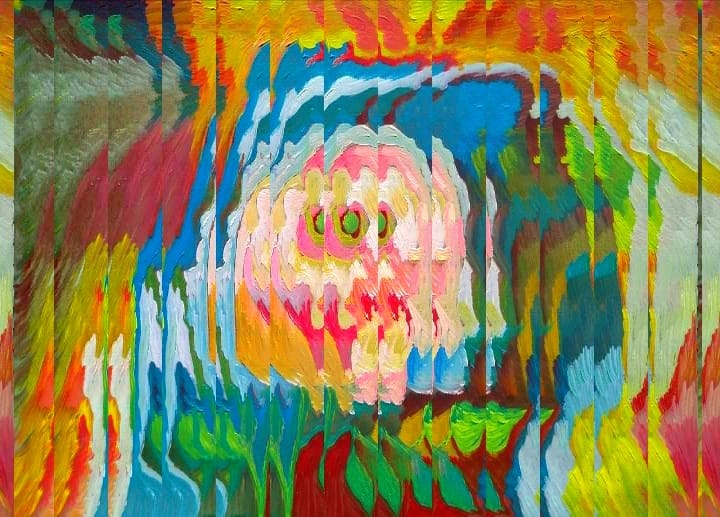
What do you do when a hopeful dream begins to fray
and leaves you wanting more than all the things that thrill
heart-warming, precious moments that may not overspill
beyond the passing of another, special day.

So drink to life as if it has a happy end
share it even if it were not yours to share
and then, if you don’t have enough of it to spare
of fortune’s favours to reach out to a special friend ...

Sing riffle, ruffle, shuffle, muffle and divide
bobble, bubble, babble, rabble, don’t be terse
ripple, topple, tipple and tumble into verse ...
a place where harmony and dissonance collide.

The air now full of music, of tales that soon unfold
the gasping tortured spirits, grasping at their last
soul raking and heart breaking tales of one life past
and stories that would otherwise ... remain untold.

Then how do we narrate the things that burst the soul
these uncontainable urges, are they all for you
or are they all for me, or both? So what’s to do ...
let’s dance together, do all the things that make us whole.
©2021 John Anstie
All rights reserved

Who prefers the spring
likens winter to the dark
autumn to passing
Kicking leaves and brash
a winter walk in the woods
cleansing the spirit
Listening to birds
heralds of summer spawning
life’s diversity
©2021 John Anstie
All rights reserved
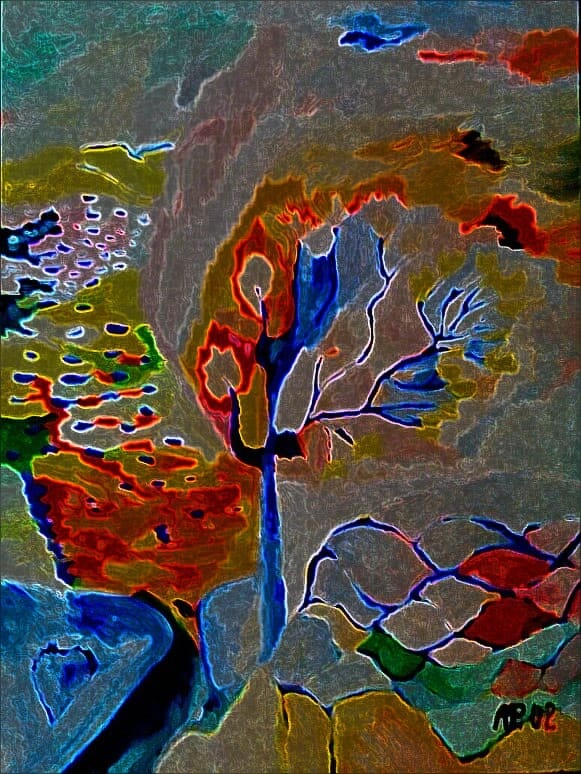
How to make sense of it?
I will try. But this we know
at least 45 dead, children too
all trampled, crushed
suffocated in a stampede
in a narrow corridor
on Mount Meron where
100,000 Haredi Jews,
those who tremble
at the word of God,
came to commemorate
at his supposed tomb
the assumed anniversary
of the death of Rabbi
Shimon bar Yochai
mystic of the 2nd century
of whom it is told that
his criticism of Roman
rule marked him for
execution, and forced
him to hide in a cavern
for thirteen years surviving
on only dates and carob fruit
and that finally one day
seeing a bird flying free
from a net set by a hunter
Shimon took the bird’s
escape as an omen that
God would not forsake him
and he too made his escape.
The great sage died it is said
On the 33rd day of the counting
Of the Omer, that time between
The holiday of Passover and
The Feast of Weeks, a harvest
festival, when according to tradition
Moses brought down from Mount
Sinai the Word of God to
The Children of Israel, and
this 33rd day is called
Lag B’Omer a day to rejoice,
as all petitions shall be answered
as it is believed on that very
day of his death bar Yochai
revealed the secrets of
the mystical Kabbalah,
bringing light into the world
for which the fervent set
bonfires, dancing, singing
chanting ecstatically
through the night
remembering the words
he uttered that anyone who
sees Rabbi Shimon bar Yochai
is certain that he will be
in the World to Come.
Afterword
It is difficult to understand another’s passion for their beliefs which leads them to do that which appears so foreign to so many. We need to focus on that which binds us as humans. We need to reconsider viewing others solely as to their difference. This poem attempts to view the matter with an appreciation for the depth of belief which leads to such a strong commitment to act in a certain way, even to the point of discounting potential untoward consequences.
News source.
©2021 Howard Richard Debs
All rights reserved


 The BeZine