If Steve McCurry’s name doesn’t ring a bell, think of the iconic photograph “Afghan Girl” that appeared in National Geographic. He is a world-renowned photographer with a compassionate lense. In this series from his blog (be sure to link through to see it all and to follow him, worthwhile), he shares photographs of working children from around the world. Perhaps when we are tempted to complain about our lives and our fate, we just shouldn’t. This will move all of us. The question is, what will it move us to do? What are prayers and metta practice if they don’t have feet? Jamie
Tag: Compassion
What are you witness to?

What are you witness to? What story have you seen? Where has grace moved in your life?
I’ve just returned from vacation. There were so many stories told if I just slowed down and listened or watched. There was the mother holding a young child’s hands as he ran along the pool’s edge; the young man from Indonesia who works day after day with no days off; the staff who rush to the port side of the boat so they can see where we are going or have been, their only contact with a new world from a distance or from behind a camera.
Grace moved in my heart at every encounter with the people and with the striking depth of beauty that we encountered in the natural beauty of Alaska and the surrounding area. Grace moved in my heart when I was able to experience living through the eyes of compassion in this rarefied environment. Love, beauty, and grace coalescing in my rib cage.
I wrote a series of haiku witnessing to the stark beauty in the Tracy Arm Fjord that I offer here along with a photo from that day. These haiku were primarily inspired by the waters while we were entering into the Tracy Arm Fjord, which were quite different from the waters once we were sitting still. The arrival waters were deeper, grayer, more choppy and more mysterious.
The photo is from a moment of stillness in waters littered with small icebergs. Click on the photo to see an expanded view. To browse through the unedited photos, you can go to my flickr site.
…
glacier fed wind
whips across cresting waters
reflecting sun’s glory
frenzied wind
stirring waters to white peaks
be still my soul
shrouded grey waters
revealing iceberg tips
depths hidden
– Terri Stewart
© 2013, essay, haiku, and photograph, Terri Stewart, all rights reserved
 TERRI STEWART is Into the Bardo’s Sunday Chaplain, Senior Content Editor, and Site Co-administrator. She comes from an eclectic background and considers herself to be grounded in contemplation and justice. She is the Director and Founder of the Youth Chaplaincy Coalition that serves youth affected by the justice system. As a recent graduate of Seattle University’s School of Theology and Ministry, she earned her Master’s of Divinity and a Post-Master’s Certificate in Spiritual Direction with honors and is a rare United Methodist student in the Jesuit Honor Society, Alpha Sigma Nu. She is a contributing author to the Abingdon Worship Annual.
Her online presence is “Cloaked Monk.” This speaks to her grounding in contemplative arts (photography, mandala, poetry) and the need to live it out in the world. The cloak is the disguise of normalcy as she advocates for justice and peace. You can find her at www.cloakedmonk.com, www.twitter.com/cloakedmonk, and www.facebook.com/cloakedmonk. To reach her for conversation, send a note to cloakedmonk@outlook.com.
Honoring the Mother
Mother’s Day is a celebration honouring mothers and motherhood, maternal bonds, and the influence of mothers in society. Nowhere it says it is only for human mothers, so let’s have a look at two bird-mothers.
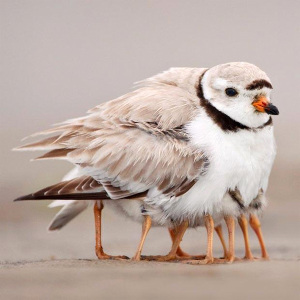
The first second I saw this photo, I thought it was gross because the bird looked distorted. However, a serious deformation as having 4 pair of extra feet is a bit too much to take. Close inspection learns that this Common Ringed Plover is sheltering her chicks from the cold wind that can make their habitat, the beach, rather unpleasant. Mummy Ringed Plover will regularly do this till the chicks have replaced their fluffy down with insulating feathers.
Imagine being a chick Ringed Plover and just walking into the warm, insulating plumage of your big mum and having a chat with your siblings. I bet mummy-bird is enjoying this peaceful moment of having all her chicks near her too.
This peaceful moment is a pause in the paradoxical task that characterizes motherhood; mothers have to keep their offspring close to gear them safely in to adulthood, adulthood that is all about growing away from the parents. Keeping them close in order to let them go.
Here is another mummy-bird, shielding her chicks to keep them safe and warm.

I like to point out that I can’t state for sure that above photos are depicting mums with chicks. The Dove and Common Ringed Plover can be fathers. They can be those excellent fathers that care about their youngsters. Mothering isn’t exclusively done by mothers. Therefore, if Mother’s Day is about mothering, caring and loving, we should celebrate Mother’s Day with all who care, love, and share. And this includes childless couples, cooks, nurses, doctors, and all those who take others under their wings for a cuddle, a dinner, a supporting hug, or a bit of warmth.
– Paula Kuitenbrouwer
© 2013, essay, photographs and artwork, Paula Kuitenbrouwer, All rights reserved
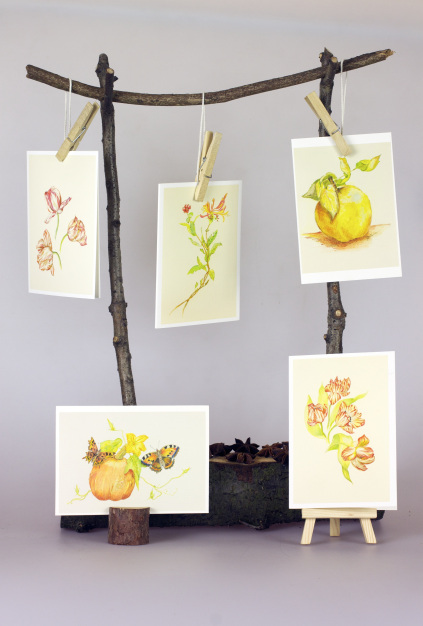
 PAULA KUITENBROUWER is a Dutch nature artist living The Netherlands and sharing her work with us on her blog, Mindful Drawing and on her website. Paula says, “Mother’s Day is about a hug or a poem. Nothing more is needed. But if gifts are given; flowers express gratitude and love.” She’s designed a Mother’s Day Gift-set for the 12th of May.You can purchase her art HERE.
In addition to art, Paula’s main interest is philosophy. She studied at the University of Utrecht and Amsterdam. She has lived in Eastern Europe and in Asia. Paula says that in Korea, “my family lived next to a Buddhist temple. In the early morning we would hear the monks chanting. During my hours of sauntering with my daughter through the beautiful temple gardens, I felt a blissful happiness that I try to capture in my drawings.” Paula sometimes teaches children’s art classes. She lives with her husband and daughter and close to her father. We are often honored with and most grateful for the wise and gentle posts from our much-valued Paula.
Veg Pledges and Vegan Days!
As a follow-up to Paula Kuitenbrouwer’s (Mindful Drawing) post yesterday, we are sharing announcements of U.S. VegWeek and the wonderfully fun Worldwide Vegan Bake Sale. J.D.

Details on US Vegetarian Week HERE.

The Worldwide Vegan Bake Sale is which is April 20 – April 28 in 2013. Anyone can participate and participants decide where and how proceeds will be used. Participation is fun AND meaningful …
The stated missions are:
1 – Show people that vegan baked goods are delicious and that you can easily create vegan versions of your favorite cookies, cakes, pies, and even cheesecakes – and much more.
2 – Introduce people to veganism in a friendly and fun way.
3 – Raise money for worthy causes all over the world.
Sign-up for Worldwide Vegan Bake Sale HERE.
Photo credits ~ U.S. VegWeek poster by Compassion Over Killing, Cupcake Photo by Jenny Porter, Public Domain Pictures.net
Kindly Kitchens …

colored pencils
c Paula Kuitenbrouwer
International Women’s Day 2013
by
Paula Kuitenbrouwer (Mindful Drawing)
Editor’s Note: Life happens and I apologize for bringing this post of Paula’s to you so late after the day it honors. Nonetheless, the message of kindness must always be delivered; and, I think her message is valid and beautifully delivered. I thought it important that we share it with you here. Jamie Dedes
This year’s theme for International Women’s Day is ‘A promise is a promise: Time for action to end violence against women‘. I suggest we stretch that promise and for one day we end the violence against female animals too.
See, it is known that mostly female animals suffer because of our meat industry. Cows, hens, goats, and sheep have to produce a crazy amount of meat (off spring), milk, and eggs. Dairy cows have a natural lifespan of 20 years, however their factory farmed lifespan is only 5-6 years. Sheep have a natural lifespan of 12 years, but the factory farmed lifespan for lambs is only 3 months. Apart from that, we use drugs to squeeze in 3 lambkins every two years. Hens have a natural lifespan of 7 years, but live much, much shorter due to the poultry-industry.
So, if you want to participate low profile, in International Women’s day, this day could be your (first) vegan day. If we all do that, it will help to reduce suffering, even if it is only for one day.
As a vegan myself, I can assure you that eating vegan is wonderful. Just leave out all animal products and there you are. Your food is animal – especially female-animal – friendly and as a bonus it is good for your health, weight, and karma.
Here are my inspirational vegan connections and female friends, slowly changing the world in to a better place for female animals:
Lee Aiken’s great recipes are at Plenty Sweet Enough;
Susan Voisin’s wonderful recipes are at Fat Free Vegan Kitchen;
Janie shares great ideas at Gluten Free Vegan Me;
Angela show us her vegan wonders at The Great Vegan Caper
Veronica Grace’s delicious recipes are at Low Fat Vegan Chef.
Rhonda Dunlap inspires us with her Vegan Pinterest broads.
Do sink your teeth in Marilyn Peterson’s Vegan Bite by Bite book
… and if you are in need of a lovely teen book on a vegan dog, here is Marian Hailey-Moss’s A Dog named Randall

© 2013, art and essay, Paula Kuitenbrouwer, All rights reserved
PAULA KUITENBROUWER is a Dutch nature artist living The Netherlands and sharing her work with us on her blog, Mindful Drawing, and on her website. You can purchase her art HERE. In addition to art, Paula’s main interest is philosophy. She studied at the University of Utrecht and Amsterdam. She has lived in Eastern Europe and in Asia. Paula says that in Korea, “my family lived next to a Buddhist temple. In the early morning we would hear the monks chanting. During my hours of sauntering with my daughter through the beautiful temple gardens, I felt a blissful happiness that I try to capture in my drawings.” Paula sometimes teaches children’s art classes. She lives with her husband and daughter and close to her father. We are frequently honored with and most grateful for guest posts from Paula.
Mei Rozavian posts as the spirit moves her … and it always seems to move her to share beauty, insight, and inspiration. Every post of hers is just as sweet as this one. Jamie Dedes


*
When you help someone who is lost and confused;
When you hold someone who is sad and grieving;
When you hug someone who is unhappy and hopeless;
You too will feel healed and whole.
– Dr Jeff Mulan –
*
***
– mei –
*
*
GIVING THANKS: AN INVITATION TO AWARENESS
 On Thanksgiving Day in 2010, Awyn (The Jottings of an AmeriQuebeckian and Salamander Cove) wrote this piece. It has remained with me since then and this year I asked Awyn for permission to reblog it here. Awyn and I met thanks to Poets Against War. She was kind enough to include two of my anti-war poems in her online poetry magazine, Salamander Cove. Awyn is an accomplished poet and writer of conscience. JAMIE DEDES
.
This is also the perfect post to add to Amy Nora Doyle’s (SoulDipper) Occupy the Blogospher effort.

♥
MAY WE HAVE MANY REASONS TO GIVE THANKS
AND HEARTS BIG ENOUGH TO INCLUDE STRANGERS IN OUR CIRCLE OF CONCERN
♥
Here’s Awyn:
Happy Thanksgiving! — to all those who celebrate this special holiday.
Last year on Thanksgiving, I itemized all the things for which I was thankful. Here it is that time again, one year later and that still all holds true but no special dinner has been planned. Canada celebrated its Thanksgiving Day in October and it’s nowhere near as big a holiday here as it is in the U.S.
In the U.S., for many Thanksgiving means not only a big family dinner but watching the annual parade or football game on TV, big sales on Black Friday the day after, and the horrendous traffic back for those who came in from out of town. All part of the tradition.
We have plenty of big, sit-down dinners here with my mate’s family, but my fondly remembered American Thanksgivings are now a thing of the past. I don’t know any Americans here, my mate’s not that crazy about pumpkin pie, and I’m a vegetarian, so there’d be no turkey. Turkey is traditional but I’ve had many an untraditional version, with calamari or tofu or soup. It was still a thanks-giving. My kids are hundreds of miles away and none of us can afford to visit at this time. Hence no big family Thanksgiving get-together celebration this year. We will share our good wishes over the telephone. As for spectator parade-watching or sports broadcasts or Black Friday shopping, none of that interests me. In that, I guess you could say I’m untraditional. Pumpkin pie, however, is non-negotiable. You absolutely cannot have Thanksgiving without pumpkin pie. It just doesn’t compute.
The most interesting Thanksgiving I ever heard about was from the wife of a former colleague who volunteered at a local soup kitchen. She told me that one Thanksgiving, to raise awareness of all the people who were starving in the world, some organization whose name I can no longer remember invited people to attend a big sit-down Thanksgiving dinner, for $15 per person, proceeds to go towards world hunger.
When you arrived, you were asked to pick your entry ticket out of a box. There were three kinds of tickets.
If you got a green ticket, you would be served the full dinner, with all the trimmings–and be allowed seconds on desert.
If you got a yellow ticket, you would be served what starving people in third-world countries sometimes get to eat–a child-sized helping of rice or thin, watery soup–and nothing else.
And if you got a white ticket–you’d get nothing at all.

So imagine you’re at this banquet and you get the full meal, with all the trimmings, and you’re sitting next to someone who got nothing. Would you turn and give half of what you have to that person? What if you’re one of the unlucky ones who got the thin, watery soup? Or worse, the empty plate. Would you quietly sip your water and listen to your stomach growl, hoping the people next to you might offer to give you some of theirs?
I’m sure a lot of sharing went around, probably immediately, after the initial surprise (and perhaps discomfort) wore off. Giving money to a charity, for which you get a sit-down dinner, is one thing; being invited to dinner and served an empty plate and having it suddenly sink in what real deprivation is like, is quite another. (Well, the invitation did say the theme was Awareness.) But how uncomfortable to have to sit in front of an empty plate all evening long while others are eating. That glass of water can only go so far.
I went without lunch yesterday–not by choice. I simply forgot. I was working on something and the hours flew and I suddenly realized it was getting dark outside and all I’d had to eat the whole day long was a cup of coffee at 6 a.m. My stomach began reminding me it hadn’t been fed. Loudly. No problem. I could open my refrigerator or reach for something in the cupboard and solve the problem, instantly.
But what if I couldn’t? What if, for whatever reason,there was none to be had and no more food would be forthcoming for another day. Another two days. Maybe even a whole week. How would I deal with that? Certainly, after a day or two, lack of food would make me woozy, lightheaded … lethargic, even. I’d probably lose weight. Temporarily fasting is one thing. Starvation, however, is quite another.
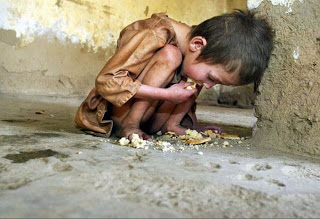
I think that’s what the organizers of that unusual Thanksgiving dinner wanted to convey–that life is not fair. Some of us get to sit down every evening to a good meal, Every Single Night. Some can only afford to buy food meant for animals. Some get somebody else‘s leftovers, fished out of a trash can. And some get nothing at all.
So many things to be thankful for this holiday. Awareness–however received–is one of them.
© 2012, Awyn, All rights reserved
VEN. BHIKKHU BODHI, on the Buddha’s birthday an update on Buddhist Global Relief

VESAK 2012
Remembering the Buddha and his teachings
with joy, gratitude, and generosity |
|
•
[I’m sorry that I could not share this letter with you in a more timely fashion. The Buddha’s birthday was on May 6 this year. Nonetheless, the message is an important one. We are committed to supporting this effort and hope to engage your support as well. Thank you for reading …. J.D.]
•
Dear Friend,
 The most important holiday in the Buddhist calendar, Vesak, is just around the corner. Starting on the full moon day of May, the month of Vesak celebrates the birth, enlightenment, and passing away of the Buddha. It is a day – and a month – not only for joy and gratitude but also for recollection: for remembering the Buddha’s teachings and making a more earnest effort to practice them.
The first step of Buddhist practice is giving, and the most basic gift is the gift of food. The importance of food can be gauged from the Buddha’s own life story. In the Middle Length Discourses, he tells us that before his enlightenment, he undertook long fasts that reduced his body to a tent of bones. When he saw that the true path to awakening requires deep meditation, he also realized: “It isn’t easy to meditate with an emaciated body.
 Let me eat sustaining food such as rice and porridge.” It was only after he regained his strength that he could reach his goal.
Not only is it hard to meditate with an emaciated body, but when one is malnourished it’s hard to do anything – except wait intently for the next meal. Yet close to a billion people around the world endure this fate. It’s to give such people a fresh chance at life that BGR came into being, and this purpose has inspired our work through the years.
We don’t just give handouts. Rather, we seek to make people productive and self-sufficient. We do so in diverse ways: by supporting the education of poor children, especially girls; by creating right livelihood opportunities for women; and by supporting ecologically sustainable small-scale agriculture. In just four years, we’ve already sponsored fifty projects around the world, in Asia, Africa, Haiti, and the U.S. Some of our recent projects include:

 Today BGR plays a major role in representing Buddhism on the stage of global giving. In fact, in late April we participated in a historical conference at the White House that brought representatives of the “Dharmic religions” into contact with government agencies in a common commitment to humanitarian service.
We hope to continue our mission long into the future, both in the U.S. and abroad. However, we can’t fulfill our goals without help from friends like you who share our ideals and resonate with our values. Your donations are the key to everything we do: to combating malnutrition, educating poor children, and helping those who cannot help themselves. And because we’re an all-volunteer organization, we use the funds we receive prudently, with care and discretion, to ensure that 85-90% of every dollar goes directly to finance projects.
So, remembering the great compassion the Buddha extended to us, let us extend compassion to others. This Vesak season please bring forth a heart of generosity and support the work of BGR. When you give, you become part of our mission, our partner in giving a helping hand to those who need help. And you experience the joy of knowing that you are truly making a positive difference in this world, a difference that’s transforming lives.
 May all blessings be with you and your family, on Vesak and beyond.
 Ven. Bhikkhu Bodhi
Founder and Chairperson Buddhist Global Relief is a 501(c)(3) organization. Gifts are deductible to the full extent allowable under IRS regulations. You can either donate online via PayPal on the BGR web site or send a check to:
Buddhist Global Relief
PO Box 1611 Sparta, New Jersey 07871 USA If your company has a Matching Gift Program, please enclose the necessary forms as well.
|
KAREN ARMSTRONG – A CHARTER FOR COMPASSION GROWS

KAREN ARMSTRONG (b. 1944), British Author, Commentator, Academic
Charter for Compassion
“Karen Armstrong is a former Catholic nun who left the convent to study literature, becoming one of the most provocative and original thinkers on the role of religion in the modern world, and a leading international authority on faiths, religious fundamentalism and monotheism.
Her poignant and captivating talks have sparked worldwide debate and healthy discussion. Her bestselling books, including Twelve Steps to a Compassionate Life and A History of God, examine the differences and the profound similarities between Christianity, Islam, and Judaism, and their impact on world events.
In 2008, she was awarded the TED Prize in recognition and support of her call for a council of religious and spiritual leaders to draw up a “Charter for Compassion” that applies shared moral priorities to foster greater global understanding based on the principles of justice and respect. The project has grown to a considerable international following, and a network of Compassionate Cities is emerging that endorse the Charter and find ways to implement it practically, realistically and creatively.
As a speaker and writer, she asserts that all major religions embrace the core principle of compassion and the Golden Rule, and also emphasizes that many of today’s religions bear similar strains of fundamentalism borne of frustration with contemporary life and current events.” ( – Official Biography of Karen Armstrong.)
KAREN ARMSTRONG – A CHARTER FOR COMPASSION GROWS
by
Amy Nora Doyle (souldipper)
Contribution Writer, Into the Bardo
On our tiny island, a group recently finished its study of Karen’s book,“Twelve Steps to A Compassionate Life”. The same group seized an opportunity, on March 22, to share a live video of Ms. Armstrong accepting a prestigious award from the Simon Fraser University in Vancouver. In recognition of her exceptional work with Compassion, Vancouver dedicated 12 days in which to dialogue about compassion, in a variety of ways, throughout the city.
The Charter for Compassion begins:
“The principle of compassion lies at the heart of all religious, ethical and spiritual traditions, calling us always to treat all others as we wish to be treated ourselves. Compassion impels us to work tirelessly to alleviate the suffering of our fellow creatures, to dethrone ourselves from the centre of our world and put another there, and to honour the inviolable sanctity of every single human being, treating everybody, without exception, with absolute justice, equity and respect.”
(The complete Charter is available here.)
.
Karen Armstrong – Simon Fraser University – March 22, 2012

.
Those of us who watched Ms. Armstrong’s acceptance of the SFU award, discussed, at its completion, how we envisioned enhancing compassion in our community. Though time may provide a more profound conclusion, most of us agreed that Compassion is an inner condition through which each of us may filter our actions and exchanges throughout the community. In support of this commitment, the local book club, one of 500 worldwide, will again offer a study of Karen’s 12 steps to compassion.
Our group may have been influenced by the Rev. Alisdair Smith, Deacon and Business Chaplain for Christ Church Cathedral in Vancouver. As he introduced Karen, he shared a phenomenal story about a dear friend – a woman who suffers from severe bouts of depression. She gave Alisdair permission to share her story with us.
In my words:
The depression became severe enough that the woman knew she had to go to the hospital. With all the courage, will and determination she could muster, she called an ambulance.
A male attendant rode quietly beside her in the back of the ambulance. As the vehicle wound its way through traffic, the man remained silent, but dutifully attended to any concern for comfort or safety.
After some time, he turned to face her. He held her hand and looked into her eyes. He said, “We are almost at the hospital. I want to tell you that while I have been in your presence, I have discerned that you are a very creative, kind and intelligent woman.
Therefore, when we arrive, I will step out of this ambulance and wait for you to take my hand so you may step down on your own. We will walk together to Emergency and you will hold your head high with the dignity that is yours to claim. There is no reason or need to be or feel embarrassed.
Are you willing?”
The woman did exactly as he suggested. Her life was transformed.
Though she is still plagued with depression, it only takes a moment to reflect on this incredible act of compassion, performed by a stranger, that dispelled and diminished the degree of debilitating power that depression would otherwise demand.
I watched Karen Armstrong’s Ted Talk in 2008. I became a member of the Charter for Compassion in 2009. I committed to being a compassionate person.
Big deal, I thought. That’s not doing much for the Charter.
I found out it is.
Especially if we each do our best with every opportunity that inevitably comes our way.
I keep forgetting about the hummingbird and the forest fire.
© 2012, essay – Amy Nora Doyle, All rights reserved
© photos ~ courtesy of A Charter for Compassion, all rights reserved, used here under fair use
♥ ♥ ♥ ♥
If you have the time for this 22 minute video, you might find it gratifying to hear Ms. Armstrong’s TED award acceptance. J.D.
COMPASSION AT THE CORE

1st Row: Christian Cross, Jewish Star of David, Hindu Aumkar
2nd Row: Islamic Star and crescent, Buddhist Wheel of Dharma, Shinto Torii
3rd Row: Sikh Khanda, Bahá’í star, Jain Ahimsa Symbol
COMPASSION AT THE CORE
by
Jamie Dedes
“Compassion is the pillar of world peace.” H.H. 14th Dalai Lama, A Human Approach to World Peace
The peaceful path of compassion is at the core of all the wisdom traditions, the conduits by which grace flows into our lives. If our species is to overcome current conflicts and truly be at peace with ourselves, we must tread the compassionate path and we must do it with bone and muscle as well as heart and mind. It must be a path where service and meditation converge.
In the Summa Theologiae, the great work of St. Thomas Aquinas, he suggests just that. He defines mercy (a virtue) as “the compassion in our hearts for another person’s misery, a compassion which drives us to do what we can to help him.” He describes mercy as having two aspects “affective” – or emotional – and “effective,” which is positive action.
We all have something to teach. We all have something to learn ~
People from varied traditions come to Buddhism – not to convert – but to learn the meditative skills that Buddhism teaches. Buddhists also have lessons to learn from other religions:
“…many Buddhists are interested in learning social service from Christianity. Many Christian traditions emphasize that their monks and nuns be involved in teaching, in hospital work, caring for the elderly, for orphans, and so on . . . Buddhists can learn social service from the Christians.” H.H. 14th Dalai Lama, The Buddhist View toward Other Religions
Meditative practice is central to Buddhism. Along with devotions (prayers and religious observance), action (good works) is central to Christianity and the other Abrahamic traditions, which is not to imply that there are no meditative practices or that inward practice is more important than outward action. Rather, each has its place and they are complementary. Our meditative practices enhance tranquility, ensuring that our good works are appropriate and done in the right spirit.
A compassionate heart is moved to embrace and not to judge. A compassionate hand is moved to work and to sacrifice for the greater good. Selflessness, well-seated in compassion, implies action that both materially and spiritually benefits others. The Dalai Lama and Thích Nhất Hạnh, social activists as well as spiritual leaders, are the very breath of compassion and they and the people in the organizations they lead endlessly provide selfless service and share spiritual solace with all.
Buddhism in the West is a relatively new practice. To my knowledge it is only recently that American Buddhists have organized for relief efforts with Buddhist Global Relief (BGR), which in its short life has implemented quite a number of effective projects. The main mission of BGR is hunger, not simply addressing it in its immediacy but also advocating for changes within our global food systems that will ensure social justice and ecological sustainability. BGR was started by American Buddhist monk and scholar, the Ven. Bhikkhu Bodhi, calling attention to the “narrowly inward focus of American Buddhism” and its neglect of social engagement. Moslems, Jews, and Christians have long-standing organizations for global relief and social activism.
It is healing grace when social services are delivered on a nonsectarian basis and without the expectation of conversion. The Koran admonishes (2:257): “Let there be no compulsion in religion.”
We’re each born into a path or choose (or forego) one. Our devotion to one religion shouldn’t prevent respect for the others. Abū al-Muġīṭ Husayn Manṣūr al-Ḥallāğ (Mansur Al-Hallaj, 858-922), the Persian Sufi teacher and poet wrote from his own perspective:
“My heart has opened into every form. It is a pasture for gazelles, a cloister for Christian monks, a temple for idols, the Ka’ba of the pilgrim, the tables of the Torah and the book for Koran. I practice the religion of Love. In whatever directions its caravans advance, the religion of Love shall be my religion and my faith.”
Maybe we humans will come as close to peace and perfection as we can when we combine the “specialties” of Buddhism and the Abrahamic traditions ~
Compassion without meditation can result in cruelty and confusion. Compassion without action is insufficient to address concerns of the human condition.
Orthodox Christianity offers us guidelines for corporal (material) works of mercy:
- feed the hungry
- give drink to the thirsty
- clothe the naked
- house the homeless
- visit the sick
- engage in conscientious activism
- bury the dead
The guidelines for spiritual works of mercy are:
- share insight with the spiritually curious
- counsel the fearful
- provide brotherly support for those who live unwisely
- bear wrongs patiently
- forgive offenses willingly
- comfort those who are suffering
- pray (unify with the Ineffable) for the welfare of the living and the dead
In the ideal, these guidelines are not simply implemented in the privacy of our own prayers and meditations or with detachment in supporting civic and religious charities, but one-to-one in our everyday lives and in a spirit of unity. Mystical Judaism teaches us that: “Kindness gives to another. Compassion knows no other.”
There are 114 chapters in the Islamic scriptures, the Koran. Each begins with the principled: Bismillah ir-Rahman ir-Rahim (In the name of God, most Gracious, most Compassionate). This reminds me of the classical Christian ideal expressed in the Koinḗ Greek agápē, the love of Christ or God for humankind. I suspect it is also – like agápē – a call to action: to live in harmony with the Divine and all creation, that is to live with grace and mercy.
Charity, self-control, and compassion are the central virtues of Hinduism. Ahimsa (do no harm) is part of the Hindu ideal of compassion. This implies action, not just abstinence.
Perhaps this wisdom from an unknown saint or bodhisattva provides us the best advice for our own peace of heart and our species’ survival ~
“The true happiness that man has searched for since the dawn of time, that inner gold that awaits any person who holds compassionately the key of generosity: Do something for your fellow-man … and you shall truly have the gold.”
Gratitude is compassion’s fulcrum ~
“The roots of all goodness lie in the soil of appreciation for goodness.” H.H. 14th Dalai Lama
Gratitude is also the emotion that compels us to give back by caring compassionately for our fellow humans and providing responsible and loving stewardship of the animals who are our companions in nature and this mother earth that sustains us. This does, of course, preclude war which is a danger to all living things.
Expressing gratitude in some way to those who are kind and caring is what nurtures their gift of compassion so that the giver can continue to give and also learn to receive. The natural law of balance is then honored.
May our compassionate paths be fully human and traveled quietly, without pronouncement, conceit, sectarianism, or self-righteousness. May our compassion be a thing of the heart and mind -yes! – but also bolstered with bone and muscle and seasoned with gratitude. May all sentient beings find peace.
© 2012, essay, Jamie Dedes All rights reserved
Illustration ~ religious symbols by Rusus via Wikipedia and released into the public domain
FOR CHRISTMAS EVE: A Story
CHRISTMAS WITH GRANDMA
by
Anon
I remember my first Christmas adventure with Grandma.
I was just a kid. I remember tearing across town on my bike to visit her. On the way, my big sister dropped the bomb: “There is no Santa Claus,” she jeered. “Even dummies know that!”
My Grandma was not the gushy kind, never had been. I fled to her that day because I knew she would be straight with me. I knew Grandma always told the truth, and I knew that the truth always went down a whole lot easier when swallowed with one of her “world-famous” cinnamon buns. I knew they were world-famous, because Grandma said so. It had to be true.
Grandma was home, and the buns were still warm. Between bites, I told her everything. She was ready for me.
“No Santa Claus?” she snorted…”Ridiculous! Don’t you believe it! That rumor has been going around for years, and it makes me mad, plain mad!!
Now, put on your coat, and let’s go.”
“Go? Go where Grandma”, I asked. I hadn’t even finished my second world-famous cinnamon bun.
“Where” turned out to be Kirby’s General Store, the one store in town that had a little bit of just about everything.
As we walked through its doors, Grandma handed me ten dollars. That was a bundle in those days.
“Take this money,” she said, “and buy something for someone who needs it. I’ll wait for you in the car.” Then she turned and walked out of Kirby’s.
I was only eight years old. I’d often gone shopping with my mother, but never had I shopped for anything all by myself.
The store seemed big and crowded, full of people scrambling to finish their Christmas shopping. For a few moments I just stood there, confused, clutching that ten-dollar bill, wondering what to buy, and who on earth to buy it for.
I thought of everybody I knew: my family, my friends, my neighbors, the kids at school, and the people who went to my church. I was just about thought out, when I suddenly thought of Bobby Decker. He was a kid with bad breath and messy hair, and he sat right behind me in Mrs. Pollock’s grade-two class.
Bobby Decker didn’t have a coat. I knew that because he never went out to recess during the winter. His mother always wrote a note telling the teacher that he had a cough, but all we kids knew that Bobby Decker didn’t have a cough; he didn’t have a good coat.
I fingered the ten-dollar bill with growing excitement. I would buy Bobby Decker a coat! I settled on red corduroy one that had a hood to it. It looked real warm, and he would like that.
“Is this a Christmas present for someone?” The lady behind the counter asked kindly, as I laid my ten dollars down.
“Yes ma’am,” I replied shyly. “It’s for Bobby.” The nice lady smiled at me, as I told her about how Bobby really needed a good winter coat. I didn’t get any change, but she put the coat in a bag, smiled again, and wished me a Merry Christmas.
That evening, Grandma helped me wrap the coat (a little tag fell out of the coat, and Grandma tucked it in her Bible) in Christmas paper and ribbons and wrote, “To Bobby, From Santa Claus” on it.
Grandma said that Santa always insisted on secrecy. Then she drove me over to Bobby Decker’s house, explaining as we went that I was now and forever officially, one of Santa’s helpers.
Grandma parked down the street from Bobby’s house, and she and I crept noiselessly and hid in the bushes by his front walk. Then Grandma gave me a nudge. “All right, Santa Claus,” she whispered, “get going.”
I took a deep breath, dashed for his front door, threw the present down on his step, pounded his door and flew back to the safety of the bushes and Grandma.
Together we waited breathlessly in the darkness for the front door to open. Finally it did, and there stood Bobby.
Fifty years haven’t dimmed the thrill of those moments spent shivering, beside my Grandma, in Bobby Decker’s bushes.
That night, I realized that those awful rumors about Santa Claus were just what Grandma said they were: ridiculous. Santa was alive and well, and we were on his team.
I still have the Bible, with the coat tag tucked inside: $19.95.
May you always have LOVE to share, HEALTH to spare and FRIENDS that care…
And may you always believe in the magic of Santa Claus!
Give back – what you can, where you can, whenever you can.
We don’t know the origin of this story or who wrote, but we hope you enjoyed it as much as we did. Our thanks to Linda F. for passing it on to us and to the anonymous author.
Photo credit ~ morgueFile
UPDATE: Buddhist Global Relief

Ven. Bhikkhu Bodhi, American Buddhist Monk, Theravada Tradition
Founder and Chairperson
Buddhist Global Relief
Photo ~ Ken and Visakha Kawasaki under Creative Commons Atribution-Share Alike 3.0 Uported License via Wikipedia
This is just in from the Ven. Bhikkhu Bodhi. J.D.
·
 |
let the lotus
of compassion enfold the world |
|
Buddhist Global Relief came into being in June 2008, born of the conviction that Buddhists should play a more active role in helping our unseen brothers and sisters around the world emerge from the crushing weight of poverty and social neglect. Inspired by the Buddha’s great compassion, we chose chronic hunger and malnutrition as our special focus. Our programs are intended to help people escape this brutal trap by promoting more sustainable methods of food production and more equitable systems of food distribution. We also sponsor the education of poor children, especially girls, and right livelihood opportunities for poor women, enabling them to earn more to feed their families. In only three years, we’ve already launched over twenty-five projects in Asia, Africa, Haiti, and the U.S. The most recent include:
Today BGR is playing a major role in representing Buddhism on the stage of global giving. Last year, we were even invited to participate in conferences on collaboration in poverty alleviation at the White House and the National Cathedral. These led to several partnerships with Oxfam America on projects in Cambodia and Vietnam. Recently Tricyleand Buddhadharma, two major American Buddhist journals, featured articles about BGR (please see Tricycle’s Feeding the world’s hungry and Buddhadharma’s Buddhist Global Relief articles). We want this Buddhist presence to flourish, visibly representing the compassionate spirit of the Dharma in ways made urgent by the terrible persistence of poverty and malnutrition. We’re doing our utmost to turn back this tide, but we can’t achieve our goals without help from friends who share our ideals and resonate with our values, good-hearted people like you. Your donations are the key to everything we do: to combating hunger and malnutrition, to educating poor children, to helping those who cannot help themselves. And because we’re an all-volunteer organization, we use the funds we receive prudently, with care and discretion, to ensure that over 90% of every dollar goes directly to finance projects. As we come to the end of 2011 — the time for selfless giving — please bring forth a heart of generosity for the world’s poor and hungry people, who need a helping hand in order to rise up and stand on their feet. Please give generously. When you give, you become a part of our mission, a partner in our endeavor to express compassion in action. Bear in mind that to give is to receive, to experience the joy of offering others the chance to live with dignity and hope. May all blessings be with you and your family, Ven. Bhikkhu Bodhi Buddhist Global Relief is a 501(c) (3) organization. Gifts are deductible to the full extent allowable under IRS regulations. You can either donate online at the BGR website or send a check to:
Buddhist Global Relief
PO Box 1611 Sparta, New Jersey 07871 USA If your company has a Matching Gift Program, please enclose the necessary forms as well. |
BUDDHIST GLOBAL RELIEF: Walk of Compassion

Ven. Bhikkhu Bodhi
Found of Buddhist Global Relief
The gift of food is the gift of life. ~ The Buddha
Buddhist Global Relief 2nd Annual Walk to Feed the Hungry
3.5 mile walk • Saturday, September 10, 2011
9:30 a.m. Check-in • 10:00 a.m. Walk • Rain or Shine!
Riverside Park, W. 83rd St. & Riverside Dr., New York, NY
(Please register by September 1st)
-BHANTE BUDDHARAKKHITA: WALK LEADER
-GUEST SPEAKER: MICHAEL ROEHM, BGR Adviser
-FREE VEGETARIAN PICNIC LUNCH AFTER THE EVENT!
Today we can send men into space, but here on earth chronic hunger and malnutrition still cast their shadows over the heads of far too many people, claiming ten million lives a year, more than half of them children. Though we may never know or see these folks, we should recognize that they are human beings just like ourselves, worthy of our deepest concern. Together we can make a difference, and it doesn’t take much to help them live in dignity and hope! All proceeds from the walk will go to support BGR’s global hunger relief programs. MORE
Photo credit ~ Bhikku Bodhi, American Buddhist monk, taken in 2003 by Ken and Visakha Kawasaki licensed under the Creative Commons Attritution-Share Alike 3.0 via Wikipedia.

omg rejection letter
 Copyright 2011, Charles Martin
Charles Martin blogs at Read Between the Minds. We are pleased to present another of his fine poems on Into the Bardo. J.D.
·
omg rejection letter
by
Charles Martin
·
we regret
to inform you
that your application
for sainthood
has been
denied
please note
this is
no reflection
upon what you’ve been
saying
but
praying for
the poor
the homeless
peace
et cetera
is not
the same as
doing
something
for those individuals
or
areas of concern
your wishful prayers
are indeed
characteristic of
an
admirable personality
and
we appreciate
your frequent
and
considerable
soliloquies with us
but
we’re
rather filled up
with folks
with
good
intentions

SUSPICIONS

SUSPICIONS
by
Jamie Dedes
·
suspicions I harbor deep at heart
some inkling of unity beyond division
of mystical, not mythical
of cup, not sword
lost in strange exotic search
found in the old oriental prescriptions
the angel wings of compassion and wisdom,
the sacred in ordinary time
the simple me and thee of
the anointed, appointed, awakened before myths and dogma
something sweet in orthopraxy, not orthodoxy
in ontology, not theology
the clear light of universal wonder
funding a commonwealth of saints
healing broken hearts and our war-weary world
·
Photo credit ~ Johnson Cherian, Public Domain Picures.net.

BUDDHIST GOBAL RELIEF

Bhikkhu Bodhi (b. 1944)
Born and raised in New York City, Bhikkhu Bodhi lived as a monk in Sri Lanka for almost twenty-four years, eighteen of them as the editor for the Buddhist Publication Society in Kandy. He now lives at Chuang Yen Monasterynear Carmel, New York. Ven. Bodhi has many important publications to his credit, either as author, translator, or editor, including The Middle Length Discourses of the Buddha (Majjhima Nikaya, 1995) and The Connected Discourses of the Buddha (Samyutta Nikaya, 2000). A full translation of the Anguttara Nikaya is nearing completion. In 2008 he founded Buddhist Global Relief, which provides relief from poverty and hunger among impoverished communities worldwide. He was recently appointed to serve on a global task force charged with preparing a framework on interfaith collaboration on poverty alleviation, health, and development.
BUDDHIST GLOBAL RELIEF
by
Jamie Dedes
I was fortunate recently to attend a daylong program exploring traditional and contemporary approaches to Socially Applied Buddhism. The program was lead by Bhikkhu Bodhi, founder of Buddhist Global Relief (BGR), an inter-denominational organization of Buddhists and friends of Buddhism. I like what this organization is doing. My appreciation is not just for the social issues it addresses, which are dear to my heart, but for the way it is implementing its program.
BGR limits its administrative costs. Everyone who works for BGR does so as a volunteer. BGR efficiently partners with international, regional, and religious organizations. Funding and services are not dependent on Buddhist affiliation and BGR does not proselytize. (I have yet to see a Buddhist organization that does.) All religions are respected. Those efforts and organizations that receive funding from BGR are fully vetted to ensure that BGR funds directly serve the people for whom they are intended.
Almost daily I am awed by the enormity of the suffering that assails human beings on every continent, and even more by the hard truth that so much of this suffering springs not from the vicissitudes of impersonal nature but from the fires of greed, hatred, and delusion raging in the human heart. Challenge to Buddhists by Ven. Bhikkhu Bodhi
BGR has funded sustainable and emergency food programs and education programs in venues throughout the world including: Afganistan and Pakistan, South Africa, Cambodia, and Vietnam. It is also working here at home, a first world country with shamefully growing hunger issues. BGR’s first and current project here in the States is Garden Harvest‘s Adopt-a-Plot Program,which seeks to find the means to provided our over-stressed emergency food agencies with a way to ensure a reliable supply of quality food. Currently that pilot project is being implemented in Maryland and Pennsylvania. The hope is that it will prove effective and provide a model to be implemented around the country.
If you are looking for an organization to which you might make a donation that will really go to work, I recommend this one as worthy of consideration. Buddhist Global Relief is a 501 (c) (3) organizations and gifts are deductible to the extent allowable in the U.S. under IRS legislation.

Sacred Lotus
 The BeZine