Posted in General Interest

The Packrat Gene and the Clutter Queen

((With the new year upon us, many will be thinking about “de-cluttering” their lives for a fresh, new start. Buddhism and Taoism teach us that all that “stuff” we acquire and become attached to is actually detrimental to our lives and our spiritual well-being. With that in mind, this is a piece I wrote a while ago regarding clutter and “stuff”. I find myself looking around my house and having the itch to ‘purge’ some more material belongings. I imagine others do, too…))
Packrat by Ursula Vernon

I’ve often wondered in life if there really is such a thing as a “Pack-Rat Gene”? Is a tendency toward hoarding or clutter an inherited trait? I have to wonder, because there are so many members of my family who seem to exhibit this tendency. Some are worse than others, and I am determined NOT to fall victim to it in my lifetime. I think part of it stemmed from the generation who survived the Great Depression, where consumer goods like aluminum foil were re-used and re-cycled because it saved money. I can still remember my grandmother washing out plastic sandwich bags (yes, and reusing foil, too, we’ve all heard about that) and hanging them on the faucet upside down to dry. In that sense, it could be considered “frugal” or “thrifty” and so if I do it, too, it’s partially because of that, but also a small attempt at being environmentally conscious regarding plastic, etc.

I know that another part of it has to do with “creativity”. I think it was Einstein who said “Clutter is a sign of genius.” (*pauses to look that up*) Yup. It was him. I’ve also heard that it’s a sign of creativity, and I have close family members who take this to heart. But there’s a difference between the “clutter” of someone who is actively working on something, and “clutter” of someone who is storing anything and everything which might be useful “at some nebulous, unknown point in the future, for some just as unclear and unknown project in the future”. There’s a difference, and therein lies the secret, I think.

There is a point, and I think it’s different for everyone, where it becomes “hoarding” behavior. Like going to the store and stocking up on something you like because it’s on sale…but then going back again for the limit when it’s on sale again, even though you may already have enough to last you and your future generations through WWIII. I think there is a fear of “running out” or not having enough. I don’t do this, but I’m related to people who have and do. And I don’t WANT all that “stuff”. Perishable or not, I don’t want to clutter my living environment with “stuff”.

And it’s really ALL just “stuff”, you know. We can’t take ANY of it with us when we check out. Empty space has a tendency to fill. It’s like a Natural Law or something, and if it’s not, then it should be, because you know it’s true! The question is, is it “stuff” you’ll be using now or soon? We may not even BE here to use it tomorrow, so why keep it if you’re not using it? My dad always taught me it’s “better to have it and not need it, then need it and not have it,” and to some extent, that’s a wise philosophy. It speaks of being prepared and anticipating future problems and solutions ahead of time.

BUT…there IS something very true about Feng Shui and the “less is more”, minimalist viewpoint. Clutter and hoarding speak volumes about what’s going on inside of a person – a person’s living environment can be very telling about their inner emotional and mental states. The two are tied together, and I think that cleaning up one can affect and help clean up the other (inside vs. outside or vice versa). Balance and order in one area can guide a person to both in the other area.

In an attempt to keep from becoming a “Clutter Queen”, I try to keep in mind a few things:

1) Can I or will I (realistically and actually) use something today or tomorrow? If so, how and for what? Unfortunately, my ‘skinny clothes’ probably fall into this category – I MAY end up at that smaller size again, but I sure can’t fit into them now, and they are taking up a lot of space in the closet and chest. Hmmm….

2) How does having something enhance who I am or benefit my life NOW, TODAY? Do I need it? <—Important note: there are sometimes when just having the peace of mind knowing I have something in case of an emergency (like extra oil for the car, for example) is worth having to store it.

3) Do I have the space for it? Keeping in mind that empty space will fill, do I really want to fill that empty space with this particular thing?

4) How does it affect my environment? Does it clutter or add to my ‘living space’ in a positive way?

5) If I bring in something ‘new’, I have to get rid of something ‘old’ to make room for it – it’s about keeping the balance/flow of what I want around me. If I REALLY WANT or NEED that ‘new’ thing, then there should be something ‘old’ that I can move out to make room for it.

So what about you? How do you handle the clutter in your life? Is it true that “One man’s trash is another man’s treasure”? Do you think there’s a Pack Rat gene? Or is it more nurture instead of nature (i.e. environmental upbringing instead of inherited traits)?

Thanks for reading. 🙂 Comments are welcome and appreciated!

– Corina Ravenscraft

© 2014, essay, Corina Ravenscraft, illustration, Ursula Vernon All rights reserved

effecd1bf289d498b5944e37d8f4ee6fAbout dragonkatet Regarding the blog name, Dragon’s Dreams ~ The name comes from my love-affairs with both Dragons and Dreams (capital Ds). It’s another extension of who I am, a facet for expression; a place and way to reach other like-minded, creative individuals. I post a lot of poetry and images that fascinate or move me, because that’s my favorite way to view the world. I post about things important to me and the world in which we live, try to champion extra important political, societal and environmental issues, etc. Sometimes I wax philosophical, because it’s also a place where I always seem to learn about myself, too, by interacting with some of the brightest minds, souls and hearts out there. It’s all about ‘connection(s)’ and I don’t mean “net-working” with people for personal gain, but rather, the expansion of the 4 L’s: Light, Love, Laughter, Learning.

Posted in Essay, General Interest, John Anstie

When I’m Sixty-Four

Will you still need me, will you still feed me …

At the time of writing this, when the Beatles and the Stones were playing out yet another rock and roll battle at the Grammy‘s, I was reminded of this song, which, if not their greatest hit, is one of their most memorable because it passes the ‘Old Grey Whistle Test‘.

In the fifty years since their major ‘battles’ for supremacy in the charts, in which these two famous bands were engaged, our life expectancy has increased by almost ten years*. So, the perspective of a young man in the mid-1960’s of someone in the seventh decade of their life, would have been of an old grouch off the end of the scale of life. At sixty-four, however, I find myself with better prospects of success for carrying out my ambitions in retirement, than I would have had fifty years ago.

Life expectancy, the quantity of life, is, whichever way you look at it, merely a statistic and is of little value on its own; we need quality of life as well. I watch as my 95 year old step-mother soldiers on, despite the continual but manageable ailments, with which she has to cope. Her complaints are nothing if not a physical body that is slowly wearing out, but they remind me that old age is not for the faint-hearted. I am conscious of the aches and pains that I have to deal with already, but, in my more insightful moments, I am constantly grateful that they are occasional or, if regular, not chronic (and by ‘chronic’, I mean permanent, lifelong conditions).

Perhaps the most important point about this is the effect that living with illness or pain, be it arthritis or any one of several age related chronic conditions, can severely reduce the quality of our life. I know that I truly have little to complain about, but I am acutely aware that I still, sometimes, have a grumpy disposition, which leads me to appear rude and dissatisfied, even when I know I am not dissatisfied – setting aside a kind of world-weariness that comes from my daily observations of what the human race is up to – but sometimes I need some help not to allow myself to become a grouch, especially with my wife of nearly forty years, who doesn’t deserve it.

If there were a universal prayer that I’d like to say here, it would be: please grant me a greater equanimity and remind me that I should be grateful for the ability, I know I already have, to see and enjoy the beauty, both visible and invisible, which is in so many parts of our lives. Above all, let me not forget to afford the elderly my understanding for them.

Give me your answer, fill in a form
Mine for evermore
Will you still need me, will you still feed me,
When I’m sixty-four?”

Source: England and Wales, Total Population, Life Tables

John_in_Pose_Half_Face3JOHN ANSTIE (My Poetry Library and 42) ~ is a British poet and writer, a contributing editor here at Bardo, and multi-talented gentleman self-described as a “Family man, Grandfather, Occasional Musician, Amateur photographer and Film-maker, Apple-MAC user, Implementation Manager, and Engineer. John participates in d’Verse Poet’s Pub and is a player in New World Creative Union. He’s been blogging since the beginning of 2011. John is also an active member of The Poetry Society (UK).

*****

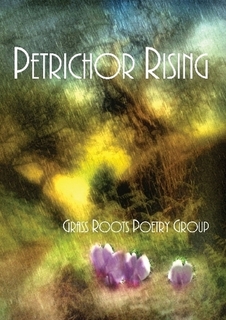
product_thumbnail-3.php51w-rH34dTL._BO2,204,203,200_PIsitb-sticker-arrow-click,TopRight,35,-76_AA300_SH20_OU01_John has been involved in the recent publication of two anthologies that are the result of online collaborations among two international groups of amateur and professional poets. One of these is The Grass Roots Poetry Group, for which he produced and edited their anthology, “Petrichor* Rising. The other group is d’Verse Poet Pub, in which John’s poetry also appears The d’Verse Anthology: Voices of Contemporary World Poetry, produced and edited by Frank Watson.

Petrichor – from the Greek pɛtrɨkər, the scent of rain on the dry earth.

Posted in Essay, General Interest

Joy in January

The temperature on my car dashboard said -10 degrees this morning.  A “polar vortex” has moved into Milwaukee, and my partner Steve is a US Postal Service mail carrier.  He will be working outside today despite warnings (no doubt escalated by our sensationalizing media) about frostbite and hypothermia.  However, he is excited about the opportunity to live in the moment, make decisions one after another, and flow with the realities of the environment.   His attitude reminds me that we can choose to feel victimized and we can choose to feel joyful.  The following is a post on Joy that I first published 2 years ago.

Joy to the World

Gift of the Universe #22:  JOY!

I truly believe that joy is available to everyone.  No one is denied the opportunity to be joyful.  Many people on this planet will never have a full stomach or adequate shelter or enough material wealth to climb out of poverty, but believe it or not, some of those very people know joy.

“Joy is not in things; it is in us.”  – Richard Wagner

“Participate joyfully in the sorrows of the world. We cannot cure the world of sorrows, but we can choose to live in joy.”  – Joseph Campbell

My late husband was ill for many years.  He went under the knife for open heart surgery when he was just 31.  He suffered a host of medical problems stemming from diabetes, always believing that he would get the disease under control.  When he realized that was not going to happen, he said, “Okay, I’m sick.  I can be sick and miserable, or I can be sick and happy.  I choose happy.  Pain is inevitable, misery is optional.”  I really admire him for coming up with that maxim, and for embodying it.  The night before he died, he called me at work and asked if I’d like to go out to dinner.  Our daughters were out for the evening, and he took the opportunity to enjoy a ‘date’ with me.  We went to a local sports bar & grill and enjoyed veggie appetizers and sandwiches.  Our youngest called from rehearsal to say she was not feeling well and was coming home early, so we went home to be with her.   Jim was tired, so he took his medications, hooked up to his dialysis machine and CPAP and watched some TV.  When I came up to bed, he turned off the TV and the light.  We fell asleep holding hands.  He never woke up.  And he never complained.  Some people claim that “if you haven’t got your health, you haven’t got anything”.  I don’t buy that.  Jim didn’t have health, but he had joy and love and he knew it.

Many people would foreswear food, health, housing, and money in order to find joy in an ascetic lifestyle.  Mendicants, yogis, monks, and priests of different faiths have adopted austere practices in order to experience the bliss of enlightenment.

“Joy is the most infallible sign of the presence of God.”  – Pierre Teilhard de Chardin

“The fullness of joy is to behold God in everything.”  – Julian of Norwich

This is a deep and serious topic, and much too heavy for me to write about today.  My brain is circling closer to Dr. Seuss and The Grinch who puzzles how the Whos could be singing without “ribbons and tags, packages, boxes and bags”.  Perhaps joy means a little bit more than the glee we feel when we get a shiny, new present.  Happiness is fleeting.  Joy is deeply felt.

“This is the true joy in life, the being used for a purpose recognized by yourself as a mighty one; the being thoroughly worn out before you are thrown on the scrap heap; the being a force of Nature instead of a feverish selfish little clod of ailments and grievances complaining that the world will not devote itself to making you happy.”  – George Bernard Shaw

I’ve got to say that the way I have most felt this joy of being used for a mighty purpose and force of Nature is through mothering.  I know what it is to be thoroughly worn out and joyful.  I know what it is to feel like nobody is devoting himself to my happiness and not to complain because I am finding so much joy in devoting myself to someone else’s well-being.  Not that I didn’t complain occasionally (hey! I’m human!).  I always felt that mothering mattered.  That I was truly making a difference, a big one, to at least four people in the world.  I smiled at my babies even when I was not feeling joyful, and joy emerged.   Never underestimate the effect of a smile.  Check out this Still Face Experiment by Dr. Tronick on youtube.  http://www.youtube.com/watch?v=apzXGEbZht0

“Sometimes your joy is the source of your smile, but sometimes your smile can be the source of your joy.” – Thich Nhat Hahn

My joyful (and crazy!) kids

Are you smiling every day?  I’m sure I am.  I even busted a belly laugh today as Steve was describing a Giotto fresco…of Mary and Joseph… kissing at the gates of Bethlehem…with Snoopy in the background.  He speaks like a nerd who knows everything, and then I realize he’s joking with me.  I fall for it all the time and then get to laugh at him and at myself.  Steve’s identity motto, which he came up with at a psychology school retreat, is “I am the joy in change and movement”.  I am really benefiting from his perspective because I am often afraid of change and movement.  I so don’t need to be.  There is freedom in allowing joy into your life.

Let Heaven and Nature sing…and see if you don’t find yourself singing along.  Rejoice, my friends.

– Priscilla Galasso

© 2011, 2014, essay and photograph, Priscilla Galasso, All rights reserved

004PRISCILLA GALASSO ~ started her blog at scillagrace.com to mark the beginning of her fiftieth year. Born to summer and given a name that means ‘ancient’, her travel through seasons of time and landscape has inspired her to create visual and verbal souvenirs of her journey.

Currently living in Wisconsin, she considers herself a lifelong learner and educator. She gives private voice lessons, is employed by two different museums and runs a business (Scholar & Poet Books, via eBay and ABE Books) with her partner, Steve.

Posted in Essay, General Interest, Guest Writer, memoir

Some Thoughts on Adoption

Editorial Note: In April 2013, John Nooney wrote a series on his adoption. We think his message is an important one and he agreed to cut the 12,000 word feature down to 1,000 words to accommodate the needs of this site, a frankly heroic effort and something for which we are most appreciative. After reading this post, you may wish to read the longer piece on John’s blog HERE and we encourage you to do so. The details are interesting and thought-provoking.

hands-together-871294932977UgO“Have you found your birth-mother?” is, more often than not, the first thing people ask me when I mention I am an adopted child.

Think about that.

When you share information about yourself, it is the first response that matters most; the first reply has the biggest emotional impact.

So, if the first response to news of adoption is wanting to know if you’ve found your birth-mother (often stated as Real Mother), one begins to feel they need to seek her out.

People ask this particular question, breathless with excited anticipation of an affirmative answer — they’re wanting a feel good story, with a big, bold headline: “Adopted Child Reunited With Real Mother!”

The question ends up making me feel as if the asker somehow views my adoptive parents (the people I think of as my only parents) as being inferior to Real Parents. It’s like they imagine I was kidnapped from my Real Mother, raised by people pretending to be my parents, and that I need to be rescued and returned to The Real Parents.

It’s insane.

And, it’s hurtful.

I’ve not spent much time thinking about my birth-parents. Sure, I’m curious what they look like, what their story is, and, more importantly, what their medical history is, so I know what to watch for. Other than that, I have little interest in them. Not for bad reasons — I don’t hate them for giving me up for adoption. I think my birth-mother made the best choice she knew how to make at the time. When people want to know if I’ve sought her out, I begin to wonder if there’s something wrong with me. Am I supposed to find her? Is there supposed to be a yearning for my Real Mother’s loving arms?

They say mothers have an unbreakable bond with the child they carried in their womb, that they’d do anything to protect that child. Am I, as the child in the womb, supposed to have that same unbreakable bond?

I don’t feel that bond.

I thought of searching, but when I began to think about the consequences of finding my birth-mother, I lost interest. What if she was married to a billionaire? Would I then hate my middle-class roots? What if she turned out to be a meth-addicted prostitute? How would I feel then? Knowledge can be dangerous. I was scared of what I might find — and what I might or might not feel.

I’ve spent many helpful hours in therapy over the years, though I’ve left several therapists because they’ve tried to convince me that my issues started by being abandoned by my birth-mother; that even though I was newborn, I was able to sense her abandoning of me, and its impact is at the root of many of my issues.

One thing I have absolutely no doubt about: I do not feel that my birth mother abandoned me.

We don’t know what communication passes between mother and fetus —  though we often surmise. Perhaps because giving up a child is such a gut-wrenching decision for a mother, the trauma she feels imprints itself on her unborn child, and, perhaps, leaves some children with a sense of an emotional abandonment

Maybe there is a reverse that is also true: maybe a mother can tell her unborn child that it is being given up for the best reasons, that the decision she is making is one made out of an unimaginable love — a love that wants her child to have a home better than the one she can provide. And, maybe, communicating that love can leave an adopted child feeling that it hasn’t been abandoned, but that it is a child, being given as a gift — a great gift.

Sentimental claptrap? Maybe.

Our society runs on the belief of individuality. We take pride that we’re all different, that everyone’s story is not the same. Yet, we’ll try to claim that every adopted child should feel abandoned? It makes no sense. We are either all different, with different stories, or we’re not.

Growing up, my mother told me a story:
“There was a man and a woman who loved each other very much. They wanted to have a family, but, unfortunately they couldn’t have kids. One day, they got a phone call — there was a young woman who was having a baby, but, she was young, and was struggling to make ends meet. She wanted her baby to have a better home than she was able to give him. She knew that the man and woman would give her baby a loving home. So, the man and woman got on a plane, and, when they came home, they had the young girl’s baby with them. They were very happy to have him, and they loved him very much. There are many kids in this world who live in homes where they aren’t loved or wanted,” my mom would say, “and adopted children are special: they’re wanted very much.”

Mom would ask if I knew who the man and woman were, and I’d say “you and dad”.  It was a story I liked to told, and would often ask to hear it.  I especially liked the ending: they were happy to have him; they loved him.
Adoption gives birth to thoughts and feelings across the emotional spectrum: from feelings of profound love, to feelings of despair and abandonment. Mixed in with those feelings, at least for me, is a sense of loyalty to the people who adopted me, who opened their hearts and home to me. Along with that sense of loyalty goes a sense of obligation: to believe that adoption is ok, that it’s a wonderful, loving thing. I grew up in an environment that felt loving, so it was something I never questioned.

I’m adopted, but it doesn’t change the fact that my family is as much a family as anyone else’s family.  We’ve managed to look past the wounds and the scars that all families accumulate over the years. I like to think that in spite of all the pain and hurt, that when we look at each other, we see the love, see the strength of a love that’s been tested and that still holds us together.

This is my telling of one person’s adoption: mine. I am in no way trying to say that my words apply to all adopted children. My opinions on adoption may be different than yours — and, that’s ok. Adoption, just like any other family issue, is unique to each individual and each family. Please do not interpret my words as a generalization of the experiences of all adopted children. This is my tale, my story, my thoughts.  

– John Nooney

(c) 2013, feature article, John Nooney, All rights reserved
Photo credit ~ Vera Kratochvil, Public Domain Pictures.net

unnamed-3JOHN NOONEY (Johnbalaya) ~ lives in Aurora, Colorado with his partner of thirteen years, his ninety-year-old mother and their three dogs.
Posted in Essay, General Interest, Liz Rice-Sosne, Poems/Poetry, poetry, Spiritual Practice, Writing

Haiku – A Spiritual Experience

600px-Poecile-atricapilla-001I am sitting here trying to remember what prompted me to write one haiku per day during the first 6 months of 2012.  I was ill, that was the first reason for doing so.  I wished to remain connected to my writing community, keep alive my connection with the friends that I had met online.  I knew that I could not manage an article daily so I needed to write something short.  I decided that haiku was the answer.  Was there any shorter form of poetry?  The learning and the writing that year became for me a spiritual experience.  It taught me to see the world through a new and different lens.  I am so grateful for this experience

I have always been drawn to haiku even when young.  What can be said in 17 syllables, those three short lines of 5, 7, 5 syllables?  It would be easy – just compose three short lines of poetry a day.  Those thoughts will tell you just how little I knew of haiku when I began.  Experience has shown me that many Americans have little knowledge of haiku seeing it simply as three lines of poetry with the 5-7-5-syllable count.  If seen this way the reader and writer of haiku will never be fully satisfied.

The first thing that one should know is that the syllable count fits Japanese words or syllables.  Japanese words or syllables are nothing like English language syllables.  When attempting to write a haiku there are many things to consider before considering the word count.  The second thing that I learned is that it is often written in one line.  Just one.  In Japan that line is often written from top to bottom.  It is vertical.  I do not write vertically.

Poignancy in haiku is important.  The most important thing about haiku for me is very hard to put into language.  For I see haiku as a language all its own.   A haiku ties things together.  Haiku conveys the depths of nature’s beauty and its power.  Haiku shows ones relationship with nature.  One haiku can express in a few words what it might take a psychologist an entire magazine article to profess.  Haiku can evoke within the reader new understanding.  I equate haiku to light.  It can dazzle in brightness.  It can illuminate a path.  It can act as a halo separating yet conjoining reader and writer through the poem.  You are placed within the poem.  Haiku connects the ancient with the modern, the light with the dark, and nature with man/womankind.

The book to which I turn most often for reference is “The Haiku Handbook, How To Share Write and Teach Haiku,” by William J. Higginson.  I would go so far as to say that he has he has “lived” haiku, making his teachings easy to understand and to apply.  When writing haiku my goal is to be living in the moment, to be “living haiku.”  It is a spiritual moment.  I wish to express that moment to you so that you feel what I feel.  I believe Higginson tells us that haiku is about the eloquence of sharing those feelings.  It is easy to say to your friend: “the sky is beautiful.”  But in doing so, you do not really convey what you feel.   Nor are you conveying any degree of real beauty.  According to Higginson, when we share the depths of what we feel through haiku we are building community.   What more important act is there?

The first thing that I do when writing a haiku is search for a kigo.  A kigo is a season word and mandatory in haiku.  Your haiku should be driven by what you feel for your subject and your choice of kigo.   I view the kigo as an anchor.  There are numerous kigo databases online.  New words are always being added.

We have just experienced a foot of snow here in the midwest.  The last time we had so much snow was 1982.  This is an immense weather event here.  Along with subzero temperatures accompanied by wind many of us are pretty much homebound.  I would like to share this large weather experience with you by writing a haiku.  I edit and re-edit before I am happy with them.  Each of these are a part of my process for creating one haiku.

wall of snow – broken branches dangling from trees (this sounds awkward to me)

or

deep white snow – hidden branches (this coveys little feeling)

or

drifting snow – a chickadee’s cap (this possesses the essence of what I am looking for)

Final haiku:

blowing drifting snow – chickadee’s black cap

– Liz Rice-Sosne

© 2013, essay, Liz Rice-Stone, All rights reserved
Photo credit ~ Black-capped Chickadee via Wikipedia and under CC A-SA 3.0 unported license

unnamed-2LIZ RICE-SOSNE a.k.a. Raven Spirit (noh where), perhaps the oldest friend to Bardo, is the newest member of The Bardo Group Core Team. She is also our new Voices for Peace project outreach coordinator and our go-to person for all things related to haiku.  She says she “writes for no reason at all. It is simply a pleasure.” Blogging, mostly poetry, has produced numerous friends for whom she has a great appreciation. Liz is an experienced blogger, photographer and a trained shaman. We think her middle name should be “adventure.”

Posted in Essay, General Interest, Spiritual Practice, Terri Stewart

Creating Sacred Space Wherever You Live

When I first started seminary, I was totally taken aback by two things. First, they start class in prayer. (Shocker! From a secular world to this!) Second, all the professors and administrative personnel seem to have an altar of some sort in their workspace. I never thought of having an altar before that–unless it was books. Creating a place in the home or work where your sacred articles live was a new idea to me. Especially since I came from that strain of protestantism that has all “things” as mundane, therefore personal altars were simply not a thing to be done.

Thank goodness for ecumenical seminary! This exposed me to new thoughts, broader ideas about who and what other people were, and broader ideas, and yet more specific, about who I am. I went about creating an altar at home. It is a little side table with a crystal bowl of rocks with an angel in it. And on the shelf of the table, there are books I love and find inspiration in…a book on hymnody, devotional books, prayer books, and about 10 children’s books ranging from “Where the Wild Things Are” by Maurice Sendak to “You Are Special” by Max Lucado. Over time and in a busy household with youngsters, the altar and items dispersed around the home. Occasionally, I rope them back together. But there is also a gift in seeing them spread all over the place. “Oh, look! A piece of the sacred right there!” or “Oh, that is a beautiful rock, the world is an amazing and holy place!” I suppose, I am not very good at being in one place, so scattering it willy nilly ends up working and becomes an odd kind of altar. I often wish I could build beautiful altars like my friends and colleagues do, but I know! The pieces will be everywhere. Maybe someday. (Said in a wistful voice!)

Today, for our sacred space exploration, I thought we could do an exercise about altars, creating personal altars, and whatnot. However, I had a better idea just typing that paragraph above! Let’s create a virtual altar together! Everybody offer a word, picture, poem, link to something or other, that you find to be inspiring, sacred, holy, or completely whole, and next week, I will bring back a virtual collage. At the same time the offerings are made, please visit the places that other people find sacred space in. I am confident that people will leave a word or two (or more!). You wouldn’t leave me hanging, would you?

Are you ready to do this together? After all, above and beyond having a personal altar, the altar of a community – whether it is in the Christian Church, a Jewish Synagogue, or a Pagan Altar – conveys that which the community finds sacred or holy. Or maybe just important. Maybe a quick examination of the words sacred and holy is in order (from the online etymology dictionary).

Holy:

Primary (pre-Christian) meaning is not possible to determine, but probably it was “that must be preserved whole or intact, that cannot be transgressed or violated,” and connected with Old English hal and Old High German heil “health, happiness, good luck” (source of the German salutation Heil). Holy water was in Old English. 

 Sacred:

late 14c., past participle adjective from obsolete verb sacren “to make holy” (c.1200), from Old French sacrer “consecrate, anoint, dedicate” (12c.) or directly from Latin sacrare “to make sacred, consecrate; hold sacred; immortalize; set apart, dedicate,” from sacer (genitive sacri) “sacred, dedicated, holy, accursed,”

What do you find holy or sacred? What word, image, poem, thought would you offer to a community altar? 

I offer one of my favorite photos of sunset from the top of the mountain, Haleakala on Maui. Why sunset? It is a liminal time when possibilities expand as we hold together both the end of a work day and the gestation of something new. In the Book of Genesis 1:5, it says, “And there was evening and there was morning, the first day.” Evening first. Gestation first. Darkness first. Sunset, first.

Haleakala Sunset by Terri Stewart
Haleakala Sunset
by Terri Stewart

Shalom,

Terri Stewart

(c) 2013, post & photo, Terri Stewart

REV. TERRI STEWART is Into the Bardo’s  Sunday chaplain, senior content editor, and site co-administrator. She comes from an eclectic background and considers herself to be grounded in contemplation and justice. She is the Director and Founder of the Youth Chaplaincy Coalition that serves youth affected by the justice system. As a graduate of Seattle University’s School of Theology and Ministry, she earned her Master’s of Divinity and a Post-Master’s Certificate in Spiritual Direction. She is a contributing author to the Abingdon Worship Annual. (The 2014 issue just released!)

Her online presence is “Cloaked Monk.” This speaks to her grounding in contemplative arts and the need to live it out in the world. The cloak is the disguise of normalcy as she advocates for justice and peace. You can find her at www.beguineagain.com ,www.twitter.com/cloakedmonk, and www.facebook.com/cloakedmonk.  To reach her for conversation, send a note to cloakedmonk@outlook.com

Posted in Essay, General Interest, Priscilla Galasso

Wise or Otherwise

Editor’s note: This lovely piece was originally posted by Priscilla on her personal blog and is a part of her Advent series. Like a spiritual box of Advent chocolates, each day she unwrapped one of the free gifts life gives us.
.
The free gift for today is something that can be acquired, but cannot be bought.  I don’t think that it can be given, either.  The gift is Wisdom.  According to Wikipedia, “Wisdom is a deep understanding and realization of people, things, events or situations, resulting in the ability to apply perceptions, judgements and actions in keeping with this understanding.”  In other words, “To recognize the significant in the factual is wisdom.” (Dietrich Bonhoeffer)  However, “We are made wise not by the recollection of our past, but by the responsibility for our future.”  (George Bernard Shaw)  And finally, “It is unwise to be too sure of one’s own wisdom. It is healthy to be reminded that the strongest might weaken and the wisest might err.”  (Mohandas K. Gandhi)
.

It would seem, then, that wisdom is something that can be acquired in living with awareness and engaging humbly with experiences.  It seems to me, though, that you can’t give someone the benefit of this process.  You might point out the process and talk about its benefit, you might set up the beginning of the process, but you can’t impart the journey or the result.  It has to be lived.  I’m a mother; trust me on this.  I wanted to give my children wisdom more than anything, probably for selfish reasons.  I wanted to be spared the pain.  I wanted to spare them the pain.  I asked God to give them wisdom…like on a magic platter descending from heaven…but spare them the pain.  Can’t be done.  Wisdom is born of pain and suffering and effort and failure.  You have to be awake through it all as well.  You can’t gain wisdom while you’re anesthetized.  I’ve made a great discovery, though.  This process is a great equalizer.  Keeping Gandhi’s wisdom in mind, my children and I are fellow travelers on this path.  We share our stories as friends, we perhaps contribute insights to this process, but we cannot assume the roles of provider and receiver.  I try to remember that as I talk to them.  It is too easy for me to slip into the “teacher” role and begin to spew language about what they “should” do and what is the “right” way to do something.  I often issue too many reminders and begin to sound like I’m micro-managing them.   They notice.  They mention it.  I have to challenge myself to be wiser and trust them to be wise.

I remember the day my father told me that something I said was wise.  It felt like a great victory for me.  I was 19 or 20.  I had been talking to my oldest sister about some article I had read in an evangelical Christian newsletter taking issue with science and carbon dating.  My father was eavesdropping from the breakfast room and jumped on the subject by voicing some objection to the fact that the money he was paying for my college education hadn’t stopped me from discoursing like an ignoramus.  I was scared of his strong emotion, ashamed of myself, and angry at his insult.  Embarrassed and hurt, I fled.  We didn’t speak for 3 days.  I realized that he wasn’t going to apologize to me or mention the event on his own, so I decided I needed to take the initiative to talk to him about my emotions, clear the air, and try to restore our relationship.  I’d never talked to my father about our relationship very much before.  He was always right, often angry, and anything that was amiss was my fault.  I also knew that he would not show his emotions, that it would be a “formal discussion” on his part, but that I would probably not be able to contain my tears, making me feel foolish and not his equal.  I decided to brave the consequences and approach him with Kleenex in hand.  I began to talk, and cry, and tell him how I felt.  Then he asked me if I wanted an apology.  “What do you want me to say?”  I told him that part was up to him.  My dictating an apology to him would be meaningless.  That’s when he said, “That is very wise.”   Suddenly, I felt I had grown up and been respected as an equal to my father in some way.   What I understood or didn’t understand about evolution and carbon dating and creation didn’t matter to me any more.  That I had been able to navigate emotions with my father and repair a broken relationship was far more significant.

Dad & me in 1992. Photo by my 8 year old daughter.

Wisdom isn’t easy to get, but it is available.  If you pursue it, you’ll probably get it eventually.  It’s completely avoidable, though, if you so choose.   I know which way I want to go, so I’ll keep paddling my canoe and checking the horizon.   For those of you heading the same way, STEADY ON!  I salute you.

004PRISCILLA GALASSO ~ started her blog at scillagrace.com to mark the beginning of her fiftieth year. Born to summer and given a name that means ‘ancient’, her travel through seasons of time and landscape has inspired her to create visual and verbal souvenirs of her journey.

Currently living in Wisconsin, she considers herself a lifelong learner and educator. She gives private voice lessons, is employed by two different museums and runs a business (Scholar & Poet Books, via eBay and ABE Books) with her partner, Steve.

Posted in Essay, John Anstie

There but for Fortune … and a Rucksack

The Rucksack Project Banner

Fortune seems to be the word of the moment for me; it keeps recycling itself and coming back to haunt me! On the one hand I’m not surprised, because I feel I’ve had my fare share of it. I was born into a middle class family, privately educated, for the most part and afforded the grants to enable me to attain undergraduate as well as postgraduate degrees. As a result of this start in my life, my career path has enabled me to get jobs in disciplines that require scientific, engineering and management skills, which later led to positions outside my original education and training, including giving me sufficient wit to own and manage my own company for a while.

Recently, I become involved, through the initiative and actions of Peter Wilkin, a Poet friend and co-author of the anthology, “Petrichor Rising”, which we published in July this year, in a charitable project, which is an early rising star of the social networks, called the Rucksack Project.

The Rucksack Project is relatively little known charitable concern, set up within the last two years by one man, Matthew White. It is not a registered charity because it does not accept donations. Instead, it empowers people physically to contribute their time along with the resources of local charity shops to make up a rucksack containing several essential material items aimed at helping to sustain homeless people against the cold Winter weather.

Whilst in the process of preparation for this rucksack ‘drop’, which is planned to take place in Bradford, UK, on 21st December, I was recently told a story by a fellow chorister of his meeting with a homeless person. In brief he had passed the gentleman of the road on his way to a well-known fast food restaurant for a quick bite. Because my friend didn’t have any change, instead, whilst getting his own meal, he bought and extra meal and a cup of hot coffee. On his way back to where they were performing, he explained why he hadn’t stopped before and gave the homeless person the meal and coffee he’d just purchased and carried on his way.

Within a few paces, he felt the meal, still in its bag, fly past his left ear; clearly, it wasn’t wanted by its homeless recipient. My friend uttered his displeasure to us with the swift judgement of one who maybe hasn’t experienced at first hand, the kind of issues that drives people to become homeless, which include alcoholism and drug addiction; which in turn can be caused by pre-existing mental health issues, neglect or abuse, particularly as children. Or perhaps my friend had just not thought about it long enough to come to a more humane conclusion.

I would say to anyone who has not been touched in some way by a mental health issue, in a family member or a friend, or who has not come across a child or teenager, who has been abused – either physically or mentally – and consequently disenfranchised from family life; tossed into the precarious position of depending on the largesse of others or the state; they are not work shy wasters! Instead of throwing charity at them and running, try sitting down beside them, talk to them and find out what is their story … and listen. If they have become an agitated addict, this won’t be easy, but do try, because you may be surprised how much it means to them to be treated like a fellow human being, like equals. It behoves us to remember how lucky we are. There but for fortune go we.

– John Anstie

© 2013, essay,  John Anstie, All rights reserved
Photo credit ~ LHC -CHERN Cocument Server licensed under CC A-SA 3.0 Unported License

John_in_Pose_Half_Face351w-rH34dTL._BO2,204,203,200_PIsitb-sticker-arrow-click,TopRight,35,-76_AA300_SH20_OU01_JOHN ANSTIE (My Poetry Library and 42) ~ is a British poet and writer, a contributing editor here at Bardo, and multi-talented gentleman self-described as a “Family man, Grandfather, Occasional Musician, Amateur photographer and Film-maker, Apple-MAC user, Implementation Manager, and Engineer. John participates in d’Verse Poet’s Pub and is a player in New World Creative Union. He’s been blogging since the beginning of 2011. John is also an active member of The Poetry Society (UK).

product_thumbnail-3.phpJohn has been involved in the recent publication of two anthologies that are the result of online collaborations among two international groups of amateur and professional poets. One of these is The Grass Roots Poetry Group, for which he produced and edited their anthology, “Petrichor* Rising. The other group is d’Verse Poet Pub, in which John’s poetry also appears The d’Verse Anthology: Voices of Contemporary World Poetry, produced and edited by Frank Watson.

* Petrichor – from the Greek pɛtrɨkər, the scent of rain on the dry earth.

Posted in Essay, Spiritual Practice, story, Terri Stewart

Sacred Space: Myth-Adventures

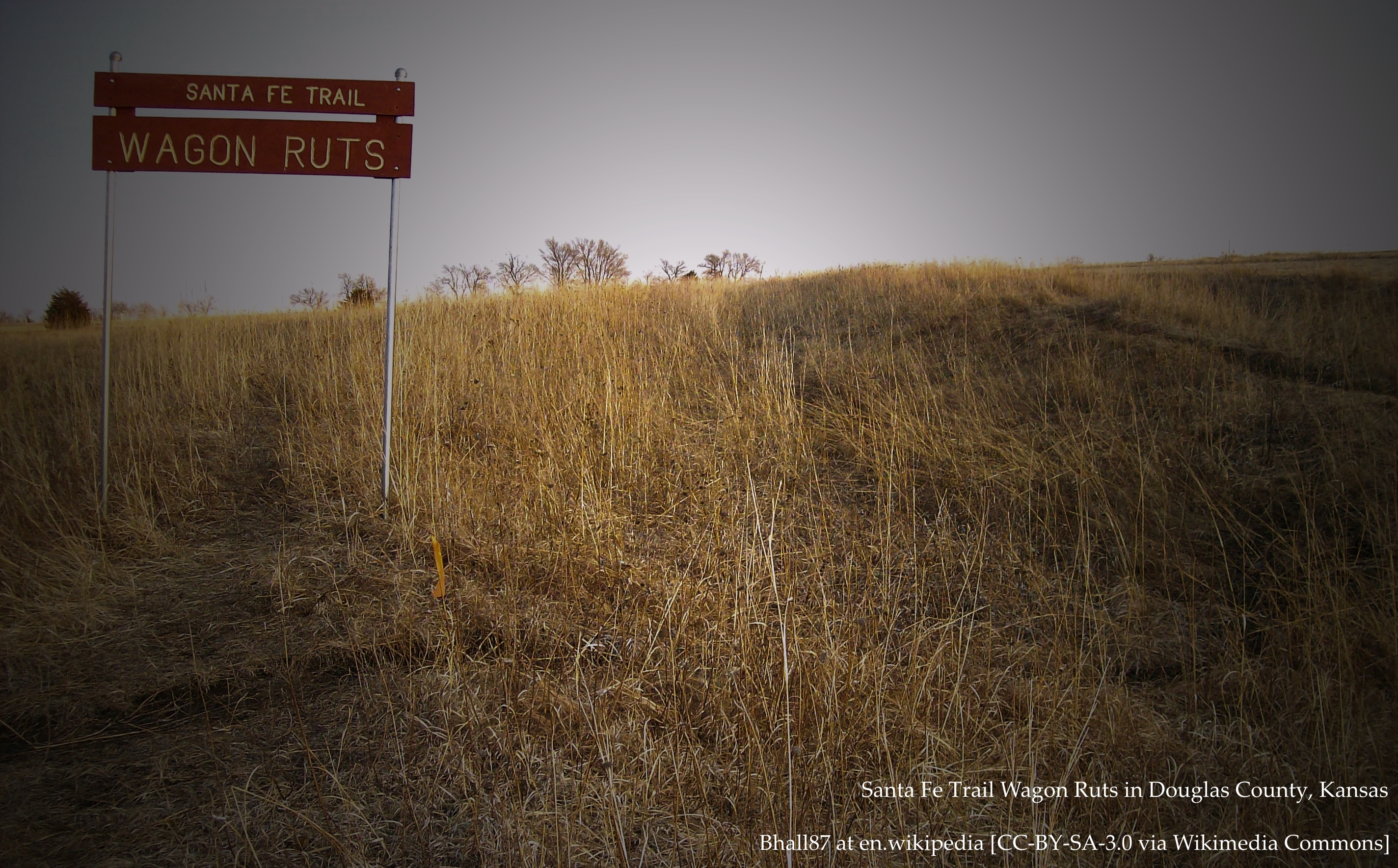
wagonrutts
Wagon Ruts

When I was a little girl, I thought, “I should have been a pioneer woman!” I thought I was strong, and self-reliant. Well, I was. But I am certainly glad that I was not born a pioneer woman or I would have died in child-birth somewhere on the western horizon. The myth of the pioneer woman, though, has stayed with me through time as it is definitely incorporated in some aspects of my personality.

Some of these traits are as named…strong, self-reliant. But I would also add creative, thinking of new ways to do things, starters, innovators, and backbones of their society and of the family. These are all mythical traits with connection to real and imagined features. What I learned as a young girl, where in Colorado I could still see the tire tracks through the prairie, was a one-sided view of a pioneer person.

The truth of the matter is that in order for western expansion to happen, people had to be pushed out and that was the indigenous peoples of North America. So an innovator, starter, pushy pioneer woman and her family was actually displacing native peoples. Bummer. They did not teach us that story in elementary school! Therefore, there is part of that mythology to let go of. The “surviving at all costs” thinking needs to be tempered with an awareness of what it means to negotiate power and an understanding of my own social location.

And there is the other part of my mythology. It stems from a story about my grandfather. He was 1 of 17 kids. Fact. I was told or heard somewhere along the way that my grandfather’s mother was Native American. This would have been one of the tribes from New York. Probably the Cayuga. Who knows? It is a great myth for a girl to latch onto. My pioneer woman is married to a strong, amazing (17 kids!) indigenous woman. That is fun. But what exactly do you do with that when it is hearsay and unsubstantiated? Holding the story became enough. Even when I got older and researched on ancestry.com, I did find the names of the two women that would have been the probable mothers to my grandfather, one was traceable further, the other was simply “Miss Kitty.” Hypothetically, that would be her. Cool. That makes me a smidge of everything. It also explains the profound connection I have with the land of my birth. It does not merely go back hundreds of years, but perhaps thousands. Steadfastness.

And then there is my spiritual mythology. I am a Christian and have a liberal understanding of what scripture is. I don’t hold it tightly in a literal way. But I do hold it tightly in a mythological way. There are amazing stories if we read with subtext and if I read, “In the beginning, there was a formless void.” I can easily imagine everything that the “Big Bang” teaches us from a science standpoint. Spectacular. The Big Bang becomes a new mythology or a new creation story to be incorporated into my life and beliefs.

What is the point of all this myth and where am I going with it?

Myth seems to the story, spoken or unspoken, that we live our lives by. I spend a lot of time talking to people about telling their story. What is your story? What does it tell you? How does it give you life? And stories do not always give life.

Thursday, I was sitting in the juvenile detention center with a youth. He opened up to me in a way he hasn’t in the last 12 months I have known him. He told me more about gangs and gang mythology than I had ever heard before. Oh, he would not have used the words “gang mythology,” but there it was.

“Miss Terri, do you know why we don’t ever say the word donut?”

“Uh, no. I’m not sure I was ever even aware you didn’t say donut.”

“Well, when King David was killed he was in the donut shop. So we don’t say donut out of respect for King David.”

I was mightily confused. King David? King David never went to a donut shop! Donut shops are not even in the Bible! Then it finally dawned on me. He was talking about a gang leader, David Barksdale. Now, I am certain that there has been a conflation of David Barksdale with local gang happenings for reasons that are beyond this discussion, but the point is that it is their myth. Their story. It defines who they are even to the point that they go for “pastries” not “donuts.” (Other parts of their myth – no fish on Friday because of a similar reason, and wear red every Friday to honor their fallen comrades. Oh, and the leaders don’t listen to the young people just like every organization in existence.)

With this conflation of stories about their gang leaders, they recover David Barksdale who did some extraordinary things with his leadership. (Stick with me…this is odd). David Barksdale was from the 1960s/1970s. He died in 1974. He became tired of the killing between gangs and united gangs in Chicago so that they came together in a truce. At that point, he started several social service programs aimed at helping his people have better opportunities. That’s a pretty good myth. (It goes bad again, but at his death and afterwards.)

This young person’s myth was defining who he was in extraordinary ways. He ritualized the mythology of the gang. And in this case, the overall mythology is not life-giving. I would describe it ultimately as death-dealing. So personal mythology or our personal story are very important. They can put or keep us on a trajectory towards greater life or towards death.

Please, let’s choose life.

I asked myself, “What is the myth you are living?” and found that I did not know. So…I took it upon myself to get to know “my” myth, and I regarded this as the task of tasks…I simply had to know what unconscious or preconscious myth was forming me. ~C. G. Jung, The Portable Jung

How do we get to know our myth? What can we recognize as myth? Can we have an understanding that our myths are sacred story created just for us? Here are fundamental questions that typically pop up in mythologies (from Your Mythic Journey):

  • Where did I come from?
  • Why is there something rather than nothing?
  • Why is there evil in the world?
  • What happens to me when I die?
  • With whom do I belong?
  • How close should I be to my individual family members, lover, or friends?
  • What are my duties?
  • What is taboo?
  • What is the purpose of my life, my vision?
  • Whom should I imitate?
  • Who are the heroes and heroines?
  • Who are the villains?
  • Who is the enemy?
  • What are the stages along life’s way?
  • Who are my helpers, guides, allies?
  • What is disease?
  • How can I be purified, healed?
  • What should I do with bounty, wealth, surplus?
  • What is my relationship to animals?

That is a lot of questions and a lot of potential for a variety of answers. The question I don’t see on this list that I would include is “What do I do with suffering?” or “Why do people suffer?” But it is a great list and a great starting point for examining your own personal mythology to see where you are maintaining sacred space (life-giving) or profane space (death-dealing).

Today, if you have time, hold just one of these questions in your mind and explore your personal mythology. As we can see just from the questions, our personal myth illuminates our relationship to the world and the types of actions we take in the world. My wish for you is that you write a story that is life giving for yourself and for the world. Transforming the cosmos into sacred space.

Shalom and Amen.

~Terri

© 2013, post, Terri Stewart, All rights reserved

terriREV. TERRI STEWART is Into the Bardo’s  Sunday chaplain, senior content editor, and site co-administrator. She comes from an eclectic background and considers herself to be grounded in contemplation and justice. She is the Director and Founder of the Youth Chaplaincy Coalition that serves youth affected by the justice system. As a graduate of Seattle University’s School of Theology and Ministry, she earned her Master’s of Divinity and a Post-Master’s Certificate in Spiritual Direction. She is a contributing author to the Abingdon Worship Annual. (The 2014 issue just released!)

Her online presence is “Cloaked Monk.” This speaks to her grounding in contemplative arts and the need to live it out in the world. The cloak is the disguise of normalcy as she advocates for justice and peace. You can find her at www.beguineagain.com , www.twitter.com/cloakedmonk, and www.facebook.com/cloakedmonk.  To reach her for conversation, send a note to cloakedmonk@outlook.com

Posted in Priscilla Galasso

Have Some Divinity

The premise is this: for each day in December, instead of counting down on an Advent calendar, I’m counting the free gifts we all get every day.  (to see the rest of the month’s gifts, visit my blog!) Today’s gift is divinity, but I don’t mean the candy.  I mean The Divine, The Sacred, The Holy and experiences of them.  Don’t we all have the opportunity to receive that every day?  If you look for it, will you find it?  I think so.

So, what is sacred?  How do you recognize the divine and holy?  In art, there’s always a halo or a sunbeam to give you a clue.  What about here on earth?

‘Namaste’ is the Sanskrit greeting recognizing the existence of another person and the divine spark in that person, with the hands pressed together in front of the heart chakra.  I think the divine spark exists in every living thing as the breath of life.  Every encounter with a living thing is an experience of the divine.  We hardly ever act like that is true, however.  But we could.  Native Americans and many African tribes have hunting rituals that celebrate the sacred exchange of life.  The hunted animal is divine, sacrificing itself for the life of the hunter, and the hunter shows a holy appreciation.  Often, when I look at macro photography of living things, flower stamens, insects, mosses, I am compelled to worship the divine in the detail.  Life is sacred and beautiful.  Looking closely and deeply is a way to practice recognizing that.

In a dualistic world view, the mundane and the divine are polar opposites.  One is worldly, one is sacred.  If this world were imbued with holiness, if God became incarnate and entered flesh in this world, those opposites would run together like watercolors.  Many cultures believe this is the truth about life.  The waters under the firmament and the waters above the firmament are separated in one telling of the creation story, but the Spirit of God was moving over all of the waters from the very beginning, even in that story.  The understanding that divinity is everywhere has inspired people all over the globe for centuries.  This place we inhabit is special; it’s valuable.  It’s all holy.  This is the beginning of respect for the Universe and everything in it.  Somewhere in Western history, that idea lost its power.  Earth and everything in it became base and fallen.  Good turned to bad and life turned to death.  I’m not sure if that new idea has been very helpful.  I rather think it hasn’t.  And I don’t think it has to be that way.  It’s an idea, after all.  So if it’s not a helpful idea, why support it?  How would you rather live?  In a fallen world or in a world where the sacred and divine can be found everywhere?  Just wondering out loud.  I’m not saying that one idea is right and the other wrong.  The glass is neither half full nor half empty.  It’s a glass, and there’s water in it.  The rest is conceptual.  Why argue?  Choose how to live with the glass and the water.   As for me and my house, “I choose happy.”  (One of Jim’s conclusive statements.)

I hope this gives you something to ponder for today.  If you like, you can add a scene of Edmund Pevensie in Narnia being asked by the White Witch what he craves.  “It is dull, Son of Adam, to drink without eating.  What would you like best to eat?”  “Turkish Delight, please your Majesty!” he responds.  What if he had said, “Divinity”?  Same story, nuanced.  I would like to taste the sacred in this world, and I believe it’s here.

– Priscilla Galasso

© 2013, essay and photograph, Priscilla Galasso, All rights reserved

004PRISCILLA GALASSO ~ started her blog at scillagrace.com to mark the beginning of her fiftieth year. Born to summer and given a name that means ‘ancient’, her travel through seasons of time and landscape has inspired her to create visual and verbal souvenirs of her journey.

Currently living in Wisconsin, she considers herself a lifelong learner and educator. She gives private voice lessons, is employed by two different museums and runs a business (Scholar & Poet Books, via eBay and ABE Books) with her partner, Steve.

Posted in Essay, poem, Poems/Poetry, poetry, Spiritual Practice, Terri Stewart

Naming Your Sacred Truth

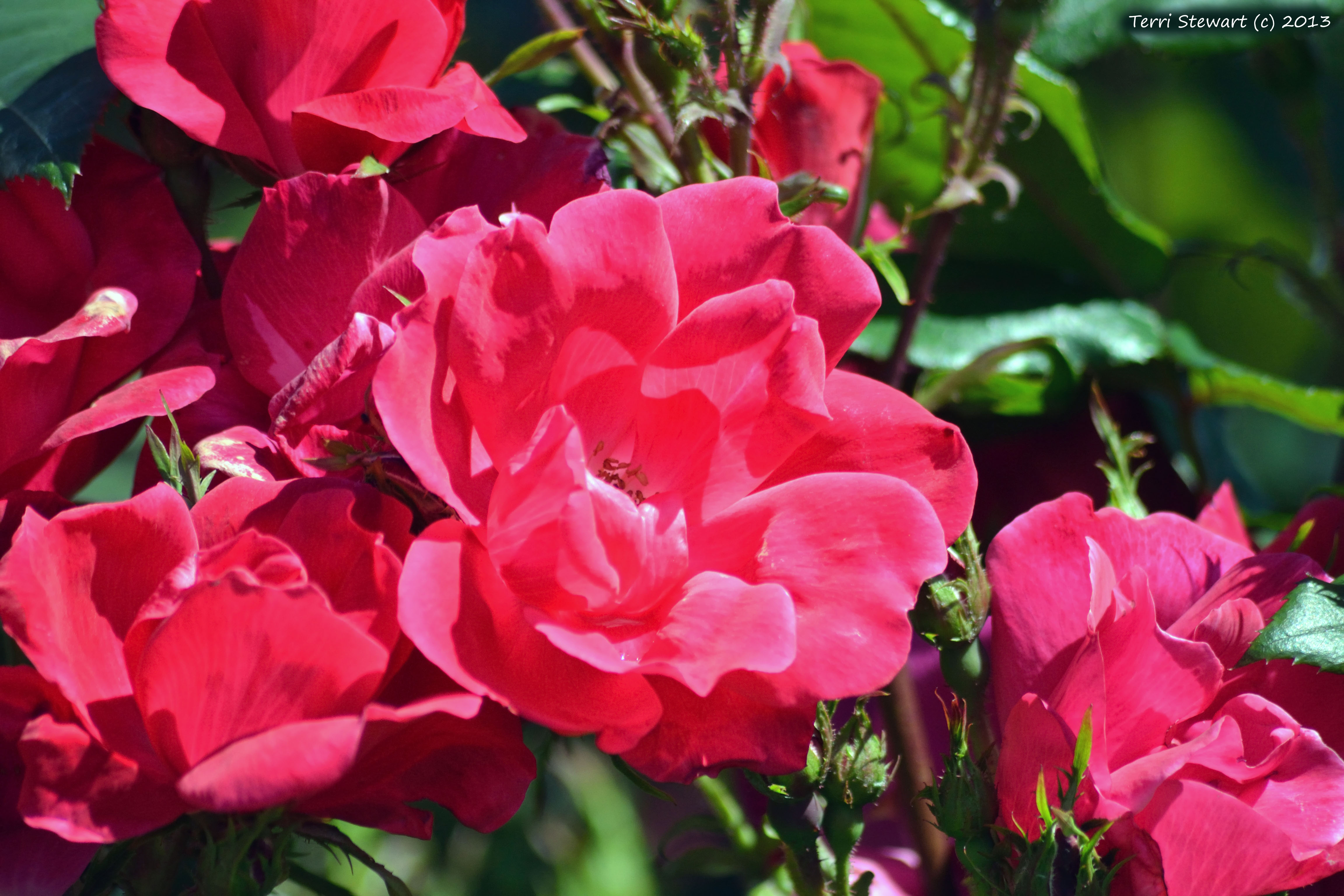
Gloriously Pink by Terri Stewart
Dazzling Pink

Recently, I took a personality test that was required for a program I am participating in. Sometimes, I feel like the most tested person in the world! Meyers Brigg, Gary Smalley, MMPI, an actual interview with a therapist—and I think there were other tests. My organization really, really wants their people to be healthy!

The unique thing about the most recent test – called the DISC – is that it created a public and private personality profile. My “two” personalities were not far off of each other, but they were different. Most significantly, my “D” or dominance trait is very high publicly and only moderately high privately. Meaning, I am bossy.

What a surprise!

Privately, though, my bossiness is exactly balanced with my expressive part of my personality. Meaning, I can be obnoxiously loud! Loud and bossy!

An even bigger surprise!

Not.

Those are just the harsh ways of looking at my personality. Really, I am the head of an organization – if I can’t provide direction, the organization will not succeed. And the expressive + directing can equal playful and silly. Or dramatic. That is the private me.

Question: What does this have to do with spiritual practices or sacred space?

Everything! There is the old adage, “Know thyself.” But it is also, “Know Your Story!” And “Tell Your Story!” (The whole expressive personality thing = exclamation points.)

I am reading a book called Your Mythic Journey by Sam Keen and Anne Valley-Fox. They go into a discussion of public and private personas. Sometimes we think about our authentic selves like it is only possible to be fulfilled if we are 100% “authentic.” Maybe. The questions that spring to my mind are: “Who is your authentic self?” “Is your public self any less important than your private self?” “Are we allowed to protect our fragile bits and keep them private?” “Can we hold personas these in dialogue?” “Is the private self always the healthy self?”

And on, and on.

Today, I’d like to encourage you to glimpse your public and private self through creating a fill-in-the-blank scenarios and then looking at all the words you accumulate to create a revelatory product that illumines the sacred being that we all are.

Pen and paper in hand, sit back and follow the prompts.

Your Public Self

  • Make a list of 10 words or phrases that best describe you using the prompt, “I am ______________ .”
  • Now rank the words/phrases in order of importance
  • Now cross them out one at a time until you are left with your most important trait.
  1. I am playful.
  2. I am smart.
  3. I am disorganized.
  4. I am also organized.
  5. I am faith-filled.
  6. I am compassionate.
  7. I am loud.
  8. I am wise.
  9. I am filled with ideas.
  10. I am creative.

  1. I am compassionate.
  2. I am playful.
  3. I am creative.
  4. I am filled with ideas.
  5. I am faith-filled.
  6. I am smart.
  7. I am loud.
  8. I am wise.
  9. I am also organized.
  10. I am disorganized.

What is your revelatory word? Please leave your word in the comments section to share.

If you would like to take this one step further, I encourage to take your 10 words/phrases and use them as word prompts to create a micro-poem (using as many or as few of the words as you like).

playful love

spatters life dripping

with painted ideas

of

dazzling pinks, blues, and yellows.

swarming compassionately

and loudly causing

chaos

while held together

in

sophic faith.

i. am.

Of course, my private self is not quite so lovey-dovey, dazzling pink, or wise. Often the chaos is on the rise internally or the struggles I have with health are masked out. But that will be a post for another day. Today, embrace the sacred space that you present to the world. I believe that when we don’t have enough faith in our own abilities to be compassionate or loving or wise, we can live into that reality until our inner space matches our outer space.

Shalom and Amen.

~Terri

P.S. I’d love to invite you over for a quick look at the Advent reflections that have been offered at BeguineAgain.com

Thursday, 11/28, The Tipping Point, Essay by Jamie Dedes (The Bardo Group)
Friday, 11/29, Simple Truths, Poem by Kathleen Tenpas
Saturday, 11/30, I Didn’t Want to Move, Essay by David Orendorff
Sunday, 12/1, World AIDS Day, Essay by Tracy Daugherty
Monday, 12/2, Fowler’s Snare, Collage by Judy Alkema
Tuesday, 12/3, An Advent Prayer, Prayer by Mark Sandlin
Wednesday, 12/4, An Angel Came Near, Essay by Tracy Daugherty
Thursday, 12/5, Washed, Poem by Terri Stewart
Friday, 12/6, Zoom In, Zoom Out, Essay by Catherine MacDonald
Saturday, 12/7, The Word Stands, Collage by Laura Esculcas
Sunday, 12/8, The Wolf, Storytelling by Jim Cyr

© 2013, post and photo , Terri Stewart, All rights reserved

terriREV. TERRI STEWART is Into the Bardo’s  Sunday chaplain, senior content editor, and site co-administrator. She comes from an eclectic background and considers herself to be grounded in contemplation and justice. She is the Director and Founder of the Youth Chaplaincy Coalition that serves youth affected by the justice system. As a graduate of Seattle University’s School of Theology and Ministry, she earned her Master’s of Divinity and a Post-Master’s Certificate in Spiritual Direction. She is a contributing author to the Abingdon Worship Annual. (The 2014 issue just released!)

Her online presence is “Cloaked Monk.” This speaks to her grounding in contemplative arts and the need to live it out in the world. The cloak is the disguise of normalcy as she advocates for justice and peace. You can find her at www.beguineagain.com , www.twitter.com/cloakedmonk, and www.facebook.com/cloakedmonk.  To reach her for conversation, send a note to cloakedmonk@outlook.com

Posted in Christianity, Essay, Terri Stewart

Creating room and transformation at Christmas …

800px-Nativity_tree2011Originally published in Rethink Church. Published here with permission.

IT’S ALMOST CHRISTMAS!!! I hear this echoing in my head from years past—from my children’s years, from my own cries, and from my crazy Aunt Nancy (I love you!) who still calls me at zero-dark-thirty to wish me a Merry Christmas.

What I also remember is making lists of what I have bought for the in-laws to make sure everybody got the same quantity and the same monetary value. Making lists for my children so one was not valued in presents more than the other. And stressing out over finding that “perfect gift” for my oldest son who seemed to be unable to express desire for anything. ANYTHING. That is stressful.

But maybe he had the right idea all along! He was unattached to things.

Non-attachment to things of this world is a value greatly revered by the world’s great traditions. What if we slowed down, let non-attachment suffuse the Christmas* season, and began again? What would that mean? What would it look like in our lives?

What if we emptied our lives of the values of materialism, comparison to others, and over-abundance and instead filled it up with the values of spiritualism, self-inventory, and enough? What if we took a journey of emptying rather than filling?

The dichotomy is pretty stark. Empty vs. full. Nobody really wants to run around on empty or having nothing. But there is a trick. By slowing down our lives and refocusing our lives, we can begin again with an attitude pointed towards spiritualism, self-inventory, and being satisfied with enough. Adopting these three counter-cultural traits, creates freedom for new things to happen.

Simplifying creates room for more!

More what? More interior room to listen to that which calls you. More room to see those around you. More room to understand great joy. And more room to feel the world’s great grief. After listening, seeing, understanding, and feeling, there is one more thing—by simplifying, there is more room to offer great love in action to a hurting world.

By emptying, we create room. By making room, the possibility of personal transformation is created. By being transformed, the possibility of action is created. By committing acts of love, mercy, and justice, the possibility of world renovation is created.

And before long, we who were emptied have been filled with love.

Shalom,
Chaplain Terri Stewart

*Christmas season in the secular sense of the word as that time from the day after Thanksgiving to January 1.

©2013, essay, Terry Stewart, All rights reserved
Photo credit ~ Jeff Weese via Wikipedia and under Creative Commons Attribution 2.0 Generic license

terriREV. TERRI STEWART is The Bardo Group  Sunday chaplain, senior content editor, and site co-administrator. She comes from an eclectic background and considers herself to be grounded in contemplation and justice. She is the Director and Founder of the Youth Chaplaincy Coalition that serves youth affected by the justice system. As a graduate of Seattle University’s School of Theology and Ministry, she earned her Master’s of Divinity and a Post-Master’s Certificate in Spiritual Direction. She is a contributing author to the Abingdon Worship Annual.

Her online presence is “Cloaked Monk.” This speaks to her grounding in contemplative arts and the need to live it out in the world. The cloak is the disguise of normalcy as she advocates for justice and peace. You can find her at www.cloakedmonk.comwww.twitter.com/cloakedmonk, and www.facebook.com/cloakedmonk.  To reach her for conversation, send a note to cloakedmonk@outlook.com

Posted in Essay, poem, Spiritual Practice, Terri Stewart, Uncategorized

Sacred Space at Disneyland

I am at Disneyland right now! On vacation! Sometimes I find myself frustrated at the crowds around me and at certain comments from my family (just as I’m sure they are frustrated with me at times!). But my husband said something very wise as we cued up for the Haunted Mansion – he said, “It is like a labyrinth.”

It was! The difference being the labyrinth leads to a holy space and returns you on the same path. And a cue leads to an event and you exist on a different path. But do we really need a bunch of tools in our tool kit to create sacred space? Do I need my Mary Oliver book, my Bible, my candles, a labyrinth? Or do I need to simply be open? In this instant, in this place, simply being open became enough.

I proceeded down the path towards the Haunted Mansion with my heart stretched and my ears open to the sounds of conversation, of the mechanisms of the ride, of the water nearby, or the staff. And I felt the connectivity with the cosmos. The sacred was there. In the cue at the Haunted Mansion in Disneyland.

Of course, intellectually, I know this. But experientially, I forget. I get caught up in being right (if it is my family or politics) or caught up in impatience (a 45 minute cue?!). But if I slow down and begin again, I can recall myself to the center and extend my consciousness outward from my body into the world around me. Greeting my loved ones, strangers, trees, all of it – the cosmos.

The cosmos is also within us, we’re made of star stuff. ~Carl Sagan

We just have to remember!

star stuff drifts

through the cosmos

salvation’s quest

It's A Small World (c) 2013, T. Stewart Cell Phone
It’s A Small World
(c) 2013, T. Stewart
Cell Phone

Shalom & Amen!

Terri

P.S. – I’d love for you to drop by www.BeguineAgain.com and see some of the Advent reflections taking place. Today’s reflection is on World AIDS Day from an unsung hero, Tracy Daugherty.

© 2013, post and photos, Terri Stewart, All rights reserved

terriREV. TERRI STEWART is The Bardo Group  Sunday chaplain, senior content editor, and site co-administrator. She comes from an eclectic background and considers herself to be grounded in contemplation and justice. She is the Director and Founder of the Youth Chaplaincy Coalition that serves youth affected by the justice system. As a graduate of Seattle University’s School of Theology and Ministry, she earned her Master’s of Divinity and a Post-Master’s Certificate in Spiritual Direction. She is a contributing author to the Abingdon Worship Annual.

Her online presence is “Cloaked Monk.” This speaks to her grounding in contemplative arts and the need to live it out in the world. The cloak is the disguise of normalcy as she advocates for justice and peace. You can find her at www.cloakedmonk.comwww.twitter.com/cloakedmonk, and www.facebook.com/cloakedmonk.  To reach her for conversation, send a note to cloakedmonk@outlook.com

Posted in Christianity, Essay, Jamie Dedes, Peace & Justice

THE TIPPING POINT: Good will from and toward women and men everywhere!

Nativité_de_CostaThis is simultaneously blogged on Rev. Terri Stewart’s blog and my own personal blog.

Today begins the first day of our Terri Stewart’s Advent event. There are many bloggers participating in this event. Each day of the Christian celebration of Advent will be sponsored by a different blogger who will post appropriately on his or her site. Their posts will also go up on Terri’s site and the kick-off is on Into the Bardo today.

If you follow Into the Bardo  regularly, you know that we share work here that is not necessarily religious but is reflective of diverse cultures and spiritual paths and representative of universal human values, however differently they might be expressed. This is a space where we hope you’ll delight in learning how much you have in common with “other” peoples.

We acknowledge that there are enormous theological differences and historical resentments that carve wedges among and within the traditions, but we believe that ultimately self-preservation, common sense, and human solidarity will empower connections and collaboration and overcome division and disorder. We work for the tipping point when compromise – an admittedly imperfect peace – will overcome war and respect for life will topple resentment. That may not happen in our time, but it has to start somewhere and sometime and this is our modest contribution toward an end for which diverse people the world over are working.

For those who are not Christian, Advent is the period of time leading up to the Nativity of Christ (Christmas). It is celebrated somewhat differently by different Christian sects and by Roman and Eastern Catholics and Eastern Orthodox churches. I think the details of the celebrations are less important than the scriptural quote for the day …

James 4:1-3
1 Those conflicts and disputes among you, where do they come from? Do they not come from your cravings that are at war within you? 2 You want something and do not have it; so you commit murder. And you covet something and cannot obtain it; so you engage in disputes and conflicts. You do not have, because you do not ask. 3 You ask and do not receive, because you ask wrongly, in order to spend what you get on your pleasures.

Indeed, where do the conflicts and disputes originate: in the cravings that make us restless within ourselves, in coveting things or situations we don’t have (and may not really need), and in not using right means for just ends? These are appropriate considerations as we approach the annual celebration of the “Prince of Peace,” a celebration which is in the end a call for compassion and understanding.

May our compassion have legs.

PEACE ON EARTH
The tipping point:
GOOD WILL FROM AND TOWARD WOMEN
AND MEN EVERYWHERE!

… and Happy Thanksgiving and Happy Hanukkah to those who are celebrating  …

Follow the entire Advent season
with Terri Stewart HERE.

… If you are so inclined, we would be grateful to have this post reblogged. Thank you! …

– Jamie Dedes

© 2013, essay, Jamie Dedes, All rights reserved
Photo credit ~ Pramzan via Wikipedia under CC A-SA 3.0 Unported 2.5 Generic, 2.0 Generic, 1.0 Generic license

Photo on 2012-09-19 at 20.00JAMIE DEDES ~ Poetry remains a gift in disability and medical retirement. It’s a compact thing that I can still manage. I am the founder and host of Into the Bardo, a spirited international collaborative of word-play, music, art and photography where our core team members function independently and yet with a remarkable synergy. They do everything. They are the stars. I have simply created a space in which to share.

For the past five years I’ve blogged at The Poet by Day, the journey in poem, formerly titled Musing by Moonlight (hence the url). Poetry is my spiritual practice.

Posted in Essay, Spiritual Practice, Terri Stewart

Sacred Space in Particles

I am fascinated with astrophysics. And I am probably just skilled enough to be dangerously inept! One thing that just makes my heart flutter is the idea that all matter is already created! We can neither destroy or create matter. (Except that we can, according to the Higgs Boson discovery – but that will be for another discussion!)

In general terms, matter is neither destroyed or created so that essentially the particles we immerse ourselves in are the same particles that have been around forever and ever. The Oxygen molecule I breathe in was perhaps breathed in by some semi-ancient ancestor. Who would I choose to share breath with? Maybe I would connect to some fabulously wonderful pioneering women such as Christine de Pizan or Joan of Arc. Or maybe with some substantial spiritual leaders like Jesus of Nazareth, Gautama Siddartha, or Mary of Magdala. I could be breathing their particles!

I am also breathing the particles that were created at the moment of birth of the cosmos. That rapid expansion of the universe when it really did somehow go from nothing to something. Pushed outward in a violent burst of matter, light, and waves. Culminating in this moment. This time. At least for us. This moment is the culmination. Until the next moment, that is!

So, I was thinking cosmologically in this way and I stumbled across a book called, The Tree. It is a children’s book written by a Pacific Northwest author. I imagined the particularity of matter as residing in the tree. And then I read the story of how this book came about. The author received this story while sitting underneath a Douglas Fir in the Pacific Northwest. He received it as a song, not as a story. He sang it often for various events. Half-heartedly claiming that the tree wrote it.

Later, he was invited to a celebration to celebrate the return of the Madrona Point burial ground to the Lummi people. The tribal chief wanted to hear his song. He sang it. And then offered the story of the song’s origins with the additional wondering, “Did it really come from that ancient Douglas Fir?”

The tribal chief said, “It did. I recognize the tune.” He went on. “It is known in our tradition that each tree has its own song. Our music comes from them. We show our respect for the great trees by singing their songs and playing them on the flute. We must all work to save the ancient groves in our territory.”

Hmm. That is really quite beautiful.

And so, for this offering in the quest towards finding sacred space, I invite you to connect with the particles of the cosmos, the particles of the tree, and to sit back and enter into the story of The Tree.

Shalom and Amen,

Terri

© 2013, post and video, Terri Stewart, All rights reserved

terriREV. TERRI STEWART is Into the Bardo’s  Sunday chaplain, senior content editor, and site co-administrator. She comes from an eclectic background and considers herself to be grounded in contemplation and justice. She is the Director and Founder of the Youth Chaplaincy Coalition that serves youth affected by the justice system. As a graduate of Seattle University’s School of Theology and Ministry, she earned her Master’s of Divinity and a Post-Master’s Certificate in Spiritual Direction. She is a contributing author to the Abingdon Worship Annual. (The 2014 issue just released!)

Her online presence is “Cloaked Monk.” This speaks to her grounding in contemplative arts and the need to live it out in the world. The cloak is the disguise of normalcy as she advocates for justice and peace. You can find her at www.cloakedmonk.com, www.twitter.com/cloakedmonk, and www.facebook.com/cloakedmonk.  To reach her for conversation, send a note to terri@cloakedmonk.com

Posted in Essay, Photography/Photographer, Priscilla Galasso, Spiritual Practice

Habit

Habit might be the enemy of Awareness or Mindfulness.  Doing things routinely without thinking is a practice that allows our mind to wander into the past or the future or the make believe without really being present.  Sometimes, this is just what I want to do!  Yes, I admit to blowing up Mah Jong tiles and Free Cell rows when I want to veg out.  But if I want to be truly alive, I try to pay attention to each present moment.

Thich Nhat Hahn gives a wonderful lesson to Oprah Winfrey on drinking tea mindfully in this clip.  Oprah, out of habit, takes a sip of her tea before the meditation even begins.  I smile, thinking, “how embarrassing!” and noting that I probably would have done the same thing if I wasn’t careful.

Habits can be comforting…and they can lull us to sleep.  Do you want to be awake?  Do you feel like there will be plenty of time to be dead later on?  I do.  Except when I don’t.  It takes a lot of psychic energy to be alive!  Think about all that’s involved when you do a simple thing like climb up a short flight of stairs.  Your weight is shifting, balancing, your muscles are contracting, your toes are gripping, your hand may reach out to the banister, your eyes are measuring the height of each step, you’re breathing with the exertion, and all while trying to remember what you’re going upstairs for!  Walking meditation, tea meditation, stairs meditation…it’s all the same practice of mindfulness.

This picture adds another aspect: Steve in meditation.  I see him every day.  I want to be mindful of that miracle.  He’s alive, different, changing, dynamic, and important.  So am I, but I have a long way to go on that one. Appreciating myself is the hardest practice for me.

Habit

– Priscilla Galasso

© 2013, essay and photographs (above and below), Priscilla Galasso, All rights reserved

004PRISCILLA GALASSO ~  started her blog at scillagrace.com to mark the beginning of her fiftieth year. Born to summer and given a name that means ‘ancient’, her travel through seasons of time and landscape has inspired her to create visual and verbal souvenirs of her journey.

Currently living in Wisconsin, she considers herself a lifelong learner and educator. She gives private voice lessons, is employed by two different museums and runs a business (Scholar & Poet Books, via eBay and ABE Books) with her partner, Steve.

Posted in Essay, Spiritual Practice, Terri Stewart

Finding Sacred Space In the Other

This week in my church, it has been filled with conflict and dissension. That makes for a tough week! Let me clarify – structurally, from the upper echelon of the decision-making bodies, there has been a reinforcement of codified discrimination and what I think is just pig-headed wrongness. Ha! I am not feeling very charitable at all. I always have the choice of staying within the system or leaving. But leaving does not really move the ball forward for me. Why? Because my basic anthropology is that we are all connected. Even if I left this system and surrounded myself with folks that were just like me (how irritating that would be!), I am still connected to the people that I find the most frustrating.

Harrumph.

Then, I discovered this exercise written by Troy Bronson in his book Drawn In. It is an exercise for integration and forgiveness. Or perhaps forgiveness and integration. I am fairly certain that full integration is not possible without forgiveness! At any rate, I have adapted his exercise and now I offer it to you as a spiritual practice to aid in integrating those people that drive us bananas.

Take a piece of paper and fold it in half twice so that you have four quadrants. In the bottom right list your enemies: those who mean harm to you and your family; those who are politically opposed to what you are for; those who persecute you and others associated with your causes and passions.

In the bottom left list your friends: advocates for those associated with your religious, political, or social causes. Write all of this so that both groups are at the bottom of the page, with only a crease separating them.

On the Horizon (c) 2013, Terri Stewart
On the Horizon
(c) 2013, Terri Stewart

Now, draw a horizontal line to separate both groups from the empty top half of the page. Read this adapted version of Psalm 121.

I look to the hills!
Where will I find help?
It will come from the immense force
that created the stars, sun, sky,
And earth.

You are protected by Love,
And Love will not sleep
Or stumble
Or snooze.
Love always is.
Protecting you,
Standing at your right side,

The Tree shades us from the sun
The sun will not harm you
Nor will the
Moon.
Protecting you,
Keeping you safe from
All
Dangers.

The incredible creative force
That was, that is, that shall be
Is with you.
Now and always.
Wherever you go.

Reflect on the line, “I look to the hills!” and imagine that the line you’ve drawn is a horizon line made by hills way off at the distance. Imagine your friends and your enemies looking into a future where all things are met with love, justice, and mercy. Where the separating walls between these two groups are healed and taken down. Where the grievances are forgiven. Where they gaze lightly upon one another and see beloved rather than the other.

Now, offer your thoughts to love and reconciliation choosing to step forward into the hills that were once a divider, but now, as we all step into them, cocoon us in beauty.

Adapted from Ephesians 2:11-22

Don’t forget that you used to be the other! The enemy! They used to call you crude and rude. You were a foreigner in this land with no understanding of tradition. You had no hope and were held far away from life giving love.

Creative, responsive love unites all in peace! Breaking down the laws that separate us – that separated us. Following religious rules that are not grounded in loving kindness is not helpful! We all suffer, feel pain. But we are all one, one body united together. We are in this one life together.

You are no longer a stranger or an enemy! You are beloved. Just as those you persecute are beloved. All who went before you are the foundation for who you are today. And it is held together by Love and grown into holy ground where Loving Kindness dwells.

You are part of that holy ground.
You are holy ground.
They are holy ground.
We are
Holy
Ground.

There is no near and no far.
There is only here.
Be one.

Shalom and Amen,

Terri

© 2013, post , Terri Stewart, All rights reserved

terriREV. TERRI STEWART is Into the Bardo’s  Sunday chaplain, senior content editor, and site co-administrator. She comes from an eclectic background and considers herself to be grounded in contemplation and justice. She is the Director and Founder of the Youth Chaplaincy Coalition that serves youth affected by the justice system. As a graduate of Seattle University’s School of Theology and Ministry, she earned her Master’s of Divinity and a Post-Master’s Certificate in Spiritual Direction. She is a contributing author to the Abingdon Worship Annual. (The 2014 issue just released!)

Her online presence is “Cloaked Monk.” This speaks to her grounding in contemplative arts and the need to live it out in the world. The cloak is the disguise of normalcy as she advocates for justice and peace. You can find her at www.cloakedmonk.com, www.twitter.com/cloakedmonk, and www.facebook.com/cloakedmonk.  To reach her for conversation, send a note to cloakedmonk@outlook.com

Posted in Environment/Deep Ecology/Climate Change, Essay, First Peoples, Michael Watson, Music

Emergent Universe Oratorio Blues

Breeding Barn, Shelburne at FarmsRecently we traveled down to Shelburne Farms for the world premiere of the Emergent Universe Oratorio, composed by Sam Guarnaccia.  The Oratorio is a work that re-imagines the dominant culture’s physics-based creation narrative, and seeks to universalize the story. Before the Oratorio we were treated to the soulful playing of Eugene Friesen, of Paul Winter Consort fame. New Paintings, created for the event,by our friend, the marvelous artist, Cameron Davis, graced the walls in the remarkable, “cathedral-like” Breeding Barn.

Just prior to the performance, Mary Evelyn Tucker and John Grim, Co-Directors of the Forum on Religion and Ecology at Yale, and whose film of the same title was the inspiration for the oratorio, spoke. They acknowledged, and expressed appreciation for, Indigenous friends and adopted family. (No Indigenous people spoke.) They then spoke about a vision they hold, in which all of the Earth’s people have one creation story, a story that leads us to an Earthly paradise.

The Oratorio draws on texts from many Western traditions, but appears to include no Indigenous authors. This is problematic and, unfortunately, common in the Deep Ecology world. ( I have been reviewing Ecopsychology texts in preparation for teaching and have noticed a paucity of Indigenous voices, even in texts published this year.)

Of more concern is the notion that any narrative should be the ONLY narrative. This is an idea Indigenous people know well, whether presented in the guise of religious or economic dogma. The very idea of a universal point of view is imperial and colonizing, and alien to Native American cultures. We have many creation stories, each loved and valued.

I was feeling rather blue as I read the text and listened to the lovely melodies of the oratorio. I imagined myself to be the only one in the audience of hundreds who was discomforted. Then intermission came and others stopped by to share their concerns. As so often happens following such events, the concert has remained a topic of conversation at our house.

A few days ago I was having coffee with a Six Nations friend. Out of the blue he looked me in the eye and said, “I am so appreciative of time with you. It’s such a relief to not have to explain myself.” When I asked what he meant, he replied that I understood his struggles and, although we are from different tribal backgrounds, we share a similar ethos. Sometimes I forget how wide the divide between cultures can be in one geographically defined country. To be reminded, as I was at the concert, of the chasm we cross daily can be painful indeed.

– Michael Watson, Ph.D.

© 2013, essay and photographs (includes the one below), Michael Watson, All rights reserved

michael drumMICHAEL WATSON, M.A., Ph.D., LCMHC (Dreaming the World) ~ is a contributing editor to Into the Bardo, an essayist and a practitioner of the Shamanic arts, psychotherapist, educator and artist of Native American and European descent. He lives and works in Burlington, Vermont, where he teaches in undergraduate and graduate programs at Burlington College,. He was once Dean of Students there. Recently Michael has been teaching in India and Hong Kong. His experiences are documented on his blog. In childhood he had polio, an event that taught him much about challenge, struggle, isolation, and healing.