Posted in Environment/Deep Ecology/Climate Change, General Interest, Peace & Justice

CHERISH HOME

Carl Sagan (1934-1996)

American astronomer, astrophysicist, cosmologist, author and popularizer of natural and space science

CARL SAGAN was the David Duncan Professor of Astronomy and Space Sciences and Director of the Laboratory for Planetary Studies at Cornell University. He played a leading role in the American space program since its inception. He was a consultant and adviser to NASA since the 1950’s, briefed the Apollo astronauts before their flights to the Moon, and was an experimenter on the Mariner, Viking, Voyager, and Galileo expeditions to the planets. He helped solve the mysteries of the high temperatures of Venus (answer: massive greenhouse effect), the seasonal changes on Mars (answer: windblown dust), and the reddish haze of Titan (answer: complex organic molecules). 

Here Sagan puts things into perspective for all human kind: As we celebrate our mothers and our mothering, may we also celebrate Mother Earth with right living and right stewardship.

Video posted to YouTube by CarlSaganPortal.

Earth as seen from Apollo 17.

“A mote of dust suspended in a sunbeam . . . ” Carl Sagan

HAPPY MOTHER’S DAY

FROM THE BARDO GROUP BEQUINES!

Posted in Essay, John Anstie, Poems/Poetry

A Ballad for Stabat Mater (Mothering Day)

Archetypal Gothic Lady of Sorrows from a triptych by the Master of the Stauffenberg Altarpiece, Alsace c. 1455

I had written a poem for Mothering Sunday, or Mother’s Day as it is commercially known, which was a few months ago, now. However, I somehow felt it an appropriate story to raise here on Into The Bardo. This is because of the meaning I understand the word ‘Bardo’ has; that is to say a ‘transitional state’ that the Stabat Mater must have entered whilst having to process the extreme emotions provoked by such a harrowing experience, perhaps not the transitional state intended by Buddhist groups, who conceived of this condition, but a transitional state that will, more likely, have provided a protective blanket to help her through the pain.

The poem A Ballad for Stabat Mater struck me on several levels. I had already previously written a poem for my son’s thirtieth birthday (The Fourth Age of Man), basing it on William Shakespeare’s Seven Ages of Man (a monologue, which he wrote to open his play, “As You Like It”). Incidentally, I found it particularly poignant to note that my son had almost reached the same age as Jesus Christ was alleged to be, when his own mortal life ended. So, the latter never had the chance to taste the next three ages; or, perhaps, he lived all seven in that short span of life?

This poem, written in the form of a ballad, was, once again, influenced by Shakespeare’s “Seven Ages of Man”, but this time includes all seven ages. Also, it was, perhaps not surprisingly, heavily influenced by the Stabat Mater, that unforgettable and extraordinarily moving image of this religious icon, Mary, the mother of all mothers, as she stood and watched her own son die, painfully. Stabat mater dolorosa, meaning the sorrowful mother stood, is a masterful understatement. How many mothers could submit themselves to such unbelievable pain! And yet all mothers do, albeit mostly to a lesser extreme, for as long as they live.

I salute all mothers, however good or bad a mother you may think you are, you have still had to suffer for your children.

I hope you enjoy the poem.

A Ballad for Stabat Mater

Do you remember radiance
of one who’s always there
the taste of swollen mamilla,
the scent of her sweet hair.

Whose kiss and gentle healing touch
was cooling with a balm
that soothed your painful childish graze
and injured pride becalmed.

Who taught you that a healing touch
and kiss could lead to more;
whilst she embraced competing love,
you found what love is for.

She stood as you went off to war,
to fight life’s bitter battles.
She taught you all you need to know
to rise above mere chattels.

As wisdoms, many, come to you,
from battles won or lost,
a mother’s love transcends it all
and never counts the cost.

In your old age you may well see
your children bear their own,
revealing then the seeds of love
that Stabat Mater’s sown.

When dotage dims your consciousness,
confusion blurs your view,
expect a revelation that
her love has seen you through.

– John Anstie

© 2012 John Anstie, poem and portrait below, All rights reserved
Photo credit ~ Mater Delorosa by Alsace, Haut-Rhin, Colmar Unterlinden Museum via Wikipedia under Creative Commons Attribution 2.0 Generic

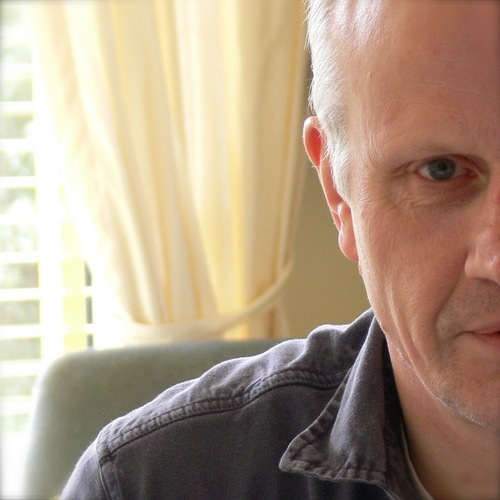
John_in_Pose_Half_Face3JOHN ANSTIE (My Poetry Library and 42) ~ is a British poet and writer, a contributing editor here at Bardo, and multi-talented gentleman self-described as a “Family man, Grandfather, Oc casional Musician, Amateur photographer and Film-maker, Apple-MAC user, Implementation Manager, and Engineer.  John participates in d’Verse Poet’s Pub and is a player in New World Creative Union. He’s been blogging since the beginning of 2011. John is also an active member of The Poetry Society (UK).

product_thumbnail.php51w-rH34dTL._BO2,204,203,200_PIsitb-sticker-arrow-click,TopRight,35,-76_AA300_SH20_OU01_

John has been involved in the recent publication of two anthologies that are the result of online collaborations among two international groups of amateur and professional poets. One of these is The Grass Roots Poetry Group, for which he produced and edited their anthology, “Petrichor* Rising. The other group is d’Verse Poet Pub, in which John’s poetry also appears The d’Verse Anthology: Voices of Contemporary World Poetry, produced and edited by Frank Watson.

Petrichor – from the Greek pɛtrɨkər, the scent of rain on the dry earth.

Posted in Essay, memoir, Naomi Baltuck

Mom Always Said…

Hope for the best, expect the worst, and try not to be disappointed.   My mother’s life philosophy was actually pretty upbeat for a kid whose family lost everything during The Great Depression, including her father, who died of Brain Fever when she was only eight.  Grandma Rhea supported her children by sewing and taking in wash.  My mom shared a bed with Grandma, so they could rent out her room to make ends meet.  But they didn’t always quite make it.  In the freezing Detroit winters, they nailed blankets over the windows because they couldn’t afford coal to heat the house.

Their only book was the family bible.  But Mom found a copy of Alice in Wonderland in a box of textbooks left by a renter.  She read it cover to cover.  As soon as she finished, she turned back to the first page and started over.  She had discovered her passion and her escape–in books.

Mom was the first in her family to attend college, working her way through by reading to blind students.  A person of quiet, if impractical passions, Mom passed on normal school and secretarial school to study Classical Greek and Latin, French, German, and Russian.  Italian, too, but she said that hardly counted.  “After Latin,” Mom said, “Italian is a snap.”

I remember going home from college to visit one weekend.  There were index cards by Mom’s reading chair, on the kitchen windowsill, on the nightstand by her bed.  They had strange writing on them.

“It’s Greek,” she explained.  “Passages from The Iliad, by Homer.”

“Why?” I asked.

“I’m memorizing it,” she said.

“But why?”

“For fun, dear.  After I’ve memorized The Iliad, I’m going to memorize The Odyssey.”

As a young college grad, she had never shown any interest in men, and was still living at home while working for the War Department.  Grandma planned on having a spinster daughter to keep her company in her old age, unaware that Mom had already promised herself she would move out and find a place of her own by her 25th birthday, if she hadn’t gotten married by then.   Mom just hadn’t met her intellectual equal.  Then Harry Baltuck came along.

He was handsome, funny, brilliant; every woman in the office had her eye on him.  But he had eyes only for Mom.  She was so nervous on their first date that she threw up in his car.  Actually, she threw up every time they went out.  “But he kept coming back,” she said, laughing.

He was intrigued, and not just because she was determined to remain a virgin until her wedding night.  It was a very quick courtship.

His proposal wasn’t exactly story book.  “Well, what if we made it legal?” he asked.

“Would you wear a ring?” she countered.  And the rest is family history.

They traveled many peaks and valleys in their time.  They had seven children and eighteen years together.  She was still young when widowed, and Mom received several proposals from Daddy’s friends and army buddies; some decent and well-intended, others not so much.  But Mom didn’t take anyone up on his offer.  She never remarried, or even dated.  Books, once again, became her passion and her escape.

In 1989, I sat at her bedside as she lay dying of cancer.  It had been a long hard battle.  Mom looked up and caught her breath.  “Harry,” she whispered.

“What did you say, Mom?” I asked.

“Harry!”  She pointed toward the door, but I saw nothing there.

“Mom, do you see someone?”

“It’s Harry,” she said, nodding.  “He’s standing right there.”

Was it the delusion of a dying woman?  Or the love of her life, who had been patiently waiting for twenty-five years to take her home?

Let’s hope for the best.  Just like Mom always said, you have to hope for the best.

All images and words c2012 Naomi Baltuck

NaomiPHOTO1-300ppi51MC3SKEF0L._SY300_NAOMI BALTUCK ~ is a Contributing Editor and Resident Storyteller here at Bardo. She is a world-traveler and an award-winning writer, photographer, and story-teller whose works of fiction and nonfiction are available through Amazon HERE. Naomi presents her wonderful photo-stories – always interesting and rich with meaning and humor – at Writing Between the Lines, Life from the Writer’s POV.

Naomi also conducts workshops such as Peace Porridge (multicultural stories to promote cooperation, goodwill, and peaceful coexistence), Whispers in the Graveyard (a spellbinding array of haunting and mysterious stories), Tandem Tales, Traveling Light Around the World, and others. For more on her programs visit Naomi Baltuck.com

Posted in Essay

Reflections, In Honor of Mother’s Day


Once, when we were running late, I was waiting impatiently to lift my little boy Eli into his car seat, while he studied a bug on the driveway.  “Hurry up!” I said.  “We’re going to be late.”

Puzzled, my little boy looked up at me and said, “Mommy, why are you using that tone of voice?”

Such a grownup expression from the mouth of the babe!  And it took my breath away.

“You’re right, honey,” I told him. “It’s not the end of the world if we’re late to pre-school, and it wouldn’t be your fault, if we were.”

Eli and I had a good look at the bug, while I quietly reflected upon what kind of parent I wanted to be.  Which memory of me would I want my kids to look back on and remember me by?  My mother once told me, “The best friends you’ll ever have are the ones you raise yourself.”  Bless her!  Bless them!  Bless us all!

I love that tee shirt that says, “Please let me be the person my dog thinks I am.”   But I aspire always to be the person my kids think I am.

All words and images copyright Naomi Baltuck

NaomiPHOTO1-300ppiNAOMI BALTUCK ~ is a Contributing Editor and Resident Storyteller here at Bardo. She is a world-traveler and an award-winning writer, photographer, and story-teller whose works of fiction and nonfiction are available through Amazon HERE. Naomi presents her wonderful photo-stories – always interesting and rich with meaning and humor – at Writing Between the Lines, Life from the Writer’s POV. She also conducts workshops such as Peace Porridge (multicultural stories to promote cooperation, goodwill, and peaceful coexistence), Whispers in the Graveyard (a spellbinding array of haunting and mysterious stories), Tandem Tales, Traveling Light Around the World, and others. For more on her programs visit Naomi Baltuck.com

Posted in Creative Nonfiction, Jamie Dedes, Uncategorized

Those Infamous New York Moms

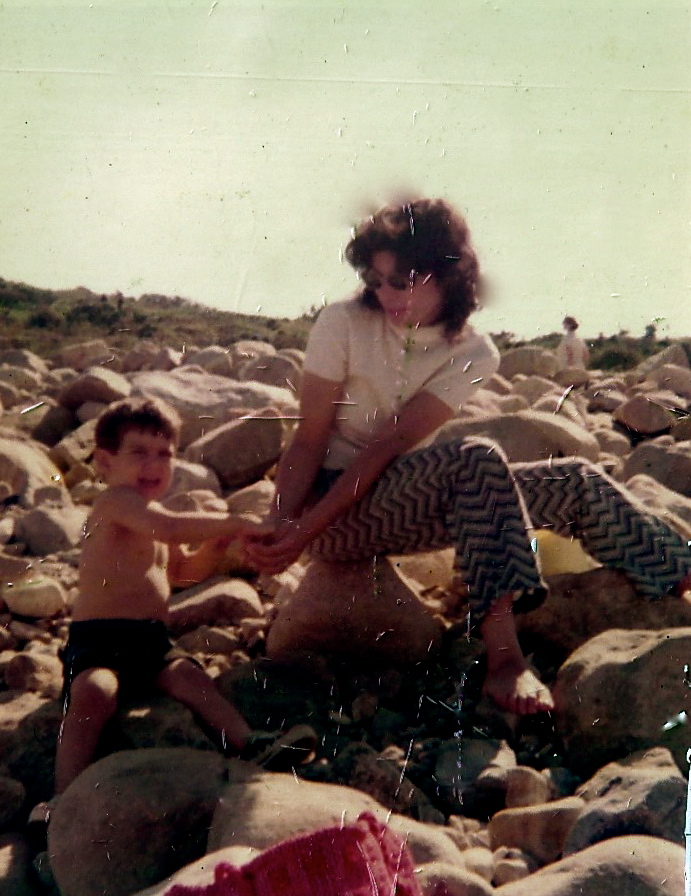
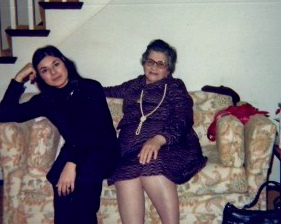
Mom and Me 1950, Brooklyn
Mom and Me
1950, Brooklyn, NY

A woman in Brooklyn decided to prepare her will. She told her rabbi she had two final requests. First, she wanted to be cremated. Second, she wanted her ashes scattered over the local shopping mall.

‘Why the shopping mall?’ asked the rabbi.

‘Then I’ll be sure my daughters will visit me twice a week.’

I met my Jewish friend, Laurel, when she came to a meeting at our local meditation center in Northern California where we now live. Laurel and I  got on right away. We both like Broadway shows, music and opera, reading, writing, and good meals seasoned with great conversation. She’s from Great Neck, LI in Nassau County. I’m from

Me and Rich 1972, Montauk Point, LI, NY
Me and Rich
1972, Montauk Point, LI, NY

the Center of the Universe, Brooklyn. We’re about the same age. So we come from the same time and, essentially, the same place.

Now New York moms get a bad rap, especially Jewish moms – but none of us gets off free. Laurel reminded me of that yesterday with a stereotypical New York joke at the expense of mothers. These jokes usually illustrate moms making caustic remarks or their attempts to foster guilt in adult children. While we do use regional idioms and have a distinct style of delivery, I’m really not sure that mothers from our time and place have the corner on either caustic commentary or the laying on of guilt. New York moms can’t be the only ones who, when distressed by a child’s behavior, say or at least think – despite how treasured the child … and they are treasured – “For this I was in labor thirty-six hours.”

Like all of us, my mother was very much in process and very much a product of her place and time. Among other things, what that means is that modesty was a primary concern. For my Maronite (Eastern Catholic) mother this included modest dress, which in turn included girdles. Now I’ve got to tell you that until I hit forty I was mostly underweight. In fact at Christmas when I was nineteen, I stood 5′ 3 1/2″ and, though I was three months pregnant with my son, I weighed only ninety-three pounds. Nonetheless, from my thirteenth year until her death when I was forty, my mother was adamant that I should wear a girdle so that I wouldn’t “jiggle.” That would be immodest and unseemly. Only my mother, I would think, would put me through this torture for nothing. As my husband said, “What’s to jiggle? If she turned sideways and stuck out her tongue she’d look like a zipper.”

Those old, typically New York jokes at the expense of our mothers were funny because there’s an element of truth in them. Our mothers often did pave the pathways to their homes and hearts with guilt. They could be cruelly caustic. They were as tough as life. They tended to be rigid and narrow on some sensitive subjects. But they were also present. They were idealistic. They worked hard in their homes and at their jobs, where they were grossly underpaid. Many of them worked for hours each week to make the most unbelievably complex old world dinners for traditional Sundays that included religious services and large gatherings of extended family and orphaned friends and neighbors.

No matter how difficult things got, these sturdy immigrant and first-generation American women did not resort to drugs, alcohol, or beatings. They went to bat for us at school. They got us into the best schools they could afford and kept us in school for as long as they could afford to do so. They protected us from old lechers and young men who did not have “honorable” intentions. Kudos and compliments were about as common as Dodo birds in the twenty-first century; but secretly they were pleased and would proudly show photographs of us to their friends and boast of our accomplishments. It took me years to appreciate their insecurities and motivations.

Mom and me 1980, San Francisco, CA
Mom and me
1980, San Francisco, CA

You can tell by the posture in the photo to your right, that moving into my thirties, I was still struggling with mixed feelings. The reason in this particular case: Before I went to work one morning, I left money on the kitchen table for a pizza. I called home at 5:00 p.m. as I was leaving the office and asked my mother if she’d order the pizza right away because I was “starving.” I got home and “binged”: I ate one slice of pizza and left the crust. “I thought you were hungry,” Mom said. “I was.”  The fact that I was thirty and still “eating like a bird” and underweight disturbed her. In turn, I was disturbed because she was still trying to tell me how to eat. I do the same sort of thing to my son now, not about food, but about other things.

I miss my mother and am thinking of her even more than usual with Mother’s Day soon to arrive. I wish she was here nagging me to clean my plate. I finally understand. As the saying goes, “We grow too soon old and too late smart.”

– Jamie Dedes

© 2013, feature and all photographs (from our family album, please be respectful), Jamie Dedes, All rights reserved

Photo on 2012-09-19 at 20.00JAMIE DEDES ~ My worldly tags are poet and writer. For the past five years on medical retirement due to a chronic, potentially life-threatening illness, I’ve blogged at The Poet by Day, formerly titled Musing by Moonlight. The gift of illness is more time for poetry. Through the gift of poetry (mine and that of others), I enter sacred space, the common ground that is our true home.

Posted in Art, Nature, Paula Kuitenbrouwer

Honoring the Mother

Mother’s Day is a celebration honouring mothers and motherhood, maternal bonds, and the influence of mothers in society. Nowhere it says it is only for human mothers, so let’s have a look at two bird-mothers.

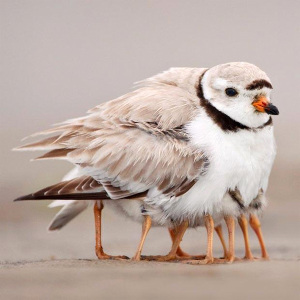
baby_birds_hiding_under_mother_wing
The first second I saw this photo, I thought it was gross because the bird looked distorted. However, a serious deformation as having 4 pair of extra feet is a bit too much to take. Close inspection learns that this Common Ringed Plover is sheltering her chicks from the cold wind that can make their habitat, the beach, rather unpleasant. Mummy Ringed Plover will regularly do this till the chicks have replaced their fluffy down with insulating feathers.

Imagine being a chick Ringed Plover and just walking into the warm, insulating plumage of your big mum and having a chat with your siblings. I bet mummy-bird is enjoying this peaceful moment of having all her chicks near her too.

This peaceful moment is a pause in the paradoxical task that characterizes motherhood; mothers have to keep their offspring close to gear them safely in to adulthood, adulthood that is all about growing away from the parents. Keeping them close in order to let them go.

Here is another mummy-bird, shielding her chicks to keep them safe and warm.

70-dove-under-the-wing-from-e-mail

I like to point out that I can’t state for sure that above photos are depicting mums with chicks. The Dove and Common Ringed Plover can be fathers. They can be those excellent fathers that care about their youngsters. Mothering isn’t exclusively done by mothers. Therefore, if Mother’s Day is about mothering, caring and loving, we should celebrate Mother’s Day with all who care, love, and share. And this includes childless couples, cooks, nurses, doctors, and all those who take others under their wings for a cuddle, a dinner, a supporting hug, or a bit of warmth.

– Paula Kuitenbrouwer

© 2013, essay, photographs and artwork, Paula Kuitenbrouwer, All rights reserved

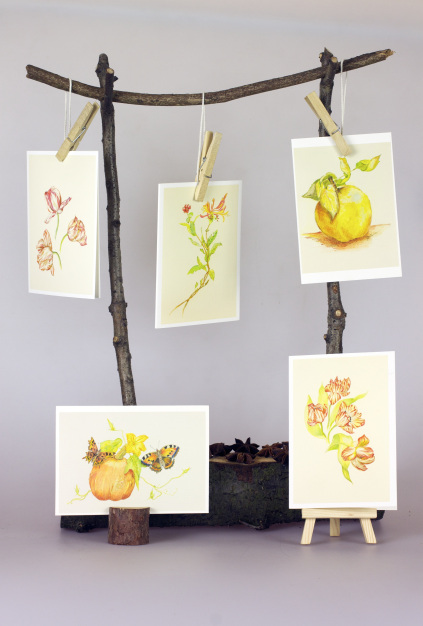
mg_4414paulaPAULA KUITENBROUWER is a Dutch nature artist living The Netherlands and sharing her work with us on her blog, Mindful Drawing and on her website. Paula says, “Mother’s Day is about a hug or a poem. Nothing more is needed. But if gifts are given; flowers express gratitude and love.”  She’s designed a Mother’s Day Gift-set for the 12th of May.You can purchase her art HERE.

In addition to art, Paula’s main interest is philosophy. She studied at the University of Utrecht and Amsterdam. She has lived in Eastern Europe and in Asia. Paula says that in Korea, “my family lived next to a Buddhist temple. In the early morning we would hear the monks chanting. During my hours of sauntering with my daughter through the beautiful temple gardens, I felt a blissful happiness that I try to capture in my drawings.” Paula sometimes teaches children’s art classes. She lives with her husband and daughter and close to her father. We are often honored with and most grateful for the wise and gentle posts from our much-valued Paula.

Posted in Jamie Dedes, Teachers

HONORING THE ULTIMATE MOTHER: Falling back in love with Mother …

THICH NHAT HANH (IN BROWN) AT HUE CITY AIRPORT, VIETNAM (2007)

“The situation the Earth is in today has been created by unmindful production and unmindful consumption. We consme to forget our worries and our anxieties. Tranquilizing ourselves with over-consumption is not the way.”  Thich Nhat Hanh, 2010, Tricycle Magazine

The Guardian UK posted an article in February that was written by Jo Confino and in which the dear Zen teacher, Thich Nhat Hahn, discusses his views on current environmental challenges and the need for a spiritual revolution to address them. I hope you will link through and read the article today or watch the interview video below in honor of our ultimate Mother, Earth. In Metta on Mothers Day, J.D.

“Zen master Thich Nhat Hanh has been practising meditation and mindfulness for 70 years and radiates an extraordinary sense of calm and peace. This is a man who on a fundamental level walks his talk, and whom Buddhists revere as a Bodhisattva; seeking the highest level of being in order to help others.

Ever since being caught up in the horrors of the Vietnam war, the 86-year-old monk has committed his life to reconciling conflict and in 1967 Martin Luther King nominated him for the Nobel Peace Prize, saying “his ideas for peace, if applied, would build a monument to ecumenism, to world brotherhood, to humanity.”

So it seems only natural that in recent years he has turned his attention towards not only addressing peoples’ disharmonious relationships with each other, but also with the planet on which all our lives depend.” MORE

And here is the video of the interview:

Photo credit ~ courtesy of Lu’u Ly via Wikipedia and generously released into the public domain.

Video ~ uploaded to YouTube by  .