The BeZine Blog

Posted in General Interest, John Anstie, poem, Poems/Poetry, poetry

An Apology from Your Grandfather

(for Nathaniel)

This poem was written last November shortly after the birth of my third grandchild, a second grandson, and the first child of my son and his wife. I put it away for a while to ‘rest’, because I felt it wasn’t quite there; that it still needed something to make it work. Three months later, following several edits and adjustments, whilst it is perhaps less like poetry and more a narrative, (and was it Leonardo da Vinci himself who said that a work of art is never complete, only abandoned?) I have decided that I should let it go. I hope my grandson, when he’s old enough, all my grandchildren and onward generations, may find some use or ornament for it, to give them perspective on their own situations, whatever they may be, and to help guide them in their journeys through life …

The countryside was flush with gold
to celebrate your arrival; the season
was in suspense, as if to make
your first tiny footprint on the earth,
amidst the clamour of a thousand nativities,
as if a gift of God for this, your birth,
a special and harmonious event.

At the cusp, where Autumn meets with Winter,
a splash of golden hair defined you;
the gilding of a perfect crown,
was like the golden fleece,
that vaunted prize of Ancient Greece
in Jason’s time, when boys grew into men
before the age of their true making.

Your first year, centenary of a date
when Europe burned with anticipation
of conflict, a bloody affair, for which
no true atonement was ever offered,
for which we feel a great collective guilt
but which, we hope, will remain
a part of history. Not your future.

Your future shall be focused,
neither on the clock that ticks,
that divides time into segments of life;
that numbs the mind with endless drudge;
that defines your living to the end;
nor shall it confine your path
to the relentless quest for gain.

It is not control that you shall seek,
but access to a pantheistic knowledge,
enabling a different class of power,
the faculty for influence over those,
who misused the privilege they have,
that we, your forebears, allowed them.
For this I repentantly apologise.

If nature no longer holds its strength to live,
to refresh itself, to recover its flush and thrive,
it will be human beings, who prevailed
on its demise, for which there’s no excuse.
Beyond mere human frailty, there seems no will
to cease remorseless greed and just survive.
But the Earth owes us a big fat nothing!

So, if my undoubted compassion
does not have wings; if I do not transform
my rising anger into constructive deeds,
in such a way to help move hearts and minds
in concert, so to invest in change;
if thus, and I’m too frail or weak,
remorse will overcome my heart.

But have I yielded to our defeat?
No. I’ll neither submit to this old foe
nor will my pen cease in my hand,
whilst ever I have breath and mind
to speak out from the crowd.  I find
it sad to say that much is left to do,
which leaves an adverse legacy for you.

What do I expect of you, or you of you?
I know that I can ask, but cannot make;
I know you’re blessed with your own will,
but you will find that one thing will prevail:
the greatest force for life is family;
a force defying selfishness and greed,
which always gives us hope in time of need.

It shall be fuel that fills you, every day,
from your Stabat Mater, your Trojan Father,
whose care and energy will long endure,
imbuing you with superhuman strength,
for which there is no substitute;
that no amount of gold will ever buy.
Integrity and truth is born of this.

There is one thing I know will light your way,
’till time and tides are done and trees are gone.
This energy and fortitude, integrity
and strong desire, will all be borne
to you and, through you, to your children;
and so, through them, ancestral grace
will lead them to conquer the World!

It is the one enduring human quality
that is, more than mere emotion,
the omniscient and greatest power of all;
one word, one gift, which represents
life’s longing for itself, from me to you,
a kind of magic that will heal the World
… with pure, undying, unconditional Love.

© 2013 John Anstie
John_in_Pose_Half_Face3

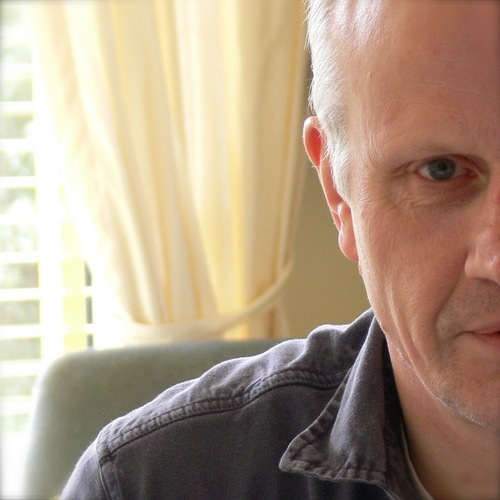
JOHN ANSTIE (My Poetry Library and 42) ~ is a British writer and poet, a contributing editor here at Bardo, and multi-talented gentleman self-described as a “Family man, Grandfather, Occasional Musician, Amateur photographer and Film-maker, Apple-MAC user, Implementation Manager, and Engineer. John participates in d’Verse Poet’s Pub and is a player in New World Creative Union. He’s been blogging since the beginning of 2011. John is also a member of The Poetry Society (UK).

*****
product_thumbnail-3.php

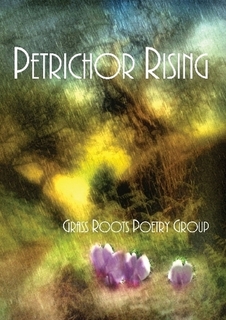
51w-rH34dTL._BO2,204,203,200_PIsitb-sticker-arrow-click,TopRight,35,-76_AA300_SH20_OU01_John has been involved in the recent publication of two anthologies that are the result of online collaborations among two international groups of amateur and professional poets. One of these is The Grass Roots Poetry Group, for which he produced and edited their anthology, “Petrichor* Rising. The other group is d’Verse Poet Pub, in which John’s poetry also appears The d’Verse Anthology: Voices of Contemporary World Poetry, produced and edited by Frank Watson.

Petrichor – from the Greek pɛtrɨkər, the scent of rain on the dry earth.

Posted in Culture/History, Essay, General Interest, Priscilla Galasso

Model Behavior

I don’t have a television, so I don’t see a lot of commercials. Still, I find NBA games on the internet and catch a few ads in the process. There’s one for a fried chicken franchise that particularly bothers me. Here’s the set-up: two teenaged kids have made a rare venture out of their rooms to join their parents for dinner. They are still plugged into their media devices and never speak or make eye contact with the camera or their parents. The African-American family sits in the living room with a bucket of chicken on the coffee table. Mom & Dad tell the camera that the chicken is the occasion for them to have this special “family” experience. Dad jokes that if the batteries run down, they might actually have a conversation.

 Sigh. Is this an accurate snapshot of our current culture? Rewind about 100 years.

 I’m reading a book called Nothing To Do But Stay: My Pioneer Mother by Carrie Young. The author describes her life in North Dakota during the Great Depression. Her mother had acquired land as a homesteader, married and raised 6 kids on the farm. Her sisters struggled to become educated and get jobs as school teachers in local one-room schoolhouses. One particularly brutal winter, their parents found it more sensible to drop off the 18-year-old daughter, the teacher, with the two younger sisters at school and let them stay there during the week instead of transporting them back and forth through the snow drifts by horse-drawn wagon. The week turned into months. Fresh supplies were delivered every week, but these 3 young ladies spent that winter relying on their own resourcefulness for their daily life — with no electricity, simply a coal-burning furnace in the basement and a woodstove with one burner in the classroom. How is that possible? I’m sure that life was one that their parents had modeled for years.

 Compare these two snapshots and imagine the changes that have swept through our country. What has “adult living” become? What do we model for our children these days? What skills are being delegated to machines or service companies or ‘experts’ that used to be more universal and personal? Besides modeling tasking skills, how do we model social and moral skills in this decade?

 When more families were farming, children grew up alongside their parents and were incorporated into communal activities. They helped milk the cows, tend the garden, and make the food and clothing they all needed to live. In the 50s, when more families lived in cities and suburbs, Dad would drive off in the morning and work out of sight of his kids all day while Mom would turn on appliances to do the chores around home. The kids learned consumerism. Then the Moms left the house and went into the workforce leaving the kids in daycare. In 1992, someone came up with “Take Your Daughters To Work Day”. That was expanded to include boys a decade later. What was first perceived as a Feminist issue of role modeling was recognized as a parenting void: children had no clue how adults spent their work days.

Musing about these changes made me consider what my own children had learned from my husband and me. My daughter made a calligraphy sign when she was in High School: “My father didn’t tell me how to live; he lived and let me watch him do it.” (Clarence B. Kelland) She was 23 when her father died. What we intended to model and what she actually learned are most likely two different things. One thing I do know. She did learn to cook her own chicken.

joy 2

© 2014, essay and photograph, Priscilla Galasso, All rights reserved

004PRISCILLA GALASSO ~ started her blog at scillagrace.com to mark the beginning of her fiftieth year. Born to summer and given a name that means ‘ancient’, her travel through seasons of time and landscape has inspired her to create visual and verbal souvenirs of her journey.

Currently living in Wisconsin, she considers herself a lifelong learner and educator. She gives private voice lessons, is employed by two different museums and runs a business (Scholar & Poet Books, via eBay and ABE Books) with her partner, Steve.

Posted in Disability, Essay, General Interest, Mental Health, Michael Watson

The Olympics, Polio, and the Medicine Wheel, Part Two

community-seatingThe Olympics have come to a close; the Paralympics follow. Saturday evening Jennie and I watched a Gimp DVD. She is planning to show it to her Expressive Therapies class, along with some material from Bill T. Jones. Its been a while since we last saw Gimp in performance so revisiting their work was a revelation.

The Paralympics is a much-needed, if under-reported competition for athletes who happen to be disabled. The Gimp Project is a collective of dancers, able-bodied and disabled. The Paralypics is a contest; Gimp is a collaboration exploring the world of disability experience.  The first seeks perfection, the latter revels in the beauty of imperfection. The Paralympics pursue inclusion, abet separate and unequal; Gimp tells stories, often casting light on the processes that marginalize and exclude.

There is a remarkable invisibility surrounding these processes, although many activists, academics, and artists have sought to illumine them. It matters little whether these forces  exclude persons on the basis of ethnicity, race, disability, or other difference, the effect is consistent. The systems are pervasive and largely invisible; they are also profoundly human.

The Medicine Wheel holds all of human experience, offering us a view of life as a whole. There is a place on the Wheel for everything that can be encountered, even a space for our collective fear of otherness and contagion. The Wheel reminds us that we will each encounter all that is, whether directly or through the experiences of others. Our fates are inexorably woven together; the fate of each is that of all.

As we meditate on the Wheel we are encouraged to consider that while they seem real, both safety and isolation are illusory, transitory states. The last few months I have found myself wandering the wilderness that is part of the Post Polio experience. Recent health concerns continue to bring up ancient unresolved feelings, along with worries about the future. I have been repeatedly thrown back to the fear and pain of the acute illness and post-illness recovery, and the social isolation imposed on me as a Polio. I am also reminded the effects of the virus continues to impact my life and thus the lives of those I hold dear.

I’ve been exploring the experience of Post Polio through the wisdom of the Wheel. For me, now, Post Polio lies in the North, the place of aging, teaching, and eventually, making preparations to return to the Spirit World. (The North is also the place of preparation for rebirth!) The journey is complicated as I find myself trying to make sense of my nearly lifelong disability from a place on the Wheel where it is also my task to embrace a declining body.

Part of the task is to acknowledge my fear of erasure. We live in an epoch in which Polio was eradicated; we are, for most purposes, a Post-Polio world. I was taught I had survived the virus and should get on with life, ignoring, as much as possible, the devastation to my body and psyche. Yet the path of forgetting and ignoring is fraught with difficulties; the way of assimilation or “passing” is thorny. The normative prescription offers the possibility of inclusion, yet to follow that road is to participate in a collective act of erasure, to become invisible, and thus lose Self.

Every human being comes to a place where s/he is vulnerable; each of us eventually faces the treat of erasure and the powerful emotions that accompany that threat. In a culture addicted to perfection, and dismissive of difference and need, such moments carry added fear and shame. How odd such an essentially human experience is marginalized, leaving so many to face the North filled with loneliness and dread.

As a society we increasingly relegate the task of accompanying folks on the journey through the North to the health care profession and the clergy. As a result, we have marginalized the insight and wisdom that may accompany disability, experiences of trauma, and aging.  In doing so we create great suffering for the very young we profess to idolize, for we deny them context. How are they, in the face of ceaseless messages about the centrality of competition and perfection, to know they are all loveable, all sacred, beautiful, and desirable in their humanness and imperfections?

Our collective focus on perfection sells products and drives our economy, yet blinds us to the fate of our neighbors and the world. Our deeply held collective desire for safety encourages us to abandon our elders, young people, and children, threatens our very being as a species, and steals our Souls. Still, as prophesy insists, we have options. We can risk relearning the wisdom of the elders, symbolized by the Medicine Wheel, accept the complexity and terror of being human, and journey together into a Sixth World. There are, if we make it so, seats for all at the table.

– Michael Watson, Ph.D.

© 2013, essay and photographs (includes the one below), Michael Watson, All rights reserved

michael drumMICHAEL WATSON, M.A., Ph.D., LCMHC (Dreaming the World) ~ is a contributing editor to Into the Bardo, an essayist and a practitioner of the Shamanic arts, psychotherapist, educator and artist of Native American and European descent. He lives and works in Burlington, Vermont, where he teaches in undergraduate and graduate programs at Burlington College,. He was once Dean of Students there. Recently Michael has been teaching in India and Hong Kong. His experiences are documented on his blog. In childhood he had polio, an event that taught him much about challenge, struggle, isolation, and healing.

Posted in Disability, Essay, General Interest, memoir, Mental Health, Michael Watson

The Olympics, Polio, and the Medicine Wheel, Part One

Snowy-MorningEditor’s Note: This is the first of a two-part piece on Perfectionism originally posted on Dreaming the World. Part II will post here tomorrow.

I am an elder, and as such I am given the task of teaching and supporting the young. On the Medicine Wheel of this lifetime I am in the Northwest, the place of honoring the challenges of my life, understanding them as best as I am able, and sharing what I have learned with others. Perhaps you will share your thoughts about the experiences I share below; I would greatly value that.

We, along with many others, spent a good deal of time during the past two weeks watching the Olympics. Over time we noticed, especially from NBC’s coverage, that the commentators seem to believe winning and perfection were all important. This is a sad thing. One does not have to watch much before one becomes aware the announcers are ceaselessly pointing out errors and failures. Rather than empathy for the competitors, one is barraged with demands for perfection and minute details about failure to achieve such.  There is very little celebration of the athletes who fail to meet the announcers’ or judges’ criteria.

This hits home on two fronts. The first is cultural. I was raised to appreciate the efforts of all. Winning is fun, but should not shame others. Nor should anyone be left behind after the games are over. Further, perfection was considered suspect. One was advised to build imperfection into one’s art and welcome it in one’s life. After all, we are not the Creator although we are aspects of His/Her creation. Only the Creator can be perfect, and it is likely even S/He makes mistakes; as we are reflective of the Creator this suggests that even mistakes can be good and holy. The unbridled pursuit of perfection endangers the individual and the culture, the community and the ecosystem.

The second part is I am a survivor of Bulbar Polio. My phsysiatrist says I am “a walking quad”; rather than disparaging, this is a simple statement of truth. I have severe neurological injuries; Polio destroyed motor neurons all over my body. My arms and hands have considerably diminished capacity; my legs and feet lack strength and mobility; breathing can be a challenge. I am not perfect by the dominant culture’s standards.

Add to this my Native American heritage and the soup becomes thick indeed. I once heard a man, who understandably thought he was with other Europeans, say something like,  “There is nothing more pathetic than a disabled Indian.”  What are we to do with that? Indeed, what are we to do with NBC’s virtual silence on the topic of the Para-Olympics?

Herein lies the difficulty. One one hand I was encouraged to accept  and honor imperfections. On the other, as a Polio survivor I was taught to do my level best to pass as normal, to overcome limitations, and to forget my illness and its  aftermath. Additionally, as a child in a Native family that was actively passing, I was taught to be invisible, a lesson that surely applied to Polio as well.

It is a profound challenge to resist the limiting messages of our families and the dehumanizing ones of the dominant culture. I have done my best, yet I have also spent much of my life seeking to achieve others’ views of perfection, even though not even normalcy was not an option.This has been painful.

I don’t know whether you have ever thought about the Wounded Healer.  In Traditional cultures ill youngsters are often expected, should they recover, to become healers. I use the term “recovery” loosely. Youngsters who face and survive catastrophic illness may not have the same physical capacities as their normative friends. Yet their illness may also give them abilities and insights not readily available to others. When the child is ill the healers do their best to aid. They also seek to discern the nature of the illness; often such illness are understood to be calls from the spirits, initiations into the realm of healers. When there is a spirit call, training in the healing arts accompanies recovery. The illness frequently leaves a footprint in the life and work of the survivor; he or she becomes a wounded healer, knowledgeable about many of the territories and challenges that accompany illness.

This is a different model than the academic learning focus of the West. Of course, the two paths are not mutually exclusive. Indeed, they may intersect, even overlap at times. Both address the needs of the body. Some Western trained healers have adopted the Indigenous understanding that the soul and psyche must also be attended to.  (Milton Erickson, although not to my knowledge Indian, comes to mind as someone who walked both roads well.)

I have come to this point on the Medicine Wheel by living my life from within this severely injured body. This is a sharp contrast to the physically perfection of elite Olympic athletes, or the health and wealth gurus we see on PBS and on innumerable infomercials. The television sages convey the message to us that illness, poverty, loneliness, and all other forms of suffering are moral failures. They do not speak this directly, rather they hold up their carefully managed perfection as a mirror to our human frailties. They offer advice, even salvation; for a fee we can be just like them. But I, and many others, cannot.  The very lifestyles they espouse harm us, and endanger our precious planetary ecosystem and all that lives therein. Where, I wonder is their wisdom and compassion?

We approach the Spring, the East in the Abenaki view of the Medicine Wheel, the place of rebirth and awakening. I am curious how my changing understanding of this beloved, traumatized body will blossom in the coming year.  I wonder whether our culture can set aside the deeply held values of independence, competition, and perfectionism that shaped the  our country (the very ones espoused by those television commentators). Can we own our imperfections, and acknowledge the harm we have inflicted on ourselves and so many others, inside and outside our country? Can we embrace those who suffer illness, poverty, displacement, abuse, or isolation?

As we follow the journey of the sun into the East, we are invited to begin again, to open our eyes and practice compassion and understanding. May we  find the courage to do so.

– Michael Watson, Ph.D.

© 2014, essay and photographs (includes the one below), Michael Watson, All rights reserved

michael drumMICHAEL WATSON, M.A., Ph.D., LCMHC (Dreaming the World) ~ is a contributing editor to Into the Bardo, an essayist and a practitioner of the Shamanic arts, psychotherapist, educator and artist of Native American and European descent. He lives and works in Burlington, Vermont, where he teaches in undergraduate and graduate programs at Burlington College,. He was once Dean of Students there. Recently Michael has been teaching in India and Hong Kong. His experiences are documented on his blog. In childhood he had polio, an event that taught him much about challenge, struggle, isolation, and healing.

Posted in Essay, Terri Stewart

Sacred Space in What You Are Already Doing!

flickr photo by On Being  cc licensed ( BY NC SA )
flickr photo by On Being
cc licensed ( BY NC SA )

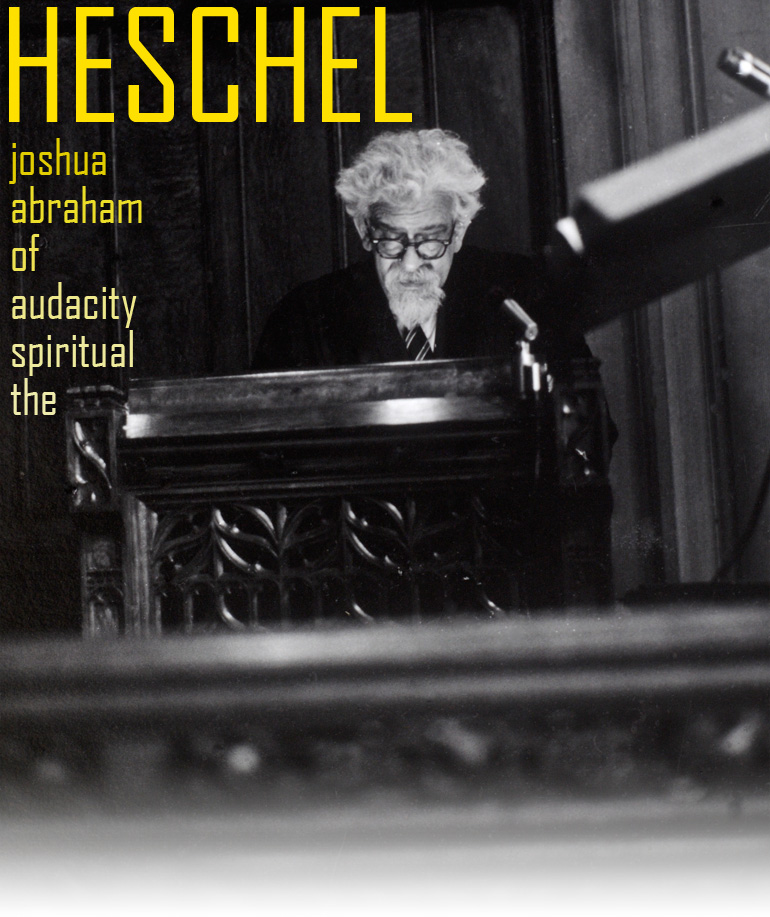
Tonight I went to see Dr. Cornel West along with two young men that I work with. We were all inspired by the passionate energy that Dr. West brings to his presentation! Tonight, he was particularly focused on the work of Abraham Joshua Heschel. He describes the arch of Heschel’s work in a way that I totally relate to the Bardo community!

Pietic–>Poetic–>Prophetic

Meaning, personal piety not bound by religious rules but bound by reverence or seeing the sacred worth in all be-ings. For West’s interpretation of Heschel, the pietic leads to the poetic. A poetry that is not grounded in nihilism or optimism, but grounded in hope. He said, Heschel was “not a person of optimism, but a person of hope.” And that Heschel’s hope as expressed in poetry was hope for the world–not just the Hasidic Jew world–but the entire world. And lastly, but using poetic imagination, we move to the prophetic: speaking truth to power. The importance of the poetic imagination cannot be overstressed! And that is what you are already doing! And it is a sacred journey that leads to wholeness and healing just by the simple transformation of words. And make no doubt, words are action and words cause action. Words can change perceptions which can bring about changes in the world. So, today, embrace your poetic imagination. Allow it to mold you and change your vision so that you see the “faces everywhere” that are longing with thirst. And use that imagination to call the world into prophetic compassion with each other.

There is no space more sacred than that which causes compassion.

Intimate Hymn

by Rabbi Abraham Joshua Heschel

English version by Rabbi Zalman M. Schachter-Shalomi
Original Language English, Yiddish

From word to word I roam, from dawn to dusk.
Dream in, dream out — I pass myself and towns,
A human satellite.

I wait, am hopeful, as one who waits at the rock
For the spring to well forth and ever well on.
I feel as bright as if I tented somewhere in the Milky Way.
To urge the world to feel I walk through lonesome solitudes.

All around me lightning explodes sparks from my glance
To reveal all light, unveil faces everywhere.
Godward, onward to the final weighing
overcoming heavy weight with thirst.
Constantly, the longings of all born call out, “Is anyone around?”
I know each one is HE, but in my heart there writhes a tear;
When of men and rocks and trees I hear;
All plead “Feel us”
All beg “See us”
God! Lend me your eyes!

I came to be, to sow the seed of sight in the world,
To unmask the God who disguised Himself as world–
And yes, I wait to be the first to announce “The Dawn.”

– from “Human, God’s Ineffable Name,” by Rabbi Abraham Joshua Heschel, freely rendered by Rabbi Zalman M. Schachter-Shalomi. Available from the Reb Zalman Legacy Project

Shalom and Amen!

~Terri

(c) 2014, Terri Stewart

simultaneously published at http://www.BeguineAgain.com

REV. TERRI STEWART is The Bardo Group’s Sunday chaplain, senior content editor, and site co-administrator. She comes from an eclectic background and considers herself to be grounded in contemplation and justice. She is the Director and Founder of the Youth Chaplaincy Coalition that serves youth affected by the justice system. As a graduate of Seattle University’s School of Theology and Ministry, she earned her Master’s of Divinity and a Post-Master’s Certificate in Spiritual Direction.

Her online presence is “Cloaked Monk.” This speaks to her grounding in contemplative arts and the need to live it out in the world. The cloak is the disguise of normalcy as she advocates for justice and peace. You can find her at www.BeguineAgain.com ,www.twitter.com/cloakedmonk, and www.facebook.com/cloakedmonk.

Posted in Charles W Martin, poem, Poems/Poetry, poetry

regardless of word origin…

regardless of origin

hand-carved words
adorn the page
imprints of lives
some with short
precise strokes
others with long
flowing lines
some sit anchored
on the page
while others seem
to move about
like gypsies
moving from
paragraph to paragraph
a few words
are encased in sadness
always showing tear drops
above their i’s
or
before and after
they speak
while others
seem to swirl
with a joyful flare
but alas
all words
have
their ending

678ad505453d5a3ff2fcb744f13dedc7-1product_thumbnail.php41V9d9sj5nL._SY344_PJlook-inside-v2,TopRight,1,0_SH20_BO1,204,203,200_CHARLES W. MARTIN (Reading Between the Minds) — earned his Ph.D. in Speech and Language Pathology with an emphasis in statistics. Throughout Charlie’s career, he maintained a devotion to the arts (literature/poetry, the theater, music and photography). Since his retirement in 2010, he has turned his full attention to poetry and photography. He publishes a poem and a photographic art piece each day at Read Between the Minds, Poetry, Photograph and Random Thoughts of Life. He is noted as a poet of social conscience. Charlie has been blogging since January 31, 2010. He has self-published a book of poetry entitled The Hawk Chronicles and will soon publish another book called A Bea in Your Bonnet: First Sting, featuring the renown Aunt Bea. In The Hawk Chronicles, Charlie provides a personification of his resident hawk with poems and photos taken over a two-year period. Charlie’s lastest book, When Spirits Touch, Dual Poetry, a collaboration with River Urke, is available through Amazon now.

Posted in Blaga Todorova, poem, Poems/Poetry, poetry

I Can Write Another Poem Tonight

450px-Tango-Show-Buenos-Aires-01After Pablo Neruda …

I can write another poem about the distance tonight.
Something about chants over shivering seconds and stolen lights,
about his mahogany eyes and forgotten Milonga dance.

But the night burns with treacherous sparks,
with thousand butterflies over cliffs and tides.

I can write another poem about him, how I craved
his lips, his words, his hands and sometimes he did too.

In nights like this, within crested dreams, he desired me
and sometimes I did too. And how couldn’t I?
The world in his eyes, I was the only one allowed inside.

I can write another poem about love and passion under
the never-ending violin sounds and voluminous skies;

when I know that everything is bound to break,
even the perfect curves chasing the ocean.

To feel that with every crash of the waves I have lost him.
To hear the whispers of his soul, faraway whispers,
even more without him,

when the night ignites under the moonlight and
poetry drops heavily on my heart, just like
the rain that strikes everything dead or alive.

And that’s all there is. In the distance someone plays
Morricone on the piano. In the distance.

My mind does not know harmony. My heart searches for his.
My voice longs for the breeze that would carry my secrets to him;

how I no longer hate the darkness of the night without him,
it’s true, but maybe I still do. Longing comes so suddenly, settles
comfortably in the shape of a precious hug and never dies.

Because in nights like this he always held me in his arms,
through the imaginary miles apart,
while poetry drifted into the distance, silently, lilac like and sad …

– Blaga Todorova

© 2014, poem and protrait (below), Blaga Todorova; photo credit ~ Dancing Tango in Buenos Aires by Jenny Mealing and licensed under the CC A 2.0 Generic license.

unnamed-6BLAGA TODOROVA (Between the Shadows and the Soul) ~ was born in Bulgaria, lives in Greece and doesn’t stop dreaming about finding new country for herself. She doesn’t consider herself a writer, but just someone who sometimes is lucky enough to be at the right place, with the right person, with the background of the right music that will bring the right words.

Blaga has been blogging for many years now and has won the friendship and following of other poets and writers for her insights, humor and sense of romance and of justice. English is not her first language, but she uses it well and it is her favorite language for her favorite artisitic persuit, writing. She has a novel in progress. She is also a rather accomplished photographer.

Although we believe Blaga was named for a relative, it is interesting to note that she shares her lovely first name with Blaga Dimitrova, the Bulgarian poet and former Vice President of Bulgaria (1992-1993) who was the inspiration for John Updike’s short story, The Poetess. We have invited Blaga Todorova to write about Blaga Dimitrova and hope to present that work on The Bardo Group blog one day.

Posted in Christianity, Priscilla Galasso

What’s Important?

When I hung around with evangelical Christians, I would frequently hear this phrase: “be in right relationship with”.  That was a core value in life.   I agreed then, and I still agree in some ways.  I very much resonate with the value of relationships.  I am “a lover” by temperament, so to speak, and being engaged with the universe is supremely important to me.  I also have a huge desire to be “right”, but that is exactly the thing I’m now trying to dismantle.  I was a compliant kid.  I was afraid of my father and of all authority.  I wanted to be “good” and “correct” because I wanted to be praised instead of punished!  Now, I find that being “right” is not all that great of a goal.  First of all, it can lead you to be self-righteous and judgmental.  Second, how do you even know what is “right”?  Is it “right” to do everything an authority tells you to?  What if that authority tells you to harm someone else?  See, it gets tricky.  How about if I just say that I want to have a good relationship with everything?  I think that covers it pretty well.

One relationship that I am really working to improve is my relationship with God and Christianity.  It has gone through a huge change in the last few years, one that has many of my friends scratching their heads.  Some of them are downright disappointed in the change and have told me so.  Some have just stopped communicating with me.  I am most in awe of those who are openly listening, talking, challenging, and engaging with me as I rework my theology and practice.  Yesterday was Ash Wednesday.  Instead of going to Church, getting ashes imposed on my forehead, and beginning a 40-day penitential practice (which is an indication of how I participated in that relationship for 47 years), Steve & I finished reading T.S. Eliot’s poem named for the day and discussed post-modern cynicism.  Despite Eliot’s conversion, he doesn’t seem very enthusiastic about life.  This morning, we had breakfast with his Aunt and talked about her church experiences with fasting and confession and Bible study.  Today, I got another e-mail from an old friend who is willing to discuss my journey and walk with me in it.  I’ve known this person since I was about 12 and she was 17.  Replying to her became my top writing priority for the day.  So, I’ve decided to use that material for my post today.  First, a photo or two to open the mind:

What is the value of a sparrow?

A cardinal, far from the Vatican.

My thoughts for today:

I feel like I have a continual discourse going on in my brain about my relationship with Jesus and the Church.  On any given day, other people enter that conversation and keep it going.  At breakfast, it was Steve & his Aunt Rosie.  As we walked to the library, it was just Steve.  Now you’ve entered the discussion.  Welcome!  Come, have a place on the panel!
The Church.  So much of it is about the social aspect.  Sometimes it acts like a group of people who are all friendly, who share affinities, who enjoy being together and taking care of each other.  Seems there’s nothing wrong with that, but I’m sure that’s not all Jesus meant the Church to be.  What happens when that group disbands, moves away or dies off?  Kind of like your Presbyterian congregation.  Or what happens when that group gets visited by people whom they don’t care for?  People of a different kind who don’t fit into their social circle?  How do they behave?  Is that what Christianity is about?  There is so much intolerance, so much judgment, so much exclusion, that it just seems to represent the worst of society as well.

Theology & Philosophy.  The Church getting down to what it actually believes about the universe.  And why.  I was taught by my Episcopal parents that there are 3 legs on the stool supporting what they believe: Scripture, Tradition and Reason.  My dad held up the Reason leg when he talked about Science. In the face of overwhelming evidence about evolution, for example, there’s no need to dismiss it.  It can be worked in with the other legs.  Scripture is about the story of human life, the salvation story, the emotional story, the behavioral story.  But it’s still a story, a Myth.  It is about Truth, but it isn’t literally true.  I don’t think it’s “true” that we are all sinners, or that we are all fundamentally separate from each other.  If you look at the biological universe, we are all very much interconnected.  I don’t know if there’s any evidence to prove that a historical Jesus even existed, much less that he was resurrected from the dead and will come again.  I still love Jesus’ teaching, whether he’s fiction or fact.  I love how he goes straight to the religious teachers of the day and preaches in their faces about how they have undermined values like compassion, inclusion, humility, spirituality, and forgiveness.  I think if it were possible for him to reappear in the US today, he would go straight to the Conservative Republican Christian Right and do the same thing!  Tradition seems to be aimed at behavior, how we live together.  The thing that is so tricky about behavior is that it needs to change, it needs to be responsive and responsible.  Most people think that Tradition is about keeping things the same.  I think that keeping core values is a good thing, but the way they are expressed should be flexible.
The thing I miss most about The Church is choir!  Singing!  And I have always loved Gospel more than classical, deep down.  Yesterday, Steve put on a new CD; I immediately recognized Odetta’s guitar and voice and purred with delight.  He laughed and said, “Priscilla wants to be a big, black woman!”  It’s so true!  I love the soul, the familiarity with humanity and suffering and the confidence.  I don’t want to be brainwashed or shamed or coerced by guilt.  I want to be free and respected for what I am.  And what am I?  A white Anglo, in part. But I am partly a big, black woman as well because we are all connected here on earth.

Anyway, that’s where the dialogue has me today.  I want to tell you again how much I appreciate you taking the time to engage with me in this part of my journey.  It means a lot.  I really get turned off by the tendency, especially in politics, for people to circle the wagons or form a fortress from which to sling rhetoric while refusing to actually come out peacefully and discuss something.  You know what I mean?  And the media just makes the whole situation worse, little Tweets & comments here and there but no real engagement.  Thanks for being willing to be real, to put your story and your thoughts and your experiences in writing and listen to mine as well.  I respect you for that.  I think that’s how Jesus was, too.  I think of the stories in the Gospel of John especially, of conversations with Samaritans, women, disciples, beggars, and Pharisees.  He didn’t just knock off a sound bite for the media and move on.  And as much as anyone stayed to hear more, he kept interacting.  What a great example!

– Priscilla Galasso

© 2013, essay and photographs, Priscilla Gallaso, All rights reserved

004PRISCILLA GALASSO ~  started her blog at scillagrace.com to mark the beginning of her fiftieth year. Born to summer and given a name that means ‘ancient’, her travel through seasons of time and landscape has inspired her to create visual and verbal souvenirs of her journey.

Currently living in Wisconsin, she considers herself a lifelong learner and educator. She gives private voice lessons, is employed by two different museums and runs a business (Scholar & Poet Books, via eBay and ABE Books) with her partner, Steve.

Posted in Christianity, General Interest, Spiritual Practice, Video

GET SERVICE, a message about compassion and understanding …


Courtesy of the Fellowship Bible Church of Little Rock, AR via friends Laurel D. and Brian B. Thank you!

Today is Ash Wednesday, the first day of the forty-day Lenten season which honors Christ’s contemplative forty-days in the desert. Whether or not you are Christian or even religious, this is a good time of year to step back,  take a breath and prepare for your personal spring and renewal.

Posted in Niamh Clune, poem, Poems/Poetry, poetry

Sparrow on the wind

You speak of death.Giovanni_Da_Udine_-_Study_of_a_Flying_Sparrow_-_WGA09431
But when death finally reaches out his hand
to snatch your soul,
he will find a little bird
fluttering and singing in his palm.
Entranced, he will stroke your feathers
and set you soaring to the winds.
They shall not buffer you
but lift you higher than the moon
to that distant star, dreamed by you
many Spring moments ago,
when in your imagination,
you flew into Jupiterian blue.
As a tiny chirping, delightful sparrow,
you shall make your exit.
And death shall hear your last thought.
And it shall make him jealous
of how you lived.

– Niamh Clune

(c) 2014, poem, Niamh Clune, All rights reserve; illustration, Giovanni Da Udine (1487-1564), Italian painter, stuccoist and architect

430564_3240554249063_1337353112_n-1orange-petals-cover_page_001DR. NIAMH CLUNE (Plum Tree Books Blog) ~ is the author of the Skyla McFee series: Orange Petals in a Storm, and Exaltation of a Rose. She is also the author of The Coming of the Feminine Christ: a ground-breaking spiritual psychology. Niamh received her Ph.D. from Surrey University on Acquiring Wisdom Through The Imagination and specialises in The Imaginal Mind and how the inborn, innate wisdom hidden in the soul informs our daily lives and stories. Niamh’s books are available in paperback (children’s books) and Kindle version (The Coming of the Feminine Christ). Dr. Clune is the CEO of Plum Tree Books and Art. Its online store is HERE.  Niamh’s Amazon page is HERE.

Posted in grief, Liliana Negoi, Music, poem, Poems/Poetry, poetry, story

song for Agriope

sounds were rising –
chrysalides for the yet unborn
crystalline shivers…

still were the waters,
undead the moonlight –
and aerial was the calling
of the sound-bender…

and all were silent…

Elysium bowed
under salty heaviness
and doubled up with pain,
unallowed to rebirth the lost

yet sounds kept rising –
chrysalides breaking
tracing furrows
in the molten souls that were
listening…

unshed fire caressed
crimson and black and golden
and hearts were born
where there had been none

and all were crying…

rocks blossomed under
the taming ether
exposing the bones of
ancient rainbows

and sounds kept rising –
chrysalides blooming
mourning the morning
never to come…

IMG_7667LILIANA NEGOI  (Endless Journey and in Romanian curcubee în alb şi negru) ~ is a member of our core team on Into the Bardo. She is the author of three published volumes of poetry in English, which is not her mother tongue but one that she came to love especially because of writing: Sands and Shadows, Footsteps on the San – tanka collection and The Hidden Well.  The last one can also be heard in audio version, read by the author herself on her SoundCloud site HERE.  Many of her creations, both poetry and prose, have been published in various literary magazines.

Posted in Essay, Poems/Poetry, Spiritual Practice, Terri Stewart

Sacred Space and Anam Cara

The concept of Anam Cara is “soul friend” or the Celtic belief would be “soul bonding.”  John O’Donohue writes in Anam Cara: A Book of Celtic Wisdom, “If you send out goodness from yourself, or if you share that which is happy or good within you, it will all come back to you multiplied ten thousand times. In the kingdom of love there is no competition; there is no possessiveness or control. The more love you give away, the more love you will have.” 

Anam cara accepts you are you are. As a beautifully created creature of love. They see your inner light and mirror it back to you. According to John O’Donahue, “…You are joined in an ancient and eternal union with humanity that cuts across all barriers of time, convention, philosophy and definition. When you are blessed with an Anam Cara, the Irish believe, you have arrived at that most sacred place: home.”

My awakening today, is the awareness of the love that we I give and share with Anam Cara. I offer to you this poem and ask you, “Have you seen your Anam Cara? How would you describe Anam Cara?”

anam cara

i have been meaning

to sew that quilt

together. squares

sitting side-by-side

unconnected by

physical thread.

each one a perfect

gift of solitary beauty.

she sits

in pieces

waiting and

dare I say

taunts me to change

her separateness into a

cohesive creation sewing

warmth into each stitch

from rags to riches

so to speak

such lovely pieces

held together in my heart

anam cara

i know what the finished

piece

would be with each square

clinging tightly to one

another.

and she calls.

complete me.

intertwine our threads.

behold

each square a perfected

gift of beauty. together.

then i know

beyond what is seen

we are already stitched

together

photo by Martina Winkel cc licensed ( BY ) flickr
photo by Martina Winkel
cc licensed ( BY ) flickr

(c) 2014, Terri Stewart

REV. TERRI STEWART is The Bardo Group’s Sunday chaplain, senior content editor, and site co-administrator. She comes from an eclectic background and considers herself to be grounded in contemplation and justice. She is the Director and Founder of the Youth Chaplaincy Coalition that serves youth affected by the justice system. As a graduate of Seattle University’s School of Theology and Ministry, she earned her Master’s of Divinity and a Post-Master’s Certificate in Spiritual Direction.

Her online presence is “Cloaked Monk.” This speaks to her grounding in contemplative arts and the need to live it out in the world. The cloak is the disguise of normalcy as she advocates for justice and peace. You can find her at www.BeguineAgain.com ,www.twitter.com/cloakedmonk, and www.facebook.com/cloakedmonk.

Posted in poem, Poems/Poetry, poetry, Victoria C. Slotto

Old Love

Photo: theCHIVE.com
Photo: theCHIVE.com

Old Love

The Love that’s tinged
by Eros
is easier to write,
to live and
to imagine:
the silken touch
of water—
cool caresses in a Lake—
a kiss that tastes
of wine
and sweat.
Subtle sounds of
breath, and
pounding pulses
and images that linger
in the darkness of
a new-moon night.

But as the days grow old
and we, along with them,
diminish,
winter shadows
cannot overwhelm
enduring Love.
You probe the
memory of
a day gone by
and stroke
a shriveled hand.

Then Spring breaks through
in songs of mockingbirds.

– Victoria C. Slotto

© 2014, poem, Victoria C.Slotto, All rights reserved

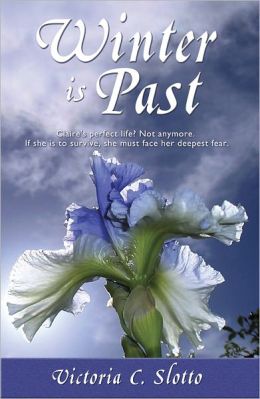
2940013445222_p0_v1_s260x42034ff816cd604d91d26b52d7daf7e8417VICTORIA C. SLOTTO (Victoria C. Slotto, Author: Fiction, Poetry and Writing Prompts) ~ is an accomplished writer and poet. Winter is Past, published by Lucky Bat Books in 2012, is Victoria’s first novel. A second novel is in process. On Amazon and hot-off-the-press nonfiction is Beating the Odds: Support for Persons with Early Stage Dementia. Victoria’s ebooks (poetry and nonfiction) are free to Amazon Prime Members. Link HERE for Victoria’s Amazon page.

Editorial note: Congratulations, Victoria, on that the long awaited publication of print copies of Jacaranda Rain, Collected Poems, 2012, Beautifully done.

Writers’ Fourth Wednesday is hosted by Victoria from January through October and always posts at 7 p.m. PST.

Posted in Jamie Dedes, poem, Poems/Poetry, poetry

through the ache of time

720px-52706main_hstorion_lgsee it moving – Life!
moving through the ache of time
seeking that place
where identity isn’t worn on a sleeve,
where individuals challenge the tribe,
where beauty frees itself from convention,
where the chain of fear dissolves

– Jamie Dedes

© 2013, poem, Jamie Dedes, All rights reserved * Photo credit ~ NASA, U.S. Public Domain

photo-on-2012-09-19-at-19-541JAMIE DEDES (The Poet by Day)~ I am a mother and a medically retired (disabled) elder. The graces of poetry, art, music, writing and reading continue to evolve as a sources of wonder and solace, as a creative outlet, and as a part of my spiritual practice.

Posted in General Interest, John Anstie, Music

Hide and Seek

[This impressive one man a cappella video wall production of Imogen Heap’s composition “Hide and Seek” brings me to another parallel of poetry. I should say that, whilst I much prefer live performance to what seems to be music’s equivalent of Photoshop’s adjustment and stitching process in photography, the main focus of the piece rests on this particular song written by Heap. Heap’s own production of it became a significant international hit when it was chosen to play out the finale of series two of “The O.C.” in 2005. It also featured in the film “The Last Kiss” amongst others a year or two later.

I chose this cover rather than her own production, because, well, because I have my own preference for a polyphonic choral sound. She is one of those impressively industrious creative musicians, who manage to make music and rhythm from an extraordinary array of instruments and production techniques. She is a singer, songwriter and producer with her own record label, which must take a lot of doing – being a creative and managing the show require a whole lot of different skills and aptitudes – hence my admiration for such talent, but, above all this, she wrote lyrics, which come close to poetry in their use of metaphor and their inclination to conjure absorbing imagery that leaves a lot open to interpretation. Great lyrics, nay poetry, is what separates journeyman songwriters from the great ones. I’d like to know what you think. I hope you derive some enjoyment from this piece, either in the performance, or the words, or both. My favourite lines are “Ransom notes keep falling out your mouth. Mid-sweet talk, newspaper word cut-outs.” What do you think?]

“Hide And Seek”

Where are we? What the hell is going on?
The dust has only just begun to fall,
Crop circles in the carpet, sinking, feeling.
Spin me ’round again and rub my eyes.
This can’t be happening.
When busy streets amass with people
Would stop to hold their heads heavy.

Hide and seek.
Trains and sewing machines.
All those years they were here first.

Oily marks appear on walls
Where pleasure moments hung before.
The takeover, the sweeping insensitivity of this still life.

Hide and seek.
Trains and sewing machines. (Oh, you won’t catch me around here)
Blood and tears,
They were here first.

Mmm, what you say?
Mm, that you only meant well? Well, of course you did.
Mmm, what you say?
Mm, that it’s all for the best? Of course it is.
Mmm, what you say?
Mm, that it’s just what we need? And you decided this.
What you say?
Mmm, what did you say?

Ransom notes keep falling out your mouth.
Mid-sweet talk, newspaper word cut-outs.
Speak no feeling, no I don’t believe you.
You don’t care a bit. You don’t care a bit.

(hide and seek)
Ransom notes keep falling out your mouth.
Mid-sweet talk, newspaper word cut-outs.
(hide and seek)
Speak no feeling, no I don’t believe you.
You don’t care a bit. You don’t care a bit.

(hide and seek)
You don’t care a bit.
(hide and seek)
You don’t care a bit.

Lyrics and music © 2005 Imogen Heap and Warner Music Group, all rights reserved

John_in_Pose_Half_Face3

JOHN ANSTIE (My Poetry Library and 42) ~ is a British poet and writer, a contributing editor here at Bardo, and multi-talented gentleman self-described as a “Family man, Grandfather, Occasional Musician, Amateur photographer and Film-maker, Apple-MAC user, Implementation Manager, and Engineer. John participates in d’Verse Poet’s Pub and is a player in New World Creative Union. He’s been blogging since the beginning of 2011. John is also a member of The Poetry Society (UK).

*****

product_thumbnail-3.php

51w-rH34dTL._BO2,204,203,200_PIsitb-sticker-arrow-click,TopRight,35,-76_AA300_SH20_OU01_John has been involved in the recent publication of two anthologies that are the result of online collaborations among two international groups of amateur and professional poets. One of these is The Grass Roots Poetry Group, for which he produced and edited their anthology, “Petrichor* Rising. The other group is d’Verse Poet Pub, in which John’s poetry also appears The d’Verse Anthology: Voices of Contemporary World Poetry, produced and edited by Frank Watson.

Petrichor – from the Greek pɛtrɨkər, the scent of rain on the dry earth.

Posted in Victoria C Slotto, Writers' Fourth Wednesday, Writing

WRITERS’ FOURTH WEDNESDAY ~ Common Sense(s)

I am a visual, hands-on learner. My husband is more auditory. If I’m sitting through a lecture, I need to take notes in order to incorporate the key points being delivered. David will just sit, listen and absorb. It’s disconcerting to both of us when he starts discussing things such as the stock market or how to improve my golf swing and I don’t follow…(and it’s hard to take notes when you’re already in bed.)

People do differ in their favored modes of sensory perception. You may want to touch or taste, while your friend will associate sounds, colors or aromas with a place or event. That’s why it’s important to evaluate descriptions in terms of the senses. Make sure you haven’t just focused on those things that speak to you.

Photo: morethanbranding.com

Last Thursday at dVerse Poets’ Pub, I offered a prompt, asking those who wished to participate to really pay attention to an object, to dissect it with their senses, to let it tell a story or tease out a long forgotten memory.

Here’s what I suggested:

You could begin by enlisting the help of your senses. How does it smell, taste, feel to touch? Describe what you see or hear. Does it make you feel a certain way or engage a memory? Where did you find it? Give some environmental details if appropriate. Are there any verbs that pop into mind when you see this thing?

Go ahead, take it a step further. Is it possible that this artifact can be used metaphorically? Does that stale bread remind you of a relationship, or the gravel beneath your bare feet the pain you find along life’s journey? Does it, perhaps, remind you of someone or something in your own life? Personify it, if you like.

I’d like to share with you some examples from the opening chapter of my novel, The Sin of His Father. The protagonist is at the deathbed of his mother. Here’s how I’ve tried to incorporate the senses:

Sight: “The dim light threw his mother’s profile into an eerie silhouette. It was as though someone had let the air out of a grotesque balloon–the parody of an Irish washer woman paraded down Columbus Drive in downtown Chicago on St. Paddy’s day…”

Taste: “…the taste of bitter coffee he’d sipped a few hours earlier crept up his esophagus and caused him to gag.”

Hearing: “Ellen’s roommate breathed slowly before turning in her sleep. That was the only sound Matt heard, aside from his mother’s raspy breathing, the bubbles of the oxygen humidifier and the gentle hiss of the gas escaping around the small prongs sticking in her nose.”

Touch: “He fondled the smooth bowl of the pipe that waited for his attention in the pocket of his jacket and longed to step outside to indulge his habit.”

Smell: “His mother’s fetid breath stroked his cheek. He wanted to flee the close air of the room and take off into the night.”

Attention to sensory descriptions throughout the process of rewriting is an excellent way to enrich your manuscript. Perhaps you will select a key scene from one of your stories or a poem and rewrite it, utilizing as many senses as you can. Or write a new paragraph or poem that focuses on sensory detail. Check out the post at dVerse if you like for some samples of poetry, including Neruda, Keats and myself.

Photo: thepaleodiet.com

To Participate as a Group:

  • Write your poem or short prose and post it on your blog or website.
  • Access Mr. Linky at the bottom of this post and add your name and the direct URL to your post.
  • Visit others, if you are able, and see what they came up with. Reading each other’s work is, for me, a great way to learn.
Above all, have fun, enjoy the process.

I look forward to reading your work. Victoria

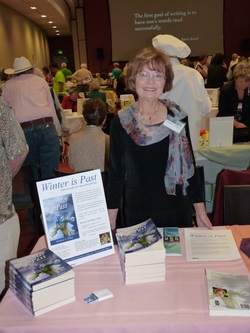
Victoria at the Palm Springs Writer's Expo March 2012
Victoria at the Palm Springs Writer’s Expo March 2012

2940013445222_p0_v1_s260x420VICTORIA C. SLOTTO (Victoria C. Slotto, Author: Fiction, Poetry and Writing Prompts) ~ is an accomplished writer and poet. Winter is Past, published by Lucky Bat Books in 2012, is Victoria’s first novel. A second novel is in process. On Amazon and hot-off-the-press nonfiction is Beating the Odds: Support for Persons with Early Stage Dementia. Victoria’s ebooks (poetry and nonfiction) are free to Amazon Prime Members. Link HERE for Victoria’s Amazon page.

Editorial note: Congratulations, Victoria, on that the long awaited publication of print copies of Jacaranda Rain, Collected Poems, 2012, Beautifully done.

Writers’ Fourth Wednesday is hosted by Victoria from January through October and always posts at 7 p.m. PST.

Posted in General Interest, Jamie Dedes, Poets/Writers, Video

Roger McGough and his “Mafia Cats” … fun and funny

said-and-done-s
I am only just now familiarizing myself with English poet Roger McGough’s work, having recently been introduced to it by a friend who sent me his poem, Mafia Cats. The presentation she sent me is the one HERE (scroll down), which I couldn’t load into this post. I think it’s the better one, though the one below is fun and funny too.

“Yes, you can feel very alone as a poet and you sometimes think, is it worth it? Is it worth carrying on? But because there were other poets, you became part of a scene. Even though they were very different writers, it makes it easier because you’re together.” Roger McGough

McGough is a prodigious writer with an apparently broad range. He has about fifty published books. Of a certain age – he is one of the Liverpool Poets (c.1960s) – he takes some inspiration from the Beats. It seems he belongs to several poetry societies and has a bit of alphabet jumble after his name, indicative of some of his country’s special honors: CBE – Commander of the Most Excellent Order of the British Empire and FRSL – Fellow of the Royal Society of Literature. I’m always happy to see poets honored in this way.

Until I read more about him and much more of his poetry, I’ll just leave you with Roger McGough’s own reading of Mafia Cats, which will surely put a smile on your Wednesday face.

.

Don’t forget to join us this evening (7 p.m. PST) for Writers’ Fourth Wednesday prompt hosted by poet, writer and writing coach, Victoria C. Slotto. Mister Linky will remain open for seventy-two hours so that you can link in your own work in response to the prompt. Victoria and I will visit and comment.

Mafioas, Gypsy Rose
Mafiosa, Gypsy Rose

photo-on-2012-09-19-at-20-00JAMIE DEDES ~ I am a mother and a medically retired (disabled) elder. The graces of poetry, art, music, writing and reading continue to evolve as a sources of wonder and solace, as a creative outlet, and as a part of my spiritual practice. In addition to my blog, The Poet by Day, I have two Facebook Pages: Jamie Dedes, Arts and Humanities and Simply Living, Living Simply. (© Grandkitty photo by Karen Fayeth.)

Posted in General Interest, Naomi Baltuck, Photo Essay, Photography/Photographer

Look Up

In Seattle the cold nights sneak up on you.  Autumn chill was in the air, and summertime had slipped out the back door without even saying goodbye.  Through the tree branches, we saw flashes of unexpected color that couldn’t be anything but a space ship!  Eli and I stopped what we were doing…

…and ran to investigate.  We brought the camera for photo-documentation.

We live three or four blocks from a sweeping view of Puget Sound.

For fireworks, sunsets, or alien invasions, we always head straight for the crest of the hill.  Ferry boats light up black water like jewels.

But that night, the jewel on the crown turned out to be a ruby, the biggest reddest moon I had ever seen.

Don’t wait for an alien invasion.  Just look up.

All word and images copyright 2012 Naomi Baltuck

.

NaomiPHOTO1-300ppi51kAqFGEesL._SY300_NAOMI BALTUCK ~ is a Contributing Editor and Resident Storyteller here410xuqmD74L._SY300_ at Bardo. She is a world-traveler and an award-winning writer, photographer, and story-teller whose works of fiction and nonfiction are available through Amazon HERE. Naomi presents her wonderful photo-stories – always interesting and rich with meaning and humor – at Writing Between the Lines, Life from the Writer’s POV. She also conducts workshops such as Peace Porridge (multicultural stories to promote cooperation, goodwill, and peaceful coexistence), Whispers in the Graveyard (a spellbinding array of haunting and mysterious stories), Tandem Tales, Traveling Light Around the World, and others. For more on her programs visit Naomi Baltuck.com