Posted in General Interest

Living With Mystery

Possessing a human brain is no picnic. The cumbersome chunk of gray matter is quite the dictator. It wants to know: Who? What? When? Where? Why? How? It shines the light in our eyes, makes us squint and squirm until we come up with an answer. And “I don’t know” won’t appease its inquisition. Somewhere in our distant evolutionary history, this dictatorship must have presented some advantage to survival. Possibly it pressed us to a more efficient way to find food or use tools or attract a desirable mate. When the interrogation continues after it has served its immediate purpose, it becomes rather annoying and can create anxiety, frustration, torment and suffering. Think of a 4-year-old asking “Why?” to every explanation offered. It never ends. When you shout back, “I DON’T KNOW!” do you feel you’ve failed and slink off to ponder your existence? (For a good example of this “insane deconstruction” peppered with ‘adult language’, check out comedian Louis C.K. in this clip.)

Humor aside, the suffering is universal. We have all lived the anguish of a mystery at some point. As I write this, I am thinking of all the people whose loved ones disappeared on the Malaysian jet that has been missing for 11 days. Unanswered and unanswerable questions must plague them. The few photos of their grief that I’ve seen are hard to bear. Add to that circle connected to those 239 people all of the families of military personnel MIA throughout history, all of the families of travelers to foreign countries in unstable political climates who never returned, all of the parents of children abducted and gone without a trace. The stories of devastation are heart-breaking and inevitable. The common denominator is The Great Mystery – Death. Ironically, it is the most mundane mystery as well. We will all be touched by it, every one. And we know it. The two deaths that I experienced first hand were not shrouded by any great cloud of darkness. My sister and my husband both died right beside me: my sister in the driver’s seat of a car, my husband in our bed. They were not ‘missing’ by any means. And yet, I will never have the answer to basic questions like, “What were they feeling?” “When exactly did they lose consciousness?” “Was I to blame?”

Mystery is the Truth. We do not know. We delude and comfort our demanding brains in a parade of ideas. When that effort is expended, can we accept and live with Mystery? What does that feel like? How do I do that?

006

You see, again the questions surface, the never-ending tide of the probing lobe of consciousness. Maybe some day that flow will be replaced by the still, mirrored surface of a quiet mind.

Peace out,

Priscilla

© 2014, essay and photographs, Priscilla Galasso, All rights reserved
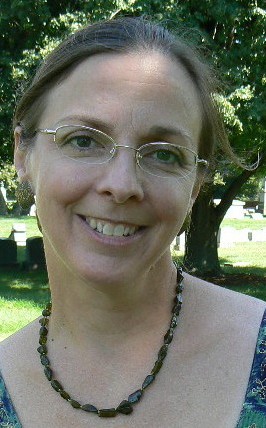
004PRISCILLA GALASSO ~ started her blog at scillagrace.com to mark the beginning of her fiftieth year. Born to summer and given a name that means ‘ancient’, her travel through seasons of time and landscape has inspired her to create visual and verbal souvenirs of her journey.

Currently living in Wisconsin, she considers herself a lifelong learner and educator. She gives private voice lessons, is employed by two different museums and runs a business (Scholar & Poet Books, via eBay and ABE Books) with her partner, Steve.

Posted in Essay, General Interest, John Anstie

Good Friday, Good Fortune and Forgiveness

“Never let the sun set on an unforgiving thought” © 2012 John Anstie

It started one Good Friday morning, three years ago, sitting, as we sometimes do on a weekend, in bed, with a cup of tea, reading, reviewing, talking, relaxing.

Because the finances are my responsibility, unusually, I used this moment to run through the ‘state of the nation’. We then fell to looking ahead to our imminent retirement and the likely income from our pensions, such as they would be.

Every time we fell to talking about pensions, I was irresistibly drawn to musing about the first of my four different private pensions, which exist by virtue of changing employers. This pension was with the steel company, for whom I worked for the first eleven years of my career, which was ‘frozen’ upon its merger with another company. The process of reviewing whether to leave my original pension frozen or move it into a private fund was aided by a ‘friend’ who worked with a mutual insurance company at the time. Given that this was in the midst of the Thatcher era and the new market economy, ‘advice’ abounded that pensions should become more portable as the work force became more mobile and everyone was getting on Norman Tebbit‘s proverbial bike!

Long story short, the outcome was that I chose to move it to the private pension recommended by my ‘friend’ and the fund ended up being worth one third of what it would be had I left it where it was. So it was too late to make up the loss.

Whether or not I forgive my ‘friend’ for whatever responsibility he could himself reasonably shoulder for this advice, was rendered irrelevant by my next prompt, which occurred whilst I ate my breakfast and watched the second half of an hour-long documentary on BBC1, “What’s The Point of Forgiveness?”, presented by Historian, Bettany Hughes. It took a look at the history of this virtue, which emanates from the apocryphal words of Jesus, “forgive them, they know not what they do…”. In her thesis Hughes presents the alternative to forgiveness as being the vicious cycle of revenge, which inhibits recovery, engenders pain and does not allow us to move on.

Two significant events that I saw, cited in this programme, were the ‘Truth and Reconciliation Commission‘ setup up in South Africa, following the release of Nelson Mandela and his election as president, and an interview with the wife of the co-pilot of Flight Eleven, which was deliberately flown into one of the Twin Towers in New York in 2001, who, in spite of her emotional struggle to come to terms with the loss of her husband and father to her two children, had somehow found it in her to forgive the terrorists. Both these events stand out in a way that gives us hope for humanity and human spirit. Whilst we can all understandably feel vengeful and hateful against those who harm us or our families, our tribes, our communities, it is only by forgiveness and by not antagonising the perpetrators of atrocities against humanity into a vicious cycle of destructive and vengeful argument that they may become capable of contrition and able to feel remorse. People who have achieved genuine forgiveness, like those already mentioned, accordingly become living proof that genuine forgiveness is the only road to reconciliation and peace.

So, how can I complain when I am able, as I did at the time of writing this, to sit in our sun-bathed garden, ringing with bird song, cup of coffee in hand, in good health and with the freedom to write what I want to say on almost any subject in this blog, here, now, any time it pleases me to do so. How can I feel vengeful toward someone about a pension shortfall, when there are people in the world, who can forgive acts of inhumanity that defy belief; that have caused the loss of life, the torture of innocent people, the deprivation of the most basic of human rights affecting whole communities, populations… there is truly no need to answer this question. One question does, however, remain.

That question is simply this: how can I, in spite of all the good fortune I have had in my life, in spite of the fact I am no longer an angry young man – for which there may have been a little justification early in my life – and in spite of the fact that the sun is shining; how can I follow this advice and ensure that, deep down, I can genuinely forgive anyone, who is guilty of anything, whether it be a simple thoughtless slander or the most unspeakable inhumanity. I feel this is the question I should continually ask myself and strive to achieve the only result that common sense points toward with undoubted clarity. It is so obvious to me that to forgive someone is to take the wind out of their angry or irrational sail; make it pointless for them to consider acting in such a way again, rather like a petulant child who, in moments of insecurity, challenges their parents by pushing at the boundaries, trying to get a reaction; when they don’t get it and the parents show forgiving, but calm and disciplined resolve, they gradually adjust their behaviour. It has to be said, nonetheless, that if it were the easy option, we’d all be able to forgive.

It should be easy for me in my relatively privileged social and economic circumstances, but how much more difficult is it for someone who is wired differently from me; who is younger and is just setting out on life’s difficult journey trying to survive; who may even have more justification for their anger or who is simply wired in an ‘angry’ sort of way. I don’t know the answer to this, but, whatever happens, if the message of Easter is to mean anything, whether or not you are, unlike me, an active Christian, then we ought to keep on trying… to be grateful for good fortune, to forgive and move on. What better cause is there to encourage harmony whenever and wherever in the world we can.

[A longer version of this article was first published on John’s prose blog, ‘Forty Two’ in April 2011.]

Photo and Text © 2014 John Anstie

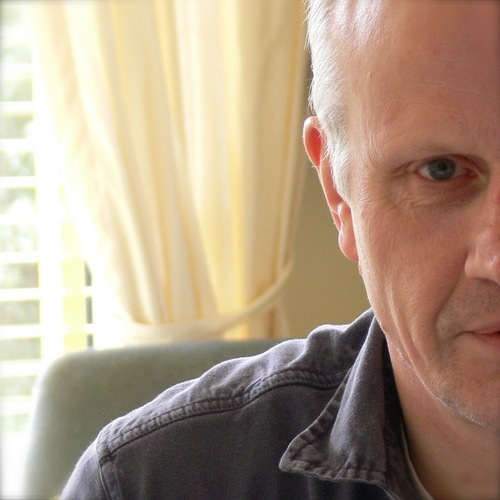
John_in_Pose_Half_Face3JOHN ANSTIE (My Poetry Library and 42) ~ is a British poet and writer, a contributing editor here at Bardo, and multi-talented gentleman self-described as a “Family man, Grandfather, Occasional Musician, Amateur photographer and Film-maker, Apple-MAC user, Implementation Manager, and Engineer. John participates in d’Verse Poet’s Pub and is a player in New World Creative Union. He’s been blogging since the beginning of 2011. John is also an active member of The Poetry Society (UK).

*****

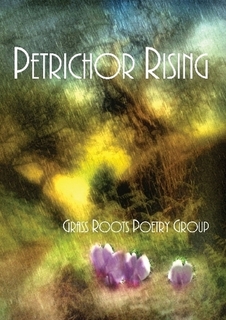
Petrichor Rising Book Cover.phpd'Verse Anthology Book CoverJohn has been involved in the recent publication of two anthologies that are the result of online collaborations among two international groups of amateur and professional poets. One of these is The Grass Roots Poetry Group, for which he produced and edited their anthology, “Petrichor* Rising. The other group is d’Verse Poet Pub, in which John’s poetry also appears The d’Verse Anthology: Voices of Contemporary World Poetry, produced and edited by Frank Watson.

Petrichor – from the Greek pɛtrɨkər, the scent of rain on the dry earth.

Posted in Fiction, General Interest, Jamie Dedes, story

Señora Ortega’s Frijoles

flores de la frijoles
las flores de frijoles

Her fate was set when she fell under the spell of his kind eyes and bigger than life personality. For his part, he loved her gentle ways, the fluid dance of her hands at work, the sensual swing of her hips as she walked to the market with basket in hand. And so it happened that in 1948, with her father’s permission and her mother’s tears, they were wed in the old adobe iglesia where uncounted generations of her family had been married before her. Not many months after the wedding, she kissed her parents and siblings goodbye, took a long loving look at her village, and she followed her new husband north to los Estados Unidos de América. She was already pregnant with Clarita.

****

As the days and years passed, they settled into their routines. Sunday mornings were her husband’s quiet time. He stayed at home while Señora Ortega and Clarita were at Mass. In their absence he would occasionally put down his newspaper and stir his wife’s frijoles simmering fragrant with pork, a few bay leaves, onions and garlic.

Last night: their Saturday ritual, she and Clarita had sorted and then washed the dried beans in cold water and left them to soak until morning. The child – fast becoming a young woman – took the time and care to do a good job of this. El trabajo es vertud. Work is virtue, Señora Ortega encouraged. In the tradition of Señora Ortega’s own madre, la cocina was a place of teaching – about food, about life, about being a woman, about being human.

“!Ten cuidado, hija!”  Be careful, she would say as she demonstrated her almost sacramental sorting of the dry beans. It was an opportunity to teach Clarita the dichos, the proverbs, of her mother and grandmother and all the grandmothers before. “Los frijoles son nuestra fuerza.” We get our strength from los frijoles, she taught Clarita just as her own mother taught her. Certainly the beans give the strength to our bodies, but also the strength to our character.  There are lessons. “¡Aqui!”  Remove these. Remove the wrinkled, the broken, the discolored or malformed. Remove them as you should remove flaws from your character. One bad frijole will ruin the whole pot.  Taparse con la misma cobija.* … You will be judged by the company you keep. Be cautious in your choice of friends.  Even the norteamericanos have such a saying: one bad apple spoils the bunch.

“Mama,” said Clarita, rolling her eyes after her mother’s latest speech. We are North Americans.” Señora Ortega’s brow furrowed when she heard this. She was given to worry about such reactions from her daughter. What of the child’s values?  It is true after all. My daughter is American. What does this mean for her future, for our relations, and for us as la familia?

****

Soon Señora Ortega had to put her concerns aside. It was springtime. Easter was upon them and with it a visit from her husband’s sister with her two small children. Señora Ortega and Clarita were busy with preparations. The air in her house smelled of poblanos roasting and cookies baking. They put fresh linens on the beds in the guest rooms. They picked flowers from her garden and set them in vases around the house. She gave in and bought chocolate Easter bunnies too, the silly convention of this country, but the children loved them and looked forward to them each year.

Finally the honored guests arrived and the house was filled with the cheerful noises of los niños. The boy and girl were now old enough to learn to prepare beans and, on the eve of Easter Sunday, Señora Ortega gave Clarita the task of showing the children how to sort los frijoles for cooking.  She looked on as Clarita explained the process. “!Ten cuidado, mis primos. Aqui! Remove these. Remove the wrinkled, the broken, the discolored or malformed.  Remove them as you should remove flaws from your character. Remember one bad frijole will ruin the whole pot. Be cautious in your choice of friends. Taparse con la misma cobija. You will be judged by the company you keep. “Los frijoles son nuestra fuerza.” Los frijoles are our strength.

****

At some point, Señora Ortega’s husband had come to stand by her side. She realized he was watching her as intently as she watched their daughter. He put his arm around her and held her close. “You see, mi querida, she is a good girl and you are a good mother. It’s gonna be okay …” “Am I that transparent,” thought Señora Ortega, but she sighed gratefully. All will be well. My mother was right. “Los frijoles son nuestra fuerza.” 

Taparse con la misma cobija – literally: to cover yourself with the same blanket, i.e. likely the same meaning as our expression “birds of a feather.”

© 2012, short story, Jamie Dedes, All rights reserved. This story is a fabrication and not meant to depict any specific person or persons living or dead. It is, however, meant to provide a slight view of immigrant concerns and to show how in some traditions values are passed from mother to daughter. Photo credit ~ Schnobby via Wikipedia under Creative Commons Share-Alike 3.0 unported license

Photo on 2014-03-31 at 17.16 #3– JAMIE DEDES (The Poet by Day)~ I am a mother and a medically retired (disabled) elder. The graces of poetry, art, music, writing and study continue to evolve as a sources of wonder and solace, as a creative outlet, and as a part of my spiritual practice.

Posted in Disability, Essay, First Peoples, General Interest, grief, Michael Watson

PTSD and the Healing Journey

Evening-WoodsThe other night I had dinner with friends. After a traditional ceremonial meal, we watched Skins. I have read about the film, heard others talk about, and planned to watch it, for a long while. The film follows a few months in the life of a tribal police officer on a fictional reservation much like Pine Ridge, and weaves together myth and contemporary experience, violence and healing. Early in the story we are reminded that although humans like to think they are in charge, the spirits shape everything.

Earlier that day I had sat in a local bakery with a couple of medicine women, discussing a Medicine Wheel ceremony we are to hold next month as part of a conference honoring aging. As we come from different traditions and teachings it seemed important to all get on the same page. It turned out we were already in agreement, so the planning went smoothly.

Later, as I thought about the film and my delightful hour at the bakery I decided PTSD (Post Traumatic Stress Disorder) might well live in the North, the place of night and winter. Fortunately, the North is the home of the Ancestors and the place we seek vision; in winter there is little haze and one can see clearly for a long way. The North is often a place where the spirits seem more immediate and accessible.

As the police officer in Skins discovers, healing from PTSD takes patience and courage, and may involve the workings of mythic beings. When we seek a healing for PTSD, we can request guidance from both our unconscious and the spirit world, asking them to give us manageable amounts of information regarding our traumatic experiences, and to aid us find new, more life nurturing, meaning in those experiences. Healing PTSD may become a vision quest, very like going alone to ask the ancestors and spirits to aid us and our communities, to bring us a vision we may live by.

Of course, we are not truly alone. Whether we are challenging the domination of PTSD in our lives, or praying for a vision, there are others, human and spirit, supporting us. We are blessed by the knowledge and caring of those who walk with, and pray for, us, and we benefit from their experience and companionship. Still, they cannot  make the journey for us; we must each walk the healing road for ourselves.

As we walk sun-wise around the Medicine Wheel we discover that when we stand in the North the path before us faces East. East  is the place of birth and rebirth, the home of insight and understanding. It is also the place, in the view of many Indigenous cultures of the Northeastern U.S., where we pass into the spirit world. Sometimes facing long-held trauma brings us an intense fear of death; indeed, the  journey from the North to the East is fraught with both danger and promise.

When we go alone to seek  a vision, or begin the journey of healing from PTSD, we benefit from telling our families and friends, asking them to pray for us, help us prepare, and honor our return. For many, requesting support when healing from PTSD seems shaming; often asking for aid requires as much courage as does confronting PTSD itself. Yet healing seldom happens in a vacuum; we each need the support of others in our lives and on our healing journeys. Let us honor the courage of those who ask for our aid.

Healing PTSD, like any vision quest, is not for the faint of heart.  On the journey we need courage, perseverance, and compassion for ourselves and others. It is a good journey, holding the promise of healing, renewal, and vision, for Self, family, friends, and community.

– Michael Watson, Ph.D.

© 2013, essay and photographs (includes the one below), Michael Watson, All rights reserved

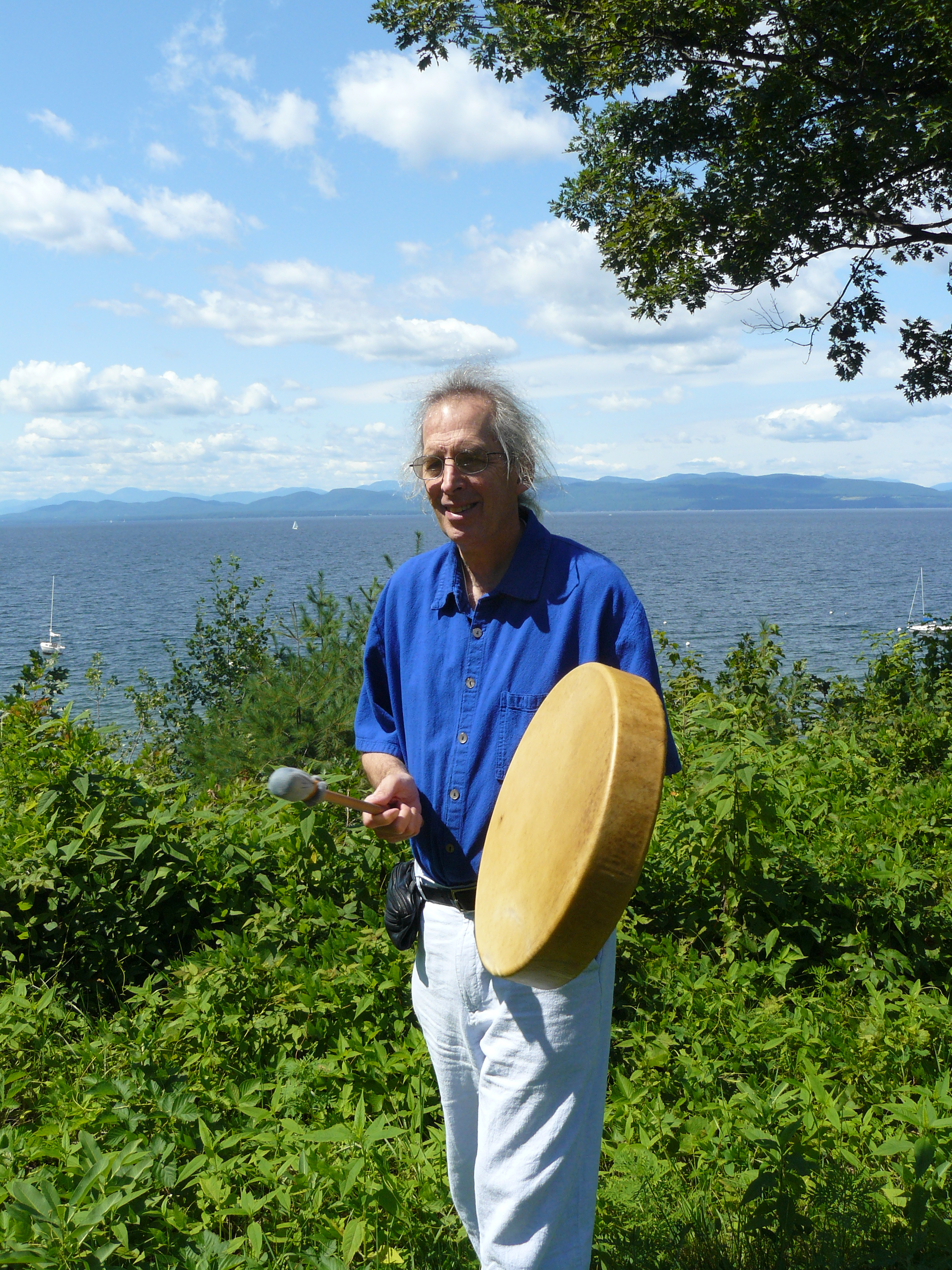
michael drumMICHAEL WATSON, M.A., Ph.D., LCMHC (Dreaming the World) ~ is a contributing editor to Into the Bardo, an essayist and a practitioner of the Shamanic arts, psychotherapist, educator and artist of Native American and European descent. He lives and works in Burlington, Vermont, where he teaches in undergraduate and graduate programs at Burlington College,. He was once Dean of Students there. Recently Michael has been teaching in India and Hong Kong. His experiences are documented on his blog. In childhood he had polio, an event that taught him much about challenge, struggle, isolation, and healing.

Posted in General Interest, Naomi Baltuck, Nature, Photo Essay, Photography/Photographer, story, Story Telling, Photo Story

Dandelions and Other Foreigners

A friend said to Hodja Nasruddin, “Look at all these dandelions!  I’ve tried pulling them, poisoning them, starving them, digging them out by the root.  Nothing works.  I am at my wit’s end!”

“That’s a shame,” said the Hodja. “They are not a problem for me.”

“Really?  Please tell me your secret, my friend!”

“It is very simple,” said Nasruddin.  “I have learned to love them.”

Dandelions are native to Eurasia, but have traveled all over this world.   In France they were called “Dent de Lion,” or “Lion’s Tooth,” because of their toothed leaves. In England they were, “Piss-a-Beds,” for their diuretic properties.  In Germany, Russia, and Italy they are “blowing flowers.”  In Catalan, Poland, Denmark, and Lithuania they are  “milk flowers,”  “milkpots,” and “sow’s milk,” after the flower stem’s milky sap.  In Finland, Estonia, and Croatia, they are “butter flowers.”  In China, they are “flower that grows in public spaces by the riverside,”  while in Portugal, they are called, “your dad is bald,” after a game the children play with them.

A weed is only a weed if it is unwanted.  These immigrants have been used by humans for food, winemaking, herbs, and medicine for all of our recorded history.  Their roots are roasted for a chicory-like hot drink.  They are brimming with vitamins, and they enrich the soil.

They were only introduced to North America by the first European settlers.  Foreign? Yes. But think of all the good things they have brought with them.  Think of summertime without their cheerful faces.  Most of all, think of all the wishes that have come true since they have found a home here.

All words and images copyright Naomi Baltuck

NaomiPHOTO1-300ppi51kAqFGEesL._SY300_NAOMI BALTUCK ~ is a Contributing Editor and Resident Storyteller here410xuqmD74L._SY300_ at Bardo. She is a world-traveler and an award-winning writer, photographer, and story-teller whose works of fiction and nonfiction are available through Amazon HERE. Naomi presents her wonderful photo-stories – always interesting and rich with meaning and humor – at Writing Between the Lines, Life from the Writer’s POV. She also conducts workshops such as Peace Porridge (multicultural stories to promote cooperation, goodwill, and peaceful coexistence), Whispers in the Graveyard (a spellbinding array of haunting and mysterious stories), Tandem Tales, Traveling Light Around the World, and others. For more on her programs visit Naomi Baltuck.com

Posted in General Interest

Academy of American Poets, expanding the reach of poetry

Quite wonderful news from the American Academy of Poets …

Jamie Dedes's avatarJamie Dedes' THE POET BY DAY Webzine

The 2014 National Poetry Month poster The 2014 National Poetry Month poster

……It is difficult
to get the news from poems
…..yet men die miserably every day
……….for lack
of what is found there.

William Carlos Williams (1883-1963), Latino-American Poet

If you are of an age, you remember a time when newspapers and magazines, local and regional, regularly served up poetry and fiction, which was then read and enjoyed by masses of people. Many of the old iconic poets and writers you enjoy today began publishing that way. Now the Academy of American Poets is partnering with news syndicate King Features to bring its Poem a Day program (currently distributed by email subscription) to newspapers, websites and magazines.

In her announcement yesterday Academy of American Poets Executive Director, Jennifer Benka, said:

“It’s been a generation since new poems have been available to daily news readers. We’re thrilled to help renew this tradition, which will bring greater…

View original post 62 more words

Posted in Culture/History, General Interest, grief, Liz Rice-Sosne, memoir, poem, Poems/Poetry, poetry, Poets/Writers

November 22, 1963, Lives in Memory

Haibun

I had been to lunch in Third House.  It was a warm spring day, just the sort of day to leave lunch early and walk in the sunshine.  I ambled over to Second House and plopped down in front of the TV.  I had spent my sophomore year here and I had always loved it – it felt like home more than any other dorm.  However, that day I was a senior, an upperclassman of 17 years of age.  While at Dobbs’ I had lived in each of these Queen Anne houses.  Today I lived in First House.  They were rickety and old, painted a dull boarding school gray.  None the less I was quite comfortable for they represented home for me for three of my four years at school.  I comfortably seated myself on a couch in front of the television.  It might no longer be my dorm, but it still felt cozy and I felt confident, that day so long ago.  That confidence must have come from some of that upperclassman swagger that one acquires as they move though their grades (although, to be honest, I didn’t have much swagger).  It felt strange as I did not have many confident days in my youth.

wild grey geese above

flew in perfect formation

chaos left behind


Haibun

I flipped on the black and white TV, there was no color in those days. “Oh My God. What was happening?” I was in an instant state of shock. President Kennedy had been shot right in from of my eyes – in his limo in Dallas, Texas. “Was this true?” There was growing chaos everywhere on the television, then this horrific  event seemed to ebb out of the television and blanket me. It was thick and dark. I knew that I must get away. I had to get up, go back to the lunchroom and tell of the shooting. I thought of our beautiful first lady and what her sadness must be like. It was so hard to move. I made myself leave.

woodpecker knocking

high above in the maple

a chick all grown up


Haibun

I ran back to the lunchroom and shouted out the news. I do not remember another thing that afternoon. I do remember crying myself to sleep that night filled with such emptiness, dread and a sense of loneliness. Of late, I have been reading a good deal about the Kennedys. I will never believe that this assassination evolved out of the crazy thoughts of one lone Soviet sympathizer. I also suspect that the full truth of those moments in Dallas that November 22nd of 1963 will not be known by the public within my lifetime.

shells upon a beach

dry cool windy autumn day

creation of sand

unnamed-2LIZ RICE-SOSNE a.k.a. Raven Spirit (noh where), perhaps the oldest friend to Bardo, is the newest member of The Bardo Group Core Team. She is also our new Voices for Peace project outreach coordinator and our go-to person for all things related to haiku.  She says she “writes for no reason at all. It is simply a pleasure.” Blogging, mostly poetry, has produced numerous friends for whom she has a great appreciation. Liz is an experienced blogger, photographer and a trained shaman. We think her middle name should be “adventure.”

Posted in Culture/History, Essay, General Interest, Priscilla Galasso

Good Gawd, Y’all!

Another school shooting hit the news yesterday. The impact seems dull. Repetition has begun to numb my response. The predictable media storm continues, but just as raindrops seem less penetrating after your clothes are soaked, I simply can’t absorb this horror. And that is rather shocking.

 I Googled “List of school shootings in the U.S.” The Wikipedia article’s chronology goes by decade, starting with the 1760s. There is one entry there. The next listing is 9 decades later. Two items there. The narration continues to list shootings for every decade. When we get to this millennium, the bullet points are replaced by a chart. From 2000 – 2010, there are 46 different shooting events chronicled. From 2010 – 2014 (n.b. Not even half a decade!) there are 65, including yesterday’s. And I may have lost count of one while scrolling down through the list.

Obviously, this storm is escalating. This is a flood. Our country is awash in violence being perpetrated against school children. School children! What can that be about? What madness has overtaken our culture that young people at their studies have become targets? I’m pretty sure it’s not so much about the targets as it is about target practice.

 Our culture has target practice deeply embedded in its psyche and readily available in its entertainment, military and politics. Angry? Take aim. Proud? Take aim. Patriotic? Take aim. Need security? Take aim. Impoverished? Needy? Insulted? Invisible? Defiant? Miffed? Whatever the uncomfortable feeling you have, you can get relief by pulling out a weapon and taking aim at some target. Children in school apparently make a pretty easy gallery.

 This approach is like using the same tool for every situation, no matter what it is. Would you use a hammer to wind your watch or play your piano or punch down your bread dough or crochet a sweater? No. And how did you learn to lay your hands on the appropriate tool for each of these situations? Most likely, at a very young age, you watched someone do it. A role model. Perhaps a parent or grandparent. Someone you trusted, who spent time with you, doing everyday kinds of things.

P1040287

 Let’s look around. Where are the role models that are pulling out weapons for every crisis? Where are the role models who are negotiating, discussing, creatively engaging, brainstorming and experimenting with different non-violent approaches? Who are the role models who have multiple tools in their belts and use the appropriate ones for the situation? And violence, what is it good for? Is it ever the best tool for the job?

 And, c’mon, let’s be creative. Why does our entertainment have to follow this unimaginative formula of violence? There are a million other options. There are a million other roles to play. Playing something different will make us smarter, wiser, more flexible, more open, more like children. School children….our vanishing resource.

© 2014, essay and photograph, Priscilla Galasso, All rights reserved

004PRISCILLA GALASSO ~ started her blog at scillagrace.com to mark the beginning of her fiftieth year. Born to summer and given a name that means ‘ancient’, her travel through seasons of time and landscape has inspired her to create visual and verbal souvenirs of her journey.

Currently living in Wisconsin, she considers herself a lifelong learner and educator. She gives private voice lessons, is employed by two different museums and runs a business (Scholar & Poet Books, via eBay and ABE Books) with her partner, Steve.
Posted in General Interest, Jamie Dedes, poem, Poems/Poetry, poetry, Poets/Writers

because a poem is everything you can be …

Chirlane McCray by Kelly Weill, NYU Local.com

CHIRLANE McCRAY is a writer and poet, a speechwriter and wife of New York City’s new (as of January 2014) mayor, Bill de Blasio. She is also the mother of two children, Chiara and Dante.

According to her bio on de Blasio’s website, “Chirlane began writing at a young age. In high school she discovered ways to use writing as a tool for activism. While studying at Wellesley College and the famed Radcliffe Publishing Course, Chirlane became a member of the Combahee River Collective, a pioneering black feminist collective, which inspired her to write groundbreaking prose and poetry.”

I’ve triend to find poems by Chirlane other than the one below, which is being featured by just about everyone in the New York blogosphere. No luck. The poems are probably out in the world somewhere, but try to bring one up in a search and you get bombarded by the overriding political effluvia and razzmatazz. Nonetheless, this is extraordinatry poem and the one – according to the man himself – that made de Blasio fall in love with her. It is from Home Girls: A Black Feminist Anthology. I happen to have a copy of Home Girls, so I know it’s the only poem of hers in that collection. I was unable to find Chirlane McCray’s poems in the other anthologies I own.

NEW YORK, NY - SEPTEMBER 10: Public Advocate and mayoral candidate Bill de Blasio kisses his wife Chirlane McCray after voting in the New York City mayoral primary on September 10, 2013 (Photo by Spencer Platt/Getty Images)
NEW YORK CITY: Public Advocate and then mayoral candidate Bill de Blasio kisses his wife, Chirlane, after voting in the mayoral primary on September 10, 2013 (photograph by Spencer Platt via Getty Images)

I Used To Think

I used to think
I can’t be a poet
because a poem is being everything you can be
in one moment,
speaking with lightning protest
unveiling a fiery intellect
or letting the words drift feather-soft
into the ears of strangers
who will suddenly understand
my beautiful and tortured soul.
But, I’ve spent my life as a Black girl
a nappy-headed, no-haired,
fat-lipped,
big-bottomed Black girl
and the poem will surely come out wrong
like me.

And, I don’t want everyone looking at me.

If I could be a cream-colored lovely
with gypsy curls,
someone’s pecan dream and sweet sensation,
I’d be

poetry in motion
without saying a word
and wouldn’t have to make sense if I did.
If I were beautiful, I could be angry and cute
instead of an evil, pouting mammy bitch
a nigger woman, passed over
conquested and passed over,
a nigger woman
to do it to in the bushes.

My mother tells me
I used to run home crying
that I wanted to be light like my sisters.
She shook her head and told me
there was nothing wrong with my color.
She didn’t tell me I was pretty
(so my head wouldn’t swell up).

Black girls cannot afford to
have illusions of grandeur,
not ass-kicking, too-loud-laughing,
mean and loose Black girls.

And even though in Afrika
I was mistaken for someone’s fine sister or cousin
or neighbor down the way,
even though I swore
never again to walk with my head down,
ashamed,
never to care
that those people who celebrate
the popular brand of beauty
don’t see me,
it still matters.

Looking for a job, it matters.
Standing next to my lover
when someone light gets that
“she ain’t nothin come home with me” expression
it matters.

But it’s not so bad now.
I can laugh about it,
trade stories and write poems
about all those put-downs,
my rage and hiding.
I’m through waiting for minds to change,
the 60’s didn’t put me on a throne
and as many years as I’ve been
Black like ebony
Black like the night
I have seen in the mirror
and the eyes of my sisters
that pretty is the woman in darkness
who flowers with loving

– Chirlane McCray

Photo on 2014-03-31 at 17.16 #3JAMIE DEDES (The Poet by Day)~ I am a medically retired (disabled) elder and the mother of a married son. The graces of poetry, art, music, writing and reading continue to evolve as a sources of wonder and solace, as creative outlets, and as a part of my spiritual practice. My Facebook pages are: Jamie Dedes (Arts and Humanities) and Simply Living, Living Simply.

Posted in General Interest, Nature, Poems/Poetry, Victoria C Slotto

Drizzle

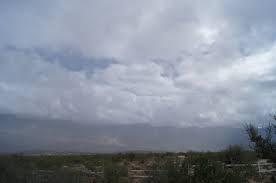
Photo: cloudmaven
Photo: cloudmaven

As the day evolves
from overcast
to sun to rain again,

the Artisan steps in
and brushes clouds
across blue skies—

wet-on-wet—
then takes a rag
and smears,

sprinkling sadness
into an otherwise
perfect moment.

We are anticipating some rain this weekend in the drought-stricken California desert, so actually it’s a reason for celebration if it makes it over the mountains.

© 2014, poem, Victoria C.Slotto, All rights reserved

2940013445222_p0_v1_s260x42034ff816cd604d91d26b52d7daf7e8417VICTORIA C. SLOTTO (Victoria C. Slotto, Author: Fiction, Poetry and Writing Prompts) ~ is an accomplished writer and poet. Winter is Past, published by Lucky Bat Books in 2012, is Victoria’s first novel. A second novel is in process. On Amazon and hot-off-the-press nonfiction is Beating the Odds: Support for Persons with Early Stage Dementia. Victoria’s ebooks (poetry and nonfiction) are free to Amazon Prime Members. Link HERE for Victoria’s Amazon page.

Editorial note: Congratulations, Victoria, on that the long awaited publication of print copies of Jacaranda Rain, Collected Poems, 2012, Beautifully done.

Writers’ Fourth Wednesday is hosted by Victoria from January through October and posts at 12:01 a.m. PST. The next Writers’ Fourth Wednesday is scheduled for April 26. 

Posted in Essay, General Interest

Sacred Space in Peacemaking

I am currently at Ecumenical Advocacy Days in Washington DC. The focus is on radical peace making. I am reminded of the extreme risk that comes to people making radically peaceful stands.

Fr. John Dear suggested the following process to arrive at a nonviolent life:

– Nonviolent interior life … Leads to …

– Nonviolent interpersonal life … Leads to …

– Nonviolent world.

It reminds me of “love your neighbor as yourself!” That requires self love first. Interior nonviolence leads to a cosmos full of nonviolence!

Dr. Martin Luther King Jr. articulated six principles of nonviolence:

1. nonviolent resistance is not a method for cowards

2. nonviolence does not seek to defeat or humiliate the opponent, but to win his friendship and understanding

3. the attack is directed against forces of evil rather than against persons who happen to be doing the evil

4. nonviolent resistance is a willingness to accept suffering without retaliation, to accept blows from the opponent without striking back

5.it avoids not only external physical violence but also internal violence of spiri

6. it is based on the conviction that the universe is on the side of justice

Some of these are hard principles. But all the people I have heard of that do nonviolence have incredible wells of interior spaciousness. The ultimate source of nonviolence.

I hope you find something to prompt a thought that leads towards greater peace!

Shalom,

Terri Stewart

Source: http://www.wildmind.org/blogs/on-practice/the-path-of-nonviolence-six-principles-of-dr-martin-luther-king-jr

terriTerri Stewart ~ a member of our Core Team,  comes from an eclectic background and considers herself to be grounded in contemplation and justice. She is the Director and Founder of the Youth Chaplaincy Coalition that serves youth affected by the justice system. As a recent graduate of Seattle University’s School of Theology and Ministry, she earned her Master’s of Divinity and a Post-Master’s Certificate in Spiritual Direction with honors and is a rare United Methodist student in the Jesuit Honor Society, Alpha Sigma Nu. She is a contributing author to the Abingdon Worship Annual.

Her online presence is “CloakedMonk.” This speaks to her grounding in contemplative arts (photography, mandala, poetry) and the need to live it out in the world. The cloak is the disguise of normalcy as she advocates for justice and peace. You can find her at www.cloakedmonk.com,www.twitter.com/cloakedmonk, and www.facebook.com/cloakedmonk.  To reach her for conversation, send a note to cloakedmonk@outlook.com.

.

Posted in General Interest, Naomi Baltuck, Photo Essay, Photography/Photographer, story, Story Telling, Photo Story

Staph Infection

As a newly graduated English Majorette, I headed Out West to seek my fortune, and arrived in Seattle just before the holiday season.

While I decided what to do with the rest of my life, I landed a temp job selling shoes at the downtown Frederick and Nelson’s to pay the rent.

The shoe did not fit.  Most of the saleswomen spent their paychecks on new clothes, using the employee discount, of course.  I had two and a half presentable outfits, and rotated.  I didn’t wear make-up or high heels, but I did have a decent pair of leather boots that went with everything.  I was competent and polite, except to the imperious bitches who mistook the fitting chair for a throne and were used to being waited on hand and foot.  They were the ones who came in five minutes before closing, ordered me to fetch four different pairs of shoes in three sizes, then stuck out their feet for me to remove their own shoes for them.

That six week position seemed an eternity, but I had a secret superpower to get through it.  Long before the invention of Photoshop, I had mastered my own techniques for photo doctoring.

It was crude, but effective.  And my family was very forgiving.

All it took was a pin to scratch away here and a red marker to color in there, and voila!   I turned my Frederick and Nelson’s staff pin into a Frederick and Nelson’s staph pin.  No one even noticed, but somehow it was a sign, and it made all the difference to me.

Then one cold December day my boss called me into the back room.  I was sure she was going to fire me for badge tampering.  But she said, “I want you to work here on a permanent basis beginning in January.”

Before I could tell her, “Thank you, but I want to check out job opportunities in Hell first,” she leaned forward to stare at my bosom.  Or at the badge on my bosom, to be more precise.  “I think there’s a typo on your badge.”

“So it would seem,” I replied.

“That’s never happened before.  Go get a new one, and then let me know as soon as possible about the job.”

I never did trade in my Little Red Badge of Courage for a new one.  As for the job selling shoes… those boots were made for walking, and that’s just what they did.  They walked on down to Grand Teton National Park, where I waited tables, and to King’s Canyon National Park, where I taught canoe.

And they brought me back to the home of my heart…

…where I became a professional storyteller

…and author.

Along the journey, I have learned to pay attention to my instincts, and to read the writing on the wall.

But I still keep the badge as a reminder that sometimes one must relish the tiny victories along the way.


c2013 all words and photographs, Naomi Baltuck

NaomiPHOTO1-300ppi51kAqFGEesL._SY300_NAOMI BALTUCK ~ is a Contributing Editor and Resident Storyteller here410xuqmD74L._SY300_ at Bardo. She is a world-traveler and an award-winning writer, photographer, and story-teller whose works of fiction and nonfiction are available through Amazon HERE. Naomi presents her wonderful photo-stories – always interesting and rich with meaning and humor – at Writing Between the Lines, Life from the Writer’s POV. She also conducts workshops such as Peace Porridge (multicultural stories to promote cooperation, goodwill, and peaceful coexistence), Whispers in the Graveyard (a spellbinding array of haunting and mysterious stories), Tandem Tales, Traveling Light Around the World, and others. For more on her programs visit Naomi Baltuck.com

Posted in Corina L. Ravenscraft, Culture/History, General Interest, poem, Poems/Poetry, poetry

~ Seek Out the Four Leaf Clovers ~

(( March comes along and we’re usually reminded of St. Patrick’s Day and all things Irish. In keeping with that theme, here’s a poem that might make you think of four-leafed clovers a little differently the next time you see one. 😉 ))

Image borrowed from Wikimedia Commons

I looked for luck today,
thinking I could use some.
My eyes, scanning, seeking,
green leaves of three.
Whole patches of clover,
beneath my soft shadow.
The masses huddled together,
covering, sheltering one another,
in a close-knit bunch.
Always only three leaves;
thousands of trinities, triads and trios.

Then I thought about you,
and there it was!
Magically appearing, as if summoned
by the image in my mind;
the perfect four-leaf clover!
It wasn’t obvious, like I expected.
Four, round, papery-thin leaves,
a dark Spring Green.
With creamy triangles
touching at the center.
All balanced on a slender, delicate stem.
Hidden in the midst of the ordinary.

And it reminded me of people:
Most are of the three-leaf variety,
but some,
some special ones,
grow differently,
with four leaves.
And sometimes, you have to search really hard to find them,
among the clusters of the mundane.

Like the symbols I compare them to,
they may bring you luck.
If you find them, cherish them;
press them in your memory book,
return to them when you need their magic.
Because sometimes, we all need a little luck.
~ © C.L.R. ~

© 2014, essay, Corina Ravenscraft, illustration, Ursula Vernon All rights reserved

effecd1bf289d498b5944e37d8f4ee6fAbout dragonkatet Regarding the blog name, Dragon’s Dreams ~ The name comes from my love-affairs with both Dragons and Dreams (capital Ds). It’s another extension of who I am, a facet for expression; a place and way to reach other like-minded, creative individuals. I post a lot of poetry and images that fascinate or move me, because that’s my favorite way to view the world. I post about things important to me and the world in which we live, try to champion extra important political, societal and environmental issues, etc. Sometimes I wax philosophical, because it’s also a place where I always seem to learn about myself, too, by interacting with some of the brightest minds, souls and hearts out there. It’s all about ‘connection(s)’ and I don’t mean “net-working” with people for personal gain, but rather, the expansion of the 4 L’s: Light, Love, Laughter, Learning.

Posted in General Interest

Paddy’s Green Shamrock Shore By Niamh Clune

Sir$20George$20Robey$202I grew up in London Irish pubs where music was inwoven into the fabric of daily life. One of my father’s few redeeming features was that he was a good musician, some would say fabulous, even. He played big band swing and bebop on sax and clarinet. When he wanted to torture my mother, he played Irish jigs on the silver flute (should always be played on the simple wooden flute) without feeling or nótaí ghrásta(grace notes). Basically, according to my mother, a bepob player should leave the traditional alone.

Musicians such as The Dubliners stayed with us in the pub we ran in Finsbury Park, The Sir George Robey, then known as The Clarence, and now derelict, and drank us out of house and home. Many exiled and lonely young men full of music, poetry, politics and idealistic intellect passed through our ever-open doors ~ bees to honey, the honey being my mother’s sparkling blue eyes, astonishing charm, and generous supply of home-cooking. They came also because the craic was great. Music pumped out of the bar every night, from Jazz and Bebop, to Blues, Country and Traditional Irish.

At a young age, my father hauled me up onto that stage to “sing us a song” to make the auld fellas cry and drown shamrock memories in copious amounts of the ‘black stuff.’ Children and mammies were remembered. Many had been abandoned for years and left to fend for themselves back in the auld country where there was little hope of employment. Paddy was forced to seek work in foreign, English climes. The lure of digging London’s Victoria underground tunnel superseded all other needs. Earn the Queen’s shilling and put a crust of bread on now distant tables, was the prayer of the day. Home parlours were replaced by my mother’s public bar, where navvy’s found refuge through smiling, non-judgmental, Irish eyes that lit cold souls and warmed exiled hearts.

As was the way with most Irish families, if you could sing, then sing. It was expected. If you could recite a poem, then recite. If you could make a speech and blind all with the power of your oratory then “Fair play to ye!” Just make sure it was passionate, rousing, fired with history and enough whiskey to whet a verbose whistle and incite the nationalist soul.

Because today is St. Patrick’s Day, I will sing you a song I recorded a while back. It’s on my CD Touching Angels…https://soundcloud.com/niamh-clune/red-on-white May the Uilleann Pipes fire your blood and make you get up and dance!


Posted in Corina L. Ravenscraft, General Interest, poem, Poems/Poetry, poetry

~ Soothsayer, You ~

((Shakespeare has had quite an influence on my life, from his poetry to his plays, to the point that not a March can come without me thinking of Caesar and the dreaded “Ides of March”. This came to me the other day as I was thinking about those Ides…I think all Muses must somehow be drawn to thoughts of The Bard…hahaha. Good, bad, I leave it up to the reader to decide. But the sentiment behind it is one I believe in 100%. Enjoy. 🙂 ))

Image borrowed from http://pkphotoshop.blogspot.com

Beware the Ides, and bitter tides of Life
That can catch you, drifting, unaware.
Beware whispered doubts and inner asides
That can make you feel
A restless need to compare.

“Energy flows where attention goes.”
I’ve heard it said, and choose to believe it.
You’re the only one who truly knows
What you want from life.
So go, my friend. Be bold, retrieve it.

Cast aside the toxic multitudes,
Stay clear of those who drag you down.
Beware of those with swiftly-shifting moods,
Like a riptide or current,
You can fall in, and drown.

Leave the negative Nellies to their nots.
Choose your path with purpose,
Sans rose-colored glasses.
Temper reality with positive thoughts;
Rise above the plastic, saccharine masses.

Know your strengths, believe in who you are.
Test limits, and accept that sometimes,
You’ll fail.
Self-confidence makes the journey less far,
Be your own soothsayer —
That’s how you’ll prevail.

~ © C.L.R. 2014 ~

© 2014, essay, Corina Ravenscraft

effecd1bf289d498b5944e37d8f4ee6fAbout dragonkatet Regarding the blog name, Dragon’s Dreams ~ The name comes from my love-affairs with both Dragons and Dreams (capital Ds). It’s another extension of who I am, a facet for expression; a place and way to reach other like-minded, creative individuals. I post a lot of poetry and images that fascinate or move me, because that’s my favorite way to view the world. I post about things important to me and the world in which we live, try to champion extra important political, societal and environmental issues, etc. Sometimes I wax philosophical, because it’s also a place where I always seem to learn about myself, too, by interacting with some of the brightest minds, souls and hearts out there. It’s all about ‘connection(s)’ and I don’t mean “net-working” with people for personal gain, but rather, the expansion of the 4 L’s: Light, Love, Laughter, Learning.

Posted in General Interest, John Anstie, poem, Poems/Poetry, poetry

An Apology from Your Grandfather

(for Nathaniel)

This poem was written last November shortly after the birth of my third grandchild, a second grandson, and the first child of my son and his wife. I put it away for a while to ‘rest’, because I felt it wasn’t quite there; that it still needed something to make it work. Three months later, following several edits and adjustments, whilst it is perhaps less like poetry and more a narrative, (and was it Leonardo da Vinci himself who said that a work of art is never complete, only abandoned?) I have decided that I should let it go. I hope my grandson, when he’s old enough, all my grandchildren and onward generations, may find some use or ornament for it, to give them perspective on their own situations, whatever they may be, and to help guide them in their journeys through life …

The countryside was flush with gold
to celebrate your arrival; the season
was in suspense, as if to make
your first tiny footprint on the earth,
amidst the clamour of a thousand nativities,
as if a gift of God for this, your birth,
a special and harmonious event.

At the cusp, where Autumn meets with Winter,
a splash of golden hair defined you;
the gilding of a perfect crown,
was like the golden fleece,
that vaunted prize of Ancient Greece
in Jason’s time, when boys grew into men
before the age of their true making.

Your first year, centenary of a date
when Europe burned with anticipation
of conflict, a bloody affair, for which
no true atonement was ever offered,
for which we feel a great collective guilt
but which, we hope, will remain
a part of history. Not your future.

Your future shall be focused,
neither on the clock that ticks,
that divides time into segments of life;
that numbs the mind with endless drudge;
that defines your living to the end;
nor shall it confine your path
to the relentless quest for gain.

It is not control that you shall seek,
but access to a pantheistic knowledge,
enabling a different class of power,
the faculty for influence over those,
who misused the privilege they have,
that we, your forebears, allowed them.
For this I repentantly apologise.

If nature no longer holds its strength to live,
to refresh itself, to recover its flush and thrive,
it will be human beings, who prevailed
on its demise, for which there’s no excuse.
Beyond mere human frailty, there seems no will
to cease remorseless greed and just survive.
But the Earth owes us a big fat nothing!

So, if my undoubted compassion
does not have wings; if I do not transform
my rising anger into constructive deeds,
in such a way to help move hearts and minds
in concert, so to invest in change;
if thus, and I’m too frail or weak,
remorse will overcome my heart.

But have I yielded to our defeat?
No. I’ll neither submit to this old foe
nor will my pen cease in my hand,
whilst ever I have breath and mind
to speak out from the crowd.  I find
it sad to say that much is left to do,
which leaves an adverse legacy for you.

What do I expect of you, or you of you?
I know that I can ask, but cannot make;
I know you’re blessed with your own will,
but you will find that one thing will prevail:
the greatest force for life is family;
a force defying selfishness and greed,
which always gives us hope in time of need.

It shall be fuel that fills you, every day,
from your Stabat Mater, your Trojan Father,
whose care and energy will long endure,
imbuing you with superhuman strength,
for which there is no substitute;
that no amount of gold will ever buy.
Integrity and truth is born of this.

There is one thing I know will light your way,
’till time and tides are done and trees are gone.
This energy and fortitude, integrity
and strong desire, will all be borne
to you and, through you, to your children;
and so, through them, ancestral grace
will lead them to conquer the World!

It is the one enduring human quality
that is, more than mere emotion,
the omniscient and greatest power of all;
one word, one gift, which represents
life’s longing for itself, from me to you,
a kind of magic that will heal the World
… with pure, undying, unconditional Love.

© 2013 John Anstie

John_in_Pose_Half_Face3

JOHN ANSTIE (My Poetry Library and 42) ~ is a British writer and poet, a contributing editor here at Bardo, and multi-talented gentleman self-described as a “Family man, Grandfather, Occasional Musician, Amateur photographer and Film-maker, Apple-MAC user, Implementation Manager, and Engineer. John participates in d’Verse Poet’s Pub and is a player in New World Creative Union. He’s been blogging since the beginning of 2011. John is also a member of The Poetry Society (UK).

*****

product_thumbnail-3.php

51w-rH34dTL._BO2,204,203,200_PIsitb-sticker-arrow-click,TopRight,35,-76_AA300_SH20_OU01_John has been involved in the recent publication of two anthologies that are the result of online collaborations among two international groups of amateur and professional poets. One of these is The Grass Roots Poetry Group, for which he produced and edited their anthology, “Petrichor* Rising. The other group is d’Verse Poet Pub, in which John’s poetry also appears The d’Verse Anthology: Voices of Contemporary World Poetry, produced and edited by Frank Watson.

Petrichor – from the Greek pɛtrɨkər, the scent of rain on the dry earth.

Posted in Culture/History, Essay, General Interest, Priscilla Galasso

Model Behavior

I don’t have a television, so I don’t see a lot of commercials. Still, I find NBA games on the internet and catch a few ads in the process. There’s one for a fried chicken franchise that particularly bothers me. Here’s the set-up: two teenaged kids have made a rare venture out of their rooms to join their parents for dinner. They are still plugged into their media devices and never speak or make eye contact with the camera or their parents. The African-American family sits in the living room with a bucket of chicken on the coffee table. Mom & Dad tell the camera that the chicken is the occasion for them to have this special “family” experience. Dad jokes that if the batteries run down, they might actually have a conversation.

 Sigh. Is this an accurate snapshot of our current culture? Rewind about 100 years.

 I’m reading a book called Nothing To Do But Stay: My Pioneer Mother by Carrie Young. The author describes her life in North Dakota during the Great Depression. Her mother had acquired land as a homesteader, married and raised 6 kids on the farm. Her sisters struggled to become educated and get jobs as school teachers in local one-room schoolhouses. One particularly brutal winter, their parents found it more sensible to drop off the 18-year-old daughter, the teacher, with the two younger sisters at school and let them stay there during the week instead of transporting them back and forth through the snow drifts by horse-drawn wagon. The week turned into months. Fresh supplies were delivered every week, but these 3 young ladies spent that winter relying on their own resourcefulness for their daily life — with no electricity, simply a coal-burning furnace in the basement and a woodstove with one burner in the classroom. How is that possible? I’m sure that life was one that their parents had modeled for years.

 Compare these two snapshots and imagine the changes that have swept through our country. What has “adult living” become? What do we model for our children these days? What skills are being delegated to machines or service companies or ‘experts’ that used to be more universal and personal? Besides modeling tasking skills, how do we model social and moral skills in this decade?

 When more families were farming, children grew up alongside their parents and were incorporated into communal activities. They helped milk the cows, tend the garden, and make the food and clothing they all needed to live. In the 50s, when more families lived in cities and suburbs, Dad would drive off in the morning and work out of sight of his kids all day while Mom would turn on appliances to do the chores around home. The kids learned consumerism. Then the Moms left the house and went into the workforce leaving the kids in daycare. In 1992, someone came up with “Take Your Daughters To Work Day”. That was expanded to include boys a decade later. What was first perceived as a Feminist issue of role modeling was recognized as a parenting void: children had no clue how adults spent their work days.

Musing about these changes made me consider what my own children had learned from my husband and me. My daughter made a calligraphy sign when she was in High School: “My father didn’t tell me how to live; he lived and let me watch him do it.” (Clarence B. Kelland) She was 23 when her father died. What we intended to model and what she actually learned are most likely two different things. One thing I do know. She did learn to cook her own chicken.

joy 2

© 2014, essay and photograph, Priscilla Galasso, All rights reserved

004PRISCILLA GALASSO ~ started her blog at scillagrace.com to mark the beginning of her fiftieth year. Born to summer and given a name that means ‘ancient’, her travel through seasons of time and landscape has inspired her to create visual and verbal souvenirs of her journey.

Currently living in Wisconsin, she considers herself a lifelong learner and educator. She gives private voice lessons, is employed by two different museums and runs a business (Scholar & Poet Books, via eBay and ABE Books) with her partner, Steve.

Posted in Disability, Essay, General Interest, Mental Health, Michael Watson

The Olympics, Polio, and the Medicine Wheel, Part Two

community-seatingThe Olympics have come to a close; the Paralympics follow. Saturday evening Jennie and I watched a Gimp DVD. She is planning to show it to her Expressive Therapies class, along with some material from Bill T. Jones. Its been a while since we last saw Gimp in performance so revisiting their work was a revelation.

The Paralympics is a much-needed, if under-reported competition for athletes who happen to be disabled. The Gimp Project is a collective of dancers, able-bodied and disabled. The Paralypics is a contest; Gimp is a collaboration exploring the world of disability experience.  The first seeks perfection, the latter revels in the beauty of imperfection. The Paralympics pursue inclusion, abet separate and unequal; Gimp tells stories, often casting light on the processes that marginalize and exclude.

There is a remarkable invisibility surrounding these processes, although many activists, academics, and artists have sought to illumine them. It matters little whether these forces  exclude persons on the basis of ethnicity, race, disability, or other difference, the effect is consistent. The systems are pervasive and largely invisible; they are also profoundly human.

The Medicine Wheel holds all of human experience, offering us a view of life as a whole. There is a place on the Wheel for everything that can be encountered, even a space for our collective fear of otherness and contagion. The Wheel reminds us that we will each encounter all that is, whether directly or through the experiences of others. Our fates are inexorably woven together; the fate of each is that of all.

As we meditate on the Wheel we are encouraged to consider that while they seem real, both safety and isolation are illusory, transitory states. The last few months I have found myself wandering the wilderness that is part of the Post Polio experience. Recent health concerns continue to bring up ancient unresolved feelings, along with worries about the future. I have been repeatedly thrown back to the fear and pain of the acute illness and post-illness recovery, and the social isolation imposed on me as a Polio. I am also reminded the effects of the virus continues to impact my life and thus the lives of those I hold dear.

I’ve been exploring the experience of Post Polio through the wisdom of the Wheel. For me, now, Post Polio lies in the North, the place of aging, teaching, and eventually, making preparations to return to the Spirit World. (The North is also the place of preparation for rebirth!) The journey is complicated as I find myself trying to make sense of my nearly lifelong disability from a place on the Wheel where it is also my task to embrace a declining body.

Part of the task is to acknowledge my fear of erasure. We live in an epoch in which Polio was eradicated; we are, for most purposes, a Post-Polio world. I was taught I had survived the virus and should get on with life, ignoring, as much as possible, the devastation to my body and psyche. Yet the path of forgetting and ignoring is fraught with difficulties; the way of assimilation or “passing” is thorny. The normative prescription offers the possibility of inclusion, yet to follow that road is to participate in a collective act of erasure, to become invisible, and thus lose Self.

Every human being comes to a place where s/he is vulnerable; each of us eventually faces the treat of erasure and the powerful emotions that accompany that threat. In a culture addicted to perfection, and dismissive of difference and need, such moments carry added fear and shame. How odd such an essentially human experience is marginalized, leaving so many to face the North filled with loneliness and dread.

As a society we increasingly relegate the task of accompanying folks on the journey through the North to the health care profession and the clergy. As a result, we have marginalized the insight and wisdom that may accompany disability, experiences of trauma, and aging.  In doing so we create great suffering for the very young we profess to idolize, for we deny them context. How are they, in the face of ceaseless messages about the centrality of competition and perfection, to know they are all loveable, all sacred, beautiful, and desirable in their humanness and imperfections?

Our collective focus on perfection sells products and drives our economy, yet blinds us to the fate of our neighbors and the world. Our deeply held collective desire for safety encourages us to abandon our elders, young people, and children, threatens our very being as a species, and steals our Souls. Still, as prophesy insists, we have options. We can risk relearning the wisdom of the elders, symbolized by the Medicine Wheel, accept the complexity and terror of being human, and journey together into a Sixth World. There are, if we make it so, seats for all at the table.

– Michael Watson, Ph.D.

© 2013, essay and photographs (includes the one below), Michael Watson, All rights reserved

michael drumMICHAEL WATSON, M.A., Ph.D., LCMHC (Dreaming the World) ~ is a contributing editor to Into the Bardo, an essayist and a practitioner of the Shamanic arts, psychotherapist, educator and artist of Native American and European descent. He lives and works in Burlington, Vermont, where he teaches in undergraduate and graduate programs at Burlington College,. He was once Dean of Students there. Recently Michael has been teaching in India and Hong Kong. His experiences are documented on his blog. In childhood he had polio, an event that taught him much about challenge, struggle, isolation, and healing.