El Tigre building in Destu, Spanish Basque Country / Public Domain photograph
“Those trains brought me to Hemingway’s World War I minimalist opus “In Our Time.” His broken shapes and no words for them. It got all still as our train stopped. I found myself bleakly staring at eternity unbound.” Linda Chown
The Big Burn-Out
In Deusto those burnt out train husks
ETA exploded black in a rage for justice
haunt the tracks like unheard whispers
hollowed out like old love gone offstage
There was an awe in my looking
almost a respect as I was
remembering the political anger
in which I was basted all my little life.
It was a mirror of those police,
big faceless men holding their lines.
This is no self pity but a gripping knowing
how big life living is. How solemn and fervent our times.
Those trains brought me to Hemingway’s
World War I minimalist opus “In Our Time.”
His broken shapes and no words for them.
It got all still as our train stopped.
I found myself bleakly staring at eternity unbound.
where the hell-burn bristles
a huge expanse of empty
where cold dances like repression
life bites and slaughter slays.
the chaos of Chernobyl seethes
in a fraught den wrapped in commission
and hiding lasting lies which don’t stick
party politics belittles
while routine purges lacerate life’s nobility
Orange hibiscus hovers
Blue iris irradiates
LINDA E. CHOWN grew up in Berkeley, Ca. in the days of action. Civil Rights arrests at Sheraton Palace and Auto Row. BA UC Berkeley Intellectual History; MA Creative Writing SFSU; PHd Comparative Literature University of Washington. Four books of poetry. Many poems published on line at Numero Cinq, Empty Mirror, The Bezine, Dura, Poet Head and others. Many articles on Oliver Sachs, Doris Lessing, Virginia Woolf, and many others. Twenty years in Spain with friends who lived through the worst of Franco. I was in Spain (Granada, Conil and Cádiz) during Franco’s rule, there the day of his death when people took to the streets in celebration. Interviewed nine major Spanish Women Novelists, including Ana María Matute and Carmen Laforet and Carmen Martín Gaite.
Before, no sand swept through, no water splashed—a beach at driving distance, yes, but a long, long walk away. Before the three-year old’s stories, which I only half listened to: he was born in clouds before dinosaurs were alive; he died; “But now,” he said, “I’m becoming alive again.”
I thought a story he told me one morning came from his dreams.
He knew a dinosaur, he told me, with bright blue feathers in the day. At night it turned wooly and gray, to keep warm. The dinosaur had a name, Pollaydowen.
I thought, what an amazing imagination my three-year old son has, what colorful dreams.
He had other stories, about his house in space and all of the animals that lived there with him, a farm he had at this house. He went on and on with details—listing every animal we saw at the zoo, on farm visits, in books, on videos, on the internet; listing all of the plants and flowers he had heard of; listing creatures great and small in his lakes and seas.
How did he know all of them?
He insisted we should visit his house in space.
Then changes came suddenly, not slowly, as even the most pessimistic predictions had held. One day, news report said the sea covered beaches even at the lowest tides. The next week, waves washed across roads. Houses washed away. Whole neighborhoods of people could barely evacuate before the surf swallowed the land and their belongings.
The water washed sand over everything. The ozone layer shredded. Paint bubbled and peeled on cars, houses, government buildings. Everything and everyone aged.
Soon, sand dunes blew across the road in front of our house. The house looked like fifty years of neglect had settled in on it over the past few weeks.
That last day, my wife and I heard my son speaking in his room. And we heard another voice.
We went in. A bright blue flash turned toward us.
“We have to go,” my three-year old calmly explained, “now.”
“These sands end time here, the last to flow through the hour-glass,” the blue lizard-creature, Pollaydowen, added.
As we left the house, we trekked through hills of sand.
We returned once, to see what had happened.
I left this note for you who might find it, scratched in the walls, just in case anyone remains. We have an ark.
This quarter’s BeZine, we are joining with 100TPC (100 Thousand Poets (and others) For Change. We’re celebrating in solidarity with Greta Thunberg, the amazing 16-year old climate change activist traveling by ship to attend two important global events: The Climate Action Summit in New York on September 21-23 and the UN Climate Conference in Santiago in December of 2019. Please read the September issue and enjoy the creations of artists, poets, musicians, writers and all manner of creative activists as we speak up for the planet! 🙂 Please join with us on the 28th for our Virtual 100TPC.
We were grateful for bug screens on our trip to the Amazon, but the natural world often defies human-made barriers.
For instance, we shared The Hammock Room at the Research Center with a tarantula. He wasn’t as interested in us as we were in him.
It was a reminder to shake out our shoes each morning before getting dressed. Insects and critters found their way into our little sanctuary, but it was the ones I couldn’t see that bugged me.
We ventured into the jungle with Orlando, our guide. In spite of the heat and 90+ percent humidity, we covered as much skin as possible with clothing, and sprayed the rest with repellant. Nighttime mosquitoes carry malaria, daytime ones dengue fever, and I forget which ones carry yellow fever, but I didn’t want to be breakfast for anybody.
Below are a few of my own unofficial rules of the jungle for the timid traveler.
Rule of the Jungle #1– bring mosquito repellent!
Fallen trees and leaves, mud, and overnight storms in the tropical rainforest made hiking challenging.
We wore rubber boots to keep our feet dry. Bea stepped in a puddle deeper than anticipated, and water poured into her boot.
Rule of the Jungle # 2–Watch your step!
Orlando uprooted several small trees, and cut the trunks off with his machete to make tea from the bark to relieve his mother’s arthritis. He replanted the roots in the fertile soil, so the tree would survive. Maybe the tea really was for his mom, but it was a tactful way of providing us with walking sticks to help balance on slippery walkways.
Rule of the Jungle #3–Take the hand extended to you, and be grateful for kindness in any form or guise.
So many trees and leaves were poisonous, covered with harmful insects or razor-sharp edges. Another guest at the Research Center slipped and braced herself on a porcupine tree. It left dozens of venomous barbs in in her hand, which swelled up painfully. The nearest doctor was hours away, so her guide cut the barbs out with pins and a knife, and gave her anti-biotics.
Rule of the Jungle #4–Don’t touch ANYTHING!
Rule of the Jungle # 5–There are exceptions to any rule.
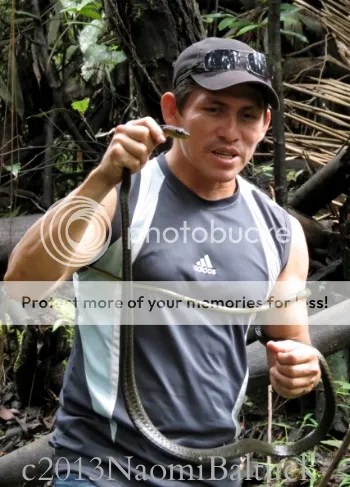
Orlando caught Olive Whip Snake with his bare hands.
He showed us how to handle a snake without getting bitten…
Orlando’s grandfather was a shaman. “My grandfather said if you can get a snake to wrap around you, it will become gentle and give you its energy.” As soon as it wrapped around him, the snake grew calm, and then Orlando released it into a tree.
Rule of the Jungle #6–Be as open to new experiences as you can without endangering yourself or others.
Rule of the Jungle #7–Bring your camera!!
We caught many tantalizing glimpses of wildlife, but they were often quicker than I was when it came to focusing the camera.
However, some critters obligingly held still for me.
Occasionally I would be rewarded with a shot like this.
Or this….
Or this…
Or this…
Or this…
Rule of the Jungle #8–Only you can know what it requires for you to glean the most meaning and satisfaction out of your jungle experience or your life. Do no harm, be respectful, but make up your own rules, and break them whenever necessary.
The United Nations has opened additional places for civil society groups to participate in the 2019 Climate Action Summit, in recognition of the crucial role of civil society in driving forward urgent climate action.
Successful applicants will join global leaders in the General Assembly at UN Headquarters in New York on September 23, as well as working meetings across the Summit’s key action areas, to be held on September 21 and 22.
These places are in addition to more than 200 invitations that are already being issued to civil society representatives, including over 100 youth representatives. More than 600 young people will also participate in the Secretary-General’s Youth Climate Summit at UN Headquarters on 21 September.
The announcement is being made in conjunction with the 68th United Nations Civil Society Conference, which was held in Salt Lake City from 26 to 28 August, convened by the UN’s Department of Global Communications.
UN Secretary-General’s Special Envoy for the Climate Action Summit, Luis Alfonso de Alba said the UN was responding to the overwhelming demand for increased participation from civil society.
“With carbon pollution increasing and the global thermometer rising, we are seeing the impacts of climate change getting worse every day, causing huge damage to people, communities, and ecosystems everywhere. But the movement to tackle climate change is gaining momentum, as people and organizations everywhere are demanding action. The Climate Action Summit will be a moment for civil society to join with leaders from across government and politics to push climate action into a higher gear. The voices, solutions, and engagement of civil society are more vital than ever.”
HEADS-UP: SEPTEMBER 5 DEADLINE
Civil society groups – in all countries and across all fields – who are working to drive forward positive climate actions and solutions are encouraged to apply for the additional positions by submitting a short written submission by September 5 at https://reg.unog.ch/event/31641/.
Applications will be assessed by a panel consisting of UN representatives leading broader engagement with civil society and experts on the Sustainable Development Goals.
The application review process will take into account gender and regional balance when assessing candidates. Reviewers will also recognize the resilience and leadership of individuals from marginalized and vulnerable communities, including but not limited to indigenous and tribal communities, people living with disabilities, refugees, LGBTQ and otherwise. Candidates must also clearly demonstrate a commitment to addressing the climate crisis and advancing solutions, including through leadership positions, partnerships with other stakeholders, and evidence of impact.
Successful applicants will be notified by September 9.
For media inquiries and interview requests on this announcement, please contact:
Dan Shepard, UN Department of Global Communications: shepard@un.org
Esra Sergi, UN Department of Global Communications: sergie@un.org
For media inquiries on the United Nations Civil Society conference, please contact:
Felipe Quipo, UN Department of Global Communications: queipo@un.org
Follow @ladealba on Twitter for the latest news on the Climate Action Summit.
The compilation and curriculum are the result of a collaboration among 100,000 Poets for Change, Florida State University, and Reading Is Fundamental with selections from The John MacKay Shaw Childhood in Poetry Collection of Florida State University Libraries Special Collections and Archives.
August 26, 2019: THANKS to Michael Dickel (Meta/ Phor(e) /Play) for putting together this post for us on behalf of The BeZine and for his interview of Randy Thomas. This post was originally done for last year’s event, but the SoundCloud playlist is still up and has grown a bit. I’m posting it today to remind you of this charming resource. / Jamie Dedes
August 2018: Thanks to 100 Thousand Poets for Change co-founders Michael Rothenberg and Terri Carrion, and especially to our 100TPC friend, Voice-Over legend Randy Thomas, we have the honor of presenting a compilation of children’s poems read by master Voice Artists and created for the 100TPC community in support of the 100 Thousand Poets for Change ReadA Poem To A Childinitiative. / Michael Dickel
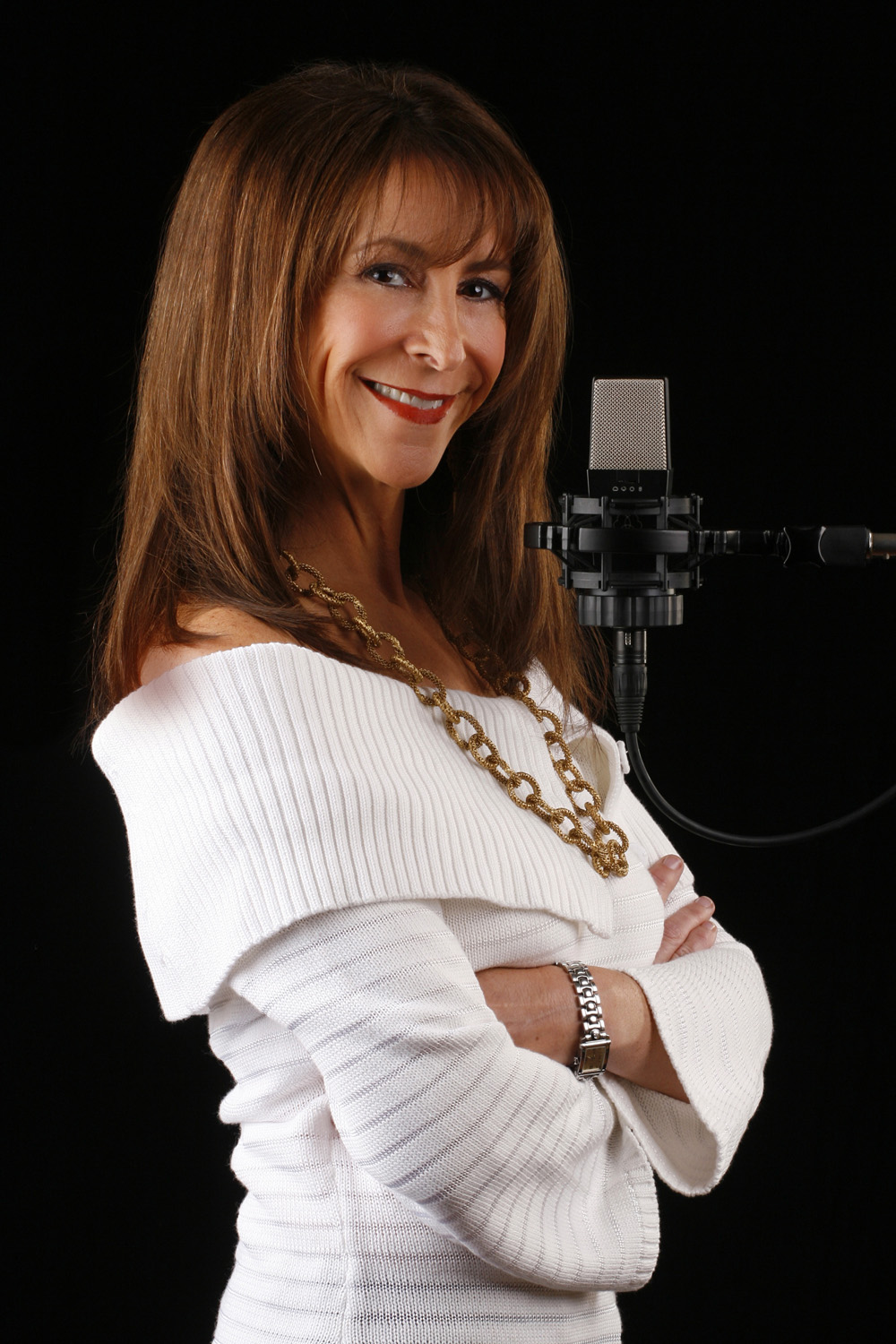
Randy Thomas and the other voice actors / voice over artists in the playlist (further down) volunteered their talent and time to Read a Poem to a Child!
Thomas started her career as a radio personality and DJ in New York, LA, Detroit, and Miami. She’s announced for the Oscars, Emmy Awards, Tony Awards, Entertainment Tonight, The Rock-n-Roll Hall of Fame Inductions, The Kennedy Center Honors, and much more. You likely have heard her announce:
The BeZine asked Randy Thomas a couple of questions about how this came to be:
The BeZine: What inspired you to organize these wonderful readings by VO artists for Read a Poem for a Child?
Randy Thomas: I am always intrigued when invited to use my voice in a positive way that gives back to the community. My dear friend Michael Rothenberg, a world-renown poet told me about his effort to share a poem with a child during one specific week. He found interest from all over the world. It’s wonderful.
The BeZine: You have inspired a number of voice artists to contribute their voices—how did that happen?
Randy Thomas: The Facebook community of voice actors and friends that I have seemed to rally behind this idea. We all have our own audio booths to record quality audio in, and they are all being so generous with their time and Voice sharing these poems. I am proud to have played a small part in this beautiful effort.
You can hear the amazing results below, in the embedded SoundCloud playlist.
Please feel free to play these recordings
for children around the world!
These may be played right here from this post or go HERE.
Thank you Randy Thomas
and brilliant VO artists
for sharing your talent for the children!
The shape of the dreamcatcher is a circle because it represents the circle of life and how forces like the sun and moon travel each day and night across the sky. The dreamcatcher web catches the bad dreams during the night.
The night air is filled with good and bad dreams. The legend of the dreamcatcher is that it captures the bad spirits and filters them in so protecting us from evil and letting through only the good dreams. It is believed that each carefully woven web will catch bad spirit dreams in the web and disappear by perishing with the first light of the morning sun.
“There may be times when we are powerless to prevent injustice, but there must never be a time when we fail to protest.” Elie Wiesel
Toward the end of June this year I was introduced to Kella Hanna-Wayne’s (Yopp) work via a Facebook link shared by my colleague here at The BeZine, Contributing Editor Michael Dickel, which he in turn received from his daughter. I subsequently included info on Kella and her post HERE. That’s the way the world moves these days. Though technology and social networking are mixed blessings in some respects, they’re effective tools for people like Kella and I who have work to which we are committed but deal everyday with serious physical disabilities that constrain (in my case prohibit) activity outside the home.
The link of which I speak was to a post in which Kella provided some well-considered guidelines and resources for protesting the migrant travesties on the U.S. Southern Border. As I investigated Kella’s site, I was impressed with her thoroughness and clarity. I wrote to her about doing an interview on for our activist poets, writers, and friends. She agreed. Here it is. Read on. / Managing Editor, Jamie Dedes
JAMIE: Kella, you have taken on such a range of causes, all of them important, critical. Not everyone can do that. I hear people talk about “compassion burnout,” which is understandable but irritating. It’s a luxury oppressed people don’t have. I usually respond with “pick a cause. Pick one cause and focus on that.” What’s your advice?
KELLA: I think all of us, including activists, can agree that social justice is simply overwhelming. There are so many causes, there’s so much to learn about every cause, and to make things even more complicated, the needs of each cause are constantly progressing and changing. It’s a lot to keep up with.
But one of the fundamental ideas behind my blog is that there are a basic set of guidelines that you can follow that will help you understand any source of oppression. Instead of learning about male privilege, and then white privilege, and then financial privilege, why not learn how the concept of privilege works so that you can apply it to any new cause you learn about? There are so many challenges marginalized groups face that they have in common with one another: microaggressions, oppressive language, policing of their emotions/bodies, even difficulty accessing medical care. I think that if you learn the functionality of the oppressive systems that are at work and all the basic components of social justice, it enables you to support these groups of people much more effectively and thoroughly than if you were trying to learn one cause at a time from scratch.
I also think that even if you do choose to focus primarily on one cause, it’s important to be aware of the basics of the other ones because social justice issues are all inextricably connected to each other and ignoring the way intersectionality impacts the problems that we’re tackling tends to leave holes in our solutions.
JAMIE:What then are the steps activists can take to minimize burnout?
KELLA: No matter how narrow your focus, social justice issues are far bigger than any one person can solve. Because activism has to be a collective effort, I think it’s really important to recognize that completely fixing the problem is an impossible standard to hold yourself to. You are one piece in a much larger effort to create change. Even when you are focusing on what is within your personal power, you have to be realistic about what you can actually accomplish. If there are 20 different tasks that you could do as an activist and each one is individually within your ability to do, it’s likely doing all 20 of them is not. You have to choose what it is that you are going to do.
To make that choice, I recommend focusing on forms of activism that…
Are sustainable so that you can continue to do them over time
Are empowering to you so that you feel motivated to continue
Aren’t deeply upsetting or draining in such a way that the cost of the task is greater than the positive impact the action has
Feel right to you.
Which forms of activism meet those criteria is going to be different for everyone. For example, I believe that calling your representatives is an effective way to impact the future of our country but I find making phone calls incredibly anxiety-inducing and I have to spend a lot of energy to get myself to make one. That’s not a good use of my resources. On the other hand, writing comes easily to me, I find it rewarding, and it’s something that a lot of other people can’t contribute. I can accomplish way more by writing on behalf of activism than I could if I were using the same amount of resources to make phone calls. Whenever I feel the push to do more for a cause, I re-center on the importance of my writing and how much I’m offering in the work I already do.
A philosophy I carry around with me wherever I go is that everyone has something of value to offer. You have to find what your offering is.
JAMIE: Tell us about Yopp Academy.
KELLA: Yopp Academy is a section of my blog that focuses on educational material. It’s where I’m outlining that basic set of social justice guidelines I mentioned earlier.
To distinguish the amount of prior knowledge that’s needed to understand a given article, I used a college-style course numbering system, so articles are sorted into 100 level, 200 level, 300 level, etc. If you’re brand new to social justice, you start with the 100 level articles and work your way up. It really does function like a set of college courses in that articles of higher levels directly reference ideas from the level 100 articles, so the more of them you read together, the better your understanding will be of the subject as a whole.
The articles I have published currently only go up to level 300 because I’ve been putting my focus on establishing all the basic concepts before adding more advanced stuff. I’m currently working on a lesson plan of over 40 educational articles to serve as a foundation of knowledge which you can use regardless of your level of involvement with activism, which will include higher-level articles in the future.
JAMIE:Tell us about your Facebook debates.
KELLA: I’ve always had a lot of friends on facebook who are into social justice and some of them have such large friends list that anytime they posted something controversial, it would spark a discussion/debate. I started jumping into these discussions and offering my opinion and I got a reputation for being good at explaining basic social justice concepts to people who weren’t familiar with them and for clearly outlining the problems in someone else’s argument.
I used Facebook debates to practice my writing, increase my own understanding of social justice, it introduced me to a bunch of other amazing people that cared about the same things, and because managing my disability/mental illnesses made traditional activism prohibitive, it gave me a way to be involved in causes I cared about. Spending so much time arguing with people who I disagreed with also gave me a lot of insight into the places people were most likely to have holes in their understanding of our social systems which in turn has really informed the content and the structure of my blog. I often say the reason I started a blog in the first place was that I got tired of writing out the same explanations/arguments over and over again, and just wanted to write out the article once to link to every time I came across the same issue again.
I know I differ from a lot of people in that I believe debates on social media, even the “unproductive” ones, are an important branch of activism. Not only do they spread information to larger audiences of people (while only 10 people might be commenting, 1,000 could be reading the comments) but they serve as a means of socializing bigots to understand that their bigotry will be met with hassle and frustration rather than easy acceptance like they’re used to. I think that practice has a lot more power than people think it does.
JAMIE: So many people – like you and me – live with chronic, even catastrophic, illness. What can these illnesses teach us about social justice and advocacy?
KELLA: If you hold a conference for activism regarding chronic illness but you organize it in a similar way that you would any other business conference, your collection of speakers, organizers, and attendants are likely to be mostly healthy people rather than chronically ill people. If it’s energy-intensive to leave your house/travel, if you need frequent breaks or a special housing set up, if you have extensive food restrictions or you need to hire a carer to accompany you, it’s going to be very difficult, resource costly, and risky to go to a conference that healthy people can attend with ease. Even in attempting to center the chronically ill, if you organize from the perspective of a healthy person, you will leave chronically ill out of their own activism. That’s because the default systems that we have in place for most aspects of society make it very difficult for chronically ill people to participate let alone succeed.
Anytime you design a solution for the social issues chronically ill people face, you have to start by adapting your mindset and prioritizing accommodation of an experience that you’re not familiar with, or you’ll fail at your advocacy from the beginning.
And this idea is not at all exclusive to chronic illness. You see the same problem with white people organizing on behalf of people of color, cis people organizing for trans people, abled people organizing for disabled people, etc. You have to go in understanding that in order for your advocacy to be successful, you have to dismantle the relevant oppressive systems that are within your scope of power and create new systems, a new foundation before you attempt to build any kind of structure on top.
JAMIE: Your site is about eighteen months old as we work on this post. What are the goals for the next couple of years?
KELLA: I’m still very much working out what my ideal version of Yopp would be or what I want it to accomplish but so far, my concrete plans are:
Switch over to a new, more modern and accessible website
Finish writing the basic building blocks for Yopp Academy (all 40 of them!!)
Build up my Patreon supporter base– my first goal is $800 a month
Acquire enough sponsorships that I can publish up to 4 times a month
KELLA HANNA-WAYNE (Yopp) is a disabled, chronically/mentally ill freelance writer who is the editor, publisher, and main writer for Yopp, a social justice blog dedicated to civil rights education, elevating voices of marginalized people, and reducing oppression; and for GlutenFreeNom.Com, a resource for learning the basics of gluten-free cooking and baking. Her work has been published in Ms. Magazine blog, Multiamory, Architrave Press and is forthcoming in a chapter of the book Twice Exceptional (2e) Beyond Learning Disabilities: Gifted Persons with Physical Disabilities. For fun, Kella organizes and DJ’s an argentine tango dancing event, bakes gluten-free masterpieces, sings loudly along with pop music, and makes cat noises. You can find her on Facebook, Twitter, Patreon, Medium, and Instagram.
“My mother: She is beautiful, softened at the edges and tempered with a spine of steel. I want to grow old and be like her.” Judi Picoult
Dedicated to moms everywhere and in every time
I live in the United States where we traditionally celebrate Mothers’ Day in May, but the acknowledgment of mothers, mothering, and maternal bonds is not unique to this time and place. Simply put, Mothers’ Day in the U.S. reminds me to do something special and always this recognition includes all those fathers and grandfathers, aunts and uncles, older siblings and family friends … sometimes even teachers or neighbors … who fulfill the role of mother for those children who have lost theirs.
Truth to tell, this is an accidental edition of The BeZine, totally spontaneous. I asked our core team if anyone had mom material at the ready. I was thinking in terms of one or two blog posts. Some did and, as though my mind was read, a couple of writers coincidentally contacted me asking if I would publish a poem they’d written for their mother or for Mothers’ Day. Why not? I put out a call to a few other gracious people and voilà! … an unexpected delight.
These are largely poems of love and gratitude (grab a hankie) including a sweet and well-written poem from Kennedy Stewart, our youngest contributor yet. Please enjoy this charming and thoughtful compilation and forgive me for making a quick and casual job of it.
Thanks to all our devoted, generous, and prescient contributors.
On behalf of The Bardo Group Beguines,
and in the spirit of love (respect) and community, Jamie Dedes
Founding and Managing Editor
TABLE OF CONTENTS
How to read this issue of THE BeZINE:You can read each piece individually by clicking the links in the Table of Contents or you can click HERE and scroll through the entire zine.
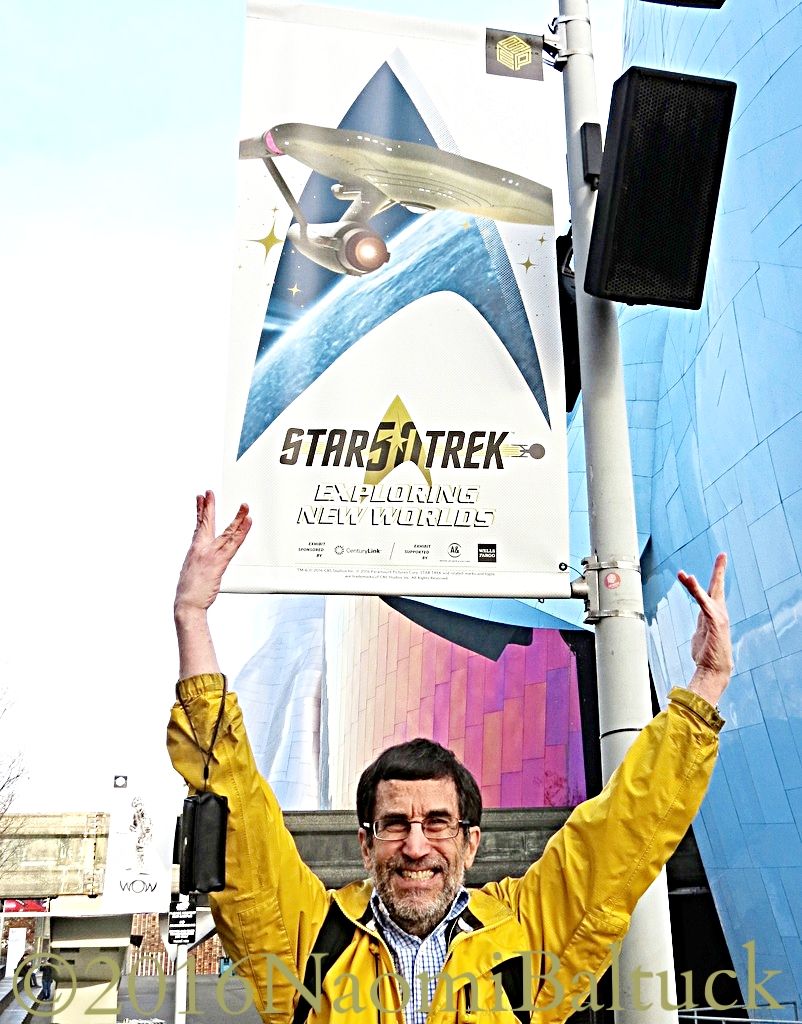
All the stars and planets were aligned…Just after the election I had a birthday, which I share with my binary brother, Lewis. In sixty years, we’ve never spent a birthday apart. Like so many of us, he was shocked, saddened, crushed by the election results. There was only one thing to do. We played space age hooky, beamed him out of the office and transported ourselves to the Seattle Center.
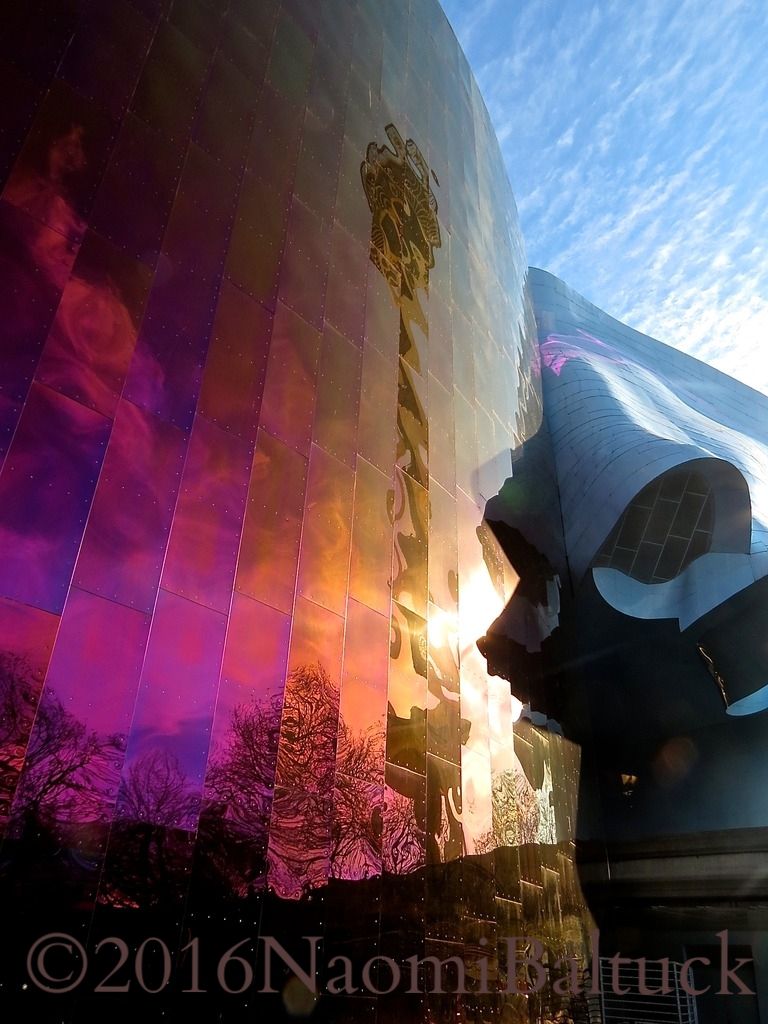
Specifically, to the EMP, which is celebrating 50 years of Star Trek.
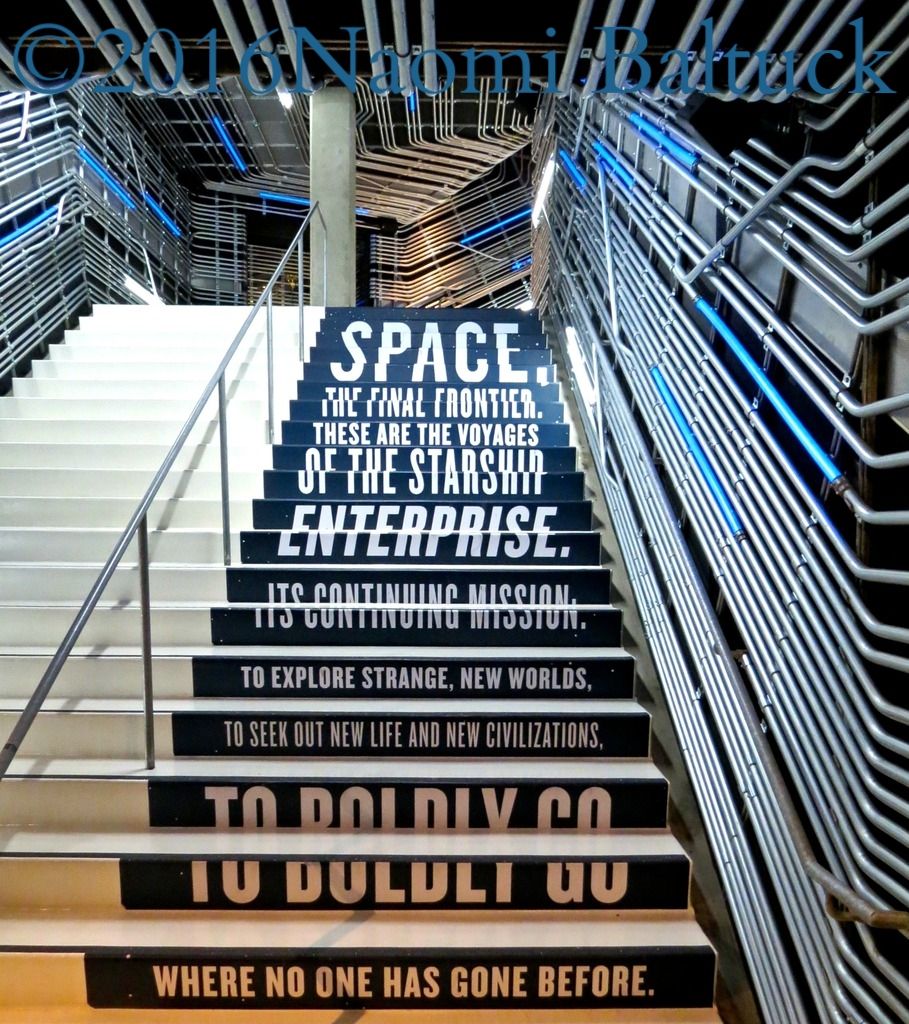
I hardly remember life before Star Trek. And talk about The Next Generation! My children absorbed Star Trek by osmosis in utero. As I ascended the stairs to the EMP tribute, the Star Trek theme song elicited a visceral response that only gets stronger as I get older. I’ve lived long enough now to see many of these stories played out on my planet in real time.
Cofounder Michael Rothenberg, is celebrating his birthday by asking for donations to 100 Thousand Poets for Change. He’s chosen this nonprofit…Continue Reading
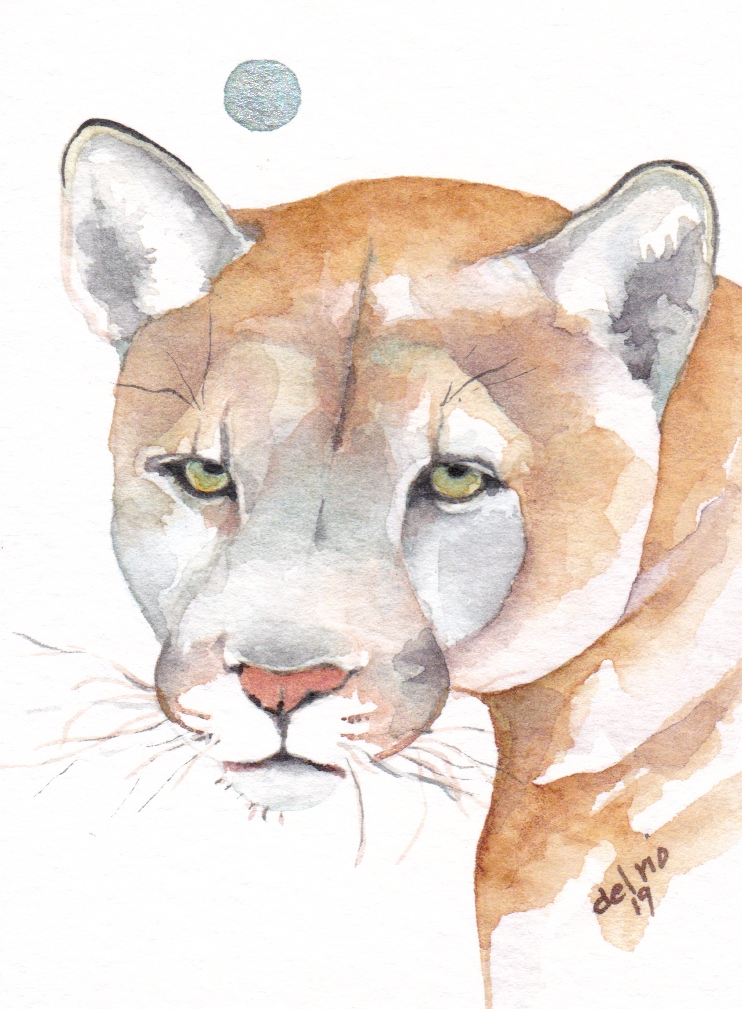
These big cats are called Puma, Cougar or Mountain Lion. They are solitary animals. Her power comes as she moves through the world unseen, taking only what she needs, and silently marking territory so conflicts won’t be necessary. She is a ghost of the woods just like your soul is.
When I lived in the mountains she had her den across the road and down hill a bit. Despite being practically on my doorstep I never, ever saw her. Just paw prints. I use ‘she’ because female seems appropriate.






 watercolor 2018

 watercolor 7/2019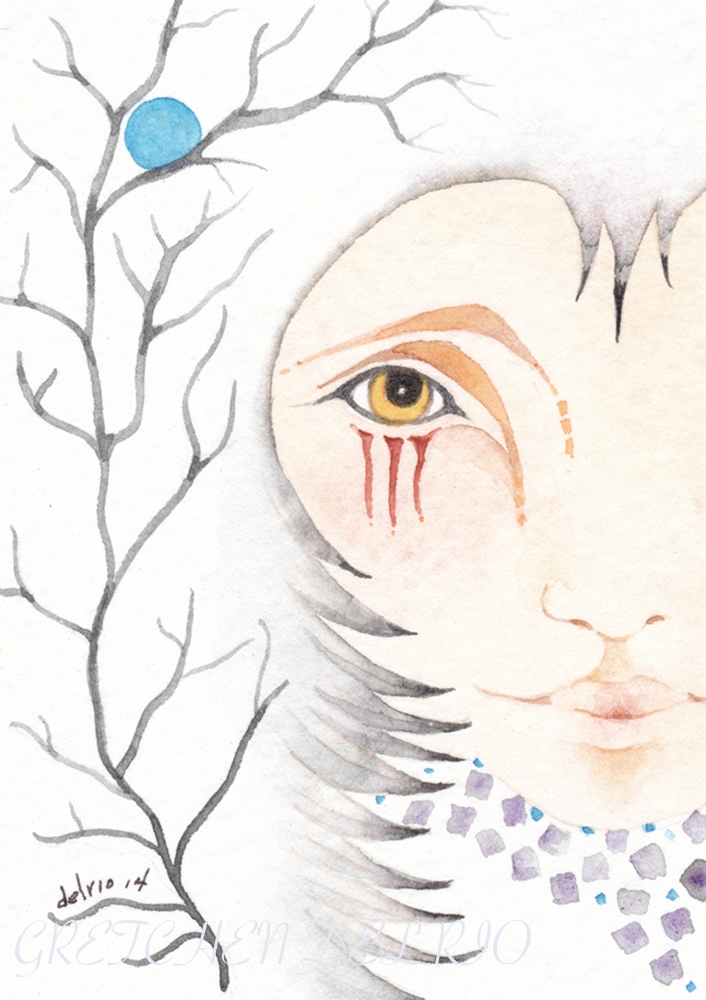

 The BeZine
 watercolor 5/2018

 watercolor 1/2019
 The BeZine