Nature was Here First | Eleni Stephanides

And so I go into the woods. As I go in under the trees,
dependably, almost at once, and by nothing I do, things fall
into place. I am less important than I thought, the human race
is less important than I thought. I rejoice in that.
—Wendell Berry, A Native Hill
Beauty of Nature
Photograph
©2023 Miroslava Panayotova

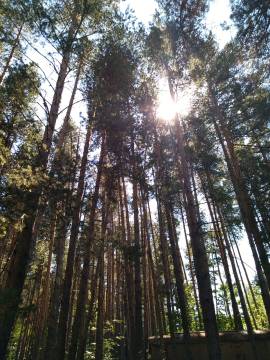
The redwoods stretch high towards the cloud-speckled sky. They provide shade at the intersections of their branches and leaves, through which thin beams of light filter through.

From my spot beneath them at Redwood Regional Park, I listen to a hawk caw from its perched positioned above, its body occluded by (and submerged in) the leaves. Its caw is ribbity, as if there were a frog caught inside its throat.

Other birds make noises too, sounding like tiny droplets of water hitting against granite or porcelain. Not a full song, just distinct and crisp little cheeps—each a single solid note emitted sequentially from a separate beak. Some sound like specks of uncooked macaroni landing on a surface made from wind chime.

I wonder what these birds high up in their trees are saying to each other with their “chips,” if anything.

Twenty feet away, a bilingual woman with a large group of young explorers is teaching her kids to respect nature—specifically trees’ bodily autonomy.

When she catches one student ripping bark off a redwood: “How would you like it if a little monster came up to you and pulled the skin off your face?” she asks, after explaining to him how bark serves trees the same protective function that skin offers humans.

Her student, who then tries to reattach the bark to its rightful owner, asks the teacher if she has tape.

“Just don’t do it again,” she gently counsels him in response, while playfully ruffling his hair.


I come here on my own because nature restores me. Some might write this off as woo-woo, but that doesn’t stop me from believing it: that partial answers to some of our problems (at times) might even await us here.

Maybe they’ll surface in the quiet. Or if they don’t, at least in nature we find some strength to navigate them. Maybe we accept that they’re unanswerable—and in our ‘reconnected to self” state, can temporarily make peace with that uncertainty.

Coming here aids in that. Here where the pure and unadorned trees are just being themselves—no pressure to be anything more as they stretch tall and serene towards the cloud-speckled sky. Out here I’m not comparing myself to others, nor am I wracked with FOMO—because I can’t think ofa more nourishing place to be.

Nature’s authenticity coaxes my own out from beneath blankets and layers of performativity.  I come to the redwood forest to rid my mind of filters. I come here to return to my purest form.

We can tell with certainty that trees can hear, smell, communicate—and they can definitely remember. They can sense water, light, danger. They can send signals to other plants and help each other. They’re much more alive than most people realize,” wrote Elif Shafak.

 Nature has a way of quietly assuring you that you’re whole and complete without asking or taking anything from you.

I can’t say the same about humans.


Enjoy nature and accept what she has to offer, on her terms—rather than colonize and try to change Her. The boy in The Giving Tree understood this lesson when he was young. The older he got though, the more that modern life seemed to siphon it out from within him. Perhaps it became lost to capitalism—a system that profits from our indifference to nature.

“They pluck our leaves and gorge themselves on our fruit, and yet still they do not see us,” wrote a fig tree in Shafak’s novel The Island of Missing Trees.

 I think about where our planet would be if a greater number of us treated our connection with nature more similarly to how we treat our other close relationships. If we, as Muriel Barbary phrased it in her book The Elegance of the Hedgehog, chose to “honor this beauty that owes us nothing.” 

Maybe if more of us did, we wouldn’t be here.

Here, where, according to Tara Duggan, the Western monarch butterfly is rapidly disappearing. “The number of graceful, black and orange winged insects overwintering in coastal California this year dropped to under 2,000, compared with more than 29,000 the year before,” she wrote in The San Francisco Chronicle. “And that was already a fraction of its previous population.”

Here, where Jaime Lowe wrote in Breathing Fire, “Sequoias, hundreds of feet tall, usually die from old age, collapsing under their own weight, but now some were dying from dehydration, rotted inside and out.”

Here, where in Kurtis Alexander’s words, “At least one tenth of the planet’s giant sequoia trees are believed to have been wiped out by a single wildfire last year,” (6/4/21 SF Chronicle).


“Nature is innately brutal,” some say in defense of humans. Some scoff at the idea of a complicated and unruly entity simplified to “innocent victim.”

Some plants and animals are akin to humans in their ruthless competition with one another, they argue. Certain species of tall trees can block light from reaching neighboring organisms, for instance. It’s only once they fall over and die that light finds its way in, giving other trees and flowers the chance to grow. If it hadn’t been us humans, some other species would have stepped in to establish dominion.

Maybe no creature is exempt from nature’s barbarities. And yet, the amount of destruction—as well as the rate at which humans have destroyed—is unprecedented and unnatural. We’ve tipped whatever precarious balance existed before, taking far more than our share. It’s about degree and proportion, and the human contribution to planetary degradation is astronomically disproportionate.

I think of all the signs the past few years pointing to disruption in the earthly tapestry. California’s infamous September orange day was one. That day, social media statuses and memes depicting our final days abounded. One Facebook friend asked whether there was a such thing as “taking an Apocalypse day” off from work (“asking for the entire Bay Area currently trying to find good Zoom lighting with the orange tint out the window.”)

What stood out most was the eerie day-long silence. Usually I’d hear squirrels scuffling through the leaves out back, or raccoons tapping at the roof. Birds would sing.

That day though, the only audible noise was BART whooshing by in the distance every twenty or so minutes.  At 12:48 pm one bird on its own cheeped for for about thirty seconds before disappearing back into the darkness of wherever he’d been before.

Back in March 2020, I wondered if we would see any improvements on this front. Maybe the break in human activity would benefit the natural world. Animals did seem to be re-establishing partial dominion—goats had taken over a town in Ireland. Water in the Venice canal looked clean and vibrant in the pictures. One family found a moose swimming in their  backyard pool.

Benefits like reduced air pollution from fewer cars on the road proved to be short-lived though.

In trying to play God, humans have tampered with the natural order of things. Our actions are of a greater scale than the competition and occasional intra (or even inter) species ruthlessness that we might witness occurring naturally within the animal kingdom.

I’m also not sure that it’s nature itself that’s insatiable and destructive. I wonder if more accurately, the parts of it that are noble and pure and kind are inevitably more vulnerable. They’re more vulnerable to evisceration by their more sinister and opportunistic shadow halves.


A few weeks later, I’m outside a brewery in Susanville, California. At the picnic table next to me sit a young couple and their dog. The sun is behaving in a fickle manner.

Click: It departs / switches off.  Click: it comes back.

 “The sun just like, can’t make up its mind,” the boyfriend observes.

“It’s annoying,” the girlfriend comments.

Their young pit-bull’s chin remains against the pebbled ground, opinionless—or just too fatigued to offer one.

The shifting temperatures are uncomfortable. Yet out here the air is fresh and limitless nature surrounds us. And so I remind myself:

Before any humans walked the earth, the sun shone. She came and She went, She glimmered and dimmed, She did her own thing, with no one around to grumble in response.


Back to the redwoods.

Nearby, pine needles and twigs of varying thickness—some bare, others blanketed by pistachio-green moss—scatter the dusty ground.

I watch as a squirrel hugs an acorn to his chest, only to quickly drop it. Moments later he skitters to the other side of the path, in typical stop-motion jerky squirrel fashion.

 Bikes zip up and down the trails, gears buzzing like insects. Helmeted, masked up, and with sunglasses on, the riders look like insects too.

I wish I could wrap up these musings with a tidy conclusion. Previous drafts of it (from a couple years ago) said:I think of a world with starkly less nature. One where you have to drive hours or days to find an environment even remotely similar to the piney one I’m breathing in right now.

That world feels so sad and empty. I hope that’s not where we’re headed. The people written off as alarmists—I’d like them to be wrong, and I’m sure they’d like more than anything to be missing the mark as well.

I want the smell of piney bark to continue gently pulling people out of sleep in the morning. I want our feet, after cutting through bushes and stepping over pinecones, to squish into muddy marshland. I want us to stare down in awe as we pass over wet grass that looks like the lustrous green hair of a mermaid. 

Hundreds of years down the road, squirrels will still scurry in stop-motion fashion and birds will continue to sing, and we’ll continue to hear the calming drip-drip-drip sound our beaked friends put forth, as I did today. Days like the orange one, where animals scuttle and flutter confused and disoriented, will become but a memory, never to repeat.

I don’t feel like I can end this way though, without feeling disingenuous—or like I’ve fallen prey to magical thinking. What feels more truthful now is that global warming is a reality. This planet as we know it won’t remain this way forever.

At the redwood forest that day I breathe in this heartening reminder, together with the smell of pines and campfire charcoal. I take in my surroundings and settle back into the almost quiet (‘almost’ because mosquitoes still buzz and kids’ shouts remain audible).

I take a still-shot in my mind of it all. Then folding up my chair, I listen  to a little girl who seems to be on the same page:

“I wanna stay here all day! Then go to bed next to her (*the redwood tree). And wake up tomorrow and say Good morning, Tree.” And as I walk the wooded path back towards my car, I make a promise to return to places like these for as long as we all still can.


©2023 Eleni Stephanides
All rights reserved


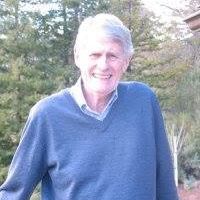
Eleni Stephanides…

…is an LGBTQ bilingual writer and Spanish medical interpreter who Eleni was born, raised, and currently resides in the California Bay Area. Her work has been published in Them, Tiny Buddha, The Mighty, Breath and Shadow, Elephant Journal, The Gay and Lesbian Review, and Introvert Dear among others. She currently writes the monthly column “Queer Girl Q&A” for Out Front Magazine. You can follow her on IG eleni_steph_writer and read stories from her time as a rideshare driver.


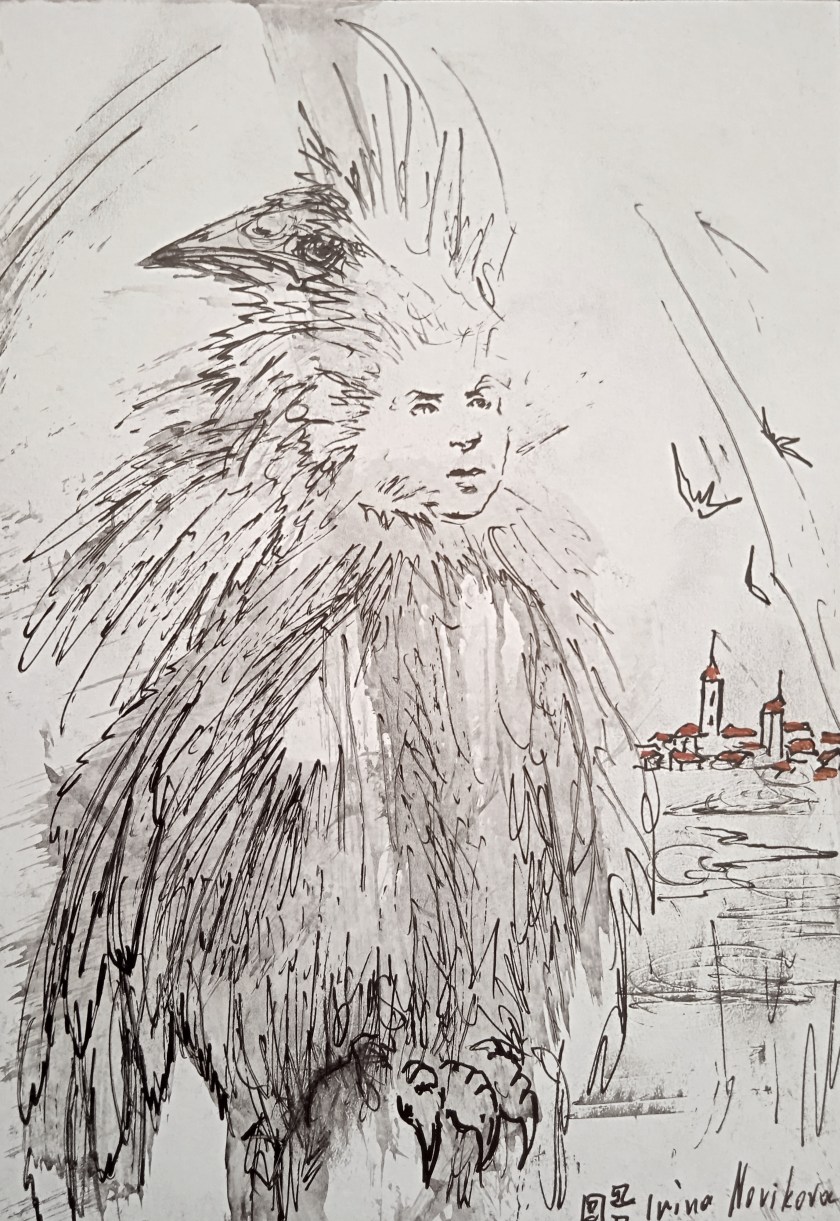
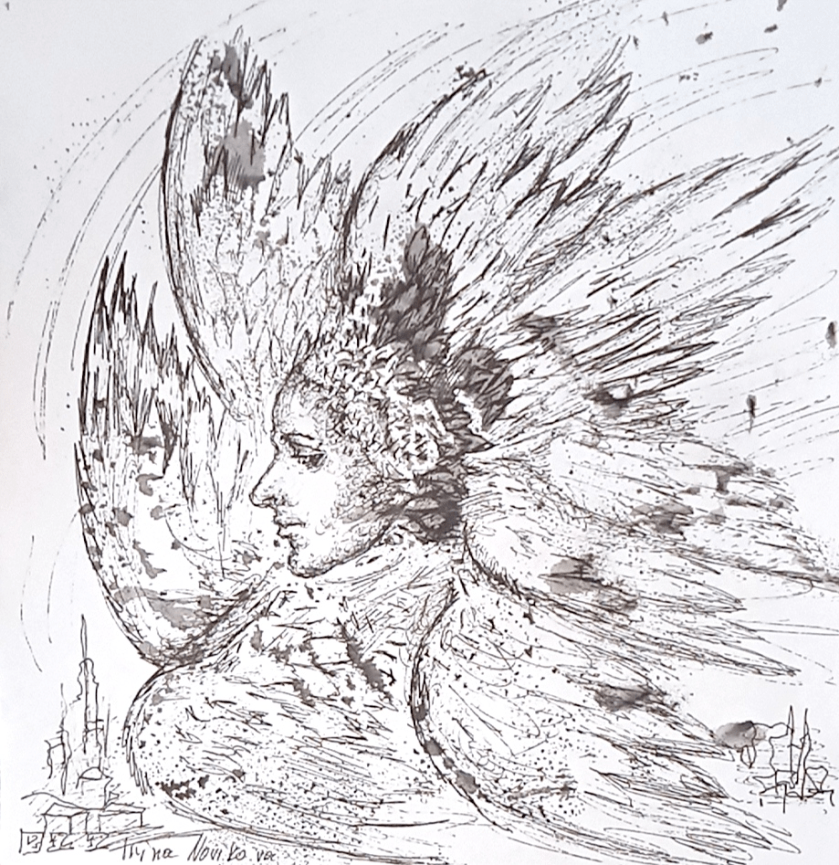
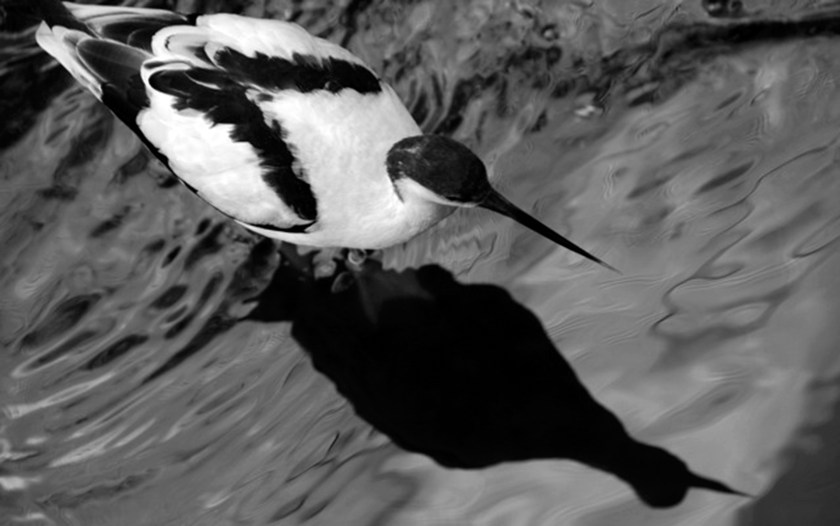
White birds | Irina Tall

White birds in sorrow

Those white birds who flew away, these are human souls, these are those who were reborn, fill them with grain, let them eat…Let them know that we remember them…

I was so stupid that my life flew by before me, but I didn’t notice it…I didn’t see anything, I just breathed and ran somewhere. I didn’t notice anything, nothing…

Retreat

—What is my heart to you?

—It’s a ray of hope…

A found fragment, like what you lost when summer, kill yourself to find it.

Where do the birds fly?

Perhaps they become ghosts or turn into little shoots.

— Have you lost something?

— No…But I saw a light in the grass, maybe it’s a bird.

—Why do you think there?

—She had feathers. I found one here…

He took a long shard shining like a blade from his pocket and handed it to me. Sharp and cold, it was a bird’s feather and I remembered it, I imprinted the image in my memory.

I would never have thought that this is possible…

Those who once lived, and perhaps did not live, but thought that he lives, also want to be born again, anew, in a better era, have better skin and be better…

Episode three

A bird shining like the sun flew up to me and sat on my shoulder, she sang something in my ear, then rose high into the sky and turned into a point, and then completely disappeared like a finger, became a ghost for me. Is that possible?

She shone brighter than the sun in the darkness, but she was always alone and could never be better or worse, a black raven in the sun and white and shining in the light of a moon star.

I sat on a stone bench and thought, then I took out a notebook and began to write, I began to describe her as a zoologist; I once graduated from the institute and received a master’s degree in zoology and philosophy. And why only? I made a small drawing in the margins, trying to draw a wonderful bright plumage, but I made only a pitiful semblance of a model, I forgot myself about what I should do, and it was a lot…

And I went home, almost forgetting about the incident, forgetting about the miracle.

When you remember everything that is behind, it becomes only dust, dreams are like fragments in the eyes, sometimes they need to be taken out.


©2023 Irina Tall (Novikova)
All rights reserved


Irina Tall (Novikova)…

…is an artist, graphic artist, illustrator. She graduated from the State Academy of Slavic Cultures with a degree in art, and also has a bachelor’s degree in design. Her first solo exhibition “My soul is like a wild hawk” (2002) was held in the Museum of Maxim Bagdanovich. In her works, she raises themes of ecology, in 2005 she devoted a series of works to the Chernobyl disaster, she draws on anti-war topics.


Collage: Photograph, Anna Zakharova @2022 via Unsplash

Music & Video


Sure on This Shining Night | John Anstie

“Sure on This Shining Night” is a poem written in the 1930’s by James Agee. All Poetry says the following of James Agee and shines a light on the impact of the Great Depression and perhaps on the unsustainable effects on human dignity of the unfettered and unsustainable human quest for profit and power: The poet, James Agee (1909-1955), was also a journalist, novelist, and screenwriter. He was the author of “Let Us Now Praise Famous Men”, an eloquent and anguished testimony about the essential human dignity of impoverished sharecroppers during the 1930s. The book is regarded as one of the most significant literary documents associated with the Great Depression.

Sharecroppers were tenant farmers, who, as a result of the economic maelstrom of the 1930’s depression, could no longer pay their rent. Their landlords allowed them to continue growing their crops on the land, take what they needed for themselves and give the rest to the landlord in lieu of their rent. How hard would that have been, both physically and psychologically, particularly in view of the vagaries of the weather and seasons. 

So evocative are the words of this brief poem, that it has been set to music by several composers, notably Morton Lauridsen and Samuel Barber, but none, in my opinion is quite so beautiful and moving an arrangement as this one for double choir (or double quartet) by Jay Giallombardo. Jay is primarily a notable arranger for close harmony ensembles of the Barbershop genre. I also say this with no uncertain bias, because this same arrangement is currently being rehearsed and in the process of entering the repertoire of my own chorus (Hallmark of Harmony), which has given me much impetus to do a little more research behind the poem and its writer.

—John Anstie

Sure on This Shining Night

Sure on this shining night
Of star made shadows round,
Kindness must watch for me
This side the ground. 
The late year lies down the north.
All is healed, all is health.
High summer holds the earth. 
Hearts all whole.
Sure on this shining night I weep for wonder 
wand'ring far alone
Of shadows on the stars.
The poem, "Sure on This Shining Night", by James Agee,
first appears in 1934 in his book entitled "Permit me Voyage"
(© by the owner and referenced here).

Here it is sung very powerfully by the Westminster Chorus . . .

“Sure on this Shining Night” Arr. Jay Giallombardo.

Poem ©1934 James Agee
Introduction @2023 John Anstie
All rights reserved


A Sustainable Future for Africa | Mary Robinson & Vanessa Nakate

A Sustainable Future for Africa—A Conversation

This conversation between Mary Robinson (President of Ireland, 1990-97) with Vanessa Nakate (a young climate activist from Uganda) brings sustainability to the fore. The young Ugandan articulates very intelligently the need for a sustainable future for Africa. She is also involved with Greta Thunberg’s worldwide campaign with young people and met her at COP26 in Glasgow UK. This conversation hits the nail of sustainability on its head and I hope you will find it well worth your time. —John Anstie

Whitman & Symphonic Metal | Michael Dickel

Nightwish, a “symphonic metal” band with gothic influences from Finland, presents in its homage to Whitman, Song of Myself (Imaginaerum track #12), a surprisingly complex poetics as it moves through strong emotions while addressing both personal struggles and social issues—for peace, for social justice, for hope and love—against hypocrisy, against indifference, against hopelessness. The dense music incorporates symphonic, opera, and gothic metal influences. There is an allusion to William Wadsworth in the lyrics, but the title itself, of course, alludes to Walt Whitman’s poem of the same name, and Whitman is mentioned directly in the lyrics:

          She dreams of storytime and the river ghosts
          Of mermaids, of Whitman’s and the Ride
          Raving harlequins…

                    —Lyrics from Nightwish website


The possessive of “Whitman” grammatically suggests “Whitman’s harlequins,” who are also “Ride/ Raving harlequins.” It could be understood to suggest “Whitman’s Ride,” by ignoring the “and,” a possible skipping reference to his poem as a “ride.” The harlequins reading, however, offers an additional reference, to “Last Ride of the Day,” another song on the same album (track #11), which has this stanza:

          Once upon a night we’ll wake to the carnival of life
          The beauty of this ride ahead such an incredible high
          It’s hard to light a candle, easy to curse the dark instead
          This moment the dawn of humanity
          The last ride of the day

                    —(Lyrics from Nightwish website)

And goes on near the end of the song, to optimistically call a “Dead Boy” to wake up to life’s adventures, where, curiously:

          …Tricksters, magicians will show you all that’s real
          Careless jugglers, snakecharmers by your trail

                    —(Lyrics from Nightwish website)

“Tricksters, magicians…Careless jugglers, snakecharmers…” all suggest a circus, and indirectly allude to harlequins. And the carnivalesque imagery suggests a modern rave event, its own kind of circus. “Whitman’s harlequins” also allows for a connection to Whitman’s approval of clowns, as cited in a New York Times article, “The Civil War’s Most Famous Clown”:

          Reviewing a circus in 1856 in Brooklyn, [Whitman] wrote:
          “It can do no harm to boys to see a set of limbs display
          all their agility.” (In a favorite mind-plus-body theme,
          Whitman added: “A circus performer is the other half
          of a college professor. The perfect Man has more
          than the professor’s brain, and a good deal of
          the performer’s legs.”) Meanwhile, fights were
          a daily occurrence [at circuses], drawing attention
          the way fights at soccer matches do now.

Although that particular connection might well be coincidental rather than intentional, it is an interesting dimension to consider in relation to the 21st symphonic-metal song. Whether or not a coincidence, the optimism of “The Last Ride of the Day” and the “careless jugglers, snakecharmers” of “carnival life” do echo Whitman’s optimism for America and its crazy-quilt society in his “Song of Myself,” which opens the poem:

          I celebrate myself, and sing myself,
          And what I assume you shall assume,
          For every atom belonging to me as good belongs to you.

                     —Poetry Foundation, 1892 version


Nightwish’s “Song of Myself” acknowledges, as Whitman’s poem does, that the injustices of the world weigh on us, yet at the same time, also as Whitman’s poem, the song cries out that life, hope, and love require poetry and music. Whitman mentions the weight of the world in the 4th section of the poem:

          The sickness of one of my folks or of myself, or ill-doing
               or loss or lack of money, or depressions or exaltations,
          Battles, the horrors of fratricidal war, the fever of

               doubtful news, the fitful events;
          These come to me days and nights and go from me again,
          But they are not the Me myself.

                     —Poetry Foundation, 1892 version

While, Nightwish’s “Song of Myself” catalogs many of the personal and social injustices throughout the song, in the last two lines of the 21st C. song the poetry says that the music of life moves from the major key of G (reasonably happy) to its sad relative, E-minor, a scale with the same notes, but shifting to being with E rather than G in progression—

Still given everything, may I be deserving
and there forever remains that change from G to E-minor.

—both Whitman and Nightwish present this sadness as part—but not all—of the great fullness of life. May we learn to see “all that is real.”


©2023 Michael Dickel
All rights reserved


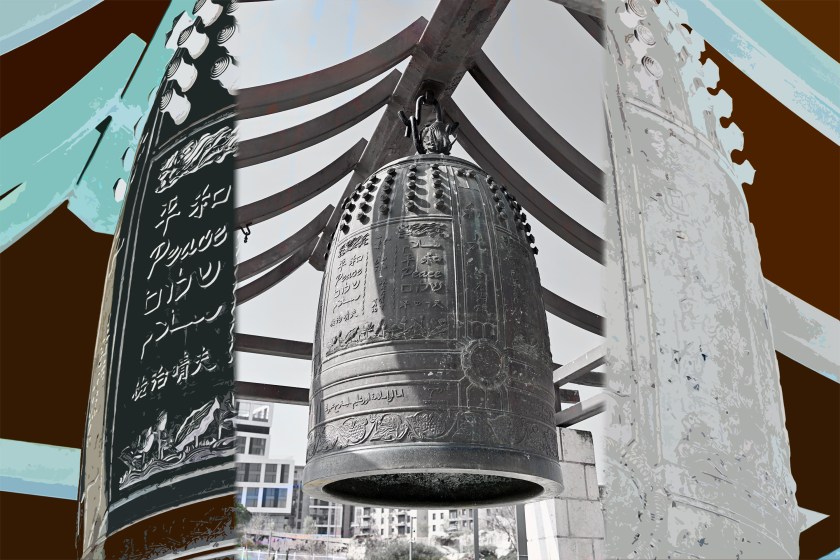
Jerusalem Peace Bell, Photograph, Michael Dickel @2023

ReCollection


Sunnyside Up | Jamie Dedes, z”l

This issue begins Volume 10, our tenth year of publishing The BeZine online magazine. To mark the upcoming tenth anniversary, we will run a section in each issue this year called ReCollection. In it we will post work from past issues, looking to re-collect these examples of what The BeZine has been and continues to be. We hope to produce an anthology in 2024 from these re-collected works and more other selections from the first decade of our magazine.

We open this first ReCollection section with the last writing published by Jamie Dedes, our beloved founding editor-publisher, while she was still alive, published 17 September 2020. In this reflection she posts a beautiful poem, a goodbye, and reflects on the beginnings of The BeZine. However, Jamie kept looking forward, so she ends with some ideas for the future. We haven’t yet started a podcast (online radio show), but we are planning for her idea of an anthology, finally. She left us 06 November 2020, not even two full months after writing this.

One Lifetime After Another

one day, you’ll see, i’ll come back to hobnob
with ravens, to fly with the crows at the moment
of apple blossoms and the scent of magnolia ~
look for me winging among the white geese
in their practical formation, migrating to be here,
to keep house for you by the river…

i’ll be home in time for the bees in their slow heavy
search for nectar, when the grass unfurls, nib tipped ~
you’ll sense me as soft and fresh as a rose,
as gentle as a breeze of butterfly wings…

i’ll return to honor daisies in the depths of innocence,
i’ll be the raindrops rising dew-like on your brow ~
you’ll see me sliding happily down a comely jacaranda,
as feral as the wind circling the crape myrtle, you’ll
find me waiting, a small gray dove in the dovecot,
loving you, one lifetime after another.


Meditation on
“The BeZine”
from the edge of eternity!

I was diagnosed with interstitial lung disease twenty-one years ago. I was given two years to live. Thanks to loving family support and excellent state-of-the-art medical care, I’m still alive and kicking. As the disease continues its progression, however, my activities have become increasing constrained. Over the past two years I’ve slowed down dramatically. I am holding the Zine back from fulfilling its wide promise. I find it hard to keep up with obligations and to honor my own ambitions and the prodigious talents and boundless ideas of my colleagues. The long-standing lung issues have evolved into respiratory and heart failure. Other challenges to productivity have popped their disconcerting heads. These include pulmonary hypertension and a rare blood cancer, incurable but manageable. There is, however, good news.

I’ve had years none of us expected I’d have, years to enjoy my family, my friends, lots of music, reading and writing. I got to see my world-class son married. I’ve been able to spend time getting to know my beautiful multi-talented daughter-in-law and to visit with my cousin Dan when he came home to the States after years of living abroad. Daniel (now Fr. Daniel S. Sormani, C.S.Sp) and I grew up together. He is more like a brother to me than a cousin. Ultimately, I had the pleasure of forming an arts for peace community.

I began blogging in 2008 (The Poet by Day) and in 2011 I founded Into the Bardo with San Francisco Bay Area Poet Ann Emerson and Rob Rossel, a therapist and nature writer. Ann had a rare bone cancer and Rob faced cardiovascular problems. Our intention was to chronical living with dying. My friends preceded me into the bardo after just three years. I had to ponder what to do next.


The Original Zine Team Partners

This post is dedicated to them
Ann Emerson, San Francisco Bay Area Poet
Therapist and Nature Writer, Rob Rossell


I decided to broaden the scope of the blog, to create a platform for the global expression of peaceable minds, diverse perspectives and cultural understanding. This was a conscious effort to create a virtual space where we could find the commonalities across borders and learn that our differences are so often benign, not threatening. I found talented high-minded folks and a team slowly emerged. We grew from three members to twelve and a subscription base of a few hundred to one that is over 20,000.

We expanded our outreach joining with Washington State Methodist Minister, the Rev. Terri Stewart, and Beguine Again, our sister site. We became a larger presence via Twitter (thanks to Terri Stewart), a Facebook Page (The Bardo Group Bequines), and two Facebook Groups: The BeZine 100TPC (that is, 100,000 Poets and Friends for Change) and The BeZine Arts and Humanities Page. The idea behind the former is to share good news, the “best practices” that are happening all over the world and can be inspiration for initiatives in other areas. The idea behind the arts and humanities page is to give people a place to share the wide range of arts we all engage with or practice and to underscore the fact that “The BeZine” is not just or even primarily a poetry site. We welcome and encourage all types of creative expression.

I have led this effort since 2011 as manager, editor, and recruiter, but it is now time for me to bequeath this grace-filled platform into the hands of the rest of The Zine Team. Some of the support we get from team-members is quiet. You may not be aware of these stalwart and mostly behind-the-scene visionaries. Hence here is a list of the Zine team members.

John Anstie—Currently associate editor, prose and music, 2023.
Naomi Baltuck
Anjum Wasim Dar
Michael Dickel (Now [at the time of Jamie’s writing] Managing Editor, 100TPC Master of Ceremonies)—Currently editor, 2023.
Priscilla Gallaso (has moved on but not until after making significant contributions)
Ruth Jewel
Chrysty Darby Hendrick—Currently associate editor, 2023.
Joseph Hesch—Currently still a Core Team Contributor
Charles W. Martin
Lana Phillips
Corina Ravenscraft—Currently associate editor, art, 2023.
Terri Stewart (Cloaked Monk, Zine Canoness, Beguine Again founder)—Currently a continuing partner-supporter.
Kella Hanna Wayne
Michael Watson


WHAT WOULD HAVE BEEN MY NEXT SUGGESTED BIG EFFORT?

The BeZine Educational Blog-Radio Shows

  • Team-member Naomi Baltuck is our resident storyteller and also works for LBGTQ understanding and rights. She’d be the perfect person to do a show and introduce other storytellers to our audience and perhaps provide guidance and encouragement for those whose ambitions include this art.
  • Team-member and the Zine’s Canoness, the Rev. Terri Stewart, initiated and runs a program for incarcerated youth. She could bring more information to us on these children and perhaps encourage the start-up of other efforts elsewhere in the U.S. and wherever in the world youth incarceration needs addressing.
  • Team-member John Anstie is a singer and poet. Music is important to him. He works with the Sheffield Music Hub as a volunteer. He’s a bass singer in Fox Valley Voices and Hallmark of Harmony. If he was amenable to the idea, I’d like to see him bring together a small panel of musicians and composers to discuss the place of music in our lives.
  • Corina Ravenscraft works in several areas that engage, but animal rights is certainly of key importance as is art as avocation. If willing, she’d do beautifully with a couple such shows. (By the way, Corina’s running the Zine banner art contest this year. Check it out. Info HERE. Cash awards.)
  • Michael Dickel, a poet, writer, artist and educator teaches English and poetry. I’d love to see him do a show on poetry writing, especially one providing youth guidance.
  • There are so many people for whom English is not a first language but who love writing in English. Anjum Wasim Dar is the perfect person to interview and discuss the rewards and challenges of such should she choose to do so. Many of the Zine’s contributing writers have this in common with her.
  • Who better than Mbizo Chirasha to draw together other writers and poets for a discussion of the new colonialism of Africa?
  • And who better to handle a panel discussion on surviving life with disabilities and chronic illness than Kella Hanna-Wayne?
  • Many of our contributors run organizations that are working for the good in their communities: clothing closets, food banks, soup kitchens, after-school programs, boys-and-girls club activities and on and on. So much good is being done.

And how about a Zine anthology? The sales might help with the maintenance of this site and its activities as well as promoting and acknowledging our talented contributors.

I’d have loved to be involved in helping to bring such work to the fore. What do you think? Share your thoughts and preferences in the comments section below. Enthusiasm is encouragement. Maybe the team will decide to move forward on these ideas. It’s up to them, of course. They probably have some other and better ideas themselves. One way or another, whatever The Zine Team decides to do, it will be magnificent. Guaranteed.

With love from the edge of eternity,

                  Jamie Dedes, Z”l
                  The BeZine Founding Editor, Editor Emerita


©2020 G Jamie Dedes
All rights reserved


Originally posted in The BeZine Blog on September 17, 2020 (lightly edited for ReCollections). Jamie left the mortal world less than two month later, November 06, 2020. The Winter 2020 and Spring 2021 issues of The BeZine included sections dedicated to remember her: Table of Contents for the Remembering Jamie… sections.


Jamie Dedes, z”l…

…was a Lebanese-American poet and freelance writer. She was the founder and curator of The Poet by Day, info hub for poets and writers, and the founder of The Bardo Group, publishers of The BeZine, of which she was the founding editor and later a co-managing editor with Michael Dickel. Jamie was the Poet Laureate of Womawords Press 2020 and U.S associate to that press, as well.


Conducive to Peace | Corina Ravenscraft

As with the previous piece in ReCollection, this one comes from Volume 1, Number 1 of The BeZine. Corina is still with The BeZine, both contributing and as arts editor. Here she writes “on the theme of Peace,” the second quarterly theme of The BeZine’s current evolutionary state.

I wanted to write something different on the theme of Peace, and my inspiration came last week. I was reminded of how easy it can be to get sucked into things like fear and anger, even downright hatred, on Social Media platforms like Facebook.

Image borrowed from http://hellenjc.wordpress.com

There can be no peace where there is fear and anger. Taoist teachings tell us that Fear, Anger and Hatred are inner demons which must be fought with Chi (which is a positive, inner life-force made stronger by Virtue). I was thinking about the idea of Social Media and how it can negatively impact us and was reminded of verse/chapter 24 of the Tao Te Ching:

He who stands on tiptoe is not steady.
He who strides cannot maintain the pace.
He who makes a show is not enlightened.
He who is self-righteous is not respected.
He who boasts achieves nothing.
He who brags will not endure.
According to followers of the Tao,
These are extra food and unnecessary luggage.
They do not bring happiness.
Therefore followers of the Tao avoid them.

Places like Facebook are prime examples of how easy it is to be manipulated into these kinds of emotions. Think about it, how often do you see people boasting, bragging, being self-righteous on Facebook? There is a lot of fear and hate-mongering, too; posts that are designed to inflame passions, create rifts and sow dissent.

Image borrowed from soulseeds.com

Keep in mind that there are plenty of things posted online that can be used to divide people — News, Social Media, Blogs, etc. All this “stirring up” is not conducive to Peace. Sometimes it is only when you step back from it that you can see the truth of exactly how you’re being used and manipulated and who is doing it. But you also have to remember that you allow it. Placing yourself in a situation where the inner demons will be provoked is not a good practice.

Image from http://img.photobucket.com/albums/v316/DragonKatet/peace2.jpg

So be mindful. Be aware of how the Media (of any sort) relies upon your emotional/intellectual participation for it to be effective and how that can affect your sense of well being and inner peace.


©2014 C.L.P.
All rights reserved


Nomenclature… | Charles W. Martin

From the first issue in 2014, The BeZine focused on the themes that now rotate through our quarterly issues: sustainABILITY, Waging Peace, Social Justice, and Life of the Spirit (and Activism, now). This selection from the very first issue, by Charles W. Martin, presents a (humorous) example.

nomenclature
aunt bea
said
i've figured out
why people
don't believe in
global warming
it's got 
the wrong 
name
people see
and 
hear about
ice floes into homes
superstorms
around the world
these hot 
and cold 
flashes of weather
make people say
you call that
global warming
we need a name
that matches the symptoms
the earth is experiencing
a term that conveys
the extremes 
of the earth's moods
and 
the difficult times
ahead for
mankind
i'm recommending
global menopause
there's a term
even a politician
will be able 
to comprehend


©2013 Charles W. Martin
All rights reserved


Charles W. Martin…

…earned his Ph.D. in Speech and Language Pathology with an emphasis in statistics. Throughout Charlie’s career, he maintained a devotion to the arts (literature/poetry, the theater, music and photography). Upon retirement in 2010, he turned his full attention to poetry and photography.

Website


A Dream | Imen Benyoub

This ReCollection entry, as the three before it, represents one of the four quarterly themes, as seen in the first issue of The BeZine, October 31, 2014—Life of the Spirit. Our founding editor, Jamie Dedes, was also a photographer. Here we see one of her photos, published in that first issue of The BeZine.

photo 1-2
A jar of tears
Resting on the grass
Beside a stone grave
Covered with diaphanous scarves
Knitted from April sunlight
And pearly beads made of dew
I know she was here

At dawn
She opens up like a black tulip
And in my way to nowhere I see her
Her face is a white cloud
Kneeling in a silent moment of prayer

At twilight
She collects a rising star
And the silver crescent of the moon
And disappears like a column of smoke

Spirits chanting hymns of the night
Lanterns floating
In the silky darkness I follow
A thread of light left behind
To the heart of the woods

Oh guardian with eyes like dark jewels
I am inhabited by a cry
There is a longing in my soul
In the vastness of the night I become a saint
A white dove, a wild flower
Haunting like a memory, aching like a wound
Under your touch

Dance
Let me kiss your bare feet
Until the earth gives birth
I want to get lost in the lines of your palm
Baptize me with your tears, with your breath
Until I am light, until I am free
Until the earth and I are one

Poem ©2014 Imen Benyoub
Photo ©2014 Jamie Dedes
All rights reserved


The Invisible Spiral of Silence | Terri Stewart

This next ReCollection, like the two before it, comes from the very first issue of The BeZine. Terri Stewart, who was the “resident Canoness” of The Bardo Group Beguines, and thus for The BeZine over many years as well. She busy working with youth when the first issue came out, but still sent this reminder of social justice, the third of our rotating quarterly themes.

What Christ Saw from the Cross

I am away working with youth affected by incarceration this weekend [October 2014]. I recently read the below meditation and found it to be moving. I hope you will also find inspiration. —Terri

Illustration—photograph of opaque watercolor over graphite on gray-green woven paper circa 1886 by James Tissot (1836-1902) and released into the public domain.

The Invisible Spiral of Violence

If you cannot recognize evil on the level of what I call the world, then the flesh and the devil are inevitable consequences. They will soon be out of control, and everything is just trying to put out brush fires on already parched fields. The world or “the system” is the most hidden, the most disguised, and the most denied—but foundational—level of evil. It’s the way cultures, groups, institutions, and nations organize themselves to survive.

It is not “wrong” to survive, but for some reason group egocentricity is never seen as evil when you have only concentrated on individual egocentricity (“the flesh”). That is how our attention has been diverted from the whole spiral of violence. The “devil” then stands for all of the ways we legitimate, enforce, and justify our group egocentricity (most wars; idolization of wealth, power, and show; tyrannical governments; many penal systems; etc.), while not now calling it egocentricity, but necessity!

Once any social system exists, it has to maintain and assert itself at all cost. Things we do inside of that system are no longer seen as evil because “everyone is doing it.” That’s why North Koreans can march lockstep to a communist tyranny, and why American consumers can “shop till they drop” and make no moral connections whatsoever. You see now why most evil is hidden and denied, and why Jesus said, “Father forgive them, they don’t know what they are doing” (Luke 23:34). We don’t.

From Richard Rohr’s
Daily Meditation Center
for Action and Contemplation

RICHARD ROHR, OFM is a globally recognized ecumenical teacher bearing witness to the universal awakening within Christian mystical and the Perennial Tradition. He is a Franciscan priest of the New Mexico Province and founder of the Center for Action and Contemplation.
                                                        More

The foundational elements of The Perennial Tradition are:

  • There is a Divine Reality underneath and inherent in the world of things.
  • There is in the human soul a natural capacity, similarity, and longing for this Divine Reality.
  • The final goal of existence is union with this Divine Reality.

(Beguine Again)

Shalom and Amen
Chaplain Terri


Feature ©2014 Terri Stewart, quoted excerpt and art excepted
All rights reserved


Terri Stewart…

…described herself in her The BeZine biography as  “a monk disguised as a passionate prophet. My true loves are God, family, and the creative arts. And maybe just a little bit of politics, too.”


Who Cries for Icarus? | Joseph Hesch

Another ReCollection from the first issue of The BeZine. This one also addresses peace, from a fictional perspective and related to mythology. Joseph Hesch continues to contribute to The BeZine as a Core Team Member.

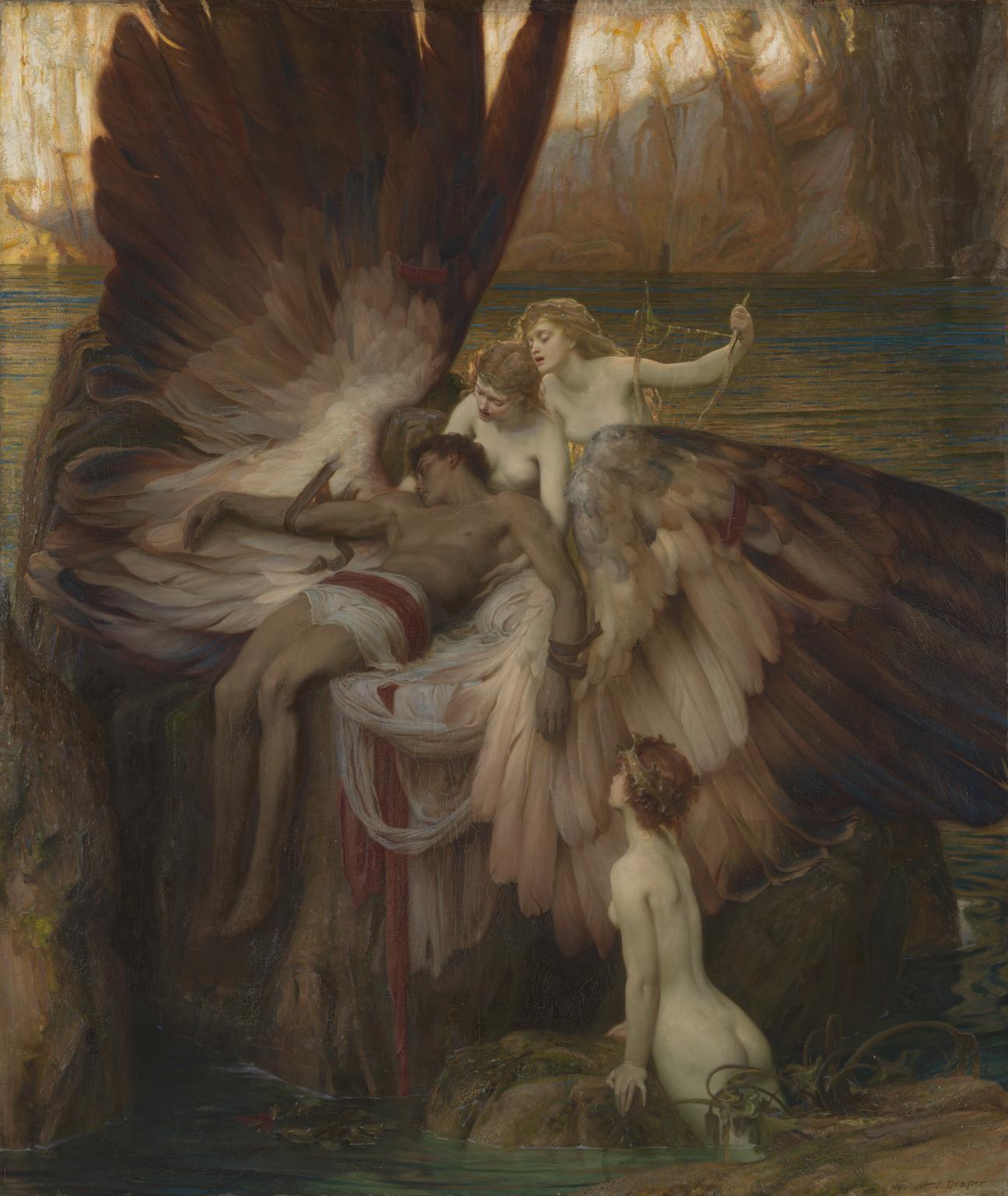
The Lament for Icarus
Tate Museum, exhibited 1898
Herbert Draper 1863-1920
Presented by the Trustees of the Chantrey Bequest 1898
Photo ©Tate CC-BY-NC-ND 3.0 (Unported)

Spiral cloud mountains build in the sky, towering to 20,000 feet, I’d guess. Below, is the town of Douai, where we know Bloody Richtofen’s Jasta 11 calls home this month.

The golden disk to the west is setting and the Albatros scout planes rise to meet us. This is going to be a ripping scrap, I can tell. And then we are in a whirlwind of brown machines and red machines, red-white-blue cockades and black Iron Crosses all flashing by so fast that sometimes you can hardly keep your bearings. Like so many of these recent fights, everyone gets scattered across the sky. But I can’t look out for everyone when I have to do my other job, kill Germans and come home to Flora.

A red aeroplane with a yellow nose and tail whips past Cecil Lewis, and I take chase. I will get to 50 victories. I will get to 50. I must get to 50. He twists and dives and heads into the clouds and I know he can’t shake me. My attention is solely on his tail. I recognize the flash of the setting sun on his goggles as he glances fearfully over his shoulder at me, as I’ve seen that look hundreds of times before. I know it as sure as I know the booming of my own heartbeat in times like this.

I fire burst after burst into him, a drum of bullets from the Lewis on the top wing and 60 or 70 rounds from the Vickers gun in front of me.

I see him drop below me and I know he’s done. I see it all so plainly. The craziness and blood lust that overtakes me at such times ebbs away. And I think of my Flora, my Bobs again.

Then I break through the clouds, seeing from my altimeter that we’ve dove to only 200 feet. But the clouds are in the wrong place.

“Flora,” I cough,“ why are the clouds below me and the church steeple above me?”

“Rest, Albert, lay back and rest.”

I fight the urge to rest, I have to get back to the squadron, get back to England, get back to Bobbsy. The glowing disk in front of me fades away. It’s not the disk of the sun, or my identity badge, it’s my spinning propeller. It stops and then I only see its top, hanging vertically like that stalactite church steeple in front of me.

And then that great noise.

“What’s going on, Bobs? Can I come home to you now? General Trenchard promised me I could come home now.”

“Yes, Albert, you can come home. You don’t have to hurry, though. We’re waiting.”

I see her face above me again, so beautiful, so young. Even now when I see her I can barely catch my breath. Yet her eyes are so very sad as I lay my head back in her lap. I feel raindrops on my face.

“Don’t cry Bobs,” I say.


Fifteen year-old Cecille Deloffre had lived amid the sounds of war for a quarter of her life. She’d learned to sleep to the thunder of the big guns as if they were a summer rainstorm. She ignored the buzzing drone of the aeroplanes as they flew west-to-east and east-to-west each day, often punctuating their passage with the very unmilitary staccato drumbeat of their machine guns.

Cecille had seen some of these machines fall from the sky, glowing and tumbling like a cigarette tossed by one of those German soldiers hidden in the steeple of the nearby church in the village of Annoeulin.

This evening during dinner she had heard the fight above her home, sounding so much like someone had struck a hornet nest and the swarms spreading across the sky.

Then Cecille heard the sound of what could have been two aeroplanes directly above. Her mother crossed herself and tried dragging Cecille from the table to the root cellar beneath the kitchen floor.

She broke from her mother’s grasp and ran into the small fenced yard in front of their farmhouse just as one machine spit a tongue of fire back from its yellow shark-like nose, engine sputtering, gliding to a crash landing on the other side of the village.

She heard another aeroplane’s engine sputter and stop, just as it whooshed, upside-down, from the low storm clouds not 300 metres up the road. Its pilot wore no helmet and she could see his eyes but not his face in the growing dark.

Then the aeroplane just fell, like a an old leather-bound book dropped from a table.

Cecille stood frozen for a second to see if this machine would catch fire. But it only lay crushed on its side like a coffee-colored bird knocked from the sky by a kestrel. The pilot’s head move and she ran toward the aeroplane, unsure why, with her mother screaming after her.

As she came up to the crash site, the young man within the broken machine released his buckle and fell from the cockpit with a thud, a moan, and a faint rasping wheeze.

Cecille reached for the boy and pulled him a few metres away from his machine. She rested his head in her lap and he slowly opened his eyes, looking up at her with such longing that she couldn’t keep from crying.

“Don’t cry Bobs, Bobs, Bosshh…” she heard him barely whisper. Then stillness.

From behind them came the pounding sound of the jackbooted German soldiers from the steeple. They jabbered with delight, so sure they shot down a British flyer. But they hadn’t. Cecille noticed the boy had no wounds on his body.

Her eyes red with tears, Cecille looked down at the boy again and saw but a small bruise beneath his eye where his goggles had been. In her lap, the face of 20 year-old Capt. Albert Ball, MC, DSO, VC lay in silent repose. The sooty stain on it was variegated in white by the tracks of tears, like the half-smiling black marble bust of a saint. They were his tears and that of a beautiful young girl he briefly saw and was sure was the one he loved.

Cecille looked up at the surrounding soldiers and spat out, “Il est mort, Boche. C’est fini.”

But Albert couldn’t hear her. He had just won his 50th victory and he was flying home.

I guess this story shows when even a “hero” dies in war, he dies alone just like any other soldier. And who cries for him?


©2014 Joseph Hesch
All rights reserved


Joseph Hesch…

…is a writer and poet from Albany, New York. His work appears or is forthcoming in over a dozen venues, including Cossack Review, Frontier Tales Magazine, Pine Hills Review, the 2017 Indies Unlimited Flash Fiction Anthology, as well as the anthologies Petrichor Rising and For the Love of Christmas. His poetry collections, “Penumbra: The Space Between” and “One Hundred Beats a Minute” are available on Amazon.com. He’s currently working on his first collection of stories, all based on his fascination with the American frontier, whether it’s upstate New York in the 17th and 18th Centuries or the Nebraska plains and Arizona deserts of the 19th.

Blog


Not Talking | John Anstie

Most issues of The BeZine now have a section called BeATTITUDES, for work that may not be directly related to the theme of that quarter, but in general fit the values and purposes of The BeZine (see our About page to learn more about these). This essay and poem from the first issue, by our current Prose and Music Editor, John Anstie, is a good example of a BeATTITUDE.

photo 2

At the age of one, going on two, telephone calls from my granddaughter, three or four years ago, for a while became a fairly regular as well as welcome and enchanting occurrence. One such call prompted me to write this response.

It addresses that stage in a toddler’s life when they seem to be striving to develop their language skills to communicate with their adult family, but cannot find the words. So I, would pick up the the phone when she called, find myself (like a typical stupid adult) doing too much talking, trying, as we do, to encourage her to say more. What comes back the other way, not surprisingly having been patronised by her grandpa, is mostly silence accompanied by (and this is the truly enchanting bit) mutterings, sing-song tones and breathing, which only fuel my imagination, which rapidly, but mostly unsuccessfully, tries to figure out what it is she is trying to say. The particular phone call to which “Not Talking” is the response was in fact received by our answer phone messaging system, hence I was able to record it for posterity.

Our desire to help them talk can, of course, be dimmed once their newfound ability to talk leads to incessant nattering, which drives us in search of refuge!

But they will always remain an enchantment on our lives and a potential for renewal of our own childhood hopes and dreams.

Not Talking

You called; it seemed from somewhere far away.
You called to say hello in your sweet way.
Not so much with news but how you're feeling;
our talk, not so much an open book as freewheeling.

You called to say your Dad was making tea;
that, whilst you wait, you'd make a call to me.
An inner smile grew as I listened on
to silences between the phrases of your song

that comes from somewhere in your life, so full
of carefree energy and zest, that you just pull
me with you and, yet, wherever it is you go
metaphysically, little do you know

how much it is you say to me, not talking
of all of your imaginings, while walking,
or perhaps you're standing, hearing me,
whilst you contemplate what is for tea.

Whatever it may be that you are thinking
I know you'd love to talk and, in a blinking,
you will, and I'll be thinking: are we blessed
or will we ask, politely, for you to rest?

Essay and Poem ©2010 John Anstie
All rights reserved


Anti-dystopoem | John Anstie

United we stand, divided we fall.
Together we rise. Alone, we hear only the call
from sirens of an alternative kind of destiny,
where attention seeking soldiers of fortune,
their collegial architects and faceless shadows
construct a new order, birthing the unfamiliar,
wrapped in a matrix of the convincingly familiar.

A weeping iconic mater outwardly gestures
her loving hands and offers lessons learned
by a handmaid and her tale of forced labour
and social media generating artificial facts
of incontestable statistical intelligence, promising
to remove uncertainty from uncertain lives
to offer security in a profoundly insecure way.

Yet the still small voices of independent thought,
unafraid of consequence, reality, insecurity or pain,
continue to echo the inspiration of she, who reasons
encouragingly and compassionately against
the harbingers of our future decline, against
the pornography of privilege and wealth,
against the deniers of equitable, sustainable life.

These voices will endure, like those refreshing waters
of a spring that flows from deep inside humanity.

Underneath the radar of the darker web of lies,
they carve in stone the undeniable truth of history.

Note from 2020: Jamie Dedes, founder and editor in chief of the BeZine, formerly ‘Into The Bardo’, for over ten years, has stepped down from the roll because of failing health and, in her words, feeling too exhausted from the effort required to maintain the project. Instead she has characteristically shown her faith in the team she has built up, encouraged, nurtured and, above all, imbued with her own enthusiasm for the BeZine’s mission of promoting Peace, Sustainability and Social Justice, through the medium of the written word and all-coming art forms. She invited me to get involved in 2012, it seems like an age ago! I have never regretted a moment and further, I often wonder where my motivation would have come from, to write and achieve more than I would have given myself credit to achieve. This is my humble attempt to show my appreciation for her influence on me, alongside other stalwarts like Michael Dickel, who has agreed to take the tiller as Editor in Chief, and the other ten or so members of the core team, who have kept the faith. Not to mention countless guest contributors, all of whom have entered the spirit of a very, very worthy cause. This is as much a tribute to you as it is to Jamie. I salute you all.


©2020 John Anstie
All rights reserved


She Leaps from the Cleavage of Time | Jamie Dedes

she’s present
returned to bite through the umbilical of tradition,
to flick her tongue
and cut loose the animus of our parents,
like a panther she roams the earth, she is Eve wild in the night,
freeing minds from hard shells
and hearts from the confines of their cages,
she's entwined in the woodlands of our psyches
and offers her silken locks to the sacred forests of our souls—
naked but for her righteousness,
she stands in primal light,
in the untrammeled river of dreams
the yin to balance yang
the cup of peace to uncross the swords of war—
through the eons she's been waiting for her time
her quiet numinosity hiding in the phenomenal world,
in the cyclical renewal of mother earth,
whispering to us as the silver intuition of grandmother moon
she, omen of peace birthed out of the dark,
she is the revisioning of the Divine,
non-judgement forms her backbone
her love is unconditional
even as tradition tries to block her return,
her power leaps from the cleavage of time
Original water color by Gretchen Del Rio
Original water color by Gretchen Del Rio ©2013

About this illustration—this lovely watercolor painting by Gretchen Del Rio, with its girl-tree, panther, and other spirit animals seemed the perfect illustration for my poem on the spiritual return of the feminine. The real back-story on the painting is just as interesting. Gretchen says, “I painted this for a 14 year old Navajo girl. It is for her protection and her power. She sees auras and is very disturbed by this. She is just amazing. Beauty beyond any words. You can see into the soul of the universe when you look at her eyes. She has no idea. I loved her the moment I saw her. My blessings for her well being are woven into the art.” Such a charming piece. I posted it full-size so that everyone can enjoy the detail. Bravo, Gretchen, and thank you. —J.D.


Poem ©2013 Jamie Dede
All rights reserved


Jamie Dedes…

…was a Lebanese-American poet and freelance writer. She was the founder and curator of The Poet by Day, info hub for poets and writers, and the founder of The Bardo Group, publishers of The BeZine, of which she was the founding editor and later a co-managing editor with Michael Dickel. Jamie was the Poet Laureate of Womawords Press 2020 and U.S associate to that press, as well.


Winter 2022

Volume 9       Life of the Spirit and Activism     Issue 4
fuel for change

Contents V9N4

The  BeZine

Volume 9       Winter 2022       Issue 4

Life of the Spirit
&
Activism

fuel for change


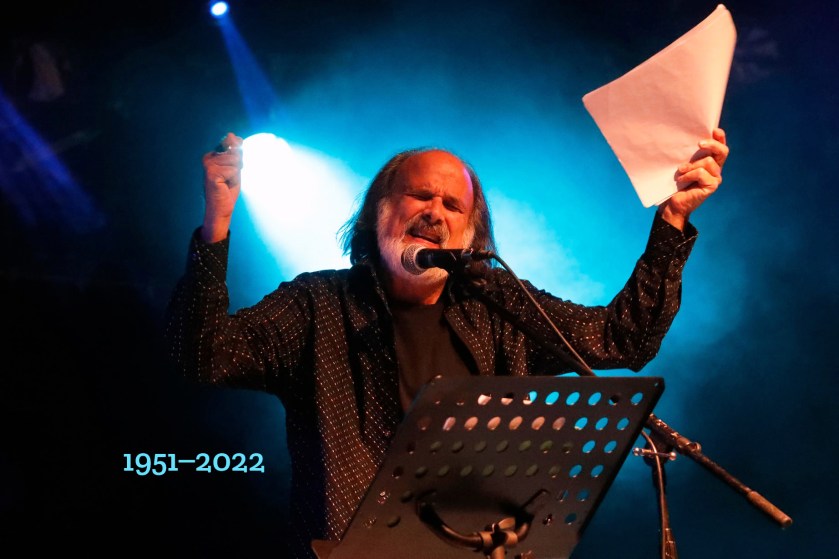
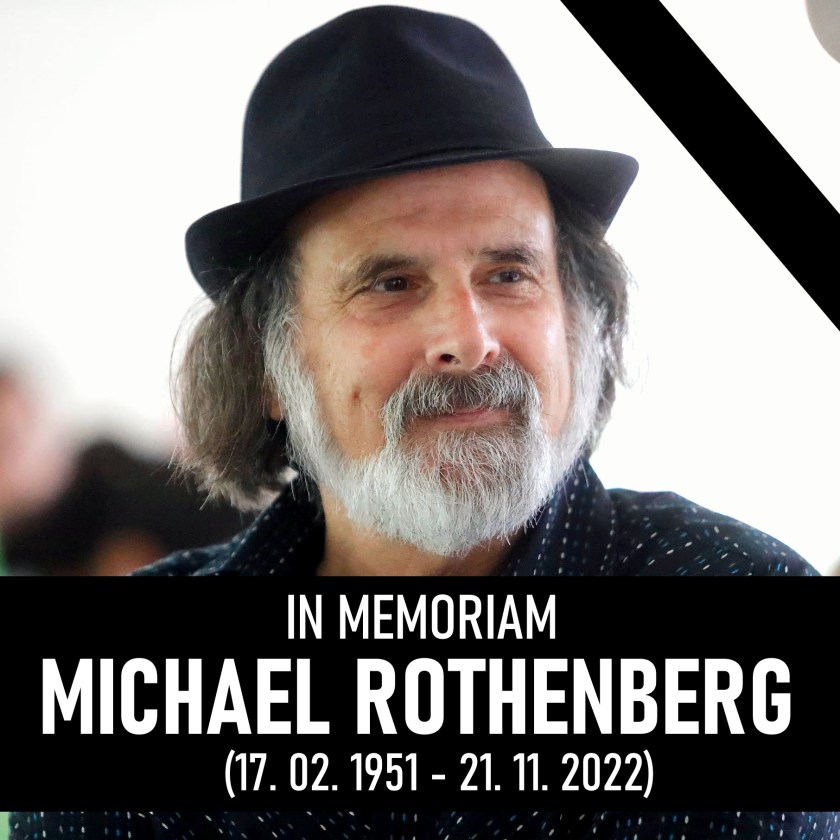
Cover art: Photo of Michael Rotenberg (1951–2022) Performing Poetry | Photo from Facebook Profile


Introduction

Life of the spirit
fuel for change

Remaining Awake

So much seems off course—climate crisis, Ukraine war, rising fascism, depleted energy for resisting—where do we find fuel to keep up the struggle for change? In the pages of this issue glimmer hopes, stars in dark nights, dreams—alongside outrage, compassion, and the fire that makes us all (as Youssef Alaoui says early in this issue). That star-sun-moon fire—the Holy Spirit to some, the light of Creation to others, stardust to many, Enlightenment shining forth for still others—this spirit moves us all to love, to care for our siblings and cousins, to awaken and rise up from ashes of despair and sing our songs.

The political right attacks “woke” and wields the word as a weapon against “…any left-leaning policy that it [wants] to condemn,” Professor Esau McCaulley writes when discussing the last Sunday sermon given by the Rev. Dr. Martin Luther King, Jr., “Remaining Awake Through a Great Revolution.” Prof. McCaulley tells us that “…although King doesn’t say the word ‘woke,’ he uses the concept as it was understood by many Black folks then…” (NYTimes “The Kind of Revolution That Martin Luther King Jr. Envisioned” 13 Jan 2023).

Citing the story of Rip Van Winkle, Dr. King points out that a little noticed sign in the story is of great importance. When he goes up to the mountains to sleep, it shows King George III; when he comes down it shows George Washington. The change leaves him feeling lost and confused, not knowing the world. Rip Van Winkle slept through a revolution that changed that world. King warns that too many people are sleeping through three revolutions—technological change, weapons of mass destruction, and the social revolution of human rights.

Sound familiar?

Headshot of Rev. Dr. Martin Luther King, Jr., microphone in foreground, out of focus people standing behind him at a distance.
Rev. Dr. Martin Luther King, Jr.

While Dr. King talks about how in 1968 the geological world had shrunk and time quickened through modern jet travel, how our word balanced on the brink of nuclear destruction, but also how a great outcry for freedom was being heard around the globe. He reminds us that our neighbors had become global, not just down the street. That we had to care for our neighbors everywhere there was oppression and injustice.

Sound familiar?

Today the world has shrunk even smaller, with instantaneous communication and live video connections worldwide. New war technologies are deadlier, from more powerful nuclear bombs to precision missiles to drones—and nuclear sabre-rattling again clanks in our collective ears. Yet, the rising fascism, nationalism, and autocracy we see, while looming dark and dangerous, is also a strong reaction to the “great revolution” Dr. King spoke of. The revolution continues to grow and spread. And reactionary forces, out of fear or hate, push back, seeking to repress, to protect inequalities of wealth and power that benefit them (or to create new ones that will benefit them), and to go back to the past. There are even those who have recently extolled slavery in the US political right (see for examples: These Politicians Praise Slavery, US Senator Tom Cotton defends slavery remarks, and The rightwing US textbooks that teach slavery as ‘black immigration’).

“We hold these truths to be self-evident, that all men are created equal, that they are endowed by their Creator with certain inalienable Rights, that among these are Life, Liberty, and the pursuit of Happiness.” But if a [person] doesn’t have a job or an income, [that person] has neither life nor liberty nor the possibility for the pursuit of happiness. [That person] merely exists. We are coming to ask America to be true to the huge promissory note that it signed years ago.

Rev. Dr. Martin Luther King, Jr
“Remaining Awake Through a Great Revolution”
[edited for gender neutrality]

The Rev. Dr. Martin Luther King, Jr., gave that sermon at Washington National Cathedral on March 31, 1968. A few days later, he was murdered in Memphis, TN, April 4, 1968. Many of the issues he addressed, such as economic reparations (in the US and globally) remain hotly contested and difficult to address. It will be 55 years this April since Dr. King died. We must remain awake. As tired as I feel, and right now I feel weary to the bone, we must awaken. We must stay awake. We must embrace “woke,” not as a label, but as action of mind, body, and soul. We must not let the darkness numb us into decades of sleep. In that wakening, we will find energy—from the light of creation within the world and within us.

A YouTube video of the sermon is embedded in this issue of The BeZine.


Remembering Michael Rothenberg
Michael Rothenberg
Amalfi, Italy, ©2015 Michael Dickel

Michael Rothenberg and his partner, Terri Carrion, founded 100 Thousand Poets for Change (100TPC). From early in the (almost decade) of The BeZine’s existence, we have participated in the annual celebration of activism in poetry. Our three recurring focusing themes: Peace, Sustainability, and Social Justice come directly from the 2015 100TPC World Conference in 2015. I attended that conference and reported about it here and elsewhere on my return. These three themes already were throughout The BeZine, along with an ecumencal and inclusive theme of life of the spirit. We chose to focus on the three 100TPC themes in solidarity with 100TPC, and added our own, Life of the Spirit and Activism.

Michael left this world 21 November 2022. He was tireless as an activist, a writer, a friend, a performer, and an organizer. He remained awake to the very end, creating when he could, working collaboratively with others, and caring for others even as his life slipped away. We open this issue with 7 poems and an essay by some of his (and my) friends who were in Salerno in 2015, dedicated to Michael’s memory and delivered here with love for him and for Terri. I introduce that section separately, with my own personal thoughts written a few days after he moved on from this world. At the end of the In Memory of Michael Rothenberg section, there is a YouTube from a Zoom reading that many of us from the Salerno World Conference participated in to remember and honor Michael together.


Yes, this issue was late—and we could use some help

What can I say? From election deniers and mid-term results in the U.S., to the most right-wing government newly elected in Israel (where I live), to Michael’s loss, to war, to climate crisis…sometimes it all overwhelms. But I was also busy with a major project which had a deadline that conflicted with our production schedule, and this was good. This is the winter issue, and it is indeed still winter. But it is more than a month later than usual. My personal apologies.

Tan wool hat with a pin saying: "Art should disturb the comfortable and comfort the disturbed"
My new wool hat (Kangol) and the new pin I added to it: “Art should disturb the comfortable and comfort the disturbed.”

We have a new editor joining to help us, beginning with the next issue. And we would like to invite contributors and readers to become more involved. We get occasional offers to review books, and would like to do this (particularly, but not only, for contributors). We could use help proofreading online. We could use help with the blog (contributing and editing). This is all volunteer work; none of us gets paid. If you have interest in joining our team, look over the submissions guidelines and mission statement to get a better idea of what we try to do here. Use the submission email to contact me—provide a paragraph or two of introduction about your experience, why you would like to help, and what you would like to help with. A resume is optional. Put “I’d like to join The BeZine Team” in the subject line, so I know you are applying. And I will get back to you as quickly as I can.

—Michael Dickel
Editor, The BeZine


Table of Contents


In Memory
Michael Rothenberg


BeAttitudes


Poetry

Your Portfolio Archive currently has no entries. You can start creating them on your dashboard.


Prose


This image has an empty alt attribute; its file name is image-3-33.png

The BeZine

Be Inspired…Be Creative…Be Peace…Be 

Facebook

Twitter

Submissions