Tag: peace
The Poet as Witness: “War Surrounds Us,” an interview with American-Israeli Poet, Michael Dickel
Editors note: The theme for our September issue is poverty. It is part of our 100,000 Poets (and other artists and friends) for Change event (change being peace and sustainability) to be held here as a virtual event on 26 September 2015. Michael Dickel takes the lead on this project and the September issue. Here’s an opportunity to get to know him better. Michael’s vision: “… hope must/ still remain with those who cross/ borders, ignore false lines and divisions/” is consistent with the mission of Bequine Again and The Bardo Group, publishers of The BeZine. The September issue will post on the 15th. J.D.
 “That some of those labelled as enemies
have crossed the lines to offer condolences
at the mourning tents; that the mourning
families spoke to each other as parents
and cried on each others’ shoulders;
that we cried for the children who died
on both sides of the divide; that the
war began anyway; that hope must
still remain with those who cross
borders, ignore false lines and divisions;
that children should be allowed to live;
that we must cry for all children who die”
– Michael Dickel, (Mosquitos) War Surrounds Us
Jerusalem, Summer 2014: Michael Dickel and his family including Moshe (3 years) and Naomi (1 year) hear the air raid sirens, find safety in shelters, and don’t find relief during vacation travels. In a country smaller than New Jersey, there is no escaping the grumbling wars that encircle. So Michael did what writers and poets do. He bore witness. He picked up his pen and recorded thoughts, feelings, sounds, fears, colors, events and concerns in poetry. The result is his third collection of poems, a chapbook, War Surrounds Us.
While some use poetry to galvanize war, Michael’s poetry is a cry for peace. He watched the provocations between Israel and Hamas that resulted in war in 2014 and he illustrates the insanity.
And the retaliation
Continues, reptilian and cold,
retaliation the perpetrator
of all massacres.
Though the poems change their pacing and structure, they present a cohesive logical and emotional flow, one that takes you blood and bone into the heart of Michael’s experience as a human being, a poet, a Jew, a father and husband. He touches the humanity in all of us with his record of the tension between summer outings and death tolls, life as usual and the omnipresence of war. Both thumbs up on this one. Bravo, Michael.
– Jamie Dedes
Poems from War Surrounds Us:
Again
Musical Meditations
The Roses
TLV1 Interview and Poetry Reading

MY INTERVIEW WITH MICHAEL DICKEL:
Jamie: Putting together a poetry collection and ordering the work in a way that enhances the meaning and clarity of poems included is not easy. One of the first things to strike me about the collection as a whole is how it flows, so well in fact that it reads almost like one long poem. I found that quality contributed to the work’s readability. How did you work out the order? Was it consciously ordered or did it arise organically out of the experience of the war?
Michael: I’m very gratified that you noticed this about my book. I hadn’t thought of it quite in that sense, of being one poem, but I like that it reads that way. The sense of a book holding together, a collection of poems having some coherence, is important to me. I don’t think my first book achieved this very well, although it has some flow poem to poem. The whole is not focused, though. My second book has a sense of motion and narrative, from the Midwest where I grew up to arriving and living in Israel, and now being part of the Mid-East. However, War Surrounds Us, my third book, finally has a sense of focus that the other two did not.
Unfortunately, I probably can’t take too much credit for that coherence. Even more unfortunate, a real war raged in Gaza, with rockets also hitting the Jerusalem area, not that far from where I live. As we know now, thousands died, most apparently civilians, many children. Just across the border to the Northeast, diagonally opposite of Gaza, a much larger scale conflict burned and still burns through Syria—with even larger death tolls and even more atrocities over a longer time. These wars had, and still have, a huge impact on me and my family.
During last summer, the summer of 2014, this reality of war surrounding us had all of my attention. And it came out in my writing as obsession with the war, my family, the dissonance between living everyday life and the reality of death and destruction a missile’s throw away. So the topic filled my poems those months, as it did my thoughts. And the poems emerged as events unfolded over time, so a sort of narrative wove into them—not a plot, mind you, not exactly, anyway.
This gives a chronological structure to the book. However, not all of the poems appear in the order I wrote them. I did move some around, seeing connections in a theme or image—if it did not jar the sense of the underlying chronology of the war. Some of the events in our life could move around, and I did move some poems to places where I thought they fit better. I also revised the poems, reading from beginning to end several times, trying to smooth out the flow. A few of the poems I actually wrote or started before this phase of the ongoing conflict broke out—but where they also fit into a pattern, I included them. In the end, I moved and revised intuitively, following my own sense of flow and connection. I’m glad that it seems to have worked for you, as a reader, too.
Jamie: What is the place of the poet and poetry in war? Can poetry, art and literature move us to peace? How and why?
Michael: This is a difficult question. Historically, one place of poets was to call the soldiers to war, to rile them up and denounce the enemy. There is a famous poem from the Hebrew Scriptures. Balaam is called by Balak to curse Jacob and his army. The story sets a talking donkey who sees an angel with a sword and other obstacles in his way, but long story short, he arrives and raises his voice. He is the poet who is supposed to curse the enemy. Instead, he begins, “How beautiful your tents, O Jacob…” and recites a poem that is now part of the Jewish liturgy. This is not necessarily a peace poem, but it shows words and their power to curse of bless. I think the place of the poet is to bless and, rather than curse, to witness with clear sight.
There is a long history of poet as witness and observer. Czeslaw Milosz in The Witness of Poetry and Carolyn Forché, following him, in her books Against Forgetting: Twentieth Century Poetry of Witness and Poetry of Witness, which goes back to the 16th Century, argue that the poet’s role is to observe and bear witness to the world—to the darkness, the atrocities, genocide, war… Forché quotes Bertolt Brecht: “In these dark times, will there also be singing? / Yes, there will be singing. / About the dark times.” I think that is what we do as poets. That’s what I hope that War Surrounds Us does at its best, albeit as much a witnessing of my own family and context as of the Other. Then, as feminist theory has taught me, the personal is political, the political personal.
 Can art and literature move us to peace? I don’t know. I hope it can move us to see more clearly, to feel more acutely, and to embrace our humanity and the humanity of others. Perhaps that will move us toward peace. There is so much to do, and it is as the rabbinic wisdom says about healing creation: it may not be ours to see the work completed, but that does not free us from the responsibility to do the work. As poets, we make a contribution. I hope the songs about the dark times will also be blessings for us all.
Jamie: Tell us about your life as a poet. When did you start and how did you pursue the path? How do you carve out time for it in a life that includes work, children and community responsibilities. You live on a kibbutz, I think.
Michael: Well, starting at the end, no, I don’t live on a kibbutz, I live in Jerusalem (the pre-1967 side of the Green Line). I do teach English at a college that was started by the Kibbutz Movement as a teacher’s college in the 1960s, now Kibbutzim College of Education, Arts and Technology. That appears in my email signature and confuses some people outside of Israel, who think I teach as part of living at a kibbutz. I’m actually more like adjunct faculty, but no one at the college works directly for a kibbutz as far as I know, and the college is open to anybody who qualifies.
While I only have a short day, from when the kids of my current family go to pre-school until I pick them up, I also usually only teach part-time. Some semesters I teach full-time or even more, but usually not. And, many of my courses in the past couple of years have been online, meeting only a few times during the semester. This helps.
My wife works full-time in high tech, which allows us to survive on my irregular, adjunct pay. She also has some flexibility, which allows her to usually be free to pick up the kids as needed around my teaching schedule, and we have on occasion hired someone to help with the kids so I could teach, not so much for my writing. But that has allowed writing time on other days.
Mostly, I write during those few hours when the kids are at pre-school, after the kids have gone to bed, or even later, after my wife has also gone to bed. If I’m working on a deadline or a large project, such as some of the freelance work I do for film production companies, I write after my wife gets home from work even if the kids are still awake. Usually, though, I write when I find time, and I find time when I don’t have other obligations.
Perhaps of relevance to this book, the writing took over. I was late in getting papers back to students and delayed other obligations and deadlines, even canceling a couple of other projects—although it was not just the writing, but the whole experience of the war, dealing with it and wanting to be very present with my children. As the poems relate, we went to the Galilee, in the North, for a month, a vacation we have taken before. Last summer, though, it had extra urgency because of the war. Unfortunately, during an outing picking apples in the Golan Heights, we heard artillery across the border in Syria, and that’s when I wrote the title poem of the book, “War Surrounds Us.”
The summer before, on that same month-long getaway, I wrote a lot of flash fiction, which makes up most of my next book, which should come out by the end of the year. I wrote during both summers when the kids were napping or after their bedtime, mostly. The place we stay in, a friend’s house (he travels every summer), has a lovely courtyard, and after the children went to bed, Aviva and I would sit out in it, usually with a glass of wine. She would read or work online and I would write on my laptop into the night. It was lovely and romantic.
I have to say that I almost don’t remember a time when I didn’t write poetry or stories. I recall trying to stop on a few occasions, either to work in some other aspect of my life, or when I did a different kind of writing, such as for my dissertation (which devolved into creative writing for more than half of it). But really, going back into my early years, I wrote stories or poems of some sort—influenced I suppose by A. A. Milne, Sol Silverstein, Kenneth Grahame and, later, Mark Twain and even Shakespeare. I had books of Roman and Greek myths, the Lambs’ bowdlerized Shakespeare for children, and some Arthurian tales as a child, not to mention shelves of Golden Books. Later, I read Madeleine L’Engle and a lot of science fiction. And everything I read made me also want to write.
I owe the earliest of my poems that I can remember to exercises from grade school teachers, one in 3rd grade, maybe 4th, the other in 6th grade. However, I’m sure that I wrote stories and possibly “poems” earlier. My first sense that I could become a poet arrived via a junior high school teacher, who encouraged me to submit some poetry to a school contest. I tied for first place.
So, I started writing forever ago. By the time of the junior high contest, I had read e e cummings, Emily Dickinson, some Whitman. By 9th grade, I discovered the Beats through a recording of Ginsberg reading “Kaddish” and other poems. Hearing him read the poems, then reading them myself, changed everything.
Alongside this development, one of my brothers brought Dylan records home that I listened to. All three of my brothers, with my parents’ tacit approval, played folk music and protest music in the form of songs of Woody Guthrie; The Weavers; Joan Baez; Peter, Paul and Mary; in addition to Dylan. These influenced both my writing and my world view. The same year that I came across Ginsberg’s work, I was involved in anti-war activity in my high school. That spring, four students were shot at Kent State. In another way, that changed everything, too.
Writing, activism, and politics, for me have always been interwoven. I also heard that year about “The Woman’s Movement,” which today we call Feminism. Later, much later, I would read and take to heart the idea of the personal being political, the body being political. I think my poems, even the most personal, always have a political and theoretical lens. And the most philosophical or political or theoretical, also have a personal lens. I don’t think that we can help but do that, but I try to be aware of the various lenses, of using their different foci deliberately as part of my craft. I’m not sure that is the current trend, and much of my work doesn’t fit well in spoken word or slam settings (some of it fits). However, this is my poetry and poetics—and they arise from a specific cultural context, the complexity of which I could not begin to convey in less than a lifetime of writing.
My development from those awakening moments looked like this: I read. I wrote. I shared my work with other people who wrote. Sometimes I talked with others about writing. My first degree in college was in psychology, not English, because I naively thought that psych would help me understand the human condition and that English would “ruin” – suppress – my writing voice. However, I took a lot of literature courses and my study abroad term focused entirely on literature.
After college, I had a career as a counselor working with runaways, with street teens, with children undergoing in-patient psych evaluations, and in a crisis intervention and suicide prevention center—a career that taught me a lot about politics, gender, race, and justice. I continued to write, often about some of the most disturbing realities that I encountered, but not well.
I had been out of college nearly a decade when I took some courses in creative writing at the University of Minnesota, at the suggestion of some friends in a writing group who had also taken some. One of the professors encouraged me to apply to the Creative Writing Program, where I was accepted. The acceptance was a poignant moment—I was out of state at my father’s burial. My now ex-wife remained back with our then 2 year-old daughter. She saw the letter in the mail, so called and read it to me. It was also my 32nd birthday. So many emotions all at the same time. Mostly, I remember wishing I could have told my father—from when he first heard that I’d applied, every phone call we had included his asking if I had heard yet if I had been accepted. It was the most direct way he had of saying he was proud.

Jamie: Tell us a little about 100,000 Poets for Change (100TPC) in Israel and how people can get in touch with you if they want to participate this year. Are you able to manage a mix of Arabs and Jews?
Michael: The thing about 100TPC is that it’s pretty loose, as an organization, and very anarchic in governance. Which is to say, I’m not sure there is something I could call 100TPC in Israel. There’s a wonderful poet in Haifa who does some events, I don’t think every year. She is very active in peace activism and poetry. There’s an Israeli mentor of mine, Karen Alkalay-Gut, who has organized 100TPC events in Tel Aviv since the first year. For the past two years, I organized a poetry reading in Jerusalem. The first one was small, a few people I knew and cajoled into reading. The second one was much larger, over 25 poets. We had one Arab writer, who writes in English, at the second reading. Her poetry is powerful and personal, written as an Arab woman, a mother, and an Israeli. An Arab musician was going to join us, but he had a conflict arise with a paying gig. It is difficult to manage the practical, political, and social barriers, but people do it here. I am just learning a bit how to do this now.
For this year, I am working with two other organizations—the Lindberg Peace Foundation, which has held annual Poetry for Peace events. This year will be the 40th anniversary (yartzheit, in Hebrew) of Miriam Lindberg’s tragic death at the age of 18. She wrote poetry, was a peace activist, and also an environmental activist. Her mother was a poet and professor, and passed away a few years ago. Joining us in planning the Jerusalem event will be the Interfaith Center for Sustainable Development. Their mission as I understand it is to develop interfaith leadership for common goals related to eco-justice that would also provide a model for solving the Middle East conflicts.
The Jerusalem events won’t be the same date as the national event (26 September)—our dates will be 15–16 October, to honor the 40th anniversary of Miriam Lindberg’s death. Dorit Weissman, a Hebrew-language poet and playwright, also has become part of 100TPC this year, and she and I are having a smaller reading on 8 October with other poets.
We are just setting up a Facebook page for organizing with the three groups, 100TPC, the foundation, and the center. People could look for me on FB and send me a chat message there to be in touch. I hope that we will have the events posted on FB in the next few weeks, but we are still working on the details. The devil is always in the details, as the saying goes.
Michael will host The BeZine‘s virtual 100TPC this 26 September 2015.
Be the peace.
© 2015, book review, Jamie Dedes, All rights reserved; words, poetry, photographs of Michael, Michael Dickel, All rights reserved; cover illustration, The Evolution of Music, by Jerry Ingeman, All rights reserved
100,000 Poets … and writers, artists, photographers, musicians and activists … for Change … Italy
100,000 Poets for Change [100TC): poets and other artists and activists in world-wide solidarity for peace and sustainability.
While the great global event is scheduled for September 26 in 2015, there are local events staged at varying venues and times throughout the world. From June 3-8 the first world conference was held in Salerno, Italy. The video below shares the delightful work of some musicians at that conference. (The music starts at 1:20.) At The BeZine (a publication of Beguine Again and The Bardo Group), poet Michael Dickel (War Surrounds Us/Is a Rose Press) will report on the conference in Italy in the July 15 issue.
The BeZine is hosting a virtual 100TCP event for those who do not have access to any local venue or are homebound for whatever reason. We hope you’ll join us. We have chosen to shed our light on poverty this year. More news on that to come here at The Poet by Day and on The BeZine blog.
We have a Facebook group going for our event. If you are on Facebook and would like to join us there, let me know in the comments below and I’ll add you to the The BeZine 100TPC 2015 Discussion Group. We do ask that you keep on topic and communicate about relevant issues and concerns. Thank you!
If you are looking for a local 100TPC event go to 100TPC blog and scroll down the blogroll to your right to see what’s happening in your area and to find a contact. If you want to organize an event yourself, go to the Home Page for information.
SAVE THE DATE: 26 Sept. 2015: 100,000+ poets in solidarity for peace and sustainability
Heads-up everyone: For the fifth year on September 26, 2015, more than 100,000 Poets (and artists, musicians, and other creatives and activist) will meet in town squares, theaters, on beaches, in cafes and probably some backyards in solidarity for a peaceful and sustainable world.
At The Bardo Group/Bequine Again, we’re hosting a virtual event so that those who have no neighborhood events to go to or who are home bound can participate.
At this writing founder Michael Ronthenberg, poet and publisher, reports that 300 events are already registered. To see if there’s an event near you or to register an event in your neighborhood, go to the site.
The following is a message from the founders of 100TPC:
Michael Rothenberg: Poet and editor of Big Bridge Press and zine
and
Terri Carrion: Associate editor and visual designer of Big Bridge Press and zine
100 THOUSAND POETS FOR CHANGE [100TPC] MOVEMENT for PEACE & SUSTAINABILITY!
Do you want to join other poets, musicians, and artists around the world in a demonstration/celebration to promote peace and sustainability and to call for serious social, environmental and political change?
“What kind of CHANGE are we talking about?”
The first order of change is for poets, writers, musicians, artists, activists to get together to create and perform, educate and demonstrate, simultaneously, with other communities around the world. This changes how we see our local community and the global community. We have become incredibly alienated in recent years. We hardly know our neighbors down the street let alone our creative allies who live and share our concerns in other countries. We need to feel this kind of global solidarity. It is empowering . . .
… and there is trouble in the world. Wars, violation of human rights, ecocide, racism, genocide, gender inequality, homelessness, the lack of affordable medical care, police brutality, religious persecution, poverty, censorship, animal cruelty, and the list goes on and on.
Transformation towards peace and a more sustainable world are the major concerns and the global guiding principle for 100 TPC events. War is not sustainable. There is an increasing sense that we need to move forward and stop moving backwards. But we are trying not to be dogmatic. We hope that together we can develop our ideas of the “change/transformation” we are looking for as a global community , and that each local community group will decide their own specific area of focus for change for their particular event. All we ask is that local communities organize events about change within the guidelines of peace and sustainability.
“I want to organize in my area. How do we begin to organize?”
100 Thousand Poets for Change will help organize and find individuals in each area who would like to organize their local event.
If you are an organizer for your community you will consider a location for the event and begin to contact people in your area who want to participate in the event. Participation means contacting the media, posting the event on the web, in calendars, newspapers, etc., reading poems, doing a concert, performing in general, supplying cupcakes and beer (it’s up to you), demonstrating, putting up an information table, inviting guest speakers, musicians, etc., organizing an art exhibit, and documenting the event (this is important, too), and cleaning up, of course.
Organizers and participants will create their own local event as an expression of who they are locally. Do they want a a concert or a jam session, candlelight vigil or a circus, a march or a dance, poetry reading in a cafe or on the subway, do they want absolute silence, a group meditation on a main street; it’s up to the local organization.
However, groups should try to hold some part of the event, if not all of it, outdoors, in public view (not required). The point is to be seen and heard, not just stay behind closed walls. It is also important that the event be documented. Photos, audio, videos, poems, journals, paintings! Documentation is crucial. The rest of the 100 Thousand Poets for Change want to hear what you have to say about change and enjoy your creativity too! The documentation will be shared through a blog/website that I will set up, a blog/website where groups can share and announce event information, as well as post photos, videos, poetry, art, and thoughts. But an event doesn’t have to involve tons of people. It can be just you (the organizer) and your pet, on a street corner, with a sign. Just let me know what you are planning!
Every effort counts!
Each local organization determines what it wants to focus on, something broad like, peace, sustainability, justice, equality, or more specific causes like Health Care, or Freedom of Speech, or local environmental or social concerns that need attention in your particular area right now, etc. Organizations will then come up with a mission statement/manifesto that describes who they are and what they think and care about. Mission statements form arround the world have been collected and worked together into a grand statement of 100 Thousand Poets for Change.
Thank you for joining us!
Best, Michael Rothenberg and Terri Carrion
—————————–
Michael Rothenberg: Poet and editor of
Big Bridge Press and zine
Terri Carrion: Associate editor and visual designer of
Big Bridge Press and zine
Prayer as Action for Peace
Editorial note: The next issue of The BeZine will publish on Sunday, March 15. Meanwhile, this hugely popular intro and collection of prayers was originally posted by Terri Stewart for Saturday, September 7, 2013, in response to a call for worldwide prayer and fasting to focus on peace in Syria. With all that is going on in the Middle East and given the Ukraine crises, the many conflicts in Africa and the deaths and dislocations resulting from drug wars in Central and South America, this seems a good time to post it again in the spirit of peace, love and community … Jamie Dedes
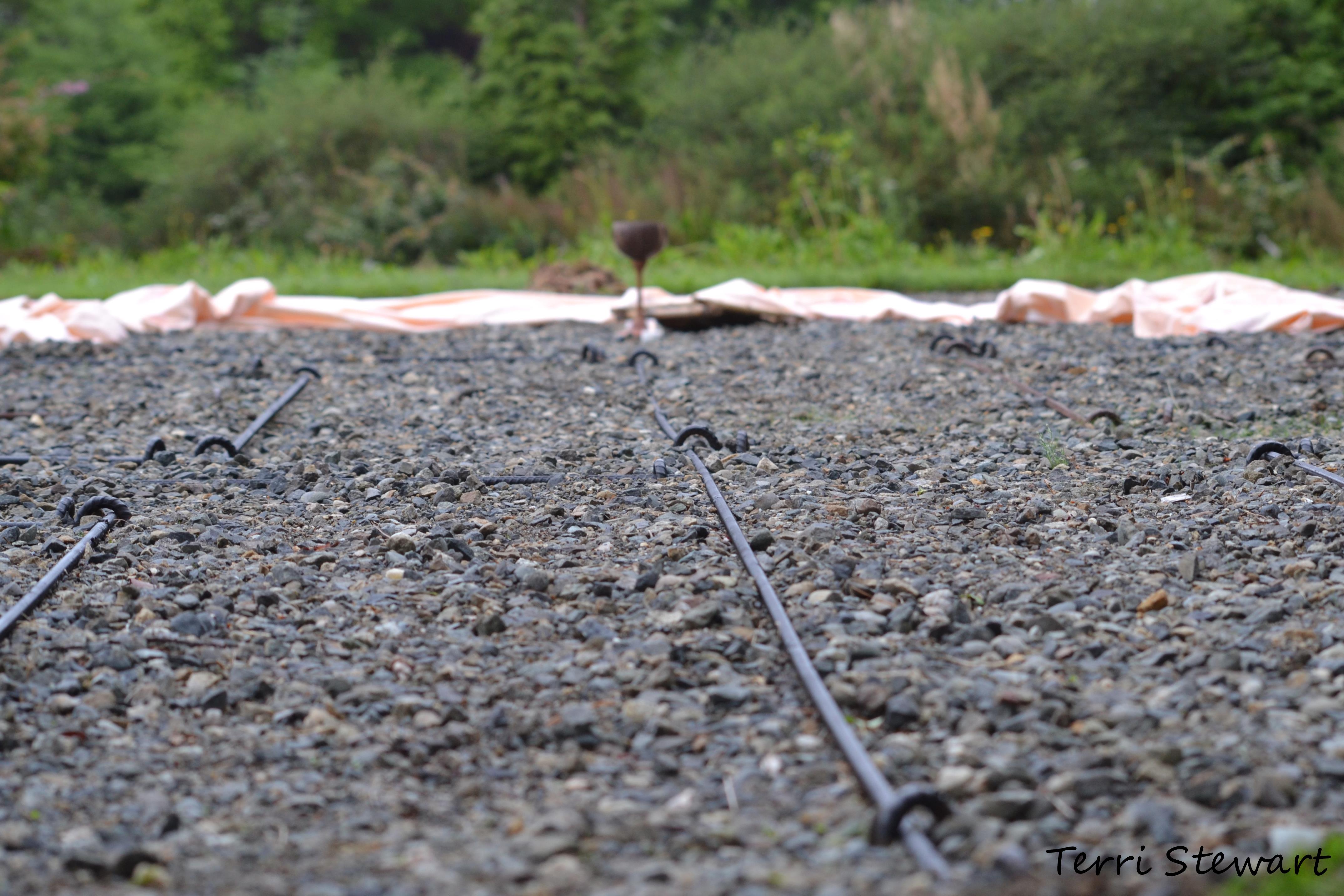
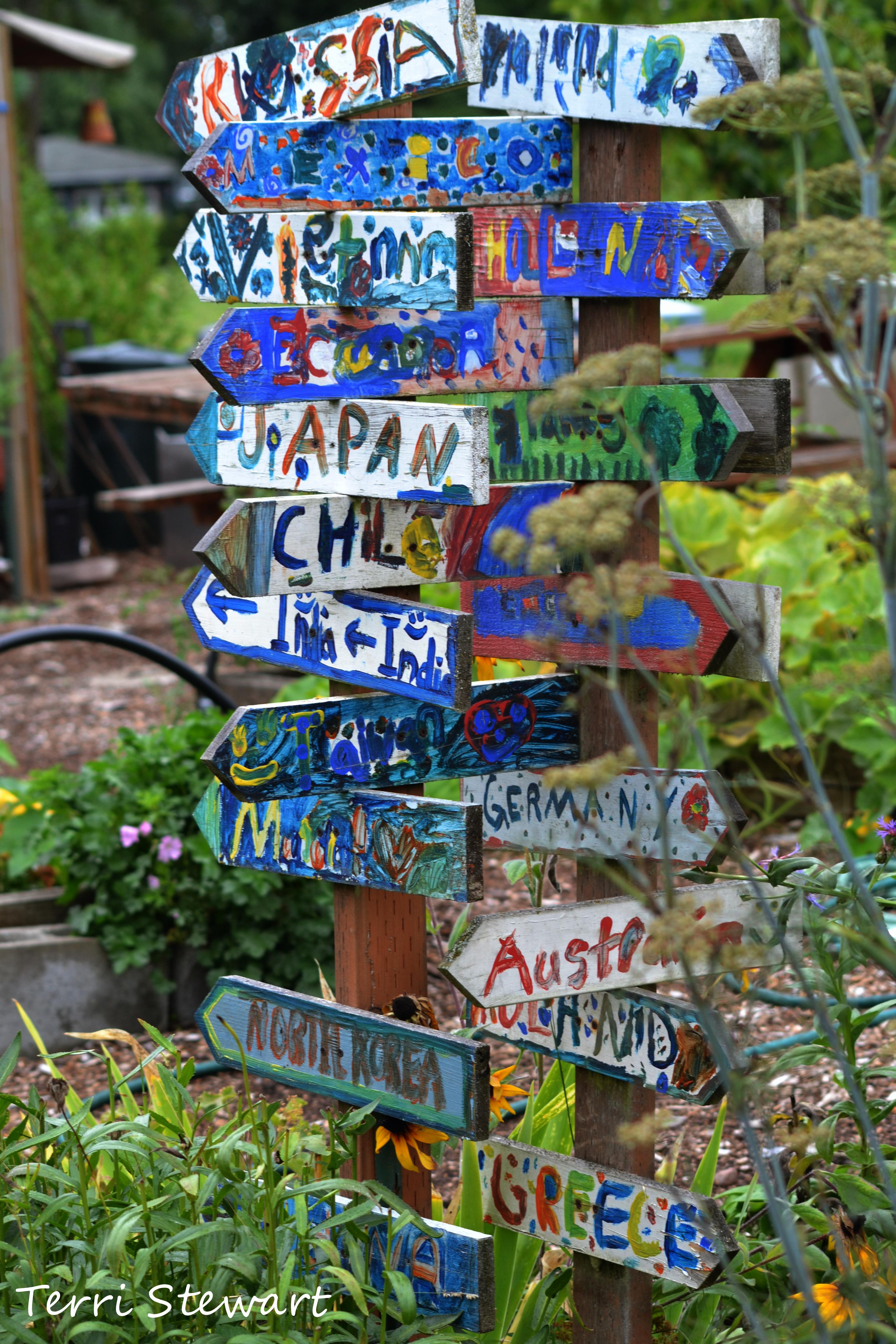
I have seen many things happening–prayer vigils, personal meditation practices, marches, and communications with elected officials. We decided to offer a Labyrinth Walk for Peace at Bothell UMC in Bothell, WA in the morning. I gathered inter-faith prayers, we walked, prayed, and focused on bringing peace to the world. What follows is prayers and photos from that journey that became deeply personal for each attendant. There was a certain transition that occurred for me as I took in my surroundings and noticed Farmer Brown’s Garden. I began to see, literally, a connection between peacefulness and being fed. You will see.
Entering Sacred Space
Sufi Prayer for Peace
Send Thy peace, O Lord, which is perfect and everlasting, that our souls may radiate peace.
Send Thy peace, O Lord, that we may think, act,
and speak harmoniously.
Send Thy peace, O Lord, that we may be contented
and thankful for Thy bountiful gifts.
Send Thy peace, O Lord, that amidst our worldly strife we may enjoy thy bliss.
Send Thy peace, O Lord, that we may endure all,
tolerate all in the thought of thy grace and mercy.
Send Thy peace, O Lord, that our lives may become a
divine vision, and in Thy light all darkness may vanish.
Send Thy peace, O Lord, our Father and Mother,
that we Thy children on earth may all unite in one family.
– Sufi Prayer
The Journey Begins

An Islamic Prayer for Peace
In the Name of Allah, the beneficent, the merciful: Praise be to the Lord of the Universe
who has created us and made us into tribes and nations that we may know each other,
not that we may despise each other.
If the enemy incline towards peace, do thou also incline towards peace, and trust in God,
for the Lord is one that hears and knows all things.
And the servants of God Most Gracious are those who walk on the Earth in humility,
and when we address them, we say, “Peace.”
– U.N. Day of Prayer for World Peace 2
Walking Together in Ubuntu

A Hindu Prayer for Peace
Supreme Lord, let there be peace in the sky and in the atmosphere.
Let there be peace in the plant world and in the forests.
Let the cosmic powers be peaceful.
Let the Brahman, the true essence and source of life, be peaceful.
Let there be undiluted and fulfilling peace everywhere.
– The Atharva Veda
All Are Invited to Be Fed

Cheyenne Prayer for Peace
Let us know peace.
For as long as the moon shall rise,
For as long as the rivers shall flow,
For as long as the sun shall shine,
For as long as the grass shall grow,
Let us know peace.
– Cheyenne Prayer
Feeding the World in Spirit and Deed
Farmer Brown’s Garden at Bothell UMC
A Jewish Prayer for Peace
Grant us peace. Your most precious gift,
O Eternal Source of Peace, and give us the will to proclaim its message to all the peoples of the earth.
Bless our country, that it may always be a stronghold of peace, and its advocate among the nations.
May contentment reign within its borders, health and happiness within its homes.
Strengthen the bonds of friendship among the inhabitants of all lands.
And may the love of Your name hallow every home and every heart.
Blessed is the Eternal God, the source of Peace.
– From The Gates of Prayer: The New Union Prayer Book, by the Central Conferences of American Rabbis
Growing Spiritually and Growing Food

Buddhist Prayer for Loving Kindness
May all beings be peaceful.
May all beings be happy.
May all beings be safe.
May all beings awaken to
the light of their true nature.
May all beings be free.
– Metta Prayer
Loving Kindness through Loving Care

A Christian Prayer for Peace
Blessed are the peacemakers, for they shall be called the children of God.
But I say to you that hear, love your enemies; do good to those who hate you;
bless those who curse you; pray for those who abuse you.
To those who strike you on the cheek, offer the other also;
and from those who take away your cloak, do not withhold your coat as well.
Give to everyone who begs from you, and of those who take away your goods,
do not ask them again. And as you wish that others would do to you, do so to them.
– U.N. Day of Prayer for World Peace 2
Becoming the Light Unto the World

A Non Traditional Prayer for World Peace
Spirit of Life and Love, be present with all who are suffering terribly from violence.
Lift up the hearts of those who fear. And inspire courage among the peacemakers.
Be present with political leaders, ensuring a retreat from violence
and a procession towards the peace table.
Guide the hands of all those who are caring for the injured, the hungry and the grieving.
And, open our own hearts to compassion.
Remind us of our complicity and responsibility.
And lead us towards generous engagement—always towards a vision of peace.
–Adapted from the Unitarian Universalist Tradition
Shalom and Amen,
Terri
…
© 2013, post and photos, Terri Stewart, All rights reserved
 REV. TERRI STEWART is our much treasured administrative lead for Bequine Again and The Bardo Group. She comes from an eclectic background and considers herself to be grounded in contemplation and justice. She is the Director and Founder of the Youth Chaplaincy Coalition that serves youth affected by the justice system. As a graduate of Seattle University’s School of Theology and Ministry, she earned her Master’s of Divinity and a Post-Master’s Certificate in Spiritual Direction. She is a contributing author to the Abingdon Worship Annual. (The 2014 issue just released!)
Her online presence is “Cloaked Monk.” This speaks to her grounding in contemplative arts and the need to live it out in the world. The cloak is the disguise of normalcy as she advocates for justice and peace. You can find her at www.cloakedmonk.com, www.twitter.com/cloakedmonk, and www.facebook.com/cloakedmonk. To reach her for conversation, send a note to cloakedmonk@outlook.com
war’s cold night…

in a darkened room
peace sits silently waiting
for sanity’s rise
This is the final post in our series on Peace and Justice, which we’ve presented as an virtual event for 100,000 Poets for Change. Please feel free to link in your own work. At least one of the team members will read and comment and the link will be included in a special commemorative page on this blog. You use Mister Linky below to add your work to ours or you may leave your link in the comments section. Thank you!
 CHARLES W. MARTIN (Reading Between the Minds) — earned his Ph.D. in Speech and Language Pathology with an emphasis in statistics. Throughout Charlie’s career, he maintained a devotion to the arts (literature/poetry, the theater, music and photography). Since his retirement in 2010, he has turned his full attention to poetry and photography. He publishes a poem and a photographic art piece each day at Read Between the Minds, Poetry, Photograph and Random Thoughts of Life. He is noted as a poet of social conscience. Charlie has been blogging since January 31, 2010. He has self-
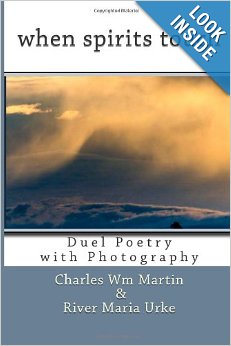 published a book of poetry entitled The Hawk Chronicles and will soon publish another book called A Bea in Your Bonnet: First Sting, featuring the renown Aunt Bea. In The Hawk Chronicles, Charlie provides a personification of his resident hawk with poems and photos taken over a two-year period. The newly published When Spirits Touch recently became available on Amazon.
A Mote of Dust Suspended in a Sunbeam

Carl Sagan (1934-1996)
American astronomer, astrophysicist, cosmologist, author and popularizer of natural and space science
CARL SAGAN was the David Duncan Professor of Astronomy and Space Sciences and Director of the Laboratory for Planetary Studies at Cornell University. He played a leading role in the American space program since its inception. He was a consultant and adviser to NASA since the 1950’s, briefed the Apollo astronauts before their flights to the Moon, and was an experimenter on theMariner, Viking, Voyager, and Galileoexpeditions to the planets. He helped solve the mysteries of the high temperatures of Venus (answer: massive greenhouse effect), the seasonal changes on Mars (answer: windblown dust), and the reddish haze of Titan (answer: complex organic molecules). MORE [The Carl Sagan Portal.
Video posted to YouTube by CarlSaganPortal.

Earth as seen from Apollo 17.
“A mote of dust suspended in a sunbeam . . . ” Carl Sagan
♥
Carl Sagan portrait courtesy of the Carl Sagan Planetary Society and in the Public Domain; Earth photo courtesy of NASA
This post is a part of our participation in 100,000 Poets – and Musicians, Artists and Activists – for Change. Details HERE. Our theme is Peace and Justice.We invite you to participate in this global event by linking in your work with ours. We’ll be collecting all the links in a commemorative page shortly after we close this project on October 3. You may use Mister Linky below or include your link in the comments section. Thank you!
__________________________________
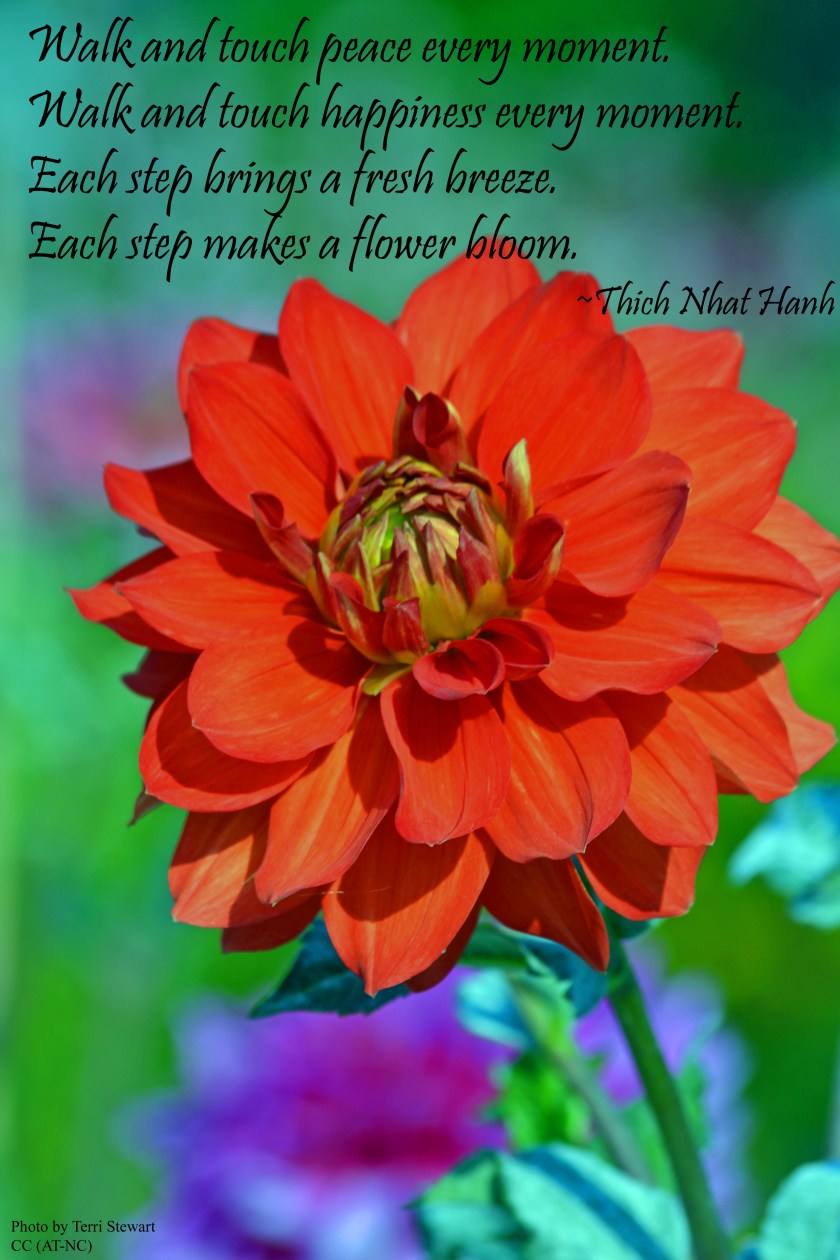
Entering the Sacred Space of Peacefulness
For 100,000 Poets for Change: A Movement for Peace and Sustainability. Please link in your own work! The info on this is below the photo/quote. Thank you!
Entering into a peaceful world requires one thing – a peaceful person. Me, to be exact. Or you. But each of us individually must travel the Via de Paz, the Way of Peace. I would like to invite you to literally walk the Via de Paz (or roll or stroll or whatever works for you).
Set your intention by saying, “I am here. I am present. I am going to walk the way of peace.” Breathe deeply, a few sustainable breaths, until your body is ready to go forward.
Now move and notice. As you begin to move, notice how your body feels. What are your senses telling you about your immediate experience of the world?
Now notice things outside yourself. Connect your senses to all that is outside of yourself. Notice what you are hearing, smelling, seeing, feeling. With each step, become aware of all that you can take in. Simply experience it. Leave judgment outside of the Via de Paz.
Experience unity by acknowledging life in its many forms.
Close your experience by returning to yourself and offering, “I am here. I am present. I am the way of peace.” Breathe deep, sustaining breaths, until you are settled and still. Offer respect and peace to the world in whatever way suits you. Perhaps Shalom, Salaam, Peace, Namaste, or Aloha!
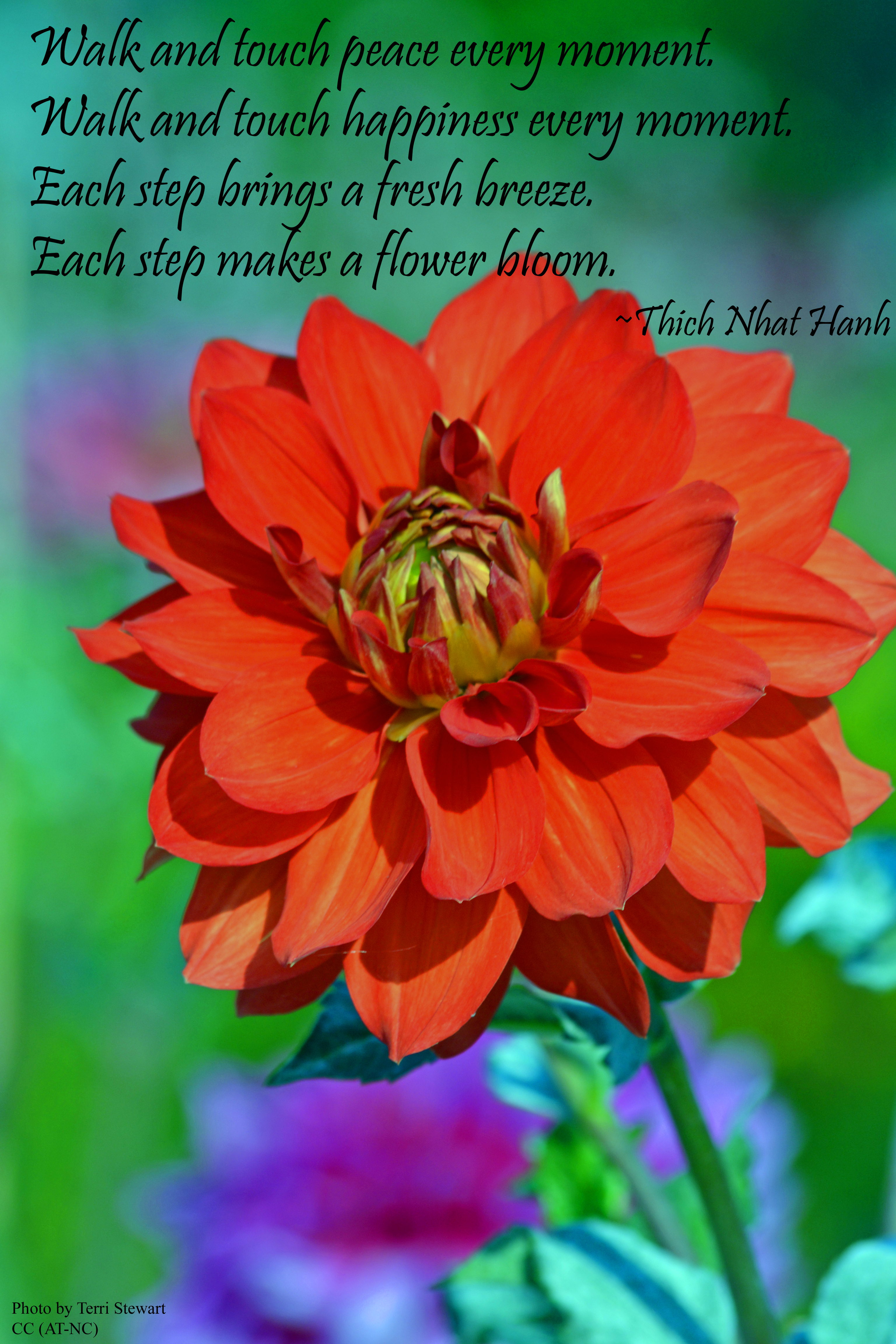
PEACE AND JUSTICE is our theme for the next seven days as we participate in a global event 100,000 Poets for Change
Please link in your own work here by using Mister Linky (just click on it) or by leaving your link in the comments section below. One of us will visit you then and we also plan to collect all the links shared with us to create a special commemorative page on this blog. You are welcome to share your work by linking in on any day or days during this event. Thank you! Let’s reimagine the world together. Our art has power …
Shalom,


on the ground of battle

FOR 100,000 Poets for Change; please link in your own work. The info on this is below the poem. Thank you!
it’s just your old soul and mine and
this intuition we share on the ground
of battle, witnessing the foment of hate,
anger feeding disenchantment in the street,
the acquisitive tendencies of the elite,
cowardly saber-rattling, cut off from authority,
from that innate expressively honest power
of our erotic selves, our instinctive selves,
the non-rational knowing that embodies
strength, nothing weak or pornographic
in its expression, a profound antithesis
to the pornography of war and hate that,
in the end, is about impotence, about an
emboli of narrow minds, grasping politicians
stirring tribal dissents for their own ends
or dropping bombs like a child bangs pots –
to overwhelm the fear of thunder, a game
of chicken, of a hawk-hawk play toward
a mutually assured destruction, just a
matter of time . . .
as we stand the ground of one another’s
battles where peace would be radical and
the unholy alliances of conflict might
burn themselves out, find their way into
calm, but here we are, once again, in thrall
the sociopaths have us bloodied and bound ~
their eyes in the aging face of a clockwork orange,
numb to the obscenities of maim and murder …
time now for change, for new ways to be in this world
“. . . and they shall beat their swords into plowshares, and their spears into pruning hooks: nation shall not lift up sword against nation, neither shall they learn war any more.” Isaiah 2:4
“I dream of giving birth to a child who will ask, ‘Mother, what was war?‘”Eve Merriam (1916-1992), American poet
© 2013, poem, Jamie Dedes, All rights reserved; illustration “Schwerter zu Pflugscharen (Swords Into Plowshares) bronze sculpture by Jewgeni Wutschetitsch, photograph by Neptuul under CC BY-SA 3.0
PEACE AND JUSTICE
is our theme for the next seven days as we participate in a global event:
100,000 Poets for Change
Please link in your own work here by using Mister Linky (just click on it) or by leaving your link in the comments section below. One of us will visit you then and we also plan to collect all the links shared with us to create a special commemorative page on this blog. You are welcome to share your work by linking in on any day or days during this event. Thank you! Let’s reimagine the world together. Our art has power …

RE: The Bardo Group
I have passed the administration of The Bardo Group blog to Terri Stewart (Beguine Again), effective October 4. The Beguine Again collaborative and The Bardo Group are coordinating a consolidation. The shared core value is nonviolence.
I remain as poetry liaison and member of the Core Team and with this post extend my appreciation to Terri Stewart for agreeing to take this effort on and to the rest of the Bardo Core Team and to the Beguine Again team and our many guest bloggers, contributing writers and our readers, followers and commenters for their heartfelt contributions to this effort since February 2011. You are a fabulous community of heros and saints.
Let’s continue our worthy traditions. Practice your artfullnes, live from your heart and never lose your ideals. They are real and I hope you will continue to share them here for a long time to come.
In spirit,

The Poet by Day.
Prayer as Action for Peace
Editorial note: This was originally written by Terri Stewart for Saturday, September 7, 2013, in response to a call for worldwide prayer and fasting to focus on peace in Syria. With all that is going on in the Middle East and given the Ukraine crises, the many conflicts in Africa and the deaths and dislocations resulting from drug wars in Central and South America, this seems a good time to post it again in the spirit of peace, love and community …
I have seen many things happening–prayer vigils, personal meditation practices, marches, and communications with elected officials. We decided to offer a Labyrinth Walk for Peace at Bothell UMC in Bothell, WA in the morning. I gathered inter-faith prayers, we walked, prayed, and focused on bringing peace to the world. What follows is prayers and photos from that journey that became deeply personal for each attendant. There was a certain transition that occurred for me as I took in my surroundings and noticed Farmer Brown’s Garden. I began to see, literally, a connection between peacefulness and being fed. You will see.
Entering Sacred Space
Sufi Prayer for Peace
Send Thy peace, O Lord, which is perfect and everlasting, that our souls may radiate peace.
Send Thy peace, O Lord, that we may think, act,
and speak harmoniously.
Send Thy peace, O Lord, that we may be contented
and thankful for Thy bountiful gifts.
Send Thy peace, O Lord, that amidst our worldly strife we may enjoy thy bliss.
Send Thy peace, O Lord, that we may endure all,
tolerate all in the thought of thy grace and mercy.
Send Thy peace, O Lord, that our lives may become a
divine vision, and in Thy light all darkness may vanish.
Send Thy peace, O Lord, our Father and Mother,
that we Thy children on earth may all unite in one family.
– Sufi Prayer
The Journey Begins
An Islamic Prayer for Peace
In the Name of Allah, the beneficent, the merciful: Praise be to the Lord of the Universe
who has created us and made us into tribes and nations that we may know each other,
not that we may despise each other.
If the enemy incline towards peace, do thou also incline towards peace, and trust in God,
for the Lord is one that hears and knows all things.
And the servants of God Most Gracious are those who walk on the Earth in humility,
and when we address them, we say, “Peace.”
– U.N. Day of Prayer for World Peace 2
Walking Together in Ubuntu
A Hindu Prayer for Peace
Supreme Lord, let there be peace in the sky and in the atmosphere.
Let there be peace in the plant world and in the forests.
Let the cosmic powers be peaceful.
Let the Brahman, the true essence and source of life, be peaceful.
Let there be undiluted and fulfilling peace everywhere.
– The Atharva Veda
All Are Invited to Be Fed
Cheyenne Prayer for Peace
Let us know peace.
For as long as the moon shall rise,
For as long as the rivers shall flow,
For as long as the sun shall shine,
For as long as the grass shall grow,
Let us know peace.
– Cheyenne Prayer
Feeding the World in Spirit and Deed
Farmer Brown’s Garden at Bothell UMC
A Jewish Prayer for Peace
Grant us peace. Your most precious gift,
O Eternal Source of Peace, and give us the will to proclaim its message to all the peoples of the earth.
Bless our country, that it may always be a stronghold of peace, and its advocate among the nations.
May contentment reign within its borders, health and happiness within its homes.
Strengthen the bonds of friendship among the inhabitants of all lands.
And may the love of Your name hallow every home and every heart.
Blessed is the Eternal God, the source of Peace.
– From The Gates of Prayer: The New Union Prayer Book, by the Central Conferences of American Rabbis
Growing Spiritually and Growing Food
Buddhist Prayer for Loving Kindness
May all beings be peaceful.
May all beings be happy.
May all beings be safe.
May all beings awaken to
the light of their true nature.
May all beings be free.
– Metta Prayer
Loving Kindness through Loving Care
A Christian Prayer for Peace
Blessed are the peacemakers, for they shall be called the children of God.
But I say to you that hear, love your enemies; do good to those who hate you;
bless those who curse you; pray for those who abuse you.
To those who strike you on the cheek, offer the other also;
and from those who take away your cloak, do not withhold your coat as well.
Give to everyone who begs from you, and of those who take away your goods,
do not ask them again. And as you wish that others would do to you, do so to them.
– U.N. Day of Prayer for World Peace 2
Becoming the Light Unto the World
A Non Traditional Prayer for World Peace
Spirit of Life and Love, be present with all who are suffering terribly from violence.
Lift up the hearts of those who fear. And inspire courage among the peacemakers.
Be present with political leaders, ensuring a retreat from violence
and a procession towards the peace table.
Guide the hands of all those who are caring for the injured, the hungry and the grieving.
And, open our own hearts to compassion.
Remind us of our complicity and responsibility.
And lead us towards generous engagement—always towards a vision of peace.
–Adapted from the Unitarian Universalist Tradition
Shalom and Amen,
Terri
…
© 2013, post and photos, Terri Stewart, All rights reserved
REV. TERRI STEWART is Bardo’s Sunday chaplain, senior content editor, and site co-administrator. She comes from an eclectic background and considers herself to be grounded in contemplation and justice. She is the Director and Founder of the Youth Chaplaincy Coalition that serves youth affected by the justice system. As a graduate of Seattle University’s School of Theology and Ministry, she earned her Master’s of Divinity and a Post-Master’s Certificate in Spiritual Direction. She is a contributing author to the Abingdon Worship Annual. (The 2014 issue just released!)
Her online presence is “Cloaked Monk.” This speaks to her grounding in contemplative arts and the need to live it out in the world. The cloak is the disguise of normalcy as she advocates for justice and peace. You can find her at www.cloakedmonk.com, www.twitter.com/cloakedmonk, and www.facebook.com/cloakedmonk. To reach her for conversation, send a note to cloakedmonk@outlook.com
The Garden of My Heart
With all the strife in the world now, it seems a good thing to post something healing and peaceful.

Thich Nhat Hanh (b. 1926) Zen Monk, Dharma Teacher, Social Activist, Writer, Poet, Peacemaker
Thich Nhat Hanh is now recognized as a Dharmacharya and as the spiritual head of the Từ Hiếu Temple and associated monasteries. On May 1, 1966 at Từ Hiếu Temple, Thich Nhat Hanh received the “lamp transmission”, making him a Dharmacharya or Dharma Teacher, from Master Chân Thật. MORE [Wikipedia]
Though a Zen Buddhist monk, Thich Nhat Hanh combines traditional Zen with techniques from Theravada Buddhism, the wisdom of the Mahayana tradition, and ideas of modern Western psychology to teach meditation and spiritual values and practices in a way that resonates for people from diverse religious, political, and cultural backgrounds. He is a writer, poet, and peacemaker with over one-hundred books published, many in English. He was suggested for the Nobel Prize for Peace by Dr. Martin Luther King, Jr. in 1967. He was nominated again 2013.
Since 1966, Thich Nhat Hanh has lived in exile. Based at Plum Village, a meditation community in the south of France, he is a leading Buddhist teacher, encouraging engaged Buddhism, a movement for social activism that he founded. He organizes and supports many worthwhile humanitarian efforts.
Thich Nhat Hahn coined the term “interbeing,” a pointer to the Buddhist principles of impermanence and non-self, which bring light to the idea and ideal of the inter-connectedness of all things. He founded The Order of Interbeing, the members of which include lay people. Link HERE to brief summaries of each of the fourteen mindfulness trainings of the Order of Interbeing.
“If in our daily lives we can smile, if we can be peaceful and happy, not only we, but everyone will profit from it. If we really know how to live, what better way to start the day than with a smile? Our smile affirms our awareness and determination to live in peace and joy. The source of a true smile is an awakened mind.” ~ from Peace is Every Step by Thich Nhat Hanh
Here is a meditative interlude. The title of this post is a quote from the meditation, which is an excerpt from an album called Graceful Passages: A Companion for Living and Dying. It features spiritual teachers from many traditions offering advice to the dying … in other words, advice to all of us.
 JAMIE DEDES (The Poet by Day)~I am a medically retired (disabled) elder and the mother of married son who is very dear. I started blogging shortly after I retired as a way to maintain my sanity, to stay connected to the arts and the artful despite being mostly homebound. My Facebook pages are: Jamie Dedes (Arts and Humanities) and Simply Living, Living Simply.
With the help and support of talented bloggers and readers, I founded and host The Bardo Group because I feel that blogging offers a means to see one another – no matter our tribe – in our simple humanity, as brothers and sisters and not as “other.”
“Good work, like good talk or any other form of worthwhile human relationship, depends upon being able to assume an extended shared world.” Stefan Collini (b. 1947), English Literary Critic and Professor of English Literature at Cambridge
A Day of Renewal
April showers bring May flowers, and I’m so glad! 🙂 The rains wash away the dirt and dust, and the new plants and flowers burst forth with a clean, green scent and gorgeous palette of colors!

Spring is a well-known time for renewal, and I recently discovered that May 4th has been designated as “Renewal Day”. Webster’s defines the word “Renewal” as:
re·new·al
noun \ri-ˈnü-əl, –ˈnyü-\
: the act of extending the period of time when something is effective or valid : the act of renewing something.
: the state of being made new, fresh, or strong again : the state of being renewed.
This can apply to countless things in life, but it is definitely life-affirming. It’s an active process, not something that just passively happens. When you think of the word “renewal”, what comes to mind? Your driver’s license? Your wedding vows? The Oil of Olay skin care product? What about renewing yourself?
The author of the book, “The Seven Habits of Highly Effective People”, Stephen Covey, says of balanced self-renewal: “Renewal is the principle–and the process-that empowers us to move on an upward spiral of growth and change, of continuous improvement.”

Three of the most important aspects of life that need renewing from time to time are related to self: body, mind and spirit. Like so many truths about life, there needs to be a balance of all three. Too often, we become conditioned to the routine of every day survival and forget that sense of wonder and passion we once held for life. People talk about finding your “inner child” again, and while that’s a good start, I mean the capacity to actually enjoy the life we’re given, each and every, single day. Because each day is a new chance to start over. We can renew ourselves every day!
It’s so easy to become inattentive. We neglect our bodies because we simply don’t have the time to exercise, eat right, etc., or we don’t pay attention to what we allow to enter our minds because we’re so tired that it’s just easier to veg-out. The spirit often suffers even more, unless it’s somehow made a regular part of every-day life.
- When was the last time you felt completely at ease with and positive about your body?
- When was the last time you were truly amazed by something or someone out in the world, or learned something new that fascinated you?
- How about the last time that you honestly felt connected with the planet, the universe, the Divine?

All three (body, mind, spirit) are intricately joined, and balance between them is important. It can be hard to find the energy sometimes, to look for the things which replenish and renew us, but it’s necessary. If you’re not getting at least a little joy, happiness or even satisfaction out of life, then you’re not living, you’re existing. There’s a huge difference between the two.
So what is it that renews your body, mind and spirit? It’s different for each individual, of course, but a good place to start is to find something that evokes a positive feeling or emotion. What’s something that fuels your passion? What makes you smile? Sometimes it’s necessary to break out of your comfort zone, break out of your routine and try something new. Make a commitment to renewing yourself, even if it’s just part of you. You’ll be glad you did.

P.S. You don’t have to wait for an “official” designated “Day of Renewal” to do it. Every day you wake up is another chance to renew yourself. 😉
– Corina Ravenscraft
© 2014, essay and rose photograph, Corina Ravenscraft, All rights reserved
 About dragonkatet Regarding the blog name, Dragon’s Dreams ~ The name comes from my love-affairs with both Dragons and Dreams (capital Ds). It’s another extension of who I am, a facet for expression; a place and way to reach other like-minded, creative individuals. I post a lot of poetry and images that fascinate or move me, because that’s my favorite way to view the world. I post about things important to me and the world in which we live, try to champion extra important political, societal and environmental issues, etc. Sometimes I wax philosophical, because it’s also a place where I always seem to learn about myself, too, by interacting with some of the brightest minds, souls and hearts out there. It’s all about ‘connection(s)’ and I don’t mean “net-working” with people for personal gain, but rather, the expansion of the 4 L’s: Light, Love, Laughter, Learning.
The Very Picture
The king was plagued with the heavy burden of responsibility. “Drought and famine, war and rebellion, disease and disaster, one after the other! I must find a way to quiet my troubled heart, so I can sleep at night!” He offered a reward to the artist who could paint him a picture of perfect peace. Artists came from all over the kingdom, each bringing his own vision of peace.

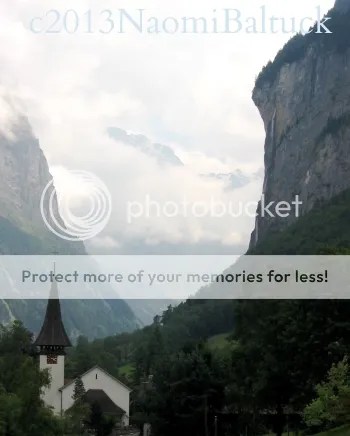
One painted a sheltered mountain valley.
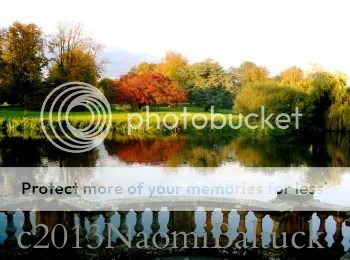
Another a pristine lake, still and calm, a perfect mirror to reflect a clear blue sky.
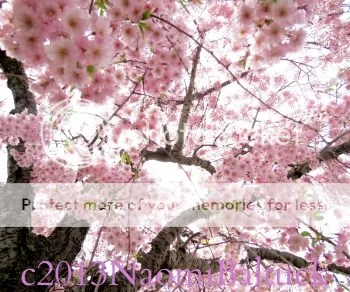
There was an orchard in full bloom.
Fluffy clouds with silver linings.

Cheerful sunny days.

And so many sunsets!

The king studied them all, and at last he decided. He chose a painting of a waterfall, tumbling down a mountainside, beneath a dark, angry sky.

“But your majesty,” said his counselor. “Why this painting? This is a portrayal of chaos.”
“Look closely,” said the king. He pointed to a sheltered spot behind the waterfall, where there was a ledge between the jagged rocks. Upon that ledge a mother bird had built her nest. Snuggled beneath her wings, safe and warm, were her precious chicks.
“I understand now,” said the king. “Peace happens not only where there is an absence of strife and suffering. In the midst of chaos, if there is calm in your heart, will you know the true meaning of peace.”

(Mrs. Bradford Ripley and Her Children, 1852. By Robert Walter Weir, Detroit Institute of Art)
(Sculpture for his friend Robert Arthur by Samuel Murray, Detroit Institute of Art)
Copyright 2013 Naomi Baltuck

 NAOMI BALTUCK ~ is a Contributing Editor and Resident Storyteller here
 at Bardo. She is a world-traveler and an award-winning writer, photographer, and story-teller whose works of fiction and nonfiction are available through Amazon HERE. Naomi presents her wonderful photo-stories – always interesting and rich with meaning and humor – at Writing Between the Lines, Life from the Writer’s POV. She also conducts workshops such as Peace Porridge (multicultural stories to promote cooperation, goodwill, and peaceful coexistence), Whispers in the Graveyard (a spellbinding array of haunting and mysterious stories), Tandem Tales, Traveling Light Around the World, and others. For more on her programs visit Naomi Baltuck.com
A Second Spiritual Experience – Part Two
During this time in November of 2005 I communed with a Great Horned Owl and a Red-Tailed Hawk each who each resides in Forest Park. One evening I was meant to take to the hawk, as an act of thanks, a chicken wing and place it upon a particular iron waist-high pole on the edge of the ball fields. It was Friday night. My husband kindly came with me to Straub’s the family grocery where I shop. He hung back a bit somewhat embarrassed. On Friday night the place is mobbed. So, I got in line at the butcher’s counter and waited until my turn. There was a long wait. When it was finally my turn I ordered one chicken wing. Everyone else in line hearing my request went nuts: “one chicken wing!” Well no, actually, “just a half of a wing I did not want the drummie.” People were looking at me in utter disbelief, as though I had wasted their collective time with purpose. Once I had the wing I left for the park. The problem there was that there were police everywhere. It looked as though I was putting some garbage on a post. But, I fulfilled the task and had no encounters with local law enforcement. Aside from my request to God, the other thing that initiated my experience was my long conversation with a Vietnam Veteran.
What this experience in its entirety did for me; was to give to me the actual feelings that many war veterans experience during their times in war. You might wonder: “how could that possibly be?” I suspect that I was meant to feel what many soldiers felt during war, because I would later work with them at the VA. For all of my life, veterans were persons to be thought of on Memorial Day and on Veteran’s day, period. I was conceived immediately after WWII. So, my relation to veterans was not unusual. After my experience in which I sensed the emotional torment of those who have seen battle I was radically changed. I studied war. I volunteered at the VA for several years and I gained a healthy respect and love for our country’s veterans. I might add I truly gained a deep respect and love for Vietnam Vets as they are of my generation. I also acquired abhorrence for war. I truly came to understand “love the warrior, hate the war.” Most cannot enter into that cliché and act upon it. It is very tricky and very difficult for it is so political. But my experience lacked all political thought or sense.
The other thing that I did was write about 20 poems about war, veterans, acts of war … really anything that came out of my experience that year. My first poem titled: “A Certain Madness.” It came about during one particular writing class that I taught at the VA. The poem follows.
A Certain Madness
Each one came, soldier, marine, airman, frog, walking quietly as if wrapped within the cocoon of his own world.
War’s sad energy like a gray, heavy mist lay upon the shoulders of each, reality spiking their dull black piercing shadows.
Each man sat at the table abandoned. “Just a word? Coffee please. May we write yet?”
And then he stood. A large and heavy presence, poorly balanced.
He shouted: “Don’t you see them? There, in the corners … there is one in each corner.”
“How dare they come here? I ought-a know. I was with the CIA.”
Then he sat down defeated, again. He seemed to relax until another stream of madness crept out of his throat.
“I will NOT be giving you a sample today! There will be no writing samples. THEY … are here for that reason you know, to collect them.”
And I thought to myself: “Does the madness hide the pain? Or perhaps this pain drives one mad.”
© Liz Rice-Sosne
 LIZ RICE-SOSNE a.k.a. Raven Spirit (noh where), perhaps the oldest friend to Bardo, is the newest member of The Bardo Group Core Team. She is also our new Voices for Peace project outreach coordinator and our go-to person for all things related to haiku. She says she “writes for no reason at all. It is simply a pleasure.” Blogging, mostly poetry, has produced numerous friends for whom she has a great appreciation. Liz is an experienced blogger, photographer and a trained shaman. We think her middle name should be “adventure.”
A Second Spiritual Experience – Part One
I feel privileged to be in the company of those who write here upon The Bardo. It is an honor. Though untrue, I often feel as though we write together. That is comforting to me.
Spiritual experiences are by their very nature exceptionally private. They can be difficult to speak of due to that private nature and due to the lack of an adequate lexicon. I am not terribly private. So, I would like to share one of my own experiences with you, as it radically changed my life. It was 2005 and I had been retired for two years. I served on several boards as a volunteer but otherwise I was bored. So I will say to you before you read further – do not be offended by anything that I say. This is a personal experience. I am not proselytizing nor would I ever. I am merely sharing.
I have never served in the military and I have never been to war. The closest I came was in 1967-8 when formerly married and living on Okinawa, close to the war in Vietnam. But that experience bears no relation to this experience. This experience of which I speak was the second life changing spiritual experience that I have had within my lifetime. The first was Christian in nature in 1973.
This life-changing experience came to me via my plea one day to God: “What do you want me to do? What should I do now?” At about the same time I began an ongoing conversation with a Vietnam Veteran, a former B-52 Bomber Pilot. The experiences that followed were all a part the answer to my question. This experience was shamanic in nature. Shamanism is something that I studied in the 80s and 90s. This experience lasted about 6 weeks, it appeared to many that I might be having a “nervous breakdown.” My friends were worried. My husband trusted me but worried nonetheless. The experience was very dramatic, very painful and most ecstatic. I knew that I was doing exactly what I was meant to do. None-the-less, I hung on for dear life. It was extremely hard to remain grounded. To do so I engaged the services of three different people, a body-worker, an exercise therapist and a counselor. I remember and will recount one particularly humorous thing that happened. Tomorrow.
LIZ RICE-SOSNE a.k.a. Raven Spirit (noh where), perhaps the oldest friend to Bardo, is the newest member of The Bardo Group Core Team. She is also our new Voices for Peace project outreach coordinator and our go-to person for all things related to haiku. She says she “writes for no reason at all. It is simply a pleasure.” Blogging, mostly poetry, has produced numerous friends for whom she has a great appreciation. Liz is an experienced blogger, photographer and a trained shaman. We think her middle name should be “adventure.”
Peace on Earth
In December, I reblogged a series of posts acknowledging the free gifts that are available to humanity every day. The idea was to approximate an Advent calendar, opening a door to reveal a treasure each day as a count down to Christmas. This one was first published on the 23rd day of the month. — scillagrace
It is Day #23 in the December countdown. Today’s gift is Peace. Ahh, peace. Take a deep breath. Relax the muscles around your skull; feel your ears and eyebrows pull backward; close your eyes and roll your head. Do you feel a sense of well-being? Julian of Norwich claims that God himself spoke these often quoted words to her, “All shall be well, and all shall be well, and all manner of thing shall be well.” Do you believe that’s true? Do you believe that’s possible? I do, although I don’t always act as though I do. I forget.
Wikipedia uses these phrases to define peace: “safety, welfare, prosperity, security, fortune, friendliness… a relationship between any people characterized by respect, justice and goodwill… calm, serenity, a meditative approach”. Where does peace come from? Buddha, the Dalai Lama and many others will tell you that peace comes from within, not without.
“The first peace, which is the most important, is that which comes within the souls of people when they realize their relationship, their oneness with the universe and all its powers, and when they realize that at the center of the universe dwells the Great Spirit, and that this center is really everywhere, it is within each of us.” – Black Elk
But perhaps, there are things outside of you that will remind you of the peace which dwells within you.
“Climb the mountains and get their good tidings. Nature’s peace will flow into you as sunshine flows into trees. The winds will blow their own freshness into you, and the storms their energy, while cares will drop away from you like the leaves of Autumn.” – John Muir

Do you feel peace in your mind and body and soul all at once? Do you descend into peace from your head down?
“I do not want the peace which passeth understanding, I want the understanding which bringeth peace.” – Helen Keller
I suppose each of us must find his/her own journey into peace. Anxieties and conflicts are particular and personal. Facing each one head-on is not a passive task. Making peace is not for the weak of heart. “Blessed are the peacemakers, for they shall be called children of God.” Is God about making peace? Is making peace the work of the Universe? Is it perhaps that joyful effort that gives life meaning?
“Peace is not merely a distant goal that we seek, but a means by which we arrive at that goal.” – Martin Luther King, Jr.
If we can make peace between ourselves and God, ourselves and Nature, can we then make peace between ourselves and others?
“If we are peaceful, if we are happy, we can smile and blossom like a flower, and everyone in our family, our entire society, will benefit from our peace.” – Thich Nhat Hahn
“What can you do to promote world peace? Go home and love your family.” – Mother Theresa
Steve constantly reminds me that in every situation, especially in those which cause anxiety and conflict to arise, I have 3 choices. I can hide/run away. I can try to change the situation. I can change myself. The first option doesn’t exactly make peace; it simply avoids confrontation. You can hide away all day long and still feel the fear of whatever it is that scared you. So, why do I often employ that choice? Because I lack courage and I’m lazy. I sometimes pick that choice first to give me time to screw up my will and motivation. I don’t want to get stuck there, though.
Trying to change the situation requires engagement. Making peace with hunger, poverty, sickness, and distress this way requires an understanding of causes and effects on all different levels. It requires negotiation, and it requires cooperation. You don’t always get all that is required to change a situation. Not all situations can be changed. Death is the big one that comes to mind here. You can’t hide or run away from it, and you can’t change the situation so that you don’t have to experience it. Now what?
Change yourself. Sometimes the only way to make peace with something is to change your thinking, your belief, your approach, your attachment, your aversion, your ignorance or some other aspect of yourself. “If you can’t beat ‘em, join ‘em!” is the simplistic way to say it. If you’d “rather fight than switch” (old cigarette commercial – pop philosophy at its finest), then you have chosen to fight, not to make peace. Our egos make it really tough to change ourselves. Sometimes we’d rather fight, sometimes we’d rather die, sometimes we’d rather do anything than change ourselves. You have to ask yourself very seriously what your ultimate goal is to get past this one. Is your goal to keep your ego intact or is your goal to make peace? I’ve come across a lot of phrases that address this ego dilemma: “take up your cross”, “turn the other cheek”, “deny yourself”, “die to self”. I think that dogma is probably more an ego thing than a peace thing. If you can’t let go of your religious beliefs in the interest of peace, then your religion is more about yourself than it is about God, in my humble opinion. I love the part of the movie “Gandhi” where he counsels a Hindu man who is distraught at having murdered a Muslim child. “Raise a Muslim child and make sure you raise him as a Muslim, not as a Hindu. This is the only way you can purge your sins.” This is true wisdom about peace.
Give peace a chance. It requires your will, it requires your strength, and it requires you to lay aside will & strength. I am looking forward to enjoying the peace that my family and I have created. We are still creating it, and will be our whole lives long.
– Priscilla Galasso
© 2013, essay and photograph, Priscilla Galasso, All rights reserved
 PRISCILLA GALASSO ~ started her blog at scillagrace.com to mark the beginning of her fiftieth year. Born to summer and given a name that means ‘ancient’, her travel through seasons of time and landscape has inspired her to create visual and verbal souvenirs of her journey.
Currently living in Wisconsin, she considers herself a lifelong learner and educator. She gives private voice lessons, is employed by two different museums and runs a business (Scholar & Poet Books, via eBay and ABE Books) with her partner, Steve.
I Want To Make It Sane Again
 what must it be like for you in your part of the world?
there is only silence, I don’t know your name, i know only
that the fire of life makes us one in this, the human journey,
search and return, reaching for the sun, running through mud
walking the gauntlet without a prayer or a blessing
our eyes meet in secret, our hearts open on the fringe,
one breath and the wind blows, one tear and seas rise,
on the street where you live, your friends are all gone
the houses are crushed and the doves have flown
there is only silence, no children playing, no laughter
here and there a light remains to speak to you of loneliness,
my breath caught in my throat, i want to make it sane again
“Sometime they’ll give a war and nobody will come.”
Carl Sandburg (1878-1967), American poet, writer, and editor
– Jamie Dedes
©2013, poem, Jamie Dedes, All rights reserved, Photo courtesy of morgueFile
 JAMIE DEDES (The Poet by Day)~ I am a mom and a medically retired (disabled) elder. The graces of poetry, art, music, writing and reading continue to evolve as a sources of wonder and solace, as a creative outlet, and as a part of my spiritual practice.
celebrating the intention of Nelson Mandela as a new year’s resolution
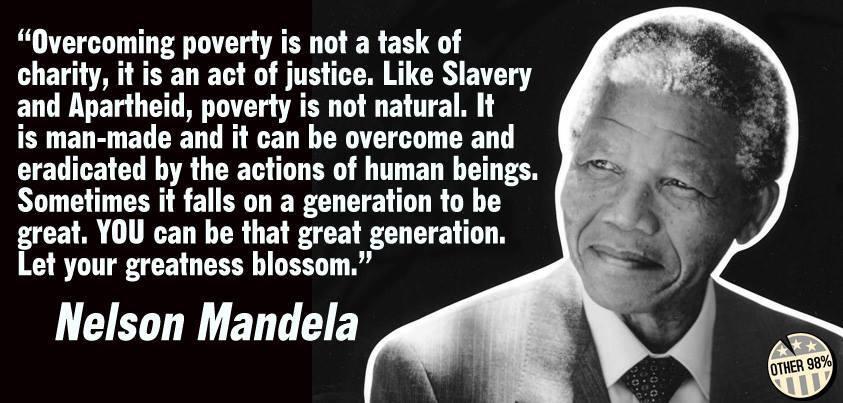
Last year saw the loss of a great man and a widening of the world-wide gap between the few haves and the many have-nots, an injustice and a certain recipe for unrest. As we celebrate the birth of a fresh new year today, we also celebrate the man, Nelson Mandela, and his ideas. Poverty creates its own apartheid.
Over the course of the few next days, The Bardo Group will deliver posts that honor the man and second his ideals as a reminder of the need to be resolute, to continue Nelson Mandela’s fight for balance, justice and equality of opportunity.
Nelson Mandela’s Speech on Poverty (2005) 9 min.
May all mothers and their children have
food, housing, healthcare, education, freedom of spiritual practice, peace and safety.
May open hands and open hearts reign.
MAY GREATNESS BLOSSOM IN 2014
The Bardo Group Core Team
John Anstie
Naomi Baltuck
Terri Stewart
Corina Ravenscraft
Jamie Dedes
Josepth Hesch
Karen Fayeth
Victoria C. Slotto
Liz Rice-Sosne
Michael Watson
Niamh Clune
Priscilla Galasso
Lily Negoi
Charlie Martin
 The BeZine
