Posted in General Interest, Jamie Dedes, poem, Poems/Poetry, poetry

A Madwoman, A Madonna, A Medusa

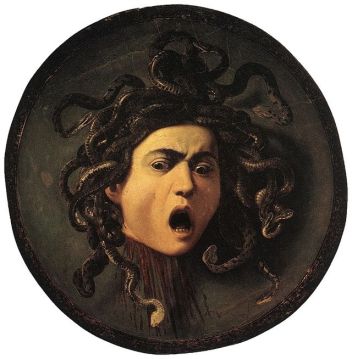
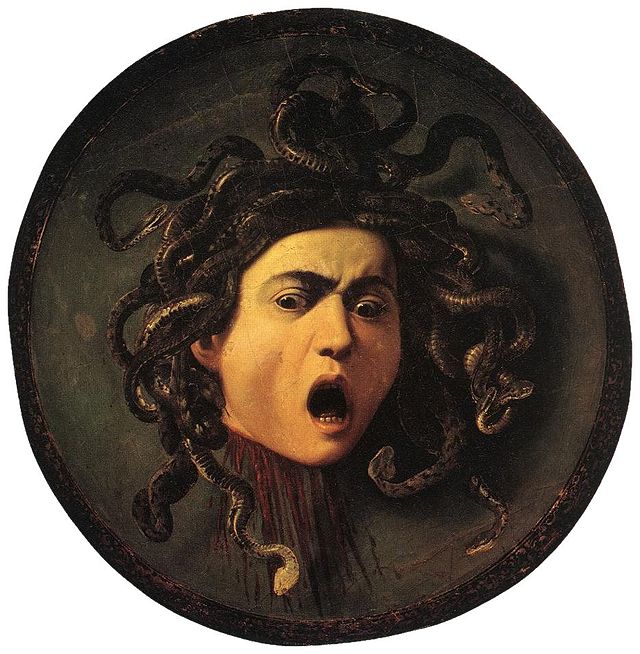
640px-Medusa_by_Carvaggio-1What’s it to me?
A knotted and nasty old poet of introverted time
wearing five-dollar sweats
dressing in black on black,
silver earrings tinkling softly in the winter breeze
What’s it to me? …

A Madwoman, A Madonna, A Medusa
Traipsing neighborhood streets, city parks, country lanes
Nibbling on sharp yellow cheese and glossy red apples
Sitting down on some wayward curb to sigh in wonder at
noisy birds, children, wizened old men, whiskered grandmothers
Dogs walking their humans by the side of the road
Feral cats scratching a living of pigeon stuffed with stale bread

Muttering, muttering, whispering, watching, writing
Writing long poems and short about what it was to be us
through clocked days trapped in pointless, punctilious youth
Enjoying now the wild, gnarly randomness of life
and the music of our dusty blue souls jingling as we walk …
What’s it to me? What’s it to this so lately untamable me?

© 2013, poem and photographs, Jamie Dedes, All rights reserved; “Medusa” is in the public domain

Photo on 2014-03-31 at 17.16 #3unnamed-18JAMIE DEDES (The Poet by Day)~I am a medically retired (disabled) elder and the mother of married son who is very dear. I started blogging shortly after I retired as a way to maintain my sanity, to stay connected to the arts and the artful despite being mostly homebound. My Facebook pages are: Jamie Dedes (Arts and Humanities) and Simply Living, Living Simply.

With the help and support of talented bloggers and readers, I founded and host The Bardo Group because I feel that blogging offers a means to see one another – no matter our tribe – in our simple humanity, as brothers and sisters and not as “other.”

“Good work, like good talk or any other form of worthwhile human relationship, depends upon being able to assume an extended shared world.” Stefan Collini (b. 1947), English Literary Critic and Professor of English Literature at Cambridge

Posted in General Interest, Naomi Baltuck, Photo Essay, Photography/Photographer

Breaking Up is Hard to Do


Sixty, maybe seventy years ago my father gave a turquoise blown-glass dinnerware set to his mother, my Grandma Rose.  She called it her “mowt-blown china.”   At antique stores I’ve seen similar glassware, said to be from Mexico.

Grandma gave it to my brother Lew, who gave it to me. Every time I used those dishes, I felt a connection to Daddy and Grandma too.

More fragile than china, they came out mostly for birthdays, Valentine’s Day, or sci-fi dinner parties.


Thom and I were newlyweds when I gave him a mug bearing an excerpt from Rilke that we’d borrowed for our marriage vows.
“For one human being to love another is perhaps the most difficult of all our tasks, the ultimate, the last test and proof, the work for which all other work is but preparation.


Thom had already learned that lesson the hard way. Before we met I’d had a fear of commitment. I was so afraid of getting stuck or worse, abandoned, that I rarely went on more than a couple dates with anyone. I carried my own walking papers in my back pocket and I wasn’t afraid to use them.

Then came Thom. Poor Thom. Dear Thom. Courageous Thom.

He could take it on the chin, and grin.

He was wise enough to perceive the pattern and understand what I was doing even before I did. He was gentle and patient. He taught me how to fight fairly and work things out instead of just dumping guys in general, and him in particular. He taught me that it was okay to ask for what I want, how to negotiate, and not to expect others to be able to read my mind. He taught me that I could be myself and still be loved. He taught me that there were men out there who can be counted on, and that I could count on him. Thom deserves combat pay for sticking it out long enough for me to realize I didn’t want to make him go away after all. And so I stopped trying. Best decision I ever made.

So what do these vessels have to do with Thom and me, or anything at all?

Almost thirty years ago a dear friend, who may or may not have been related, was visiting and washed the dishes.

Putting them away, she stacked the elegant glass cup inside the Love Mug. Try as we might, we could not pry them apart. We tugged and twisted, but were so afraid of breaking either piece that we gave up. I couldn’t bear to throw them out, so they lived here for the next twenty-five plus years.

It is both appropriate and a little poetic that the same person, without whom there would be no story, was also present for its unexpected conclusion.

A year or two ago, I rediscovered the inextricable pair in the back of the cupboard. I decided, once and for all, to mend it or end it. It was like asking a husband to choose between the life of the mother or the child, which is why I’d put it off for so long. I finally opted to save the heirloom glass, if possible, which was stuck inside the mug. I told that dear person, who shall remain unnamed, that I’d take a hammer to the mug, if necessary; if the glass were to break as well, so be it.

But I’ve learned a little grease applied judiciously can go a long way. We drizzled oil in between and pulled, hoping the glass would slide out. It did not.

We went back to simple lessons learned in high school science. Heat expands and cold contracts. While soaking the outside of the mug in boiling water, we filled the glass with ice water. Still the glass stuck tight. So it came down to the last resort. Holding the mug by the handle, I whacked it on the countertop, hoping it would shatter. Pop! Out came the glass, in perfect shape, and I had my morning coffee in the Love Mug.

There are several morals to this story.

First of all, no one can tease me any more for hanging on to the glass and the mug all those years. Pay attention to your instincts!

Secondly, you might actually learn something in science class that you can apply to real life (and don’t forget that bit about the grease.)

Thirdly, breaking up is hard to do, but sometimes you just reach a breaking point, where you need to mend it or end it.

Fourthly, once you try everything you can think of, try everything you can’t think of. Sometimes you have to try everything all at once. But if it’s something worth saving, it’s worth the effort.

Love is like that. Thank goodness.

All images and words c2014 Naomi Baltuck

NaomiPHOTO1-300ppi51kAqFGEesL._SY300_NAOMI BALTUCK ~ is a Contributing Editor and Resident Storyteller here410xuqmD74L._SY300_ at Bardo. She is a world-traveler and an award-winning writer, photographer, and story-teller whose works of fiction and nonfiction are available through Amazon HERE. Naomi presents her wonderful photo-stories – always interesting and rich with meaning and humor – at Writing Between the Lines, Life from the Writer’s POV. She also conducts workshops such as Peace Porridge (multicultural stories to promote cooperation, goodwill, and peaceful coexistence), Whispers in the Graveyard (a spellbinding array of haunting and mysterious stories), Tandem Tales, Traveling Light Around the World, and others. For more on her programs visit Naomi Baltuck.com

Posted in General Interest, Naomi Baltuck, Photo Essay, Photography/Photographer

Tempest in a Teapot

When my daughter Bea and I were in England, I took her to the picturesque little town of Rye.


Rye was a Cinque Port, charged in 1155 by Royal Charter to provide ships for the royal navy, and rewarded with tax-exempt status and other privileges.

Rye was situated on the coast until The Great Storm of 1287 silted the harbor, and transformed the coastal port into a river port, two miles inland.

The town’s history is colorful, with smuggling, and raids by and against the French, just across the Channel. It’s also said to be the most haunted town in England. There’s the ghost of the girl who fell in love with a smuggler and was murdered by him for her indiscretion.  Turkey Cock Lane is haunted by the ghost of the monk bricked up alive behind a wall for trying to elope with a local lass. The mysterious boy wrapped in a shroud, and a pair of duelers reenacting their last fatal sword fight are just a few of the ghosts who frequent The Mermaid Inn.   So many stories!

Every house has a story.   In Rye, as with everywhere else in England, they like to give their houses a name.  White Vine House was very pretty.

On a narrow cobbled lane called Mermaid Street stands The Mermaid Inn, which dates back to 1156.

 It was remodeled in anticipation of a visit from Queen Elizabeth I.  On a previous trip, I stayed at The Mermaid in a room with a plaque on the door boasting that the Queen Mum had once spent the night in that very room.  I think I can truthfully say I have slept in the same bed, looked out the same window and, at least for a little while, sat on the same throne as Queen Elizabeth II’s mum!

The Mermaid Inn was so famous that the house across the street was known simply as “The House Opposite.”


We discovered an unusual house, with two front doors.  The owners called it, “The House With Two Front Doors.”  (Well, of course, they did!)  They even had the name painted on it in shiny gold paint.

The neighbors who lived next to The House With Two Front Doors also had a house with one distinguishing feature, a bench built into one side of the porch.  Maybe they thought the neighbors were getting too high and mighty, with their spiffy gold-painted signs and their highfalutin name.  In what seems a clear case of one downmanship, they too gave their house a name, and put up their own sign to let passersby know they were looking at “The House With the Seat.”

I want to know all the stories–big ones like The Great Storm that changed the whole coast of England overnight, compelling but heartbreaking ones like the Mary Stanford Lifeboat Disaster, in which the entire heroic rescue crew was drowned in a storm, trying to save survivors of a shipwreck who had already been saved.  Some of my favorite tales are the Tempests in the Teapots.  Those you won’t find in tour guides or history books, but you might be fortunate enough to stumble upon one.  A local told us stories about watching the filming of Cold Comfort Farm in Rye.  Afterwards we took afternoon tea in the teahouse where one scene was filmed.

Stories live all around us. Some fall into our lap like ripened fruit from a tree.  Others are hiding in nooks and crannies, waiting to be ferreted out.  Often we are left to speculate over the missing details–not unlike trying to read tea leaves in the bottom of the tea cup.  Who hid in the priest hole over the fireplace at The Mermaid Inn?  Who was left to mourn the seventeen lads lost in the Mary Stanford disaster?  Do the occupants of The House With Two Front Doors and those of The House With the Seat ever sit down together for a cup of tea?

All images and words c2013 by Naomi Baltuck

NaomiPHOTO1-300ppi51kAqFGEesL._SY300_NAOMI BALTUCK ~ is a Contributing Editor and Resident Storyteller here410xuqmD74L._SY300_ at Bardo. She is a world-traveler and an award-winning writer, photographer, and story-teller whose works of fiction and nonfiction are available through Amazon HERE. Naomi presents her wonderful photo-stories – always interesting and rich with meaning and humor – at Writing Between the Lines, Life from the Writer’s POV. She also conducts workshops such as Peace Porridge (multicultural stories to promote cooperation, goodwill, and peaceful coexistence), Whispers in the Graveyard (a spellbinding array of haunting and mysterious stories), Tandem Tales, Traveling Light Around the World, and others. For more on her programs visit Naomi Baltuck.com

Posted in Victoria C Slotto, Writing

Writer, READ!

Photo: NPR.org
Photo: NPR.org

Every writer knows the importance of reading and the impact it has on our own skills. Because I write literary fiction and poetry, I gravitate towards the same in my reading choices. However, I’ve discovered that it’s critical to pay attention to what is going on in life at the moment and plunge into different genres to achieve some sort of balance.

Here’s an example. A few years ago, I began to read the novel “Still Alice,” by Lisa Genova. Beautifully written and intense, it’s the fictional story of a brilliant woman’s descent into dementia. The reading group I attend here in the desert was to discuss it at its next meeting. However,I knew I didn’t have the psychic energy to continue. Although I had worked with dementia my entire nursing career and have,myself, written a flash fiction piece from the first person point of view of a woman with dementia, I was at the time immersed in dealing with a loved one with Alzheimer’s–my now 93-year-old mother. I simply couldn’t bear the sadness.

Since then, I have read the book two times; I took it to my Reno book club and led the discussion. I recommend it to many since it puts you in the mind of the person who has dementia as she progresses through the disease. (The author is a neuroscientist with keen insight into the subject.)

Now I enjoy reading the classics,trying to uncover what it is that makes them so timeless. In between, I’ll download something mindless–a good mystery or, rarely, a romance. It’s important to read great writing to enhance our own skills, but even when it’s less than stellar–isn’t it fun to critique?

One of the downsides of writing has, indeed, become the tendency to evaluate writing instead of simply enjoying the experience. But, read on, take note of style winners and losers and learn!

Happy writing. Enjoy the process.

© 2014, poem, Victoria C.Slotto, All rights reserved

2940013445222_p0_v1_s260x42034ff816cd604d91d26b52d7daf7e8417VICTORIA C. SLOTTO (Victoria C. Slotto, Author: Fiction, Poetry and Writing Prompts) ~ is an accomplished writer and poet. Winter is Past, published by Lucky Bat Books in 2012, is Victoria’s first novel. A second novel is in process. On Amazon and hot-off-the-press nonfiction is Beating the Odds: Support for Persons with Early Stage Dementia. Victoria’s ebooks (poetry and nonfiction) are free to Amazon Prime Members. Link HERE for Victoria’s Amazon page.

Editorial note: Congratulations, Victoria, on that the long awaited publication of print copies of Jacaranda Rain, Collected Poems, 2012, Beautifully done.

Writers’ Fourth Wednesday is hosted by Victoria from January through October. Tomorrow Victoria’s Fourth Wednesday writers’ prompt will post at 12:01 a.m. PST. Please join us. Mister Linky will remain open for seventy-two hours so that you can link your response to this blog. Victoria and Jamie will read and comment and we hope you will read one-anothers’ work as well, comment and encourage. 

Posted in General Interest, Naomi Baltuck, Photo Essay, Photography/Photographer, story, Story Telling, Photo Story

The Very Picture

The king was plagued with the heavy burden of responsibility. “Drought and famine, war and rebellion, disease and disaster, one after the other!  I must find a way to quiet my troubled heart, so I can sleep at night!”  He offered a reward to the artist who could paint him a picture of perfect peace.  Artists came from all over the kingdom, each bringing his own vision of peace.


One painted a sheltered mountain valley.

Another a pristine lake, still and calm, a perfect mirror to reflect a clear blue sky.

There was an orchard in full bloom.

Fluffy clouds with silver linings.


Cheerful sunny days.

And so many sunsets!

The king studied them all, and at last he decided.  He chose a painting of a waterfall, tumbling down a mountainside, beneath a dark, angry sky.

“But your majesty,” said his counselor. “Why this painting? This is a portrayal of chaos.”

“Look closely,” said the king.  He pointed to a sheltered spot behind the waterfall, where there was a ledge between the jagged rocks. Upon that ledge a mother bird had built her nest.  Snuggled beneath her wings, safe and warm, were her precious chicks.

“I understand now,” said the king. “Peace happens not only where there is an absence of strife and suffering.   In the midst of chaos, if there is calm in your heart, will you know the true meaning of peace.”

(Mrs. Bradford Ripley and Her Children, 1852. By Robert Walter Weir, Detroit Institute of Art)

(Sculpture for his friend Robert Arthur by Samuel Murray, Detroit Institute of Art)

Copyright 2013 Naomi Baltuck

NaomiPHOTO1-300ppi51kAqFGEesL._SY300_NAOMI BALTUCK ~ is a Contributing Editor and Resident Storyteller here410xuqmD74L._SY300_ at Bardo. She is a world-traveler and an award-winning writer, photographer, and story-teller whose works of fiction and nonfiction are available through Amazon HERE. Naomi presents her wonderful photo-stories – always interesting and rich with meaning and humor – at Writing Between the Lines, Life from the Writer’s POV. She also conducts workshops such as Peace Porridge (multicultural stories to promote cooperation, goodwill, and peaceful coexistence), Whispers in the Graveyard (a spellbinding array of haunting and mysterious stories), Tandem Tales, Traveling Light Around the World, and others. For more on her programs visit Naomi Baltuck.com

Posted in Naomi Baltuck, Photo Essay, Photography/Photographer

Who Turned On the Lights?

People find the light in their life in so many ways and places.  It can be as easy as turning on a switch.


Some find all the light they need in a sunset…

…or a moonrise.

Others find illumination in a church…

…a synagogue…


…a mosque…

…or a library.

Sacred is a place that lights up your heart.

It isn’t always easy to find…

Some look for it in food…


…at the bottom of a wine glass…

…or through yoga…

Some light up with the joy and anticipation of adventure.

And what constitutes an adventure is very personal.

Sometimes light comes in the form of a bright idea, a flash of inspiration…

The joy of creation in all of its many forms…

Everyone’s light shines through differently.  To each his own.

For me, love shines brightest of all.

It’s our life’s work and pleasure to follow the light…

…or to make our own.

It is there.

It is there.

It is there.

All words and images copyright Naomi Baltuck

NaomiPHOTO1-300ppi51kAqFGEesL._SY300_NAOMI BALTUCK ~ is a Contributing Editor and Resident Storyteller here410xuqmD74L._SY300_ at Bardo. She is a world-traveler and an award-winning writer, photographer, and story-teller whose works of fiction and nonfiction are available through Amazon HERE. Naomi presents her wonderful photo-stories – always interesting and rich with meaning and humor – at Writing Between the Lines, Life from the Writer’s POV. She also conducts workshops such as Peace Porridge (multicultural stories to promote cooperation, goodwill, and peaceful coexistence), Whispers in the Graveyard (a spellbinding array of haunting and mysterious stories), Tandem Tales, Traveling Light Around the World, and others. For more on her programs visit Naomi Baltuck.com

Posted in General Interest, Jamie Dedes, poem, Poems/Poetry, poetry, Poets/Writers

because a poem is everything you can be …

Chirlane McCray by Kelly Weill, NYU Local.com

CHIRLANE McCRAY is a writer and poet, a speechwriter and wife of New York City’s new (as of January 2014) mayor, Bill de Blasio. She is also the mother of two children, Chiara and Dante.

According to her bio on de Blasio’s website, “Chirlane began writing at a young age. In high school she discovered ways to use writing as a tool for activism. While studying at Wellesley College and the famed Radcliffe Publishing Course, Chirlane became a member of the Combahee River Collective, a pioneering black feminist collective, which inspired her to write groundbreaking prose and poetry.”

I’ve triend to find poems by Chirlane other than the one below, which is being featured by just about everyone in the New York blogosphere. No luck. The poems are probably out in the world somewhere, but try to bring one up in a search and you get bombarded by the overriding political effluvia and razzmatazz. Nonetheless, this is extraordinatry poem and the one – according to the man himself – that made de Blasio fall in love with her. It is from Home Girls: A Black Feminist Anthology. I happen to have a copy of Home Girls, so I know it’s the only poem of hers in that collection. I was unable to find Chirlane McCray’s poems in the other anthologies I own.

NEW YORK, NY - SEPTEMBER 10: Public Advocate and mayoral candidate Bill de Blasio kisses his wife Chirlane McCray after voting in the New York City mayoral primary on September 10, 2013 (Photo by Spencer Platt/Getty Images)
NEW YORK CITY: Public Advocate and then mayoral candidate Bill de Blasio kisses his wife, Chirlane, after voting in the mayoral primary on September 10, 2013 (photograph by Spencer Platt via Getty Images)

I Used To Think

I used to think
I can’t be a poet
because a poem is being everything you can be
in one moment,
speaking with lightning protest
unveiling a fiery intellect
or letting the words drift feather-soft
into the ears of strangers
who will suddenly understand
my beautiful and tortured soul.
But, I’ve spent my life as a Black girl
a nappy-headed, no-haired,
fat-lipped,
big-bottomed Black girl
and the poem will surely come out wrong
like me.

And, I don’t want everyone looking at me.

If I could be a cream-colored lovely
with gypsy curls,
someone’s pecan dream and sweet sensation,
I’d be

poetry in motion
without saying a word
and wouldn’t have to make sense if I did.
If I were beautiful, I could be angry and cute
instead of an evil, pouting mammy bitch
a nigger woman, passed over
conquested and passed over,
a nigger woman
to do it to in the bushes.

My mother tells me
I used to run home crying
that I wanted to be light like my sisters.
She shook her head and told me
there was nothing wrong with my color.
She didn’t tell me I was pretty
(so my head wouldn’t swell up).

Black girls cannot afford to
have illusions of grandeur,
not ass-kicking, too-loud-laughing,
mean and loose Black girls.

And even though in Afrika
I was mistaken for someone’s fine sister or cousin
or neighbor down the way,
even though I swore
never again to walk with my head down,
ashamed,
never to care
that those people who celebrate
the popular brand of beauty
don’t see me,
it still matters.

Looking for a job, it matters.
Standing next to my lover
when someone light gets that
“she ain’t nothin come home with me” expression
it matters.

But it’s not so bad now.
I can laugh about it,
trade stories and write poems
about all those put-downs,
my rage and hiding.
I’m through waiting for minds to change,
the 60’s didn’t put me on a throne
and as many years as I’ve been
Black like ebony
Black like the night
I have seen in the mirror
and the eyes of my sisters
that pretty is the woman in darkness
who flowers with loving

– Chirlane McCray

Photo on 2014-03-31 at 17.16 #3JAMIE DEDES (The Poet by Day)~ I am a medically retired (disabled) elder and the mother of a married son. The graces of poetry, art, music, writing and reading continue to evolve as a sources of wonder and solace, as creative outlets, and as a part of my spiritual practice. My Facebook pages are: Jamie Dedes (Arts and Humanities) and Simply Living, Living Simply.

Posted in Victoria C. Slotto, Writers' Fourth Wednesday, Writing

WRITERS’ FOURTH WEDNESDAY: Give Me a Second (Person), if You Please

Photo: Rebecca Waters

Those of us who write fiction or poetry often struggle in choosing the most appropriate person for our narrator. I chose the first person when I began the initial draft of my first novel. A few years later, when the first draft was all but completed, an agent at a writer’s conference told me that agents and publishers no longer wanted first person, that I would get nowhere with it. Being a naive newbie, I spent a year or more changing it to third person, and then began the arduous task of submission. The feedback I got with my many rejection slips was that the protagonist lacked feeling, was not sympathetic. One morning I woke up with the keen realization that I needed to change it back to first person in order to allow the reader a more intimate and emotional connection with my protagonist. So, one again, I revised. These shifts of person probably cost me three years…perhaps more, because in the meantime I put it aside and wrote another novel in first draft.

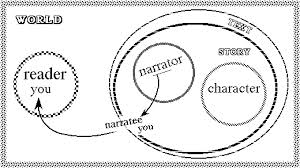
My story is to remind us all of the importance of making a careful choice when it comes to first, second or third person. As you know, second person point of view uses the pronoun “you” and its variants to address the protagonist, the reader or a specific person or object. First person point of view allows intimate insight into the mind and emotion of the protagonist but limits the same for secondary and minor characters. It also confines the writer to a specific time and place. Third person, on the other hand, presents the story from the writer’s point of view, allowing her or him to comment on the story and giving omniscience into all the players. A downside is that it restrains the reader from a deeper emotional connection with the protagonist whose reactions always seem just a bit beyond our reach

As for second person point of view in fiction, there are authors such as William Faulkner who may include short sections or chapters in the second person, but I can’t remember reading an entire novel in this voice, although I suspect it has been done. A few years back, an MFA student in my writing critique group wrote quite effective short stories in the second person. Her stories gave me the impression, as expected, that she was speaking directly to me and, at times, instructing me.

It is less rare to encounter poetry in the second person. As poets, we love to address our “audience,” celebrity figures, other poets or teachers who have an influence on us, people we love (or hate), God, mythological figures, people from our past. Consider this poem by the well-known 17th Century poet, Robert Herrick.

TO THE VIRGINS, TO MAKE MUCH OF TIME

GATHER ye rosebuds while ye may,
Old time is still a-flying :
And this same flower that smiles to-day
To-morrow will be dying.

The glorious lamp of heaven, the sun,
The higher he’s a-getting,
The sooner will his race be run,
And nearer he’s to setting.

That age is best which is the first,
When youth and blood are warmer ;
But being spent, the worse, and worst
Times still succeed the former.

Then be not coy, but use your time,
And while ye may go marry :
For having lost but once your prime
You may for ever tarry.

– Robert Herrick

.

The poem is written in the imperative form, instructive to the reader or listener. I read it recently under the title “To Young Virgins,” which gives a sense of his intended audience, though his underlying message applies to everyone, reminding us that time passes quickly. Another example, this one by Walt Whitman, addresses a city.

CITY OF ORGIES

CITY of my walks and joys!
City whom that I have lived and sung there will one day make you illustrious,
Not the pageants of you–not your shifting tableaux, your spectacles, repay me,
Not the interminable rows of your houses, nor the ships at the wharves,
Nor the processions in the streets, nor the bright windows with goods in them,
Nor to converse with learn’d persons, or bear my share in the soiree or feast;
Not those, but as I pass O Manhattan, your frequent and swift flash of eyes offering me love,
Offering response to my own–these repay me,
Lovers, continual lovers, only repay me.

– Walt Whitman (from the 1860 edition of Leaves of Grass, it became City of Orgies in the 1867 edition)

And so, for March’s prompt, I invite you to write a poem, flash fiction or even a paragraph in the second person. Many of you do this routinely, so I challenge (not confine) you to a more specific prompt. Consider addressing: • Your favorite poet, one who has influenced your own writing; • A celebrity you would invite to dinner if you had a choice; • An inanimate object; • An entity such as time, a holiday, an event from history; • Rewriting one of your own poems from 1st or 3rd person into second. If you would like to participate in the community opportunity: • Write your poem or prose and post it on your blog or website; • Access Mr. Linky at the bottom of this post and add your name and the direct URL to your submission; • Enjoy your time writing and reading poetry. I will look forward to reading those who drop by. And if you would rather not be a part of the public forum, I hope you’ll try anyway. This is not a contest; it’s only to tickle your muse!

Image: memberswestnet.com

Please share YOUR work in response to the prompt by clicking on the Mister Linky sign (below in green) and then enter your name and paste in the URL to your post. Victoria will visit and comment and so will Jamie Dedes. We hope you’ll also visit one another to read, comment and encourage. Thank you!

.

,

2940013445222_p0_v1_s260x42034ff816cd604d91d26b52d7daf7e8417VICTORIA C. SLOTTO (Victoria C. Slotto, Author: Fiction, Poetry and Writing Prompts) ~ is an accomplished writer and poet. Winter is Past, published by Lucky Bat Books in 2012, is Victoria’s first novel. A second novel is in process. On Amazon and hot-off-the-press nonfiction is Beating the Odds: Support for Persons with Early Stage Dementia. Victoria’s ebooks (poetry and nonfiction) are free to Amazon Prime Members. Link HERE for Victoria’s Amazon page. Editorial note: Congratulations, Victoria, on that the long awaited publication of print copies of Jacaranda Rain, Collected Poems, 2012, Beautifully done. Writers’ Fourth Wednesday is hosted by Victoria from January through October.

Posted in General Interest, Naomi Baltuck, Photo Essay, Photography/Photographer, story, Story Telling, Photo Story

Staph Infection

As a newly graduated English Majorette, I headed Out West to seek my fortune, and arrived in Seattle just before the holiday season.

While I decided what to do with the rest of my life, I landed a temp job selling shoes at the downtown Frederick and Nelson’s to pay the rent.

The shoe did not fit.  Most of the saleswomen spent their paychecks on new clothes, using the employee discount, of course.  I had two and a half presentable outfits, and rotated.  I didn’t wear make-up or high heels, but I did have a decent pair of leather boots that went with everything.  I was competent and polite, except to the imperious bitches who mistook the fitting chair for a throne and were used to being waited on hand and foot.  They were the ones who came in five minutes before closing, ordered me to fetch four different pairs of shoes in three sizes, then stuck out their feet for me to remove their own shoes for them.

That six week position seemed an eternity, but I had a secret superpower to get through it.  Long before the invention of Photoshop, I had mastered my own techniques for photo doctoring.

It was crude, but effective.  And my family was very forgiving.

All it took was a pin to scratch away here and a red marker to color in there, and voila!   I turned my Frederick and Nelson’s staff pin into a Frederick and Nelson’s staph pin.  No one even noticed, but somehow it was a sign, and it made all the difference to me.

Then one cold December day my boss called me into the back room.  I was sure she was going to fire me for badge tampering.  But she said, “I want you to work here on a permanent basis beginning in January.”

Before I could tell her, “Thank you, but I want to check out job opportunities in Hell first,” she leaned forward to stare at my bosom.  Or at the badge on my bosom, to be more precise.  “I think there’s a typo on your badge.”

“So it would seem,” I replied.

“That’s never happened before.  Go get a new one, and then let me know as soon as possible about the job.”

I never did trade in my Little Red Badge of Courage for a new one.  As for the job selling shoes… those boots were made for walking, and that’s just what they did.  They walked on down to Grand Teton National Park, where I waited tables, and to King’s Canyon National Park, where I taught canoe.

And they brought me back to the home of my heart…

…where I became a professional storyteller

…and author.

Along the journey, I have learned to pay attention to my instincts, and to read the writing on the wall.

But I still keep the badge as a reminder that sometimes one must relish the tiny victories along the way.


c2013 all words and photographs, Naomi Baltuck

NaomiPHOTO1-300ppi51kAqFGEesL._SY300_NAOMI BALTUCK ~ is a Contributing Editor and Resident Storyteller here410xuqmD74L._SY300_ at Bardo. She is a world-traveler and an award-winning writer, photographer, and story-teller whose works of fiction and nonfiction are available through Amazon HERE. Naomi presents her wonderful photo-stories – always interesting and rich with meaning and humor – at Writing Between the Lines, Life from the Writer’s POV. She also conducts workshops such as Peace Porridge (multicultural stories to promote cooperation, goodwill, and peaceful coexistence), Whispers in the Graveyard (a spellbinding array of haunting and mysterious stories), Tandem Tales, Traveling Light Around the World, and others. For more on her programs visit Naomi Baltuck.com

Posted in General Interest, Naomi Baltuck, Photo Essay, Photography/Photographer

Look Up

In Seattle the cold nights sneak up on you.  Autumn chill was in the air, and summertime had slipped out the back door without even saying goodbye.  Through the tree branches, we saw flashes of unexpected color that couldn’t be anything but a space ship!  Eli and I stopped what we were doing…

…and ran to investigate.  We brought the camera for photo-documentation.

We live three or four blocks from a sweeping view of Puget Sound.

For fireworks, sunsets, or alien invasions, we always head straight for the crest of the hill.  Ferry boats light up black water like jewels.

But that night, the jewel on the crown turned out to be a ruby, the biggest reddest moon I had ever seen.

Don’t wait for an alien invasion.  Just look up.

All word and images copyright 2012 Naomi Baltuck

.

NaomiPHOTO1-300ppi51kAqFGEesL._SY300_NAOMI BALTUCK ~ is a Contributing Editor and Resident Storyteller here410xuqmD74L._SY300_ at Bardo. She is a world-traveler and an award-winning writer, photographer, and story-teller whose works of fiction and nonfiction are available through Amazon HERE. Naomi presents her wonderful photo-stories – always interesting and rich with meaning and humor – at Writing Between the Lines, Life from the Writer’s POV. She also conducts workshops such as Peace Porridge (multicultural stories to promote cooperation, goodwill, and peaceful coexistence), Whispers in the Graveyard (a spellbinding array of haunting and mysterious stories), Tandem Tales, Traveling Light Around the World, and others. For more on her programs visit Naomi Baltuck.com

Posted in Essay, General Interest, Guest Writer

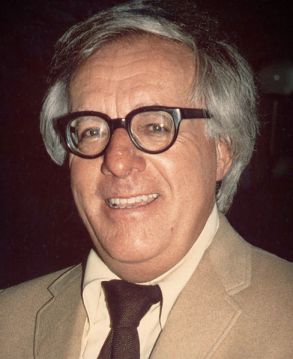
RAY BRADBURY: PART II, Flying Up Among the Stars

While there were many salutes to Ray Bradbury upon his death on June 5, 2012, we encountered none with as much warmth, insight and appreciation as this piece by Colin Blundell (colinblundell)Though it is far longer than our current 1,000 word limit ( one lesson experience has taught us is that the Blogosphere is largely a sound-bite world), we thought it was time to bring it out, dust if off and share it again. On reading this essay, you will understand why . . . 

Forty years ago, I began teaching ‘English’ to 11-16 year-olds in a comprehensive school in a suburb of Luton, Bedfordshire UK—Stopsley High School. A class of 4th year boys was well on the way to defeating me till I discovered that reading Ray Bradbury short stories to them was a really good way of keeping them quiet for a whole lesson and even inspiring them to think and write. Ray Bradbury was the key that opened doors for these boys who had mostly been rejected by the system they found themselves enslaved by. Admittedly, by report, some of them later did a stretch in prison but not a few of them went on to get degrees, to become teachers and hold responsible jobs in local industry. I have sadly lost touch with all of them.

The short story that seemed to have the most immediate effect, and the one I always associate with that period of my life, was The Murderer from The Golden Apples of the Sun (1953). It was the story that perhaps meant most to me, one I could put my heart and soul into the reading thereof.

Music moved with him in the white halls. He passed an office door: ‘The Merry Widow Waltz’. Another door: ‘Afternoon of a Faun’. A third: ‘Kiss Me Again’. He turned into a cross corridor: ‘The Sword Dance’ buried him in cymbals, drums, pots, pans, knives, forks, thunder, and tin lightning. All washed away as he hurried through an anteroom where a secretary sat nicely stunned by Beethovens Fifth. He moved himself before her eyes like a hand; she didnt see him. His wrist radio buzzed.
“Yes?”
“This is Lee, Dad. Don’t forget about my allowance.”
“Yes, son, yes. Im busy.”
“Just didnt want you to forget, Dad,” said the wrist radio. Tchaikovsky’s ‘Romeo and Juliet’ swarmed about the voice and flushed into the long halls.

Where are we? What’s going on? Forty years back there was no such thing as a mobile phone; the wrist radio is part of Ray Bradbury’s accurately terrifying vision of the future, which is now: the mobile phone is a symbol for the way life for many people seems to be threaded on messages from an imagined other place, messages, usually of no real consequence, that materialise to interrupt life while it is being lived, to divert attention from the concentrated flow of existence.

Once upon a time, you were able to move from experience to experience without the feeling that at any moment your flow was going to be interrupted by messages from an outer space which is not yours; life has changed and with it consciousness—it’s no longer a direct relationship between you and mountain, river, birdsong, zebra, touch of skin, and sensation of wind but something mediated by a mechanical drive to make contact with somebody to express the connection in some dull-witted way, or have it interrupted by somebody else’s account of their own experience of zebras and so on…

I do not remember that piped music was everywhere when I was growing up (I don’t think it was) but it’s more or less impossible to avoid the intrusiveness of the assault on the ears nowadays. The person with the switch assumes that it’s OK to bombard us with Muzak; most people don’t notice that it is washing over them—it’s the mechanical norm.

One might just consider oneself lucky to have Beethoven’s Fifth or L’après-midi d’un faune swarming about the long halls of the supermarket rather than the latest pop-crap but on the whole, instead of having others impose their banal choices on me, I prefer to organise my own listening schedule just when I want it to happen and not otherwise.

Ray Bradbury is simplistically referred to as a Science Fiction writer but it’s more the case that he is of that fraternity that seems to be plugged into the way things are going in fact rather than as fiction—those who are sufficiently tuned into human trends and weaknesses to understand where things are heading. H.G. Wells was another member of the clan.

“Prisoner delivered to Interview Chamber Nine.”
He unlocked the chamber door, stepped in, heard the door lock behind him.
“Go away,” said the prisoner, smiling. The psychiatrist was shocked by that smile. A very sunny, pleasant warm thing, a thing that shed bright light upon the room. Dawn among the dark hills. High noon at midnight, that smile. The blue eyes sparkled serenely above that display of self-assured dentistry.
“I’m here to help you,” said the psychiatrist, frowning. Something was wrong with the room. He had hesitated the moment he entered. He glanced around. The prisoner laughed. “If you’re wondering why it’s so quiet in here, I just kicked the radio to death.”

At length we find that our hero is Mr Albert Brock, who calls himself ‘The Murderer’. The psychiatrist, who intends to put him right, deems him violent, but Brock says that his violence is only towards ‘machines that yak-yak-yak…’

He quickly demonstrates his murderous intentions.

“Before we start…” He moved quietly and quickly to detach the wrist radio from the doctor’s arm. He tucked it in his teeth like a walnut, gritted, heard it crack, handed it back to the appalled psychiatrist as if he had done them both a favour. “That’s better.”

I often feel like doing this to mobile phones and other beeping implements on trains when my quiet reading is interrupted by them.

Deviant Behaviour

The psychiatrist asks Brock to talk about his deviant behaviour.

“Fine. The first victim, or one of the first, was my telephone. Murder most foul. I shoved it in the kitchen Insinkerator! Stopped the disposal unit in mid-swallow. Poor thing strangled to death. After that I shot the television set! … Fired six shots right through the cathode. Made a beautiful tinkling crash, like a dropped chandelier…”
“Suppose you tell me when you first began to hate the telephone.”

Because the telephone used to upset me as a child and because I would still rather not talk over the telephone I used to read the following explanation to my classes with extreme relish and rhetorical gusto, loudly and at increasing speed.

“It frightened me as a child. Uncle of mine called it the Ghost Machine. Voices without bodies. Scared the living hell out of me. Later in life I was never comfortable. Seemed to me a phone was an impersonal instrument. If it felt like it, it let your personality go through its wires. If it didn’t want to, it just drained your personality away until what slipped through at the other end was some cold fish of a voice, all steel, copper, plastic, no warmth, no reality.
It’s easy to say the wrong things on telephones; the telephone changes your meaning on you. First thing you know, you’ve made an enemy. Then, of course, the telephone’s such a convenient thing; it just sits there and demands you call someone who doesn’t want to be called. Friends were always calling, calling, calling me. Hell, I hadn’t any time of my own. When it wasn’t the telephone it was the television, the radio, the phonograph. When it wasn’t the television or radio or the phonograph it was motion pictures at the corner theatre, motion pictures projected, with commercials on low-lying cumulus clouds. It doesn’t rain rain any more, it rains soapsuds. When it wasn’t High-Fly Cloud advertisements, it was music by Mozzek in every restaurant; music and commercials on the buses I rode to work. When it wasn’t music, it was inter-office communications, and my horror chamber of a radio wrist watch on which my friends and my wife phoned every five minutes. What is there about such ‘conveniences’ that makes them so temptingly convenient? The average man thinks, Here I am, time on my hands, and there on my wrist is a wrist telephone, so why not just buzz old Joe up, eh? …I love my friends, my wife, humanity, very much, but when one minute my wife calls to say, “Where are you now, dear?” and a friend calls and says, “Got the best off-colour joke to tell you. Seems there was a guy…”

The climax came when Brock ‘…poured a paper cup of water into the intercommunications system’ at his office which shorted the electrics and had everybody running around not knowing what to do with themselves. Then Brock ‘got the idea at noon of stomping my wrist radio on the sidewalk. A shrill voice was just yelling out of it at me, This is People’s Poll Number Nine. What did you eat for lunch? I kicked the Jesus out of the wrist radio!’

A Solitary Revolution

Brock decided to ‘start a solitary revolution, deliver man from certain ‘conveniences’… Convenient for anybody who, out of boredom or aimlessness wanted a diversion.. “Having a shot of whisky now. Thought you’d want to know…” Convenient for my office, so when I’m in the field with my radio car there’s no moment when I’m not in touch…’

Why on earth should we ever wish to be ‘in touch’ with people, with contacts, with a million or so connections on the Internet, with ‘friends’ on Facebook? Why do we feel a need to communicate our insignificant ideas to anybody who will, we imagine, click in on a regular basis? Why am I writing this?

We are living the Twentieth Century illusion of total connectedness; we imagine an audience; we think we are making something happen. We are not. All that’s happened is that our concept of the world has changed; we like to think that we are all in it together—it could well be that this has affected the shape of ‘consciousness’ itself.

Why is it that the bosses imagine now that they can extend the working day 24 hours a day, 7 days a week by  constantly having workers ‘in touch’? We let them get away with it.

In touch! There’s a slimy phrase. Touch, hell. Gripped! Pawed, rather. Mauled and massaged and pounded by FM voices. You can’t leave your car without checking in: “Have stopped to visit gas-station men’s room.” “Okay, Brock, step on it!” “Brock, what took you so long?” “Sorry, sir.” “Watch it next time, Brock.” “Yes, sir!”

Brock progressed his one-man revolution by spooning a quart of French chocolate ice cream—chosen because it was his favourite flavour— into the car radio transmitter.

The psychiatrist asked what happened next.

Silence

“Silence happened next. God, it was beautiful. That car radio cackling all day, Brock go here, Brock go there, Brock check in, Brock check out, okay Brock, hour lunch, lunch over, Brock, Brock, Brock… I just rode around feeling of the silence. It’s a big bolt of the nicest, softest flannel ever made. Silence. A whole hour of it. I just sat in my car, smiling, feeling of that flannel with my ears. I felt drunk with Freedom!”

Then Brock rented himself a ‘portable diathermy machine’. Now, if ever there was a sensible invention this is one. Often, especially on trains, I’ve thought to myself, “If only I had a  ‘portable diathermy machine’, I could turn it on and silence all the inane chat, all the music blasting out of half-wit headphones, all the tapping and beeping that so disturbs me…”

I’ve even thought of trying to invent something that would do the trick. I once met a man who said he could help though there might be issues of legality. Brock, c’est Moi, I thought.

In the story, the effect of Brock’s murderous impulses was striking.

“There sat all the tired commuters with their wrist radios, talking to their wives, saying, ‘Now I’m at Forty-third, now I’m at Forty-fourth, here I am at Forty-ninth, now turning at Sixty-first.”

“I’m on the train…”

“One husband cursing, ‘Well, get out of that bar, damn it, and get home and get dinner started, I’m at Seventieth!’ And the transit-system radio playing Tales from the Vienna Woods, a canary singing words about a first-rate wheat cereal. Then—I switched on my diathermy! Static! Interference! All wives cut off from husbands grousing about a hard day at the office. All husbands cut off from wives who had just seen their children break a window! The Vienna Woods chopped down, the canary mangled! Silence! A terrible, unexpected silence. The bus inhabitants faced with having to converse with each other. Panic! Sheer, animal panic!”
“The police seized you?”
“The bus had to stop. After all, the music was being scrambled, husbands and wives were out of touch with reality. Pandemonium, riot, and chaos. Squirrels chattering in cages! A trouble unit arrived, triangulated on me instantly, had me reprimanded, fined, and home, minus my diathermy machine, in jig time.”

The psychiatrist, namby-pamby liberal democrat, suggests that Brock could have joined a club for gadget-haters, got up a petition, asked for a change in the law… Brock says he did all these things and more but he still found himself in an undemonstrative minority. The psychiatrist says that the majority rules.

“But they went too far. If a little music and ‘keeping in touch’ was charming, they figured a lot would be ten times as charming. I went wild! I got home to find my wife hysterical. Why ? Because she had been completely out of touch with me for half a day. Remember, I did a dance on my wrist radio? Well, that night I laid plans to murder my house… It’s one of those talking, singing, humming, weather-reporting, poetry-reading, novel-reciting, jingle-jangling, rockaby-crooning-when-you-go-to bed houses. A house that screams opera to you in the shower and teaches you Spanish in your sleep. One of those blathering caves where all kinds of electronic Oracles make you feel a trifle larger than a thimble, with stoves that say, ‘I’m apricot pie, and I’m done,’ or ‘I’m prime roast beef, so baste me!’ and other nursery gibberish like that. With beds that rock you to sleep and shake you awake. A house that barely tolerates humans, I tell you. A front door that barks: ‘You’ve mud on your feet, sir!’ And an electronic vacuum hound that snuffles around after you from room to room, inhaling every fingernail or ash you drop. Jesus God… ”

The psychiatrist suggests he minds his language.

“Next morning early I bought a pistol. I purposely muddied my feet. I stood at our front door. The front door shrilled, ‘Dirty feet, muddy feet! Wipe your feet! Please be neat!’ I shot the damn thing in its keyhole! I ran to the kitchen, where the stove was just whining, ‘Turn me over!’ In the middle of a mechanical omelet I did the stove to death. Oh, how it sizzled and screamed, ‘I’m shorted!’…  Then I went in and shot the television, that insidious beast, that Medusa, which freezes a billion people to stone every night, staring fixedly, that Siren which called and sang and promised so much and gave, after all, so little…”

Having been arrested for destroying other people’s property, Brock was sent to the Office of Mental Health to be straightened out by a psychiatrist. Brock is unrepentant and says he’d do it all over again. The psychiatrist checks that he’s ready to take the consequences

“This is only the beginning,” said Mr. Brock. “I’m the vanguard of the small public which is tired of noise and being taken advantage of and pushed around and yelled at, every moment music, every moment in touch with some voice somewhere, do this, do that, quick, quick, now here, now there. You’ll see. The revolt begins. My name will go down in history!”

He’s prepared to admit that all gadgets were initially dedicated to making life less of a drudgery.

They were almost toys, to be played with, but people got too involved, went too far, and got wrapped up in a pattern of social behaviour and couldn’t get out, couldn’t admit they were in, even.

The gadgets have now become an unquestioned part of life. The next generation grows up with all the e-things and cannot understand old fogies like me wanting to, as they might see it, put the clock back.

Brock points out the irony that he ‘…got world-wide coverage on TV, radio, films… That was five days ago. A billion people know about me now. Check your financial columns. Any day now. Maybe to-day. Watch for a sudden spurt, a rise in sales for French chocolate ice cream!

Brock looks forward to spending six months in jail, free from noise of any kind.

The psychiatrist’s diagnosis announced over the tannoy system is that Brock seemed convivial but ‘…completely disorientated’ refusing ‘… to accept the simplest realities of his environment and work with them…’

A Story to Shape the Soul

Re-reading Ray Bradbury’s brilliant short story on the day I heard of his death at 91, I realise, not for the first time, how much it has shaped my being; my disgust with the way the world is now, my refusal to compromise, my sense of horror at the way people are sucked into A Influences and diverted by gadgetry from the things that really matter: the life of the soul, responses to Nature and all that comes under the heading of Understanding properly nurtured by Knowledge and Being… Indiscriminate working with the realities of one’s environment means giving in to crass stupidity, mass resignation to the way things are fostered by Big Business brain-washing and the endless traps of Capitalism.

Accept nothing unless it nurtures the soul. Verify everything for yourself, says Gurdjieff…

Brock walks cheerfully to prison looking forward to a nice ‘bolt’ of silence. Meanwhile for the psychiatrist normal life resumes…

Three phones rang. A duplicate wrist radio in his desk drawer buzzed like a wounded grasshopper. The intercom flashed a pink light and click-clicked. Three phones rang. The drawer buzzed. Music blew in through the open door. The psychiatrist, humming quietly, fitted the new wrist radio to his wrist, flipped the intercom, talked a moment, picked up one telephone, talked, picked up another telephone, talked, picked up the third telephone, talked, touched the wrist-radio button, talked calmly and quietly, his face cool and serene, in the middle of the music and the lights flashing, the two phones ringing again, and his hands moving, and his wrist radio buzzing, and the intercoms talking, and voices speaking from the ceiling. And he went on quietly this way through the remainder of a cool, air-conditioned, and long afternoon; telephone, wrist radio, intercom, telephone, wrist radio, intercom, telephone, wrist radio, intercom, telephone, wrist radio, intercom, telephone, wrist radio, intercom, telephone, wrist radio…

End of a Story…

What I would dearly love to know is whether The Murderer penetrated the soul’s of the lads I taught all those years ago as much as it has penetrated mine. Amongst others, Paul, Martin Chris, Richard, Stephen, John and also Chris & Pete who went off to swim unwillingly amongst the stars in the 1970’s.

If any of you should chance to read this, please get in touch, as they say…

– Colin Blundell

© 2012, essay and portrait (below), Colin Blundell, All rights reserved
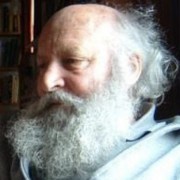
COLIN BLUNDELL (colinblundell) ~ is a generous and informed writer whoand covers the range: poetry, fiction, and philosophical tomes. When he isn’t writing, he is busy making music and hand-made paperback books, painting watercolours, and going on long-distance motorbike treks. He’s left off being a wage-slave in 1991. He is now an independently teaching Neuro-Linguistic Programming (NLP), Accelerated Learning, Steven Covey’s Seven Habits, Change Management, Problem-solving and Time Management, and the art and practice of the Enneagram.

Posted in General Interest, Naomi Baltuck, Photo Essay, Photography/Photographer

A Celebration of Fenestration

The Latin word for window is “fenestra.”  The old English word for window, “eagbyrl,” means “eye-door.”   Just like a door, it can be used for peeking out…

…or peeking in.

Whether you are looking in or out, there are so many things to see, just behind the glass.

The earliest windows were holes in a wall.

Only big enough to let in a bit of light with the cold air, or to shoot an arrow through.

The ancient Romans were the first to use glass.

Then came windows of animal horn or hides, cloth, and in the Far East, even paper.

The Inuit people say, “Don’t let the window of your home be so small that the light of the sun cannot enter.”

Elizabeth Kubler-Ross said people are like stained glass windows.   They sparkle and shine when the sun is out…

…but when the darkness sets in, their true beauty is revealed.

In the Ukraine they say you don’t really see the world, if you look only through your own window.

And what a world there is out there to see!


There is another old saying, “The eyes are the window to the soul.”

…and one that says a smile is a window on your face to show your heart is at home.

The world on either side of your window can be sad…

…distant…

…daunting…

…and scary.

All the more reason to let the light in.

Let your window’s light shine like a beacon…

…and reflect upon the beauty of our world.

All the windows of the world!

All words and images copyright Naomi Baltuck

NaomiPHOTO1-300ppi51kAqFGEesL._SY300_NAOMI BALTUCK ~ is a Contributing Editor and Resident Storyteller here410xuqmD74L._SY300_ at Bardo. She is a world-traveler and an award-winning writer, photographer, and story-teller whose works of fiction and nonfiction are available through Amazon HERE. Naomi presents her wonderful photo-stories – always interesting and rich with meaning and humor – at Writing Between the Lines, Life from the Writer’s POV. She also conducts workshops such as Peace Porridge (multicultural stories to promote cooperation, goodwill, and peaceful coexistence), Whispers in the Graveyard (a spellbinding array of haunting and mysterious stories), Tandem Tales, Traveling Light Around the World, and others. For more on her programs visit Naomi Baltuck.com

Posted in General Interest, Naomi Baltuck, Photo Essay, Photography/Photographer

The Flight of the Sparrow

Last summer I saw a baby Stellar Jay perched on my arbor, resting after trying out its wings. I looked away for an instant; when I looked back, it was gone.

It reminded me of something The Venerable Bede once said.  Bede was an Anglo-Saxon monk born in 672A.D.

In  The Ecclesiastical History of the English People he compares a person’s life to the flight of a sparrow.  Imagine sitting in a mead-hall at supper by the light of a blazing fire, while outside a winter storm rages.

A sparrow flies in one door of the hall, into the light, then darts out out another door, back into the cold dark night.  “So our lives appear for a short space,” said Bede, “but of what went before, or what is to follow, we are utterly ignorant.”

People have many different thoughts, feelings, beliefs and explanations as to what or if anything comes before…

…or after the sparrow’s flight.

Sooner or later each of us will fly out into the night.

That seems to be the only thing everyone can agree upon.

I don’t need to know all the answers before I fly back out.

I am right here, right now, basking in the warm and beautiful light of life.

Whatever happens outside the mead-hall won’t change the way I live my life here and now.

I have work I am passionate about…

..family I love and good friends to play with.

I care about issues in the wider world…

…and in my own little sphere.

I hope I can make some small difference…as a writer, a storyteller, a parent, a friend…

…and to leave even just a little nightlight shining…

…when my flight is done.
null

All words and images copyright Naomi Baltuck

NaomiPHOTO1-300ppi51kAqFGEesL._SY300_NAOMI BALTUCK ~ is a Contributing Editor and Resident Storyteller here410xuqmD74L._SY300_ at Bardo. She is a world-traveler and an award-winning writer, photographer, and story-teller whose works of fiction and nonfiction are available through Amazon HERE. Naomi presents her wonderful photo-stories – always interesting and rich with meaning and humor – at Writing Between the Lines, Life from the Writer’s POV. She also conducts workshops such as Peace Porridge (multicultural stories to promote cooperation, goodwill, and peaceful coexistence), Whispers in the Graveyard (a spellbinding array of haunting and mysterious stories), Tandem Tales, Traveling Light Around the World, and others. For more on her programs visit Naomi Baltuck.com

Posted in folk tale, General Interest, Naomi Baltuck, Photography/Photographer, story, Story Telling, Photo Story

The Most Noble Story

There was once a widow who had three sons, Alberto, Eduardo, an Ernesto. She had spent a lifetime trying to teach them the meaning of charity and compassion.

The day came when she knew she was dying, and would no longer be there to guide them.  She called her sons to her bedside.

“My sons, the only thing of value I have to leave you is my diamond ring. It was given to me by my mother, who had it from her mother, whose mother handed it down to her. It cannot be divided and it must not be sold, for one day, it shall go to one of your daughters.  Now I must decide which of you is most worthy of this treasure. Go, my sons, and do good in the world.  Come back in one week’s time and tell me your stories. The one who has performed the most noble deed shall inherit the diamond.”

By the time the three young men gathered again at her bedside, their poor mother was near death.

She said to her firstborn, “Alberto, tell me your story.”
“Well, Mother,” said the eldest, “after much thought, I gave half of everything I owned to the poor.”
“My son,” said the old woman, “no one can tell you that you haven’t performed a good deed. But it is not a noble deed, for have I not taught you that it is everyone’s responsibility to care for the needy?”


She said to her secondborn son, “Eduardo, tell me your story.”
He said, “Mama, I was passing the river when I saw a small child swept away in the current. I can hardly swim, but I jumped into the water and pulled the child out to safety.  It was only by the grace of God that I didn’t drown myself.”


“My son, you too have performed a good deed, but not a noble deed. Have I not taught you that everyone should be willing to lay down his life for that of a helpless child?”


The old woman said to her youngest son, “Eduardo, come tell me your story.”
Ernesto hesitated before taking her hand. “Mamacito,” he confessed, “I haven’t much to tell. As you know, I’ve no earthly goods, and I cannot swim a stroke. But I’ll tell you something that happened to me this week. Very early one morning I was walking in the mountains.

I came upon a man sleeping at the edge of a cliff. If he were to stir in his sleep, he would surely fall to his death on the rocks below. I determined to prevent this tragedy. I crept over, so as not to startle him awake. Then I saw that it was my bitter enemy, Juan Miguel. At first, I thought to leave him there, for the last time we met, Juan Miguel threatened to kill me if he ever got the chance. But deep down I knew what I had to do.
“As I put my arms around him, Juan awoke and I could see the fear in his eyes as he recognized me.
“’Don’t be afraid,’ I told him. I quickly rolled him away from the precipice to safety, and helped him to his feet. When Juan Miguel came toward me, I was sure he meant to kill me. But then he threw open his arms to embrace me.
“Juan said, ‘Last night darkness fell before I could get home. Rather than chance a misstep in the dark, I decided to spend the night where I was. I had no idea I was so close to the cliff edge. You saved my life, Ernesto, and after I treated you so poorly!’
“To make a long story short, Mamacita, Juan and I are no longer enemies, but have sworn to be friends forever.”

The old woman shed tears of joy. “My son, I have taught you well. That was truly a noble deed, and you are a noble man, for you risked your life to save a man sworn to kill you. With one act of kindness, you have transformed hatred into love and made the world a better place.” With her dying breath she told her sons, “The diamond shall go to Ernesto, but you must all remember that with each noble deed you perform, you shall add to the treasure that awaits you in Heaven.”


All three sons married and had children of their own. They, like their mother, taught their children the meaning of charity and compassion. When the time came, Ernesto left his mother’s diamond to one of his daughters.

But Alberto and Eduardo left their children a gem worth as much as any diamond, for their children held in their hearts their grandmother’s precious legacy, the story of the most noble story.

All photos copyright 2013 Naomi Baltuck

The Most Noble Story is from Apples From Heaven, copyright 1995 Naomi Baltuck, and retold from a folk tale of Mexico.

NaomiPHOTO1-300ppi51kAqFGEesL._SY300_NAOMI BALTUCK ~ is a Contributing Editor and Resident Storyteller here410xuqmD74L._SY300_ at Bardo. She is a world-traveler and an award-winning writer, photographer, and story-teller whose works of fiction and nonfiction are available through Amazon HERE. Naomi presents her wonderful photo-stories – always interesting and rich with meaning and humor – at Writing Between the Lines, Life from the Writer’s POV. She also conducts workshops such as Peace Porridge (multicultural stories to promote cooperation, goodwill, and peaceful coexistence), Whispers in the Graveyard (a spellbinding array of haunting and mysterious stories), Tandem Tales, Traveling Light Around the World, and others. For more on her programs visit Naomi Baltuck.com

Posted in Naomi Baltuck, Photo Essay, Photography/Photographer

Whatever the Hell It Takes

Well?  What do you think?  Is it half full or half empty?

Do you see a gray cloudy day or blue skies?

Is the task before you huge and daunting?

Or are you ready to dig in?

Of course, your perspective will be affected by where you are…

…where you’re going…

…or your current situation in life.

Timing can certainly affect your perspective.

When you have no control over certain events, you can still choose the lens through which you look.

Will this injury leave a horrible scar or provide material for a good story to tell the relatives back home?

Is this an obstacle to folding clean laundry, or the cutest kid in the world?

Do you feel the damp and see the darkness, or admire the view?

It’s not always this easy to find a happy place….

…or even the light at the end of the tunnel.

Sometimes you have to write yourself a better ending.

It helps to have someone who understands.

Who can lend a hand.

Who can help you put things in perspective.

If you can’t change your path, then do whatever the hell it takes to change your perspective.

Sometimes the glass really is half empty, but who says you can’t fill up the darn thing?  In fact, fill up another one too, for a friend.

All images and words copyright 2013 Naomi Baltuck

NaomiPHOTO1-300ppi51kAqFGEesL._SY300_NAOMI BALTUCK ~ is a Contributing Editor and Resident Storyteller here410xuqmD74L._SY300_ at Bardo. She is a world-traveler and an award-winning writer, photographer, and story-teller whose works of fiction and nonfiction are available through Amazon HERE. Naomi presents her wonderful photo-stories – always interesting and rich with meaning and humor – at Writing Between the Lines, Life from the Writer’s POV. She also conducts workshops such as Peace Porridge (multicultural stories to promote cooperation, goodwill, and peaceful coexistence), Whispers in the Graveyard (a spellbinding array of haunting and mysterious stories), Tandem Tales, Traveling Light Around the World, and others. For more on her programs visit Naomi Baltuck.com

Posted in Naomi Baltuck, Photo Essay, Photography/Photographer

Making Correct Change

Imagine a time when Manhattan was all forest.  Now the surviving trees are like living things herded into a corral of concrete and steel.

We have careened through time like a car without brakes…

In our wake a city of skyscrapers has sprung up where once a forest grew, but the city remembers its roots…

The past lurks, like a silent ghost, peeking out from dirty windows in the attic…

…or a little lost child, peering from between the legs of strangers in a crowd.

Beneath all the the glitz and glamor and bright lights…

…the old grand dame still thrives.

From past and present must come the future.

If we proceed with caution…

…careful reflection…

…and respect for all living things…

…the heart of the city will always be strong.

All images and words copyright 2013 Naomi Baltuck

NaomiPHOTO1-300ppi51kAqFGEesL._SY300_NAOMI BALTUCK ~ is a Contributing Editor and Resident Storyteller here410xuqmD74L._SY300_ at Bardo. She is a world-traveler and an award-winning writer, photographer, and story-teller whose works of fiction and nonfiction are available through Amazon HERE. Naomi presents her wonderful photo-stories – always interesting and rich with meaning and humor – at Writing Between the Lines, Life from the Writer’s POV. She also conducts workshops such as Peace Porridge (multicultural stories to promote cooperation, goodwill, and peaceful coexistence), Whispers in the Graveyard (a spellbinding array of haunting and mysterious stories), Tandem Tales, Traveling Light Around the World, and others. For more on her programs visit Naomi Baltuck.com

Posted in Naomi Baltuck, Photo Essay, Photography/Photographer

You Mean It’s NOT a River?

Some people say life is a river.  I think it’s more like a mountain.


It has its ups…

…and downs.

It can be glorious.

Mysterious.

Precarious.

Fraught with fire…

…and ice.

No one can climb it for you.

But, oh, what a trip.

As you find your way…

…the climb can be difficult.

The right path isn’t always clear.

But there will be beauty all around you.  In little things….

…or stretched out before you in all its grandeur.

In Hawaii they say love is like fog–there is no mountain on which it does not rest.

May there be friends to share the journey.

…to make you smile…

…to guide you…

…and support you.

Life is a delicate balance, a precious jewel, a piece of work.

Yes, look before you leap…

…and wear the proper footwear.

But as the saying goes, we don’t trip on mountains.  We trip on molehills.

All words and images c2013 Naomi Baltuck

NaomiPHOTO1-300ppi51kAqFGEesL._SY300_NAOMI BALTUCK ~ is a Contributing Editor and Resident Storyteller here410xuqmD74L._SY300_ at Bardo. She is a world-traveler and an award-winning writer, photographer, and story-teller whose works of fiction and nonfiction are available through Amazon HERE. Naomi presents her wonderful photo-stories – always interesting and rich with meaning and humor – at Writing Between the Lines, Life from the Writer’s POV. She also conducts workshops such as Peace Porridge (multicultural stories to promote cooperation, goodwill, and peaceful coexistence), Whispers in the Graveyard (a spellbinding array of haunting and mysterious stories), Tandem Tales, Traveling Light Around the World, and others. For more on her programs visit Naomi Baltuck.com

Posted in Uncategorized

As You Like It (Reflections Upon the Art of Aging)

“All I ask is a tall ship and a star to steer her by…”


My mother and her sister Loena were best friends.  Wherever Loena went, she would sing or hum quietly to herself.  My mother used to introduce her to friends saying, “This is my sister Loena.  Don’t mind her; she hums.”

Mom was the one who used to bust Aunt Loena out of Detroit for road trips.  Sometimes to Washington, D.C. to visit my sister Miriam, to Maine to see my sister Constance, or to see me and my siblings in Seattle, especially if the Tigers were scheduled to play the Mariners.

Driving cross country to attend my wedding, they made a late-night stop at a hamburger joint in Iowa. They were laughing so hard the young man behind the counter came to their table and said, “Ladies, I don’t know where you’re going, but I want to come with you.”

Less than a year after Mom died, my first baby was born.  It was a wonder-full time, if bittersweet.  Aunt Loena’s visit was the next best thing to seeing my mom holding my baby in her arms.  I felt my mother’s presence, watching, smiling, loving.

But it was hard for Aunt Loena to get away.  She spent two decades housebound while caring for her mother-in-law, and then her husband.  No one blamed him for his frustration, but he yelled at everyone who came to visit or offer aid, and fired everyone my aunt hired to help with housework and eldercare.  It was emotionally isolating and physically exhausting.  She never complained, and joked that at least her medical appointments for heart trouble, cataract surgery, and blood transfusions got her out of the house.  Like my mother, she knew how to look for the bright spots.

The 911 response team knew her by name, as she had to call whenever her husband fell out of the recliner where he slept.  It was time for a nursing home.  She visited him twice a day, until she caught meningitis.  Her doctors didn’t think she’d survive.  I flew to Detroit to say goodbye, but Aunt Loena is a two-time cancer survivor, who has come back from the brink so many times she makes Rasputin look like a weenie.  It was a wake-up call, however.  She checked out of the hospital with a bucket list.  My aunt is 86, anemic, subject to dizzy spells and shortness of breath.  Oh, yes, and always up for an adventure, so long as it is wheelchair accessible.

https://i0.wp.com/i1176.photobucket.com/albums/x334/nbaltuck/IMG_7262-2-1.jpg

Aunt Loena with my sister Lee and my son Elijah

Our first adventure was a trip to Seattle.  We knew she had a great time, because wherever we went, she hummed to herself like a purring kitten.  That trip was just a warm-up for her dream trip to New York City.

Aunt Loena in Central Park with Bea and me.

When it was time to leave New York and go our separate ways, it was too sad to say goodbye, so instead we said, “Where to next?”  She’d always wanted to go the Shakespeare Festival in Stratford, Ontario.  So that’s what we did.  My son Eli flew in from college in Maine, I flew from Seattle, and my sister Lee joined us from the Upper Peninsula of Michigan.

 We went in October, to take in the fall colors as well as the plays.

I chose our motel for its name.

https://i0.wp.com/i1176.photobucket.com/albums/x334/nbaltuck/IMG_7280-1.jpg

In Stratford I discovered the secret to longevity–a nightly dose of Miss Vicky’s Salt and Vinegar Potato Chips!  Aunt Loena is a teetotaler, but she’s not afraid of a little salt and grease.  Got sugar?   Bring it on!

Each time we part, I fear another long drive or a cross country flight will prove too much.  We make a date and look forward to it, but  I always check before I make plane reservations.  “You’re sure?”  And she always says, “Oh, yes.  As long as I’m sitting down, it’s almost just the same as sitting at home.”

We promised to bring her to Seattle for fish and chips this summer, but Lee couldn’t make it.  I asked my friend Monica, also a Detroiter, if she’d consider escorting Aunt Loena.  The next morning I got her reply– she would be delighted!  What a gift to us all!  We couldn’t have pulled it off without her.  Monica and Aunt Loena had been hearing about each other for years, and felt like they already knew each other.  We kicked off a week-long PJ party by attending a performance of Cole Porter’s “Anything Goes.”   We also enjoyed Teatro Zinzanni’s very silly but impressive dinner theater show, “Gangsters of Love.”

Aunt Loena made her famous egg salad sandwiches.  Years ago, when we all drove to D.C. to visit our sister Miriam, we weren’t out of Detroit yet when Mom said, “Who’s ready for an egg salad sandwich?”  It was 10am, but so what?  We were ready for another one by lunchtime.

We picnicked at Green Lake–egg salad sandwiches, my brother Lew’s homemade cookies, and Salt and Vinegar Potato Chips.  We couldn’t get to a picnic table, because we didn’t have an all-terrain wheelchair, but from our park bench we had a gorgeous view of the lake.

I would love to take Aunt Loena to Hawaii or Europe; even she feels it might be too far.  But her eyes lit up when she said church friends had gone to a casino, and she thought it might be fun to try her luck just once–if there was a smoke-free one with wheelchair access.  I don’t know anything about casinos, but an internet search and a few phone calls was all it took to locate a smoke-free casino in Toledo, not far from their wonderful zoo.  I sent Aunt Loena home with a roll of quarters and a promise.  Guess where we’re going next spring!

Saying goodbye is hard.  Aunt Loena said Mom always told her, “Whatever happens, we won’t cry.  We’ll smile, kiss the kids goodbye, and stop the car around the corner to do our crying.”  And that’s what they always did, she said.  But this time we all had to cry, just a little.

Most people in my aunt’s situation prefer the security of a recliner, the proximity of their own doctors, and to be in control, even if that just means the remote to the television.  Who can blame them?  With advanced age, circumstances often change, especially where health, finances, and family support are concerned.  Aunt Loena lives her life as an adventure, and adjusts the size of her dreams as necessary.  But for her, everything is icing on the cake.  New York is as good as Hawaii, and Ohio is as good as New York.  But she would be just as happy humming quietly and playing cards with a friend while snacking on a bag of Miss VIcky’s Salt and Vinegar Potato Chips.

I want to grow old like Aunt Loena, to go out swinging or at least singing.  When I told her she was brave for coming all the way to Seattle, she laughed and said, “All I need is a wheelchair, and someone to push it.

You got it, Aunt Loena.  And you don’t even need to ask.

All words and images copyright 2012 Naomi Baltuck

NaomiPHOTO1-300ppi51kAqFGEesL._SY300_NAOMI BALTUCK ~ is a Contributing Editor and Resident Storyteller here410xuqmD74L._SY300_ at Bardo. She is a world-traveler and an award-winning writer, photographer, and story-teller whose works of fiction and nonfiction are available through Amazon HERE. Naomi presents her wonderful photo-stories – always interesting and rich with meaning and humor – at Writing Between the Lines, Life from the Writer’s POV. She also conducts workshops such as Peace Porridge (multicultural stories to promote cooperation, goodwill, and peaceful coexistence), Whispers in the Graveyard (a spellbinding array of haunting and mysterious stories), Tandem Tales, Traveling Light Around the World, and others. For more on her programs visit Naomi Baltuck.com