The BeZine Blog

Posted in General Interest, Naomi Baltuck, Photo Essay, Photography/Photographer

Breaking Up is Hard to Do


Sixty, maybe seventy years ago my father gave a turquoise blown-glass dinnerware set to his mother, my Grandma Rose.  She called it her “mowt-blown china.”   At antique stores I’ve seen similar glassware, said to be from Mexico.

Grandma gave it to my brother Lew, who gave it to me. Every time I used those dishes, I felt a connection to Daddy and Grandma too.

More fragile than china, they came out mostly for birthdays, Valentine’s Day, or sci-fi dinner parties.


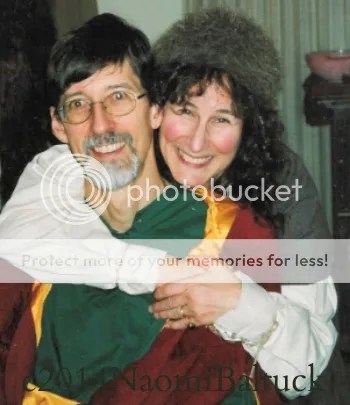
Thom and I were newlyweds when I gave him a mug bearing an excerpt from Rilke that we’d borrowed for our marriage vows.
“For one human being to love another is perhaps the most difficult of all our tasks, the ultimate, the last test and proof, the work for which all other work is but preparation.


Thom had already learned that lesson the hard way. Before we met I’d had a fear of commitment. I was so afraid of getting stuck or worse, abandoned, that I rarely went on more than a couple dates with anyone. I carried my own walking papers in my back pocket and I wasn’t afraid to use them.

Then came Thom. Poor Thom. Dear Thom. Courageous Thom.

He could take it on the chin, and grin.

He was wise enough to perceive the pattern and understand what I was doing even before I did. He was gentle and patient. He taught me how to fight fairly and work things out instead of just dumping guys in general, and him in particular. He taught me that it was okay to ask for what I want, how to negotiate, and not to expect others to be able to read my mind. He taught me that I could be myself and still be loved. He taught me that there were men out there who can be counted on, and that I could count on him. Thom deserves combat pay for sticking it out long enough for me to realize I didn’t want to make him go away after all. And so I stopped trying. Best decision I ever made.

So what do these vessels have to do with Thom and me, or anything at all?

Almost thirty years ago a dear friend, who may or may not have been related, was visiting and washed the dishes.

Putting them away, she stacked the elegant glass cup inside the Love Mug. Try as we might, we could not pry them apart. We tugged and twisted, but were so afraid of breaking either piece that we gave up. I couldn’t bear to throw them out, so they lived here for the next twenty-five plus years.

It is both appropriate and a little poetic that the same person, without whom there would be no story, was also present for its unexpected conclusion.

A year or two ago, I rediscovered the inextricable pair in the back of the cupboard. I decided, once and for all, to mend it or end it. It was like asking a husband to choose between the life of the mother or the child, which is why I’d put it off for so long. I finally opted to save the heirloom glass, if possible, which was stuck inside the mug. I told that dear person, who shall remain unnamed, that I’d take a hammer to the mug, if necessary; if the glass were to break as well, so be it.

But I’ve learned a little grease applied judiciously can go a long way. We drizzled oil in between and pulled, hoping the glass would slide out. It did not.

We went back to simple lessons learned in high school science. Heat expands and cold contracts. While soaking the outside of the mug in boiling water, we filled the glass with ice water. Still the glass stuck tight. So it came down to the last resort. Holding the mug by the handle, I whacked it on the countertop, hoping it would shatter. Pop! Out came the glass, in perfect shape, and I had my morning coffee in the Love Mug.

There are several morals to this story.

First of all, no one can tease me any more for hanging on to the glass and the mug all those years. Pay attention to your instincts!

Secondly, you might actually learn something in science class that you can apply to real life (and don’t forget that bit about the grease.)

Thirdly, breaking up is hard to do, but sometimes you just reach a breaking point, where you need to mend it or end it.

Fourthly, once you try everything you can think of, try everything you can’t think of. Sometimes you have to try everything all at once. But if it’s something worth saving, it’s worth the effort.

Love is like that. Thank goodness.
All images and words c2014 Naomi Baltuck

NaomiPHOTO1-300ppi51kAqFGEesL._SY300_NAOMI BALTUCK ~ is a Contributing Editor and Resident Storyteller here410xuqmD74L._SY300_ at Bardo. She is a world-traveler and an award-winning writer, photographer, and story-teller whose works of fiction and nonfiction are available through Amazon HERE. Naomi presents her wonderful photo-stories – always interesting and rich with meaning and humor – at Writing Between the Lines, Life from the Writer’s POV. She also conducts workshops such as Peace Porridge (multicultural stories to promote cooperation, goodwill, and peaceful coexistence), Whispers in the Graveyard (a spellbinding array of haunting and mysterious stories), Tandem Tales, Traveling Light Around the World, and others. For more on her programs visit Naomi Baltuck.com

Posted in Charles W Martin, Music, Photography/Photographer, poem, poetry

more than international…

more than international

pull apart
the fibers
of the soul
weave the strains
into strings
pull them
tight
against
a curved body
of wood
stroke them
with passion
now
that’s
jazz
or
you might
prefer
to create
a single sheet
of soul
the drum heads
that pound
like hearts
inside the breast
of mankind
now
that’s
jazz
but
maybe
you’d like to
compress them
into a reed
then
wet the reed
with life
making
the soul’s song
with fluttering fingers
now
that’s
jazz
oh
but some
of you
will want
to forge them
into metal
so you
can hear
gabriel’s horn
at your door
now
that’s
jazz
jazz
announcing
the presence
of god
playing bass
holding
the whole thing
together

Editorial Note: With this poem, The Bardo Group honores its own International Jazz Day. Jazz music began its evolution in the late nineteenth century the Southern United States with a combination of European harmony and African musical elements: improvisation, blue notes, syncopation, swing notes and polyrhythms. It has since developed in diverse directions and has been joyfully adopted by cultures the world over.

678ad505453d5a3ff2fcb744f13dedc7-1product_thumbnail.php41V9d9sj5nL._SY344_PJlook-inside-v2,TopRight,1,0_SH20_BO1,204,203,200_CHARLES W. MARTIN (Reading Between the Minds) — earned his Ph.D. in Speech and Language Pathology with an emphasis in statistics. Throughout Charlie’s career, he maintained a devotion to the arts (literature/poetry, the theater, music and photography). Since his retirement in 2010, he has turned his full attention to poetry and photography. He publishes a poem and a photographic art piece each day at Read Between the Minds, Poetry, Photograph and Random Thoughts of Life. He is noted as a poet of social conscience. Charlie has been blogging since January 31, 2010. He has self-published a book of poetry entitled The Hawk Chronicles and will soon publish another book called A Bea in Your Bonnet: First Sting, featuring the renown Aunt Bea. In The Hawk Chronicles, Charlie provides a personification of his resident hawk with poems and photos taken over a two-year period. Charlie’s lastest book, When Spirits Touch, Dual Poetry, a collaboration with River Urke, is available through Amazon now.

Posted in Bardo News, General Interest, Photography/Photographer, Poets/Writers

BARDO NEWS: SecondLight Network of Women Poets celebrates its 20th Anniversary; a Poetry Competition; A Bea in Your Bonnet; interNational Photography Month (wrap-up); 100,000 Poets for Change

Second Light Network Founder, Dilys Wood

SECOND LIGHT 20th ANNIVERSARY! The Bardo Group community extends to Second Light Network (women poets forty-years old or better) our best wishes, appreciation, and congratulations for its on-target focus, fine work and unrelenting commitment to poets, poetry, and to giving women in their third act a second chance. Special kudos to poet and founder, Dilys Wood, and all those who provide regular support to us here at The Bardo Group especially poets Myra Schneider who keeps us informed, provides us with wonderful poetry and instructive feature articles and Ann Stewart who so ably assists us with the details of coordination.

Jackie Kay (b. 1961), Scottish poet and novelist is the 2014 Second Light Network Long and Short poetry competion, photo by Slowking4 under CC A - Noncommercial Unported License
Jackie Kay (b. 1961), Scottish poet and novelist is judge for the 2014 Second Light Network Long and Short poetry competition, photo by Slowking4 under CC A – Noncommercial Unported License

SECOND LIGHT POETRY COMPETITION DEADLINE: TUESDAY 17th JUNE. Judge: Multi-award-winning JACKIE KAY. Long and Short Poems by Women. (‘Long’ = 50+ lines). 1st Prize £300 (in each category). More cash & book prizes + publication in ARTEMISpoetry + London reading. Enter by post or online.

Amongst Jackie Kay’s many poetry awards and prizes are the Forward, Saltire, Scottish Arts Council (for The Adoption Papers) and a shortlisting for Costa. She also writes award-winning fiction both for adults and children, and for stage and TV. She is Professor of Creative Writing at Newcastle University. She was awarded an MBE in 2006, and made a fellow of the Royal Society of Literature in 2002.

£300 First Prize for each of Long (no upper limit) and Short (max 50 lines) poems

£100 Second Prize (1 poem from either category)

£50 Third Prize (1 poem from either category)

Commended poets: book prizes

Winning & Commended Poets published (in full or extract) in ARTEMISpoetry

A reading will be organised for winners in London in Autumn 2014.

Entry: £6 each per long poem. Short poems: £4 each or £9 for 3, £14 for 8. Enter by post (2 copies) or online.

Complete details HERE. PLEASE NOTE THAT ALTHOUGH SECOND LIGHT NETWORK OF WOMEN POETS IS BASED IN ENGLAND, MEMBERSHIP IS OPEN WORLDWIDE AND SUBMISSIONS TO ARTEMISpoetry and to various anthologies and competitions are considered from women anywhere in the world. You do not need to be a member to submit your work to be considered for publication.

product_thumbnail-1.phpA BEA IN YOUR BONNET, FIRST STING: If Charlie Martin has felt his ears ringing this month, it’s probably because we’ve been reading – and talking about – his newest collection and are delighted with it. It was worth the wait. It’s filled with humor, irony and folksy wisdom.

Charlie says, “Bea In Your Bonnet: First Sting is a collection of germinal poems featuring Aunt Bea. Aunt Bea’s voice is one I’ve heard almost every day of my life. Family observations, lessons, and advice given to me and every other family member who had the good sense to listen. Her homespun philosophy most likely will not be found in any collegiate textbooks or for that matter in any local town crier newspaper catering to city dwellers. Indeed, she has a different way of viewing the world; a bit old fashion, sassy, and steely at times but a viewpoint which has engaged my imagination and heart. I sincerely hope you too will find some morsel of wisdom in her personal observations and interpretations of life’s events, but do watch out for her stingers.”


******

unnamed-17YOU BRING TO THE ACT OF PHOTOGRAPHY all the pictures you have seen, the books you have read, the music you have heard, the people you have loved.” Ansel Adams (1902-1984), American photographer and environmentalist

interNATIONAL PHOTOGRAPHY MONTH: We’ve spent a good portion of our May posts on photography in honor of this celebration. We’ve explored photography as art, journalism, documentary, story, creative outlet, means to enter sacred space and as spiritual practice. In case you’ve missed any of these delicious and sometime provocative posts, here are the links/subjects covered:

interNational Photography Month, join us in celebrating this art form, May 1

The Very Picture, a photo-essay/story by Naomi Baltuck, May 2

Sacred Space in the Frame, a Sunday meditation by Terri Stewart, May 4

St. Louis Arch, a meditation by Liz Rice-Sosne (a.k.a. Raven Spirit), May 5

Life is Like a Camera, May 9

Sacred Space in Photograph: Perspective, a Sunday meditation by Terri Stewart, May 11

Photographs “are made with the eye, heart and head.” French Photographer Henri Cartier-Bresson: The Decisive Moment, May 11

interNational Photography Month: Wordless Wednesday essay and event host, Prisciall Galasso, May 14

About My Friend, Wendy Alger, Fine Arts Photographer by Jamie Dedes, May 16

Sacred Space and Light, a Sunday meditation by Terri Stewart, May 18

Through a Lens Darkly: How African-Americans Use Photography to Shape Their Cultural Representation, May 18

Tempest in a Teapot, a photo essay/story by Naomi Baltuck, May 20

Travel Themes: Blossoms by Imelda de Castro-Santore, May 20

Fusion: The Synergy of Images and Words by Steve McCurry, May 21

Expanding the Circle: The Engaged Photographer, May 22

Photoshopping My Life by Charles W. Martin

stalking the wild tombstone by Jamie Dedes, May 24

Sacred Space and Photography: Light v 2, a Sunday meditation by Terri Stewart

TIDBITS: Niamh Clune reports that she is  busy busy expanding  Plum Tree Books children’s division. Liz Rice-Sosne (noh where) and Jamie Dedes (The Poet by Day) have both moved to new digs and are recuperating from exhausing work and the many complications (anticipated and unanticipated) that are always involved in such endeavors. Both will be back online more frequently soon, as will Liliana Negoi (Endless Journey and in Romanian curcubee în alb şi negru) who has been up to some truly interesting things, which we hope she’ll share with us.

and Golden Lens Awards to:

WRITER’S FOURTH WEDNESDAY/Coming up 28 May: Writers’ Fourth Wednesday prompt is hosted by poet, novelist and writing coach, Victoria C. Slotto, from January through October. Victoria’s next Fourth Wednesday writers’ prompt will post at 12:01 a.m. PST on May 28. Please join us. Mister Linky will remain open for seventy-two hours so that you can link your response to this blog.If you find Mister Linky too combersom to use, please feel free to leave your link in the comments section on Wednesday. Victoria and Jamie will read and comment and we hope you will read each other’s work as well, comment and encourage.

cropped-100TPfCNEW3

Julio-Pavanetti-del-Liceo-Poético-de-Benidorm1-300x189THE BEST FOR LAST:

POETS AND ARTISTS OF EVERY ILK GATHER FOR POSITIVE CHANGE AROUND THE WORLD: As part of the planning process for 100,000 Poets for Change in Septermber, we are interviewing one of the founders of the event, Michael Rothenberg, poet, songwriter, editor and environmentalist. (Terri Carrion, poet, writer and photographer is the other founder.) We will complete the interview and deliver it here sometime in June. It’s a work in progress right now. The Bardo Group is officially partnered with 100,000 Poets for Change. We will sponsor a virtual event. Liz Rice-Sosne (noh where) hosts.

Thank you to all who share their extraordinary and diverse works here, to those who read and comment, and to those who spread the word and reblog posts. Thanks to the Core Team for their consistency, commitment, and professionalism. You rock!

In the spirit of peace, love and community,

THE BARDO GROUP

The Bardo Group, Facebook Page

bardogroup@gmail.com

Photo credits ~ all portraits belong to those whom they picture unless otherwise indicated; roses by Jamie Dedes, © 2014, All rights reserved; 100,000 Poets for Change banner belongs to that organization.

Posted in Essay, Photography/Photographer, Spiritual Practice, Terri Stewart

Sacred Space and Photography: Light v. 2

Sacred Space and Photography: Light v. 2

This month is interNational Photography month! Here, at The Bardo Group, we will be playing with this theme all month-long. On Sundays, we will be focusing on where the practice of photography intersects with our own experience and expression of spirituality.

Last week, I wrote about the symbolism in our religious traditions of light and used photography and light to show how we can point to something that transcends our understanding. Plato would say that the photo of sunset points towards the form of sunset—that perfected form of sunset-ness.

Plato’s Theory of Forms “described the common nature of all things in the world, not just of a table, for instance but of all the tables that ever were and ever will be. This Platonic form of the ideal table is eternal and changeless. It has an essential tableness, as it were, that exists whether the table is where you ate lunch in the school cafeteria or the one at a Paris café where you fell in love. In Plato’s famous allegory of the cave in “The Republic,” the things that we see on a daily basis, like the table in front of you, are merely shadows of the ideal form.” (https://www.archetypes.com/article/plato)

Any object can point towards the perfected idea of that object. And what we see in front of us is essentially a shadow of its ideal self (as no perfected form can be reached—saving this philosophical and theological discussion for another time!).

In photography, shadows are only achievable when there is light. Without light, no shadows. And sometimes, shadows can lead to beautiful pictures. When we handle shadows correctly.

Pointing Towards the Form of Tree by Terri Stewart
Pointing Towards the Form of Tree-ness
by Terri Stewart

And isn’t that true of life? We need to handle our own shadows correctly in order to have a more perfected life? Our shadows, like Plato’s cave, leave us living lives that are not quite ideal. Often, our shadow grows out of shame. Shame comes from unresolved trauma—something that we have not dealt with entirely. For me, shame is often connected to my body image. I remember, 30 years ago, sitting at the dinner table all of 5’3” and 120 pounds and being told, “No wonder I was fat.” And then crying into my plate. Logically, I know that 5’3” and 120 pounds was just fine. But that shame experienced at that moment is seared into my brain and I can recall the rush of tears that made me ashamed of my body. That feeds into self-sabotage of my embodied self in some ways and can lessen my general enjoyment of life unless I deal with it and learn to look at my shadow and bring it into the light!

I can use photography to examine both myself and my shadow. Selfies aren’t all selfish. You can use them to take photos of your shadow self, bringing yourself more and more into the light and into a fuller realization of our perfected selves.

Pointing Towards the Form of Terri-ness by Terri Stewart
Pointing Towards the Form of Terri-ness
by Terri Stewart

Someone said that photography is painting with light. It is also learning how to cope with shadows and darkness.  Do you have a shadow—in your photos? Can you peek into it and see how it points towards the fullness of life?

Shalom and Amen!

Post by Terri Stewart, 2014
Photography, CC License (CC BY-NC)

terriTerri Stewart ~ a member of our Core Team,  comes from an eclectic background and considers herself to be grounded in contemplation and justice. She is the Director and Founder of the Youth Chaplaincy Coalition that serves youth affected by the justice system. As a graduate of Seattle University’s School of Theology and Ministry, she earned her Master’s of Divinity and a Post-Master’s Certificate in Spiritual Direction with honors and is a rare United Methodist student in the Jesuit Honor Society, Alpha Sigma Nu. She is a contributing author to the Abingdon Worship Annual.

Her online presence is “CloakedMonk.” This speaks to her grounding in contemplative arts (photography, mandala, poetry) and the need to live it out in the world. The cloak is the disguise of normalcy as she advocates for justice and peace. You can find her at www.cloakedmonk.com,www.twitter.com/cloakedmonk, and www.facebook.com/cloakedmonk.  To reach her for conversation, send a note to terris@beguineagain.com


Posted in General Interest, Humor, Peace & Justice, Perspectives on Cancer

stalking the wild tombstone

This slideshow requires JavaScript.

The six-acre Historic Union Cemetery in Redwood City, California runs unobtrusively along Woodside Road where it sits adjacent to a plant nursery and is bordered on other sides by boring boxy 1960s housing. The cemetery was established in the mid-nineteenth century and is inhabited by – among others – soldiers of the American Civil War who died after they were mustered out and members of the sadly depleted but happily still extant Metamora Native American Tribe. No surprise this: the cemetery is said to be haunted. If so, our delightful afternoon of stalking the wild tombstone, while fun for us, was apparently of little interest to the inhabitants. The day was uneventful. I was test-driving a modest digital camera, which was new to me that week and died not long after this expedition.

© 2011, words and photographs, Jamie Dedes, All rights reserved


kif_0858-1Photo on 2014-03-31 at 17.16 #3JAMIE DEDES (The Poet by Day)~ I am a medically retired (disabled) elder and the mother of a married son. The graces of poetry, art, music, writing and reading continue to evolve as a sources of wonder and solace, as creative outlets, and as a part of my spiritual practice. My Facebook pages are: Jamie Dedes (Arts and Humanities) and Simply Living, Living Simply.

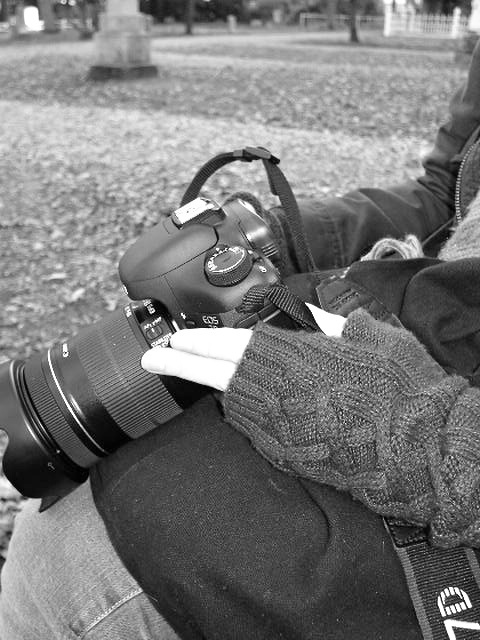
The photograph to your right, Portrait of a Photographer is a portrait of my friend and fine art photographer, Wendy Alger. I guess it might be more correct to say it’s a portrait of the camera not the photographer, though it was meant to capture the spirit in which Wendy works. I took the photograph some years ago during out trek through Historic Union Cemetery in Redwood City, California. Wendy pursued her art and I was chauffeur and tag-along doing the best I could. My own portrait here is a selfie captured using the photo feature on my MacBook. Happy interNational Photography Month.

Posted in Poems/Poetry, Victoria C Slotto

Write in the Moment

What a gift it is–those moments when I remember to notice life in detail. To stop and watch the diamonds scattered across the grass in early morning hours, to catch the sun, back-lighting the soft white fuzz of my dogs or breath in the scents of earth and jasmine in our garden. I wish that I could learn to be aware in each and every moment–that I could learn to silence the mindless conversations I have with myself, to let go of fears about the future or regrets about the past, to ignore gnawing worries about what others think.


Photo: David Slotto
Photo: David Slotto

An exercise I’ve used before that has been the source of many poems is this: at the end of every day (or even as the day progresses) jot down, in detail, some things that you notice. I usually try to create a list of ten. Here’s an example:

1. In the West, large white clouds hang heavy on the mountains. Someone has painted their underbellies with a wash of Payne’s gray.
2. Sparky lies curled at my feet, head erect like a Sphinx, but his eyes are at half-mast.
3. A hummingbird perches on the feeder outside my window. I think he’s in love with his reflection.

What are you noticing today? Is there a poem waiting for you to bring it forth?

– Victoria C. Slotto

© 2014, essay, Victoria C. Slotto, All rights reserved; © 2014, photograph, David Slotto, All rights reserved

2940013445222_p0_v1_s260x42034ff816cd604d91d26b52d7daf7e8417VICTORIA C. SLOTTO (Victoria C. Slotto, Author: Fiction, Poetry and Writing Prompts) ~ is an accomplished writer and poet. Winter is Past, published by Lucky Bat Books in 2012, is Victoria’s first novel. A second novel is in process. On Amazon and hot-off-the-press nonfiction is Beating the Odds: Support for Persons with Early Stage Dementia. Victoria’s ebooks (poetry and nonfiction) are free to Amazon Prime Members. Link HERE for Victoria’s Amazon page.

Editorial note: Congratulations, Victoria, on that the long awaited publication of print copies of Jacaranda Rain, Collected Poems, 2012, Beautifully done.

Writers’ Fourth Wednesday prompt is hosted by Victoria from January through October. Victoria’s next Fourth Wednesday writers’ prompt will post at 12:01 a.m. PST on May 28. Please join us. Mister Linky will remain open for seventy-two hours so that you can link your response to this blog.If you find Mister Linky too combersom to use, please feel free to leave your link in the comments section on Wednesday. Victoria and Jamie will read and comment and we hope you will read each other’s work as well, comment and encourage. 

Posted in Charles W Martin, Photography/Photographer, poem, Poems/Poetry, poetry

photoshopping my life…

honey
i wish i could convert
my life’s composite image
into one of those digital negatives
cause then
i could upload the whole thing into photoshop
and get busy fixing it
first thing i would do
is put you on the background layer of my life
so every layer of my life
would include you
that would clear up a hell of a lot
next i’d take that healing tool
and run it over my heart a couple times
maybe more
depending on which layer of my life i’m looking at
next i’d use that sharpening tool
on my head
just to clear up
some of life’s little mysteries
like how can kindness be used
as a weapon against you
and why do lies sound
better than the truth
and how can god not act
when soulless men kill his children
before they have even begun
to breathe in the beauty of  life
then i’d bring into focus
all the lies that have been told
so folks would see them
for what they are
i’d add a little color to some folks
just to have them feel
what i have felt
oh and of course
i would definitely
use the eraser
well honey
you know how
i
would
use
that

– Charles W. Martin

© 2014, illustration and photo, Charles W. Martin, All rights reserved

678ad505453d5a3ff2fcb744f13dedc7-1CHARLES W. MARTIN (Reading Between the Minds) — earned his Ph.D. in Speech and Language Pathology with an emphasis in statistics. Throughout Charlie’s career, he maintained a devotion to the arts (literature/poetry, the theater, music and photography). Since his retirement in 2010, he has turned his full attention to poetry and photography. He publishes a poem and a photographic art piece each day at Read Between the Minds, Poetry, Photograph and Random Thoughts of Life. He is noted as a poet of social conscience. Charlie has been blogging since January 31, 2010. He has self-published a book of poetry entitled The Hawk Chronicles and will soon publish another book called A Bea in Your Bonnet: First Sting, featuring the renown Aunt Bea. In The Hawk Chronicles, Charlie provides a personification of his resident hawk with poems and photos taken over a two-year period. Charlie’s lastest book, When Spirits Touch, Dual Poetry, a collaboration with River Urke, is available through Amazon now.

product_thumbnail.phpCharlie’s long awaited Aunt Bea Collection is out. He says, “Bea In Your Bonnet: First Sting is a collection of germinal poems featuring Aunt Bea. Aunt Bea’s voice is one I’ve heard almost every day of my life. Family observations, lessons, and advice given to me and every other family member who had the good sense to listen. Her homespun philosophy most likely will not be found in any collegiate textbooks or for that matter in any local town crier newspaper catering to city dwellers. Indeed, she has a different way of viewing the world; a bit old fashion, sassy, and steely at times but a viewpoint which has engaged my imagination and heart. I sincerely hope you too will find some morsel of wisdom in her personal observations and interpretations of life’s events, but do watch out for her stingers.”

Posted in Photography/Photographer, Video

Expanding the Circle: The Engaged Photographer

In this video, photographer and Moving Walls exhibition co-curator Susan Meiselas, an American documentary photographer, discusses documentary photography’s potential to connect and move audiences by “expanding the circle of knowledge” about human rights and social justice issues.

The video also features a variety of work by photographers supported by the Open Society Institute Documentary Photography Project. The project funds photographers who go beyond documentation, using images to foster civic engagement, organizing, advocacy, outreach, public awareness education, and media attention.

Opening photograph: © Eric Gottesman

Words and video courtesy of Open Society

Posted in General Interest, Photography/Photographer

Fusion: The Synergy of Images and Words

“The Synergy of Images and Words” from Steve McCurry, (b. 1950) American photojournalist. McCurry says, “If you wait people will forget your camera and the soul will drift up into view.”

McCurry’s work has been published widely with frequent credits in Vanity Fair and National Geographic. His most recent books are “The Iconic Photographs:” and “The Unguarded Moment.” In 1985 Houghton-Mifflin Company published his “The Imperial Way” with text by Paul Theroux.

Steve McCurry is a WordPress blogger as well as a world-class photographer.

Posted in General Interest, John Anstie, Mortality, Music, Poems/Poetry, Poets/Writers, Story Telling, Photo Story, theatre/spoken word, Video

Are There Any Other Civilisations … Out There?


I have held a universal and, it seems probably a pantheistic view of our life on earth for many years now. It is this: that there are probably other intelligent civilisations out there in the cosmos, but, in spite of our continued quest to find some and because of the humungous scale and mind boggling span of time that is represented in the life of the universe, we will never discover one. We may not even exist simultaneously. I would add a small warning to those, who like my mother-in-law, God rest her soul, are mind-bogglephobics, or who simply cannot cope with the scale of it all, that this may be a challenging concept to grasp. Nonetheless, it does require a calculator with a large scale, should you wish to do some proportions!

The following is a track from his album, “Letters from a Flying Machine” by a very fine musician, singer and songwriter from the USA, Peter Mulvey, whom we saw and met on the weekend at the Barnsley Acoustic Roots Festival.  Having listened closely to the words of his songs and one or two of his ‘between song’ talks, I asked him in our brief chat, did he by any chance write poetry? He replied that he didn’t; he preferred to leave that to the poets, but that a few of his friends were poets and that he read a great deal of poetry … to exemplify this, the inside cover of the album we bought from him, “Silver Ladder” reveals a brief quote from the 17th Century poet, Mizuta Masahide: “Barn’s burnt down – now I can see the moon”.

… anyway, back to the theme of this post.

The only thing I can do is ask you to listen to this story that Peter Mulvey tells of a conversation that he had, over some beer, with “Vlad the Astrophysicist“:

Sums it up very neatly for me.

You might also want to listen to some of this fellow’s music; there is poetry in a lot of it.

 © 2014 John Anstie

John_in_Pose_Half_Face3

JOHN ANSTIE (My Poetry Library and 42) ~ is a British writer and poet, a contributing editor here at Bardo, and multi-talented gentleman self-described as a “Family man, Grandfather, Occasional Musician, Singer, Amateur photographer and Film-maker, Apple-MAC user, Implementation Manager, and Engineer”. He has participated in d’Verse Poet’s Pub and is a player in New World Creative Union as well as a being a ‘spoken-voice’ participant in Roger Allen Baut’s excellent ‘Blue Sky Highway‘ radio broadcasts. John has been blogging since the beginning of 2011. He is also a member of The Poetry Society (UK).

*****

product_thumbnail-3.php

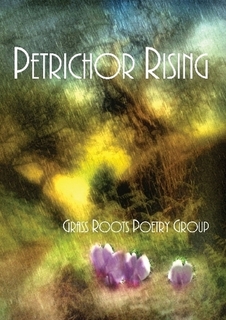
51w-rH34dTL._BO2,204,203,200_PIsitb-sticker-arrow-click,TopRight,35,-76_AA300_SH20_OU01_John has also been involved in the recent publication of two anthologies that are the result of online collaborations among two international groups of amateur and professional poets. One of these is The Grass Roots Poetry Group, for which he produced and edited their anthology, “Petrichor* Rising. The other group is d’Verse Poet Pub, in which John’s poetry also appears The d’Verse Anthology: Voices of Contemporary World Poetry, produced and edited by Frank Watson.

Petrichor – from the Greek pɛtrɨkər, the scent of rain on the dry earth.

Posted in General Interest, Nature

TRAVEL THEME: BLOSSOMS

The lovely young mother, Imelda, delights her thousand-plus followers with her artful photographs of flowers sometimes found in unexpected places. Often, as with these two Lily of the Valley, Imelda pairs her photos with a sort poem. Bravo, Imelda …

Imelda's avatarMY WALL


Lily of the Valley

Their scent calls to the eyes
to show them a thousand delights –
Lily of the Valley of the purest white.

Lily of the Valley2

For AILSA’s TRAVEL THEME:  BLOSSOM.

View original post

Posted in General Interest, Naomi Baltuck, Photo Essay, Photography/Photographer

Tempest in a Teapot

When my daughter Bea and I were in England, I took her to the picturesque little town of Rye.


Rye was a Cinque Port, charged in 1155 by Royal Charter to provide ships for the royal navy, and rewarded with tax-exempt status and other privileges.

Rye was situated on the coast until The Great Storm of 1287 silted the harbor, and transformed the coastal port into a river port, two miles inland.

The town’s history is colorful, with smuggling, and raids by and against the French, just across the Channel. It’s also said to be the most haunted town in England. There’s the ghost of the girl who fell in love with a smuggler and was murdered by him for her indiscretion.  Turkey Cock Lane is haunted by the ghost of the monk bricked up alive behind a wall for trying to elope with a local lass. The mysterious boy wrapped in a shroud, and a pair of duelers reenacting their last fatal sword fight are just a few of the ghosts who frequent The Mermaid Inn.   So many stories!

Every house has a story.   In Rye, as with everywhere else in England, they like to give their houses a name.  White Vine House was very pretty.

On a narrow cobbled lane called Mermaid Street stands The Mermaid Inn, which dates back to 1156.

 It was remodeled in anticipation of a visit from Queen Elizabeth I.  On a previous trip, I stayed at The Mermaid in a room with a plaque on the door boasting that the Queen Mum had once spent the night in that very room.  I think I can truthfully say I have slept in the same bed, looked out the same window and, at least for a little while, sat on the same throne as Queen Elizabeth II’s mum!

The Mermaid Inn was so famous that the house across the street was known simply as “The House Opposite.”


We discovered an unusual house, with two front doors.  The owners called it, “The House With Two Front Doors.”  (Well, of course, they did!)  They even had the name painted on it in shiny gold paint.

The neighbors who lived next to The House With Two Front Doors also had a house with one distinguishing feature, a bench built into one side of the porch.  Maybe they thought the neighbors were getting too high and mighty, with their spiffy gold-painted signs and their highfalutin name.  In what seems a clear case of one downmanship, they too gave their house a name, and put up their own sign to let passersby know they were looking at “The House With the Seat.”

I want to know all the stories–big ones like The Great Storm that changed the whole coast of England overnight, compelling but heartbreaking ones like the Mary Stanford Lifeboat Disaster, in which the entire heroic rescue crew was drowned in a storm, trying to save survivors of a shipwreck who had already been saved.  Some of my favorite tales are the Tempests in the Teapots.  Those you won’t find in tour guides or history books, but you might be fortunate enough to stumble upon one.  A local told us stories about watching the filming of Cold Comfort Farm in Rye.  Afterwards we took afternoon tea in the teahouse where one scene was filmed.

Stories live all around us. Some fall into our lap like ripened fruit from a tree.  Others are hiding in nooks and crannies, waiting to be ferreted out.  Often we are left to speculate over the missing details–not unlike trying to read tea leaves in the bottom of the tea cup.  Who hid in the priest hole over the fireplace at The Mermaid Inn?  Who was left to mourn the seventeen lads lost in the Mary Stanford disaster?  Do the occupants of The House With Two Front Doors and those of The House With the Seat ever sit down together for a cup of tea?

All images and words c2013 by Naomi Baltuck

NaomiPHOTO1-300ppi51kAqFGEesL._SY300_NAOMI BALTUCK ~ is a Contributing Editor and Resident Storyteller here410xuqmD74L._SY300_ at Bardo. She is a world-traveler and an award-winning writer, photographer, and story-teller whose works of fiction and nonfiction are available through Amazon HERE. Naomi presents her wonderful photo-stories – always interesting and rich with meaning and humor – at Writing Between the Lines, Life from the Writer’s POV. She also conducts workshops such as Peace Porridge (multicultural stories to promote cooperation, goodwill, and peaceful coexistence), Whispers in the Graveyard (a spellbinding array of haunting and mysterious stories), Tandem Tales, Traveling Light Around the World, and others. For more on her programs visit Naomi Baltuck.com

Posted in Culture/History, General Interest, Victoria C Slotto

Cultural Connections–International Museum Day

“Museums are an important means of cultural exchange, enrichment of cultures and development of mutual understanding, cooperation and peace among peoples”. Internation Council of Museums 

Image: George Andrews

Yesterday the world community celebrated International Museum Day. The International Council of Museums (ICOM) established this event to occur each year on or about May 18th. In 2013, 35,000 museums from 143 countries on five continents participated, welcoming guests to their venues, without charge.

The theme for this year’s celebration, as established by the ICOM is “Museum collections make connections.”

Until last year I had the great pleasure of serving as a docent at the Nevada Museum of Art (NMA), Nevada’s only accredited art museum. The role of the docent is, as the name implies, to lead the public in tours of the museum’s offerings, and to teach participants about various exhibits. This requires numerous hours of on-going training in the rotating exhibits and offers opportunities to meet (in the case of an art museum) artists, curators and collectors of art.

When I attended a National Docent Symposium a few years ago, I became more aware of how many types of museums were represented: those dealing with history, collections such as cars (the National Automobile Museum is here in Reno), zoos, botanical gardens, sports, entertainment, children discovery centers, occupations, science cultures…the list goes on and on.

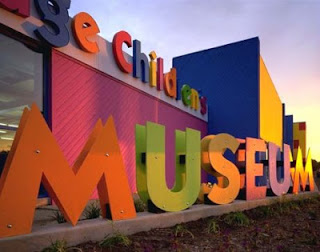
Photo: Palm Springs Life

I found the greatest joy in introducing children to the world of art—to watch them respond to the principles and elements of art such as color and texture, to learn to use art as a launching pad for story-telling and poetry, to learn to use their senses to jump into a painting and explore what it might taste like, smell like, feel like. I planned age-based activities and each tour was followed by an art experience.

In keeping with this year’s theme, museums offer a chance to experience other cultures and to understand the point of view of the forces behind the exhibits. They teach responsibility for the environment, diversity, and offer families the opportunity to share.

In honor of the spirit behind International Museum Day, please consider paying a visit to a museum of your choice. Perhaps the idea of becoming a docent will appeal to you if you are looking for a volunteer opportunity. Docents are educators, though it is not necessary to have a background in education, or even in your field of interest, thanks to the intense initial training program and on-going education.

It was hard for me to resign my position. It was a passion for me. But life circumstances change and sometimes the time commitment becomes unattainable. I find it dangerous to visit NMA now—I want to jump back into the role that is no longer realistic. But when I tour with friends or my husband, I find the docent in me taking over. I devise questions I would ask the school children, activities I would have them do.

To learn more about museums in your area just google “Museums (your town).” You will be surprised. And rewarded.

– Victoria Slotto

© 2014, essay, Victoria C. Slotto, All rights reserved; photo credits as indicated above

2940013445222_p0_v1_s260x42034ff816cd604d91d26b52d7daf7e8417VICTORIA C. SLOTTO (Victoria C. Slotto, Author: Fiction, Poetry and Writing Prompts) ~ is an accomplished writer and poet. Winter is Past, published by Lucky Bat Books in 2012, is Victoria’s first novel. A second novel is in process. On Amazon and hot-off-the-press nonfiction is Beating the Odds: Support for Persons with Early Stage Dementia. Victoria’s ebooks (poetry and nonfiction) are free to Amazon Prime Members. Link HERE for Victoria’s Amazon page.

Editorial note: Congratulations, Victoria, on that the long awaited publication of print copies of Jacaranda Rain, Collected Poems, 2012, Beautifully done.

Writers’ Fourth Wednesday is hosted by Victoria from January through October. Tomorrow Victoria’s Fourth Wednesday writers’ prompt will post at 12:01 a.m. PST. Please join us. Mister Linky will remain open for seventy-two hours so that you can link your response to this blog. Victoria and Jamie will read and comment and we hope you will read each other’s work as well, comment and encourage. 

Posted in Film/Documentaries/Reviews, Photography/Photographer

Through a Lens Darkly: How African-Americans Use Photography to Shape Their Cultural Representation

Another post in our celebrations of interNational Photography Month.

Posted in Essay, Photography/Photographer, Spiritual Practice, Terri Stewart

Sacred Space and Photography: Light

This month is interNational Photography month! Here at The Bardo Group, we will be playing with this theme all month-long. On Sundays, we will be focusing on where the practice of photography intersects with our own experience and expression of spirituality.

In my journey with photography, I have become more aware of light. The presence of light, the absence of light, how it causes reflection, my friend, Paul Jeffrey, told us once that he always turns the flash off, taking advantage of natural light. (I’m sure the rule is “almost always.”) I find that in photographing nature, that I try to stick to that rule and rely on photo-editing software to help me out if I need it. He also taught us how to make a faux tripod to steady ourselves when our shutter speed is taking just a little bit too long.

Light is a dominant theme in religious traditions also.

  • Christianity: “The light shines in the darkness and the darkness did not overcome it.” (John 1:5),
  • Islam: “Knowledge makes you free from the chains of ignorance, and revives your heart, knowledge takes you out from the darkness of suspicions and superstitions, and gives a new light to your eyes. (Hazrat Abu Ali Saqfi)
  • Judaism: “I will say to the prisoners, ‘Go free!’ and to those who are in darkness, ‘Come out to the light!’ (Isaiah 49:9)
  • Buddhism: “Doubt everything. Find your own light.” (Gautama Buddha)
  • Hinduism: “One who kindles the light of awareness within gets true light.” (Unattributed)
  • Baha’i: “Grant that the light of unity may envelop the whole earth.” (Bahá’u’lláh)

The general thrust is that light is a metaphor for that which brings us to a higher consciousness or awareness, provides hope, guidance, and love. It is a beautiful thing when, through appropriate use of light, we can communicate a deeper exploration of these qualities—awareness of what is unseen, hope, love, beauty—a very real reflection of life. And sometimes, light lets you see something in a different way.

My favorite picture that I’ve ever taken of one of my children captures light and it seems, to me, to convey innocence and an essential quality of “child” that is so easy to forget. This is an old photo, by the way! And the picture isn’t perfect, but it still conveys a lightness of being that transcends the particular quality of the photo.

by Terri Stewart CC License (BY-NC)
by Terri Stewart
CC License (BY-NC)

How do the following pictures and their use of light point to something beyond the images captured in the photo?

Light Collage by Terri Stewart
Light Collage
by Terri Stewart

What do thoughts of light lead you to? Do you have a favorite photo that features light or the absence of light?


Shalom and Amen!

Post by Terri Stewart, 2014
Photography, CC License (CC BY-NC)

terriTerri Stewart ~ a member of our Core Team,  comes from an eclectic background and considers herself to be grounded in contemplation and justice. She is the Director and Founder of the Youth Chaplaincy Coalition that serves youth affected by the justice system. As a graduate of Seattle University’s School of Theology and Ministry, she earned her Master’s of Divinity and a Post-Master’s Certificate in Spiritual Direction with honors and is a rare United Methodist student in the Jesuit Honor Society, Alpha Sigma Nu. She is a contributing author to the Abingdon Worship Annual.

Her online presence is “CloakedMonk.” This speaks to her grounding in contemplative arts (photography, mandala, poetry) and the need to live it out in the world. The cloak is the disguise of normalcy as she advocates for justice and peace. You can find her at www.cloakedmonk.com,www.twitter.com/cloakedmonk, and www.facebook.com/cloakedmonk.  To reach her for conversation, send a note to cloakedmonk@outlook.com.


Posted in General Interest, Niamh Clune, story

Ssssh! Don’t Tell Anyone!

dr-nanaplum-amazingbooksforchildren.comShall I let you into one of my secrets?

When I was little, fairies lived at the bottom of my garden. I used to talk or sing to them quietly (as fairies don’t like shouting). And when dew covered the grass and made it glitter and sparkle, I knew the fairies were preparing for a shindig.

Everyone knows that when dew is on the grass, fairies have their choice of the most beautiful sparkles imaginable. Fairies might wear peony, iris, or rose sparkle. Boy fairies wear shamrock and breeches made of bark ~ be-dewed and made smooth and slithery ~ great for sliding down mole-hills!

Fairies love nothing more than dew! They drink it; it makes them giggle! They wear it; it makes them shimmer. Dew really is the diamond in the fairy-queen crown.

Apart from anything else, dew means the dawn of a new day, when fairies can flit and dart ~ flicker and start; hover and whiz ~ zip and fizz; float and flash ~ make-a-dash; tease and prance ~ skip and dance; hurry and scurry ~ all of a flurry; rush and rail ~ skim, speed and sail!

The best Leprechaun fiddlers play the most lively jigs! Elf harpists pluck at your heartstrings and weave magic in verse. Goblins are the best drummers, whilst meadow sprites have very high, reedy singing voices. Usually appearing on percussion are the cobbler gnomes ~ with a-clink and a-clank, whenever needed. All in all, fairy gatherings are a sight to see ~ for those able to see them.

I spent many an early morning dancing fine jigs to the tunes of the little people, singing long songs or reciting poems, all of which are of very great interest to fairies. They taught me some of their secrets about bees and butterflies, worms and magic bears who know such an awful lot about everything. They also taught me how to grow up into someone who is wise. I like to share some of those mysteries with boys and girls (and grown-ups who still have magic in them) who are inquisitive but can also keep a secret.

Sssssssssh! Promise you won’t tell anyone…

Find me on dr-nanaplum-amazingbooksforchildren.com if you would like more stories!

© 2014, illustration and story, Plum Tree Books, All rights reserved

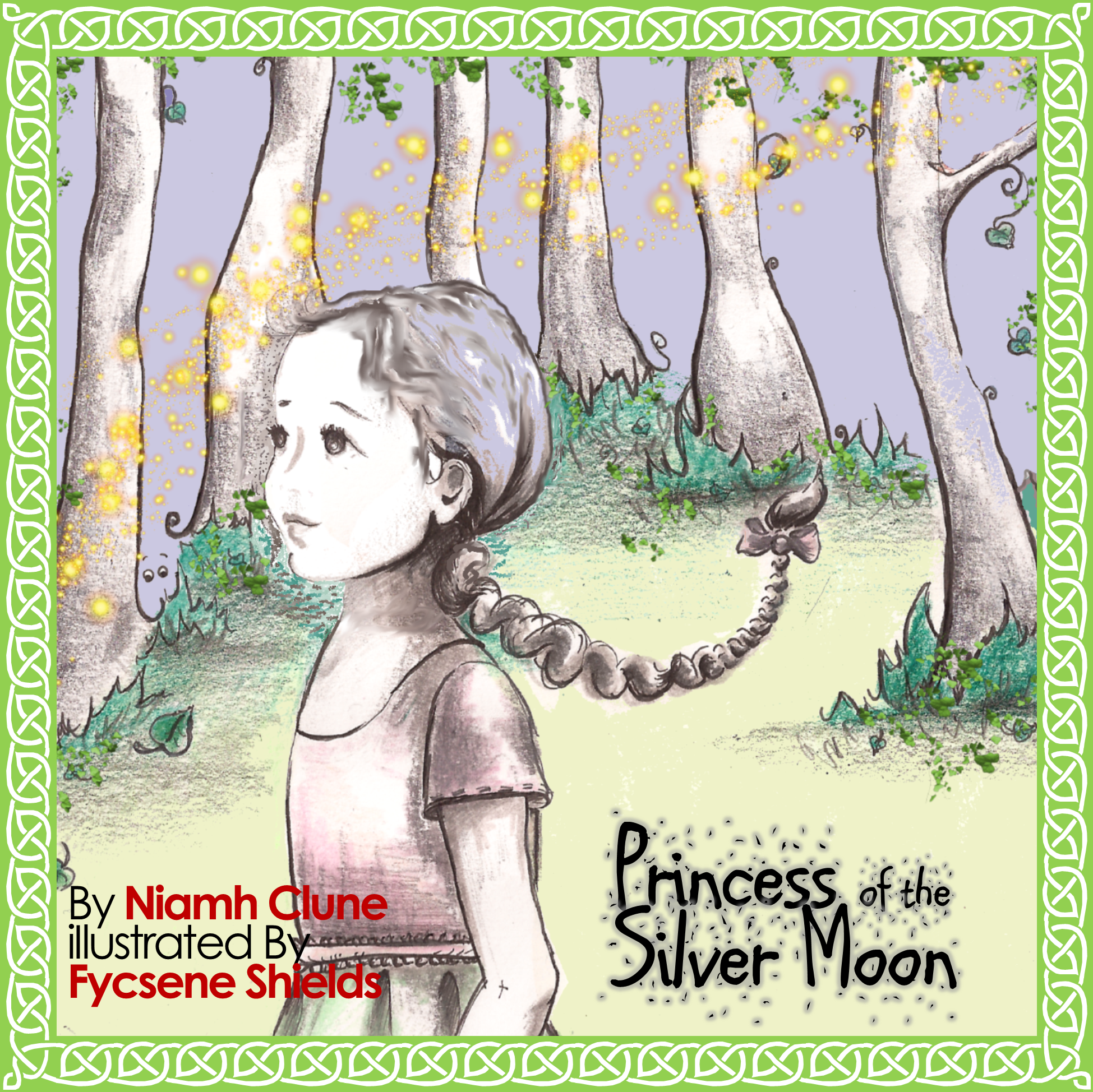
430564_3240554249063_1337353112_n-1orange-petals-cover_page_001DR. NIAMH CLUNE (Plum Tree Books Blog) ~ is the author of the Skyla McFee series: Orange Petals in a Storm, and Exaltation of a Rose. She is also the author of The Coming of the Feminine Christ: a ground-breaking spiritual psychology. Niamh received her Ph.D. from Surrey University on Acquiring Wisdom Through The Imagination and specialises in The Imaginal Mind and how the inborn, innate wisdom hidden in the soul informs our daily lives and stories. Niamh’s books are available in paperback (children’s books) and Kindle version (The Coming of the Feminine Christ). Dr. Clune is the CEO of Plum Tree Books and Art. Its online store is HERE.  Niamh’s Amazon page is HERE.

Posted in Art, Disability, Photography/Photographer, Wendy Alger

About my friend, Wendy Alger, Fine Art Photographer

WENDY ALGER (b. 1972), Chicago, IL, U.S.A.

Fine Art Photography

“Photography. It’s like music … It’s like your favorite song, something you can listen to over and over and over again. You try to explain it to some and you can’t. That’s the feeling it gives me. It’s like traveling and you want to tell everyone how great it was … and I have that experience every time I pick up a camera.” Wendy Alger

My friend, Wendy Alger, is a talented photographer, now still active though legally blind. Wendy pursued the craft of photography as a hobby until another friend of hers suggested that she become a photographer. Wendy thought that sounded just right and a natural thing to do since both her parents were photography enthusiasts. Wendy’s dad supported her new goal and gave her one of his cameras and some lenses. And so the story begins …

At the time when this adventure started, Wendy owned an old ’68 Mustang. She’d drive around, listening to music. When something called out to her, she’d stop and take photographs. Thus Wendy began to learn what subjects appealed. “I photographed everything that felt right and compelled me to keep taking photographs.” Slowly, she discovered the artful photographer within and her own distinctive style. “I enrolled at the Academy of Art University in San Francisco and trained there, where I learned manual SLR. I also learned how to use a dark room.”

I am always surprised and delighted with the remarkable results Wendy manages despite the limitations of her sight due to retinitis pigmentosa. Quite a bit older than Wendy, I cut my own photo visionings using a Brownie and have not graduated much beyond that. My camera is digital, but it’s just a simple budget-wise P.H.D. (Push Here Dummy) camera.  Wendy, however, uses newer, better quality and more complex equipment than mine and tells me that these newer technologies facilitate the practice of her craft.  “I use a digital camera and I can check my pictures on the camera instead of in a dark room. Nowadays, my darkroom is a laptop, Photoshop and Photoshop Lightroom. This allows me to transform and print my images at home. I also use visual memory … I remember feeling to get through a photo session.”

Wendy’s long-term goal:

“To have my artwork displayed in the same building as Walker Evans in my lifetime – not after – during! My vision problems are not stopping me. I never even think about that. After I was diagnosed and as soon as I got the money I bought my digital camera.”

Here is a small gallery of Wendy’s recent work with a digital camera. The photo at the head of the post and the first one below are self-portraits. Wendy’s photographs are copyright protected. You can see more of her work HERE. She’s now in the process of updating her site.

– Jamie Dedes

© photographs, 2011 Wendy Rose Alger, All rights reserved

Photo on 2014-03-31 at 17.16 #3kif_0858-1JAMIE DEDES (The Poet by Day)~ I am a medically retired (disabled) elder and the mother of a married son. The graces of poetry, art, music, writing and reading continue to evolve as a sources of wonder and solace, as creative outlets, and as a part of my spiritual practice. My Facebook pages are: Jamie Dedes (Arts and Humanities) and Simply Living, Living Simply.

The photograph to your right, Portrait of a Photographer, which some will recognize as the photo I used for Wordless Wednesday, is a portrait of Wendy. I guess it might be more correct to say it’s a portrait of the camera not the photographer, though it was meant to capture the spirit in which Wendy works. I took the photograph some years ago when we spent an afternoon at Union Cemetery in Redwood City, Wendy pursuing art and me as chauffeur and tag-along doing the best I could. My own portrait here is a selfie captured using the photo feature on my MacBook. Happy interNational Photography Month.

Posted in Culture/History, General Interest, Guest Writer, Imen Benyoub, Music, Peace & Justice

Music, Language of the Soul

1912340_522627457840294_1074926792_n

“Music is…a higher revelation than all wisdom and philosophy”
Ludwig Van Beethoven.

Sarajevo under siege…a city in ruins that wakes up on the sound of shelling and bombing and sleeps on that of mourners. This beautiful city, so rich in history, architecture and art suffered the horrors of a four years siege considered the longest in modern history, and became Europe’s capital of hell since the war broke in 1992, to coincide with another atrocious civil war that broke in my own country and lasted almost ten years, what we Algerians know as “the dark decade”.

At 4 pm on May 27, people were queuing in front of a bakery in Sarajevo for bread; a mortar shell dropped in the middle and killed 22 people instantly. A man witnessed the massacre and was so appalled by the sight of blood and torn bodies so he decided to do something.

This man was Vedran Smailović, a widely recognized and talented cellist who went everyday for 22 days to the bombed site the exact time of the massacre and played cello, in honour of those who died in front of him and all of the victims, all those hiding from snipers’ bullets, the refugees, the hungry, the wounded, the destroyed homes and for his smouldering, exhausted city that struggled to survive.

This man sent a prayer of peace through his music, that the city of his heart might witness a brighter future, and he became the symbol of peace all over Bosnia, playing in graveyards and bombed sites, despite the shelling and fired bullets, Smailović was engulfed by light, the light of hope he was spreading all over the battered city. No crowd applauding to his performance, just Angels protecting him.

It’s been years since the dreadful siege and the civil war in my country ended, but did Sarajevo recover from its dark past? Did my people ever forget? the victims, the mass graves, and the fear they lived in all those years…

We are never entirely healed of our memory.

Al Yarmouk refugee camp in Damascus Syria, another Sarajevo, another siege, people dying from a severe lack of food, water and medical supplies, massive destruction of homes and buildings, for weeks the Government forces besieged the camp and starved its people on purpose, the majority of them Palestinians who were exiled from their country in 1948, they found themselves caught against their will in a merciless war that made Damascus, a beautiful and rich city…Middle East’s capital of hell.

History repeats itself, it always strikes me how it does, and not always in the gentlest way, I believed it with all my being when I saw young men with a battered piano in the middle of rubble playing music and singing for peace and freedom, I said: if Vedran Smailović could see those proud and defiant guys whose souls are connected to his, one of them a pianist who started playing since he was six, he used to repair musical instruments with his father and studied music in the university of Homs*, the others, just ordinary people praying for the end of the war, and dreaming of a safe united country again in their own way.

They sang: “Oh displaced people, return; the journey has gone for too long. Yarmouk we are a part of you and that will never change.”

Smailović would have loved what those Palestinians did, because he, of all people will understand the meaning of creating beauty amid destruction, and defying death with the language of the soul…Music

(I would secretly thank that man who set up his piano in front of armed police, a day after protesters in Kiev brought down the statue of Lenin, and played Chopin…he inspired me to write this post)

*Homs: a Syrian city

Editorial note:  A partial translation of the song and apologies for any inaccuracy.
“from among the ruins and under the ashes, the [Palestinian] phoenix sings for life and will rise again for the cause of freedom …”

– Imen Benyoub

© 2014, essay, Imen Benyoub, All rights reserved; photo credit ~ Rashid Essa (Almadon News), youth in Al Yarmouk Refugee Camp, ” © electronic cities” under CC A-SA, no modification to photograph is allowed

.

pictureIMEN BENYOUB ~ is a multilingual, multi-talented writer, poet, and artist living in Guelma, Algeria. She is a regular contributor to Into the Bardo and to On the Plum Tree and Plum Tree Books Facebook page.