The video was uploaded to YouTube by tomasisms and is the work of Andrea Dorfman. The poem was written by Tanya Davis, poet, writer, musician. Thank you to Michael Yost (Michael’s Lair) for sharing this one with us.
The BeZine Blog
Enthusiasm and Optimism vs Entropy … Part 2
As the title of this post suggests, as referred to in Part 1 of this essay, it is not only about entropy and thermodynamics, but is also about enthusiasm for and optimism about life. It is, therefore, about human endeavour, from the smallest and least significant to the most admirable and life changing endeavours ever achieved by the human race. Whatever your accomplishments, however great or small they are, or however great or small a part you play in greater achievements, they still represent progress in both time and towards order and, according to Newton’s second law of physics, this tells us that matter can neither be created nor destroyed; it can only be converted from one form to another. Therefore, each breath we draw, each word we speak, each action we take, is never lost; it remains as a small quantum of energy, an echo of which will exist forever, somewhere in the cosmos.
I just love the mere thought of this concept, let alone that it could actually be true.
The other principle put forth by astrophysicists, which seems to be irrefutable, is that time is irreversible. Professor Cox referred to this as the arrow of time, always pointing and moving in one direction, never going back. He does give lip service to the possibility that this cannot be said to be true with absolute certainty, but that it is extremely unlikely or, in statistical terminology, there is a very low probability that time will reverse. So it must also be with human enterprise, in whatever field of endeavour it may be, there is need for us to accept that we will always move forwards, never backwards; onwards and, preferably, upwards in our understanding of life, our world and the universe. Otherwise, there is a tendency toward disorder, mentally, physically and maybe spiritually too. We can read about the past, we can look at pictures of it and we can learn from it, but we live for the future.
Trying to persuade a teenager to tidy their bedroom is impossible without a carrot; and even then it is still difficult. Maybe they could be persuaded by the thought of ‘black dwarves’ imploding and evaporating into nothingness as a consequence of not keeping their bedrooms in order and halting the ‘tendency toward disorder’. May be, may be not! But our every move, motivation and impulse is driven by the march of time as well as this tendency in our everyday lives – let alone what is happening in the world at large – toward disorder, whether that disorder has natural or man-made causes. But I don’t think we should feel any less relaxed about the march of time than we would otherwise feel. On the contrary, I suggest, as a result of this thesis, this comparison with the enormity of the universe, that, provided we can get our minds round the huge timescales, we should allow its perspective to comfort us: that there is no panic or rush. As much as we can sometimes enjoy the moment, life is really a journey into the future. Technically, we cannot stand still; we have to accept that even standing still and enjoying the moment is, still, moving and progressing into the future. It is deeply ingrained in our being.
So, I suppose it depends on whether we are an optimist or a pessimist, an enthusiast or less eager, as to whether we find it easier or harder to push the outside of the envelope and re-order the disorder in our lives. But push we must. There is an enduring lesson that I take from this particular perspective. When I compare the huge amount of time that will have elapsed between the beginning and ending of the universe to the minuscule timescale of our own existence on Earth, our own small little part of the world, which is an even smaller (by a trillion, trillion, trillion, etc orders of magnitude) than the great big cosmos, then the feeling I am left with is that we have plenty of time. Did you know that, since our forebears first evolved on our earth, in Africa about two and a half million years ago, our own solar system has revolved around the galaxy (the ‘Milky Way’) by only one percent of a complete orbit of the galaxy; and the galaxy itself is only one of billions in the universe. So, hey, if things didn’t quite go to plan today, whatever; “am I bovvered’ as Catherine Tate would say!
I’m not sure to whom the quotation is attributed, but Professor Brian Cox, in the process of concluding the first episode, said that “Life is the means by which the cosmos understands itself.” Obvious on one level, but extraordinarily significant on another. There might be other, similar life in another solar system in our own galaxy or in another galaxy farther away, but we are unlikely to find out if they do exist. We truly cannot know even the probability of the human race co-existing along with another civilisation, somewhere else in the universe, because – as Vlad, The Astrophysicist tells us – the enormous distances and time scale that the universe represents, make this probability extremely low. This being the case – in spite of an imperfect world, which sometimes seems to be broken – perhaps we should stop trying to escape from our Mother Earth, stop trying to dream the impossible (or improbable) dream, and start trying to fix what we have broken; stop breaking what we have left.
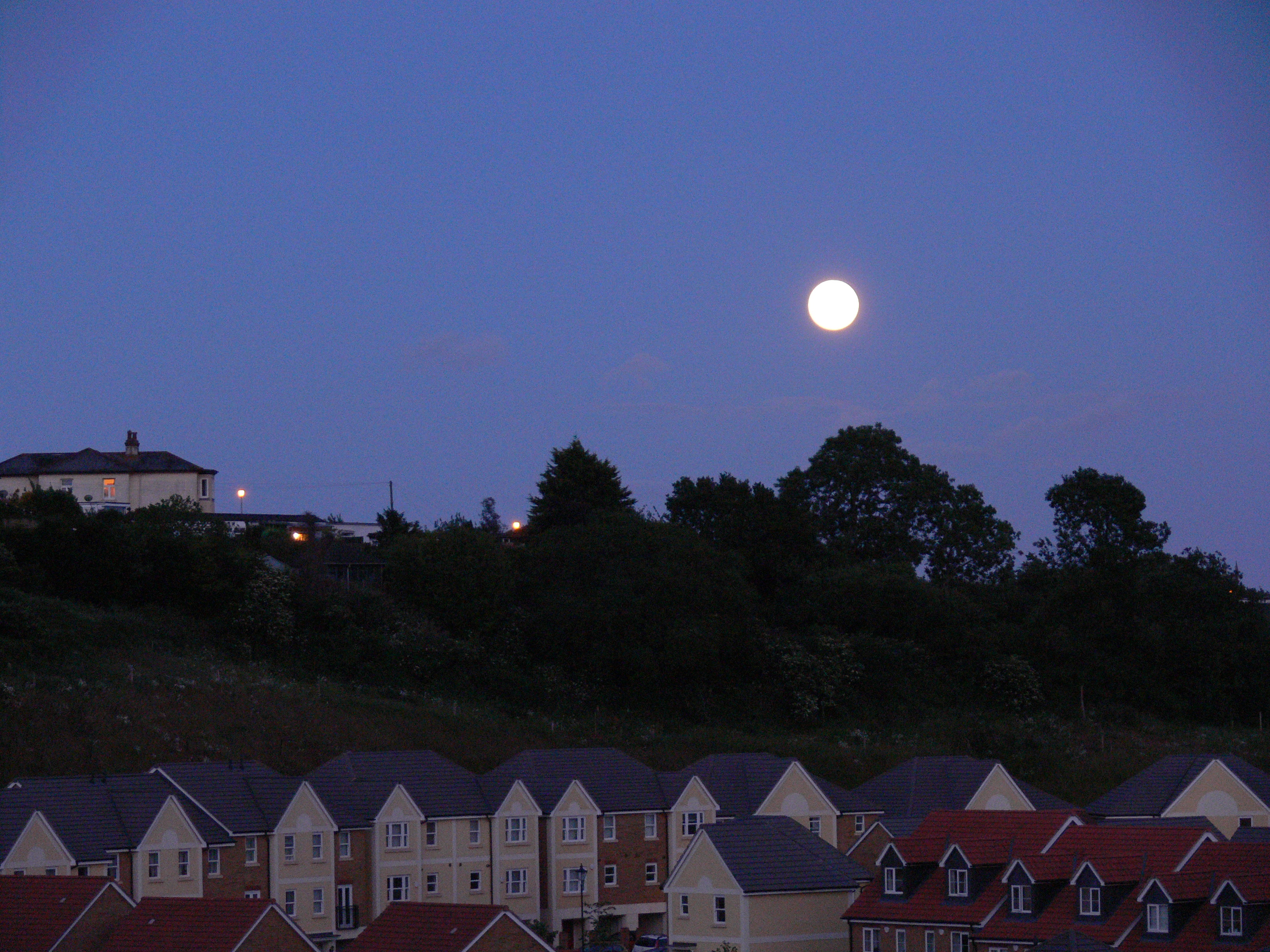
To be the remarkable, intellectual, innovative and industrious animals that we are, where we are right now, is still very special and continues to give me hope that we can reverse the destruction of our very small part of the universe, that is our Mother Earth. I hope that, in spite of sometimes awesome uncertainty and the depressing way in which some members of the human race behave towards her (not forgetting the entropy, of course), you will agree that we do still have the capability to meet our future together on this planet with optimism and enthusiasm?
~~~~~~~~~~~~~~~~~~
JOHN ANSTIE (My Poetry Library and 42) ~ is a British writer and poet, a contributing editor here at Bardo, and multi-talented gentleman self-described as a “Family man, Grandfather, Occasional Musician, Singer, Amateur photographer and Film-maker, Apple-MAC user, Implementation Manager, and Engineer”. He has participated in d’Verse Poet’s Pub and is a player in New World Creative Union as well as a being a ‘spoken-voice’ participant in Roger Allen Baut’s excellent ‘Blue Sky Highway‘ radio broadcasts. He’s been blogging since the beginning of 2011. He is also a member of The Poetry Society (UK).
*****
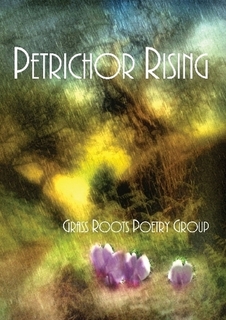
 John has also been involved in the recent publication of two anthologies that are the result of online collaborations among two international groups of amateur and professional poets. One of these is The Grass Roots Poetry Group, for which he produced and edited their anthology, “Petrichor* Rising“. The other group is d’Verse Poet Pub, in which John’s poetry also appears The d’Verse Anthology: Voices of Contemporary World Poetry, produced and edited by Frank Watson.
* Petrichor – from the Greek pɛtrɨkər, the scent of rain on the dry earth.
Enthusiasm and Optimism vs Entropy … Part 1
In the wee small hours of one morning, three years ago, I had one of those elusive moments of clarity; in fact, one of those moments so aptly described by Kona Macphee on the introduction of her excellent blog site in December 2010. Apart from the lack of sleep, this was a consequence of watching a documentary about the universe – always guaranteed to stir my brain into action – combined with thinking, as I am wont to do with my recently discovered propensity for getting in touch with my literate side, about the human condition, our general outlook on life and how we deal with it; pessimism and a lack of eagerness on the one hand; optimism and enthusiasm on the other. It is a perspective, in other words, but one that fills me, not only with hope, but also with wonder, especially when you view that perspective in the dramatic light of the universe. This essay seems also to tie my thoughts in rather well with those, recently published on Terri Stewart’s excellent and stimulating ‘Begin Again‘ blog, of J R Cowles in his mind-blowing essay on Schroedinger’s Cat.
I am talking about BBC2 television’s documentary, the ‘Wonders of the Universe’. Episode one was shown in March 2011. It is presented by Professor Brian Cox, who somehow manages to demonstrate, well, at least convince us, that, just as the universe had its beginning – the so-called ‘Big Bang’ – about 13.7 Billion years ago, so it is predicted that it will have an ending, albeit rather a long time hence! He concluded this, the first episode, with an extraordinary perspective on time and of how we can come to terms, not only with how long the universe has existed already (ibid) but also with the mind-boggling amount of time it has left to exist – before all matter contracts into ‘Black Dwarves’, which then dissolve into non-matter; suffice to say there was an awesome count of zero’s on the end of the number he quoted (trillion, trillion, trillion several times, in years!). Then, as if to dash our hopes to fears of the nearness of the end of the world, presenting this documentary, as he does, with an element of drama that would lightly grace the screening of a roller-caster Hollywood thriller at your local cinema, he then explained that life in the universe, that is effectively our life here on earth, was represented by an extremely small fraction (with an awesome number of zero’s on the bottom line this time) of a percent of that total time. But worry not, dear readers, because we still have an estimated one billion (thousand million) years to go before our own sun begins to die, by expanding and enveloping the planets in our solar system!
So, in spite, or rather, because of the awesome scale of all of this, there is a great deal of optimism that should be felt as a result, but not necessarily for the most obvious reasons. I know some people have great difficulty coming to terms with the results of scientific research into the evolution of the cosmos, and some I know actually cannot accept the concepts (I refer you again to Schroedinger’s Cat and the overarching principle that nothing is ever absolutely one hundred percent certain), which relate to its make up and that are propounded by scientists, that seem to deny that the universe, or at least the earth, had a genesis and was therefore created. These alternative views need to be respected; I would go on to propose that the two views are not actually mutually exclusive, but this discussion will have to wait for another time.
Out of the three core subjects, Maths, Physics and Chemistry, I always remember enjoying physics most of all. It was perhaps the more visible nature of most of its disciplines, that appealed; understanding the principles of heat, light, sound, electricity, magnetism, gravity, force, energy and all the experiments that were done to test and prove the theories. During the latter stages of my further scientific and engineering education, I also had to study that branch of physics, which was known as thermodynamics. I found this subject very tedious, but on reflection this was mainly due to the horrible mathematics that were inevitably required to define and measure its principles; and maths wasn’t my favourite discipline! The one principle, or rather variable, which is in fact fundamental to the second law of thermodynamics, which I have always retained in my memory, is ‘entropy’. Ent-what? I hear you ask! Well, the description of entropy I was taught is that it is a measure of the “tendency toward disorder”.
Brian Cox introduced entropy by going to a disused diamond mine in the desert of Southern Namibia, which was abandoned over fifty years ago, the remains of which is a picture of decaying buildings, which are in the process of gradually being taken over by the desert’s sand and dissolving into nature. He illustrated the principle of entropy by comparing a simple pile of sand with a sand castle, which he made in a good old square shaped seaside sand bucket. The former, pile of sand, he described as having “maximum entropy” because there were an almost infinite number of ways it could be re-ordered without significantly changing its shape or structure. In other words, it was very ‘disordered’. The shaped sand castle, on the other hand, with its flat sides and four little corner castellations, had a very defined and specific shape and structure; it was very ‘ordered’. The second law of thermodynamics basically states that the quality of matter deteriorates gradually over time; likewise, usable energy, which is inevitably used for productivity, growth and repair, is converted into unusable energy; hence the tendency toward disorder. So too the sand castle, left to the natural forces of the desert, over (a relatively short) time, it will revert to a pile of sand.
You may well by now be asking what I am getting at! You may be shouting at your screen: “get to the point”! This assumes, of course, that you haven’t already given up on me! Well, there is most certainly a point, which I will tell you in Part 2.
~~~~~~~~~~~~~~~~~~~~
JOHN ANSTIE (My Poetry Library and 42) ~ is a British writer and poet, a contributing editor here at Bardo, and multi-talented gentleman self-described as a “Family man, Grandfather, Occasional Musician, Singer, Amateur photographer and Film-maker, Apple-MAC user, Implementation Manager, and Engineer”. He has participated in d’Verse Poet’s Pub and is a player in New World Creative Union as well as a being a ‘spoken-voice’ participant in Roger Allen Baut’s excellent ‘Blue Sky Highway‘ radio broadcasts. He’s been blogging since the beginning of 2011. He is also a member of The Poetry Society (UK).
*****
John has also been involved in the recent publication of two anthologies that are the result of online collaborations among two international groups of amateur and professional poets. One of these is The Grass Roots Poetry Group, for which he produced and edited their anthology, “Petrichor* Rising“. The other group is d’Verse Poet Pub, in which John’s poetry also appears The d’Verse Anthology: Voices of Contemporary World Poetry, produced and edited by Frank Watson.
* Petrichor – from the Greek pɛtrɨkər, the scent of rain on the dry earth.

Sacred Space in Perfection
 Recently, I read dragonkatet’s piece on “Perfection and Creation.” This got me to ruminating on the nature of perfection. In the United Methodist Church, clergy wannabe’s are required to answer the question, “Are you going on to perfection in this lifetime?” And the expected answer is “yes!”
I had heard a rumor in seminary by Dr. Jack Olive that perhaps our understanding of perfection is different than the understanding that early theologians and philosophers had. And that John Wesley turned to Eastern Orthodox wisdom in an effort to better understand perfection. That appealed to me because perfection seems so unattainable. What if there is a different way?
Corina got me thinking about all of this again! Is perfection unattainable? Is perfection only attributable to the Divine? What is up with this kind of pressure we put on ourselves? And as with everything, the truth is that our understanding has drastically changed over time. Which leaves us free to define perfection in a way that leads to greater life.
The Greek concept is where it all begins for western cultures. That word was “teleos.” In many cases, this word is understood to be completeness rather than the common understanding of perfection—“without flaw.”
 Aristotle defines three meanings of perfection:
- That which is complete.
- That which is so good that nothing can be found better.
- That which has attained its purpose.
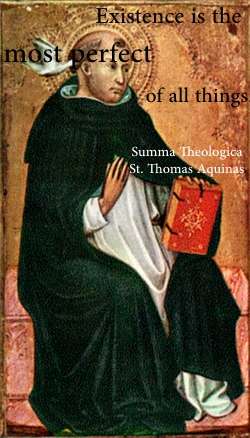 Thomas Aquinas goes on to give perfection a dual-fold meaning: That which is perfect in itself (its substance) and when it perfectly suits its purpose.
Other philosophers and theologians have defined perfection to be:
- Endless
- The greatest
- Existence
Plato and Parmenides thought that the world was perfect. That it had perfect shape and motion (spherical/circular). The world is perfect, God is not. Attributing perfection, an intellectual concept of humanity, to the Divine, was a heresy.
However, later came the pantheist Stoics who attributed perfection to the Divine. Why? Because the Divine was equivalent with the world. Here, we are just one short step away from the modern idea that only the Divine is perfect and that we all suffer from an inability to be complete in our own bodies and to find and fulfill our purpose. Eventually, Aristotle’s First Cause and Christianity’s Creator became comingled in theology. Although perfection was still not attributed to the Divine as perfection was believed to be finite.
In the 9th century, philosopher Paschasius Radbertus said that “Everything is the more perfect, the more it resembles God.” But still, God was not perfect because of the finiteness ascribed to the concept of perfection. It is Rene Descartes who introduces perfection as applied to the Divine as he introduces the “perfections of God.” However, Descartes also states that “existence itself is perfection.” They may just have been going through a confusion of perfections!
The concept of perfection has undergone great changes throughout human history. “Nothing in the world is perfect”, to “Everything is perfect”; and from “Perfection is not an attribute of God”, to “Perfection is an attribute of God.” (Tatarkiewicz, “Ontological and Theological Perfection,” Dialetics and Humanism, vol. VIII, no. 1 (winter 1981), p. 192.)
 Perhaps it is time to render a definition of perfection that lifts us up and allows us to achieve completeness and fulfill our purpose. In Christianity, we often go back to “The Greatest Commandment.” That is “Love God and love your neighbor as yourself.” We then focus on the loving God part and then sometimes the loving your neighbor part but totally neglect the implied love yourself part. “Love your neighbor as yourself.” When we love ourselves, we can achieve completeness, find and fulfill a purpose! Artists gotta art. Preachers gotta preach. Poets gotta poem. Architects gotta design. Caretakers gotta care. And so on. Of course, within all of this is the tension between what we want and what we have. There are limits and sometimes part of loving is setting aside the dream and doing the chore. But that is still part of purpose. And it is still part of perfection.
John Wesley, the founder of Methodism, totally subscribes to the “Love God and love your neighbor as yourself” approach to perfection. He writes,
O grant that nothing in my soul
May dwell, but thy pure love alone!
O may thy love possess me whole,
My joy, my treasure, and my crown !
Strange fires far from my heart remove;
My every act, word, thought, be love!
I never heard that any one objected to this. And indeed who can object? Is not this the language, not only of every believer, but of every one that is truly awakened? But what have I wrote, to this day, which is either stronger or plainer?
John Wesley, A Plain Account of Christian Perfection
 Perfection is living life in such a way that “every act, word, thought, be love!” Easy peasy.
Perhaps living a life where everything is derived from love is not so easy. But it is something that I can ascribe to, and with practice, grow into. So perhaps perfection is the process that leads to a complete life fulfilled in acts of love–love that leads to justice, mercy, and humility.
So mote it be!
Shalom,
Terri
Simultaneously published at www.BeguineAgain.com

Hypocrites and old Ladies
suchled makes a good point about how we practice our religions. The post goes well with our Br. David Steindal-Rast post of the morning … Enjoy and weigh in.
One Perspective on Understanding Our Religious Traditions

BROTHER DAVID STEINDL-RAST (b. 1926)
Viennese, Catholic Benedictine Monk
Br. David is notable for his work fostering dialogue among the faiths and for exploring the congruence between science and spirituality. Early in his career he was officially designated by his abbot to pursue Catholic-Buddhist dialogue. He studied with several well-known Zen masters. He is the author of feature articles, chapter contributions to collections, and books. Among the most notable are Belonging to the Universe (with Frijof Capra) and The Music of Silence: A Sacred Journey Through the Hours of the Day (with Sharon Lebell). Br. David is the co-founder of A Network for Grateful Living, dedicated to the life-transforming character of gratitude.
Perfection and Creation
We have a saying in my family, “Nothing to it, but to do it.” It’s meant to be a motivator, a call to action, and can be applied in many different situations. When it comes to the craft of creating, however, sometimes that motivation of knowing that “it needs to be done, so get to it”, isn’t enough. Some of us want to wait for the perfect time or inspiration in order to begin. Others of us start, only to become frustrated with how our efforts are proceeding.
 It can be hard to create (whether it’s visual arts like painting or photography, or writing poetry, or coming up with a few bars for a new song) if/when you wait for the perfect inspiration to hit you or if you keep revising something in the quest for the perfect color, the perfect frame, word or note, etc.


Perfection is an illusion, anyway. But there are a couple of different schools of thought when it comes to applying “perfection” to the creation of one’s art. Some people feel that seeking perfection can lead to trying harder and ending up with something as close as you can get to perfect.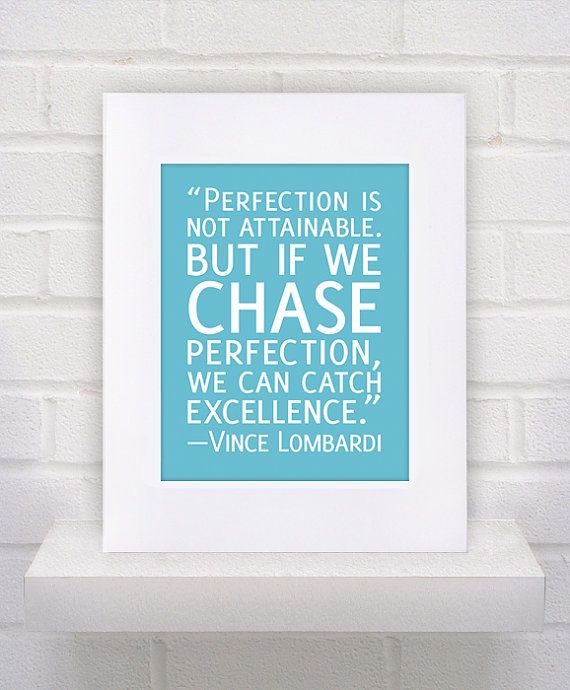

Others think that it can demoralize a person to the point of giving up (or not starting at all, which is worse).

 Both approaches have their merits, and while both points of view can lead to success, I think they take very different types of people to make them work. Some people work better under pressure than others. Some enjoy more of a challenge than others do.


 Which camp describes you? Does the search for perfection in your craft motivate you? Do you find that striving to reach your personal best leads to success in your creative endeavors? Or do you feel that all that pressure tends to backfire and leads to being paralyzed with inaction? Do revisions make you shudder? Do you “edit” as you go?

Regardless of which attitude toward “perfection” that you have, it’s important to realize that the true meaning of the word only belongs to the Divine. We may come close. In fact, finding peace and acceptance of ourselves as part of the Divine is necessary, realizing that we are perfect, exactly as we are. Can/Will you apply that same perspective to your art?
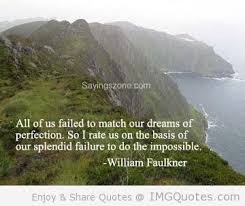 It may seem as if I am advocating the acceptance of ‘mediocrity’. I am not. By all means, aim for the moon, you may at least hit the stars! But also realize that everyone probably has a different idea of ‘perfection’, and, barring editors, publishers and the like, you have to be able to stop at a point in the creation and decide when it’s done, or when it’s “good enough”.

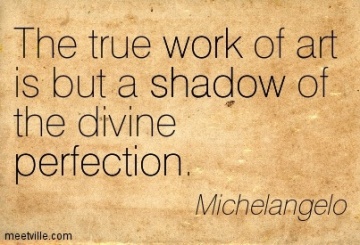 In the end, the matter of whether our creation(s) have achieved “perfection” is completely up to us. Only the artist knows and can decide when something is done, and whether or not it’s done to the satisfaction of the creator. Remember: YOU, as the artist/creator are the only one you have to satisfy. Maybe in many cases, “good enough” IS perfect. 😉


* * * * * * * * *
 About dragonkatet Regarding the blog name, Dragon’s Dreams ~ The name comes from my love-affairs with both Dragons and Dreams (capital Ds). It’s another extension of who I am, a facet for expression; a place and way to reach other like-minded, creative individuals. I post a lot of poetry and images that fascinate or move me, because that’s my favorite way to view the world. I post about things important to me and the world in which we live, try to champion extra important political, societal and environmental issues, etc. Sometimes I wax philosophical, because it’s also a place where I always seem to learn about myself, too, by interacting with some of the brightest minds, souls and hearts out there. It’s all about ‘connection(s)’ and I don’t mean “net-working” with people for personal gain, but rather, the expansion of the 4 L’s: Light, Love, Laughter, Learning.
An Open Book
“Thou art alive still while thy book doth live, and we have wits to read and praise to give.” –William Shakespeare–
Paris is a huge city, so crowded, so busy.

Sometimes it’s difficult to see beyond the milling throngs.

But the city is an open book.

Its stories are there for all to read…

In a gesture.

Or a smile.

Or a sigh.

Life is happening all around.


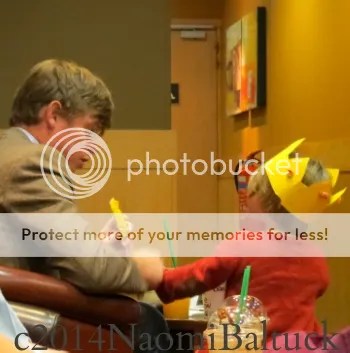

So many faces…

…and each one…

…tells a story.

All images and words copyright Naomi Baltuck

 NAOMI BALTUCK ~ is a Contributing Editor and Resident Storyteller here
 at Bardo. She is a world-traveler and an award-winning writer, photographer, and story-teller whose works of fiction and nonfiction are available through Amazon HERE. Naomi presents her wonderful photo-stories – always interesting and rich with meaning and humor – at Writing Between the Lines, Life from the Writer’s POV. She also conducts workshops such as Peace Porridge (multicultural stories to promote cooperation, goodwill, and peaceful coexistence), Whispers in the Graveyard (a spellbinding array of haunting and mysterious stories), Tandem Tales, Traveling Light Around the World, and others. For more on her programs visit Naomi Baltuck.com
Encounter with Te-Shan
cold winter winds
carry the voice of Te-Shan
intruding on my solitude
free yourself, he says ~
while working, work
while resting, rest
….buji*
the birch outside my window
waves her leaves in the wind
celebrating her emptiness,
free of all anxiety
*buji ~ free of anxiety (no mind in work, no work in mind; that is, not self-conscious)
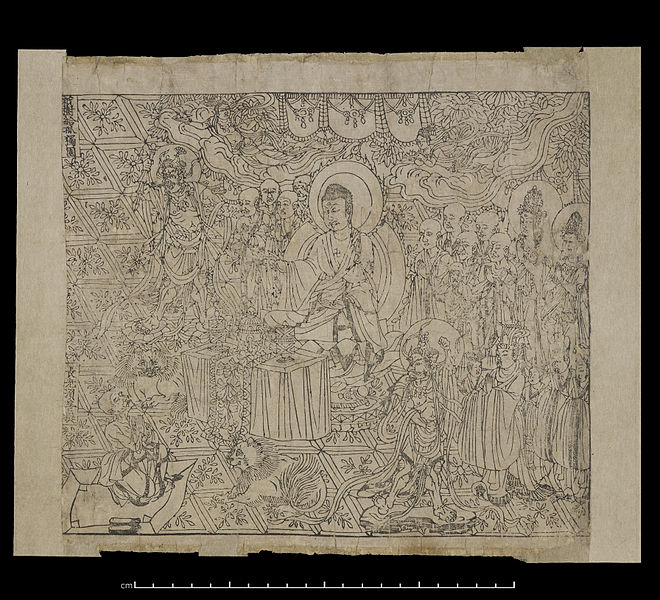
Te-Shan was an eighth century Chinese Chen (Zen) Buddhist teacher and scholar of the Diamond Cutter Sutra (aphorism), known as Case #4 of the Pi-yen-lu koans (riddles). Case #4 is “Te-Shan carrying his bundle.” As the story goes, the Master Te-Shan left his monastery in the north of China and headed south to challenge some teaching that he deemed incorrect. He was dedicated in both his scholarship and his tradition. On his journey, he carried with him his treasured bundle, the Commentaries on the Diamond Cutter Sutra.
Along the way he met a merchant selling rice cakes by the side of the road. She was an old woman and we all know how dangerous old women can be. The old woman asked him what scriptures he carried that were so precious to him. When he told her the Diamond Cutter Sutra, she asked, “Doesn’t the sutra say ‘past mind cannot be held, present mind cannot be held, future mind cannot be held? Which mind is it that the Master would wish to revive?” The old woman’s pointed questioning left Te-Shan speechless.
Shamed and defeated by this uneducated old woman with her street wisdom, Te-Shan returned to his monastery. It is said that he was unable to resume his teaching and spent the next days immersed in meditation. He soon achieved enlightenment and, as a result, burned all his writing and books saying:
“To plumb the greatest depth of knowledge would be no more than a piece of hair lost in the vastness of the great Void. However important your experience of worldly things, it is nothing – it is even less than a single drop of water cast into the Void.”
The Diamond Sutra or the Vajra Cutter Perfection Wisdom Sutra emphasizes the Mahāyāna Buddhist practices of non-attachment and non-abiding.
© 2012, poem and story adaption, Jamie Dedes, All rights reserved
Illustration ~ the frontispiece piece of the Diamond Sutra “the oldest known printed book in the world” via Wikipedia and in the public domain

 JAMIE DEDES (The Poet by Day)~I am a medically retired (disabled) elder and the mother of married son who is very dear. I started blogging shortly after I retired as a way to maintain my sanity and to stay connected to the arts and the artful despite being mostly homebound. My Facebook pages are: Jamie Dedes (Arts and Humanities) and Simply Living, Living Simply.
With the help and support of talented bloggers and readers, I founded The Bardo Group because I feel that blogging offers a means to see one another in our simple humanity, as brothers and sisters and not as “other.” I am the poetry liaison and a member of the Core Team. Terri Stewart (Beguine Again) is in the lead position and the Beguine Again collabrative and The Bardo Group are coordinating a consolidation of the two groups.
“Good work, like good talk or any other form of worthwhile human relationship, depends upon being able to assume an extended shared world.” Stefan Collini (b. 1947), English Literary Critic and Professor of English Literature at Cambridge
nomad
From Gretchen Del Rio … another charming spirit animal …

 watercolor aceo 8/2014
‘And Allah took a handful of southerly wind, blew His breath over it, and created the horse…. Thou shall fly without wings, and conquer without any sword. Oh horse’. Bedouin Legend
Rules of the Game
The rules of the game
are set in stone.
You can read them
written on each slab
out there on the field.
The great game is summed up
in four numbers on one side,
and four on the other,
of a grooved hyphen.
Funny how those hyphens,
from end to end,
are the width of an N or M,
but a life may be wider
than a thousand thousand alphabets
or as narrow as an I.
You think of these things,
the unwritten,
the randomly ordered
string of letters,
of words, of stories,
of a life lived in
what seems like a hyphen,
a momentary there to here,
then to now,
once to once,
when you sit by a deathbed,
in front of a casket, or
at a graveside.
That’s where they post
the rules for all to see
and no one’s ever broken.
– Joseph Hesch
© 2014, All rights reserved
 JOSEPH HESCH (A Thing for Words) is a writer and poet from Albany, New York , an old friend of Bardo and a new core team member. Joe’s work is published in journals and anthologies coast-to-coast and worldwide. He posts poems and stories-in-progress on his blog, A Thing for Words. An original staff member at dVerse Poets Pub website, Joe was named one of Writers Digest Editor Robert Lee Brewer’s “2011 Best Tweeps for Writers to Follow.” He is also a member of the Grass Roots Poetry Group and featured in their 2013 poetry anthology Petrichor Rising.
Sacred Space in Community
I am currently away at a retreat. While here, I have been reminded of the importance of community. This community is working together towards a goal of having an imagination emporium. A physical space where the community gathers to imagine ways to transform the world to a more just society.
I thought, “We have that!”
The Bardo Group imagines peace and justice every day. And we walk with each other even with our diverse geographies.
That is Sacred Space.
(CC BY-NC-ND 2.0)
Today, I would like to invite us all to build something together. Words that imagine justice for the lost, the least and the lonely. I am sure there is an official name for what I am proposing, but I am going to call it “communal haiku.” I will start us out with a haiku and I invite each reader to respond in their own way. Each of us building on the gift of one another. Sacred Space in community, building a gift together that imagines a transformed world.
This is inspired by a reading from on Hebrew scripture, Isaiah 25:6-10. Reaching back and including another community!
Celebrated wines poured
into cut-crystal goblets.
Prisoner’s freedom.
…
What comes next?
Shalom,
Terri Stewart
pandemic…

i’m having
difficulty breathing
these days
the air is heavy
with the ash
of funeral pyres
so many souls
cast into the four winds
from every
corner of the world
women and children
old and young
even those whose life
has not yet begun
wrapped still
in their mother’s womb
i’m having
difficulty breathing
these days
the air is heavy
with the ash
of funeral pyres
battles raging
while the funeral pyre ‘s lit
they cool not
before the next soul
ascends to the pyre
while war’s fears
again fill the air
no time to dry tears
just more
flames ushering souls
i’m having
difficulty breathing
these days
the air is heavy
with the ash
of funeral pyres
 CHARLES W. MARTIN (Reading Between the Minds) — earned his Ph.D. in Speech and Language Pathology with an emphasis in statistics. Throughout Charlie’s career, he maintained a devotion to the arts (literature/poetry, the theater, music and photography). Since his retirement in 2010, he has turned his full attention to poetry and photography. He publishes a poem and a photographic art piece each day at Read Between the Minds, Poetry, Photograph and Random Thoughts of Life. He is noted as a poet of social conscience. Charlie has been blogging since January 31, 2010. He has self-published a book of poetry entitled The Hawk Chronicles and will soon publish another book called A Bea in Your Bonnet: First Sting, featuring the renown Aunt Bea. In The Hawk Chronicles, Charlie provides a personification of his resident hawk with poems and photos taken over a two-year period. Charlie’s lastest book, When Spirits Touch, Dual Poetry, a collaboration with River Urke, is available through Amazon now.
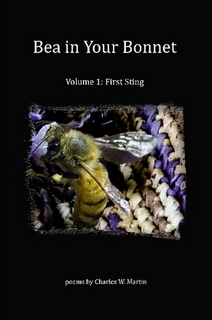 Charlie’s long awaited Aunt Bea Collection is out. He says, “Bea In Your Bonnet: First Sting is a collection of germinal poems featuring Aunt Bea. Aunt Bea’s voice is one I’ve heard almost every day of my life. Family observations, lessons, and advice given to me and every other family member who had the good sense to listen. Her homespun philosophy most likely will not be found in any collegiate textbooks or for that matter in any local town crier newspaper catering to city dwellers. Indeed, she has a different way of viewing the world; a bit old fashion, sassy, and steely at times but a viewpoint which has engaged my imagination and heart. I sincerely hope you too will find some morsel of wisdom in her personal observations and interpretations of life’s events, but do watch out for her stingers.”
The Real Mrs. Beeton
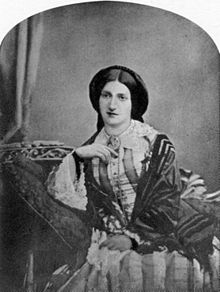
Originally published by Second Light Live in ARTEMISpoetry and shared here with the permission of both publisher and poet.
Heaving her enormous bulk onto a bookshelf high
above my bed, then pushing until she was out of sight
took all my strength and it didn’t dislodge her from my mind.
But I rebelled against the weight of her disapproval,
shut myself away every morning in that small room
of my own, the room which is me, to let imagination
run wild as brambles and grasses in an untended garden,
coaxed visions into scribblings on paper until desk
and floor were littered, until unblinking as owl eyes,
words stared from my screen. Of course, the moment
I emerged I came face to face with her large a life
on the landing. For years this matron, large-bosomed
and with a voluminous knowledge gathered from decades
of managing a household, followed me around tutting
because I hadn’t blanched or basted, couldn’t pluck a duck.
She snorted at unruly children sliding down the stairs,
at dust rollicking along skirting boards, rounded on me
for failing to keep a properly stocked linen cupboard.
Then the day I found out this paragon was Isabella Beeton,
a young woman who instead of devoting her life to home
and family like other Victorian wives, travelled by train
with her publisher husband to his London office, wrote
books fat with information, mostly magpied from other books,
about household management, became a money-spinner,
an authority for later generations. I also learnt she’d suffered
several miscarriages, bore two children who died in infancy,
two who survived, died herself after the second –
thanks to Mr Beeton’s syphilis. Yet for years books
in her name continued to appear. The matron’s ghost
still persists in my mind but what troubles me is Isabella.
For all the thousands of pages this woman produced
in her short life, the real Mrs Beeton didn’t leave
a single word about what she thought, felt, endured.
.
– Myra Schneider
© 2014, poem and poet’s portrait (below), Myra Schneider, All rights reserved, posted here with Myra’s permission; Mrs. Beeton’s photograph is in the public domain.
.

 MYRA SCHNEIDER (Myra Schneider’s Poetry Website) ~ Myra’s long poems have been featured in Long Poem Magazine and Domestic Cherry. She co-edited with Dilys Wood, Parents, an anthology of poems by 114 women about their own parents. Myra started out writing fiction for children and teens. We first discovered Myra through her much-loved poem about an experience with cancer, The Red Dress, which she generously shared with readers here in our Perspectives on Cancer series in 2011.
Currently Myra lives in North London, but she grew up in Scotland and in other parts of England. She lives with her husband and they have one son. Myra tutors through Poetry School, London. Her schedule of poetry readings is HERE. A video of Myra’s interview at Poetry East in London is HERE. The sound leaves something to be desired, so ear-buds or earphones are helpful. Other videos are of poems: The Red Dress and Goulash. Myra’s Amazon UK page is HERE and US is HERE.
Myra’s eleventh poetry collection, The Door to Color, will launch this September by Enitharmon Press, UK at their gallery in London.
An Old Story
 We are a Jewish-Native household and events in the Middle-East have deep resonance for us. For the past two weeks we have watched and thought about the fighting in Gaza, our sadness, and sense of helplessness, growing daily.
Of course, it is impossible to know, with any certainty, the truth of things. Propaganda is unleashed by both sides. Still, there is something terribly familiar about the one-sided nature of the conflict. The history of the U.S., like that of Palestine, is usually told from the view of the dominant power. From our Indian perspective, the story is vastly different from that told in most history books.
We watched as the colonial powers invited landless Europeans to emigrate, and forced criminals and others who were disenfranchised to do so. Thus, they created an ever-growing hunger for land, a tidal wave that would eventually sweep over us. We were under constant pressure to move West, and to relinquish our ancestral lands. The colonists made promises and gave us land that would be ours “forever”. Then they brought in settlers who lived in enclaves, always encroaching on our land. When our people attempted to defend the land the colonial powers had seeded to us, the colonial government made war against us. They killed our children and elders, and raped and murdered our women. They sought to destroy our cultures by stealing the land, our traditional knowledge and life-ways, and our children. Because we hold this knowledge, many of us remember, and observe remembrance of, the Shoah, the Holocaust, and acknowledge our kinship with those who were the victims of that genocide.
Let us remember that, like the Jews who made their way to the Holy Land, many of those early emigrants to our lands were the dispossessed. The British attempted to depopulate Ireland, Scotland, and Wales. They used war, famine, and desperation to drive people from their traditional lands. They employed “Acts of Enclosure” to force their own people to flee to the cities, hungry and destitute; many families eventually found their way to our lands. Because they understood colonialism and genocide, because they understood trauma, many of these early immigrants married Native people. But soon, propaganda, hunger, greed, and the rising tide of immigration overwhelmed us.
Although they had killed ninety-nine percent of our people, forcing us to live on tiny reserves, starving and desperate, they continued their attack. They banned hunting, and our drums and our ceremonies, the heart of our cultures. This is not ancient history, it continues, as governments grab what little land we retain and willy-nilly destroy our sacred sites. It continues as Non-Natives rape and murder our women, and jail our young people, in vastly disproportionate numbers. When I see destruction of olive groves in Palestine, and hear reports of the rape of women and the murder of children, I am reminded of this. When I see the Bedouins forced into reservations, their traditional nomadic life forbidden to them, my heart breaks in recognition.
This is an old story. Those with superior numbers and weapons take land from people who have lived in a place for untold centuries. They use resistance to their domination as an excuse to make war on the people. As they do so, they often target children, women, and elders. Too frequently, women are raped and/or killed, children are murdered or traumatized, the land that feeds the stomachs and culture of the people is stolen. Thus the future of the people is threatened. These are acts of genocide. We cannot remain silent when we witness them. Our ancestors lived through this. They remember and whisper their experience in our minds. They are always with us, and they do not forget.
This post was originally shown on Dreaming the World.
– Michael Watson
© 2014, essay and photographs, Michael Watson, All rights reserved
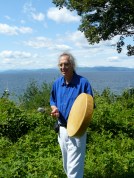 MICHAEL WATSON, M.A., Ph.D., LCMHC (Dreaming the World) ~ is a contributing editor to Into the Bardo, an essayist and a practitioner of the Shamanic arts, psychotherapist, educator and artist of Native American and European descent. He lives and works in Burlington, Vermont, where he teaches in undergraduate and graduate programs at Burlington College,. He was once Dean of Students there. Recently Michael has been teaching in India and Hong Kong. His experiences are documented on his blog. In childhood he had polio, an event that taught him much about challenge, struggle, isolation, and healing.
BARDO NEWS: The Bardo Group blog is merging with Beguine Again and transitioning to Terri Stewart’s leadership…
 I am pleased to announce today that I am passing the batton to Terri Stewart. The Bardo Group blog is in transition, but it will continue to post all work as usual and to host the scheduled special events. Terri has been a stalwart supporter and active contributor to and coordinator of and with this blog for several years now. She’s young, energetic, enthusiastic and smart and has the wherewithal to move forward to facilitate greater inclusion and encourage real social change.
Recently Terri was awarded a grant for the community blog, Beguine Again, which she founded. The two blogs will merge, creating a larger and more diverse venue. Your ideas and input to this process are welcome and Terri will tell you more about that and more about what promise our future as a community might hold.
I am pleased that Terri has agreed to take charge since I find I am no longer able to give the blog and the community the attention and nurturing they deserve and need to continue to evolve and grow. I’ve appreciated your support, encouragement and contributions over the years and I’m confident you will offer the same to Terri.
I’ll remain as a member of the core team. The blog will move forward with Victoria’s Writers’ Fourth Wednesday as usual and with plans for Wilderness Week at the end of this month and 100,000 Poets, Musicians and Artists for Change event scheduled to begin on September 27.
In the spirit of peace, love and community,

.

 Hi all! I am delighted that Jamie asked me to envision a joining of our two communities. I don’t know what this will look like in its entirety, but I am excited about the prospect of joining the ethos that each community brings. I know The Bardo Group to be a place that focuses on the arts as a path to greater communication and peace. Beguine Again is a community that focuses on spiritual practices upholding the core value of nonviolence through the observance of mindfulness, prayer, joy, thoughtfulness, gratitude, sabbath, and inspiration.
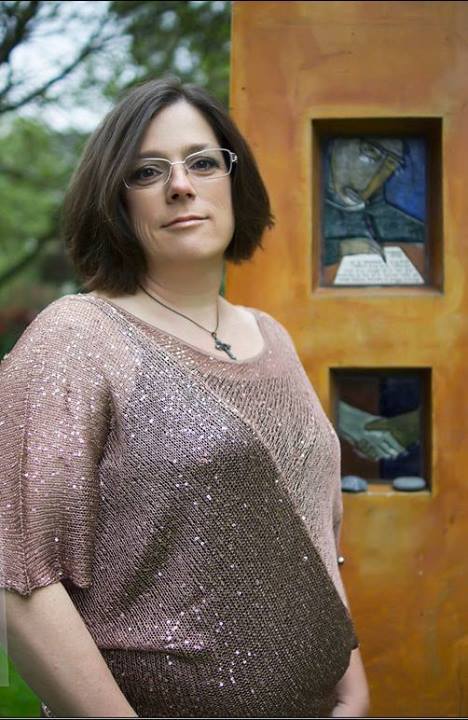
I have received a grant to take BeguineAgain.com to the next level by incorporating more thoughtful and personal practices. That will be incorporated throughout the next year by offering a series of classes and personal/private discussion groups that will be available through a subscription model. However, the basic structure of BeguineAgain.com will still be one of free & open blog posts that encourage the core practices that so many of us hold dear.
I am so grateful for the work that Jamie and the incredible team she assembled has done to bring The Bardo Group to the point of being a thriving, creative community. I was delighted when she asked me to be the Sunday Chaplain. It was a great opportunity to focus on creating sacred space in our midst. Sacred space – a place that offers healing and holding – is a goal in all that I do. And I am hopeful that you will all gather around as we co-create a new future together!
I look forward to incorporating the traditions of The Bardo Group with the traditions that have started at BeguineAgain.com. I believe there is a lot of synergy between the two communities and that we can grow and learn together.
Please contact me with any thoughts, concerns, or questions you may have!
Shalom,
.
.
.
TERRI STEWART has served for several years as The Bardo Group Sunday chaplain, senior content editor, and site co-administrator. She comes from an eclectic background and considers herself to be grounded in contemplation and justice. Terri is the founder of the online spiritual community for nonviolence, Beguine Again. She is the Director and Founder of the Youth Chaplaincy Coalition that serves youth affected by the justice system. As a graduate of Seattle University’s School of Theology and Ministry, she earned her Master’s of Divinity and a Post-Master’s Certificate in Spiritual Direction with honors and is a rare United Methodist student in the Jesuit Honor Society, Alpha Sigma Nu. She is a contributing author to the Abingdon Worship Annual. (The 2014 issue just released!)
Terri’s online presence is “Cloaked Monk.” This speaks to her grounding in contemplative arts and the need to live it out in the world. The cloak is the disguise of normalcy as she advocates for justice and peace. You can find her at http://www.cloakedmonk.com, http://www.twitter.com/cloakedmonk, and http://www.facebook.com/cloakedmonk. To Terri for conversation, send a note to terris@beguineagain.com.
once upon a time we were
the things that were never said
still hibernate like some embryos
inside my voice.
the sounds that i never heard
are already perverted with ether
by the time they reach my hearing,
but everything can wait.
nine zero one.
the world doesn’t yet ask me to be alive,
the world doesn’t yet need my eyes searching,
raking through layers of light for the purpose of movement,
the world can still postpone the infusion of quotidian
which i can have,
acid,
next to the coffee cup.
the world is still far away,
at about the moment when it chose to be held in arms of sand,
not knowing other ways to protect its smallness –
and my words struggle between silence and burning,
hiding me yet from light,
protecting me yet from sand.
but too many things strive to enter my eyes all at once,
too many wasted lives flow their unlivingness
just a brick away,
and the wooden pillars of citadels feel their capillaries rotting.
“once upon a time we were”
but what if we weren’t?
what if the “once” is truer than what the story says?
once i believed that each of us
lives only in someone else’s dream,
and when that someone wakes up, we die,
and our life is suddenly cut by the blink of the eye of a random person –
and i wonder,
how many lives have i ended myself by waking up in the morning?
and how would it be to spend all our lives
searching for the one dreaming of us,
and then, in our last moments, to beg that one
to not wake up?
and why wouldn’t he wake up?
what dream so beautiful would we offer to him
so that he would sleep some more?
nine zero two.
the clock screams green at me
while at the tip of my foot the tango born in the evening
pulsates residually,
just like the dirty pearly taste of shadows
walked upon on the asphalt of a random street.
in tones of crème brulée
morning invades my senses, ignoring them,
and i open my eyes and end some more lives.
– Liliana Negoi
© 2014, All rights reserved
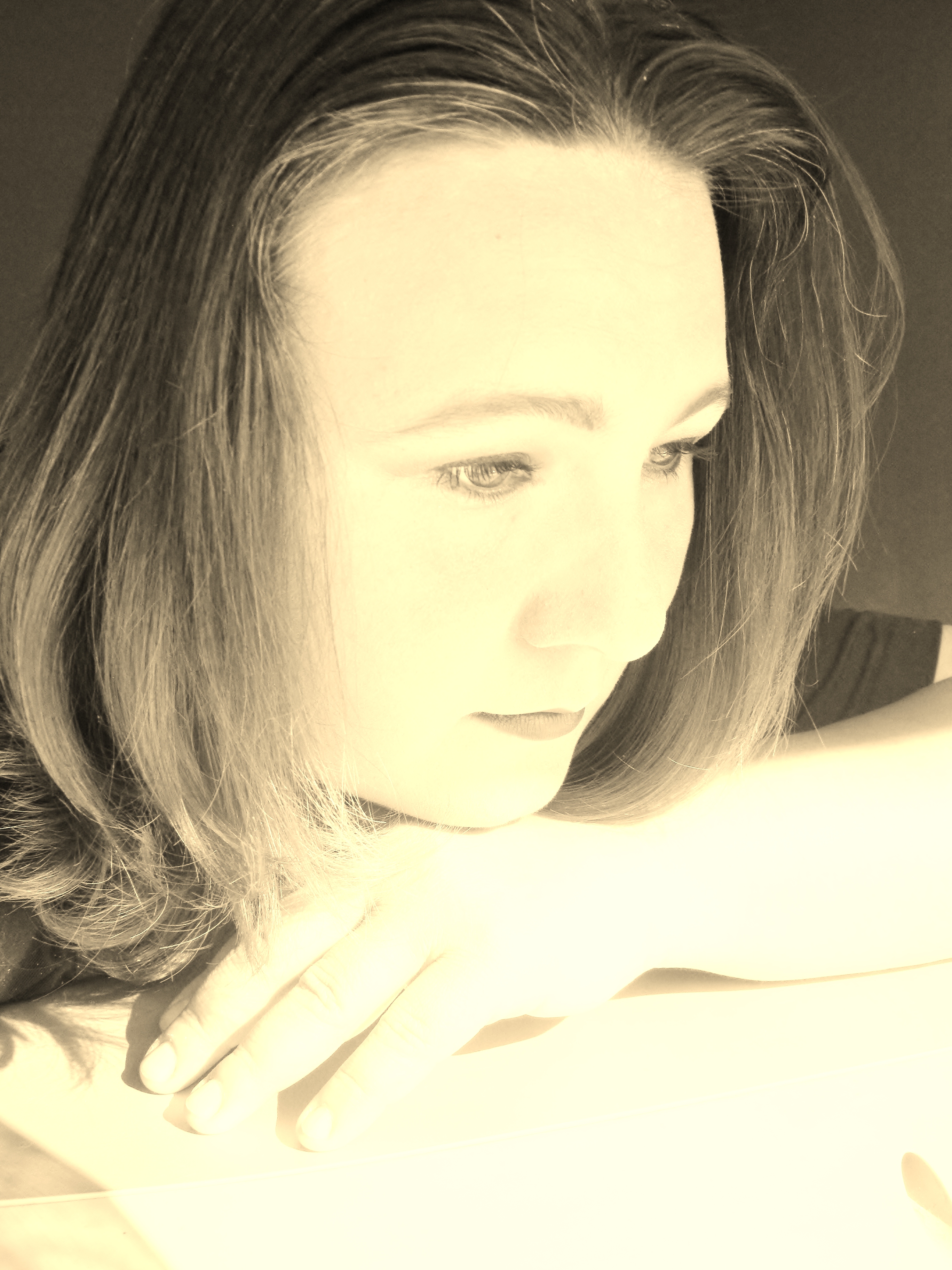 LILIANA NEGOI (Endless Journey and in Romanian curcubee în alb şi negru) ~ is a member of our core team on Into the Bardo. She is the author of three published volumes of poetry in English, which is not her mother tongue but one that she came to love especially because of writing: Sands and Shadows, Footsteps on the San – tanka collection and The Hidden Well. The last one can also be heard in audio version, read by the author herself on her SoundCloud site HERE. She is also the author of a novel, Solo-Chess, available for free reading HERE. Many of her creations, both poetry and prose, have been published in various literary magazines.
You who lights candles . . . Salam to you . . .
 Bitter is this dawn that no longer comes
With the prayer of doves on rooftops
And your face
This treacherous sky above your head
The colour of lead and flame
These forests of stars smothered
In the blinding smoke
These banners ripping the air around you
Woven of cries
These fields of ruins and debris
Where you stand shivering
In the nudity of daylight
You, a lonely prophet in this besieged space
Who listens to the laments of stones
And writes his testament
With tears and blood
You, who lights candles
For the passing caravans of martyrs
And falls asleep with the night
Salam to you
. . . this poem . . . in my mind i wrote it for a friend in Gaza . . . i haven’t heard from him in weeks now . . .
– Imen Benyoub
© 2014, poem, All rights reserved; photograph courtesy of morgueFile
 IMEN BENYOUB ~ is a multilingual, multi-talented writer, poet, and artist from Guelma, Algeria. Imen currently lives in East Jerusalem. She is a frequent guest here on The Bardo Group blog and with On the Plum Tree and Plum Tree Books Facebook page as well.
 The BeZine