The fog is lifting, revealing a lovely spring day.
There is a Navaho word, Harzo, which can be translated as a life in Balance and Beauty. Balance and Beauty are complex concepts, changing as they move across tribes and cultures. I’m not Navaho and only understand Harzo as it has been explained to me by friends and colleagues. My felt sense of Harzo comes from living in the mountains of New Mexico as a grad student. There one is surrounded by Beauty and Vastness, and reminded of the insignificance of one’s self. It is not that we are unimportant, rather, we are simply part of the unimaginable Vastness of Nature.
One of the challenges many urban folks face is no longer recognizing our place in Beauty. We are drawn to the picturesque, yet so often we are unable to experience ourselves as part of the Beauty of Nature. Perhaps this difficult is rooted in our use of English. I am told by those who speak our tribal languages that most Indigenous languages in North America are verb based. The landscape and the living beings who live there are understood to be complex, evolving processes, rather than things. One is simply a process within a context of other and greater processes.
Walking in Beauty encourages us to recognize our relatedness to one another and All-That-Is. It is a good road that teaches empathy and reciprocity. As we live we begin to understand there is Beauty before, behind, and all around us. We also learn that we are unimaginably complex, filled, as is the world, with nuances of light and dark, and that, too, is beautiful.
Beauty exists even in the darkest of times and the most violent of places. Walking in Beauty implies remaining open to its presence and influence even when we are afraid or suffering. This can be a difficult task. My Navajo friends families’ held stories of The Long Walk, a trail of misery and suffering, a time when the Beauty of the Navajo homelands was lost, although the memory of Beauty and home was not. Eventually the Navajo went Home to their land bordered by the four sacred mountains, the place of Beauty. Sadly, that place remains under siege.
I imagine most of us have stories about the loss of Beauty, about exile and suffering, and about the journey Home. As I write this, a development project threats the natural beauty of our neighborhood, and perhaps the cohesiveness of the community itself. It is an old story: greed and avarice distract a few powerful people from the Beauty of place. So often, development is simply a code word for the further acquisition of power and the endless search for more wealth. Perhaps greed is simply a part of human nature, sometimes held in check by a collective focus on the good of the whole, and other times freed to wreck havoc on the world. It can only exist when we forget we are totally and irrevocably interconnected, when attachment and empathy fail, and when culture condones placing one’s desires over the good of the whole.
The sun has broken through and the sky is a brilliant blue. Over the lake a layer of clouds, white and bubbly, hangs. Trees and gardens are abloom, and the scent of lily-of-the-valley and lilac saturates the air. The day is beautiful. May we walk through this day in Beauty, together.
MICHAEL WATSON, M.A., Ph.D., LCMHC (Dreaming the World) ~ is a contributing editor to Into the Bardo, an essayist and a practitioner of the Shamanic arts, psychotherapist, educator and artist of Native American and European descent. He lives and works in Burlington, Vermont, where he teaches in undergraduate and graduate programs at Burlington College,. He was once Dean of Students there. Recently Michael has been teaching in India and Hong Kong. His experiences are documented on his blog. In childhood he had polio, an event that taught him much about challenge, struggle, isolation, and healing.
This month is interNational Photography month! Here, at The Bardo Group, we will be playing with this theme all month-long. On Sundays, we will be focusing on where the practice of photography intersects with our own experience and expression of spirituality.
Last week, I wrote about the symbolism in our religious traditions of light and used photography and light to show how we can point to something that transcends our understanding. Plato would say that the photo of sunset points towards the form of sunset—that perfected form of sunset-ness.
Plato’s Theory of Forms “described the common nature of all things in the world, not just of a table, for instance but of all the tables that ever were and ever will be. This Platonic form of the ideal table is eternal and changeless. It has an essential tableness, as it were, that exists whether the table is where you ate lunch in the school cafeteria or the one at a Paris café where you fell in love. In Plato’s famous allegory of the cave in “The Republic,” the things that we see on a daily basis, like the table in front of you, are merely shadows of the ideal form.” (https://www.archetypes.com/article/plato)
Any object can point towards the perfected idea of that object. And what we see in front of us is essentially a shadow of its ideal self (as no perfected form can be reached—saving this philosophical and theological discussion for another time!).
In photography, shadows are only achievable when there is light. Without light, no shadows. And sometimes, shadows can lead to beautiful pictures. When we handle shadows correctly.
Pointing Towards the Form of Tree-ness by Terri Stewart
And isn’t that true of life? We need to handle our own shadows correctly in order to have a more perfected life? Our shadows, like Plato’s cave, leave us living lives that are not quite ideal. Often, our shadow grows out of shame. Shame comes from unresolved trauma—something that we have not dealt with entirely. For me, shame is often connected to my body image. I remember, 30 years ago, sitting at the dinner table all of 5’3” and 120 pounds and being told, “No wonder I was fat.” And then crying into my plate. Logically, I know that 5’3” and 120 pounds was just fine. But that shame experienced at that moment is seared into my brain and I can recall the rush of tears that made me ashamed of my body. That feeds into self-sabotage of my embodied self in some ways and can lessen my general enjoyment of life unless I deal with it and learn to look at my shadow and bring it into the light!
I can use photography to examine both myself and my shadow. Selfies aren’t all selfish. You can use them to take photos of your shadow self, bringing yourself more and more into the light and into a fuller realization of our perfected selves.
Pointing Towards the Form of Terri-ness by Terri Stewart
Someone said that photography is painting with light. It is also learning how to cope with shadows and darkness. Do you have a shadow—in your photos? Can you peek into it and see how it points towards the fullness of life?
Shalom and Amen!
Post by Terri Stewart, 2014
Photography, CC License (CC BY-NC)
Terri Stewart ~ a member of our Core Team,comes from an eclectic background and considers herself to be grounded in contemplation and justice. She is the Director and Founder of the Youth Chaplaincy Coalition that serves youth affected by the justice system. As a graduate of Seattle University’s School of Theology and Ministry, she earned her Master’s of Divinity and a Post-Master’s Certificate in Spiritual Direction with honors and is a rare United Methodist student in the Jesuit Honor Society, Alpha Sigma Nu. She is a contributing author to the Abingdon Worship Annual.
Her online presence is “CloakedMonk.” This speaks to her grounding in contemplative arts (photography, mandala, poetry) and the need to live it out in the world. The cloak is the disguise of normalcy as she advocates for justice and peace. You can find her at www.cloakedmonk.com,www.twitter.com/cloakedmonk, and www.facebook.com/cloakedmonk. To reach her for conversation, send a note to terris@beguineagain.com
This month is interNational Photography month! Here at The Bardo Group, we will be playing with this theme all month-long. On Sundays, we will be focusing on where the practice of photography intersects with our own experience and expression of spirituality.
In my journey with photography, I have become more aware of light. The presence of light, the absence of light, how it causes reflection, my friend, Paul Jeffrey, told us once that he always turns the flash off, taking advantage of natural light. (I’m sure the rule is “almost always.”) I find that in photographing nature, that I try to stick to that rule and rely on photo-editing software to help me out if I need it. He also taught us how to make a faux tripod to steady ourselves when our shutter speed is taking just a little bit too long.
Light is a dominant theme in religious traditions also.
Christianity: “The light shines in the darkness and the darkness did not overcome it.” (John 1:5),
Islam: “Knowledge makes you free from the chains of ignorance, and revives your heart, knowledge takes you out from the darkness of suspicions and superstitions, and gives a new light to your eyes. (Hazrat Abu Ali Saqfi)
Judaism: “I will say to the prisoners, ‘Go free!’ and to those who are in darkness, ‘Come out to the light!’ (Isaiah 49:9)
Buddhism: “Doubt everything. Find your own light.” (Gautama Buddha)
Hinduism: “One who kindles the light of awareness within gets true light.” (Unattributed)
Baha’i: “Grant that the light of unity may envelop the whole earth.” (Bahá’u’lláh)
The general thrust is that light is a metaphor for that which brings us to a higher consciousness or awareness, provides hope, guidance, and love. It is a beautiful thing when, through appropriate use of light, we can communicate a deeper exploration of these qualities—awareness of what is unseen, hope, love, beauty—a very real reflection of life. And sometimes, light lets you see something in a different way.
My favorite picture that I’ve ever taken of one of my children captures light and it seems, to me, to convey innocence and an essential quality of “child” that is so easy to forget. This is an old photo, by the way! And the picture isn’t perfect, but it still conveys a lightness of being that transcends the particular quality of the photo.
by Terri Stewart CC License (BY-NC)
How do the following pictures and their use of light point to something beyond the images captured in the photo?
Light Collage by Terri Stewart
What do thoughts of light lead you to? Do you have a favorite photo that features light or the absence of light?
Shalom and Amen!
Post by Terri Stewart, 2014
Photography, CC License (CC BY-NC)
Terri Stewart ~ a member of our Core Team,comes from an eclectic background and considers herself to be grounded in contemplation and justice. She is the Director and Founder of the Youth Chaplaincy Coalition that serves youth affected by the justice system. As a graduate of Seattle University’s School of Theology and Ministry, she earned her Master’s of Divinity and a Post-Master’s Certificate in Spiritual Direction with honors and is a rare United Methodist student in the Jesuit Honor Society, Alpha Sigma Nu. She is a contributing author to the Abingdon Worship Annual.
Her online presence is “CloakedMonk.” This speaks to her grounding in contemplative arts (photography, mandala, poetry) and the need to live it out in the world. The cloak is the disguise of normalcy as she advocates for justice and peace. You can find her at www.cloakedmonk.com,www.twitter.com/cloakedmonk, and www.facebook.com/cloakedmonk. To reach her for conversation, send a note to cloakedmonk@outlook.com.
This poem was my response to a challenge; about the triumph of the human spirit over adversity. But most particularly, it is about not bearing life’s burden on your own, but rather learning how to ask for help, how to share concern or worry. For some things in life, you cannot just ‘tough it out’. However strong you think you may be, there are some challenges in life that you cannot, nay should not tackle alone, because everyone has their limits; there is always a barrier, either physical or emotional or both, that will inhibit the progress of any man or woman; will put a stop to their journeys.
Perhaps this is because, once you show your vulnerability, far from becoming prey to vultures and demons, you will also attract the support of true human beings, those who are true team players, those who care. And anybody who endeavours to achieve things that not everyone would attempt, has that spirit. It is often a spirit born of near death experience, but may also be a response to physical and emotional pain.
It is both these things that four men from the British armed forces set out to overcome in a seemingly impossible challenge. These four servicemen, who were all injured in combat in Afghanistan, set out to enter the record books as the first disabled team to walk unassisted to the North Pole. It involved a great deal of preparation and training for all of them.
The men are: Capt Martin Hewitt, 30, whose right arm is paralysed after being shot; Capt Guy Disney, 29, whose right leg was amputated below the knee after he was hit by a rocket-propelled grenade (RPG); Sgt Stephen Young, 28, who suffered a broken back in a roadside bombing; Pte Jaco Van Gass, 24, who had his left arm amputated and suffered significant tissue loss to his left leg after being hit by an RPG.
For the first few days of their trek, they were also accompanied by Prince Harry, who supported their campaign both before and after it was completed. The documentary, shown on BBC1 in the summer of 2011, was called “Harry’s Arctic Heroes“.
In this expedition, these four men represented every soldier, airman and sailor who is ever injured in conflicts, but particularly those who lose their faculties in some way, be it the loss of a limb or sight.
The poem also has a ‘dark’ side, as it shakes a metaphor at dealing with our mortality, not least by reference to ‘The Dream of Gerontius’. The journey ‘North’, in this sense, is figurative and is my way of demonstrating that metaphor to the ultimate journey that we and all animals make as an integral part of our lives. “Looking South” represents the looking back on our lives, which in the case of these four injured servicemen, was their life so far. And for a majority of those, who deal with life’s challenges, some significant moments also represent a looking back on our lives… so far.
If you stand in the wind and allow it to bend you so you flex and withstand it, don’t let it uproot you, then you’ll find it can’t hurt you in spite of extraordinary pain.
If your instinct for flight is taken away your options for fighting in an instant are gone, like a parent removing your permission to play…
…with the most bitter of tears.
If there’s anything surer than the moment you hear a deafening sound of silence and the fear rushes in like air to a vacuum.
There’s nothing more certain, never so clear, as if a vision of your life were etched in white light closing your eyes and blinding your sight…
…but opening them on the inside.
It seems you were born for this moment; that this is your time. You appear to have arrived at the moment when pain can no longer touch you.
That stress and the anguish of screaming self-doubt have momentarily left you, your inside looking out; outside looking in; thoughts perfectly scrambled…
…like the dream of Gerontius.
Circumventing your demons, overcoming your fear this vision of whiteness tears at your heart and your soul; bedazzling lightness of mind; supernal disclosure;
a revelation that you’ll never be left on your own. You will never be able to embark on this journey without your assistants; your brothers in arms…
…but they’re not the Invisible Choir
Your angels are next to you; there at your shoulder if you look. Maybe a Prince or a pauper, but either will brook you; all you need is to ask; as long as you let them know.
Then, when you stand there, sharing legs, shoulders, arms, looking South when you know that there’s no further North, surveying a World, that will sing your arrival…
…knowing now that you truly have life.
Looking south can’t say how I feel Looking south at the great, white sea Looking south just seems so unreal Looking south making known that I’m free. Looking south a muse at my heels Looking south nothing more to flee Looking south my brotherhood sealed Looking south fearless of what’s to be. Looking south my soul is healed Looking south
JOHN ANSTIE (My Poetry Library and 42) ~ is a British writer and poet, a contributing editor here at Bardo, and multi-talented gentleman self-described as a “Family man, Grandfather, Occasional Musician, Singer, Amateur photographer and Film-maker, Apple-MAC user, Implementation Manager, and Engineer”. He has participated in d’Verse Poet’s Pub and is a player in New World Creative Union as well as a being a ‘spoken-voice’ participant in Roger Allen Baut’s excellent ‘Blue Sky Highway‘ radio broadcasts. John has been blogging since the beginning of 2011. He is also a member of The Poetry Society (UK).
*****
John has also been involved in the recent publication of two anthologies that are the result of online collaborations among two international groups of amateur and professional poets. One of these is The Grass Roots Poetry Group, for which he produced and edited their anthology, “Petrichor* Rising“. The other group is d’Verse Poet Pub, in which John’s poetry also appears The d’Verse Anthology: Voices of Contemporary World Poetry, produced and edited by Frank Watson.
* Petrichor – from the Greek pɛtrɨkər, the scent of rain on the dry earth.
This month is interNational Photography month! Here at The Bardo Group, we will be playing with this theme all month-long. On Sundays, we will be focusing on where the practice of photography intersects with our own experience and expression of spirituality.
Perspective is how we look at things. In a lot of ways it can be correlated with our privilege. When we have a lot of privilege in terms of social, economic, and political capital, we tend to see things from an empowered or “power over” perspective. When we have don’t have a lot of privilege, we tend to see things from a “power under” perspective. So our perspective on life or power placement has a lot to do with how we encounter others.
In my religious tradition, and in most spiritual movements (in my understanding), there is a movement to put power down and to empower those who have little power. Just a sampling:
Christianity has the beatitudes as a starting point,
Islam has the practice of charity,
Judaism has the call to care for the widow, the orphan, and the stranger among us,
Buddhism feels it is important to support the poor and needy,
Hinduism practices that all life forms are respected and should be treated well.
Baha’i faith which embraces loving kindness for all life forms and truth in all sacred scriptures (thank you to readers for adding on!)
And it goes on! So it seems that in the great religious traditions, the practice of caring for those who are among “the lost, the least, and the lonely” is of paramount importance. I think the challenge is moving from a position of “power over” to a position of “power with.” This involves a change of perspective. (See, I’m getting to the photographic point!)
I think that if our spiritual practices support our daily living, we will have more effective daily living! If we need to work on finding different perspectives from “power over,” then one way to do it is through photography as a spiritual practice.
How we see things tells a story. Perspective is a spiritual practice and can be embodied in our photography practice. How does it change your view if, instead of being up high as an adult, you crouched down or laid down? One recent photo I took is a great example for perspective. One of my friend’s comment was: “I wish I had a mouse on a skateboard!” Which brought an even new viewpoint because I definitely would not have thought of that! However, once she said that, I now have a perpetual picture of a mouse playing on the below log.
To get this photo, I had to crouch way down onto the log and become one with the dirt. It looks way cool from here. The photo from standing up is not nearly as fun. It loses the “going on forever” perspective.
Over time, I’ve gotten better at thinking of doing this—of finding new perspectives. The same is true in my life—almost to a fault! I might over-identify with some of my people who are among the lost, the least, and the lonely. Sometimes. But by noticing new perspectives in photography, it models for me new perspectives in my spiritual life and then new perspectives in my lived life.
See the world in a new way
See the divine in a new way
See others in a new way
Below are three photos of trees—the same trees with different perspectives (on the same hike). I think each one tells a different story.
Applying this to the ideas of perspective & our story as embodied in relationships of power over, power with, or power under—how can we develop the flexibility to enter into another perspective?
You never know what you will see when you begin to enter into another perspective. I found this lovely leaf cradling a little tiny leaf. How beautiful! And it makes me remember the way we should cradle one another.
Who will you cradle today by seeing something with a new perspective?
Shalom and Amen!
Post by Terri Stewart, 2014
Photography, CC License (CC BY-NC)
Terri Stewart ~ a member of our Core Team,comes from an eclectic background and considers herself to be grounded in contemplation and justice. She is the Director and Founder of the Youth Chaplaincy Coalition that serves youth affected by the justice system. As a graduate of Seattle University’s School of Theology and Ministry, she earned her Master’s of Divinity and a Post-Master’s Certificate in Spiritual Direction with honors and is a rare United Methodist student in the Jesuit Honor Society, Alpha Sigma Nu. She is a contributing author to the Abingdon Worship Annual.
Her online presence is “CloakedMonk.” This speaks to her grounding in contemplative arts (photography, mandala, poetry) and the need to live it out in the world. The cloak is the disguise of normalcy as she advocates for justice and peace. You can find her at www.cloakedmonk.com,www.twitter.com/cloakedmonk, and www.facebook.com/cloakedmonk. To reach her for conversation, send a note to cloakedmonk@outlook.com.
My mother makes a very satisfactory leader of my Fan Club. She is, undoubtedly, First Fan, as many mothers are. The hallmark of her grace is in the way she embodies this position, not simply as a role, but as a genuine expression. I never get the feeling that she encourages me out of obligation. I believe she really likes me. What a stroke of good fortune!
This morning I got an e-mail from her titled “catching up on the blogs”. I felt her heart bubbling over like she had just emerged from an afternoon reading a favorite novel. She had associations, appreciations, memories, connections to share, like her synapses were fireworks going off. From a reader to a writer, this has got to be the highest praise. She started off by remarking, in all caps, that there has to be a book in this somewhere and that she wants an autographed first edition. Aw, Mom!
My mom is not a literary push over. She has a degree in English from Radcliffe (now coed with Harvard). She devours books regularly and always has. Her typical posture these days is sitting in her high-backed rocker with knitting in hand, book strapped in on her reading stand, mind and fingers flying. She used to hide away in her bedroom with a bag of snacks and emerge an hour or so later with renewed energy to tackle her household obligations, sporting a kind of secret glow. Get her talking about one of her recent historical sagas, and she will enthusiastically engage for hours! I love seeing her pull thoughts that have been carefully laid aside like unmatched socks and bundle them together with a flourish of discovery and pride.
She recently told me that her doctor mentioned her good prospects for living another 20 years. That would make her 97; she wasn’t sure she’d want to live that long. But think of all the books you could still read! Or that could be read to you, if the cataracts cause the eyes to fail. I can still hear my father’s voice reading to her behind the bedroom door. His partnership to her intellectually was so rich, until Alzheimer’s whittled his brain away. I wonder if she feels the same phantom guilt I have in enjoying a healthy body and a sound mind after our husbands’ deaths. Well, I suppose consciousness is a responsibility to approach with reverence. We live, we feel, we think, we read, we make connections still. May we both bring life and light to the world like fireworks, Mom, as long as we are able.
PRISCILLA GALASSO ~ started her blog at scillagrace.com to mark the beginning of her fiftieth year. Born to summer and given a name that means ‘ancient’, her travel through seasons of time and landscape has inspired her to create visual and verbal souvenirs of her journey.
Currently living in Wisconsin, she considers herself a lifelong learner and educator. She gives private voice lessons, is employed by two different museums and runs a business (Scholar & Poet Books, via eBay and ABE Books) with her partner, Steve.
This month is interNational Photography month! Here at The Bardo Group, we will be playing with this theme all month long. On Sundays, we will be focusing on where the practice of photography intersects with our own experience and expression of spirituality.
Thomas Merton has a photograph he titled “Sky Hook.” He wrote about it, “It is the only known picture of God.” It is definitely not what you would expect! No heavenly skies, no angels, no beard. What was Merton thinking…a simply construction hook hanging from the sky towards the earth. (You can see the photo many places on the internet, but I couldn’t find a place with clear permissions.)
Often we see photos that prompt us to stop, look, and to appreciate what we have seen but also to wonder about something more. That something more can be something bigger or something smaller. My new friend and photographer, Paul Jeffrey, takes photos for the United Methodist Church for the General Board of Global Ministries—yes! He is a photographer-missionary. He typically focuses on the beauty and stories found in people. There is a photo of a young child in a box (all kids like to sit in boxes, no matter where they are in the world!) He recently shared this photo with us in a small group and talked about the story. He said there was a huge reaction to the photo. Such a beautiful, young child abandoned in a box! What the photo does not show is that the family was just out of the frame.
How we frame our photographs tells a story.
What if Merton’s photo had the construction equipment in it? What if Jeffrey’s photo had the family in it? Would it tell a different story? Would that story be better? Worse? More effective? Less effective? What does this say about how we frame the stories of our own lives?
Framing is a spiritual practice. Or at least knowing what we are cutting from the frame. If we willingly cut off parts of the frame to focus our attention onto another part, that is fine. For the moment. But if we willingly cut of parts of the frame and never return to the whole, something is lost. I am thinking, in particular, of people who do things like cutting science out of their lives or people who cannot see the whole spectrum of society. When we get caught up in our own particularity, we forget the universal journey. And we forget that the child in a box has a loving, concerned family.
Below is a collage of one of my photos that I framed in two different ways. They tell completely different stories, in my opinion!
You don’t even have to be a photographer to understand the importance of framing. Hold your hands up around your face, blocking parts of your viewing field, and you will be able to frame your vision. Sitting right where you are!
In photography, we can say, “Where does framing help tell the story? Where does it hurt the story?”
In our lives we can say,
Where has framing helped you tell your own story? Where has it hurt you?
I’d love it if you would share your blog and perhaps a photo comparing two different ways of framing. That would be wonderful!
Shalom and Amen!
Post by Terri Stewart, 2014
CC License (CC BY-NC)
Terri Stewart ~ a member of our Core Team,comes from an eclectic background and considers herself to be grounded in contemplation and justice. She is the Director and Founder of the Youth Chaplaincy Coalition that serves youth affected by the justice system. As a graduate of Seattle University’s School of Theology and Ministry, she earned her Master’s of Divinity and a Post-Master’s Certificate in Spiritual Direction with honors and is a rare United Methodist student in the Jesuit Honor Society, Alpha Sigma Nu. She is a contributing author to the Abingdon Worship Annual.
Her online presence is “CloakedMonk.” This speaks to her grounding in contemplative arts (photography, mandala, poetry) and the need to live it out in the world. The cloak is the disguise of normalcy as she advocates for justice and peace. You can find her at www.cloakedmonk.com,www.twitter.com/cloakedmonk, and www.facebook.com/cloakedmonk. To reach her for conversation, send a note to cloakedmonk@outlook.com.
April showers bring May flowers, and I’m so glad! 🙂 The rains wash away the dirt and dust, and the new plants and flowers burst forth with a clean, green scent and gorgeous palette of colors!
Chicago Peace Rose from my yard
Spring is a well-known time for renewal, and I recently discovered that May 4th has been designated as “Renewal Day”. Webster’s defines the word “Renewal” as:
re·new·al
noun\ri-ˈnü-əl, –ˈnyü-\
: the act of extending the period of time when something is effective or valid : the act of renewing something.
: the state of being made new, fresh, or strong again : the state of being renewed.
This can apply to countless things in life, but it is definitely life-affirming. It’s an active process, not something that just passively happens. When you think of the word “renewal”, what comes to mind? Your driver’s license? Your wedding vows? The Oil of Olay skin care product? What about renewing yourself?
The author of the book, “The Seven Habits of Highly Effective People”, Stephen Covey, says of balanced self-renewal: “Renewal is the principle–and the process-that empowers us to move on an upward spiral of growth and change, of continuous improvement.”
Three of the most important aspects of life that need renewing from time to time are related to self: body, mind and spirit. Like so many truths about life, there needs to be a balance of all three. Too often, we become conditioned to the routine of every day survival and forget that sense of wonder and passion we once held for life. People talk about finding your “inner child” again, and while that’s a good start, I mean the capacity to actually enjoy the life we’re given, each and every, single day. Because each day is a new chance to start over. We can renew ourselves every day!
It’s so easy to become inattentive. We neglect our bodies because we simply don’t have the time to exercise, eat right, etc., or we don’t pay attention to what we allow to enter our minds because we’re so tired that it’s just easier to veg-out. The spirit often suffers even more, unless it’s somehow made a regular part of every-day life.
When was the last time you felt completely at ease with and positive about your body?
When was the last time you were truly amazed by something or someone out in the world, or learned something new that fascinated you?
How about the last time that you honestly felt connected with the planet, the universe, the Divine?
All three (body, mind, spirit) are intricately joined, and balance between them is important. It can be hard to find the energy sometimes, to look for the things which replenish and renew us, but it’s necessary. If you’re not getting at least a little joy, happiness or even satisfaction out of life, then you’re not living, you’re existing. There’s a huge difference between the two.
So what is it that renews your body, mind and spirit? It’s different for each individual, of course, but a good place to start is to find something that evokes a positive feeling or emotion. What’s something that fuels your passion? What makes you smile? Sometimes it’s necessary to break out of your comfort zone, break out of your routine and try something new. Make a commitment to renewing yourself, even if it’s just part of you. You’ll be glad you did.
P.S. You don’t have to wait for an “official” designated “Day of Renewal” to do it. Every day you wake up is another chance to renew yourself. 😉
About dragonkatet Regarding the blog name, Dragon’s Dreams~ The name comes from my love-affairs with both Dragons and Dreams (capital Ds). It’s another extension of who I am, a facet for expression; a place and way to reach other like-minded, creative individuals. I post a lot of poetry and images that fascinate or move me, because that’s my favorite way to view the world. I post about things important to me and the world in which we live, try to champion extra important political, societal and environmental issues, etc. Sometimes I wax philosophical, because it’s also a place where I always seem to learn about myself, too, by interacting with some of the brightest minds, souls and hearts out there. It’s all about ‘connection(s)’ and I don’t mean “net-working” with people for personal gain, but rather, the expansion of the 4 L’s: Light, Love, Laughter, Learning.
Today is Blogging Against Disabilism Day. Disabilism is a Gimp term for the ideology and practice of discriminating against people with disabilities. Discriminatory practices of all forms appear to be on the rise in North America. In the U.S., where all programs that protect minorities are under attack, there has been a growing chorus of calls for the dismantling of the Americans With Disabilities Act.
Contrary to much of the Disabilist propaganda, life remains very difficult for most people with disabilities. Much architectural infrastructure remains inaccessible, and the unemployment rate for persons with disabilities is double the rate of the non-disabled. It is likely most people with severe disabilities have given up looking for employment and are thus not counted amongst the unemployed.
The 90’s were, throughout the Western World, a time of disability activism. In the U.S., many of the activists were Polio survivors. At the time, the everyday world was, far much of the disabled community, simply inaccessible. If one used a wheelchair, one simply could not get on a bus! (The playwright and disability theorist, Kaite O’Reilly recently discussed both the disability civil rights movement in the U.K. and the workings of Disabilism in a marvelous lecture. I encourage you to watch.)
Until our civil rights movement, people with disabilities were largely invisible. When I am in a wheelchair in a crowded space, say a museum, I remain invisible, as people literally trip over me. When I am in India, I am a very visible anomaly: a professional person navigating the world on crutches. (An Indian colleague recently told me that disability cannot be discussed at the moment in India. It is too hot a topic.) Most disabled people in India stay home.
Back in the early 90’s Bill T. Jones, the MacArthur Award winning choreographer, created a piece entitled, Still Here. The dance gives expression to the lived experience of persons with life threatening conditions, including disabilities. It created a furor! In 1997, Bill Moyers interviewed Bill T. Jones about Still Here. It is one of my favorite hours of t.v.. Not long ago I wrote a post about Still Here and its continued resonance for Native people and folks with Disability. The sad thing is that there are a great many people in North America who would like us Gimps and Natives to be gone, or to at least stay home and out of the way.
Beyond the idea of Disability as label or stigma, is Disability as lived experience. I have spent much of the past few months addressing Polio related issues. Working with a Polio knowledgeable therapist has helped me revisit the illness and its aftermath, understand some of the new challenges I, and other Polios, face, and acknowledge some of the losses associated with Polio. The therapist has given me information to read and poked sore areas of my psyche with skill and kindness.
I am deeply appreciative of the resources, kindness, and training she, and other Polio clinicians have showered on me. I am also grateful to all those who helped me understand the ways the trauma of Polio, and the able-bodied gaze, have shaped my thinking and life. At times. I find myself both relieved and filled with sadness and grief; there are so many losses.
There was a time when I was able, a before and after Polio, although that was many decades ago. My therapist likes to remind me that those without disabling conditions are temporarily abled; disability is always possible. Perhaps that possibility keeps many anxious and avoidant of persons who are clearly disabled. One may pass but probably one cannot hide from one’s disability or from the losses it brings to life. Nor can one hide from Disability itself; Disability stalks everyone.
Oddly, I have the sense of Polio as present and immediate, even in a world where it is thought, like winter’s snow, to have melted away almost to extinction. Polio is a virus, a piece of RNA that infects cells, reproduces itself in enormous quantities, and leaves the cells weakened or dead. It can present as little more than a stomach upset, or leave a person paralyzed or dead.Whether we acknowledge it or not, Polio remains an active presence in our world, especially in the lives of survivors and their families.
As I write, a flock of geese flies over, headed north, and the radio news announces a polio outbreak in Afghanistan in which at least 25 persons have been made ill. I have been rereading Anne Finger’s Elegy for A Disease, and the book lies open on the sofa. It is both a personal and a social history of the disease, an illness with a long history of influencing human lives. I have the sense Polio is sitting with me as I write and ponder, an alive, thoughtful presence, vibrant and well in spite of our efforts to eradicate it. Polio doesn’t seem to be going anywhere.
We Gimps are Still Here as well. We, too, are not going anywhere.
– Michael Watson, Ph.D.
IMPORTANT NOTE: In acknowledging of this day, its importance, and of the challenges disability bring to the lives of the disabled and their families, we are opening Mister Linkyfor you to share links with us and with readers to your own posts on disability or to a post you’ve read that has moved you to a greater understanding. These do not have to be recent posts. As an alternative, please feel free to leave a link in the comments section.
MICHAEL WATSON, M.A., Ph.D., LCMHC (Dreaming the World) ~ is a contributing editor to Into the Bardo, an essayist and a practitioner of the Shamanic arts, psychotherapist, educator and artist of Native American and European descent. He lives and works in Burlington, Vermont, where he teaches in undergraduate and graduate programs at Burlington College,. He was once Dean of Students there. Recently Michael has been teaching in India and Hong Kong. His experiences are documented on his blog. In childhood he had polio, an event that taught him much about challenge, struggle, isolation, and healing.
“The story of cosmology is the story of our search for the ultimate truth”
Produced using Cloudart
This quote comes from a recent episode of one of my favourite BBC documentary programmes, ‘Horizon’, which was titled ‘What happened before the Big Bang?’. It centred on the thinking, with the aid of mathematics and string theory, of a handful of professorial academics from around the world, who have developed some new theories. One such theory suggests that the expansion of our known universe since the Big Bang, nearly fourteen billion years ago, is only one ‘bounce of a ball’, of a cyclic series of events and that its apparently infinite size is merely a minimal starting point for the next Big Bang. I don’t know about you, but I find this, at the same time, utterly mind boggling and totally fascinating. It also serves to bring into perspective the true meaning of our lives and, in particular, the meaning of truth, which, in consequence, is only a relative term, particularly when it comes to this area of science. There may be a myriad of learned tomes, on the subject of truth, written by countless thinkers and philosophers over the millennia of human existence, but, setting aside the search for the true answers to scientific and mathematical questions about the origins of our universe, it is on the most basic social and spiritual level that I choose to focus.
My first prompt for this piece occurred three years ago, when I observed, amongst other exceptional acts of forgiveness and the search for truth, the effects of the Truth and Reconciliation Commission, set up in post-apartheid South Africa under Nelson Mandela’s leadership. The second prompt is that constant irritation: politicians! To be fair, this affects all those in positions of influence, with vested interest in maintaining status quo or personal wealth, who are so often inclined to be ‘economical with the truth’, if the truth is likely to compromise their position or possessions. This probably includes all of us from time to time. However, if you are in a position of power, when your decisions affect whole populations, then being economical with the truth may be considered, at best, morally wrong, if not downright contemptible! So much depends on the ulterior motive. Difficulty arises when you listen to words spoken by someone, whose allegiances are unknown to you, and therefore leave you with the dilemma of whether or not you believe they are speaking the truth. For me, sometimes, the solution to this is to do your own research; it is your call.
The third prompt is meat to those who, in telling lies, would argue that the truth is relative to its context. As true as that may be, there are some fundamental questions, which it may be helpful to ask. These questions and their answers rely heavily on my own life’s observations and experience. I’ve presented this, for clarity, in the form of a mock interview …
What is the truth?
The truth is without bias, in conformity with fact and reality, and is concerned only with honesty and integrity.
What defines truth?
The truth is not only defined by its context, but also by your ability to address your conscience*, head on, assuming that it has not been corrupted by external bias (i.e. vested interests). Equally important is an ability to face reality, however unpleasant or painful that may be.
How do we justify the limits we place on our honesty about the truth?
We justify limits on our honesty in many ways: by joining a tribe and deferring to its rules; by focussing on our own self-preservation or our vested interests; and by denying voice to our conscience.
How do we know what the truth is and how do we recognise it?
In order to know what the truth is, it is necessary firstly to cast off our natural bias and prejudice; to open our minds; perhaps also to become pantheistic in our outlook.
How much of the truth can we individually consciously face head on?
Knowing your limits is a safe harbour, but may also be a block to discovering the truth. So, it may be necessary to be courageous in the quest.
What strategies can we devise to help us get to the truth?
Somehow we may not only have to overcome personal prejudice and swallow our pride, but also face the facts and stop echoing and repeating popular myths that come from the pens and mouths of those around you.
How much do we have to sacrifice both to seek and to tell the truth?
We have to set aside our need for material things and kick the habit of consumerism. We also need to examine, evaluate and better understand our pride and prejudice (with apologies to Jane Austen).
Who will speak the truth?
Any of us can speak the truth, but, before we do, we will have to develop the inner strength to resist and cast off all those temptations that beset us with envy, greed, carnal hunger and cognitive bias.
I recently attended a concert, in which the headline act were a folk and roots duo, whose talent and performances we have come to enjoy. The unusual and refreshing part of this concert was that the supporting act, who came on to ‘warm’ us up, was a poet, whom I had first met last year through the Sheffield WordLife movement, at the opening of the Sheffield Literature Festival. The poet is Joe Kriss. One of the self penned poems he read, concluded with words to the effect: stop talking, start thinking and listen to what lies between your ears; only then will you know what’s true.
There are many parts of our lives for which exposure of the truth, if shared with the majority and if reconciliation was achieved, would make for a better world. I wonder, however, if finding the truth in every part of our lives would challenge our humanity. If that truth were too unpalatable to face – the prospect of our own imminent failure, the discovery of a skeleton in our own cupboard, life threatening illness and death … would we still want to know the truth?
Perhaps you might let me know if you have found your truth … and whether you feel it set you free?
_________________________
*The defining of conscience could, no doubt, be the subject of a veritable treatise. For now, suffice to say that conscience is defined as “the complex of ethical and moral principles that controls or inhibits the actions or thoughts of an individual”. Put more simply, it is “the inner sense of what is right or wrong in one’s conduct or motives, impelling one toward right action: to follow the dictates of conscience“.
JOHN ANSTIE (My Poetry Library and 42) ~ is a British poet and writer, a contributing editor here at Bardo, and multi-talented gentleman self-described as a “Family man, Grandfather, Occasional Musician, Amateur photographer and Film-maker, Apple-MAC user, Implementation Manager, and Engineer. John has participated in d’Verse Poet’s Pub and was an early player in New World Creative Union. He’s been blogging since the beginning of 2011. He is also a member of The Poetry Society (UK).
*****
John has been involved in the recent publication of two anthologies that are the result of online collaborations among two international groups of amateur and professional poets. One of these is The Grass Roots Poetry Group, for which he produced and edited their anthology, “Petrichor* Rising“. The other group is d’Verse Poet Pub, in which John’s poetry also appears The d’Verse Anthology: Voices of Contemporary World Poetry, produced and edited by Frank Watson.
* Petrichor – from the Greek pɛtrɨkər, the scent of rain on the dry earth.
I’ve read an intriguing quote in Japanese Women Don’t Get Old or Fat by Naomi Moriyama;
‘The importance of ‘empty’ space in the presentation of Japanese cuisine can scarcely be exaggerated. Receptacles are never filled to the brim, but are left with a certain margin of emptiness- emptiness of an aesthetic significance comparable to that in a Zen ink painting‘.
(Chef Masaru Yammamoto).
Considering the importance of empty space is what I do when I draw or paint. Often an empty space is needed to guide the viewer to the place that needs his attention. Other times, empty space is filled with suspense. Because empty space can create guidance, tension and calm contemplation, it is full of possibility.
Isn’t possibility what emptiness is? The emptiness or absence of sound means a bird can fill it with its song. Emptiness as possibility works in compositions exactly the same. An empty place can be filled in or left open.
It is important to notice what exists in an empty space. If I paint a bird on the left side of my drawing looking at the right, what is the bird looking at? The empty space isn’t empty at all. It is full of possibilities. Is the bird looking at a mate? Or a prowling cat? Not filling up an empty space often works well; it adds more possibility, tension or imagination to a painting. Other times a large empty space is too dominating or too much a void, in that case, doing something with it is better. It is a place that offers calm contemplation, leave it open.
If you are a home educator, don’t teach you child that the whole page or canvas needs to be filled in. (The only reason why you should offer an art assignment in which nobody is allowed to leave the class room before his paper is completely covered, is when your students need to overcome shyness, self restrained, or inhibition).
If you are a creative therapist or an understanding friend, sit down with your client or friend, and analyse his doodle or drawing by asking what is going on in its empty space. Talk, investigate, and dream together. You will be surprised how many possibilities or interpretations will emerge.
If you are a parent and your young child is proudly showing you a painting, play with your child. Ask what is going on with the objects that are drawn, and what is happening within the empty space. Then built a story on what the child tells you. Your child will charm and entertain you with pure child fantasies. Empty spaces are full possibilities.
You thought empty space is boring or shows a lack of imagination? Or a bad composition? Certainly not always, often quite the opposite.
Returning to the book on Japanese food; I always dread the moment when I have to stop drawing in order to prepare a dinner. From now on, I will plan to continue my mindful meditation by bringing aesthetic principles into my kitchen.
PAULA KUITENBROUWER ~ is a regular contributor to Into the Bardo and a Dutch nature artist living in The Netherlands and sharing her work with us on her blog, Mindful Drawing and on her website. In addition to art, Paula’s main interest is philosophy. She studied at the University of Utrecht and Amsterdam. She has lived in Eastern Europe and in Asia. Paula says that in Korea, “my family lived next to a Buddhist temple. In the early morning we would hear the monks chanting. During my hours of sauntering with my daughter through the beautiful temple gardens, I felt a blissful happiness that I try to capture in my drawings.” Paula sometimes teaches children’s art classes. She lives with her husband and daughter and close to her father. You can view her portfolio of mindful drawings HERE.
Often, in religion-land, we talk (I talk) about being created in the image of God. Imago Dei. I usually think about this in terms of other people. I look and I see a beautiful youth, a reflection of the divine, and know that they are loved and are love.
But what about looking at myself?
Monday, I was at the IRS. Ugh. I have had my identity stolen. I needed to prove to the IRS I was who I said I was so that they would let H&R Block file my taxes. The proving part was easy, and a criminal case has been opened. What was hard was the waiting. And the human hubris.
Sunday, I was at Lake Washington UMC, presiding and preaching. It was a blast and I tackled a difficult subject–radical nonviolence. Especially, the nonviolence that begins with myself–interior nonviolence. I was greatly moved when a woman talked to me afterwards about now hearing the internal put-downs as doing violence to herself. “Awesome!” I thought. And I was really feeling it–this tug towards nonviolent action that starts with yourself.
Monday, waiting in line at the IRS, there were 40 people jammed into a little office and 40 people waiting in the hallway of the office building the IRS rents space in. Then the vacuum lady came. She said, “Everybody get out of the hallway now! Get inside!”
Confusion amongst the people.
“Get inside or go downstairs!”
She just wanted to vacuum and the company rules are that no vacuuming can occur unless there are zero people in the hallway. Some liability issue with the cord and people tripping.
I looked at the amount of people jammed into the office and thought, “There is no way. This is unsafe, someone will get hurt.” And I thought of going downstairs and losing my place in line, and I thought, “There is no way I am losing my place in line.” And there may have been curse words interspersed in there.
I said, “It is unsafe, capacity in this office is exceeded.” I then stood on the edge of the doorway between the office and the hallway. I now view that doorway as a liminal space–a sacred space of potentiality.
She said, “I will shut the doors to the office.”
I thought, “Bring it!”
How quickly I devolved from nonviolence to violence in my thinking and communication. At least my internal communication. I didn’t say anything to her, but I am sure that my stance and eyes communicated all that needed to be said. Which was, “Call the cops on me–I don’t care.” Yep. I was willing to risk arrest so that I would not lose my place in line at the IRS. That may or may not be bordering on the ridiculous.
The upshot is, where do we see the divine? Is it in perfected behavior? In the “love” and “patience” and “serenity?” Or can we see it in the “anger” and “frustration?” Because if we are honestly made in the image of the Divine, then those must be qualities that come from God!
Anyway, after the vacuum-lady left, the IRS called a bunch of numbers and we were all confused as to who they were because nobody came when the numbers were called (some people actually did go downstairs). Until one number was called and we all knew who it was–a family with little kids. And we knew that they had gone downstairs. People spoke up. They were willing to extend their wait in line to see that the injustice of losing their place in line was righted. The staff went downstairs and got the family, taking more of their time when they had a bunch more people impatiently waiting. This family was cared for.
Maybe that is where we see the best of the imago dei. The willingness to extend our own discomfort to ensure that justice is done.
The Lonely Vacuum of Space ”This Sucks” by JD Hancock CC BY 2.0 at Flickr.com
Terri Stewart ~ a member of our Core Team,comes from an eclectic background and considers herself to be grounded in contemplation and justice. She is the Director and Founder of the Youth Chaplaincy Coalition that serves youth affected by the justice system. As a graduate of Seattle University’s School of Theology and Ministry, she earned her Master’s of Divinity and a Post-Master’s Certificate in Spiritual Direction with honors and is a rare United Methodist student in the Jesuit Honor Society, Alpha Sigma Nu. She is a contributing author to the Abingdon Worship Annual.
Her online presence is “CloakedMonk.” This speaks to her grounding in contemplative arts (photography, mandala, poetry) and the need to live it out in the world. The cloak is the disguise of normalcy as she advocates for justice and peace. You can find her at www.cloakedmonk.com,www.twitter.com/cloakedmonk, and www.facebook.com/cloakedmonk. To reach her for conversation, send a note to cloakedmonk@outlook.com.
It started one Good Friday morning, three years ago, sitting, as we sometimes do on a weekend, in bed, with a cup of tea, reading, reviewing, talking, relaxing.
Because the finances are my responsibility, unusually, I used this moment to run through the ‘state of the nation’. We then fell to looking ahead to our imminent retirement and the likely income from our pensions, such as they would be.
Every time we fell to talking about pensions, I was irresistibly drawn to musing about the first of my four different private pensions, which exist by virtue of changing employers. This pension was with the steel company, for whom I worked for the first eleven years of my career, which was ‘frozen’ upon its merger with another company. The process of reviewing whether to leave my original pension frozen or move it into a private fund was aided by a ‘friend’ who worked with a mutual insurance company at the time. Given that this was in the midst of the Thatcher era and the new market economy, ‘advice’ abounded that pensions should become more portable as the work force became more mobile and everyone was getting on Norman Tebbit‘s proverbial bike!
Long story short, the outcome was that I chose to move it to the private pension recommended by my ‘friend’ and the fund ended up being worth one third of what it would be had I left it where it was. So it was too late to make up the loss.
Whether or not I forgive my ‘friend’ for whatever responsibility he could himself reasonably shoulder for this advice, was rendered irrelevant by my next prompt, which occurred whilst I ate my breakfast and watched the second half of an hour-long documentary on BBC1, “What’s The Point of Forgiveness?”, presented by Historian, Bettany Hughes. It took a look at the history of this virtue, which emanates from the apocryphal words of Jesus, “forgive them, they know not what they do…”. In her thesis Hughes presents the alternative to forgiveness as being the vicious cycle of revenge, which inhibits recovery, engenders pain and does not allow us to move on.
Two significant events that I saw, cited in this programme, were the ‘Truth and Reconciliation Commission‘ setup up in South Africa, following the release of Nelson Mandela and his election as president, and an interview with the wife of the co-pilot of Flight Eleven, which was deliberately flown into one of the Twin Towers in New York in 2001, who, in spite of her emotional struggle to come to terms with the loss of her husband and father to her two children, had somehow found it in her to forgive the terrorists. Both these events stand out in a way that gives us hope for humanity and human spirit. Whilst we can all understandably feel vengeful and hateful against those who harm us or our families, our tribes, our communities, it is only by forgiveness and by not antagonising the perpetrators of atrocities against humanity into a vicious cycle of destructive and vengeful argument that they may become capable of contrition and able to feel remorse. People who have achieved genuine forgiveness, like those already mentioned, accordingly become living proof that genuine forgiveness is the only road to reconciliation and peace.
So, how can I complain when I am able, as I did at the time of writing this, to sit in our sun-bathed garden, ringing with bird song, cup of coffee in hand, in good health and with the freedom to write what I want to say on almost any subject in this blog, here, now, any time it pleases me to do so. How can I feel vengeful toward someone about a pension shortfall, when there are people in the world, who can forgive acts of inhumanity that defy belief; that have caused the loss of life, the torture of innocent people, the deprivation of the most basic of human rights affecting whole communities, populations… there is truly no need to answer this question. One question does, however, remain.
That question is simply this: how can I, in spite of all the good fortune I have had in my life, in spite of the fact I am no longer an angry young man – for which there may have been a little justification early in my life – and in spite of the fact that the sun is shining; how can I follow this advice and ensure that, deep down, I can genuinely forgive anyone, who is guilty of anything, whether it be a simple thoughtless slander or the most unspeakable inhumanity. I feel this is the question I should continually ask myself and strive to achieve the only result that common sense points toward with undoubted clarity. It is so obvious to me that to forgive someone is to take the wind out of their angry or irrational sail; make it pointless for them to consider acting in such a way again, rather like a petulant child who, in moments of insecurity, challenges their parents by pushing at the boundaries, trying to get a reaction; when they don’t get it and the parents show forgiving, but calm and disciplined resolve, they gradually adjust their behaviour. It has to be said, nonetheless, that if it were the easy option, we’d all be able to forgive.
It should be easy for me in my relatively privileged social and economic circumstances, but how much more difficult is it for someone who is wired differently from me; who is younger and is just setting out on life’s difficult journey trying to survive; who may even have more justification for their anger or who is simply wired in an ‘angry’ sort of way. I don’t know the answer to this, but, whatever happens, if the message of Easter is to mean anything, whether or not you are, unlike me, an active Christian, then we ought to keep on trying… to be grateful for good fortune, to forgive and move on. What better cause is there to encourage harmony whenever and wherever in the world we can.
[A longer version of this article was first published on John’s prose blog, ‘Forty Two’ in April 2011.]
JOHN ANSTIE (My Poetry Library and 42) ~ is a British poet and writer, a contributing editor here at Bardo, and multi-talented gentleman self-described as a “Family man, Grandfather, Occasional Musician, Amateur photographer and Film-maker, Apple-MAC user, Implementation Manager, and Engineer. John participates in d’Verse Poet’s Pub and is a player in New World Creative Union. He’s been blogging since the beginning of 2011. John is also an active member of The Poetry Society (UK).
*****
John has been involved in the recent publication of two anthologies that are the result of online collaborations among two international groups of amateur and professional poets. One of these is The Grass Roots Poetry Group, for which he produced and edited their anthology, “Petrichor* Rising“. The other group is d’Verse Poet Pub, in which John’s poetry also appears The d’Verse Anthology: Voices of Contemporary World Poetry, produced and edited by Frank Watson.
* Petrichor – from the Greek pɛtrɨkər, the scent of rain on the dry earth.
I used to hate her, foolish, a teenager’s hate that can only be explained in a parallel universe where logic doesn’t exist. I was a sixteen-year-old girl in a class with additional studies of mathematics. I was supposed to have the sharp brain, the emotion-free behavior required for someone who was a shining star in solving mathematical problems. Then suddenly there it was: the literature lesson about her and one of her poems I don’t even remember. The teacher decided that I was the one who should talk about her that day because of the first name we shared.
It was a disaster! I hadn’t read a word from what was written in the school books about her and her poetry. When I was asked the question ‘What do you think Blaga Dimitrova’s poem symbolizes?’ all I could think about to answer was, “The only person who really knows what the words in a poem meant is the author herself. We, as readers, can interpret as we feel right and only hope we’ve reached close enough the thoughts of the writer.’ Wrong answer! A bunch of literature critics that wrote the school book of literature, had already decided what her poetry signified, just like they had decided what every other writer we had studied represents with their work.
I got a bad mark that day and I had come to a conclusion that no one should want to be a poet in a country where we are told what to think. The bad mark wasn’t the worst. After the lesson everyone started calling me Dimitrova. I didn’t like it, I could feel it was meant to be a joke with my personality; to label me with the weakness of feelings only poetry could carry because this is what I used to think about poetry and poets – weak people spilling their weaknesses… Ridiculous, isn’t it? And who knew that I would become one of those weak people. Who knew that one day I would learn to squander my emotions elegantly on a piece of paper and love doing it too?
At the same time Blaga Dimitrova was vice president of my country, Bulgaria. That was another reason to dislike her. I didn’t dislike her because she was in politics. Who was I to judge someone I have seen only on tv? I disliked Dimitrova because I couldn’t understand why a sane person would stand to support the President we had at that time, and I just couldn’t understand why he was elected. I didn’t know him either. I was way too naïve and young to have the maturity to understand the political situation, but on his face was written all over “I’m capable of nothing.”
When a year later Blaga Dimitrova resigned from her post as a Vice-President due to a disagreement with the President she gained my respect and with that come the urge to re-evaluate her poetry. It was a shock to find that I actually loved her style, her words. The first poem I read and understood from her was:
Tag
I keep forgetting my clock
to escape the time.
But it catches up with me and I whirl
with the whopping, falling leaves.
I enter the sea with the clock on my wrist
to drown the time.
But it slaps me in the face
with the bells of the foam.
I’m not counting the beats of the pendulum;
I want to put the time away.
But it lands right on my nose
with the first snow.
At night I don’t set the alarm
with the hope the time will stop.
But it’s waiting for me in the cold bed
with love already gone.
– Blaga Dimitrova
Then I read her novel Journey Toward Myself. It’s a book about a girl who tries to escape her past, which is not an easy task in the years of communism, especially if you were born in the wrong family. The message is rather strong and easy to apply to anyone of us. No matter how much we travel and how much we search for the person we are supposed to be, sometimes what we are meant to be is right there where we started our journey.
My favorite quote from Blaga Dimitrova’s book is: “I blessed him with a smile. It dissolved him completely. There was no need for words. I should have tried with a smile at first. I tend to forget that this is my most faithful weapon. I have never thought what impact a smile can have. Only here in the land of rocks and coarse people I found the strength of my smile. It’s worth to travel so far for such a discovery of your own possibilities.”
It’s somewhat hard to explain Blaga Dimitrova’s work and to try to extract a short conclusion that could fit into one review. There is always that special feeling left in the heart after you read her. Maybe that’s why I grew very fond of her poems and stories over the years and maybe that’s why it’s really difficult to fit everything I want to say about her in one blog post.
I can tell you that she comes from a family with professional parents. Her mother was a teacher and her father was a lawyer. She attended a roster of prestigious schools and gained an education that supported her talent. She was honored with many literature awards.
One of her books, Avalanche, was made into an acclaimed movie, one of the best Bulgarian movies ever in my opinion. Some of Blaga Dimitrova’s work was forbidden in the 80s, because of the strong anti- communism touch. I could tell you that some people liked her and some not. Be it for her political views, be it for her writing, it doesn’t matter to me. On the 2nd of May in 2003 after a long battle with cancer, Blaga Dimitrova died. She was eight-one years old.
I believe on that day Bulgaria lost a great talent. Many years have passed. I am no longer the sixteen-year-old girl who didn’t know how to appreciate the good things in life. I have left Bulgaria for my own reasons and maybe I am still traveling towards myself to find who I really am. It hurts sometimes when I go back home to see that nothing from great people like Blaga Dimitrova was passed on to the new generation. Sometimes I still feel the burden of the shared name with the poetess, not because I am embarrassed to be connected to the weakness of poetry, but because I am afraid I will not be able to stand up worthy of the name Blaga like Ms. Dimitrova did with her talent. I love so many of Blaga Dimitrova’s poems, it’s hard to choose the best, but this one I had written on my wall in the room where I was living during my years at University. It is the one I cherish most.
Lyrical
In the sunset of every love
occurs pain and sadness.
After sunset every night
comes darkness and silence.
When somebody leaves you,
you don’t have the strength to stop him.
When you see that love dies
you can’t die along with it.
You understand that the dreams have never been real
that you have loved, but there wasn’t love,
that the memories are a pain that has fled already,
that you were happy, but you didn’t notice it.
– Blaga Dimitrova
For everything I have translated in this post, there probably could be a better translation. I’ve said it many times, some poems are best to be read in the language they have been written, but I did the best I could. My thanks to The Bardo Group for the opportunity to share the story and poems of a great Bulgarian poetess with readers here in honor of interNational Poetry Month.
BLAGA TODOROVA (Between the Shadows and the Soul) ~ was born in Bulgaria, lives in Greece and doesn’t stop dreaming about finding new country for herself. She doesn’t consider herself a writer, but just someone who sometimes is lucky enough to be at the right place, with the right person, with the background of the right music that will bring the right words. Blaga has been blogging for many years now and has won the friendship and following of other poets and writers for her insights, humor and sense of romance and of justice. English is not her first language, but she uses it well and it is her favorite language for her favorite artistic pursuit, writing. She has a novel in progress. She is also a rather accomplished photographer.
The other night I had dinner with friends. After a traditional ceremonial meal, we watched Skins. I have read about the film, heard others talk about, and planned to watch it, for a long while. The film follows a few months in the life of a tribal police officer on a fictional reservation much like Pine Ridge, and weaves together myth and contemporary experience, violence and healing. Early in the story we are reminded that although humans like to think they are in charge, the spirits shape everything.
Earlier that day I had sat in a local bakery with a couple of medicine women, discussing a Medicine Wheel ceremony we are to hold next month as part of a conference honoring aging. As we come from different traditions and teachings it seemed important to all get on the same page. It turned out we were already in agreement, so the planning went smoothly.
Later, as I thought about the film and my delightful hour at the bakery I decided PTSD (Post Traumatic Stress Disorder) might well live in the North, the place of night and winter. Fortunately, the North is the home of the Ancestors and the place we seek vision; in winter there is little haze and one can see clearly for a long way. The North is often a place where the spirits seem more immediate and accessible.
As the police officer in Skins discovers, healing from PTSD takes patience and courage, and may involve the workings of mythic beings. When we seek a healing for PTSD, we can request guidance from both our unconscious and the spirit world, asking them to give us manageable amounts of information regarding our traumatic experiences, and to aid us find new, more life nurturing, meaning in those experiences. Healing PTSD may become a vision quest, very like going alone to ask the ancestors and spirits to aid us and our communities, to bring us a vision we may live by.
Of course, we are not truly alone. Whether we are challenging the domination of PTSD in our lives, or praying for a vision, there are others, human and spirit, supporting us. We are blessed by the knowledge and caring of those who walk with, and pray for, us, and we benefit from their experience and companionship. Still, they cannot make the journey for us; we must each walk the healing road for ourselves.
As we walk sun-wise around the Medicine Wheel we discover that when we stand in the North the path before us faces East. East is the place of birth and rebirth, the home of insight and understanding. It is also the place, in the view of many Indigenous cultures of the Northeastern U.S., where we pass into the spirit world. Sometimes facing long-held trauma brings us an intense fear of death; indeed, the journey from the North to the East is fraught with both danger and promise.
When we go alone to seek a vision, or begin the journey of healing from PTSD, we benefit from telling our families and friends, asking them to pray for us, help us prepare, and honor our return. For many, requesting support when healing from PTSD seems shaming; often asking for aid requires as much courage as does confronting PTSD itself. Yet healing seldom happens in a vacuum; we each need the support of others in our lives and on our healing journeys. Let us honor the courage of those who ask for our aid.
Healing PTSD, like any vision quest, is not for the faint of heart. On the journey we need courage, perseverance, and compassion for ourselves and others. It is a good journey, holding the promise of healing, renewal, and vision, for Self, family, friends, and community.
MICHAEL WATSON, M.A., Ph.D., LCMHC (Dreaming the World) ~ is a contributing editor to Into the Bardo, an essayist and a practitioner of the Shamanic arts, psychotherapist, educator and artist of Native American and European descent. He lives and works in Burlington, Vermont, where he teaches in undergraduate and graduate programs at Burlington College,. He was once Dean of Students there. Recently Michael has been teaching in India and Hong Kong. His experiences are documented on his blog. In childhood he had polio, an event that taught him much about challenge, struggle, isolation, and healing.
I think it is fair to say that most of us here are word people. I appreciate hearing fun words, seeing a well-turned phrase, being sucked into a surplus of meaning…and wonder. Today, I heard a phrase that has captured my imagination and has launched a poetic exploration along with finding an image that I thought expressed the spirit of the phrase. What is it?
The soul is such a shy creature.
That is utterly delicious to me. I hope you enjoy the following haiku and perhaps, you will offer a poetic exploration of your own in the comments! I’d love to hear your thoughts.
the soul
peeking ’round corners
stretching frail tendrils upward
such a shy creature
by Terri Stewart (CC BY-NC-ND)
Post, poem, and photo, Terri Stewart (c) 2014
Terri Stewart ~ a member of our Core Team,comes from an eclectic background and considers herself to be grounded in contemplation and justice. She is the Director and Founder of the Youth Chaplaincy Coalition that serves youth affected by the justice system. As a graduate of Seattle University’s School of Theology and Ministry, she earned her Master’s of Divinity and a Post-Master’s Certificate in Spiritual Direction with honors and is a rare United Methodist student in the Jesuit Honor Society, Alpha Sigma Nu. She is a contributing author to the Abingdon Worship Annual.
Her online presence is “CloakedMonk.” This speaks to her grounding in contemplative arts (photography, mandala, poetry) and the need to live it out in the world. The cloak is the disguise of normalcy as she advocates for justice and peace. You can find her at www.cloakedmonk.com,www.twitter.com/cloakedmonk, and www.facebook.com/cloakedmonk. To reach her for conversation, send a note to cloakedmonk@outlook.com.
I have been at a conference all week where we have been discussing how to organize ourselves to create social change. One of the most fun exercises what a Bible study linking the Book of Esther from Hebrew scripture with organizing for social change.
In the story of Esther, there is no mention of the Divine Name or any prayers offered, instead, it is a primer for racism and overcoming broken political systems.
Plot summary:
King Ahasuerus wants his wife, Queen Vashti, to come and show off her beauty to a bunch of drunk men (including the King). She says, “No.” She is then banished because she is a bad example for all women and all women must “know their place.”
Then the King is on a hunt for another wife. Mordecai pimps out Esther and Esther is brought into the royal harem. Why? She is beautiful, but primarily because she found favor with the eunuchs and maid servants. And they taught her how to find favor with the king.
Haman, one of the king’s guys, gets all pissy about Mordecai not bowing to him and asks to write a law that would destroy the Jews. The King is then able to rubber stamp the law (he gives away his ring) while never getting his own hands dirty.
When the new law passes, the Jews and Mordecai where sack cloth and mourn. Esther hears about the situation from the Eunuchs and encourages Mordecai to wear normal clothing. Mordecai then has the Eunuchs relay to her the situation (she was definitely isolated).
Esther convinces the King that this is a bad situation and the injustice that would have wiped out the Jews is fixed.
Yay! Injustice is fixed!
So, we all face injustice in our context. It may be threats to peace, the justice system, economics, poverty, etc. But we all face it! And some are actively working to correct injustice–creating sacred, healing, wholly, holy, space. In organizing ourselves, the question becomes, can we name:
Who are the Kings?
Who is the Queen who will lay down their power in order to maintain a just world?
Who are the Mordecais? Those who would be persecuted?
Who are the Esthers? The ones who know the King and can be educated as to a new way of living justly?
And who are the maids and Eunuchs? The ones who are also persecuted and underprivileged? Who may have sympathy for the justice issue?
What is wonderful about this is that it allows us to think creatively rather than to think that those with power are the only ones who can cause change. In this story, everyone becomes a change agent! Change for a more just world is another way of creating sacred space.
So mote it be!
And now for some inspiration from slam poetry, “Addressing Food Inequality.”
Post, Terri Stewart (c) 2014
Terri Stewart ~ a member of our Core Team,comes from an eclectic background and considers herself to be grounded in contemplation and justice. She is the Director and Founder of the Youth Chaplaincy Coalition that serves youth affected by the justice system. As a graduate of Seattle University’s School of Theology and Ministry, she earned her Master’s of Divinity and a Post-Master’s Certificate in Spiritual Direction with honors and is a rare United Methodist student in the Jesuit Honor Society, Alpha Sigma Nu. She is a contributing author to the Abingdon Worship Annual.
Her online presence is “CloakedMonk.” This speaks to her grounding in contemplative arts (photography, mandala, poetry) and the need to live it out in the world. The cloak is the disguise of normalcy as she advocates for justice and peace. You can find her at www.cloakedmonk.com,www.twitter.com/cloakedmonk, and www.facebook.com/cloakedmonk. To reach her for conversation, send a note to cloakedmonk@outlook.com.
Another school shooting hit the news yesterday. The impact seems dull. Repetition has begun to numb my response. The predictable media storm continues, but just as raindrops seem less penetrating after your clothes are soaked, I simply can’t absorb this horror. And that is rather shocking.
I Googled “List of school shootings in the U.S.” The Wikipedia article’s chronology goes by decade, starting with the 1760s. There is one entry there. The next listing is 9 decades later. Two items there. The narration continues to list shootings for every decade. When we get to this millennium, the bullet points are replaced by a chart. From 2000 – 2010, there are 46 different shooting events chronicled. From 2010 – 2014 (n.b. Not even half a decade!) there are 65, including yesterday’s. And I may have lost count of one while scrolling down through the list.
Obviously, this storm is escalating. This is a flood. Our country is awash in violence being perpetrated against school children. School children! What can that be about? What madness has overtaken our culture that young people at their studies have become targets? I’m pretty sure it’s not so much about the targets as it is about target practice.
Our culture has target practice deeply embedded in its psyche and readily available in its entertainment, military and politics. Angry? Take aim. Proud? Take aim. Patriotic? Take aim. Need security? Take aim. Impoverished? Needy? Insulted? Invisible? Defiant? Miffed? Whatever the uncomfortable feeling you have, you can get relief by pulling out a weapon and taking aim at some target. Children in school apparently make a pretty easy gallery.
This approach is like using the same tool for every situation, no matter what it is. Would you use a hammer to wind your watch or play your piano or punch down your bread dough or crochet a sweater? No. And how did you learn to lay your hands on the appropriate tool for each of these situations? Most likely, at a very young age, you watched someone do it. A role model. Perhaps a parent or grandparent. Someone you trusted, who spent time with you, doing everyday kinds of things.
Let’s look around. Where are the role models that are pulling out weapons for every crisis? Where are the role models who are negotiating, discussing, creatively engaging, brainstorming and experimenting with different non-violent approaches? Who are the role models who have multiple tools in their belts and use the appropriate ones for the situation? And violence, what is it good for? Is it ever the best tool for the job?
And, c’mon, let’s be creative. Why does our entertainment have to follow this unimaginative formula of violence? There are a million other options. There are a million other roles to play. Playing something different will make us smarter, wiser, more flexible, more open, more like children. School children….our vanishing resource.
PRISCILLA GALASSO ~ started her blog at scillagrace.com to mark the beginning of her fiftieth year. Born to summer and given a name that means ‘ancient’, her travel through seasons of time and landscape has inspired her to create visual and verbal souvenirs of her journey.
Currently living in Wisconsin, she considers herself a lifelong learner and educator. She gives private voice lessons, is employed by two different museums and runs a business (Scholar & Poet Books, via eBay and ABE Books) with her partner, Steve.

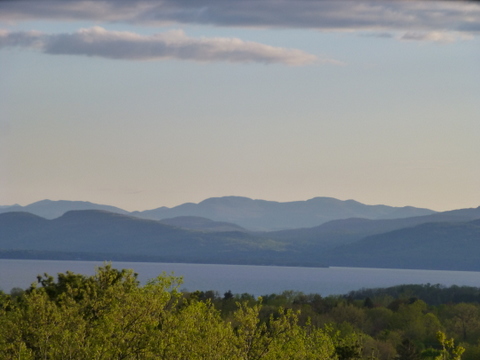 The fog is lifting, revealing a lovely spring day.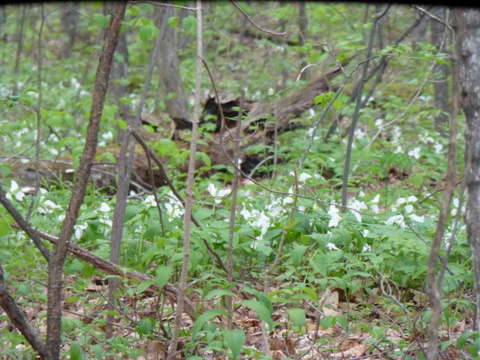
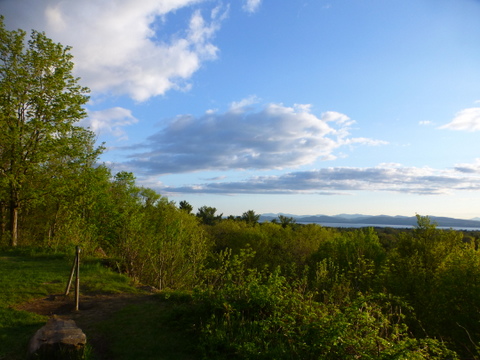 The sun has broken through and the sky is a brilliant blue. Over the lake a layer of clouds, white and bubbly, hangs. Trees and gardens are abloom, and the scent of lily-of-the-valley and lilac saturates the air. The day is beautiful. May we walk through this day in Beauty, together.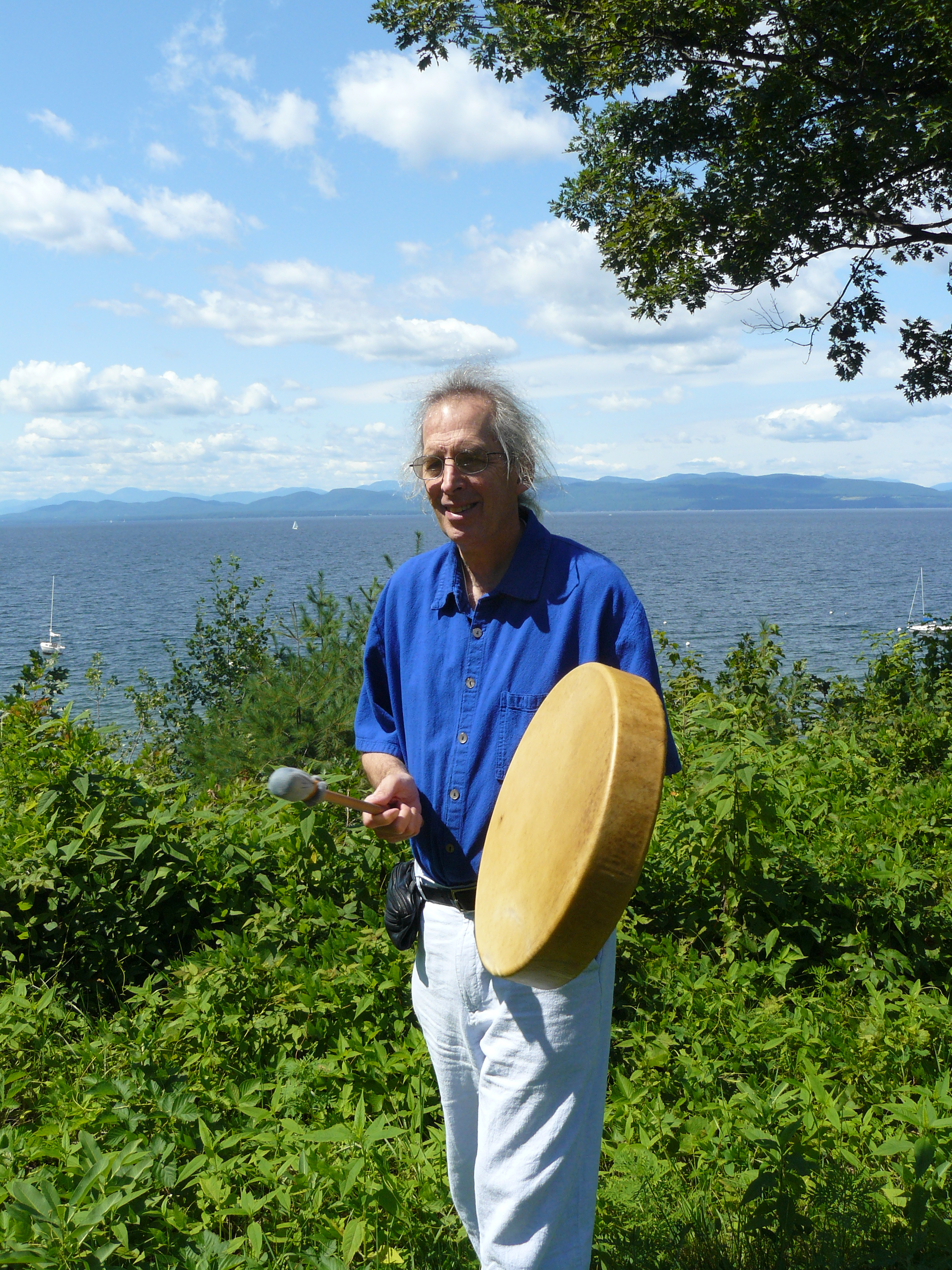

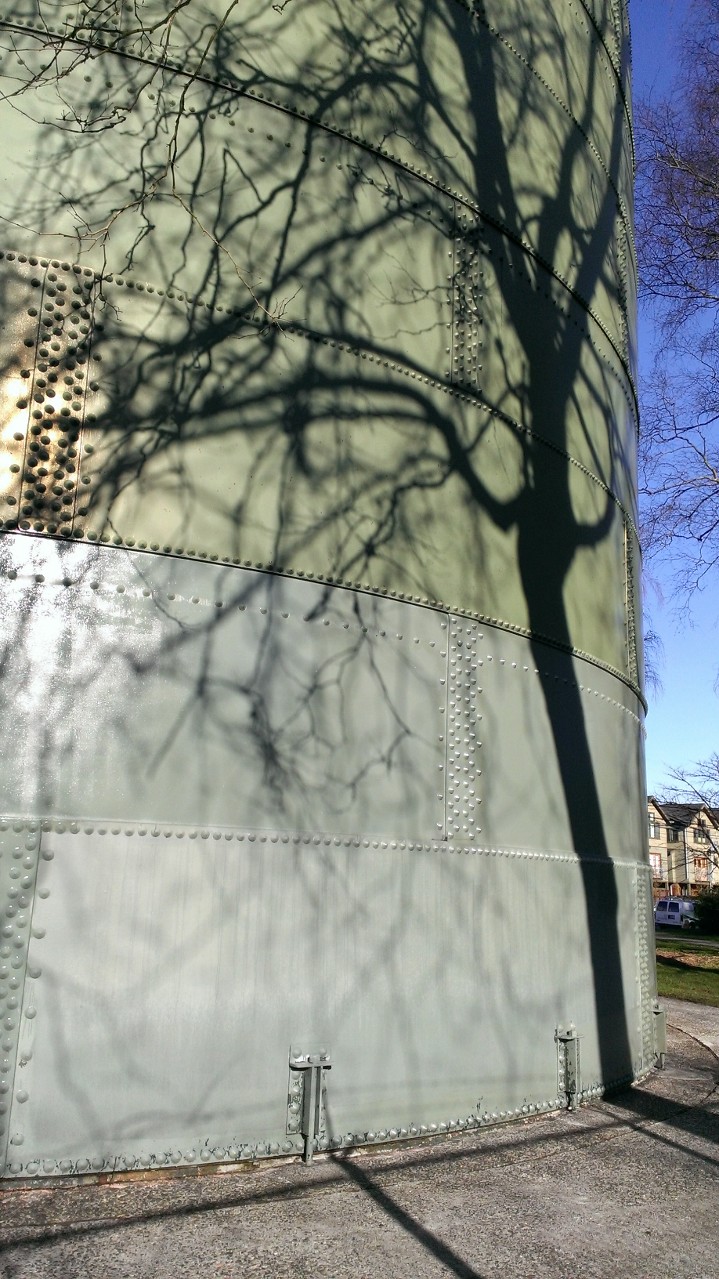
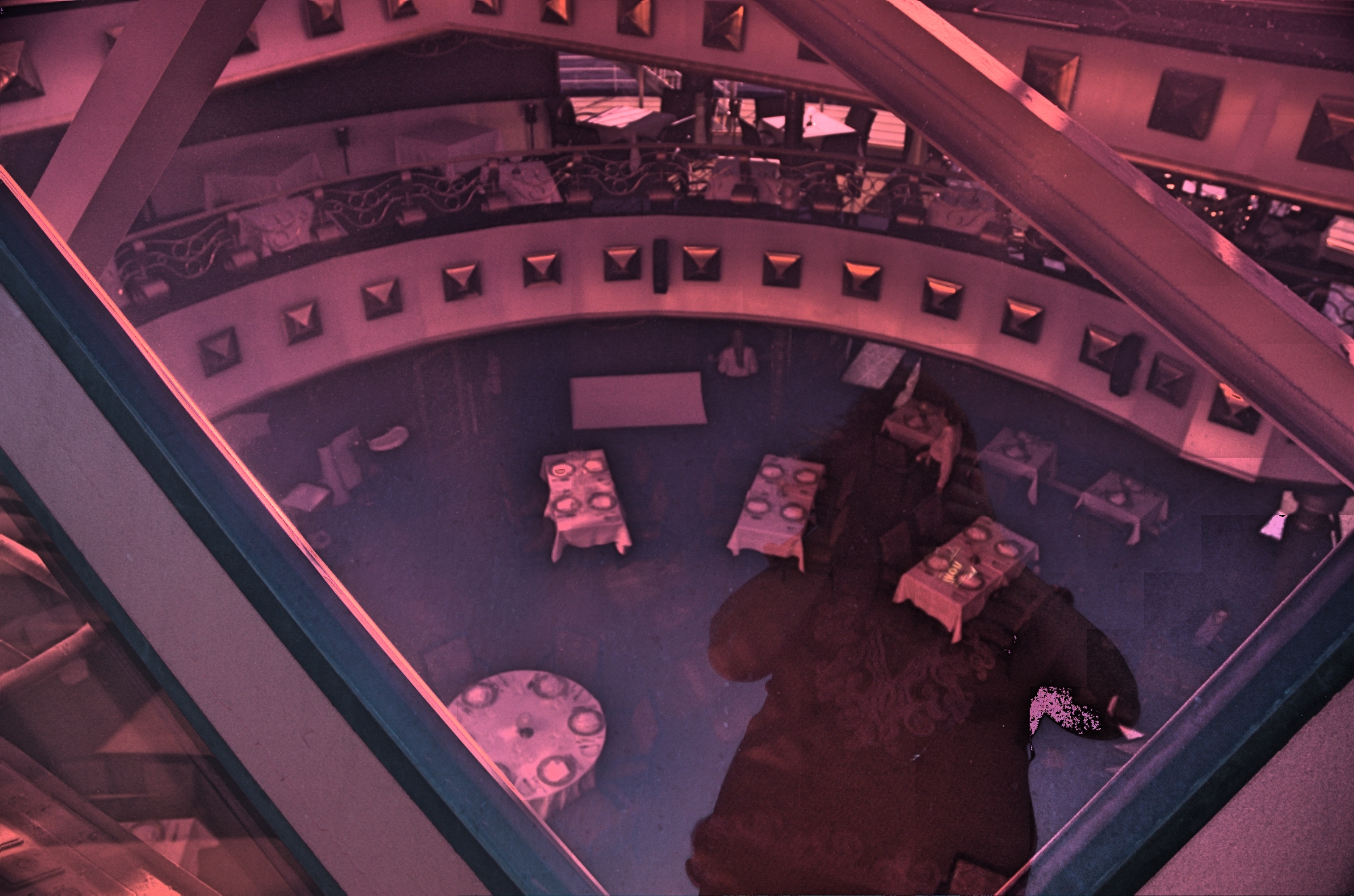

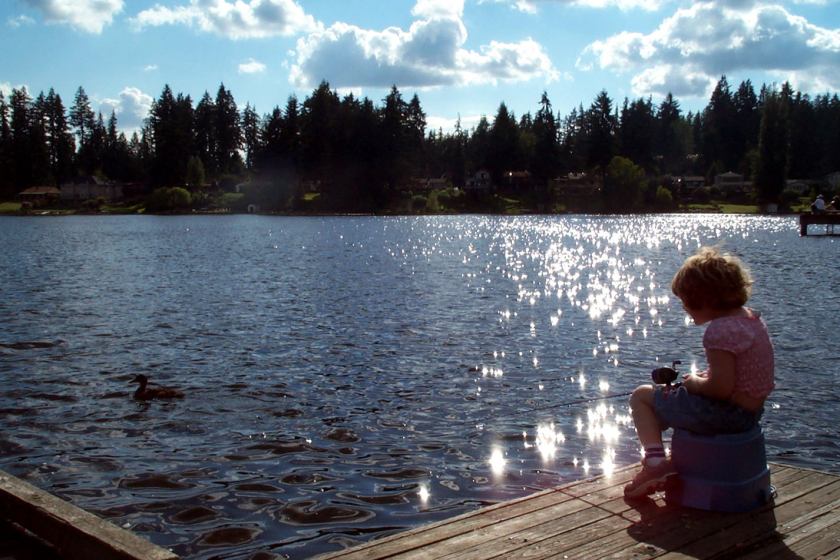
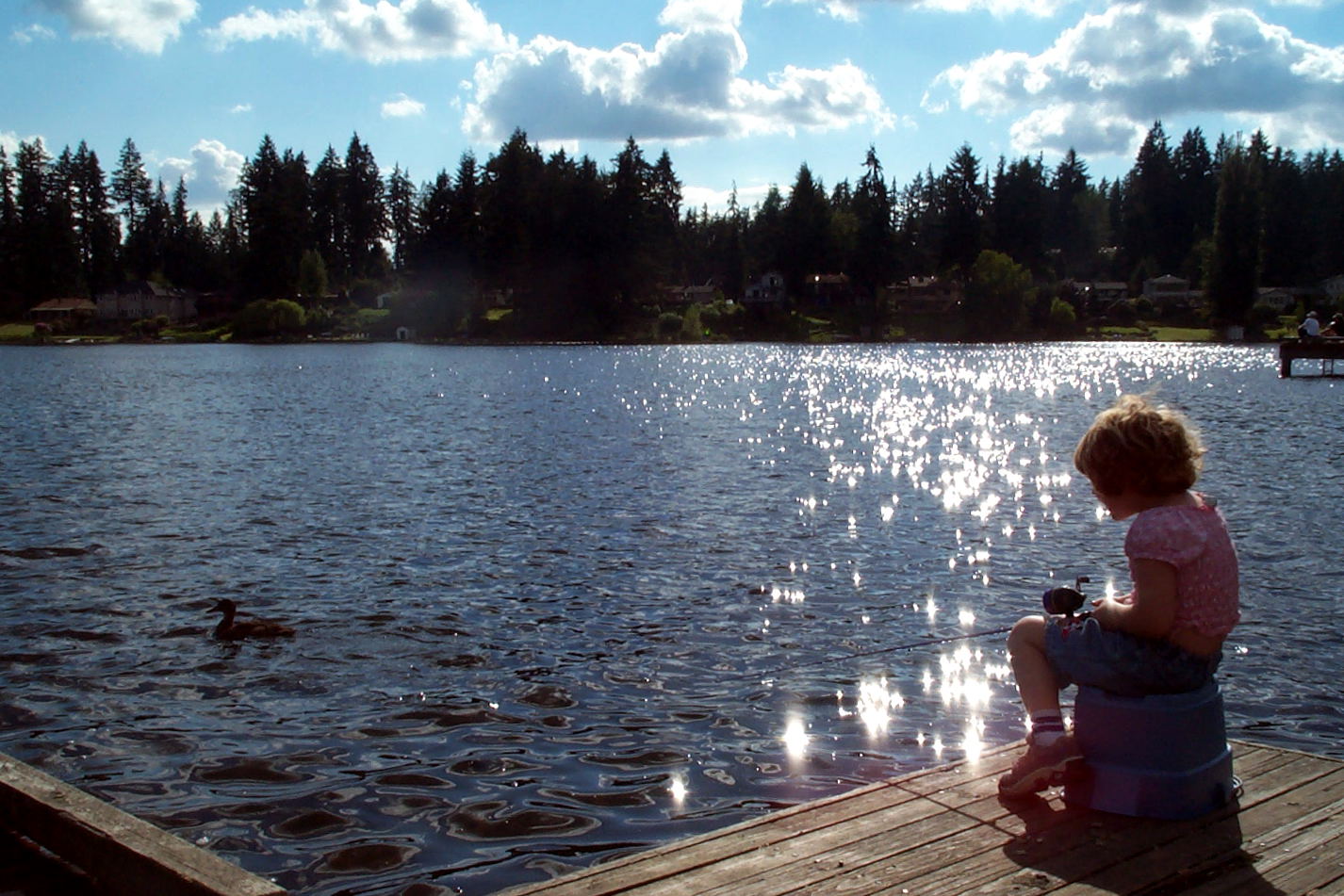
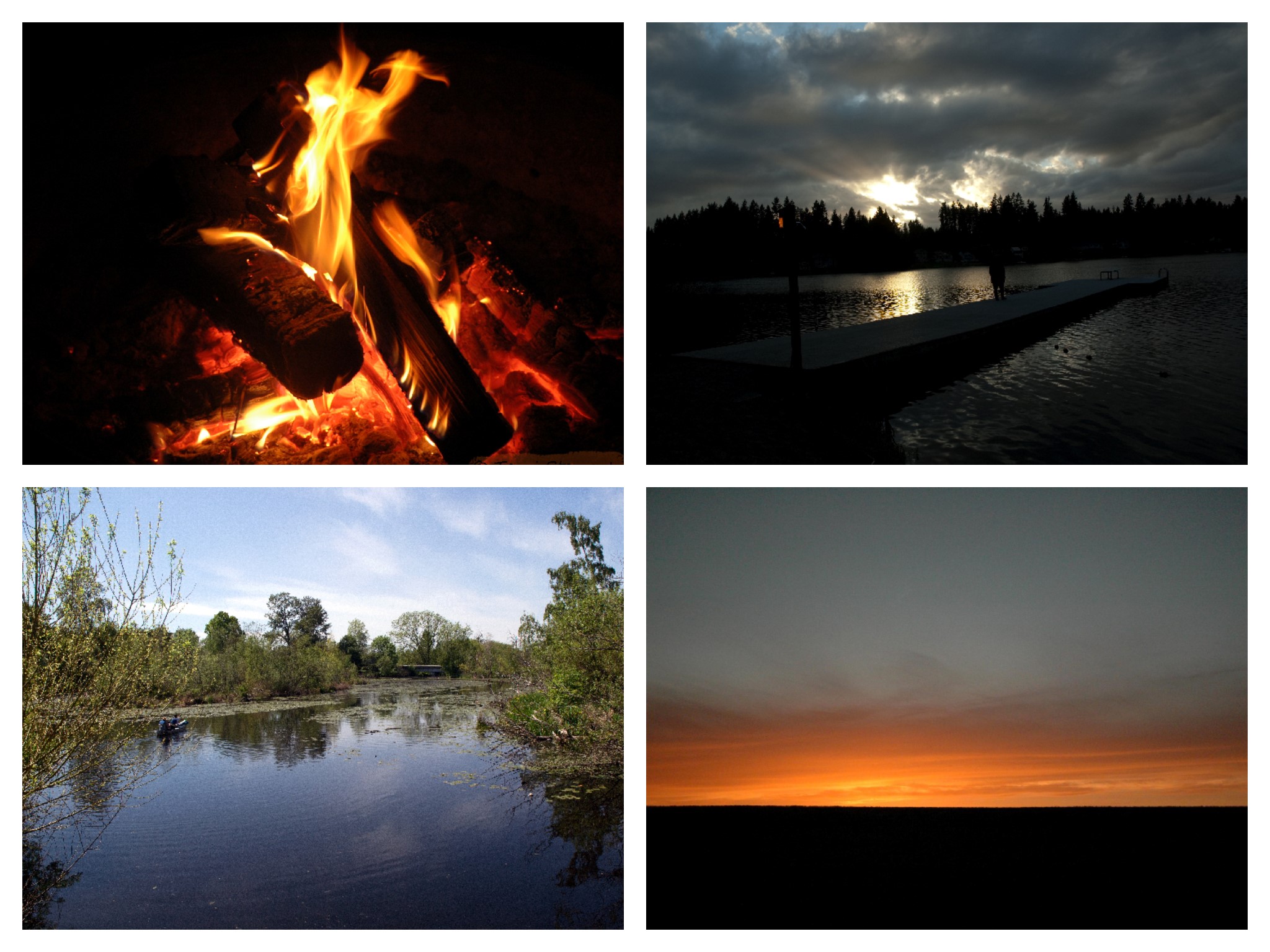
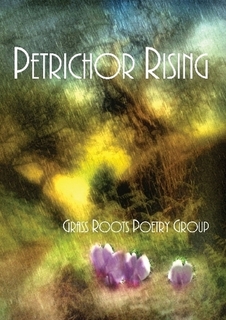
 John has also been involved in the recent publication of two anthologies that are the result of online collaborations among two international groups of amateur and professional poets. One of these is The Grass Roots Poetry Group, for which he produced and edited their anthology, “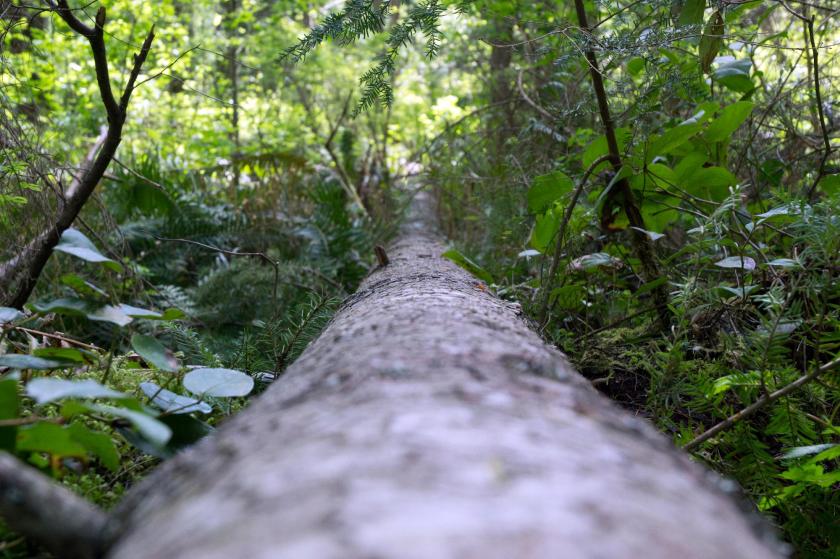
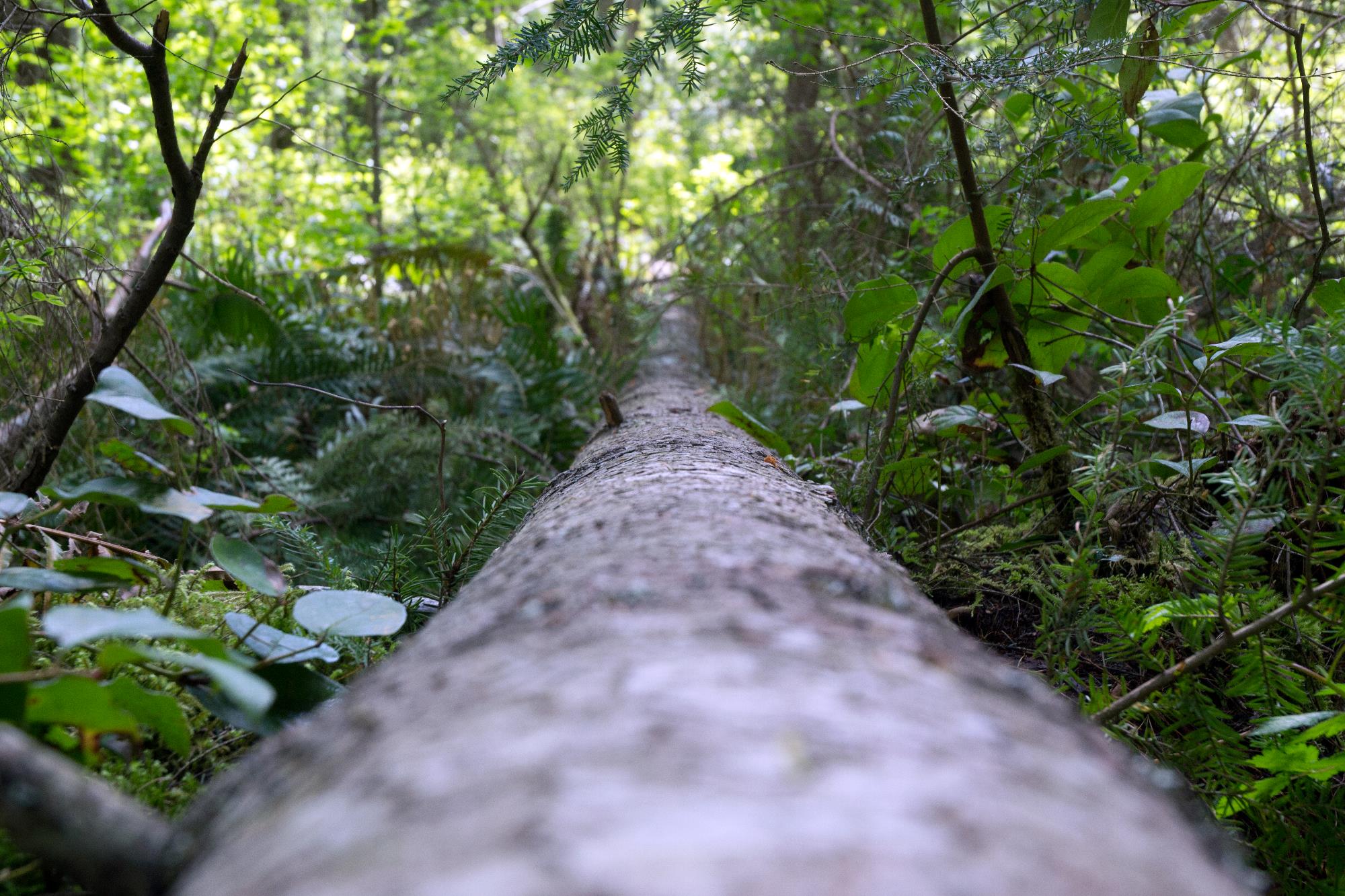
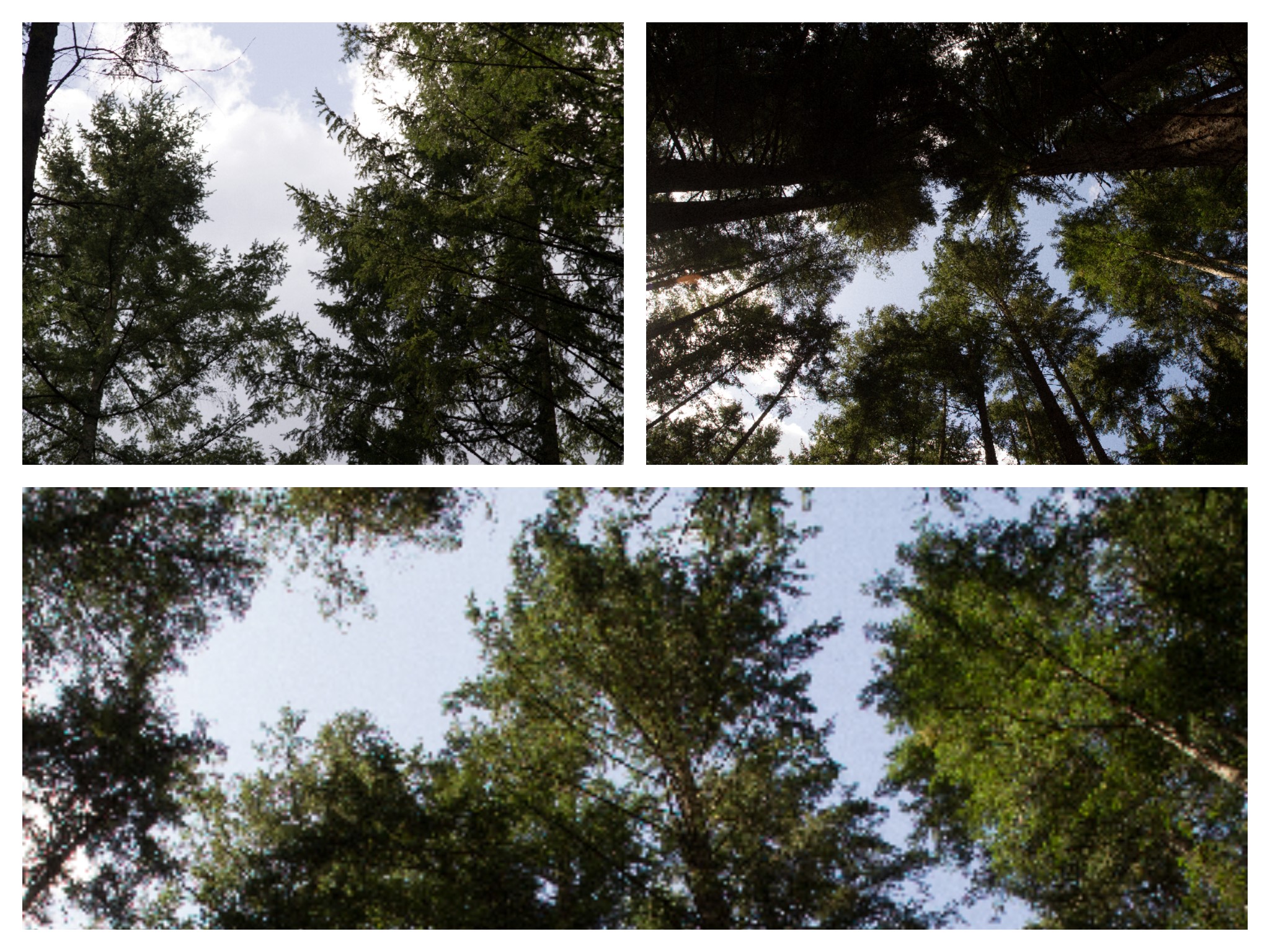
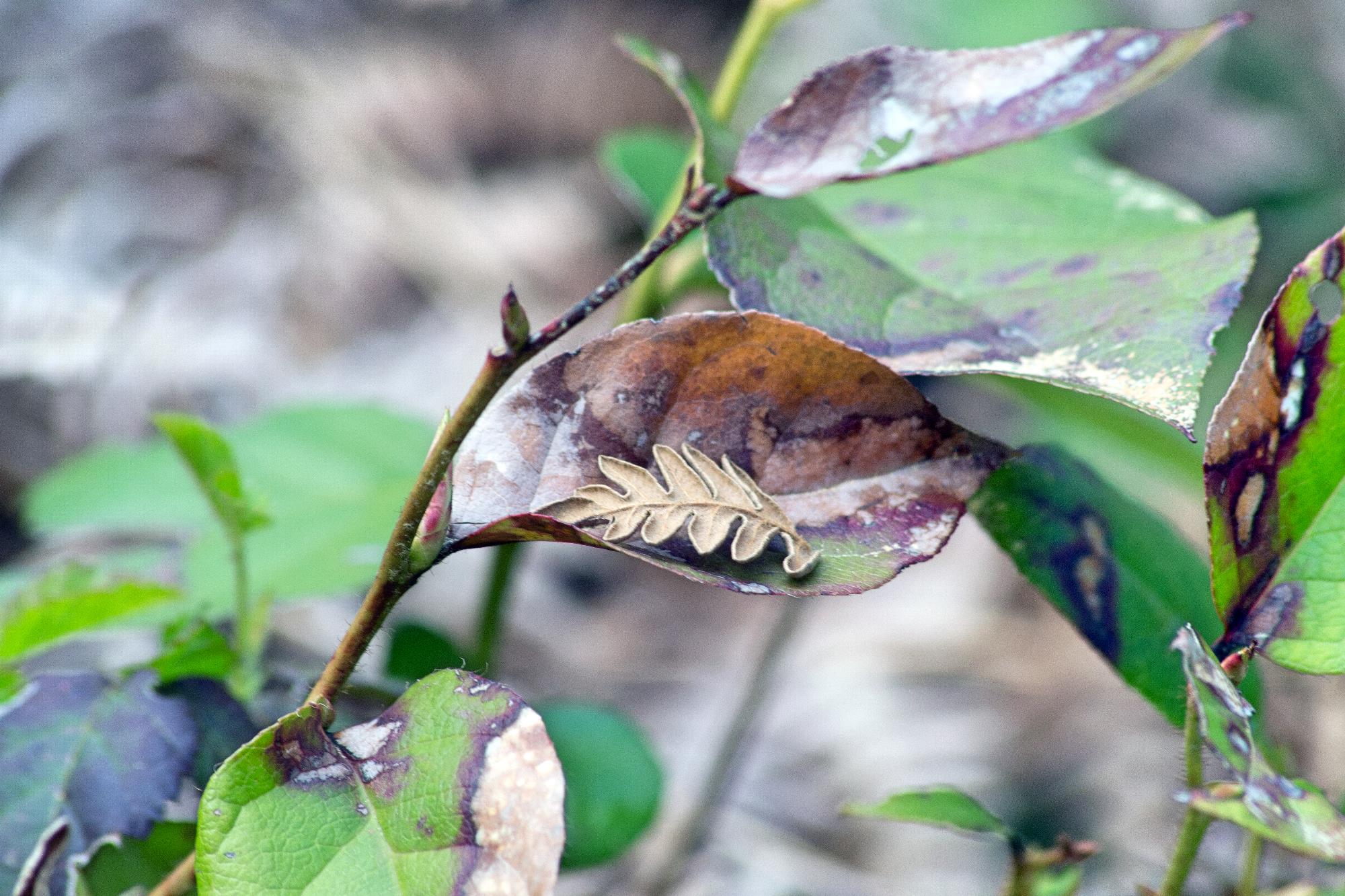

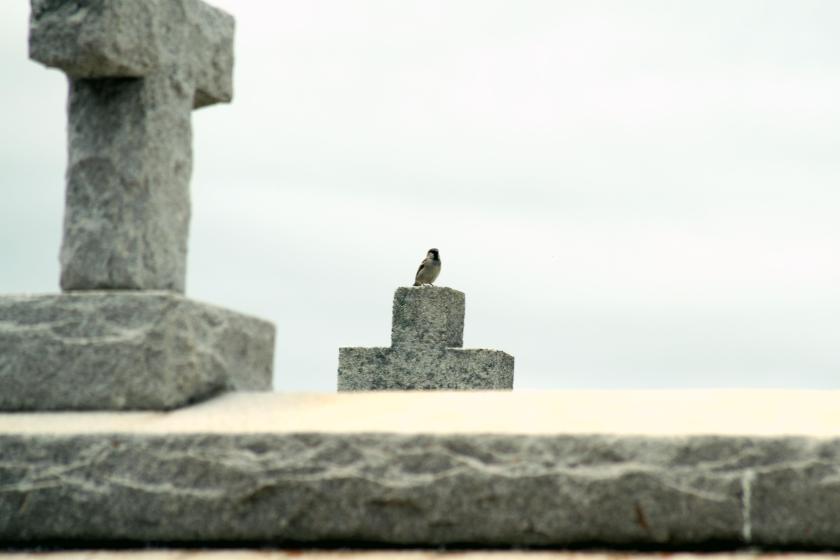
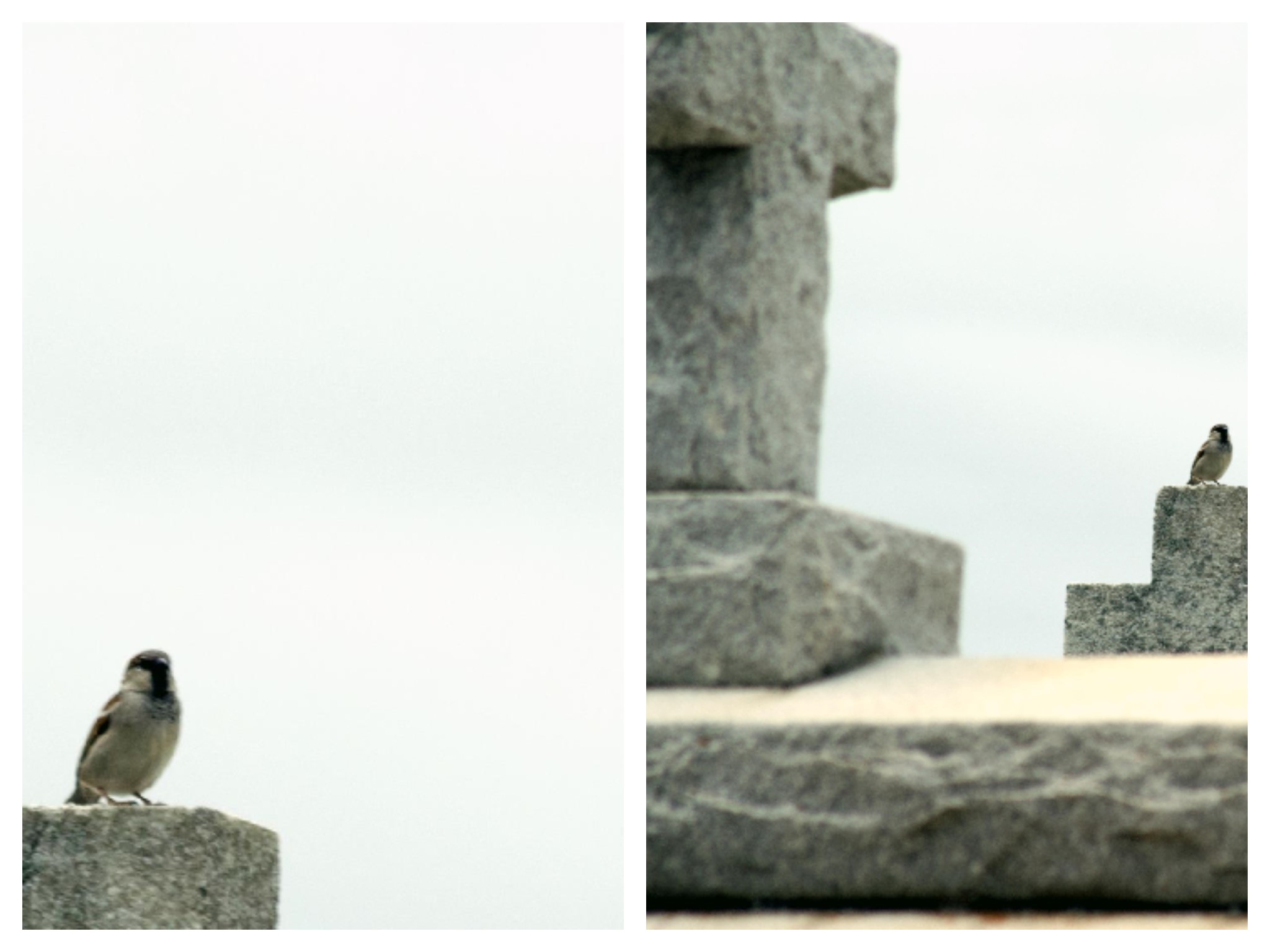
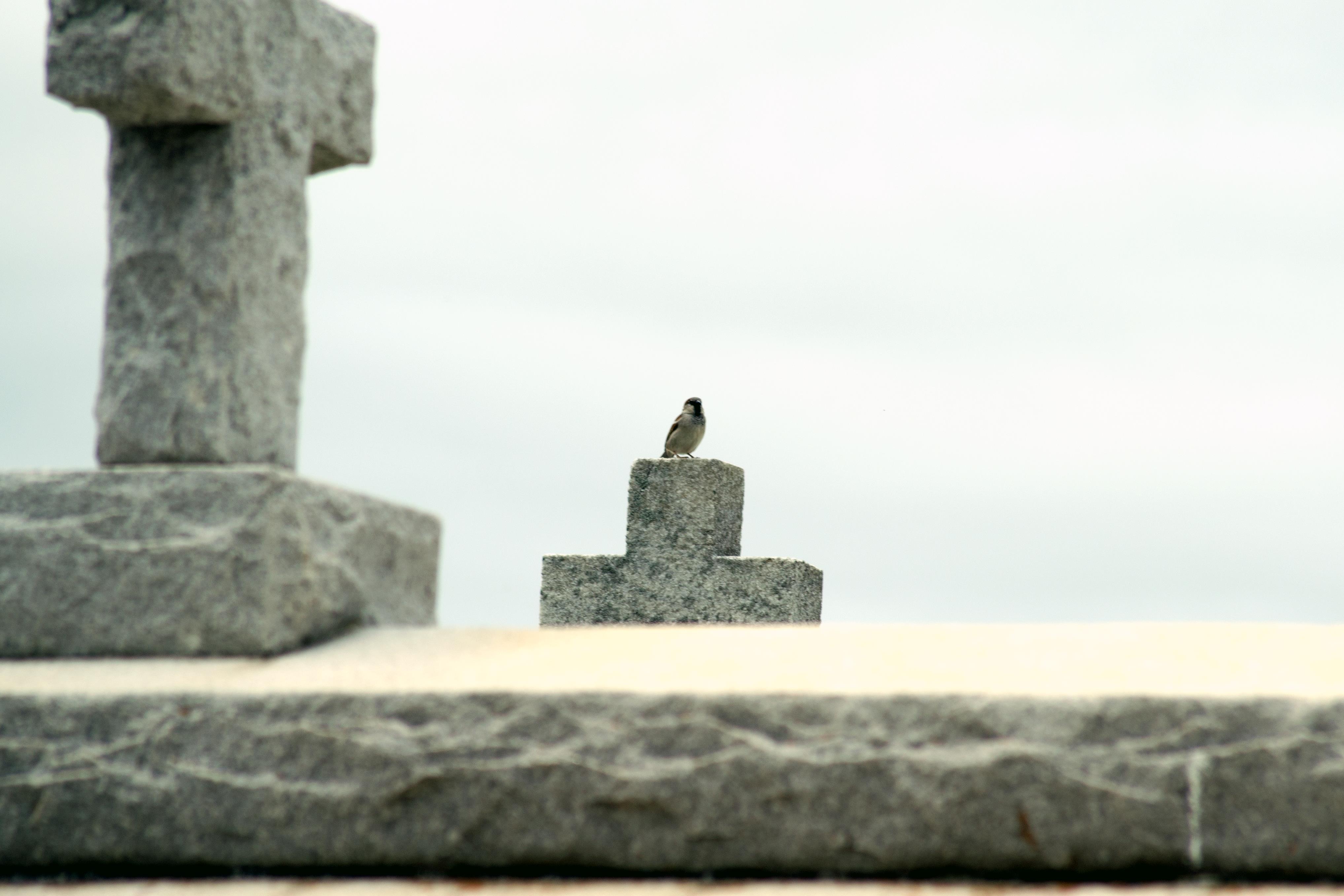


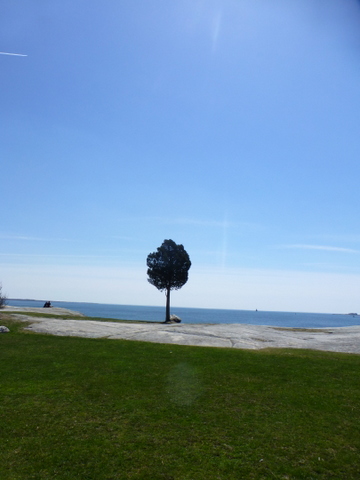
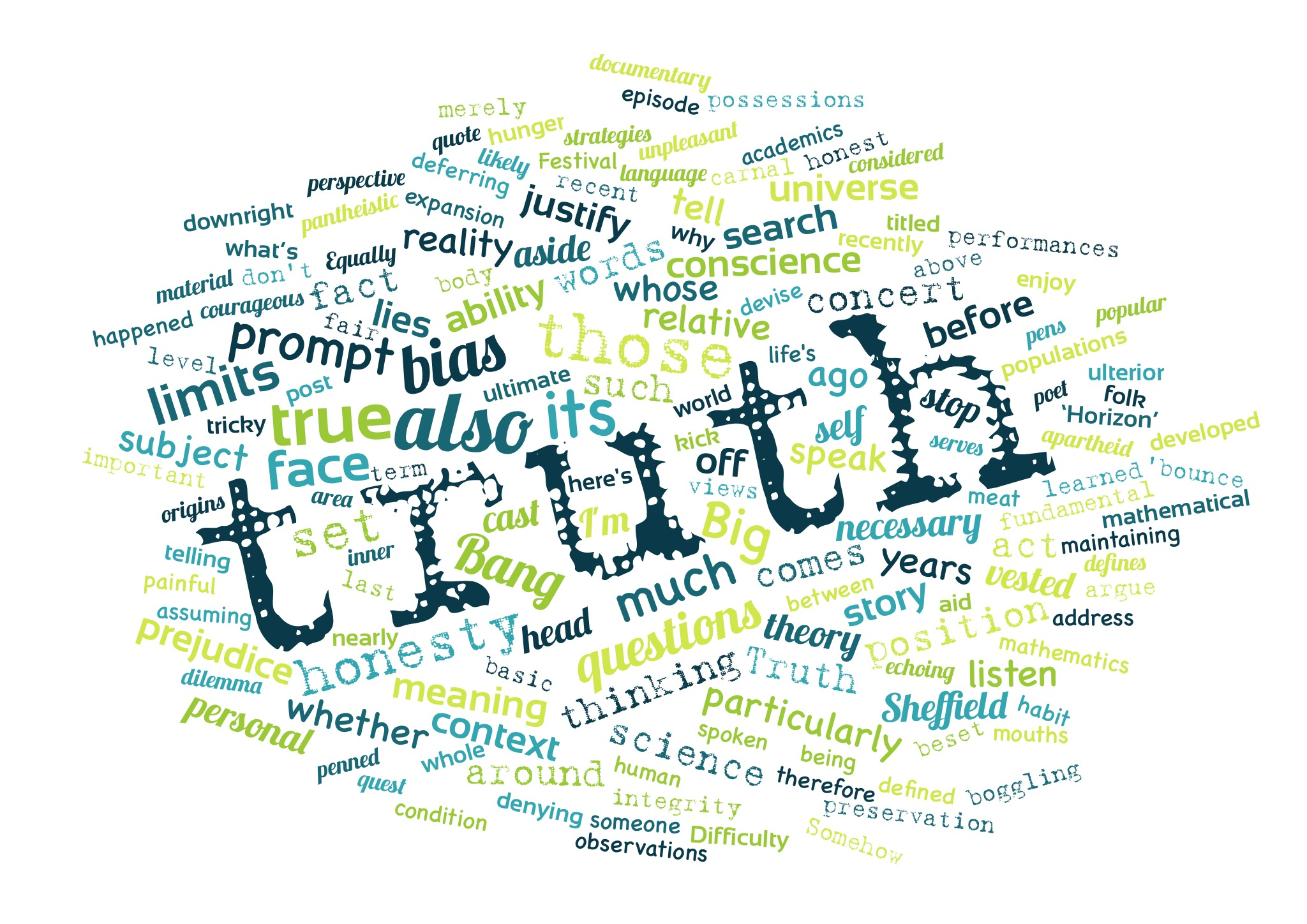




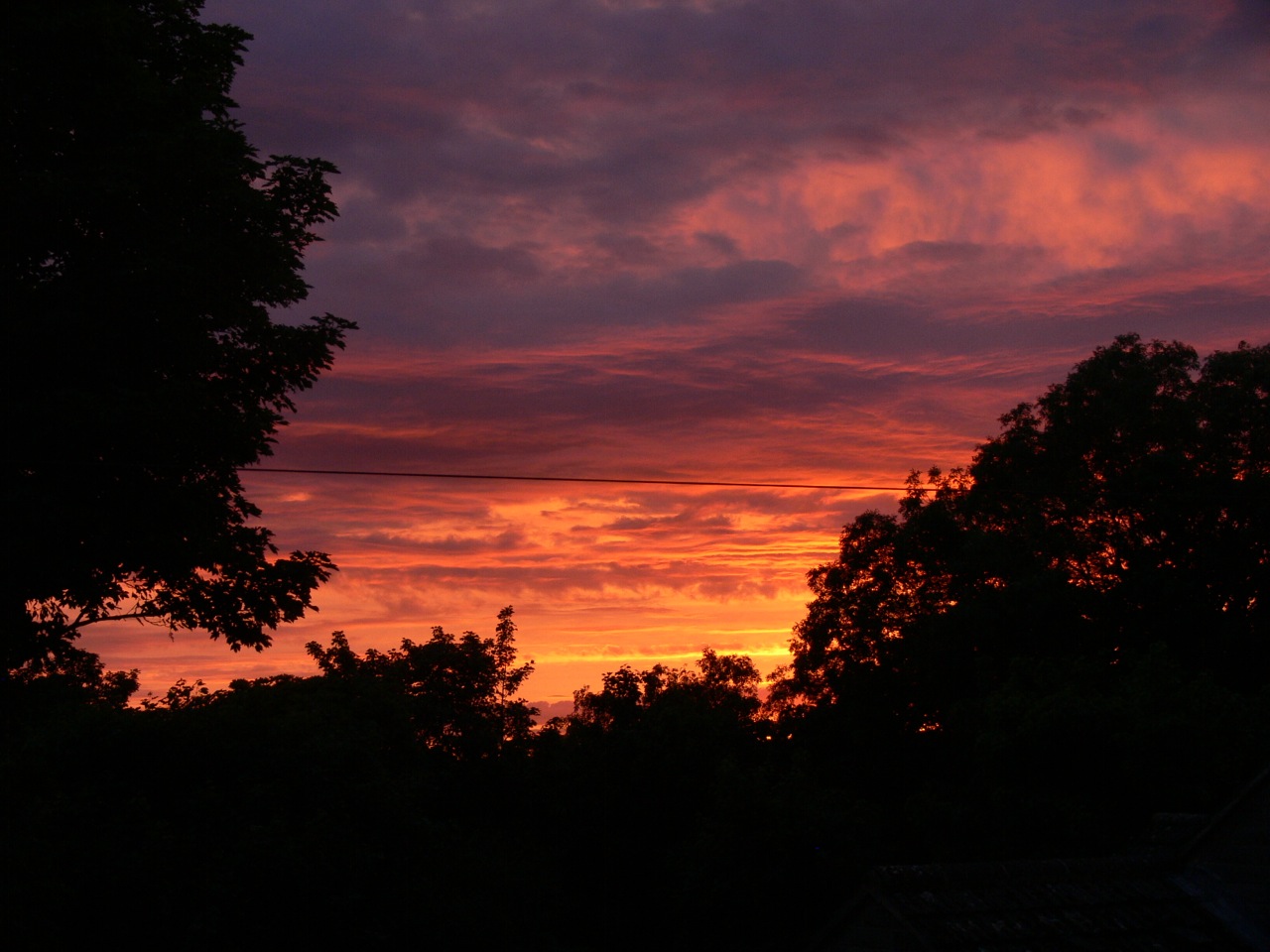

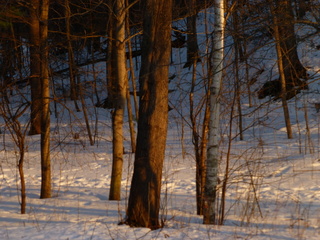
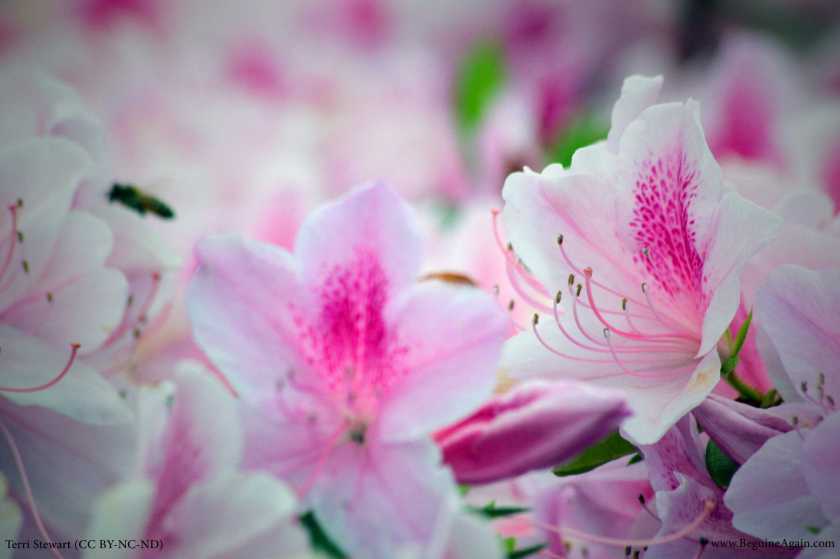
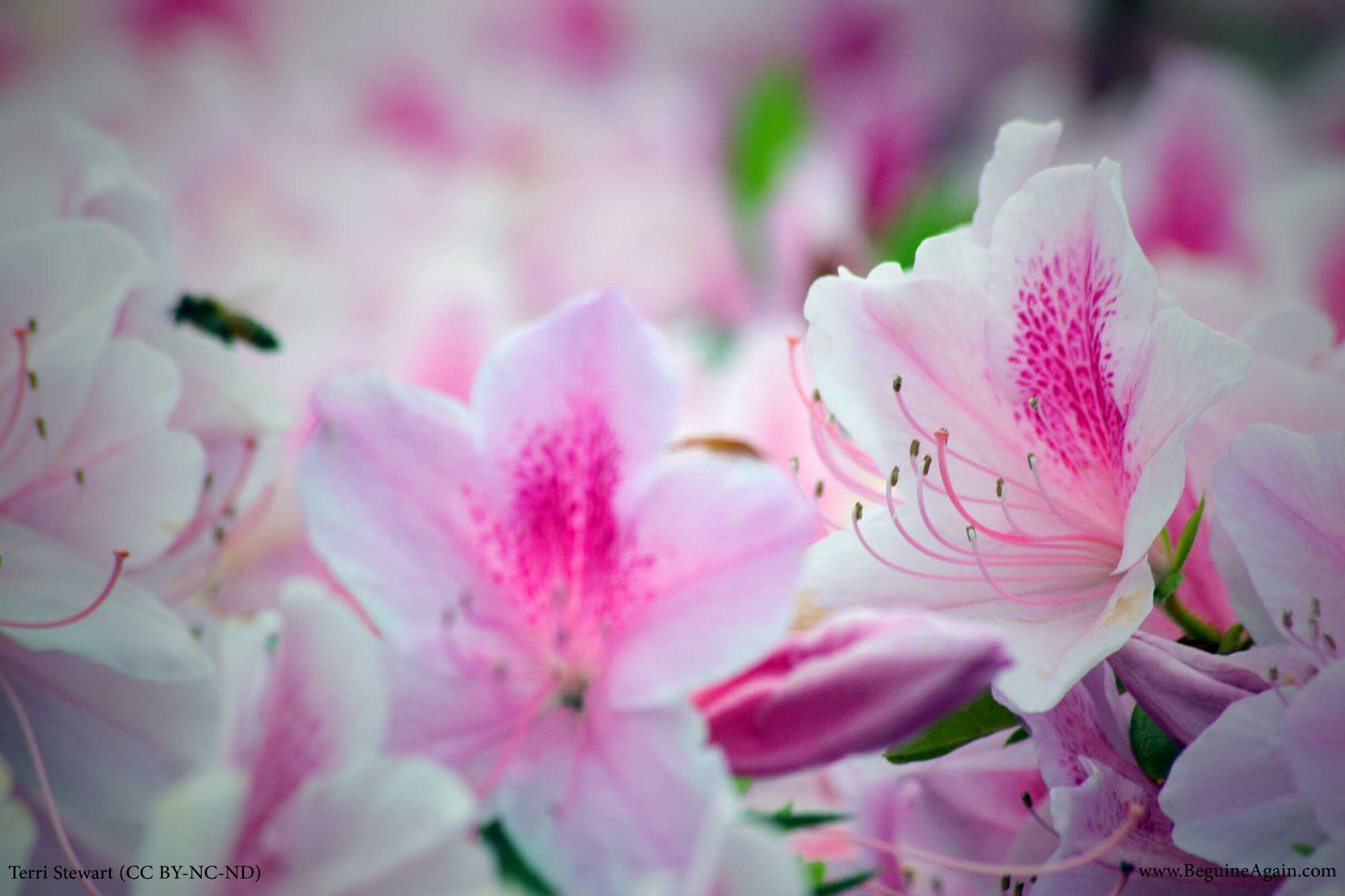

 The BeZine
