Posted in Essay, General Interest, John Anstie, poem, Poems/Poetry, poetry

Looking South

(For some, the ultimate journey)

This poem was my response to a challenge; about the triumph of the human spirit over adversity. But most particularly, it is about not bearing life’s burden on your own, but rather learning how to ask for help, how to share concern or worry. For some things in life, you cannot just ‘tough it out’. However strong you think you may be, there are some challenges in life that you cannot, nay should not tackle alone, because everyone has their limits; there is always a barrier, either physical or emotional or both, that will inhibit the progress of any man or woman; will put a stop to their journeys.

Perhaps this is because, once you show your vulnerability, far from becoming prey to vultures and demons, you will also attract the support of true human beings, those who are true team players, those who care. And anybody who endeavours to achieve things that not everyone would attempt, has that spirit. It is often a spirit born of near death experience, but may also be a response to physical and emotional pain.

It is both these things that four men from the British armed forces set out to overcome in a seemingly impossible challenge. These four servicemen, who were all injured in combat in Afghanistan, set out to enter the record books as the first disabled team to walk unassisted to the North Pole. It involved a great deal of preparation and training for all of them.

The men are: Capt Martin Hewitt, 30, whose right arm is paralysed after being shot; Capt Guy Disney, 29, whose right leg was amputated below the knee after he was hit by a rocket-propelled grenade (RPG); Sgt Stephen Young, 28, who suffered a broken back in a roadside bombing; Pte Jaco Van Gass, 24, who had his left arm amputated and suffered significant tissue loss to his left leg after being hit by an RPG.

For the first few days of their trek, they were also accompanied by Prince Harry, who supported their campaign both before and after it was completed. The documentary, shown on BBC1 in the summer of 2011, was called “Harry’s Arctic Heroes“.

In this expedition, these four men represented every soldier, airman and sailor who is ever injured in conflicts, but particularly those who lose their faculties in some way, be it the loss of a limb or sight.

The poem also has a ‘dark’ side, as it shakes a metaphor at dealing with our mortality, not least by reference to ‘The Dream of Gerontius’. The journey ‘North’, in this sense, is figurative and is my way of demonstrating that metaphor to the ultimate journey that we and all animals make as an integral part of our lives. “Looking South” represents the looking back on our lives, which in the case of these four injured servicemen, was their life so far. And for a majority of those, who deal with life’s challenges, some significant moments also represent a looking back on our lives… so far.

If you stand in the wind
and allow it to bend you
so you flex and withstand it,
don’t let it uproot you,
then you’ll find it can’t hurt you
in spite of extraordinary pain.

If your instinct for flight
is taken away
your options for fighting
in an instant are gone,
like a parent removing
your permission to play…

…with the most bitter of tears.

If there’s anything surer
than the moment you hear
a deafening sound
of silence and the fear
rushes in like air
to a vacuum.

There’s nothing more certain,
never so clear,
as if a vision of your life
were etched in white light
closing your eyes
and blinding your sight…

…but opening them on the inside.

It seems you were born
for this moment;
that this is your time.
You appear to have arrived
at the moment when pain
can no longer touch you.

That stress and the anguish
of screaming self-doubt
have momentarily left you,
your inside looking out;
outside looking in;
thoughts perfectly scrambled…

…like the dream of Gerontius.

Circumventing your demons,
overcoming your fear
this vision of whiteness
tears at your heart and your soul;
bedazzling lightness
of mind; supernal disclosure;

a revelation that you’ll never
be left on your own.
You will never be able
to embark on this journey
without your assistants;
your brothers in arms…

…but they’re not the Invisible Choir

Your angels are next to you;
there at your shoulder if you look.
Maybe a Prince or a pauper,
but either will brook you;
all you need is to ask;
as long as you let them know.

Then, when you stand there,
sharing legs, shoulders, arms,
looking South when you know
that there’s no further North,
surveying a World,
that will sing your arrival…

…knowing now that you truly have life.

Looking south
can’t say how I feel
Looking south
at the great, white sea
Looking south
just seems so unreal
Looking south
making known that I’m free.
Looking south
a muse at my heels
Looking south
nothing more to flee
Looking south
my brotherhood sealed
Looking south
fearless of what’s to be.
Looking south
my soul is healed
Looking south

© 2011 John Anstie

John_in_Pose_Half_Face3

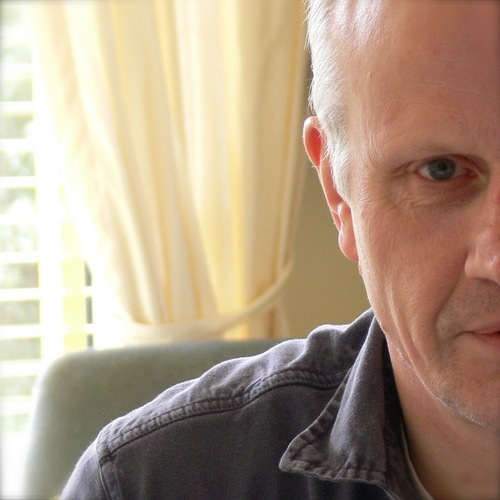
JOHN ANSTIE (My Poetry Library and 42) ~ is a British writer and poet, a contributing editor here at Bardo, and multi-talented gentleman self-described as a “Family man, Grandfather, Occasional Musician, Singer, Amateur photographer and Film-maker, Apple-MAC user, Implementation Manager, and Engineer”. He has participated in d’Verse Poet’s Pub and is a player in New World Creative Union as well as a being a ‘spoken-voice’ participant in Roger Allen Baut’s excellent ‘Blue Sky Highway‘ radio broadcasts. John has been blogging since the beginning of 2011. He is also a member of The Poetry Society (UK).

*****

product_thumbnail-3.php

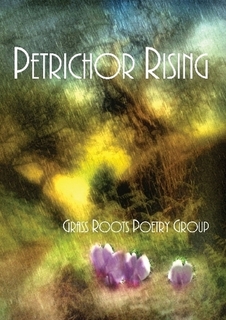
51w-rH34dTL._BO2,204,203,200_PIsitb-sticker-arrow-click,TopRight,35,-76_AA300_SH20_OU01_John has also been involved in the recent publication of two anthologies that are the result of online collaborations among two international groups of amateur and professional poets. One of these is The Grass Roots Poetry Group, for which he produced and edited their anthology, “Petrichor* Rising. The other group is d’Verse Poet Pub, in which John’s poetry also appears The d’Verse Anthology: Voices of Contemporary World Poetry, produced and edited by Frank Watson.

Petrichor – from the Greek pɛtrɨkər, the scent of rain on the dry earth.

Posted in Art, General Interest, Gretchen Del Rio

gaia

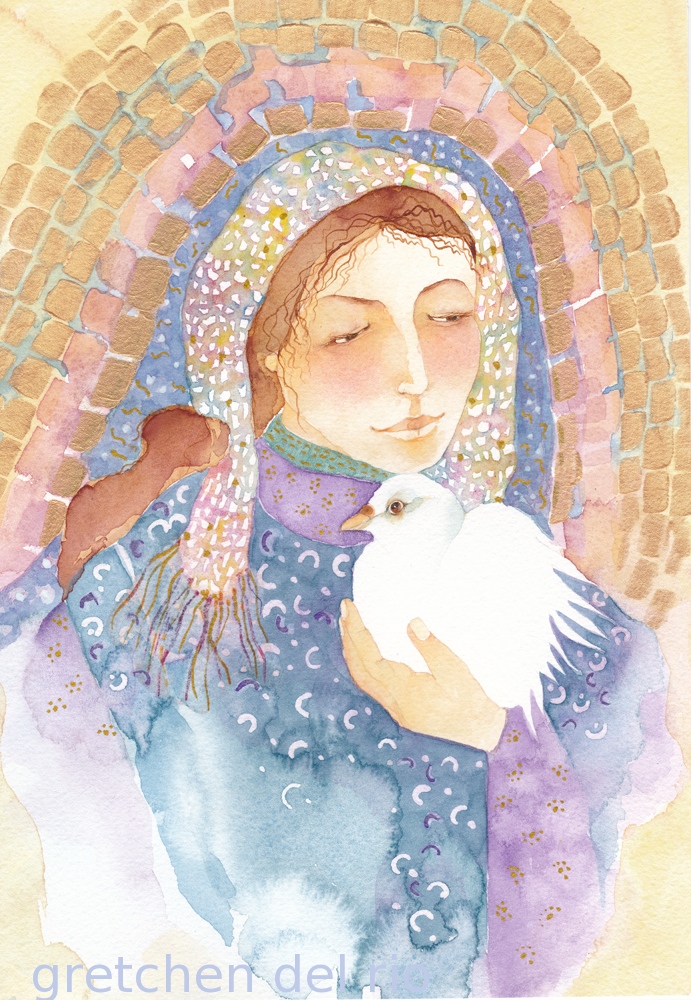
Gaia, the essential mother, by Gretchen Del Rio.

Gretchen Del Rio's avatarGretchen Del Rio's Art Blog

watercolor 7x10  4/2014 watercolor 7×10 4/2014

Nature – the gentlest Mother is,
impatient of no child
 
………………emily dickinson

View original post

Posted in General Interest, Photography/Photographer

Photographs “are made with the eye, heart and head.” French Photographer Henri Cartier-Bresson: The Decisive Moment

This slideshow requires JavaScript.

Cartier-Bresson’s, The Decisive Moment, the 1952 US edition of Images à la sauvette. The book contains the term “the decisive moment” now synonymous with Cartier-Bresson:

“There is nothing in this world that does not have a decisive moment.”

“It is an illusion that photos are made with the camera… they are made with the eye, heart and head.” – Henri Cartier-Bresson (1908-2004), French photograph said to be the father of photojournalist

Posted in Essay, General Interest, Priscilla Galasso

I Love My Mom

This morning I got an e-mail from her titled “catching up on the blogs”.  I felt her heart bubbling over like she had just emerged from an afternoon reading a favorite novel.  She had associations, appreciations, memories, connections to share, like her synapses were fireworks going off.  From a reader to a writer, this has got to be the highest praise.  She started off by remarking, in all caps, that there has to be a book in this somewhere and that she wants an autographed first edition.  Aw, Mom!

My mom is not a literary push over.  She has a degree in English from Radcliffe (now coed with Harvard).  She devours books regularly and always has.  Her typical posture these days is sitting in her high-backed rocker with knitting in hand, book strapped in on her reading stand, mind and fingers flying.  She used to hide away in her bedroom with a bag of snacks and emerge an hour or so later with renewed energy to tackle her household obligations, sporting a kind of secret glow.  Get her talking about one of her recent historical sagas, and she will enthusiastically engage for hours!  I love seeing her pull thoughts that have been carefully laid aside like unmatched socks and bundle them together with a flourish of discovery and pride. 

She recently told me that her doctor mentioned her good prospects for living another 20 years.  That would make her 97; she wasn’t sure she’d want to live that long.  But think of all the books you could still read!  Or that could be read to you, if the cataracts cause the eyes to fail.  I can still hear my father’s voice reading to her behind the bedroom door.  His partnership to her intellectually was so rich, until Alzheimer’s whittled his brain away.  I wonder if she feels the same phantom guilt I have in enjoying a healthy body and a sound mind after our husbands’ deaths.  Well, I suppose consciousness is a responsibility to approach with reverence.  We live, we feel, we think, we read, we make connections still.  May we both bring life and light to the world like fireworks, Mom, as long as we are able. 

© 2014, essay Priscilla Galasso, photo Dharam Kaur Khalsa.  All rights reserved


004PRISCILLA GALASSO ~ started her blog at scillagrace.com to mark the beginning of her fiftieth year. Born to summer and given a name that means ‘ancient’, her travel through seasons of time and landscape has inspired her to create visual and verbal souvenirs of her journey.

Currently living in Wisconsin, she considers herself a lifelong learner and educator. She gives private voice lessons, is employed by two different museums and runs a business (Scholar & Poet Books, via eBay and ABE Books) with her partner, Steve.

Posted in General Interest, Mental Health, Photography/Photographer

Life is like a camera …

10174913_10152114069673030_5496555897153827500_n

photographic inspiration for a

HAPPY interNATIONAL PHOTOGRAPHY MONTH!


and a joy-filled life!


You are invited to share your photography

with us here on May 14 for Wordless Wednesday

hosted by Priscilla Galasso (scillagrace)


Posted in General Interest, Niamh Clune

A Nairobi Lesson!

Recently, a friend of mine, Patricia Tilton, reviewed a lovely little book for children on her blog: My Paper House by Lois Peterson about a little girl who comes from Kibera in Nairobi.

Reading her review, memories of my first impressions of the frantic, noisy, city of Nairobi inspired me to write something for my Insights Corner. At the time, I was doing a consultancy for Oxfam. I rode in my air-conditioned Toyota Landcruiser (until it was stolen) through the then-failing traffic system with its drive-on-the-left, traffic lit, roundabouted road infrastructure ~ a testament to Pre-Uhuru British colonialism.

Heat bounced off the pot-holed, tarmacked roads, causing them to soften and shimmy.

I remember driving through the parts of town where the rich lived. Roads were lined with mansions and gated-compounds guarded by Askaris. Pepper trees and Bougainvillea grew everywhere. I knew I was in Africa because of the glaring, daring colours ~ flowers and vibrant Kangas worn by local women. Only they can wear such colour. Their blue-black skin makes that of a white person’s seem bleached, devoid of life.

The relentless sun forces everything to exude its fragrance. house nairobihouse nairobi

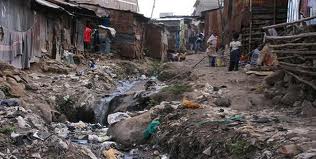
I drove to another part of town. Glinting corrugated tin roofs bounce the sun back into your eyes ~ mirroring something of the reality of contrasts in that part of the world. The Kibera slums occupy a space not quite as large as Central Park. Kibera is jammed full of ramshackle tin huts. Beneath those roofs, men, women and children live in unimaginable poverty. Urine and feces run in open ruts across the ground. There is nowhere to walk, no streets, street lights, or running water. The walking paths (if you can call them that) are filled with rubbish and human waste.

1,000,000 men, women and children live there. There are approximately 1300 people per toilet. If a toilet is occupied, a person squats over a plastic bag (which is a rare commodity) tries to tie it, then jettisons it into space (“flying toilet”).

Kibera is a breeding ground for Diptheria, Malaria and Typhus. Many children don’t live to see five years.

Kibera is an eye-sore, stinking, outrageous and offensive in every way imaginable.slums

Yet, I learned something from my visit (which does not make it right, justify its existence or create a holier-than-thou chance to evangelise in search of a raison d’etre.)

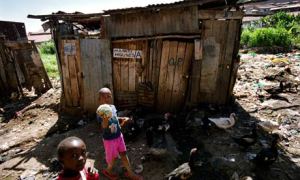
A child of about nine years old approached me. “Mama!” she said. “Give me that.” I looked at what she pointed to. I had a plastic container that I considered rubbish and would (being ecologically minded) recycle. “Give me that,” she said again in English.

I gave it her, and she smiled her thanks. She seemed delighted. I learned later that this little raggedy girl lived on rubbish. Every day of her life, she foraged in Nairobi rubbish dumps to find anything of value that she might then sell on for a few shillings. I had given her something that, for me, was worthless trash, but to her, meant she could eat Ugali that day.

Interestingly, my house-girl (I didn’t invent the terminology or the servant-driven economy) had a plastic container just like it on the window-sill of her hut (of which she was intensely proud). Once, it had been filled with succulent strawberries, now, it was Crosby’s bead box. And she thought it beautiful.

Insight? Apart from the outrage I felt/feel that this goes on in the world and we, collectively, do nothing about it, I looked into that little girl’s eyes. I saw a look of achievement, hope, pride. I did not see failure or despair. She had survived that day. She wanted to survive, thrive, live. Only 8% of girls in Kibera are educated. Just think what this child might achieve if she were given the chance!

Sometimes all we need is a chance. That little girl would grab the taken-for-granted thing and run with it ~ for years and years ~ propelled by its value.

– Niamh Clune

© 2014, essay, Niamh Clune, All rights reserved; photo #1 courtesy of Mwanamwiwa; photo #2 The Guardian News Service; photo #3 © Nairobi Slumbs Schools Project Trust;

430564_3240554249063_1337353112_n-1orange-petals-cover_page_001DR. NIAMH CLUNE (Plum Tree Books Blog) ~ is the author of the Skyla McFee series: Orange Petals in a Storm, and Exaltation of a Rose. She is also the author of The Coming of the Feminine Christ: a ground-breaking spiritual psychology. Niamh received her Ph.D. from Surrey University on Acquiring Wisdom Through The Imagination and specialises in The Imaginal Mind and how the inborn, innate wisdom hidden in the soul informs our daily lives and stories. Niamh’s books are available in paperback (children’s books) and Kindle version (The Coming of the Feminine Christ). Dr. Clune is the CEO of Plum Tree Books and Art. Its online store is HERE.  Niamh’s Amazon page is HERE.

Posted in General Interest, Liz Rice-Sosne, Photo Essay, Photography/Photographer

The Saint Louis Arch . . . A Meditation.

St_Louis_night_expblend_cropped

Credit Wikipedia

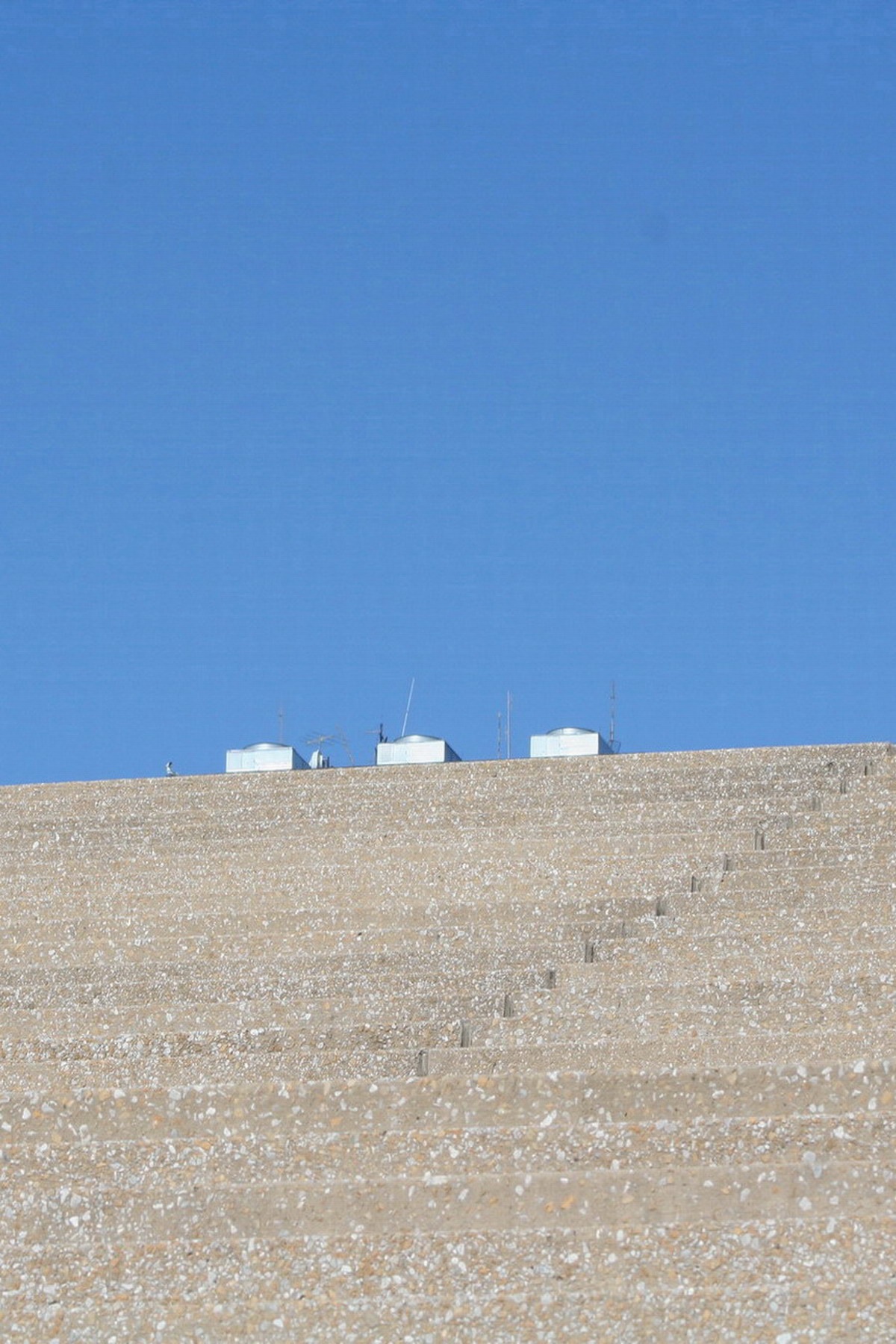
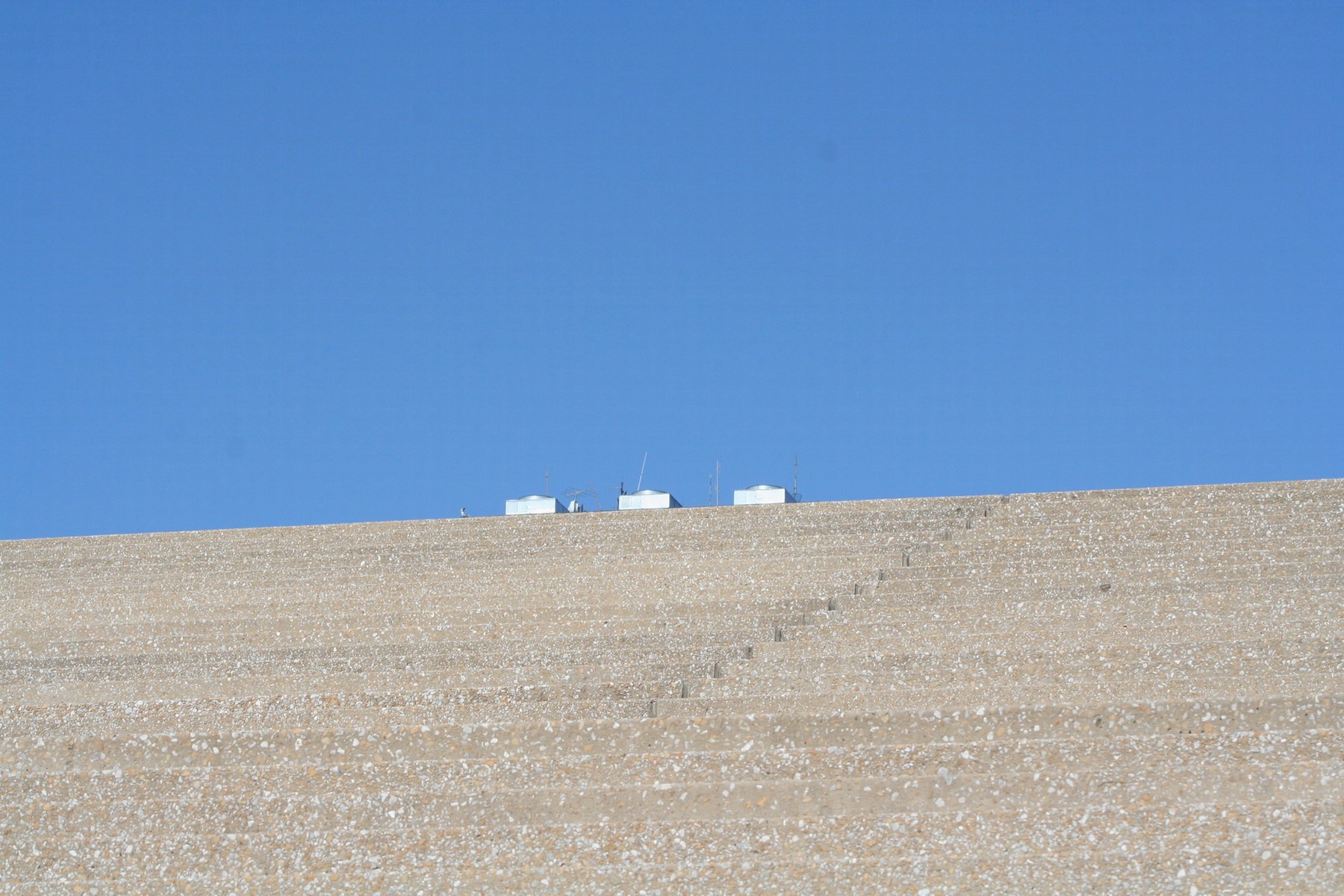
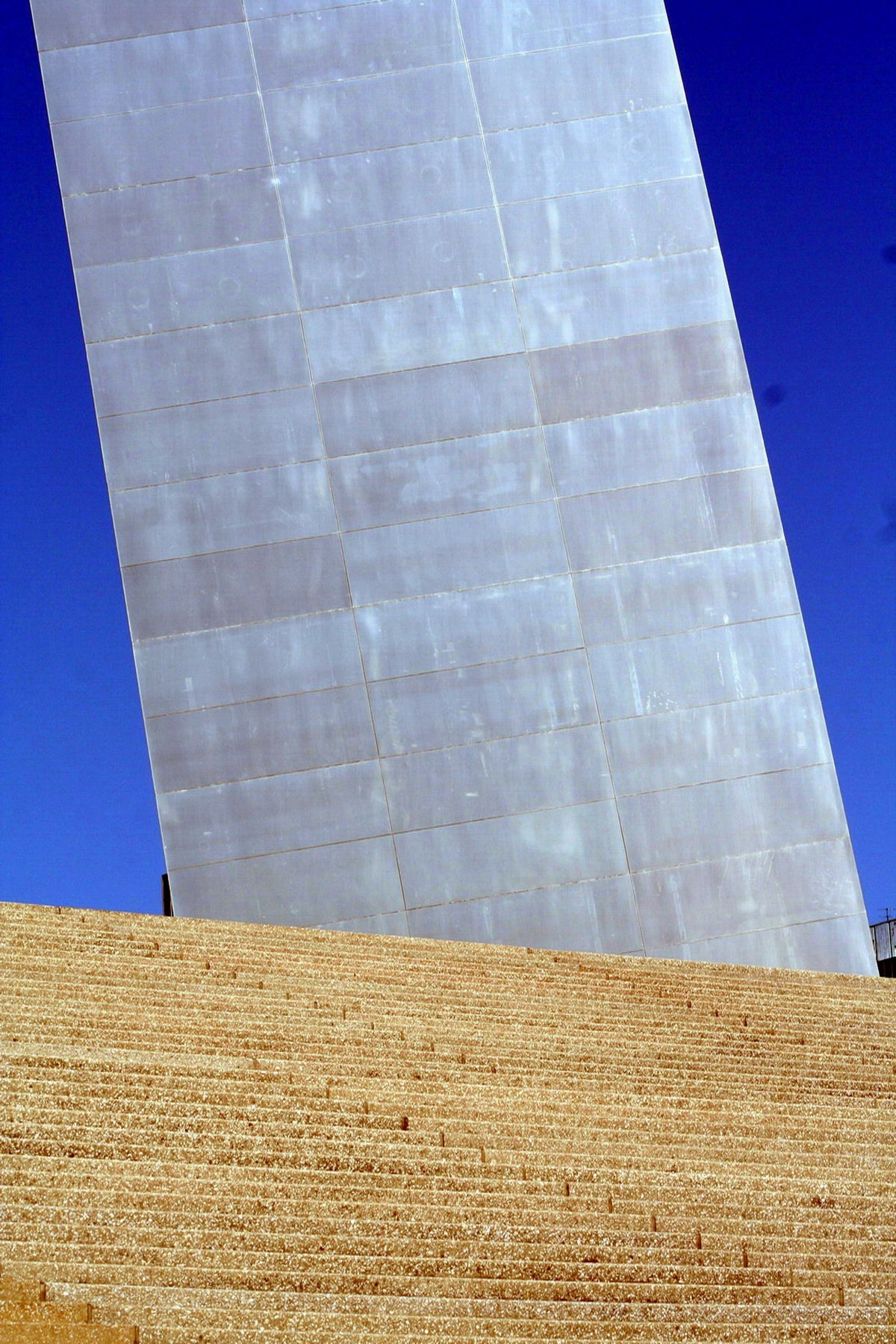
I have been up in The Gateway Arch only once. If recall serves the cars are small and remind me of bullets, although this took place long ago and I really cannot say how accurate my memory is today. The car or cars hold few people. The Gateway Arch as it is known is a part of the Jefferson National Expansion Memorial and sits upon very lovely park ground adjacent to the Mississippi River. I prefer to see The Arch from the outside, it possesses a certain overwhelming stature and majesty. The Arch was designed by the Finnish architect Eero Saarinen.  Opening in 1967, it would become known as the Gateway to the West. At that time it was the tallest known monument built by man. I came to St Louis in 1966 from the east coast. The Arch never really meant a thing to me in my early life here in St Louis. It was later when I was a happier person that I discovered The Arch. I say that I discovered The Arch and my camera rather simultaneously, although those facts are a bit loose. The initial photo was not taken by me but is from Wikipedia. I no longer have a photo of the entire Arch. I had fun one day photographing The Arch and then chopping up those photos as an artistic endeavor. I have always found this series to be quite meditative. I hope that you enjoy them.

0101c 48a910IMG_32715c766_155_14

– Liz Rice-Sosne

© 2014, essay and photographs, Liz Rice-Sosne, All rights reserved

unnamed-2LIZ RICE-SOSNE a.k.a. Raven Spirit (noh where), perhaps the oldest friend to Bardo, is the newest member of The Bardo Group Core Team. She is also our new Voices for Peace project outreach coordinator and our go-to person for all things related to haiku.  She says she “writes for no reason at all. It is simply a pleasure.” Blogging, mostly poetry, has produced numerous friends for whom she has a great appreciation. Liz is an experienced blogger, photographer and a trained shaman. We think her middle name should be “adventure.”

Posted in Corina L. Ravenscraft, Essay, find yourself, General Interest

A Day of Renewal

April showers bring May flowers, and I’m so glad! 🙂 The rains wash away the dirt and dust, and the new plants and flowers burst forth with a clean, green scent and gorgeous palette of colors!

Chicago Peace Rose from my yard

Spring is a well-known time for renewal, and I recently discovered that May 4th has been designated as “Renewal Day”. Webster’s defines the word “Renewal” as:

re·new·al

noun \ri-ˈnü-əl, –ˈnyü-\

: the act of extending the period of time when something is effective or valid : the act of renewing something.

: the state of being made new, fresh, or strong again : the state of being renewed.

This can apply to countless things in life, but it is definitely life-affirming. It’s an active process, not something that just passively happens. When you think of the word “renewal”, what comes to mind? Your driver’s license? Your wedding vows? The Oil of Olay skin care product? What about renewing yourself?

The author of the book, “The Seven Habits of Highly Effective People”, Stephen Covey, says of balanced self-renewal: “Renewal is the principle–and the process-that empowers us to move on an upward spiral of growth and change, of continuous improvement.”

Image borrowed from http://www.holistic-mindbody-healing.com

Three of the most important aspects of life that need renewing from time to time are related to self: body, mind and spirit. Like so many truths about life, there needs to be a balance of all three. Too often, we become conditioned to the routine of every day survival and forget that sense of wonder and passion we once held for life. People talk about finding your “inner child” again, and while that’s a good start, I mean the capacity to actually enjoy the life we’re given, each and every, single day. Because each day is a new chance to start over. We can renew ourselves every day!

It’s so easy to become inattentive. We neglect our bodies because we simply don’t have the time to exercise, eat right, etc., or we don’t pay attention to what we allow to enter our minds because we’re so tired that it’s just easier to veg-out. The spirit often suffers even more, unless it’s somehow made a regular part of every-day life.

  • When was the last time you felt completely at ease with and positive about your body?
  • When was the last time you were truly amazed by something or someone out in the world, or learned something new that fascinated you?
  • How about the last time that you honestly felt connected with the planet, the universe, the Divine?
Image borrowed from http://www.namaste.tv/blogs/blog/7619089-the-active-process-of-renewal.jpg

All three (body, mind, spirit) are intricately joined, and balance between them is important. It can be hard to find the energy sometimes, to look for the things which replenish and renew us, but it’s necessary. If you’re not getting at least a little joy, happiness or even satisfaction out of life, then you’re not living, you’re existing. There’s a huge difference between the two.

So what is it that renews your body, mind and spirit? It’s different for each individual, of course, but a good place to start is to find something that evokes a positive feeling or emotion. What’s something that fuels your passion? What makes you smile? Sometimes it’s necessary to break out of your comfort zone, break out of your routine and try something new. Make a commitment to renewing yourself, even if it’s just part of you. You’ll be glad you did.

Energy and renewal

P.S. You don’t have to wait for an “official” designated “Day of Renewal” to do it. Every day you wake up is another chance to renew yourself. 😉

– Corina Ravenscraft

© 2014, essay and rose photograph, Corina Ravenscraft, All rights reserved

effecd1bf289d498b5944e37d8f4ee6fAbout dragonkatet Regarding the blog name, Dragon’s Dreams ~ The name comes from my love-affairs with both Dragons and Dreams (capital Ds). It’s another extension of who I am, a facet for expression; a place and way to reach other like-minded, creative individuals. I post a lot of poetry and images that fascinate or move me, because that’s my favorite way to view the world. I post about things important to me and the world in which we live, try to champion extra important political, societal and environmental issues, etc. Sometimes I wax philosophical, because it’s also a place where I always seem to learn about myself, too, by interacting with some of the brightest minds, souls and hearts out there. It’s all about ‘connection(s)’ and I don’t mean “net-working” with people for personal gain, but rather, the expansion of the 4 L’s: Light, Love, Laughter, Learning.

Posted in General Interest, Naomi Baltuck, Photo Essay, Photography/Photographer, story, Story Telling, Photo Story

The Very Picture

The king was plagued with the heavy burden of responsibility. “Drought and famine, war and rebellion, disease and disaster, one after the other!  I must find a way to quiet my troubled heart, so I can sleep at night!”  He offered a reward to the artist who could paint him a picture of perfect peace.  Artists came from all over the kingdom, each bringing his own vision of peace.


One painted a sheltered mountain valley.

Another a pristine lake, still and calm, a perfect mirror to reflect a clear blue sky.

There was an orchard in full bloom.

Fluffy clouds with silver linings.


Cheerful sunny days.

And so many sunsets!

The king studied them all, and at last he decided.  He chose a painting of a waterfall, tumbling down a mountainside, beneath a dark, angry sky.

“But your majesty,” said his counselor. “Why this painting? This is a portrayal of chaos.”

“Look closely,” said the king.  He pointed to a sheltered spot behind the waterfall, where there was a ledge between the jagged rocks. Upon that ledge a mother bird had built her nest.  Snuggled beneath her wings, safe and warm, were her precious chicks.

“I understand now,” said the king. “Peace happens not only where there is an absence of strife and suffering.   In the midst of chaos, if there is calm in your heart, will you know the true meaning of peace.”

(Mrs. Bradford Ripley and Her Children, 1852. By Robert Walter Weir, Detroit Institute of Art)

(Sculpture for his friend Robert Arthur by Samuel Murray, Detroit Institute of Art)

Copyright 2013 Naomi Baltuck

NaomiPHOTO1-300ppi51kAqFGEesL._SY300_NAOMI BALTUCK ~ is a Contributing Editor and Resident Storyteller here410xuqmD74L._SY300_ at Bardo. She is a world-traveler and an award-winning writer, photographer, and story-teller whose works of fiction and nonfiction are available through Amazon HERE. Naomi presents her wonderful photo-stories – always interesting and rich with meaning and humor – at Writing Between the Lines, Life from the Writer’s POV. She also conducts workshops such as Peace Porridge (multicultural stories to promote cooperation, goodwill, and peaceful coexistence), Whispers in the Graveyard (a spellbinding array of haunting and mysterious stories), Tandem Tales, Traveling Light Around the World, and others. For more on her programs visit Naomi Baltuck.com

Posted in General Interest, Photography/Photographer

interNational Photography Month, join us in celebrating this art form

“When words become unclear, I shall focus with photographs. When images become inadequate, I shall be content with silence.” Ansel Adams (1902-1984), American photographer

As with interNational Poetry Month, we are recreating National Photography Month, an event sponsored by the American Photography Association, into our own event that crosses borders. This was a spur-of-the moment decision of the core team and the hope is share work, ideas, and perhaps some instruction on photography as record, story, spiritual practice/meditation and fine art. We’ll also have at least one Wordless Wednesday to allow everyone to link in their own work. While there will be quite a few posts on or including exemplary photography, there will still be posts dedicated to poetry, essay and other arts.

Annie Leibovitz by Robert Scoble under CC A 2.0 generic license

To begin this evening, we share a short video, So There You Go, featuring the world-renown American portrait photographer, Annie Leibovitz (b.1949).

“Born in Waterbury, Connecticut, on October 2, 1949, Leibovitz is the third of six children. She is a third-generation American whose great-grandparents were Jewish immigrants from Central and Eastern Europe. Her father’s parents had emigrated from Romania.  Her mother, Marilyn Edith, née Heit, was a modern dance instructor of Estonian Jewish heritage; her father, Samuel Leibovitz, was a lieutenant colonel in the U.S. Air Force. The family moved frequently with her father’s duty assignments, and she took her first pictures when he was stationed in the Philippines during the Vietnam War.

At Northwood High School,  she became interested in various artistic endeavors, and began to write and play music. She attended the San Francisco Art Institute, where she studied painting. For several years, she continued to develop her photography skills while working various jobs, including a stint on a kibbutz in Amir, Israel, for several months in 1969.” bio courtesy of Wikipedia

Posted in  Mya Schneider, General Interest, poetry, Poets/Writers, Writing

Myra Schneider asks, “Who is poetry for?”

1815_coversNote: This full-length feature article is presented as an appropriate wrap after celebrating interNational Poetry Month (April). The feature was originally published by ARTEMISpoetry (13 November 2013) and is delivered here with the permission of the publisher (Second Light Live) and the author, Myra Schneider. Although Myra discusses poetry in Britain, we feel her observations apply to other countries as well. Jamaica only just appointed a poet laureate for the first time in fifty years. This month in the U.S. King Features Syndicate partnered with the American Academy of Poets to present poetry to the general public along with the news, which hasn’t been done in the U.S. for more than a generation.

Some months ago at one of the twice-yearly poetry readings, which I help organize for Poetry in Palmers Green, a woman I didn’t know, turned to me as she was leaving and said apologetically: ‘I’m afraid I don’t write poetry.’ It was as if she had been attending under false pretences. I told her we welcomed everyone and felt it important our audience didn’t only consist of writers. The conversation reminded me sharply that in Britain poetry is in the main seen as a separate world. Who would go to a concert feeling uncomfortable that she/he didn’t play a musical instrument?

Why is it that contemporary poetry is often viewed as a minority art form when there is often no more potent way of expressing and communicating vital aspects of life and thought?

One problem is the poor coverage of poetry by the media. BBC Radio 4 broadcasts the poetry request programme Poetry Please. The medium of radio is, in fact, ideal for poetry and Radio 4, which includes readings twice a day from prose books, could offer much more. However, there are some green shoots. Radio has given serious attention to some contemporary translations of classical poetry, such as Amy Kate Riach’s translation of The Seafarer broadcast with sound effects and music on Radio 4, summer 2012. This programme also included a discussion of the poem led by Simon Armitage. This year a Radio 4 play was based on the life of the poet Clare Holtham, drawing on her writing. Radio 4 is also due to broadcast in January next year, as an Afternoon Play, Pam Zinnemann-Hope’s adaptation of her book-length poem On Cigarette Papers about the lives of her parents. More programmes with a poetry focus would be valuable.

Television rarely gives attention to poets and poetry. Serious drama, art and classical music, are all featured on both radio and television. Over recent years national newspapers have cut down the space they give to poetry. At one time there was a daily poem in The Independent and a weekly poem in The Observer. These have been dropped. The Guardian usually features a very short poem in its Saturday Review and a long review of one collection by a well-known poet. It used also to include two or three short reviews. Few bookshops hold good collections of poetry.

The mainstream media’s focus on a very small number of ‘hyped’ poets disguises the great range of lesser-known but strong writers whose poetry deserves to be heard. A large number of poetry collections are published each year but potential readers have no pointers about what is on offer amongst this confusing variety. If they go into a bookshop which does have an extensive poetry section (rare!) they may alight on books in which the poetry is obscure, erudite or both and others which are streetwise or jokey. They may remember some poems from the past which they liked as children but have no idea how to make their way into contemporary poetry. Unless they chance upon a book they can relate to they will probably give up.

There are, however, certain organizations and individuals who are concerned to take poetry to a wider audience. The Bloodaxe anthology, Staying Alive, and its sequels include in themed sections a wide range of accessible contemporary, twentieth century together with a few earlier poems, that is poems whose language and rhythm communicate their general sense. In comparison with the normal sales of poetry books, these anthologies have had huge and deserved success.

In London the Southbank Centre offers a fair number of readings by acclaimed poets from the UK and overseas. These draw in some non-poets as does Poet in the City’s themed readings. The Poetry Libraries in London and Edinburgh are invaluable resources with their comprehensive collections of books for children as well as adults. Both stock magazines and leaflets, provide information and put on intimate readings by a wide range of poets. Poems on the Underground and the charity, Poems in the Waiting Room, both long-running, bring poetry to the many who are unused to hearing or reading poems. The Poetry Society, which sees part of its role as bringing poetry to the public and is the main organizer of National Poetry Day, helps promote Poems on the Underground.

Of prime importance is the work done, on whatever scale, by individuals who have found ways to introduce poetry directly to non-poets. I want to mention some of the very different examples I am aware of.

Deborah Alma, who wrote about her Emergency Poet Service in ARTEMISpoetry 10, is in great demand at city centre events and venues such as pubs as well as at poetry and arts festivals. She travels as a poetry ‘doctor’ in her adapted ambulance and comments, ‘What I do by “prescribing” a poem for their “empty-nest-syndrome”, their stress or heart-break, is show them that poetry has something to say, that it can speak intimately…I try to tailor the poem to their reading habits and taste. I really do believe that poetry is for and about everyone. I might recommend a Bloodaxe anthology…It works! And it matters.’

Poet Kaye Lee, who attends a WEA Writing for Pleasure class, was asked by the tutor, whose interest was prose, to run a poetry session. She told me it was difficult because although one member of the group had requested poetry most of the others were antagonistic, considering it outlandish and too difficult. She started by reading and discussing several accessible list poems by Ruth Fainlight and other poets as a lead-in to writing and gradually won the group over. Keeping to the format of beginning with themed poems, she now runs one very popular session every term. Some members of the group are reading poetry for pleasure at home.

This year the Second Light Network invited a few book-groups to accept copies of Mary MacRae’s posthumous poetry collection, Inside the Brightness of Red, to study her work and to send in reviews. Some book-groups had previously avoided poetry books and a typical comment was: ‘Only twice in the last fifteen years…have we ventured into poetry. The few reviews coaxed from our group suggest that we might do well to dedicate more evenings to poetry in the future.’ Though Mary MacRae was widely admired by fellow-poets, she did not have a high public profile. Nevertheless, the many new readers targeted by this project were able to appreciate both the power of her work: ‘This is a luscious book of poetry. It oozes beauty and wistfulness and is a joy to have by the bed – a poem at bedtime.’ Such enthusiasm makes you wonder what it would take to bring more people and more poetry back together (‘a poem at bedtime’?).

While she was manager of Palmers Green Bookshop Joanna Cameron, a non-poet who loves poetry, ran a series of successful poetry readings. Much of the audience was made up of customers who didn’t write poetry. Later, Joanna was a founder member of Poetry in Palmers Green and she has brought many non-poets to the readings. She now lives near Cambridge where she is putting on readings for Oxfam. She believes it is important to be inclusive while offering a high standard of poetry. She told me she’s seen tightly buttoned men cry at events and heard people saying, ‘I didn’t know poetry could be like that’.

Coming from a background of working in casinos and playwriting, William Ayot became interested in poetry, both reading and writing it, in the 1990s. He included poetry in rehab work he did in prisons and for many years he has used poetry as part of teaching leadership in boardrooms and business schools all over the world. Unable to find a poetry group when he moved to Chester some years ago, he started Poetry on the Border. The series offers accessible poets to large audiences, many of whom are not poets. Recently he set up NaCOT (National Centre for Oral Tradition) and poetry, of course, has a role in this.

Poet John Killick has done major work using poetry with people who have dementia. He writes down a person’s words and then shapes them on the page. The resulting text is then approved by the person and released for circulation among care staff, relatives and a wider public. Anthologies of these poems have been brought out by the publisher, Hawker. John is now mentoring other poets to work in the same way. He also gives readings from these poems and his own at events which link poetry and health issues. Earlier in his career he used poetry in full time educational work with prisoners and he has done poetry residences in hospices.

Other poets are making valuable contributions in healthcare areas. Rose Flint has used poetry in hospital wards, special units and community groups. Another example is Wendy French who has worked in various health areas and been chair of Lapidus, an organization concerned with writing for personal development which very much involves poetry. Survivors Poetry offers poetry and poetry writing to those have suffered mental illness.

It goes without saying that bringing poetry to children is of paramount importance and the Poetry Society see it an essential part of their role to send poets into schools. The work of Sue Dymoke and Anthony Wilson, poets and university lecturers who support teachers by showing them exciting ways of introducing poetry to their pupils, is immensely valuable.

The Internet also offers routes into poetry. In the Guardian Poem of the Week Carole Rumens presents a poem with detailed description and comment. Helen Ivory posts a daily poem on Ink Sweat and Tears, a site which sometimes includes reviews of poetry. Oxford Brookes Poetry Centre posts a weekly poem. Some enthusiastic poets have blogzines in which they regularly introduce poets, together with one of their poems, in an informal but informative way. These sites are helpful to those beginning to read poetry and experienced writers are likely to gain insights from them too.
Blogzines I particularly I admire are posted by Kim Moore, Anthony Wilson and Jamie Dedes.

Kim Moore begins her posts with a lively account of her poetry week, then moves on to her chosen poet and poem. She told me she hoped to normalize poetry as having a part of a working week. In his daily Lifesaving Poems Anthony Wilson (mentioned above) presents a poem which is key to him and includes the personal circumstances in which he came across it as part of his commentary. Jamie Dedes, a retired journalist who lives in California, loves and now writes poetry. She often features articles, poems and interviews with poets in her daily blogzine, The Poet by Day.

It is very clear that themes of wide general interest as well as an informal approach provide inviting routes into poetry. This was underlined for me by Kim Moore. She was asked, as a local writer, to take part in a reading by a visiting poet on the subject of pregnancy and breastfeeding. The evening, she told me, was very popular and though none of her poems had any connection with the subject and no one in the audience whom she spoke to her had ever been to a poetry reading before, she sold nine copies of her debut pamphlet.

Although the media view poetry as a minority art I take heart from the fact that there are organizations and generous individuals committed to fostering an interest in it. I would like to think their number is growing and also that some of those who read this article might consider developing their own ‘open house’ approach.

How might we contribute? Possibly by boldly offering our own creative and/or critical work to various media. Would a long poem or sequence of yours, adapted, suit a Radio 4 ‘Afternoon Play’. Have you considered such a submission? Are we willing to post reviews of excellent collections we have read? Do we dare to invite a book group that we attend – one that never trifles with poetry – to look at a suitably accessible, intriguing individual collection of poetry or an anthology?

I know that the editors of ARTEMISpoetry would welcome and consider printing any information about schemes for widening the audience for poetry. After all, we are worth it.

Myra Schneider

© 2013, essay and portrait below, Myra Schneider, All rights reserved; © 2014, illustration, Second Light Live, All rights reserved

References:

Amy Kate Riach, The Seafarer, Sylph Editions, 2010
Bloodaxe Books, http://www.bloodaxebooks.com
The Poetry Library, Southbank, London, http://www.poetrylibrary.org.uk
The Scottish Poetry Library, Edinburgh, http://www.scottishpoetrylibrary.org.uk/‎
Poems on the Underground, http://www.tfl.gov.uk/corporate/projectsandschemes/2437.aspx
The Poetry Society, http://www.poetrysociety.org.uk
Poems in the Waiting Room, http://www.poemsinthewaitingroom.org‎
Kaye Lee, http://www.secondlightlive.co.uk
Second light Network of Women Poets, http://www.secondlightlive.co.uk
Mary Macrae, Inside the Brightness of Red, Second Light Publications, 2010
Joanna Cameron, joannacameron@live.com
Deborah Alma, Emergency Poet, emergencypoet.com
William Ayot, http://www.williamayot.com
John Killick, http://www.dementiapositive.co.uk
Wendy French, wendyfrench.co.uk
Rose Flint, http://www.poetrypf.co.uk
Lapidus, http://www.lapidus.org.uk
Survivors Poetry, http://www.survivorspoetry.org
Anthony Wilson, http://anthonywilsonpoetry.com
Sue Dymoke, http://suedymokepoetry.com/books
Guardian Poem of the Week, http://www.theguardian.com/books/series/poemoftheweek‎
Oxford Brooks Poetry Centre, ah.brookes.ac.uk
Ink Sweat and Tears, http://www.ink-sweat-and-tears.com
The Poet by Day, http://musingbymoonlight.com
Kim Moore, http://kimmoorepoet.wordpress.com

How might you contribute? Possibly by boldly offering you own creative and/or critical work to various media. Would a long poem or sequence of yours, adapted, suit a Radio 4 ‘Afternoon Play’. Have you considered such a submission? Are you willing to post reviews of excellent collections we have read? Do you dare to invite a book group that you attend – one that never trifles with poetry – to look at a suitably accessible, intriguing individual collection of poetry or an anthology?

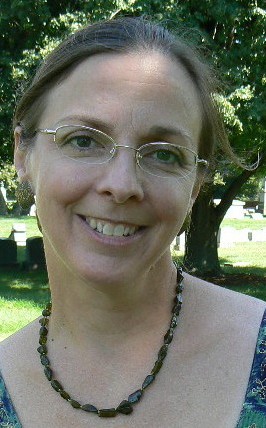
IMG_0032-1Myra’s long poems have been featured in Long Poem Magazine and Domestic Cherry. She co-edited with Dilys Wood, Parents, an anthology of poems by 114 women about their own parents. She started out writing fiction for children and teens. We first discovered Myra through her much-loved poem about an experience with cancer, The Red Dresswhich she generously shared with readers here in our Perspectives on Cancer series in 2011.

Currently Myra lives in North London, but she grew up in Scotland and in other parts of England. She lives with her husband and they have one son. Myra tutors through Poetry School, London. Her schedule of poetry readings is HERE.

Posted in Culture/History, Disability, First Peoples, General Interest, Mental Health, Michael Watson, Shakti Ghosal

Trauma, Story, and Healing

Evening-Sky

He sat on the sofa, pulled deeply into himself, almost disappearing before my eyes, as he told me about his dad’s violence. I wondered whether he knew I was in the room with him. “I feel terribly fragmented; I don’t know who I am,” he explained. “I can’t remember ever being like everyone else; they seem so at home in themselves.”

One of my teachers, a Psychoanalytically oriented clinician, always said the real problem is the second trauma. Her view was the first trauma one encounters sets the stage for PTSD and related problems; the second trauma triggers the cascade. Repeated traumas in childhood physically alter the function of the developing brain, leaving one more vulnerable to new trauma. Even if only one trauma occurs in early childhood the person may remain susceptible to PTSD via a second trauma as an adult.

Continue reading “Trauma, Story, and Healing”

Posted in General Interest, Guest Writer, poem, Poems/Poetry, poetry

Burnt Mustard

In micro pots I scattered chilly seeds a week ago
sunflower a couple of days back
yesterday mustard

trying to push away a gift of space
suffusing the air with its acrid smell of loss

A vacuum sucks thoughts till I have none left
to appraise
I am
water draining through loam
spring cleaning myself
though that feels like being robbed

Arrivals are better at sustaining life
I hug and hold myself from draining out
through the tiny holes in the pots

There is a creamy curry in a blackened dish
spoilt by attention wandering through
spicy sunflower fields

There too a smell of burnt seeds preceded me
Strange
The mustard hasn’t sprouted
yet it has claimed the breeze

– Reena Prasad

(c) Reena Prasad, poem and portrait below

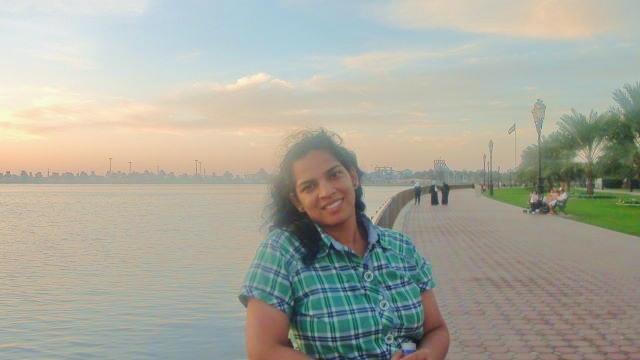
reeREENA PRASAD (Butterflies of Time, a canvas of poetry) ~ is a poet from India, now based in Sharjah. She has several poems published in English anthology collections (Change, Indus Valley, Love in Verses, Musings–a Mosaic, eight anthologies by Barry Mowles and Friends and ten of Brian Wrixon’s anthologies, also in online jounals: Carty’s Poetry Journal, Indian Ruminations, Indian Review and in online magazines such as Youth Ki Awaaz and Thanal Online. Her poems have found place among the winning entries in contests by Writer’s Cafe, Ekphrasis India and Poets Corner. She is a contributor to many international journals like

The Copperfield Review, First Literary Review-East, Angle Journal, Poetry Quarterly etc.

Posted in Bardo News, General Interest

BARDO NEWS: Enitharmon Press Launches 3 Poetry Collections; Connotation Press Call for Submissions; Plum Tree Books’ Children’s Imprint; interNational Poetry Month celebrations… and more…read on…

KUDOS FIRST Terri Stewart has been selected to present a first person monologue at the Network of Biblical Storytellers Conference in Los Angeles in August. She was also selected to teach a workshop titled “Developing First Person Monologues with Integrity.” She will be the keynote speaker at the United Methodist Women’s (Pacific Northwest) conference in October. She is speaking there on Creating Safe Space.

interNATIONAL POETRY MONTH is coming to an end. We recreated this annual April event, which is national in Canada and the United States, into an international celebration inclusive of everyone in our collective and consistent with our philosophy. Poetry – as all art – knows no borders.

What a good time we shared with readers and writers as we enriched one another’s lives. We published ten poems on the blog, were introduced to the lives and work of two poets, the Bulgarian Blaga Dimitrova (courtesy of Blaga Todorova) and the American Chirlane McCray (courtesy of Jamie Dedes), and sponsored two reader-participation events: Writers’ Fourth Wednesday hosted by Victoria C. Slotto and A Poem in Your Pocket hosted by Corina Ravenscraft.

We are pleased to share the news that Elegy to Damascus from the exquisite pen of Algerian Imen Benyoub garnered much attention, including two re-blogs and nearly fifty Facebook “Likes.” The poem is very much in the spirit of Bardo.

WHO IS POETRY FOR? This coming Wednesday as we put closure on poetry month – but not poetry – we share an essay from Bardo friend, Myra Schneider, who is much appreciated for her work as a poet and teacher, a consultant to Second Light Network and for her encouragement of others to read and write poetry for well-being. Myra asks, “Who is Poetry For?” and invites suggestions on how we might widen the audience for poetry. Feel free to offer suggestions in the comments section whether you are invested in this art as vocation or avocation or as an enthusiastic reader.

SECOND LIGHT NETWORK‘s next issue of ARTEMISpoetry is due out in May. The network’s anthology Her Wings of Glass is forthcoming this October. On Wednesday a review of the November issue by Jamie Dedes will post on The Poet by Day. Note: Second Light Network was founded and is based in England but its membership is open to women world-wide. See the site for more info on membership qualifications, membership costs and benefits.

PLUM TREE BOOKS (PTB) Niamh Clune announced this week that PTB had a face-lift. “We are focussing on DR. NANA PLUM’S AMAZING BOOKS FOR CHILDREN and have updated our web-site accordingly.”

The launch of the new web-site is on Saturday 3rd of May. “We hope you will join us then for story-telling and more.” Niamh has invited us to visit, so do save the date and lend your support. For a taste of what’s to come, visit Dr. Nana Plum’s Story Corner.

PTB Anthology in the works: Niamh reports thatwe have received some wonderful poetry submissions and art for our Mother anthology. There is still time to send in yours.”

BRAVO! A pat on the metaphorical back of Jamaica, which just this month named its first National Poet Laureate in fifty years. Read all about it HERE.

YOUTH POET LAUREATES: Los Angeles County Youth have until May 19th to submit work to Urban Word, which will name one talented person (aged 14-19)LA Youth Poet Laureate. Details HERE.

In January at Mayor Bill de Blasio’s inauguration, New York’s Youth Poet Laureate, Ramya Ramana, read her poem entitled New York City, a poem dedicated to Mr. de Blasio.

YOUTH CORNER: The Bardo Group is still looking for a youth – aged 19-24- to run a Youth Poetry Corner. Email us at bardogroup@gmail.com if you are interested.

ENITHARMON PRESS: The media team at Enitharmon Press alerts us to the publication of three new books of poetry in May with announcements of book launches in London for those in our collective who live or are visiting the area.

BOOK LAUNCH INVITES, 1, 13, 22 May 2014

This slideshow requires JavaScript.

SOME LETTERS NEVER SENT by Neil Curry ~ “Deceptively relaxed in tone, these verse letters – sometimes serious, sometimes whimsical – are addressed to such figures as Angelea Carter, the Venerable Bede and from Odysseus to Gilbert White’s tortoise, on topics as diverse as smallpox and the paintings of Vermeer, landscape-gardening, the King James Bible and Eddie Eddi Stobart’s lorries on the M6. There has not been a collection of verse letters of this nature since the Epistles of the Roman poet Horace and, fittingly, it is to Horace that the final letter is addressed, partly by way of apology.”

SOONER OR LATER FRANK by Jeremy Reed “Sooner or Later Frank finds Jeremy Reed optimising his London quarter of Soho and the West End, its outlaws, opportune strangers and rogue mavericks condensed into poems coloured by an imagery that pushes pioneering edges towards final frontiers. Right on the big city moment, and with an eye for arresting acute visual detail, Reed makes the capital into personal affairs. His characteristic love of glamour, rock music, seasonal step-changes, and a Ballardian preoccupation with the visionary render this new PBS Recommendation, in John Ashbery’s words on Reed’s recent work, ‘a dazzling tour de force.'” You’ll find the poem that lends its name to the book HERE.

THE ORCHID BOAT by Lee Harwood ~ “A weave of stories: some personal, some historical, some real, some imaginary. Often these stories may co-exist in a poem just as they do in one’s everyday mind, as a collage mirroring our own perception of the world. It is a mix that can include Alexandria or China or Brighton or North Wales. These interwoven stories insist on the acceptance of contradictions and complexity in people and in life; a recognition characteristic of Harwood’s poetry and shaped by his acknowledged influences: Gide, de Montherlant and Cavafy, John Ashbery and Frank O’Hara. In Harwood’s poems the richest material and tone is found in ‘the ordinary’, and in The Orchid Boat this focus is thrown into even greater relief as he explores the power and weight of memories.”

CALL FOR SUBMISSIONS: Robert (Bob) Clark Young tells us that, “As the creative nonfiction editor for Connotation Press, I’m always looking for new essays. I invite you to submit nonfiction on a topic of your choice. I’m looking for creative nonfiction, narrative nonfiction, memoirs, and personal essays–with the understanding that these categories often overlap. Up to 10,000 words. Please submit work directly to me at robertclarkyoung@connotationpress.com. I look forward to reading your work.”

Bob was a guest writer on Bardo. In his piece, Escape from the Nursing Home, he shared his story – and the rewards – of caring for elderly and infirm parents.

SAVE THE DATES

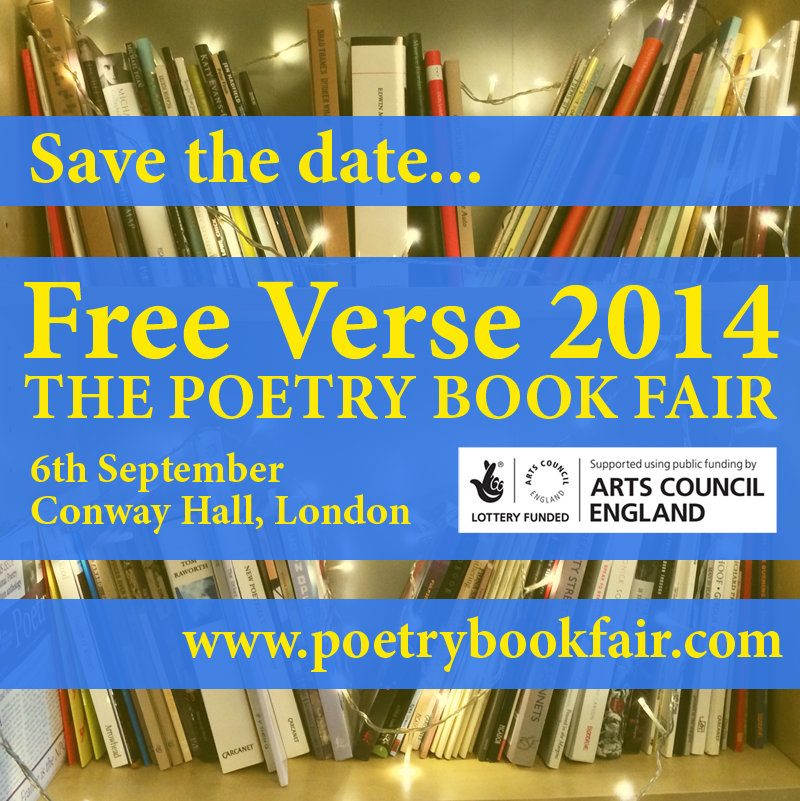
From Oxford Brookes Poetry Centre and the Arts Council of England

10157346_646561198748661_273577449520339020_n-1

From The Bardo Group: While we don’t have a striking poster such as the one above, we do have some fun and interesting virtual events coming up:

  • WRITER’S FOURTH WEDNESDAY prompt hosted by Victoria C. Slotto is scheduled next for May 28th.

  • VOICES FOR PEACE PROJECT in concert with 100,000 Poets for Change (Michael Rothbenberg and Terri Carrion organizers) is hosted by Liz Rice-Sosne and scheduled for September 27, 2014. We are officially partnered with 100,000 Poets of Change as of April 10, 2014.

Join us on our Facebook Page

BARDO NEWS: Thanks to everyone who contributed today’s news. The next news day is May 25, 2014 and the deadline to get your news into the next post is Friday, May 23, 2014.

Email: bardogroup@wordpress.com.

If you missed the deadline for this post, please feel free to share your news in the comments section.

– The Bardo Group

Posted in General Interest, Meditation, Terri Stewart

The Invisible Spiral of Violence

What Christ Saw from the Cross

Originally published June 20, 2013

I am away working with youth affected by incarceration this weekend. I recently read the below meditation and found it to be moving. I hope you will also find inspiration. Terri

From Richard Rohr’s Daily Meditation
Center for Action and Contemplation

The Invisible Spiral of Violence

“If you cannot recognize evil on the level of what I call the world, then the flesh and the devil are inevitable consequences. They will soon be out of control, and everything is just trying to put out brush fires on already parched fields. The world or “the system” is the most hidden, the most disguised, and the most denied—but foundational—level of evil. It’s the way cultures, groups, institutions, and nations organize themselves to survive.

It is not “wrong” to survive, but for some reason group egocentricity is never seen as evil when you have only concentrated on individual egocentricity (“the flesh”). That is how our attention has been diverted from the whole spiral of violence. The “devil” then stands for all of the ways we legitimate, enforce, and justify our group egocentricity (most wars; idolization of wealth, power, and show; tyrannical governments; many penal systems; etc.), while not now calling it egocentricity, but necessity!

Once any social system exists, it has to maintain and assert itself at all cost. Things we do inside of that system are no longer seen as evil because “everyone is doing it.” That’s why North Koreans can march lockstep to a communist tyranny, and why American consumers can “shop till they drop” and make no moral connections whatsoever. You see now why most evil is hidden and denied, and why Jesus said, ‘Father forgive them, they don’t know what they are doing.’ (Luke 23:34) We don’t.”

Shalom and Amen
Chaplain Terri

Illustration ~ photograph of opaque watercolor over graphite on gray-green woven paper circa 1886 by James Tissot (1836-1902) and released into the public domain.

RICHARD ROHR, OFM is a globally recognized ecumenical teacher bearing witness to the universal awakening within Christian mystical and the Perennial Tradition. He is a Franciscan priest of the New Mexico Province and founder of the Center for Action and Contemplation. MORE

The foundational elements of The Perennial Tradition are: 1.) There is a Divine Reality underneath and inherent in the world of things. 2.) There is in the human soul a natural capacity, similarity, and longing for this Divine Reality. 3.) The final goal of existence is union with this Divine Reality.

terriTERRI STEWART is Into the Bardo’s  Sunday chaplain, senior content editor, and site co-administrator. She comes from an eclectic background and considers herself to be grounded in contemplation and justice. She is the Director and Founder of the Youth Chaplaincy Coalition that serves youth affected by the justice system. As a graduate of Seattle University’s School of Theology and Ministry, she earned her Master’s of Divinity and a Post-Master’s Certificate in Spiritual Direction with honors and is a rare United Methodist student in the Jesuit Honor Society, Alpha Sigma Nu. She is a contributing author to the Abingdon Worship Annual.

Her online presence is “Cloaked Monk.” This speaks to her grounding in contemplative arts and the need to live it out in the world. The cloak is the disguise of normalcy as she advocates for justice and peace. You can find her at www.cloakedmonk.com, www.twitter.com/cloakedmonk, and www.facebook.com/cloakedmonk.  To reach her for conversation, send a note to cloakedmonk@outlook.com

Posted in Essay, find yourself, General Interest, John Anstie

Quid est veritas? … Veritas vos Liberabit

(What is truth? … The truth shall set you free)

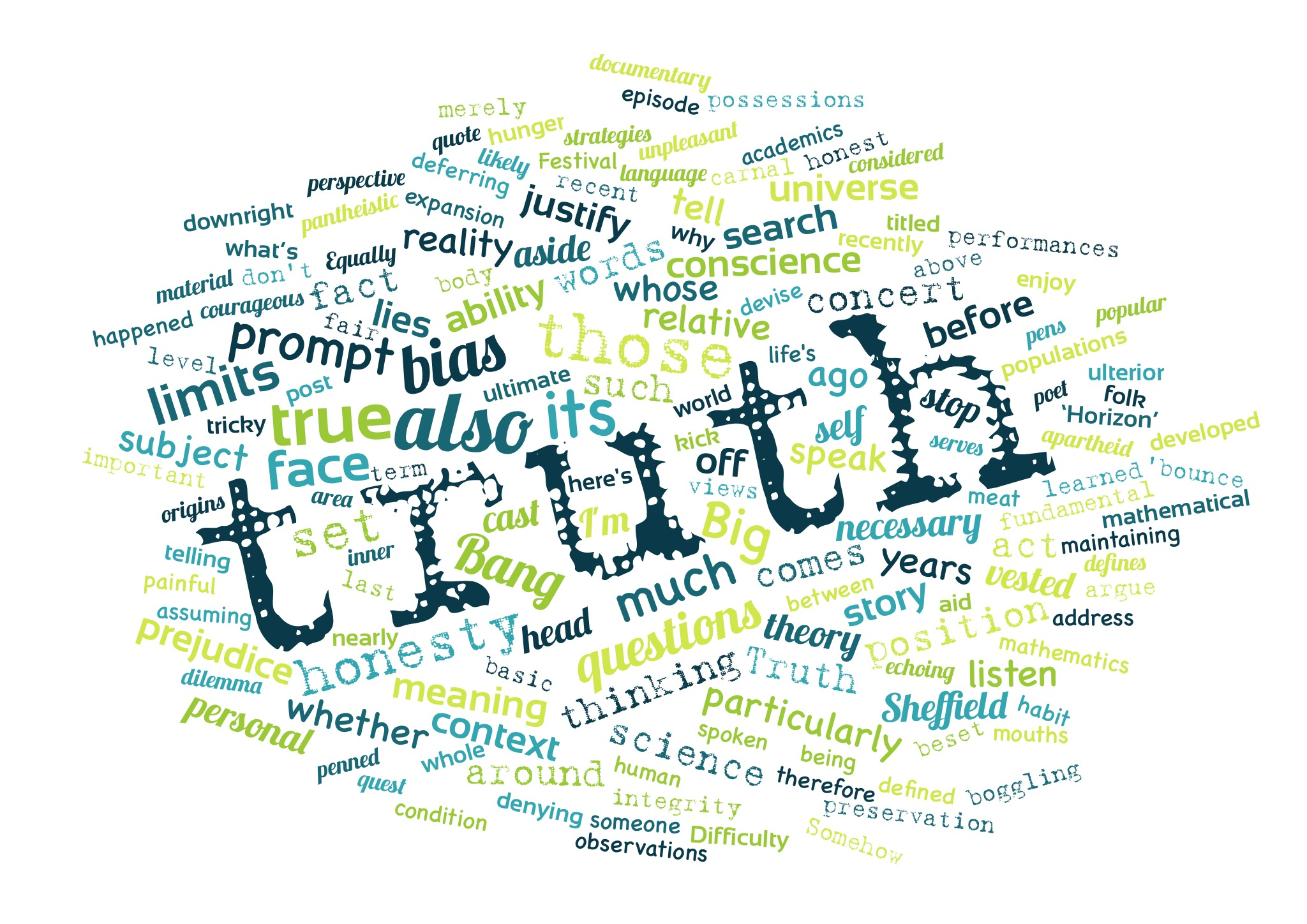
The story of cosmology is the story of our search for the ultimate truth

Produced using Cloudart

This quote comes from a recent episode of one of my favourite BBC documentary programmes, ‘Horizon’, which was titled ‘What happened before the Big Bang?’. It centred on the thinking, with the aid of mathematics and string theory, of a handful of professorial academics from around the world, who have developed some new theories. One such theory suggests that the expansion of our known universe since the Big Bang, nearly fourteen billion years ago, is only one ‘bounce of a ball’, of a cyclic series of events and that its apparently infinite size is merely a minimal starting point for the next Big Bang. I don’t know about you, but I find this, at the same time, utterly mind boggling and totally fascinating. It also serves to bring into perspective the true meaning of our lives and, in particular, the meaning of truth, which, in consequence, is only a relative term, particularly when it comes to this area of science. There may be a myriad of learned tomes, on the subject of truth, written by countless thinkers and philosophers over the millennia of human existence, but, setting aside the search for the true answers to scientific and mathematical questions about the origins of our universe, it is on the most basic social and spiritual level that I choose to focus.

My first prompt for this piece occurred three years ago, when I observed, amongst other exceptional acts of forgiveness and the search for truth, the effects of the Truth and Reconciliation Commission, set up in post-apartheid South Africa under Nelson Mandela’s leadership. The second prompt is that constant irritation: politicians! To be fair, this affects all those in positions of influence, with vested interest in maintaining status quo or personal wealth, who are so often inclined to be ‘economical with the truth’, if the truth is likely to compromise their position or possessions. This probably includes all of us from time to time. However, if you are in a position of power, when your decisions affect whole populations, then being economical with the truth may be considered, at best, morally wrong, if not downright contemptible! So much depends on the ulterior motive. Difficulty arises when you listen to words spoken by someone, whose allegiances are unknown to you, and therefore leave you with the dilemma of whether or not you believe they are speaking the truth. For me, sometimes, the solution to this is to do your own research; it is your call.

The third prompt is meat to those who, in telling lies, would argue that the truth is relative to its context. As true as that may be, there are some fundamental questions, which it may be helpful to ask. These questions and their answers rely heavily on my own life’s observations and experience. I’ve presented this, for clarity, in the form of a mock interview …

What is the truth?

The truth is without bias, in conformity with fact and reality, and is concerned only with honesty and integrity.

What defines truth?

The truth is not only defined by its context, but also by your ability to address your conscience*, head on, assuming that it has not been corrupted by external bias (i.e. vested interests). Equally important is an ability to face reality, however unpleasant or painful that may be.

How do we justify the limits we place on our honesty about the truth?

We justify limits on our honesty in many ways: by joining a tribe and deferring to its rules; by focussing on our own self-preservation or our vested interests; and by denying voice to our conscience.

How do we know what the truth is and how do we recognise it?

In order to know what the truth is, it is necessary firstly to cast off our natural bias and prejudice; to open our minds; perhaps also to become pantheistic in our outlook.

How much of the truth can we individually consciously face head on?

Knowing your limits is a safe harbour, but may also be a block to discovering the truth. So, it may be necessary to be courageous in the quest.

What strategies can we devise to help us get to the truth?

Somehow we may not only have to overcome personal prejudice and swallow our pride, but also face the facts and stop echoing and repeating popular myths that come from the pens and mouths of those around you.

How much do we have to sacrifice both to seek and to tell the truth?

We have to set aside our need for material things and kick the habit of consumerism. We also need to examine, evaluate and better understand our pride and prejudice (with apologies to Jane Austen).

Who will speak the truth?

Any of us can speak the truth, but, before we do, we will have to develop the inner strength to resist and cast off all those temptations that beset us with envy, greed, carnal hunger and cognitive bias.

I recently attended a concert, in which the headline act were a folk and roots duo, whose talent and performances we have come to enjoy. The unusual and refreshing part of this concert was that the supporting act, who came on to ‘warm’ us up, was a poet, whom I had first met last year through the Sheffield WordLife movement, at the opening of the Sheffield Literature Festival. The poet is Joe Kriss. One of the self penned poems he read, concluded with words to the effect: stop talking, start thinking and listen to what lies between your ears; only then will you know what’s true.

There are many parts of our lives for which exposure of the truth, if shared with the majority and if reconciliation was achieved, would make for a better world. I wonder, however, if finding the truth in every part of our lives would challenge our humanity. If that truth were too unpalatable to face – the prospect of our own imminent failure, the discovery of a skeleton in our own cupboard, life threatening illness and death … would we still want to know the truth?

Perhaps you might let me know if you have found your truth … and whether you feel it set you free? 

_________________________

* The defining of conscience could, no doubt, be the subject of a veritable treatise. For now, suffice to say that conscience is defined as “the complex of ethical and moral principles that controls or inhibits the actions or thoughts of an individual”. Put more simply, it is “the inner sense of what is right or wrong in one’s conduct or motives, impelling one toward right action: to follow the dictates of conscience“.

© 2014 John Anstie

John_in_Pose_Half_Face3JOHN ANSTIE (My Poetry Library and 42) ~ is a British poet and writer, a contributing editor here at Bardo, and multi-talented gentleman self-described as a “Family man, Grandfather, Occasional Musician, Amateur photographer and Film-maker, Apple-MAC user, Implementation Manager, and Engineer. John has participated in d’Verse Poet’s Pub and was an early player in New World Creative Union. He’s been blogging since the beginning of 2011. He is also a member of The Poetry Society (UK).

*****

Petrichor Rising Book Cover.phpd'Verse Anthology Book CoverJohn has been involved in the recent publication of two anthologies that are the result of online collaborations among two international groups of amateur and professional poets. One of these is The Grass Roots Poetry Group, for which he produced and edited their anthology, “Petrichor* Rising. The other group is d’Verse Poet Pub, in which John’s poetry also appears The d’Verse Anthology: Voices of Contemporary World Poetry, produced and edited by Frank Watson.
Petrichor – from the Greek pɛtrɨkər, the scent of rain on the dry earth.

Posted in General Interest, Victoria C. Slotto, Writers' Fourth Wednesday, Writing

WRITER’S FOURTH WEDNESDAY: Color My Moods–Writing with Color

Image: silkhlens.com

As a would-be artist and a former museum docent, I enjoy playing with the elements of art in my writing–both in fiction and poetry. A favorite is to use color to create mood. In art, abstract expressionists often use color as the primary tool to convey their “story.” There are many interpretations of the meaning or symbolism accorded to each color. I’m offering a few of my own: Yellow is a happy color and can be used to liven up a scene–to make it joyful, while Red signifies anger, passion, love. Think about it: when you’re feeling intense emotions, such as rage and close your eyes, sometimes your visual field appears red. Blue and Green convey calm and  peace Black represents the unknown or fear while Brown is a grounded, earthy color. Violet or Lavender speak of spirituality while White is used to represent truth and innocence.

Photo: allparentstalk.com

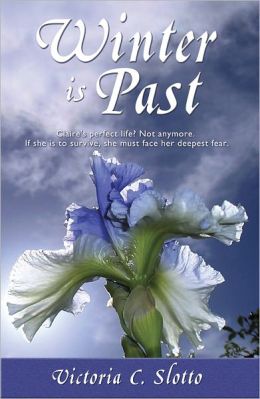
My interpretation is gleaned, in great part, from a book I use for dream interpretation and it seems to work well for me. Perhaps you will see it differently. Consider that, in Asian countries, red is used for funerals and white for funerals. Both culture and personal life experience influence how we see color. (Reference: The Dream Book by Betty Bethards) I’m including a short description from my novel, Winter is Past, that strives to convey a mood using color. In the dim light, the church, clothed in red, marked the joyous season of Pentecost. The altar was covered in an abundance of flowers—gold, yellow, orange and red gladioli—tongues of flame marking the climax of the Pascal season. Helene’s mood, however, was somber, spiraling into blackness. The red surrounding her spoke to her of blood and death—the death of her spirit. She suppressed a sob…


Do you have an example from your own writing you would like to share? How do you see color as it influences mood? We invite you join in, if you like, using Mister Linky at the bottom of this post or simply add your link in the comments secion if you prefer.

Image: tympanus.net
Image: tympanus.net

2940013445222_p0_v1_s260x42034ff816cd604d91d26b52d7daf7e8417VICTORIA C. SLOTTO (Victoria C. Slotto, Author: Fiction, Poetry and Writing Prompts) ~ is an accomplished writer and poet. Winter is Past, published by Lucky Bat Books in 2012, is Victoria’s first novel. A second novel is in process. On Amazon and hot-off-the-press nonfiction is Beating the Odds: Support for Persons with Early Stage Dementia. Victoria’s ebooks (poetry and nonfiction) are free to Amazon Prime Members. Link HERE for Victoria’s Amazon page. Editorial note: Congratulations, Victoria, on that the long awaited publication of print copies of Jacaranda Rain, Collected Poems, 2012, Beautifully done. Writers’ Fourth Wednesday is hosted by Victoria from January through October and posts at 12:01 a.m. PST. The next Writers’ Fourth Wednesday is scheduled for May 28.  In (unofficial) concert with the American Academy of Poets, Corina Ravenscraft (Dragon’s Dreams) will host A Poem in Your Pocket on Thursday, April 24. You are invited share your own work or that of a favorite poet. Instructions for sharing will be included in the post, which will go up at 12:01 a.m. P.S.T.

Posted in General Interest

Ecco Panis

A poem for Easter … the bread of the angels …